Article

Spatial Distribution and Characteristics of Microplastics in Qiongdongnan, South China Sea

1
Sanya Institute of South China Sea Geology, Guangzhou Marine Geological Survey, China Geological Survey, Sanya 572024, China
2
Guangzhou Marine Geological Survey, Guangzhou 511458, China
3
Academy of South China Sea Geological Science, China Geological Survey, Sanya 572024, China
*
Authors to whom correspondence should be addressed.
Water 2026, 18(12), 1503; https://doi.org/10.3390/w18121503
Submission received: 20 May 2026 / Revised: 17 June 2026 / Accepted: 17 June 2026 / Published: 18 June 2026
(This article belongs to the Special Issue Microplastics in the Marine Environment: Distribution and Effects)

Abstract

To elucidate the pollution status and spatial distribution patterns of microplastics in representative deep-sea regions of China, the Qiongdongnan sea area has emerged as a key focus area for microplastic research. A comprehensive assessment of microplastic contamination across the water column (0–1500 m) was conducted using CTD-integrated water sampling coupled with 0.2 μm membrane filtration. Results revealed that polypropylene (PP), polyethylene (PE), and polyamide (PA) were the dominant polymer types. Granular microplastics constituted the overwhelming majority (95.3%) of identified particles, while size analysis showed that those in the 20–50 μm range accounted for the largest fraction (80.5%). The average microplastic abundance across all sampled depths was 3.47 particles/L. Comparative analysis with other prominent marine environments globally and domestically indicates minimal vertical differences in the characteristics of microplastics. Comparative analysis with other prominent marine environments globally and domestically indicates that microplastic pollution in the South China Sea is relatively moderate. This study delivers foundational empirical data critical for environmental risk assessment and source apportionment of microplastics in the South China Sea. This study provides key basic data for assessing the environmental risk of microplastics in the South China Sea and tracing their sources.

1. Introduction

The term “microplastics” was first coined by Thompson et al. in (2004), referring to tiny plastic particles in the ocean, which rapidly captured the attention of the scientific community [1]. As an emergent class of persistent anthropogenic contaminants, microplastics enter marine systems predominantly via terrestrial runoff, wastewater effluent, and atmospheric transport [2,3]. Current assessments estimate that 0.48 to 12.7 million tons of plastic waste generated annually by coastal nations enters the global ocean through rivers and atmospheric deposition [4]. Once introduced, microplastics are transported by ocean currents, human activities, and biological processes, and their resistance to degradation enables them to persist for centuries [5]. Robust empirical evidence now confirms their pervasive distribution across all major marine compartments: from surface neuston layers and pelagic water columns to intertidal beaches, continental shelf sediments, and even deep-sea trenches [6,7]. Microplastics have been regarded as a serious environmental threat, causing substantial health risks to marine organisms, such as suffocation, entanglement, and pollution at different nutritional levels [8].
The South China Sea is the largest marginal sea in the Western Pacific [9]. To date, microplastic research in the South China Sea has been predominantly confined to coastal zones, whereas studies in open-ocean and deep-basin environments remain scarce [2,10,11]. Furthermore, the current observation methods mainly rely on surface trawling or pumping systems, which are generally affected by differences in net specifications and filter membrane pore diameters. Critically, conventional net-based sampling defines the mesh aperture as the lower size threshold for particle capture; however, this assumption overlooks the shape-dependent retention efficiency of non-spherical particles. Specifically, elongated particles with a long axis exceeding the mesh size but a short axis smaller than the mesh may pass through undetected. This limitation compromises inter-study comparability and likely leads to underestimation of both deep-water microplastic concentrations and micrometer-scale microplastics [12,13,14,15,16,17,18]. Meanwhile information regarding microplastic pollution in the deep water columns of the South China Sea is still relatively limited. It is mainly concentrated in the northwest part of the South China Sea, with the maximum water depth reaching 1000 m [19]. There is still a lack of information on the distribution of microplastics in the deep water columns of the Qiongdongnan sea area. To address this critical knowledge gap, this study targets the Qiongdongnan Basin as the primary study area. Using CTD samplers, water samples were collected at different depths from the surface to 1500 m. Combined with Fourier Transform Infrared Spectroscopy (FTIR) analysis, the abundance, particle size, morphology, and polymer composition of microplastics were systematically analyzed. The aim is to clarify the vertical distribution pattern of microplastics from the surface to the deep sea in this area, fill the gap in basic data on microplastic pollution in the deep sea of the South China Sea, and provide scientific basis for the research and comprehensive management of microplastic pollution in the South China Sea.

2. Materials and Methods

2.1. Sample Collection

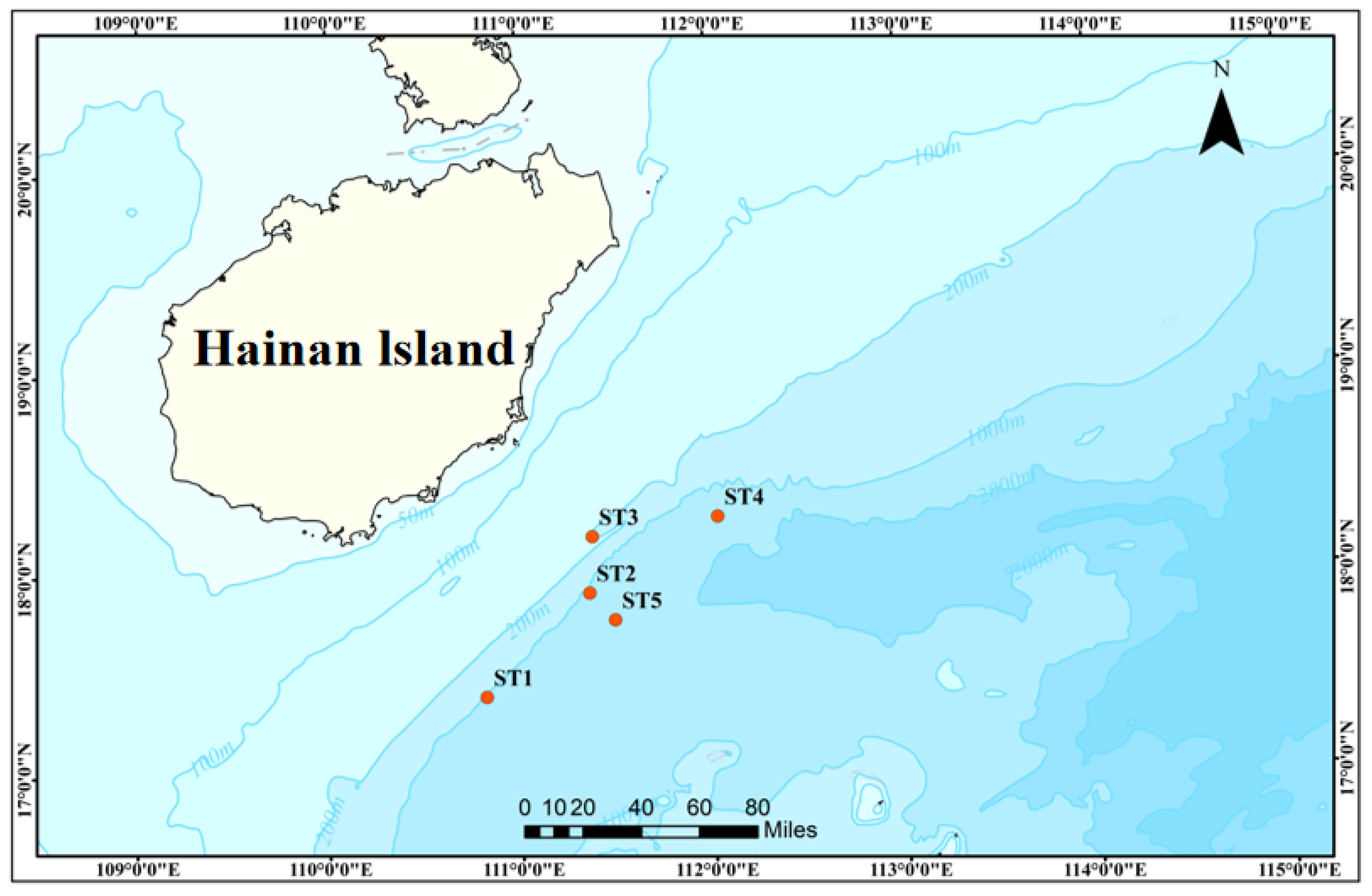
In October 2024, Guangzhou Marine Geological Survey conducted a marine survey in the Qiongdongnan area, setting up a total of 5 stations (Figure 1). At each sampling station, a SBE 917 plus CTD system (Sea-Bird Scientific, Washington, USA) equipped with twenty-four 8 L water samplers was used for stratified seawater sampling. Sampling depths were determined based on real-time vertical profiles of temperature, salinity, and depth (pressure). Details of the stations and the sampling information are listed in Table S1. A total of 17 seawater samples (4 L for each) were collected from the 5 stations (ST1–ST5). After collection, the water samples were transferred to stoppered glass containers and fixed with 0.1% formaldehyde. The samples were stored at 4 °C until filtration. During transportation and storage, all glass containers were sealed and wrapped in aluminum foil to prevent light exposure and air contamination.

2.2. Sample Pretreatment and Quality Control

During water sample processing, vacuum-assisted filtration was performed using a dedicated apparatus equipped with a 13 mm aluminum oxide membrane filter (pore size: 0.2 μm; Whatman, Kent, UK). Prior to filtration, all glassware (including sampling bottles and filter membranes) was rigorously rinsed three times with ultrapure water to minimize contamination. The membrane filters were then transferred into pre-cleaned glass Petri dishes, sealed, and stored in a drying oven. Before FTIR analysis, each membrane was repositioned in a Petri dish and immediately covered with aluminum foil to prevent airborne plastic contamination. All pretreatment steps were carried out wearing cotton lab coats and disposable nitrile gloves. To monitor contamination, a blank test was conducted using a Niskin bottle (PVC) filled with ultrapure water, processed through the same filtration and analytical procedures as the samples. Five procedural blanks were analyzed. Microplastic fragments (0–7 particles per blank) were detected, with a mean concentration of 0.11 particles L−1. PVC was not detected in any blank sample. The detection limit was set at three times the mean blank concentration (0.33 particles L−1), and blank correction was applied to all sample measurements.

2.3. Analysis Methods for Microplastics

Chemical identification of microplastics was conducted using focal-plane-array (FPA)-based micro-Fourier transform infrared (μ-FTIR) spectroscopy. The analyses were conducted on the Hyperion 3000 Fourier transform infrared microscope (FTIR-microscope) (Bruker, Bremen, Germany) equipped with a 16 × 16 FPA detector. Following lyophilization, they were placed on an alumina filter membrane. The filter membrane was then loaded into a sample holder (Pike Tech, Madison, WI, USA). Samples were tested in transmission mode using a 15× Cassegrain objective lens, with a final magnification of 150×. Before each scan, the background spectrum was first collected from the blank area of the filter membrane. The scanning parameters were set as follows: the wavenumber range was 3300–1200 cm−1, the spectral resolution was 4 cm−1, the number of scans was 16, and the pixel size was 10.8 µm. The entire filter membrane was evenly divided into four regions and scanned separately with the same parameters. The instrument operation, data collection, and spectral analysis were performed using the Bruker OPUS 9.0 software to identify and localize microplastics, ensuring comprehensive recording and characterization of all microplastic particles on the membrane. The instrument operation, data acquisition, and spectral analysis are all completed using the Bruker OPUS 9.0 software to identify and locate microplastics, ensuring a comprehensive record and characterization of all microplastic particles on the filter membrane. Microplastic identification was achieved by comparing sample spectra against a validated internal polymer reference library containing >20 standard polymers (such as PE, PP, PS, PET, etc.). This library has been verified by two national invention patents (ZL202111157023X, ZL2021111589715). Subsequently, spectral datasets and corresponding mosaic images were exported to Microplastics Finder (Purency GmbH, Vienna, Austria) for automated particle detection, classification, and morphometric quantification. Using spectral descriptors and a random decision forest classifier, the system rapidly determines particle dimensions, surface area, polymer type, and quantity within minutes [20]. A representative μ-FTIR spectrum is presented in Figure S1.

2.4. Statistical Analysis of Data

Microplastic abundance in seawater was expressed as particles per liter (particles/L). Given the exploratory nature of this case study and the limited number of replicate samples, statistical analyses were restricted to descriptive statistics. For each sampling station, descriptive statistics (mean, standard deviation, range, and coefficient of variation) were calculated using Microsoft Excel 2019. The Mann–Whitney U test was used to compare the microplastic abundances among different site groups, with p < 0.05 considered statistically significant. The relationship between microplastic abundances and water depth was analyzed using the Spearman rank correlation coefficient. All statistical analyses were conducted using the SPSS 26.0 version. Graphs were generated using Origin 2018.

3. Results

3.1. The Spatial Distribution Characteristics of Microplastic Abundances

A total of 236 microplastic particles were identified across 17 samples collected from 5 stations in the Qiongdongnan sea area. FTIR analysis revealed that microplastic concentrations ranged from 0 to 7.25 particles/L, with a mean concentration of 3.47 particles/L (Table 1). Vertically, surface waters (0–200 m) exhibited a mean concentration of 2.75 particles/L, ranging from 0 to 5.75 particles/L. Concentration increased at 200 m depth (mean: 4.00 particles/L; range: 3.50–4.75 particles/L),remained elevated but slightly lower at 500 m (mean: 3.06 particles/L; range: 2.00–4.75 particles/L), and peaked at 1000 m (mean: 4.19 particles/L; range: 0–7.25 particles/L). At the deepest sampled horizon (1500 m), the concentration was 4.25 particles/L.
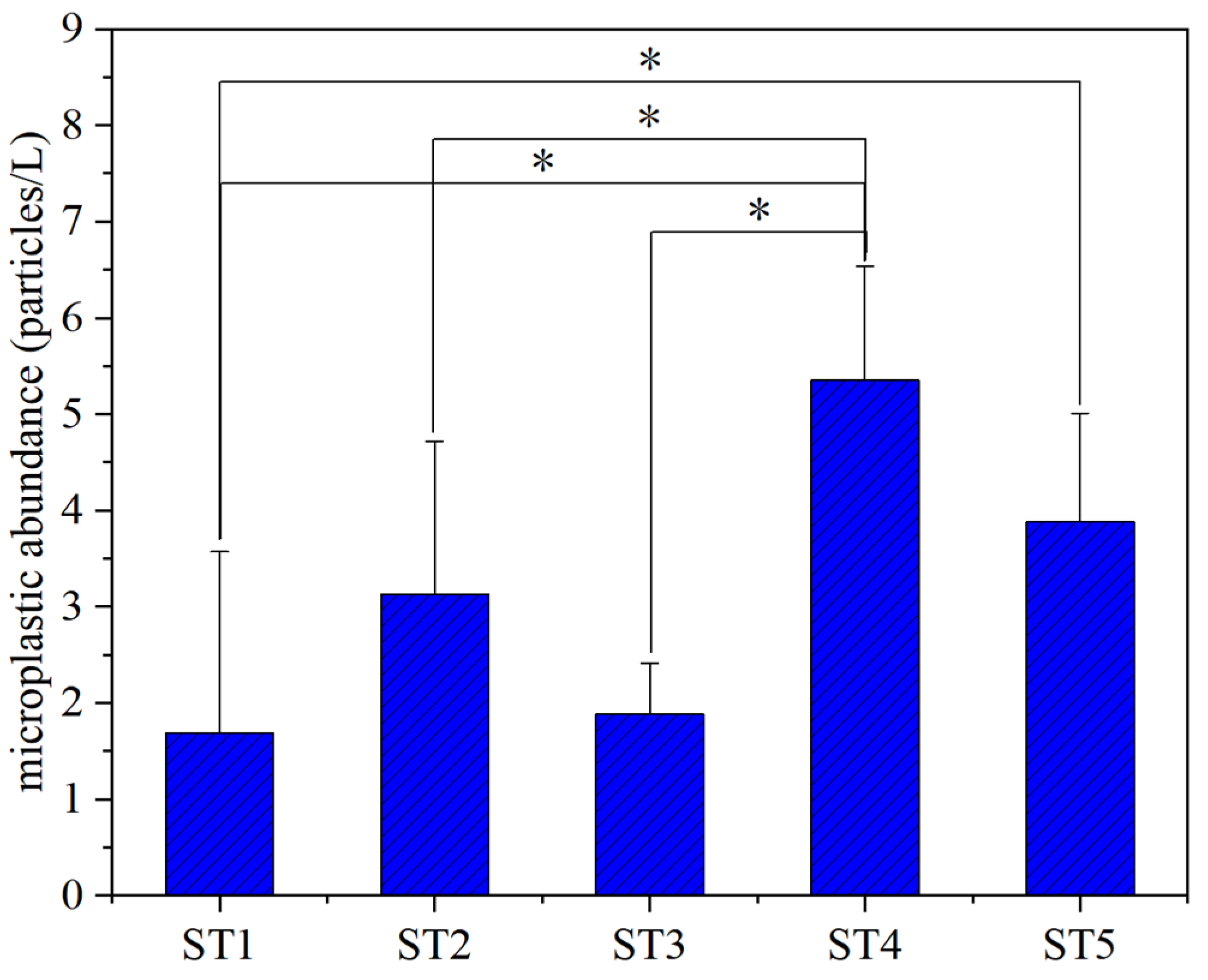
To determine whether there are significant differences among the various sites, the Mann–Whitney U test was conducted for all possible site pairings. This data analysis employed non-parametric testing methods, and a p-value less than 0.05 was considered statistically significant. As shown in Table 2, microplastic abundance at ST4 was significantly higher than at ST1 (U = 0.0, p = 0.016), ST2 (U = 0.0, p = 0.048), and ST3 (U = 0.0, p = 0.016). similarly, ST5 abundance significantly exceeded that of ST1 (U = 0.0, p = 0.029). No statistically significant differences were observed among ST1, ST2, and ST3 (all p > 0.05), nor between ST4 and ST5 (U = 9.5, p = 0.730) (Figure 2). Spatially, microplastic abundances at ST4 and ST5, farther from the continental slope, were particularly prominent, suggesting that this area may represent a pollution hotspot within the study region.

3.2. The Size Distribution of Microplastics

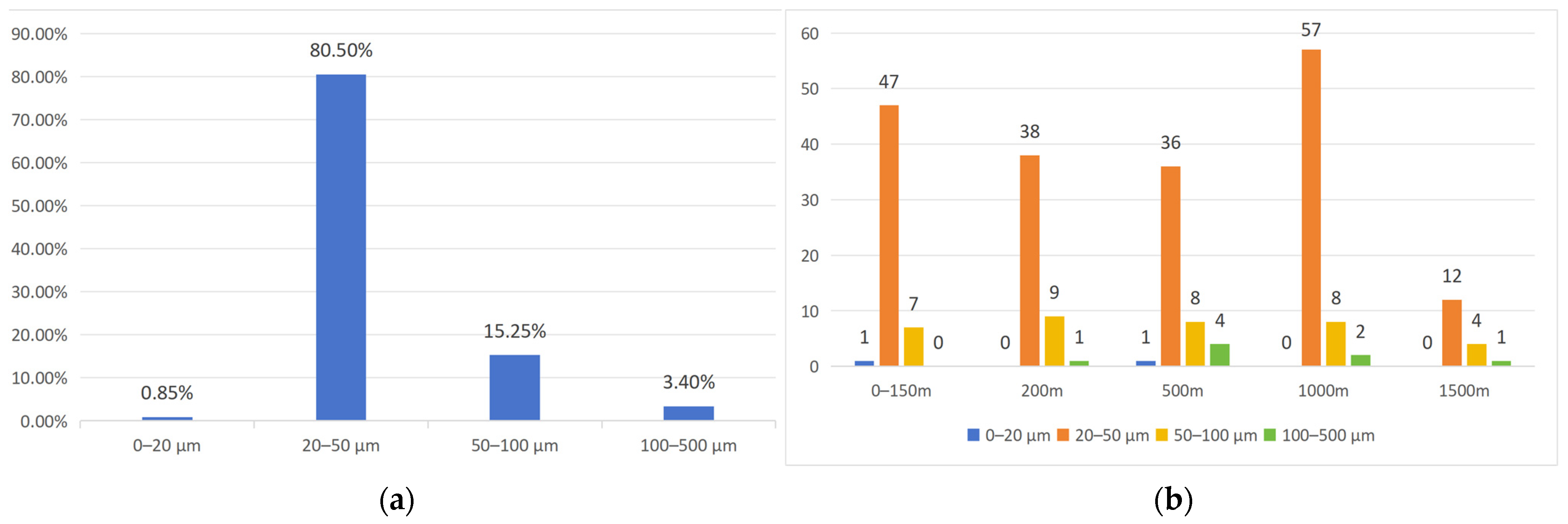
Based on particle size, the microplastics detected in the Qiongdongnan area were categorized into four size classes: 0–20 μm, 20–50 μm, 50–100 μm, and 100–500 μm. After 0.22 µm membrane filtration, the sizes of the microplastics measured were all less than 500 μm (Figure 3). Among them, particles in the size range of 20–50 μm account for the highest proportion (80.5% of the total). Vertically, the dominant size fraction across water layers was also 20–50 μm.

3.3. Type and Polymer Composition

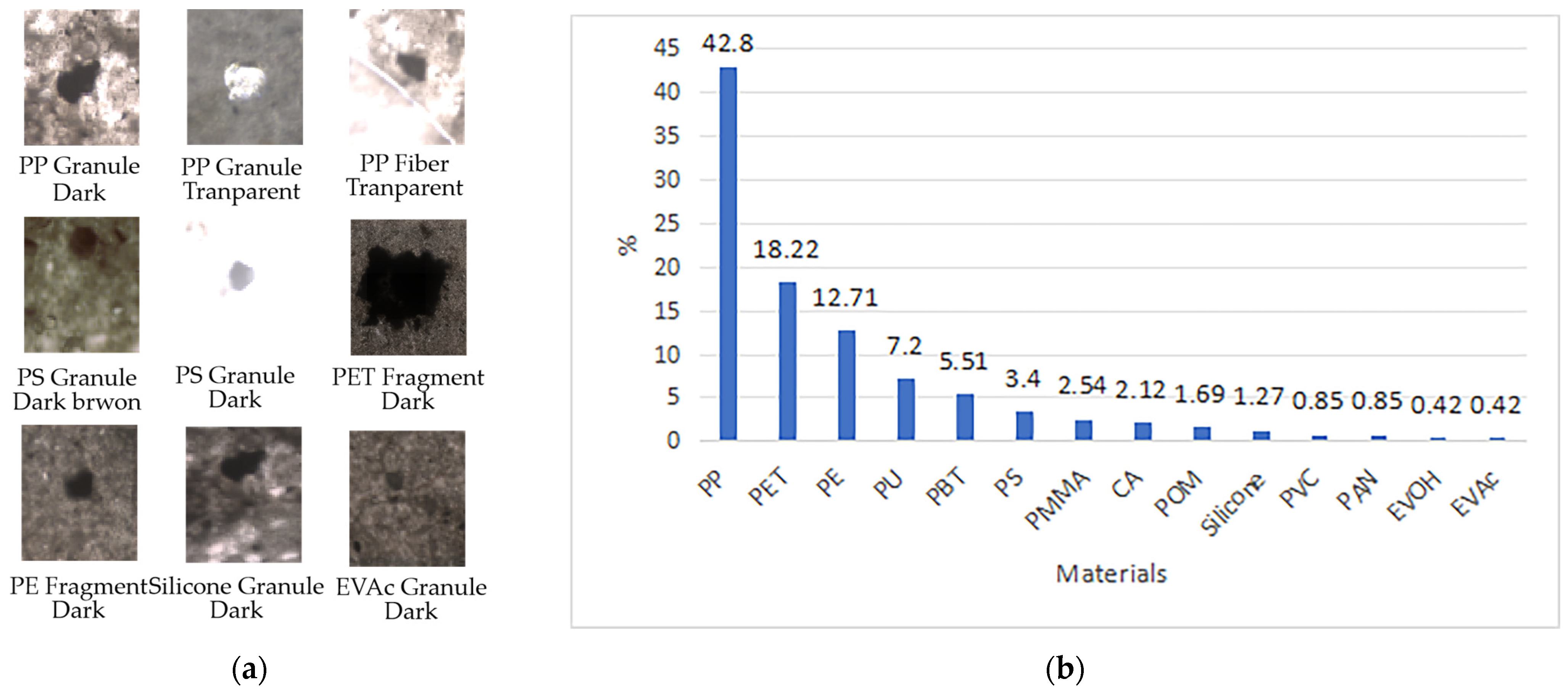
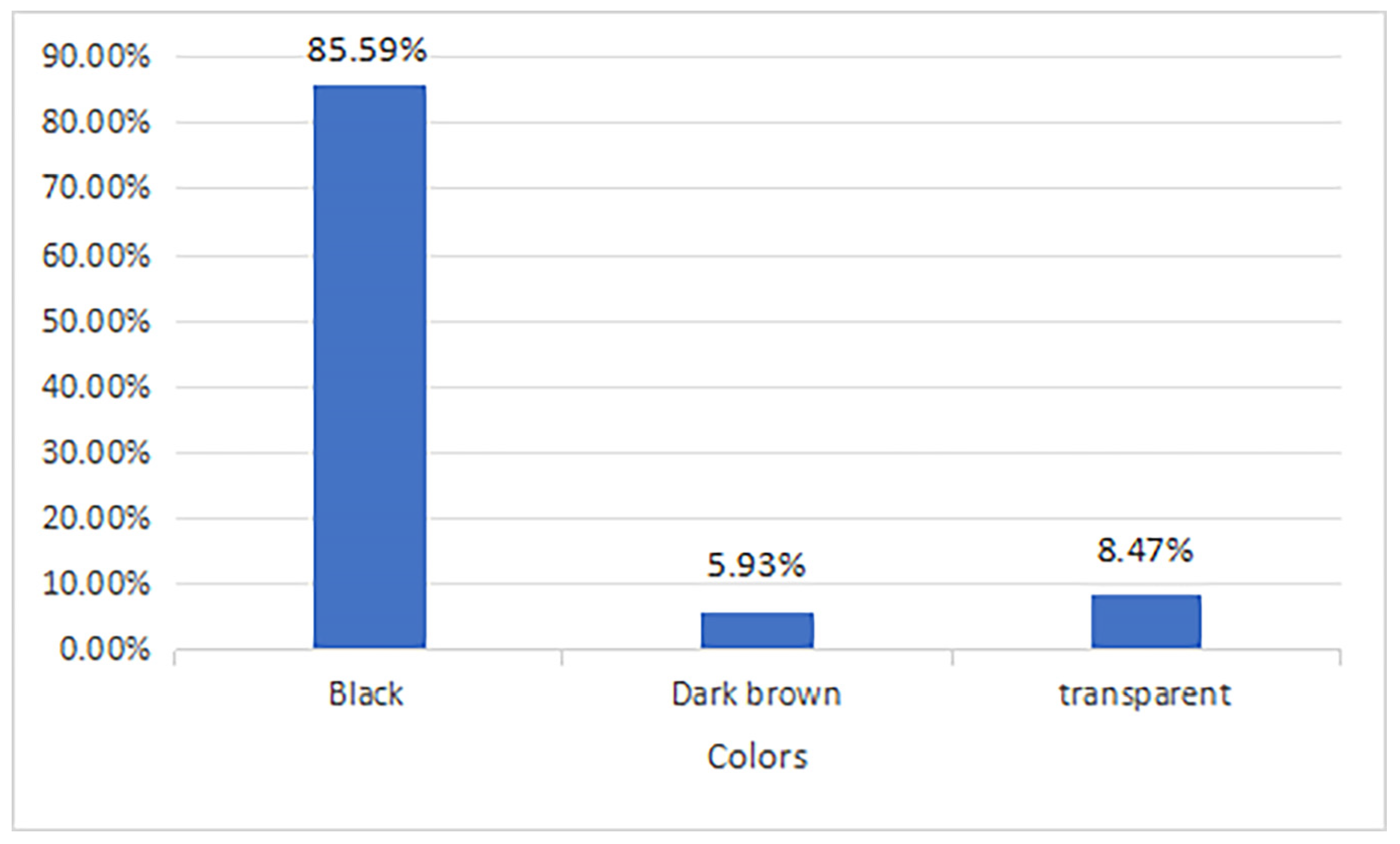
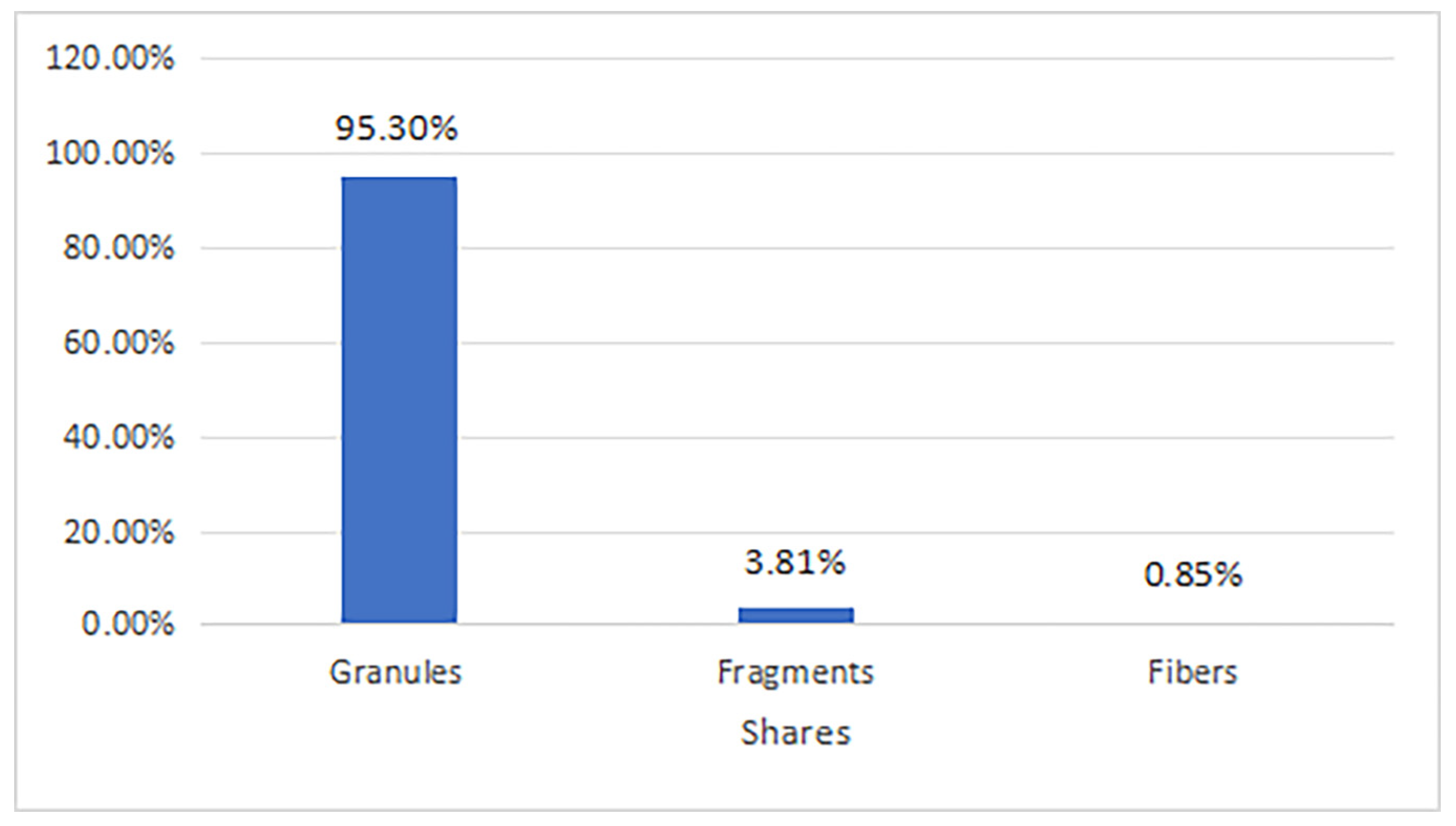
The spatial distribution of microplastics is summarized in Table 2. Representative microscopy images illustrating particles of different colors, shapes, and polymer types are presented in Figure 4a. A total of 14 polymer types were identified (Figure 4b), including ethylene-vinyl alcohol copolymer (EVOH), polybutylene terephthalate (PBT), polyacrylonitrile (PAN), cellulose acetate (CA), polyethylene (PE), polyethylene terephthalate (PET), polypropylene (PP), polyoxymethylene (POM), polystyrene (PS), polyurethane (PU), polymethyl methacrylate (PMMA), ethylene-vinyl acetate copolymer (EVAc), silicone, and polyvinyl chloride (PVC). Among them, PP was the dominant type, accounting for 42.8%, followed by PET (18.22%) and PE (12.77%), collectively accounting for more than 70% of the total detected polymers. PAN (0.85%), PVC (0.85%), EVOH (0.42%), and EVAC (0.42%) were present in negligible amounts. In the vertical dimension, no trend of the polymer proportion increasing or decreasing with the increase in water depth was observed. Microplastics were detected in samples from the surface to a depth of 1500 m. This result was consistent with the vertical distribution of microplastics in East Asia [21]. Notably, PP, PET, PE, PBT, PU, POM, PS, and PAAM were present across the entire water column. In terms of physical morphology, granular microplastics accounted for the highest proportion (95.3%), followed by fragments (3.81%) and fibrous (0.85%) (Figure 5). Regarding color distribution, black particles dominate, accounting for 85.59%. This may be an indication that they have undergone environmental aging processes such as long-term exposure to light, oxidation, and mechanical wear [22]. In addition, a small number of particles of other colors, including transparent (8.47%) and dark brown (5.93%), were also detected (Figure 6).

4. Discussion

4.1. Compared with Microplastics in Other Sea Areas

Although international standards for microplastic analysis exist (e.g., ISO 5667-27:2025 for sampling; ISO 16094-2:2025 for vibrational spectroscopy) [23,24]. Recent reviews confirm that standardized protocols are still lacking, with variations in sampling tools, mesh sizes, and reporting units persisting across studies [25,26]. To enhance comparability, this study screened literature with similar sampling methods and uniformly converted abundances to particles/m3 (Table 3).
Under this harmonized metric, microplastic abundance in the Qiongdongnan Basin ranged from 0 to 7250 particles/m3. In comparison, published data from other regional seas show the following ranges: the average concentration in the northern Yellow Sea was reported as 545 ± 282 particles/m3, with a maximum recorded surface concentration of 6500 particles/m3; the East Sea (Republic of Korea) exhibits concentrations of 60–6080 particles/m3 and 30–7880 particles/m3 across two independent studies; and the South China Sea displays markedly higher values, spanning 200–45,200 particles/m3. Collectively, while localized hotspots in Qiongdongnan approached upper-range values observed elsewhere, its overall abundance distribution falls substantially below the highest reported concentrations in the East China Sea and other heavily impacted coastal zones. Moreover, it overlaps considerably with mid-range observations from the Yellow Sea and the East Sea.
Based on this contextualized inter-regional comparison, this study concludes that microplastic pollution in Qiongdongnan is generally at a moderate level, and its abundance range falls within the middle range among typical marine areas at home and abroad. Future research should further combine factors such as pollution sources, hydrodynamic forces, and human activities to deeply analyze the formation mechanism of regional differences in microplastic distribution.

4.2. Source Analysis of Microplastics

The origins of marine plastic pollution are multifaceted, encompassing both land-based and marine-based pathways. Land-based inputs include riverine discharge, industrial effluents, and domestic wastewater, whereas marine-based sources comprise plastic debris from fishing operations, aquaculture infrastructure, maritime tourism, and shipping activities. Currently, the most widely used plastics are PE, PP, PVC, PS, and PET, accounting for approximately 90% of the world’s plastic product types [37]. This study analyzes the main sources of plastic waste in Qiongdongnan based on the composition and shape of microplastics.
Results revealed PE, PET, and PP as the three most abundant polymer types in the sampled microplastics. This finding was consistent with the research results from the Xisha Islands in the South China Sea, the East China Sea, and the Pearl River Estuary and other adjacent sea areas, confirming that PE and PP were the core polymer components of microplastics in the surface water of the coastal and open waters of China [38,39,40,41]. In terms of morphology, granular particles constituted the overwhelming majority. From the perspective of source analysis, PET, as the main component of polyester fibers, is widely used in packaging and textiles, and primarily enters the ocean via wastewater and surface runoff [41]. While PE and PP have become significant indicators of plastic pollution related to fishing activities due to their extensive use in packaging materials and fishing gear (buoys, fishing nets, and ropes), these plastic fishing gears are prone to fragmentation, generating microplastic particles under the long-term effects of solar radiation and wave action [42]. Although the densities of PE and PP were generally lower than that of seawater, making them theoretically more buoyant [43,44], their detection at depths of 1000 m and 1500 m confirms that vertical distribution is not governed solely by polymer density. Critically, no statistically significant correlation was observed between microplastic characteristics (polymer type, color, or morphology) and water depth, indicating that physical sinking driven by density differences is insufficient to explain deep-sea accumulation. The transport of polymers to the deep sea may be significantly influenced by processes such as biological attachment, aggregation into clusters, or vertical turbulent mixing. Overall, microplastic pollution in Qiongdongnan had multi-source input characteristic. Among these sources, land-based emissions (represented by PET) and fishing activities (represented by PE, PP) were the main ones. Their distribution in the seawater may be jointly regulated by marine dynamic processes and biogeochemical effects.
Meanwhile, the size of microplastics are mainly between 20 and 50 μm. These results indicate that most microplastics entering the deep sea in this region are relatively small. Furthermore, the proportion of particles decreased as their size increased. Overall, smaller particles were more abundant, a finding consistent with previous studies [28,45,46]. Three non-exclusive mechanisms account for this size distribution: Firstly, the study area is located near the continental shelf edge, far from major coastal pollution sources. The long-distance transport allows larger particles to settle or break down before reaching this area. Secondly, the active hydrodynamic environment at the continental shelf edge (monsoon currents, vortices, internal waves) may selectively retain small particles. Thirdly, the high proportion of small-sized microplastics indicates extensive weathering and fragmentation, which is consistent with the general fragmentation theory [47].

4.3. Spatial Distribution Pattern

The Mann–Whitney U test confirmed that ST4 and ST5 form an independent high-abundance group. Among them, the abundance of ST4 and ST5 are significantly higher than that of ST1, ST2, and ST3. No significant differences were found among ST1 to ST3 or between ST4 and ST5. This statistically supported spatial pattern indicates that the distribution of microplastics in the Qiongdongnan is mainly influenced by the distance from the shore. It is not solely determined by land-based inputs but is the result of the combined effects of nearshore anthropogenic sources (such as oil and gas platforms, shipping, and fishing) and hydrodynamic sedimentation (monsoon-driven ocean currents and eddies). Additionally, in this continental shelf area far from the land, land-based inputs have been highly diluted.

4.4. Implications and Recommendations

This study reveals that microplastic pollution is widespread across the Qiongdongnan sea. Based on these findings, we propose the following protective measures and message to society.

4.4.1. Protective Measures

It is recommended to establish a long-term microplastic monitoring system in the waters off Qiongdongnan to track pollution trends and evaluate the effectiveness of the governance measures. Public support and data transparency are the key to the effective operation of this system [48]. Land-based sources account for approximately 80% of the total marine microplastics, mainly entering the ocean through urban runoff, industrial wastewater, and sewage treatment plants. Therefore, it is urgent to upgrade the sewage treatment facilities in coastal cities such as Sanya, Wanning, and Lingshui. According to previous reports, sand filtration and membrane bioreactor (MBR) technologies can remove 97% to 99% of microplastics (with a particle size greater than 1 micrometer) [49]. Additionally, secondary microplastics account for 69% to 81% of marine debris, with elevated concentrations observed in regions characterized by intensive fishing and maritime transport activities. Therefore, it is necessary to strictly enforce waste management and prohibit ships, fishing vessels, and oil and gas platforms from dumping plastic waste into the sea. At the same time, it is necessary to implement a circular economy model, including reducing the use of disposable plastic products, developing biodegradable polymers, and promoting reusable products. Compared with relying solely on end-of-pipe treatment, source prevention has greater cost advantages and environmental value [50].

4.4.2. Message to Society

Microplastic contamination extends has been detected even in remote offshore environments and is now documented across diverse global ecosystems, including human lung, placental, and gastrointestinal tissues [51]. Although public awareness of this issue is growing, insufficient understanding of exposure pathways and health risks continues to impede effective action [52]. Hence, individual efforts to reduce single-use plastics and improve waste disposal practices remain essential. Industries are obligated to cease all forms of plastic discharge into marine environments. Governments, for their part, must enhance regulatory frameworks, expand monitoring programs, and invest in public education. Addressing microplastic pollution is a shared responsibility that demands coordinated action from all sectors of society.

5. Conclusions

  • Through the analysis of 17 samples collected from 5 stations in the Qiongdongnan, the basic characteristics of microplastic pollution in this area were revealed. Microplastics were ubiquitously detected, with polypropylene (PP, 42.8%), polyethylene terephthalate (PET, 18.22%), and polyethylene (PE, 12.77%) identified as the dominant polymers.
  • Microplastics were predominantly granular in morphology (accounting for 95.3%) and dark black (accounting for 85.59%) in color, suggesting that most microplastics may have undergone significant environmental aging. The particle size distribution is highest in the 20–50 μm range (accounting for 80.5%), with the maximum particle size being below 500 μm.
  • Microplastic abundance in the study area ranged from 0 to 7.25 particles/L. Comparative analysis with typical marine areas at home and abroad indicated that the overall level of microplastic pollution in Qiongdongnan is moderate. By inferring from the composition of polymers and the characteristics of regional human activities, it can be deduced that microplastic pollution in this area is mainly influenced by both terrestrial input (represented by PET) and fishing activities (represented by PE/PP). This study provides basic data support for the monitoring of microplastics in the South China Sea.

Supplementary Materials

The following supporting information can be downloaded at: https://www.mdpi.com/article/10.3390/w18121503/s1, Figure S1: Process diagram of microplastic detection and analysis, Test of focal plane array infrared spectroscopy method, detection and material identification of 20μm PS microspheres, completion of focal plane array infrared spectroscopy identification of microplastic samples; Table S1: Water sampling station location information; Table S2: The information of microplastics.

Author Contributions

Conceptualization, M.C. and R.F.; methodology, D.L.; software, W.L.; validation, D.L., C.X. and X.G.; formal analysis, M.C. and R.F.; investigation, M.C. and F.T.; resources, D.L.; data curation, X.G.; writing—original draft preparation, M.C. and R.F.; writing—review and editing, M.C. and R.F.; visualization, W.L. and C.X.; supervision, L.H.; project administration, M.C., D.L. and X.G.; funding acquisition, L.H. and M.C. All authors have read and agreed to the published version of the manuscript.

Funding

This research was funded by China Geological Survey Projects, grant numbers DD20243522 and DD202603102602; the Yazhou Bay Elite Talent Project, grant number SCKJ-JYRC-2023-05; and the research Foundation of National Engineering Research Center for Gas Hydrate Exploration and Development, Innovation Team Project, grant number 2022GMGSCXYF410010.

Data Availability Statement

The data presented in this study are available upon request from the corresponding author.

Acknowledgments

The authors acknowledge their colleagues and Hai Yang Di Zhi 4 group, Guangzhou Marine Geological Survey, for data acquisition and analytical support.

Conflicts of Interest

The authors declare no conflicts of interest.

References

  1. Thompson, R.C.; Olsen, Y.; Mitchell, R.P.; Davis, A.; Rowland, S.J.; John, A.W.G.; McGonigle, D.; Russell, A.E. Lost at Sea: Where is all the Plastic? Science 2004, 304, 838. [Google Scholar] [CrossRef] [PubMed]
  2. Wang, Q.; Guan, C.; Han, J.; Chai, M.; Li, R. Microplastics in China Sea: Analysis, status, source, and fate. Sci. Total Environ. 2022, 803, 149887. [Google Scholar] [CrossRef] [PubMed]
  3. Rakib, M.R.J.; Al Nahian, S.; Madadi, R.; Haider, S.M.B.; De-la-Torre, G.E.; Walker, T.R.; Jonathan, M.P.; Cowger, W.; Khandaker, M.U.; Idris, A.M. Spatiotemporal trends and characteristics of microplastic contamination in a large river-dominated estuary. Environ. Sci. Process. Impacts 2023, 25, 929–940. [Google Scholar] [CrossRef] [PubMed]
  4. Jambeck, J.R.; Geyer, R.; Wilcox, C.; Siegler, T.R.; Perryman, M.; Andrady, A.; Narayan, R.; Law, K.L. Plastic waste inputs from land into the ocean. Science 2015, 347, 768–771. [Google Scholar] [CrossRef] [PubMed]
  5. Ding, Y.; Sha, C.; Wang, T. Seasonal dynamics of microplastics in the central South China Sea: Abundance, sources, influencing factors, and ecological risks. J. Environ. Chem. Eng. 2025, 13, 115937. [Google Scholar] [CrossRef]
  6. Lei, J.; Ma, Q.; Ding, X.; Pang, Y.; Liu, Q.; Wu, J.; Zhang, H.; Zhang, T. Microplastic environmental behavior and health risk assessment: A review. Environ. Chem. Lett. 2024, 22, 2913–2941. [Google Scholar] [CrossRef]
  7. Wright, S.; Levermore, J.; Ishikawa, Y. Application of infrared and near-infrared microspectroscopy to microplastic human exposure measurements. Appl. Spectrosc. 2023, 77, 1105–1128. [Google Scholar] [CrossRef] [PubMed]
  8. Rochman, C.M.; Browne, M.A.; Halpern, B.S.; Hentschel, B.T.; Hoh, E.; Karapanagioti, H.K.; Rios-Mendoza, L.M.; Takada, H.; Teh, S.; Thompson, R.C. Classify plastic waste as hazardous. Nature 2013, 494, 169–171. [Google Scholar] [CrossRef] [PubMed]
  9. Qu, T.; Yamagata, T. The South China Sea and its impact on climate. Dyn. Atmos. Ocean. 2009, 47, 1–2. [Google Scholar] [CrossRef]
  10. Zeng, H.; Liu, D.; Liu, S.; Li, Z.; Ding, Y.; Wang, T. Occurrence, characteristics and ecological risk assessment of microplastics in the surface water of the Central South China Sea. Mar. Pollut. Bull. 2026, 222, 118760. [Google Scholar] [PubMed]
  11. Ni, Z.; Chen, X.; Zhang, M.; Li, R.; Liao, B.; Yang, J.; Zhou, Z.; Lin, Y.; Cai, C.; Liu, H.; et al. Microplastics in the surface waters of the northern South China Sea: Interannual variation and potential ecological risks. Mar. Environ. Res. 2025, 204, 106947. [Google Scholar] [CrossRef] [PubMed]
  12. Cai, M.; He, H.; Liu, M.; Li, S.; Tang, G.; Wang, W.; Huang, P.; Wei, G.; Lin, Y.; Chen, B.; et al. Lost but can’t be neglected: Huge quantities of small microplastics hide in the South China Sea. Sci. Total Environ. 2018, 633, 1206–1216. [Google Scholar] [PubMed]
  13. Harris, L.S.T.; Gill, H.; Carrington, E. Microplastic changes the sinking and resuspension rates of marine mussel biodeposits. Mar. Pollut. Bull. 2021, 165, 112165. [Google Scholar] [CrossRef] [PubMed]
  14. Cheung, P.K.; Fok, L.; Hung, P.L.; Cheung, L.T.O. Spatio-temporal comparison of neustonic microplastic density in Hong Kong waters under the influence of the Pearl River Estuary. Sci. Total Environ. 2018, 628–629, 731–739. [Google Scholar] [CrossRef] [PubMed]
  15. Qi, H.; Fu, D.; Wang, Z.; Gao, M.; Peng, L. Microplastics occurrence and spatial distribution in seawater and sediment of Haikou Bay in the northern South China Sea. Estuar. Coast. Shelf Sci. 2020, 239, 106757. [Google Scholar] [CrossRef]
  16. Cai, M.; Liu, M.; Qi, H.; Cui, Y.; Zhang, M.; Huang, P.; Wang, L.; Xie, M.; Li, Y.; Wang, W.; et al. Transport of microplastics in the South China Sea: A review. Gondwana Res. 2022, 108, 49–59. [Google Scholar] [CrossRef]
  17. Zhao, S.; Zettler, E.R.; Bos, R.P.; Lin, P.; Amaral-Zettler, L.A.; Mincer, T.J. Large quantities of small microplastics permeate the surface ocean to abyssal depths in the South Atlantic Gyre. Glob. Change Biol. 2022, 28, 2991–3006. [Google Scholar] [CrossRef] [PubMed]
  18. Isobe, A.; Azuma, T.; Cordova, M.R.; Cózar, A.; Galgani, F.; Hagita, R.; Kanhai, L.D.; Imai, K.; Iwasaki, S.; Kako, S.; et al. A multilevel dataset of microplastic abundance in the world’s upper ocean and the Laurentian Great Lakes. Microplastics Nanoplastics 2021, 1, 16. [Google Scholar] [CrossRef]
  19. Li, C.; Zhu, L.; Wang, X.; Li, D. Elucidating the distribution and characteristics of microplastics in water column of the northwestern South China Sea with a large-volume in situ filtration technology (plankton pump). Front. Mar. Sci. 2025, 12, 1556592. [Google Scholar] [CrossRef]
  20. Hufnagl, B.; Stibi, M.; Martirosyan, H.; Wilczek, U.; Möller, J.N.; Löder, M.G.J.; Laforsch, C.; Lohninger, H. Computer-assisted analysis of microplastics in environmental samples based on μFTIR imaging in combination with machine learning. Environ. Sci. Technol. Lett. 2022, 9, 90–95. [Google Scholar] [PubMed]
  21. Eo, S.; Hong, S.H.; Song, Y.K.; Han, G.M.; Seo, S.; Shim, W.J. Prevalence of small high-density microplastics in the continental shelf and deep sea waters of East Asia. Water Res. 2021, 200, 117238. [Google Scholar] [CrossRef] [PubMed]
  22. Narhayanan, T.N.; Ou, B.; Janjaroen, D. Does short-span chemical oxidation induce more weathering than prolonged thermal aging on polypropylene microplastics? Its consequence during the interaction with cadmium. J. Environ. Chem. Eng. 2024, 12, 114711. [Google Scholar] [CrossRef]
  23. ISO 5667-27:2025; Water Quality–Sampling–Part 27: Guidance on Sampling for Microplastics in Water. International Organization for Standardization: Geneva, Switzerland, 2025.
  24. ISO 16094-2:2025; Water Quality–Analysis of Microplastic in Water–Part 2: Vibrational Spectroscopy Methods for Waters with Low Content of Suspended Solids Including Drinking Water. International Organization for Standardization: Geneva, Switzerland, 2025.
  25. Lodh, A.; Shafi, M.; Goel, S. Global inconsistencies in microplastic research: A review of sampling and processing techniques across diverse aqueous matrices. J. Hazard. Mater. Adv. 2025, 19, 100624. [Google Scholar]
  26. Liu, Y.; Cao, W.; Wang, Y.; Tan, J.; Li, Z.; Ren, Y. A review of research progress on sampling, extraction and analysis of micro(nano)plastics in environmental samples. Rock. Miner. Anal. 2025, 44, 531–545. [Google Scholar]
  27. De-la-Torre, G.E.; Forero López, A.D.; Colombo, C.V.; Rimondino, G.N.; Malanca, F.E.; Barahona, M.; Santillán, L. Low prevalence of microplastic contamination in the bottom sediments and deep-sea waters of the Bransfield strait, Antarctica. Chemosphere 2024, 364, 143310. [Google Scholar] [CrossRef] [PubMed]
  28. Manullang, C.Y.; Patria, M.P.; Haryono, A.; Anuar, S.T.; Fadli, M.; Susanto, R.D.; Wei, Z. Vertical distribution of microplastic along the main gate of Indonesian Throughflow pathways. Mar. Pollut. Bull. 2024, 199, 115954. [Google Scholar] [CrossRef] [PubMed]
  29. Jiang, Y.; Zhao, Y.; Wang, X.; Zhao, F.; Wang, M. Characterization of microplastics in the surface seawater of the South Yellow Sea as affected by season. Sci. Total Environ. 2020, 724, 138375. [Google Scholar] [CrossRef] [PubMed]
  30. Lin, J.; Zheng, J.Y.; Zhan, Z.G.; Xu, H.; Zhang, Y.F.; Li, D. Abundant small microplastics hidden in water columns of the Yellow Sea and East China Sea: Distribution, transportation and potential risk. J. Hazard. Mater. 2024, 478, 135531. [Google Scholar] [CrossRef] [PubMed]
  31. Kang, J.-H.; Kwon, O.Y.; Lee, K.-W.; Song, Y.K.; Shim, W.J. Marine neustonic microplastics around the southeastern coast of Korea. Mar. Pollut. Bull. 2015, 96, 304–312. [Google Scholar] [CrossRef] [PubMed]
  32. Zhu, L.; Bai, H.; Chen, B.; Sun, X.; Qu, K.; Xia, B. Microplastic pollution in North Yellow Sea, China: Observations on occurrence, distribution and identification. Sci. Total Environ. 2018, 636, 20–29. [Google Scholar] [CrossRef] [PubMed]
  33. Jung, J.-W.; Park, J.-W.; Eo, S.; Choi, J.; Song, Y.K.; Cho, Y.; Hong, S.H.; Shim, W.J. Ecological risk assessment of microplastics in coastal, shelf, and deep sea waters with a consideration of environmentally relevant size and shape. Environ. Pollut. 2021, 270, 116217. [Google Scholar] [CrossRef] [PubMed]
  34. Ding, J.; Jiang, F.; Li, J.; Wang, Z.; Sun, C.; Wang, Z.; Fu, L.; Ding, N.X.; He, C. Microplastics in the Coral Reef Systems from Xisha Islands of South China Sea. Environ. Sci. Technol. 2019, 53, 8036–8046. [Google Scholar] [CrossRef] [PubMed]
  35. Li, J.; Liu, Y.; Chen, Q.; Cai, Y.; Liao, Y.; Liu, L.; Tang, Y. Revealing Microplastic risks in stratified water columns of the East China Sea offshore. Water Res. 2025, 271, 122900. [Google Scholar] [PubMed]
  36. Zhou, Q.; Tu, C.; Yang, J.; Fu, C.; Li, Y.; Waniek, J.J. Trapping of microplastics in halocline and turbidity layers of the semi-enclosed Baltic Sea. Front. Mar. Sci. 2021, 8, 761566. [Google Scholar] [CrossRef]
  37. Andrady, A.L.; Neal, M.A. Applications and societal benefits of plastics. Philos. Trans. R. Soc. B Biol. Sci. 2009, 364, 1977–1984. [Google Scholar] [CrossRef] [PubMed]
  38. Zhang, L.; Zhang, S.; Wang, Y.; Yu, K.; Li, R. The spatial distribution of microplastic in the sands of a coral reef island in the South China Sea: Comparisons of the fringing reef and atoll. Sci. Total Environ. 2019, 688, 780–786. [Google Scholar] [CrossRef] [PubMed]
  39. Huang, L.; Li, Q.; Xu, X.; Wang, X.; Li, J.; Chen, Y. Composition and distribution of microplastics in the surface seawater of Xisha Islands. Chin. Sci. Bull. 2020, 65, 2627–2635. [Google Scholar] [CrossRef]
  40. Lin, L.; Zuo, L.-Z.; Peng, J.-P.; Cai, L.Q.; Fok, L.; Yan, Y.; Li, H.X.; Xu, X.R. Occurrence and distribution of microplastics in an urban river: A case study in the Pearl River along Guangzhou City, China. Sci. Total Environ. 2018, 644, 375–381. [Google Scholar] [CrossRef] [PubMed]
  41. Salvador Cesa, F.; Turra, A.; Baruque-Ramos, J. Synthetic fibers as microplastics in the marine environment: A review from textile perspective with a focus on domestic washings. Sci. Total Environ. 2017, 598, 1116–1129. [Google Scholar] [CrossRef] [PubMed]
  42. Wang, T.; Zou, X.; Li, B.; Yao, Y.; Li, J.; Hui, H.; Yu, W.; Wang, C. Preliminary study of the source apportionment and diversity of microplastics: Taking floating microplastics in the South China Sea as an example. Environ. Pollut. 2019, 245, 965–974. [Google Scholar] [CrossRef] [PubMed]
  43. Li, C.; Wang, X.; Liu, K.; Zhu, L.; Wei, N.; Zong, C.; Li, D. Pelagic microplastics in surface water of the Eastern Indian Ocean during monsoon transition period: Abundance, distribution, and characteristics. Sci. Total Environ. 2021, 755, 142629. [Google Scholar] [CrossRef] [PubMed]
  44. Zhang, W.; Zhang, S.; Zhao, Q.; Qu, L.; Miao, L.; Song, Q. Spatio-temporal distribution of plastic and microplastic debris in the surface water of the Bohai Sea, China. Mar. Pollut. Bull. 2020, 158, 111343. [Google Scholar] [CrossRef] [PubMed]
  45. George, M.; Nallet, F.; Fabre, P. A threshold model of plastic waste fragmentation: New insights into the distribution of microplastics in the ocean and its evolution over time. Mar. Pollut. Bull. 2024, 199, 116012. [Google Scholar] [CrossRef] [PubMed]
  46. Yang, Z.; Zhang, J.; Viyakarn, V.; Arnupapboon, S.; Chanyim, A.; Lorpai, A.; Hayashi, T.; Hagita, R.; Uchida, K.; Arakawa, H. Concentrations and carbonyl index of microplastic in surface seawater in southeastern coastal region off Japan, Northwestern Pacific. Mar. Pollut. Bull. 2024, 208, 116957. [Google Scholar] [CrossRef] [PubMed]
  47. Zhang, Z.K.; Zou, S.C.; Li, P. Aging of plastics in aquatic environments: Pathways, environmental behavior, ecological impacts, analyses and quantifications. Environ. Pollut. 2024, 341, 122926. [Google Scholar] [PubMed]
  48. Savage, G.; Guézou, A.; Jones, J.S.; Rea, L.M.; Buitron López, M.L.; Pilla Quinchiguango, S.H.; Lewis, C.; Galloway, T.S. Rapid spatiotemporal monitoring of beach microplastics in the Galápagos Islands. Mar. Pollut. Bull. 2026, 226, 119344. [Google Scholar] [CrossRef] [PubMed]
  49. Talvitie, J.; Mikola, A.; Koistinen, A.; Setälä, O. Solutions to microplastic pollution–removal of microplastics from wastewater effluent with advanced wastewater treatment technologies. Water Res. 2017, 123, 401–407. [Google Scholar] [PubMed]
  50. Munhoz, D.R.; Harkes, P.; Beriot, N.; Beriot, N.; Larreta, J.; Basurko, O.C. Microplastics: A review of policies and responses. Microplastics 2023, 2, 1–26. [Google Scholar]
  51. Aminzai, M.T.; Yildirim, M.; Yabalak, E. Microplastics in the human body and environment: Pathways, health impacts, detection, and removal strategies. J. Environ. Chem. Eng. 2025, 13, 119200. [Google Scholar] [CrossRef]
  52. Scatigna, M.; Aloisi, M.; Poma, A.M.G. Human health and exposure to microplastics and nanoplastics: A cross-sectional survey on public risk perception in Italian adults. Environ. Sci. Adv. 2026, in press. [Google Scholar] [CrossRef]
Figure 1. The geographical location of the sampling area in the Qiongdongnan area.
Water 18 01503 g001
Figure 2. Microplastic abundance at each station (mean ± SD). * p < 0.05 (Mann–Whitney U test).
Water 18 01503 g002
Figure 3. Size distribution of microplastics in the Qiongdongnan Sea: (a) Percentage chart; (b) Quantity chart.
Water 18 01503 g003
Figure 4. (a) Microplastic photos. (b) The polymer types of microplastics.
Water 18 01503 g004
Figure 5. The color characteristics of microplastics.
Water 18 01503 g005
Figure 6. The shape characteristics of microplastics.
Water 18 01503 g006
Table 1. The abundance of microplastics at different stations at different depths.
Station NumberMicroplastic Abundances (Particles/L)Statistical Analysis
2 m150 m200 m500 m1000 m1500 mnmeanSDSECV
ST10/3.7530/41.691.880.94111.2%
ST2///24.25/23.131.591.1350.8%
ST31.52.25////21.880.530.3828.2%
ST45.75/4.754.757.254.2555.351.190.5322.2%
ST54.25/3.52.55.25/43.881.130.5729.1%
average2.7543.064.194.25
Table 2. Mann–Whitney U test results for pairwise comparisons among stations.
ComparisonU Valuep ValueSignificant (p < 0.05)
ST1 vs. ST21.00.221No
ST1 vs. ST30.50.114No
ST1 vs. ST40.00.016Yes
ST1 vs. ST50.00.029Yes
ST2 vs. ST31.50.667No
ST2 vs. ST40.00.048Yes
ST2 vs. ST50.50.114No
ST3 vs. ST40.00.016Yes
ST3 vs. ST51.00.221No
ST4 vs. ST59.50.730No
Table 3. The abundance of microplastics at home and abroad sea areas.
NumberStudy AreaSampling MethodAbundance (Particles/m3)
1Bransfield Strait, Antarctica [27]CTD0–16,000
2Indonesian Throughflow [28]Niskin1060 ± 650
3Surface seawater of the Yellow Sea [29]stainless steel mesh screen (2, 1, 0.5, 0.1 and 0.05 mm)6500
4The Yellow Sea and the East China Sea [30]CTD (0.22 μm)0–22,947
5The southeastern coast of South Korea [31]handnet (50 μm)210–15,560
6north yellow sea [32]Steel sieve (30 μm)545 ± 282
7The East Sea of South Korea [21,33]Polyester (PES) mesh (20 μm)60–6080
8polyester mesh (20 μm)30–7880
9Xisha Sea [34]CTD (0.45 μm)200–45,200
10East China Sea [35]CTD (0.22 μm)0–55,590
11the Baltic Sea [36]CTD (5 μm)5800 ± 5200
12this studyCTD0–7500
Conversion of microplastic abundance units: The conversion from 1 particles/L to 1 items/m3 is achieved by multiplying by a factor of 1000.
Disclaimer/Publisher’s Note: The statements, opinions and data contained in all publications are solely those of the individual author(s) and contributor(s) and not of MDPI and/or the editor(s). MDPI and/or the editor(s) disclaim responsibility for any injury to people or property resulting from any ideas, methods, instructions or products referred to in the content.