1. Introduction
Nowadays, the adoption of clean and renewable energy sources is assuming a progressively vital role in improving the sustainability and quality of energy systems [
1,
2,
3]. A turbine is a mechanical device designed to generate continuous power by converting the energy of a rapidly moving fluid, such as water, steam, gas, or air, into rotational motion through a wheel or rotor equipped with blades or vanes [
4]. Turbines are widely used in many fields, including electricity generation in power plants, propulsion systems for aircraft and ships, and wind energy conversion. Based on the form of energy available at the inlet, turbines are generally classified into two primary categories: impulse turbines and reaction turbines [
5,
6,
7,
8,
9].
In an impulse turbine, a high-speed fluid jet is directed through a nozzle onto the runner buckets, causing the rotor to rotate. The blades are commonly shaped as buckets to capture the jet and deflect the flow at a specific angle, thereby maximizing energy transfer. The Pelton turbine and the crossflow turbine are the two primary forms of impulse turbines.
The Pelton runner is a well-known impulse turbine widely used in hydroelectric plants operating under high-head and low-flow conditions. It is valued for its high efficiency in converting the kinetic energy of water into mechanical power with very low energy losses. This turbine is especially suitable for mountainous regions, where water can be conveyed from elevated reservoirs. The working principle of the Pelton turbine is based on Newton’s second law of motion. A high-velocity water jet exits the nozzle and strikes the specially designed buckets mounted on the runner. The change in the momentum of the water transfers force to the buckets, causing the wheel to rotate and produce mechanical energy, which can then be converted into electricity [
10].
The crossflow turbine is a low-speed machine that is particularly suitable for sites operating under low-head and high-flow conditions [
11,
12]. In a reaction turbine, the runner rotates due to the reactive forces generated by the accelerating water flow as its pressure decreases while passing through the blades. This principle is similar to that of a rotating lawn sprinkler, where the exiting jets cause the rotor to rotate in the opposite direction. The main types of reaction turbines are Kaplan, Francis, and kinetic wheel [
13,
14,
15]. The Kaplan turbine (KT) operates as an inward-flow reaction machine in which the fluid experiences a pressure drop while transferring energy to the runner. Water enters through a spiral, or scroll-shaped, casing surrounding the wicket gates and is directed toward a propeller-type runner, generating rotational motion. In contrast, the Francis turbine is characterized by a radial flow pattern, where water moves from the outer region toward the centre of the runner.
The efficiency and overall performance of hydraulic turbines are influenced by several design and operating parameters, including the number of nozzles, blade configuration, flow rate, and needle valve position. A wide range of experimental and computational investigations has been conducted to model and improve turbine behaviour. Nevertheless, these approaches do not always guarantee consistent performance stability. Recently, Extreme Learning Machine (ELM) techniques have gained increasing attention in hydropower applications because of their ability to accurately predict and optimize turbine performance [
16].
The ELM is a modern training approach designed for single hidden layer feedforward neural networks. Unlike conventional algorithms, it addresses problems such as slow convergence and overfitting by relying on the principle of empirical risk minimization. Its training procedure is highly efficient, requiring only one iteration, which eliminates the need for repeated parameter adjustments and reduces the risk of becoming trapped in local minima.
Due to its strong generalization ability, fast learning speed, robustness, and ease of implementation, ELM has been widely adopted across various application domains. More broadly, machine learning (ML) techniques enable the automatic analysis of real-time monitoring data, facilitating early fault detection and improving the accuracy and reliability of system supervision. Furthermore, ML models can be continuously updated as new data become available, thereby enhancing their ability to identify emerging fault patterns and support decision-making with minimal human intervention [
17,
18,
19].
Hybridization typically improves either computational efficiency or solution accuracy and therefore plays an essential role in enhancing the utilization abilities of optimization algorithms. Hybrid metaheuristics (HMs) combine two or more algorithms in a coordinated manner, allowing them to complement each other and generate beneficial synergy that improves overall performance [
20,
21,
22]. Hybrid algorithms cover a broad and diverse range of methods and adaptations, including Evolutionary Programming (EP) [
23], Evolutionary Strategies (ESs) [
24], and Genetic Algorithms (GAs) [
25]. These methods were among the earliest approaches to demonstrate strong capabilities in identifying global optima within large and complex search spaces, particularly in the absence of gradient information. However, they still suffer from important limitations, such as slow convergence, premature convergence, and high computational demand when dealing with highly complex problems.
In recent research, hybrid algorithmic approaches have been extensively explored and developed. One relevant example is Particle Swarm Optimization (PSO) [
26,
27]. Integrating PSO with additional search strategies has shown strong potential for enhancing its overall performance. Among hybrid approaches, genetic-based combinations are the most widely investigated. In these methods, genetic operators, such as crossover selection and mutation, are incorporated into the PSO framework to generate improved candidate solutions and increase search efficiency [
28]. Differential evolution [
29], ant colony optimization [
30], and classical local search techniques have also been combined with PSO [
31].
A large number of studies on turbine systems have been reported in the literature, in which Extreme Learning Machine models are combined with various metaheuristic optimization algorithms. In general, metaheuristic techniques provide an effective way to handle complex optimization problems through practical and well-structured search strategies. They are particularly useful when data are uncertain or incomplete, or when computational resources are limited. In addition, heuristic methods act as high-level procedures that guide the exploration process by identifying, generating, adjusting, or selecting promising solutions capable of producing acceptable or near-optimal results [
32,
33,
34]. These methods can be divided into four discrete categories [
35]: physics-based algorithms (PAs), evolution-based algorithms (EAs), swarm-based algorithms (SAs) and human-based algorithms (HAs).
Several studies have explored the application of advanced algorithms to optimize and predict the performance of energy systems and turbines. As an occurrence, Kurt et al. [
36] applied a fuzzy logic (FL) technique to optimize both power potential and demand constraints in turbine systems. Fayaz et al. [
37] employed deep learning techniques to estimate building energy consumption and demonstrated that the DELM model outperformed other comparative methods in terms of efficiency. Gao et al. [
38] examined the effect of turbulence in flow on the structural reaction of wind turbine blades. Meanwhile, Qin et al. [
39] designed and manufactured a segmented blade inspired by a 38 m commercial wind turbine, incorporating innovative connections and composite structures. Their results showed that this configuration could sustain significantly higher static loads than a conventional non-segmented blade.
In a separate study, Mendikute et al. [
40] examined the potential of machine learning methods to assess product quality after the resin transfer molding injection stage. Huang et al. [
41] proposed a predictive model for hydraulic turbine power output by combining support vector machines with gray wolf optimization and achieved high prediction accuracy. Rossi et al. [
42] developed a generalized framework based on artificial neural networks (ANNs) to estimate the performance of pumps operating as turbines (PATs). In addition, Jiang et al. [
43] used backpropagation neural networks and long short-term memory (LSTM) models to predict turbine operating conditions and reported satisfactory predictive performance.
These studies highlight the relevance of artificial intelligence tools for predicting turbine performance with high accuracy. However, most existing studies have focused on a single turbine type, numerical datasets, or limited comparisons between predictive models. Therefore, further investigation is needed to evaluate hybrid machine-learning models using experimentally obtained data from different hydraulic turbine configurations.
The main originality of this work lies in the integration of experimental performance analysis of three hydraulic turbines, namely Pelton, Kaplan, and Francis turbines, with a hybrid PSO-ELM prediction framework. Unlike many previous studies, the present work uses experimentally measured data obtained under different jet-opening and guide-vane conditions to predict both hydraulic power and efficiency. In addition, the proposed PSO-ELM model is systematically compared with other optimization-based ELM models, including DE-ELM, GA-ELM and WOA-ELM, as well as additional hybrid learning models, namely PSO-ANFIS and PSO-MLP. This provides a broader assessment of the model’s predictive capability across different turbine operating characteristics.
From an industrial perspective, the proposed framework is relevant for improving the operation and monitoring of hydropower systems. Accurate prediction of hydraulic power and efficiency can support better operating decisions, improve turbine regulation, reduce performance losses, and contribute to more efficient resource management. Therefore, the developed PSO-ELM model has potential value for intelligent monitoring, performance optimization, and decision support in industrial hydropower applications.
In this work, ELM is used to predict hydraulic turbine parameters, namely efficiency and hydraulic power. The dataset was collected from an experimental test bench. The study is subdivided into two main parts. The first one presents an experimental investigation of Francis, Pelton, and Kaplan turbines to determine their performance under different jet-opening and guide-vane conditions. The second presents the performance evaluation of the proposed PSO-ELM model and compares it with the above-mentioned hybrid predictive models. The assessment focuses on prediction accuracy using performance metrics such as the coefficient of determination (R2). The results demonstrate that the proposed PSO-ELM structure provides a reliable and robust predictive tool for hydraulic turbine performance.
2. Materials and Methods
2.1. Experimental Tests
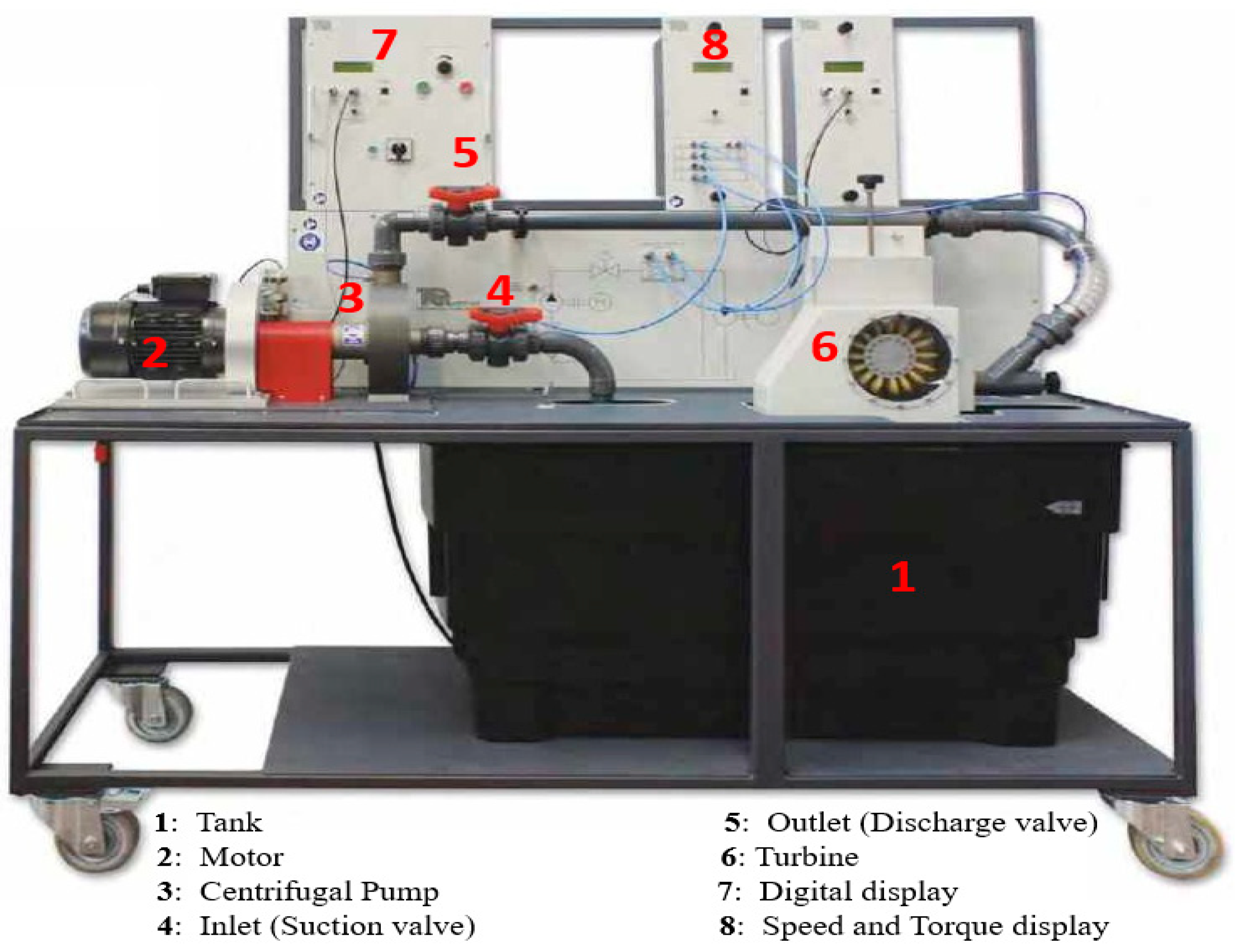
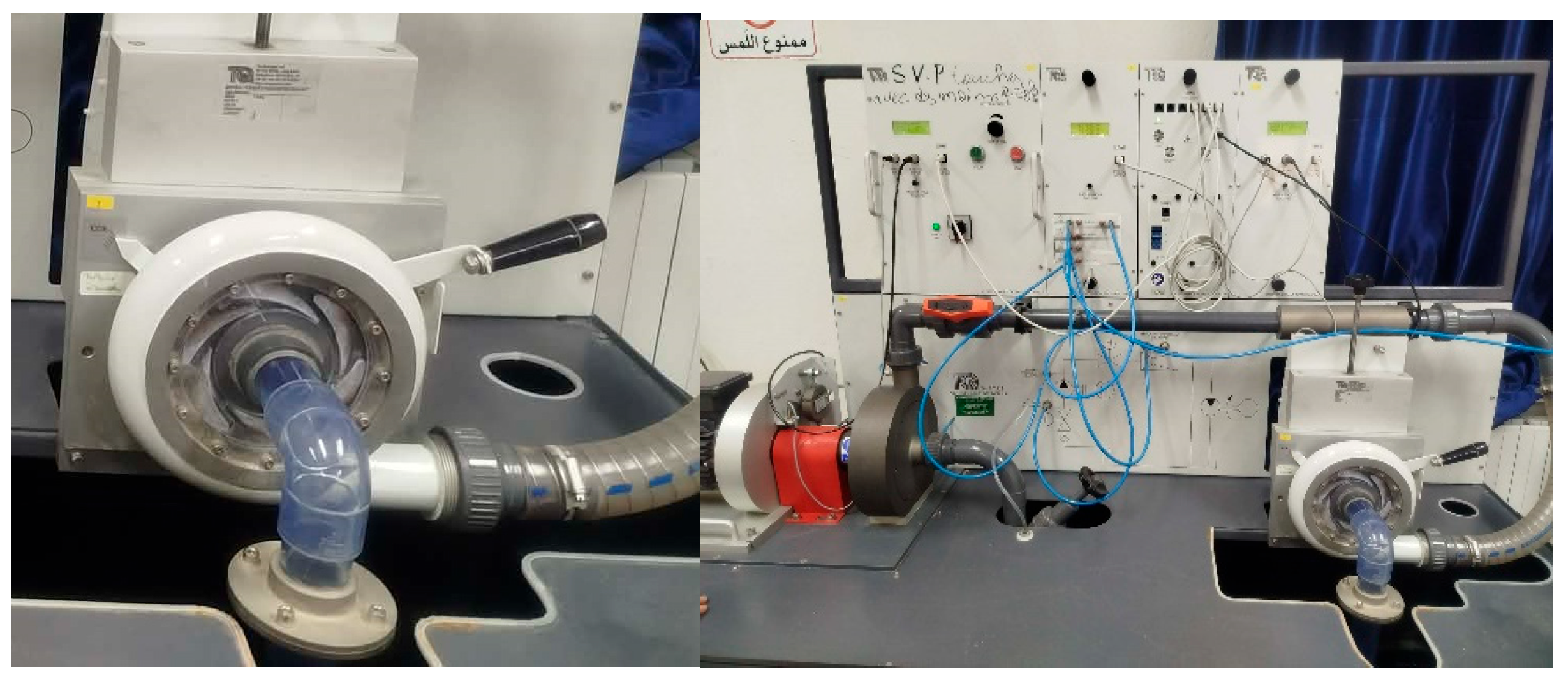
The study’s experimental dataset was acquired using a test bench which is one of the modules in the modular range for studying hydraulic machines by TecQuipment manufactured in United kingdom, as shown in
Figure 1. This controlled experimental setup available in the energy laboratory was used to evaluate turbine performance (Pelton, Kaplan, and Francis turbines) under different operating conditions, particularly different jet-opening and guide-vane positions.
The experimental setup consists of a centrifugal pump, a water tank, an instrumentation panel, a digital pressure display, a Venturi tube for flow-rate measurement, a turbine unit, a turbine dynamometer for measuring torque and pressure, and hydraulic lines equipped with valves. Depending on the test configuration, the turbine unit was fitted with either a Pelton, Kaplan, or Francis turbine.
The hydraulic operation of the system is as follows. The universal dynamometer drives the centrifugal pump, generating high pressure at the outlet and low pressure at the inlet. Water is drawn from the tank through a strainer and a check valve before entering the suction valve at the pump inlet. The pump then delivers the water through the discharge valve and into the Venturi tube. The Venturi tube, together with the pressure display, is used to determine the flow rate. After passing through the Venturi tube, the water is directed toward the selected turbine, namely the Pelton, Kaplan, or Francis turbine, before returning to the tank.
The setup also includes measuring instruments such as flow meters, pressure gauges, and tachometers to monitor key operating parameters, including flow rate, pressure, rotational speed, and torque.
2.1.1. Pelton Turbine
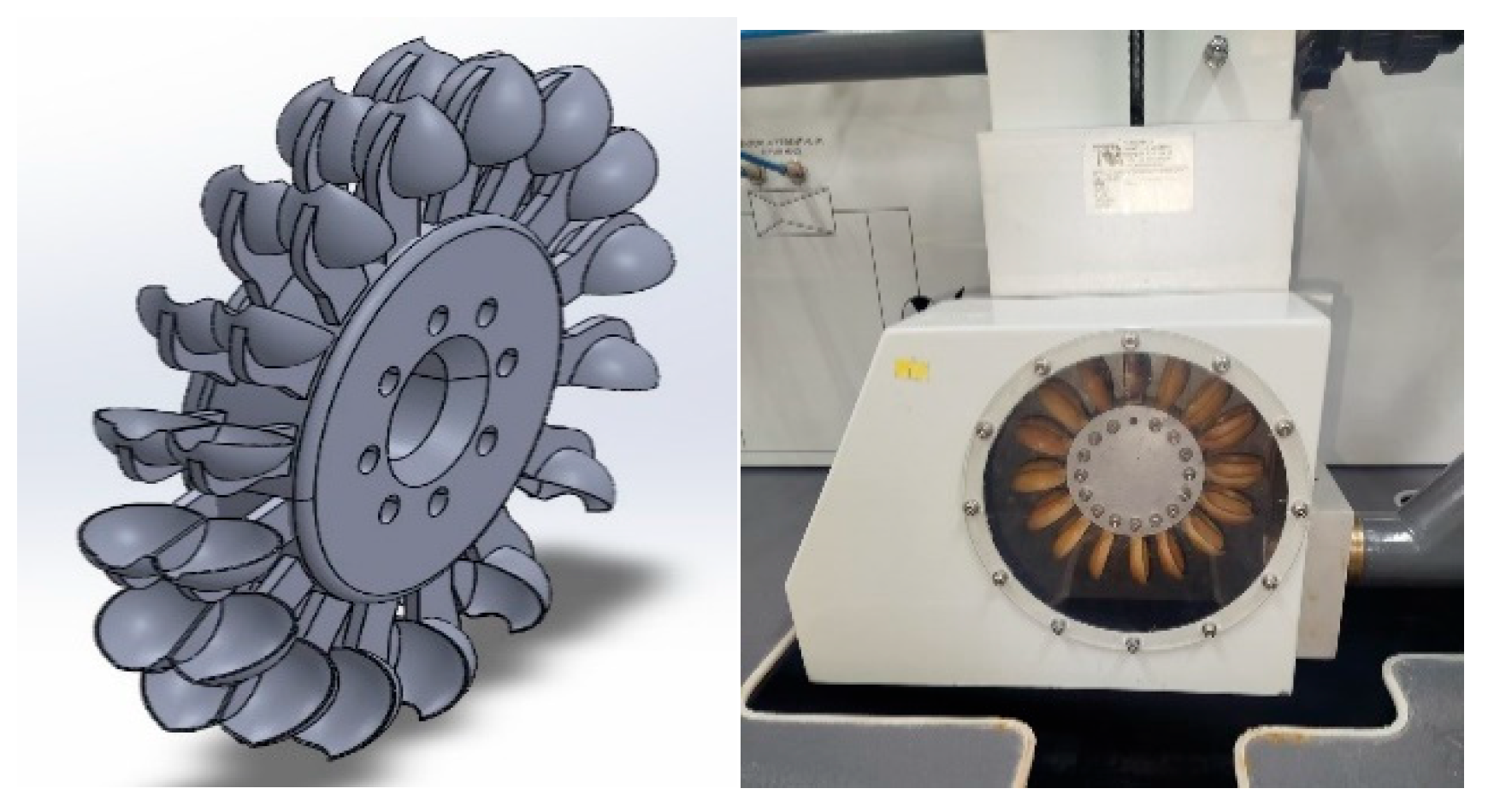
The Pelton rotor is a high-efficiency impulse water turbine. Its moving part consists of a large wheel surrounded by specially contoured buckets that efficiently capture the energy of the water jet impacting them, as shown in
Figure 2. The buckets are arranged in pairs to balance the wheel properly and ensure effective energy transfer. Water enters the turbine through a nozzle located at the end of a needle valve, also referred to as an injector. The nozzle directs the water jet onto the buckets, enabling efficient transfer of energy from the water to the runner. The energy extracted from the water causes the turbine to rotate. The adjustable needle valve makes it possible to investigate the effect of changing the flow velocity of the water jet striking the turbine buckets [
44,
45].
2.1.2. Kaplan Turbine
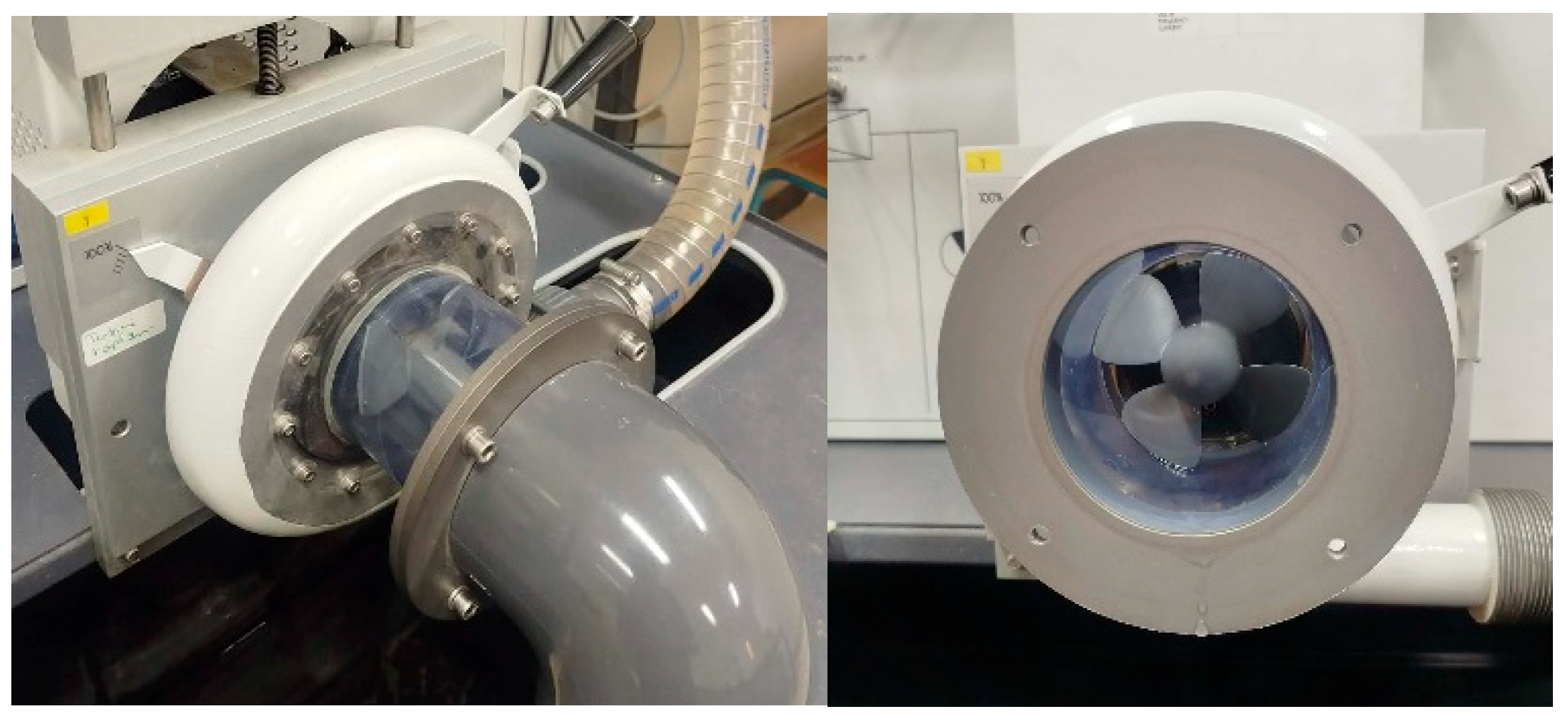
The Kaplan turbine (KT) belongs to the category of axial-flow reaction turbine. Its moving part is a propeller like those used for the propulsion of boats, ships, and submarines. Water enters the turbine perpendicular to its axis of rotation and flows through a spiral volute surrounding the outer part of the propeller. The turbine is equipped with adjustable guide vanes, which can be positioned between fully open and fully closed settings. These guide vanes adjust the water flow entering the turbine and direct the swirling flow at an appropriate angle toward the propeller. The propeller blades absorb the energy of the water, causing the propeller to rotate [
46,
47,
48], as shown in
Figure 3.
2.1.3. Francis Turbine
The Francis turbine (FT) illustrated in
Figure 4 is a radial flow reaction hydraulic turbine designed primarily for medium- to high-head applications, typically between 20 and 300 m. It converts water’s pressure energy and kinetic energy into mechanical energy to drive a generator. Its moving part consists of a radial runner. Water enters the turbine perpendicular to the runner axis and flows through a spiral-shaped volute surrounding the runner. The turbine is equipped with adjustable guide vanes, which can be positioned between fully open and fully closed settings. These guide vanes control the water flow entering the turbine and direct the swirling flow toward the runner at an appropriate angle. The runner blades absorb the energy of the water and convert it into rotational motion [
49,
50,
51,
52,
53].
2.2. Proposed Hybrid Metaheuristic Framework
2.2.1. Extreme Learning Machine (ELM)
The ELM, introduced by Huang et al. [
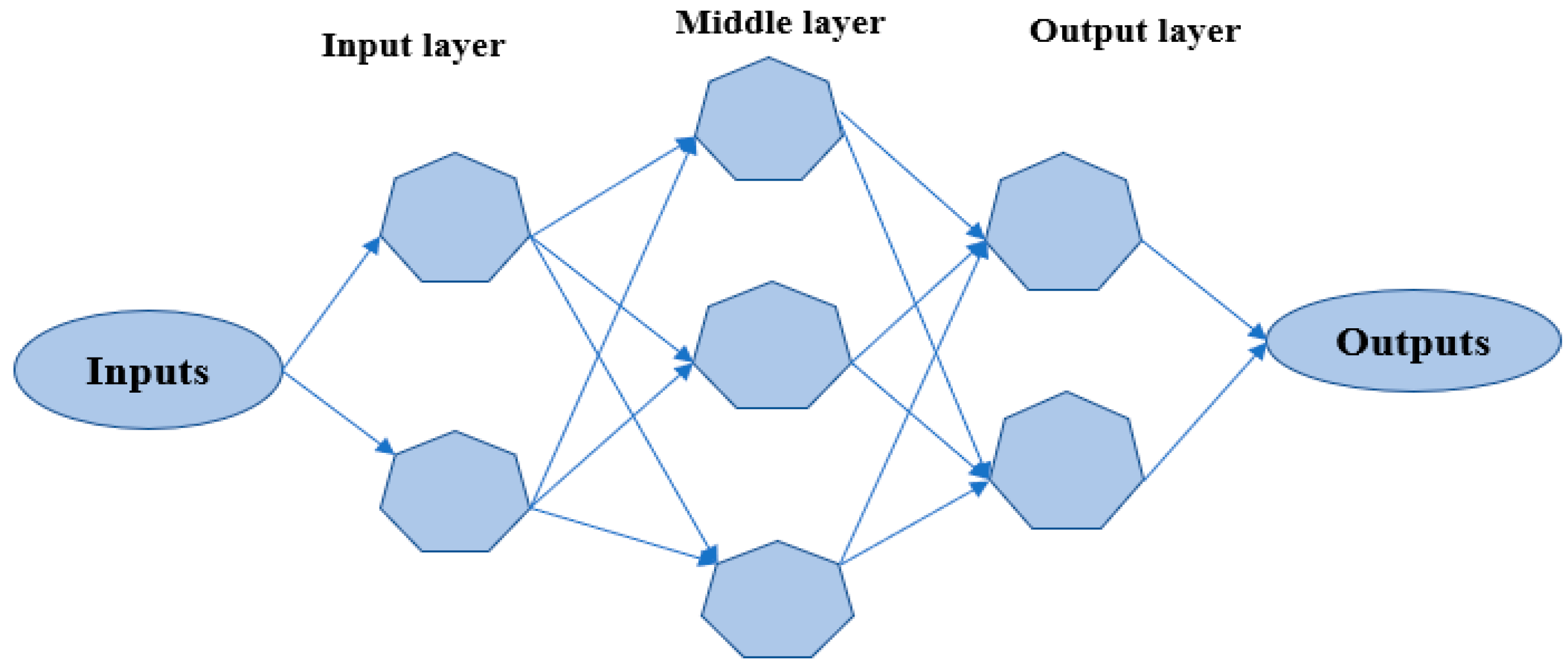
54], is a data-driven learning paradigm aimed for single-hidden-layer feedforward neural networks. It provides an efficient alternative to conventional gradient-based training methods. The core concept of ELM is to decouple the learning process from iterative weight adjustment, allowing the model to achieve high prediction accuracy with relatively low computational cost. The general structure of the ELM model used in this study is depicted in
Figure 5.
In the ELM framework, the connection weights between the input layer and the hidden layer, as well as the hidden-layer biases, are randomly initialized and remain fixed throughout the training process. As a result, the learning task is reduced to estimating only the output-layer weights. This simplification eliminates the need for backpropagation, reduces the risk of local optimum convergence, and significantly accelerates the training process.
Let
denote the experimental dataset, where
represents the input vector and
corresponds to the target output. For an ELM containing
hidden neurons, the predicted network output can be expressed as a linear combination of nonlinear hidden-layer responses:
where
and
are the randomly generated input weights and biases of the
-th hidden neuron,
is a nonlinear activation function, and
denotes the output weight associated with that neuron.
By defining the hidden-layer output matrix
, whose elements are given by:
The ELM model can be reformulated in matrix form as:
where
is the target output matrix. The output weights
are computed analytically using the Moore–Penrose generalized inverse:
where
is the Moore–Penrose inverse of
.
This closed-form solution ensures minimal training errors in the least-squares sense and provides a stable and efficient learning outcome. One of the main strengths of ELM is its ability to approximate highly nonlinear systems using a limited number of training samples. This makes it particularly suitable for experimental engineering problems, where data acquisition is often costly or time-consuming. Moreover, the absence of iterative tuning improves computational efficiency and reduces sensitivity to hyperparameter selection compared with traditional neural networks. Although ELM offers fast computation and efficient learning, the random assignment of input weights and biases can occasionally result in suboptimal models, thereby reducing prediction accuracy and stability. This limitation becomes more significant in complex and highly nonlinear systems, such as hydraulic turbine performance prediction. To address this issue, metaheuristic optimization algorithms, including PSO, GA, WOA, and DE, can be employed to fine-tune the network parameters and improve overall model performance.
2.2.2. Metaheuristic Optimization Algorithms
Advanced optimization techniques called metaheuristic algorithms are used to solve nonlinear and complex problems that are challenging to solve with traditional optimization techniques. Natural, biological, physical, or social occurrences are frequently the source of inspiration for these algorithms. They operate through iterative procedures that balance exploration of the search space with exploitation of promising solutions.
The collective behaviour of swarms serves as an inspiration for particle swarm optimization, or PSO. In PSO, each candidate solution, referred to as a particle, adjusts its position based on its own best experience and the best experience of the swarm. This enables the algorithm to search efficiently for optimal or near-optimal solutions.
Genetic Algorithms (GAs) are inspired by evolutionary processes. They use mechanisms such as crossover, selection, and mutation to generate improved candidate solutions over successive generations. These mechanisms allow GAs to explore large and complex search spaces and identify high-quality solutions.
The Whale Optimization Algorithm (WOA) is inspired by the hunting behaviour of humpback whales. It simulates the bubble-net hunting strategy used by whales to encircle prey. This mechanism allows the algorithm to exploit promising regions of the search space while maintaining diversity among candidate solutions.
Differential Evolution (DE) is a population-based optimization algorithm that improves candidate solutions through differential mutation and recombination. It is particularly effective for continuous optimization problems and is known for its robustness and simple implementation.
By combining exploration and exploitation strategies, these metaheuristic algorithms provide flexible, reliable, and computationally efficient tools for solving high-dimensional and complex engineering optimization problems.
2.3. Proposed Framework
In this study, the proposed framework was designed to evaluate and improve the predictive performance of hybrid learning models using metaheuristic optimization algorithms. In the first stage, a PSO-based Extreme Learning Machine model, denoted as PSO-ELM, was developed to provide accurate predictions of hydraulic turbine performance. Its performance was then compared with other optimized ELM models, including Genetic Algorithm-based ELM (GA-ELM), Differential Evolution-based ELM (DE-ELM), and Whale Optimization Algorithm-based ELM (WOA-ELM). This comparison enabled a systematic assessment of different optimization strategies for improving ELM prediction accuracy.
In the second stage, the PSO-ELM model was further benchmarked against other hybrid learning architectures, specifically PSO-ANFIS and PSO-MLP, to evaluate its relative efficiency and predictive capability. This two-step comparison made it possible to identify the most suitable optimization strategy for ELM and to assess the superiority of the proposed PSO-ELM framework in terms of accuracy, stability, and robustness for hydraulic turbine performance prediction.
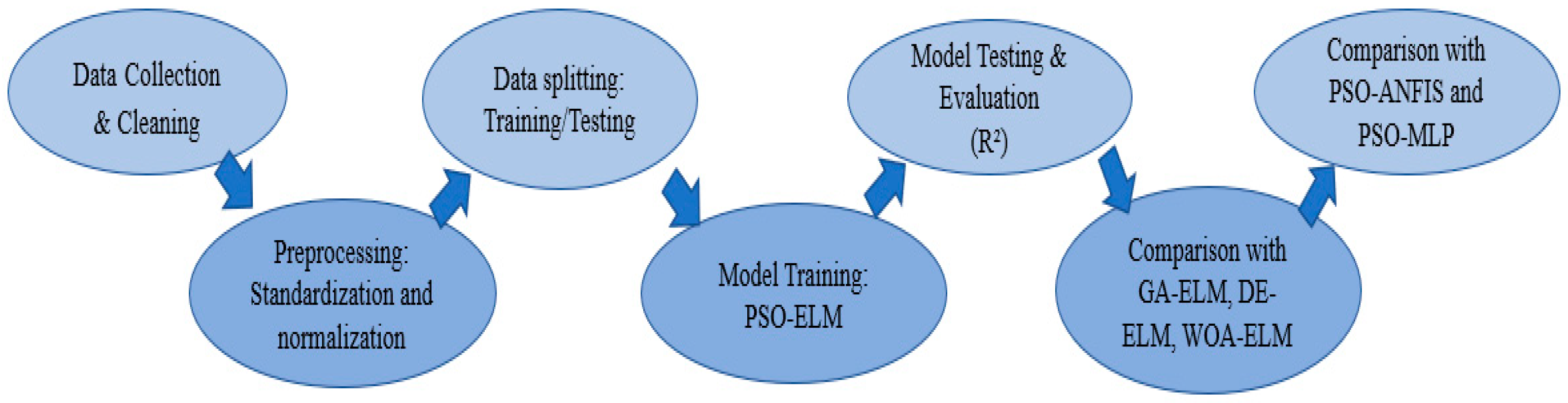
The prediction process followed a structured workflow to ensure accurate and reliable results. First, the experimental dataset where jet-opening position (25%, 50%, 75% and 100%) and rotational speed were used as input variables, while brake power and efficiency were used as output variables, was prepared through data cleaning, during which missing values, outliers, and inconsistencies were identified and addressed to improve data quality. The data were subsequently pre-processed through standardization and normalization methods to adjust the input variables to a uniform range and enhance the convergence and effectiveness of the learning algorithms.
Following pre-processing, the dataset was divided into training and testing subsets. The models were trained using the training data and then evaluated using unseen testing data to assess their generalization ability. After model training, the predictive performance was examined using the coefficient of determination, , as expressed in Equation (5). Cross-validation was also applied during model evaluation to improve the reliability of the assessment and reduce bias.
Overall, this structured approach ensures that the predictive framework operates efficiently, minimizes bias, and produces reliable predictions for complex hydraulic turbine systems. The complete prediction and model comparison workflow are illustrated in
Figure 6.
where
is the experimental value,
is the predicted value,
is the mean of the experimental values, and
is the number of data samples.
3. Results and Discussion
3.1. Experimental Results with Pelton Turbine
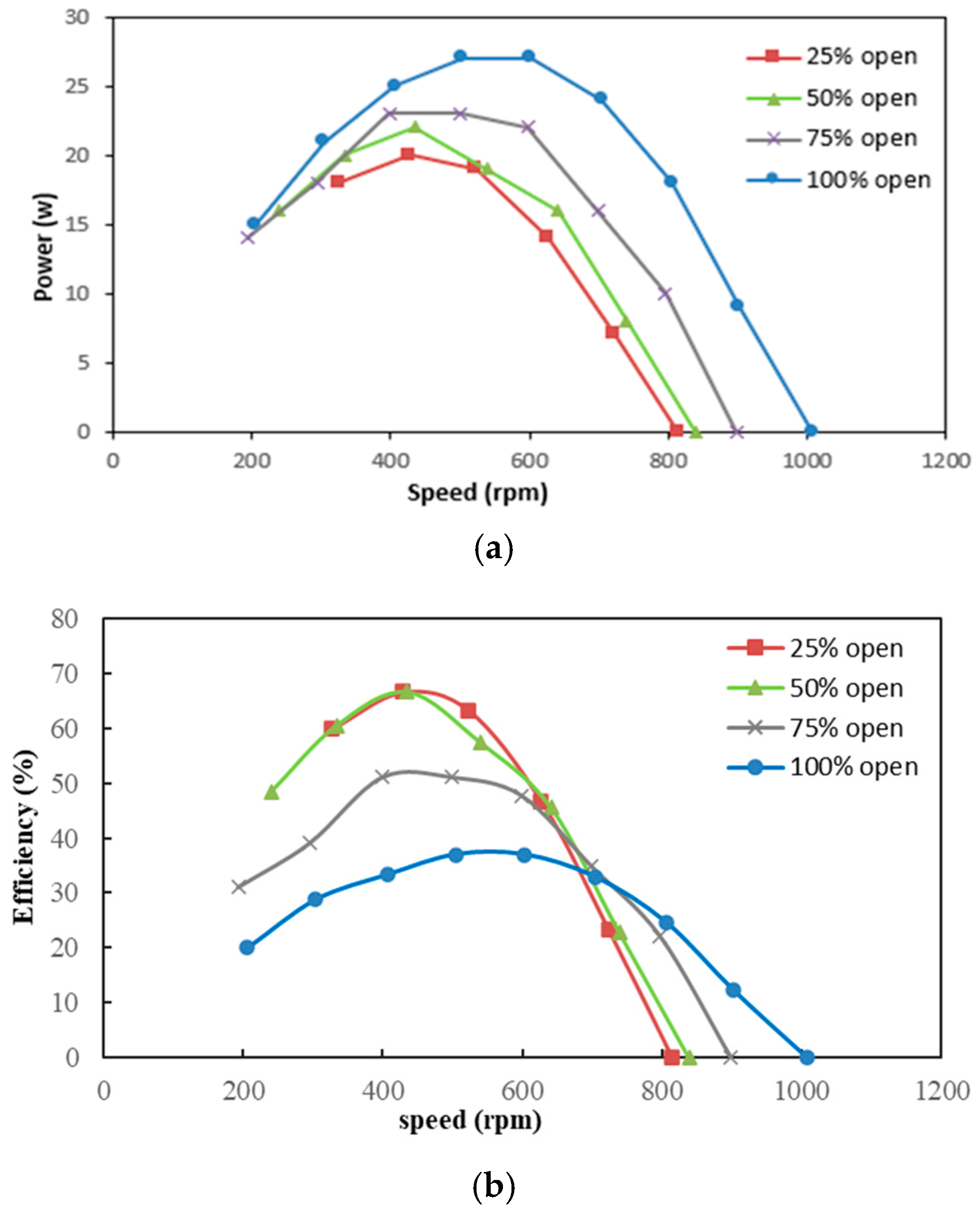
In this part, a detailed experimental analysis is conducted using a precision-engineered Pelton turbine test bench to investigate the effect of needle valve position on efficiency (η), brake power (P), and torque (T). Four different jet openings, α = 25%, 50%, 75%, and 100%, were systematically analysed at a fixed inlet pressure of 0.85 bar.
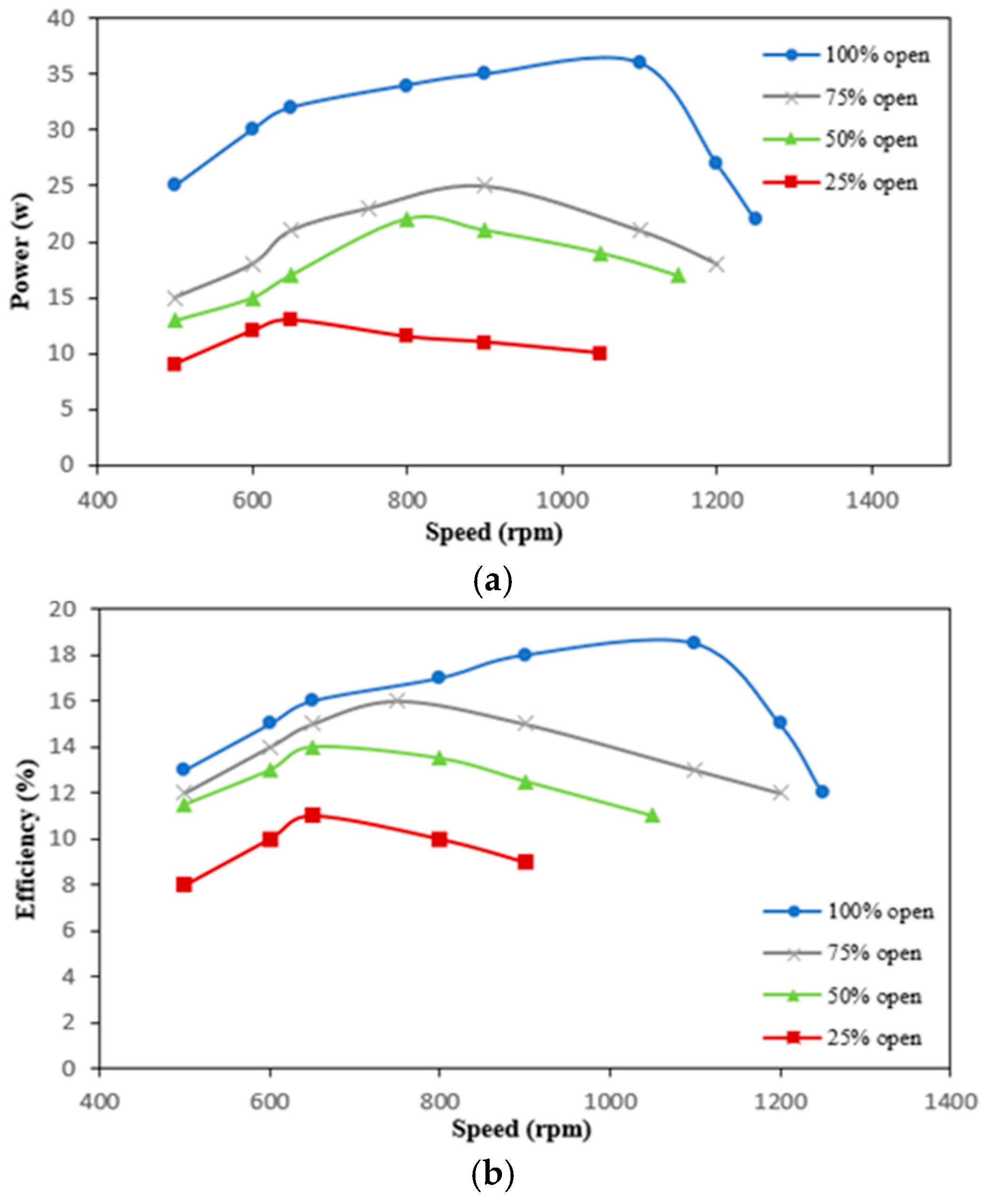
Figure 7 shows the variations in power, torque, and efficiency as functions of wheel speed for different jet-opening conditions.
Figure 7a presents the variation in brake power, and
Figure 7b presents the variation in efficiency. These curves illustrate the relationship between needle valve position and the main turbine performance indicators.
As shown in
Figure 7a, brake power initially increases with increasing wheel speed, reaches a pic value, and then decreases slightly as the wheel speed increases further. The maximum brake power recorded at a 100% jet opening was 27 W, whereas at a 25% opening, the maximum brake power reached 20 W. The peak brake power occurred at a wheel speed of 504 rpm.
Figure 7b shows a characteristic parabolic efficiency curve, where efficiency initially increases with wheel speed, reaches an optimum value, and then decreases slightly. This behaviour can be explained by the connection between brake power and the input power supplied to the turbine. The results show that the maximum efficiency of 66.7% was achieved at a 25% needle valve opening, whereas the lowest efficiency, 37%, was recorded at full jet opening. This confirms the importance of flow regulation for Pelton turbine performance. Overall, the results indicate that efficiency is inversely affected by the jet opening, whereas brake power increases with increasing jet opening.
3.2. Experimental Results with Kaplan Turbine
In this part, a detailed experimental analysis is presented to investigate the effect of guide-vane position on efficiency (η) and brake power (P) at an inlet pressure of 0.85 bar. Four guide-vane positions, α = 25%, 50%, 75%, and 100%, were systematically analysed under controlled operating conditions.
Figure 8a shows the variation in brake power as a function of wheel speed for different guide-vane positions. It can be clearly observed that brake power initially increases with increasing wheel speed, reaches a maximum value, and then decreases sharply as the wheel speed increases further. The peak brake power of 36 W occurred at a wheel speed of 1100 rpm. The results indicate that the best operating condition was obtained at the highest guide-vane position, corresponding to 100% opening.
Figure 8b shows the variation in efficiency as a function of wheel speed for different guide-vane positions. The maximum efficiency of 18.5% was achieved within a speed range of approximately 900–1200 rpm at 100% opening. This behaviour can be attributed to the better utilization of the kinetic energy of the fluid under full-load conditions. In contrast, at 25% opening, losses associated with turbulence and flow separation reduced the turbine efficiency. Above 1100 rpm, the efficiency decreased sharply, probably because of cavitation and increased hydrodynamic losses.
For optimal performance, the Kaplan turbine should operate close to its maximum-efficiency region. The results indicate that guide-vane opening affects both brake power and efficiency. They also show that the optimum operating range depends on the guide-vane position. As the opening decreases, the optimal operating speed range becomes narrower and shifts toward lower rotational speeds.
3.3. Experimental Results with Francis Turbine
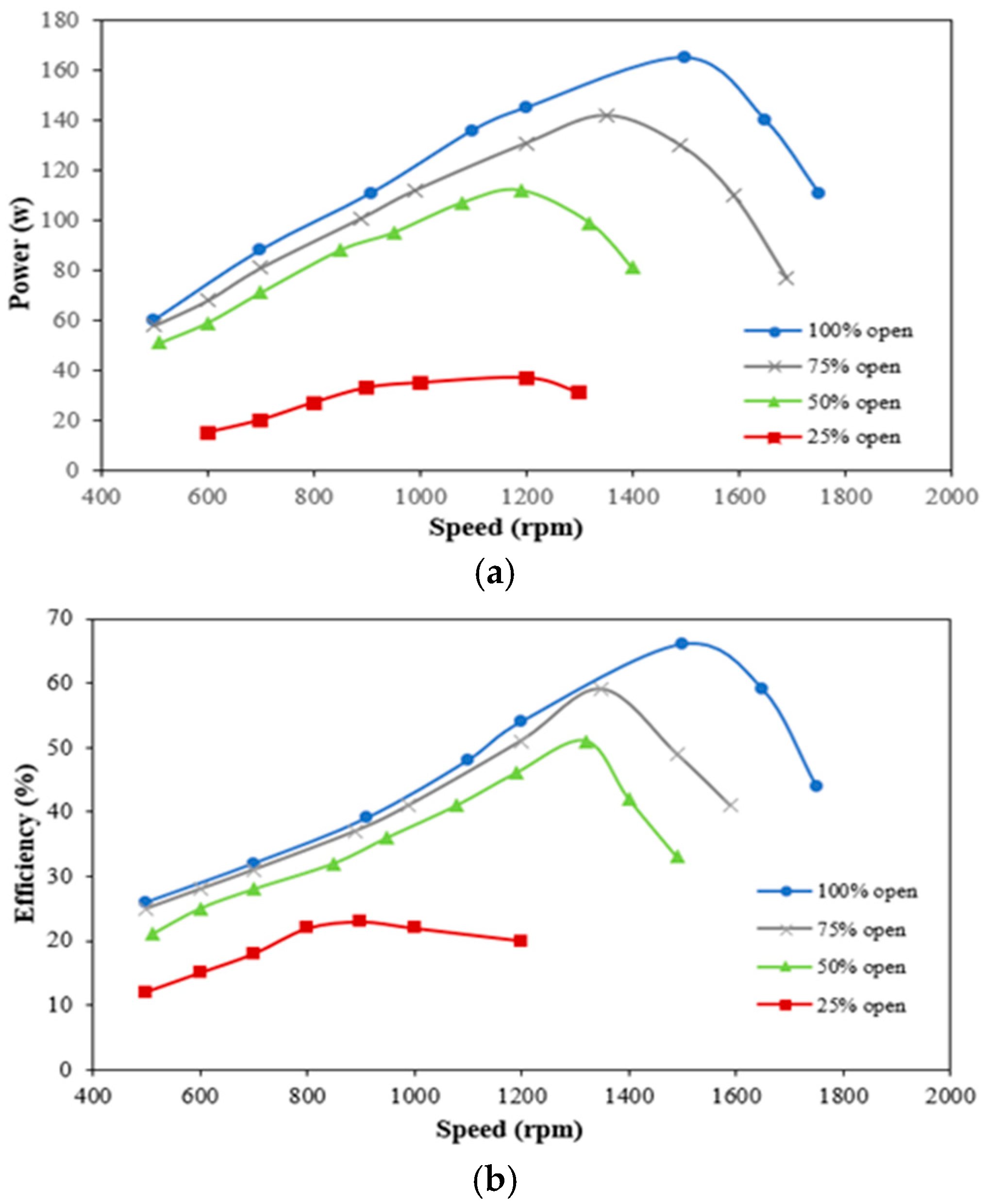
This section presents an analysis of the performance characteristics of a Francis turbine operating under different guide-vane openings and pressure of 85 bar. The objective was to determine the best operating point based on the measured performance parameters. The performance characteristic curves of the Francis turbine, namely brake power in function of speed and efficiency in function of speed, were obtained for different guide-vane openings, as shown in
Figure 9.
The brake power curves show an initial increase with increasing wheel speed, reaching a peak before decreasing slightly. The maximum brake power recorded at 100% guide-vane opening was 165 W, corresponding to a rotational speed of 1500 rpm. By contrast, at 25% opening, the maximum brake power reached 37 W. The increase in brake power can be attributed to the strong interaction between torque and angular velocity. However, to achieve optimal energy production, it is important to maintain the turbine speed close to its nominal value of 1500 rpm.
The efficiency trends, presented in
Figure 9b, show a characteristic parabolic behaviour, where efficiency initially increases with speed, reaches an optimum value, and then decreases slightly. The maximum efficiency of 66% was achieved at 100% guide-vane opening, corresponding to a rotational speed of 1500 rpm. Above 1500 rpm, cavitation may occur. The resulting decrease in efficiency can be associated with cavitation saturation, which modifies the pressure distribution by restricting the pressure field to the vapor pressure. The lowest efficiency, 23%, was recorded at a low guide-vane opening of 25%. Under this condition, flow turbulence and unregulated flow dispersion increase hydraulic losses, leading to reduced efficiency. This confirms the importance of proper flow regulation.
Overall, the performance results obtained for different guide-vane openings show that the guide-vane opening affects both brake power and efficiency. As the opening decreases, hydraulic losses become more significant, and the optimum operating region shifts. Therefore, the Francis turbine performs best at high guide-vane openings, particularly close to 100%, where both brake power and efficiency reach their highest values.
Overall, the key findings illustrated in the
Table 1 below can be outlined as follows:
The Pelton runner achieved its optimum efficiency at a low jet opening, reaching 66.7% at 25% opening. At higher valve openings, namely 50%, 75%, and 100%, water was injected at higher pressure and flow rates, which disturbed the jet structure and caused jet dispersion. This significantly reduced the turbine efficiency. As a result, although brake power increased with increasing jet opening, the efficiency decreased outside the optimal operating condition.
For the Kaplan turbine, the best efficiency was observed at the highest guide-vane opening, reaching 18.5% at 100% opening. Even at reduced guide-vane openings, the efficiency remained relatively stable, with values of 16% at 75% opening, 14% at 50% opening, and 11% at 25% opening. Brake power also varied gradually with guide-vane opening, without any sudden decrease in efficiency. This indicates that the Kaplan turbine provides relatively good operating flexibility under variable-flow conditions.
For the Francis turbine, efficiency remained relatively high over a wide opening range, particularly between 75% and 100% guide-vane opening. This behaviour can be explained by the reaction design of the turbine, which allows the water flow to be regulated using adjustable guide vanes. The output power reached its maximum value at full opening. However, at lower openings, particularly 50% and 25%, hydraulic losses increased, resulting in reduced efficiency.
Based on the above findings, Pelton turbines are highly sensitive to opening variations and experience a significant loss of efficiency at partial load. In contrast, Kaplan and Francis turbines show better performance under variable-flow operation and offer greater operating flexibility. Therefore, the choice of turbine type should consider not only the site conditions, such as head and flow rate, but also the intended operating mode, whether fixed-load or variable-load operation.
Despite continuous efforts to predict and optimize hydraulic turbine performance, actual turbine behaviour remains strongly influenced by dynamic variations in operating conditions. In this context, the integration of machine-learning (ML) methods offers an innovative approach for using experimental and real-time data to improve modelling, optimize regulation, and anticipate the operational behaviour of hydraulic systems. Therefore, in the following section, a PSO-ELM algorithm is developed to predict turbine performance using the experimental data analysed above. Based on the coefficient of determination, R2, the proposed model is compared with other predictive algorithms.
3.4. Results with PSO-ELM Model
This section presents the performance evaluation of the proposed PSO-ELM model and compares it with other optimization-based ELM models, namely GA-ELM, DE-ELM, and WOA-ELM. In addition, the PSO-ELM model is compared with other hybrid learning models, including PSO-ANFIS and PSO-MLP. The evaluation focuses on prediction accuracy using the coefficient of determination, .
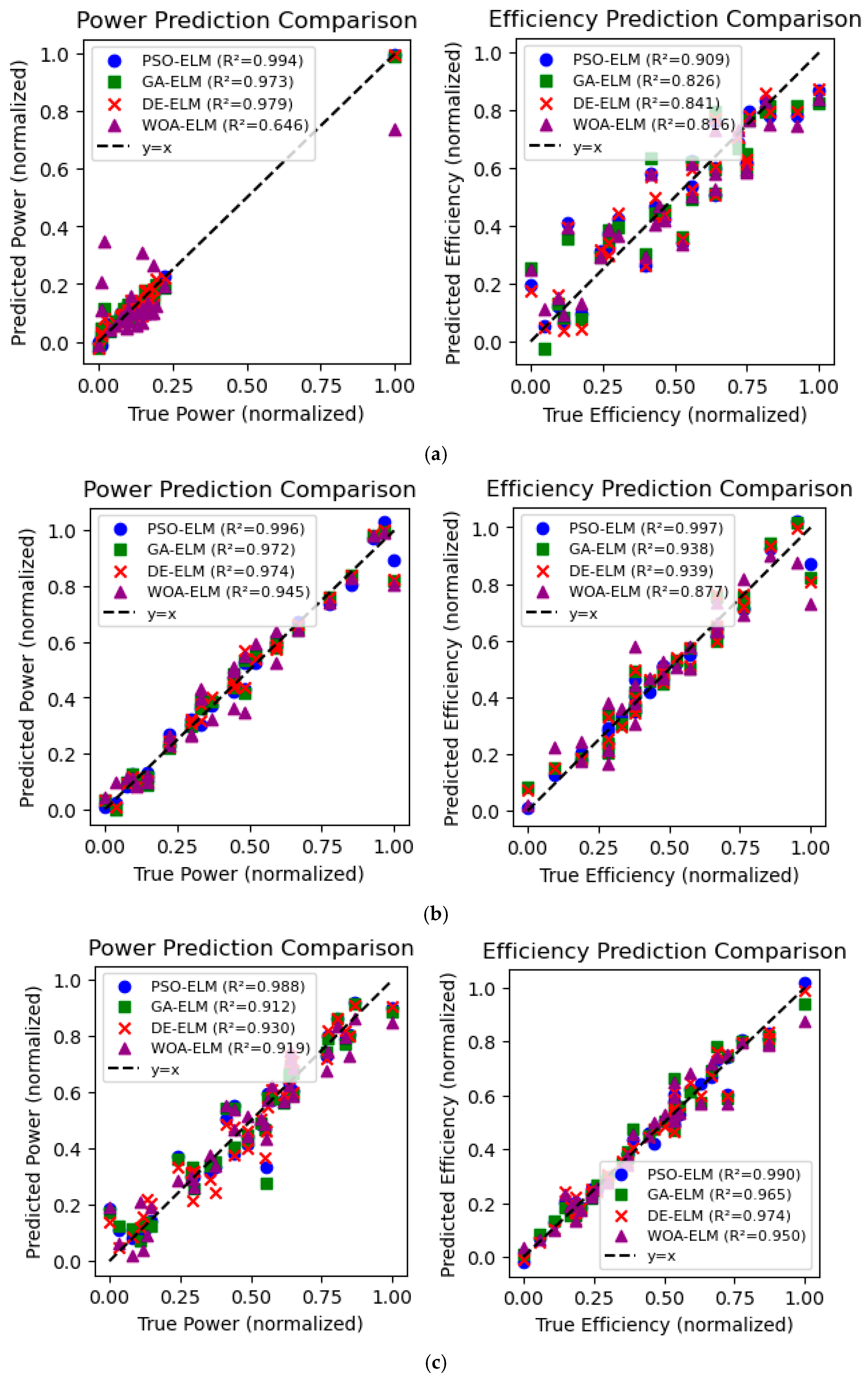
Figure 10 presents the prediction results for power and efficiency for the three tested turbines, namely Pelton, Kaplan, and Francis turbines. As shown in
Figure 10, the PSO-ELM model achieved high prediction accuracy for all tested turbine configurations. The predicted values closely followed the experimental values, indicating that the proposed model was able to capture the nonlinear relationship between the input variables, such as jet opening or guide-vane opening and rotational speed, and the output variables, namely brake power and efficiency.
The results show that the PSO-ELM model consistently outperformed GA-ELM, DE-ELM, and WOA-ELM across the tested datasets. The parameters optimized by PSO enabled the ELM model to reach higher values, demonstrating improved predictive capability and reduced sensitivity to the random initialization of weights and biases. This confirms that PSO is effective in guiding the ELM model toward an optimal or near-optimal solution for complex nonlinear prediction problems.
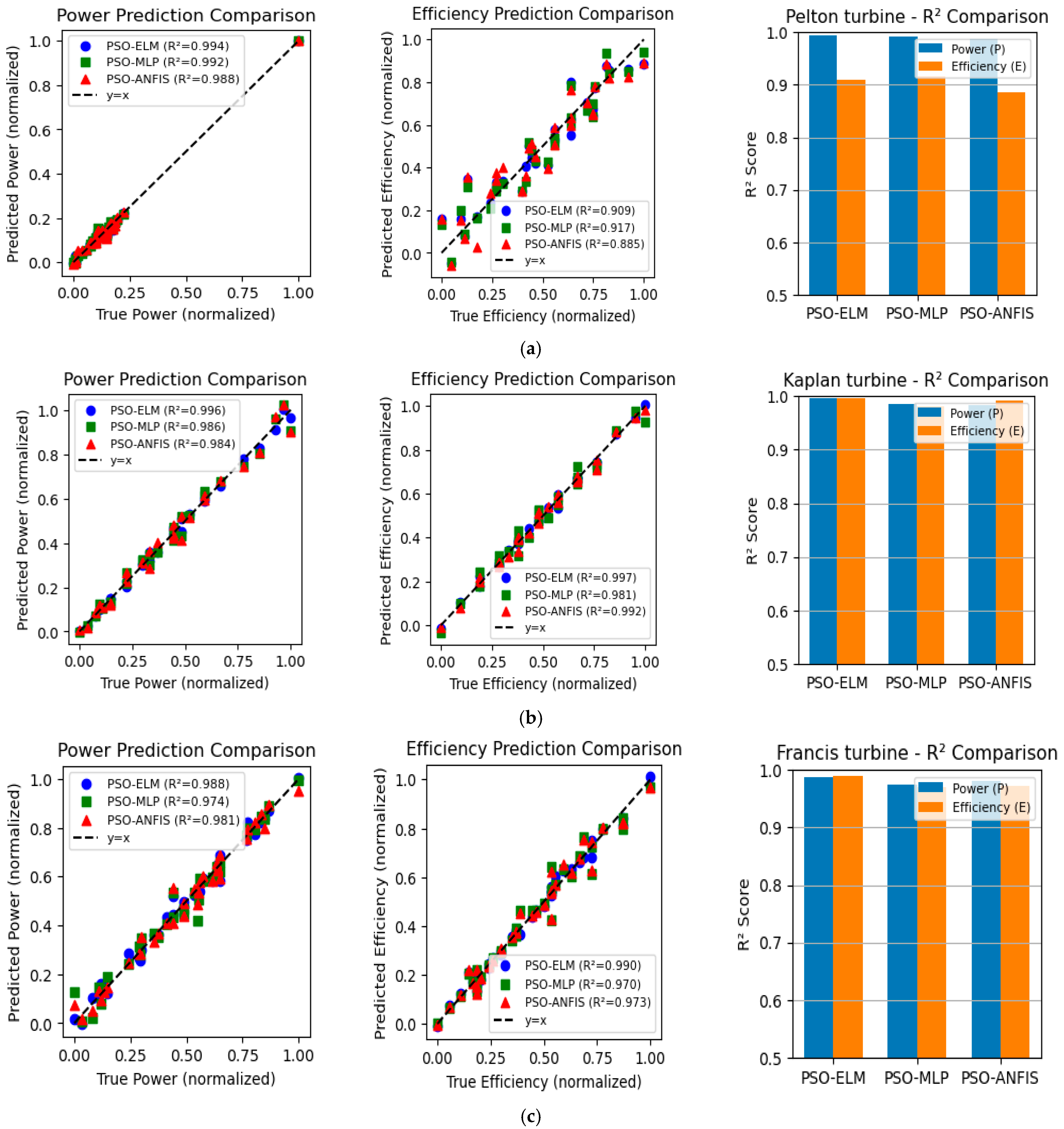
Figure 11 compares the performance of PSO-ELM with PSO-ANFIS and PSO-MLP. The results indicate that PSO-ELM achieved comparable or superior predictive performance, particularly in terms of convergence speed and model robustness. Although PSO-ANFIS and PSO-MLP produced similar
values in some cases, PSO-ELM offered higher computational efficiency because of its simpler network architecture and shorter training time.
Overall, the proposed PSO-ELM framework provides a robust and reliable predictive tool for hydraulic turbine performance. Compared with the other optimization-based ELM models, namely GA-ELM, DE-ELM, and WOA-ELM, the PSO-ELM model achieved higher values, indicating superior prediction accuracy and stability. Furthermore, benchmarking against PSO-ANFIS and PSO-MLP confirmed that PSO-ELM maintains competitive performance while offering better computational efficiency. The integration of PSO for parameter optimization effectively reduces the limitations associated with random initialization in ELM, thereby improving reproducibility and convergence. These findings confirm the suitability of the proposed hybrid approach for small or high-dimensional datasets and make it particularly relevant for engineering prediction applications where both accuracy and efficiency are required.





 ,
,