Nature-Based Solutions: Evaluation of Natural Plant-Derived Coagulants for Sustainable Water Treatment



Highlights
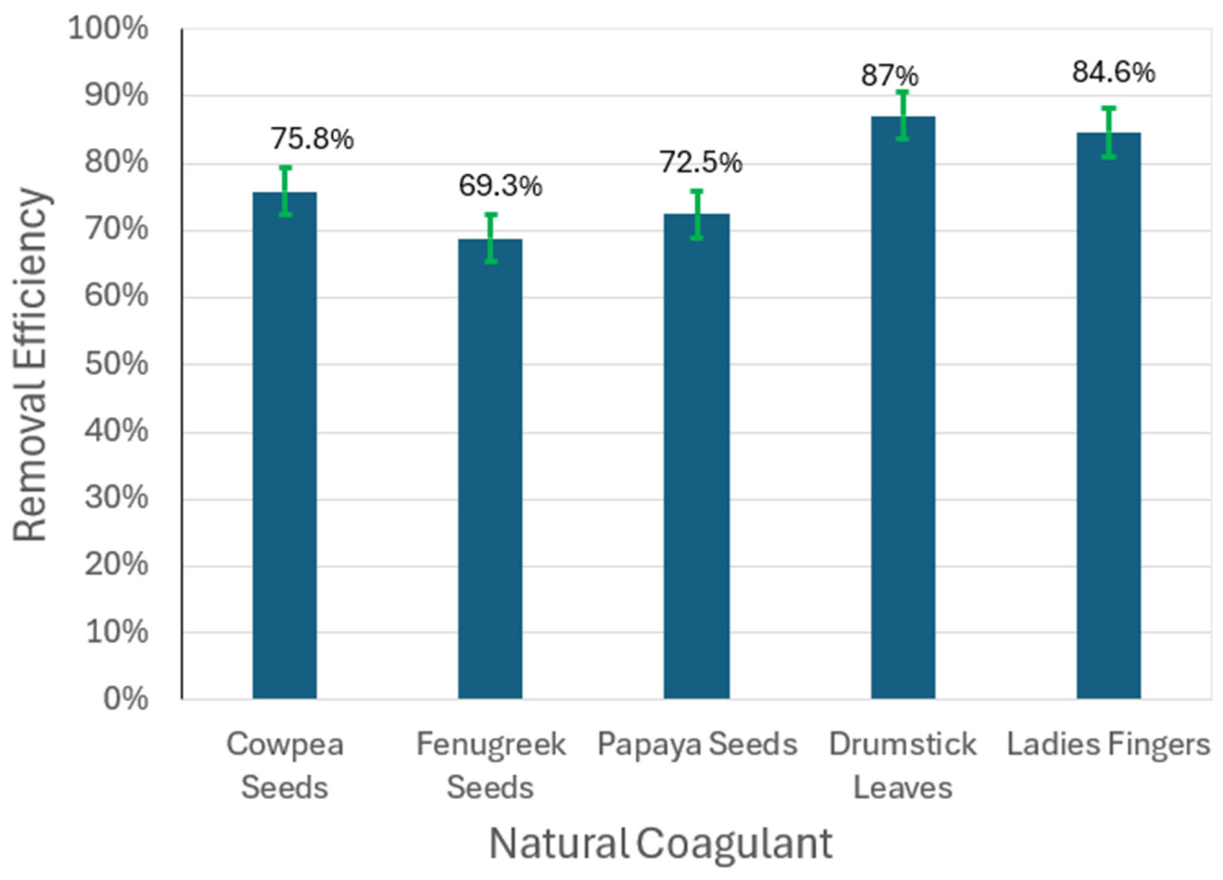
- Moringa oleifera demonstrated high turbidity removal efficiency (87%), comparable to alum.
- The developed low-cost treatment system effectively reduced key pollutants to ac-ceptable limits.
- Plant-based coagulants offer a sustainable and eco-friendly alternative for water treatment in resource-limited regions.
Abstract
1. Introduction
- To characterize the physicochemical quality of surface water through systematic grab sampling and laboratory analysis of key water quality parameters.
- To evaluate and compare the coagulation performance of selected natural plant-derived coagulants with conventional alum, with particular emphasis on turbidity removal efficiency, floc formation characteristics, and optimum dosage determination.
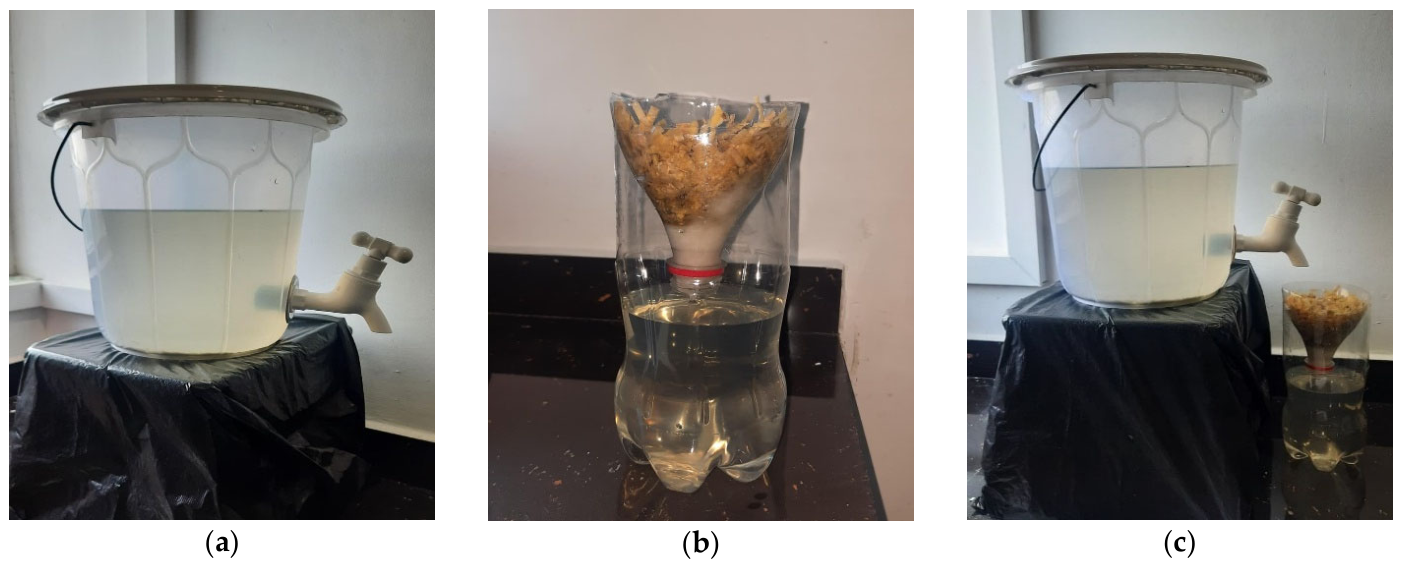
- To design and assess a low-cost, integrated water treatment system incorporating coagulation, flocculation, sedimentation, and filtration using locally available materials, to promote sustainable and climate-resilient water treatment solutions for developing countries.
2. Experimental Setup and Procedure
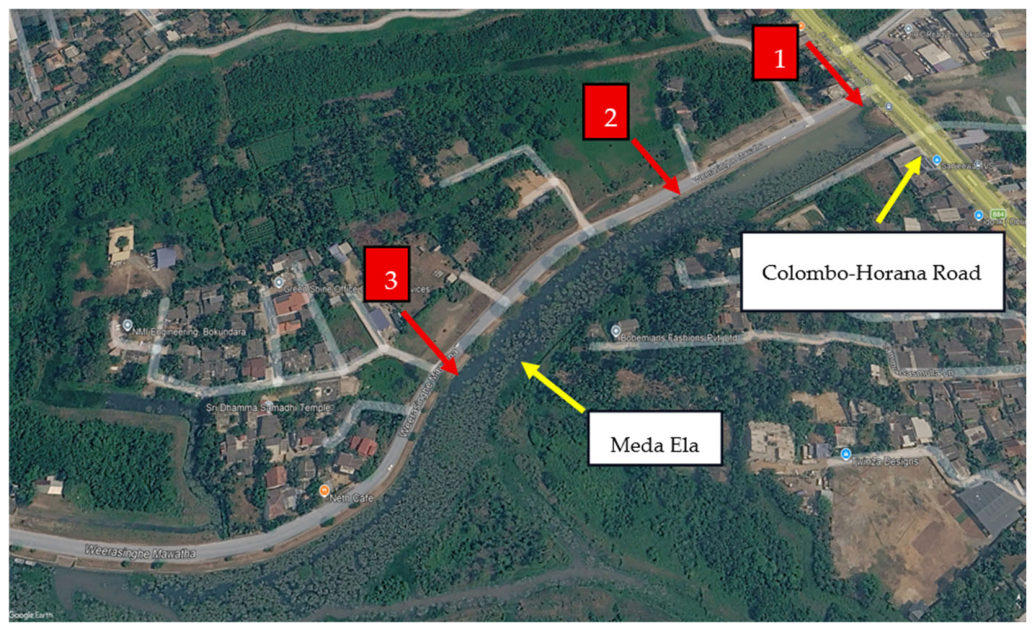
2.1. Selection of Sampling Locations and Sample Collection
2.2. Surface Water Quality Parameter Analysis
2.3. Jar Test Analysis and Optimization of Natural Coagulants
2.4. Development of Water Treatment Unit
3. Results and Discussion
3.1. Analysis of Raw Water Quality
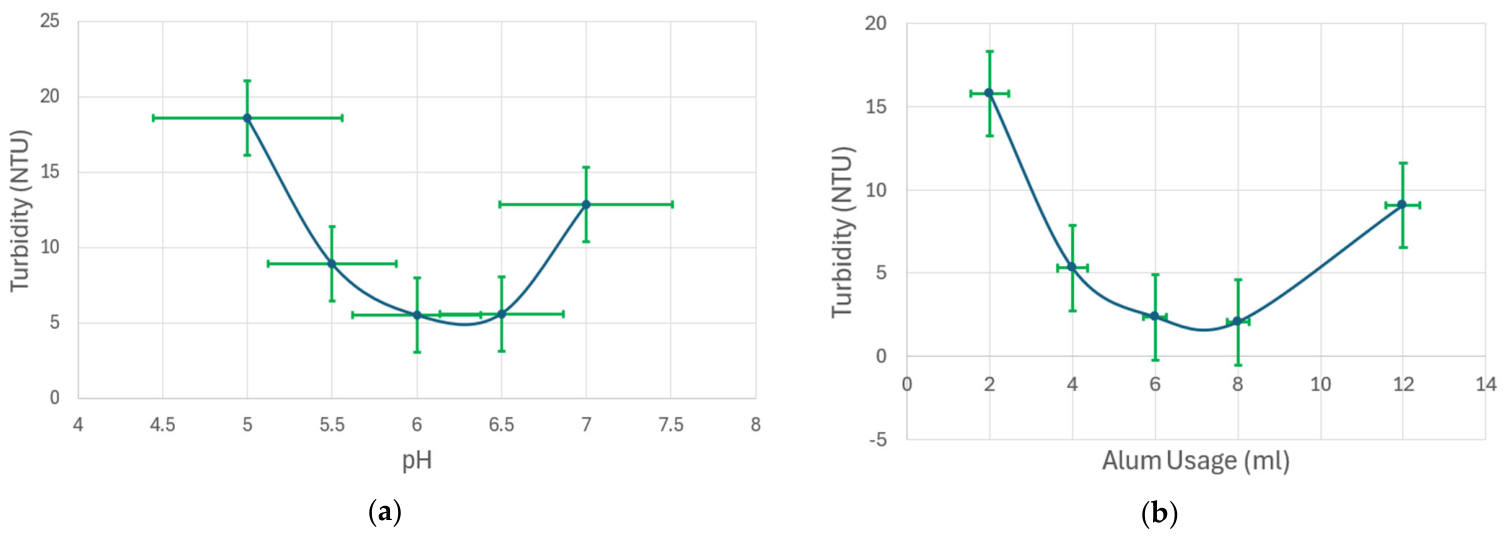
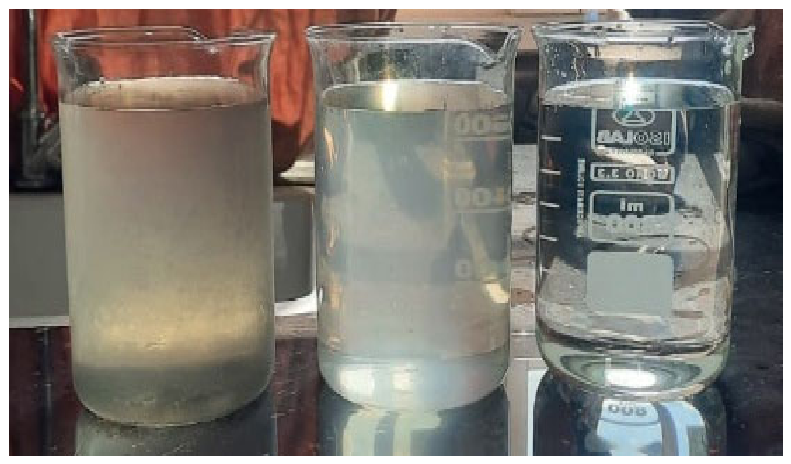
3.2. Jar Test Using Alum
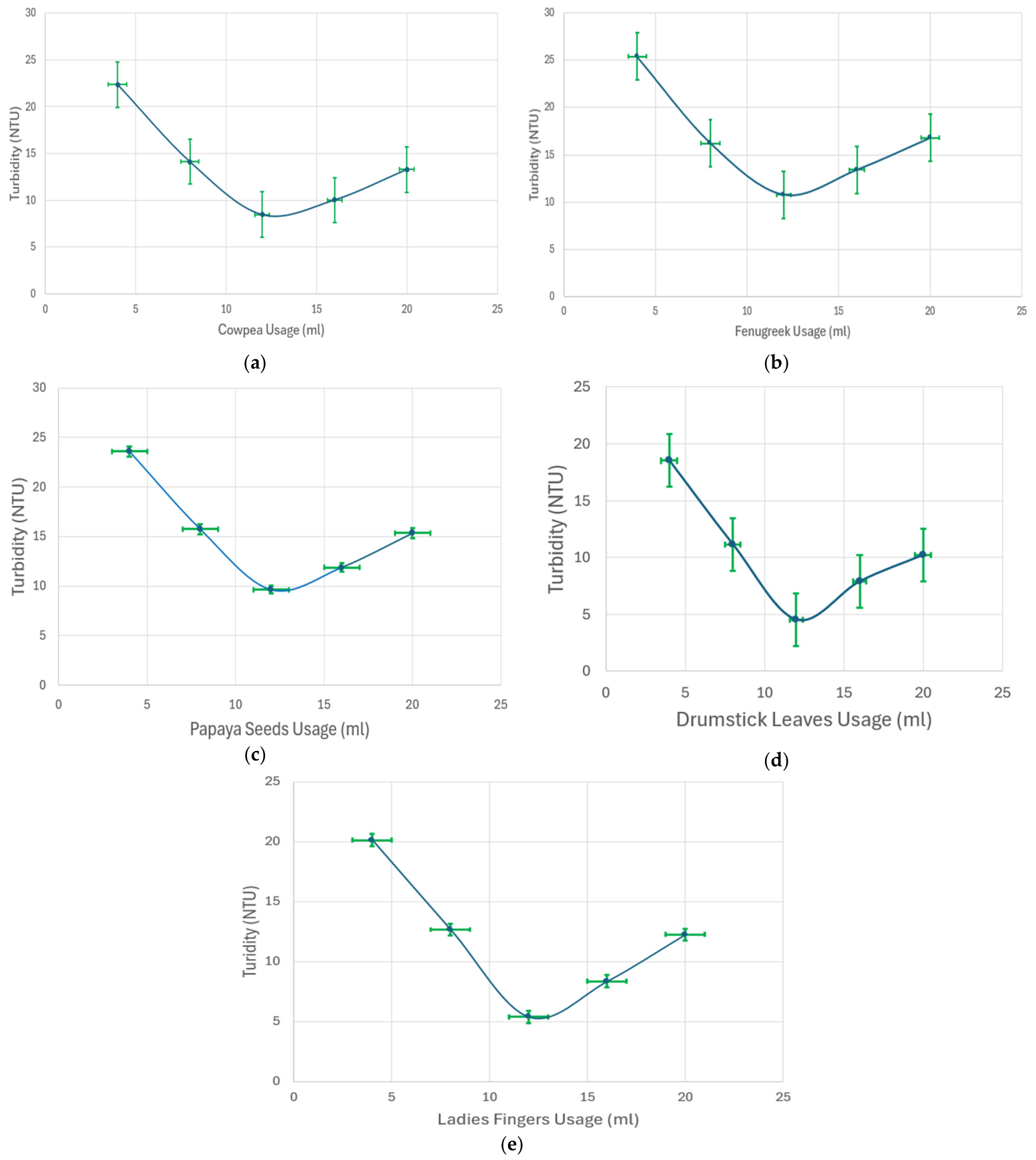
3.3. Jar Tests Using Natural Coagulants
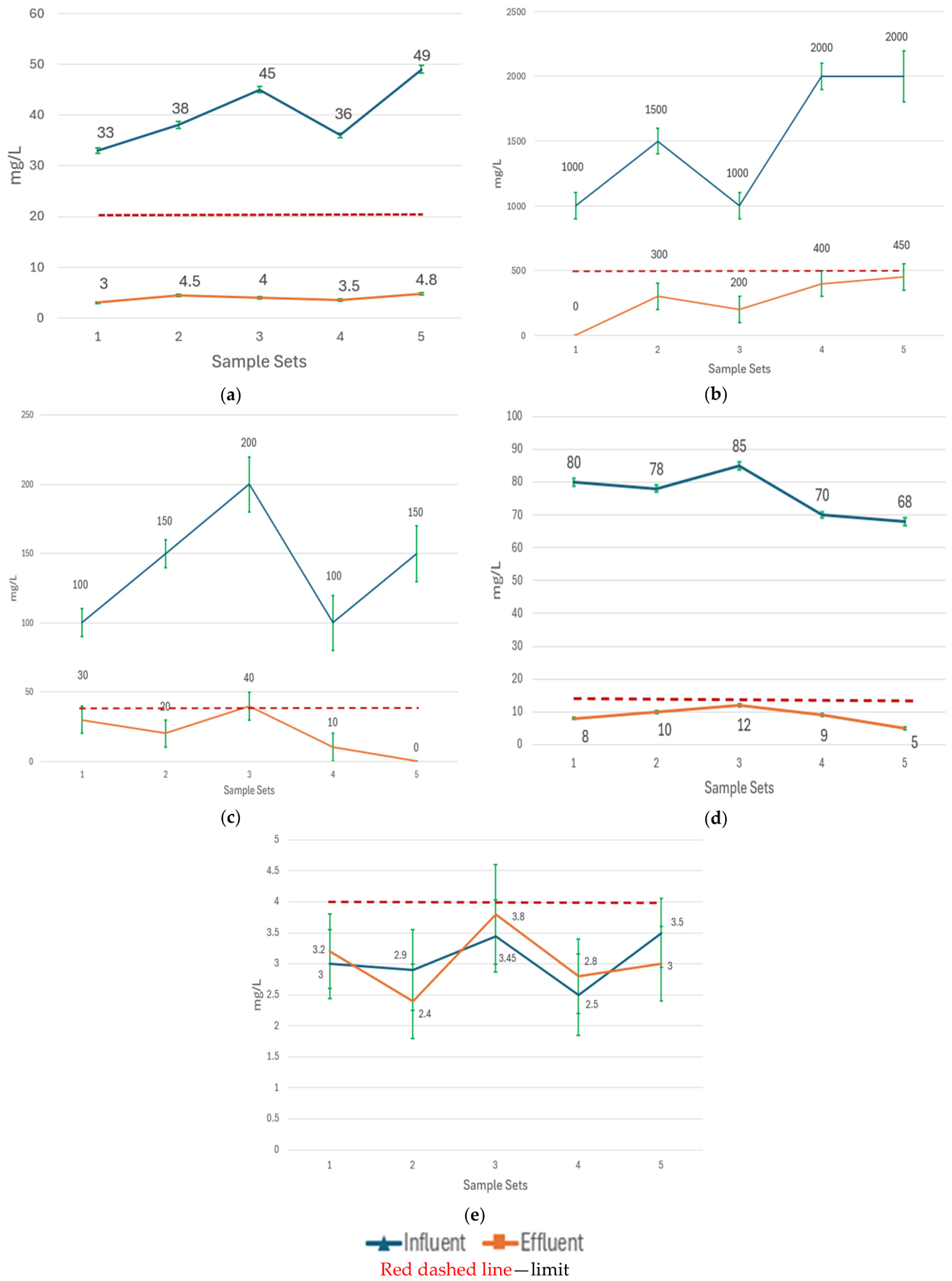
3.4. Sample Analysis of the Treatment System for Different Influents
3.5. Sample Analysis of the Treatment System for the Same Influent
3.6. Sustainability Aspects of the Treatment System
4. Conclusions
Author Contributions
Funding
Data Availability Statement
Conflicts of Interest
References
- Hassan, M.R.; Khan, M.F.; Mahmud, M.S.; Samad, A. Potential Factors Affecting Watershed Deterioration: A Critical Review. Water Air Soil Pollut. 2025, 236, 607. [Google Scholar] [CrossRef]
- Dange, S.; Arumugam, K.; Chintala, S.R.; Ladel, J.; Vijayaraghavalu, S.S. Assessing Groundwater Integrity: Insights into Non-Point Source Pollution Patterns in the Palar River Basin. Results Eng. 2025, 26, 105346. [Google Scholar] [CrossRef]
- Lei, C.-C.; Gao, L.; Huang, S.; Zhang, P. Combined Impacts of Heavy Rainfall, High Tides, and Sea Level Rise on Multi-Source Pollution in Coastal Urban Watersheds: A Whole-of-System Assessment. J. Clean. Prod. 2025, 516, 145787. [Google Scholar] [CrossRef]
- Jahan, S.; Singh, A. Causes and impact of industrial effluents on receiving water bodies: A review. Malays. J. Sci. Adv. Technol. 2023, 3, 111–121. [Google Scholar] [CrossRef]
- Rashid, R.; Shah, F.A.; Munir, R.; Iqbal, A.; Javed, W.; Batool, R.; Lutfi, A.; Zaidi, N. Geospatial Mapping of Microbial Contaminants and Public Health Risks in Lahore’s Municipal Water. Sci. Rep. 2025, 15, 23079. [Google Scholar] [CrossRef]
- Girmay, A.M.; Mengesha, S.D.; Dinssa, D.A.; Alemu, Z.A.; Wagari, B.; Weldegebriel, M.G.; Serte, M.G.; Alemayehu, T.A.; Kenea, M.A.; Weldetinsae, A.; et al. Access to Water, Sanitation and Hygiene (WASH) Services and Drinking Water Contamination Risk Levels in Households of Bishoftu Town, Ethiopia: A Cross-sectional Study. Health Sci. Rep. 2023, 6, e1662. [Google Scholar] [CrossRef]
- Mukherjee, S.; Rizvi, S.S.; Biswas, G.; Paswan, A.K.; Vaiphei, S.P.; Warsi, T.; Mitran, T. Aquatic Eco-systems Under Influence of Climate Change and Anthropogenic Activities. In Hydrogeochemistry of Aquatic Ecosystems; Wiley: Hoboken, NJ, USA, 2023; pp. 307–331. [Google Scholar]
- Gavrilaș, S.; Burescu, F.-L.; Chereji, B.-D.; Munteanu, F.-D. The Impact of Anthropogenic Activities on the Catchment’s Water Quality Parameters. Water 2025, 17, 1791. [Google Scholar] [CrossRef]
- Yang, W.; Schmidt, C.; Wu, S.; Zhao, Z.; Li, R.; Wang, Z.; Wang, H.; Hua, P.; Krebs, P.; Zhang, J. Exacerbated Anthropogenic Water Pollution under Climate Change and Urbanization. Water Res. 2025, 280, 123449. [Google Scholar] [CrossRef]
- Rotiroti, M.; Sacchi, E.; Caschetto, M.; Zanotti, C.; Fumagalli, L.; Biasibetti, M.; Bonomi, T.; Leoni, B. Groundwater and Surface Water Nitrate Pollution in an Intensively Irrigated System: Sources, Dynamics and Adaptation to Climate Change. J. Hydrol. 2023, 623, 129868. [Google Scholar] [CrossRef]
- Mazhandu, Z.; Mashifana, T. Active Pharmaceutical Contaminants in Drinking Water: Myth or Fact? DARU J. Pharm. Sci. 2024, 32, 925–945. [Google Scholar] [CrossRef]
- Ogwu, M.C.; Pamela, B.O.; Dare, A.F.; Ovuru, K.F.; Iyiola, A.O. Traditional and Conventional Water Treatment Methods: A Sustainable Approach. In Water Crises and Sustainable Management in the Global South; Springer Nature: Singapore, 2024; pp. 461–486. [Google Scholar]
- Khan, K.; Ali, A.; Hamza, M.A.; Sadammullah; Khan, M.; Ishfaq, M.T.; Shama. Assessment of the Efficiency of Locally Used Coagulants in the Treatment of Domestic Wastewater in Swat. J. Environ. Treat. Tech. 2025, 13, 190–196. [Google Scholar] [CrossRef]
- Utami, B.; Wahyudi, A.; Randana, M.P.C. Analysis of Factors Affecting Water Pollution in the Jeruju River Tributary in Palembang City: A Cross-Sectional Study. Lentera Perawat 2025, 6, 631–640. [Google Scholar] [CrossRef]
- Daryabeigi Zand, A.; Hoveidi, H. Comparing Aluminium Sulfate and Poly-Aluminium Chloride (PAC) Performance in Turbidity Removal from Synthetic Water. J. Appl. Biotechnol. Rep. 2015, 2, 287–292. [Google Scholar]
- Kurniawan, H.; Fadillah, N. The Effect of PH Variations and Aluminum Sulfate Coagulant Dosage on Reducing Turbidity in Salupangkang Tua River Water. J. Green Chem. Environ. Eng. 2025, 1, 20–27. [Google Scholar] [CrossRef]
- Song, Y.; Dong, B.; Gao, N.; Deng, Y. Comparative Evaluation of Aluminum Sulfate and Ferric Sulfate-Induced Coagulations as Pretreatment of Microfiltration for Treatment of Surface Water. Int. J. Environ. Res. Public Health 2015, 12, 6700–6709. [Google Scholar] [CrossRef]
- Cutipa-Díaz, Y.M.; Huanacuni-Lupaca, C.; Limache-Sandoval, E.M.; Mamani-Huanca, D.Y.; Sánchez-Esquiche, W.M.; Rubira-Otarola, D.G.; Gutiérrez-Cueva, R.N.; Sacari Sacari, E.J. Exposure to Aluminum in Drinking Water and the Risk of Developing Alzheimer’s Disease: A Bibliometric Analysis and Systematic Evaluation. Water 2024, 16, 2386. [Google Scholar] [CrossRef]
- García-Ávila, F.; Encalada-Alvear, T.; Alvarez-Altamirano, L.M.; Avilés-Añazco, A.; Valdiviezo-Gonzalez, L.; Alfaro-Paredes, E. Human Health Risk Assessment of Aluminium in Water Treated with Aluminium-Based Coagulants in a Rural Area. Results Eng. 2025, 25, 104200. [Google Scholar] [CrossRef]
- Kato, S.; Kansha, Y. Comprehensive Review of Industrial Wastewater Treatment Techniques. Environ. Sci. Pollut. Res. 2024, 31, 51064–51097. [Google Scholar] [CrossRef]
- Wei, R.; Wang, J.; Su, M.; Jia, E.; Chen, S.; Chen, T.; Ni, Y. Missing Value Imputation Approach for Mass Spectrometry-Based Metabolomics Data. Sci. Rep. 2018, 8, 663. [Google Scholar] [CrossRef]
- Arfan, M.; Dirpan, A.; Syarifuddin, A.; Majumder, S. Oxygen Scavengers as Active Food Packaging: A Systematic Literature Review and Network Analysis. Food Chem. Adv. 2026, 10, 101257. [Google Scholar] [CrossRef]
- Chandana, C.; Harshitha, M.; Saritha, V.; Patnala, K. Plant-Derived Coagulants as Sustainable Alternative for Aquaculture Wastewater Cleanup. Plant Sci. Today 2026, 13, 1–17. [Google Scholar] [CrossRef]
- Okoromi, E.; Ambrose-Agabi, E.E.; Enodiana, O.; Udogwu, G. Wastewater Treatment Using Banana Peels as a Natural Coagulant. NIPES—J. Energy Technol. Environ. 2025, 7, 270–278. [Google Scholar] [CrossRef]
- Ramamurthy, C.; Maheswari, M.U.; Selvaganabathy, N.; Kumar, M.S.; Sujatha, V.; Thirunavukkarasu, C. Evaluation of Eco-Friendly Coagulant from Trigonella Foenum-Graecum Seed. Adv. Biol. Chem. 2012, 2, 58–63. [Google Scholar] [CrossRef]
- Rawat, D.R.; Parmar, K.M.; Thorat, S.S. Comparative Analysis of Plant-Based Natural Coagulants for Wastewater Treatment. Curr. World Environ. 2025, 20, 395–409. [Google Scholar] [CrossRef]
- Taksande, K.; Mangule, O.; Singapure, O.; Kawanpure, A.; Patil, R.S. Comparative Study of Natural Coagulants for Dairy Effluent Treatment. Int. J. Creat. Res. Thoughts 2024, 12, m765–m774. [Google Scholar]
- Yeboah, A. Application of Okra Seed Extract as Natural Coagulant for Clay Suspension Treatment in Alluvial Mining Wastewater. Asian J. Geol. Res. 2025, 8, 604–611. [Google Scholar] [CrossRef]
- Dellarosa, L.; Andhini, M.; Ratnawati, B.; Tunggadewi, A.T.; Pramitadevi, Y.V.; Suri, W.I.; Jannah, N.; Hidiya, M.; Wahdi, E.; Prasetya, D.A.; et al. Evaluation of Chicken Eggshell Biocoagulant Application in Domestic Wastewater Treatment. Riwayat Educ. J. Hist. Humanit. 2025, 8, 7918–7923. [Google Scholar] [CrossRef]
- Raja Narender, B.; Akshitha, K.; Prashanth, A.; Reddy, Y.S.; Saketh, A. Treatment of Water with Moringa Oleifera as a Coagulant. World J. Pharm. Pharm. Sci. 2019, 8, 996–1016. [Google Scholar]
- Bongiovani, M.C.; Camacho, F.P.; Nishi, L.; Coldebella, P.F.; Valverde, K.C.; Vieira, A.M.S.; Bergamasco, R. Improvement of the Coagulation/Flocculation Process Using a Combination of Moringa Oleifera Lam with Anionic Polymer in Water Treatment. Environ. Technol. 2014, 35, 2227–2236. [Google Scholar] [CrossRef]
- Albalasmeh, A.A.; Ghadi, A.; Gharaibeh, M.A.; Mohawesh, O.; El Hanandeh, A. Moringa Seed Coagulant: An Eco-Friendly Solution for Olive Mill Wastewater Pretreatment. Int. J. Environ. Sci. Technol. 2025, 23, 1. [Google Scholar] [CrossRef]
- Fahmi, M.R.; Hamidin, N.; Abidin, C.Z.A.; Fazara, M.A.U.; Hatim, M.D.I. Performance Evaluation of Okra (Abelmoschus Esculentus) as Coagulant for Turbidity Removal in Water Treatment. Key Eng. Mater. 2013, 594–595, 226–230. [Google Scholar] [CrossRef]
- Tonne Akshata, R.; Chonde, S.G.; Bhosale, S.M. Study of Trigonella Foenum-Graecum (Fenugreek Seeds) & Carica Papaya L (Papaya Seeds) As A Natural Coagulant for Treatment of River Water. Int. Res. J. Eng. Technol. 2023, 10, 282–287. [Google Scholar]
- Hariz Amran, A.; Syamimi Zaidi, N.; Muda, K.; Wai Loan, L. Effectiveness of Natural Coagulant in Coagulation Process: A Review. Int. J. Eng. Technol. 2018, 7, 34–37. [Google Scholar] [CrossRef]
- Mishra, S.; Singh, S.; Srivastava, R. Okra Seeds: An Efficient Coagulant. Int. J. Res. Appl. Sci. Eng. Technol. 2017, 5, 1–5. [Google Scholar]
- Choy, S.Y.; Prasad, K.M.N.; Wu, T.Y.; Raghunandan, M.E.; Ramanan, R.N. Utilization of Plant-Based Natural Coagulants as Future Alternatives towards Sustainable Water Clarification. J. Environ. Sci. 2014, 26, 2178–2189. [Google Scholar] [CrossRef] [PubMed]
- Benalia, A.; Derbal, K.; Khalfaoui, A.; Bouchareb, R.; Panico, A.; Gisonni, C.; Crispino, G.; Pirozzi, F.; Pizzi, A. Use of Aloe Vera as an Organic Coagulant for Improving Drinking Water Quality. Water 2021, 13, 2024. [Google Scholar] [CrossRef]
- Thenuwara Arachchige, O.K.M.; Yi, Z.; Matsunaga, E.; Fujino, T. Effect of Moringa Oleifera Seed Husk and Extraction Techniques on Coagulation Efficiency for Cyanobacteria Removal. Water Pract. Technol. 2025, 20, 868–878. [Google Scholar] [CrossRef]
- Srinivasan, R.; Bhuju, R.; Chraibi, V.; Stefan, M.C.; Hien, N.; Ustundag, D.; Gill, J.L.N.; Rasmussen, N.; Saurenmann, B.; Bracerra, J.; et al. Fenugreek and Okra Polymers as Treatment Agents for the Removal of Microplastics from Water Sources. ACS Omega 2025, 10, 14640–14656. [Google Scholar] [CrossRef] [PubMed]
- Karnena, M.K.; Saritha, V. Contemplations and Investigations on Green Coagulants in Treatment of Surface Water: A Critical Review. Appl. Water Sci. 2022, 12, 150. [Google Scholar] [CrossRef]
- Vezar, S.A.N.; Belinda, Z.T.; Rendana, M.; Agustina, T.E.; Nasir, S.; Hanum, L.; Andarini, D. The Use of Carica Papaya Seeds as Bio Coagulant for Laundry Wastewater Treatment. J. Eng. Appl. Sci. 2024, 71, 99. [Google Scholar] [CrossRef]
- Adrin, M.H.A.R.; Ngadiman, N.; Abdullah, N.H.; Hamsani, N.N.M.; Nasharuddin, N.; Omar, N.N. Effectiveness of Carica Papaya Dry Seed as Natural Coagulants in Wastewater Treatment Process. J. Adv. Res. Appl. Mech. 2024, 116, 88–102. [Google Scholar] [CrossRef]
- Kurniawan, S.B.; Abdullah, S.R.S.; Imron, M.F.; Said, N.S.M.; Ismail, N.’I.; Hasan, H.A.; Othman, A.R.; Purwanti, I.F. Challenges and Opportunities of Biocoagulant/Bioflocculant Application for Drinking Water and Wastewater Treatment and Its Potential for Sludge Recovery. Int. J. Environ. Res. Public Health 2020, 17, 9312. [Google Scholar] [CrossRef] [PubMed]
- Sibiya, A.; Jeyavani, J.; Sivakamavalli, J.; Ravi, C.; Divya, M.; Vaseeharan, B. Bioactive Compounds from Various Types of Sea Urchin and Their Therapeutic Effects. Reg. Stud. Mar. Sci. 2021, 44, 101760. [Google Scholar] [CrossRef]
- Abubakar, I.R.; Maniruzzaman, K.M.; Dano, U.L.; AlShihri, F.S.; AlShammari, M.S.; Ahmed, S.M.S.; Al-Gehlani, W.A.G.; Alrawaf, T.I. Environmental Sustainability Impacts of Solid Waste Management Practices in the Global South. Int. J. Environ. Res. Public Health 2022, 19, 12717. [Google Scholar] [CrossRef]
- Zhang, J.; Shao, Y.; Liu, G.; Qi, L.; Wang, H.; Xu, X.; Liu, S. Wastewater COD Characterization: RBCOD and SBCOD Characterization Analysis Methods. Sci. Rep. 2021, 11, 691. [Google Scholar] [CrossRef] [PubMed]
- Lakretz, A.; Elifantz, H.; Kviatkovski, I.; Eshel, G.; Mamane, H. Automatic Microfiber Filtration (AMF) of Surface Water: Impact on Water Quality and Biofouling Evolution. Water Res. 2013, 48, 592–604. [Google Scholar] [CrossRef]
- Aguilar-Torrejón, J.A.; Balderas-Hernández, P.; Roa-Morales, G.; Barrera-Díaz, C.E.; Rodríguez-Torres, I.; Torres-Blancas, T. Relationship, Importance, and Development of Analytical Techniques: COD, BOD, and, TOC in Water—An Overview through Time. SN Appl. Sci. 2023, 5, 118. [Google Scholar] [CrossRef]
- Kaushal, R.K.; Goyal, H. Treatment of Waste Water Using Natural Coagulants. 2019. Available online: https://www.researchgate.net/publication/332474248_Treatment_of_Waste_Water_Using_Natural_Coagulants (accessed on 21 March 2026).
- Varsani, V.; Vyas, S.J.; Dudhagara, D.R. Development of Bio-Based Material from the Moringa Oleifera and Its Bio-Coagulation Kinetic Modeling–A Sustainable Approach to Treat the Wastewater. Heliyon 2022, 8, e10447. [Google Scholar] [CrossRef]
- Askar, A.S.A.; Dakhil, A.S. Efficiency of Moringa Oleifera Seeds as a Natural Alternative to the Chemical Coagulants in the Drinking Water Treatment Process. J. Wildl. Biodivers. 2023, 7, 196–216. [Google Scholar] [CrossRef]
- Nzeyimana, B.S.; Mary, A.D.C. Sustainable Sewage Water Treatment Based on Natural Plant Coagulant: Moringa Oleifera. Discov. Water 2024, 4, 15. [Google Scholar] [CrossRef]
- Worku, G.D.; Abate, S.N. Efficiency Comparison of Natural Coagulants (Cactus Pads and Moringa Seeds) for Treating Textile Wastewater (in the Case of Kombolcha Textile Industry). Heliyon 2025, 11, e42379. [Google Scholar] [CrossRef]






| Author | Natural Coagulant Used | Type of Water Treated | Outcomes | Remark |
|---|---|---|---|---|
| [22] | Moringa oleifera seeds (MOS) | Detergent wastewater | 95.6% turbidity, 71.3% LAS removal; better than alum | Effective, low-cost alternative |
| [23] | Catharanthus roseus (CR), Ocimum tenuiflorum (OT) | Aquaculture wastewater | CR roots: 99% turbidity; blend removed nutrients | Eco-friendly plant coagulants |
| [13] | Moringa oleifera seeds | Municipal wastewater | 87% turbidity, 67% COD; biodegradable sludge | Sustainable alum alternatives |
| [24] | Banana peels | Domestic wastewater | 52.8% turbidity; stable pH | Suitable for primary treatment |
| [25] | Fenugreek, Cumin | Pond water | Fenugreek ~80% efficiency; stable pH | Fenugreek effective |
| [26] | Papaya seed powder, Tamarind seeds, Orange peels, Neem leaves | Municipal wastewater | Neem 99.9% turbidity; orange economical | Neem most efficient |
| [27] | Fenugreek powder, Neem leaves powder, Custard apple seed powder | Dairy effluent | Fenugreek most effective (COD ↓ ~50%) | Promising natural options |
| [28] | Okra seeds | Mining wastewater | 83% turbidity reduction; faster settling | Low-cost alternatives |
| [29] | Chicken eggshell | Domestic wastewater | Increased TDS; less effective than PAC | Better as coagulant aid |
| [30] | Moringa oleifera seed powder | Rural water | 90–99% impurity removal; bacteria removal | Comparable to alum |
| [31] | Moringa oleifera with polymer | Improve coagulation/ flocculation process and reduce sedimentation time | 85% turbidity; sedimentation ↓ to 15 min | Dual-system effective |
| [32] | Moringa peregrina, Moringa oleifera | Pre-treatment of olive mill wastewater (OMW) | 35% phenol removal; comparable to alum | Eco-friendly pre-treatment |
| [33] | Okra (seed/leaf) | Synthetic water | 92% turbidity (NaCl extract) | Leaf waste usable |
| [34] | Fenugreek, Papaya seeds | River water | COD & turbidity reduced; neutral pH | Both effective |
| [35] | Various (Review Paper) Highlighted: Moringa oleifera, Roselle seeds, Carica papaya, Orange peel, Jackfruit, Rice starch | Review study | Up to 99% turbidity; less sludge | NA |
| [36] | Okra Seeds | River water | Turbidity ↓ to 4.5 NTU; comparable to alum | Cost-effective alternative. |
| Parameter | Test Procedure (APHA-Based) | Apparatus | Model (Serial Number) |
|---|---|---|---|
| pH | Electrometric method using calibrated probe (APHA 4500-H+ B). | ISTEK Multimeter | CPD-65N (S/N: KI2211) |
| Dissolved Oxygen (DO) | Optical DO measurement after calibration (APHA 4500-O G). | HANNA Optical DO Meter | HI98198 (S/N: 0512010101) |
| Conductivity | Conductivity measured after calibration with KCl standard (APHA 2510 B). | ISTEK Multimeter | CPD-65N (S/N: KI2211) |
| Turbidity | Nephelometric method; scattered light measured at 90° (APHA 2130 B). | HACH Turbidity Meter | 2100N (S/N: 14010C0331037) |
| BOD5 | 5-day incubation at 20 °C; DO difference calculated and corrected (APHA 5210 B). | DO Meter + Incubator | HI98198 (S/N: 0512010101) |
| COD | Closed reflux dichromate digestion followed by colorimetric reading (APHA 5220 C/D). | Lovibond COD Meter | MD 200 (S/N: 12/38053) |
| Settleable Solids | 1 L sample settled in Imhoff cone for 1 h; volume recorded (APHA 2540 F). | Imhoff Cone (1 L) | Standard Laboratory Glassware |
| Total Solids (TS) | 20 mL unfiltered sample evaporated at 105 °C to constant weight (APHA 2540 B). | Hot Air Oven + Analytical Balance | Laboratory Equipment |
| Total Dissolved Solids (TDS) | 20 mL filtered sample evaporated at 105 °C to constant weight (APHA 2540 C). | Hot Air Oven + Filtration Unit | Laboratory Equipment |
| Total Suspended Solids (TSS) | 200 mL filtered through Whatman No. 1 filter; dried at 105 °C (APHA 2540 D). | Hot Air Oven + Filtration Unit | Laboratory Equipment |
| Total Nitrogen (TN) | Persulfate digestion followed by spectrophotometric determination (APHA 4500-N C). | Spectrophotometer | Laboratory Equipment |
| Total Phosphorous (TP) | Acid persulfate digestion followed by ascorbic acid method (APHA 4500-P E). | Spectrophotometer | Laboratory Equipment |
| Coagulant Source | Preparation Method |
|---|---|
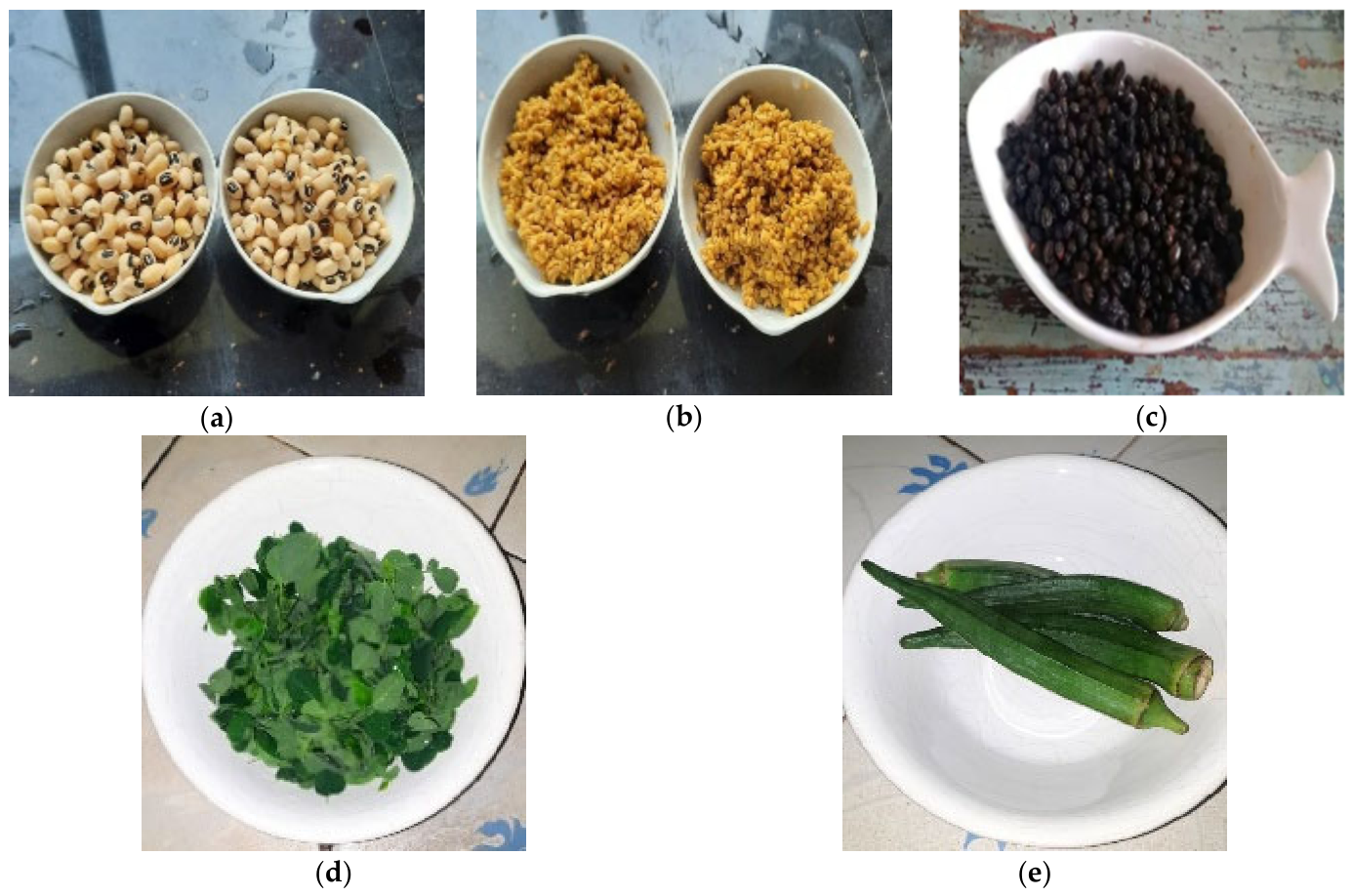
| Cowpea seeds, fenugreek seeds, papaya seeds (Liquid) | Fresh seeds washed; oven-dried at 40 °C for 24 h; pulverized; suspended at 5 g/100 mL distilled water; stirred mechanically (5 min); settled (1 h); vacuum-filtered through muslin cloth. |
| Moringa oleifera leaves (Liquid) | 10 g fresh washed leaves ground into paste with minimal distilled water; diluted to 100 mL; stirred (5 min); settled (1 h); filtered through muslin cloth. |
| Okra pods (Liquid) | 10 g washed pods sliced (1–2 cm); blended with 100 mL distilled water; settled (1 h); filtered to yield viscous solution. |
| Parameter | Analysis Result (Average Value) | Unit | Maximum Allowable Limit (CEA Guidelines) | Notes |
|---|---|---|---|---|
| pH | 7.8 | - | 6.0–8.5 | Satisfactory |
| Turbidity | 35 | NTU | 20 | Unsatisfactory |
| Conductivity | 407 | µs/cm | 500 | Satisfactory |
| DO | 7.1 | mg/L | 5 (minimum limit) | Satisfactory |
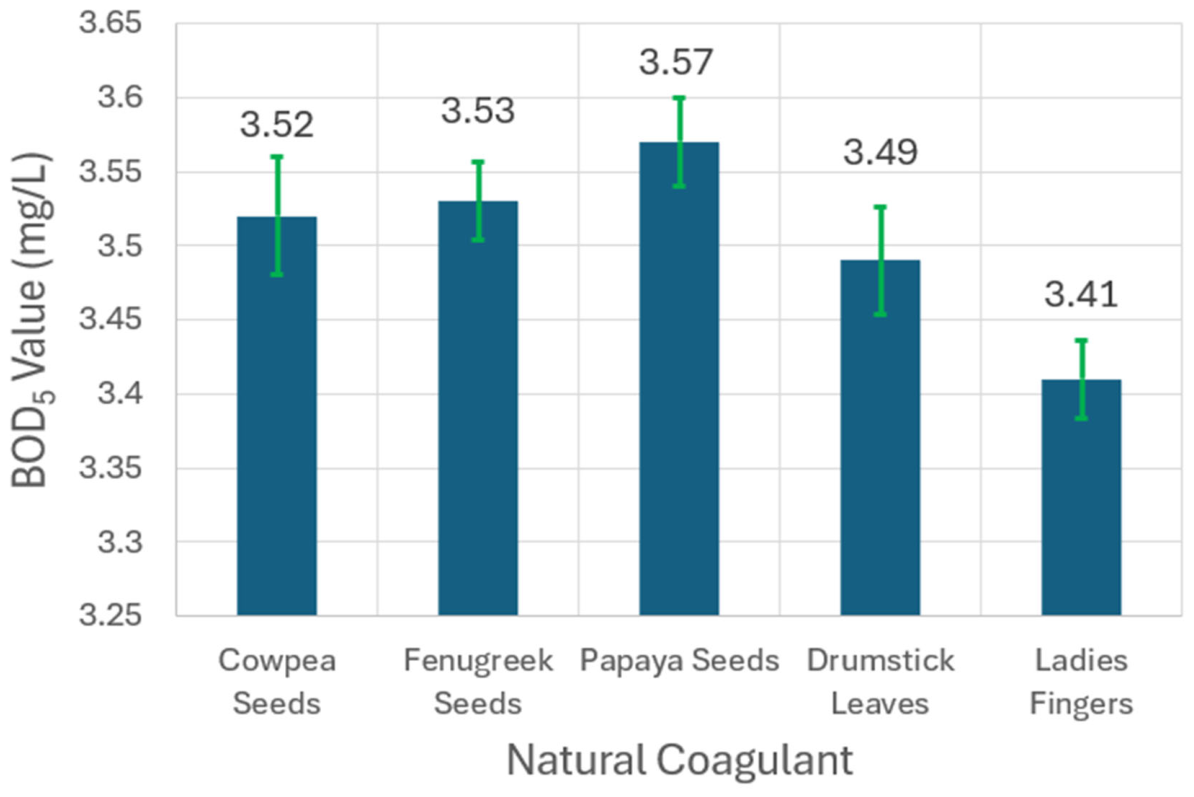
| BOD5 | 3.46 | mg/L | 4 | Satisfactory |
| COD | 80 | mg/L | 15 | Unsatisfactory |
| Settleable Solids | 0.9 (45 min) 1.1 (1 h) | mg/L | - | - |
| Total Solids (TS) | 1000 | mg/L | - | - |
| Total Dissolved Solids (TDS) | 1000 | mg/L | 500 | Unsatisfactory |
| Total Suspended Solids (TSS) | 100 | mg/L | 40 | Unsatisfactory |
| Total Nitrogen | 12.4 | mg/L | - | - |
| Total Phosphorous | 0.1 | mg/L | - | - |
| Parameter | Influent Value | Day 1 | Day 2 | Day 3 | Day 4 | Day 5 | CEA Limit | Average Removal (%) |
|---|---|---|---|---|---|---|---|---|
| Effluent Value (mg/L or NTU)—Removal Efficiency (%) | ||||||||
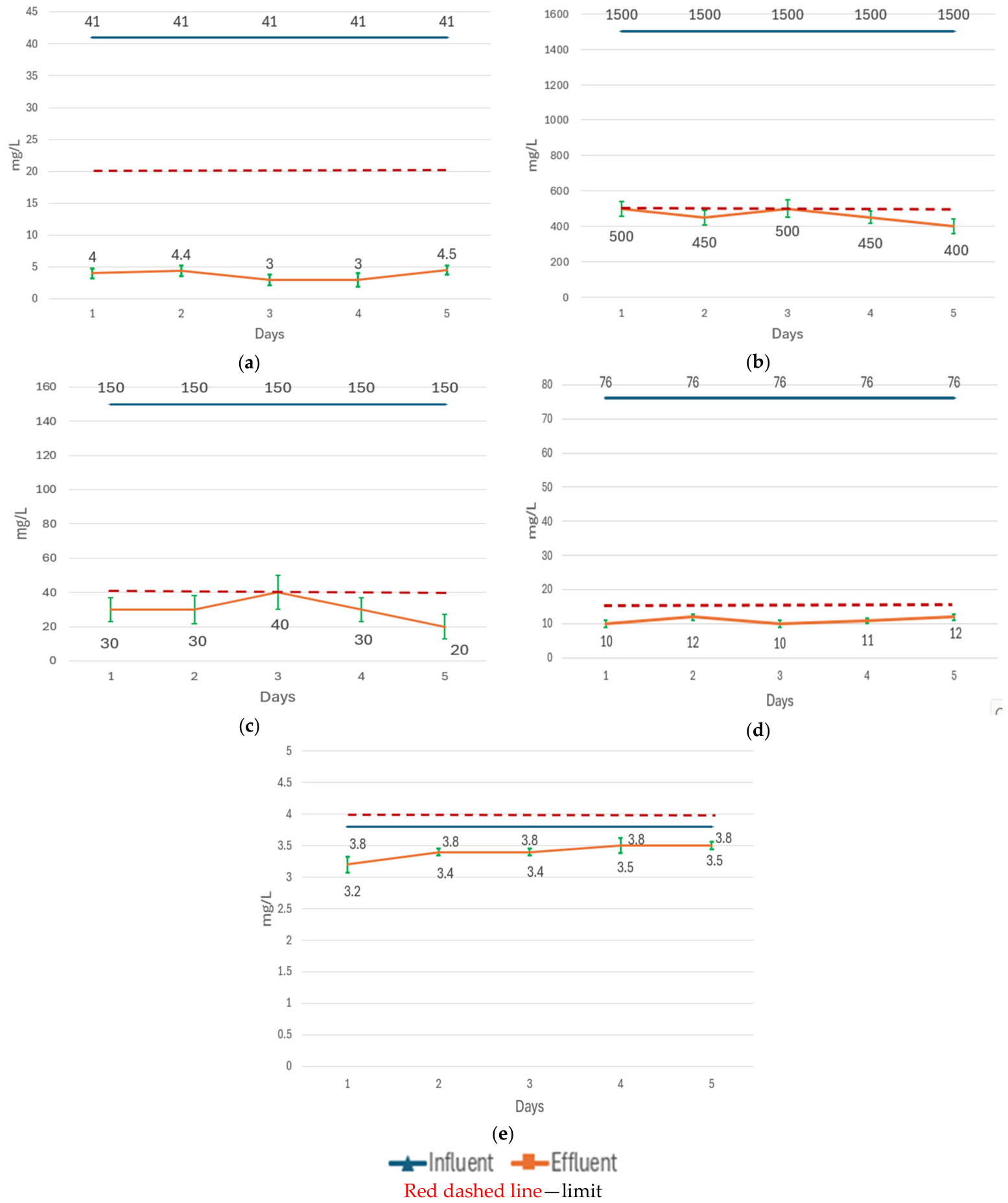
| Turbidity (NTU) | 41 | 4 (90.2%) | 4.5 (89.0%) | 3 (92.7%) | 3 (92.7%) | 4.5 (89.0%) | ≤20 NTU | 90.7% |
| TDS (mg/L) | 1500 | 500 (66.7%) | 450 (70.0%) | 500 (66.7%) | 450 (70.0%) | 400 (73.3%) | ≤500 mg/L | 69.3% |
| TSS (mg/L) | 150 | 30 (80.0%) | 30 (80.0%) | 40 (73.3%) | 30 (80.0%) | 20 (86.7%) | ≤40 mg/L | 80.0% |
| COD (mg/L) | 76 | 10 (86.8%) | 12 (84.2%) | 10 (86.8%) | 11 (85.5%) | 12 (84.2%) | ≤15 mg/L | 85.5% |
| BOD5 (mg/L) | 3.8 | 3.2 (15.8%) | 3.4 (10.5%) | 3.4 (10.5%) | 3.5 (7.9%) | 3.5 (7.9%) | ≤4 mg/L | 10.5% |
| Reference | Coagulant Used | Water Type | Turbidity Removal (%) | COD Removal (%) | BOD5 Removal (%) | TDS Removal (%) | TSS Removal (%) | Cost Assessment |
|---|---|---|---|---|---|---|---|---|
| [50] | Moringa oleifera seeds/extract | Sewage & grey water | 61% | 65% | 55% | 68% | 69% | Very low; seeds locally and freely available in most developing regions |
| [51] | Moringa oleifera seeds—HCl activated powder | Municipal sewage wastewater (India) | ~90% | ~30% | 27% | Reduced (% Not reported) | Reduced (% Not reported) | Low; minor cost increase from HCl activation vs. native powder |
| [52] | Moringa oleifera seeds—seed powder | Raw drinking water (MahmoudiaCanal, Egypt) | 83.6% | 77.4% | 51.1% | Not Reported | Not Reported | Very low; seeds widely available in Egypt & Africa; cheaper than alum |
| [53] | Moringa oleifera, (leaves & seeds) | Sewage water (India) | 92% | 88% | Not Reported | 96% (Total Solids TS reported) | Not Reported | Very low; no chemical pre-treatment; minimal equipment |
| [54] | Moringa oleifera seeds—powder (5 g/L, pH 4) | Textile industrial wastewater (Ethiopia) | 82.33% | 74.63% | Not Reported | Not Reported | 43.67% | Low; no chemical coagulant purchase required; seeds locally sourced |
| [13] | Moringa oleifera seeds | Municipal wastewater (Pakistan) | 87% | 67% | Not Reported | Not Reported | Not Reported | 40–70% cost saving; biodegradable sludge reduces disposal costs; no metal residuals |
| This Study | Moringa oleifera leaves (liquid extract, 100 g/L) + Sawdust & Cotton wool filtration | Urban polluted surface water (leachate + urban runoff impacted stream, Sri Lanka) | 90.13–90.73% (sequential batch &continuous trials) | 85.53–88.57% | 2.72–10.53% (influent BOD5 already within CEA limit of 4 mg/L) | 69.33–83.46% | 74.83–80% | Very low; Moringa oleifera leaves, sawdust & cotton wool all locally sourced; zero chemical input; no sludge disposal cost |
Disclaimer/Publisher’s Note: The statements, opinions and data contained in all publications are solely those of the individual author(s) and contributor(s) and not of MDPI and/or the editor(s). MDPI and/or the editor(s) disclaim responsibility for any injury to people or property resulting from any ideas, methods, instructions or products referred to in the content. |
© 2026 by the authors. Licensee MDPI, Basel, Switzerland. This article is an open access article distributed under the terms and conditions of the Creative Commons Attribution (CC BY) license.
Share and Cite
Perera, N.; Miguntanna, N.; Miguntanna, N.; Rathnayake, U. Nature-Based Solutions: Evaluation of Natural Plant-Derived Coagulants for Sustainable Water Treatment. Water 2026, 18, 1341. https://doi.org/10.3390/w18111341
Perera N, Miguntanna N, Miguntanna N, Rathnayake U. Nature-Based Solutions: Evaluation of Natural Plant-Derived Coagulants for Sustainable Water Treatment. Water. 2026; 18(11):1341. https://doi.org/10.3390/w18111341
Chicago/Turabian StylePerera, Nisakya, Nadeeka Miguntanna, Nandika Miguntanna, and Upaka Rathnayake. 2026. "Nature-Based Solutions: Evaluation of Natural Plant-Derived Coagulants for Sustainable Water Treatment" Water 18, no. 11: 1341. https://doi.org/10.3390/w18111341
APA StylePerera, N., Miguntanna, N., Miguntanna, N., & Rathnayake, U. (2026). Nature-Based Solutions: Evaluation of Natural Plant-Derived Coagulants for Sustainable Water Treatment. Water, 18(11), 1341. https://doi.org/10.3390/w18111341