1. Introduction
In recent decades, the frequency and intensity of extreme hydrological events have escalated markedly under the combined influences of climate change and intensive human activities [
1,
2]. Among these, drought flood abrupt alternation events, characterized by rapid transitions between contrasting hydrological extremes within a short period, have received growing attention in water resources research [
3,
4,
5]. Drought flood abrupt alternation events are typically classified into drought-to-flood and flood-to-drought alternations, where the former is discussed more, the latter less. However, an increasing body of evidence indicates that flood-to-drought events, e.g., flood drought abrupt alternation (FDAA) events, are exhibiting a more pronounced upward trend in recent years, particularly in monsoon-affected regions where the seasonal migration of subtropical high-pressure systems governs the abrupt shift from pluvial to drought conditions [
6,
7,
8,
9]. This emerging pattern poses distinct challenges for water resources management, as the rapid depletion of water availability following a flood period leaves limited time for adaptive response and reservoir storage replenishment. The middle and lower reaches of the Yangtze River Basin (MLYRB), one of the most economically developed and densely populated regions in China, have experienced a notable increase in such events [
10,
11,
12,
13]. Notable examples include the severe summer drought of 2006, the abrupt flood-to-drought shift in 2011, and the unprecedented flood-season drought of 2022, during which the basin transitioned from flood alerts to record-low water levels in a matter of weeks [
14]. These events pose a dual threat: they not only compromise water supply security for urban, agricultural, and ecological demands but also strain the operational flexibility of large-scale reservoirs that were originally designed primarily for flood control.
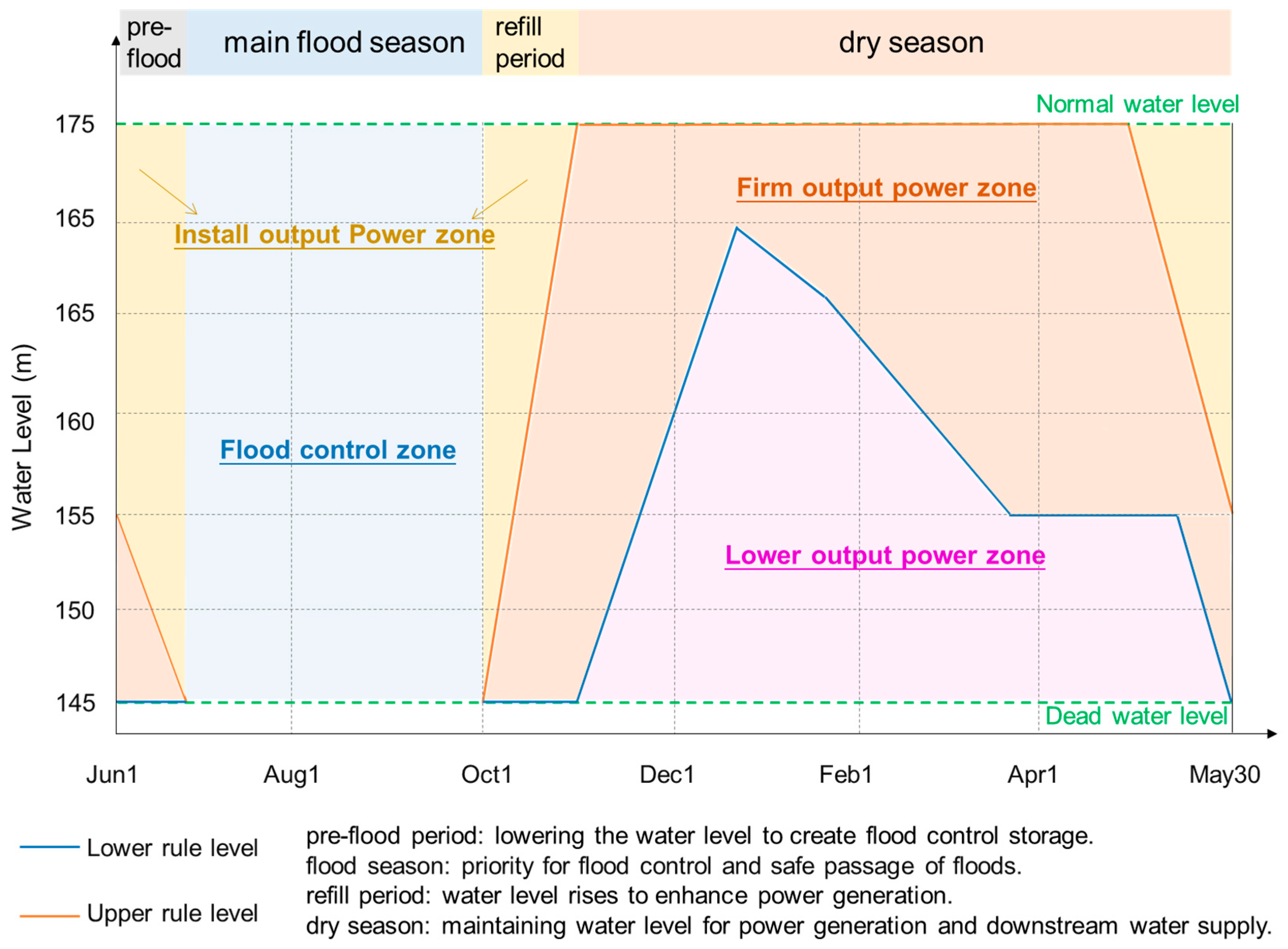
The Three Gorges Reservoir (TGR), situated in the upper reaches of the Yangtze River, is the world’s largest hydraulic engineering project and plays a pivotal role in basin-scale water resources regulation. The TGR is operated under a conventional single flood-limited water level (FLWL) scheme. During the main flood season (typically mid-June to late September), the reservoir water level is strictly maintained at 145 m to maximize flood storage space; impoundment begins only after the flood season, with the target of reaching the normal pool level of 175 m by the end of October [
15]. While this rigid operation mode is highly effective for flood defense under stationary hydrological regimes, it offers little flexibility to retain additional water during the late flood season when an abrupt transition to drought is anticipated or already underway. Consequently, the reservoir may enter the dry season with insufficient carryover storage, exacerbating downstream water shortages during FDAA years. The 2022 event starkly illustrated this vulnerability: the TGR was compelled to release water throughout the summer to meet flood control requirements, leaving limited reserves when drought conditions intensified in August and September [
14].
To address the growing threat of drought within the flood season, the concept of drought-limited water level (DLWL) has been introduced in reservoir operation guidelines. Analogous to the FLWL for flood control, the DLWL serves as a critical threshold below which water supply restrictions are triggered to conserve storage for future drought mitigation [
16]. The determination of DLWL has attracted considerable research attention in recent years. Early studies primarily focused on defining a static, annual DLWL based on historical low-flow sequences or typical dry-year simulations [
17]. Recognizing the strong seasonality of both inflow and water demand, subsequent work has advocated for seasonal or staged DLWL schemes.
For instance, Chang et al. [
18] proposed a seasonal drought prevention limiting water level for the Yellow River cascade reservoirs and demonstrated that hedging policies triggered by these levels effectively reduced water shortage severity. Similar drought-oriented reservoir operation frameworks have also been explored internationally. Mohammad Ashrafi [
19] developed a two-stage mixed-integer nonlinear programming approach to optimize hedging rules for cascade reservoirs in Iran, demonstrating that staged rationing policies could substantially reduce drought-induced supply failures. In Spain, Spiliotis et al. [
20] optimized reservoir hedging rules using particle swarm optimization and showed that gradual restriction strategies were effective in mitigating severe drought impacts across multiple water demand sectors. Luo et al. [
21] employed a scenario discovery method to identify reservoir characteristics that determine the applicability of DLWL, while Zhang et al. [
16] and Ge et al. [
22] optimized graded and staged DLWLs for individual reservoirs and lakes using intelligent algorithms. Lin et al. [
23] explored a drawdown operation framework for the TGR during the dry season (December–May) to boost synergies between hydropower generation and drought defense.
Despite these advances, several important gaps remain in existing DLWL studies. First, most previous studies have focused primarily on reservoir operation during dry seasons or non-flood periods, while limited attention has been paid to drought risks emerging within the flood season itself, particularly under flood-to-drought abrupt alternation (FDAA) events. As a result, the potential role of late-flood-season water retention in mitigating subsequent drought impacts remains insufficiently explored. Second, although staged or seasonal DLWL schemes have been proposed in some studies, these schemes are generally designed based on conventional hydrological seasons and rarely incorporate the temporal evolution characteristics of FDAA events. Third, many existing studies apply uniform DLWL constraints within a given season, without differentiating water supply priorities under varying drought severities. Such approaches may not fully reflect the hierarchical water demand structure of large regulated river basins. Finally, previous DLWL studies have mostly focused on individual objectives such as drought mitigation or hydropower generation, whereas integrated operation frameworks simultaneously considering flood control safety, irrigation reliability, urban and ecological water supply, navigation, and reservoir storage remain relatively limited, especially for mega-reservoirs such as the Three Gorges Reservoir.
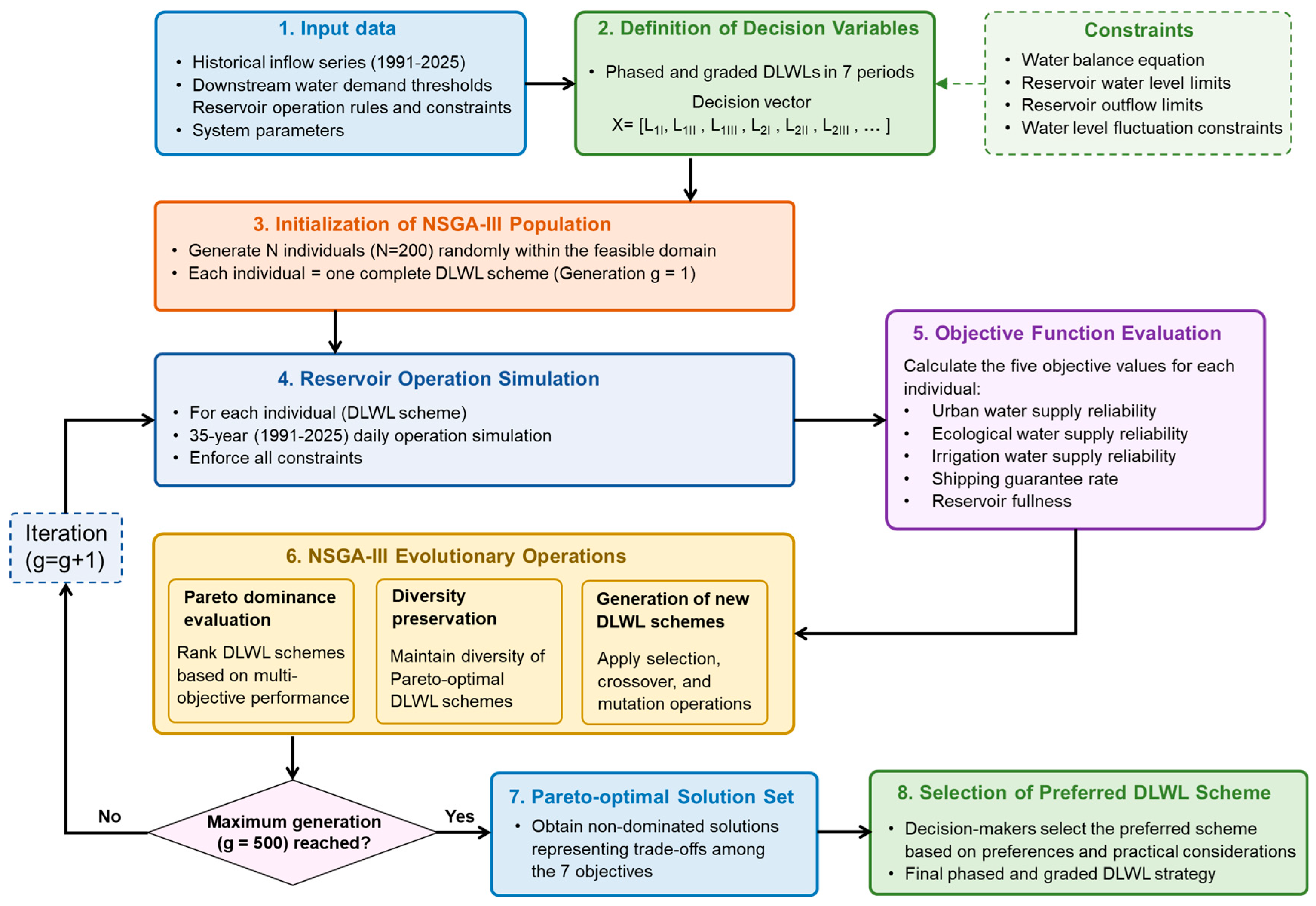
To address these limitations, this study develops a phased and graded DLWL operation framework for the Three Gorges Reservoir that explicitly considers the seasonal characteristics of FDAA events in the middle and lower reaches of the Yangtze River Basin. Rather than introducing an entirely new DLWL concept, the main contribution of this study lies in integrating four aspects within a unified operational framework: (1) extending DLWL regulation from traditional dry-season operation to the full annual operation cycle; (2) partitioning operational periods according to FDAA occurrence characteristics and reservoir inflow-demand seasonality; (3) introducing tiered DLWL thresholds corresponding to different water supply priorities; and (4) coupling these staged and graded rules with a multi-objective optimization framework based on NSGA-III. The framework is evaluated using a 35-year historical inflow series (1991–2025), including recent extreme FDAA events such as 2022 and 2024, while additional validation during typical wet years is conducted to verify that flood control safety is not compromised.
The remainder of this paper is organized as follows.
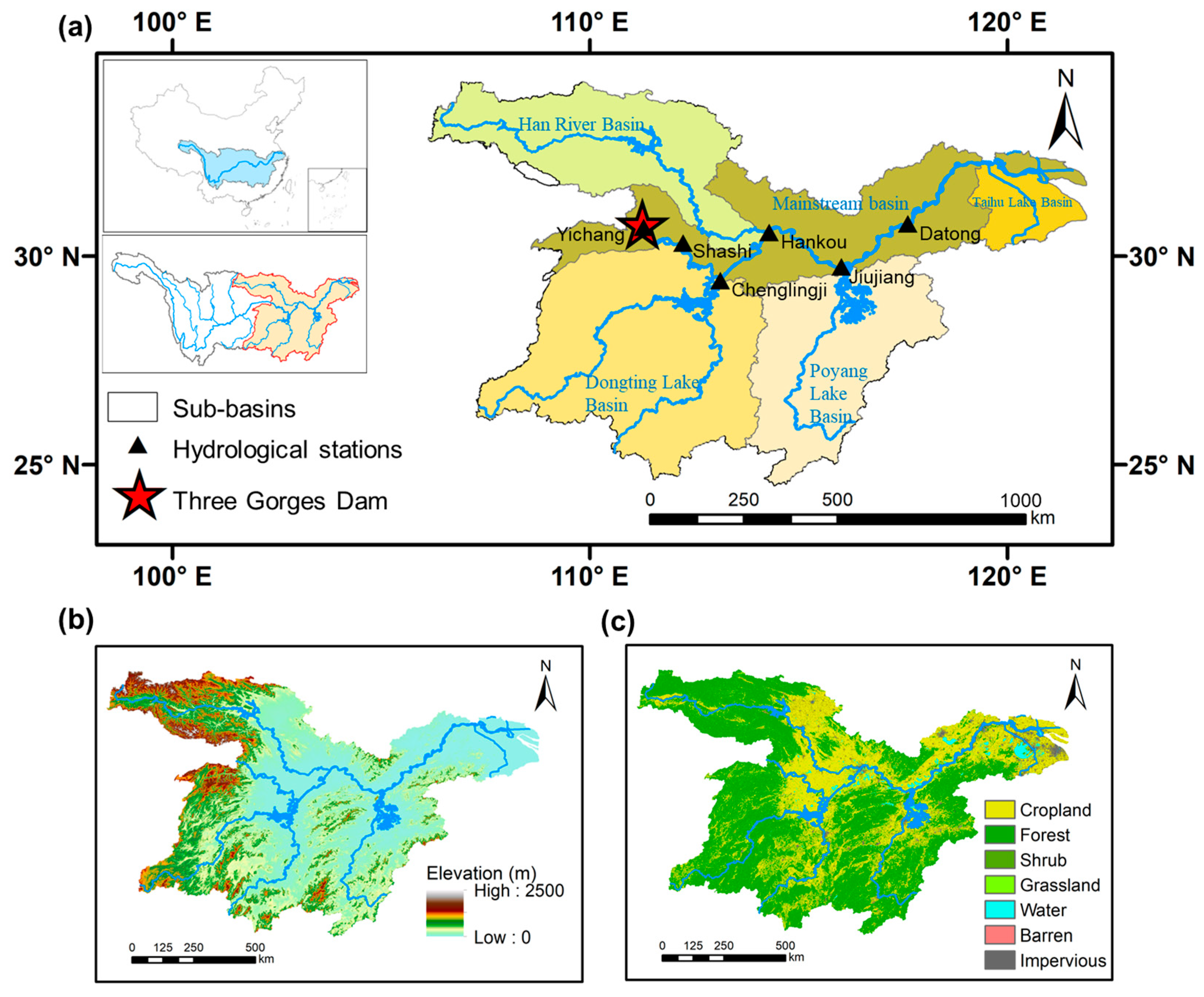
Section 2 describes the study area, data sources, and current operation rules of the TGR.
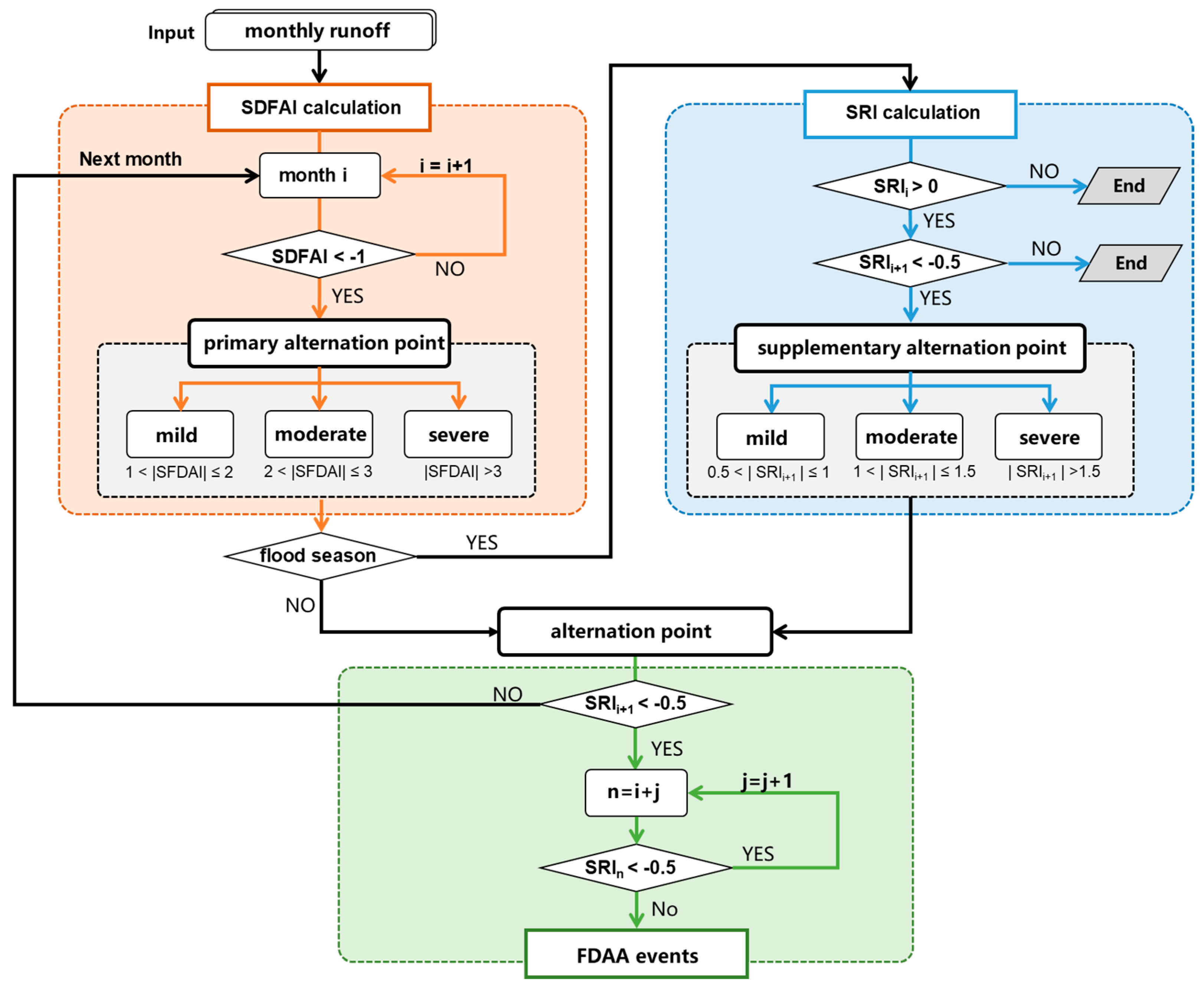
Section 3 details the methodology, including the hybrid FDAA identification approach and the multi-objective DLWL optimization model.
Section 4 presents the results, covering the spatiotemporal characteristics of FDAA events in the MLYRB, the deficiencies of conventional FLWL operation, and the performance of the optimized DLWL strategy.
Section 5 discusses the implications of the findings in relation to the existing literature, acknowledges the limitations of the study, and outlines directions for future research. Finally,
Section 6 summarizes the main conclusions.
4. Results
4.1. Identification and Characteristics of Hydrological FDAA Events in the MLYRB
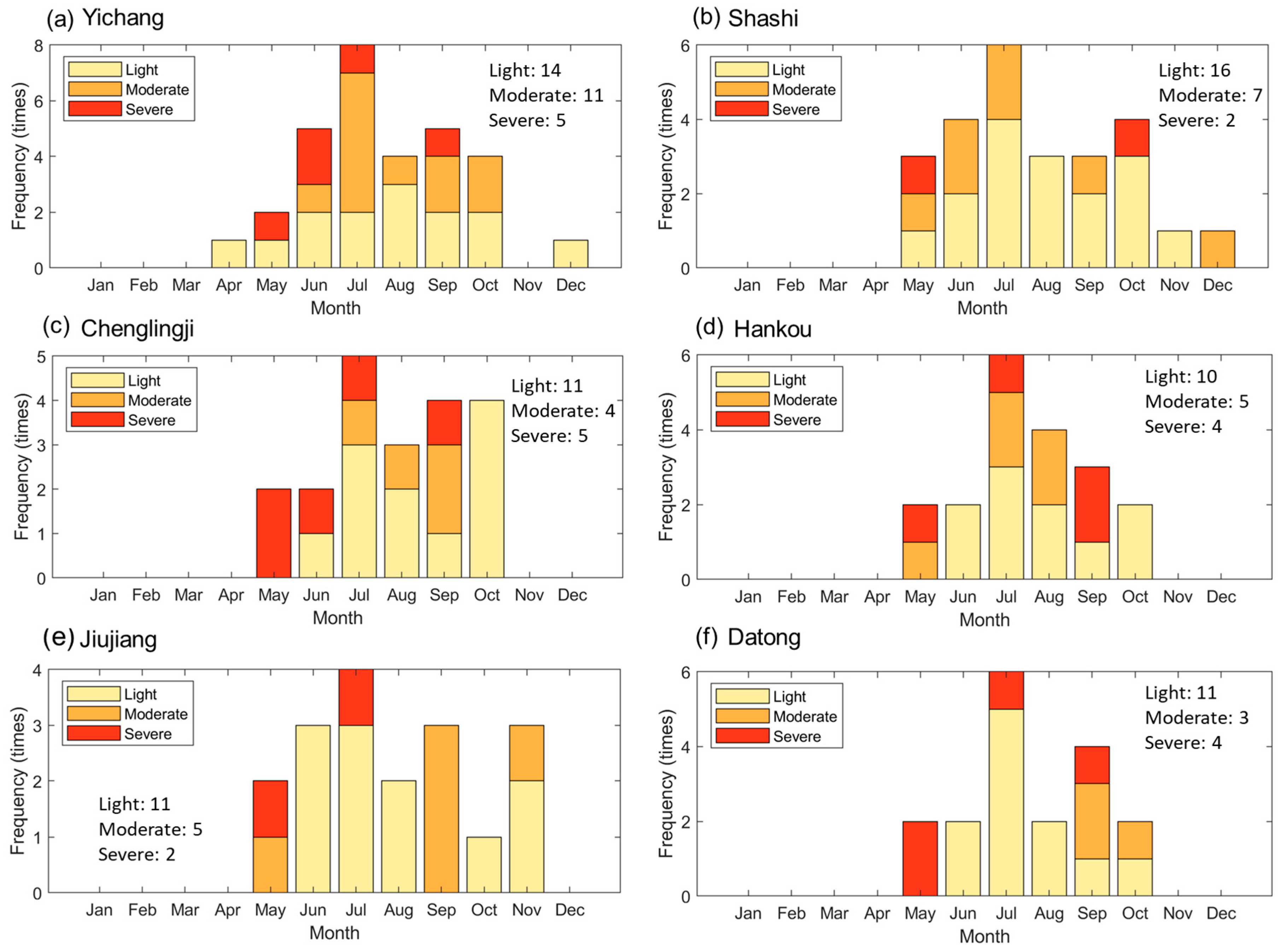
Figure 5 illustrates the monthly distribution of FDAA event frequency at the six key gauging stations along the MLYRB main stream over the past 35 years (1991–2025). The results demonstrate a pronounced seasonal concentration of FDAA events, with over 90% of occurrences restricted to the main flood season from June to September. Across all stations, July consistently records the highest overall FDAA event frequency. The severe FDAA events are predominantly concentrated in the months of May, July, and September, with these three months accounting for the vast majority of extreme abrupt alternation events across the basin, reflecting the high risk of extreme abrupt alternation during the early, peak, and late stages of the flood season. Yichang station shows the highest annual FDAA frequency, with a maximum of 8 events in July. Severe events are most frequent at Yichang and Chenglingji stations, reaching five events. Overall, the frequency of FDAA events is higher in the upstream reaches than in the downstream reaches, which may be attributed to the effects of river network confluence or reservoir regulation operations.
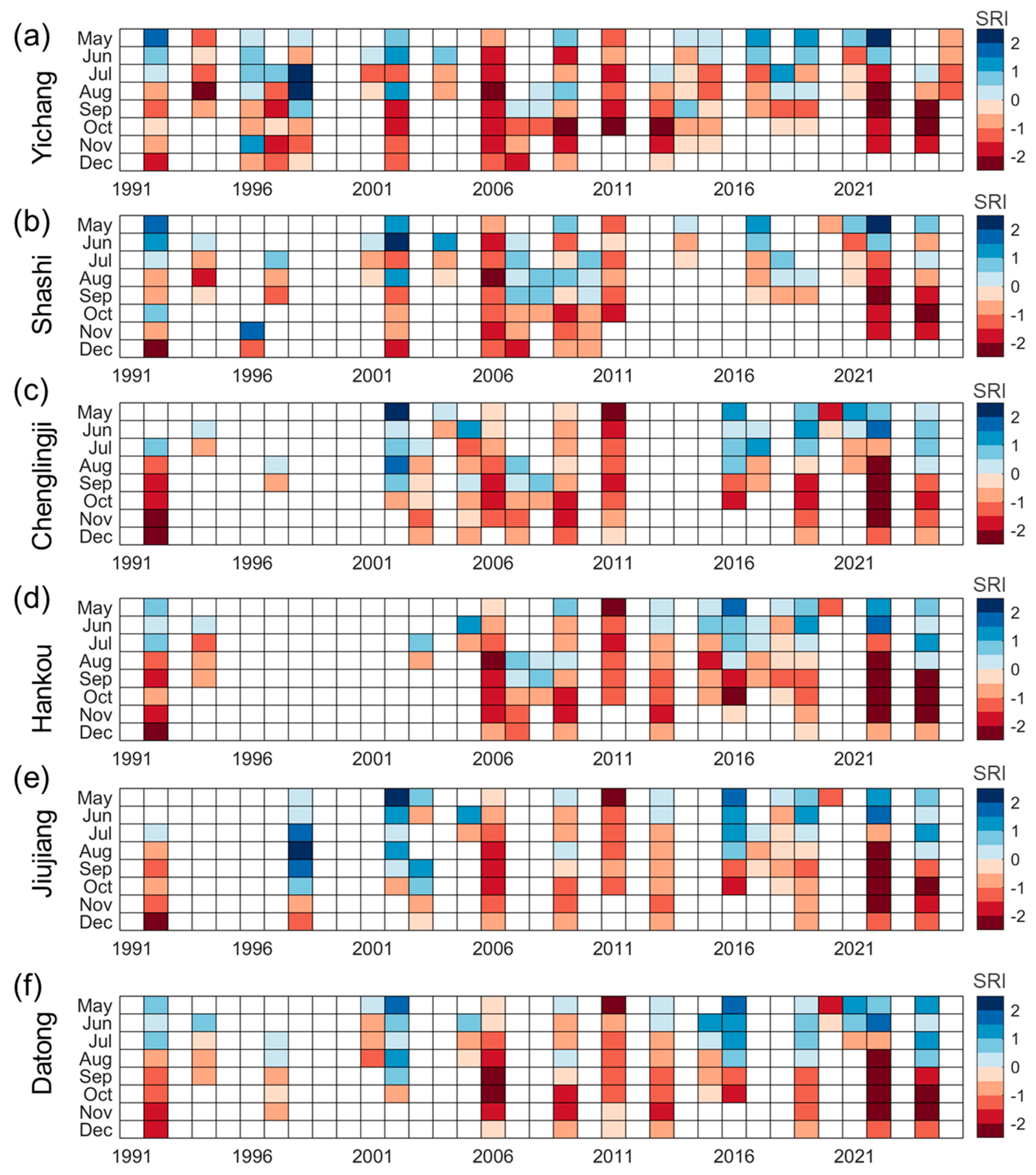
Figure 6 represents the temporal variations in the SRI at six representative hydrological stations (Yichang, Shashi, Chenglingji, Hankou, Jiujiang, and Datong) during identified FDAA episodes. As illustrated in the color bar, positive SRI values (blue shades) denote flood or high-flow conditions, while negative values (red shades) represent drought or low-flow conditions, with darker color intensities corresponding to more severe hydrological extremes, where SRI values below −1.5 indicate extreme drought events. Across all six stations, distinct abrupt transitions from positive (flood) to negative (drought) SRI values are observed within consecutive months, which directly verifies the occurrence of FDAA events in the MLYRB. A core distinguishing feature of severe FDAA events is that extreme drought typically initiates in the late flood season (August–September) and persists for three to four consecutive months, extending into October–December in the most extreme cases, rather than manifesting as a short-term, transient hydrological anomaly.
Spatially, these abrupt alternation signals exhibit strong basin-wide consistency, with notable synchronous FDAA events detected at all stations from the upstream (Yichang) to downstream (Datong) reaches in 2006, 2009, 2011, 2022 and 2024. Among these, the 2022 FDAA event stands out as the most severe in the entire study period, where all stations recorded a sharp drop in SRI from wet conditions in May–June to extreme drought (SRI < −1.5, dark red) from July to November. The 2022 drought signal propagated synchronously from the upstream Yichang Station to the downstream Datong Station, within one month lag in the most downstream reaches. The 2024 FDAA event also demonstrated similar basin-wide synchronization, characterized by abrupt drought onset in late August to early September following moderate flood conditions in July. Additionally, both 2006 and 2011 experienced a distinct basin-wide extreme drought during the flood season, some even lasting until the end of the year. Temporally, the frequency, intensity, and basin-wide synchronization of FDAA events exhibit a significant increasing trend after 2010. Specifically, three of the most severe basin-wide FDAA events (2011, 2022 and 2024) occurred in the post-2010 period, with the 2022 event exceeding the severity of the 2006 historical extreme. Additionally, mid- and downstream stations show a marked increase in the duration and intensity of seasonal drought after 2010. These results demonstrate the aggravation of hydrological extremes in the MLYRB under changing environment.
4.2. Impacts of Flood Season Drought Under Current Operation Rules
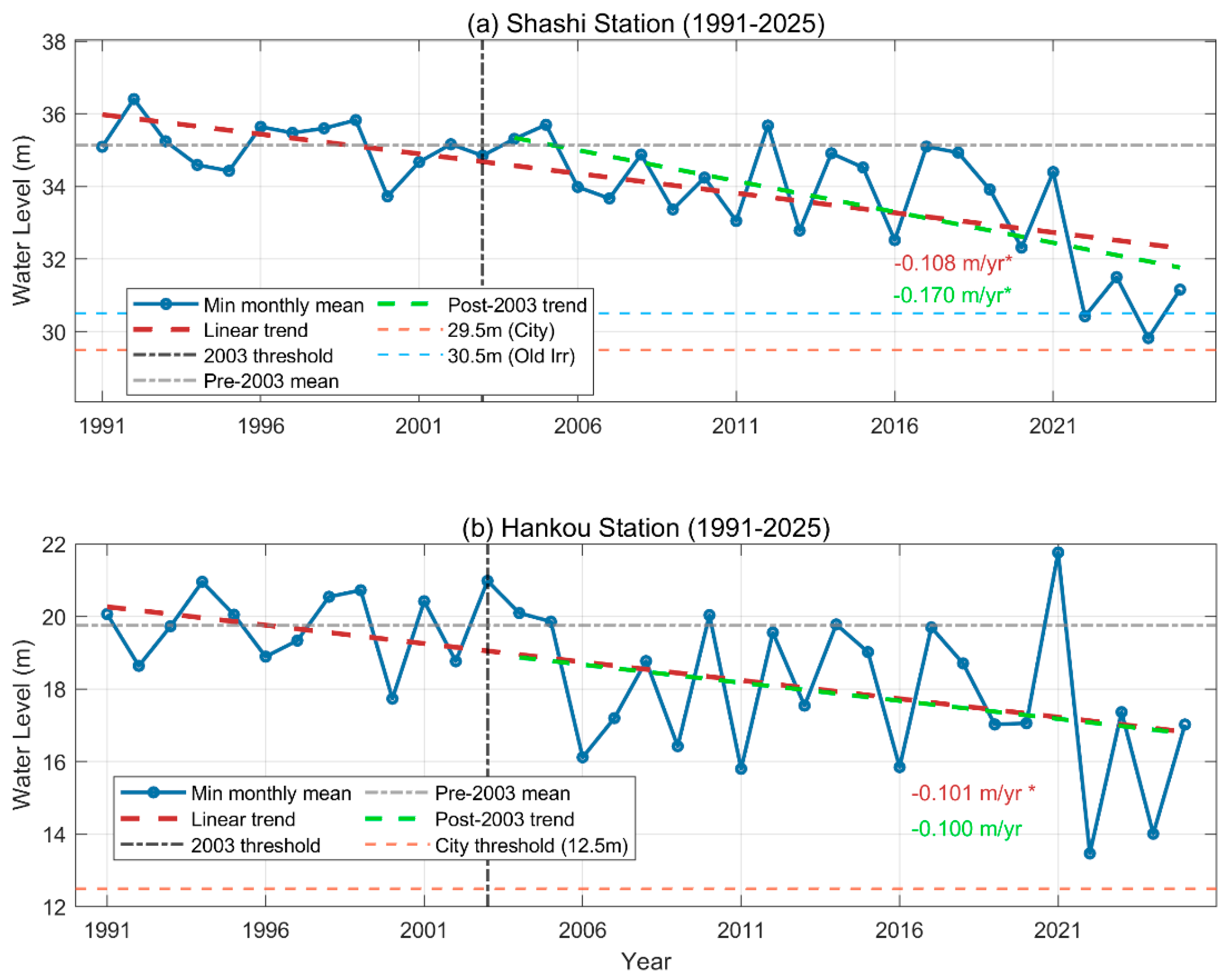
Shashi and Hankou stations are key hydrological control sections along the MLYRB, playing crucial roles in water supply, irrigation, and navigation, especially given the significant challenges in ensuring water security in the Jingjiang and Wuhan reaches. According to the actual water demand, three critical thresholds are defined for Shashi station: the urban water supply threshold (29.5 m), the new irrigation threshold (28.4 m), and the old irrigation threshold (30.5 m). Since irrigation is not a controlling factor for Hankou station, only the urban water supply threshold (12.5 m) is considered.
Figure 7 presents the temporal variations in the minimum monthly averaged water level during the May–October at these two representative stations from 1991 to 2025. A distinct downward trend is clearly observed for both stations over the 35-year period, accompanied by a remarkable stage shift associated with the impoundment of the TGR in 2003. For the entire period, the minimum water level at Shashi station decreased significantly at a rate of −0.108 m/yr (
p < 0.05), while Hankou station showed a highly significant decreasing trend of −0.101 m/yr (
p < 0.01). Before the TGR impoundment (1991–2002), the minimum monthly water levels at both stations remained relatively high and stable, consistently above the critical thresholds for urban water supply and irrigation, indicating a low risk of seasonal drought. In contrast, after 2003, the minimum water levels exhibited a continuous and pronounced decline, with the decreasing rate accelerating to −0.170 m/yr (
p < 0.05) at Shashi station and −0.100 m/yr (
p > 0.05) at Hankou station. In recent decades, especially after 2010, the minimum water levels at both stations have gradually approached or even fallen below the critical thresholds during severe FDAA years such as 2022. This clear transition before and after 2003 quantitatively demonstrates the significant impact of large-scale reservoir regulation on the regional hydrological regime, revealing that the traditional single FLWL operation is increasingly inadequate to address the escalating drought risk during the flood season.
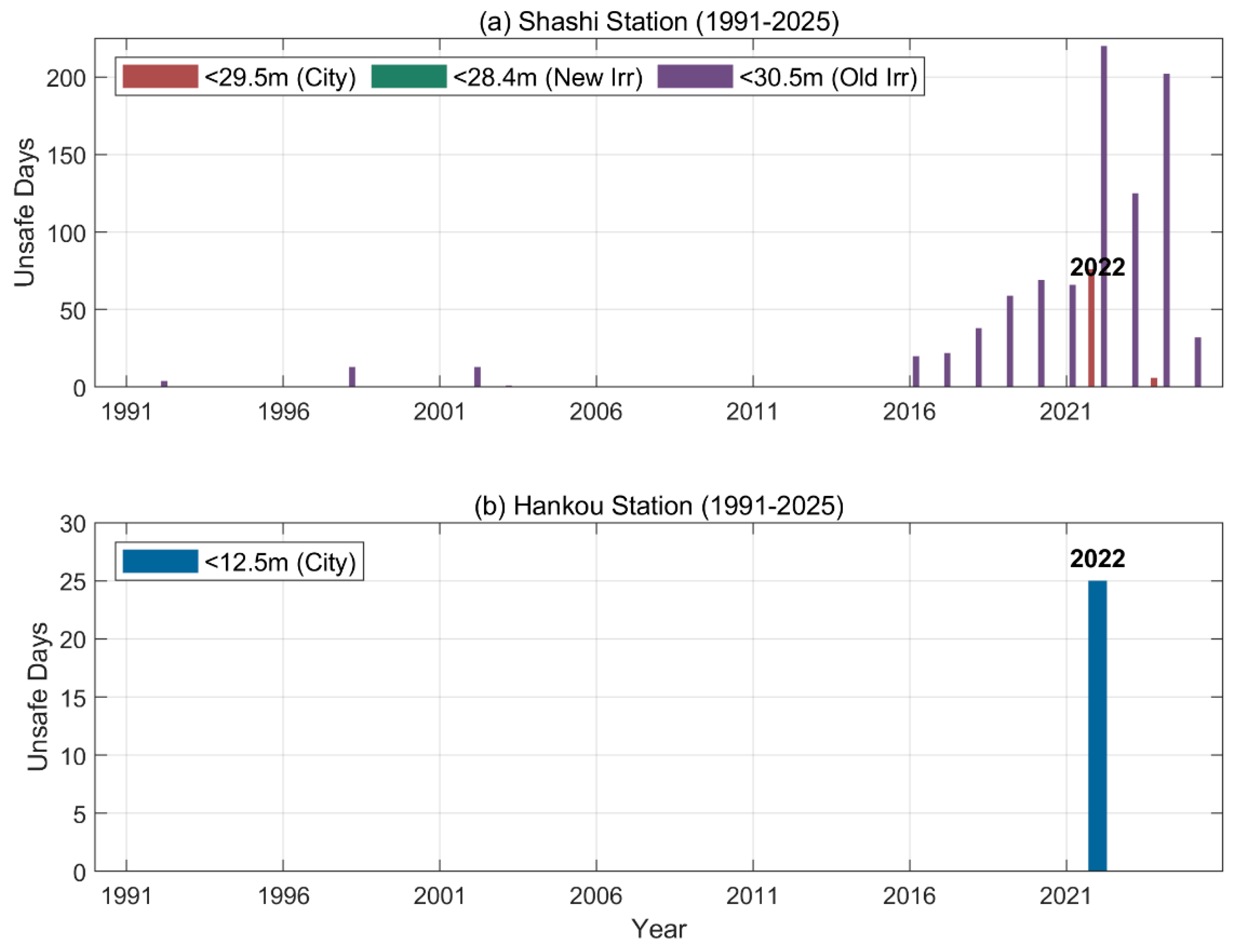
Figure 8 illustrates the interannual variations in the number of unsafe days (i.e., days with water levels below the critical thresholds) for the hydrological year (11 June to 10 June of the following year) at these two stations from 1991 to 2025. Overall, the number of unsafe days at Shashi and Hankou stations has shown a pronounced upward trend in recent decades, reflecting a continuous intensification of water supply pressure in the MLYRB. For Shashi station, violations of the old irrigation threshold (30.5 m) have become increasingly frequent since 2016, with the number of unsafe days exceeding 200 in both 2022 and 2024. Meanwhile, violations of the urban water supply threshold (29.5 m) first emerged in 2022, marking a severe deterioration in water security conditions. For Hankou Station, unsafe days below the urban water supply threshold (12.5 m) were extremely rare throughout the study period, with a single extreme event occurring in 2022, when the number of unsafe days reached 25. The extreme water shortage in 2022, characterized by simultaneous violations of multiple thresholds at Shashi Station and a rare urban water supply crisis at Hankou Station, fully demonstrates the catastrophic impact of extreme FDAA events on the water security of the middle and lower Yangtze River. To further elaborate on the hydrological characteristics of this typical extreme year,
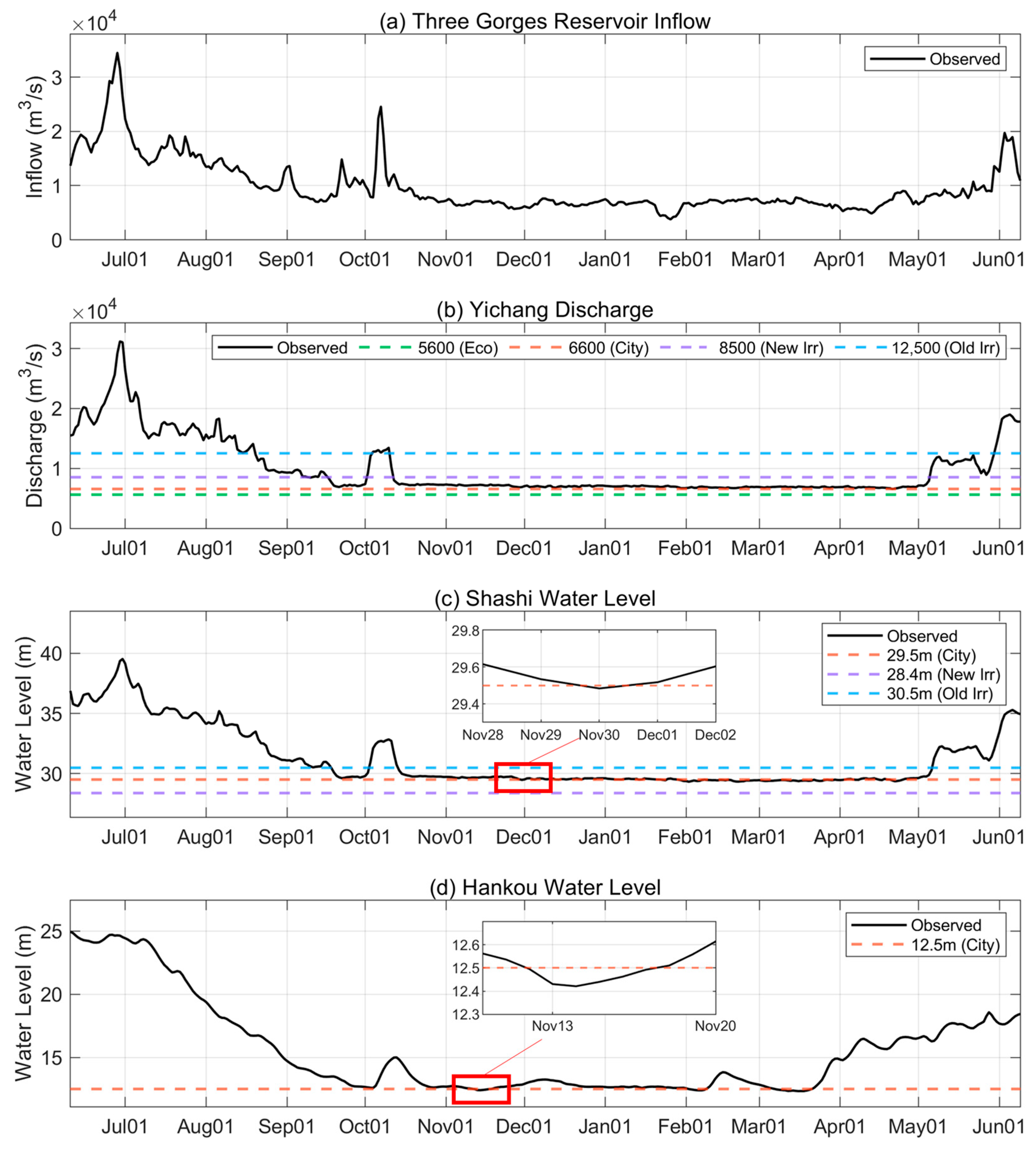
Figure 9 presents the detailed water level and discharge process during 2022.
The discharge at Yichang Station is used to represent the outflow discharge from the Three Gorges Reservoir, since there is no major tributary inflow between the dam and Yichang. The critical outflow thresholds of the TGR are derived from the water demand requirements at the Shashi and Hankou sections, following Fan et al. [
24]. As shown in
Figure 9a, the TGR inflow exhibited a typical flood-season pattern with two distinct peaks in July and October, followed by a sustained low-flow period from November 2022 to May 2023. Corresponding to the inflow process, the Yichang discharge (
Figure 9b) was regulated by the TGR, maintaining a relatively stable level after the flood season. However, during the prolonged dry period, the observed discharge remained close to the lower ecological limit of 5600 m
3/s, which could generally satisfy the basic urban water supply demand (6600 m
3/s) but failed to meet the irrigation requirements for new irrigation areas (8500 m
3/s) and old irrigation areas (12,500 m
3/s).
Focusing on the water level processes at Shashi and Hankou stations (
Figure 9c,d), both stations experienced a sustained decline after the flood season, with water levels dropping below critical thresholds during the dry period. For Shashi station, the water level fell below the old irrigation threshold (30.5 m) for an extended period, and briefly breached the urban water supply threshold (29.5 m) in late November 2022, as highlighted in the inset. For Hankou station, the water level dropped below the urban water supply threshold (12.5 m) in mid-November 2022, marking a severe urban water supply crisis. These observations directly correspond to the extreme unsafe days recorded in
Figure 8, confirming that the 2022 FDAA event triggered a systematic water supply risk in the middle and lower Yangtze River, from the TGR outflow to the key control sections downstream.
The above results demonstrate that the increasing frequency and intensity of FDAA events have substantially aggravated the contradiction between flood control and drought resistance under the current single FLWL operation of the TGR. In particular, the rapid transition from flood to prolonged drought during and after the flood season can lead to insufficient reservoir storage entering the dry period, thereby significantly increasing downstream water supply risks.
4.3. Optimization of a Phased and Graded Drought-Limited Water Level Strategy
To address the inadequate water storage capacity and insufficient drought resistance under the traditional single FLWL operation, this study explores a revised operation framework that incorporates the single FLWL with a phased FLWL coupled with DLWL. Considering the rapid transition from flood conditions to prolonged drought conditions identified during FDAA events, the core principle of the proposed strategy is to appropriately increase reservoir water levels during the late flood season under the premise of ensuring flood control safety, thereby reserving sufficient storage for subsequent drought resistance. As introduced in the method section, we established phased and graded drought-limited water levels, and the non-dominated solution set obtained by solving the multi-objective optimization model using the NSGA-III algorithm is illustrated in
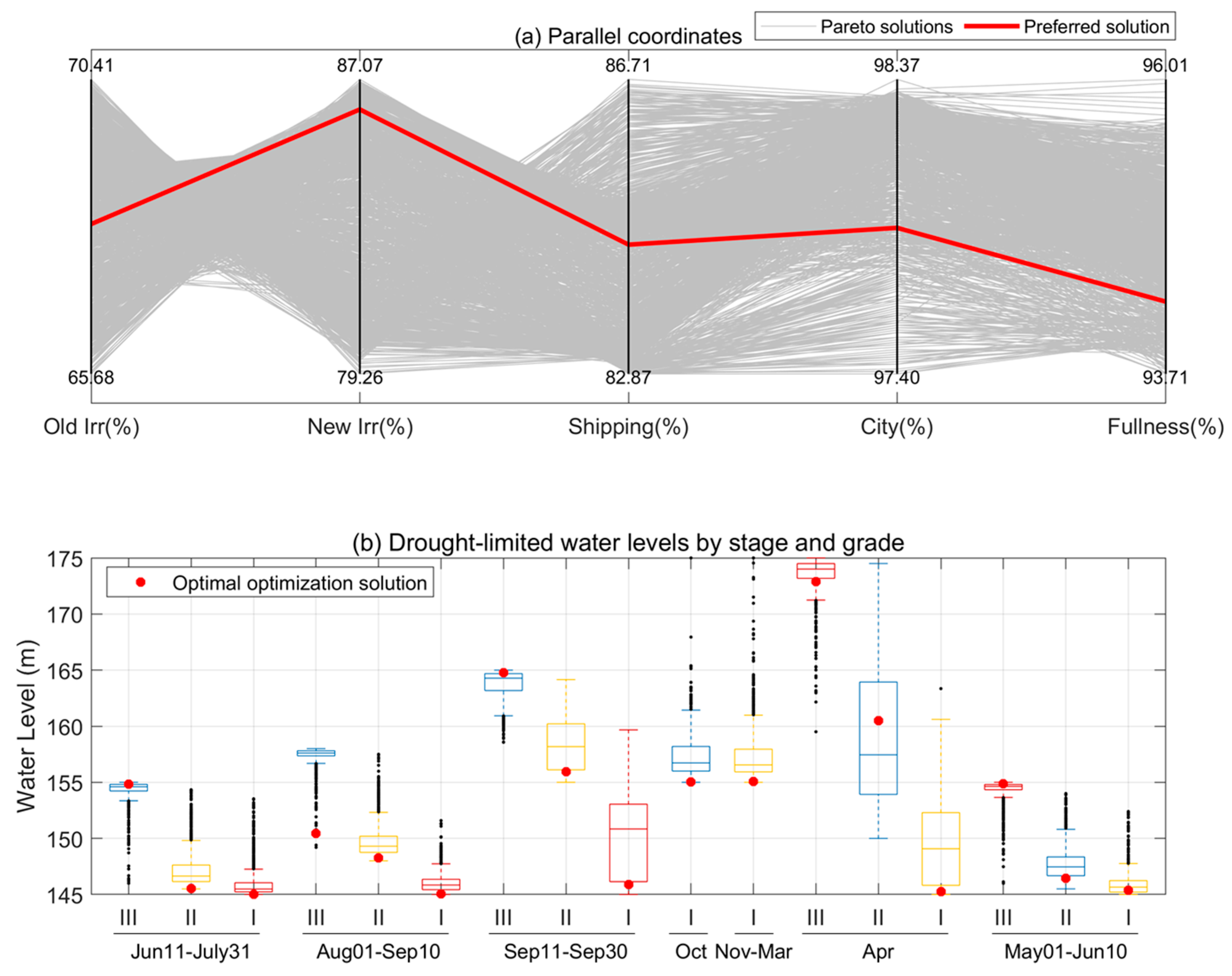
Figure 10.
As depicted in
Figure 10a, the multi-objective non-dominated solution set is visualized via a parallel coordinate plot, which integrates five core objectives: urban water supply reliability, old irrigation area water supply reliability, new irrigation area water supply reliability, shipping guarantee rate, and reservoir fullness rate. The numerical results indicate that the preferred solution determined through comprehensive decision-making is capable of meeting the modeled urban and ecological water demands in the study area, while notably improving the guaranteed levels of irrigation and shipping within the selected trade-offs. The coordinated performance of the preferred solution suggests that the multi-objective optimization effectively balances the water supply security, shipping benefit and reservoir storage regulation against the background of FDAA under the simulated conditions.
Figure 10b further presents the final phased and graded DLWL scheme of the Three Gorges Reservoir, which divides the annual operation cycle into five consecutive periods according to flood seasonality and FDAA occurrence characteristics: 11 June–31 July (main flood season), 1 August–10 September (late flood season with high FDAA risk), 11 September–30 September (key impoundment period), October–March (stable dry season operation), and April–10 May (pre-flood adjustment). As shown in
Figure 10b, the DLWL scheme keeps the original FLWL in the main flood season, and adopts a stepwise increased water level control in the late flood season and key impoundment stages relative to the traditional single FLWL. The phased water level sequence obtained from the optimization presents a clear graded DLWL arrangement across the whole year.
Table 3 compares the key operational indicators between the conventional operation and the DLWL-based optimized operation in the long-term series (1991–2025) and five typical dry years with severe FDAA events. In the long-term simulation, the old irrigation water supply reliability increases from 56.4% to 68.1%, and the new irrigation water supply reliability rises prominently from 61.0% to 86.3%. The urban and ecological water supply reliability reaches 98.8%, and the reservoir fullness rate improves from 90.9% to 94.3%, indicating stronger storage capacity. In typical dry years, the DLWL scheme raises the old irrigation water supply reliability from 45.1% to 55.4% and the new irrigation water supply reliability from 53.7% to 82.0%. The urban/ecological water supply reliability increases from 89.8% to 96.7%, and the shipping guarantee rate improves from 75.5% to 80.2%. The reservoir fullness rate rises from 69.7% to 76.4%, which is critical for maintaining water supply security in the subsequent year. Annual hydropower generation increases 10 ×10
8 kW·h/yr, benefiting from the higher hydraulic head associated with elevated water levels. Overall, these long-term simulation metrics indicate that the optimized DLWL strategy has the potential to achieve multi-benefit coordination of water supply, shipping, flood control, and hydropower generation within the modeled scenarios.
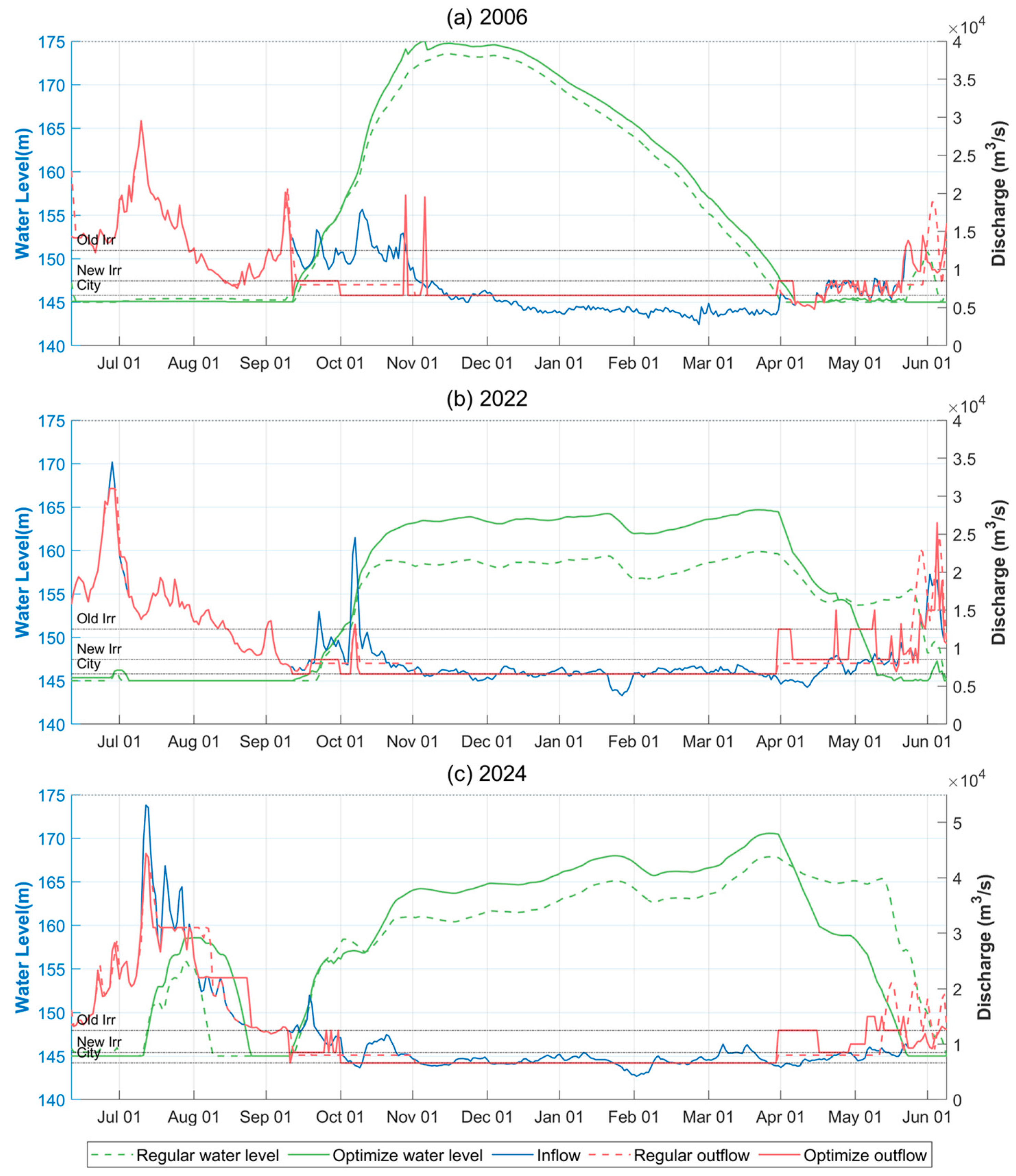
Figure 11 shows the comparisons of daily reservoir water level and discharge processes between the two operation scenarios in three representative dry years (2006, 2022, 2024). Under the DLWL optimized operation, the Three Gorges Reservoir maintains a notably higher water level during the critical flood-to-drought transition period, which provides sufficient storage support for increasing downstream discharge in the subsequent dry season. The simulation results suggest that the enhanced discharge effectively lifts the water levels at Shashi, Hankou and other key hydrological sections above the critical thresholds of urban water supply and irrigation, thus significantly reducing the number of unsafe days and alleviating the water shortage risk induced by extreme FDAA events in the middle and lower Yangtze River.
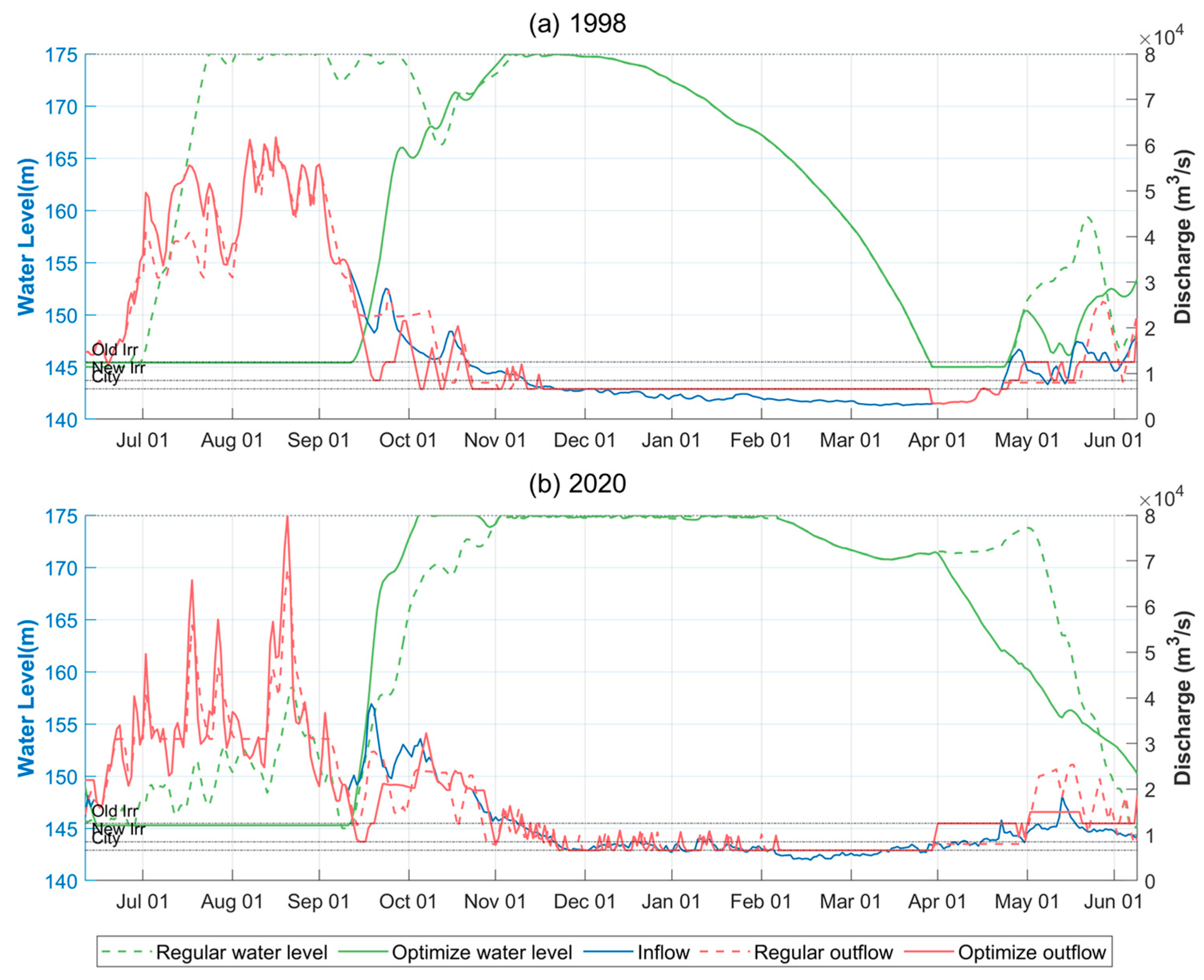
To verify the flood control safety of the DLWL strategy and eliminate the risk of raising water level, two typical wet years (1998, 2020) with severe flood processes were selected for comparative analysis, as shown in
Figure 12. During the main flood season (11 June–31 July), the DLWL scheme strictly implements the original FLWL control, and the reservoir water level and discharge processes are highly consistent with those of the conventional operation. No significant deviation in flood regulation is observed, and no additional flood control pressure is imposed on the reservoir itself and the downstream river reaches. The results suggest that the phased DLWL strategy can significantly enhance the drought resistance and water storage capacity of the Three Gorges Reservoir without reducing the original flood control safety level.
5. Discussion
This study systematically identified the spatiotemporal characteristics of FDAA events in the MLYRB, revealed the water security risks caused by the conventional single FLWL operation of the TGR under frequent FDAA events, and developed a phased and graded DLWL scheduling strategy. The discussion focuses on the rationality of the identified FDAA patterns, the deficiencies of traditional reservoir operation, the effectiveness of the improved DLWL scheme, the limitations of this research, and the practical implications for basin water resources management.
Regarding the identification of FDAA events in the MLYRB, this study employs a hybrid identification method that couples the run theory based on SRI with the FDAA index SDFAI. Both SDFAI [
30,
34,
35] and run theory [
2,
36,
37,
38] are widely recognized and utilized in the existing literature for characterizing multi-scale drought and flood events. However, single-index methods often struggle to capture the rapid transitions within short time windows that define abrupt alternation. By integrating these two approaches, our method effectively leverages the stability of SRI in reflecting long-term hydrological status and the sensitivity of short-cycle indices in detecting rapid phase shifts. Compared with previous studies that relied solely on a single standardized index, our hybrid framework provides a more robust identification of the abruptness of transitions, particularly for events like the 2022 and 2024 FDAA, which occurred within a single flood season.
While a significant body of the earlier literature has utilized reanalysis datasets, such as ERA5 or GLDAS, to investigate meteorological FDAA [
39,
40], such data, despite their high spatial coverage, may introduce biases due to model uncertainties and the lack of local calibration. In contrast, this study is built upon long-term observed hydrological data from gauging stations, ensuring higher precision in reflecting the actual hydrological regime of the river basin. More importantly, while meteorological FDAA focuses on precipitation and evapotranspiration anomalies [
4,
41], hydrological FDAA is more directly aligned with actual water resource availability and the operational requirements of downstream irrigation, urban supply, and navigation. This alignment makes the identified FDAA patterns more representative of the real-world water security challenges faced by the TGR and the MLYRB. Our identification results show that FDAA events are predominantly concentrated during June to October with a pronounced increasing trend after 2010, which are broadly consistent with the findings of Wang et al. [
6]. The convergence of these independent studies, despite differing methodologies and data sources, reinforces the robustness of the observed intensification of FDAA events in the region.
The conventional single FLWL operation of the TGR adopts a rigid flood control-oriented mode, which neglects the drought resistance demand in the late flood season. Our analysis revealed that after the TGR impoundment in 2003, minimum water levels at Shashi and Hankou stations exhibited a continuous declining trend and frequently fell below critical thresholds in recent FDAA years, particularly 2022. This finding resonates with recent studies that have identified the functional gap in TGR operation regarding drought response [
17,
42]. In response to this challenge, we developed a phased and graded DLWL strategy for the TGR, optimized via the NSGA-III algorithm. Compared with previous DLWL studies that have predominantly focused on reservoir operation during dry seasons alone [
23] or applied uniform DLWL constraints throughout the drought period [
43], our framework extends to the entire water year. By dividing the annual operational cycle into five distinct periods and assigning tiered DLWL thresholds (drought warning and drought protection levels) that explicitly account for the seasonality of FDAA events, this approach enables the reservoir to initiate drought-resistance storage accumulation during the late flood season and maintain flexible, stage-specific control across all hydrological phases. Such an annual, multi-tiered design allows the TGR to respond more proactively and adaptively to the growing threat of abrupt flood-to-drought transitions in the MLYRB. Therefore, the novelty of this study does not stem from the introduction of DLWL itself, but from the integration of FDAA-oriented temporal staging, tiered drought-response thresholds, and full-year multi-objective reservoir operation within a unified framework tailored for the Three Gorges Reservoir.
Our findings regarding the effectiveness of DLWL are broadly consistent with previous studies [
18,
21], which have shown that seasonal DLWL strategies can reduce drought severity and are particularly beneficial for reservoirs with large regulation capacity. The TGR, with its large regulation capacity, falls squarely into the category where DLWL is not only applicable but highly beneficial, which is reinforced by our long-term simulation results. Under the developed DLWL scheme, irrigation water supply reliability improves substantially, and urban and ecological water demands are fully guaranteed even during extreme FDAA events like 2022. Notably, while the magnitude of improvement may appear more modest than that reported in some other studies, this reflects our use of a recent 35-year period that includes exceptionally severe drought years such as 2022 and 2024, thereby providing a more robust and conservative assessment of the strategy’s effectiveness. Compared with previous DLWL studies that have primarily focused on individual lakes or reservoirs with an emphasis on agricultural drought mitigation [
16,
22], our study addresses the more complex operational context of a mega-reservoir whose releases have basin-scale implications for both drought defense and flood control. Crucially, our validation under typical wet years (1998, 2020) confirms that the phased DLWL strategy introduces almost no additional flood risk. This confirmation is particularly important for a mega-reservoir like the TGR, where even minor adjustments to water level control may have basin-wide consequences.
Nevertheless, several limitations should be acknowledged. First, due to the lack of detailed channel topography data, the downstream water levels could not be simulated, and the drought mitigation effect was assessed simply through the reservoir outflow. Future work incorporating hydrodynamic modeling would enable direct simulation of downstream water level responses under different release scenarios. Second, only the independent operation of the TGR was considered. Joint scheduling with upstream cascade reservoirs warrants further investigation to fully leverage the basin’s drought mitigation potential. Third, although our analysis is constrained to a 35-year series due to daily data availability, previous studies based on longer historical datasets (e.g., from 1961 to present) [
10] have also demonstrated a significant intensification of FDAA events in MLYRB. During our study period, the MLYRB has exhibited distinct climatic tendencies, characterized by significant warming trends, enhanced potential evapotranspiration, and a marked increase in the frequency of short-duration extreme precipitation events [
44,
45,
46]. Nevertheless, the response of FDAA events and DLWL performance under future climate scenarios remains unexplored. As DFAA intensity and frequency are projected to increase globally [
37], subsequent studies should integrate climate model projections to assess long-term strategy robustness. More importantly, it should be noted that the performance gains demonstrated in this study are based on specific historical hydrological boundary conditions and simplified operational assumptions. In real-world reservoir management, the practical application of this tiered DLWL framework would require further coupling with real-time, high-precision weather forecasting and multi-reservoir collaborative standard networks to handle operational uncertainties. Finally, the phased DLWL framework developed here could be extended to other large reservoirs in the Yangtze River Basin, contributing to basin-wide adaptive management under compound hydrological extremes.
6. Conclusions
This study systematically investigated the spatiotemporal characteristics of FDAA events in the MLYRB, evaluated the water security risks associated with the conventional single FLWL operation of the TGR, and developed a phased and graded DLWL strategy optimized via the NSGA-III algorithm. The main conclusions are summarized as follows.
First, FDAA events in the MLYRB are predominantly concentrated during June to October, with July exhibiting the highest occurrence frequency. Severe FDAA events mainly occur in May, July, and September. Since 2010, the frequency, intensity, and basin-wide synchronization of FDAA events have shown a significant increasing trend, with 2011, 2022, and 2024 representing the most extreme cases. This intensification reflects the combined effects of climate change and intensive human activities, substantially increasing water supply pressure in the region.
Second, the conventional single FLWL operation of the TGR adopts a rigid flood control-oriented mode that neglects drought resistance demand during the late flood season. Following the impoundment of the TGR in 2003, minimum water levels at Shashi and Hankou stations exhibited continuous declining trends, and the number of unsafe days increased sharply during recent FDAA years, particularly in 2022. These findings quantitatively demonstrate that the fixed FLWL operation is no longer adequate for addressing the escalating drought risk embedded within the changing hydrological regime.
Third, the developed phased and graded DLWL strategy, which spans the entire water year with five distinct operational periods and tiered thresholds, effectively enhances the drought resistance capacity of the TGR without compromising flood control safety. Multi-objective optimization results indicate that, compared with conventional operation, the DLWL scheme substantially improves irrigation water supply reliability, fully guarantees urban and ecological water demands, and maintains stable benefits for navigation and hydropower generation. Validation under typical wet years confirms that no additional flood risk is introduced.
Overall, this study provides a scientific and operationally feasible framework for balancing flood control and drought defense in the TGR under the increasing threat of FDAA events. The phased DLWL approach can serve as a valuable reference for other large reservoirs in the Yangtze River Basin and contribute to basin-wide adaptive water resources management under compound hydrological extremes.