Review

Multidimensional Nanoconfined Catalysts in Advanced Oxidation Processes: Mechanisms, Performance, and Limitations

1
School of Civil and Transportation Engineering, Guangdong University of Technology, Guangzhou 510006, China
2
College of Urban Construction and Environmental Engineering, Chongqing University, Chongqing 400044, China
*
Authors to whom correspondence should be addressed.
Water 2026, 18(11), 1278; https://doi.org/10.3390/w18111278
Submission received: 31 March 2026 / Revised: 6 May 2026 / Accepted: 13 May 2026 / Published: 25 May 2026
(This article belongs to the Special Issue Advanced Oxidation Technologies for Water and Wastewater Treatment)

Abstract

Water pollution caused by the continuous emergence of organic contaminants poses increasing challenges to conventional treatment technologies. Although advanced oxidation processes (AOPs) based on nanoconfined materials show great promise, their practical application remains constrained by short radical lifetimes, mass transfer limitations, and catalyst deactivation. This review systematically summarizes the critical role of nanoconfinement effects in AOPs. Through size exclusion and electrostatic regulation, confined spaces promote reactant enrichment and interference exclusion, while confined mass transfer and capillary-driven effects accelerate reaction kinetics. Particular emphasis is placed on multidimensional nanoconfined systems, ranging from zero-dimensional to three-dimensional structures and catalytic membranes, and on how structural design improves reaction microenvironments and active-site accessibility. The synergistic integration of confined structures with external fields, such as electric fields, is further discussed, highlighting their ability to regulate the electronic structure of active sites and shift reaction pathways from non-selective radical oxidation to efficient and highly selective non-radical routes. By optimizing parameters such as pH and catalyst-to-oxidant ratio, nanoconfined systems can achieve efficient pollutant degradation under near-neutral conditions while maintaining strong anti-interference capability and stability in real water matrices containing natural organic matter and inorganic ions.

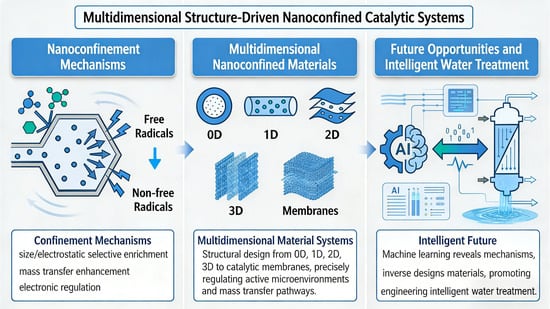
Graphical Abstract

1. Introduction

Water pollution has emerged as a critical global challenge. Economic growth and expanding anthropogenic activities are exacerbating water quality degradation worldwide, severely threatening the sustainability of limited freshwater resources [1]. In this context, water reuse is considered a core strategy for achieving circular water management. Yet its effective implementation faces major hurdles, particularly in the efficient removal of emerging organic pollutants—which are often detected at low concentrations but exhibit high toxicity, environmental persistence, and structural complexity [2,3,4]. These properties make them recalcitrant to conventional treatment processes, such as biological degradation and coagulation, which often fail to achieve complete elimination. Consequently, there is a pressing need to develop advanced treatment technologies that are both highly efficient and selective.
To overcome these limitations, research has increasingly turned to nanomaterial-based heterogeneous AOPs. These technologies not only facilitate more efficient generation of reactive oxygen species but also shows unique promise for degrading complex, refractory organic pollutants [5]. However, when applied in conventional (non-confined) systems, their practical deployment in aquatic environments faces significant hurdles. Key challenges include the extremely short lifetimes of free radicals (e.g., SO4 and •OH) and mass transfer limitations that restrict their effective contact with target pollutants. Furthermore, conventional heterogeneous systems are plagued by nanocatalyst agglomeration, low accessibility of active sites, and difficulties in catalyst recovery, all of which severely compromise radical generation efficiency and long-term operational stability [6,7]. Recent studies indicate that substantial improvement in oxidant activation efficiency within nanoconfined environments requires precise control. In particular, modulating reactive oxygen species (ROS) generation pathways depends on fine regulation of the electronic structure of active sites [8]. A representative case is that of hollow nanotubes: while their confinement effect can enrich reactants via capillary action and shorten mass transfer distances, their enhanced catalytic performance hinges on strategically modulating the curvature of the confined space. Compared with one-dimensional nanotubes, two-dimensional materials such as graphene provide planar confined spaces that facilitate electron transfer. However, they may suffer from layer stacking and limited transport pathways, while nanotubes offer continuous channels that are more favorable for mass transport. This modulation optimizes the electronic states of active sites, thereby lowering reaction energy barriers and steering the selective transformation of oxidants into specific reactive species, such as singlet oxygen (1O2). Therefore, the development of nanoconfined catalysts that integrate efficient mass transfer with the capability to modulate electronic structures has emerged as a critical pathway to overcome current bottlenecks in AOPs and achieve the efficient, sustained removal of emerging aquatic pollutants. These materials not only leverage spatial confinement to intensify interactions between reactants and active sites, but also finely tune reaction energy barriers and electron transfer pathways. This dual functionality facilitates efficient oxidant activation and rapid pollutant conversion, providing a promising strategy for advanced water purification under complex conditions [8,9]. Compared with existing reviews, this work systematically compares nanoconfined structures across dimensions (0D–3D and membranes), linking their architectures to catalytic performance, mass transfer, stability, and scalability. This cross-dimensional analysis provides a more integrated framework for rational catalyst design.
Despite the promising potential of nanoconfined catalytic systems in advanced oxidation processes, several important challenges should be recognized. The construction of well-defined nanoconfined structures often involves complex synthesis procedures, which may increase fabrication cost and reduce reproducibility. In addition, the scalability of these materials remains a critical issue, as many current designs rely on laboratory-scale methods that are difficult to translate into large-scale production. From an operational perspective, confined structures may suffer from pore blockage or fouling during long-term use, particularly in complex water matrices containing natural organic matter or inorganic ions. Stability is another concern, as structural degradation or active site leaching may occur under realistic reaction conditions. Furthermore, the long-term performance and reliability of nanoconfined systems in real water treatment scenarios are still not fully understood. Therefore, while nanoconfinement provides new opportunities for enhancing AOP performance, its practical implementation requires careful consideration of these limitations.
During the preparation of this manuscript, the author(s) used Gemini 3.1 for the purposes of generating selected graphical elements incorporated into the graphical abstract. The authors have reviewed and edited the output and take full responsibility for the content of this publication.

2. Traditional AOPs

AOPs are a class of water treatment technologies designed to achieve deep degradation of pollutants through the in situ generation of highly reactive oxygen species ROS. The core principle relies on various pathways—such as (photo)electrocatalysis, Fenton/Fenton-like reactions, and ozone oxidation—to produce potent ROS, including hydroxyl radicals (•OH), sulfate radicals (SO4), singlet oxygen (1O2), and superoxide radicals (O2). These ROS non-selectively attack and mineralize organic pollutant molecules. For instance, in Fenton and Fenton-like systems, hydroxyl radicals are generated via the classic reaction of ferrous iron with hydrogen peroxide (Equation (1)). Meanwhile, sulfate radicals are typically produced through the activation of persulfate or peroxymonosulfate (PMS) by heat, transition metals, or carbonaceous materials (Equations (2) and (3)). In addition, the classical Haber–Weiss mechanism also contributes to •OH generation, particularly in systems involving superoxide and hydrogen peroxide (Equation (4)). Although this pathway is often kinetically slow in homogeneous systems, it can be significantly enhanced in heterogeneous and nanoconfined environments due to facilitated electron transfer and the proximity of reactive intermediates within confined spaces. Owing to their rapid reaction kinetics, compact system design, and low risk of secondary pollution, AOPs represent an efficient and relatively low-cost solution for pollution control [10,11].
F e 2 + + H 2 O 2   F e 3 + + O H + O H
S 2 O 8 2 + a c t i v a t o r     S O 4 + S O 4 2
H S O 5 + a c t i v a t o r     S O 4 + O H
O 2 + H 2 O 2     O H + O H + O 2
Despite their potential, conventional AOPs are hampered by several critical limitations that constrain their practical efficiency and long-term sustainability. These shortcomings primarily originate from inherent catalyst properties and suboptimal reaction pathways. In photocatalysis, for instance, traditional semiconductor catalysts like TiO2 possess a wide bandgap, which restricts their absorption to the ultraviolet region and results in poor utilization of visible light. Furthermore, the rapid recombination of photogenerated electron–hole pairs drastically reduces quantum yield. When compounded by insufficient active sites and catalyst deactivation, these factors often lead to incomplete pollutant degradation and the accumulation of toxic intermediates, thereby increasing the risk of secondary pollution and overall treatment costs [12].
Secondly, each major AOP technology route faces inherent limitations. In Fenton-like reactions, homogeneous systems benefit from rapid kinetics and operational simplicity but are plagued by incomplete pollutant mineralization, low hydrogen peroxide utilization efficiency, high operating costs, and the generation of iron sludge that causes secondary pollution. Although heterogeneous catalytic systems reduce metal leaching, they often suffer from insufficient activity and structural stability across broad pH ranges and in complex water matrices, which restricts their practical applicability [13]. In addition to oxidative approaches, reduction technologies based on zero-valent metals (e.g., Fe0, Al0) have also been widely investigated. However, their long-term efficacy and environmental safety are significantly undermined by nanoparticle agglomeration, rapid surface passivation under near-neutral conditions, metal ion leaching, and poor electron transfer efficiency and selectivity [13,14,15]. Ozone oxidation, as a green and efficient AOP, can effectively decompose various organics. Yet, ozone alone has limited mineralization capability. When combined with catalysts to form catalytic ozonation systems, the persistent challenges of catalyst activity loss and instability continue to hinder efficient and durable pollutant removal [12].
Furthermore, traditional AOPs commonly face bottlenecks in reaction processes, including low utilization efficiency of reactive species and difficulties in controlling byproduct toxicity. On one hand, free radicals (such as •OH and SO4) possess extremely short lifetimes (typically <10 μs) and limited diffusion distances (generally <90 nm), leading to premature quenching before contacting target pollutants. This severely impacts oxidant utilization efficiency and pollutant removal effectiveness [16]. On the other hand, the random nature of radical attacks makes precise control of degradation pathways challenging, often generating intermediate products with higher toxicity and greater structural stability. This not only increases environmental risks but also complicates subsequent treatment processes [17].
From a resource and environmental sustainability standpoint, conventional AOPs face further critical drawbacks. They typically require high dosages of catalysts and oxidants to achieve complete pollutant mineralization, which not only generates chemical waste but also elevates the operational carbon footprint of the treatment system—an outcome at odds with the principles of green water technology [18,19]. Notably, oxidative polymerization offers a promising low-carbon alternative that avoids CO2 emissions by converting pollutants into stable solid polymers instead of mineralizing them. However, in conventional non-confined reaction systems, this pathway is often outcompeted by dominant degradation-mineralization routes. The inability to steer reactions selectively toward polymerization significantly curtails the engineering potential of this more sustainable strategy [17].
In summary, conventional AOPs are hampered by systemic deficiencies in catalytic efficiency, pathway selectivity, byproduct management, resource utilization, and carbon footprint. These limitations not only undermine their economic feasibility and practical applicability in water remediation but also challenge the fundamental sustainability of the technology. In response, research is increasingly focused on developing innovative confined catalytic materials and novel reaction strategies. By precisely regulating local microenvironments and energy distributions, these next-generation approaches aim to enable efficient, low-carbon, and targeted pollutant conversion, thereby steering water treatment technology toward a more precise and sustainable paradigm. A comparative summary of the representative conventional AOPs, including their dominant reactive oxygen species, advantages, and inherent limitations, is presented in Table 1.
In summary, conventional AOPs are hampered by systemic deficiencies in catalytic efficiency, pathway selectivity, byproduct management, resource utilization, and carbon footprint. These limitations stem largely from the inability to precisely control the local reaction microenvironment in bulk solution. Nanoconfinement strategies directly address these shortcomings by engineering spatially constrained reaction volumes. As will be discussed in detail in Section 3, confined spaces can (i) enrich target pollutants while excluding interfering matrix components to improve selectivity, (ii) dramatically shorten diffusion paths and enhance local reactant concentrations to accelerate kinetics, (iii) modulate the electronic structure of active sites to steer reactions toward more efficient non-radical or selective radical pathways, and (iv) stabilize reactive intermediates and active sites to mitigate deactivation.
Beyond performance-related limitations, the economic viability of traditional AOPs also warrants consideration. These processes typically involve considerable operational costs, including chemical consumption (e.g., H2O2, O3), energy input (e.g., UV irradiation, electrical power), and post-treatment requirements such as sludge handling and disposal. For instance, Fenton and Fenton-like systems incur ongoing expenses for hydrogen peroxide and the management of iron sludge, while ozonation and photocatalytic processes require substantial electrical energy for oxidant generation or light sources. These economic factors further motivate the development of more efficient catalytic systems. As discussed in Section 3.3, nanoconfined AOPs have demonstrated the potential to achieve comparable or superior treatment performance at significantly lower oxidant and catalyst dosages, thereby offering a promising pathway toward more cost-effective water treatment.
With this comprehensive understanding of both the technical and economic drivers for advancing AOP technology, we now turn to a detailed examination of nanoconfinement mechanisms and material systems in the following sections.

3. Nanoconfinement

3.1. Nanoconfinement Mechanism

3.1.1. Nanoconfinement Space

Precise control over the size of nanoconfined spaces is a central strategy for achieving efficient and selective catalysis. The advantages of this approach arise mainly from three aspects: size selectivity, local microenvironment optimization, and enhanced reaction kinetics. By rationally designing the pore size and geometry of the confined structure, target pollutant molecules can be efficiently enriched, while macromolecular interferents—such as NOM—are effectively excluded. This design significantly improves catalytic selectivity and resistance to interference in complex aqueous matrices. A representative study illustrates this principle well. Researchers encapsulated defective TiO2 within graphene oxide (GO) sheets featuring ~1.8 nm micropores. This configuration effectively excluded bulky NOM and charged anions (~325 nm), while permitting smaller micropollutants like carbamazepine (~1.1 nm) to access the confined space for efficient degradation, clearly demonstrating size-exclusion selectivity [20]. Moreover, the introduction of surface charges within such confined spaces can further strengthen the exclusion of negatively charged NOM and anions via electrostatic repulsion, thereby helping to maintain high catalytic activity even in complex water matrices [21]. Furthermore, Wang et al. developed a Fe3O4@CNT catalyst by encapsulating Fe3O4 nanoparticles within the channels of CNTs. This nanoconfined architecture not only enhanced the activation efficiency of persulfate (PDS) but also markedly improved the degradation selectivity for target micropollutants like carbamazepine (CBZ) in soil matrices. The study fully demonstrates the superior interference resistance conferred by nanoconfinement, even in highly complex environmental media [22].
In summary, the rational design of nanoconfined spaces enables enhanced reaction selectivity via size-exclusion and electrostatic effects. Through the synergistic enrichment of target pollutants and optimization of electron-transfer pathways, this strategy not only boosts catalytic efficiency but also confers superior environmental adaptability and operational stability in real-world applications.

3.1.2. Mass Transport Effects in Nanoconfinement

The nanoconfinement effect significantly optimizes mass transport. For instance, it induces a “single-file diffusion” pattern for water molecules within confined channels, which reorganizes hydrogen-bond networks and enhances their overall mobility. This dramatically accelerates the degradation kinetics of emerging pollutants during AOPs. By constraining reactions within nanoscale spaces, the diffusion paths for both pollutants and ROS to reach active sites are drastically shortened, providing a foundation for reaction rate enhancements by orders of magnitude [8]. From a molecular perspective, the confinement of water within channels of nanometer dimensions (typically <5 nm) induces profound changes in its structural and dynamic properties. Under such extreme confinement, the bulk-like tetrahedral hydrogen-bond network of water is disrupted and reorganizes into a more ordered, chain-like configuration. This restructuring reduces the average number of hydrogen bonds per water molecule and alters both librational and translational dynamics, effectively lowering the energy barrier for molecular transport. Molecular dynamics simulations have further revealed that water confined in carbon nanotubes or slit-like graphene channels exhibits a viscosity significantly lower than that of bulk water, with self-diffusion coefficients enhanced by up to an order of magnitude depending on the channel diameter and surface chemistry. This accelerated water mobility, coupled with collective diffusion modes in narrow channels, directly contributes to the rapid transport of dissolved pollutants and oxidants to active sites, thereby underpinning the experimentally observed kinetic enhancements. A representative example is the work by Tang et al., who constructed a cavity nanoconfined reactor by loading Fe2O3 into the nanochannels (<5 nm) ofs hollow carbon spheres. This system effectively activated persulfate (PDS) to degrade sulfamethoxazole (SMX), showcasing the kinetic advantages of such confined architectures [8]. The confined system achieved a degradation rate constant of 6.25 min−1, which is three orders of magnitude higher than that of its unconfined counterpart. This exceptional kinetic performance is primarily attributed to the rapid enrichment of reactants within the nanoscale channels and a dramatic reduction in mass transfer resistance [8]. Mechanistically, this advantage is elucidated by molecular dynamics simulations: as the interlayer spacing of the carbon channels decreases (e.g., from 4.5 nm to 2.5 nm), SMX and PDS molecules exhibit accelerated diffusion toward the catalyst surface [23]. More critically, the strong capillary forces (>50 bar) generated within the narrow nanochannels provide a powerful driving force for reactant influx, thereby creating a local high-concentration environment around the active sites [8,24]. This local concentration enhancement serves a dual purpose. First, it increases the effective collision frequency between SMX and the primary ROS (e.g., 1O2) generated within the confined space, thereby maximizing ROS utilization efficiency. Second, under extreme confinement, it may induce conformational changes in SMX molecules that render them more susceptible to decomposition [8,23]. Synergistically, this enhanced mass transfer mechanism works in concert with electronic structure regulation to collectively lower the reaction energy barrier. As a result, the nanoreactor maintains rapid and efficient removal of multiple pollutants even when treating actual river water containing complex matrices, underscoring the significant potential of nanoconfinement for optimizing mass transport processes [8,24].

3.1.3. Electronic Interactions

The precise regulation of electronic interactions represents another core mechanism of the nanoconfinement effect. Confined structures can directly modulate the local electronic structure and charge transfer behavior of active sites. A prime example is the confinement of Fe2O3 within CNTs, which induces strong electronic coupling with the inner CNT walls. This interaction facilitates electron migration from Fe2O3 to the conductive carbon framework, generating electron-enriched regions on the CNT surface that dramatically enhance the adsorption and activation of oxidants such as peracetic acid (PAA) [25]. Density functional theory (DFT) calculations confirm that confined systems significantly lower the activation energy barrier for O–O bond cleavage in PAA molecules compared to their non-confined counterparts loaded externally on CNTs, providing a theoretical basis for the experimentally observed enhancement in oxidant activation. Specifically, the confined Fe2O3 facilitates electron transfer to the O–O bond of PAA, promoting its homolytic cleavage to yield reactive acetyloxy radicals (CH3C(O)O•) and subsequently hydroxyl radicals, as described in Equations (5) and (6).
F e ( I I I ) + C H 3 C ( O ) O O H     F e ( I I ) + C H 3 C ( O ) O O + H +
C H 3 C ( O ) O O     C H 3 C ( O ) O + O H
This reduction is primarily attributed to the confined environment, which induces electron rearrangement and thereby optimizes the reaction pathway [26].
Second, this confinement effect demonstrates a significant synergistic enhancement when coupled with an external electric field. The applied field not only facilitates the cyclic regeneration of the Fe(III)/Fe(II) couple but also further augments the electron transfer efficiency within the confined space [25,27]. Electrochemical testing indicates that the confined catalyst exhibits lower charge transfer resistance and more pronounced current response, confirming its exceptional electronic conductivity [25,27]. Experimental evidence—including radical quenching tests and EPR spectroscopy—further indicates that, this highly efficient electron-transfer pathway directly favors non-radical oxidation routes, particularly facilitating the generation of high-valent iron-oxo species (Fe(IV)=O). DFT calculations show that within the electric field-driven confined system, the formation energy barrier for Fe(IV)=O is substantially lowered compared to unconfined systems, establishing it as the primary active species responsible for degradation [26].
In summary, nanoconfinement enables the steering of reaction pathways from indiscriminate radical attack toward more selective and efficient-non-radical routes through precise electronic regulation and synergy with external stimuli such as electric fields. It is hypothesized that this mechanistic shift originates from confinement-induced modulation of the active site electronic structure, which favors electron transfer processes over radical generation.
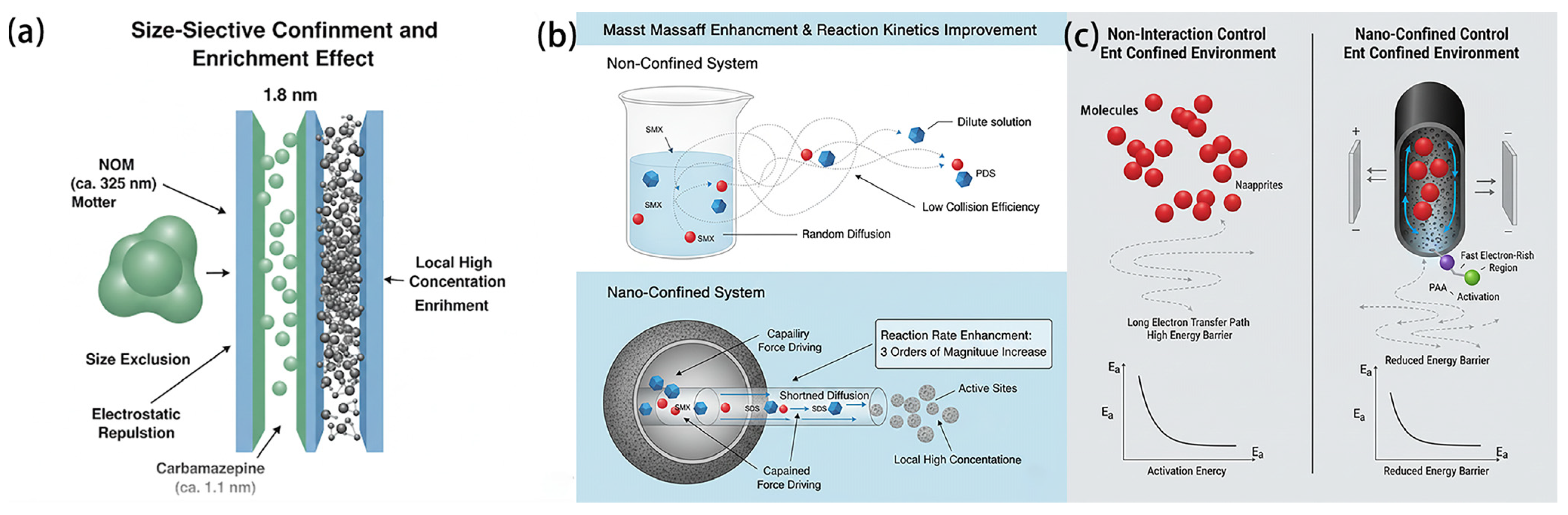
However, it should be emphasized that this pathway regulation is highly system-dependent, influenced by the nature of the active metal, the confining material, the oxidant type, and the reaction conditions. A universal predictive framework across different catalyst families has yet to be established, and further mechanistic studies are required to develop reliable design rules. The key mechanisms of nanoconfinement effects discussed above, including size-selective enrichment, enhanced mass transfer, and electronic interaction regulation, are schematically illustrated in Figure 1.

3.2. Nanoconfined Materials

The nanoconfinement effect provides a pivotal strategy to address key bottlenecks in conventional AOPs—such as limited active site accessibility, mass transfer constraints, and catalyst deactivation—by creating unique localized reaction environments. Its effectiveness is intrinsically linked to the spatial dimensions of the confining architecture. Consequently, materials engineered with nanoconfined structures across various dimensions—including zero-dimensional (0D), one-dimensional (1D), two-dimensional (2D), three-dimensional (3D) systems, as well as catalytic membranes—have been widely investigated for their capacity to precisely tailor the reaction microenvironment.
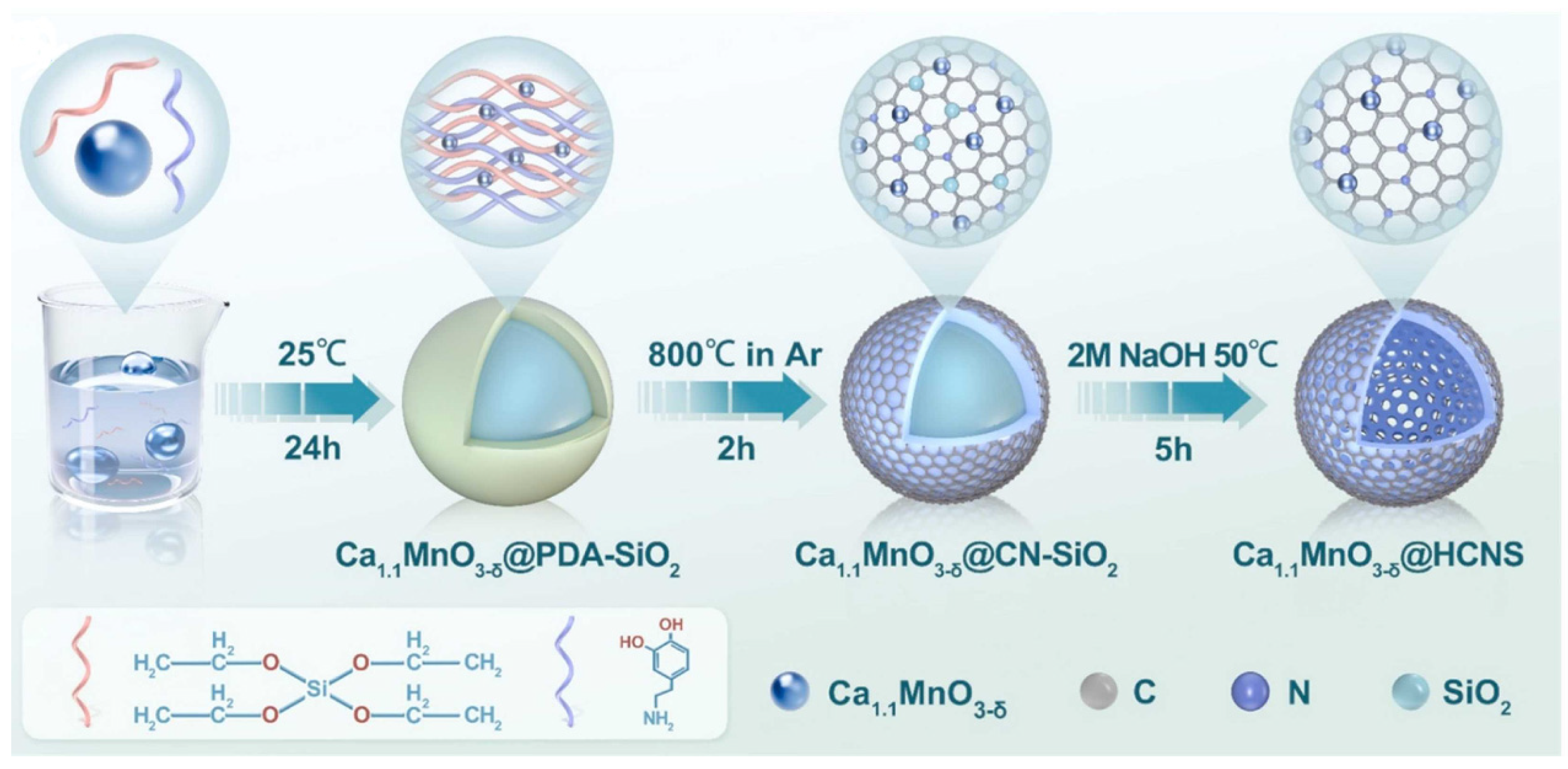
0D nanoconfined catalysts can be conceptually described as nanoscale “spheres” confined in all three spatial dimensions. They are typically non-solid structures; many, such as hollow nanoparticles and nanocages, consist of an active material shell surrounding an internal cavity [28]. The defining advantage of this architecture is its exceptionally high specific surface area, which provides an extensive “working platform” for chemical reactions. Consequently, these catalysts often exhibit superior activity and selectivity. Research has demonstrated that sophisticated synthetic strategies can yield a diverse array of high-performance 0D confined catalysts. Recent studies continue to push the boundaries of their design and catalytic performance. For example, Liu et al. successfully synthesized the perovskite catalyst Ca1.1MnO3−δ@HCNS confined within hollow carbon nanocapsules via a two-step hard-template strategy. This catalyst exhibits a distinct hollow-sphere structure, where an ultrathin carbon shell (approximately 80 nm) and abundant micropores (1–10 nm) collectively form the nanoconfinement space. Studies indicate this structure achieves a specific surface area of 257.7 m2/g—approximately 3.7 times higher than non-hollow controls—significantly increasing active site exposure. In the catalytic ozonolysis degradation of bisphenol A (BPA), this catalyst demonstrates outstanding performance with a reaction rate constant (k) as high as 0.305 min−1, achieving complete BPA removal within 20 min [29]. Zeng et al. [30] successfully constructed an atomically dispersed Fe-N4 catalyst (FeSA-NC) with macroporous structure through an innovative microporous confinement—i.e., zero-dimensional nanoconfinement system—combined with a three-dimensional hard-template strategy. This structure maximally exposes active sites while effectively preventing metal agglomeration, achieving ultra-high catalytic activity for bisphenol A degradation (specific activity reaching 5.16 × 10³ L·min−1·g−1). Further mechanism studies reveal that the Fe-N4 sites play a pivotal role as “electrical bridges” [31]. By enhancing electron transfer and lowering the reaction energy barrier, they transform the PMS activation pathway from a non-radical electron transfer-dominated process to a radical oxidation pathway primarily driven by 1O2, significantly boosting oxidation efficiency and pollutant mineralization capacity. Of course, most of these materials currently remain at the laboratory stage. For their successful translation into practical water treatment applications, several critical challenges must be overcome. These include achieving consistent quality in large-scale production, mitigating long-term catalyst deactivation, and addressing the potential environmental risks associated with nanomaterial release after use. Nevertheless, these nanoconfined systems undoubtedly represent a promising and innovative pathway toward highly efficient water purification. The preparation strategy and structural evolution of the Ca1.1MnO3−δ@HCNS nanoconfined catalyst are schematically illustrated in Figure 2.
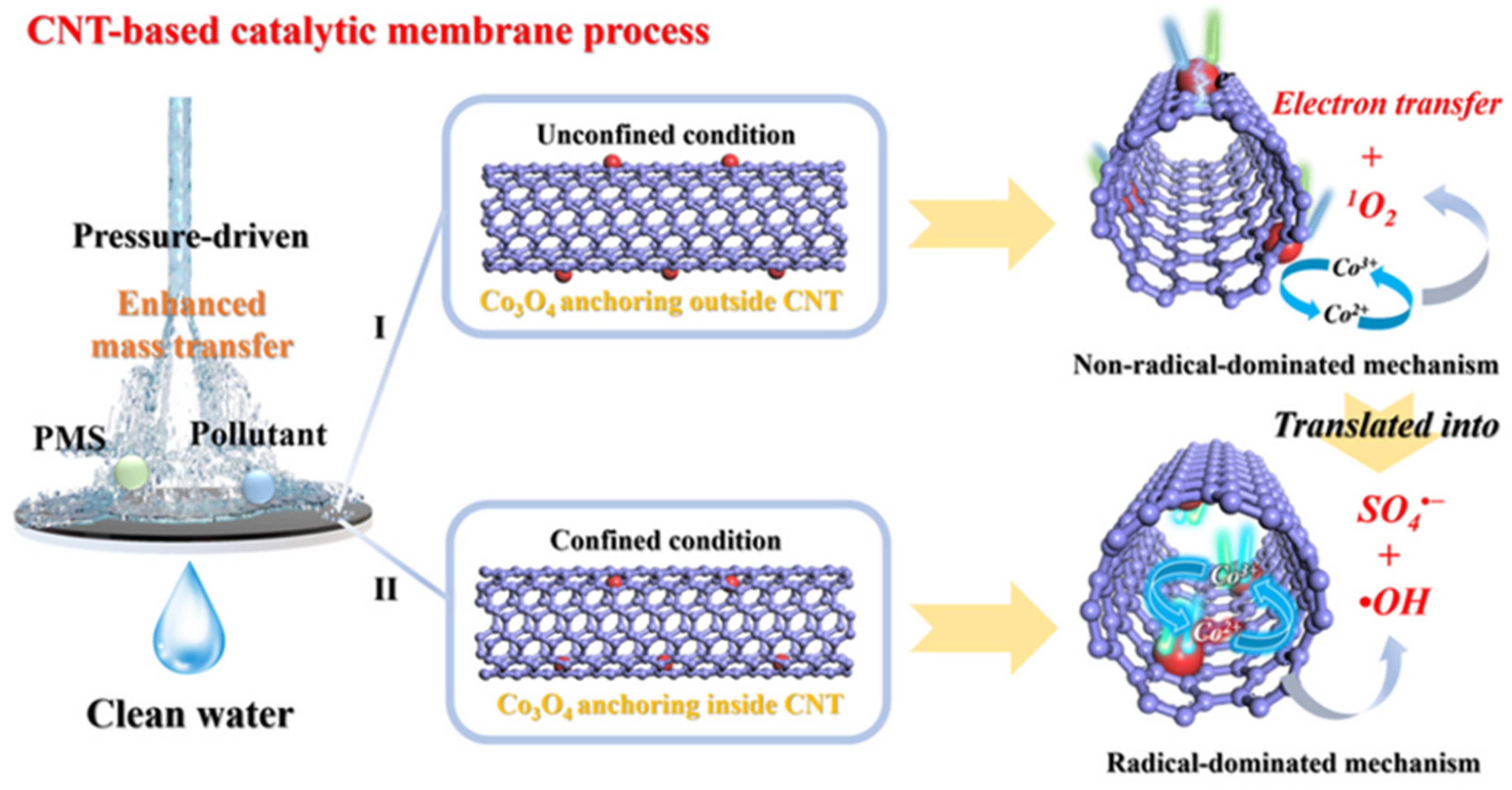
A quintessential example of a 1D nanoconfinement structure is the CNTs. Its unique tubular cavity confines metal oxide nanoparticles radially while permitting the axial diffusion of reactants and products. This architecture not only effectively prevents nanoparticle agglomeration and increases the accessibility of active sites, but also significantly enhances mass transport within the catalytic system. For instance, encapsulating Co3O4 nanoparticles within CNTs was found to not only accelerate the Co3+/Co2+ redox cycle but also enhance their binding affinity for persulfate ions. This synergy promotes a mechanistic shift from a non-radical to a radical-dominated pathway, enabling the efficient and stable degradation of sulfamethoxazole [32]. Similarly, in a flow-type electro-Fenton system, confining Fe2O3 nanoparticles within CNTs significantly increased the local concentration of radicals, thereby substantially enhancing the degradation kinetics of tetracycline [33]. A representative one-dimensional nanoconfined catalytic membrane based on Co3O4 encapsulated within CNTs is shown in Figure 3.
Beyond spatial confinement, one-dimensional nanostructures exhibit significant potential for engineering the catalytic microenvironment. A representative example is metal nanoparticles embedded in nitrogen-doped carbon nanotubes (M-NCNTs), where the encapsulation of metal nanoparticles within tubular cavities can suppress agglomeration and improve catalyst stability. More importantly, a synergistic interaction may arise between the confined metal species and atomically dispersed M–N4 sites on the carbon framework. The confined nanoparticles can act as electron reservoirs, modulating the electron density of adjacent active sites through interfacial electronic coupling. Such electronic regulation has been reported to enhance PMS activation and, in some systems, favor the generation of singlet oxygen (1O2) [34,35]. In addition, graphitic nitrogen species within the nanotube framework may participate in electron transfer processes and influence the transformation of reactive oxygen species, thereby affecting overall catalytic pathways [36,37]. Collectively, these findings suggest that one-dimensional nanoconfinement structures can stabilize active sites, provide efficient electron transport channels, and, under certain conditions, regulate interfacial electron transfer processes. However, it should be noted that the dominant reaction pathways remain system-dependent and vary with catalyst composition and operating conditions.
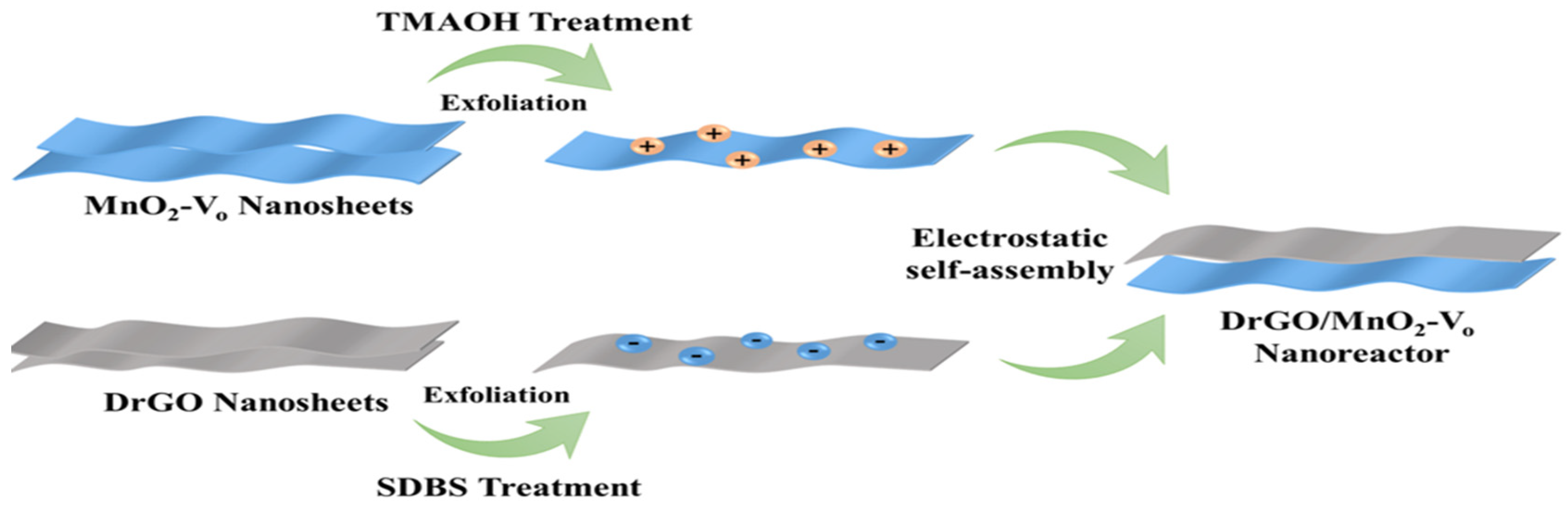
Compared with one-dimensional systems, two-dimensional nanoconfinement structures offer distinct advantages in terms of interfacial exposure and planar electron transport, although similar structure–performance trade-offs also exist. 2D nanoconfinement structures typically refer to the slit-like nanospaces formed between the layers of lamellar materials, such as layered double hydroxides (LDHs), defect-engineered graphene oxide, and molybdenum disulfide (MoS2). This planar confined environment offers an ideal platform for the enrichment and adsorption of reactants, as well as for efficient interfacial electron transport, facilitated by interlayer electrostatic interactions and well-ordered surface structures. Studies have shown that embedding oxygen vacancy-rich MnO2 into the interlayers of defect-reduced graphene oxide creates a 2D confined system. This structure significantly boosts the yield of ROS, while enhancing mass transfer efficiency and reaction stability during the catalytic ozonation of methyl mercaptan [38]. In another example, confining heme within the interlayers of Mg-Al layered double hydroxides (LDHs) results in a material that, owing to its high specific surface area and well-developed pore structure, significantly promotes both mass and electron transfer in oxygen reduction reactions [39]. A further representative case is the CoFe2O4-rGO-pTA/GO composite membrane. By co-intercalating CoFe2O4-loaded reduced graphene oxide (rGO) and polymeric tannic acid (pTA) between GO sheets, this membrane forms a confined architecture featuring abundant nanochannels (with an average pore size of ~9.44 nm) and a wrinkled surface topography [40]. During pressure-driven filtration, pollutant molecules are confined within the nanoscale channels, enabling full contact with the CoFe2O4 active sites localized on the layered surfaces. This nanoconfined environment not only intensifies mass transfer between the pollutants and the oxidant (PMS) but also efficiently activates PMS to generate multiple radical species (e.g., SO4 and •OH). This activation is driven by the promoted rapid redox cycling between Co2+/Co3+ and Fe2+/Fe3+ pairs. As a result, near-complete pollutant degradation is achieved within 12 min, with a reaction rate constant 61.54% higher than that in unconfined systems [40]. This case clearly demonstrates that two-dimensional nanoconfinement structures can significantly enhance the efficiency of advanced oxidation processes by strengthening interfacial interactions, accelerating electron transfer, and promoting radical generation. The fabrication process of the DrGO/MnO2–VO2 two-dimensional confined nanostructure is presented in Figure 4.
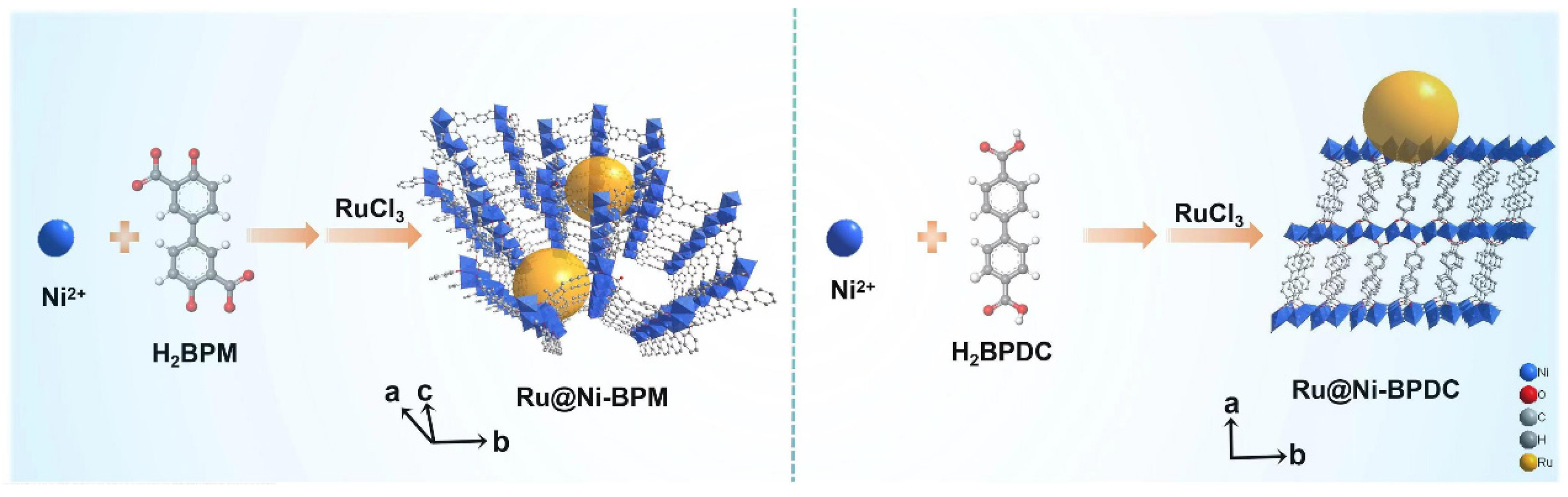
3D nanoconfinement structures, including metal–organic frameworks (MOFs), zeolite imidazolate frameworks (ZIFs), and porous carbons, effectively host active components within their ordered pores or cage-like topologies. This 3D confinement facilitates precise control over the size of active sites and suppresses their agglomeration, leading to markedly improved overall catalytic stability and performance. cAs an example, engineering a three-dimensional confined architecture within porous graphitic carbon nitride enables the uniform dispersion of active sites and facilitates the separation of photogenerated charge carriers. This structural design thereby enhances the photocatalytic degradation efficiency for pollutants such as bisphenol A [41]. Similarly, confining ruthenium nanoparticles within the three-dimensional channels of a MOF-based electrode effectively suppresses nanoparticle agglomeration through pore confinement, thereby preserving the structural integrity and electrochemical activity of the electrode material [42]. A more intricate example involves the spatial anchoring of single iron (Fe) atoms within the periodic triangular cavities of graphdiyne (GDY). This configuration achieves atomic-level dispersion of Fe via C≡C–Fe coordination, effectively preventing metal agglomeration and leaching [43]. Using Fe-GDY as an anchor, its composite with MIL-100(Fe) forms a tight C=C–Fe|O heterointerface. This interface not only significantly enhances interfacial electron transport (reducing the electrochemical impedance to 57.3 Ω) but also accelerates the separation of photogenerated charges [44,45]. Further characterization reveals that this confined architecture induces the formation of abundant coordination-unsaturated Fe–O clusters and ligand vacancies, which markedly enhances the material’s Lewis acidity. This enhanced acidity efficiently drives the Fe(III)/Fe(II) redox cycle, thereby promoting the conversion of H2O2 into •OH radicals [46]. Leveraging the aforementioned three-dimensional confinement effects, the constructed Fe-GDY3@MIL(Fe) catalyst exhibited a 6.4-fold enhancement in the degradation rate constant for the pesticide DTF, achieved a remarkable mineralization efficiency of 97.3%, and demonstrated excellent cycling stability [44]. This work compellingly validates the critical role of three-dimensional nanoconfinement in precisely engineering active interfaces, modulating electronic structures, and boosting redox kinetics. A schematic illustration of the construction of Ru@Ni-MOFs three-dimensional confined nanocomposites is shown in Figure 5.
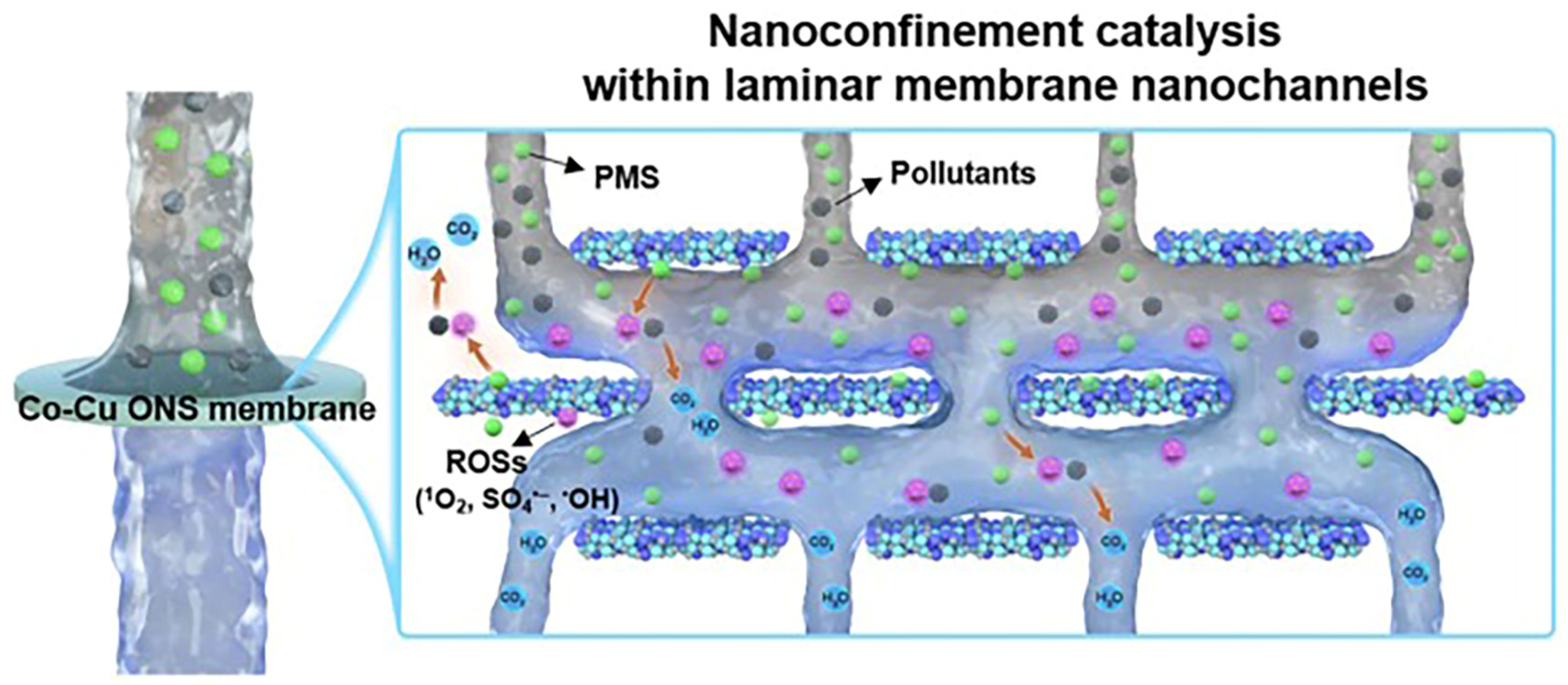
Nanoconfinement in catalytic membranes represents a direct translation of the confinement concept into practical, flow-through reactor configurations. Unlike bulk powder catalysts, membrane systems exploit the nanoscale channels within the membrane matrix to confine both the catalytic reaction and the separation process within the same spatial domain. From the perspective of AOPs, the core advantage lies in the structured nano-confined channels, which function as confined reaction volumes that simultaneously enhance interfacial mass transfer, prolong the lifetime of reactive oxygen species, and improve the accessibility of catalytic sites—all of which are critical bottlenecks in conventional heterogeneous systems. For instance, layered catalytic films assembled from ultrathin cobalt-copper oxide nanosheets possess precisely tuned interlayer nanochannels (∼1–2 nm). These channels function as confined catalytic microenvironments where pollutant molecules are trapped within the interlayer spaces, ensuring intimate and prolonged contact with the active sites. This spatial confinement significantly accelerates the activation of PMS by promoting rapid electron transfer between the confined pollutant and the catalytically active nanosheet surfaces, thereby enhancing the generation of reactive oxygen species. Consequently, this architecture achieves a contaminant degradation flux approximately three times higher than that of conventional mixed-matrix membranes [47]. Similarly, two-dimensional confined catalytic membranes based on GO exploit their abundant interlayer nanochannels and tunable surface chemistry to selectively concentrate organic pollutants via mechanisms such as π-π stacking and electrostatic interactions. Within these confined spaces, the local concentrations of both pollutants and radicals are substantially increased. Concurrently, the carbon framework itself acts as a non-radical catalytic site, promoting the generation of 1O2. This synergy enables the efficient removal of various refractory organic compounds at short hydraulic retention times while effectively mitigating membrane fouling [48]. Furthermore, this design concept has been successfully extended to other membrane systems, including metal–organic framework (MOF) membranes, covalent organic framework (COF) membranes, and ordered mesoporous carbon membranes. This expansion continuously broadens both the material library and the practical application scope of nanoconfined catalytic membranes. By integrating confinement effects directly into flow-through membrane architectures, these systems offer a promising pathway toward continuous-flow AOPs, where enhanced mass transfer, prolonged active species lifetimes, and improved catalyst recovery are realized simultaneously. The nano-confined catalytic degradation mechanism within laminar membrane nanochannels is schematically illustrated in Figure 6.
While the above examples illustrate the diverse architectural possibilities for nanoconfinement, a comparative assessment across dimensions is useful for guiding material selection in practical applications. In terms of mass transfer efficiency, 1D nanotubes with open channels and 2D slit-like interlayers generally outperform 0D hollow spheres and 3D porous frameworks, owing to shorter diffusion pathlengths and lower tortuosity. With respect to anti-leaching stability, 1D encapsulation and 3D pore confinement provide superior protection by physically isolating active species from the bulk solution, whereas active components on 0D external surfaces or within 2D interlayers are comparatively more exposed. Regarding scalability, 2D membrane fabrication and 3D framework synthesis via solvothermal or microwave-assisted routes are more amenable to modular scale-up, while the precise engineering of 0D hollow nanostructures and high-quality 1D nanotubes often involves multi-step or vapor-phase processes that present greater manufacturing challenges. In terms of pore blocking susceptibility, 0D structures with narrow pore entrances and tightly stacked 2D membranes are more vulnerable to fouling by macromolecular organic matter, whereas 1D nanotubes with open ends are less prone to irreversible blockage. Finally, with regard to validation in real water matrices, 2D catalytic membranes and 3D porous frameworks have been more extensively evaluated under realistic conditions, while evidence for 0D and 1D systems remains comparatively limited.
Recognizing the dimensional trade-offs discussed above, the meticulous design of multidimensional nanoconfinement structures generates synergistic enhancements across multiple fronts: increasing active site accessibility, promoting mass transport, modulating electronic configurations, and steering reaction pathways. These combined effects ultimately lead to a substantial boost in the efficacy of advanced oxidation technologies for degrading organic pollutants. Looking forward, research efforts should prioritize a deeper mechanistic understanding of the intrinsic links between dimensional architecture and catalytic performance, while simultaneously accelerating the translation of these promising materials into practical, real-world wastewater treatment applications.
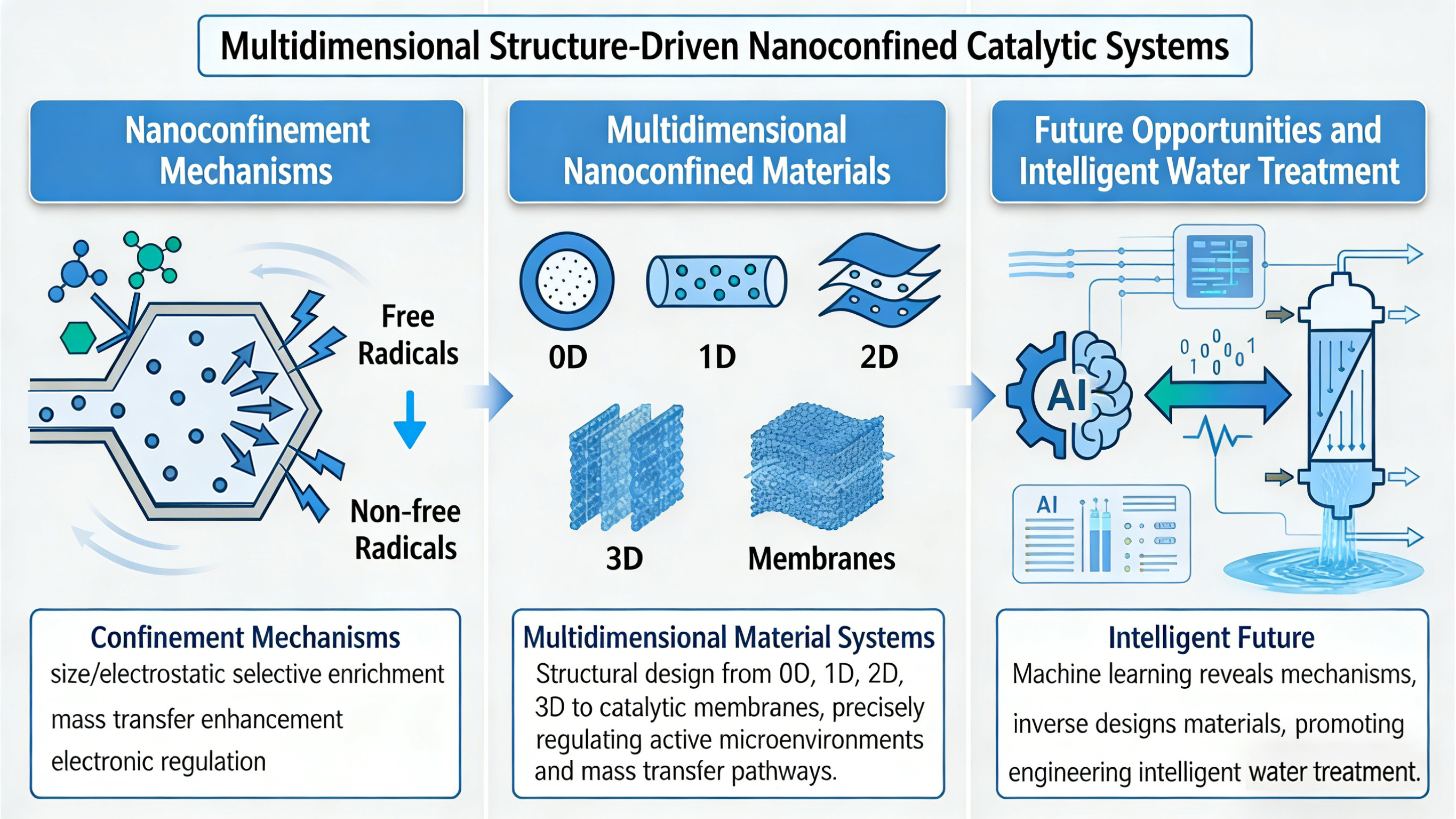
To facilitate a systematic comparison of the architectural features, catalytic characteristics, and practical considerations across dimensionalities, Table 2 summarizes the key attributes of 0D, 1D, 2D, and 3D nanoconfined AOP systems. As shown in the table, each dimensional category exhibits distinct advantages and limitations in terms of dominant reaction pathways, structural stability, synthesis complexity, and scalability. These dimensional trade-offs directly inform the selection of suitable confined architectures for specific water treatment scenarios and motivate the optimization of operational parameters discussed in the following section. A summarized overview of the research mechanisms and functional pathways of nanoconfined catalytic AOP materials is provided in Figure 7.
With this cross-dimensional comparison in mind, the following section examines how critical operational parameters—including pH, catalyst loading, and oxidant dosage—further modulate the performance of these nanoconfined catalytic systems.

3.3. Critical Parameters in Nanoconfined Advanced Oxidation
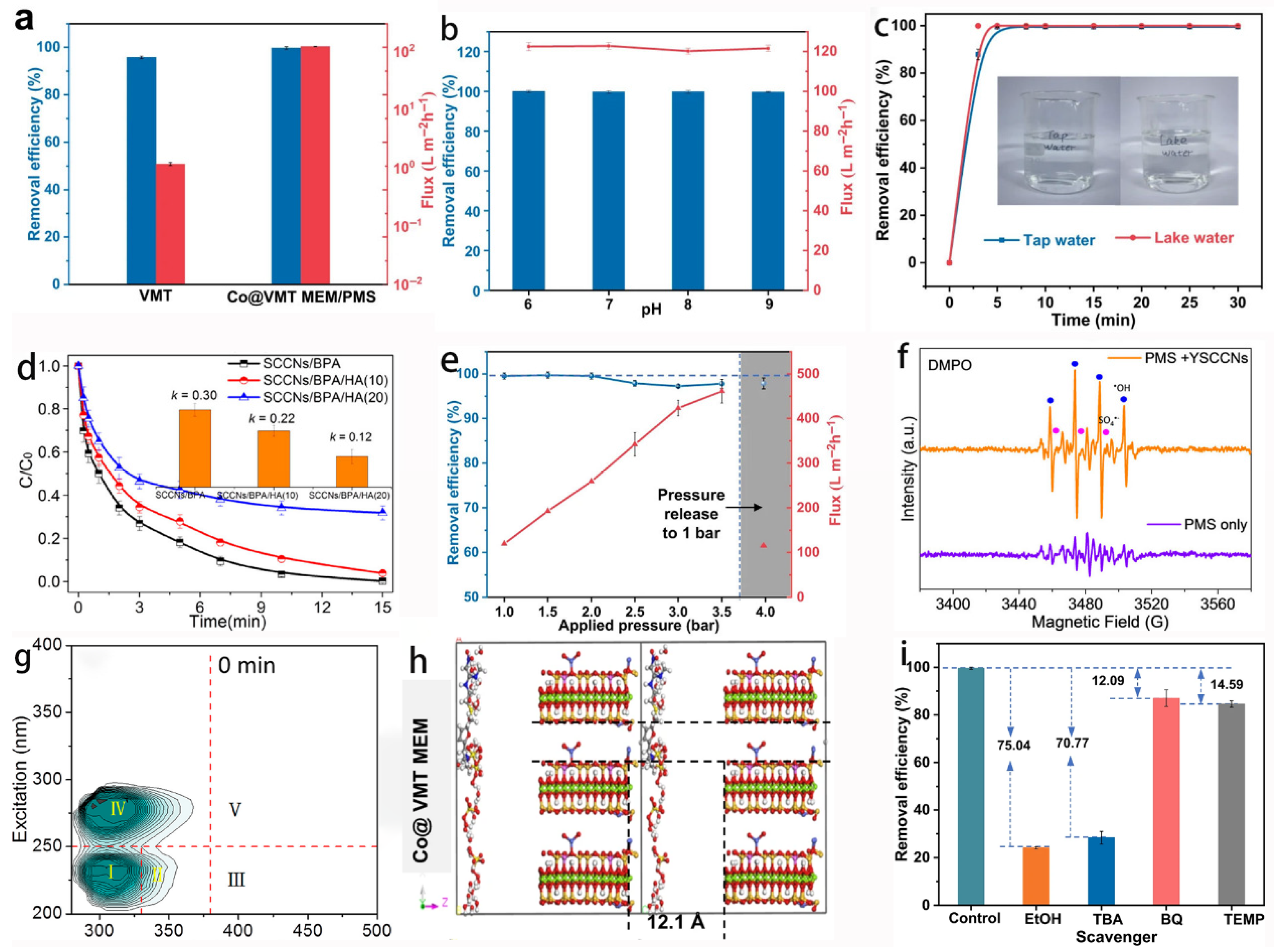
The performance of nano-confined catalytic AOPs depends not only on the catalyst design itself but is also profoundly influenced by a series of critical operating parameters. Systematic evaluation and optimization of these parameters are central to achieving efficient, stable, and cost-effective water treatment applications (Figure 8).
First, the pH of the reaction medium is a critical determinant of efficiency in nanoconfined catalytic AOPs. It governs reaction kinetics and pathways by modulating the surface charge of the catalyst, the speciation of the oxidant, and the stability of ROS. Research indicates that weakly acidic to neutral conditions (e.g., pH 4–7.5) generally represent the optimal window for many radical-dominated nanoconfined systems, such as Co- or Fe-based catalysts activating PMS. However, this optimal pH range is not universally applicable: ozonation, photocatalysis, electro-Fenton, and systems relying predominantly on non-radical pathways may exhibit markedly different pH dependences, reflecting the diversity of reaction mechanisms across AOP configurations. Within this range, the catalyst surface charge favors the adsorption of negatively charged oxidants (e.g., HSO5) and pollutant molecules, thereby promoting interfacial reactions. Concurrently, radicals like •OH and SO4 exhibit relatively longer lifetimes, which further facilitates pollutant degradation. For instance, in a CoFeCu-LDH membrane/PMS system, the degradation efficiency of RNTD dropped significantly to 80.4% at pH > 8. This decline is attributed to the enhanced negative surface charge of the catalyst, which causes electrostatic repulsion with the anionic RNTD molecules and consequently impedes electron transfer processes [49]. In contrast, highly acidic conditions (pH < 4) can promote homogeneous catalytic contributions but often trigger metal leaching, leading to catalyst structural collapse, secondary pollution, and the accelerated quenching of radicals (e.g., SO4 + H+ → HSO4•). Conversely, highly alkaline environments (pH > 9) may induce oxidant self-decomposition (e.g., of PMS) and intensify radical self-quenching, thereby reducing overall efficiency. In alkaline conditions, PMS undergoes base-catalyzed decomposition to generate singlet oxygen (1O2) instead of sulfate radicals, as shown in Equation (7). Furthermore, an excess of hydroxyl radicals at high pH can be scavenged by hydroxide ions (Equation (8)), while sulfate radicals can react with OH to form hydroxyl radicals (Equation (9)).
H S O 5 + S O 5 2   H S O 4 + S O 4 2 + O 2   1
O H + O H   O + H 2 O  
S O 4 + O H   S O 4 2 + O H  
Notably, the nanoconfinement effect itself possesses the intrinsic potential to regulate the local micro-environment pH. For example, constructing OH-rich interlayer confined spaces in layered double hydroxides (LDHs) can create a locally alkaline microenvironment. This favors the generation of high-valent metal-oxo species (e.g., Co(IV)=O), enabling the maintenance of high catalytic activity across a wide bulk pH range. This approach offers a novel strategy to mitigate conventional pH limitations in AOPs.
Second, catalyst loading and oxidant dosage are two directly interrelated operational parameters critical for achieving efficient pollutant degradation. In nanoconfined systems, an optimal catalyst loading range exists. An appropriate amount provides sufficient active sites for sustained ROS generation, whereas excessive loading can lead to pore blockage, hindered mass transfer, or even catalyst agglomeration, ultimately compromising performance. Statistical analysis further reveals a distinct advantage of nanoconfined systems: they achieve 99–100% pollutant removal requires significantly lower total catalyst doses (0.01–20 mg) compared to conventional unconfined AOPs (0.2–39 mg). This marked reduction underscores the superior atom economy and intrinsic catalytic efficiency of confined architectures. In membrane-based catalytic systems, catalyst loading additionally influences pollutant residence time within the membrane, necessitating a careful balance between ensuring sufficient contact time and maintaining high treatment throughput [50,51]. The oxidant dosage is a critical variable that directly governs the potential yield of ROS in the system. Insufficient dosing results in incomplete pollutant degradation, while excessive dosing is not only economically inefficient but can also trigger ROS self-quenching reactions (e.g., SO4 + SO4 → S2O82−) and generate non-beneficial byproducts, leading to significant oxidant waste. In nanoconfinement systems, the confinement effect enhances oxidant activation efficiency. Consequently, lower oxidant doses are typically required to achieve treatment outcomes comparable to those in conventional systems. For instance, the dosage range required for complete degradation is generally 0.01–2 mM for PMS, which is lower than that for PDS (0.1–4 mM) and H2O2 (0.1–16 mM) [52,53,54]. Therefore, meticulously optimizing the catalyst-to-oxidant ratio for a specific system is essential to achieve cost-effective and highly efficient operation.
Finally, the practical application of AOPs is challenged by the complexity of real water matrices, which contain diverse background constituents such as NOM and inorganic anions (e.g., Cl, HCO3, NO3, SO42−). These components can inhibit degradation efficiency by competing with target pollutants for ROS or by interacting with catalyst surfaces. NOM, often represented by humic acid (HA), acts as both a ROS scavenger and a coating agent that blocks catalyst active sites, leading to significant performance loss. Advanced spectroscopic techniques such as three-dimensional excitation–emission matrix (3D EEM) fluorescence have been widely used to characterize the transformation of dissolved organic matter in AOP studies. By resolving distinct fluorescent components (e.g., humic-like and protein-like substances), 3D EEM can provide semi-quantitative evidence for the degradation and structural evolution of NOM during treatment. In the context of nanoconfined systems, such analysis may offer complementary insights into the efficacy of size-exclusion and selective degradation mechanisms. For example, in a hollow Co/C nanoreactor, increasing the HA concentration from 0 to 20 mg/L caused the degradation rate constant of BPA to drop from 0.5 min−1 to 0.14 min−1 [55].
Nevertheless, nanoconfinement architectures significantly enhance the system’s resistance to interference through several key mechanisms. These include: (1) size-exclusion effects that physically block macromolecular NOM from entering the confined space; (2) extremely high local reactant concentrations within the confinement, which effectively dilute the competitive influence of background substances; and (3) the potential in certain systems to steer reaction pathways from readily scavenged radical routes toward more selective non-radical processes, such as electron transfer or high-valent metal-oxo species. For inorganic anions, their behavior in confined systems also diverges from that in bulk solution; for instance, the quenching capacity of Cl is weakened due to deformation of its solvation shell under geometric confinement, whereas HCO3 can be transformed into surface-stabilized carbonate radicals at certain confined interfaces, thereby participating in oxidation rather than merely quenching ROS. Experimental studies confirm the practical robustness of such designs: CoFeCu-LDH membranes and Co@VMT membranes maintained over 80% and 85% removal efficiency for RNTD in tap water and surface water, respectively, exhibiting only marginal declines compared to their performance in deionized water [49,56], which demonstrates the strong potential of nanoconfined systems for real-water treatment applications.
Figure 8. Performance, mechanisms, and applications of nanocontained catalytic AOPs: from macro performance to micro mechanisms. (a) Performance breakthroughs; (b) pH universality; (c) Efficacy in real water bodies; (d) NOM suppression effect; (e) Operational optimization window; (f) Radical species identification; (g) Initial pollutant characteristics; (h) Mass transfer bottleneck simulation; (i) Radical contribution quantification. (c,e,i) Reprinted with permission from Ref. [56]. Copyright 2024, Springer Nature; (d,g) Reprinted with permission from Ref. [55]. Copyright 2020, American Chemical Society.
Water 18 01278 g008

4. Conclusions and Perspectives

4.1. Conclusions

This review has systematically examined the pivotal role of nanoconfinement effects in AOPs across three core mechanisms: spatial confinement regulation, enhanced mass transport, and optimized electronic interactions. By surveying material systems from 0D to 3D architectures and catalytic membranes, we have demonstrated that nanoconfinement strategies enable precise design of local reaction microenvironments, synergistically addressing multiple bottlenecks inherent in conventional AOPs, including limited reactant mass transfer, non-selective radical pathways, catalyst deactivation, and poor resistance to complex aqueous matrices. Furthermore, systematic optimization of key operational parameters—pH, catalyst loading, and oxidant dosage—allows nanoconfined systems to maintain high activity across a broad pH range with exceptionally low chemical inputs, while exhibiting outstanding interference resistance in real water matrices.

4.2. Perspectives

Despite these advances, several challenges remain for the practical deployment of nanoconfined AOPs. These include the development of scalable and cost-effective synthesis protocols, the long-term stability of confined catalysts under realistic operating conditions, and the mitigation of pore blocking during extended operation. Building on the mechanistic understanding of nanoconfinement discussed above, machine learning offers new opportunities for accelerating catalyst design. Looking ahead, emerging computational tools such as machine learning may offer auxiliary support for high-throughput catalyst screening and structure–activity relationship analysis, though their application in nanoconfined systems remains at an early stage. Addressing these challenges will be essential for translating laboratory-scale demonstrations into robust, field-deployable water treatment technologies.

Author Contributions

Y.H.: Investigation, Data curation, Visualization, Writing—original draft. Y.P.: Visualization, Writing—original draft. M.H.: Investigation, Visualization. A.H.: Visualization. Z.L.: Visualization. Q.W.: Methodology, Supervision, Writing—review and editing. F.C.: Conceptualization, Writing—review and editing. All authors have read and agreed to the published version of the manuscript.

Funding

This research was funded by the National Natural Science Foundation of China (Grant No. 22006022), and The APC was funded by 22006022.

Data Availability Statement

Data will be made available on request.

Acknowledgments

During the preparation of this manuscript, the author(s) used Gemini 3.1 for the purposes of generating selected graphical elements incorporated into the graphical abstract. The authors have reviewed and edited the output and take full responsibility for the content of this publication.

Conflicts of Interest

The authors declare that they have no known competing financial interests or personal relationships that could have appeared to influence the work reported in this paper.

References

  1. Yang, X.; Prabowo, J.; Chen, J.; She, F.; Lai, L.; Liu, F.; Hua, Z.; Wang, Y.; Fang, J.; Goh, K.; et al. Sonicated carbon nanotube catalysts for efficient point-of-use water treatment. Adv. Mater. 2025, 37, 2504618. [Google Scholar] [CrossRef]
  2. Li, B.; Feng, C.; Wang, T.; Chen, M.; Wu, P.; Sun, L.; Liu, L.; Chen, S.; Lai, B.; Liu, J.; et al. Unveiling the overlooked role of structural heterogeneity within Fe-N-C single atom catalysts for fenton-like reactions: Efficient decontamination of pharmaceuticals from wastewater and source-separated urine. Sep. Purif. Technol. 2025, 354, 128955. [Google Scholar] [CrossRef]
  3. Weng, W.; Hou, J.; Graham, N.; Yu, X.; Yu, W.; Sun, K.; Liu, T. Efficient activation of peroxymonosulfate by sulfur-coordinated iron-based two-dimensional composite membrane (S–Fe@G) via sulfur doping and nanoconfined catalysis. J. Membr. Sci. 2025, 724, 123984. [Google Scholar] [CrossRef]
  4. Khan, I.A.; Hao, Z.; Zhang, H.; Zhang, Z. Assembling iron nitride nanosheets into nanoconfined catalytic membrane for efficient water purification: Performance and mechanistic insights. J. Membr. Sci. 2025, 736, 124637. [Google Scholar] [CrossRef]
  5. Wan, Z.; Chae, S.H.; Meese, A.F.; Nwokonkwo, O.; Arrazolo, L.; Yip, K.L.; Ma, X.; Liu, S.; Muhich, C.; Wang, D.; et al. Overcoming the reactivity-stability challenge in water treatment catalyst through spatial confinement. Nat. Commun. 2025, 16, 9672. [Google Scholar] [CrossRef] [PubMed]
  6. Mao, Y.; Zuo, W.; Wu, C.; Ma, W.; Tian, Y.; Zhang, J.; Li, L.; Zhan, W.; Qiu, J. Advances and challenges in the application of confined catalysts in heterogeneous advanced oxidation processes: A review. J. Clean. Prod. 2025, 491, 144762. [Google Scholar] [CrossRef]
  7. Shi, H.; Liu, Y.; Liu, R.; Li, B.; Zhou, M.; Chen, C.; Teng, J.; Li, R.; Zhao, L.; Lin, H. Mechanistic unveiling of radical and nonradical pathways in periodate activation for water treatment: Generation mechanism, oxidative behaviors, and functional merits. Small 2025, 21, 08443. [Google Scholar] [CrossRef]
  8. Tang, M.; Wan, J.; Wang, Y.; Ye, G.; Yan, Z.; Ma, Y.; Sun, J. Overlooked role of void-nanoconfined effect in emerging pollutant degradation: Modulating the electronic structure of active sites to accelerate catalytic oxidation. Water Res. 2024, 249, 120950. [Google Scholar] [CrossRef]
  9. Li, Y.; Zhao, M.; Ma, W.; Ma, T.; Wang, S.; Duan, X. Nanoconfinement in ordered mesopores materials for catalytic wastewater purification. Chem. Eng. J. 2025, 504, 156407. [Google Scholar] [CrossRef]
  10. Asif, M.B.; Mahmood, J.; Zhang, Z.; Yavuz, C.T.; Yavuz, T. Intralayer nanoconfined CuOx nanocatalysts in boron nitride membrane for efficient micropollutant oxidation. Small 2026, 22, 10916. [Google Scholar] [CrossRef]
  11. Pan, T.; Li, B.; Zhou, M.; Teng, J.; Cai, X.; Chen, C.; Shen, L.; Zhao, L.; Li, B.; Lin, H. Nanoconfined catalysts for persulfate-based fenton-like oxidation: Mechanisms, selectivity, and environmental applications. Small 2025, 21, 2506005. [Google Scholar] [CrossRef]
  12. Jia, C.; Wu, Y.; Xu, L.; Han, S.; Gan, L. Adjusting radical/non-radical species ratio in MnO2/CoFe2O4 activated peroxymonosulfate system through changing inner-outer positioning for enhanced endocrine disrupting chemicals degradation: A comparative study. Appl. Surf. Sci. 2023, 612, 155880. [Google Scholar] [CrossRef]
  13. Zhang, D.; Liu, X.; Ding, Y.; Liu, J.; Jiang, H.; Do, H. Enhanced oxidation of Cr(III)–Fe(III) hydroxides by oxygen in dark and alkaline environments: Roles of Fe/Cr ratio and siderophore. Environ. Sci. Technol. 2023, 57, 13172–13181. [Google Scholar] [CrossRef]
  14. Dong, Z.; Xu, Y.; Wu, C.; Chao, J.; Tian, C.; Lin, Z. Efficient removal of natural organo-chromium(III) through self-circulating decomplex and immobilization with nanoscale zero-valent iron. Nano Res. 2024, 17, 364–371. [Google Scholar] [CrossRef]
  15. Liu, F.; Lou, Y.; Xia, F.; Hu, B. Immobilizing nZVI particles on MBenes to enhance the removal of U(VI) and Cr(VI) by adsorption-reduction synergistic effect. Chem. Eng. J. 2023, 454, 140318. [Google Scholar] [CrossRef]
  16. Zhang, S.; Sun, M.; Hedtke, T.; Deshmukh, A.; Zhou, X.; Weon, S.; Elimelech, M.; Kim, J.-H. Mechanism of heterogeneous fenton reaction kinetics enhancement under nanoscale spatial confinement. Environ. Sci. Technol. 2020, 54, 10868–10875. [Google Scholar] [CrossRef] [PubMed]
  17. Zhang, P.; Yang, Y.; Duan, X.; Wang, S. Oxidative polymerization versus degradation of organic pollutants in heterogeneous catalytic persulfate chemistry. Water Res. 2024, 255, 121485. [Google Scholar] [CrossRef]
  18. Zuo, S.; Ding, Y.; Cheng, H.; Guan, Z.; Li, X.; Li, D. Confinement effect of FeMOFs glass enhances the proton coupled electron transfer reaction for the organic pollutants polymerization toward sustainable water purification. Chem. Eng. J. 2024, 491, 152170. [Google Scholar] [CrossRef]
  19. Liu, H.-Z.; Shu, X.-X.; Huang, M.; Wu, B.-B.; Chen, J.-J.; Wang, X.-S.; Li, H.-L.; Yu, H.-Q. Tailoring d-band center of high-valent metal-oxo species for pollutant removal via complete polymerization. Nat. Commun. 2024, 15, 2327. [Google Scholar] [CrossRef]
  20. Zhou, Q.; Hong, P.; Shi, X.; Li, Y.; Yao, K.; Zhang, W.; Wang, C.; He, J.; Zhang, K.; Kong, L. Efficient degradation of tetracycline by a novel nanoconfinement structure Cu2O/Cu@MXene composite. J. Hazard. Mater. 2023, 448, 130995. [Google Scholar] [CrossRef]
  21. Fu, W.Y.; Li, Y.H.; Yang, Z.C.; Zhang, Y.Y.; Zhang, X.L.; Liu, Z.Y.; Pan, B.C. Millimeter-Sized Nanocomposites for Advanced Water Treatment: Preparation, Synergistic Effects and Applications. Prog. Chem. 2023, 35, 1415–1437. [Google Scholar]
  22. Wang, Q.; Yang, S.; Wu, Y.; Monfort, O.; Dong, W. Nanoconfinement assists the selective generation of singlet oxygen to efficiently remove emerging organic contaminants in soil with a low consumption of oxidant. J. Hazard. Mater. 2025, 497, 139677. [Google Scholar] [CrossRef]
  23. Zuo, S.; Ding, Y.; Wu, L.; Yang, F.; Guan, Z.; Ding, S.; Xia, D.; Li, X.; Li, D. Revealing the synergistic mechanism of the generation, migration and nearby utilization of reactive oxygen species in FeOCl-MOF yolk-shell reactors. Water Res. 2023, 231, 119631. [Google Scholar] [CrossRef] [PubMed]
  24. Zhen, Y.; Sun, Z.; Qie, H.; Zhang, Y.; Liu, C.; Lu, D.; Wang, W.; Tian, Y.; Ma, J. Selectively efficient removal of micropollutants by N-doped carbon modified catalytic ceramic membrane: Synergy of membrane confinement and surface reaction. Appl. Catal. B Environ. 2023, 324, 122188. [Google Scholar] [CrossRef]
  25. Liu, T.; Xiao, S.; Li, N.; Chen, J.; Zhou, X.; Qian, Y.; Huang, C.-H.; Zhang, Y. Water decontamination via nonradical process by nanoconfined fenton-like catalysts. Nat. Commun. 2023, 14, 2881. [Google Scholar] [CrossRef] [PubMed]
  26. Guo, J.; Wang, Y.; Shang, Y.; Xu, X. Fenton-like activity and pathway modulation via single-atom sites and pollutants comediates the electron transfer process. Proc. Natl. Acad. Sci. USA 2024, 121, 2313387121. [Google Scholar] [CrossRef]
  27. Yang, M.; Hou, Z.; Zhang, X.; Gao, B.; Li, Y.; Shang, Y.; Yue, Q.; Duan, X.; Xu, X. Unveiling the origins of selective oxidation in single-atom catalysis via Co–N4 –C intensified radical and nonradical pathways. Environ. Sci. Technol. 2022, 56, 11635–11645. [Google Scholar] [CrossRef]
  28. Chaudhuri, R.G.; Paria, S. Core/shell nanoparticles: Classes, properties, synthesis mechanisms, characterization, and applications. Chem. Rev. 2012, 112, 2373–2433. [Google Scholar] [CrossRef]
  29. Liu, F.; Shao, G.; Qin, J.; Du, C.; Zhou, Z.; Xiao, C.; Wang, Y.; Tu, Y.; Ren, Z. Nanoconfinement-engineered hollow perovskites boost non-radical pathways for efficient degradation of emerging contaminants. Appl. Catal. B Environ. Energy 2026, 381, 125869. [Google Scholar] [CrossRef]
  30. Zeng, T.; Tang, X.; Huang, Z.; Chen, H.; Jin, S.; Dong, F.; He, J.; Song, S.; Zhang, H. Atomically Dispersed Fe–N4 Site as a Conductive Bridge Enables Efficient and Stable Activation of Peroxymonosulfate: Active Site Renewal, Anti-Oxidative Capacity, and Pathway Alternation Mechanism. Environ. Sci. Technol. 2023, 57, 20929–20940. [Google Scholar] [CrossRef]
  31. Zhang, J.; Jing, B.; Tang, Z.; Ao, Z.; Xia, D.; Zhu, M.; Wang, S. Experimental and DFT insights into the visible-light driving metal-free C3N5 activated persulfate system for efficient water purification. Appl. Catal. B Environ. 2021, 289, 120023. [Google Scholar] [CrossRef]
  32. Ma, H.; Feng, G.; Zhang, X.; Song, C.; Xu, R.; Shi, Y.; Wang, P.; Xu, Z.; Wang, G.; Fan, X.; et al. New insights into Co3O4-carbon nanotube membrane for enhanced water purification: Regulated peroxymonosulfate activation mechanism via nanoconfinement. Chemosphere 2024, 347, 140698. [Google Scholar] [CrossRef] [PubMed]
  33. Guo, D.; Yao, Y.; You, S.; Jin, L.; Lu, P.; Liu, Y. Ultrafast degradation of micropollutants in water via electro-periodate activation catalyzed by nanoconfined Fe2O3. Appl. Catal. B Environ. 2022, 309, 121289. [Google Scholar] [CrossRef]
  34. Guo, C.; Chen, C.; Lu, J.; Fu, D.; Yuan, C.-Z.; Wu, X.-L.; Hui, K.N.; Chen, J. Stable and recyclable Fe3C@CN catalyst supported on carbon felt for efficient activation of peroxymonosulfate. J. Colloid Interface Sci. 2021, 599, 219–226. [Google Scholar] [CrossRef]
  35. Chen, F.; Wu, X.-L.; Yang, L.; Chen, C.; Lin, H.; Chen, J. Efficient degradation and mineralization of antibiotics via heterogeneous activation of peroxymonosulfate by using graphene supported single-atom Cu catalyst. Chem. Eng. J. 2020, 394, 124904. [Google Scholar] [CrossRef]
  36. Li, X.; Huang, X.; Xi, S.; Miao, S.; Ding, J.; Cai, W.; Liu, S.; Yang, X.; Yang, H.; Gao, J.; et al. Single cobalt atoms anchored on porous N-doped graphene with dual reaction sites for efficient fenton-like catalysis. J. Am. Chem. Soc. 2018, 140, 12469–12475. [Google Scholar] [CrossRef]
  37. Wang, S.; Xu, L.; Wang, J. Nitrogen-doped graphene as peroxymonosulfate activator and electron transfer mediator for the enhanced degradation of sulfamethoxazole. Chem. Eng. J. 2019, 375, 122041. [Google Scholar] [CrossRef]
  38. Huang, W.; Yao, Z.; Zhao, H.; Wang, C.; Fang, Z.; Du, J.; Yang, Y.; Hu, L.; Zhang, Z.; Tian, S.; et al. Modulating adsorption-oxidation dual sites and confinement structure of interlayered MnO2/defective rGO nanoreactor for efficient and stable catalytic ozonation of CH3SH. Sep. Purif. Technol. 2025, 354, 128824. [Google Scholar] [CrossRef]
  39. Yang, Z.; Yan, X.; Tang, Z.; Peng, W.; Zhang, J.; Tong, Y.; Li, J.; Zhang, J. Facile synthesis of hemin-based Fe-N-C catalyst by MgAl-LDH confinement effect for oxygen reduction reaction. Appl. Surf. Sci. 2022, 573, 151505. [Google Scholar] [CrossRef]
  40. Wang, L.; Zhang, R.; Tian, X.; Ye, J.; Dai, J.; Pan, J. Biopolyphenol stabilized CoFe2O4-rGO/GO catalytic cleaning membrane for fast and high-efficiency contaminants removal. J. Membr. Sci. 2024, 695, 122454. [Google Scholar] [CrossRef]
  41. Wang, Y.; Zhao, X.; Cao, D.; Wang, Y.; Zhu, Y. Peroxymonosulfate enhanced visible light photocatalytic degradation bisphenol a by single-atom dispersed Ag mesoporous g-C3N4 hybrid. Appl. Catal. B Environ. 2017, 211, 79–88. [Google Scholar] [CrossRef]
  42. Li, S.; Zhou, Z.; Liu, G.; Zhang, Q.; Gao, Y.; Zhu, H.; Zhu, S. Confining ruthenium nanoparticles in MOF pores for high-performance hydrogen evolution reaction. Chem. Eng. J. 2024, 493, 152820. [Google Scholar] [CrossRef]
  43. Yin, X.-P.; Wang, H.-J.; Tang, S.-F.; Lu, X.-L.; Shu, M.; Si, R.; Lu, T.-B. Engineering the coordination environment of single-atom platinum anchored on graphdiyne for optimizing electrocatalytic hydrogen evolution. Angew. Chem. Int. Ed. 2018, 57, 9382–9386. [Google Scholar] [CrossRef]
  44. Qu, Z.; Muhammad, Y.; He, W.; Li, J.; Gao, Z.; Fu, J.; Shah, S.J.; Sun, H.; Wang, J.; Huang, Z.; et al. Designing C-Fe-O bonded MIL-88B(Fe)/jasmine petal-derived-carbon composite biosensor for the simultaneous detection of dopamine and uric acid. Chem. Eng. J. 2021, 404, 126570. [Google Scholar] [CrossRef]
  45. Zhong, Z.; Li, M.; Fu, J.; Wang, Y.; Muhammad, Y.; Li, S.; Wang, J.; Zhao, Z.; Zhao, Z. Construction of Cu-bridged Cu2O/MIL(Fe/Cu) catalyst with enhanced interfacial contact for the synergistic photo-fenton degradation of thiacloprid. Chem. Eng. J. 2020, 395, 125184. [Google Scholar] [CrossRef]
  46. Wang, Y.; Zhong, Z.; Muhammad, Y.; He, H.; Zhao, Z.; Nie, S.; Zhao, Z. Defect engineering of NH2-MIL-88B(Fe) using different monodentate ligands for enhancement of photo-fenton catalytic performance of acetamiprid degradation. Chem. Eng. J. 2020, 398, 125684. [Google Scholar] [CrossRef]
  47. Meng, C.; Wang, Z.; Zhang, W.; Cui, L.; Yang, B.; Xie, H.; Zhang, Z. Laminar membranes assembled by ultrathin cobalt-copper oxide nanosheets for nanoconfined catalytic degradation of contaminants. Chem. Eng. J. 2022, 449, 137811. [Google Scholar] [CrossRef]
  48. Xiao, Q.; Yang, Z.; Li, W.; Wei, B.; Guo, H.; Yu, S.; Gan, Q.; Liu, W.; Tang, C.Y. Iron Nanoparticles-Confined Graphene Oxide Membranes Coupled with Sulfite-Based Advanced Reduction Processes for Highly Efficient and Stable Removal of Bromate. Environ. Sci. Technol. 2024, 58, 18009–18019. [Google Scholar] [CrossRef]
  49. Zhang, J.; Liu, Y.; Zhang, Z. Nanoconfined catalytic water purification within CoFeCu LDH-assembled membrane nanochannels. Appl. Catal. B Environ. Energy 2024, 357, 124290. [Google Scholar] [CrossRef]
  50. Chen, C.; Xie, M.; Kong, L.; Lu, W.; Feng, Z.; Zhan, J. Mn3O4 nanodots loaded g-C3N4 nanosheets for catalytic membrane degradation of organic contaminants. J. Hazard. Mater. 2020, 390, 122146. [Google Scholar] [CrossRef]
  51. Zhao, X.; Long, M.; Lia, Z.; Zhang, Z. A two dimensional Co(OH)2 catalytic gravity-driven membrane for water purification: A green and facile fabrication strategy and excellent water decontamination performance. Mater. Horiz. 2024, 11, 1435–1447. [Google Scholar] [CrossRef]
  52. Wang, G.; Wang, K.; Liu, Z.; Feng, Y.; Yang, S.; Su, Y.; Qian, X.; Jin, P.; Wei, J. Hollow multi-shelled NiO nanoreactor for nanoconfined catalytic degradation of organic pollutants via peroxydisulfate activation. Appl. Catal. B Environ. 2023, 325, 122359. [Google Scholar] [CrossRef]
  53. Wang, M.; Cui, Y.; Cao, H.; Wei, P.; Chen, C.; Li, X.; Xu, J.; Sheng, G. Activating peroxydisulfate with Co3O4/NiCo2O4 double-shelled nanocages to selectively degrade bisphenol A—A nonradical oxidation process. Appl. Catal. B Environ. 2021, 282, 119585. [Google Scholar] [CrossRef]
  54. Yang, T.; Fan, S.; Li, Y.; Zhou, Q. Fe-N/C single-atom catalysts with high density of Fe-Nx sites toward peroxymonosulfate activation for high-efficient oxidation of bisphenol A: Electron-transfer mechanism. Chem. Eng. J. 2021, 419, 129590. [Google Scholar] [CrossRef]
  55. Zhang, M.; Xiao, C.; Yan, X.; Chen, S.; Wang, C.; Luo, R.; Qi, J.; Sun, X.; Wang, L.; Li, J. Efficient removal of organic pollutants by metal–organic framework derived Co/C yolk–shell nanoreactors: Size-exclusion and confinement effect. Environ. Sci. Technol. 2020, 54, 10289–10300. [Google Scholar] [CrossRef]
  56. Tian, M.; Liu, Y.; Zhang, S.; Yu, C.; Ostrikov, K.; Zhang, Z. Overcoming the permeability-selectivity challenge in water purification using two-dimensional cobalt-functionalized vermiculite membrane. Nat. Commun. 2024, 15, 391. [Google Scholar] [CrossRef] [PubMed]
Figure 1. Mechanism analysis of nanoconfinement effects (a) Size-selective confinement and enrichment effects in nanoconfinement (b) Enhanced mass transfer and improved reaction kinetics within nanoconductors (c) Regulation of electron transfer pathways under nanoconfinement conditions.
Water 18 01278 g001
Figure 2. Schematic diagram of the preparation process for the Ca1.1MnO3−δ@HCNS catalyst. Reprinted with permission from Ref. [29]. Copyright 2026, Elsevier.
Water 18 01278 g002
Figure 3. Shows a catalytic film constructed by encapsulating Co3O4 within the internal cavity of one-dimensional carbon nanotubes. This structure exhibits higher removal efficiency and lower cobalt leaching during the peroxymonosulfate-activated degradation of sulfamethoxazole Reprinted with permission from Ref. [32]. Copyright 2023, Elsevier Ltd.
Water 18 01278 g003
Figure 4. Preparation of DrGO/MnO2–VO2 two-dimensional nanomaterials via electrostatic self-assembly Reprinted with permission from Ref. [38]. Copyright 2025, Elsevier Ltd.
Water 18 01278 g004
Figure 5. Schematic illustration of the formation of Ru@Ni-MOFs three-dimensional confined nanocomposites Reprinted with permission from Ref. [42]. Copyright 2024, Elsevier Ltd.
Water 18 01278 g005
Figure 6. Schematic of nano-confined catalysis and degradation mechanism of pollutants in the Co-Cu ONS membrane/PMS system Reprinted with permission from Ref. [47]. Copyright 2022, Elsevier Ltd.
Water 18 01278 g006
Figure 7. Research mechanism summary of nanoscale confined catalytic advanced oxidation materials.
Water 18 01278 g007
Table 1. Types and advantages/disadvantages of traditional AOPs.
AOPs TypesReactive Oxygen SpeciesAdvantagesDisadvantages
Fenton-like•OH
  • Fast reaction rate and high degradation efficiency
  • Simple operation and mild reaction conditions
  • Relatively low cost
  • Must be conducted under acidic conditions
  • Iron ions readily precipitate, forming sludge
  • Low hydrogen peroxide utilization rate, prone to self-quenching
Photo-Fenton•OH, •O2, 1O2
  • Operates under visible light
  • Enhances Fe3+/Fe2+ recycling, reducing H2O2 consumption
  • Suitable for neutral pH conditions
  • Dependent on light sources, high energy consumption
  • Photogenerated carriers readily recombine, limiting efficiency
  • Catalysts are prone to photodegradation
Electro-
Fenton
•OH
  • Capable of generating H2O2 in situ
  • Eliminates the need for external H2O2 addition, reducing chemical dosing
  • Highly controllable reaction process
  • Electrodes are prone to passivation and exhibit poor stability
  • Low current efficiency and relatively high energy consumption
  • Potential generation of toxic halogenated byproducts
Photo
catalysis
•OH, •O2, h+
  • Utilizes solar energy, environmentally friendly
  • Catalyst is reusable
  • Applicable to multiple pollutants
  • Photogenerated carriers readily recombine, resulting in low quantum efficiency
  • Catalyst recovery is challenging
  • Low utilization of visible light, often requiring ultraviolet light
Persulfate
Activation
SO4•, •OH, 1O2
  • SO42−: Long lifespan, strong oxidizing power
  • Operates across a wide pH range
  • Can be activated by heat, light, electricity, or other methods
  • Sulfate residues may cause secondary pollution
  • Some catalysts contain toxic metals such as cobalt
  • Non-radical pathways exhibit high selectivity but fail to fully degrade complex pollutants
Ozonation•OH, O3
  • Strong oxidizing power with rapid reaction
  • Also functions as a disinfectant
  • Leaves no secondary residues
  • Poor selectivity for pollutants with low electron cloud density
  • High ozone generation and dosing costs
  • Potential formation of toxic byproducts such as bromate
Photo-electro
catalysis
•OH, •O2, h+
  • Synergistic interaction between light and electricity enhances carrier separation efficiency
  • Rapid reaction rates with broad applicability
  • High controllability
  • Complex system with high equipment costs
  • Electrode materials prone to corrosion
  • Strong dependence on light sources and power supplies
Table 2. Dimension-Dependent Performance and Practical Assessment of Nanoconfined AOP Systems.
Category0D Systems (Nanocages/MOFs)1D Systems (CNTs/Nanotubes)2D Systems (Layered Materials)3D Systems (Porous Frameworks)Membrane Systems (Catalytic Membranes)
Typical CatalystFe-MOFs, Co-ZIFsNi@NCNT, Fe@CNTg-C3N4, LDH, graphene composites3D carbon frameworks, aerogelsCatalytic membranes (e.g., CNT membranes, ceramic membranes, MOF membranes)
OxidantPMS/H2O2PMS/PDSPMS/H2O2PMS/PDS/O3PMS/PDS/H2O2
Target PollutantsDyes, antibioticsPhenols, pharmaceuticalsAntibiotics, dyesComplex organicsMicropollutants, dyes, emerging contaminants
Dominant PathwayRadical + non-radicalNon-radical dominantMixed pathwaysMixed pathwaysMixed (surface catalysis + filtration-enhanced reactions)
Evidence for ConfinementIsolated active sites, ROS selectivityEncapsulation, enhanced electron transferInterlayer confinementMultiscale confinement, improved mass transferInterface confinement, enhanced contact time, coupled separation–reaction
Main LimitationsInstability, metal leachingComplex synthesis, pore blockageRestacking, stability issuesScale-up difficulty, fragilityMembrane fouling, pressure drop, stability under long-term operation
Real Water RelevanceModerateModerate–highModerateHighHigh (continuous-flow compatibility)
Maturity LevelLab-scaleLab–pilotLab-scaleLab–pilotPilot-scale (some emerging applications)
Typical Synthesis MethodsSolvothermal, self-assemblyCVD, pyrolysis, in situ encapsulationExfoliation, hydrothermal, calcinationTemplate-assisted, freeze-drying, sol–gelPhase inversion, coating, interfacial polymerization, in situ growth
Disclaimer/Publisher’s Note: The statements, opinions and data contained in all publications are solely those of the individual author(s) and contributor(s) and not of MDPI and/or the editor(s). MDPI and/or the editor(s) disclaim responsibility for any injury to people or property resulting from any ideas, methods, instructions or products referred to in the content.