Article

Properties of Ethanol-Driven Chain Elongation for Caproic Acid Production Under Different pH Conditions: Effect of Inoculum Sources

1
School of Architecture and Civil Engineering, Chengdu University, Chengdu 610106, China
2
College of Architecture and Environment, Sichuan University, Chengdu 610065, China
3
State Key Laboratory of Hydraulics and Mountain River Engineering, Sichuan University, Chengdu 610065, China
4
Solid-State Fermentation Resource Utilization Key Laboratory of Sichuan Province, Yibin 644002, China
*
Authors to whom correspondence should be addressed.
Water 2026, 18(11), 1263; https://doi.org/10.3390/w18111263 (registering DOI)
Submission received: 30 March 2026 / Revised: 14 May 2026 / Accepted: 21 May 2026 / Published: 23 May 2026

Abstract

Caproic acid (CA) production through ethanol-driven chain elongation (CE) is a promising pathway to valorize organic wastes. However, the effect of pH and inoculum source on substrate conversion properties and microbial communities was not fully explored. In this study, performance of caproic acid production with anaerobic methanogenic sludge (AMS), aerobic sludge (AS) and chain elongation sludge (CES) at different pH conditions (uncontrolled (UN), 5, 6, and 7) were investigated. It was found that microorganisms in all inocula could degrade ethanol, but the consumption rate was different. The AS mainly used substrate for biogas production, without CA accumulation, while AMS and CES could synthesize butyrate and caproate with ethanol and acetate as substrates. At pH UN and 5, excessive ethanol oxidation (EEO) was activated and transformed ethanol into acetate resulting in low CA yield. Increasing pH to 7, the AMS produced more caproate and achieved a higher CA yield (0.36 g-COD/g-COD) than that of CES (0.33 g-COD/g-COD). Microbial communities in raw inocula were different, which led to distinct substrate conversion pathways. After fermentation, Anaerolineaceae was the dominate family in AMS, while Corynebacteriaceae and Dysgonomonadaceae dominated in the reactor with CES, explaining the distinct caproate yield in both reactors. The results of this study provided useful information for constructing ethanol-driven CE processes from organic wastes.

1. Introduction

Organic waste disposal through anaerobic fermentation to obtain short-chain fatty acids (SCFAs) and energy products such as biomethane, biohydrogen and bioelectricity have drawn more and more attentions in recent years [1]. However, methane is a relatively low energy carrier and may cause serious environment pollution during the collection or transportation processes. To overcome these limitations, research focus has been adjusted to other high-value chemicals such as SCFAs, ethanol and lactic acid through biological fermentation [2,3]. However, the high hydrophilicity of these products makes the down-stream separation and purification processes costly and complicated, which severely restricts its industrial application [4]. Medium chain fatty acids (MCFAs) are highly hydrophobic and characterized with higher energy density than the SCFAs; thus, they have been regarded as the suitable alternatives and widely discussed by many researchers [5,6].
Microbial chain elongation (CE) is an efficient biotechnology to convert SCFAs into MCFAs, in which ethanol, lactate or methanol can be used as electron donors (EDs), while SCFAs act as the electron acceptors (EA) [4,7]. Based on the CE processes, acetate can be elongated to butyrate and then to caproate. As ethanol can be largely produced through fermentation from organic wastes and effectively used as electron donors for CA synthesis, ethanol-driven CE is regarded as the favorable pathway for directly obtaining high-value caproate from wastes by microbial technologies [8,9]. During the CE process, many operation parameters affect the substrate conversion pathways and caproate productivity.
Among the various factors, inoculum source is crucial for caproate production due to its determination on microbial community structures and bacterial metabolism processes, which finally affect the caproate yield [5,10]. It has been verified that inoculum source would not only affect the operation efficiency, but also determine the system input, which should be carefully considered during the CA fermentation, although numerous studies have conducted the CE processes for caproate biosynthesis using pure cultures such as Clostridium [11] and Megasphaera hexanoica [12]. However, these genera cannot be effectively used to treat organic wastes due to the high cost and inability to degrade complex substrates. In addition, complicated pretreatment of substrate and strict fermentation conditions also inhibit the practical application. To avoid these drawbacks, mixed cultures such as anaerobic digestate [13], pit mud [10] and gut microbiome [14] have been used as the inocula. CA fermentation with mixed cultures characterized low cost for substrate sterilization and high system stability [15]. Zhang et al. (2023) explored the CE processes using different inoculants with ethanol and lactate and obtained totally different product profiles [16]. It was even reported that inoculum source can significantly impact the MCFA production efficiency [10]. However, few researchers investigated the effect of inoculum on CA production during ethanol-driven CE processes.
Anaerobic sludge contains various microbial communities [17] and has been widely used as inoculum for MCFAs production [18]. Chen et al. (2024) utilized anaerobic digestate to synthesize CA from cabbage waste and obtained a caproate content of 4.6 g-COD/L [19]. However, various microorganisms exist in the sludge and may disperse the carbon flow, resulting in low CA yield [20]; thus, acclimation is usually required for promoting CA production [13]. Pit mud also contains many types of chain elongators [21] and can tolerate high concentrations of feedstocks [17], which have been widely utilized for CA fermentation. Gao et al. (2021) used pit mud as inoculum and obtained a caproate yield of 449 mg-COD/g-VS from Chinese liquor distillers’ grain [22]. A previous study found that indigenous microbiota in the food waste could be directionally acclimated during the fermentation and realized high CA production, which is also a potential inoculum source [23]. Although several studies compared the properties of CA production with different inocula from synthetic medium [14] and organic wastes [10], the performance of substrate degradation and variations in microbial community structures during fermentation using inocula from different sources need further investigations.
The pH value is another critical factor affecting microbial metabolisms and product spectra [3,24]. It is well-known that undissociated CA content increases with decreasing pH, which may damage the microbial cell membranes and inhibit the bacterial growth [25]. In addition, pH can also shape the microbial communities and determine the metabolism competitions [3,23]. For most identified lactate-based chain elongators, optimal growth occurs in weakly acidic conditions (5.0–6.5), while ethanol-based species prefer slightly higher pH (e.g., 6.8 for Clostridium kluyveri and 6.5 for Clostridium strain M1NH) [26]. It was also reported that MCFAs were seldom detected at pH 5 and 6 due to the inhibition of functional microorganisms by undissociated acids, but could be significantly produced at higher pH [27]. In some studies, Clostridium kluyveri was inhibited at a mildly acidic pH value of 5.5 compared to a pH value of 7.0 [28]. Although Clostridium kluyveri could be selectively enriched at pH 5.5, the biomass yield decreased with a significant increase in the biomass-specific substrate uptake rate [29]. It seemed that higher pH was beneficial for CE processes, but Quintela et al. pointed out that pH higher than 5.3 exhibited a significant excessive ethanol oxidation (EEO) activity, which reduced the yield of chain-elongated products [30]. Some researchers even pointed out that inoculum sources determine the pH for chain elongators growth [14]. Thus, pH optimization is very important for CE processes by influencing the microbial communities and metabolism processes. However, the impacts of pH on ethanol-derived CE processes with different inoculum sources were seldom reported. Due to the distinguishable microbial communities in different inocula, microbial metabolisms should also be distinct, which finally resulted in different substrate conversion and caproate yield. In addition, the variations in microbial communities at different pH needed to be further explored.
Therefore, in this study, the effect of pH and inoculum source on CA fermentation through ethanol-driven CE pathways was investigated. The properties of substrate conversion and caproic production performance were firstly explored; then, the variations in microbial communities were analyzed to reveal the CA production mechanisms. Results of this work will provide useful information to construct the CE systems.

2. Materials and Methods

2.1. Inoculum Sources and Basal Medium

Anaerobic methanogenic sludge (AMS) was collected from the anaerobic membrane bioreactor for food waste treatment in the lab, which has been stably operated for more than one year with a methane yield at around 0.3 L/g-CODremoved. Aerobic sludge (AS) was obtained from the sedimentation tank in a municipal wastewater treatment plant (anaerobic-anoxic-oxic, A-A-O) in Chengdu city, Sichuan province. Chain elongation sludge (CES) was taken from the reactor for CA fermentation using food waste as the substrate [3]. After being collected, all the sludge samples were washed using buffer solution and concentrated to obtain microorganisms as the inoculum. Components in basal medium used in the batch experiments were previously described [31]. After being prepared, the medium was sparged with N2 gas (99.9%) for 5 min to remove dissolved oxygen. Thereafter, certain amounts of ethanol and acetate were added to the basal medium according to the experimental design described in Section 2.2. To avoid the substrates being converted to methane, 2-bromoethanesulphonate acid (2-BES) was supplemented (10 g/L) to inhibit the methanogens.

2.2. Experimental Design

Reactors, each with a working volume of 500 mL, were used in this study. The reactors were divided into three groups, named as AMS, AS and CES based on the inoculum used in Section 2.1. Firstly, 100 mL of inoculum sludge was added in the reactors of each group; then, ethanol (100 mmol/L) and acetate (50 mmol/L) were added into the reactors based on the pre-experiments, which was regarded as the suitable substrate components for CE processes and high caproic acid production. Then, the basal medium in Section 2.1 was added into each reactor to achieve a final volume of 500 mL. The pH value in the reactors of each group was adjusted to 5, 6 and 7 respectively using 5 M HCl or NaOH; one group without pH control (pH UN) was set as the control. Thereafter, all bottles were flushed using pure nitrogen gas for 5 min to ensure an anaerobic condition. Finally, all reactors were incubated in a water bath shaker at 37 °C and 120 rpm. The pH in all reactors was adjusted to the setting value using HCl or NaOH (5 M) once a day. During the experiments, substrates were additionally supplied to enhance the CA production when the substrates were almost totally consumed and product contents achieved constant. Biogas produced in each reactor was collected using gasbags. Liquid and gas samples were obtained periodically from each bottle to investigate the variations in carboxylic acids content and biogas component. All experiments were performed in triplicates and terminated after 70 days, when the substrates’ degradation rate became slower and products reached almost unchanged.

2.3. Chemical Analysis

After the samples were centrifugated (10000 r/min) for 10 min at 4 °C, the supernatant was filtered through 0.22 μm filters. The filtrate was used for analyzing the ethanol, lactic acid, VFAs and CA. Liquid chromatograph (LC-16, Shimadzu, Kyoto, Japan) equipped with a refractive index detector (RID) was used to analyze the ethanol, lactic acid, SCFAs (C2-C5) and caproate, as it has been described in a previous study [3], using sulfuric acid (5 mM) at a flow rate of 0.6 mL/min as a mobile phase. An Aminex HPX-87 H column (Bio-Rad, Hercules, CA, USA) was introduced to separate the compounds at 35 °C. The detector temperature was also set at 35 °C. Biogas volume was measured with a gas syringe, while its composition was analyzed using gas chromatography (GC2010, Shimadzu, Kyoto, Japan) equipped with a thermal conductivity detector (TCD) and 2 m stainless steel column packed with Porapak Q. The operating temperature of the GC column, injector and detector was 60 °C, 100 °C, and 150 °C, respectively. The chemical oxygen demand (COD) content in samples was detected using COD analyze (LH-A230, Lianhua technology Co., Ltd., Beijing, China), according to the operation manual.

2.4. Microbial Community Analysis

To reveal the variations in microbial community structures, the initial inoculum as well as the fermentation slurry from each reactor at the end of experiment were collected. All samples were centrifuged; DNA was extracted using E.Z.N.A soil DNA kit (Omega Bio-Tek, Norcross, USA). The extracted DNA was amplified by PCR using the primer 341F (5′-CCTACGGGNGGCWGCAG-3′) and 805R (5′-GACTACHVGGGTATCTAATCC-3′) for the V3-V4 region [23]. The pyrosequencing was conducted at Sangong, Inc. (Shanghai, China) using Illumina MiSeq platform, and then the taxonomic analysis and functional annotation of metagenome contigs were performed according to previous studies [32,33].

2.5. Calculation

The chemical oxygen demand (COD) of both substrates and products were calculated based on the equivalent coefficient, and the CA yield was obtained according to COD content of CA and COD content of total substrate supplied:
C A y i e l d = C O D c a p r o a t e C O D e t h a n o l + C O D a c e t a t e

3. Results

3.1. Properties of the CE Using Different Inoculums

3.1.1. Anaerobic Methanogenic Sludge

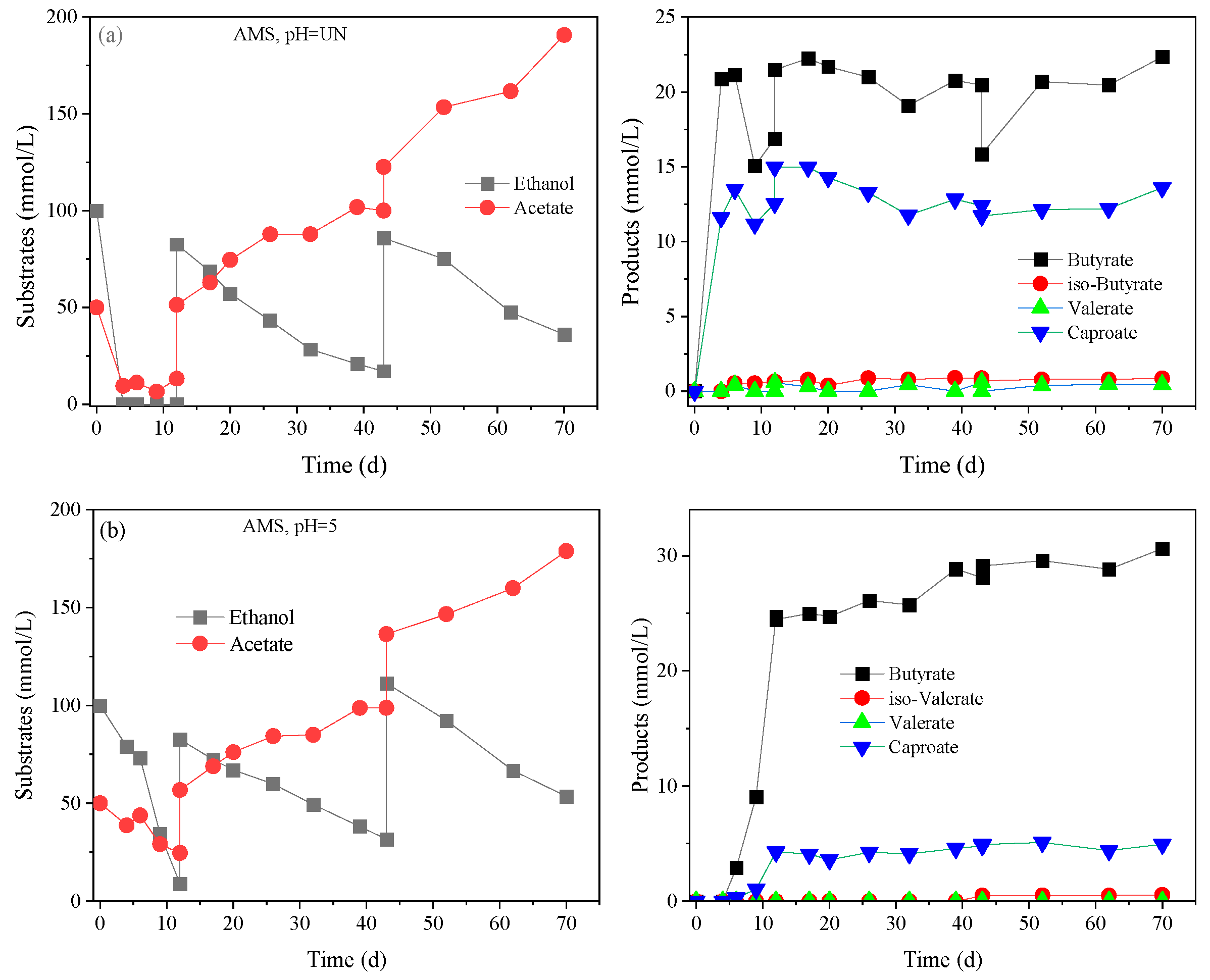
As shown in Figure 1, when the AMS was used as inoculum, substrates (ethanol and acetate) could be rapidly degraded by microorganisms in a short period, but the composition and content of products were significantly different under various pH conditions. In the reactor with uncontrolled pH (UN), ethanol content decreased from 100 mmol/L to 0 mmol/L within only 4 days, accompanied with the reduction in acetate from 50 mmol/L to 9.45 mmol/L. During this phase, butyrate content increased to 20.86 mmol/L, while caproic acid accumulated to 11.61 mmol/L, indicating that microorganisms in the AMS could effectively use ethanol and acetate as substrates to synthesize CA through CE pathway. It was reported that ethanol as the suitable electron donor could effectively provide energy and reduce equivalents to microorganisms for caproate production [16]. In the later phase, with a low content of ethanol, CE process was restricted due to the deficiency of electron donors, and caproate content maintained almost constant. Although ethanol and acetic acid were added again on Day 12, butyric acid and caproic acid did not further accumulate in the reactor. Ethanol slowly decreased to 17.09 mmol/L on the 43rd day, while acetic acid content increased from 51.37 mmol/L to around 100 mmol/L, indicating that ethanol was mainly converted into acetic acid at this stage and did not participate in the CE processes, which was probably due to the activation of excessive ethanol oxidation (EEO) during this phase [6]. After adding ethanol and acetate for the third time (on Day 43), ethanol content slowly decreased to 36.01 mmol/L until the end of experiment, but no accumulation of caproic acid and butyric acid was observed in this reactor. Acetic acid content further increased from 122.56 mmol/L to 190.78 mmol/L, indicating that the CE process was inhibited, which might have resulted from the restriction of microbial activity by high content of free caproic acid and butyric acid in the reactor [34]. In addition, the lower degradation rate of ethanol also confirmed that microbial metabolisms were restricted during this period.
In the reactor with pH 5, degradation rate of ethanol was obviously lower. Within the first 12 days, ethanol content decreased from 100 mmol/L to 8.85 mmol/L, while acetic acid dropped from 50 mmol/L to 24.63 mmol/L. During this period, butyric acid rapidly accumulated to 24.45 mmol/L, confirming that microorganisms could convert substrates into butyric acid through the CE processes [16]. The CA was basically undetectable during the first 6 days, but it increased to 4.28 mmol/L after 12 days with the increase in butyrate, indicating that microorganisms in anaerobic sludge could utilize ethanol and acetic acid as substrates to produce CA with butyrate as the main intermediate. Although ethanol and acetic acid were added in later phase, caproate content maintained almost unchanged, while butyric acid slightly accumulated (reaching a maximum of 30.62 mmol/L). Similar to the reactor with pH UN, acetic acid content in this reactor continuously increased to 178.87 mmol/L until the end of experiment. Thus, it can be inferred that under acidic pH conditions, microorganisms in the reactors tend to synthesize butyric acid, while caproate production was hindered, which might be related to the inhibition of microorganisms by low pH condition and the changes in microbial communities during the fermentation.
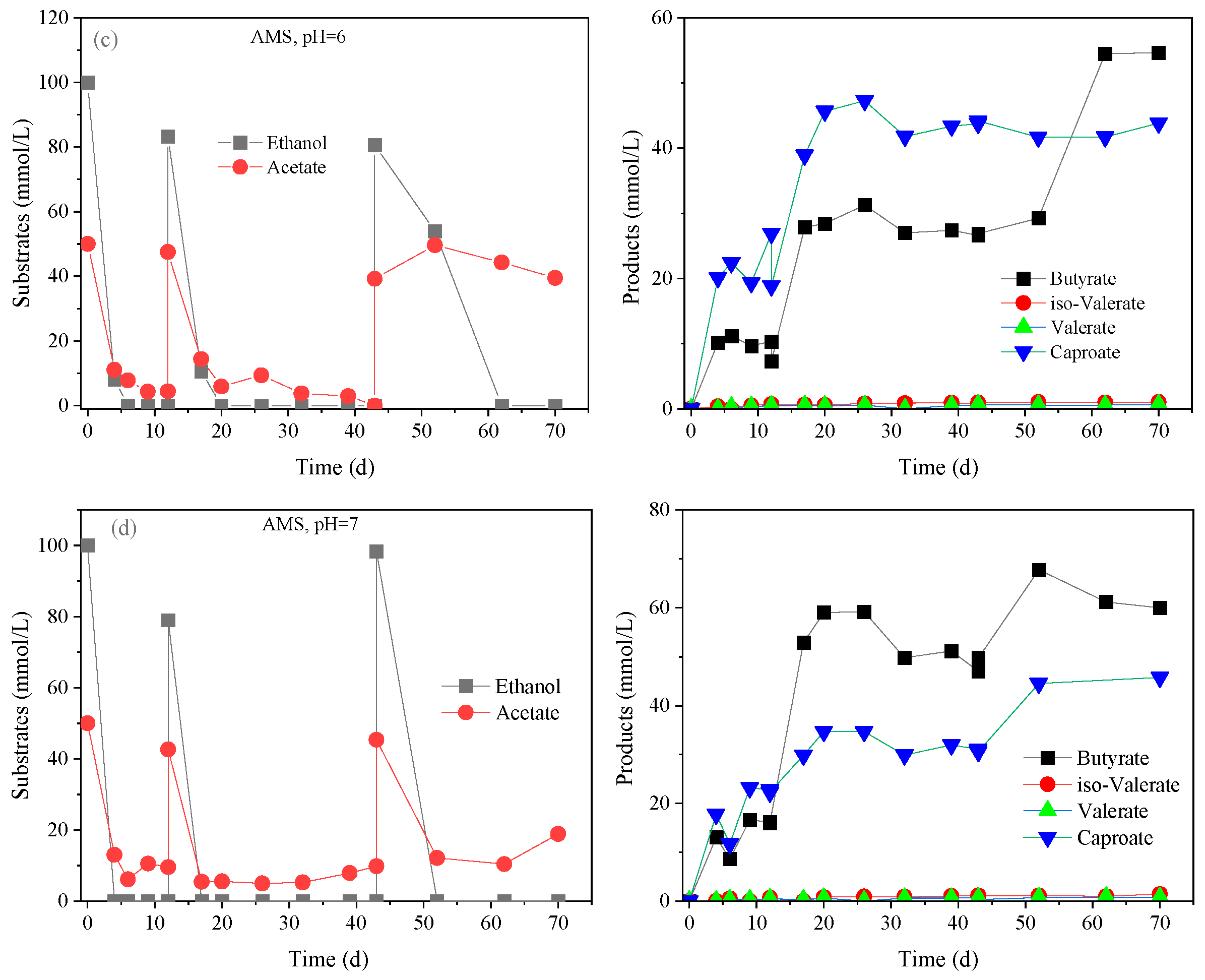
The degradation rate of ethanol was significantly accelerated in the reactor at pH 6. Ethanol content decreased from 100 mmol/L to 8.06 mmol/L within 4 days. Meanwhile, acetic acid also reduced from 50 mmol/L to 11.09 mmol/L, with the increase in butyric acid to approximately 10.19 mmol/L, and CA content rose to 20.09 mmol/L, which indicated that under such conditions, microorganisms in anaerobic sludge could effectively utilize ethanol and acetic acid for conducting CE process. In the later phase, due to the lack of electron donors and acceptors, butyric acid and caproic acid remained basically unchanged. With the addition of ethanol and acetic acid on Day 12, CA content further climbed to 47.26 mmol/L (Day 26), and butyric acid content rose to 31.25 mmol/L, indicating that external substrates further enhanced the CE process and promoted caproate production. After adding substrates again on Day 43, ethanol could also be rapidly degraded, but CA content remained stable with large amounts of butyric acid accumulated (54.61 mmol/L) and a slight decrease in acetic acid, demonstrating that ethanol was mainly used for butyric acid production at this stage. This is quite different from that in the reactor at pH 5, which might be due to the fact that pH 6 could alleviate the adverse impacts of free organic acids on microorganisms, thereby promoting butyric acid synthesis, but it cannot facilitate the synthesis of longer-chain carboxylic acids.
In the reactor with pH 7, ethanol could be degraded in a short period, further verifying that high pH conditions could effectively promote the microbial activity and achieve efficient substrate conversion. Meanwhile, acetic acid was also utilized within a short period, confirming that both ethanol and acetic acid were effectively utilized under this condition. With the degradation of substrates, butyric acid first increased to 16.12 mmol/L, and CA content rose to 22.79 mmol/L, showing that microorganisms effectively synthesized caproate through the CE pathway using ethanol and acetate as substrates. On Day 12, ethanol and acetate added to the reactor were rapidly consumed, butyric acid content increased to around 50 mmol/L, and CA further rose to 31.03 mmol/L (on Day 43), indicating that substrate addition could further strengthen the CE process and promote the CA production. After adding substrates again on Day 43, ethanol and acetic acid could still be rapidly utilized, while butyric acid first increased and then gradually decreased; caproate also increased to 45.75 mmol/L with a lower rate, which indicated that CA synthesis could still proceed under this condition, exhibiting high potential for CE process. Overall, anaerobic sludge could use ethanol and acetic acid for caproate production, and a higher pH value was more conducive to the CE process, which is consistent with previous studies [3,26].

3.1.2. Aerobic Sludge

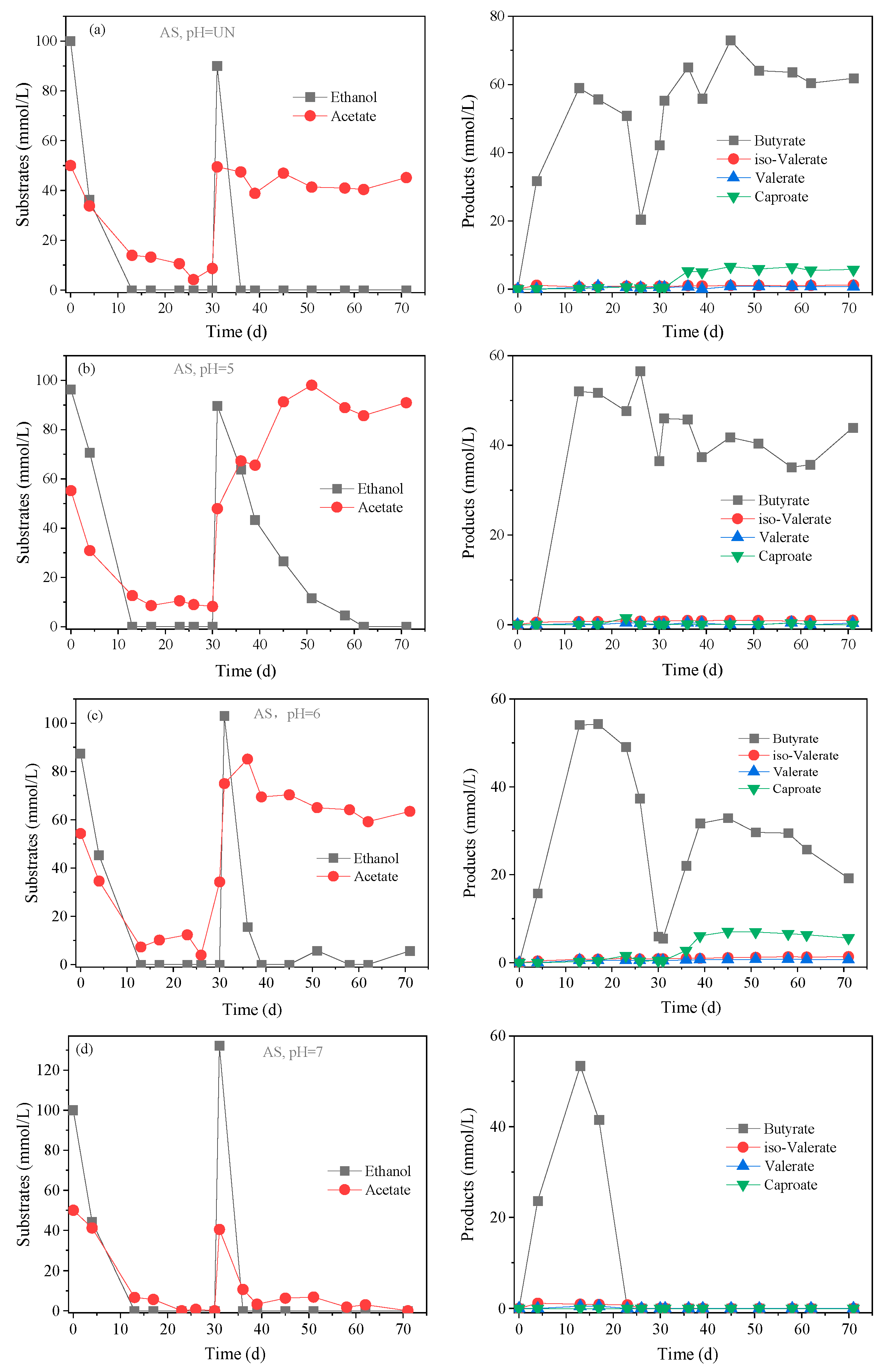
As shown in Figure 2, when the AS was utilized as inoculum, ethanol could also be effectively degraded under all pH conditions, but caproate did not obviously accumulate during the fermentation. In the reactor at pH UN, butyric acid increased to 58.92 mmol/L, then gradually decreased to 42.18 mmol/L on Day 30, and further rose to 72.87 mmol/L on Day 45 by adding substrates (ethanol and acetate) for the second time. Although butyrate was largely produced, CA slightly accumulated at the early stage and increased to 5.27 mmol/L after 36 days. Acetic acid was largely consumed for butyric acid production at the first stage, but remained almost unchanged in the later phase, which might be due to the similar rates of acetic acid production and utilization. Thus, it can be deduced that microorganisms in the AS could not effectively produce caproate using ethanol and acetic acid.
In the reactor with pH 5, ethanol and acetic acid obviously decreased at the first stage with a huge accumulation of butyric acid (52.01 mmol/L). At the second stage, with the degradation of ethanol, butyric acid concentration gradually decreased, while acetic acid content continuously increased during this phase. This phenomenon was similar to that using the AMS as inoculum, which might be due to the fact that microorganisms preferred to utilize substrates for synthesizing SCFAs to obtain energy at low pH conditions [35]. No obvious accumulation of caproic acid was observed in this reactor, which further confirmed that pH 5 was not conducive to CE processes for CA production.
At pH 6, large amounts of ethanol and acetic acid were rapidly degraded at the first stage and completely consumed within 13 days. During this phase, butyric acid obviously accumulated to 54.05 mmol/L, but it rapidly decreased to 5.94 mmol/L after 7 days, which was mainly due to the massive production of methane gas (Supporting information). Although methanogens’ inhibitor was added in the reactor, it was deduced that the inhibitor might have been degraded during the fermentation, or methanogens might have developed resistance to the inhibitor. After adding substrates at the second stage, butyric acid content in the reactor accumulated to 32.86 mmol/L, with an increase in caproic acid to 7.07 mmol/L. Due to the gas production, butyric acid gradually decreased in later phase and reached only 6.84 mmol/L until the end of experiment. Acetic acid showed similar trends and was finally maintained at 62.36 mmol/L.
Both acetic acid and ethanol could be rapidly degraded in the reactor at pH 7. Butyric acid firstly accumulated to 53.38 mmol/L, but was rapidly degraded, during which large amounts of biogas were detected in the reactor, confirming that microorganisms in aerobic sludge converted the substrates into methane. Although BES was added in the reactor, large amounts of methane were still produced, which might be because the inhibitor had an insufficient effect on methanogens, or methanogens developed resistance to the inhibitor [36].

3.1.3. CES

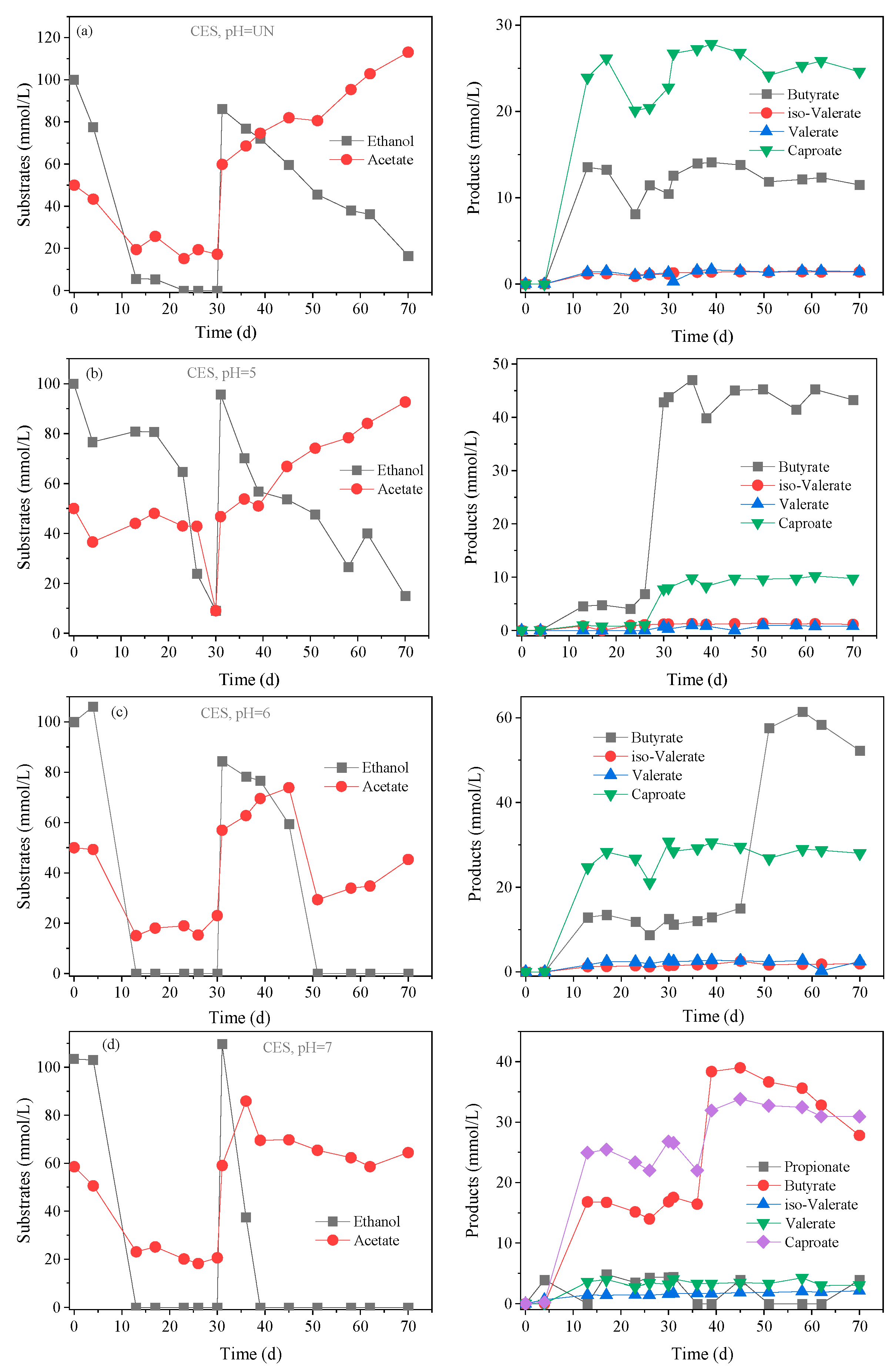
As shown in Figure 3, when lactate-based CES was used as the inoculum, ethanol content decreased in all reactors during the fermentation, indicating that although microorganisms in this sludge were acclimated to use lactate as electron donor during the CE processes, they also exhibited excellent degradation capacity of ethanol after a short-term acclimation. Ethanol could be effectively degraded in a short period under all pH conditions. In the reactor at pH UN, ethanol and acetic acid decreased to 5.63 mmol/L and 19.44 mmol/L respectively within 13 days, in which butyric acid and caproic acid accumulated to 13.52 mmol/L and 23.92 mmol/L. The rapid accumulation of caproate verified that microorganisms in the CES could effectively conduct CE processes with ethanol and acetic acid for caproic acid synthesis. Similarly to the reactor using AMS as inoculum, the content of caproic acid and butyric acid did not further increase but remained stable after adding substrates at the second stage. However, acetic acid content gradually increased to 113.07 mmol/L with the degradation of ethanol, which further demonstrated that EEO was the dominant ethanol degradation pathway in the reactor. The concentration of valeric acid (about 1.5 mmol/L) was relatively low during the whole fermentation, which might be due to the low propionic acid accumulation.
However, when pH value was adjusted to 5, the degradation rates of ethanol and acetic acid obviously slowed down. It was found that ethanol content decreased to 80.65 mmol/L after 17 days, while acetic acid slightly decreased. However, ethanol and acetic acid rapidly dropped to 9.1 mmol/L and 9.06 mmol/L respectively thereafter, which might be due to the fact that microorganisms adjusted the metabolisms and were acclimated to the low pH condition. During this period, butyric acid content firstly maintained constant, but sharply increased to 42.85 mmol/L. This phenomenon further demonstrated that microorganisms in CES could not use ethanol and acetic acid as substrates at the initial stage of fermentation. However, after a short-term adjustment, microorganisms adapted to the fermentation conditions. In addition, some microorganisms capable of utilizing ethanol were enriched in the reactor and became the dominant population. The accumulation of butyric acid provided a prerequisite for CE processes, resulting in the increase in caproic acid content to 7.79 mmol/L. After adding substrates for the second time, butyric acid and caproic acid remained basically unchanged, while acetic acid content continuously increased with the degradation of ethanol, which was consistent with that in reactor inoculated with the AMS.
In the reactor at pH 6, ethanol degradation rate significantly accelerated. It was found that ethanol was completely consumed within 13 days, and the content of acetic acid decreased to 15.1 mmol/L. During this period, caproic acid and butyric acid increased to 24.68 mmol/L and 12.89 mmol/L, respectively. After adding substrate for the second time, microorganisms went through a short-term adjustment, and then the concentrations of ethanol and acetic acid rapidly decreased to the low level. Butyric acid content increased to 57.57 mmol/L until Day 51, while the concentration of CA remained basically unchanged, indicating that microorganisms utilized acetic acid and ethanol to synthesize butyric acid at this stage. On the 58th day, butyric acid content gradually decreased, while the concentration of acetic acid continuously increased, deducing that microorganisms degraded butyric acid into acetic acid at this stage.
When pH was set at 7, the degradation rate of ethanol was higher. Ethanol could be completely consumed within only 8 days. With the consumption of acetic acid and ethanol, caproic acid and butyric acid as the main products increased to 24.92 mmol/L and 16.79 mmol/L respectively within 13 days. After adding substrates for the second time, caproic acid content further rose to 33.83 mmol/L, while butyric acid concentration increased to 39 mmol/L. This indicated that pH 7 could indeed effectively promote caproic acid synthesis efficiency, which might be because high pH alleviated the adverse effects of free acids on microorganisms, and promote the CE processes. However, with the consumption of substrates, the concentrations of butyric acid and caproic acid decreased at a later stage, while the content of acetic acid gradually increased during this period. It was speculated that microorganisms were more likely to degrade caproic acid into short-chain fatty acids when substrates were insufficient, which has been reported in the previous studies. In addition, the changes in microbial community structures during fermentation may also lead to the degradation of caproic acid.
Therefore, both pH and inoculum source significantly affected the fermentation processes and resulted in different product spectra. Microbial communities in different inoculum sludge were inconsistent, which resulted in different substrate degradation and product synthesis properties. Aerobic sludge easily converted the substrates into biogas resulting in low CE potential and CA production, but AMS and lactate-based CES had relatively higher ability for producing caproate and were greatly affected by pH value. The AMS can synthesize large amounts of butyric acid under the condition of pH 6 and 7, while CES could synthesize caproic acid under the condition of pH UN, 6 and 7, among which caproic acid content was relatively high when pH was adjusted to 7.

3.2. Caproic Acid Content and Yield

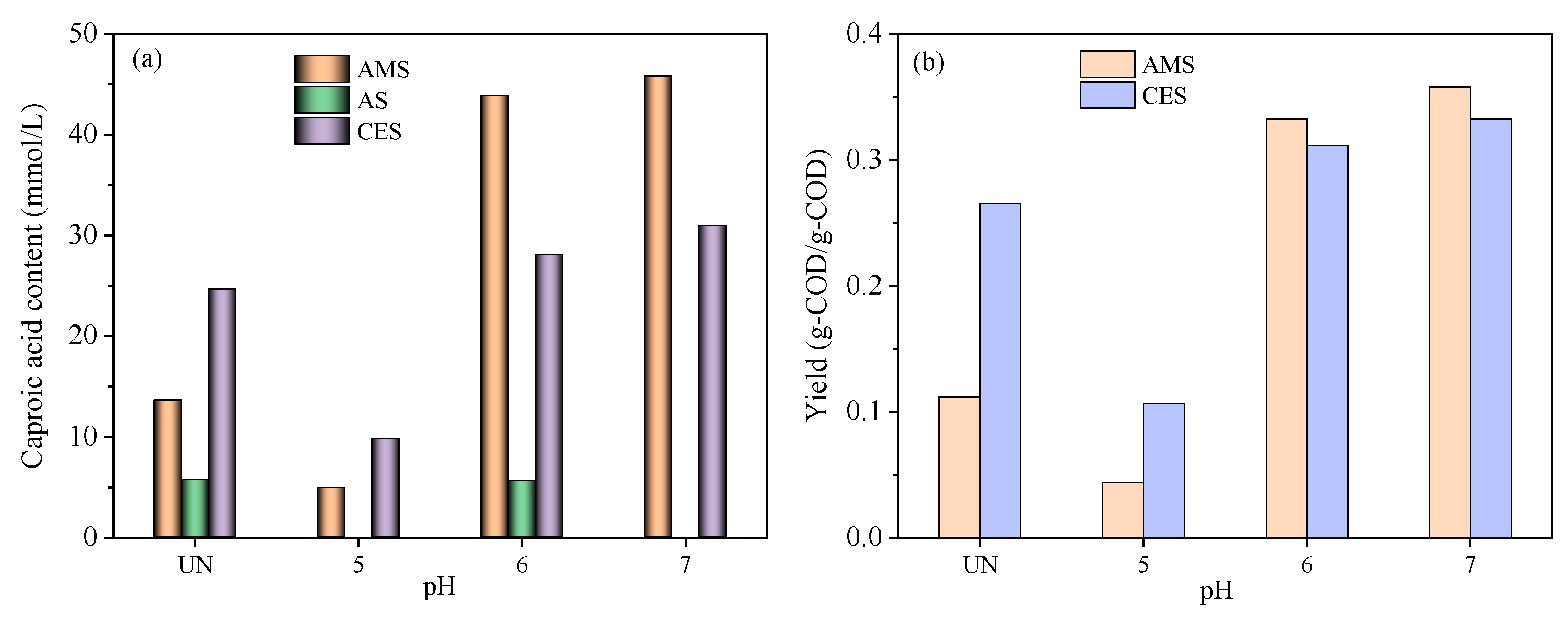
The final CA content was largely detected in the reactors with pH 6 and 7 in both reactors inoculated with AMS and CES. As shown in Figure 4a, in the reactor with pH UN, caproate content in the reactor with CES was 24.6 mmol/L, which was much higher than that in reactor with AS (5.76 mmol/L) and AMS (13.59 mmol/L), showing the higher efficiency in chain elongation under this condition. However, when pH was controlled at 5, final CA content in all reactors decreased, probably due to the negative impacts of free acids on microbial activities, which is consistent with the other studies [26]. In the reactors with pH 6 and 7, caproate content sharply increased in the reactors with AMS and CES, but the AMS exhibited higher caproate synthesis potential, which might have resulted from different microbial communities. In addition, slightly higher caproic acid content was observed in reactors with pH 7 than that at pH 6, further verifying the higher capacity in substrate conversion to caproic acid. Additionally, caproic acid content was much higher with CES as inoculum at lower pH conditions, which might be due to the long-term acclimation of sludge at lower pH.
The CA yield in reactors with AMS and CES were compared in Figure 4b. It can be noted that the value with CES at pH UN and 5 was higher than those with AMS. It was around 0.26 g-COD/g-COD in reactor with CES at pH UN, but was only 0.11 g-COD/g-COD in the reactor with AMS, indicating that the CES can realize higher chain elongation efficiency at low pH conditions, which might be due to that microorganisms in CES have been acclimated in acidic pH environments. However, at higher pH conditions, the CA yield in reactors with AMS was higher than that in the reactors with CES, indicating that higher pH conditions were favorable for CA production. It was reported that the anaerobic sludge can be used as inoculum for CA production [5]. The highest CA yield (0.36 g-COD/g-COD) was obtained in the reactor with AMS at pH 7, which is higher than that using CES (0.33 g-COD/g-COD). The higher caproate yield at pH 6 and 7 should result from the following two aspects: first, ethanol-driven chain elongation preferably occurred at these conditions, which has been reported [26]. In addition, microbial community structures under these pH conditions were sharpened as shown in Section 3.4.

3.3. Carbon Distributions Under Different pH Conditions

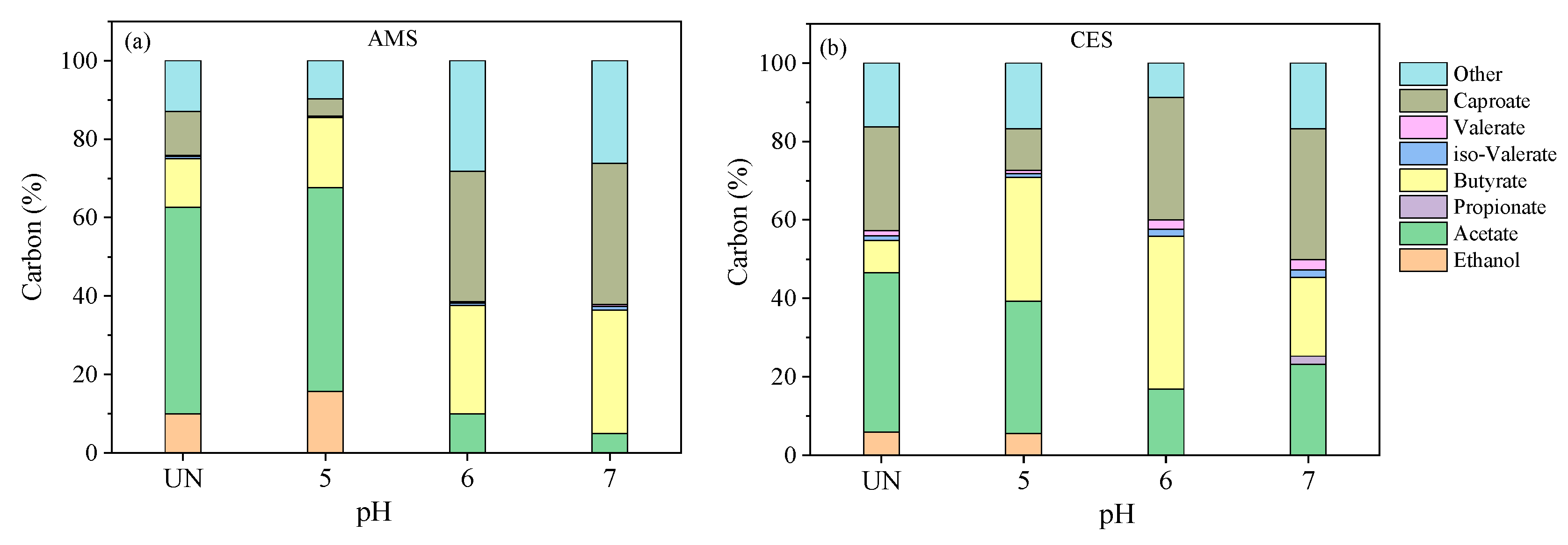
The distributions of carbon in organic acids after fermentation were shown in Figure 5. It can be obviously found that in the reactor with AMS as inoculum, acetate as the dominant component accounted for 53.10% of the total carbon added into the reactor with pH UN, which was higher than that in the substrate (30.60%), indicating that acetate was produced during the fermentation. It was reported that EEO was the common competing pathway in CE processes with ethanol as electron donors, which results in the conversion of ethanol into acetic acid [7]. Thus, it can be deduced that the EEO was activated in the reactor. Due to the consumption of electron donors (ethanol), CE process was restricted, resulting in lower carbon flow towards butyrate (11.09%) and caproic acid (9.51%). In the reactor with pH 5, similar tendencies were observed; a large amount of acetate was accumulated in the reactor and much lower CA content was observed, which might be attributed to the changes in microbial communities during fermentation.
In the reactor with higher pH, more carbon entered to the CE processes. Acetate was effectively used during the fermentation with a reduction from 32.43% to 11.0%, while butyrate and caproate with a proportion of 27.76% and 36.20% respectively were the main products, indicating that the carbon in ethanol and acetate effectively participated in CE processes. In the reactor with pH 7, acetate accounted for only 6.37% after fermentation, while butyrate (28.82%) and caproate (35.66%) were also the dominant products. Therefore, it can be deduced that CE preferably occurred at higher pH, which was constant with previous studies [26]. In addition, approximately 30% carbon cannot be detected in reactor, which might be due to the consumption for biomass synthesis and biogas production. The loss of carbon during CE process should be carefully considered due to the fact that it may reduce CA yield.
Unlike the reactors using AMS as inoculum, microorganisms in the CES exhibited higher capacity for conducting CE even at low pH conditions. It was found that at pH UN, even though acetate was the dominant product (45.74%), approximately 26.68% of carbon was distributed into CA, which was much higher than that using AMS. In addition, the proportion of carbon in butyrate was much lower than that in CA, indicating that electron donors were effectively used to drive the CE processes in this reactor. However, in the reactor with pH 5, a lot of carbon entered to butyrate, resulting in a lower caproate yield (11.10%), which was also higher than that in the reactor with AMS. The higher efficiency in CA synthesis under low pH conditions was mainly attributed to the acclimation of microorganisms under acidic conditions [3]. At higher pH conditions, more carbon was allocated to caproate. In the reactor with pH 6, butyrate and caproate accounted for 30.94% and 31.04%, respectively, indicating that butyrate was the main intermediate product. It was reported that the content of butyrate determined the caproate productivity and yield [37]. However, when pH was increased to 7, the carbon in butyrate was only 13.37%, and caproate occupied 33.12% of the total carbon added, indicating that higher pH condition was favorable for caproate production.

3.4. Variations in Microbial Communities

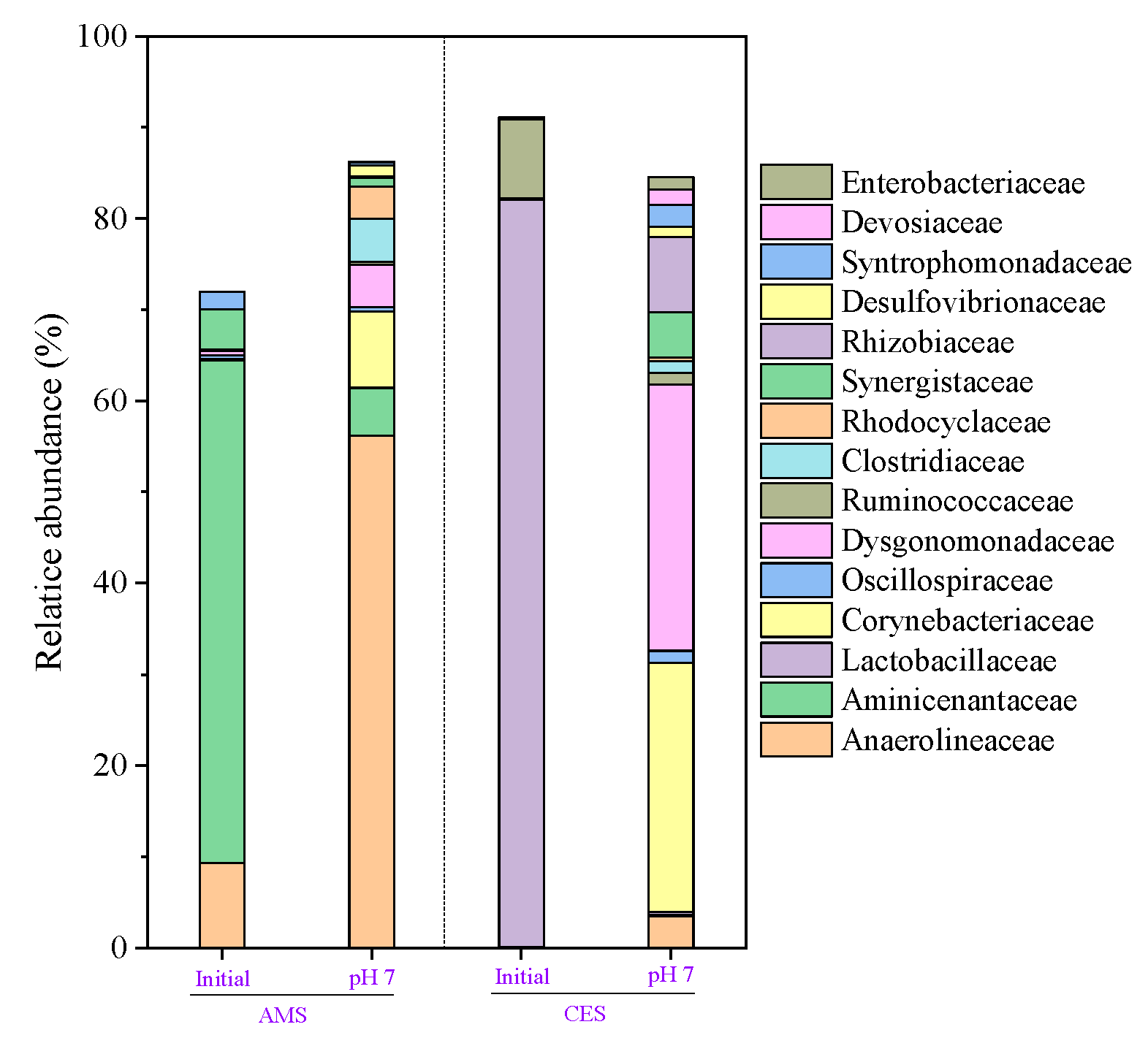
Variations in microbial communities were analyzed to explain the substrate conversion processes. As shown in Figure 6, at the family level, microorganisms in the inocula were totally different. In the AMS, Anaerolineaceae, Aminicenantaceae and Synergistaceae with a relative abundance of 9.32%, 55.09% and 4.36% respectively were the dominant families. Other families such as Syntrophomonadaceae (1.87%), Dysgonomonadaceae (0.44%) and Oscillospiraceae (0.36%) were also detected. However, Lactobacillaceae with a relative abundance of 81.97% was the main component in CES. In addition, Ruminococcaceae was also found in the sludge with a relative abundance of 8.6%. It is well-known that Ruminococcaceae is able to produce caproic acid [38], which provided a prerequisite for conducting the CE processes. The significant differences in these two inocula were mainly due to different acclimation conditions, which may result in different substrate conversion pathways.
After fermentation, Aminicenantaceae reduced to 5.25%, but Anaerolineaceae (56.17%) was largely enriched in the reactor with AMS. Additionally, Corynebacteriaceae (8.35%), Clostridiaceae (4.75%) and Rhodocyclaceae (3.51%) also accumulated in the reactor. Anaerolineaceae was positively correlated with MCCs production [39]; the huge enrichment of this family might explain the high CA yield in this reactor. In addition, Clostridiaceae and Rhodocyclaceae could also synthesize MCFAs [40]; the accumulation of these families also promotes the caproate production. However, in the reactor with CES, Anaerolineaceae (3.49%), Corynebacteriaceae (27.3%), Dysgonomonadaceae (29.15%) and Rhizobiaceae (8.32%) became dominant. It was reported that the genera in Dysgonomonadaceae were closely related to MCFAs production [41]. The enrichment of functional microorganisms in reactors during fermentation may explain high CA content and yield. However, significant differences in both reactors might be attributed to different inoculum sources, which finally affected microbial metabolisms and product spectra.

4. Conclusions

Properties of caproic acid production with different inoculum sources at different pH conditions were explored in this study. It was found that microorganisms in all inocula could degrade ethanol, but the consumption rate was different. The AS mainly used substrate for biogas production, without caproic acid accumulation, while AMS and CES could synthesize butyrate and caproate with ethanol and acetate. At pH UN and 5, with the accumulation of caproic acid, EEO was gradually activated and transformed ethanol into acetate; CES exhibited higher caproate yield. Increasing pH to 6 and 7, AMS produced more caproate and achieved a yield of 36%. Microbial communities in raw inocula were different, which determined the substrate conversion pathways. After fermentation, Anaerolineaceae was the dominate family in AMS, while Corynebacteriaceae and Dysgonomonadaceae were the main families in the reactor inoculated with CES, which further explained the distinct caproate yield in both reactors. The results of this study provided useful information for constructing ethanol-driven CE processes from organic wastes. However, this work was conducted in batch tests using chemicals, which could not represent the performance of CA production in long-term continuous systems with organic wastes. Thus, more investigations on substrate conversion processes and microbial communities in a large-scale fermenter for real organic waste treatment are needed to drive this technique into practical applications.

Supplementary Materials

The following supporting information can be downloaded at https://www.mdpi.com/article/10.3390/w18111263/s1, Figure S1: Variations of daily methane volume in the reactors with AS at different pH.

Author Contributions

Conceptualization, Y.P. and J.T.; methodology, Z.H.; investigation, R.L., Y.L. (Yang Luo), D.X., Y.L. (Yang Li), X.Z. and B.A.; resources, Q.W.; writing—original draft preparation, Y.P.; writing—review and editing, J.T.; supervision, J.T.; funding acquisition, Y.P. and J.T. All authors have read and agreed to the published version of the manuscript.

Funding

This research was funded by the Natural Science Foundation of China (52100137, 52500152), Sichuan Science and Technology Program (2025ZNSFSC1265, 2025YFHZ0127), Special Funding for Postdoctoral Research Project of Sichuan Province (TB2024033), and Innovation Training Project of Chengdu University in 2026 (CDUCX2026341, CDUCX2026350, CDUCX2026352).

Data Availability Statement

The original contributions presented in this study are included in the article. Further inquiries can be directed to the corresponding author.

Conflicts of Interest

The authors declare no conflicts of interest.

References

  1. Xu, P.; Liu, H.; Liu, C.; Zhu, G. Syntrophic methane production from volatile fatty acids: Focus on interspecies electron transfer. Sci. Total Environ. 2024, 946, 174410. [Google Scholar] [CrossRef]
  2. Tang, J.; Hu, Z.; Pu, Y.; Wang, X.C.; Abomohra, A. Bioprocesses for lactic acid production from organic wastes toward industrialization-a critical review. J. Environ. Manag. 2024, 369, 122372. [Google Scholar] [CrossRef]
  3. Tang, J.; Hu, Z.; Pu, Y.; Chen, J.; Xiong, Y.; Liu, R.; Li, T.; Faisal, S.; Abomohra, A. Converting methanogenesis into chain elongation for caproic acid production from food waste: Roles of pH and hydraulic retention time. J. Environ. Manag. 2025, 387, 125881. [Google Scholar] [CrossRef]
  4. Wu, Q.; Jiang, Y.; Chen, Y.; Liu, M.; Bao, X.; Guo, W. Opportunities and challenges in microbial medium chain fatty acids production from waste biomass. Bioresour. Technol. 2021, 340, 125633. [Google Scholar] [CrossRef]
  5. Tang, J.; Yang, H.; Pu, Y.; Hu, Z.; Xiong, Y.; Chen, J.; Liu, R.; Li, T.; Faisal, S.; Abomohra, A. Effect of inoculum sources on caproic acid production from food waste through lactate-based chain elongation: Properties and microbial succession. J. Environ. Chem. Eng. 2024, 12, 114186. [Google Scholar] [CrossRef]
  6. Liao, Q.; Sun, L.; Qin, X.; Chen, M.; Zhu, X.; Yang, C.; Li, R.-H. Ethanol utilization strategies in chain elongation: Insights from bio-iron systems. Bioresour. Technol. 2026, 443, 133881. [Google Scholar] [CrossRef] [PubMed]
  7. Pu, Y.; Tang, J.; Wang, Q.; Abomohra, A. High-value caproate synthesis from food waste: Mechanisms, regulation, and sustainable scaling—A comprehensive review. J. Environ. Manag. 2026, 402, 129138. [Google Scholar] [CrossRef] [PubMed]
  8. Zhang, C.; Li, C.; Liang, T.; Li, M.; Sun, Y.; Chen, Z.; Zhao, M.; Qi, X. Efficient caproate production from ethanol and acetate via chain elongation reinforced by Fe/Fe3O4 in mixed culture system. J. Environ. Manag. 2025, 389, 126249. [Google Scholar] [CrossRef]
  9. Zhang, C.; Ling, Z.; Yang, L.; Liu, Y.; Cao, T.; Sun, Y.; Liu, W.; Huo, S.; Zhang, Z.-H.; Su, H.; et al. Efficient caproate production from ethanol and acetate in open culture system through reinforcement of chain elongation process. J. Clean. Prod. 2023, 383, 135394. [Google Scholar] [CrossRef]
  10. Kurniawan, E.; Gagnon, Y.; Cheirsilp, B.; O-Thong, S. Effect of inoculum source, electron donors, and substrates on medium-chain fatty acid production from palm oil mill effluent. Ind. Crops Prod. 2023, 206, 117654. [Google Scholar] [CrossRef]
  11. Fernández-Blanco, C.; Veiga, M.C.; Kennes, C. Carbon dioxide as key player in chain elongation and growth of Clostridium kluyveri: Insights from batch and bioreactor studies. Bioresour. Technol. 2024, 394, 130192. [Google Scholar] [CrossRef] [PubMed]
  12. Kang, S.; Kim, H.; Jeon, B.S.; Choi, O.; Sang, B.-I. Chain elongation process for caproate production using lactate as electron donor in Megasphaera hexanoica. Bioresour. Technol. 2022, 346, 126660. [Google Scholar] [CrossRef]
  13. Li, L.; Liu, C.; Xu, L.; Zhuang, H.; He, J.; He, Q.; Zhang, J. Acclimation of anaerobic fermentation microbiome with acetate and ethanol for chain elongation and the biochemical response. Chemosphere 2023, 320, 138083. [Google Scholar] [CrossRef]
  14. Candry, P.; Huang, S.; Carvajal-Arroyo, J.M.; Rabaey, K.; Ganigue, R. Enrichment and characterisation of ethanol chain elongating communities from natural and engineered environments. Sci. Rep. 2020, 10, 3682. [Google Scholar] [CrossRef]
  15. Fu, B.; Lu, Y.; Liu, H.; Zhang, X.; Ozgun, H.; Ersahin, M.E.; Liu, H. One-stage anaerobic fermentation of excess sludge for caproate production by supplementing chain elongation enrichments with ethanol as electron donor. J. Environ. Manag. 2023, 326, 116723. [Google Scholar] [CrossRef] [PubMed]
  16. Zhang, K.; Qiu, Z.; Luo, D.; Song, T.; Xie, J. Hybrid electron donors of ethanol and lactate stimulation chain elongation in microbial electrosynthesis with different inoculants. Renew. Energy 2023, 202, 942–951. [Google Scholar] [CrossRef]
  17. Yu, P.; Wu, M.; Bao, W.; Wang, H. Performance of a mixed inoculum of sludge and pit mud for short and medium-chain fatty acids production: Insight into key microbiome and functional potential in anaerobic fermentation inoculum. Chem. Eng. J. 2023, 466, 143142. [Google Scholar] [CrossRef]
  18. Wu, L.; Wei, W.; Chen, Z.; Shi, X.; Wang, D.; Chen, X.; Ni, B.-J. Medium chain fatty acids production from anaerobic fermentation of food wastes: The role of fermentation pH in metabolic pathways. Chem. Eng. J. 2023, 472, 144824. [Google Scholar] [CrossRef]
  19. Chen, R.; Ji, X.; Chen, Z.; Huang, L.; Zhu, J. Regulation of hydraulic retention time on caproic acid production via two-phase anaerobic fermentation of Chinese cabbage waste with autopoietic electron donors. J. Biotechnol. 2024, 381, 1–10. [Google Scholar] [CrossRef]
  20. Wang, J.; Yin, Y. Biological production of medium-chain carboxylates through chain elongation: An overview. Biotechnol. Adv. 2022, 55, 107882. [Google Scholar] [CrossRef]
  21. Mao, F.; Huang, J.; Zhou, R.; Qin, H.; Zhang, S.; Cai, X.; Qiu, C. Succession of microbial community of the pit mud under the impact of Daqu of Nongxiang Baijiu. J. Biosci. Bioeng. 2023, 136, 304–311. [Google Scholar] [CrossRef]
  22. Gao, M.; Lin, Y.; Wang, P.; Jin, Y.; Wang, Q.; Ma, H.; Sheng, Y.; Van Le, Q.; Xia, C.; Lam, S.S. Production of medium-chain fatty acid caproate from Chinese liquor distillers’ grain using pit mud as the fermentation microbes. J. Hazard. Mater. 2021, 417, 126037. [Google Scholar] [CrossRef]
  23. Tang, J.; Yang, H.; Pu, Y.; Hu, Y.; Huang, J.; Jin, N.; He, X.; Wang, X.C. Caproic acid production from food waste using indigenous microbiota: Performance and mechanisms. Bioresour. Technol. 2023, 387, 129687. [Google Scholar] [CrossRef]
  24. Candry, P.; Radić, L.; Favere, J.; Carvajal-Arroyo, J.M.; Rabaey, K.; Ganigué, R. Mildly acidic pH selects for chain elongation to caproic acid over alternative pathways during lactic acid fermentation. Water Res. 2020, 186, 116396. [Google Scholar] [CrossRef]
  25. Wang, Z.; Xu, H.; Mei, Y.; Suo, M.; Hrynsphan, D.; Tatsiana, S.; Chen, J. Chain-elongation routes to caproic acid toward industry-ready continuous operation and low-energy recovery. Bioresour. Technol. 2026, 444, 133974. [Google Scholar] [CrossRef]
  26. Brodowski, F.; Gutowska, N.; Duber, A.; Zagrodnik, R.; Łężyk, M.; Oleskowicz-Popiel, P. Microbial and metabolic variations in pH-dependent chain elongation: Co-utilization of lactate and ethanol vs. lactate-based production. Chem. Eng. J. 2025, 519, 165367. [Google Scholar] [CrossRef]
  27. Harahap, B.M.; Ahring, B.K. Chain elongation for production of medium chain carboxylic acids from green waste: Process and economic impacts of substrate composition, sterilization, and pH. Biochem. Eng. J. 2026, 226, 109994. [Google Scholar] [CrossRef]
  28. Gildemyn, S.; Molitor, B.; Usack, J.G.; Nguyen, M.; Rabaey, K.; Angenent, L.T. Upgrading syngas fermentation effluent using Clostridium kluyveri in a continuous fermentation. Biotechnol. Biofuels 2017, 10, 83. [Google Scholar] [CrossRef] [PubMed]
  29. Allaart, M.T.; Stouten, G.R.; Sousa, D.Z.; Kleerebezem, R. Product Inhibition and pH Affect Stoichiometry and Kinetics of Chain Elongating Microbial Communities in Sequencing Batch Bioreactors. Front. Bioeng. Biotechnol. 2021, 9, 693030. [Google Scholar] [CrossRef] [PubMed]
  30. Quintela, C.; Peshkepia, E.; Grimalt-Alemany, A.; Nygård, Y.; Olsson, L.; Skiadas, I.V.; Gavala, H.N. Excessive Ethanol Oxidation Versus Efficient Chain Elongation Processes. Waste Biomass Valorization 2024, 15, 2545–2558. [Google Scholar] [CrossRef]
  31. Tang, J.; Pu, Y.; Huang, J.; Pan, S.; Wang, X.C.; Hu, Y.; Ngo, H.H.; Li, Y.; Abomohra, A. Caproic acid production through lactate-based chain elongation: Effect of lactate-to-acetate ratio and substrate loading. Environ. Technol. Innov. 2022, 28, 102918. [Google Scholar] [CrossRef]
  32. Wu, Y.; Hu, W.; Zheng, X.; Liu, Y.; Niu, Q.; Chen, Y. Valorization of food waste into short-chain fatty acids via enzymatic pretreatment: Effects of fermentation-pH on acid-producing processes and microbial metabolic functions. Waste Manag. 2023, 167, 22–30. [Google Scholar] [CrossRef]
  33. Kurniawan, E.; O-Thong, S.; Cheirsilp, B.; Gagnon, Y. Optimizing continuous medium-chain fatty acid production from biohydrogenic palm oil mill effluent: Operational parameters and microbial dynamics. J. Clean. Prod. 2024, 436, 140670. [Google Scholar] [CrossRef]
  34. Tang, J.; Hu, Z.; Yang, H.; Pu, Y.; Xiong, Y.; Chen, J.; Liu, R.; Li, T.; Shah, F.; Abomohra, A. Enhancement of caproate production from food waste using biochar produced from agricultural wastes: A microbial perspective. Ind. Crops Prod. 2024, 221, 119401. [Google Scholar] [CrossRef]
  35. de Leeuw, K.D.; de Smit, S.M.; van Oossanen, S.; Moerland, M.J.; Buisman, C.J.N.; Strik, D. Methanol-Based Chain Elongation with Acetate to n-Butyrate and Isobutyrate at Varying Selectivities Dependent on pH. ACS Sustain. Chem. Eng. 2020, 8, 8184–8194. [Google Scholar] [CrossRef]
  36. Rago, L.; Ruiz, Y.; Baeza, J.A.; Guisasola, A.; Cortés, P. Microbial community analysis in a long-term membrane-less microbial electrolysis cell with hydrogen and methane production. Bioelectrochemistry 2015, 106, 359–368. [Google Scholar] [CrossRef]
  37. Nzeteu, C.O.; Coelho, F.; Trego, A.C.; Abram, F.; Ramiro-Garcia, J.; Paulo, L.; O’Flaherty, V. Development of an enhanced chain elongation process for caproic acid production from waste-derived lactic acid and butyric acid. J. Clean. Prod. 2022, 338, 130655. [Google Scholar] [CrossRef]
  38. Zhang, H.; Wang, X.; Zhen, L.; Chang, Q.; Cui, L.; Xue, Z. Composition and metabolite patterns of caproic acid-producing bacteria during pH-mediated pitmud-Huangshui co-fermentation based on multi-database annotation. Food Chem. 2025, 473, 143096. [Google Scholar] [CrossRef]
  39. Yin, Y.A.; Wang, J.L. Production of medium-chain carboxylic acids using sewage sludge pretreated by combined Fenton and persulfate oxidation. J. Clean. Prod. 2022, 369, 133329. [Google Scholar] [CrossRef]
  40. Calvo, D.C.; Ontiveros-Valencia, A.; Krajmalnik-Brown, R.; Torres, C.; Rittmann, B.E. Carboxylates and alcohols production in an autotrophic hydrogen-based membrane biofilm reactor. Biotechnol. Bioeng. 2021, 118, 2338–2347. [Google Scholar] [CrossRef] [PubMed]
  41. Lou, T.; Yin, Y.; Wang, J. Improved production of medium-chain fatty acids by biochar: Effect of biochar dosage and mechanism. J. Clean. Prod. 2024, 450, 142051. [Google Scholar] [CrossRef]
Figure 1. Properties of caproic acid production under different pH conditions using AMS as the inoculum. (a) pH = UN, (b) pH = 5, (c) pH = 6 and (d) pH = 7.
Water 18 01263 g001aWater 18 01263 g001b
Figure 2. Properties of caproic acid production under different pH conditions using AS as the inoculum. (a) pH = UN, (b) pH = 5, (c) pH = 6 and (d) pH = 7.
Water 18 01263 g002
Figure 3. Properties of caproic acid production under different pH conditions using CES. (a) pH = UN, (b) pH = 5, (c) pH = 6 and (d) pH = 7.
Water 18 01263 g003
Figure 4. Final caproate content (a) and yield (b) at different pH conditions using the AMS and CES as inocula.
Water 18 01263 g004
Figure 5. Distributions of carbon in organic acids under different pH conditions. (a) in the reactor with AMS; (b) in the reactor with CES.
Water 18 01263 g005
Figure 6. Variations in microbial communities during the fermentation.
Water 18 01263 g006
Disclaimer/Publisher’s Note: The statements, opinions and data contained in all publications are solely those of the individual author(s) and contributor(s) and not of MDPI and/or the editor(s). MDPI and/or the editor(s) disclaim responsibility for any injury to people or property resulting from any ideas, methods, instructions or products referred to in the content.