1. Introduction
Urbanization represents not only a natural and inevitable trend in the social development of humanity but also a consequential outcome of economic growth and advancements in science and technology [
1]. In the last four decades, China has undergone a rapid urbanization process, with the urbanization rate rising from 17.92% in 1978 to 65.22% in 2022, surpassing the global average of 54.74%. Furthermore, the average annual growth rate has reached 1.08% [
2]. Should this trend continue, China’s urban population will exceed one billion within the next 20 years [
3]. According to projections by the United Nations, by the year 2050, the urbanization rates of developing and developed nations will reach 64% and 86%, respectively [
4]. While urbanization can promote economic growth and enhance the standard of living for residents, it also presents a range of environmental challenges, such as a decline in urban water quality [
5], degradation of urban land’s functionality [
6], and worsening urban air quality [
7]. These environmental problems have hindered further urbanization [
8]. Of these, the water environment’s capacity represents one of the principal limiting factors impeding the progress of urbanization. Therefore, to overcome these obstacles, it is crucial to identify the factors that affect the water environment’s quality and their mechanisms in the urbanization process. This knowledge can then serve as a theoretical and technical foundation for devising targeted planning and control strategies.
Now that developed countries have completed urbanization, the future growth rate of urbanization will be concentrated in developing countries [
4], and developing countries will also become the hardest hit areas of the abovementioned environmental problems. It is very important to help developing countries probe the relationship between environmental quality and urbanization. This research aims to inquire into the primary factors that affect the water quality of urban areas during different periods and their underlying interaction mechanisms. To achieve this, an urbanization process index system was established to reflect the pressure of water environment quality, along with a connection model among the urbanization process index, the non-compliance rate of urban water quality (NRWQ), and the urbanization process index. However, due to the restrictions of policies and technical conditions in developing countries [
9], the amount of indexed statistical data related to urbanization and aquatic environmental quality at the city scale is relatively limited, so we hope to select an appropriate model structure under the limited data conditions.
In recent years, research on the evaluation system of urbanization processes can be classified into two types: single index systems and composite index systems. The former consists of a group of independent index data such as the population distribution, land use, and employment structure. However, it cannot describe the urbanization process comprehensively and systematically. In contrast, the latter, also known as the multi-index comprehensive evaluation system, is composed of multiple indicators combined through certain rules and can reflect the multi-dimensional characteristics of the urbanization process, which is often used to probe into the relationship between the urban water environment and urbanization. Currently, the most commonly used methods to construct comprehensive indicators of urbanization include the entropy weight coefficient method [
10], principal component analysis [
11], the artificial neural network method [
12], and analytic hierarchy processes [
13]. In accordance with the EKC theory, Wang [
14] conducted a multiple regression analysis to investigate the correlation between the urbanization process in certain provinces and cities of China and the water quality in nearby coastal areas, which discussed the driving factors influencing water quality. Ren [
15] utilized factor analysis to identify the urbanization-related driving factors affecting changes in water quality in Jinan city from 2001 to 2010. Furthermore, an integrated pollution index was used to assess water pollution within the study area. In the case of Wang’s research [
12], data were collected in Nanjing city from 2006 to 2018, including 12 water quality parameters and 9 urbanization indicators. These indicators were utilized for correlation analysis to identify causality between urbanization and water quality. Additionally, an artificial neural network was used for water pollution prediction. To explore the adverse influence of urbanization on river bodies in China, Zhou [
16] used Wuhan city as a case study. Factor analysis and entropy weighting were used to describe the types of surface water pollution in the watershed. Based on these findings, a weighted arithmetic water quality index was used to evaluate water pollution during different time periods. In order to analyze the intricate correlation among environment, economy and urbanization in eastern China, Wang [
17] established the corresponding coupling and coordination model using system dynamics and determined the weights of each index by the entropy weight method. Liu [
18] aimed to understand the impact of urbanization on groundwater around agricultural areas. Principal component analysis (PCA) was used to confirm the primary factors controlling groundwater quality. Rustam [
19] focused on predicting the impact of urbanization on water quality. An artificial neural network was trained on a dataset comprising 8000 records covering 20 different pollutants to forecast changes in water quality. Hua [
20] investigated the pollution effects of urbanization on the Malacca River and used PCA to identify potential sources of pollution.
Among them, PCA is often used to determine the driving factors of changes in water quality and possible pollution sources. The entropy weight method (EWM) determines the index weights by the information entropy of the data. Although it is identified as an objective method, its weight allocation only considers the dispersion of the data and ignores the importance of the pollutants themselves, which is likely to cause the result to be inconsistent with the real situation [
21]. Especially when there are similar maximum values in the dataset, the indicators with a higher pollution degree are easily ignored, resulting in overly optimistic results of the comprehensive evaluation of water quality [
22]. An artificial neural network (ANN) is a black box model, which is prone to insufficient data or over-fitting [
23] and has limited universality.
To sum up, this study proposes an improved model based on the analytic hierarchy process (AHP) as the basic model to study the correlation among urbanization and changes in water quality. AHP has unique advantages in constructing multi-objective and multi-criteria evaluation index system for complex systems. It can synthesize expert knowledge under the condition of limited data. However, considering that it has a certain degree of subjectivity in constructing the judgment matrix and cannot capture the nonlinear relationships among indicators, this study modified some indicators by using nonlinear functions. The function parameters were determined by the least squares method, which introduces nonlinear relations and objective factors into the model. Finally, a subjective and objective model was founded to reflect the urbanization process and the water environment’s quality.
A gray box model based on improved AHP was constructed in this study to accurately reflect the impact of urbanization on the water environment’s quality. The model was developed by introducing positive and negative indicators, as well as nonlinear function correction, and was based on published statistical urbanization indicators of Zunyi City, Guizhou Province, China. The model was then verified using public data from Harbin City to ensure its universality. By examining the contributions of the index layer of the model, the study aimed to explore the dominant factors impacting the water environment’s quality in the process of urbanization. The findings of the research can provide meaningful information to support urban environmental governance and promote continuable urban development.
2. Materials and Methods
2.1. Study Area
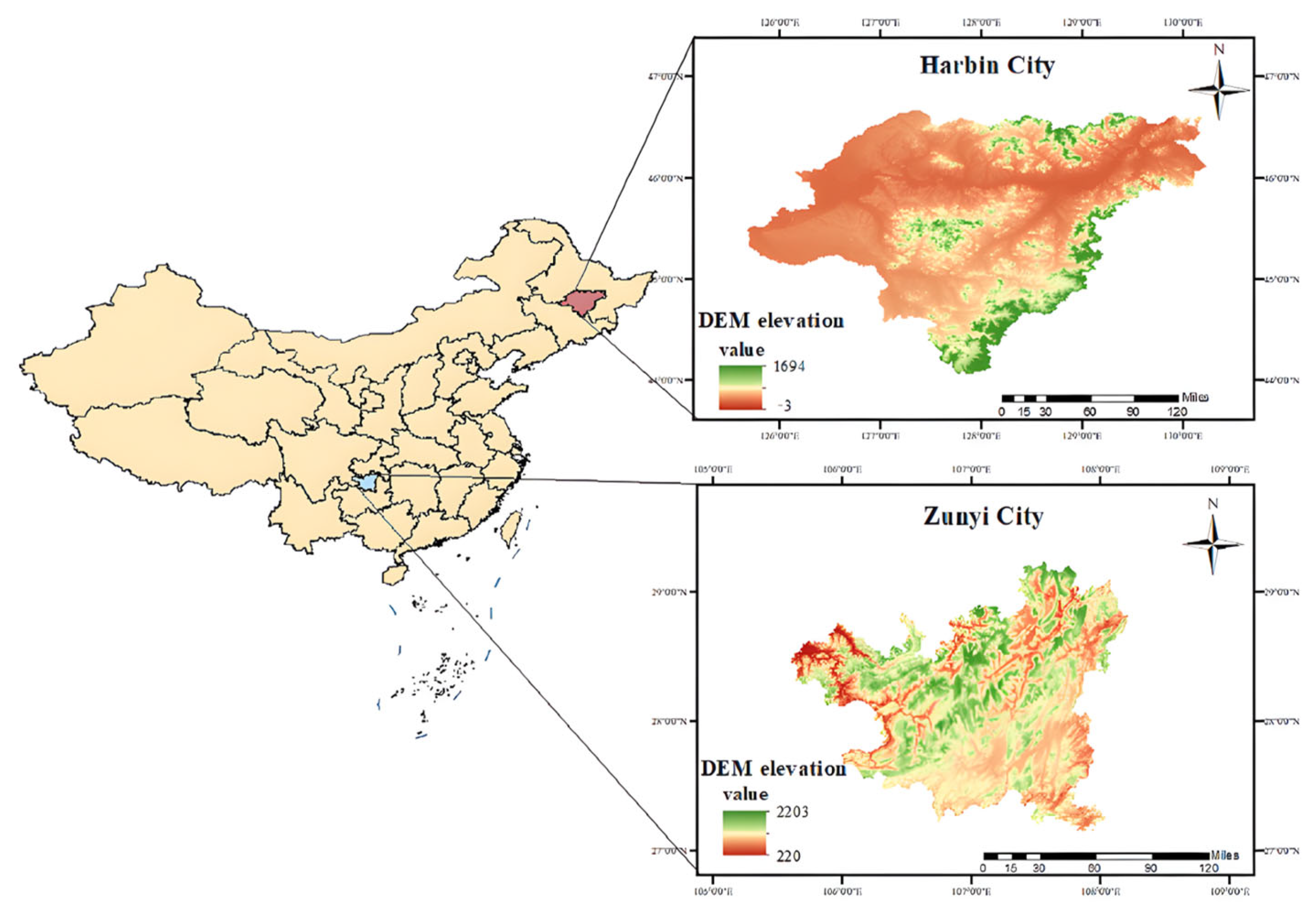
In this research, Zunyi and Harbin, two cities with relatively complete statistical data, were selected as research samples. Zunyi City and Harbin City are geographically far away, located in the south and north of China, respectively. They represent China’s new industrial cities and old industrial cities, respectively, and both have encountered environmental problems in the process of urban development. This paper selected these two cities to test the adaptability of the model in different regions and different types of cities.
Zunyi is the second largest city in Guizhou Province, with industrial output and agricultural output ranking first in the province. Zunyi was upgraded from a county-level city to a prefecture-level city in 1997. In the past 20 years, the city has developed rapidly, and the urbanization rate has increased from about 20% to about 50%. Zunyi is a typical emerging city in China.
Harbin, Heilongjiang’s provincial capital city, was one of China’s earliest industrialized cities. Harbin has been suffering from a deteriorating water environment since the beginning of the 21st century. In the past 10 years, the municipal government has taken a series of measures around the water environment in Harbin and achieved remarkable results. The locations of the two cities are shown in
Figure 1.
2.2. Data Selection and Sources
We collected 18 basic indicators of Zunyi from 2003 to 2019 and Harbin from 2011 to 2019 from data sources such as Zunyi City Statistical Yearbook, Zunyi City Water Resources Bureau’s government website, China City Statistical Yearbook, China City Construction Statistical Yearbook, Harbin City Statistical Yearbook, and Harbin Environmental Protection Bureau’s government website as the original data of the research. The missing values are supplemented by linear interpolation. We take the non-compliance rate of urban water quality (NRWQ) as the simulation value of the model to reflect the status of the urban water environment quality, the higher the value, the worse the urban water environment quality. This study adopts NRWQ as a comprehensive indicator of urban water quality status, mainly based on three considerations. Firstly, NRWQ is not a single pollutant indicator but a comprehensive indicator based on the compliance of multiple types of water quality parameters, which can reflect the overall compliance pressure and management risks of the urban water environment. Secondly, the goal of this study is to construct a comprehensive evaluation framework between urbanization and water quality pressure, rather than analyzing the biogeochemical processes of a specific pollutant. Therefore, NRWQ is more suitable as the top-level target variable of the AHP model. Thirdly, in long-term studies at the urban scale, continuous, comparable, and publicly available multi-pollutant concentration data are often limited by monitoring frequency, cross-sectional adjustments, data integrity, and data availability, while NRWQ has better temporal consistency and cross stage comparability.
Generally, urbanization produced negative and positive effects on water quality. On the one hand, the increasing industry brings about great pressure to maintain the quality of water around the city and, on the other hand, the pressure was released with the increase in wastewater treatment, the decrease in heavy pollution industry in numbers, and environmental protection investment. Therefore, the index can be divided into negative factors (urbanization water pollution index) and positive factors (urbanization water purification index).
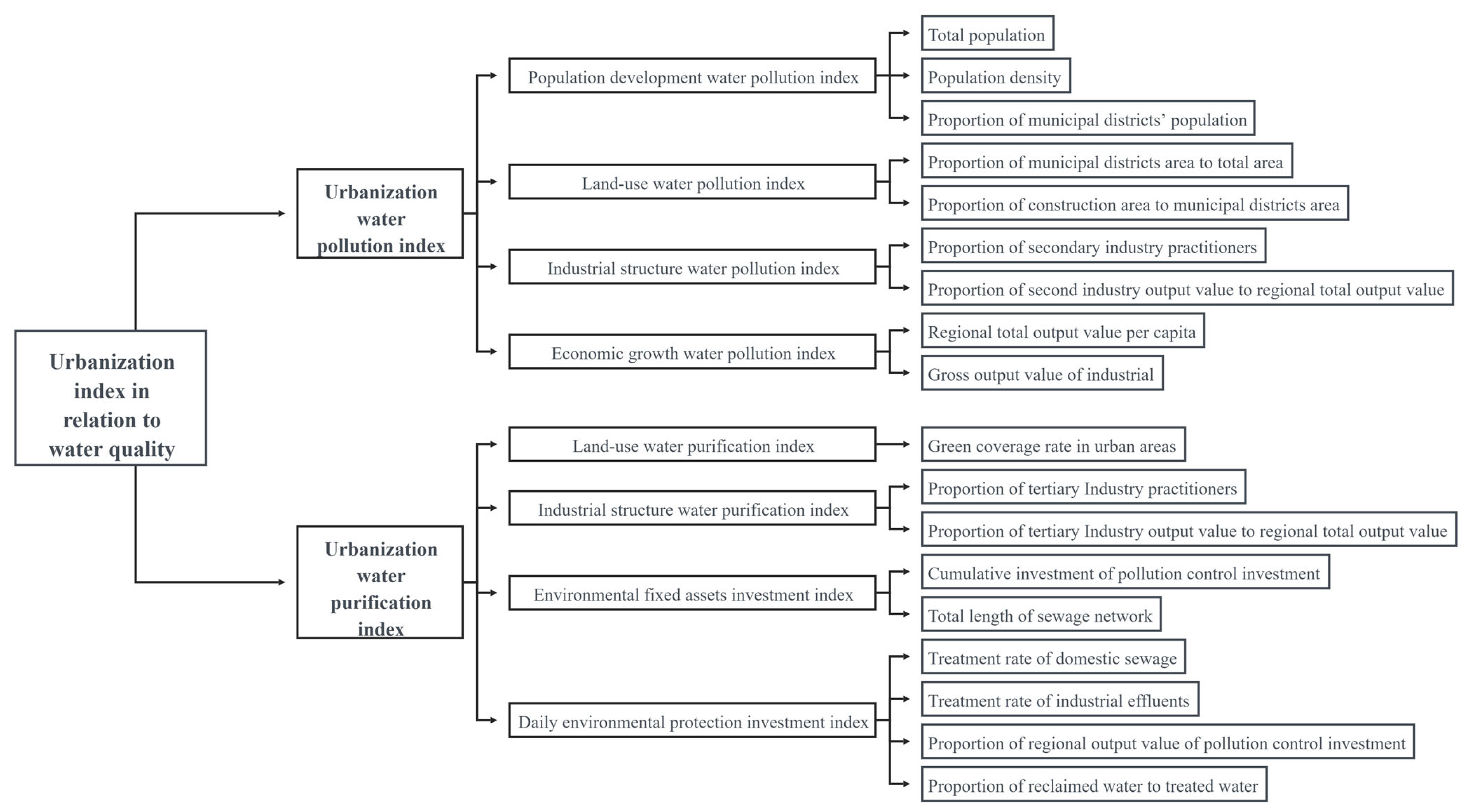
Figure 2 presents the framework of the hierarchical structure of the water quality-related urbanization index system.
The division of the pollution index and purification index in this article is based on the dominant role of various indicators on water quality pressure under typical urbanization stages during the research period, and does not mean that the relevant indicators have fixed positive or negative effects in all cities and development stages.
It can be seen in
Figure 2 that these 18 bottom-level elements reflect the degree of urbanization and are divided into two groups according to their effects on the water quality: one is the negative group (pollution index) and the other one is the positive group (purification index). In each group, there are 9 elements which are classified according to some criteria which are often used to characterize the urbanization process, such as population change, land use, economic growth, industrial structure, and environmental investment etc. Thus, the bottom-level elements could be connected with the top index—the water quality pressure index of urbanization (whose value is related to the rates of urban water quality lower than the standard).
The data on the treatment rate of industrial effluents in the indicators adopted in this study are all from official daily statistics, but the amount of directly discharged wastewater due to sudden pollution events is not included in the statistics, which will cause distortion of the model if it occurs.
2.3. Improved AHP
The analytic hierarchy process (AHP) is a structured technique for organizing and analyzing complex decisions through the combination of qualitative and quantitative analysis. It has particular application in group decision-making, used around the world in a wide variety of decision situations [
24,
25].
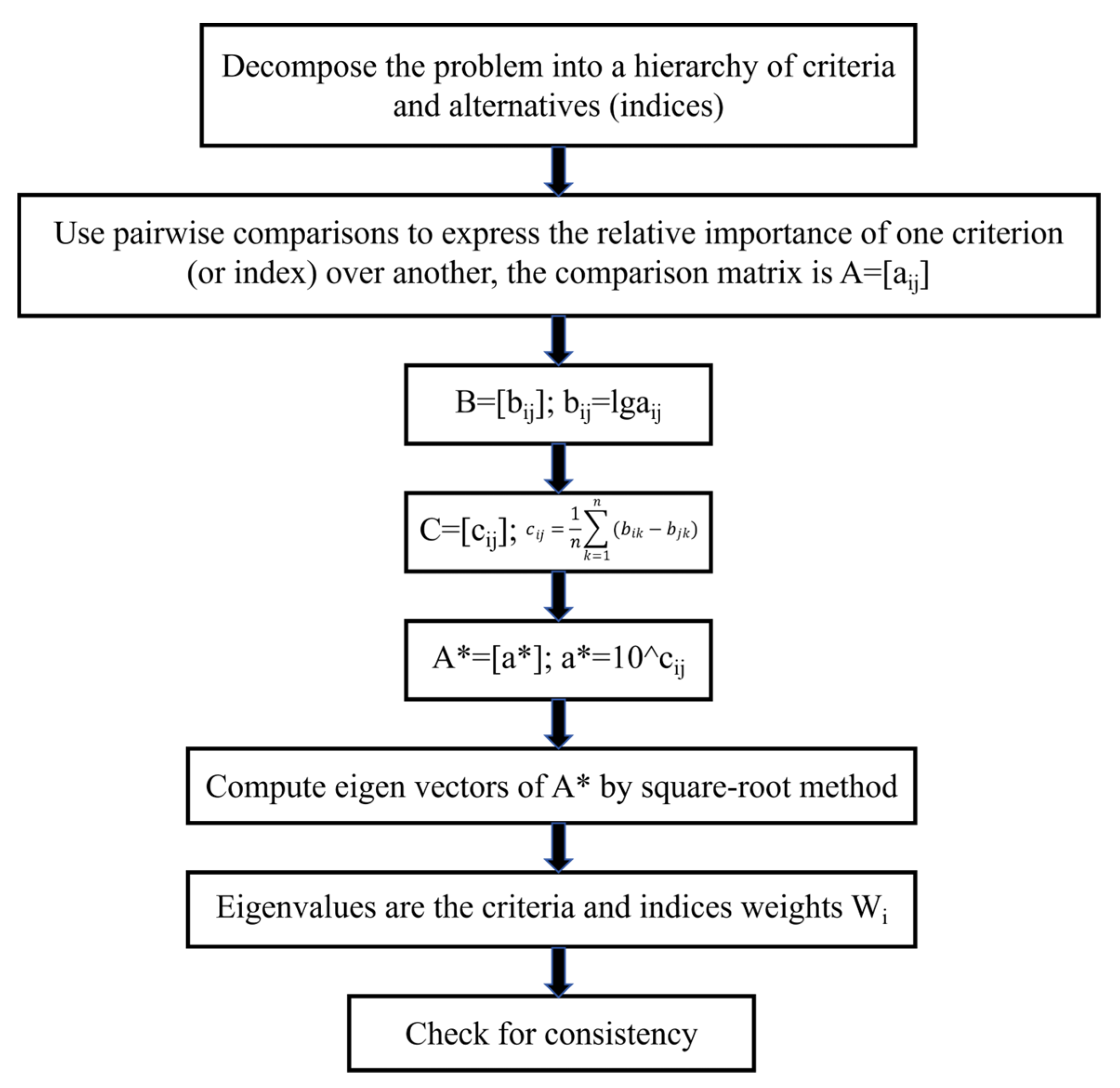
In this paper, determining the weights of the criteria and index for the improved AHP follow these basic steps, as shown in
Figure 3.
In AHP, pairwise comparisons are made, with the grades ranging from 1–9 [
26]. A basic but very reasonable assumption for comparing alternatives is that if Attribute A is absolutely more important than Attribute B and is rated at x, then B must be absolutely less important than A and is graded as 1/x. The ranking scale is in
Table 1.
The square root method (used compute the eigenvectors of
A*) follows these steps:
Checking for consistency involves calculating a Consistency Ratio (CR) to measure how consistent the judgments have been relative to large samples of purely random judgments.
To calculate the CR, the λ
max and Consistency Index (CI) are calculated with Equations (4) and (5).
The CR is calculated by using the table below [
27], derived from Saaty’s book. The upper row is the order of the random matrix, and the lower row is the corresponding index of consistency for random judgments (RI), as shown in
Table 2. The equation of CR is Equation (6).
Table 2.
The corresponding index table.
Table 2.
The corresponding index table.
| Order | 1 | 2 | 3 | 4 | 5 | 6 | 7 | 8 | 9 | 10 | 11 | 12 | 13 | 14 | 15 |
|---|
| RI | 0.00 | 0.00 | 0.58 | 0.90 | 1.12 | 1.24 | 1.32 | 1.41 | 1.45 | 1.49 | 1.51 | 1.48 | 1.56 | 1.57 | 1.59 |
If the CR is greater than 0.1, the judgments are untrustworthy because they are too close for comfort to randomness and the exercise is valueless or must be repeated. And if the CR is less than 0.1, the evaluations are consistent.
2.4. The Index System and Modeling
In the paper, the model-building process is as follows.
Identify water quality-related factors that can characterize the urbanization process, and establish an evaluation system based on these factors.
Then use the AHP method to calculate the contribution weights of different factors to urban water pollution and purification. For each year, the raw values of 18 indicators are normalized to eliminate the influence of different dimensions and value ranges.
The normalized indicators are summarized according to the weights derived from AHP to obtain the corresponding standard layer indicators.
Analyze the correlation between various factors and urban water quality and derive relevant formulas. For standards that have nonlinear effects on urban water quality, such as the economic growth water pollution index, nonlinear correction functions are introduced and fitted.
The parameters in these functions are estimated using annual data from Zunyi City, including standardized factor values, calculated weights, and annual NRWQ values.
The applicability of the calibration model was validated using data from Harbin city. Every year, the urbanization process is evaluated, and the water quality index is recalculated to assess changes over time. The model also uses time-dependent data to track the dynamic relationship between urbanization and water quality.
The lowest level of the hierarchical structure (Layer C) consists of 18 underlying indicators, which are the direct annual input variables of the model. The selection of these indicators is to represent key aspects of urbanization processes closely related to urban water quality, including population growth, land use, industrial structure, economic development, and environmental protection investment. According to its environmental impact, the indicators of Layer C are divided into the pollution-related group the and purification-related group, and then summarized into the corresponding standards of Layer B. After annual data collection, the C-layer indicators are normalized, weighted using AHP, and further propagated upwards through hierarchy to calculate A1 and A2, and finally the total water quality pressure index. Historical data are used as the annual input and calibration basis for the model. Every year, the urbanization process is evaluated and the water quality index is re-calculated to assess changes over time. The model also uses time-dependent data to track the dynamic relationship between urbanization and water quality.
2.5. Normalization of the Factors’ Values
As the specific values of underlying factors differ greatly, direct reference will have a significant impact on the final results and thus lose comparability. Therefore, these data need to be standardized to make them fall into a unified range. We use the general 0–1 normalization method; that is, the actual value minus the minimum value divided by the difference between the maximum and minimum value, as shown in Equation (7):
In Formula (7), cij is the standardized index value, xij is the original index value, and xmax and xmin are the maximum and minimum values of the original index value of the city.
2.6. Pairwise Comparisons in AHP and the Weight of the Urban Elements
To quantify the contribution of each urbanization elements to the water quality, the AHP technique was applied.
The symbols in the pairwise comparison matrixes are defined in
Table 3. Following the law of urban development and the change in water quality, the pairwise comparison matrixes of each level (for A
1, see
Table 4; the rest are shown in the
SI) are obtained by experts’ discussion and evaluation. The values in matrixes indicate the relative importance between pairwise indices, and the CI and CR (consistency index and consistency ratio).
Then the weights of indices are calculated by the AHP algorithm (see
Table 5; p is the weight of index Layer B, and q is the weight of index Layer C). In addition, all CRs are less than 0.1, which means that the judgments are consistent. See
SI Table S1 for the modified judgment matrix. According to the construction principle of the AHP judgment matrix, when the value of the element satisfies the consistency test condition and the value range of the modified element is near 0.1~10, the judgment result is close to the objective value.
2.7. Parameter Estimation: Nonlinear Relationships and Adjustment in Criteria Layer Indices
Social, economic, and environmental systems are complex and nonlinear, meaning that linear models are inadequate for accurately describing these systems. Therefore, in order to ensure that the model in this study can capture the nonlinear relationship between economic and environmental indicators, we modified some indicators of the model by using nonlinear functions based on previous studies of economic and environmental indicators.
Many studies have confirmed the nonlinear relationship between economic development and environmental quality, such as the Environmental Kuznets Curve (EKC) theory proposed by Grossman and Krueger [
28,
29], which is based on cross-sectional data from 42 countries. The EKC theory suggests an inverted U-shaped relationship between economic development and pollution [
30]. Initially, during the early stages of industrial development, environmental pollution worsened because of a lack of awareness and environmental protection technology. However, with the development of technology and the adoption of environmental protection measures, pollution gradually decreased. This study considered the effect of economic development on water quality at different stages as follows: During the initial stage, when the environmental pressure of economic development did not exceed the self-purification capacity, the impact on water quality was minimal. In the stage of rapid economic growth with less awareness of environmental protection, the pressure on water quality increased continuously. However, when sustainable manufacturing technology was widely implemented, the pressure on water quality was maintained within a certain range. As a result, the relationship between economic growth and its pressure on water quality follows an S-shaped curve [
31]. Moreover, in the sewage treatment system, the costs increase sharply when higher removal rates of contaminants need to be achieved, meaning that the relationship between daily environmental protection investment and decontamination rate follows an exponential form [
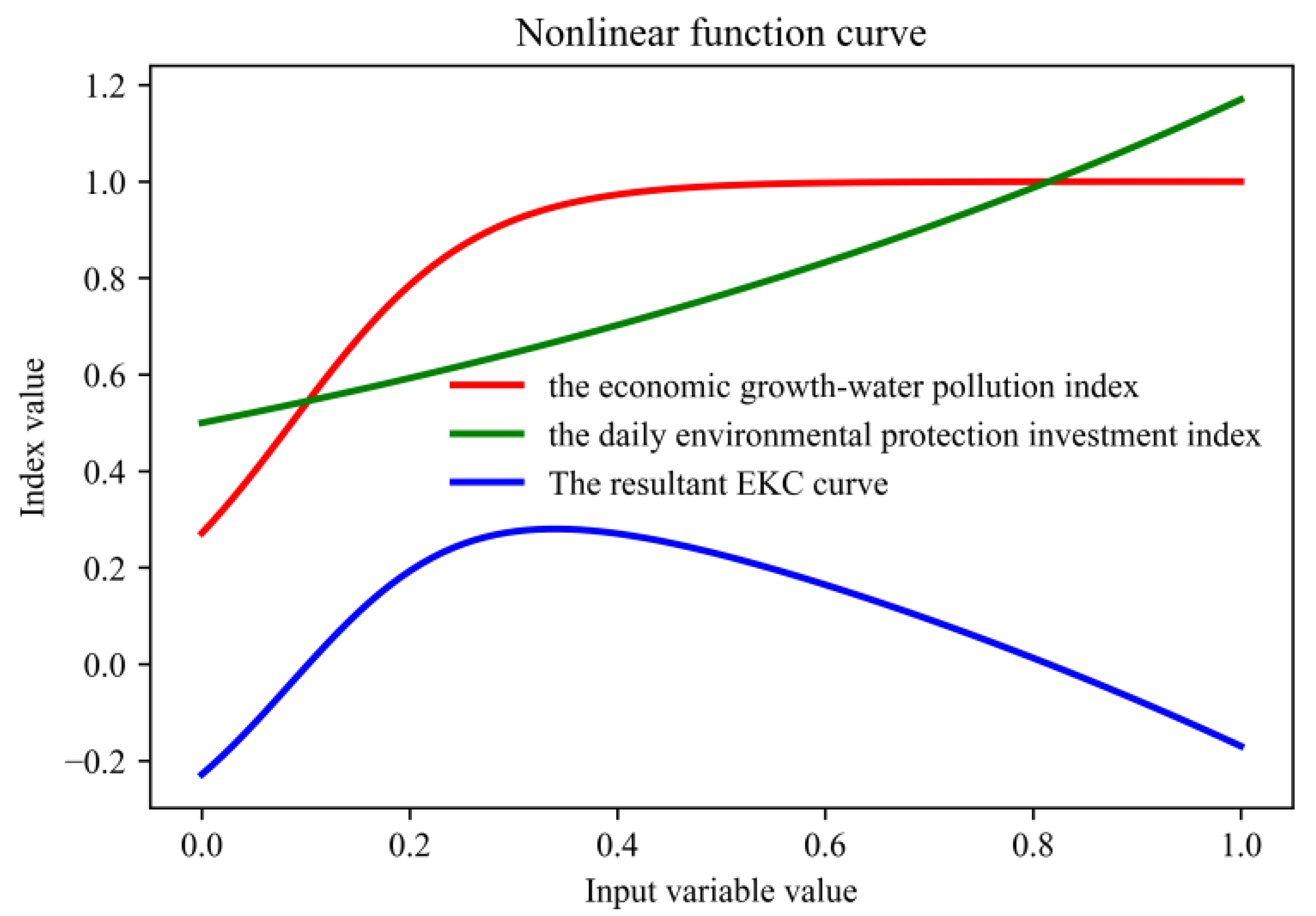
32]. Therefore, after performing matrix operations using the AHP method, the economic growth–water pollution index was adjusted using the S-shaped curve function, while the daily environmental protection investment index was adjusted using the exponential function. The general formulas for the S-shaped curve function and exponential function are as follows:
In Equation (8), k1, k2 are the parameters to be fitted.
In Equation (9), k3, k4 are the parameters to be fitted.
The parameters in the S-shaped function mainly control the threshold position and the growth rate of urbanization factors’ response to water quality pressure. The data of Zunyi City in the last decade was used to fit the curve and estimate the parameters. According to least squares fitting, the parameters are
k1 = 1.0,
k2 = 2.68,
k3 = 11.42,
k4 = 0.50, and
k5 = 0.85 and the expressions are
It can be seen in
Figure 4 that the sum of the two nonlinear functions presents an inverted U-shape, indicating that our nonlinear correction conforms to the EKC theory. It should be noted that the parameters in the function describe empirical nonlinear response relationships, rather than physical constants with regional universality. For new research areas, if data conditions permit, parameters should be recalibrated on the basis of local historical water quality and urbanization data; If the data are limited, the parameters in this article can be used as initial values, and their applicability can be evaluated through sensitivity analysis or independent sample validation.
3. Results and Discussion
3.1. Calculation of the Water Quality Pressure Index and the Model
The goal (T) at the top of the hierarchy system is the water quality pressure index of urbanization, which is linearly correlated with NRWQ (P). Its value comes from the difference between the pollution index (A1) and purification index (A2), which has 18 urbanization elements (C11–C42, C51–C84) at the bottom and 8 criteria (B1–B4, B5–B8) in between. The weight contributions of the urbanization elements and criteria to the pollution index and purification index have been calculated by AHP and listed in
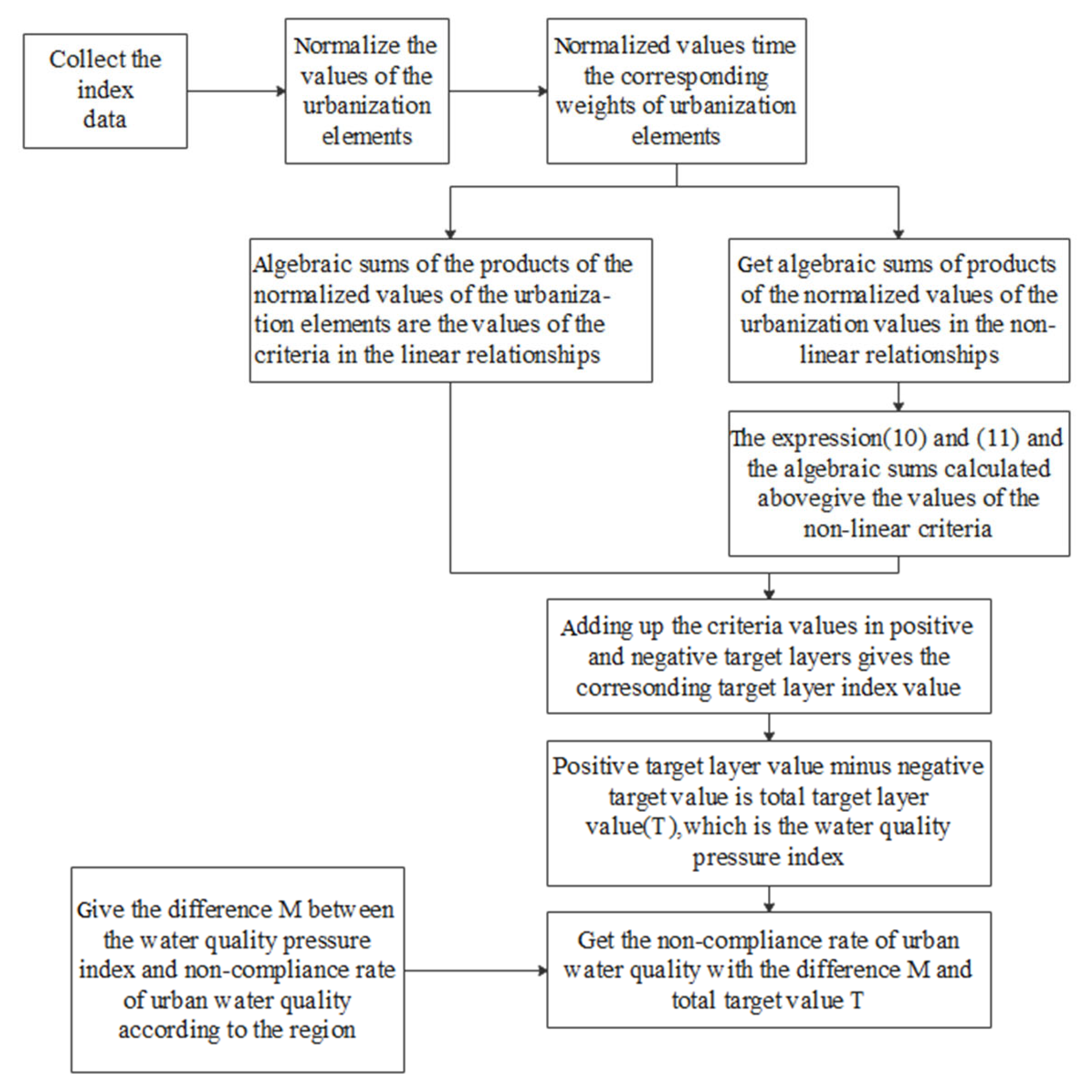
Table 5. The value of the pollution index and purification index come from the algebraic sums of their criteria’s values. As discussed above, there are linear and nonlinear relationships between the urbanization elements and their criteria. For the linear relationships, the values of the criteria come from the algebraic sums of the products of the normalized values of the urbanization elements and their weights. And for the nonlinear relationships, the values of the criteria are given by Equations (10) and (11). The water quality pressure index T can indicate the trends of urban water quality in different periods of urban development. It can be seen in
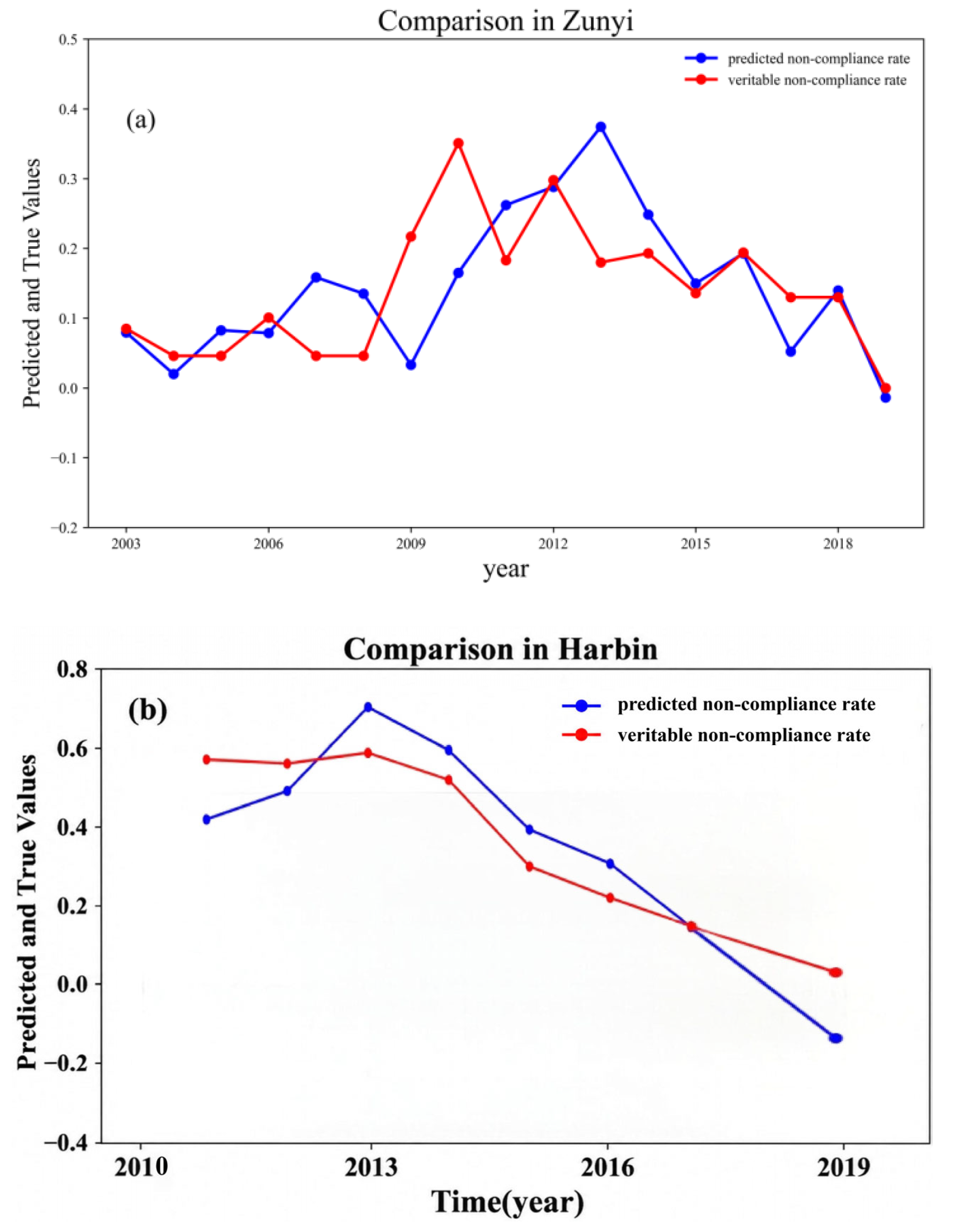
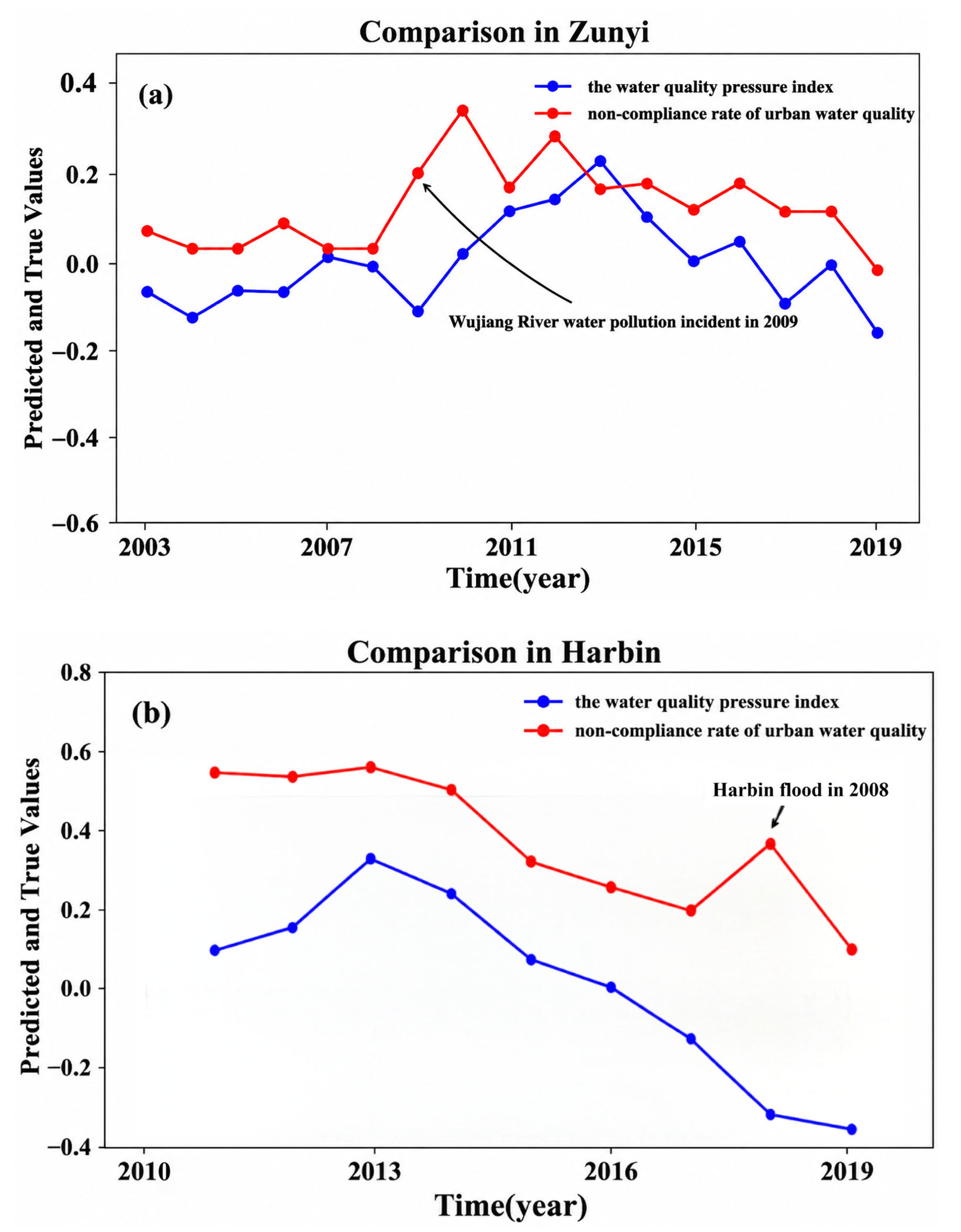
Figure 5a,b that the pattern of a plot of T (the water quality pressure index) vs. time resembles that of P (NRWQ) vs. time. So, with a modification value M added, NRWQ can be estimated by the water quality pressure index. The calculation process of the index system is shown in
Figure 6. The symbols in Equation (12) have been defined in
Table 3 and
Table 5, and M is the difference between the water quality pressure index and the non-compliance rate of urban water quality. Its value is determined by the geographical and environmental characteristics of the city, and it can be estimated from the historical data.
Figure 5.
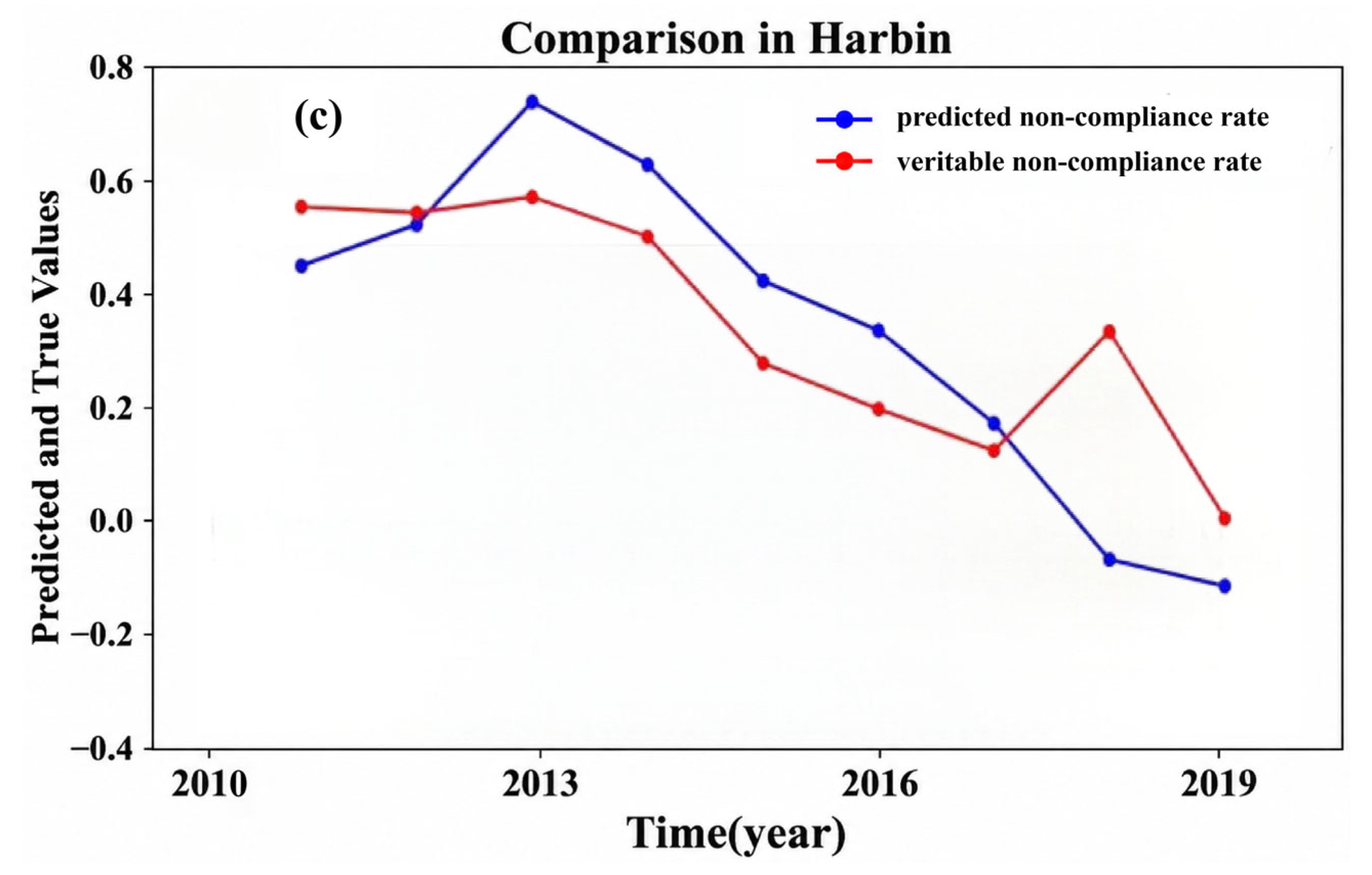
Pattern of the plot of T and P vs. time in two cities. The red line in the figure is NRWQ, and the blue line is the result calculated by the improved AHP. (a) Pattern of the plot of T and P vs. time in Zunyi; the arrow in the figure indicates the beginning year of the Wujiang water pollution incident. (b) Pattern of the plot of T and P vs. time in Harbin; the arrow in the picture indicates the flood of the Songhua River in Harbin.
Figure 5.
Pattern of the plot of T and P vs. time in two cities. The red line in the figure is NRWQ, and the blue line is the result calculated by the improved AHP. (a) Pattern of the plot of T and P vs. time in Zunyi; the arrow in the figure indicates the beginning year of the Wujiang water pollution incident. (b) Pattern of the plot of T and P vs. time in Harbin; the arrow in the picture indicates the flood of the Songhua River in Harbin.
Figure 6.
The calculation process of the index system.
Figure 6.
The calculation process of the index system.
Among these, P is NRWQ, T is the urbanization water quality pressure index, A1 and A2 are the pollution index and purification index, and M is the correction term for differences in water environment background between cities.
In Formula (12), pi is the weight of Index i in Layer B; qij is the weight of Index i in Layer B and Index j in Layer C; Cij is the value of Index i of Layer B and Index j of Layer C, and M is the difference between the water quality pressure index and NRWQ.
After conducting curve fitting, it was observed that there was a significant discrepancy between the simulated values and the actual values in Zunyi City between 2009 and 2013, and an outlier was identified in Harbin city in 2018. The deviation in the simulation of Zunyi City will be discussed in the upcoming section. The difference in the value of M between the two scenarios, where outliers were removed or retained, was compared, and it was found that the data from 2018 caused a general deviation in the simulated values (as depicted in
Figure 7b,c). Therefore, the data for Harbin in 2018 were temporarily removed. The reasons for the outliers will be discussed in the subsequent section.
By nonlinear regression, the difference value of Zunyi City is M
1 = 0.13, and that of Harbin City is M
2 = 0.32. The root mean square error of Zunyi’s model RMSE
1 = 0.093, and the root mean square error of Harbin’s model RMSE
2 = 0.096. The expression of root mean square error (RMSE) is shown in Equation (13), where the annual average absolute error of the model is reflected; that is, the annual average absolute error of the simulated substandard water quality rate in Zunyi City and Harbin City is 9.3% and 9.6%, respectively, indicating that the model has high accuracy. The results corrected by using the difference value are shown in
Figure 7a,b.
In Equation (13), yi is the observed value in Year i, and yi’ is the simulated value in Year i.
It is noteworthy that the use of a standardized method has eliminated the influence of inherent discrepancies between cities on the water environment. Hence, the value of T solely indicates the alteration trend of water environment quality in a particular city during different time periods, but it cannot be utilized for intercity comparisons. In order to simulate urban water environment quality, an additional parameter reflecting the intercity difference must be incorporated, which is denoted as M in this study. The M value can be obtained by the subtraction of the pressure index (T) value from the NRWQ (P) value.
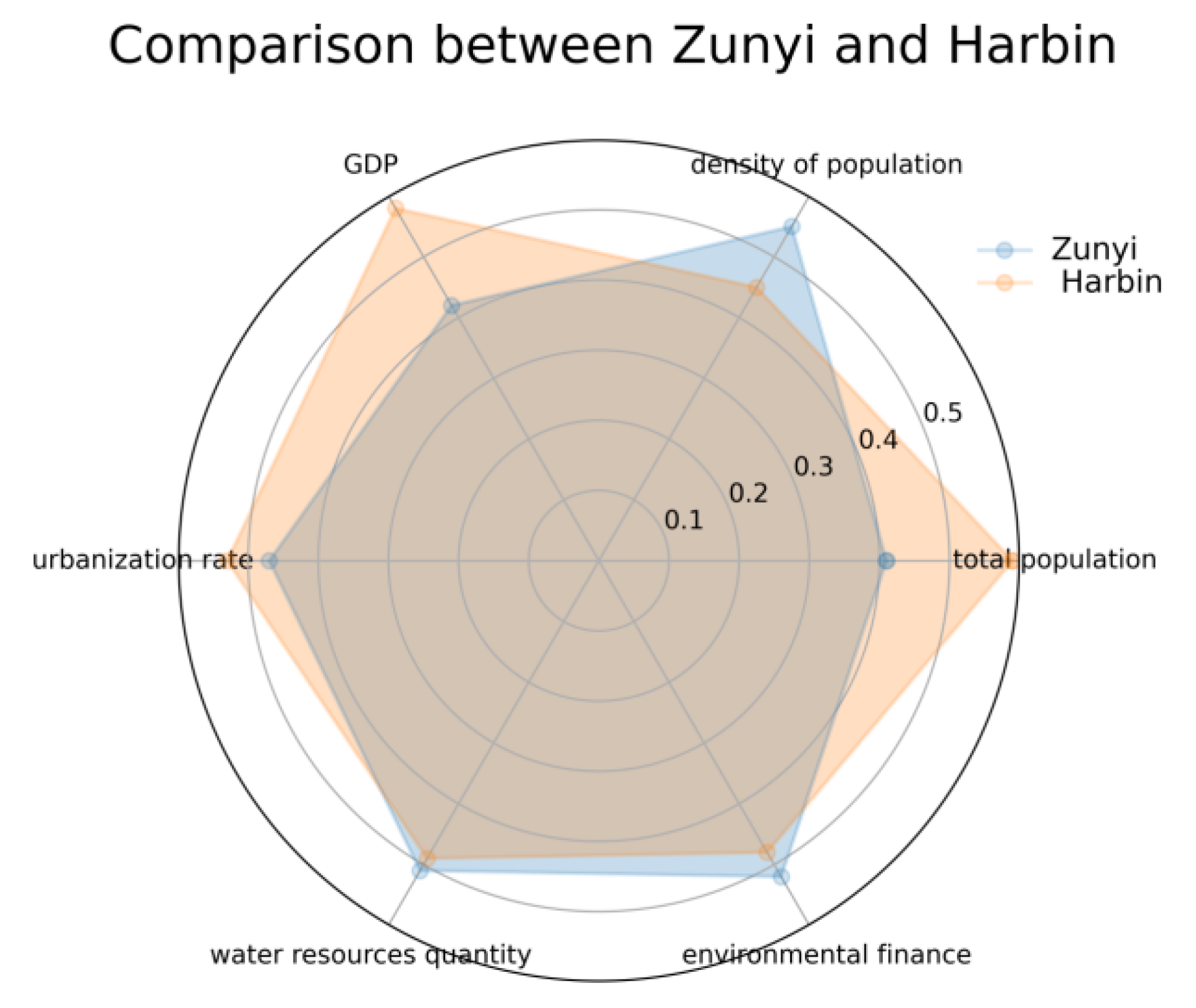
In this instance, it is noteworthy that the M value of Harbin is 0.32, approximately 2.5 times higher than that of Zunyi (M value: 0.13), indicating that Harbin’s water environment quality is comparatively inferior to that of Zunyi. The graph in
Figure 8 illustrates that Harbin and Zunyi have similar total water resources and environmental protection investment, but Harbin has a larger population, higher GDP, and a higher level of urbanization. Consequently, Harbin’s water environmental pressure exhibits a relatively greater fluctuation than Zunyi’s, which ultimately leads to worse urban environmental water quality compared with that of Zunyi, resulting in a higher M value for Harbin in contrast to Zunyi.
3.2. Error Discussion
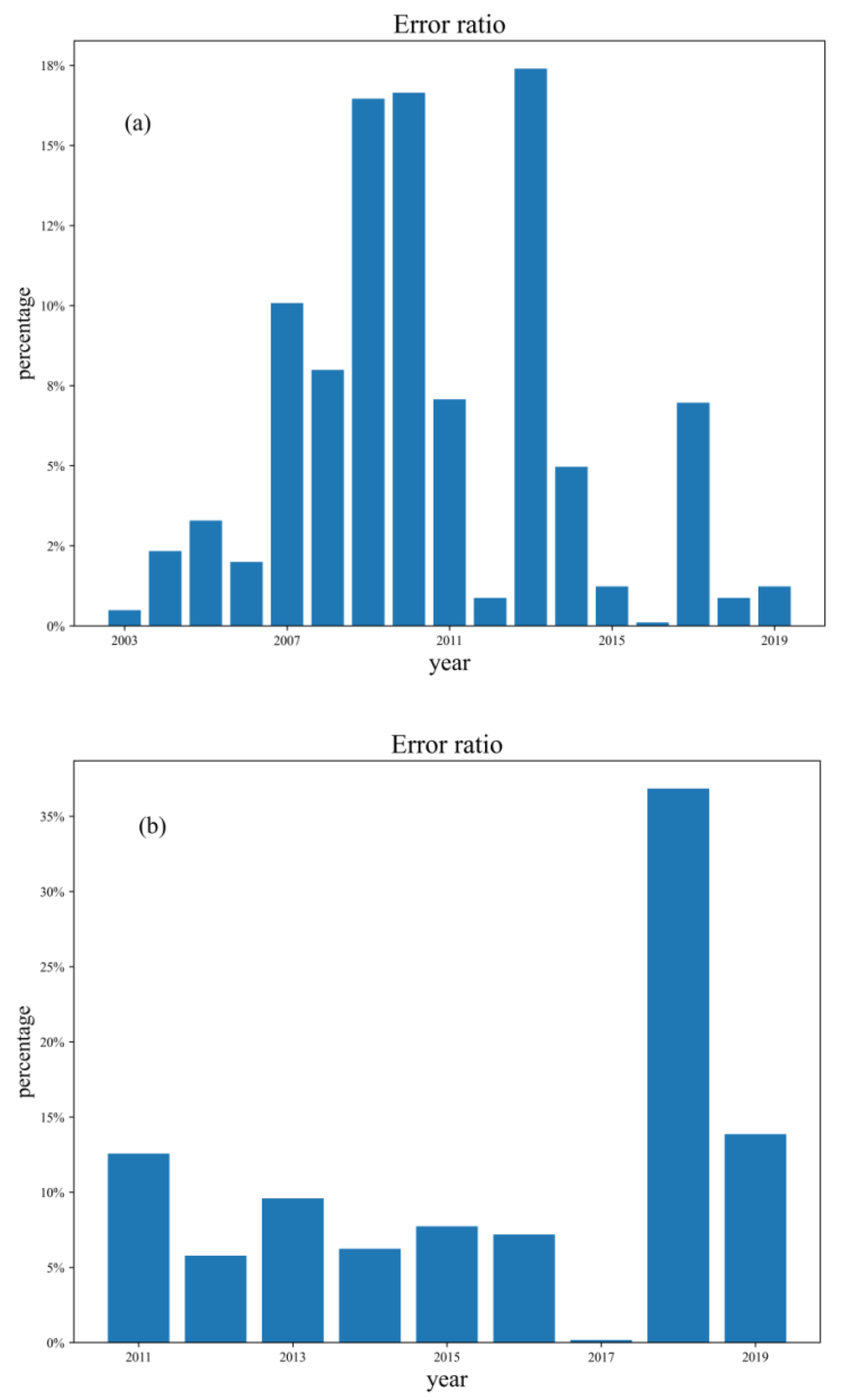
In the preceding section, it was discovered that certain years had outliers that caused the simulated model value to deviate significantly from the observed value. Furthermore, during the investigation of Zunyi City, it was observed that the model’s peak value occurred later than that of the real value. To examine the potential causes of this discrepancy, the contribution of different years to the RMSE was calculated, as depicted in
Figure 9a,b.
According to
Figure 9a,b, it is apparent that the deviation of Zunyi is primarily concentrated between the years 2009 and 2013 (with a cumulative contribution of RMSE exceeding 60%), while the deviation of Harbin in 2018 is significantly greater than that of other years (with a contribution rate of RMSE in a single year exceeding 35%). After analyzing historical news materials and statistical yearbooks, we concluded that the primary causes of bias are exogenous non-urbanization factors. For instance, a regional water pollution event occurred in Zunyi City from 2009 to 2013 [
33], whereby sewage discharge reached 20,000 tons per day, resulting in a serious phosphorus concentration in Wujiang River. Nevertheless, due to the unique karst landform in Guizhou, the pollution source problem was not entirely resolved until 2013. Previous studies have shown that when sudden water pollution events occur, the region close to the pollution source will be significantly impacted in a short period, and the impact will be quickly alleviated after the pollution source stops discharging [
34]. The error distribution of the model in this study strongly coincides with sudden water pollution events in time. Therefore, we have reason to believe that the error is mainly due to sudden local water pollution. Furthermore, Harbin experienced a 1-in-30 year flood during the 2018 flood season, and the precipitation was the highest since meteorological records began in 1961 [
35]. Numerous studies [
36,
37] have indicated that floods lead to a drastic deterioration in surface water quality; thus, it is reasonable to believe that the deviation in 2018 is due to the impact of the flood season in that year. The biases discussed above are all attributed to exogenous non-urbanization factors. However, since they are beyond the scope of this study, we have not provided quantitative descriptions. We hope to conduct in-depth research on this matter in the future to enhance the accuracy of the model.
Through the comparison of the research results of Zunyi City and Harbin City, it is evident that the model exhibits excellent simulation performance during the period without exogenous influences. This suggests that the index system we have constructed is capable of better reflecting the relationship between the urbanization process and the quality of the urban water environment in the absence of exogenous factors.
3.3. Sensitivity Analysis
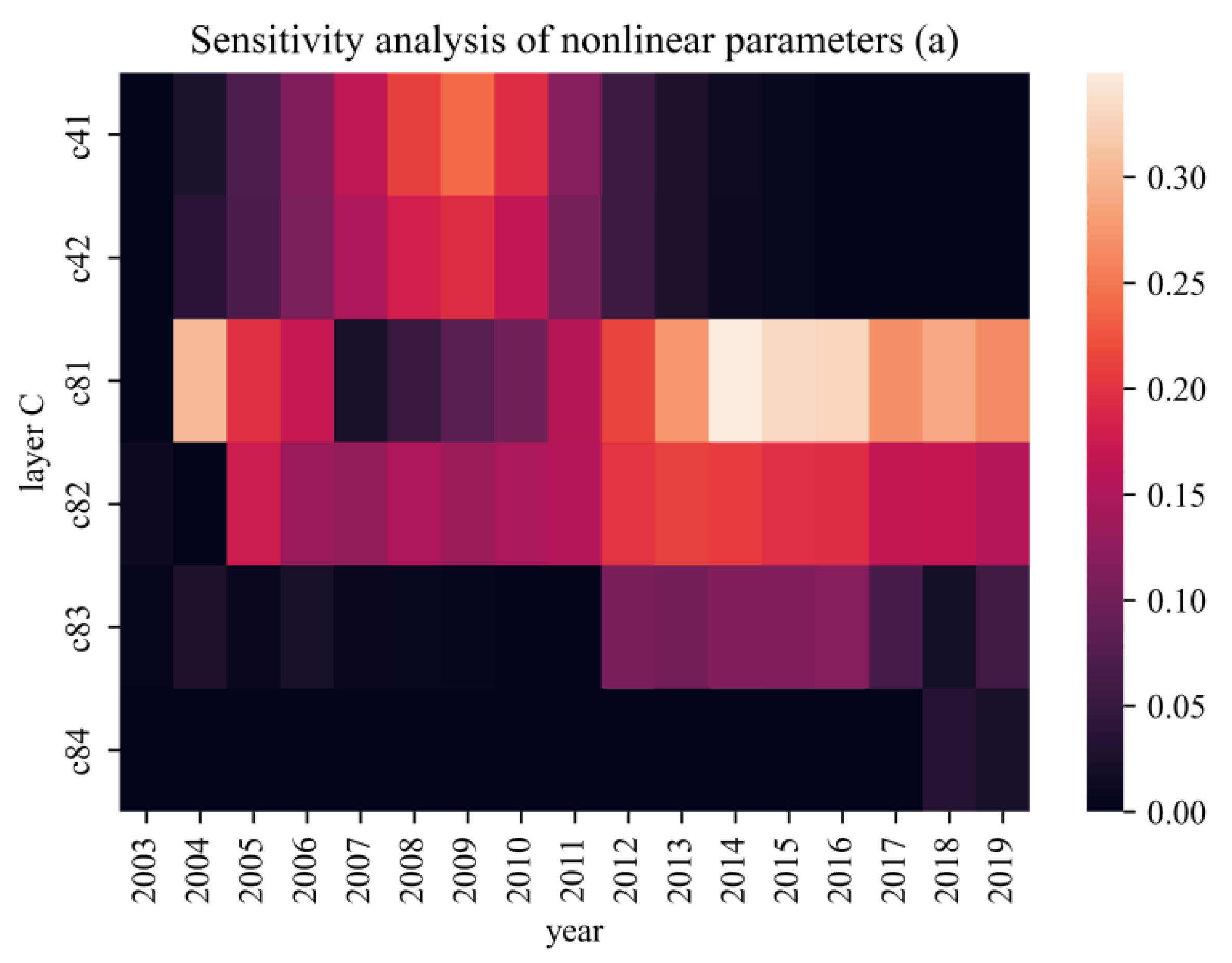
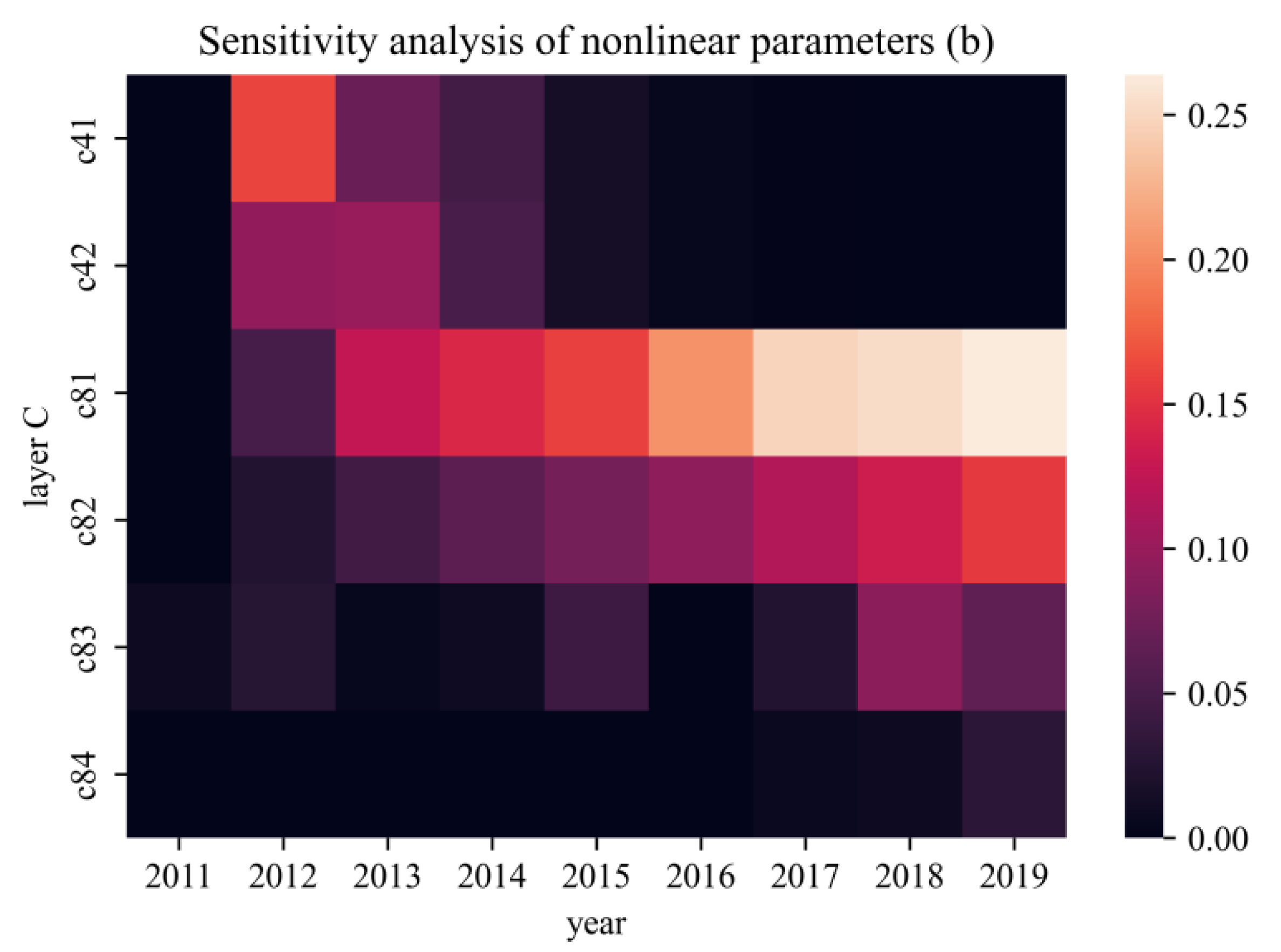
The sensitivity analysis formula in Equation (14) is used to investigate the influence degree of data and parameter uncertainty on the simulation results. The weight values of six index layers (C41, C42, C81, C82, C83, C84) involving nonlinear functions in the model are analyzed for their sensitivity. The sensitivity of the target layers (the water pollution index A1 in the urbanization process and the water purification index A2 in the urbanization process) to the weight of the economic growth water pollution index and the daily environmental protection investment index is calculated, based on the data of Zunyi City and Harbin City. The results are shown in
Figure 10a,b.
In Equation (14), L is the mathematical equation of the model, and q is the weight of the target index.
Figure 10.
Sensitivity analysis. The brighter the color, the more sensitive the parameter. (a) Zunyi’s model. (b) Harbin’s model.
Figure 10.
Sensitivity analysis. The brighter the color, the more sensitive the parameter. (a) Zunyi’s model. (b) Harbin’s model.
As can be seen from the figure above, the sensitivity of target Layer C to the weight of its index layer is all less than 1, which means that the deviation of these weight estimates will not be amplified when used in the calculation of target layer, and the model is relatively robust.
Figure 10 indicates that the sensitivity of the target layer to nonlinear parameters and partial weights did not remain stable throughout the entire study period but showed a significant increase in several specific years. This fluctuation reflects the phased transformation characteristics of the urban water environment system. When the urbanization index is in the transition zone of the nonlinear function, small parameter or weight changes can cause significant changes in the target layer results. Therefore, years with high sensitivity usually correspond to a stage where the balance among pollution pressure, governance capacity, and urban development patterns is rapidly adjusted.
From a practical perspective, the increase in sensitivity may be related to three types of urban events. Firstly, after major water pollution incidents or exposure to aquatic environmental risks, local governments usually strengthen pollution source supervision and water environment governance, thereby changing the relative effect between the pollution index and purification index. Second, changes in water pollution prevention policies, discharge standards, and environmental investment intensity during the five-year plan period may lead to changes in the weight effect of investment in environmental fixed assets, sewage treatment capacity, and industrial structure indicators. Thirdly, the centralized construction or operation of sewage treatment plants, sewage pipelines, and industrial wastewater treatment facilities may shift purification-related indicators from the low-efficiency response stage to the rapid improvement stage, thereby increasing the sensitivity of the model to the relevant parameters.
3.4. Layer B’s Contribution: Discussion
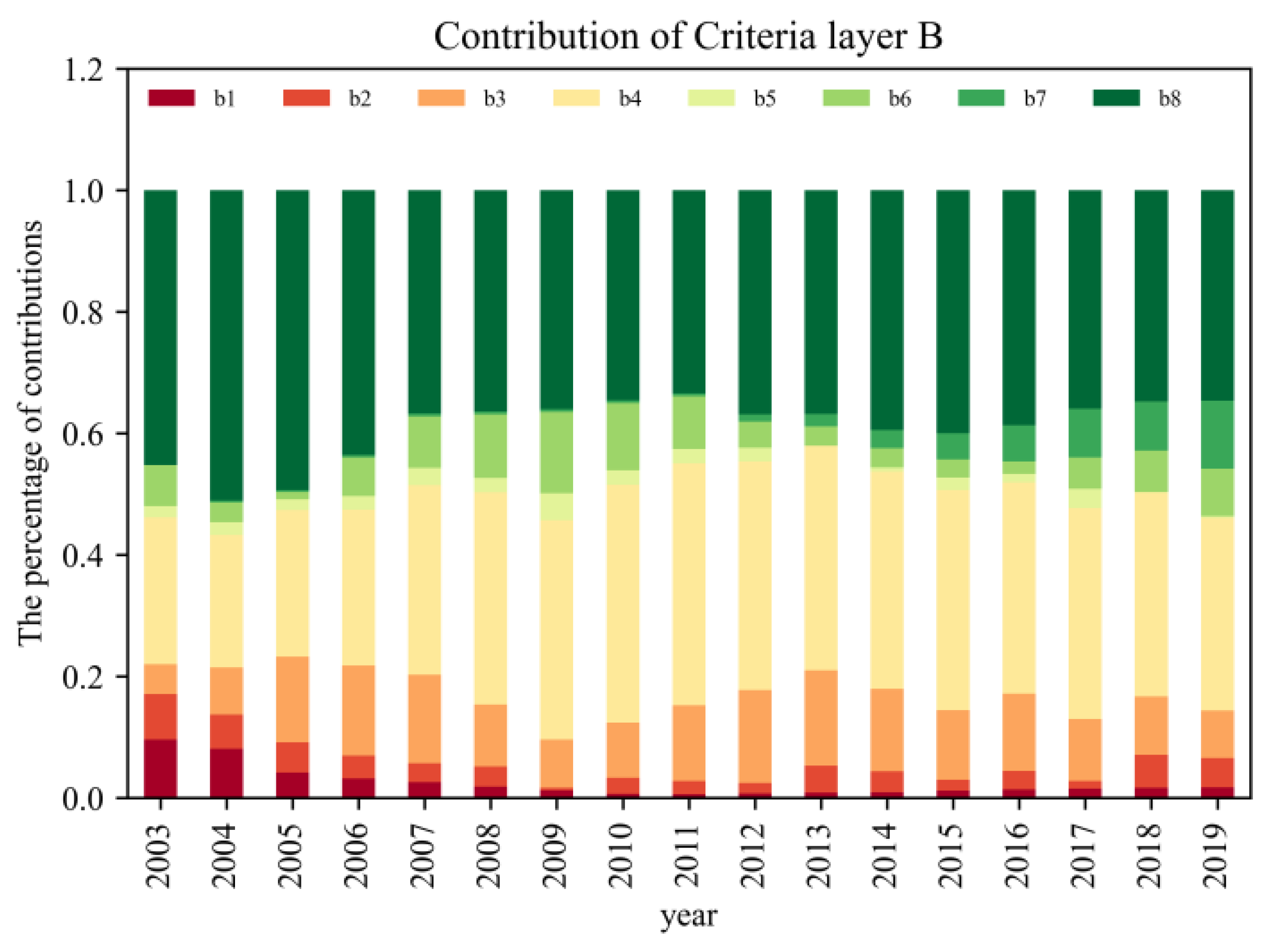
To comprehend the factors influencing the quality of water environment during urban development, we selected Zunyi City as a case in this study. The annual water quality pressure index of Zunyi City in index Layer B was decomposed, and the contribution of all eight influencing factors in index Layer B to the total target value was calculated. This approach helped us analyze the impact of various indicators on the urban water environment in different periods.
Figure 11 displays the contributions of these factors.
According to
Figure 11, the urban development process is divided into the following three stages.
Accumulation period (2003–2009): At this time, the urbanization rate stands at a meager < 25%, and the population development water pollution index is poised to exert a discernible impact on the aquatic milieu. The urban economy is making steady strides, with both the secondary and tertiary industry indices advancing in unison. The city’s daily environmental protection investment index has a commensurate bearing on the economic growth water pollution index. The quality of surface water in the city is currently deemed to be in a healthy state.
High pollution period (2009–2013): At this time, the daily environmental protection investment index is lagging behind that of economic development, resulting in a waning positive influence. As a result, there is a rapid escalation of the economic growth water pollution index, which gradually leads to the deterioration of the urban water environment and an augmented likelihood of sudden pollution events. The impact of the population development water pollution index is no longer deemed significant. Meanwhile, the negative impact of the industrial structure water pollution index is escalating rapidly with economic growth, while the positive influence of the industrial structure water purification index is diminishing each year.
Urban recovery period (2013–2019): The impact of the industrial structure water pollution index is gradually waning, while that of the industrial structure water purification index is gradually ascending. In the initial stage, the impact of the daily environmental protection investment index served as a significant constraint on the impact of the economic growth water pollution index, leading to an improvement in the urban water environment. However, as the efficacy of conventional environmental protection facilities gradually approached its limit, the influence of the daily environmental protection investment index began to gradually decline in the later stage. The influence of the environmental fixed assets investment index is becoming increasingly pronounced, and its contribution to the urban environment is on the rise.
The analysis of the Zunyi City model reveals that in the initial stage of urban development, the economic scale and secondary industries’ level of development were relatively modest, resulting in relatively insignificant pressure on the urban water environment. The population development water pollution index and the land use water pollution index exhibit a substantial impact on the urban water environment. As the urban economy and secondary industries began to develop rapidly, the pressure on the urban water environment escalated to a higher level, and the city’s development entered a phase of elevated pollution. The rapid growth of secondary industry, compared with tertiary industry, led to unsynchronized industrial development. The mismatch between the growth rate of investment in environmental protection and the rapid economic development led to a decline in the quality of the urban water environment, and the lack of investment in environmental protection heightened the likelihood of sudden accidents. Following the high pollution phase, major investments in conventional environmental protection facilities significantly enhanced the quality of the urban water environment, ushering in a recovery phase. However, limited by the limitations of traditional environmental protection facilities, their positive impact also displayed a declining trend each year in the late recovery phase. Long-term environmental protection infrastructure investment and the coordinated development of the secondary and tertiary industries gradually exhibited a remarkable influence on the enhancement of the urban water environment.
From the aforementioned findings, it is discernible that during the nascent phase of urban evolution, the dynamics of population expansion and land utilization exert a substantial influence on the urban aquatic milieu. In this juncture, urban stewards are enjoined to fortify the oversight of urban effluents, construct sewage conduits to ameliorate the efficacy of domestic wastewater treatment, and vigilantly safeguard the intrinsic self-purifying aptitude of the extant land environment amidst urban expansion. Investment in environmental protection in the early stage of urbanization has a significant pre-effect. If the construction of sewage treatment plants, sewage pipelines, industrial wastewater management, recycled water utilization, and water environment monitoring systems lags behind economic expansion and industrial growth, cities are more likely to enter a longer period of high pollution. Therefore, laying out the environmental protection infrastructure in advance during the early stages of urbanization can not only buffer the pollution pressure brought by economic growth but also help reduce the risk of sudden pollution events and shorten the duration of high-pollution periods. Subsequently, as the city transgresses into an epoch of heightened pollution, the urban pollution milieu principally emanates from the disharmony between economic and industrial growth and investments in the environmental protection infrastructure, thereby precipitating recurrent episodes of sudden water environmental contamination. During this phase, urban custodians are compelled to intensify the ecological surveillance of industrial enterprises, ensuring the discharge of industrial effluents post-treatment, and aligning investments in environmental safeguard infrastructure with the cadence of economic advancement. After entering the high pollution stage, relying solely on end-of-pipe treatment is difficult to continuously improve the water environment’s quality. Cities need to promote the coordinated development of secondary and tertiary industries, optimize the industrial spatial layout, and reduce the water pollution load per unit of economic output. In the epoch of convalescence, the symbiotic development of the secondary and tertiary sectors exerts a conspicuous impact on the urban aquatic milieu. This necessitates city overseers to refine the spatial industrial layout, curtail water consumption per unit of economic output, and achieve ecological and harmonized development of regional industries. Concurrently, long-term and stable investment in environmental fixed assets can gradually improve the capacity of urban sewage collection, treatment, and ecological restoration, so as to support the continuous improvement of the water environment’s quality after the critical transition period. Emphasis must be laid upon sustained investments in fixed assets for environmental protection, acknowledging that their influence may not manifest immediately but is pivotal in fortifying urban water environmental protection in the subsequent stages of urban maturation.
4. Conclusions
This study uses the Analytic Hierarchy Process (AHP) to analyze the impact of urbanization on the urban water environment, and the middle index layer of the model was decomposed to explore the dominating factors impacting the urban water environment’s quality, so as to provide scientific basis for urban management decision-making. To overcome the subjective and simplistic linear relationship of traditional AHP, this study adopts the improved structure of AHP and makes nonlinear adjustments to the economic growth water pollution index and the daily environmental protection investment index in the model, while maintaining the model’s interpretability. The data verification of Zunyi City and Harbin City demonstrates the high accuracy and universality of this model, which uses less data to achieve better results (the RMSE of the model data in these two cities is 0.093 and 0.096, respectively). In the limited long-term monitoring data of urban scale, it can integrate urbanization process indicators and water environment pressure mechanisms into a transparent and interpretable evaluation framework. Compared with the black box model, the hierarchical structure of AHP can clearly identify the relative contributions of different factors such as population, land use, industrial structure, economic growth, and environmental investment to water environment pressure, providing an interpretable decision-making basis for urban water environment management. However, the AHP also has certain limitations, including subjectivity in constructing the judgment matrices, insufficient characterization of indicator weights over time, and limited predictive ability for complex nonlinear and dynamic feedback processes. Although this study modified indicators related to economic growth and environmental investment by introducing nonlinear functions, the model is still more suitable for explanatory evaluation rather than high-precision dynamic prediction. Future research can further enhance analytical capabilities by combining complementary models. For example, the entropy weight method can be used to reduce subjectivity in weight determination; PCA can be used to identify the main pollution driving factors and reduce indicators’ redundancy; and the system dynamics model can be used to characterize the dynamic feedback among urbanization, industrial development, infrastructure investment, and the water environment’s quality. When data conditions permit, further construction of AHP-based machine learning can be carried out, with AHP being responsible for the indicator system and mechanism interpretation, and machine learning models responsible for nonlinear response and scenario simulation, thereby improving the interpretability, robustness, and predictive ability of the model.
To identify the main factors affecting the urban water environment during urban development, this study decomposes the index Layer B of the model and divides urbanization into three stages based on actual water quality. By comparing the changes in the contribution of different indicators, the study discusses the causes of water environment deterioration during urbanization. The results show that the population growth index is not a significant factor in causing the city to enter the period of high pollution. Rather, uncoordinated urban industrial development and inadequate investment in environmental protection in response to economic growth are the key reasons for the city’s deterioration in the water environment during this period. This requires city managers to pay attention to the investment of environmental protection supporting facilities in the early stage of urban industrialization to shorten the period of high pollution. After the high pollution period, coordinated industrial development and long-term investment in environmental protection infrastructure gradually play a leading role in the improvement in urban water environment. At this time, urban managers need to make long-term plans for urban water-related ecological protection and pay attention to the coordinated development of secondary and tertiary industries. It should be pointed out that this study divides urbanization indicators into the pollution index and the purification index on the basis of the dominant impact direction of each indicator on water quality pressure against the background of rapid industrialization and urbanization in Chinese cities during the research period. This classification has stages and relativity, rather than absolute attributes. For example, the proportion of the secondary industry in the traditional industrialization stage is usually related to industrial wastewater discharge, energy consumption, and increased pollution load, and therefore is included in the pollution index in this article. However, with the development of green manufacturing, high-tech industries, and clean production, the pollution intensity per unit output value of some secondary industries may significantly decrease. On the contrary, although the tertiary industry usually represents upgrading of the industrial structure and the expansion of low-pollution economic activities, service industries such as catering, healthcare, and tourism may also generate high concentrations or special types of wastewater. Therefore, the direction and weight of some indicators may change in different cities or development stages. The classification in this article reflects the dominant effects of urbanization during the research period, rather than the absolute attributes of the indicators themselves. Under different industrial structures and technological conditions, the direction and weight of indicators should be localized and dynamically updated.
However, it should be noted that NRWQ also has limitations as a comprehensive indicator. Due to its reflection of the comprehensive results of water quality compliance, it may mask the differential responses of different pollutants to the urbanization process, for example, nutrients, organic pollutants, and heavy metals. It may also be affected by different factors such as population density, industrial structure, sewage treatment capacity, and land use changes. Therefore, this research model is more suitable for evaluating the impact of urbanization on overall water quality pressure, rather than identifying specific mechanisms of change for individual pollutants. If long-term, continuous, and comparable pollutant concentration data can be obtained in the future, this framework can be further extended to single pollutants such as COD, TN, TP, NH3-N, or heavy metals by replacing the top-level target variables, thereby revealing the differential responses of different pollutants to urbanization-related driving factors.
We also noticed that the simulation effect of the model was not ideal in some years, and the phenomenon of a hysteretic peak appeared in the study of Zunyi City. Therefore, this model can better reflect the long-term phases of the relationship between urbanization and water quality pressure, but its ability to characterize short-term mutations, delayed responses, and cumulative effects across years is limited. This is also an important limitation of the current model. For this reason, we consulted relevant historical news reports and analyzed the sources of deviation from exogenous non-urbanization factors, and found that the model simulation accuracy was significantly affected by sudden pollution, and the solution of this problem needs to be further studied. In
Section 3, we used a constant to describe the difference between the water quality pressure index and the non-compliance rate of urban water quality. However, this difference is determined by the geographical and environmental characteristics of the city and may change over time. Future research can incorporate time lag effects in three ways. Firstly, we could introduce urbanization indicators that lag by one or more periods to test the response lag of different driving factors. Secondly, using moving averages or cumulative indicators can characterize the cumulative effects of pollution pressure and governance investment. Thirdly, AHP can be combined with distributed lag models, system dynamics models, or time series models to construct a dynamic AHP framework, which can more accurately identify the time scale of urbanization pressure transmitted to water quality changes. We hope to accurately describe its change over time in future studies.




 ,
,