Bioremediation of Printing and Dyeing Wastewater by Synechocystis aquatilis: System Construction, Kinetics and Mechanisms


 and
and
Abstract
1. Introduction
2. Materials and Methods
2.1. Microalgae and Chemicals
2.2. The System Construction of Treating APDW with S. aquatilis
2.3. The Sustainable System Treatment of APDW Under Optimized Conditions
2.4. The Proteins, Polysaccharides, and Lipids of S. aquatilis
2.5. Water Quality Evaluation of APDW
2.6. Kinetic Models
2.7. The Mechanism of Treatment of APDW with S. aquatilis
2.7.1. The Morphology of S. aquatilis
2.7.2. Genome Extraction and Sequencing
2.7.3. Transcriptome Profiling Using mRNA Sequencing
2.7.4. Determination of Enzyme Activity of S. aquatilis
2.8. Statistical Analysis
3. Results
3.1. Isolation of Microalgae
3.2. The System Construction of S. aquatilis Treatment of APDW
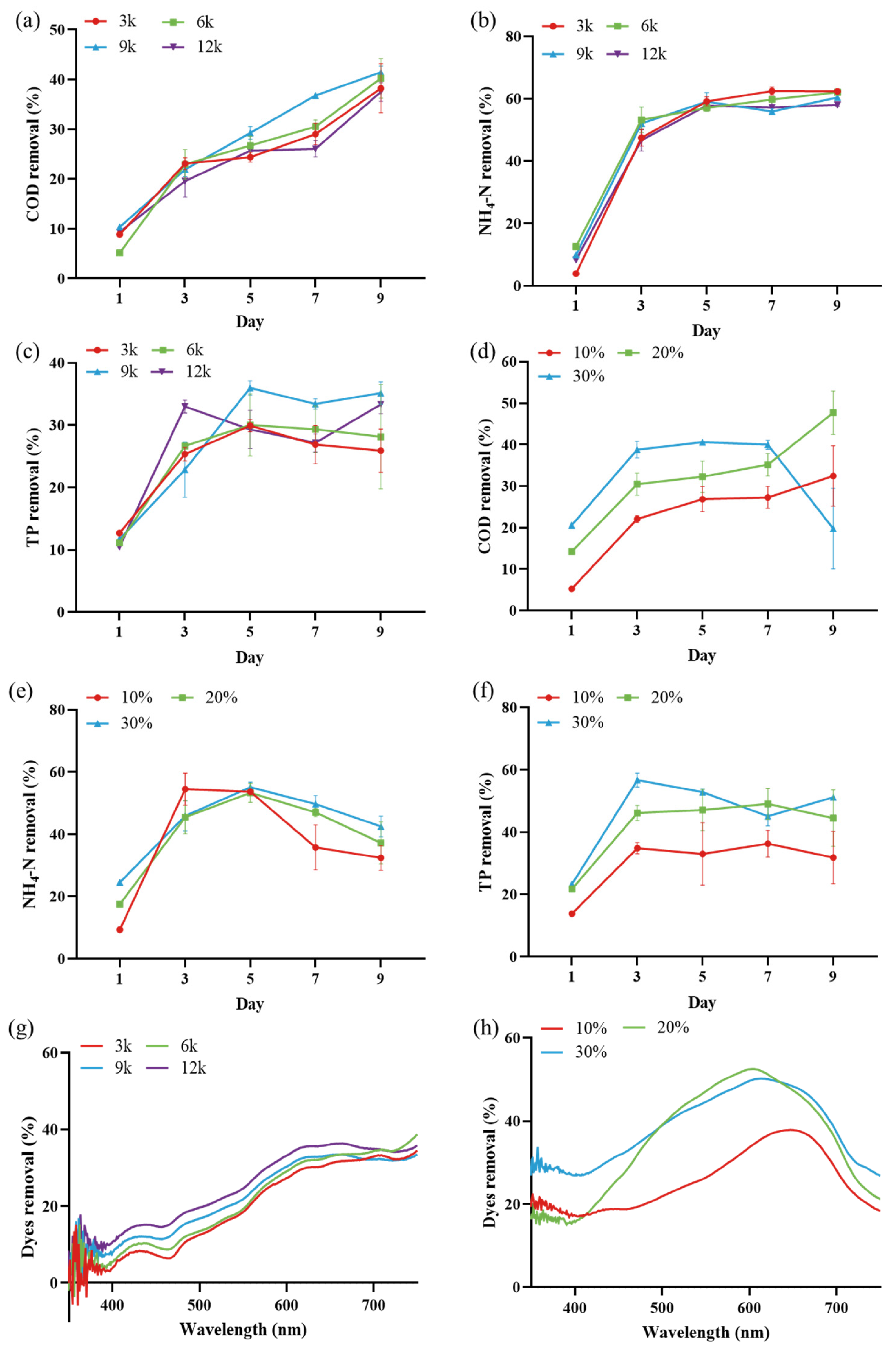
3.2.1. Effect of Dilution Fold of APDW on APDW Treatment
3.2.2. Effect of pH of APDW on APDW Treatment
3.2.3. Effect of Light Intensity on APDW Treatment
3.2.4. Effect of Algae Supplementation on APDW Treatment
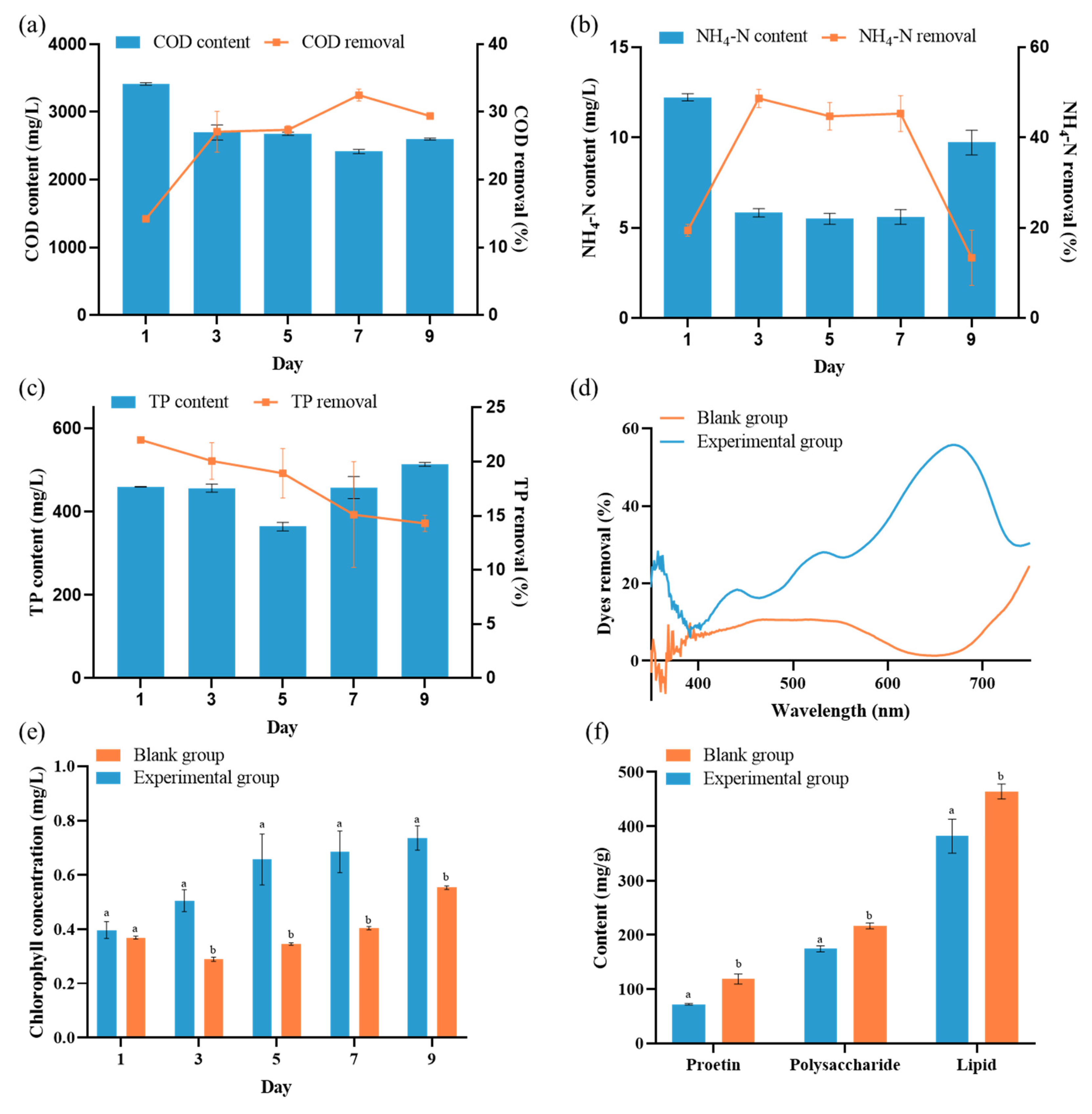
3.3. A Sustainable System for Treatment of APDW Under Optimized Conditions
3.4. Proteins, Polysaccharides, and Lipids Generated by S. aquatilis After Treatment of APDW
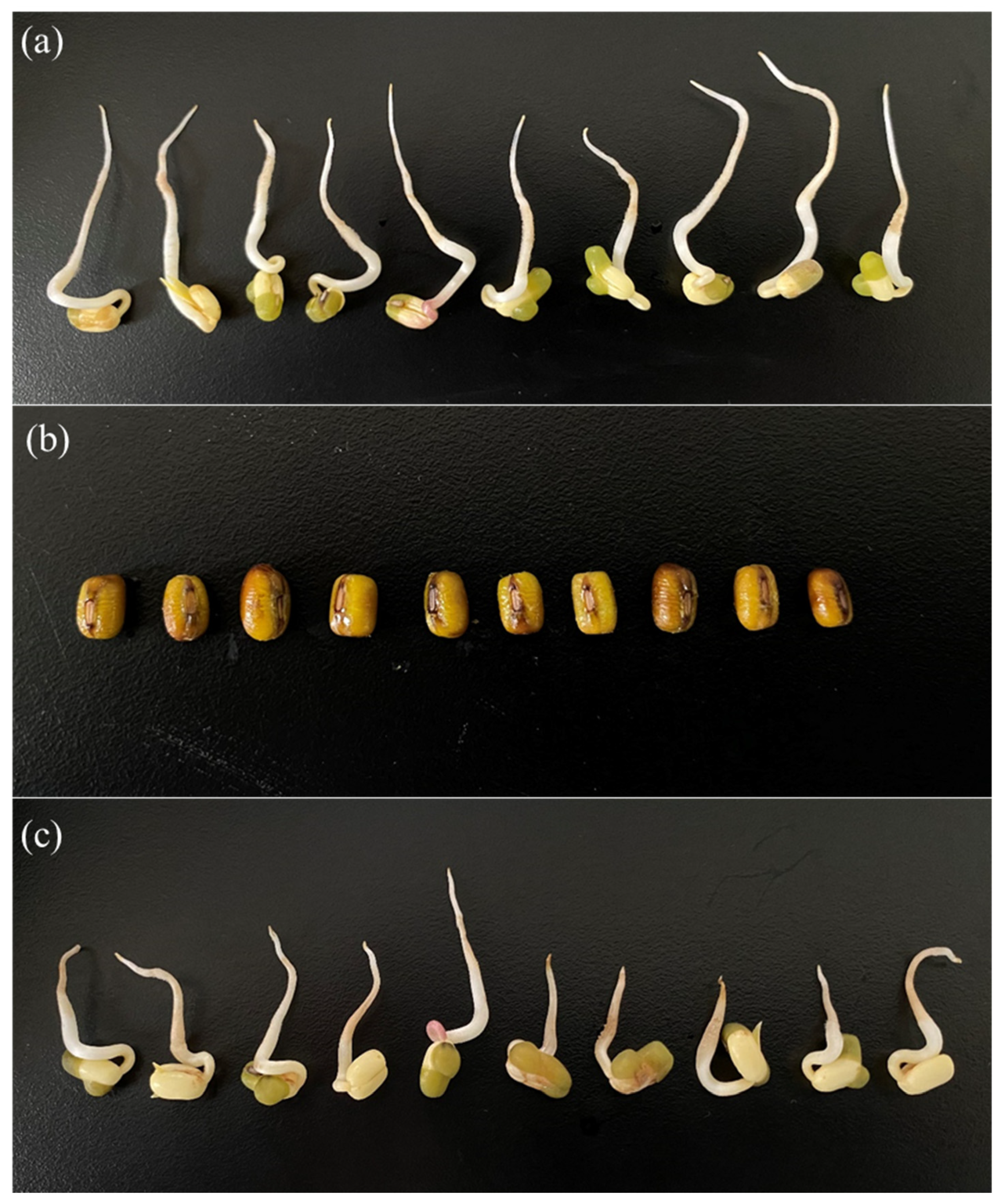
3.5. Water Quality Evaluation
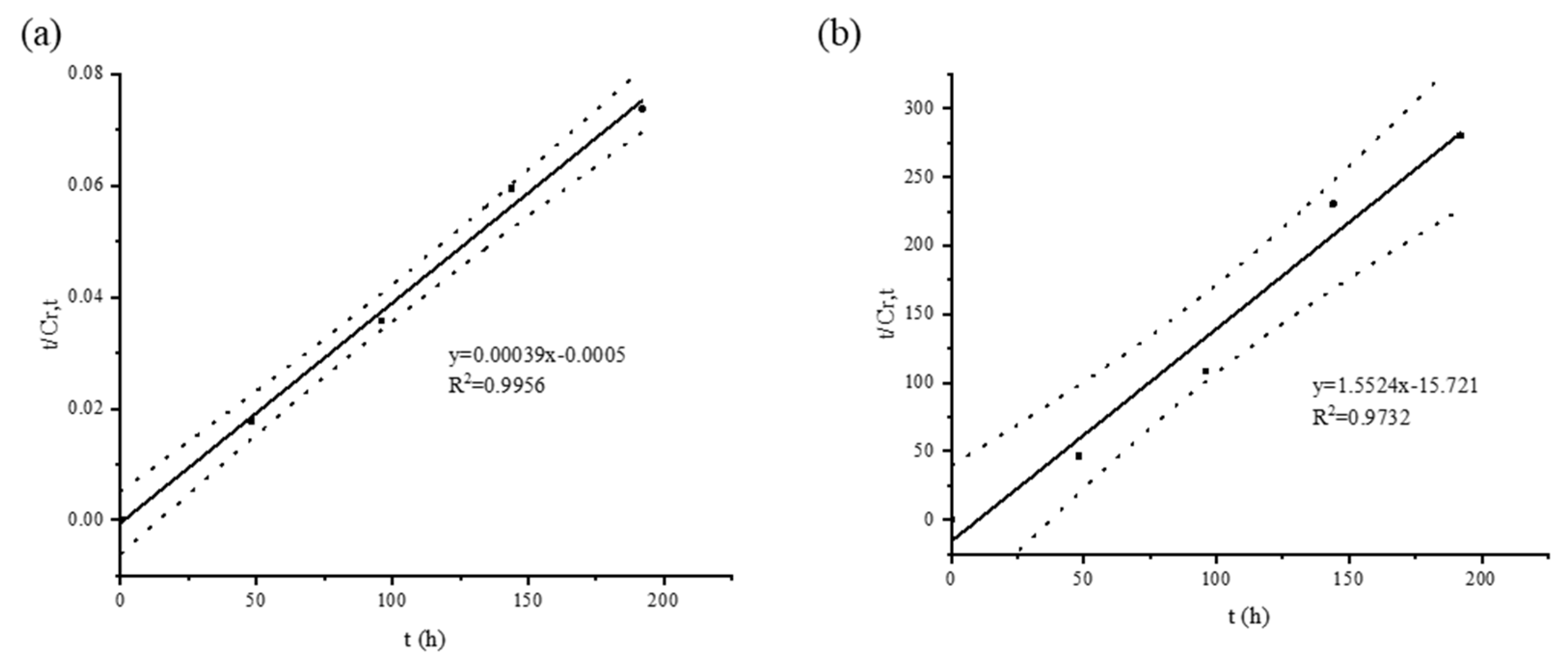
3.6. Kinetic Models of APDW Treatment
3.7. The Mechanism of S. aquatilis Treatment of APDW
3.7.1. Biosorption Mechanism of S. aquatilis Treatment of APDW
3.7.2. Biotransformation Mechanism of S. aquatilis Treatment of APDW
3.7.3. Role of Enzymes of S. aquatilis in Degradation Process
4. Discussion
5. Conclusions
Supplementary Materials
Author Contributions
Funding
Data Availability Statement
Conflicts of Interest
References
- Chen, H.; Yu, X.; Wang, X.N.; He, Y.; Zhang, C.; Xue, G.; Liu, Z.; Lao, H.; Song, H.; Chen, W.; et al. Dyeing and finishing wastewater treatment in China: State of the art and perspective. J. Clean. Prod. 2021, 326, 129353. [Google Scholar] [CrossRef]
- Rawat, D.; Sharma, U.; Yadav, A.; Poria, P.; Farooqi, F.; Pani, B.; Mukherjee, P.; Singh, M.; Sharma, R.S.; Mishra, V. A bottom-up approach to select microbes from textile wastewater for detoxification of aromatic amine and azo dye in a single stage. J. Water Process Eng. 2023, 53, 103668. [Google Scholar] [CrossRef]
- Al-Tohamy, R.; Ali, S.S.; Li, F.H.; Okasha, K.M.; Mahmoud, Y.A.-G.; Elsamahy, T.; Jiao, H.; Fu, Y.; Sun, J. A critical review on the treatment of dye-containing wastewater: Ecotoxicological and health concerns of textile dyes and possible remediation approaches for environmental safety. Ecotoxicol. Environ. Saf. 2022, 231, 113160. [Google Scholar] [CrossRef] [PubMed]
- Artifon, W.; Cesca, K.; Andrade, C.J.; de Souza, A.A.U.; de Oliveira, D. Dyestuffs from textile industry wastewaters: Trends and gaps in the use of bioflocculants. Process Biochem. 2021, 111, 181–190. [Google Scholar] [CrossRef]
- Tu, N.T.T.; Thien, T.V.; Du, P.D.; Chau, V.T.T.; Mau, T.X.; Khieu, D.Q. Adsorptive removal of Congo red from aqueous solution using zeolitic imidazolate framework–67. J. Environ. Chem. Eng. 2018, 6, 2269–2280. [Google Scholar] [CrossRef]
- Filho, C.M.T.; Silva, R.D.S.; Cavalcant, C.D.A.K.; Granato, M.A.; Machado, R.A.F.; Marangoni, C. Membrane distillation for the recovery textile wastewater: Influence of dye concentration. J. Water Process Eng. 2022, 46, 102611. [Google Scholar] [CrossRef]
- Tang, X.M.; Wang, T.; Zhang, S.X.; Fang, L.; Zheng, H. Enhanced performance of a novel flocculant containing rich fluorine groups in refractory dyeing wastewater treatment: Removal mechanisms. Sep. Purif. Technol. 2021, 263, 118411. [Google Scholar] [CrossRef]
- Nagaraja, K.; Arunpandian, M.; Hwan, O.T. A facile green synthesis of manganese oxide nanoparticles using gum karaya polymer as a bioreductant for efficient photocatalytic degradation of organic dyes and antibacterial activity. Int. J. Biol. Macromol. 2024, 273, 133123. [Google Scholar] [CrossRef]
- Wang, L.J.; Qiang, X.; Song, Y.L.; Wang, X.; Gu, W.; Niu, J.; Sun, Y.; Srinuanpan, S.; Wang, G. Green synthesis of gold nanoparticles by phycoerythrin extracted from Solieria tenuis as an efficient catalyst for 4-nitrophenol reduction and degradation of dyes in wastewater. Mater. Today Sustain. 2023, 23, 100435. [Google Scholar] [CrossRef]
- Song, Y.; Wang, L.J.; Qiang, X.; Gu, W.; Ma, Z.; Wang, G. An overview of biological mechanisms and strategies for treating wastewater from printing and dyeing processes. J. Water Process Eng. 2023, 55, 104242. [Google Scholar] [CrossRef]
- Donkadokula, N.Y.; Kishore, K.A.; Iffat, N.; Saroj, D. A review on advanced physico-chemical and biological textile dye wastewater treatment techniques. Rev. Environ. Sci. Bio/Technol. 2020, 19, 543–560. [Google Scholar] [CrossRef]
- Song, Y.L.; Wang, L.J.; Qiang, X.; Gu, W.; Ma, Z.; Wang, G. The promising way to treat wastewater by microalgae: Approaches, mechanisms, applications and challenges. J. Water Process Eng. 2022, 49, 103012. [Google Scholar] [CrossRef]
- Qin, L.; Gao, M.Z.; Zhang, M.Y.; Feng, L.; Liu, Q.; Zhang, G. Application of encapsulated algae into MBR for high-ammonia nitrogen wastewater treatment and biofouling control. Water Res. 2020, 187, 116430. [Google Scholar] [CrossRef]
- Li, W.H.; Wang, L.J.; Qiang, X.; Song, Y.; Gu, W.; Ma, Z.; Wang, G. Design, construction and application of algae-bacteria synergistic system for treating wastewater. J. Environ. Manag. 2024, 366, 121720. [Google Scholar] [CrossRef] [PubMed]
- Ashfaq, A.; Banat, F.; Alsafar, H.; Hasan, S.W. Algae biotechnology for industrial wastewater treatment, bioenergy production, and high-value bioproducts. Sci. Total Environ. 2022, 806, 150585. [Google Scholar]
- Ellatif, S.A.; Ei-Sheekh, M.M.; Senousy, H.H. Role of microalgal ligninolytic enzymes in industrial dye decolorization. Int. J. Phytoremediation 2021, 23, 41–52. [Google Scholar] [CrossRef]
- Yadav, M.; Thakore, S.; Jadeja, R. Removal of organic dyes using Fucus vesiculosus seaweed bioadsorbent an ecofriendly approach: Equilibrium, kinetics and thermodynamic studies. Environ. Chem. Ecotoxicol. 2022, 4, 67–77. [Google Scholar] [CrossRef]
- Gudiukaite, R.; Nadda, A.K.; Gricajeva, A.; Shanmugam, S.; Nguyen, D.D.; Lam, S.S. Bioprocesses for the recovery of bioenergy and value-added products from wastewater: A review. J. Environ. Manag. 2021, 300, 113831. [Google Scholar] [CrossRef]
- Ritchie, R.J. Universal chlorophyll equations for estimating chlorophylls a, b, c, and d and total chlorophylls in natural assemblages of photosynthetic organisms using acetone, methanol, or ethanol solvents. Photosynthetica 2008, 46, 115–126. [Google Scholar] [CrossRef]
- Kapoor, R.T.; Rafatullah, M.; Tajarudin, H.A.; Siddiqui, M.R.; Alam, M. Treatment of Direct Red 28 Dye through Phoenix dactylifera L. Fruit Seed Biochar: Equilibrium, Kinetics, Thermodynamics, and Phytotoxicity Studies. Sustainability 2023, 15, 15266. [Google Scholar] [CrossRef]
- Almomani, F.; Bohsale, R.R. Bio-sorption of toxic metals from industrial wastewater by algae strains Spirulina Platensis and Chlorella Vulgaris: Application of isotherm, kinetic models and process optimization. Sci. Total Environ. 2020, 755, 142654. [Google Scholar] [CrossRef]
- Pathak, V.V.; Kothari, R.; Chopra, A.K.; Singh, D. Experimental and kinetic studies for phycoremediation and dye removal by Chlorella pyrenoidosa from textile wastewater. J. Environ. Manag. 2015, 163, 270–277. [Google Scholar] [CrossRef] [PubMed]
- Gao, S.; Yang, W.T.; Li, X.; Zhou, L.; Liu, X.; Wu, S.; Wang, L.; Wang, G. Cryptochrome PtCPF1 regulates high temperature acclimation of marine diatoms through coordination of iron and phosphorus uptake. ISME J. 2024, 18, 19. [Google Scholar] [CrossRef] [PubMed]
- Xie, Y.; Chen, L.; Sun, T.; Zhang, W. Deciphering and engineering high-light tolerant cyanobacteria for efficient photosynthetic cell factories. Chin. J. Chem. Eng. 2021, 30, 82–91. [Google Scholar] [CrossRef]
- Alstyne, K.L.V. Seawater nitrogen concentration and light independently alter performance, growth, and resource allocation in the bloom-forming seaweeds Ulva lactuca and Ulvaria obscura (Chlorophyta). Harmful Algae 2018, 78, 27–35. [Google Scholar] [CrossRef]
- Loganathan, B.G.; Orsat, V.; Lefsrud, M. Utilizing the microalgal biomass of Chlorella variabilis and Scenedesmus obliquus produced from the treatment of synthetic dairy wastewater as a biofertilizer. J. Plant Nutr. 2020, 44, 1486–1497. [Google Scholar] [CrossRef]
- Yang, F.F.; Xiang, W.Z.; Li, T.; Long, L. Transcriptome analysis for phosphorus starvation-induced lipid accumulation in Scenedesmus sp. Sci. Rep. 2018, 8, 16420. [Google Scholar] [CrossRef]
- Liu, M.Y.; Yu, Z.; Jiang, L.Q.; Hou, Q.; Xie, Z.; Ma, M.; Yu, S.; Pei, H. Monosodium glutamate wastewater assisted seawater to increase lipid productivity in single-celled algae. Renew. Energy 2021, 179, 1793–1802. [Google Scholar] [CrossRef]
- Cao, J.; Chen, F.; Fang, Z.; Gu, Y.; Wang, H.; Lu, J.; Bi, Y.; Wang, S.; Huang, W.; Meng, F. Effect of filamentous algae in a microalgal-bacterial granular sludge system treating saline wastewater: Assessing stability, lipid production and nutrients removal. Bioresour. Technol. 2022, 354, 127182. [Google Scholar] [CrossRef]
- Mahmoudi, K.; Hosni, K.; Hamdi, N.; Srasra, E. Kinetics and equilibrium studies on removal of methylene blue and methyl orange by adsorption onto activated carbon prepared from date pits—A comparative study. Korean J. Chem. Eng. 2015, 32, 274–283. [Google Scholar] [CrossRef]
- Zhang, S.H.; Wang, L.J.; Zhou, B.J.; Zhang, D.; Tang, G.; Guo, L. Characteristics of humification, functional enzymes and bacterial community metabolism during manganese dioxide-added composting of municipal sludge. Environ. Res. 2024, 252, 119151. [Google Scholar] [CrossRef]
- Chen, G.T.; An, X.J.; Feng, L.L.; Xia, X.; Zhang, Q. Genome and transcriptome analysis of a newly isolated azo dye degrading thermophilic strain Anoxybacillus sp. Ecotoxicol. Environ. Saf. 2020, 203, 111047. [Google Scholar] [CrossRef]
- Tarbajova, V.; Kolackova, M.; Chaloupsky, P.; Dobesova, M.; Capal, P.; Pilat, Z.; Samek, O.; Zemanek, P.; Svec, P.; Sterbova, D.S.; et al. Physiological and transcriptome profiling of Chlorella sorokiniana: A study on azo dye wastewater decolorization. J. Hazard. Mater. 2023, 460, 132450. [Google Scholar] [CrossRef]
- Yu, X.; Mao, C.L.; Zong, S.M.; Khan, A.; Wang, W.; Yun, H.; Zhang, P.; Shigaki, T.; Fang, Y.; Han, H.; et al. Transcriptome analysis reveals self-redox mineralization mechanism of azo dyes and novel decolorizing hydrolases in Aspergillus tabacinus LZ-M. Environ. Pollut. 2023, 325, 121459. [Google Scholar] [CrossRef]
- Liu, J.J.; Pemberton, B.; Scales, P.; Martin, G.J. Ammonia tolerance of filamentous algae Oedogonium, Spirogyra, Tribonema and Cladophora, and its implications on wastewater treatment processes. Algal Res. 2023, 72, 103126. [Google Scholar] [CrossRef]
- Haq, I.; Kalamdhad, A.S.; Pandey, A. Genotoxicity evaluation of paper industry wastewater prior and post-treatment with laccase producing Pseudomonas putida MTCC 7525. J. Clean. Prod. 2022, 342, 130981. [Google Scholar] [CrossRef]
- Song, Y.L.; Wang, L.J.; Qiang, X.; Guo, M.; Gu, W.; Wu, S.; Gao, S.; Liu, X.; Xie, X.; Fan, Q.; et al. Design, construction and evaluation of collaborative bio-system of Vibrio fluvialis with Chlorella sorokiniana for treating actual printing and dyeing wastewater. Chem. Eng. J. 2024, 500, 157459. [Google Scholar] [CrossRef]
- Chaieb, K.; Kouidhi, B.; Ayed, L.; Hosawi, S.B.; Abdulhakim, J.A.; Hajri, A.; Altayb, H.N. Enhanced textile dye removal from wastewater using natural biosorbent and Shewanella algae B29: Application of Box Behnken design and genomic approach. Bioresour. Technol. 2023, 374, 128755. [Google Scholar] [CrossRef]
- Samuchiwal, S.; Gola, D.; Malik, A. Decolourization of textile effluent using native microbial consortium enriched from textile industry effluent. J. Hazard. Mater. 2021, 402, 123835. [Google Scholar] [CrossRef] [PubMed]
- Wang, Y.X.; Jiang, L.; Shang, H.G.; Li, Q.; Zhou, W. Treatment of azo dye wastewater by the self-flocculating marine bacterium Aliiglaciecola lipolytica. Environ. Technol. Innov. 2020, 19, 100810. [Google Scholar] [CrossRef]
- Lim, S.L.; Chu, W.L.; Phang, S.M. Use of Chlorella vulgaris for bioremediation of textile wastewater. Bioresour. Technol. 2010, 101, 7314–7322. [Google Scholar] [CrossRef]
- Deb, M.; Redkar, N.; Manohar, C.S.; Jagtap, A.S.; Saxena, S.; Shukla, S. Bacillus sp. based nano-bio hybrids for efficient water remediation. Environ. Pollut. 2023, 326, 121490. [Google Scholar] [CrossRef]
- Wang, Y.; Jin, M.; Wang, J.; Bai, L.; Yang, Y.; Dai, H.; Cui, D.; Zhao, M. Light-driven biodegradation of azo dyes by Shewanella decolorationis-CdS biohybrid in wastewater lacking electron donors. Appl. Microbiol. Biotechnol. 2023, 107, 447–457. [Google Scholar] [CrossRef]
- Cui, M.H.; Liu, W.Z.; Tang, Z.E.; Cui, D. Recent advancements in azo dye decolorization in bio-electrochemical systems (BESs): Insights into decolorization mechanism and practical application. Water Res. 2021, 203, 117512. [Google Scholar] [CrossRef] [PubMed]
- Sajjaphan, K.; Shapir, N.; Wackett, L.P.; Palmer, M.; Blackmon, B.; Tomkins, J.; Sadowsky, M. Arthrobacter aurescens TC1 atrazine catabolism genes trzN, atzB, and atzC are linked on a 160-kilobase region and are functional in Escherichia coli. Appl. Environ. Microbiol. 2004, 70, 4402–4407. [Google Scholar] [CrossRef]
- Chang, J.S.; Chou, C.E.; Lin, Y.C.; Lin, P.-J.; Ho, J.-Y.; Hu, T.L. Kinetic characteristics of bacterial azo-dye decolorization by Pseudomonas luteola. Water Res. 2001, 35, 2841–2850. [Google Scholar] [CrossRef]
- Saratale, G.; Kalme, S.; Bhosale, S.; Govindwar, S. Biodegradation of kerosene by Aspergillus ochraceus NCIM-1146. J. Basic Microbiol. 2007, 47, 400–405. [Google Scholar] [CrossRef] [PubMed]
- Cheng, J.; Ye, Q.; Yang, Z.B.; Yang, W.; Zhou, J.; Cen, K. Microstructure and antioxidative capacity of the microalgae mutant Chlorella PY-ZU1 during tilmicosin removal from wastewater under 15% CO2. J. Hazard. Mater. 2017, 324, 414–419. [Google Scholar] [CrossRef]
- Joel, E.B.; Mafulul, S.G.; Adamu, H.E.; Goje, L.J.; Tijjani, H.; Igunnu, A.; Malomo, S.O. Peroxidase from waste cabbage (Brassica oleracea capitata L.) exhibits the potential to biodegrade phenol and synthetic dyes from wastewater. Sci. Afr. 2020, 10, e00608. [Google Scholar] [CrossRef]
- Yang, W.P.; Zhu, L.G.; Xu, W.T. Biologically inspired Co-MOF as catalase mimics with an unexpected ROS production ability for the efficient removal of organic dyes. J. Environ. Chem. Eng. 2024, 12, 112358. [Google Scholar] [CrossRef]
- Song, C.F.; Wei, Y.L.; Qiu, Y.T.; Qi, Y.; Li, Y.; Kitamura, Y. Biodegradability and mechanism of florfenicol via Chlorella sp. UTEX1602 and L38: Experimental study. Bioresour. Technol. 2019, 272, 529–534. [Google Scholar] [CrossRef]
- Latifa, T.; Hajer, B.H.; Hana, D.; David, D.; Christine, G.; Pascal, D.; Marwa, D.; Imen, F.; Philippe, M.; Slim, A. Enhanced growth and metabolite production from a novel strain of Porphyridium sp. Bioengineered 2024, 15, 2294160. [Google Scholar] [CrossRef]
- Lu, Q.; Zhou, W.G.; Min, M.; Ma, X.C.; Ma, Y.W.; Chen, P.; Zheng, H.L.; Doan, Y.T.T.; Liu, H.; Chen, C. Mitigating ammonia nitrogen deficiency in dairy wastewaters for algae cultivation. Bioresour. Technol. 2016, 201, 33–40. [Google Scholar] [CrossRef]
- Fleita, D.; El-Sayed, M.; Rifaat, D. Evaluation of the antioxidant activity of enzymatically hydrolyzed sulfated polysaccharides extracted from red algae: Pterocladia capillacea. LWT-Food Sci. Technol. 2015, 63, 1236–1244. [Google Scholar] [CrossRef]
- Forni, C.; Telo’, F.R.; Caiola, M.G. Comparative analysis of the polysaccharides produced by different species of Microcystis (Chroococcales, Cyanophyta). Phycologia 1997, 36, 181–185. [Google Scholar] [CrossRef]
- Cao, M.X.; Xu, H.; Liu, B.Y.; Zhang, H.R.; Jiang, L.; Yang, E.X. Comparison of performance of three protein content determination kits for detecting micro protein. Lab. Test. 2024, 2, 126–130. [Google Scholar]



| Gene Name (Number) | Gene ID (log2FoldChange) |
|---|---|
| Oxidoreductase (9) | gene0274 (2.23); gene0455 (1.02); gene1506 (2.24); gene1807 (1.24); gene2621 (1.43); gene3201 (2.19); gene3202 (2.67); gene3203 (1.62); gene1535 (1.05) |
| Monooxygenase (1) | gene1286 (1.48) |
| Hydrolase (1) | gene3337 (1.61) |
| Methyltransferase (7) | gene1030 (1.83); gene1753 (1.23); gene2156 (1.03); gene2517 (1.42); gene2672 (1.27); novel0032 (1.87) |
| Aminotransferase (1) | gene1263 (2.78) |
| Cytochrome oxidase (2) | gene0464 (2.32); gene2329 (5.14) |
| Pyrophosphatase (2) | gene2050 (1.22); gene0720 (1.55) |
| Enzymes Activities | Experiment Group | Control Group |
|---|---|---|
| POD (U/mg prot) | 33.457 | 11.262 |
| SOD (U/mg prot) | 167.321 | 37.954 |
| MDA (nmol/mg prot) | 21.031 | 16.217 |
| T-AOC (μmol/g) | 0.270 | 0.144 |
| Algal Strain | Wastewater Type | Tolerance Performance | Reference |
|---|---|---|---|
| S. aquatilis | Actual printing and dyeing wastewater (APDW) | Dilution 2 times (3300 mg/L COD, 590 mg/L TP and 15 mg/L NH4-N) | This research |
| C. sorokiana | Azo dye wastewater | Diluted 16–200 times (cADWS) concentrations of 112.5, 90, 67.5, 45, 22.5, and 9 mg/L) | [33] |
| C. sorokiana | Actual printing and dyeing wastewater (APDW) | Ddilution 4 times (200 mg/L COD, 10 mg/L TP and 9 mg/L NH4-N) | [37] |
| Shewanella | CI Reactive Red 66 | 25, 50, 100, 150 and 200 mg/L | [38] |
| Anoxybacillus sp. PDR2 | Actual textile effluent | 1720–2170 mg/L COD | [39] |
| A. lipolytica | Congo red | 25–125 mg/L Congo red | [40] |
Disclaimer/Publisher’s Note: The statements, opinions and data contained in all publications are solely those of the individual author(s) and contributor(s) and not of MDPI and/or the editor(s). MDPI and/or the editor(s) disclaim responsibility for any injury to people or property resulting from any ideas, methods, instructions or products referred to in the content. |
© 2026 by the authors. Licensee MDPI, Basel, Switzerland. This article is an open access article distributed under the terms and conditions of the Creative Commons Attribution (CC BY) license.
Share and Cite
Qiang, X.; Guo, M.; Song, Y.; Wu, S.; Gao, S.; Xie, X.; Liu, X.; Wang, X.; Fan, Q.; Zhang, J.; et al. Bioremediation of Printing and Dyeing Wastewater by Synechocystis aquatilis: System Construction, Kinetics and Mechanisms. Water 2026, 18, 1167. https://doi.org/10.3390/w18101167
Qiang X, Guo M, Song Y, Wu S, Gao S, Xie X, Liu X, Wang X, Fan Q, Zhang J, et al. Bioremediation of Printing and Dyeing Wastewater by Synechocystis aquatilis: System Construction, Kinetics and Mechanisms. Water. 2026; 18(10):1167. https://doi.org/10.3390/w18101167
Chicago/Turabian StyleQiang, Xi, Menglin Guo, Yuling Song, Songcui Wu, Shan Gao, Xiujun Xie, Xuehua Liu, Xulei Wang, Quancheng Fan, Jing Zhang, and et al. 2026. "Bioremediation of Printing and Dyeing Wastewater by Synechocystis aquatilis: System Construction, Kinetics and Mechanisms" Water 18, no. 10: 1167. https://doi.org/10.3390/w18101167
APA StyleQiang, X., Guo, M., Song, Y., Wu, S., Gao, S., Xie, X., Liu, X., Wang, X., Fan, Q., Zhang, J., Wang, L., & Wang, G. (2026). Bioremediation of Printing and Dyeing Wastewater by Synechocystis aquatilis: System Construction, Kinetics and Mechanisms. Water, 18(10), 1167. https://doi.org/10.3390/w18101167