Article

Thiabendazole Removal from Water and Mineralization by Electron Beam Irradiation Combined with Hydrogen Peroxide

by
Germania Tulcán
1,
Leandro Morillo
1,
David Naranjo
1,
Isabel Espinoza-Pavón
2,
Christian Sandoval-Pauker
3,
William Villacis Oñate
1,*,
Paul Vargas Jentzsch
1,* and
Florinella Muñoz Bisesti
1
1
Departamento de Ciencias Nucleares, Facultad de Ingeniería Química y Agroindustria, Escuela Politécnica Nacional, Ladrón de Guevara E11-253, Quito 170525, Ecuador
2
Plataforma Solar de Almería—CIEMAT, Ctra de Senés km 4.5, 04200 Tabernas, Almería, Spain
3
Smalley-Curl Institute, Rice University, 6100 Main Street, Houston, Texas 77005, USA
*
Authors to whom correspondence should be addressed.
Water 2026, 18(10), 1156; https://doi.org/10.3390/w18101156
Submission received: 11 March 2026 / Revised: 1 April 2026 / Accepted: 8 April 2026 / Published: 12 May 2026

Abstract

Thiabendazole (TBZ) is a fungicide widely used in agriculture and frequently detected in water bodies and effluents from greenhouse and food processing activities. In this study, the removal and mineralization of TBZ from water by electron beam irradiation, in the absence and presence of hydrogen peroxide (H2O2), were investigated. Synthetic aqueous solutions containing TBZ (10 mg L−1) were treated at absorbed doses of 2, 3, and 4 kGy, using different H2O2 concentrations (0, 5, 10, and 15 mM). The effectiveness of TBZ removal was evaluated by determining residual TBZ concentrations, while mineralization was assessed through changes in total organic carbon (TOC), sulfate, and nitrate concentrations, together with pH and electrical conductivity measurements. Under all investigated conditions, complete TBZ degradation was achieved, with final concentrations below the detection limit of the chromatographic method. However, mineralization was partial and strongly dependent on treatment conditions. The highest mineralization degree was obtained at 4 kGy and 15 mM H2O2, resulting in a TOC removal of 52.4% and sulfur and nitrogen mineralization ratios of 50.2% and 13.7%, respectively. These results demonstrate that electron beam irradiation is highly effective for TBZ degradation. At the same time, while oxidant-assisted conditions are required to enhance mineralization, this highlights the need to distinguish between pollutant removal and complete mineralization in water treatment processes.

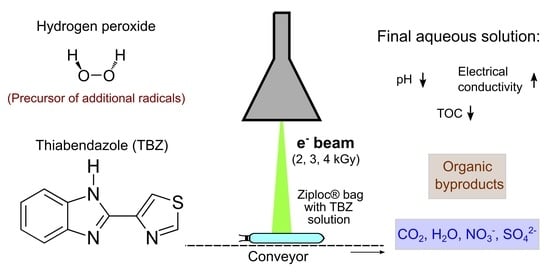
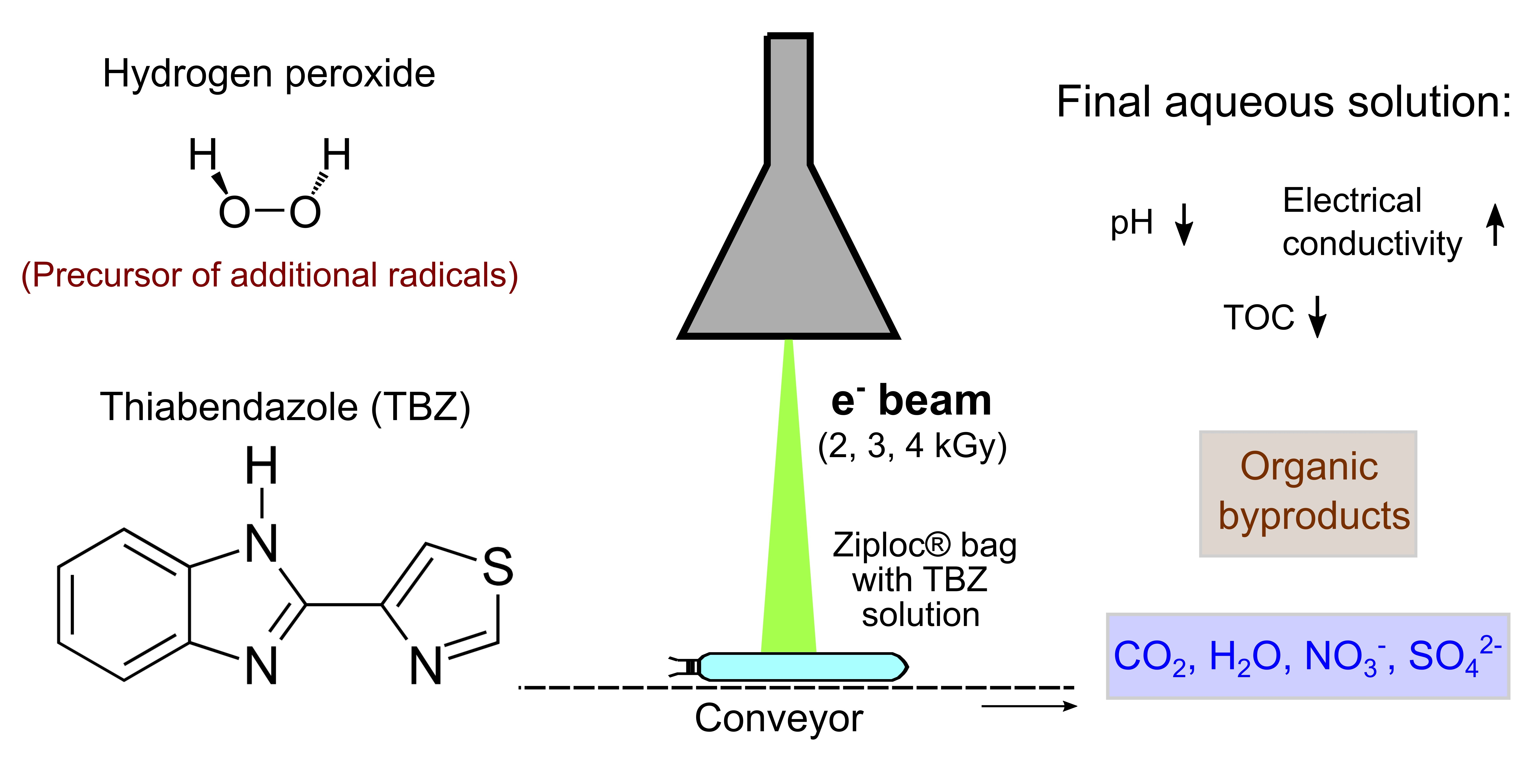
Graphical Abstract

1. Introduction

The continuous growth of the global population has intensified the demand for agricultural production, leading to an extensive use of pesticides to prevent crop damage and ensure food supply. Despite these efforts, a significant fraction of agricultural production remains affected by pest infestation, which motivates the continuous development and application of new pesticide formulations. As a consequence of their widespread use, pesticides frequently reach surface waters, groundwater, and industrial effluents through agricultural runoff, leaching, and improper disposal practices, raising increasing concerns regarding water quality and environmental safety [1,2,3,4].
The presence of pesticide residues in aquatic environments has been associated with a variety of adverse environmental effects, depending on their chemical structure, persistence, and exposure conditions. Several classes of synthetic pesticides have been reported to exhibit ecotoxicity toward non-target organisms, potential bioaccumulation, and negative impacts on soil microbial activity, which may indirectly affect soil fertility and ecosystem functioning [5,6,7]. Moreover, prolonged environmental exposure to certain pesticides has been linked to acute and chronic health effects, as well as genotoxic responses in plants and aquatic organisms, emphasizing the need for effective treatment strategies to remove these compounds from water matrices [1,5].
Among fungicides, thiabendazole (2-(4-thiazolyl)-1H-benzimidazole, TBZ) is widely used in post-harvest treatments to control fungal diseases in fruits and vegetables, and it is also employed as an anthelmintic agent in human and veterinary medicine [8,9,10]. TBZ has been frequently detected in surface waters, wastewater treatment plant effluents, and agro-industrial discharges, particularly from food processing industries [2,9,10,11,12]. Its chemical stability and resistance to conventional biological treatment processes make TBZ a persistent contaminant of concern in water treatment applications [8,10]. Moreover, concentrations of TBZ and other pesticides in water released from facilities, such as greenhouses, can be higher than environmental water, thus having a high polluting potential that requires appropriate control strategies, including special treatment technologies.
In this context, advanced oxidation processes (AOPs) have been extensively investigated as effective alternatives for removing recalcitrant organic pollutants from water. These processes rely on the in situ generation of highly reactive species, particularly hydroxyl radicals (OH), which are capable of non-selectively oxidizing organic contaminants, promoting their transformation into more biodegradable intermediates or achieving partial to complete mineralization [9,11,13,14]. Comprehensive reviews have described the principles, advantages, and limitations of AOPs, including Fenton-based systems, photocatalysis, sonochemical treatments, and radiation-induced processes, highlighting their applicability to water and wastewater treatment [15,16,17]. AOPs have also been successfully applied to the treatment of agro-food and post-harvest effluents containing pesticide residues, often combining oxidative and biological approaches to enhance treatment efficiency [18,19].
High-energy electron beam irradiation is an effective radiation-based AOP for water and wastewater treatment, as it can induce rapid water radiolysis and generate reactive species without the need for chemical catalysts. Electron beam irradiation enables the almost instantaneous treatment of water, thereby facilitating the removal of pollutants from large volumes in a relatively short time. The interaction of ionizing radiation with water leads primarily to the formation of OH, solvated electrons (eaq), and hydrogen atoms (H), which collectively drive the degradation of organic contaminants [20,21,22]. To enhance oxidative pathways and increase OH availability, hydrogen peroxide (H2O2) is often added as an auxiliary oxidant, acting as both an additional OH source and as a scavenger of reducing species. However, excessive H2O2 concentrations may reduce treatment efficiency through radical scavenging, making its optimization a critical aspect of radiation-assisted AOPs.
Electron beam irradiation has been successfully applied to degrade and mineralize a wide range of organic pollutants in aqueous systems, including pharmaceuticals, dyes, phenols, and several classes of pesticides [20,22,23,24,25,26,27]. Previous studies have reported the radiolytic removal of pesticides such as atrazine, chlorpyrifos, dicamba, 2,4-D, lannate, fenvalerate, carbendazim, and benzimidazole, the latter belonging to the same chemical family as TBZ [14,28,29,30,31,32,33]. Nevertheless, despite the environmental relevance of TBZ, its degradation by electron beam irradiation, particularly in combination with H2O2, has not been systematically investigated. Additionally, it is of particular interest not only the degradation of the parent compound (in this case, TBZ), but also its mineralization, because this ensures the transformation of a toxic compound into chemical species with lower potential harm to health and the environment.
Currently, there is an intense debate in the scientific community about the best options to remove specific compounds occurring in water, in particular, for quaternary treatment. It is in this context that the study on the removal of individual compounds from water gains special relevance, since this is the basic knowledge to apply the technologies to solve real wastewater difficulties. Results referring to the effectiveness of treatments are fundamental for decision makers, and findings in this work contribute in this direction.
Therefore, the present work evaluates the removal of TBZ from water by high-energy electron beam irradiation under different absorbed doses and H2O2 concentrations. The influence of these operational parameters on TBZ degradation efficiency and mineralization is discussed, providing insights into the applicability of electron beam-based AOPs for the treatment of pesticide-contaminated waters. Also, computational results on the attack of OH on the TBZ molecule were discussed and compared with the intermediate products reported in earlier works on other advanced oxidation processes that degrade TBZ in water. These quantum mechanics techniques could complement and contribute significantly to the study of (waste)water treatment.

2. Materials and Methods

2.1. Reagents and Synthetic Water

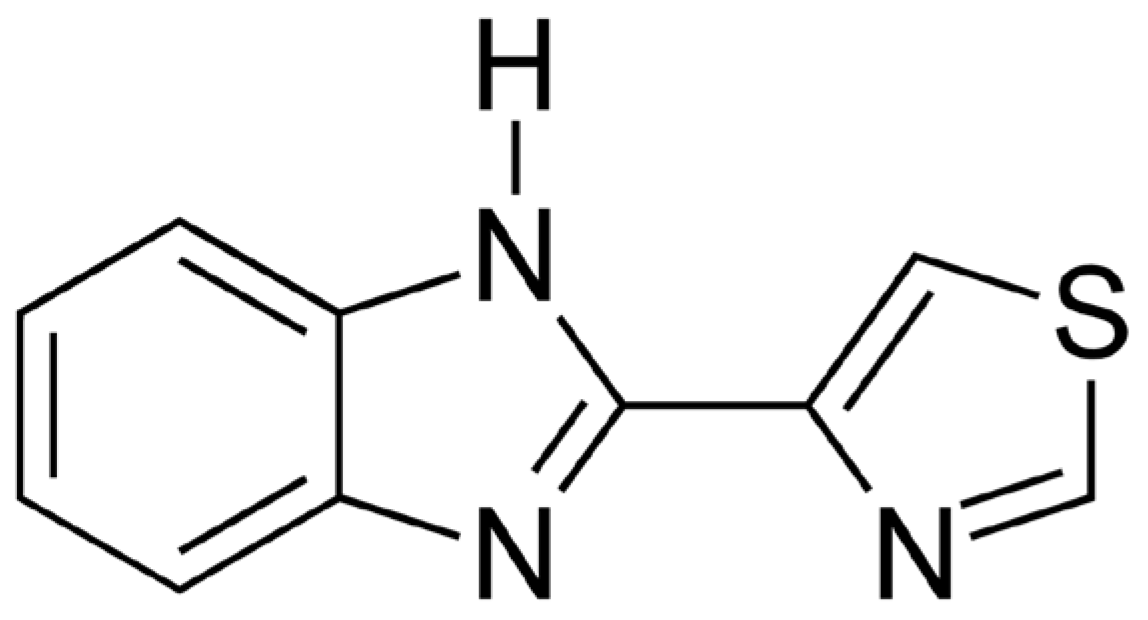
Thiabendazole (TBZ) analytical standard (99.9%, Pestanal®), sodium hydroxide (NaOH, ≥98%), hydrochloric acid (HCl, 37%), hydrogen peroxide (H2O2, 30% w/w), and potassium hydrogen phthalate (C8H5KO4, 99.95–100.05% dry basis) were obtained from Sigma-Aldrich, Saint Louis, MO, USA. Methanol (HPLC grade, LiChrosolv®) was supplied by Merck, Darmstadt, Germany. NitraVer® nitrate reagent and SulfaVer® sulfate reagent were provided by HACH, Melbourne, Australia. The chemical structure of TBZ is depicted in Figure 1.
For degradation experiments, synthetic water was prepared by dissolving 10 mg of TBZ analytical standard in 1 L of Milli-Q® water. The mixture was stirred continuously for approximately 12 h in the dark to ensure complete dissolution of TBZ, followed by a sonication step to promote homogeneity.

2.2. Determination of TBZ in Water

Standard solutions of TBZ at concentrations of 0.01, 0.10, 0.50, 1.00, 1.50, and 2.00 mg L−1 were prepared in Milli-Q® water and used to construct the calibration curve. These solutions were prepared by diluting an aqueous stock solution (10 mg L−1), which was prepared using the same procedure as the synthetic water. To avoid the degradation of TBZ in the standard solutions, they were used immediately after their preparation. For the calibration curve, acceptable linearity was defined as R2 ≥ 0.999. Standard solutions and treated water samples were analyzed by high-performance liquid chromatography (HPLC) using a 1120 Compact LC system (Agilent Technologies, Santa Clara, CA, USA) equipped with a Zorbax Eclipse Plus C18 column (4.6 mm × 150 mm, 5 μm particle size) and a 1200 series fluorescence detector. Both standard solutions and treated water samples were filtered through a PVDF syringe filter (25 mm diameter, 0.22 µm pore size) before injection. The injection volume was 20 µL. The mobile phase consisted of a water–methanol mixture (40:60, v/v) operated under isocratic conditions at a flow rate of 1 mL min−1. Fluorescence detection was performed at 300 nm excitation and 350 nm emission.

2.3. Effect of the Radiation Dose and the Concentration of H2O2 on the Removal of TBZ

Synthetic aqueous solutions containing approximately 10 mg L−1 of TBZ were treated by electron beam irradiation using a linear accelerator ELU-6U (Techsnabexport, Moscow, Russia). The electron beam irradiation system had the following specifications: Beam energy 6.8 MeV, beam current 690 mA, pulse duration 5 µs, frequency 200 Hz, and scan width 40 cm. The rate doses were 2.80, 4.16, and 5.48 kGy s−1 for absorbed doses 2, 3, and 4 kGy, respectively.
The experiments were performed according to a 4 × 3 factorial design, with the investigated variables being the H2O2 concentration (0, 5, 10, and 15 mM) and the absorbed radiation dose (2, 3, and 4 kGy). The selected H2O2 concentrations are within the range commonly reported for radiation-assisted advanced oxidation processes and were chosen based on previous studies addressing pollutant degradation by electron beam irradiation [34]. All tests were performed in duplicate.
For each experiment, 100 mL of the synthetic aqueous solution was transferred into polyethylene Ziploc® bags (17.8 × 20.3 cm), and the required volume of H2O2 solution was added to achieve the desired initial concentration. The sealed bags were placed in metallic containers, positioned on roller conveyors, and irradiated using the electron-beam facility.
After irradiation, the pH and electrical conductivity of the treated solutions were measured using a digital pH and conductivity meter Milwaukee Mi 151 (Milwaukee Instruments, Szeged, Hungary). A two-way factorial ANOVA was performed to verify the effects of absorbed dose and H2O2 concentration on pH and electrical conductivity separately. These statistical analyses were conducted using the online platform Statistics Tools https://statistics.tools/ (accessed on 29 March 2026).
The concentration of TBZ was determined by HPLC as described in Section 2.2. Before chromatographic analyses, residual H2O2 was removed by adjusting the solution pH to 12 with a few drops of 1 N NaOH, followed by continuous stirring for 10 min. The pH was then adjusted to 7 with 1 N HCl. This alkaline procedure promotes the decomposition of H2O2 and prevents analytical interferences during subsequent measurements. It was confirmed that the alkaline treatment does not affect the concentration of TBZ. Although this treatment, small quantities of H2O2 may remain in the final aqueous solution. Therefore, additional tests were conducted to rule out the H2O2 interference with the measured parameters. For example, solutions containing C8H5KO4 and H2O2 were subjected to alkaline treatment and then measured for the determination of total organic carbon (see Section 2.4); the measured values were compared with the expected values. For the parameters considered in this work, in general, it was found that such small quantities of H2O2 that may remain do not have a significant effect on the measurements.

2.4. Mineralization of TBZ Due to the Treatments

The mineralization of TBZ was evaluated by measuring changes in total organic carbon (TOC) and nitrate and sulfate concentrations due to the treatments. For this purpose, synthetic aqueous solutions were treated with specific radiation doses and H2O2 concentrations. After treatment, residual H2O2 was removed using the method described in Section 2.3, and the parameters used to estimate mineralization were determined.
TOC was measured according to Standard Method 5310 B [35]. Nitrate (NO3) and sulfate (SO42−) concentrations were determined using a Hach DR 2800 spectrophotometer (Hach Company, Loveland, CO, USA) following Hach methods 8039 and 8051, respectively [36].
A two-way factorial ANOVA was performed to assess the effects of absorbed dose and H2O2 concentration on TOC, NO3, and SO42− separately. These statistical analyses were conducted using the online platform Statistics Tools https://statistics.tools/ (accessed on 29 March 2026).
Sulfur and nitrogen mineralization ratios were calculated based on stoichiometric relationships between TBZ and its fully oxidized inorganic products, as expressed in Equations (1) and (2), respectively.
S m i n e r = [ S O 4 2 ] · 201.249 [ T B Z ] 0 · 96.060 × 100 % ,
N m i n e r = [ N O 3 ] · 201.249 3 [ T B Z ] 0 · 62.005 × 100 % ,
where
  • Sminer is the sulfur mineralization ratio (%);
  • Nminer is the nitrogen mineralization ratio (%);
  • [SO42−] is the final sulfate concentration in water (mg L−1);
  • [NO3] is the final nitrate concentration in water (mg L−1);
  • [TBZ]0 is the initial TBZ concentration in water (mg L−1).
In addition, in Equations (1) and (2), 201.249, 96.060, and 62.005 are the molecular weights (in g mol−1) of TBZ, sulfate ion (SO42−), and nitrate ion (NO3), respectively. More details concerning the deduction of Equations (1) and (2) can be found in the Supplementary Materials.

2.5. Computational Methods

Computational calculations for the TBZ molecule were performed to find the part of the molecule with the highest OH-attack probability. These results allowed us to discuss findings on intermediate products reported in earlier studies [11,37].
Density functional theory (DFT) calculations were performed using the ORCA package v. 6.0.0 [38]. Geometry optimization was carried out in the gas phase using the B3LYP functional [39] in combination with the def2-TZVP basis set [40,41] and the auxiliary basis set def2-J [40]. The effect of dispersion was considered in the calculations by using Grimme’s D3 dispersion correction in combination with the Becke–Johnson (D3BJ) damping scheme [42]. The convergence strategy and threshold were set to SlowConv and TightSCF, respectively. We employed the RI-J approximation for the Coulomb integrals and the COSX numerical chain-of-sphere integration for the HF exchange integrals (RIJCOSX) to speed up the calculations [43]. Geometry optimizations were followed by analytical frequency calculations at the same level of theory to obtain thermodynamic corrections and to ensure that the equilibrium geometries were at minima on the potential energy surface. For the calculation of solution-state Gibbs free energies, we employed the universal solvation model based on solute electron density (SMD) [44] to account for the solution-state energetics of each species. The solvent cavity was generated using the gepol algorithm as a solvent-excluded surface. The probe radius for water was set to 1.40 Å. The spatial distribution of the Fukui functions (ƒ0) for radical attack, as well as the Fukui indices calculated from atomic dipole corrected Hirshfeld charges, were generated using Multiwfn v. 3.8 [45]. Calculated gas and solution state energies for the species considered in this study are reported in Table S17.

3. Results

3.1. Effect of the Radiation Dose and the H2O2 Concentration on the Removal of TBZ

The effect of electron beam radiation and H2O2 concentration on TBZ removal was evaluated under the experimental conditions described in Section 2.3. Synthetic aqueous solutions containing an initial TBZ concentration of 10.43 mg L−1 were irradiated at absorbed doses of 2, 3, and 4 kGy, both in the absence and in the presence of H2O2 (5, 10, and 15 mM).
The residual concentration of TBZ in the treated solutions was determined by HPLC, using a method with limits of detection and quantification of 0.02 and 0.06 mg L−1, respectively. Under all tested conditions, no detectable TBZ residues were found in the irradiated samples. This behavior was observed not only in the presence of H2O2 but also during electron beam irradiation without the addition of any oxidant. Consequently, a complete removal of TBZ (100%) was assumed for all experimental conditions investigated.
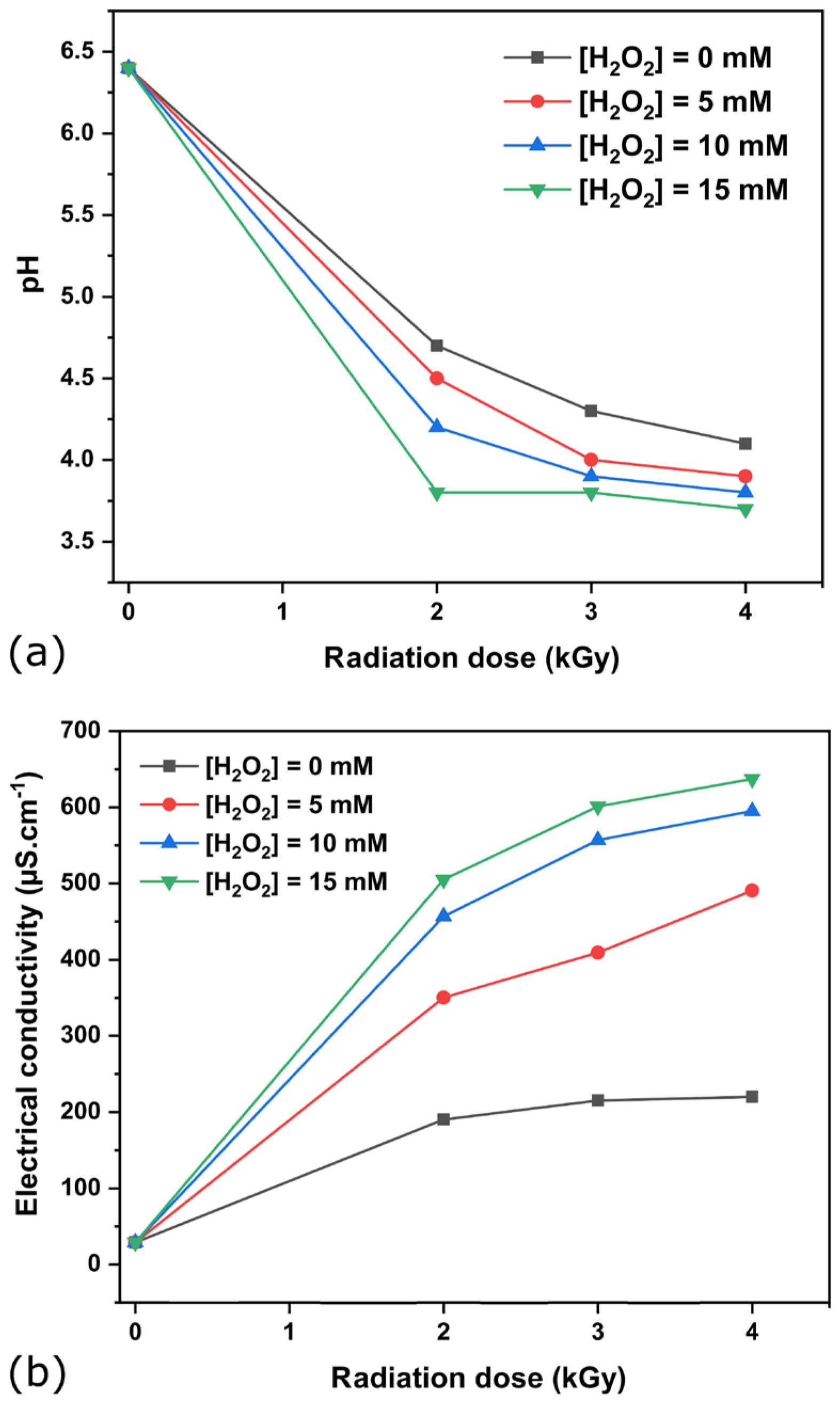
Figure 2a shows the effect of radiation dose and H2O2 concentration on the pH of the treated solutions. Electron beam irradiation decreased pH, with the effect becoming more pronounced at higher H2O2 concentrations. Starting from an initial pH value of 6.4, the pH decreased to 4.7 and 3.8 after treatment at 2 kGy without H2O2 and with 15 mM H2O2, respectively. The results of pH measurements for the treated synthetic solution at different absorbed doses and H2O2 concentrations are presented in Table S1 (Supplementary Materials).
Electrical conductivity measurements are presented in Figure 2b. An increase in electrical conductivity with increasing absorbed dose was observed. In addition, for a given radiation dose, higher electrical conductivity was observed at higher H2O2 concentrations. For instance, after treatment at 4 kGy in the presence of 15 mM H2O2, the electrical conductivity reached 637 µS cm−1. The results of electrical conductivity measurements for the treated synthetic solution at different absorbed doses and H2O2 concentrations are presented in Table S2 (Supplementary Materials).
For pH and electrical conductivity, the two-way factorial ANOVA at α = 0.05 showed a significant effect of H2O2 concentration and absorbed dose. The ANOVA parameters are shown in Tables S3 and S4 (Supplementary Materials).

3.2. Study of the Mineralization of TBZ

Although complete removal of TBZ was achieved under all irradiation conditions, pollutant degradation does not necessarily imply mineralization to stable inorganic species. To evaluate mineralization, TOC removal was determined, and [SO42−] and [NO3] resulting from irradiation were quantified.
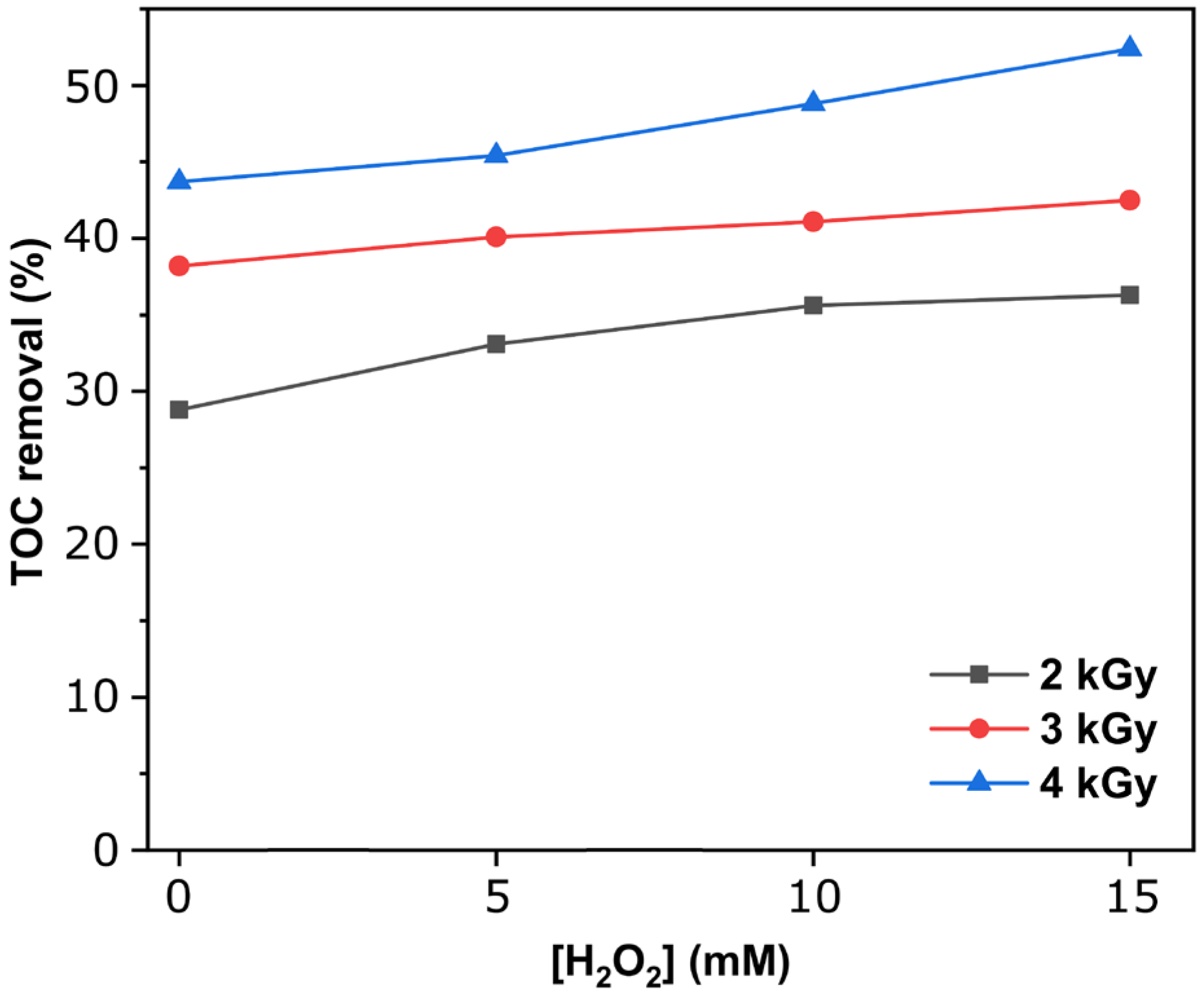
Figure 3 shows the effect of absorbed dose and H2O2 concentration on TOC removal. The highest TOC removal was obtained for the solution treated at 4 kGy in the presence of 15 mM H2O2. The two-way factorial ANOVA at α = 0.05 showed significant effects of H2O2 concentration and absorbed dose. The ANOVA parameters are shown in Table S5 (Supplementary Materials).
The achieved TOC removals ranged from 28.8% to 52.4%. The lowest TOC removal (28.8%) corresponded to the treatment at the lowest absorbed dose, in the absence of H2O2. In all cases, TOC removal was lower than the observed TBZ degradation (100%).
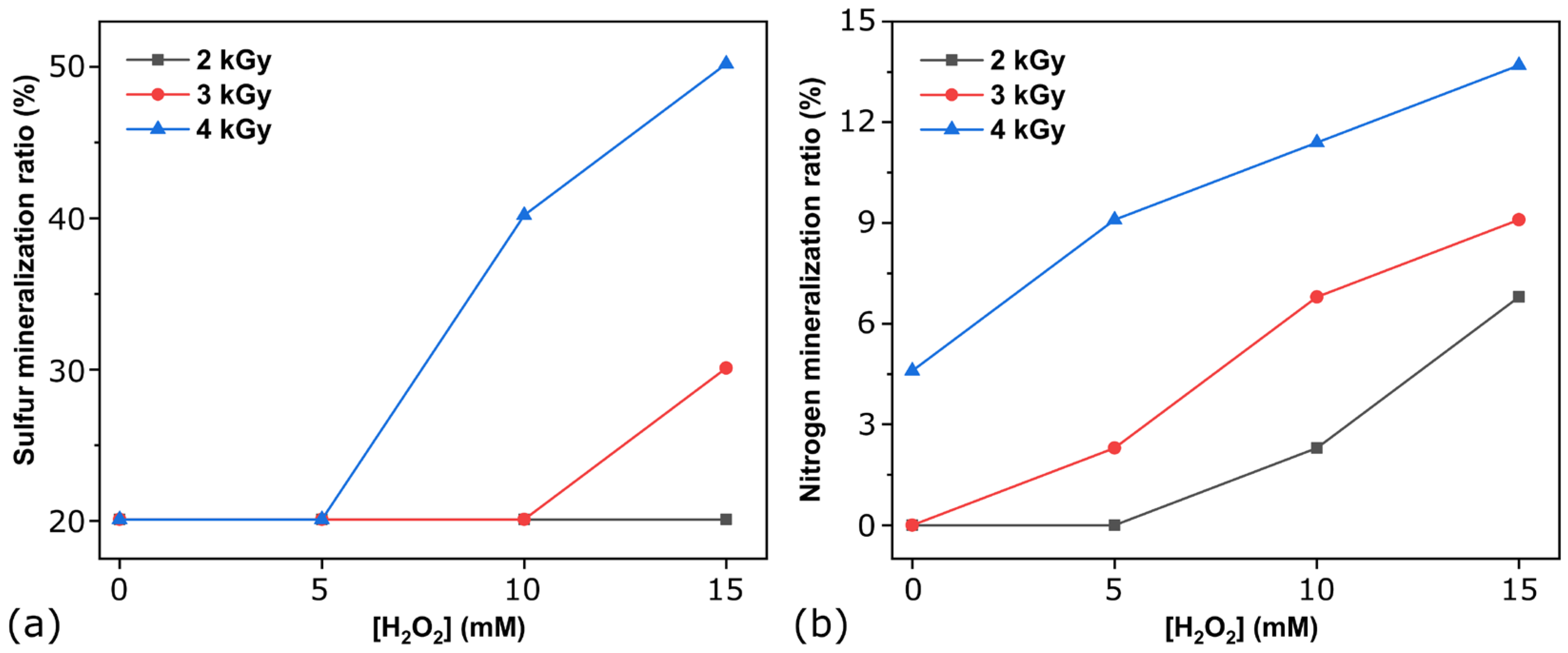
[SO42−] and [NO3] were also quantified after the treatments to assess heteroatom mineralization. The results of [SO42−] and [NO3] measurements for the treated synthetic solution at different absorbed doses and H2O2 concentrations are presented in Tables S9–S14 (Supplementary Materials). Based on these data, sulfur and nitrogen mineralization ratios were calculated. Figure 4a,b show the sulfur and nitrogen mineralization ratios, respectively.
The highest sulfur and nitrogen mineralization ratios (50.2% and 13.7%, respectively) were obtained at an absorbed dose of 4 kGy and an H2O2 concentration of 15 mM. Nevertheless, complete mineralization was not achieved under any of the investigated conditions.
For [SO42−] and [NO3], the two-way factorial ANOVA, at a significance level of α = 0.05, showed a significant effect of H2O2 concentration and absorbed dose. The ANOVA parameters are shown in Tables S15 and S16 (Supplementary Materials).

3.3. Computational Calculations

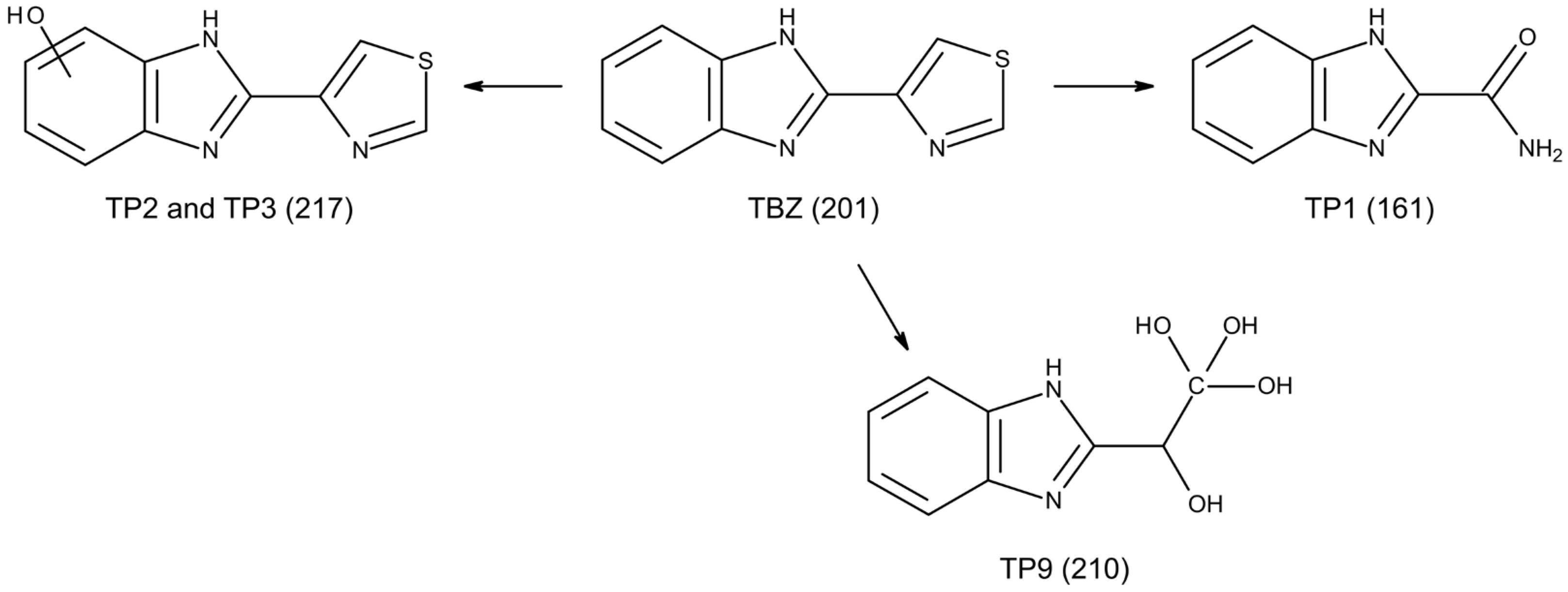
Considering the importance of studying intermediate products resulting from treatments [46], previous studies on thiabendazole degradation during advanced oxidation processes have identified two main transformation pathways initiated by the attack of OH that lead to the formation of the intermediate products labelled TP1 (161), TP9 (210), and TP2 and TP3 (217) [11,37], as shown in Figure 5.
One pathway involves the electrophilic addition of OH to the benzene ring of the benzimidazole fragment, forming monohydroxylated intermediates that subsequently lead to ring opening. The second pathway involves attack at the thiazole moiety or the inter-ring linkage, promoting C–C bond cleavage and formation of smaller fragments such as benzimidazole and thiazole-derived species. In our system, the greater formation of SO42– relative to NO3 indicates a more efficient oxidation of the sulfur-containing moiety. This observation is consistent with a greater contribution of the pathway involving attack at the thiazole ring and subsequent fragmentation, which facilitates the conversion of sulfur into its fully oxidized form. At the same time, nitrogen-containing fragments appear to be less completely mineralized under these conditions.
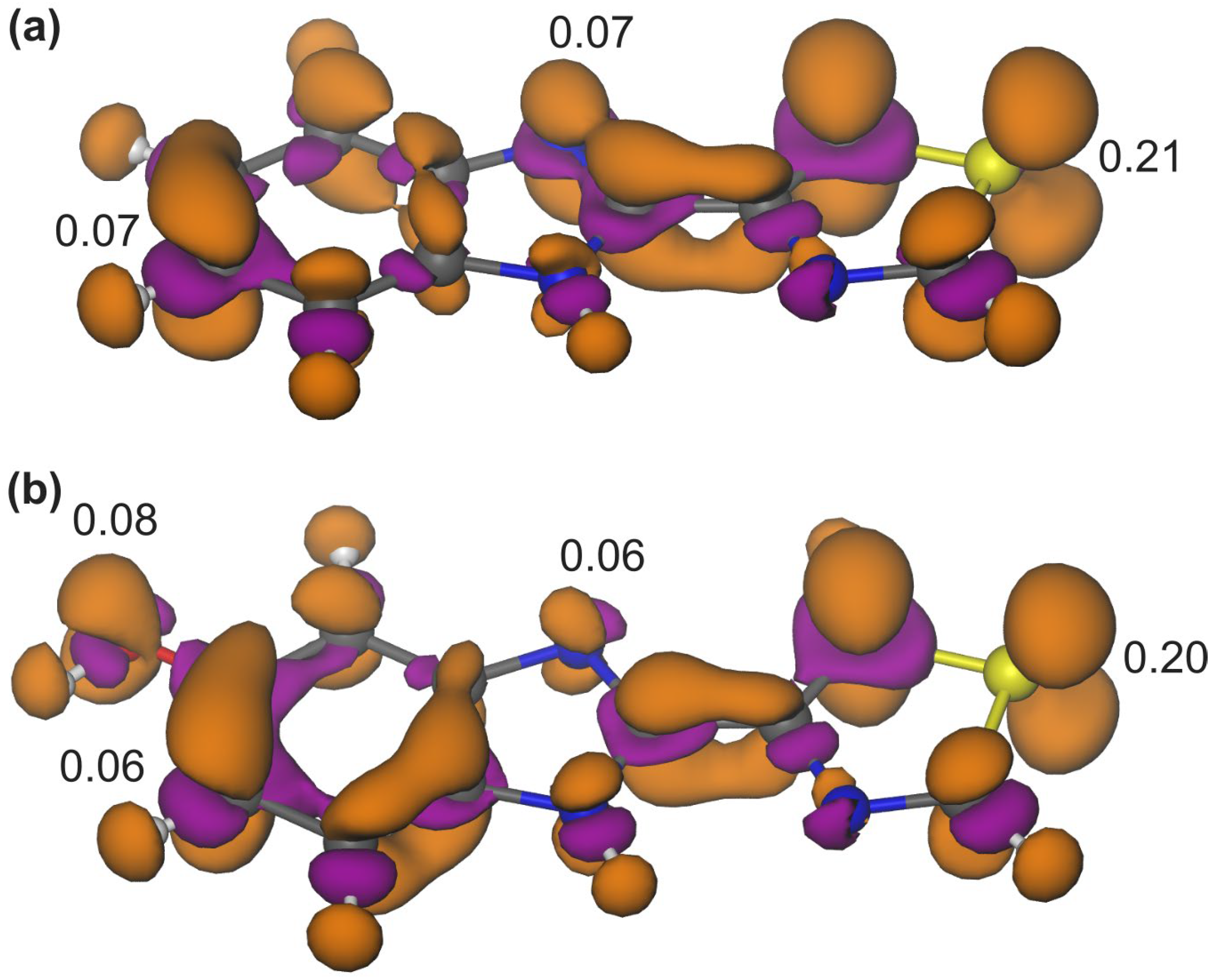
The DFT calculations confirm this hypothesis. The calculated spatial distribution of the Fukui function (ƒ0) for radical attack on thiabendazole shows multiple reactive sites (Figure 6a) distributed over both the thiazole and benzimidazole fragments. However, the Fukui indices (ƒA0) (Table S18, Supplementary Materials) indicate a higher probability of attack at the thiazole moiety, in agreement with the experimental observation of preferential sulfur mineralization. Notably, even when hydroxylation occurs at the benzimidazole ring (Figure 6b), which is the other plausible route for thiabendazole oxidation, the highest reactivity remains localized on the thiazole moiety (Table S19, Supplementary Materials). This indicates that hydroxylation does not significantly shift the preferred sites of radical attack and that the thiazole ring remains the most favorable site.

4. Discussion

The efficient degradation of TBZ in the absence of H2O2 is consistent with previous reports on the removal of organic contaminants from water by electron beam irradiation alone [47,48,49,50]. It is known that the radiolysis of water produces OH (E0 = 2.7 V vs. SHE), hydrogen atoms, H (−2.3 V vs. SHE), and hydrated electrons, e(aq) (−2.9 V vs SHE). Although, according to our DFT calculations (Table S20, Supplementary Materials), both H and e(aq) can potentially reduce TBZ (E0,redcalc. = −2.2 V vs. SHE), in the presence of dissolved oxygen, both e(aq) and H are rapidly scavenged to form reactive oxygen species, thereby suppressing reducing pathways and favoring oxidative conditions dominated by OH. The oxidation of TBZ (E0,oxcalc. = 1.3 V vs. SHE) is highly favorable in the presence of OH, indicating that hydroxyl radicals can readily drive its degradation. The stirring process for 12 h required to obtain the synthetic aqueous solution results in the dissolution of atmospheric O2, likely up to saturation (~7 mg/L at 17–19 °C and under the atmospheric pressure of Quito, Ecuador). The dissolved O2 rapidly reacts with eaq and H to produce superoxide radical anion (O2●−) and hydroperoxyl radical (HO2), respectively. These are oxidant species, but less reactive than OH. Therefore, the degradation of TBZ is fundamentally promoted by oxidation with OH.
Although H2O2 was not required for complete TBZ degradation, its addition significantly enhanced mineralization. H2O2 promotes additional OH generation through reactions with eaq and H, favoring the oxidation of intermediate products formed during the initial degradation steps and leading to higher degrees of mineralization [51].
The decrease in pH observed after irradiation can be attributed to the formation of carboxylic acids and other acidic intermediates during oxidative degradation processes. These weak acids contribute to lower pH values and indicate ongoing oxidation not only of the parent compound but also of its transformation products [52,53]. Similarly, the increase in electrical conductivity reflects the accumulation of inorganic ions, mainly nitrate and sulfate, which are stable end products of TBZ mineralization [54,55].
In general, the TOC removal, for all cases, was lower than the observed total degradation of TBZ (100% of degradation), and this was also observed in previous studies [26,56]. In fact, advanced oxidation processes are usually evaluated by comparing the achieved degradation of a specific pollutant and the mineralization degree (expressed as TOC removal) reached with the treatment subject of study [57,58].
The partial mineralization observed can be explained by kinetic limitations inherent to radical-driven oxidation processes. While OH rapidly reacts with TBZ, many intermediate products exhibit lower reaction rate constants with OH, leading to a progressive decrease in oxidation efficiency as the process advances. As a result, complete conversion to inorganic species becomes increasingly difficult, even at higher absorbed doses. Nevertheless, the formation of more oxidized intermediates is expected to enhance the biodegradability of the treated solutions, as reported for similar advanced oxidation processes [59]. It is expected that oxidized intermediates are also less toxic than the parent compounds, thus facilitating their elimination in receiving water bodies when treated water is discharged [60].
Oxygen availability is another key factor influencing mineralization efficiency. Due to the limited solubility of molecular oxygen in water, H2O2 is commonly employed as an auxiliary oxidant, acting both as an oxygen source and as a precursor of OH [61,62]. Accordingly, higher H2O2 concentrations favor increased mineralization degrees, as reflected by TOC removal and sulfate and nitrate formation [63]. However, this effect is not unlimited, since excessive H2O2 concentrations may lead to radical scavenging and recombination reactions, reducing the effective OH availability and highlighting the need for an optimal oxidant concentration [64,65].
Differences in sulfur and nitrogen mineralization ratios suggest a preference for sulfate over nitrate formation. Such selectivity has been reported for other heteroatom-containing organic pollutants treated by advanced oxidation processes and reflects differences in molecular structure and reaction pathways [66,67]. For TBZ, the higher sulfate formation can be explained by the greater likelihood of attack at the thiazole moiety. This is more evident in the absence of H2O2 and/or low absorbed doses. The higher the H2O2 concentration and absorbed dose, the greater the likelihood of forming intermediate products that can oxidize and eventually produce more nitrate.
Finally, this technology shows potential for treating pesticide-containing effluents from greenhouse operations, where intensive pesticide use can result in elevated contaminant concentrations. In electron beam-based processes, the apparent absorbed dose required to reach a given removal target depends on pollutant concentration and competition reactions within the water matrix. Higher pollutant concentrations can increase the probability of reaction with radiolytically generated species under comparable conditions [56]. Key advantages of electron beam irradiation include its short treatment time and the limited need for chemical additives, as H2O2 can be used as an auxiliary oxidant. Residual H2O2 can be removed after treatment by promoting its decomposition, for example, by contacting it with insoluble oxide catalysts.
For practical implementation, the composition of real greenhouse effluents must be considered, including parameters such as pH, electrical conductivity, alkalinity/bicarbonate, and dissolved organic matter, which can act as radical scavengers and reduce the effective oxidation capacity. These matrix effects should be addressed in future studies using real effluents and representative water quality conditions [68]. Also, real waters contain more organic contaminants that must be removed, each one with a specific reactivity and degradation products. The treated water can be less or more toxic; in some cases, the toxicity could increase due to intermediate products that are even more toxic than the parental compound. Dealing with all these aspects makes water treatment a complex task that must be faced with a rigorous technical and scientific approach.

5. Conclusions

The removal and mineralization of TBZ from water by electron beam irradiation, in the absence and presence of H2O2, were systematically evaluated. Under all investigated conditions (radiation doses of 2, 3, and 4 kGy and H2O2 concentrations of 0, 5, 10, and 15 mM), complete degradation of TBZ was achieved, demonstrating the high effectiveness of electron beam irradiation for removing this pesticide from aqueous solutions.
Despite the complete removal of TBZ, mineralization was only partial and strongly dependent on the absorbed radiation dose and H2O2 concentration. The highest mineralization degree was obtained at an absorbed dose of 4 kGy combined with 15 mM H2O2. The H2O2 concentration and the absorbed dose showed a significant effect on the parameters used to assess the mineralization of TBZ. These results highlight the distinction between pollutant degradation and complete mineralization, emphasizing the importance of complementary indicators when assessing treatment effectiveness.
Changes in pH and electrical conductivity observed after irradiation seem to confirm the formation of certain simple carboxylic acids and inorganic oxidation products, such as sulfate and nitrate. Although H2O2 was not required to achieve complete TBZ degradation, its presence enhanced mineralization by promoting additional OH generation and the oxidation of intermediate products. Our DFT simulations showed a preference for OH to attack the thiazole moiety of TBZ, which favors routes leading to larger sulfur-to-nitrogen mineralization ratios, as observed in our experimental measurements.
Overall, electron beam irradiation is confirmed as an effective advanced oxidation technology for treating pesticide-contaminated water. However, the partial mineralization observed indicates that process optimization and the evaluation of real water matrices in agricultural contexts are necessary to fully assess its practical applicability in water and wastewater treatment scenarios.

Supplementary Materials

The following supporting information can be downloaded at https://www.mdpi.com/article/10.3390/w18101156/s1: Table S1: Results of pH measurements after electron beam irradiation of synthetic aqueous solutions with different H2O2 concentrations ([H2O2]); Table S2: Results of electrical conductivity (σ) measurements after electron beam irradiation of synthetic aqueous solutions with different H2O2 concentrations ([H2O2]); Table S3: Results of the two-way ANOVA test for the assessment of the effects of H2O2 concentration and radiation dose on the pH; Table S4: Results of the two-way ANOVA test for the assessment of the effects of H2O2 concentration and radiation dose on the electrical conductivity; Table S5: Results of total organic carbon (TOC) measurements and TOC removal after the electron beam irradiation (2 kGy) of synthetic aqueous solutions with different H2O2 concentrations ([H2O2]); Table S6: Results of total organic carbon (TOC) measurements and TOC removal after the electron beam irradiation (3 kGy) of synthetic aqueous solutions with different H2O2 concentrations ([H2O2]); Table S7: Results of total organic carbon (TOC) measurements and TOC removal after the electron beam irradiation (4 kGy) of synthetic aqueous solutions with different H2O2 concentrations ([H2O2]); Table S8: Results of the two-way ANOVA test for the assessment of the effects of H2O2 concentration and radiation dose on the total organic carbon (TOC); Table S9: Results of sulfate concentration ([SO42−]) measurements and Sminer after the electron beam irradiation (2 kGy) of synthetic aqueous solutions with different H2O2 concentrations ([H2O2]); Table S10: Results of sulfate concentration ([SO42−]) measurements and Sminer after the electron beam irradiation (3 kGy) of synthetic aqueous solutions with different H2O2 concentrations ([H2O2]); Table S11: Results of sulfate concentration ([SO42−]) measurements and Sminer after the electron beam irradiation (4 kGy) of synthetic aqueous solutions with different H2O2 concentrations ([H2O2]); Table S12: Results of sulfate concentration ([NO3]) measurements and Nminer after the electron beam irradiation (2 kGy) of synthetic aqueous solutions with different H2O2 concentrations ([H2O2]); Table S13: Results of sulfate concentration ([NO3]) measurements and Nminer after the electron beam irradiation (3 kGy) of synthetic aqueous solutions with different H2O2 concentrations ([H2O2]); Table S14: Results of sulfate concentration ([NO3]) measurements and Nminer after the electron beam irradiation (4 kGy) of synthetic aqueous solutions with different H2O2 concentrations ([H2O2]); Table S15: Results of the two-way ANOVA test for the assessment of the effects of H2O2 concentration and radiation dose on the sulfate concentration ([SO42−]); Table S16: Results of the two-way ANOVA test for the assessment of the effects of H2O2 concentration and radiation dose on the nitrate concentration ([NO3]); Table S17: Gas- and solution-phase DFT-calculated energies for the species considered in this study. Energies are provided in kcal mol−1 and calculated at the B3LYP-D3/def2-TZVP level of theory; Table S18: Calculated Fukui indexes for radical attack (ƒA0) at the thiabendazole molecule. Indexes were calculated using atomic dipole corrected Hirshfeld atomic charges (HAC) generated at the B3LYP-D3/def2-TZVP level of theory; Table S19: Calculated Fukui indexes for radical attack (ƒA0) for the hydroxylated thiabendazole intermediate formed after OH addition to the benzimidazole ring. Indexes were calculated using atomic dipole corrected Hirshfeld atomic charges (HAC) at the B3LYP-D3/def2-TZVP level of theory. Table S20: Calculated reduction potentials for the oxidation (TBZ → [TBZ]+● + e) and reduction (TBZ + e → [TBZ]●−) of thiabendazole (TBZ). Values are provided in V relative to the standard hydrogen electrode (SHE). Calculations were performed at the B3LYP-D3/def2-TZVP/SMD level of theory. Experimental oxidation potential for TBZ is provided in parentheses (Reference [69] is cited in the Supplementary Materials).

Author Contributions

Conceptualization, W.V.O. and F.M.B.; methodology, G.T., L.M., D.N., I.E.-P., C.S.-P., W.V.O. and P.V.J.; validation, G.T., L.M., D.N., I.E.-P., C.S.-P. and P.V.J.; formal analysis, G.T., L.M. and D.N.; investigation, G.T.; resources, W.V.O. and F.M.B.; data curation, G.T., L.M., D.N. and I.E.-P.; writing—original draft preparation, I.E.-P. and C.S.-P.; writing—review and editing, C.S.-P., W.V.O., P.V.J. and F.M.B.; visualization, G.T. and P.V.J.; supervision, W.V.O., P.V.J. and F.M.B.; project administration, W.V.O. and F.M.B.; funding acquisition, W.V.O. and F.M.B. All authors have read and agreed to the published version of the manuscript.

Funding

This research was funded by Escuela Politécnica Nacional (EPN) through institutional research projects developed at the Department of Nuclear Sciences. Specifically, this work was supported by the project “Estudio de la degradación del plaguicida Tiabendazol en un efluente líquido de una florícola mediante irradiación con un haz de electrones acelerados” (Project code: PII-DCN-0004-2016), directed by William Villacis Oñate, and by the project “Estudio exploratorio de la presencia de contaminantes emergentes en aguas residuales domésticas tratadas en Ecuador” (Project code: PIS-23-25), directed by Florinella Muñoz Bisesti. The Article Processing Charge (APC) was funded by EPN.

Data Availability Statement

The data supporting the findings of this study are included within the article. Additional experimental data generated and analyzed during the current study are available from the corresponding authors upon reasonable request.

Acknowledgments

The authors acknowledge the Department of Nuclear Sciences of the Escuela Politécnica Nacional (Quito, Ecuador) for providing laboratory facilities, technical support, and institutional assistance during the development of this research.

Conflicts of Interest

The authors declare no conflicts of interest. The funders had no role in the design of the study; in the collection, analyses, or interpretation of data; in the writing of the manuscript; or in the decision to publish the results.

References

  1. Abhilash, P.C.; Singh, N. Pesticide use and application: An Indian scenario. J. Hazard. Mater. 2009, 165, 1–12. [Google Scholar] [CrossRef]
  2. Campo, J.; Masiá, A.; Blasco, C.; Picó, Y. Occurrence and removal efficiency of pesticides in sewage treatment plants of four Mediterranean river basins. J. Hazard. Mater. 2013, 263, 146–157. [Google Scholar] [CrossRef]
  3. Aziz, K.; Mamouni, R.; KAYA, S.; Aziz, F. Low-cost materials as vehicles for pesticides in aquatic media: A review of the current status of different biosorbents employed, optimization by RSM approach. Environ. Sci. Pollut. Res. 2024, 31, 39907–39944. [Google Scholar] [CrossRef]
  4. Ghosh, R.; Parde, D.; Bhaduri, S.; Rajpurohit, P.; Behera, M. Occurrence, fate, transport, and removal technologies of emerging contaminants: A review on recent advances and future perspectives. CLEAN Soil Air Water 2024, 52, 2300259. [Google Scholar] [CrossRef]
  5. Tisza, B.B.; Járomi, L.; Háhn, J.; Bérczi, B.; Horváth-Sarródi, A.; Gubicskóné Kisbenedek, A.; Gerencsér, G. Possible genotoxic effects of post-harvest fungicides applied on citrus peels: Imazalil, pyrimethanil, thiabendazole and their mixtures. Foods 2025, 14, 1264. [Google Scholar] [CrossRef]
  6. Lo, C.C. Effect of pesticides on soil microbial community. J. Environ. Sci. Health B 2010, 45, 348–359. [Google Scholar] [CrossRef]
  7. Masiá, A.; Campo, J.; Vázquez-Roig, P.; Blasco, C.; Picó, Y. Screening of currently used pesticides in water, sediments and biota of the Guadalquivir river basin (Spain). J. Hazard. Mater. 2013, 263, 95–104. [Google Scholar] [CrossRef] [PubMed]
  8. Ibarz, R.; Garvín, A.; Aguilar, K.; Ibarz, A. Kinetic study and modelling of the UV photo-degradation of thiabendazole. Food Res. Int. 2016, 81, 133–140. [Google Scholar] [CrossRef]
  9. Jiménez, M.; Maldonado, M.I.; Rodríguez, E.M.; Hernández-Ramírez, A.; Saggioro, E.; Carra, I.; Sánchez Pérez, J.A. Sup-ported TiO2 solar photocatalysis at semi-pilot scale: Degradation of pesticides found in citrus processing industry wastewater, reactivity and influence of photogenerated species. J. Chem. Technol. Biotechnol. 2015, 90, 149–157. [Google Scholar] [CrossRef]
  10. Sim, W.-J.; Kim, H.-Y.; Choi, S.-D.; Kwon, J.-H.; Oh, J.-E. Evaluation of pharmaceuticals and personal care products with emphasis on anthelmintics in human sanitary waste, sewage, hospital wastewater, livestock wastewater and receiving water. J. Hazard. Mater. 2013, 248–249, 219–227. [Google Scholar] [CrossRef] [PubMed]
  11. Sirtori, C.; Agüera, A.; Carra, I.; Sanchéz Pérez, J.A. Identification and monitoring of thiabendazole transformation products in water during Fenton degradation by LC-QTOF-MS. Anal. Bioanal. Chem. 2014, 406, 5323–5337. [Google Scholar] [CrossRef]
  12. Wang, Y.; Li, Y.; Hu, A.; Rashid, A.; Ashfaq, M.; Wang, Y.; Wang, H.; Luo, H.; Yu, C.-P.; Sun, Q. Monitoring, mass balance and fate of pharmaceuticals and personal care products in seven wastewater treatment plants in Xiamen city, China. J. Hazard. Mater. 2018, 354, 81–90. [Google Scholar] [CrossRef] [PubMed]
  13. Shah, N.S.; Khan, J.A.; Nawaz, S.; Khan, H.M. Role of aqueous electron and hydroxyl radical in the removal of endosulfan from aqueous solution using gamma irradiation. J. Hazard. Mater. 2014, 278, 40–48. [Google Scholar] [CrossRef] [PubMed]
  14. Xu, G.; Yao, J.-z.; Tang, L.; Yang, X.-y.; Zheng, M.; Wang, H.; Wu, M.-h. Electron beam induced degradation of atrazine in aqueous solution. Chem. Eng. J. 2015, 275, 374–380. [Google Scholar] [CrossRef]
  15. Tegze, A.; Sági, G.; Kovács, K.; Tóth, T.; Takács, E.; Wojnárovits, L. Radiation induced degradation of ciprofloxacin and norfloxacin: Kinetics and product analysis. Radiat. Phys. Chem. 2019, 158, 68–75. [Google Scholar] [CrossRef]
  16. Biswal, J.; Paul, J.; Naik, D.B.; Sarkar, S.K.; Sabharwal, S. Radiolytic degradation of 4-nitrophenol in aqueous solutions: Pulse and steady state radiolysis study. Radiat. Phys. Chem. 2013, 85, 161–166. [Google Scholar] [CrossRef]
  17. Wang, J.; Zhuan, R. Degradation of antibiotics by advanced oxidation processes: An overview. Sci. Total Environ. 2020, 701, 135023. [Google Scholar] [CrossRef]
  18. Jiménez-Tototzintle, M.; Oller, I.; Hernández-Ramírez, A.; Malato, S.; Maldonado, M.I. Remediation of agro-food industry effluents by biotreatment combined with supported TiO2/H2O2 solar photocatalysis. Chem. Eng. J. 2015, 273, 205–213. [Google Scholar] [CrossRef]
  19. Asaithambi, P.; Yesuf, M.B.; Govindarajan, R.; Hariharan, N.M.; Thangavelu, P.; Alemayehu, E. A review of hybrid process development based on electrochemical and advanced oxidation processes for the treatment of industrial wastewater. Int. J. Chem. Eng. 2022, 2022, 1105376. [Google Scholar] [CrossRef]
  20. Vahdat, A.; Bahrami, S.H.; Arami, M.; Bahjat, A.; Tabakh, F.; Khairkhah, M. Decoloration and mineralization of reactive dyes using electron beam irradiation, Part I: Effect of the dye structure, concentration and absorbed dose (single, binary and ternary systems). Radiat. Phys. Chem. 2012, 81, 851–856. [Google Scholar] [CrossRef]
  21. Poster, D.L.; Chaychian, M.; Neta, P.; Huie, R.E.; Silverman, J.; Al-Sheikhly, M. Degradation of PCBs in a marine sediment treated with ionizing and UV radiation. Environ. Sci. Technol. 2003, 37, 3808–3815. [Google Scholar] [CrossRef]
  22. Yang, R.; Wang, M.; Shen, Z.; Wang, W.; Ma, H.; Gu, J. The degradation and mineralization of 4-chlorophenol in aqueous solutions by electron beam irradiation in the presence of TiO2 nanoparticles. Radiat. Phys. Chem. 2007, 76, 1122–1125. [Google Scholar] [CrossRef]
  23. Parejo Calvo, W.A.; Duarte, C.L.; Machado, L.D.B.; Manzoli, J.E.; Geraldo, A.B.C.; Kodama, Y.; Silva, L.G.A.; Pino, E.S.; Somessari, E.S.R.; Silveira, C.G.; et al. Electron beam accelerators-trends in radiation processing technology for industrial and environmental applications in Latin America and the Caribbean. Radiat. Phys. Chem. 2012, 81, 1276–1281. [Google Scholar] [CrossRef]
  24. He, S.; Wang, J.; Ye, L.; Zhang, Y.; Yu, J. Removal of diclofenac from surface water by electron beam irradiation combined with a biological aerated filter. Radiat. Phys. Chem. 2014, 105, 104–108. [Google Scholar] [CrossRef]
  25. He, S.; Sun, W.; Wang, J.; Chen, L.; Zhang, Y.; Yu, J. Enhancement of biodegradability of real textile and dyeing wastewater by electron beam irradiation. Radiat. Phys. Chem. 2016, 124, 203–207. [Google Scholar] [CrossRef]
  26. Paul, J.; Rawat, K.P.; Sarma, K.S.S.; Sabharwal, S. Decoloration and degradation of Reactive Red-120 dye by electron beam irradiation in aqueous solution. Appl. Radiat. Isot. 2011, 69, 982–987. [Google Scholar] [CrossRef]
  27. Xu, G.; Bu, T.; Wu, M.; Zheng, J.; Liu, N.; Wang, L. Electron beam induced degradation of clopyralid in aqueous solutions. J. Radioanal. Nucl. Chem. 2011, 288, 759–764. [Google Scholar] [CrossRef]
  28. Duarte, C.L.; Mori, M.N.; Kodama, Y.; Oikawa, H.; Sampa, M.H.O. Decontamination of pesticide packing using ionizing radiation. Radiat. Phys. Chem. 2007, 76, 1885–1889. [Google Scholar] [CrossRef]
  29. Abdel Aal, S.E.; Dessouki, A.M.; Sokker, H.H. Degradation of some pesticides in aqueous solutions by electron beam and gamma-radiation. J. Radioanal. Nucl. Chem. 2001, 250, 329–334. [Google Scholar] [CrossRef]
  30. Drzewicz, P.; Gehringer, P.; Bojanowska-Czajka, A.; Zona, R.; Solar, S.; Nałȩcz-Jawecki, G.; Sawicki, J.; Trojanowicz, M. Radiolytic degradation of the herbicide dicamba for environmental protection. Arch. Environ. Contam. Toxicol. 2005, 48, 311–322. [Google Scholar] [CrossRef]
  31. Ni, L.; Zheng, Z.; Li, S.; Sun, C. 2,4-D degradation by electron beam irradiation: Influence of oxygen concentration. Bull. Environ. Contam. Toxicol. 2003, 71, 176–181. [Google Scholar] [CrossRef] [PubMed]
  32. Bojanowska-Czajka, A.; Nichipor, H.; Drzewicz, P.; Szostek, B.; Gałȩzowska, A.; Męczyńska, S.; Kruszewski, M.; Zimek, Z.; Nałęcz-Jawecki, G.; Trojanowicz, M. Radiolytic decomposition of pesticide carbendazim in waters and wastes for envi-ronmental protection. J. Radioanal. Nucl. Chem. 2011, 289, 303–314. [Google Scholar] [CrossRef]
  33. Bojanowska-Czajka, A.; Trojanowicz, M.; Gałezowska, A.; Nichipor, H.; Zimek, Z.; Marty, J.L.; Nałecz-Jawecki, G. Radio-lytic removal of selected pesticides from waters and waste using ionizing radiation. Sep. Sci. Technol. 2010, 45, 1651–1657. [Google Scholar] [CrossRef]
  34. Wang, M.; Yang, R.; Wang, W.; Shen, Z.; Bian, S.; Zhu, Z. Radiation-induced decomposition and decoloration of reactive dyes in the presence of H2O2. Radiat. Phys. Chem. 2006, 75, 286–291. [Google Scholar] [CrossRef]
  35. American Public Health Association; American Water Works Association; Water Environment Federation. Standard Methods for the Examination of Water and Wastewater, 23rd ed.; American Public Health Association: Washington, DC, USA, 2017. [Google Scholar]
  36. Hach Company. DR2800 Spectrophotometer, Procedures Manual; Hach Company: Loveland, CO, USA, 2007. [Google Scholar]
  37. Portilla-Sangabriel, M.; Martínez-Piernas, A.B.; Agüera, A.; Arzate, S.; Sánchez Pérez, J.A.; Ramírez-Zamora, R.-M. Degradation of thiabendazole and its transformation products by two photo-assisted iron-based processes in a raceway pond reactor. Top. Catal. 2022, 65, 1113–1127. [Google Scholar] [CrossRef]
  38. Neese, F. Software Update: The ORCA program system—Version 5.0. WIREs Comput. Mol. Sci. 2022, 12, e1606. [Google Scholar] [CrossRef]
  39. Becke, A.D. Density-functional thermochemistry. III. The role of exact exchange. J. Chem. Phys. 1993, 98, 5648–5652. [Google Scholar] [CrossRef]
  40. Weigend, F. Accurate coulomb-fitting basis sets for H to Rn. Phys. Chem. Chem. Phys. 2006, 8, 1057. [Google Scholar] [CrossRef]
  41. Weigend, F.; Ahlrichs, R. Balanced basis sets of split valence, triple zeta valence and quadruple zeta valence quality for H to Rn: Design and assessment of accuracy. Phys. Chem. Chem. Phys. 2005, 7, 3297–3305. [Google Scholar] [CrossRef]
  42. Grimme, S.; Antony, J.; Ehrlich, S.; Krieg, H. A Consistent and accurate Ab Initio parametrization of Density Functional Dispersion Correction (DFT-D) for the 94 elements H-Pu. J. Chem. Phys. 2010, 132, 154104. [Google Scholar] [CrossRef]
  43. Neese, F.; Wennmohs, F.; Hansen, A.; Becker, U. Efficient, approximate and parallel Hartree–Fock and Hybrid DFT calculations. A ‘Chain-of-Spheres’ algorithm for the Hartree–Fock exchange. Chem. Phys. 2009, 356, 98–109. [Google Scholar] [CrossRef]
  44. Marenich, A.V.; Cramer, C.J.; Truhlar, D.G. Universal solvation model based on solute electron density and on a continuum model of the solvent defined by the bulk dielectric constant and atomic surface tensions. J. Phys. Chem. B 2009, 113, 6378–6396. [Google Scholar] [CrossRef]
  45. Lu, T.; Chen, F. Multiwfn: A multifunctional wavefunction analyzer. J. Comput. Chem. 2012, 33, 580–592. [Google Scholar] [CrossRef]
  46. Guo, H.; Dong, Z.-T.; Yang, Y.-Y.; Sui, L.; Wang, W.-J.; Liang, C.; Xiong, T.; Chen, Y.-R.; Yan, M.; Wen, X.-J.; et al. Polarized electric field-mediated graphitic carbon nitride-based S-scheme heterostructure for efficient photocatalytic removal of bisphenol A. Appl. Surf. Sci. 2025, 682, 161739. [Google Scholar] [CrossRef]
  47. Duarte, C.L.; Sampa, M.H.O.; Rela, P.R.; Oikawa, H.; Silveira, C.G.; Azevedo, A.L. Advanced oxidation process by electron-beam-irradiation-induced decomposition of pollutants in industrial effluents. Radiat. Phys. Chem. 2002, 63, 647–651. [Google Scholar] [CrossRef]
  48. Han, D.-H.; Stuchinskaya, T.; Won, Y.-S.; Park, W.-S.; Lim, J.-K. Oxidative decomposition of aromatic hydrocarbons by electron beam irradiation. Radiat. Phys. Chem. 2003, 67, 51–60. [Google Scholar] [CrossRef]
  49. Shao, H.-y.; Wu, M.-h.; Deng, F.; Xu, G.; Liu, N.; Li, X.; Tang, L. Electron beam irradiation induced degradation of antide-pressant drug fluoxetine in water matrices. Chemosphere 2018, 190, 184–190. [Google Scholar] [CrossRef]
  50. Deogaonkar, S.C.; Wakode, P.; Rawat, K.P. Electron beam irradiation post treatment for degradation of non biodegradable contaminants in textile wastewater. Radiat. Phys. Chem. 2019, 165, 108377. [Google Scholar] [CrossRef]
  51. Yu, S.; Hu, J.; Wang, J. Gamma radiation-induced degradation of p-nitrophenol (PNP) in the presence of hydrogen peroxide (H2O2) in aqueous solution. J. Hazard. Mater. 2010, 177, 1061–1067. [Google Scholar] [CrossRef]
  52. Li, W.; Wang, Y.; Irini, A. Effect of pH and H2O2 dosage on catechol oxidation in nano-Fe3O4 catalyzing UV-Fenton and identification of reactive oxygen species. Chem. Eng. J. 2014, 244, 1–8. [Google Scholar] [CrossRef]
  53. Wang, Y.; Lin, X.; Shao, Z.; Shan, D.; Li, G.; Irini, A. Comparison of Fenton, UV-Fenton and nano-Fe3O4 catalyzed UV-Fenton in degradation of phloroglucinol under neutral and alkaline conditions: Role of complexation of Fe3+ with hydroxyl group in phloroglucinol. Chem. Eng. J. 2017, 313, 938–945. [Google Scholar] [CrossRef]
  54. Laxen, D.P.H. A specific conductance method for quality control in water analysis. Water Res. 1977, 11, 91–92. [Google Scholar] [CrossRef]
  55. Venkatesh, S.; Quaff, A.R.; Pandey, N.D.; Venkatesh, K. Decolorization and mineralization of C.I. Direct Red 28 azo dye by ozonation. Desalination Water Treat. 2016, 57, 4135–4145. [Google Scholar] [CrossRef]
  56. Changotra, R.; Guin, J.P.; Khader, S.A.; Varshney, L.; Dhir, A. Electron beam induced degradation of ofloxacin in aqueous solution: Kinetics, removal mechanism and cytotoxicity assessment. Chem. Eng. J. 2019, 356, 973–984. [Google Scholar] [CrossRef]
  57. Garófalo-Villalta, S.; Medina-Espinosa, T.; Sandoval-Pauker, C.; Villacis, W.; Ciobota, V.; Muñoz Bisesti, F.; Vargas Jentzsch, P. Degradation of Reactive Red 120 dye by a heterogeneous sono-Fenton process with goethite deposited onto silica and calcite sand. J. Serbian Chem. Soc. 2020, 85, 125–140. [Google Scholar] [CrossRef]
  58. Altamirano Briones, A.; Condor Guevara, I.; Mena, D.; Espinoza, I.; Sandoval-Pauker, C.; Ramos Guerrero, L.; Vargas Jentzsch, P.; Muñoz Bisesti, F. Degradation of meropenem by heterogeneous photocatalysis using TiO2/fiberglass substrates. Catalysts 2020, 10, 344. [Google Scholar] [CrossRef]
  59. Getoff, N. Factors influencing the efficiency of radiation-induced degradation of water pollutants. Radiat. Phys. Chem. 2002, 65, 437–446. [Google Scholar] [CrossRef]
  60. Cabascango, T.; Ortiz, K.; Pauker, C.S.; Pavón, I.E.; Ramoji, A.; Popp, J.; Pérez, J.; Pinto, C.M.; Rivera-Parra, J.L.; Muñoz-Bisesti, F.; et al. Assessment of advanced oxidation processes using zebrafish in a non-forced exposure system: A proof of concept. Processes 2021, 9, 734. [Google Scholar] [CrossRef]
  61. Lama, G.; Meijide, J.; Sanromán, A.; Pazos, M. Heterogeneous advanced oxidation processes: Current approaches for wastewater treatment. Catalysts 2022, 12, 344. [Google Scholar] [CrossRef]
  62. Li, H.; Xie, A.; Hong, C.; Wang, Z.; Chu, X.; Wang, Z.L.; Liu, Y.; Jiang, P. Hydroxyl radical generation from H2O2 via liquid–liquid contact-electro-catalysis. Chem. Sci. 2025, 16, 20580–20593. [Google Scholar] [CrossRef]
  63. Hübner, U.; Spahr, S.; Lutze, H.; Wieland, A.; Rüting, S.; Gernjak, W.; Wenk, J. Advanced oxidation processes for water and wastewater treatment—Guidance for systematic future research. Heliyon 2024, 10, e30402. [Google Scholar] [CrossRef]
  64. Yang, C.; Zhang, B.; Lin, X.; Han, Q.; Bao, H.; Liu, Y. Universality of hydroxyl radical generation in irradiated nanoenhancer suspensions: Vital role of concentration. AIP Adv. 2024, 14, 055209. [Google Scholar] [CrossRef]
  65. Ghime, D.; Ghosh, P. Advanced oxidation processes: A powerful treatment option for the removal of recalcitrant organic compounds. In Advanced Oxidation Processes—Applications, Trends, and Prospects; Bustillo-Lecompte, C., Ed.; IntechOpen: London, UK, 2020. [Google Scholar] [CrossRef]
  66. Liu, Y.; Chen, N.; Liu, Y.; Liu, H.; Feng, C.; Li, M. Simultaneous removal of nitrate and hydrogen sulfide by autotrophic denitrification in nitrate-contaminated water treatment. Environ. Technol. 2019, 40, 2325–2336. [Google Scholar] [CrossRef]
  67. Ma, D.; Yi, H.; Lai, C.; Liu, X.; Huo, X.; An, Z.; Li, L.; Fu, Y.; Li, B.; Zhang, M.; et al. Critical review of advanced oxidation processes in organic wastewater treatment. Chemosphere 2021, 275, 130104. [Google Scholar] [CrossRef] [PubMed]
  68. Lado Ribeiro, A.R.; Moreira, N.F.F.; Li Puma, G.; Silva, A.M.T. Impact of water matrix on the removal of micropollutants by advanced oxidation technologies. Chem. Eng. J. 2019, 363, 155–173. [Google Scholar] [CrossRef]
  69. Ribeiro, F.W.P.; de Oliveira, R.C.; de Oliveira, A.G.; Nascimento, R.F.; Becker, H.; de Lima-Neto, P.; Correia, A.N. Electrochemical sensing of thiabendazole in complex samples using boron-doped diamond electrode. J. Electroanal. Chem. 2020, 866, 114179. [Google Scholar] [CrossRef]
Figure 1. Chemical structure of thiabendazole (C10H7N3S; 2-(4-Thiazolyl)-1 H-benzimidazole; TBZ).
Water 18 01156 g001
Figure 2. Effect of the electron beam irradiation and the concentration of H2O2 ([H2O2]) on the properties of the treated synthetic aqueous solution: (a) pH and (b) electrical conductivity. The initial pH and electrical conductivity of the solution before treatment were 6.4 and 29 µS cm−1, respectively, and the initial TBZ concentration was [TBZ]0 = 10.43 mg L−1. The average of two repetitions was used to plot the graphs.
Water 18 01156 g002
Figure 3. Effect of the concentration of H2O2 and the electron beam radiation dose on the TOC removal (%). Average values of two repetitions were used to plot the graph.
Water 18 01156 g003
Figure 4. Effect of the concentration of H2O2 and the electron beam irradiation dose on (a) sulfur mineralization (%), and (b) nitrogen mineralization (%). The average of two repetitions was used to plot the graphs.
Water 18 01156 g004
Figure 5. First stage of the thiabendazole (TBZ) degradation mechanism according to Sirtori and coworkers [11]. These compounds are the result of the electrophilic addition of OH to the benzene ring and the OH attack at the thiazole moiety or the inter-ring linkage.
Water 18 01156 g005
Figure 6. Spatial distribution of the Fukui function (ƒ0) for radical attack for (a) thiabendazole (TBZ), and (b) hydroxylated TBZ formed after OH addition to the benzene ring of the benzimidazole moiety. Fukui indices (ƒA0) calculated from atomic dipole corrected Hirshfeld charges are reported for atoms whose value is greater than 0.06 (B3LYP-D3/def2-TZVP). Isosurface is set to ±0.002. Orange regions show probable sites for radical attack.
Water 18 01156 g006
Disclaimer/Publisher’s Note: The statements, opinions and data contained in all publications are solely those of the individual author(s) and contributor(s) and not of MDPI and/or the editor(s). MDPI and/or the editor(s) disclaim responsibility for any injury to people or property resulting from any ideas, methods, instructions or products referred to in the content.