Article

Analysis and Evaluation of Water Resources Status in Dongying Based on Grey Water Footprint Theory


1
Yantai Center of Coastal Zone Geological Survey, China Geological Survey, Yantai 264000, China
2
Observation and Research Station of Land-Sea Interaction Field in the Yellow River Estuary of Ministry of Natural Resources, Dongying 257000, China
3
Key Laboratory of Coupling Process and Effect of Ministry of Natural Resources, Beijing 100055, China
4
Yantai Research Institute, Harbin Engineering University, Yantai 264006, China
5
Yantai Institute of Coastal Zone Research, Chinese Academy of Sciences, Yantai 264003, China
6
Wanhua Chemical Group Co., Ltd., Yantai 264000, China
*
Authors to whom correspondence should be addressed.
Water 2026, 18(1), 3; https://doi.org/10.3390/w18010003
Submission received: 18 November 2025 / Revised: 10 December 2025 / Accepted: 17 December 2025 / Published: 19 December 2025

Abstract

As the central city of the Yellow River Delta, Dongying faces challenges of water scarcity and water pollution. Based on the grey water footprint theory, the paper conducted grey water footprint accounting, factor analysis, and evaluation in Dongying from 2011 to 2023, aiming to clarify the water resources situation. Results indicated that the total grey water footprint in Dongying have decreased from 1.19 billion m3 in 2011 to 235 million m3 in 2023, a reduction of 80.21%. The agricultural, industrial, and domestic grey water footprints decreased by 94 million m3, 88 million m3, and 769 million m3, respectively, with the reduction rates reaching 54.19%, 69.98%, and 86.77%, respectively. The domestic grey water footprint has a significant impact on the dynamics of the total regional grey water footprint. The technical factor, as a negative driving factor, significantly affect the total grey water footprint in Dongying. Economic and population factors, as positive driving factors, have little impact. The water pollution level has been below 100% in recent years, with the grey water footprint sustainability remaining well. The grey water footprint intensity has decreased by 58.00 m3/10,000 CNY, a reduction of 90.60%, indicating significant improvements in water resource utilization efficiency and economic benefits. The paper provides a basis for water resource protection and water environment improvement in the Yellow River Delta region.

1. Introduction

Water is a crucial natural resource [1,2,3]. The world is facing severe water resource challenges. The 2015 Global Risks Report listed the water crisis as one of the most significant risks affecting the next decade [4]. The protection and sustainable utilization of water resources have attracted attention. China has abundant water resources, but there is limited freshwater that can be directly utilized. Meanwhile, China faces issues such as uneven spatial and temporal distribution of water resources, low per capita water resource ownership, water waste, and water pollution [5,6]. Various regions in China face varying degrees of water use pressure [7,8]. As a typical water-scarce coastal city in China, Dongying is significantly representative and exemplary [9]. Dongying is located at the Yellow River estuary and is the central city of the Yellow River Delta. It is also a vital petrochemical base and agricultural production area [10]. The research on water resources in Dongying not only provides water-saving and water-management suggestions but also offers references for other coastal water scarcity areas.
The concept of “water footprint” was proposed by Dutch scholar Arjen Y. Hoekstra in 2002 [11]. The water footprint quantifies the amount of water consumed and polluted in production and services. It comprehensively assesses the human activities influence on water resources. According to different water sources, water footprint can be divided into blue water footprint, green water footprint, and grey water footprint [12]. The blue water footprint focuses on the consumption of surface water and groundwater. The green water footprint focuses on rainwater resources consumed during crop growth. The grey water footprint represents the freshwater resources required to absorb and assimilate certain pollutants. It is a significant indicator for quantifying the pollutant emissions [12]. The grey water footprint assesses regional water environmental conditions through both water pollution and water quantity, reflecting the pressure of water pollution on freshwater resources. Currently, grey water footprint is mainly applied in macro-level regional water resource evaluation and micro-level production processes [13]. It can be utilized to assess water resources and the water environment across various countries, cities, and watersheds. It has particular strengths in evaluating regional water pollution loads [14,15,16,17]. Mekonnen and Hoekstra spatially quantified the global crop water footprint for 1996–2005, showing an annual total of 7404 billion m3, with grey water footprint accounting for 10% [18]. Wu et al. indicate that urban domestic water pollutants are the primary factor affecting water quality metabolism in Dianchi Lake Basin, with their grey water footprint accounting for around 50% of the total grey water footprint [19]. Zhou et al. calculated the nitrogen and phosphorus-related grey water footprint and corresponding pressure for 131 cities in the Yangtze River Basin in 2020, identifying the major pathways and influencing mechanisms of water quality in the region [20]. Shen et al. assessed the equilibrium of Shandong Province’s grey water footprint through the Gini coefficient and the matching distance in the imbalance index [21]. Based on the theories of pollution, nitrogen footprint, and grey water footprint, Xian et al. comprehensively evaluated the potential coupling relationship between nitrogen pollution and water pollution caused by rapid urban development [22].
Current research on the grey water footprint primarily focuses on large-scale studies, such as at the national or provincial level, with relatively fewer investigations conducted at the specific municipal scale [13]. Research on the grey water footprint has predominantly focused on quantification and evaluation [23,24], while analysis of its driving factors is relatively limited. Dongying is the central city of the Yellow River Delta and a key national development area. The dynamics of water resources and the water environment in this region have attracted considerable attention [25,26,27]. Scholars have mostly evaluated water resources in Dongying using indicators such as water resources volume, per capita water use, water utilization efficiency, and water resource carrying capacity [28,29,30]. Grey water footprint offers advantages in assessing water resources and the water environment from both quantity and quality perspectives. Therefore, the paper conducts municipal-scale research on Dongying from the perspective of the grey water footprint. Based on the quantification of the grey water footprint, the paper explores its driving factors and conducts a corresponding evaluation. The paper quantifies the grey water footprint in Dongying from 2011 to 2023. The research results can clarify the current situation of regional water resources and water environment. The Logarithmic Mean Divisia Index (LMDI) model was utilized to analyze the various factors. Sustainability and intensity analysis of grey water footprint was performed to evaluate regional water resource carrying capacity, water resource utilization efficiency, and grey water footprint economic benefits, and based on research findings, to provide recommendations. The research can provide reference for water resource assessment in water-scarce cities.

2. Materials and Methods

2.1. Overview of the Study Area

Dongying is a coastal city located in the northern Shandong Province (Figure 1). It is bounded by the Bohai Sea to the east and north, adjoins Binzhou to the west, and borders Zibo and Weifang to the south [31,32]. It is a delta plain with a relatively flat terrain. The southwest is higher and the northeast is lower. The climate is northern temperate monsoon climate, characterized by sufficient sunlight and distinct seasons. The annual average temperature is 13.2 °C and the average annual precipitation is 540.3 mm [33]. The region’s main water systems include the Yellow River Basin, the Haihe River Basin, and the Huaihe River Basin. It has the youngest wetland ecosystem in the world. The abundant flora and fauna resources have great ecological research value [34,35].
Dongying is located at the intersection of the Bohai Rim Economic Zone and the Yellow River Economic Belt. It has a superior geographical location, suitable climatic conditions, and abundant natural resources. The economy is developing rapidly [35,36,37]. Meanwhile, it suffers from water resource shortages and uneven distribution [13]. According to international standards, areas with per capita water resources less than 500 m3 are extremely water-scarce areas. Dongying per capita water resource is only 228 cubic meters. It is a typical coastal water-scarce city [28]. Over 90% of Dongying’s water supply depends on the Yellow River. Recently, water consumption in the middle and upper reaches of the Yellow River has increased. This situation has led to the reduction in water flow in the Yellow River section within Dongying. The river has experienced multiple water cutoffs, and the regional contradiction between water supply and demand has intensified [38,39]. At present, Dongying has limited water resources, with an uneven distribution of surface water and groundwater. Meanwhile, the city faces the dual challenges of water scarcity and water pollution. It is urgent to further strengthen water resource management, optimize water resource allocation, and improve water resource utilization efficiency to achieve sustainable development [13,28,40].

2.2. Data

The data utilized in the paper, such as nitrogen fertilizer application, industrial and domestic pollutant discharge, water resource, water consumption, gross domestic product, and population, were obtained from the Dongying City Statistical Yearbook and the Shandong Province Statistical Yearbook. The nitrogen leaching rate is 7%, which is based on the national average nitrogen fertilizer leaching rate. The water quality standard concentration of pollutants is referred to as the first-level discharge standard in the Integrated Wastewater Discharge Standard (GB8978-1996) [41]. The standard concentration of chemical oxygen demand (COD) in water bodies is 60 mg/L. The standard concentration of ammonia nitrogen in water bodies is 15 mg/L. The natural background concentration of the water bodies is 0.

2.3. Methods

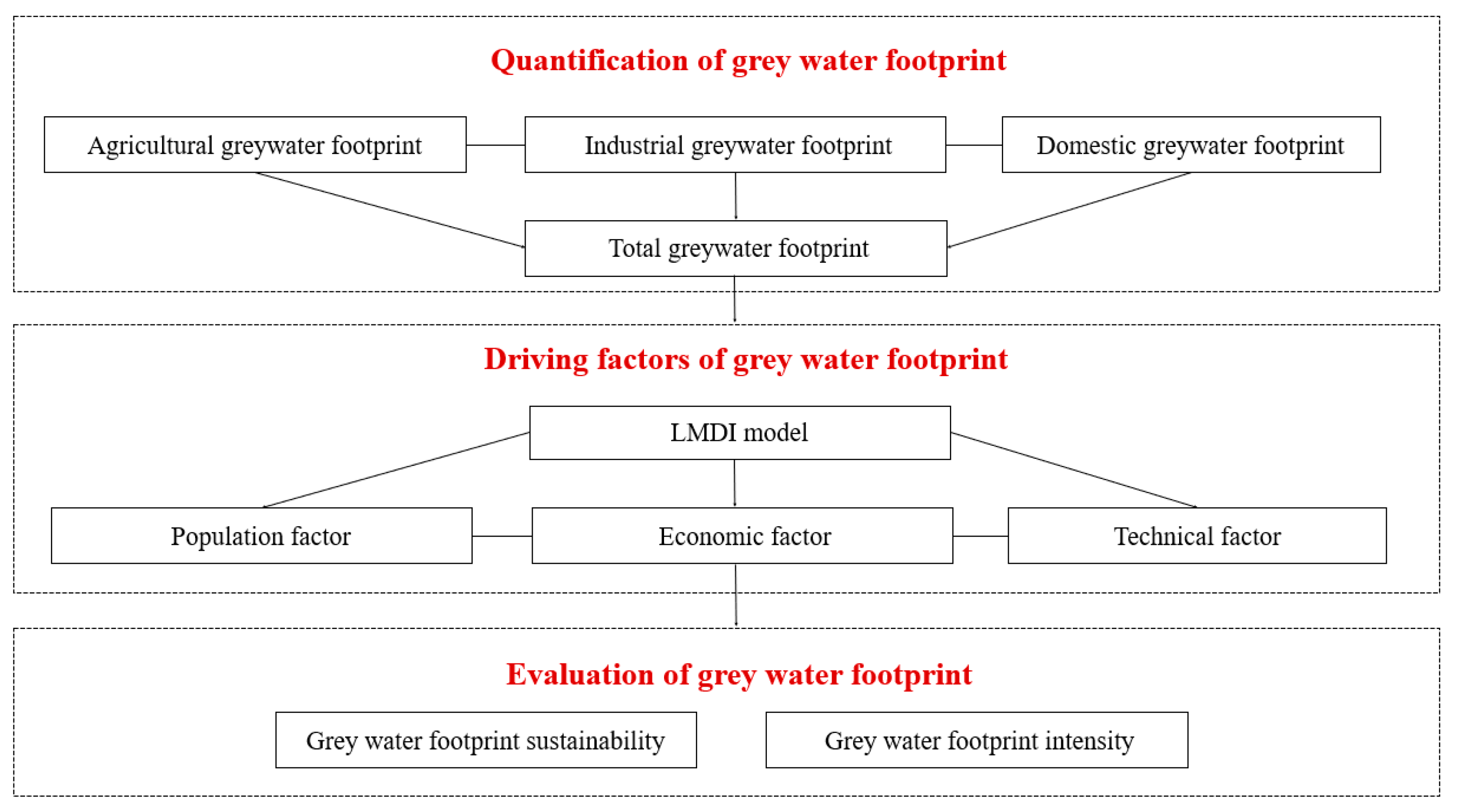
This section details three aspects of the research methodology: grey water footprint quantification, grey water footprint driving factor analysis, and grey water footprint evaluation.
The quantification of grey water footprint involves the calculation of agricultural grey water footprint, industrial grey water footprint, domestic grey water footprint, and total grey water footprint. Combined with the Logarithmic Mean Divisia Index (LMDI) model, this paper explores the impacts of three key social factors (population, economy, and technology) on the regional grey water footprint. The evaluation of grey water footprint mainly focuses on the regional grey water footprint sustainability and grey water footprint intensity. Specifically, the grey water footprint sustainability is reflected by the water pollution level indicator. The methodology flowchart is illustrated in Figure 2.

2.3.1. Quantification of Grey Water Footprint

The regional total grey water footprint is the summation of the agricultural grey water footprint, industrial grey water footprint, and domestic grey water footprint. The calculation formula is as follows:
G W F = G W F a g r + G W F i n d + G W F d o m
In the formula, G W F represents the total grey water footprint, m3/a; G W F a g r represents the agricultural grey water footprint, m3/a; G W F i n d represents the industrial grey water footprint, m3/a; and G W F d o m represents the domestic grey water footprint, m3/a.
  • Agricultural grey water footprint
Agricultural water pollution is non-point source pollution. Besides being absorbed by crops, a portion of pesticides and chemical fertilizers enters water bodies through runoff, underground seepage, and other ways, causing water pollution [17,42]. The main source of agricultural pollutants is nitrogen fertilizer. The calculation formula is as follows:
G W F a g r = α × A p p l C m a x C n a t
In the formula, α represents the nitrogen fertilizer leaching rate; A p p l represents the nitrogen fertilizer application amount, kg/a; C m a x represents the standard concentration of nitrogen in water bodies, kg/m3; and C n a t represents the natural background concentration of water bodies, kg/m3.
2.
Industrial grey water footprint
Industrial water pollution is characterized by point source pollution. Its main sources are COD and ammonia nitrogen [43]. The industrial grey water footprint is determined by the pollutant which requires the largest volume of dilution water [12]. The calculation formula is as follows:
G W F i n d ( i ) = L ( i _ i n d ) C m a x ( i _ i n d ) C n a t
G W F i n d = m a x ( G W F i n d C O D , G W F i n d ( N H 4 + N ) )
In the formula, G W F i n d ( i ) represents the industrial grey water footprint based on pollutant i, m3/a; L ( i _ i n d ) represents the discharge of industrial pollutant i, kg/a; and C m a x ( i _ i n d ) represents the water quality standard concentration of industrial pollutant i, kg/m3.
3.
Domestic grey water footprint
Domestic water pollution is characterized as point source pollution. The primary pollutants from daily life are COD and ammonia nitrogen [43]. Consequently, the calculation of domestic grey water footprint is similar to that of industrial grey water footprint. The formula is as follows:
G W F d o m ( i ) = L ( i _ d o m ) C m a x ( i _ d o m ) C n a t
G W F d o m = m a x ( G W F i n d C O D , G W F i n d ( N H 4 + N ) )
In the formula, G W F d o m ( i ) denotes the domestic grey water footprint based on pollutant i, m3/a; L ( i _ d o m ) denotes the discharge of pollutant i, kg/a; and C m a x ( i _ d o m ) denotes the water quality standard concentration of pollutant i, kg/m3.

2.3.2. Driving Factors of Grey Water Footprint

The Logarithmic Mean Divisia Index (LMDI) model decomposes the target variable into several influencing factors for analysis through mathematical identities [44]. This model has advantages such as no residual error and complete decomposition. It can clearly identify the impact degree and action direction of each factor. The model has unique advantages in decomposing anthropogenic factors. It has been widely applied in various fields including energy and economy. Applying this model to investigate the driving factors of Dongying’s grey water footprint offers distinct advantages. First, it quantifies the annual impact of individual factors, offering yearly diagnostic insights. Second, it measures each factor’s contribution to the change in the grey water footprint over the full study period, delivering a systematic assessment of their long-term influence on the regional trend. Population, economy, and technology are selected as the three main social factors [13,45]. The model is as follows:
W = W t W 0 = P e f f + A e f f + T e f f
P e f f = W i ln P t ln P 0 ln W t W 0
A e f f = W i ln G D P t P t ln G D P 0 P 0 ln W t W 0
T e f f = W i ln W t G D P t ln W 0 G D P 0 ln W t W 0
In the formula, W represents the total effect of grey water footprint, that is, the change in the grey water footprint from the base period to year t, m3; W 0 and W t , respectively, represent the grey water footprint value in the base year and year t, m3; P e f f , A e f f , and T e f f , respectively, represent the impact degrees of population, economy, and technology factors on the change in grey water footprint, m3; P 0 , and P t , respectively, represent the population in the base year and year t; and G D P 0 and G D P t , respectively, represent the GDP in the base year and year t.

2.3.3. Evaluation of Grey Water Footprint

  • Grey water footprint sustainability
Water pollution level serves as an indicator for assessing the regional grey water footprint sustainability [4,46]. When the water pollution level reaches 100%, the pollutant-carrying capacity of the regional water body is fully exhausted. When the water pollution level exceeds 100%, the water body cannot fully purify the pollutants. Under such conditions, the grey water footprint becomes unsustainable, as the available water resources in the region are insufficient to purify the pollutants. The formula is as follows:
W P L = G W F W R
In the formula, W P L represents the regional water pollution level, which refers to the proportion of the consumed pollutant-carrying capacity to the total pollutant-carrying capacity; W R denotes the regional water resource quantity, m3.
2.
Grey water footprint intensity
Grey water footprint intensity reflects the economic benefits of grey water footprint and the efficiency of water resource utilization [47,48]. When the intensity decreases, it indicates that the economy is growing while generating less grey water footprint. In this case, economic benefits and water resource utilization efficiency improve. Conversely, when intensity increases, economic benefits and water resource utilization efficiency decline. The formula is as follows:
I N T G W F = G W F G D P
In the formula, I N T G W F represents grey water footprint intensity, m3/10,000 CNY; G D P represents gross domestic product, 10,000 CNY.

3. Results

3.1. Quantification of Grey Water Footprint

3.1.1. Agricultural, Industrial, and Domestic Greywater Footprint

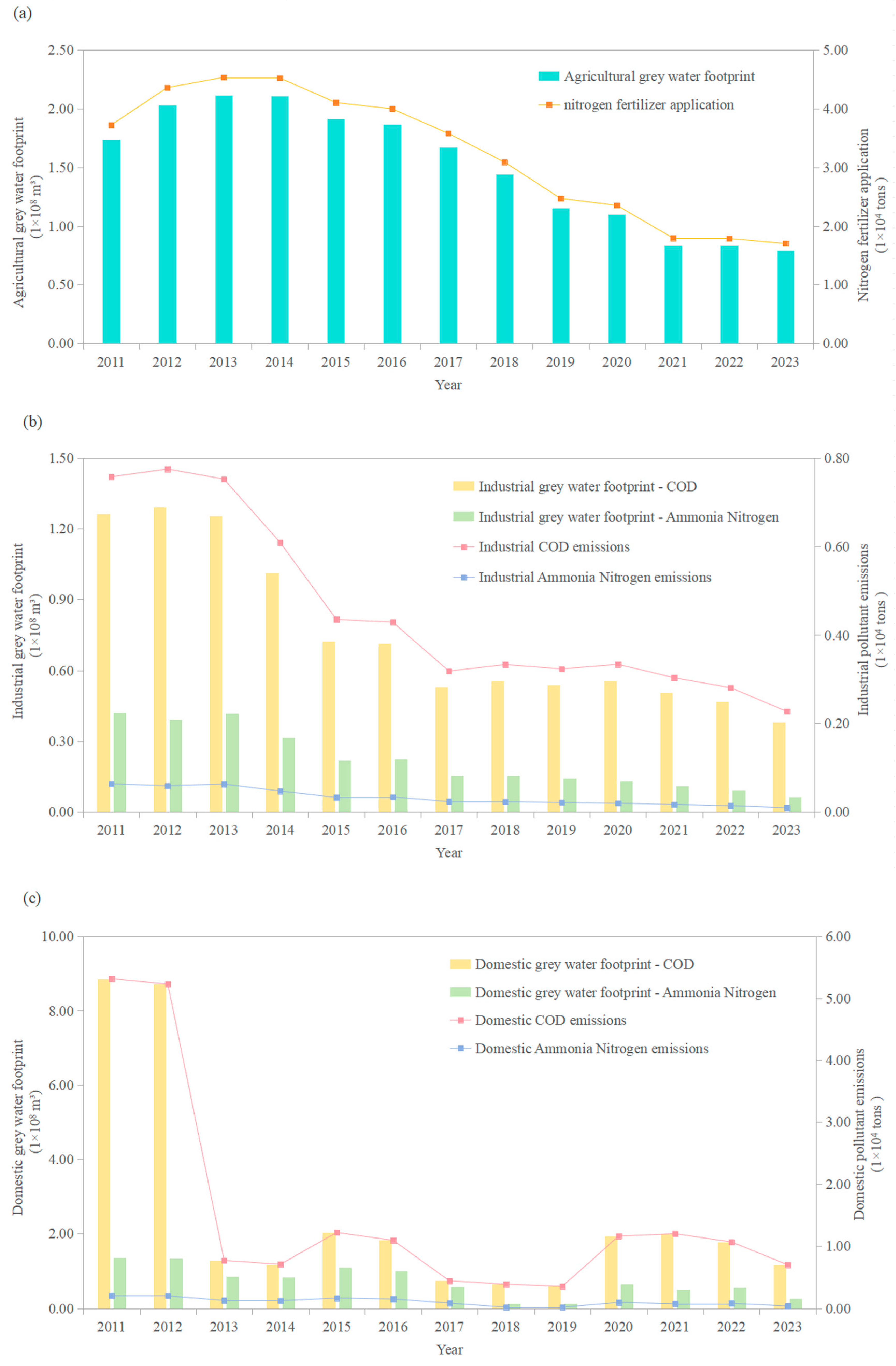
Based on Equations (2)–(6), the agricultural, industrial, and domestic grey water footprints of Dongying from 2011 to 2023 are quantified. The results are shown in Figure 3.
Between 2011 and 2023, the agricultural grey water footprint in Dongying exhibited a trend of initial increase followed by a decrease, primarily driven by nitrogen fertilizer application. During 2011–2013, it increased from 174 million m3 to 212 million m3, with a growth of 21.81%, and peaked in 2013. Since 2014, it has continuously declined, reaching the lowest value of 80 million m3 in 2023. The range between the maximum and minimum values during the study period was 132 million m3, with a reduction rate of 62.39%. Compared to 2011, the agricultural grey water footprint in 2023 decreased significantly by 94 million m3, with a reduction rate of 54.19%. Over the last 13 years, the agricultural grey water footprint of Dongying City has achieved a significant reduction.
The results indicate that the industrial grey water footprint, when calculated with COD as the primary pollutant, is significantly higher than that based on ammonia nitrogen. More freshwater resources are required to purify COD pollutants. Therefore, COD is used as the benchmark for determining the industrial grey water footprint. The industrial grey water footprint showed an overall decreasing trend. It reached a peak of 129 million m3 in 2012, then declined year by year to 53 million m3 in 2017, representing a decrease of 58.91%. It decreased slowly from 2020 to 2023. By 2023, it had reached the lowest value of the study period at 38 million m3. It achieved a reduction of 69.98% compared to 2011 and 70.65% compared to the 2012 peak.
Similarly, the domestic grey water footprint calculated with COD as the primary pollutant was notably higher than that based on ammonia nitrogen. Thus, it was also determined by COD in Dongying. The domestic grey water footprint showed a marked declining trend. It started at a peak of 886 million m3 in 2011 and decreased from 2011 to 2014. During this period, it dropped sharply to 129 million m3 in 2013, a decrease of 85.22% compared with 2012. Between 2015 and 2019, it declined from 203 million m3 to 59 million m3, a reduction of 70.75%, reaching the lowest value in 2019. Compared with the peak value in 2011, it decreased by 93.29% in 2019. In 2020 and 2021, the domestic grey water footprint increased to 193 million m3 and 200 million m3, respectively. After that, it showed a downward trend, falling to 117 million m3 in 2023. Compared with 2011, it decreased significantly by 769 million m3, with a reduction rate of 86.77%.
During the study period, agricultural, industrial, and domestic grey water footprints all showed a downward trend, indicating remarkable achievements in regional water resource protection and water environment governance. The reduction in nitrogen fertilizer application contributed to the decrease in the agricultural grey water footprint, while reduced pollutant discharges lowered the industrial and domestic footprints. Notably, the decrease in chemical oxygen demand played a significant role in reducing both the industrial and domestic grey water footprints. It is worth noting that the domestic grey water footprint exhibited the most pronounced fluctuation and the largest decline, highlighting the notable effectiveness of domestic pollution control measures in Dongying. In contrast, the industrial grey water footprint demonstrated a more steady downward trend, reflecting the maturity and continuity of regional industrial pollution control measures. Although the reduction rate of agricultural grey water footprint was lower than that of industrial grey water footprint, its reduction volume was higher than that of industrial grey water footprint. Agricultural pollution control promotes the improvement of the regional water environment.

3.1.2. Total Grey Water Footprint

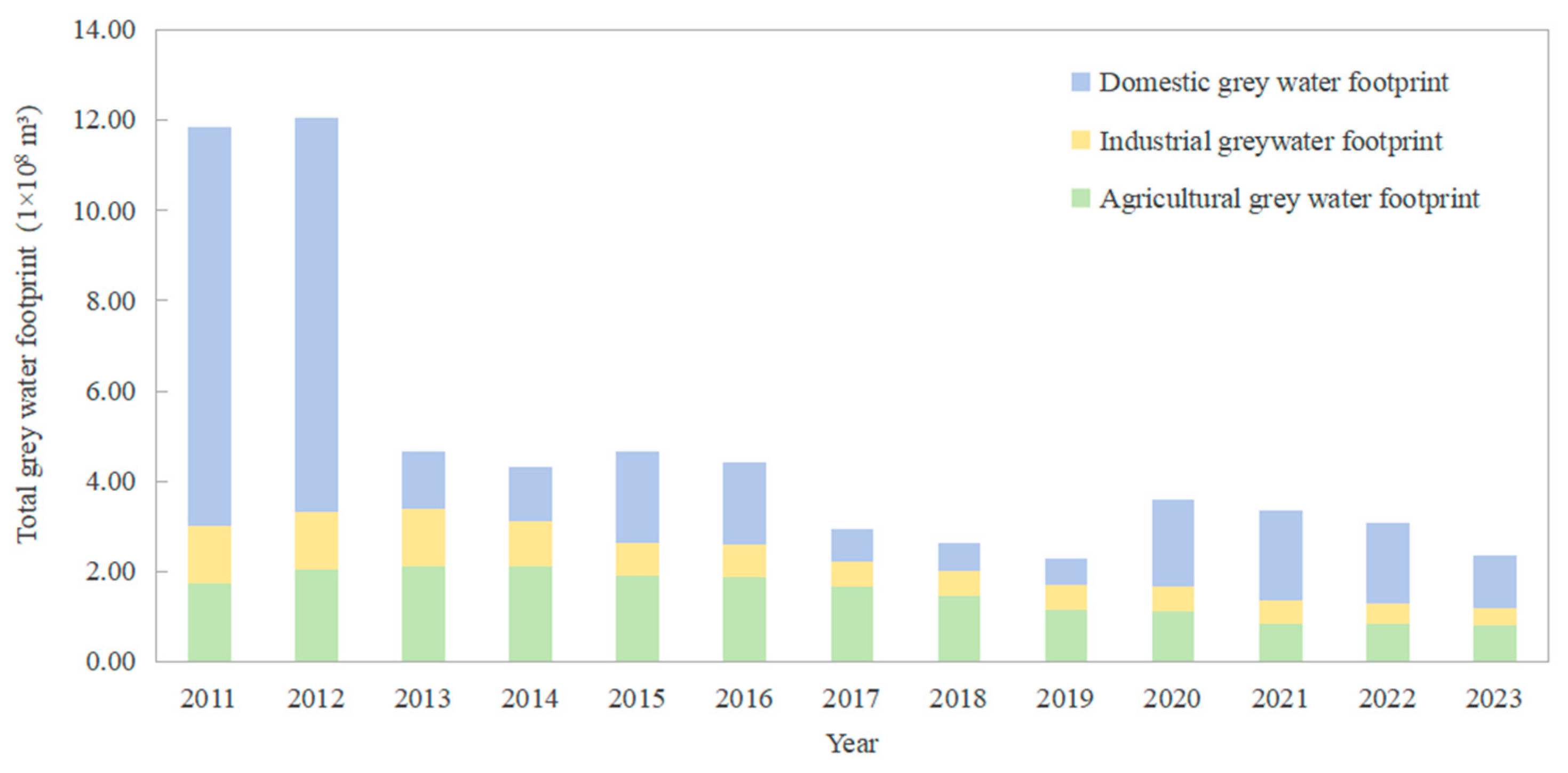
With reference to Equation (1), the total grey water footprint from 2011 to 2023 is presented in Figure 4. The results show a general downward trend in the regional grey water footprint, with increases only in 2012, 2015, and 2020. In 2011, the total grey water footprint was 1.186 billion m3. It reached the highest value of 1.204 billion m3 in 2012. In 2013, it dropped sharply to 466 million m3, decreasing by 739 million m3 compared with 2012, with a reduction rate as high as 61.33%. The lowest value of 229 million m3 appeared in 2019, which was 976 million m3 lower than the peak. By 2023, the total grey water footprint had decreased to 235 million m3, a reduction of 80.21% compared with 2011. Overall, the total grey water footprint achieved a significant reduction during the study period.
An analysis of the structure of Dongying’s grey water footprint reveals that the proportion of industrial grey water footprint was the lowest over the years, with an average annual proportion of 17.55%. In contrast, the domestic grey water footprint had the highest average annual proportion at 44.94%. The agricultural grey water footprint accounted for 37.51%, which was lower than the domestic grey water footprint. Notably, the significant decrease in domestic grey water footprint in 2013 led to a sharp drop in the total grey water footprint that year. Since 2013, the variation trend of domestic grey water footprint has been consistent with that of the total grey water footprint.
The Pearson correlation analysis method was used to verify the relationships between the total grey water footprint and agricultural, industrial, and domestic grey water footprints, respectively (Table 1). The value range of the correlation coefficient r is [−1, 1]. The results show that the total grey water footprint has a low correlation with agricultural grey water footprint, and a high correlation with industrial and domestic grey water footprints. During the study period, the domestic grey water footprint had a significant impact on the total grey water footprint, followed by the industrial grey water footprint. The agricultural grey water footprint did not show a significant impact. To reduce the total grey water footprint in the future, priority should be given to controlling pollutants from domestic and industrial sources.
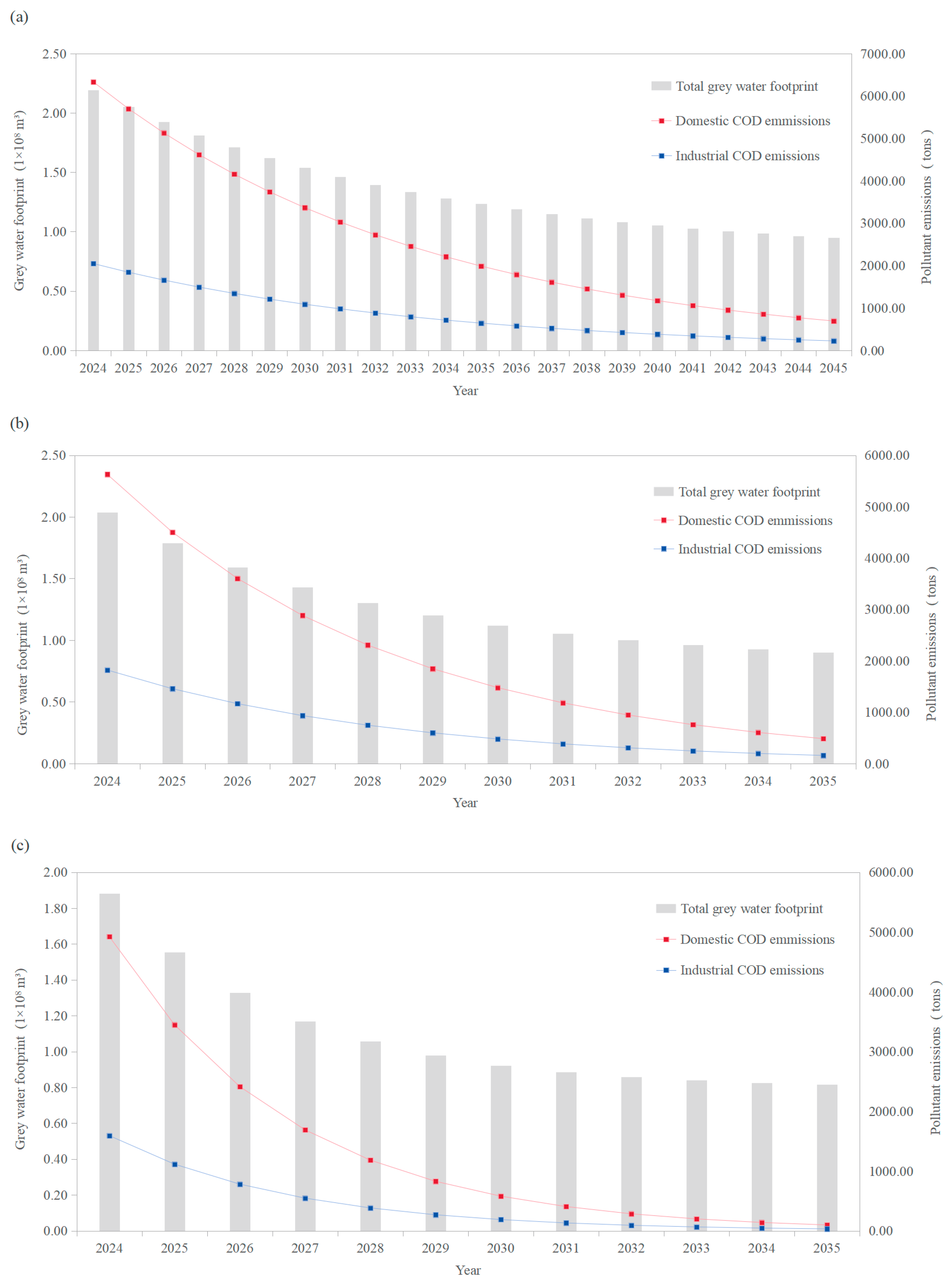
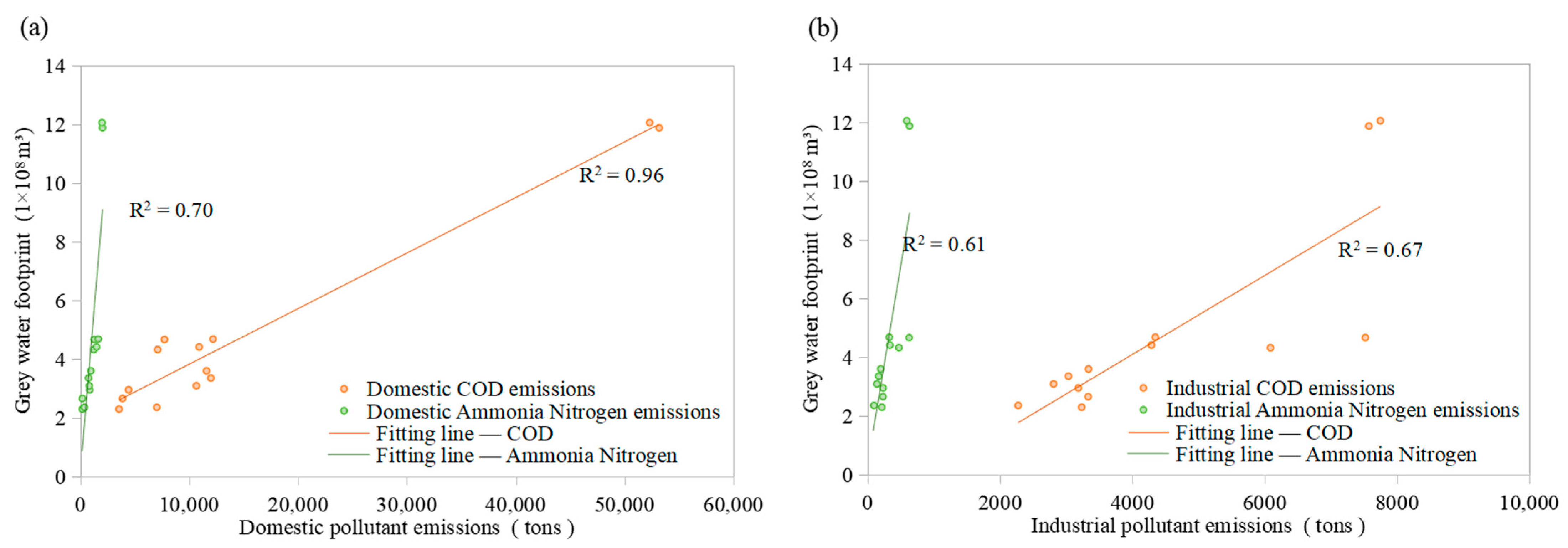
Figure 5 shows a significant linear relationship between the emissions of industrial and domestic pollutants and the total grey water footprint. R2 denotes the determination coefficient. The value closer to 1 indicates a better linear fit and stronger explanatory power. The R2 when using COD as the primary pollutant is greater than that for ammonia nitrogen, indicating a more significant linear relationship for COD. Additionally, COD emissions from social operations and daily activities are higher than ammonia nitrogen emissions. Therefore, COD was selected as the primary pollutant to investigate the impact of domestic and industrial pollution on changes in the total grey water footprint. Under the assumption of unchanged other conditions, projections show that the total grey water footprint would fall below 100 million m3 by 2043, 2033, and 2029 if domestic and industrial pollutant emissions were reduced annually by 10%, 20%, and 30%, respectively (Figure 6).

3.2. Driving Factors of Grey Water Footprint

Based on Equations (7)–(10), the driving factors of the grey water footprint in Dongying were analyzed. The results are presented in Table 2.
The total effect of grey water footprint was a negative number over the years, indicating an overall decreasing trend in the grey water footprint in Dongying. The average annual values of the population effect and economic effect on the regional grey water footprint were 0.03 and 0.29, respectively, both positive numbers. This indicates that the growth in population and economic development contributed to an increase in the grey water footprint. At this point, economic and population factors are positive driving factors for changes in the total grey water footprint, while exerting a negative impact on regional water resources and the water environment. In contrast, the average annual value of the technical effect was −1.11, a negative value, suggesting that technological progress led to a reduction in the grey water footprint. Thus, population and economy acted as positive drivers, while the technology served as a negative driver of the grey water footprint. Technical factors have a negative impact on the total grey water footprint, while having a positive impact on the protection of regional water resources and the water environment.
A factor with a larger absolute value of mean and a higher proportion exerts a more significant influence on the grey water footprint. A factor with a smaller absolute value of variation coefficient demonstrates a more stable influence. The results indicate that the technical effect has the most significant influence on the regional grey water footprint, whereas the population effect shows the smallest but most stable influence.
Between 2011 and 2022, the regional population effect was a positive value. The permanent resident population increased from 2.055 million to 2.209 million during this period. This population growth led to higher utilization and consumption of water resources, which in turn contributed to an increase in the grey water footprint. In 2023, the regional permanent resident population decreased by 0.3 million compared to the previous year. And this reduction in population caused a slight decrease in the grey water footprint. Although population fluctuations resulted in corresponding changes in the grey water footprint, the impact was not significant. From 2011 to 2023, the regional economic output grew continuously, rising from 185.299 billion CNY to 389.906 billion CNY. Economic progress promoted social development and urbanization. The growth of regional economic output and improvements in infrastructure required substantial water consumption, which led to a significant increase in the grey water footprint. The regional technical effect remained negative over the long term. Improved technological levels promoted the widespread application of energy-saving equipment, leading to a relative decrease in the amount of water resources consumed in social operations. Additionally, water utilization efficiency improved. Meanwhile, the application of water pollution control technologies gradually improved the regional water environment, resulting in a significant reduction in the grey water footprint.

3.3. Evaluation of Grey Water Footprint

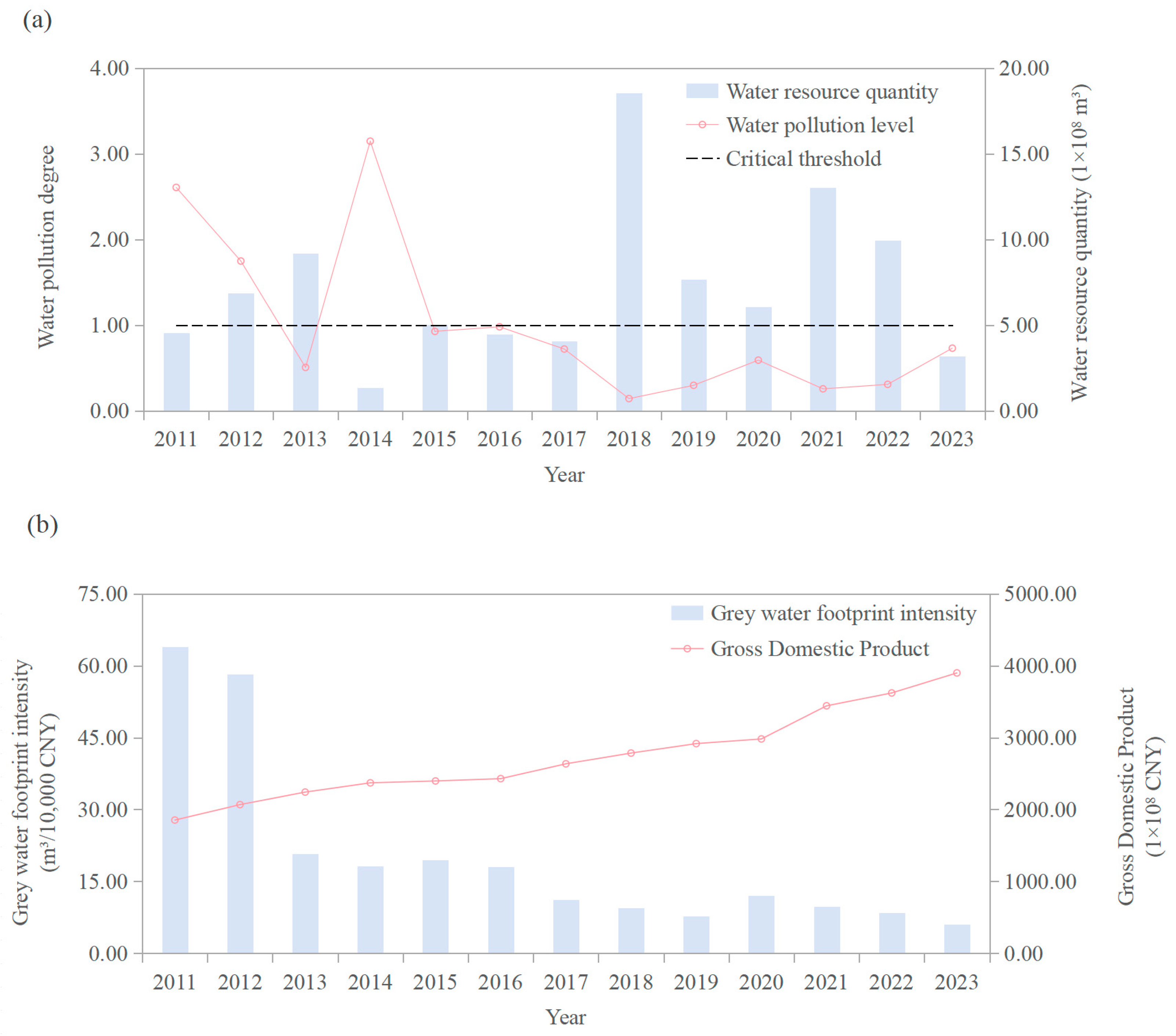
The grey water footprint in Dongying was evaluated using Equations (11) and (12). The results are presented in Figure 7.
Results indicate significant interannual fluctuations in the water pollution level. In 2011, 2012, and 2014, the water pollution level exceeded 100%, indicating that the grey water footprint was unsustainable. During these years, the water body lacked sufficient capacity to fully purify the pollutants. Although the water pollution degree in 2012 exceeded the critical threshold, it decreased notably compared with 2011. In 2012, the regional water environment quality improved but still required further enhancement. Due to a sharp drop in total water resources in 2014, the regional water pollution degree surged to the highest value, and the unsustainable state of the grey water footprint was pronounced. In other years, the grey water footprint was in a sustainable state, with good water environment quality.
During the study period, the grey water footprint intensity in Dongying decreased significantly. In 2011, the grey water footprint intensity was the highest, at 64.02 m3/10,000 CNY. In 2013, it dropped significantly to 20.77 m3/10,000 CNY, a decrease of 64.33% compared with 2012. In 2023, it reached the lowest value during the study period, at 6.02 m3/10,000 CNY. Compared with 2011, the grey water footprint intensity in 2023 decreased by 58.00 m3/10,000 CNY, with a reduction rate of 90.60%. The increase in economic output and the decrease in grey water footprint intensity indicate improvements in regional grey water footprint economic efficiency and water resource utilization efficiency.

4. Discussion

4.1. Quantification and Factor Analysis of Grey Water Footprint

Agriculture, industry, and domestic activities collectively influence the regional grey water footprint.
From 2011 to 2023, Dongying’s nitrogen fertilizer use dropped markedly from 37,200 to 17,000 tons, significantly lowering its agricultural grey water footprint. Concurrently, agricultural land grew from 376,100 to 480,400 hectares, and primary industry output rose from 9.325 billion to 19.524 billion CNY, which indicates strong agricultural economic growth even with less fertilizer and more land. Dongying possesses abundant land resources, but soil salinization poses challenges to the cultivated land development [49,50]. To promote agricultural development in the Yellow River Delta, improve the cultivation environment, and ensure food security, the State Council established the Agricultural High-tech Industrial Demonstration Area of the Yellow River Delta of Shandong Province and the National Center of Technology Innovation for Comprehensive Utilization of Saline-Alkali Land in Dongying. These initiatives aim to attract high-level talent and advanced technologies for reclaiming saline-alkali land [25,51]. In recent years, measures including agricultural restructuring and improved crop varieties have enhanced soil quality, alleviated land salinization, increased crop yields, and raised agricultural output [52,53]. Furthermore, progress in agricultural modernization and the adoption of green technologies and fertilizers have significantly reduced agricultural pollution [25,53].
Heavy chemical industry is a pillar industry of Dongying, exerting a profound impact on regional economic development. From 2011 to 2023, the regional industrial output value increased from 120.002 billion CNY to 212.757 billion CNY, while industrial water consumption increased from 151 million m3 to 276 million m3. In recent years, Dongying has strictly limited high water-use and high-pollution industries in its transition toward a water-saving industrial system. The city has actively encouraged industrial restructuring, optimized spatial distribution, and applied technological innovations [54]. Measures including water circulation and reclaimed water reuse have alleviated industrial water pollution and markedly improved water utilization efficiency [55]. Dongying is undergoing the transformation of traditional industry towards high-end, intelligent, and green development. During the study period, the regional industrial COD emissions decreased from 7575 tons to 2274 tons, and industrial ammonia nitrogen emissions dropped from 632 tons to 94 tons, leading to a reduction in industrial grey water footprint. In 2022 and 2023, Dongying was rated as a city with remarkable achievements in promoting industrial growth, stability, and transformation and upgrading in Shandong Province.
The domestic grey water footprint has the most significant impact on the regional total grey water footprint. During the study period, the regional domestic COD emissions decreased from 53,181 tons to 10,666 tons, and domestic ammonia nitrogen emissions dropped from 2053 tons to 832 tons, leading to a significant reduction in the domestic grey water footprint. Meanwhile, Dongying’s tertiary industry has developed, its population scale has expanded, and the urbanization process has accelerated—all of which have contributed to a continuous increase in regional domestic water consumption. From 2011 to 2023, the output value of the tertiary industry rose from 49.778 billion CNY to 148.094 billion CNY, and domestic water consumption increased from 87 million m3 to 161 million m3. In 2012, the Chinese government issued the “Opinions on Implementing the Strictest Water Resources Management System” to promote water conservation and enhance water use efficiency. This policy institutionalized the alignment of socioeconomic development with the water resource carrying capacity and the water environment. In the same year, Dongying released local regulations, including the “Dongying Water Resources Protection and Management Measures”, to reinforce water-saving and pollution control initiatives. Driven by policy implementation and advances in wastewater treatment technology, the domestic grey water footprint decreased sharply by 85.22% in 2013. During the study period, Dongying established differentiated and seasonal water pricing systems. These mechanisms have encouraged the public to adjust water usage patterns and raised water-saving awareness [55]. Consequently, both domestic water use efficiency and wastewater treatment performance improved significantly, maintaining the domestic grey water footprint at a relatively low level.
Technological advancements have significantly affected the agricultural, industrial, and domestic activities. The widespread adoption of new water-saving and wastewater treatment technologies has played a positive role in reducing the total grey water footprint. Although economic development and population agglomeration increase water consumption and water pollution, the accompanying technological progress will be more effective in water conservation and governance. During the study period, economic development, population agglomeration, technological progress, policy support, and ecological conservation collectively promoted regional sustainable development. As a result, the total grey water footprint was significantly reduced by 80.21%. Currently, there are relatively few studies on the prediction and regulation of the grey water footprint. In Dongying, the total grey water footprint is significantly influenced by the industrial and domestic sectors. Therefore, based on the grey water footprint accounting, the study incorporated data on regional industrial and domestic pollutant discharges to forecast its future development trend. Looking forward, if domestic and industrial pollutant emissions decrease by 10%, 20%, and 30% annually, the regional grey water footprint is projected to fall below 100 million m3 by 2043, 2033, and 2029, respectively. Strengthened supervision of pollutant emissions will be crucial for further reducing the grey water footprint.
In recent years, scholars have conducted extensive research on the grey water footprint across different time periods and spatial scales. Shen et al. found that the grey water footprint of Shandong Province decreased significantly during 2005–2017, with Dongying’s annual average grey water footprint being notably lower than that of other cities in the province [21]. Meng identified that the grey water footprint of coastal cities in the Shandong Peninsula declined significantly from 2013 onwards during the period 2011–2020 [13]. The change trend of Dongying’s grey water footprint is consistent with that of the total grey water footprint of coastal cities in the Shandong Peninsula. However, Dongying’s annual average contribution rate to the total grey water footprint of coastal cities in the Shandong Peninsula is only 7.85%, significantly lower than that of other coastal cities. Dongying has achieved effective control over its grey water footprint. Cheng et al. found that the grey water footprint of most provinces in China decreased significantly between 2011 and 2021 [56]. Shanghai, a typical developed coastal city, has achieved a significant reduction in its grey water footprint, with a reduction rate of 66.81%. Only the inland regions of Xizang, Qinghai, and Xinjiang have experienced an increase in grey water footprint, with growth rates of 5.88%, 22.69%, and 23.19%, respectively. In recent years, the grey water footprint of coastal areas such as Dongying and Shanghai has decreased significantly. Influenced by climate, geographic location, economic development, and population density, the grey water footprints of some inland cities have experienced an increase.
Yang’s research showed that Shanghai’s grey water footprint decreased by 11.511 billion m3 from 1998 to 2016, representing a reduction of 59.56%. The study used the LMDI model to explore the impacts of four factors—technological level, industrial structure, economic level, and population size—on Shanghai’s grey water footprint [57]. Technical factor is a significant negative factor affecting Shanghai’s grey water footprint. Economic level, population size, and industrial structure are the driving factors for the increase in Shanghai’s grey water footprint. The effects of technology, economy, and population on Dongying’s grey water footprint are consistent with those in Shanghai. Yang also discussed the impact of industrial structure on grey water footprint. Industrial structure exerts a positive driving effect on Shanghai’s grey water footprint. But its influence is the smallest among the four factors.

4.2. Evaluation of Grey Water Footprint

Dongying has significantly reduced its grey water footprint in recent years, while maintaining water pollution below the critical threshold and sustaining sound water purification capacity. However, in 2014, the water pollution level increased sharply to 3.15, indicating an unsustainable grey water footprint. This was associated with lower water resource availability that year. The average annual water resources are 901 million m3 in Dongying, but in 2014 they fell to only 137 million m3. Although pollutant emissions were lower than in previous years, the sharp decline of water resources made it difficult for water bodies to meet purification requirements. In 2023, although the grey water footprint remained sustainable, the regional water resources were only 321 million m3, bringing the water pollution level close to the critical threshold. In the next step, Dongying should enhance water storage and conservation. Meanwhile, it should also increase the utilization of unconventional water sources. Through improved policies, technological innovation, strengthened supervision, and raised public awareness of water conservation, the city can save water, reduce pollution, and achieve sustainable water resource utilization [25,55].
During the study period, the grey water footprint intensity in Dongying decreased significantly by 90.60%. Meanwhile, the regional water resource utilization efficiency and water footprint economic benefits improved. This demonstrates a positive scenario of coordinated development between water resource utilization and economic development. Moving forward, it is essential to optimize water allocation schemes across different fields and realize the parallel advancement of water conservation, water governance, and economic development. In addition, efforts should be made to integrate water resource utilization with urban functions and regional industries. Increased investment in technological innovation is needed to develop a circular economy and a green economy.
Wang et al. found that China’s average water pollution level was 1.16, and the average grey water footprint intensity was 6.04 m3/10,000 CNY in 2016 [24]. In eastern Chinese cities, the average water pollution level is 0.96, and the average grey water footprint intensity is 6.90 m3/10,000 CNY. In addition to the relatively abundant water resources and pollutant assimilation capacity in some cities of eastern China, stringent environmental measures have played a major role in reducing point-source pollutant emissions. In the same year, Dongying water pollution level was 0.98, slightly higher than the average level of eastern Chinese cities but lower than the national average, showing a long-term sustainable state. In 2016, the grey water footprint intensity in Dongying was 18.12 m3/10,000 CNY, significantly higher than the average level of eastern Chinese cities. Through measures such as water conservation, pollution control, and environmental governance, Dongying’s grey water footprint intensity had decreased substantially to 6.02 m3/10,000 CNY by 2023. The water resource utilization efficiency and the economic benefits of grey water footprint have been significantly improved.
Du et al.’s study showed that the water pollution level in Yinchuan consistently exceeded 1 from 2009 to 2018 [58]. During the same period, the grey water footprint intensity in Yinchuan dropped from 567.5 m3/CNY to 106.53 m3/CNY. In contrast, Dongying’s water pollution level remained below 1 for many years, and its grey water footprint intensity was lower than that of Yinchuan. As a typical inland city, Yinchuan exhibits significant differences from Dongying.

5. Conclusions

From 2011 to 2023, the total grey water footprint in Dongying decreased from 1.186 billion m3 to 235 million m3, a reduction of 80.21%. The agricultural, industrial, and domestic grey water footprints all showed declining trends, with decreases of 54.19%, 69.98%, and 86.77%, respectively. Among them, the domestic grey water footprint significantly influenced changes in the total grey water footprint. Technological factors were identified as a significant negative driver of grey water footprint. Technological improvements contributed to the grey water footprint reduction. In contrast, economic and population factors acted as positive drivers; economic growth and population increase led to a rise in the grey water footprint. The technological factors had the greatest influence on the grey water footprint, while population factors had the smallest but most stable impact. In addition, changes in the grey water footprint were also affected by local policies and pollutant emissions. Between 2011 and 2023, both the water pollution level and the grey water footprint intensity in Dongying decreased significantly. The grey water footprint remained largely sustainable, with improved economic benefits and water utilization efficiency. Regional water quality was generally sound, and economic development was relatively well-coordinated with water resource utilization. In the next phase, efforts should be enhanced in water resource protection and water pollution control, and exploration of pathways for green development should be promoted.
For coastal water-scarce cities such as Dongying, it is crucial to enhance water re-source protection and water environment management, strengthen supervision over pollutant emissions, optimize the industrial structure, promote the utilization of clean energy, increase investment in science and technology, introduce high-level talents and advanced technologies to promote scientific research and innovation, develop a circular economy and realize the recycling of resources, improve water pollution treatment technologies and enhance the utilization of reclaimed water, raise water conservation awareness across all sectors, and improve water resource utilization efficiency. These measures can contribute to regional sustainable development. This study assessed the grey water footprint at the municipal level of Dongying. It did not cover the district or county scale. Future research will conduct a comparative analysis of the grey water footprint at the district and county scale, aiming to fully characterize the current status of regional grey water footprint. Meanwhile, the research scope will be expanded to include more coastal cities, with a focus on comparing differences in grey water footprint among these cities.

Author Contributions

Conceptualization, J.W. and X.M.; methodology, J.W., J.L. (Jian Lu), and X.M.; software, X.M.; validation, J.L. (Jian Lu), J.W., and W.D.; formal analysis, X.M.; investigation, J.C.; resources, G.S.; data curation, J.L. (Jiazhou Lin); writing—original draft preparation, X.M.; writing—review and editing, J.W.; visualization, J.A.; supervision, J.L. (Jian Lu); project administration, W.D.; funding acquisition, W.D. All authors have read and agreed to the published version of the manuscript.

Funding

This research was funded by the Yellow River Delta Natural Resources Comprehensive Survey Monitoring and Evaluation Project of the Yantai Center of Coastal Zone Geological Survey of the China Geological Survey, grant number DD20220886.

Data Availability Statement

The data presented in this study are available on request from the corresponding author. The data are not publicly available because they form part of an ongoing study.

Acknowledgments

The author expresses gratitude to the editors and anonymous reviewers, whose significant contributions were instrumental in shaping and refining the manuscript.

Conflicts of Interest

Author Jianhao An was employed by the company Wanhua Chemical Group Co., Ltd. The remaining authors declare that the research was conducted in the absence of any commercial or financial relationships that could be construed as a potential conflict of interest.

References

  1. Al-Addous, M.; Bdour, M.; Alnaief, M.; Rabaiah, S.; Schweimanns, N. Water Resources in Jordan: A Review of Current Challenges and Future Opportunities. Water 2023, 15, 3729. [Google Scholar] [CrossRef]
  2. Du, L.; Niu, Z.; Zhang, R.; Zhang, J.; Jia, L.; Wang, L. Evaluation of water resource carrying potential and barrier factors in Gansu Province based on game theory combined weighting and improved TOPSIS model. Ecol. Indic. 2024, 166, 112438. [Google Scholar] [CrossRef]
  3. Tao, M.; Zhao, Y.; Jiang, Q.; Wang, Z.; Wu, Y. Study on the nonlinear transition relationship between water resources consumption and economic development in Heilongjiang province based on system dynamics. J. Hydrol. Reg. Stud. 2025, 57, 102193. [Google Scholar] [CrossRef]
  4. World Economic Forum. Global Risks 2015; World Economic Forum: Geneva, Switzerland, 2015. [Google Scholar]
  5. Central Committee of the Communist Party of China & State Council. Outline of the National Water Network Construction Plan. China Water Resour. 2023, 11, 1–7. [Google Scholar]
  6. Cao, P.; Wang, H.; Hu, Q.; Yi, Y.; Fei, L. Research on China’s water-saving policies and practices. Water Resour. Dev. Res. 2025, 25, 21–28. [Google Scholar] [CrossRef]
  7. Fang, D.; Song, C.; Li, C.; Lei, D.; Song, G.; Yuan, J.; Tong, C.; Cao, L. Analysis of water stress and driving factors based on virtual water flows in China. Acta Geogr. Sin. 2025, 80, 712–723. [Google Scholar] [CrossRef]
  8. Huo, J.; Tian, C. Research on implied carbon emissions and implied water resource utilization in China’s international trade under the dual carbon goals. Ecol. Econ. 2025, 41, 87–93+144. [Google Scholar]
  9. Pan, B.; Han, M.; Li, Y.; Wang, M.; Du, H. An analysis on the trend of sustainable utilization of water resources in Dongying City, China. Water Resour. 2021, 48, 158–166. [Google Scholar] [CrossRef]
  10. Wang, C.; Wang, Y.; Wang, R.; Zheng, P. Modeling and evaluating land-use/land-cover change for urban planning and sustainability: A case study of Dongying city, China. J. Clean. Prod. 2018, 172, 1529–1534. [Google Scholar] [CrossRef]
  11. Hoekstra, A.Y.; Hung, P.Q. Virtual water trade: A quantification of virtual water flows between nations in relation to international crop trade. Water Sci. Technol. 2002, 49, 203–209. [Google Scholar]
  12. Hoekstra, A.Y.; Chapagain, A.K.; Aldaya, M.M.; Mekonnen, M.M. The Water Footprint Assessment Manual: Setting the Global Standard; Earthscan: London, UK, 2011. [Google Scholar]
  13. Meng, X. Study on Water Footprint of Coastal Cities in Shandong Peninsula. Master’s Thesis, Ludong University, Yantai, China, 2023. [Google Scholar]
  14. Depeng, Z.; Yiqing, B.; Yonghui, S.; Zongxue, X.; Guoqiang, W.; Guangwen, M.; Karim, C.A.; Hong, Y. The response of non-point source pollution to land use change and risk assessment based on model simulation and grey water footprint theory in an agricultural river basin of Yangtze River, China. Ecol. Indic. 2023, 154, 110581. [Google Scholar] [CrossRef]
  15. Vaez, R.M.; Ali, D.; Shervin, J.; Mohamadreza, Y. A multi-pollutant pilot study to evaluate the grey water footprint of irrigated paddy rice. Agric. Water Manag. 2023, 282, 108291. [Google Scholar] [CrossRef]
  16. Changxin, X.; Yu, L.; Tianbo, F. Spatial-temporal evolution and driving factors of grey water footprint efficiency in the Yangtze River Economic Belt. Sci. Total Environ. 2022, 844, 156930. [Google Scholar] [CrossRef]
  17. Xue, M.; Jian, L.; Jun, W.; Zhenhua, Z.; Liwei, C. Quantification and evaluation of grey water footprint in Yantai. Water 2022, 14, 1893. [Google Scholar] [CrossRef]
  18. Mekonnen, M.M.; Hoekstra, A.Y. The green, blue and grey water footprint of crops and derived crop products. Hydrol. Earth Syst. Sci. Discuss. 2011, 8, 763–809. [Google Scholar] [CrossRef]
  19. Wu, B.; Zeng, W.; Chen, H.; Zhao, Y. Grey water footprint combined with ecological network analysis for assessing regional water quality metabolism. J. Clean. Prod. 2016, 112, 3138–3151. [Google Scholar] [CrossRef]
  20. Zhou, Y.; Wang, C.; Guo, X.; Zhao, D.; Liu, K.; Guo, C. Assessment of grey water footprint pressure in the Yangtze River basin and its relationship with water quality. Ecol. Front. 2025, 45, 154–163. [Google Scholar] [CrossRef]
  21. Shen, H.; Chen, Z.; Liu, J.; Zheng, Z. Analysis of the regional equilibrium of grey water footprint in Shandong Province. Water Sav. Irrig. 2022, 3, 1–7. [Google Scholar]
  22. Xian, C.; Pan, X.; Zhen, Q.; Han, B.; Jiang, Y.; Zhou, W.; Ouyang, Z. Integrated assessments of nitrogen pollution footprints and grey water footprints in the urban ecosystem. Acta Sci. Circumstantiae 2019, 39, 985–995. [Google Scholar] [CrossRef]
  23. Dong, J.; Liu, X.; Li, Z. Assessment of sustainability of water resource utilization on the northern slope of Tianshan Mountains based on grey water footprint. South-to-North Water Transf. Water Sci. Technol. 2025, 23, 69–78. [Google Scholar] [CrossRef]
  24. Wang, Y.; Xian, C.; Ouyang, Z. Integrated assessment of sustainability in urban water resources utilization in China based on grey water footprint. Acta Ecol. Sin. 2021, 41, 2983–2995. [Google Scholar] [CrossRef]
  25. Zuo, Q.; Wu, X.; Shi, J.; Wang, Q.; Liu, Z.; Zhu, A.; Yin, D.; Feng, Q.; Ji, W.; Kang, S. Constraints and coordinated allocation strategies of water and land resources for sustainable use of coastal saline-alkali land in the Yellow River Delta. Strateg. Study CAE 2023, 25, 169–179. [Google Scholar] [CrossRef]
  26. Tang, J.; Ding, W.; Li, W.; Liu, X. Study on Evaluation of Water Resources Carrying Capacity and Obstacle Factors in the Yellow River Basin. Yellow River 2021, 43, 73–77. [Google Scholar] [CrossRef]
  27. Wang, K.; Du, X.; Yu, S. Discussions on collaborative development of comprehensive governance of Yellow River Estuary and ecological protection. China Water Resour. 2025, 7, 7–13+62. [Google Scholar] [CrossRef]
  28. Li, S.; Li, F. Analysis of water ecological security and water resources intensive utilization strategies in Dongying. J. Party Sch. Shengli Oilfield 2023, 36, 54–58. [Google Scholar] [CrossRef]
  29. Wang, K.; Zhang, L.; Dou, S.; Wang, G.; Wu, Y.; Chen, J.; Ji, Y.; Fan, Y. Study of the coordination relationship between the water capacity and the distribution of productive forces in the Yellow River Delta. China Water Resour. 2022, 16, 10–13. [Google Scholar]
  30. Zhang, C.; Dong, B.; Liu, J. Current Status Evaluation and Protection Countermeasures of Groundwater Resources in Dongying City. Shandong Water Resour. 2021, 2, 75–76. [Google Scholar] [CrossRef]
  31. Xu, Y.; Li, C. A novel multidimensional framework for bridging conservation gaps and optimizing the system of natural reserves for biodiversity: A case study of Dongying, China. Ecol. Indic. 2025, 170, 113088. [Google Scholar] [CrossRef]
  32. Liu, Y. Spatiotemporal Evolution of Land Subsidence and Mechanism Discussion in the Yellow River Delta, China. Ph.D. Thesis, Institute of Oceanology, Chinese Academy of Science, Qingdao, China, 2013. [Google Scholar]
  33. Niu, M. Study on the Protection and Utilization of Agricultural Heritage in Dongying City Under the Background of the Construction of Yellow River National Cultural Park. Master’s Thesis, Shandong University of Art & Design, Jinan, China, 2024. [Google Scholar]
  34. Gao, Z.; Xing, L. Study on Dynamic Change Features of Wetlands in Dongying City Based on RS. Procedia Environ. Sci. 2011, 10, 2141–2146. [Google Scholar] [CrossRef]
  35. Jinfeng, Y.; Jiang, Z.; Shiyi, Z.; Fenzhen, S. Coastal wetland degradation and ecosystem service value change in the Yellow River Delta, China. Glob. Ecol. Conserv. 2023, 44, e02501. [Google Scholar] [CrossRef]
  36. Meng, Y. Analysis of development trends in Shandong’s Dongying integration into the provincial capital economic circle. China Natl. Cond. Strength 2021, 5, 77–79. [Google Scholar] [CrossRef]
  37. Liu, H. Research on the Transformation Path of Dongying’s Resource-Based City from the Perspective of Life Cycle Theory. Master’s Thesis, Shandong University, Jinan, China, 2022. [Google Scholar]
  38. Xia, J.; Zuo, Q.; Wu, Q. Research framework, key issues and prospects of the Human-Water Relationship in the Yellow River Basin. Yellow River 2025, 47, 1–8. [Google Scholar] [CrossRef]
  39. Zhao, Y.; He, F.; He, G.; Li, H.; Wang, L.; Chang, H.; Zhu, Y. Review the phenomenon of Yellow River cutoff from a whole perspective and identification of current water shortage. Yellow River 2020, 42, 42–46. [Google Scholar] [CrossRef]
  40. Zhang, J.; Yang, J.; Li, Z.; Ma, Y.; Ren, G.; Zhang, H.; Wang, A.; Liu, Y.; Xu, M.; Hu, Y.; et al. Challenges to the ecological conservation and high-quality development of the Yellow River Delta and countermeasures for scientific and technological support. Mar. Sci. 2023, 47, 79–89. [Google Scholar] [CrossRef]
  41. GB 8978-1996; Integrated Wastewater Discharge Standard. State Environmental Protection Agency of the People’s Republic of China: Beijing, China, 1997.
  42. Wang, S.; Lin, Y. Spatial evolution and its drivers of regional agro-ecological efficiency in China from the perspective of water footprint and grey water footprint. Sci. Geogr. Sin. 2021, 41, 290–301. [Google Scholar] [CrossRef]
  43. Liu, H.; Chen, M.; Tang, Z. Study on ecological compensation standards of water resources based on grey water footprint: A case of the Yangtze River economic belt. Resour. Environ. Yangtze Basin 2019, 28, 2553–2563. [Google Scholar] [CrossRef]
  44. Choi, Z.K.H. Factorizing changes in energy and environmental indicators through decomposition. Energy 1998, 23, 489–495. [Google Scholar] [CrossRef]
  45. Wang, L.; Hou, B.; Zhou, Y.; Chen, X.; Wang, X. Evaluation of water resources utilization based on water footprint theory in Beijing. South-to-North Water Transf. Water Sci. Technol. 2021, 19, 680–688. [Google Scholar] [CrossRef]
  46. Wu, P. Virtual Water and Water Footprint; Higher Education Press: Beijing, China, 2019. [Google Scholar]
  47. Zhao, L. Study on spatial convergence of grey water footprint intensity on provincial scale in China. J. Liaoning Norm. Univ. (Nat. Sci. Ed.) 2017, 40, 541–547. [Google Scholar] [CrossRef]
  48. Bai, T.; Sun, C. Regional inequality and factor decomposition of the per capita grey water footprint in China. Acta Ecol. Sin. 2018, 38, 6314–6325. [Google Scholar] [CrossRef]
  49. Fu, Y.; Wang, P.; Cao, W.; Fu, S.; Zhang, J.; Li, X.; Guo, J.; Huang, Z.; Chen, X. Long-term assessment of soil salinization patterns in the Yellow River Delta using landsat imagery from 2003 to 2021. Land 2024, 14, 24. [Google Scholar] [CrossRef]
  50. Tiantian, C.; Jiahua, Z.; Sha, Z.; Yun, B.; Jingwen, W.; Shuaishuai, L.; Tehseen, J.; Xianglei, M.; Pangali, S.T.P. Monitoring soil salinization and its spatiotemporal variation at different depths across the Yellow River Delta based on remote sensing data with multi-parameter optimization. Environ. Sci. Pollut. Res. Int. 2021, 29, 24269–24285. [Google Scholar] [CrossRef]
  51. Working Committee of Agricultural High-Tech Industry Demonstration Area of the Yellow River Delta of Shandong Province. Promoting high-quality development of agricultural high-tech industry demonstration area of the Yellow River Delta. Bull. Chin. Acad. Sci. 2020, 35, 183–188. [Google Scholar] [CrossRef]
  52. Yinshuai, L.; Chunyan, C.; Zhuoran, W.; Gengxing, Z. Upscaling remote sensing inversion and dynamic monitoring of soil salinization in the Yellow River Delta, China. Ecol. Indic. 2023, 148, 110087. [Google Scholar] [CrossRef]
  53. Zhang, W. Study on the Influence of Modern Agricultural Industrial Structure Adjustment on Agricultural Economic Growth in Dongying City, Shandong Province. Master’s Thesis, Yangtze University, Jingzhou, China, 2021. [Google Scholar]
  54. Wang, Q.; Zeng, G. Spatial Organization of Innovation in the Oil Equipment Manufacturing Industry: Case of Dongying, China. Chin. Geogr. Sci. 2019, 30, 324–339. [Google Scholar] [CrossRef]
  55. Song, Z.; Zhi, X.; Meng, X.; Song, M. Path exploration and practical innovation for building a water-saving society in Dongying city. In Proceedings of the 2025 (9th) Conference on Efficient Water Use and Water-Saving Technologies in China, Yiwu, China, 27–29 May 2025; p. 5. [Google Scholar]
  56. Cheng, P.; Sun, M.; Song, X. Study on the spatial and temporal dynamic evolution and driving factors of grey water footprint in China. Ecol. Environ. Sci. 2024, 33, 745–756. [Google Scholar] [CrossRef]
  57. Yang, M. Decoupling Analysis of Water Resources and Economic Growth in Shanghai Based on Water Footprint. Master’s Thesis, East China Normal University, Shanghai, China, 2019. [Google Scholar]
  58. Du, Q.; Sun, X.; Tang, L. Design of clay core wall weathered dam considering the deterioration of soft rock. Water Conserv. Constr. Manag. 2024, 44, 61–68+73. [Google Scholar] [CrossRef]
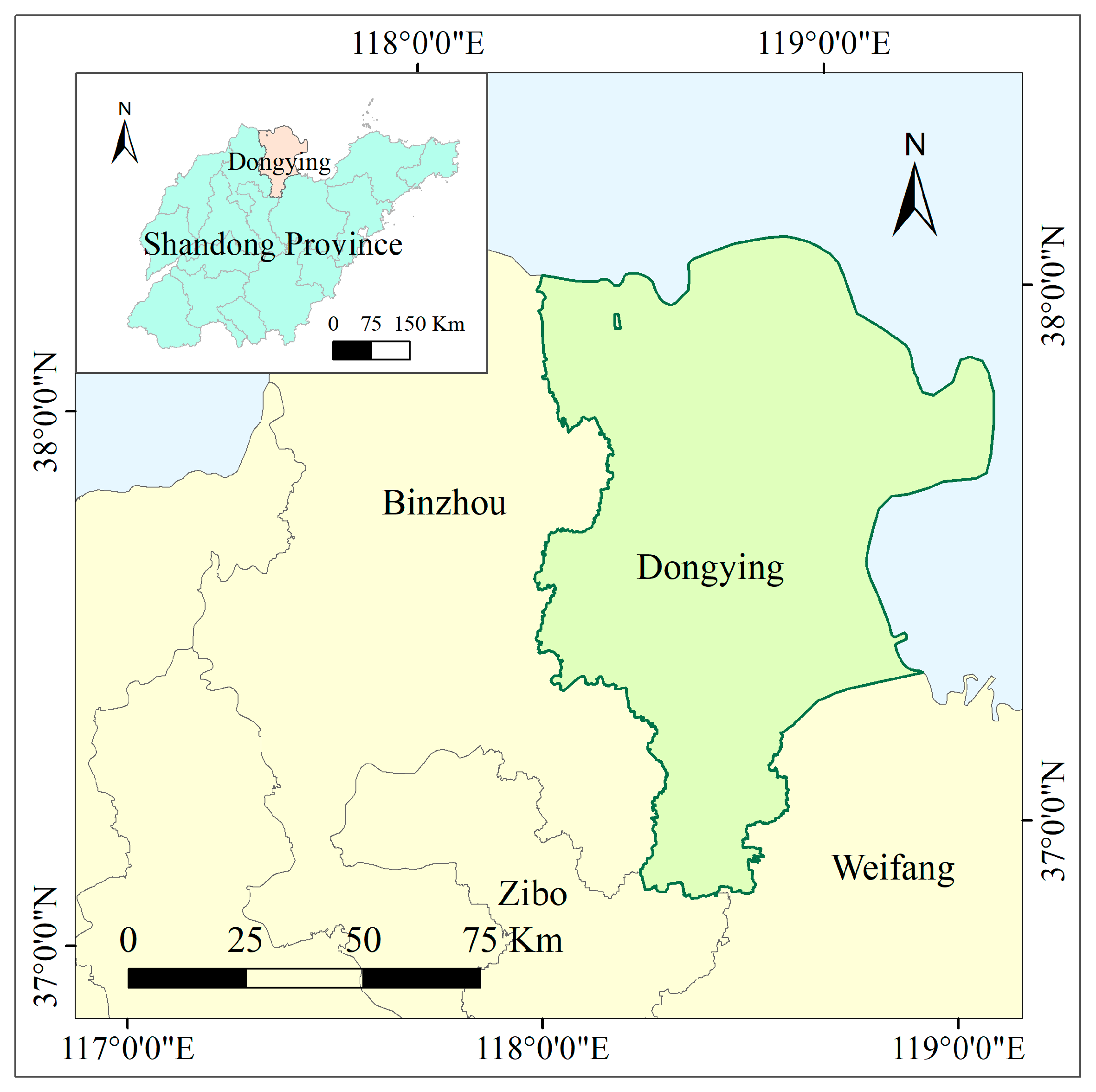
Figure 1. Location map.
Water 18 00003 g001
Figure 2. Methodology flowchart.
Water 18 00003 g002
Figure 3. Interannual variation trends of grey water footprints in Dongying City from 2011 to 2023: (a) agricultural grey water footprint; (b) industrial grey water footprint; (c) domestic grey water footprint.
Water 18 00003 g003
Figure 4. Interannual variation in the total grey water footprint in Dongying from 2011 to 2023.
Water 18 00003 g004
Figure 5. Impact of pollutant emissions on grey water footprint in Dongying: (a) COD; (b) ammonia nitrogen.
Water 18 00003 g005
Figure 6. Prediction of grey water footprint in Dongying: (a) 10% annual reduction in COD; (b) 20% annual reduction in COD; (c) 30% annual reduction in COD.
Water 18 00003 g006
Figure 7. Evaluation of grey water footprint in Dongying: (a) water pollution degree; (b) grey water footprint intensity.
Water 18 00003 g007
Table 1. Pearson correlation analysis of grey water footprint in Dongying.
IndicatorCorrelation Coefficient (r)
Agricultural grey water footprint0.50
Industrial grey water footprint0.82 **
Domestic grey water footprint0.98 **
Notes: 1. 0.0 ≤ |r| < 0.3, weak correlation; 0.3 ≤ |r| < 0.8, moderate correlation; 0.8 ≤ |r| ≤ 1.0, strong correlation; 2. **, extremely significant correlation (p < 0.01).
Table 2. Decomposition and statistics of influencing factors (unit: 100 million m3).
YearPopulation EffectEconomic EffectTechnical EffectTotal Effect
2011–20120.10 1.21 −1.13 0.18
2012–20130.05 0.58 −8.01 −7.39
2013–20140.03 0.22 −0.60 −0.35
2014–20150.02 0.02 0.31 0.36
2015–20160.05 0.01 −0.33 −0.27
2016–20170.04 0.26 −1.75 −1.46
2017–20180.02 0.13 −0.45 −0.30
2018–20190.01 0.10 −0.47 −0.36
2019–20200.02 0.05 1.24 1.30
2020–20210.002 0.50 −0.74 −0.24
2021–20220.02 0.14 −0.43 −0.26
2022–2023−0.0040.20 −0.93 −0.73
Mean value0.03 0.29 −1.11 −0.79
Standard deviation0.03 0.33 2.20 2.08
Variation coefficient0.89 1.14 −1.98 −2.63
Proportion2.08%20.08%77.84%100.00%
Disclaimer/Publisher’s Note: The statements, opinions and data contained in all publications are solely those of the individual author(s) and contributor(s) and not of MDPI and/or the editor(s). MDPI and/or the editor(s) disclaim responsibility for any injury to people or property resulting from any ideas, methods, instructions or products referred to in the content.