Next Article in Journal
Assessing Rating Curves in River Gauging Stations for Computing Design Extreme Events for Several Return Periods
Previous Article in Journal
Effects of Short, Flexible Fibers on Clogging and Erosion in a Sewage Pump
error_outline You can access the new MDPI.com website here. Explore and share your feedback with us.
 
 
Article

The Influence of Hydrogeological and Anthropogenic Factors on PFAS Distribution in Deep Multilayer Alluvial Aquifer: The Case Study of Parma Plain, Northern Italy


1
Department of Chemistry, Life Sciences and Environmental Sustainability, University of Parma, Parco Area Delle Scienze 157/A, 43124 Parma, Italy
2
Geological, Soil and Seismic Survey, Emilia-Romagna Region, Viale Della Fiera, 8, 40127 Bologna, Italy
*
Author to whom correspondence should be addressed.
Water 2026, 18(1), 117; https://doi.org/10.3390/w18010117
Submission received: 11 November 2025 / Revised: 22 December 2025 / Accepted: 31 December 2025 / Published: 3 January 2026
(This article belongs to the Section Hydrogeology)

Abstract

Few hydrogeological studies have focused on possible per- and poly-fluoroalkyl substance (PFAS) contamination in groundwater with particular attention to the role of hydraulic interconnections and to the interdigitations present between shallow and deep aquifer layers in heterogeneous alluvial systems. In general, deeper groundwater is considered chemically safer and less impacted by contamination, especially in multilayer aquifers characterized by low permeability apparently confining horizons. Therefore, this research analyzed PFAS in groundwater at depths ranging from 20 to 120 m below ground level, combining stratigraphic, hydrogeological, and chemical data with GIS mapping to identify industrial activities potentially contributing to PFAS contamination using the cross-checking methodology. During the second survey, the monitoring network was extended along a hydrogeological transect, including two springs located upstream and downstream of the deep wells, to assess PFAS concentration in shallow groundwater and the possible transfer along the groundwater flow path. The intra-site comparative analysis reveals, for the same sampling locations, a differentiation in the PFAS profiles detected across the two monitoring campaigns, indicating a temporal evolution in the chemical composition. Furthermore, chemical results show the presence of PFAS exclusively in deep monitoring wells, confirming a spatially heterogeneous distribution within the aquifer system. These results highlight both the temporal and spatial evolution of PFAS concentration, suggesting a complex contaminant migration pathway along preferential gravel and sand horizons in deeper aquifer layers. The conceptual hydrogeological model confirmed hydraulic interconnections among aquifer layers and identified zones of higher vulnerability to contamination. The analysis of possible PFAS migration pathways at the basin scale raised some questions about the influence of wells features and management practices on PFAS distribution in shallow and deep groundwater. The findings of this research contribute to environmental sustainability, providing initial insights for measuring and managing the presence and pathways of PFAS in deep alluvial aquifers.

1. Introduction

Per- and poly-fluoroalkyl substances (PFAS) are a wide class of synthetically produced chemicals, comprising over 4700 compounds [1,2] that have been produced since the 1940s [3]. Their chemical structure, marked by the existence of carbon fluorine bonds, gives them remarkable stability, making PFAS attractive for use in numerous industrial applications [4]. However, the same properties that justify their wide industrial use are also the basis of their high environmental persistence [5] and bioaccumulability [6]. PFAS are characterized by their hydrophobic and lipophobic properties, which contribute to their great mobility and resistance to degradation in natural environments [7]. For this reason, these chemicals can be transported over long distances in water, allowing their detection even in territories remote from the release place of [8].
PFAS are considered ubiquitous substances as they have been detected in surface water [9,10], drinking water [10,11], wastewater [12], rainwater [13], landfill leachate [14], soil [15], and sediment [16].
Also known as “forever chemicals” [17], some PFAS are associated with toxicological effects relevant to human health [18], including endocrine interference [19], liver dysfunction [20], an increased risk of certain malignancies [21], and possible effects on fetal and infant development [22].
Since 2010, with the European Commission’s restrictions on the utilization of long-chain PFAS (such as PFOA and PFOS), there has been a shift toward the use of short-chain compounds, such as PFBA, PFHxA, and PFHpA [23]. Although initially considered less persistent and less toxic, the remarkable chemical stability and environmental persistence of short-chain PFAS have been proven to be often comparable to or higher than those of long-chain PFAS [24]. Furthermore, short-chain PFAS display higher solubility and mobility in groundwater systems, posing new challenges for remediation and monitoring strategies [25].
For these reasons, PFAS are classified as emerging contaminants and are a growing priority in environmental and health research [26]. However, fewer hydrogeological studies have focused on possible PFAS contamination in groundwater with an emphasis on the role of hydraulic interconnections between surface water and groundwater as well as surface water and deep aquifer layers in heterogeneous alluvial systems. In particular, Northern Italy has recently become a focus area due to extensive PFAS contamination in the Veneto region, where industrial emissions have impacted both surface and groundwater reservoirs [27,28]. To the authors’ knowledge, few hydrogeological studies have specifically investigated the role of hydraulic interconnections between higher permeability layers in multilayered alluvial aquifers in the propagation of PFAS into deep groundwater. It is emphasized that deep groundwater in confined aquifers is commonly abstracted for drinking purposes and is generally considered less vulnerable to contamination [29].
Therefore, this research was implemented to investigate the presence of PFAS in a multilayered 120 m deep alluvial system. The study adopted a multidisciplinary approach, including stratigraphic, hydrogeological, and chemical analyses, combined with territorial investigation, using a cross-checking methodology. The aim was to provide new insights into PFAS occurrence, distribution patterns, and potential correlations with hydrogeological features, estimating the correspondence between areas with PFAS-using industries and observed PFAS concentrations, thereby contributing to the understanding of contaminant dynamics in complex alluvial systems.

2. Study Area

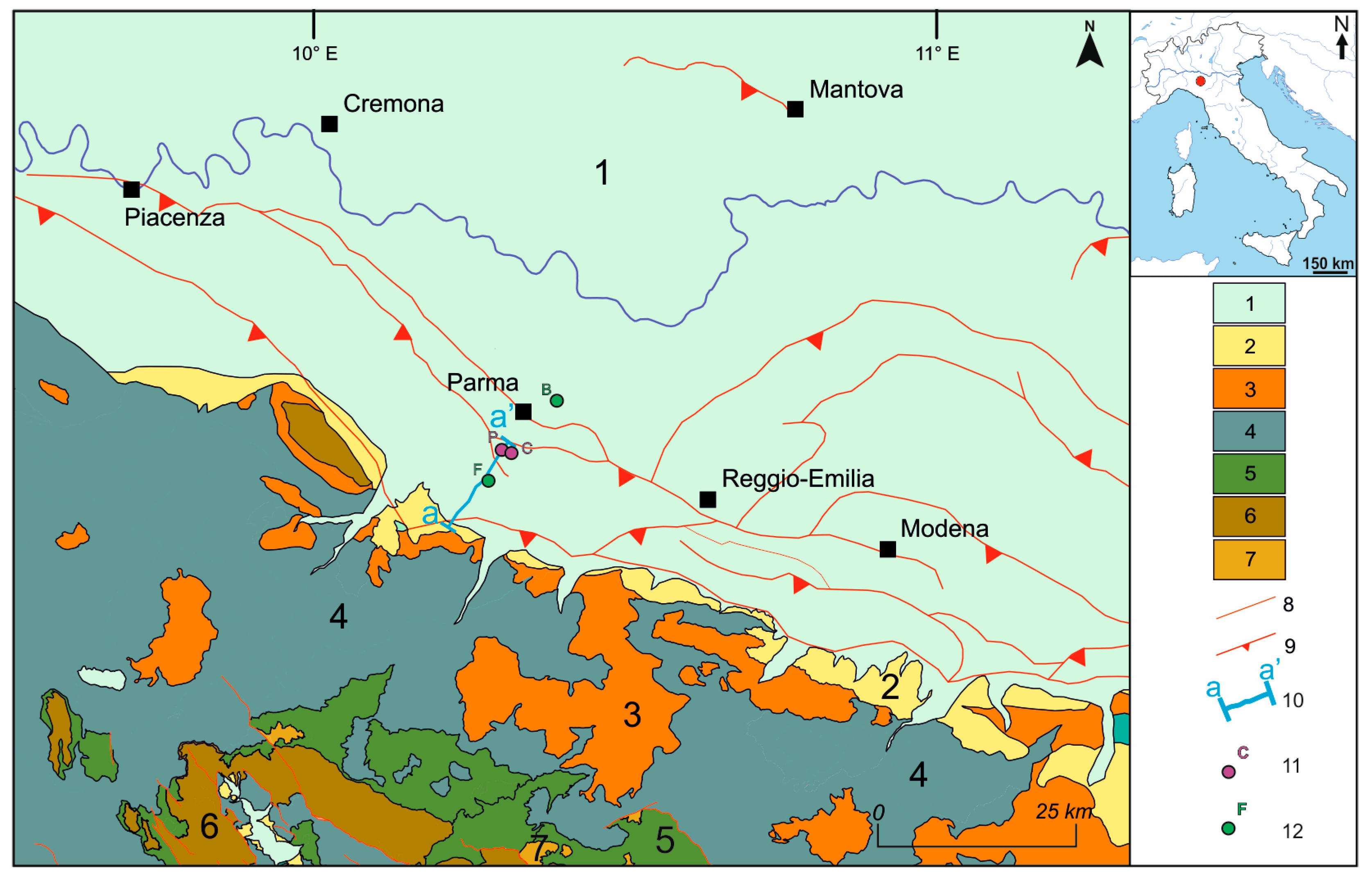
The study area is situated in a part of the Po Valley located to the south of the urban area of Parma (Northern Italy). In a geological perspective, the southern edge is composed of the growing Apennine Mountains, consisting of deep-sea deposits that have overlapped during the chain’s orogeny from the Cretaceous period to the present day [30,31,32,33]. Proceeding towards the valley and northwards, almost the entire area analyzed consists of an alluvial plain whose subsurface comprises hundreds of meters of sedimentary succession, formed by layers of gravel and sand alternating with layers of clay and silt. These layers were formed during the Pleistocene-Holocene period and are linked to the dynamics of erosion, transport, and deposition of the ancient Apennine watercourses that eroded the chain during its uplift [34,35,36]. Due to its syntectonic nature, this succession is more shallow and thinner in the foothills and deeper and thicker in the low basin area, deformed by numerous tectonic thrusts of the buried chain under the plain [37,38,39,40]. A clay Pliocene unit forms the base of the analyzed sequence, both at the bottom of the plain and in outcrops along the morphological margin of the Apennine [41] (Figure 1).
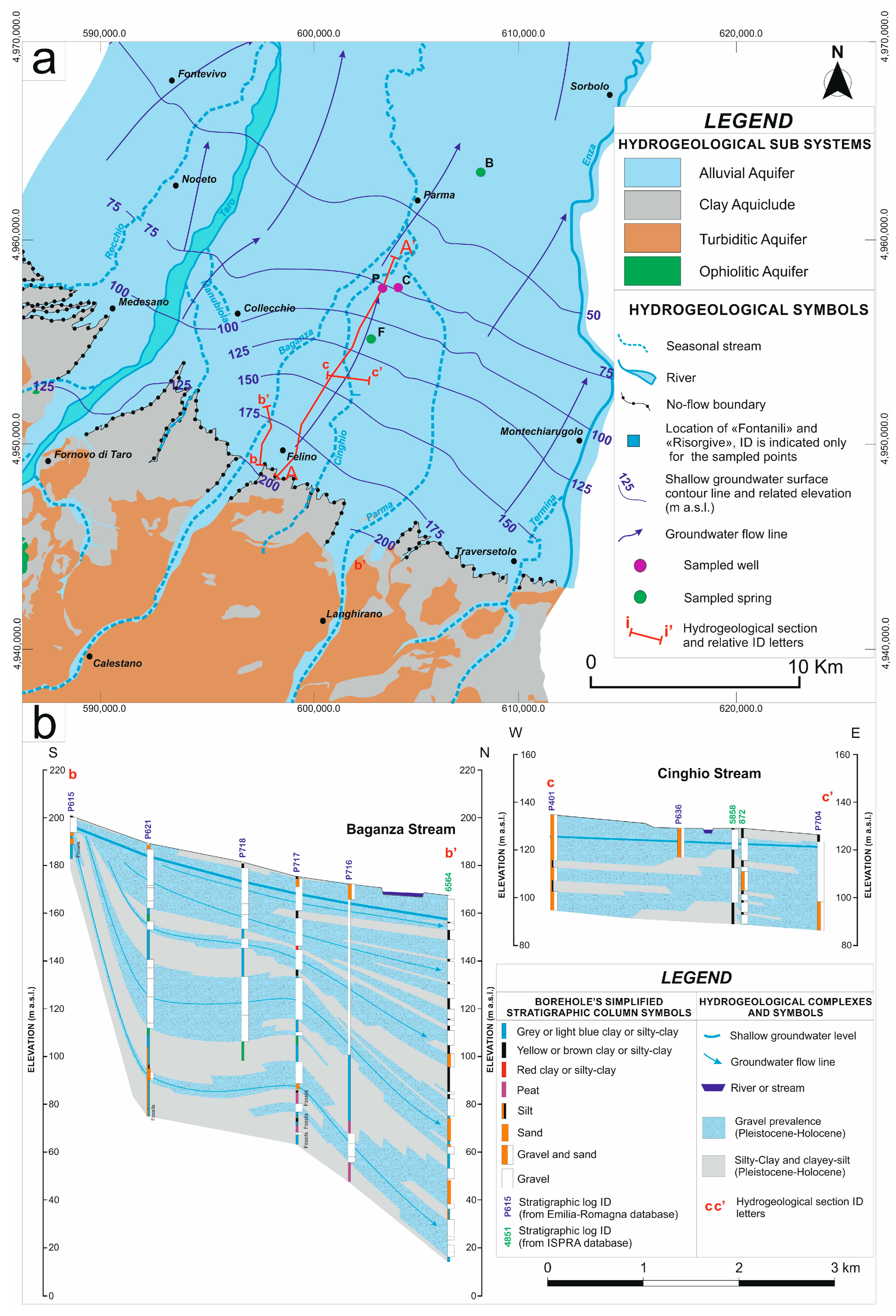
In a hydrogeological perspective, the local setting is known to have characteristics typical of a multilayer alluvial aquifer, where gravel and sand strata have higher permeability (from 1.2 × 10⁻⁵ to 4.9 × 10⁻⁵ m/s), while those of silt and clay have lower permeability (from 9.3 × 10⁻⁹ to 1.3 × 10⁻⁷ m/s), as estimated by Zanini et al. [42,43]. The Pliocene clays at the bottom form a hydraulic obstruction between the analyzed Pleistocene-Holocene aquifer and the older lithoid units both deep under the plain and, in the south, at the contact with the chain. The hydraulic head at the regional scale decreases in accordance with topographic elevations from SSW to NNE, and recharge is mainly attributable to the high plain area, which is strongly influenced by local precipitation and the interaction with watercourses [44,45,46,47,48] (Figure 2). In addition, several springs (the so-called “fontanili”) are widespread in the area and constitute outflow spots of the hydrogeological system, especially correlated to the shallowest groundwater flow component inside the multilayer aquifer [49,50,51].

3. Materials and Methods

The first investigation was conducted in April 2024 and involved two deep wells (Well C and Well P, shown in Figure 1 and Figure 2), chosen so that they were representative of the presence or absence of PFAS in the deeper aquifer layers. These wells pump groundwater from multiple aquifer horizons located at depths greater than 20 m below ground level, as detailed in Table 1. Both wells are not screened within the shallowest aquifer layer located in the first 15 m below the ground. The rationale for this apparently limited scope was to first acquire evidence of whether or not PFAS were detectable even in deeper layers of a confined aquifer, several kilometers away from potential release sources.
In light of the results obtained during the first site-scale sampling campaign, a second monitoring was carried out in April 2025. The aim was to verify whether, after one year and during the same hydrogeological period, the PFAS detection observed at Wells C and P had remained unchanged. At the same time, during this second survey, the analyses were extended along a hydrogeological transect that included two groundwater springs, one located upstream (Spring F) and the other downstream (Spring B) with respect to the two deep wells (Well C and Well P). These additional points were selected to specifically assess the shallowest groundwater component and to evaluate potential variations in PFAS detection along the 3D groundwater flowpath (Figure 2).

3.1. Geological and Hydrogeological Research

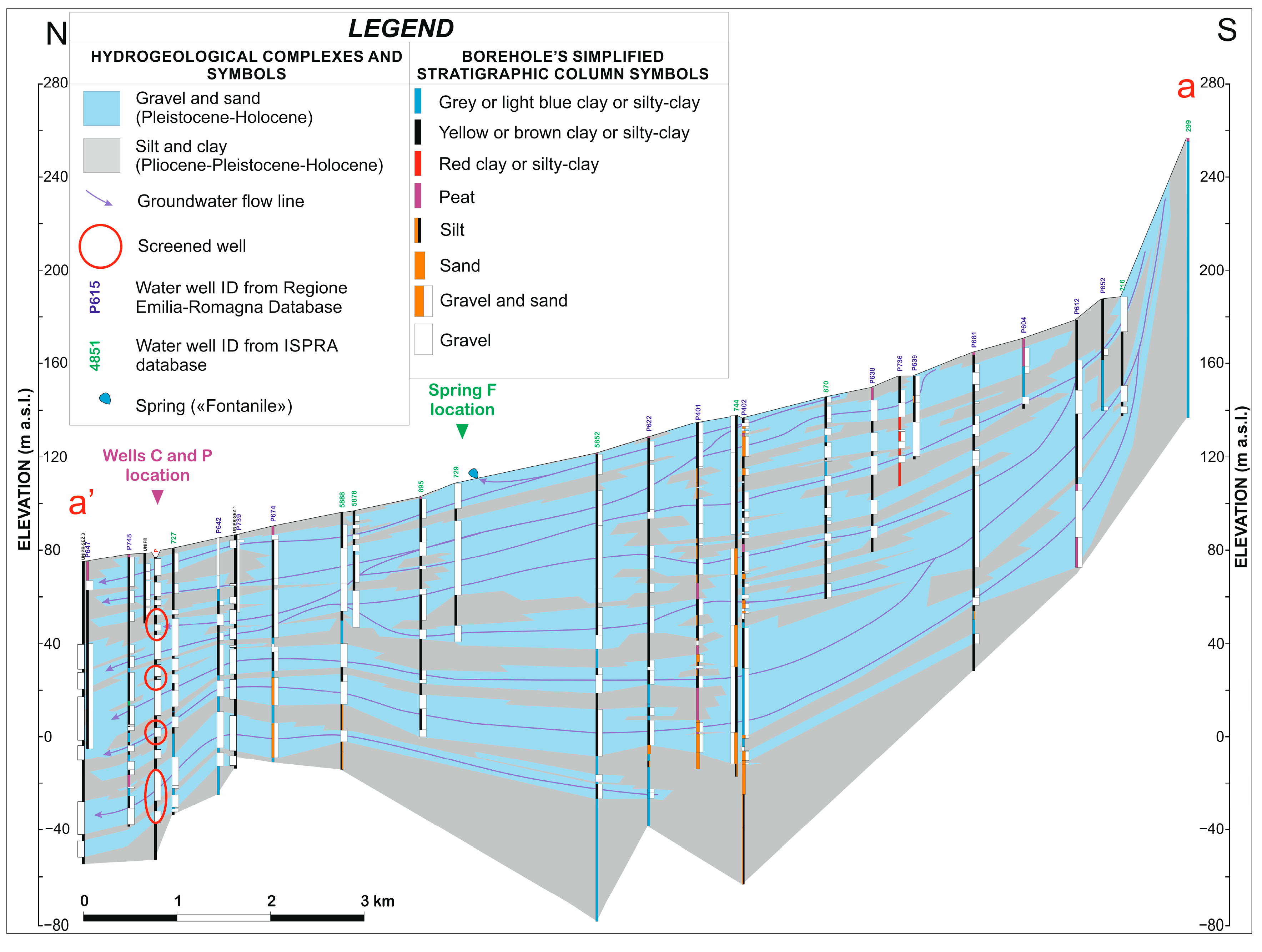
The investigation of the multilayer aquifer setting started from the upstream portion of the analyzed area and intersected the two sampled wells proceeding to the North. Specifically, a subsurface geological reconstruction has been made using a hydraulic perspective. Firstly, 39 stratigraphic logs deriving from water well drilling were found from public databases of ISPRA and the Emilia-Romagna Region aligned parallel to the direction of groundwater flow (SSW-NNE) from the Apennine foothills to the urban area of Parma. The representation of these stratigraphic data with the graphic software Corel Draw (X6 version), along with the resulting stratigraphic correlation, made it possible to reconstruct a geological bidimensional overview of the subsoil that could be interpreted in hydraulic terms. As a result, attention has been centered at first on the succession arrangement at the regional scale, and consequently, on strata geometries and the interrelationship at the multi-decametric scale. This interpretative process aimed to define the eventual physical (and therefore hydraulic) interconnections linking layers with higher permeability (mainly consisting of gravel and sand), so as to reconstruct the possible PFAS migration pathways along both the vertical and horizontal directions inside the heterogeneous system.

3.2. Identification of Potential PFAS Sources

An inspection of production industries and activities, denoted by the ATECO [53] (an acronym for “ATtività ECOnomiche”, a categorization scheme for Italian economic activities) code, was conducted in the area where the alluvial aquifer of Parma plain is located, as well as within the hydrographic basins of streams and rivers that feed the local alluvial system. The ATECO code is composed of an alphanumeric series finalized to represent a definite commercial activity. With this identification series, letters define the main economic sphere, while numbers, variables between the digits “2” and “6”, specify information at several stages, indicating details and sub-categories inside the sectors. ATECO is used as the classification arrangement for commercial activities in Italy, adopted by ISTAT (in Italian: Istituto Nazionale di Statistica) for statistical aims in cooperation with other organizations, ministries, and corporate associations engaged in statistical analysis. Thus, the aim of this evaluation was to determinate the occurrence of commercial activities across the study area, whose production cycle could be associated with PFAS, taking into account the substance’s specified applications in the present guidelines of the European region, following the interdisciplinary approach previously applied by Ducci et al. (2024) [52].

3.3. Chemical Analysis

Sampling campaigns were conducted in April 2024 and April 2025. All samples (50 mL) have been collected in polypropylene vials, stocked in a temporary box with refrigeration, and transferred to the laboratory. All analyses have been carried out at BIOCHEMIE LAB S.r.l. (in italian: società a responsabilità limitata), an accreditated laboratory in accordance with the standard UNI CEI EN ISO/IEC 17025:2018 (number 00176). Specifically, the ASTM D7979-20 methodology (for additional information, refer to the Supplementary Materials), developed by the American Society for Testing and Materials (ASTM), was emplyed to detect a comprehensive set of PFAS, including Perfluoroundecanoic acid (PFUnDA), Perfluoropentanesulfonic acid (PFPeS), Perfluorononanesulfonic acid (PFNS), 4:2 Fluorotelomer sulfonate (4:2 FTS), 6:2 Fluorotelomer sulfonate (6:2 FTS), 2H-Perfluoro-2-decanoic acid (8:2 FTUA), 2H-Perfluoro-2-octanoic acid (6:2 FTUA), 2-Perfluorooctyl ethanoic acid (FOEA), 2-Perfluoroethyl ethanoic acid (FHEA), 8:2 Fluorotelomer sulfonate (8:2 FTS), Perfluorododecanoic acid (PFDoDA), Perfluorotridecanoic acid (PFTrDA), Perfluorooctane sulfonamide (PFOSA), N-Ethyl-N-((heptadecafluorooctyl) sulfonyl) acid (Et-NFOSAA), 2-Perfluorodecyl ethanoic acid (FDEA), 9-Chlorohexadecafluoro-3-oxanonane-1-sulfonic acid (9Cl-PF3ONS), Perfluorodecane sulfonic acid (PFDS), 11-Chloroicosafluoro-3-oxaundecane-1-sulfonic acid (11Cl-PF3OUdS), 3-Perfluoroheptylpropanoic acid (FHpPA), Perfluorohexanesulfonic acid (PFHxS), Perfluorooctanesulfonic acid (PFOS), Perfluorotetradecanoic acid (PFTeDA), Dodecafluoro-3H-4,8-dioxanonanoic acid (ADONA), Difluoro[[2,2,4,5-tetrafluoro-5-(trifluoromethoxy)-1,3-dioxolan-4-yl]oxy]acetic acid (C6O4), Perfluorododecane sulfonic acid (PFDoDS), Perfluorotridecane sulfonic acid (PFTrDS), Perfluoroundecane sulfonic acid (PFUnDS), Sum of Perfluorooctanesulfonic acid (PFOS) and Perfluorooctanoic acid (PFOA), Perfluoroheptanesulfonic acid (PFHpS), 2,3,3,3-Tetrafluoro-2-(heptafluoropropoxy)propanoic acid (HFPO-DA), Perfluorooctanoic acid (PFOA), N-((Heptadecafluorooctyl) sulfonyl)-N-methyl acid (Me-NFOSAA), Perfluorobutanoic acid (PFBA), Perfluoropentanoic acid (PFPeA), Perfluorobutanesulfonic acid (PFBS), Perfluorohexanoic acid (PFHxA), Perfluoroheptanoic acid (PFHpA), Perfluorononanoic acid (PFNA), Perfluorodecanoic acid (PFDA), and a sum of other PFAS.

4. Results

4.1. Conceptual Hydrogeological Model

The studied aquifer has the characteristics of a multilayer alluvial system with a general dip from SSW to NNE. The stratification with alternating gravel-sand and silt-clay layers is evident, with a high degree of heterogeneity represented by physical discontinuities. Specifically, the geogenic dynamics of this sedimentary succession, both alluvial and tectonic, generated a frequently disrupted stratification in both the horizontal and vertical directions. Tectonic uplifts and the highly erosive deposition of gravelly–sandy bodies disadvantage the aquitard integrity of the system, favoring physical and hydraulic contact between shallow and deeper strata. Additionally, in the southern plain area, considering its greater proximity to the erosion zone, it has been observed that the sediment grain sizes tend to be coarser (the proportion between gravel–sand and silt–clay occurrence favors the coarse lithologies).
In hydraulic terms, the interruption of less permeable bodies translates into a key character that can subject one or more vertical components to groundwater flow directions on a kilometer scale. Beyond the previously mentioned horizontal flowpath, the “back-tracked” pathways indicate potential access for recharge water into the deeper layers of the system, which may be associated with PFAS transport. In this regard, in the southern plain area upgradient of the sampled deep wells C and P, it was observed that the surficial confinement provided by the lower permeable silt and clay layers is often lost, which locally favors water infiltration directly from the topographic surface into the multi-layer system. This hydrogeological setting shows that even deep high-permeability layers that appear to be locally confined and protected by frequent aquitards, so much so that they are exploited for domestic and aqueduct purposes, could be highly affected by contamination input coming from upgradient.
Specifically, the resulting groundwater flowpath and, therefore, the possible PFAS migration pathways, are traced in Figure 3.

4.2. Distribution of Potential PFAS Sources

From an accurate evaluation of scientific literature, it emerges that the use of PFAS can be associated with various industrial activities. Table A1 in Appendix A lists the main industrial sectors, identified by their ATECO codes, potentially involved in PFAS use.
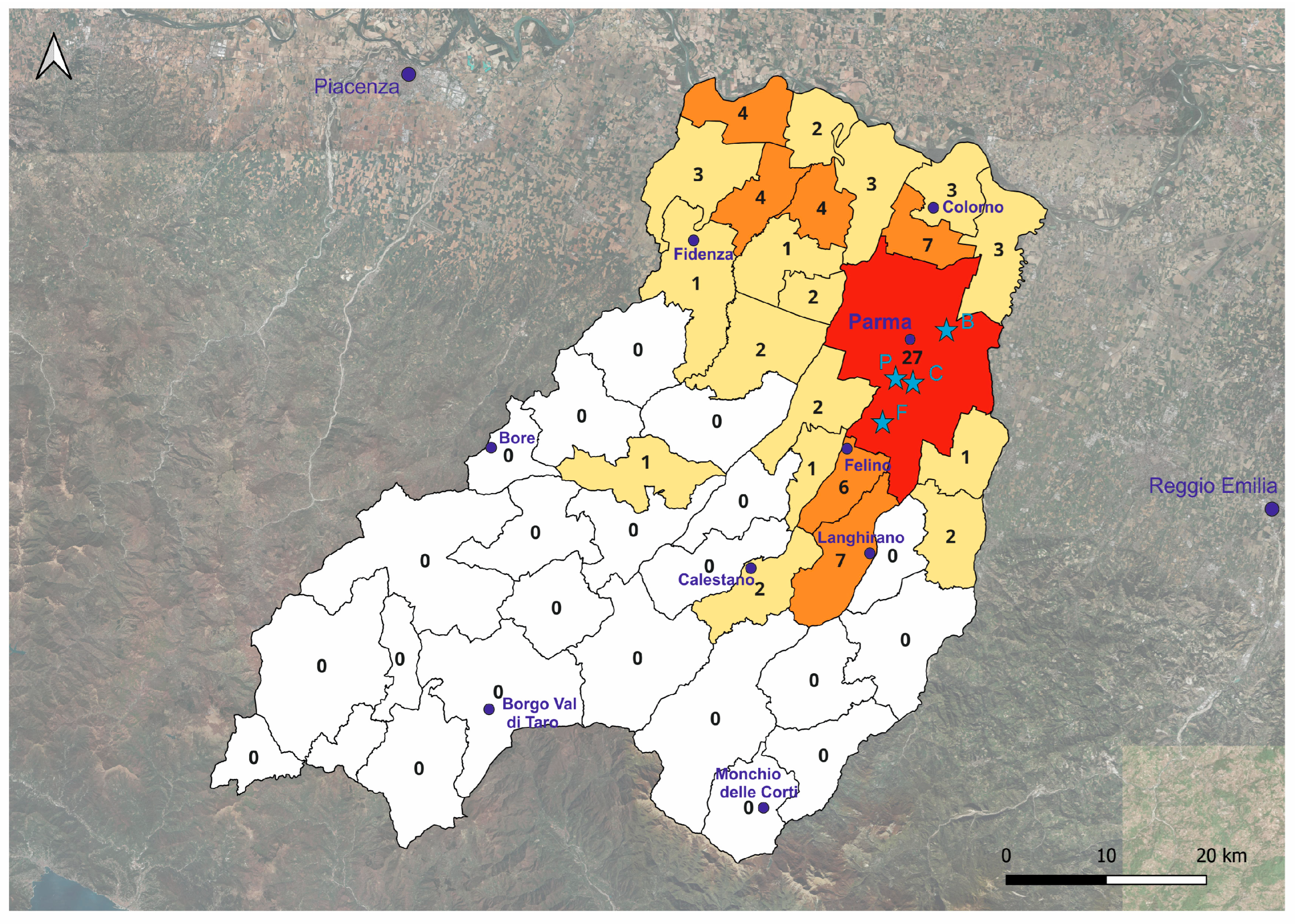
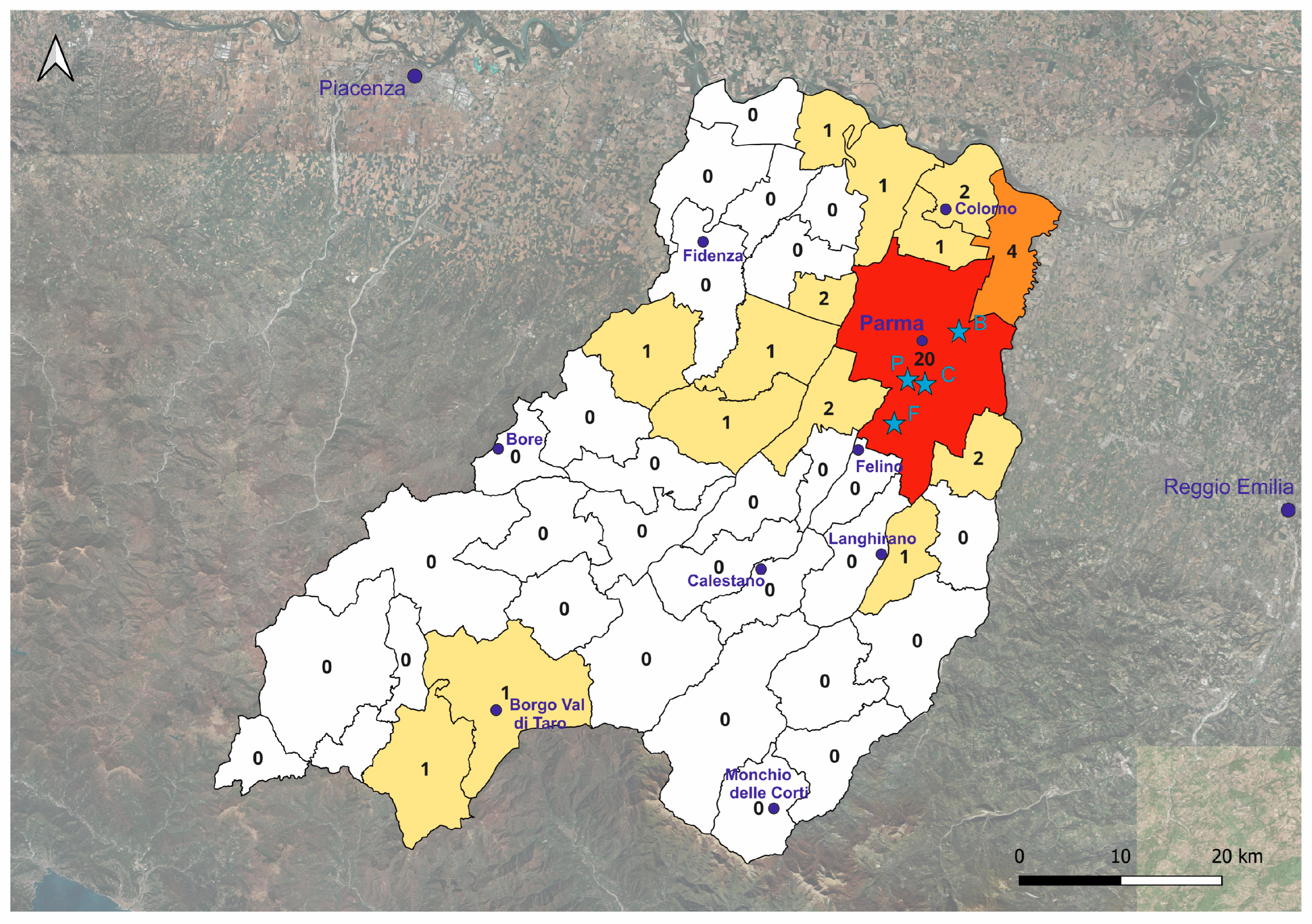
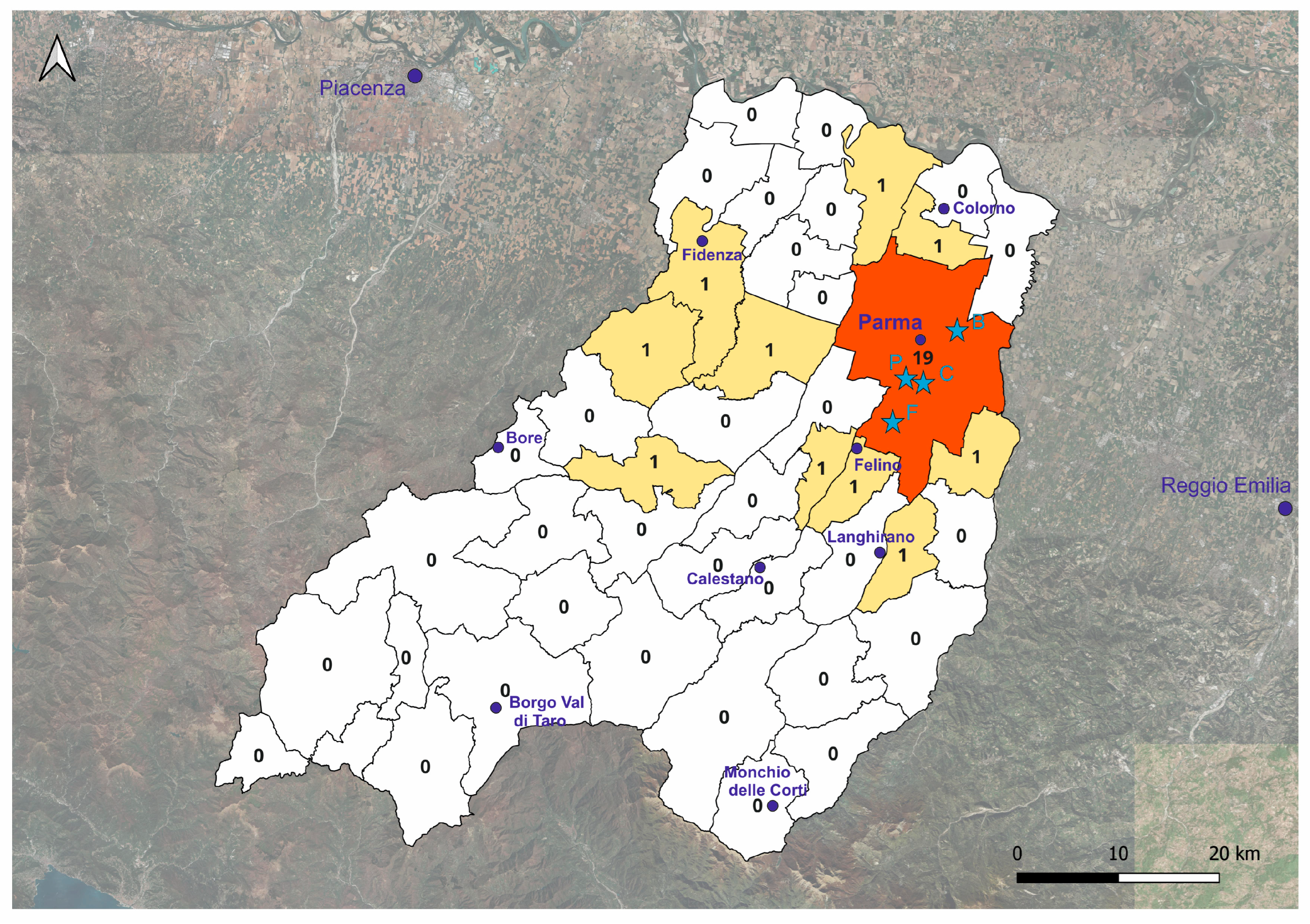
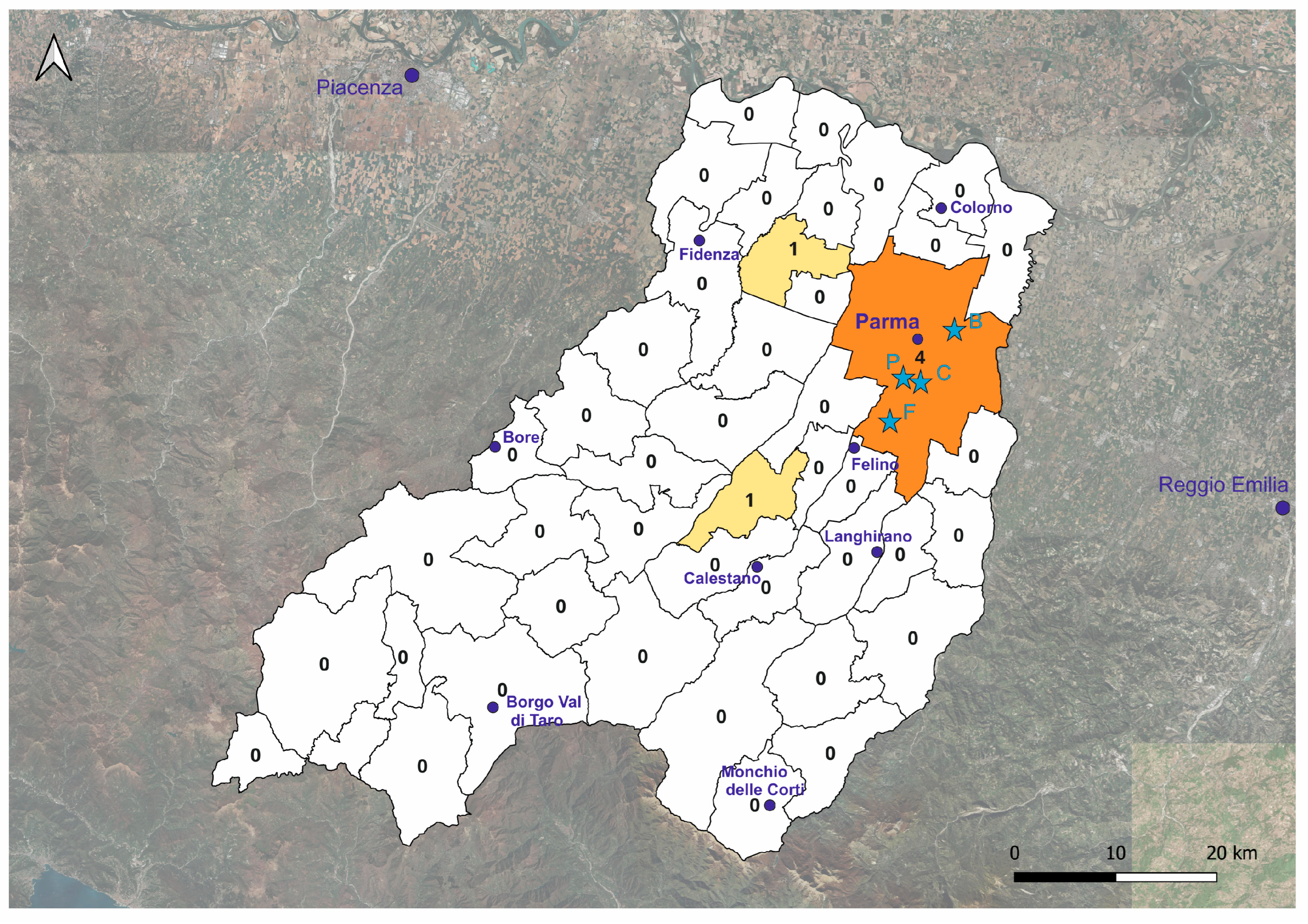
Within the sectors listed in Table A1, an examination of the industrial activities located within the area of interest identified a total of 326 industrial activities potentially involved in PFAS use. Table A2 in Appendix A presents the distribution of these activities by ATECO code, highlighting the relative relevance of each sector. In Appendix A, Figure A1, Figure A2, Figure A3, Figure A4 and Figure A5 illustrate the spatial distribution of activities for each of the identified categories: (1) Packaging materials (paper and plastic); (2) Chemical sector; (3) Construction and metal products; (4) Equipment and instrumentation; and (5) Miscellaneous activities. These figures show that Category 3 represents the numerically most substantial group of companies. The spatial analysis indicates that, upstream of the groundwater sampling points investigated, the number of activities associated with Categories 1, 2, 4, and 5 is significantly lower. However, even if the numerical distribution of companies provides useful context for characterizing the study area, this element cannot be interpreted as a direct or exhaustive indicator of the magnitude of potential impacts, since a single company may exert substantial environmental pressures, potentially exceeding those generated by a larger set of activities belonging to different categories.
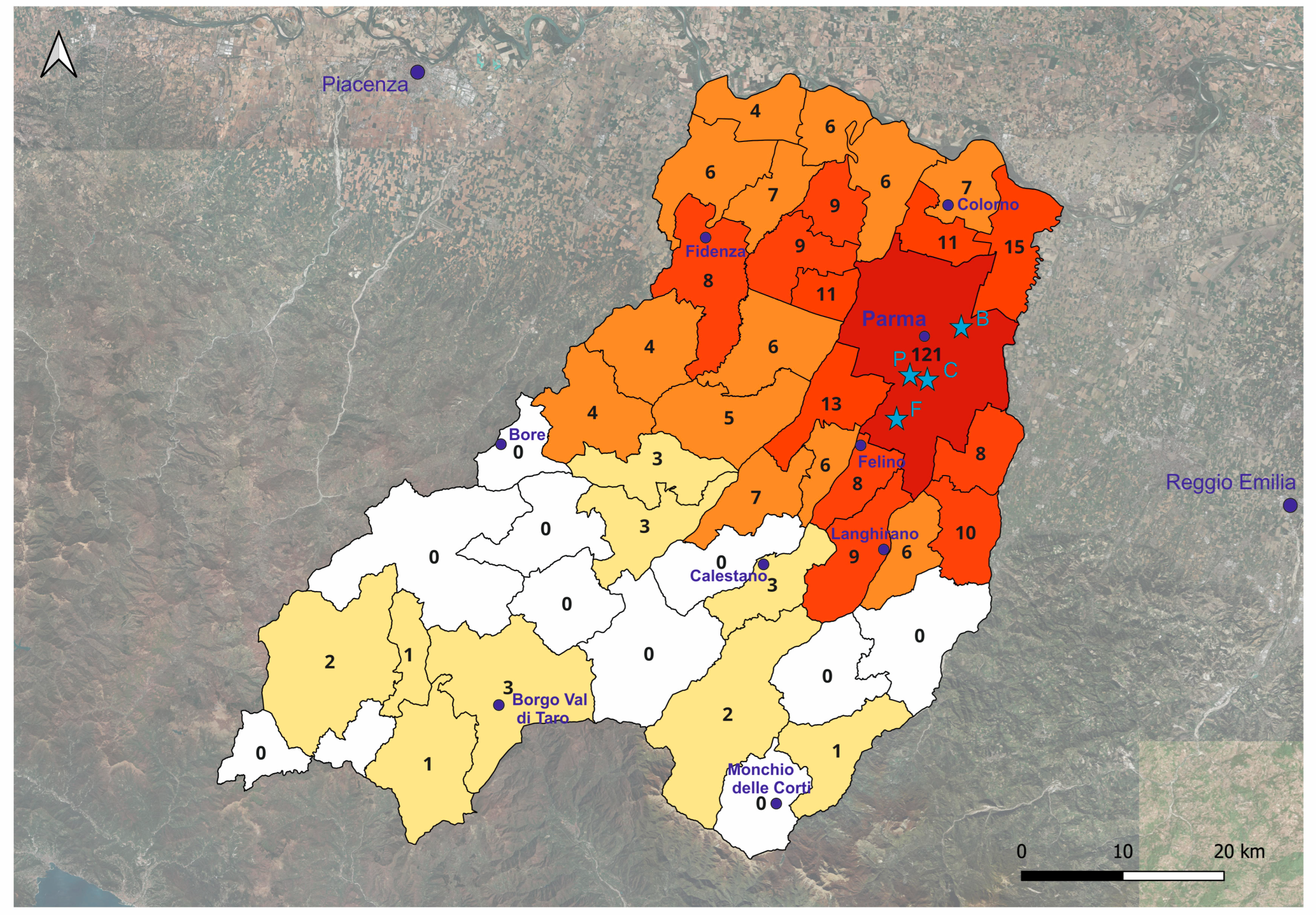
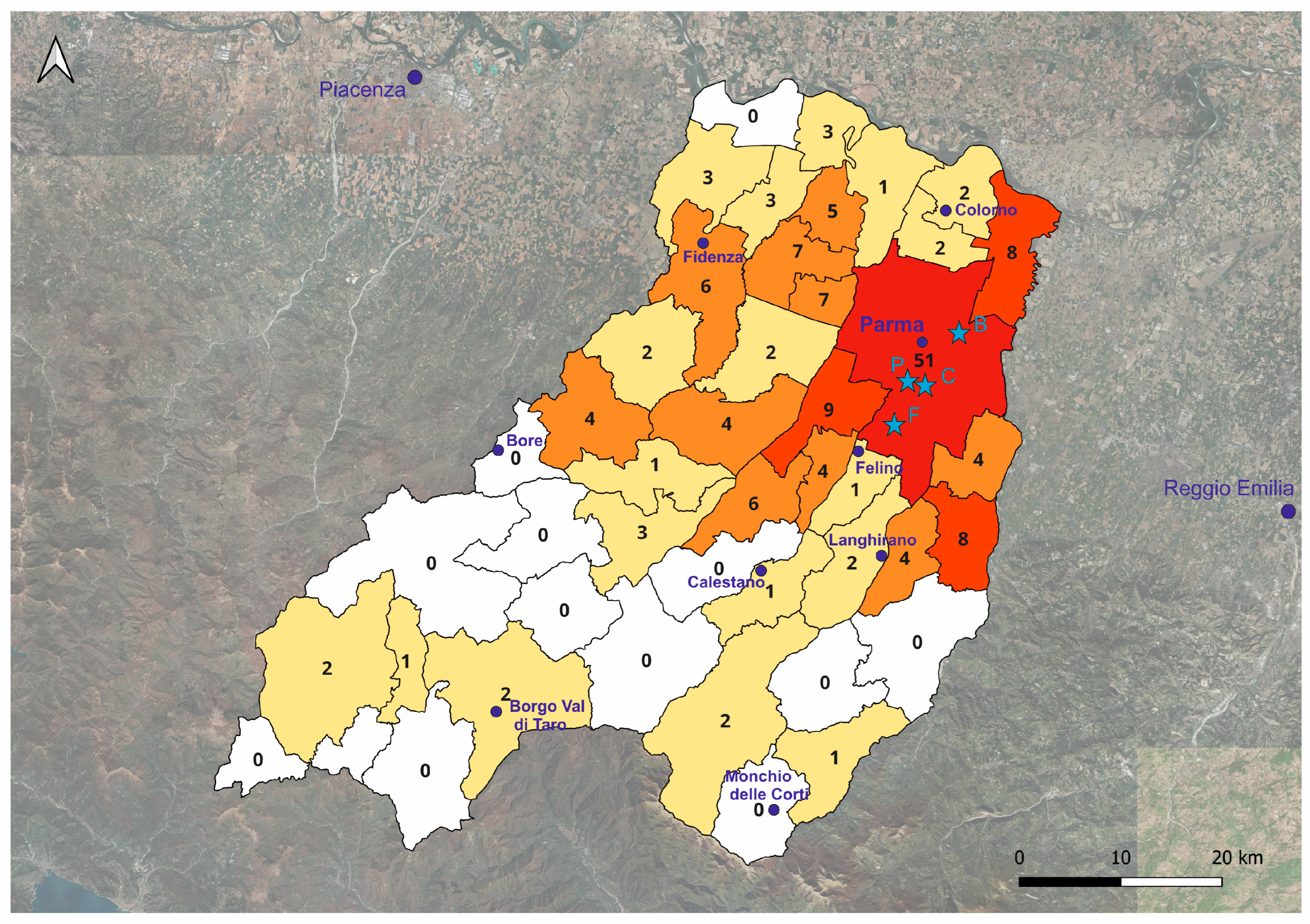
As shown in Figure 4, the spatial occurrence of these activities is not homogeneous. The highest concentration is found in the Municipality of Parma, which hosts 121 out of the 326 total activities. On the whole, this analysis suggests the presence of a high number of potential PFAS release points above the unconfined alluvial aquifer, as well as within the hydrographic basins of streams and rivers that feed the alluvial system, upgradient with reference to all the observation springs and wells. In Appendix A, Figure A1, Figure A2, Figure A3, Figure A4 and Figure A5 illustrate the spatial distribution of activities for each of the identified categories: (1) Packaging materials (paper and plastic); (2) Chemical sector; (3) Construction and metal products; (4) Equipment and instrumentation; and (5) Miscellaneous activities. The spatial analysis shows that Category 3 represents the numerically most substantial group of companies and indicates that, upstream of the groundwater sampling points investigated, the number of activities associated with Categories 1, 2, 4, and 5 is significantly lower. However, even if the numerical distribution of industrial activities associated with PFAS use provides useful context for characterizing the study area, this element cannot be interpreted as a direct or exhaustive indicator of the magnitude of potential impacts, since a single company can exert substantial pressures, potentially exceeding those generated by a larger set of activities belonging to different categories.

4.3. PFAS Detection and Distribution

A range of PFAS compounds with concentrations exceeding instrumental LOQ (Limit of Quantification) values were detected in deep wells C and P during both sampling campaigns (April 2024 and April 2025), as reported in Table 2, while no PFAS were detected in the shallowest aquifer layer.

5. Discussion and Conclusions

The intra-site comparative analysis reveals, for the same deep wells sampled, a differentiation in the PFAS profiles detected across the two monitoring campaigns, indicating a temporal evolution in the chemical composition. Specifically, analytical data show the presence of PFAS in both wells C and P. In particular, PFBA was detected in well C during the 2024 campaign, while PFOS and PFOA were found in the 2025 campaign; instead, well P showed the presence of PFOA only in 2025. The observed temporal and compositional variations between the two campaigns, along with the absence of PFAS concentrations exceeding instrumental LOQ in springs F and B, located upgradient and downgradient, respectively, of the two deep wells, suggest the occurrence of complex contaminant migration and transformation dynamics in both space and time.
On one side, these results suggest the existence of a non-local contamination source, located within the unconfined alluvial aquifer, where direct recharge and river/streams feeding are observed upgradient of wells C and P, with preferential migration occurring within the higher permeability interconnected horizons.
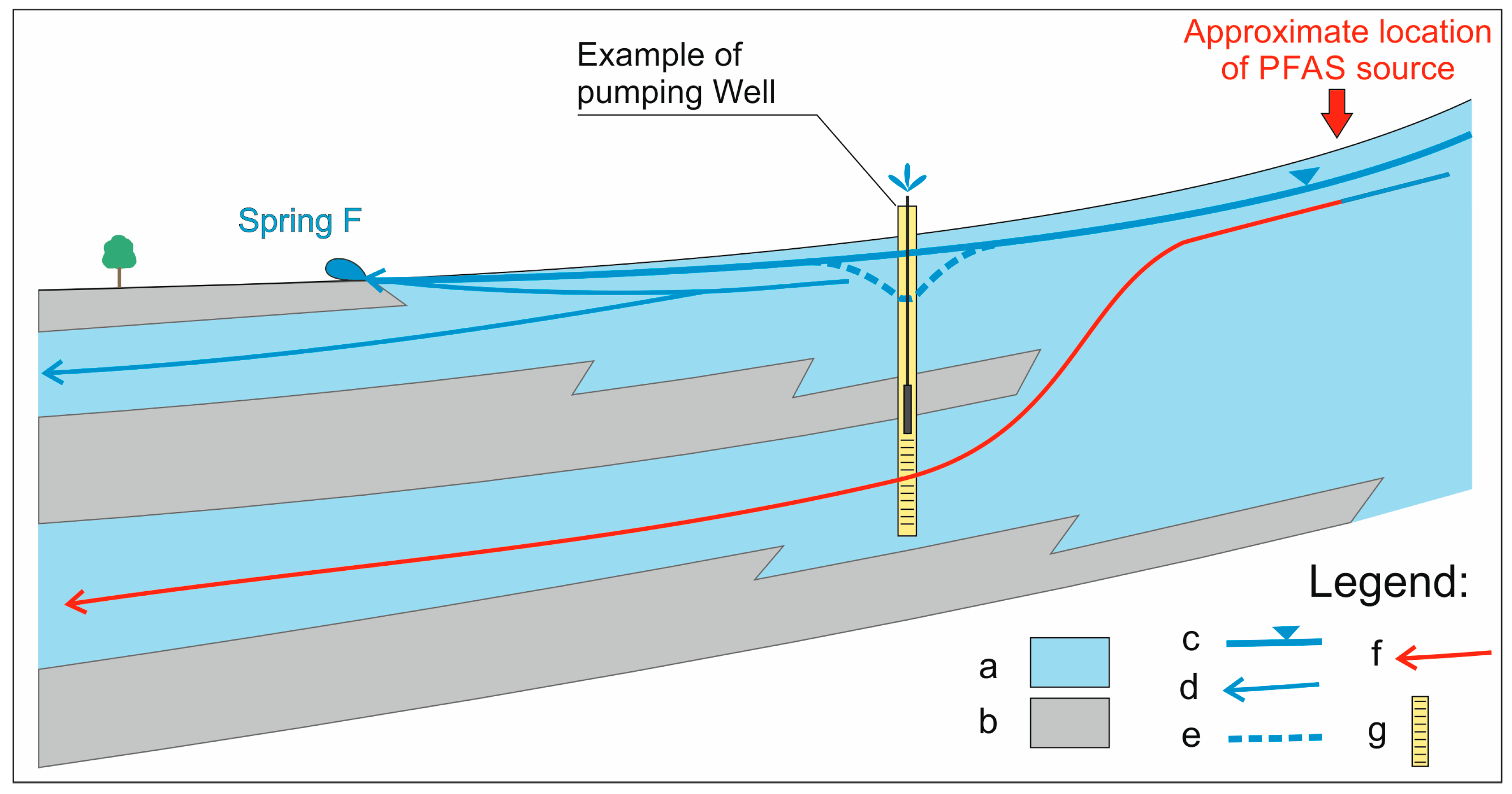
However, the same PFAS sources do not cause any PFAS detection at the springs located downgradient of the same sources, despite their interaction with the shallowest groundwater layer. In particular, no PFAS were detected in F-waters, despite spring F being located between PFAS sources and wells C and P. This apparent paradox can be explained by taking into consideration the existence of several hundred pumping wells, screened at depths higher than 20 m below ground, that cause the hydraulic head in the deeper aquifer layers to be artificially depressed, therefore causing a dominant downward groundwater flow (see conceptual model designed in Figure 5). In this interpretative scenario, spring F is mainly fed by local recharge, which does not interact with significant PFAS sources located close to the spring. This interpretation is supported by the results of a pumping test performed in a well field located close to wells C and P, involving one of the deeper layers of the studied aquifer system [54]. The test demonstrated that a flow rate of just 0.24 L/s is capable of producing several tens of centimeters of hydraulic head depression, several meters away from the pumping well. Since the wells used for human purposes at the study site pump from several L/s to several tens of L/s of water, the induced hydraulic head depressions are at least on the order of several meters.
Furthermore, the difference in the range of PFAS compounds detected in the two wells during the two sampling campaigns could be related to temporal variations in the groundwater flowpath, which cause temporal changes in PFAS migration pathways between different PFAS sources and the same observation wells. Temporal variations in the transport pathways can derive from natural (e.g., surface–groundwater interactions) and/or anthropogenic (e.g., pumping) phenomena able to induce significant modifications in the groundwater flow directions. As already observed in [44], the groundwater pathway changes over time within the studied aquifer, therefore emphasizing the contaminant dispersion within the saturated medium. The modification of the groundwater flow direction over time can cause the contamination plume to oscillate, emphasizing PFAS concentration dispersion. As a matter of fact, surface–groundwater interaction varies over time also due to the torrential regime of several streams, which can rapidly modify the hydraulic gradient between streams and groundwater. At the same time, the variation in the pumped discharge in different seasons (e.g., for agricultural purposes) can induce changes in the distribution of the hydraulic head within the multilayer aquifer, modifying the wells’ capture areas over time.
These findings also provide critical information for environmental decision-makers, supporting the development of policies aimed at controlling PFAS migration in groundwater systems. Understanding contaminant pathways in groundwater provides a key basis for authorities to optimize management and monitoring programs and consequently implement mitigation strategies and promote sustainable groundwater management.
Specifically, this study demonstrates the importance of developing monitoring networks and protocols tailored to the hydraulic characteristics and the hydrogeological functioning of heterogeneous aquifer systems. Monitoring networks must consist of spatially distributed piezometers to maintain their effectiveness even in the event of significant changes in the groundwater pathway over time. Furthermore, it is essential to plan the construction of clusters consisting of piezometers screened in individual layers, so as to distinguish which portions of a multilayer aquifer are effectively involved in PFAS transport. Another key aspect that emerged from this study concerns monitoring frequency, which must be sufficient to capture potential changes in the type and/or concentrations of PFAS over time.
As a matter of fact, the potential limitations that the present study imposes on the generalizability of the findings (the relatively few wells and springs, multi-screened observation wells, and two sampling campaigns carried out in the same period of the hydrologic year) are the basis to design effective studies and monitoring strategies in such complex aquifer systems.
Concerning the scientific aspects, based on these first multidisciplinary results, further investigation into potential point sources of contamination is recommended, considering both the hydrogeological context, the analytical evidence, and the findings from the territorial assessment of local industrial activities conducted through the analysis of ATECO codes (Figure 4), as evidenced in other studies on emerging contaminants (e.g., [52]). In parallel, future objectives include initiating laboratory-scale experimental tests to evaluate PFAS natural attenuation mechanisms, following the previously established methodological framework [45].

Supplementary Materials

The following supporting information can be downloaded at: https://www.mdpi.com/article/10.3390/w18010117/s1, Table S1. Details on reference materials/standards used; Table S2. Reference Materials; Table S3. Preparation of a 5 ppm working solution; Table S4. Preparation of a 0.2 ppm working solution; Table S5. Data related to method validation (LOD/LOQ, recoveries, linearity, precision).

Author Contributions

Conceptualization, L.D. and F.C.; methodology, L.D. and R.P.; software, R.P.; validation, F.C.; formal analysis, L.D., R.P. and F.C.; investigation, L.D., R.P., F.D.F., C.M., P.R., S.R.K. and S.S.; resources, F.C.; data curation, L.D. and R.P.; writing—original draft preparation, L.D. and R.P.; writing—review and editing, L.D., R.P., P.R. and F.C.; visualization, L.D., P.R. and R.P.; supervision, F.C.; project administration, F.C. and S.S.; and funding acquisition, F.C. and M.T.D.N. All authors have read and agreed to the published version of the manuscript.

Funding

This research was funded by the Italian Institute for Environmental Protection and Research (ISPRA) within the project “Redazione della Carta Idrogeologica d’Italia; Foglio n. 199 (Parma Sud)” (COAN code: Celico_2024_ISPRA_RER_Parma Sud).

Data Availability Statement

The original contributions presented in this study are included in the article and Supplementary Materials. Further inquiries can be directed to the corresponding author.

Acknowledgments

We thank Rossella Gafà and Gennaro Maria Monti for their valuable contribution in managing the project and relations with ISPRA. This research benefited from the equipment and framework of the COMP-R Initiative, funded by the “Departments of Excellence” program of the Italian Ministry for University and Research (MUR, 2023–2027). We are grateful to the reviewers for their constructive comments and valuable suggestions.

Conflicts of Interest

The authors declare no conflicts of interest.

Appendix A

Table A1. Industrial activities identified as potentially involved in PFAS use, based on ATECO classification (including both the Code and the corresponding Activity Description), grouped in five categories by primary industrial function.
Category DescriptionATECO CodeActivity Description
1—Packaging materials (paper and platic)17.11.00Manufacture of pulp [55,56]
17.12.00Manufacture of paper and paperboard [55]
17.21.00Manufacture of corrugated paper and paperboard and packaging (excluding pressed paper) [22]
20.16.00Manufacture of plastics in primary forms [4,57]
22.22.00Manufacture of plastic packaging materials [58]
82.92.10Packaging and packing of food products [59,60]
2—Chemical sector20.20.00Manufacture of agrochemical products (excluding fertilizers) [61,62]
20.30.00Manufacture of paints, varnishes, inks, and synthetic adhesives (mastics) [4]
20.41.10Manufacture of soaps, detergents, and organic surfactants (excluding toilet products) [4]
20.41.20Manufacture of chemical specialties for household use and maintenance [22]
20.42.00Manufacture of toilet preparations: perfumes, cosmetics, soaps, and similar products [22,63]
20.51.02Manufacture of explosive products [4,64,65]
20.59.10Manufacture of photographic chemical products [57,66]
21.20.09Manufacture of pharmaceuticals and other pharmaceutical preparations [66,67]
3—Construction and metal products23.51.00Cement production [4,68]
23.61.00Manufacture of concrete products for construction [4]
25.61.00Treatment and coating of metals [57]
25.99.11Manufacture of insulated metal jugs and bottles [4]
25.99.19Manufacture of non-electric kitchenware, tableware, cookware, and bathroom metal articles [4]
43.91.00Roofing activities [4]
4—Equipment and
Instrumentation
27.32.00Manufacture of other electric and electronic wires and cables [57]
29.32.09Manufacture of other motor vehicle parts and accessories [22]
32.20.00Manufacture of musical instruments (including parts and accessories) [57]
32.50.11Manufacture of medical, surgical, and veterinary equipment [57]
32.50.30Manufacture and repair of orthopedic prostheses and aids [69]
32.50.40Manufacture of ophthalmic lenses [57]
5—Miscellaneous
activities
13.30.00Finishing of textiles, clothing articles, and similar activities [57,70]
19.20.10Petroleum refineries [71]
38.21.09Treatment and disposal of other non-hazardous waste [70,72]
Table A2. Subset of industrial activities from Table A1 within the study area, showing the Number of Activities per ATECO Code and Total Number of Activities by Category.
Category DescriptionATECO CodeActivity DescriptionNumber of ActivitiesTotal Number of
Activities
by Category
1—Packaging materials (paper and plastic)17.12.00Manufacture of paper and paperboard788
17.21.00Manufacture of corrugated paper and paperboard and packaging25
20.16.00Manufacture of plastics in primary forms8
22.22.00Manufacture of plastic packaging materials15
82.92.10Packaging and packing of food products33
2—Chemical sector20.30.00Manufacture of paints, varnishes, inks, and synthetic adhesives642
20.41.10Manufacture of soaps, detergents, and organic surfactants5
20.42.00Manufacture of toilet preparations25
21.20.09Manufacture of pharmaceuticals6
3—Construction and metal products23.51.00Cement production1161
23.61.00Manufacture of concrete products17
25.61.00Treatment and coating of metals82
25.99.19Manufacture of non-electric kitchenware3
43.91.00Roofing activities58
4—Equipment and instrumentation27.32.00Manufacture of electric/electronic wires and cables229
29.32.09Manufacture of motor vehicle parts8
32.20.00Manufacture of musical instruments11
32.50.11Manufacture of medical, surgical, and veterinary equipment2
32.50.30Manufacture & repair of orthopedic prostheses5
32.50.40Manufacture of ophthalmic lenses1
5—Miscellaneous activities13.30.00Finishing of textiles and clothing46
38.21.09Treatment/disposal of non-hazardous waste2
Total Activities 326
Figure A1. Spatial distribution of industrial activities associated potentially involved with PFAS use falling within Category 1, “Packaging materials (paper and plastic)”, in the area of interest. Blue stars indicate sampled springs and wells, with corresponding IDs; violet labels and points denote toponyms; and colored polygons represent municipal boundaries. Black numbers within each polygon indicate the number of companies with potential PFAS use in that municipality.
Water 18 00117 g0a1
Figure A2. Spatial distribution of industrial activities associated potentially involved with PFAS use falling within Category 2, “Chemical sector”, in the area of interest. Blue stars indicate sampled springs and wells, with corresponding IDs; violet labels and points denote toponyms; and colored polygons represent municipal boundaries. Black numbers within each polygon indicate the number of companies with potential PFAS use in that municipality.
Water 18 00117 g0a2
Figure A3. Spatial distribution of industrial activities associated potentially involved with PFAS use falling within Category 3, “Construction and metal products”, in the area of interest. Blue stars indicate sampled springs and wells, with corresponding IDs; violet labels and points denote toponyms; and colored polygons represent municipal boundaries. Black numbers within each polygon indicate the number of companies with potential PFAS use in that municipality.
Water 18 00117 g0a3
Figure A4. Spatial distribution of industrial activities associated potentially involved with PFAS use falling within Category 4, “Equipment and instrumentation”, in the area of interest. Blue stars indicate sampled springs and wells, with corresponding IDs; violet labels and points denote toponyms; and colored polygons represent municipal boundaries. Black numbers within each polygon indicate the number of companies with potential PFAS use in that municipality.
Water 18 00117 g0a4
Figure A5. Spatial distribution of industrial activities associated potentially involved with PFAS use falling within Category 5, “Miscellaneous activities”, in the area of interest. Blue stars indicate sampled springs and wells, with corresponding IDs; violet labels and points denote toponyms; and colored polygons represent municipal boundaries. Black numbers within each polygon indicate the number of companies with potential PFAS use in that municipality.
Water 18 00117 g0a5

References

  1. OECD. Toward a New Comprehensive Global Database of Per- and Polyfluoroalkyl Substances (PFASs): Summary Report on Updating the OECD 2007 List; Series on Risk Management No. 39; OECD: Paris, France, 2018. Available online: https://www.oecd.org/content/dam/oecd/en/publications/reports/2018/05/summary-report-on-the-new-comprehensive-global-database-of-per-and-polyfluoroalkyl-substances-pfass_73d72705/1a14ad6c-en.pdf (accessed on 10 November 2025).
  2. Buck, R.C.; Franklin, J.; Berger, U.; Conder, J.M.; Cousins, I.T.; de Voogt, P.; Jensen, A.A.; Kannan, K.; Mabury, S.A.; van Leeuwen, S.P.J. Perfluoroalkyl and polyfluoroalkyl substances in the environment: Terminology, classification, and origins. Integr. Environ. Assess. Manag. 2011, 7, 513–541. [Google Scholar] [CrossRef]
  3. Kissa, E. Fluorinated Surfactants and Repellents, 2nd ed.; CRC Press: Boca Raton, FL, USA, 2001. [Google Scholar]
  4. Gaines, L.G.T. Historical and current usage of per- and polyfluoroalkyl substances (PFAS): A literature review. Am. J. Ind. Med. 2023, 66, 353–378. [Google Scholar] [CrossRef]
  5. Giesy, J.P.; Kannan, K. Perfluorochemical surfactants in the environment. Environ. Sci. Technol. 2002, 36, 146A–152A. [Google Scholar] [CrossRef]
  6. Houde, M.; De Silva, A.O.; Muir, D.C.G.; Letcher, R.J. Monitoring of perfluorinated compounds in aquatic biota: An updated review. Environ. Sci. Technol. 2011, 45, 7962–7973. [Google Scholar] [CrossRef] [PubMed]
  7. Ahrens, L. Polyfluoroalkyl compounds in the aquatic environment: A review of their occurrence and fate. J. Environ. Monit. 2011, 13, 20–31. [Google Scholar] [CrossRef] [PubMed]
  8. Cousins, I.T.; Johansson, J.H.; Salter, M.E.; Sha, B.; Scheringer, M. Outside the safe operating space of a new planetary boundary for PFAS. Environ. Sci. Technol. 2022, 56, 11172–11179. [Google Scholar] [CrossRef] [PubMed]
  9. Valsecchi, S.; Rusconi, M.; Mazzoni, M.; Viviano, G.; Pagnotta, R.; Zaghi, C.; Serrini, G.; Polesello, S. Occurrence and sources of perfluoroalkyl acids in Italian river basins. Chemosphere 2015, 129, 126–134. [Google Scholar] [CrossRef]
  10. Gebbink, W.A.; Broman, D.; Berger, U. Presence of emerging per- and polyfluoroalkyl substances in river and drinking water near a fluorochemical production plant in The Netherlands. Environ. Sci. Technol. 2017, 51, 11057–11065. [Google Scholar] [CrossRef]
  11. Domingo, J.L.; Nadal, M. Human exposure to per- and polyfluoroalkyl substances through drinking water: A review. Environ. Res. 2019, 177, 108648. [Google Scholar] [CrossRef]
  12. Kaboré, H.A.; Vo Duy, S.; Munoz, G.; Méité, L.; Desrosiers, M.; Liu, J.; Sory, T.K.; Sauvé, S. Worldwide occurrence of PFAS in urban wastewater treatment plants. Environ. Sci. Pollut. Res. 2018, 25, 5076–5096. [Google Scholar] [CrossRef]
  13. Berthou, M.; Gérard, V.; Pélingre, M.; Bagard, A.; Batteux, T.L.; Losfeld, G. Is it raining PFAS in France? An analysis of 52 PFAS at nanogram per liter levels in French rainwaters during autumn season. J. Environ. Qual. 2024, 53, 123–132. [Google Scholar] [CrossRef]
  14. Lang, J.R.; Allred, B.M.; Field, J.A.; Levis, J.W.; Barlaz, M.A. National estimate of per- and polyfluoroalkyl substance (PFAS) release to US municipal landfill leachate. Environ. Sci. Technol. 2017, 51, 2197–2205. [Google Scholar] [CrossRef]
  15. Brusseau, M.L.; Anderson, R.H.; Guo, B. PFAS concentrations in soils: Background levels versus contaminated sites. Sci. Total Environ. 2020, 740, 140017. [Google Scholar] [CrossRef]
  16. Bai, X.; Son, Y. Perfluoroalkyl substances (PFAS) in surface water and sediments from two urban watersheds in Nevada, USA. Sci. Total Environ. 2021, 751, 141622. [Google Scholar] [CrossRef]
  17. Diaz, L.M.; Stewart, M.R. “Forever Chemicals”: Forever altering the legal landscape. Belmont Law Rev. 2019, 7, 308–342. [Google Scholar]
  18. DeWitt, J.C. (Ed.) Toxicological Effects of Perfluoroalkyl and Polyfluoroalkyl Substances; Springer International Publishing: Cham, Switzerland, 2015. [Google Scholar]
  19. Gonsioroski, A.; Mourikes, V.E.; Flaws, J.A. Endocrine disruptors in water and their effects on the reproductive system. Int. J. Mol. Sci. 2020, 21, 1929. [Google Scholar] [CrossRef]
  20. Costello, E.; Rock, S.; Stratakis, N.; Eckel, S.P.; Walker, D.I.; Valvi, D.; Cserbik, D.; Jenkins, T.; Xanthakos, S.A.; Kohli, R.; et al. Exposure to Per- and Polyfluoroalkyl Substances and Markers of Liver Injury: A Systematic Review and Meta-analysis. Environ. Health Perspect. 2022, 130, 046001. [Google Scholar] [CrossRef] [PubMed]
  21. Messmer, M.F.; Salloway, J.; Shara, N.; Locwin, B.; Harvey, M.W.; Traviss, N. Risk of Cancer in a Community Exposed to Per- and Polyfluoroalkyl Substances. Environ. Health Insights 2022, 16, 11786302221076707. [Google Scholar] [CrossRef] [PubMed]
  22. Panieri, E.; Baralic, K.; Djukic-Cosic, D.; Buha Djordjevic, A.; Saso, L.C. PFAS molecules: A major concern for human health and the environment. Toxics 2022, 10, 44. [Google Scholar] [CrossRef] [PubMed]
  23. Commission Regulation (EU) No 757/2010 of 24 August 2010 Amending Regulation (EC) No 850/2004 of the European Parliament and of the Council on Persistent Organic Pollutants as Regards Annexes I and III Text with EEA Relevance. Available online: https://eur-lex.europa.eu/eli/reg/2010/757/oj/eng?utm_source=chatgpt.com (accessed on 10 November 2025).
  24. Li, F.; Duan, J.; Tian, S.; Ji, H.; Zhu, Y.; Wei, Z.; Zhao, D. Short-Chain Per- and Polyfluoroalkyl Substances in Aquatic Systems: Occurrence, Impacts and Treatment. Chem. Eng. J. 2020, 380, 122506. [Google Scholar] [CrossRef]
  25. Brendel, S.; Fetter, É.; Staude, C.; Vierke, L.; Biegel-Engler, A. Short-chain perfluoroalkyl acids: Environmental concerns and regulatory developments in Europe. Environ. Sci. Eur. 2018, 30, 9. [Google Scholar] [CrossRef]
  26. Ruan, T.; Field, J.; Cousins, I.; Lohmann, R.; Jiang, G. Emerging contaminants: Fluorinated alternatives to existing PFAS. Environ. Sci. Technol. 2022, 56, 6001–6003. [Google Scholar] [CrossRef]
  27. Schiavo, M.; Colombani, N.; Mastrocicco, M.; Petitta, M. Stochastic assessment of groundwater PFAS concentrations in North-Eastern Italy. Stoch. Environ. Res. Risk Assess. 2025, 39, 3391–3404. [Google Scholar] [CrossRef]
  28. Mastrantonio, M.; Bai, E.; Uccelli, R.; Cordiano, V.; Screpanti, A.; Crosignani, P. Drinking water contamination from perfluoroalkyl substances (PFAS): An ecological mortality study in the Veneto Region, Italy. Eur. J. Public Health 2018, 28, 180–185. [Google Scholar] [CrossRef] [PubMed]
  29. Triadi, P.T.; Muthia, C.R.A. The assessment of groundwater quality of confined aquifer based on hydrochemistry in the alluvial plain of Semarang City. E3S Web Conf. 2023, 448, 03005. [Google Scholar] [CrossRef]
  30. Conti, P.; Cornamusini, G.; Carmignani, L. An outline of the geology of the Northern Apennines (Italy), with geological map at 1:250,000 scale. Ital. J. Geosci. 2020, 139, 149–194. [Google Scholar] [CrossRef]
  31. Boccaletti, M.; Bonini, M.; Corti, G.; Gasperini, P.; Martelli, L.; Piccardi, L.; Severi, P.; Vannucci, P. Carta Sismotettonica Della Regione Emilia–Romagna alla Scala 1:250.000; Regione Emilia–Romagna, C.N.R.: Firenze, Italy, 2004. [Google Scholar]
  32. Boccaletti, M.; Corti, G.; Martelli, L. Recent and active tectonics of the external zone of the Northern Apennines (Italy). Int. J. Earth Sci. 2011, 100, 1331–1348. [Google Scholar] [CrossRef]
  33. Molli, G.; Crispini, L.; Malusà, M.; Mosca, P.; Piana, F.; Federico, L. Geology of the Western Alps–Northern Apennine junction area: A regional review. J. Virtual Explor. 2010, 36, 10. [Google Scholar] [CrossRef]
  34. Servizio Geologico, Sismico e dei Suoli Regione Emilia-Romagna; ENI-AGIP. Riserve Idriche Sotterranee Della Regione Emilia-Romagna; Archivio Cartografico: Bologna, Italy, 1998; p. 120.
  35. Di Dio, G.; Martini, A.; Lasagna, S.; Zanzucchi, G. Note Illustrative Della Carta Geologica d’Italia alla Scala 1:50.000, Foglio 199 Parma Sud; Servizio Geologico, Sismico e dei Suoli Regione Emilia-Romagna, APAT—Servizio Geologico d’Italia, S.EL.CA.: Firenze, Italy, 2005.
  36. Amorosi, A.; Colalongo, M.L.; Fusco, F.; Pasini, G.; Fiorini, F. Glacio-Eustatic Control of Continental–Shallow Marine Cyclicity from Late Quaternary Deposits of the Southeastern Po Plain, Northern Italy. Quat. Res. 1999, 52, 1–13. [Google Scholar] [CrossRef]
  37. Fantoni, R.; Franciosi, R. Tectono-sedimentary setting of the Po Plain and Adriatic foreland. Rend. Lincei 2010, 21, 197–209. [Google Scholar] [CrossRef]
  38. Livani, M.; Scrocca, D.; Arecco, P.; Doglioni, C. Structural and stratigraphic control on salient and recess development along a thrust belt front: The Northern Apennines (Po Plain, Italy). J. Geophys. Res. Solid Earth 2018, 123, 4360–4387. [Google Scholar] [CrossRef]
  39. Pieri, M.; Groppi, G. Subsurface Geological Structure of the Po Plain, Italy; CNR: Roma, Italy, 1981. [Google Scholar]
  40. Bernini, M.; Papani, G. Alcune Considerazioni Sulla Struttura del Margine Appenninico Emiliano tra lo Stirone e l’Enza (e sue Relazioni con il Sistema del Taro). L’Ateneo Parmense—Acta Naturalia. 1987. Available online: http://pascal-francis.inist.fr/vibad/index.php?action=getRecordDetail&idt=7009089 (accessed on 10 November 2025).
  41. Feo, A.; Pinardi, R.; Artoni, A.; Celico, F. Three-dimensional high-precision numerical simulations of free-product DNAPL extraction in potential emergency scenarios: A test study in a PCE-contaminated alluvial aquifer (Parma, Northern Italy). Sustainability 2023, 15, 9166. [Google Scholar] [CrossRef]
  42. Zanini, A.; Ghirardi, M.; Emiliani, R. A multidisciplinary approach to evaluate the effectiveness of natural attenuation at a contaminated site. Hydrology 2021, 8, 101. [Google Scholar] [CrossRef]
  43. Zanini, A.; Petrella, E.; Sanangelantoni, A.M.; Angelo, L.; Ventosi, B.; Viani, L.; Rizzo, R.; Remelli, S.; Bartoli, M.; Bolpagni, R.; et al. Groundwater characterization from an ecological and human perspective: An interdisciplinary approach in the Functional Urban Area of Parma, Italy. Rend. Lincei Sci. Fis. Nat. 2019, 30, 463–479. [Google Scholar] [CrossRef]
  44. Ducci, L.; Rizzo, P.; Pinardi, R.; Solfrini, A.; Maggiali, A.; Pizzati, M.; Balsamo, F.; Celico, F. What is the impact of leaky sewers on groundwater contamination in urban semi-confined aquifers? A test study related to fecal matter and personal care products (PCPs). Hydrology 2023, 10, 3. [Google Scholar] [CrossRef]
  45. Ducci, L.; Rizzo, P.; Bucci, A.; Pinardi, R.; Monaco, P.; Celico, F. The challenge posed by emerging environmental contaminants: An assessment of the effectiveness of phenoxyethanol biological removal from groundwater through mesocosm experiments. Sustainability 2024, 16, 2183. [Google Scholar] [CrossRef]
  46. Feo, A.; Pinardi, R.; Artoni, A.; Celico, F. Estimation of free-product PCE distribution in thick multilayered aquifers as possible long-term pollution sources for shallow and deep groundwaters using high-precision numerical simulations. Water 2024, 16, 3053. [Google Scholar] [CrossRef]
  47. Iacumin, P.; Venturelli, G.; Selmo, E. Isotopic features of rivers and groundwater of the Parma Province (Northern Italy) and their relationships with precipitation. J. Geochem. Explor. 2009, 102, 56–62. [Google Scholar] [CrossRef]
  48. Di Dio, G. Modelling groundwater-stream water interactions in the Taro River hydrogeological basin (western Emilia-Romagna Regione, northern Italy). Ital. J. Eng. Geol. Environ. 2012, 1, 23–39. [Google Scholar] [CrossRef]
  49. Pinardi, R.; Feo, A.; Ruffini, A.; Celico, F. Purpose-designed hydrogeological maps for wide interconnected surface–groundwater systems: The test example of Parma alluvial aquifer and Taro River Basin (Northern Italy). Hydrology 2023, 10, 127. [Google Scholar] [CrossRef]
  50. Beretta, G.P.; La Vigna, F.; Camera, C.A.S.; Gafà, R.M.; Citrini, A.; Martarelli, L.; Monti, G.M.; Roma, M.; Silvi, A.; Vitale, V.; et al. Carta Idrogeologica d’Italia alla Scala 1:500.000—4 Fogli, Note Integrative e Tabelle Online; ISPRA—Dipartimento per il Servizio Geologico d’Italia: Roma, Italy, 2025.
  51. De Luca, D.A.; Destefanis, E.; Forno, M.G.; Lasagna, M.; Masciocco, L. The genesis and the hydrogeological features of the Turin Po Plain fontanili, typical lowland springs in Northern Italy. Bull. Eng. Geol. Environ. 2014, 73, 409–427. [Google Scholar] [CrossRef]
  52. Ducci, L.; Rizzo, P.; Pinardi, R.; Celico, F. An interdisciplinary assessment of the impact of emerging contaminants on groundwater from wastewater containing disodium EDTA. Sustainability 2024, 16, 8624. [Google Scholar] [CrossRef]
  53. ISTAT. Structure of ATECO 2025—English Version. 2025. Available online: https://www.istat.it/wp-content/uploads/2025/03/Struttura-ATECO-2025-inglese.pdf (accessed on 4 June 2025).
  54. D’Oria, M.; Zanini, A.; Cupola, F. Oscillatory pumping test to estimate aquifer hydraulic parameters in a Bayesian geostatistical framework. Math. Geosci. 2018, 50, 169–186. [Google Scholar] [CrossRef]
  55. Negri, S.; Maestri, L.; Esabon, G.; Ferrari, M.; Zadra, P.; Ghittori, S.; Imbriani, M. Characteristics, use and toxicity of fluorochemicals: Review of the literature. G. Ital. Med. Lav. Ergon. 2008, 30, 61–74. [Google Scholar] [PubMed]
  56. Glenn, G.; Shogren, R.; Jin, X.; Orts, W.; Hart-Cooper, W.; Olson, L. Per-and polyfluoroalkyl substances and their alternatives in paper food packaging. Compr. Rev. Food Sci. Food Saf. 2021, 20, 2596–2625. [Google Scholar] [CrossRef] [PubMed]
  57. Glüge, J.; Scheringer, M.; Cousins, I.T.; DeWitt, J.C.; Goldenman, G.; Herzke, D.; Lohmann, R.; Ng, C.A.; Trier, X.; Wang, Z. An overview of the uses of per- and polyfluoroalkyl substances (PFAS). Environ. Sci. Process. Impacts 2020, 22, 2345–2373. [Google Scholar] [CrossRef]
  58. Marchisio, I. Contaminanti emergenti: Monitoraggio sperimentale di PFAS nelle matrici aria e acqua. PinC|Prev. Corso 2022, 9, FASCICOLO n°9. [Google Scholar] [CrossRef]
  59. Sapuppo, A.; Uga, E.C. PFAS e salute: Quali rischi per l’uomo? Quad. ACP 2024, 5, 218–222. [Google Scholar] [CrossRef]
  60. Curtzwiler, G.W.; Silva, P.; Hall, A.; Ivey, A.; Vorst, K. Significance of perfluoroalkyl substances (PFAS) in food packaging. Integr. Environ. Assess. Manag. 2020, 17, 7–12. [Google Scholar] [CrossRef] [PubMed]
  61. Donley, N.; Cox, C.; Bennett, K.; Temkin, A.M.; Andrews, D.Q.; Naidenko, O.V. Forever pesticides: A growing source of PFAS contamination in the environment. Environ. Health Perspect. 2024, 132, 075003. [Google Scholar] [CrossRef]
  62. Gassmann, M.; Falk, S.; Brunn, H.; Liebenehm-Axmann, A.M.; Rückert, H.; Berthold, G.; Stahl, T. PFAS—A new class of emerging agrochemicals? In Geophysical Research Abstracts; EGU: Munich, Germany, 2019; Volume 21. [Google Scholar]
  63. De Silva, A.O.; Armitage, J.M.; Bruton, T.A.; Dassuncao, C.; Heiger-Bernays, W.; Hu, X.C.; Kärrman, A.; Kelly, B.; Ng, C.; Robuck, A.; et al. PFAS exposure pathways for humans and wildlife: A synthesis of current knowledge and key gaps in understanding. Environ. Toxicol. Chem. 2021, 40, 631–657. [Google Scholar] [CrossRef]
  64. Ciabattoni, E.; Piubellini, S.; Sezenna, E.; Saponaro, S.C. Trattamenti e gestione di terreni contaminati da PFAS non polimerici. Ing. Dell’ambiente 2025, 12, 38–52. [Google Scholar] [CrossRef]
  65. Koban, L.A.; Pfluger, A.R. Per-and polyfluoroalkyl substances (PFAS) exposure through munitions in the Russia–Ukraine conflict. Integr. Environ. Assess. Manag. 2023, 19, 376–381. [Google Scholar] [CrossRef] [PubMed]
  66. Selleri, S.; Fontani, M.C. PFAS nella farmaceutica e non solo. In La Chimica & L’Industria; Società Chimica Italiana: Torino, Italy, 2025. [Google Scholar] [CrossRef]
  67. Hammel, E.; Webster, T.F.; Gurney, R.; Heiger-Bernays, W. Implications of PFAS definitions using fluorinated pharmaceuticals. iScience 2022, 25, 104020. [Google Scholar] [CrossRef] [PubMed]
  68. Fehervari, A.; Gates, W.P.; Gallage, C.; Collins, F. Suitability of remediated PFAS-affected soil in cement pastes and mortars. Sustainability 2020, 12, 4300. [Google Scholar] [CrossRef]
  69. Vienken, J.; Boccato, C. Do medical devices contribute to sustainability? The role of innovative polymers and device design. Int. J. Artif. Organs 2024, 47, 240–250. [Google Scholar] [CrossRef] [PubMed]
  70. Istituto Superiore per la Protezione e la Ricerca Ambientale (ISPRA). Indirizzi per la Progettazione Delle Reti di Monitoraggio delle Sostanze Perfluoroalchiliche—PFAS nei Corpi Idrici Superficiali e Sotterranei; ISPRA: Roma, Italy, 2018.
  71. Wang, L.; Long, Z.; Gu, T.; Ju, F.; Zhen, H.; Luan, H.; Xiu, G.; Tang, Z. Emerging pollutants as chemical additives in the petroleum industry: A review of functional uses, environmental challenges and sustainable control strategies. Sustainability 2025, 17, 8559. [Google Scholar] [CrossRef]
  72. Brunn, H.; Arnold, G.; Körner, W.; Rippen, G.; Steinhäuser, K.G.; Valentin, I. PFAS: Forever chemicals—Persistent, bioaccumulative and mobile. Reviewing the status and the need for their phase out and remediation of contaminated sites. Environ. Sci. Eur. 2023, 35, 20. [Google Scholar] [CrossRef]
Figure 1. Geological setting at basin scale modified from Conti et al. [30] and sampled points positions. Legend: (1) Quaternary Deposits; (2) Miocene-Pleistocene succession; (3) Epiligurian succession; (4) Ligurian Units; (5) Subligurian Units; (6) Tuscan Nappe; (7) Cervarola/Falterona Unit; (8) Faults; (9) Thrusts; (10) Resulting hydrogeological section; (11) Sampled wells with relative ID letters; and (12) Sampled springs.
Water 18 00117 g001
Figure 2. Hydrogeological setting of the study area: (a) hydrogeological map with sampled point positions, extracted and modified from Pinardi et al. [49]; (b) hydrogeological sections (traces are shown in (a)), representative of the direct interaction between streams and aquifer, extracted from Ducci et al. (2024) [52].
Water 18 00117 g002
Figure 3. Hydrogeological cross section with possible flow pathways reconstruction inside the multilayer aquifer (section trace is shown in Figure 1 and Figure 2 and red letters are section ID).
Water 18 00117 g003
Figure 4. Spatial distribution of industrial activities potentially involved with PFAS use in the area of interest. Blue stars indicate sampled springs and wells, with corresponding IDs; violet labels and points denote toponyms; and colored polygons represent municipal boundaries. Black numbers within each polygon indicate the number of companies with potential PFAS use in that municipality.
Water 18 00117 g004
Figure 5. Conceptual sketch describing the main factors influencing the PFAS distribution within the multilayer alluvial aquifer a: higher permeability layers; b: aquitard; c: hydraulic head; d: undisturbed groundwater flow line; e: cone of depression induced by pumping in wells screened only in the deeper layers; f: PFAS migration pathway; and g: screened interval.
Water 18 00117 g005
Table 1. Location and technical characteristics of the monitored wells C and P.
Well IDLatitude
(WGS 84/UTM Zone 32N)
Longitude
(WGS 84/UTM Zone 32N)
Screened Depth
[m b.g.l]
Well Depth
[m b.g.l]
Well C604,102.64,957,498.520.60–36.47;
45.0–53.0;
70.0–78.8.
80.0
Well P603,389.94,957,714.022.5–27.0;
30.0–40.0;
47.0–62.0;
68.0–75.0;
78.0–79.0;
86.0–98.0;
100.0–119.0.
125.0
Table 2. PFAS concentrations (LOQ is the Limit Of Quantification).
CompoundLOQ
[µg/L]
Well C April 2024
[µg/L]
Well C
April 2025
[µg/L]
Well P April 2024
[µg/L]
Well P
April 2025
[µg/L]
Spring F
April 2025
[µg/L]
Spring B
April 2025
[µg/L]
PFBA0.01000.0456<LOQ<LOQ<LOQ<LOQ<LOQ
PFOA0.0010<LOQ0.00262<LOQ0.00270<LOQ<LOQ
PFOS0.0010<LOQ0.00257<LOQ<LOQ<LOQ<LOQ
Other PFASdiffering<LOQ<LOQ<LOQ<LOQ<LOQ<LOQ
Disclaimer/Publisher’s Note: The statements, opinions and data contained in all publications are solely those of the individual author(s) and contributor(s) and not of MDPI and/or the editor(s). MDPI and/or the editor(s) disclaim responsibility for any injury to people or property resulting from any ideas, methods, instructions or products referred to in the content.