Article

Source Apportionment and Ecological Risk Assessment of Metal Elements in the Upper Reaches of the Yarlung Tsangpo River

1
Key Laboratory of Cenozoic Geology and Environment, Institute of Geology and Geophysics, Chinese Academy of Sciences, Beijing 100029, China
2
Innovation Academy for Earth Science, Chinese Academy of Sciences, Beijing 100029, China
3
University of Chinese Academy of Sciences, Beijing 100049, China
*
Author to whom correspondence should be addressed.
Water 2026, 18(1), 113; https://doi.org/10.3390/w18010113
Submission received: 25 November 2025 / Revised: 23 December 2025 / Accepted: 30 December 2025 / Published: 2 January 2026
(This article belongs to the Section Water Quality and Contamination)

Abstract

Heavy metal (HM) pollution in the southern Tibetan Plateau has attracted global attention. Prior studies have noted HM enrichment and water issues in Tibetan rivers, but seasonal variation, sources, and controlling factors remain unclear. This study measured HM levels in high-frequency river water and suspended particulate matter (SPM) at the Lhaze on the Yarlung Tsangpo River (YTR), assessing pollution and ecological risks. The results showed that the overall surface water quality was excellent. The SPM overall showed a low potential ecological risk. Nevertheless, pollution risks were observed for As and B in river water samples during the dry season. Additionally, As and B were found to be in moderate-to-heavy pollution levels for SPM samples, and there was a moderate potential ecological risk for As during the dry season. The source identification results revealed geothermal spring input as the primary factor contributing to the ecological risks of As and B in the YTR water. While rock weathering dominates the origins of Al, Mn, and Fe in river water, with contributions ranging from 64% to 90% of their total amounts, water availability during weathering reactions in the dry and wet seasons serves as the primary control factor for their release, mobility in the YTR basin, and concentration in the river water. As an erosion product, SPM exhibited no significant seasonal changes in metal element concentrations and showed a moderate correlation with water discharge, indicating a stable HM ecological impact from the erosion process in the YTR basin.

1. Introduction

The issue of HM pollution in water environments has garnered widespread attention worldwide. Industrial growth and development are increasingly impacting water bodies with HM pollutants, which pose serious threats to aquatic ecosystems due to their persistence, tendency to bioaccumulate, and potential to enter the food chain [1,2,3]. The TP is widely known as the “Water Tower of Asia”, serving as the source of major rivers in Asia, including the YTR, Indus River, Ganges River, Salween River, Mekong River, Yangtze River, and Yellow River [4]. These river systems support densely populated areas in their lower reaches and provide a vital water supply for over 40% of the global population [4,5]. The YTR is the most extensive river system that drains the Himalayan Mountains and the southern TP, and it transports significant amounts of weathered material downstream [6]. The YTR basin is seldom disturbed by human activities because of its high elevation and tough climate conditions. Consequently, its hydrological processes mirror the natural water cycle features of the TP. This enhances understanding and prediction of global climate change, since the TP’s water cycle is highly sensitive [7]. Although the TP was historically considered to be largely untouched, with minimal human impact, recent levels of certain HMs in the region’s groundwater and rivers have increased. Previous research has confirmed that HMs, such as As, are enriched in the soil, sediment, rocks, geothermal springs, and surface water of the TP [8,9,10,11,12,13,14,15,16]. Additionally, seasonal variations in precipitation, water temperature, and meltwater input influence the dissolved HM levels in river water. However, studies on seasonal fluctuations in HM levels within the YTR system are still limited [17,18]. Most current research on the YTR mainly focuses on water quality in densely populated downstream areas [6,19]. Knowledge about the hydrochemical characteristics of the YTR’s headwaters—where population density is low—remains limited, especially in mountainous regions. In the TP, rivers rich in HMs are primarily located in the upper reaches of the YTR, while downstream areas generally have lower HM levels. Additionally, river water in the downstream part (the Brahmaputra River) generally contains relatively low HM concentrations of less than 3 μg/L [20]. Moreover, the sources of HMs in the water bodies of the upper reaches of the YTR, along with their ecological risks, remain unclear.
To fill these knowledge gaps, we conducted high-frequency sampling at the Lhaze Hydrological Monitoring Station in the upper reaches of the YTR. We measured the HM concentrations in river water and SPM within the YTR basin. Using a combined approach of source apportionment and environmental risk assessment, we examined the origins and distribution of HMs in the upper YTR. Specifically, we used positive matrix factorization (PMF), which has advantages over traditional multivariate statistical methods by explicitly accounting for measurement uncertainties and restricting solutions to non-negative values, leading to more physically meaningful results [21].

2. Materials and Methods

2.1. Study Area

The YTR is the largest river system in the TP, beginning at the Jiema Yangzong Glacier on Mount Kailash in the northern Himalayas [22]. It extends eastward for approximately 1300 km along the Indus–Tsangpo suture, marking the boundary between the Indian and Eurasian tectonic plates [6]. It flows southwest with a steep descent near Namche Barwa before entering India. The catchment area of the YTR is approximately 24 × 104 km2, and its mean annual discharge is about 1395.4 × 108 m3 [23]. The average annual precipitation along the YTR is about 495 mm, showing a gradient that decreases from 500 mm in the lower areas to 200 mm near the headwaters. Additionally, the average annual air temperature in this region is approximately 5.9 °C [9]. More than 80% of the yearly rainfall occurs between June and September, except in certain areas of southeastern Tibet. The average yearly evaporation in this region is 1052 mm [24]. In the headwaters and upper parts of the basin, river water mainly comes from glaciers, snowmelt, and groundwater. In contrast, in the middle and lower parts, the river mainly receives water from precipitation, with additional contributions from meltwater and groundwater [25]. Most tributaries of the YTR are fed by glaciers, and all have a total catchment area exceeding 10,000 km2 [25].
Geologically, the YTR basin lies along the collision and convergence zone where the Indian Plate meets the Eurasian Plate [26]. This narrow basin runs from west to east, and then it shifts from northeast to southwest close to Namche Barwa in the eastern Himalayan Mountains. The southern region of the basin is situated within the Himalayan Mountains, whereas the northern region falls within the Gangdise Mountains and the Nyenchen Tanglha Mountains. The sedimentary rocks in the southern basin mainly consist of Paleozoic to Mesozoic carbonate rocks and sedimentary formations, including conglomerates and sandstones [6]. In some areas of the northeastern and northwestern regions, the lithology primarily includes tonalite to granodiorite, amphibolite, and Tertiary volcanic rocks. Additionally, serpentinite and serpentinite–mixed rock outcrops are commonly found throughout the YTR basin [9].

2.2. Sample Collection and Field Measurements

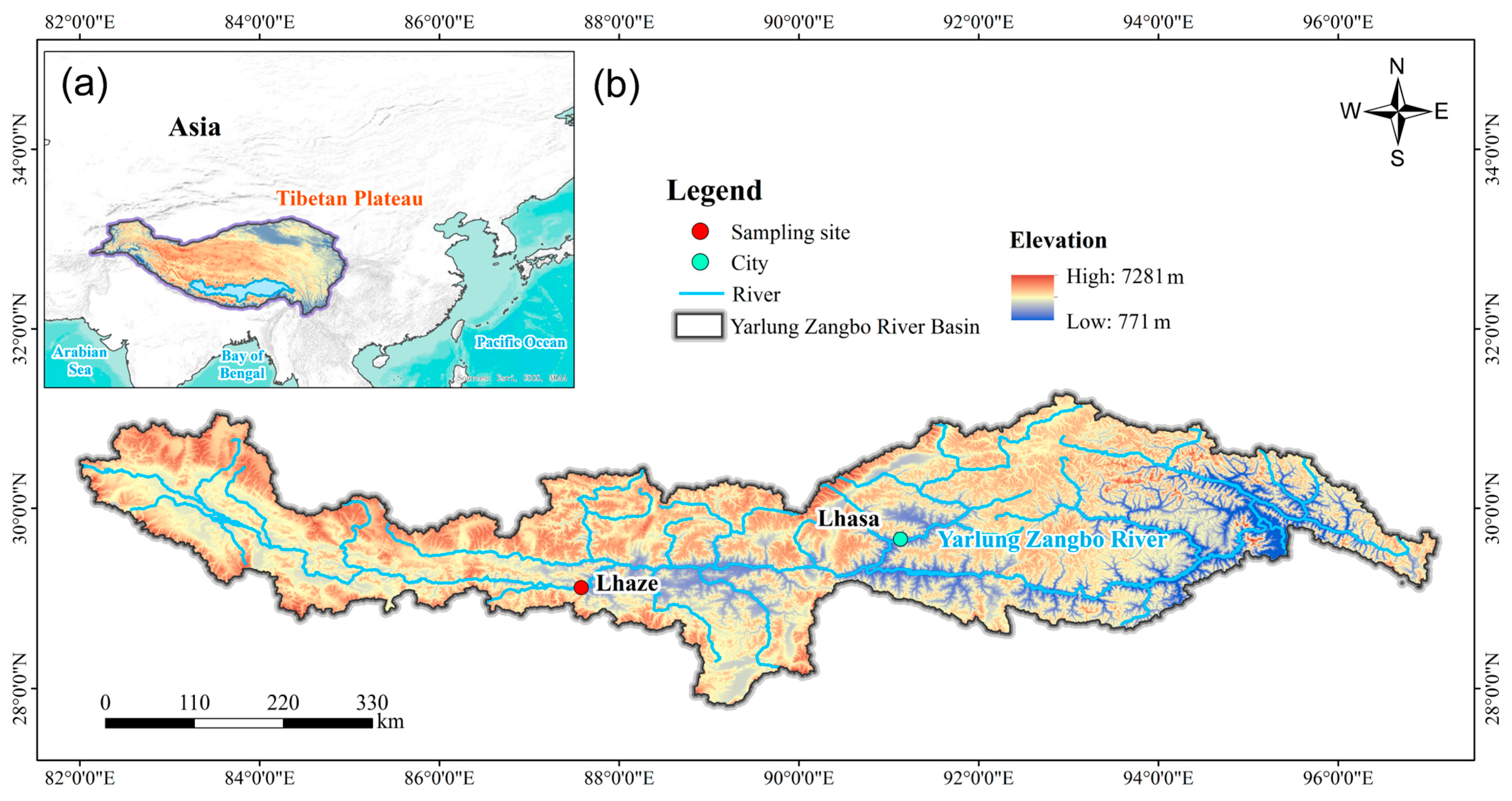
Weekly sampling took place at the Lhaze Hydrological Station from April to November 2019, with the sampling site shown in Figure 1. At the sampling points, a polyethylene surface water sampler was used to collect water samples from a bridge above the river. The water samples were taken 5 to 10 cm below the water surface. Before collecting the samples, both the sampler and the sampling bottle were rinsed three times with river water. In the field, the samples were immediately filtered through 0.22 μm cellulose acetate membranes. Subsequently, they were stored in pre-cleaned polyethylene bottles. For trace element analyses, samples were acidified to pH < 2 with 14 M double-distilled HNO3. SPM concentrations were measured by filtering known volumes of sample through pre-weighed filter membranes, Whatman GF/F, 0.7 μm (Cytiva, Marlborough, MA, USA). Particulate matter used for trace element analysis was gathered from these filter membranes and dried for subsequent examination.

2.3. Laboratory Analysis

First, 50 mg of SPM was ground to particles of less than 200 mesh, which were weighed and transferred into a Teflon reactor. The samples were then reacted with a concentrated mixture of HCl, HNO3, and HF. The reactor was placed in an oven and kept at 180 °C for 48 h. The digested solution was dried using an electric heating plate at 120 °C and dissolved in 10 mL of 2% HNO3 for trace element analysis. The concentrations of trace elements in water samples and digested solution were measured using inductively coupled plasma mass spectrometry (ICP-MS, PerkinElmer SCIEX ELAN DRC-e, Waltham, MA, USA). Quality assurance and control were evaluated through parallel samples, along with method blanks and standard reference materials. The metal element contents were measured in triplicate. The relative standard deviation (RSD) for all tests was below 5%. All analyses included parallel sample determinations, and the results were reported as the average concentration. The quality of the analytical method was confirmed by calculating the recovery rate of Chinese national geological standard materials (GBW-07301 and GBW-07311) [27,28]. The results matched the reference values, with differences within ±10%.

2.4. Data Analysis

2.4.1. Water Quality Index

The water quality index (WQI) offers an overall assessment of river water quality [1,29]. The WQI is a rating index that represents the combined effects of various water quality parameters, such as trace elements and HMs in this study. Weightings (wi) were assigned based on the significance of each parameter for assessing water quality for drinking purposes [1].
The WQI was calculated as follows:
WQI = Σ [Wi × (Ci/Si)] 100,
Wi = wi/Σwi, where wi is the weight of each parameter and Σwi is the total of all parameter weights. In this study, Σwi totaled 42. Ci represents the level of each trace element in every water sample, and Si refers to the Chinese Drinking Water Guidelines [30] for these elements. The calculated WQI values were categorized into five groups: excellent water (WQI < 50), good water (50–100), poor water (100–200), inferior water (200–300), and water not suitable for drinking (WQI > 300).

2.4.2. Geo-Accumulation Index

The geological accumulation index (Igeo) was used to determine the geochemical characteristics of HMs in river and lake sediments and SPM, and it was calculated as follows [31]:
Igeo = log2(Ci/1.5Bi),
where Ci is the concentration of the selected metal, while Bi is the geochemical background value of the corresponding metal elements; in this study, Bi in the soil background values of the Tibet region was selected [32]. Factor 1.5 refers to the “background matrix correction value” used to mitigate the effect of the lithosphere. The Igeo value is classified into seven levels, ranging from 0 (unpolluted) to 6 (severely polluted) (Table 1).

2.4.3. Potential Ecological Risk Index (PERI)

The PERI, initially introduced by Hakanson [33], was employed to evaluate the overall ecological risk of HMs in sediments and SPM. This approach not only determines the pollution level of SPM but also combines ecological, environmental, and toxicological effects, offering a more comprehensive assessment of the potential danger posed by HM contamination through the use of an index. The potential ecological risk factor of a given metal ( E r i ) is defined as follows:
E r i = T r i ×   ( c i / c 0 ) ,
Equation (3) was employed to determine the risk index (RI) for the sampling sites, as shown below:
R I = i = 0 n ( T r i × c i / c 0 ) ,
where Ci represents the concentration of metal i in SPM, while C0 indicates the background concentration; in this study, C0 was selected as the background value of the sediments in the YTR [32]. T r i is the biological toxicity factor for each element, determined with values of 5 for Cu, Pb, and Ni; 1 for Zn; 10 for As; 2 for Cr; and 30 for Cd [34]. E r i indicates the potential ecological risk posed by a single entity metal, and RI is the overall potential environmental risk index for all metals. The PERI of HMs was classified into five levels, as detailed in Table 2.

2.4.4. Source Apportionment Methods (Positive Matrix Factorization)

The PMF model is recommended by the U.S. Environmental Protection Agency (USEPA) as a general tool for source apportionment modeling. It employs the correlation and covariance matrices to reduce the complexity of high-dimensional variables and can operate without needing source profile inputs. Recently, the PMF model has seen widespread application in source apportionment studies across atmospheric, soil, and water environments [21,35]. The model can be expressed as shown in the Supplementary Materials (Section S2.4.4).
In this study, the concentrations of 15 dissolved trace elements in river water, along with their associated uncertainties (including sampling and analysis methods errors), were used as input data for the PMF (EPA 5.0) to determine the contributions of different sources to water quality in the YTR. Since the PMF model is susceptible to rotational ambiguity, multiple tests with different initial seeds were conducted to evaluate the variability in the analysis results. When the number of factors was set to 3 for both the wet and dry seasons, the PMF model runs produced the best results—indicated by the lowest robust Q value—and successfully passed the bootstrap test.

3. Results

Characteristics of HMs in the River and SPM

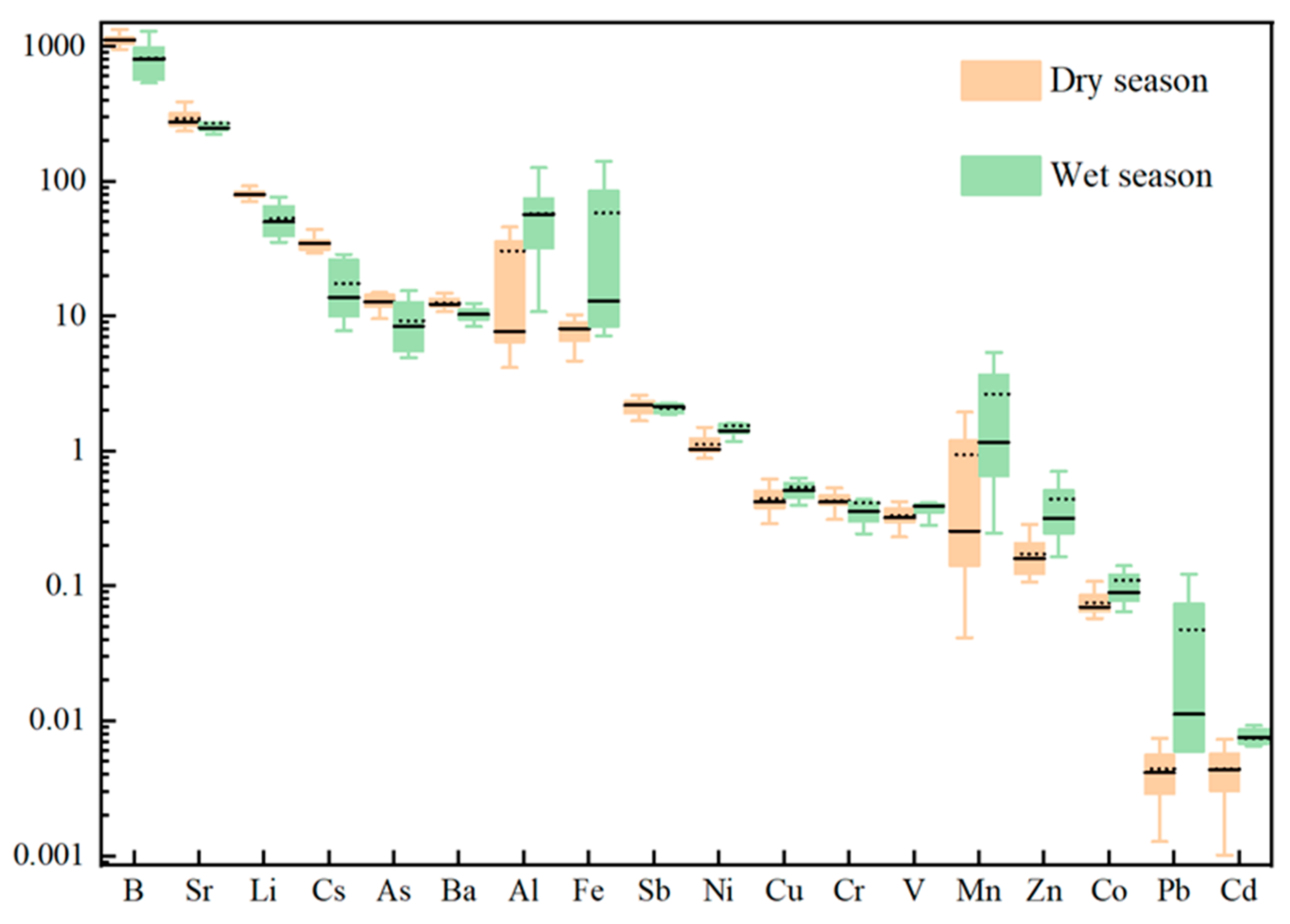
The concentrations of dissolved HMs in river water samples are summarized in Table S1, and the statistical description of the river water concentrations is presented in Table S2. The analyzed elements show the following decreasing order of abundance: B > Sr > Li > Al > Cs > Fe > Ba > As > Sb > Mn > Ni > Cu > Cr > V > Zn > Co > Pb > Cd (Figure 2). Among these, B is the predominant element, with concentrations ranging from 535 to 1341 μg/L and an average of 1008 μg/L. Notably, the mean concentrations in both the wet (828 μg/L) and dry (1125 μg/L) seasons significantly exceed the WHO drinking water guideline of 300 μg/L [36]. Sr and Li were the next most abundant, with mean concentrations of 284 μg/L and 70.1 μg/L, respectively. In contrast, Cd was the least detectable metal, with a mean concentration of only 0.01 μg/L. Concentrations of As ranged from 4.95 to 15.5 μg/L, with an average of 11.5 μg/L. A significant portion of the samples (73%, n = 19) exceeded the WHO drinking water standard of 10 μg/L [36]. A clear temporal trend was observed: lower As concentrations were consistently measured during July and September (4.95–8.87 μg/L), while concentrations in all other sampling periods remained above 10 μg/L. No exceedances were observed for the other metal indicators.
The summarized concentration data of river SPM samples are shown in Table S3, and the statistical description of the SPM concentrations is provided in Table S4. The distribution pattern of trace elements in the SPM follows the order Al > Fe > Mn > Ba > V > B > Sr > Zn > Cr > Ni > Li > As > Cu > Cs > Pb > Co > Sb > Cd. Among the 18 trace elements measured, the average concentrations of 12 exceed the background levels for the YTR sediments and soils in the Tibet Autonomous Region.

4. Discussion

4.1. Comparison of Dissolved and SPM Element Concentrations Between the YTR and Other Major Rivers

The YTR is the most extensive river system draining the Himalayan Mountains and southern TP, carrying substantial amounts of weathered material downstream. High levels of elements in rivers from plateau source regions may increase ecological risks in downstream basins [6]. Comparing dissolved element concentrations in the YTR and other rivers on the TP revealed that the average dissolved As in the upper reaches of the YTR was 11.5 μg/L. This is slightly higher than the average As concentration reported in previous studies for the same region (10 μg/L) [37], but much lower than in the source areas of the Yangtze River (38.7 μg/L) [38] and the Yellow River (38.7 μg/L) [39]. In the YTR, the dissolved Sr and Ba exhibit similar concentration features: their average concentrations (284 μg/L for Sr and 11.7 μg/L for Ba) are both significantly lower than those in the source area of the Yangtze River (1060 μg/L for Sr and 69.5 μg/L for Ba) [38]. Notably, the average concentration of B in the upper reaches of the YTR (1008 μg/L) is 15 times higher than in the Yangtze River (69.5 μg/L) [38]. The concentrations of other elements, such as Fe, Co, Cu, Pb, Zn, Cd, and Cr, are all lower than the average values in the Yangtze River. The upper reaches of the YTR, along with the source regions of the Yangtze and Yellow rivers, are mainly influenced by natural processes [40]. HMs in rivers of the TP, such as those in the Yangtze River source region, are affected not only by mineral weathering but also by groundwater processes, including hot spring input [41]. The levels of As, B, and Sr in Tibetan hot springs are higher than in river water [42], leading to comparatively higher concentrations of these elements in TP rivers than in downstream basins.
For a long time, the understanding of how HMs are transported and transformed in rivers has been limited to adsorption onto particles, which then settle and accumulate in sediments. It is generally believed that the main ecological risk posed by HMs in water bodies arises from their release from sediments. However, the role of SPM as a carrier of HMs and the associated risks to the aquatic environment have been consistently underestimated [43]. Comparing concentration differences between SPM and sediments in the YTR, especially for elements such as As, B, Li, Mn, Cu, Zn, Cd, and Ni, these differences are more significant. The annual average metal concentrations in the SPM exceed the background values of the YTR sediments by 46.6–307% [9] and are higher than the background soil values in the Tibet Autonomous Region by 32.1–408% [32]. Among these, Al has the highest content, ranging from 29.2 to 46.4 mg/g; however, its average content (33.9 mg/g) is significantly lower than the background sediment value in the YTR (62.4 mg/g) [32]. Of the HMs, Fe has the highest content, with values ranging from 24.6 to 37.4 mg/g and an average of 30.3 mg/g, which is higher than the average content of sediments in the YTR (28.2 mg/g) [32]. It is followed by Mn (917 μg/g) and Ba (229 μg/g). Similar to river water samples, SPM samples show the lowest average Cd concentration (0.41 μg/g). In the YTR, the concentrations of elements, including As, B, Li, Mn, Cr, Fe, Co, Cu, Zn, Cd, and Ni, are higher in SPM than in sediments. Meanwhile, SPM has a larger contact area with water during flow than sediments [44], so as it moves downward along the river, SPM is likely to release metal elements into the water. Therefore, the ecological pollution risk posed by SPM in the YTR to downstream water bodies also deserves our attention.

4.2. Seasonal Variations in the Concentrations of River Water and SPM Trace Elements in the YTR

4.2.1. Seasonal Variations in Element Concentrations in the Water of the YTR

A comparative statistical analysis of dissolved trace concentrations in the YTR was conducted for the dry and wet seasons of 2019, with the results presented in Table S5. The average concentrations of many elements showed significant differences between the two seasons. To confirm that these differences were not due to random variation, a significance test was performed on the dissolved trace elements across the two hydrological periods. The concentrations of dissolved As, B, Li, V, Fe, Co, Zn, Cd, Pb, Ba, Cs, and Ni showed statistically significant differences between the wet and dry seasons (p < 0.05). In contrast, no significant differences were observed for the other elements between the two hydrological periods. Meanwhile, this study conducted a cluster analysis of metal concentrations in the YTR. The results are shown in Figure S1. The findings indicate that heavy metals in the river water generally group into three categories: As, B, Li, Cs, Ba, Sr, and Sb belong to one group; Al, Mn, Fe, Pb, Co, Zn, Ni, Cr, V, and Cu form a second group; and Cd stands alone as a separate group. This suggests that, across hydrological periods throughout the year in the YTR, there are three distinct patterns of variation and underlying mechanisms influencing element concentrations.
The concentrations of metals in the river display three seasonal patterns: The first pattern shows higher concentrations during the dry season than during the wet season, including As, Sb, B, Li, Sr, Cr, Ba, and Cs. Most elements in this group are known as “fluid-mobile elements”. During the dry season, low rainfall causes these elements to enter the water in large amounts. During the wet season, on the one hand, these elements in river water are physically diluted by dilution effects. On the other hand, as the disturbance of the river water intensifies during this period, the amount of suspended sediment increases, and these easily migratory elements are more likely to be adsorbed, with the co-precipitation effect being significantly enhanced [45]. Group 2 includes Al, Mn, V, Fe, Co, Cu, Zn, and Ni. These elements behave differently from Group 1 because they are less frequently transported into rivers during the dry season. During the wet season, runoff increases greatly, leading to widespread resuspension of sediments in riverbeds and along riverbanks. Particulate forms (e.g., Fe, Mn) and clay-adsorbed forms (e.g., Co, Cu) are released into the water [38]. Simultaneously, melting glaciers and snow, combined with heavy rainfall eroding slopes, worsen physical erosion. This results in a significant influx of primary and secondary metal elements carried by bedrock debris and soil particles, with the supply rate far exceeding the dilution rate [46]. Group 3 contains Pb and Cd. The levels of these elements are relatively low in both the wet and dry seasons, with average concentrations of 0.02 μg/L for Pb and 0.01 μg/L for Cd, and they remain largely unaffected by changes in runoff. Although Pb is a fluid-mobile element, it shows low concentrations in the river water of the upper reaches of the YTR, similar to Cd. For example, the average concentrations of Pb and Cd in the YTR water are lower than those in the upper reaches of the Yangtze River (6.4 μg/L for Pb and 0.28 μg/L for Cd) [47]. Therefore, despite differences in rainfall, it is not easy to significantly alter the elemental concentrations in the river.

4.2.2. Seasonal Variations in Element Concentrations in SPM of the YTR

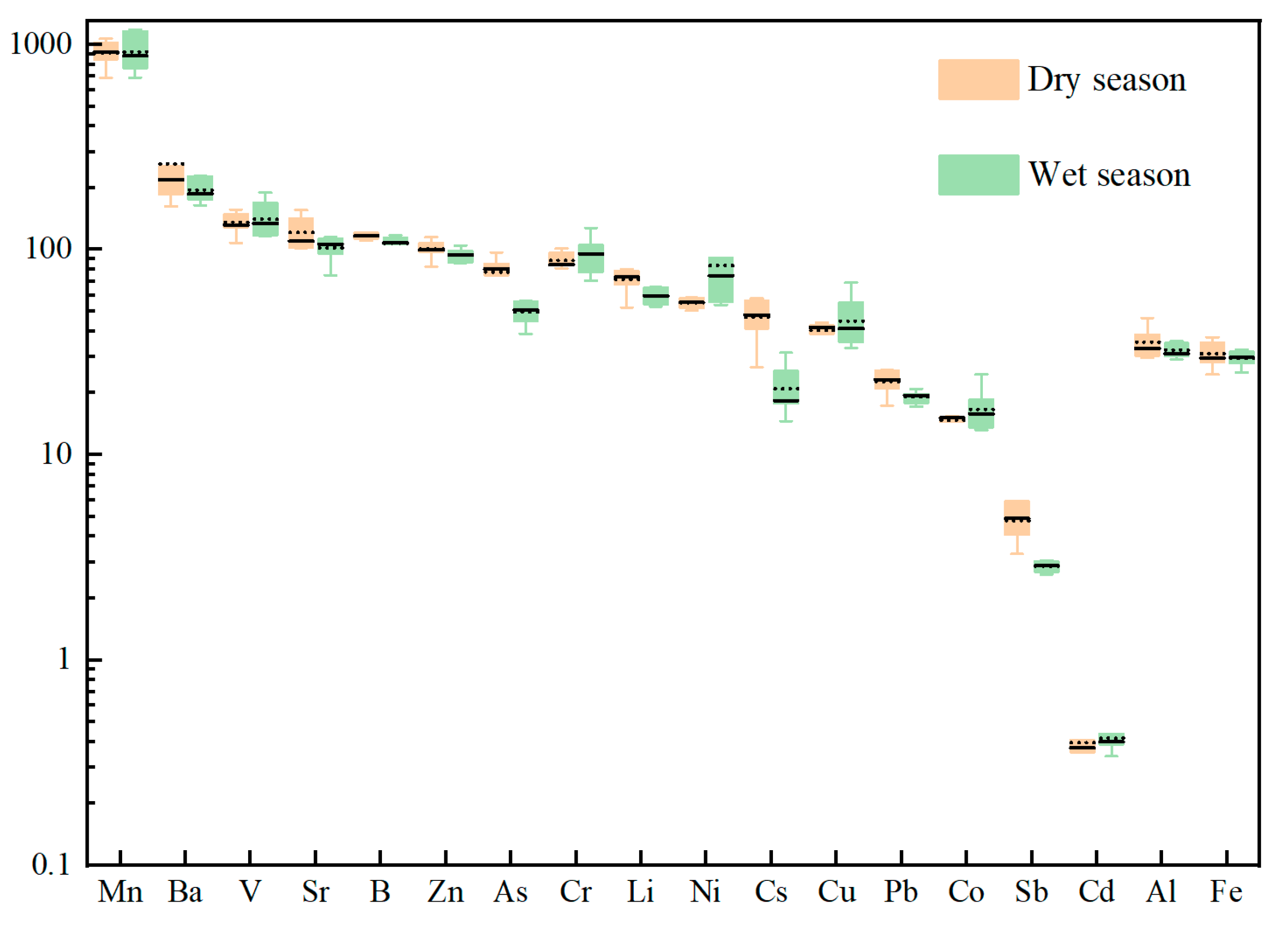
A seasonal statistical analysis (Table S5) was performed on trace element concentrations in the SPM of the YTR in 2019, with the results shown in Figure 3. A significance test was conducted on the trace elements in the SPM between the wet and dry seasons. The results indicated that only a small group of elements, including Sb, B, Li, Pb, and Cs, showed statistically significant differences (p < 0.05). In contrast, the significance levels of all other trace elements were above 0.05, suggesting no statistically significant changes in these elements between the two seasons. This indicates that the seasonal variation in metal elements in SPM is smaller than that in river water. The study area is located in the upper reaches of the YTR. Elemental concentrations in SPM are minimally affected by human activities and are primarily controlled by natural processes. Elements in the riverine SPM during both the wet and dry seasons are primarily produced by weathering and erosion [48], leading to relatively small seasonal fluctuations in their concentrations.

4.3. Evaluation of Water Quality and Ecological Risk

River Water and SPM Pollution and Ecological Risk Assessment

This study assessed the water quality of the YTR using the WQI method. Based on the water quality scores in Table S1, the overall water quality at the Lhaze Hydrological Monitoring Station of the YTR was analyzed throughout the year. Table S1 presents the WQI levels of the samples. We found that all WQI values were below 50, indicating that the water was of excellent quality. This likely occurs because of the low human activity in the area, resulting in minimal impact on river water quality [13].
This study evaluated the pollution level of HMs in SPM with the geo-accumulation index (detailed in Section 2.4.2). Table S3 displays the various Igeo levels for each element. Our findings show that Cr, Cu, Ni, Pb, and Zn in the YTR are generally at non-polluted levels throughout the entire hydrological year. Notably, Cu and Ni occasionally reach moderate levels of pollution during the dry season. It consistently remains at a moderate pollution level year-round, but it experiences severe pollution during the wet season. Furthermore, the level of As pollution during the dry season is significantly higher than during the wet season. During the rainy season in August, As was in an unpolluted state. However, during the dry season, the As level even reached the moderately to heavily polluted range. In contrast, B remained at a severe pollution level throughout the entire hydrological year. The Igeo results indicate that As is significantly enriched in the river’s SPM at most times. This phenomenon may be attributed to the strong adsorption capacity of various minerals in river SPM, which facilitates the retention of trace elements during their migration along the river channel [49]. Due to the oxidative environment of surface water, As primarily exists as the oxidized form, arsenate (As (V)), which is readily adsorbed by iron/manganese hydroxides such as goethite, ferrihydrite, and magnetite [50]. pH is a crucial factor controlling the migration and transformation of As during its interaction with particle surfaces. Strongly alkaline conditions (pH > 9) can induce the desorption of As from the surfaces of metal hydroxides [51]. However, this scenario was not observed in the studied YTR basin, as the pH values of most river water samples in this basin were below 9 [52]—a condition that further promotes the enrichment of As in river SPM. On the one hand, the input of geothermal water contributes to the elevated B content in the YTR’s water. On the other hand, the SPM in the river has relatively high Al concentrations [32]. B can be adsorbed onto the surfaces of Al oxides via outer-sphere complexation [53], which, in turn, highlights B enrichment in SPM.
This study assesses the overall ecological risk of HMs in river SPM using the PERI and calculates the potential ecological risk factor for each specific metal. The analysis shows that As presents a moderate risk from April to July and a low risk from August to November. Meanwhile, Cd demonstrates a moderate risk from July to October and a significant risk in November. Other elements maintain a low risk throughout the period. Although the cumulative index and potential ecological risk factors indicate that As, B, and Cd in the SPM pose certain risks, the overall ecological risk remains low. This finding aligns with previous studies; the high ecological risk of As, B, and Cd in SPM is mainly linked to the well-developed geothermal system in the upper reaches of the YTR [54]. Furthermore, weathering of rocks and minerals with high As, B, and Cd levels is an additional key factor contributing to this increased ecological risk [55].

4.4. The High-Frequency Temporal Variation Patterns of River Water and SPM Trace Elements in the YTR

4.4.1. The Variation Characteristics of YTR Water and SPM Trace Elements with Discharge

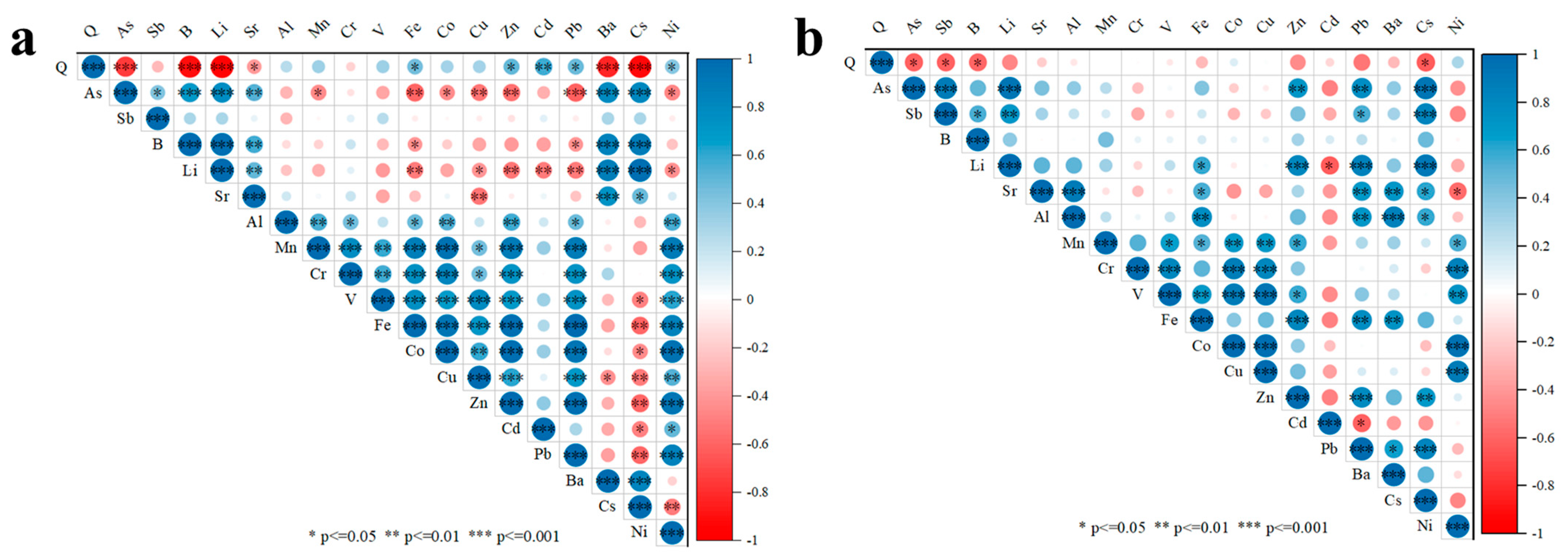
This study investigated the correlations between trace elements in water samples and YTR discharge from April 2019 to November 2019. The results are shown in Figure 4. Based on Spearman correlation analysis, the trace elements in the water samples were divided into two groups: Group (1) included As, B, Li, Sr, Ba, and Cs, which showed a significant negative correlation with discharge (Q) (p < 0.05). During the wet season, as rainfall and river discharge increase, the concentrations of the studied element group in river water decrease. Among these, the elements As, B, Li, and Cs in Group (1) have been reported to be significantly affected by hot spring inputs and weathering processes in the upper reaches of the YTR [56]. During the wet season, the concentrations of elements such as As in this group decrease due to dilution from heavy rainfall [57]. It is worth noting that the average concentrations of As and B (11.46 μg/L and 1008.19 μg/L, respectively) were both higher than the limit values of the Chinese drinking water hygiene standard (As: 10 μg/L and B: 1000 μg/L). Previous studies show that the primary source of dissolved As pollution in the main stream of the YTR during the wet season is the input from hot springs, with additional contributions from high physical erosion rates [54]. The As concentration in the hot springs of the upper reaches of the YTR reaches as high as 1173 μg/L [54], which leads to the enrichment of dissolved As in the YTR. The natural increase in B in surface water may result from the leaching of B-rich rocks (such as siliceous minerals and evaporites), atmospheric B deposition, or the discharge of other high-B water bodies [58,59]. In this study, a significant correlation was observed between B concentration and typical geothermal elements such as As and Li (Figure 4), providing strong evidence for the geothermal origin of B pollution in the upper reaches of the YTR. This conclusion is further supported by the extremely high B levels noted in the study area (Table S3). Similarly, severe B enrichment has been detected in hot spring water of the upper YTR (26,720 μg/L) [50]. These scenarios align with the abundant geothermal systems within the TP [60,61], indicating that geothermal waters could significantly contribute B into the major rivers flowing through these geodynamically active zones.
Group (2), which includes Fe, Co, Cu, Zn, and Ni, shows a robust positive correlation with Fe (p < 0.001) and an overall negative correlation with Q. When rainfall and river discharge increase, the concentrations of these elements in the river water also tend to rise. The seasonal variation in Group (2) elements indicates that higher discharge during the wet season leads to faster erosion in the basin. As a result, the concentrations of these elements are not diluted or reduced by increased rainfall. This phenomenon can be primarily attributed to two factors: first, higher rainfall enhances groundwater recharge into the river; second, heavy rainfall speeds up physical erosion in the basin, which leads to a significant input of elements (Fe, Co, Cu, Zn, and Ni) that have low fluid mobility and enter the river slowly during periods of low weathering rates [45].
By conducting a correlation analysis of the SPM samples from the YTR during April to November 2019 (Figure 4), it was found that As, Sb, B, and Cs all showed significant negative correlations with the discharge (p < 0.05). Among them, As had significant positive correlations with Sb, Li, Zn, Pb, and Cs (p < 0.01), while Sr had significant correlations with Al, Fe, Pb, Ba, Cs, and Ni (p < 0.05). The contents of most SPM elements were negatively correlated with the discharge, but the correlation was weaker than that of dissolved elements. This might be because SPM in the river results from weathering and erosion during both the wet and dry seasons. The differences in SPM sources between these seasons mainly relate to erosion forces and replenishment methods rather than changes in the core source area [62]. Therefore, the significant variations in metal concentrations in SPM are not readily apparent.

4.4.2. The Influence of Discharge Changes on the Input of YTR Water and SPM Containing Trace Elements

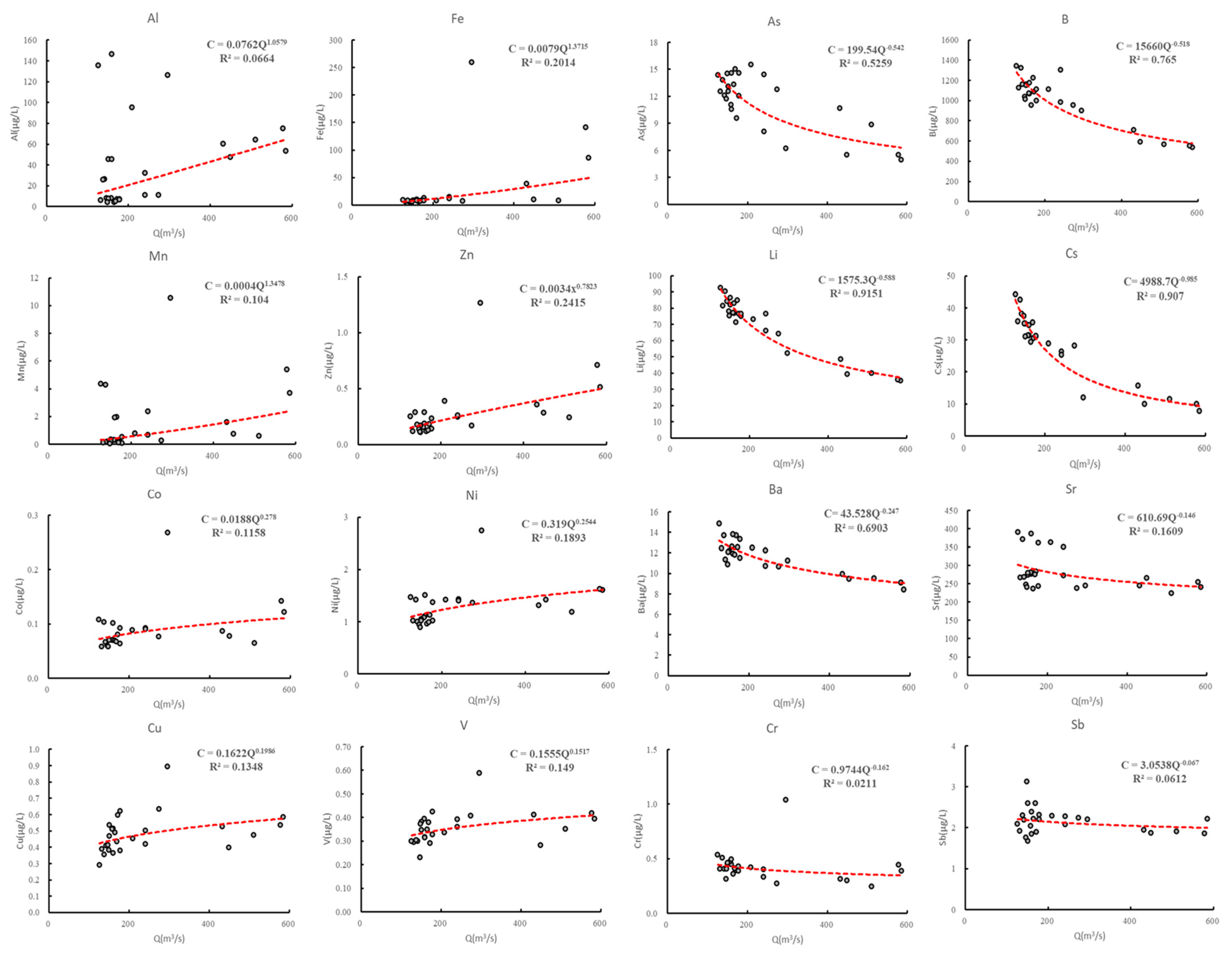
The correlation between the solute concentration of samples and the discharge of the YTR from April to November 2019 was relatively strong. To further explore the response relationship of the river’s water chemical composition to the discharge, we expressed the relationship between the solute concentration (C) and the discharge (Q) of the river with a power function (C = a × Qb), where a is a constant and b is the regression coefficient of C and Q, used as an index to explain the deviation from chemical equilibration. When b = 0, C is independent of Q, which represents chemostatic behavior; when b = −1, C is controlled by dilution, and the discharge changes, but the solute flux does not change significantly; when b > 0, C is significantly increased due to intense weathering and erosion [46,63]. The specific results are shown in Figure 5. This study categorizes the elements into three groups, based on b. For the first group of elements (Al, Fe, Mn, Zn, Co, Ni), the values of b are greater than 0. This suggests that the concentrations of these elements increase with higher discharge during the wet season and decrease with lower discharge during the dry season. This pattern of variation closely resembles the seasonal changes in the concentrations of major elements in SPM between the wet and dry seasons [64]. This phenomenon may result from the sharp increase in SPM content during the wet season, which increases the specific surface area of contact between SPM and river water, leading to higher concentrations of dissolved elements in the river water [65].
For the second group of elements (As, B, Li, Cs, Ba), the b values are around −1, indicating a dilution process that becomes more pronounced with increased rainfall. This suggests that although the concentrations of dissolved As, B, Li, and Cs in the YTR decrease as the discharge rises, the solute fluxes remain relatively unchanged. It also implies that the source contributions and overall amounts of this element group stay consistent regardless of whether the discharge rises or falls. This may be linked to the significant input of these elements from hot springs in the TP.
For the third group of elements (Sr, Cr, Sb, Cu, V), the values of b are approximately 0, indicating that their concentration ranges are narrow and unaffected by discharge variations, demonstrating more chemostatic behavior, meaning that C does not change with changes in Q. Previous studies have shown that continuous flushing by runoff during the monsoon increases the surface area of reactive minerals, accelerates mineral weathering reactions, and promotes the chemical stabilization of riverine substances [66].

4.5. Identify the Primary Sources of Solutes Using the PMF Model

In this study, concentration data for 15 trace elements in 26 river water samples, along with uncertainty data files containing sampling details and error analysis, were used as input datasets for the PMF model. This model was used to estimate the contributions of various HM sources to the YTR’s water from April to November 2019. Since the PMF model is prone to rotational ambiguity, multiple tests with different initial seed numbers were conducted to assess the variability in the PMF analysis when determining the optimal number of factors. The results indicated that the PMF model performed best with three factors, and this optimal configuration was further validated through the bootstrap test.
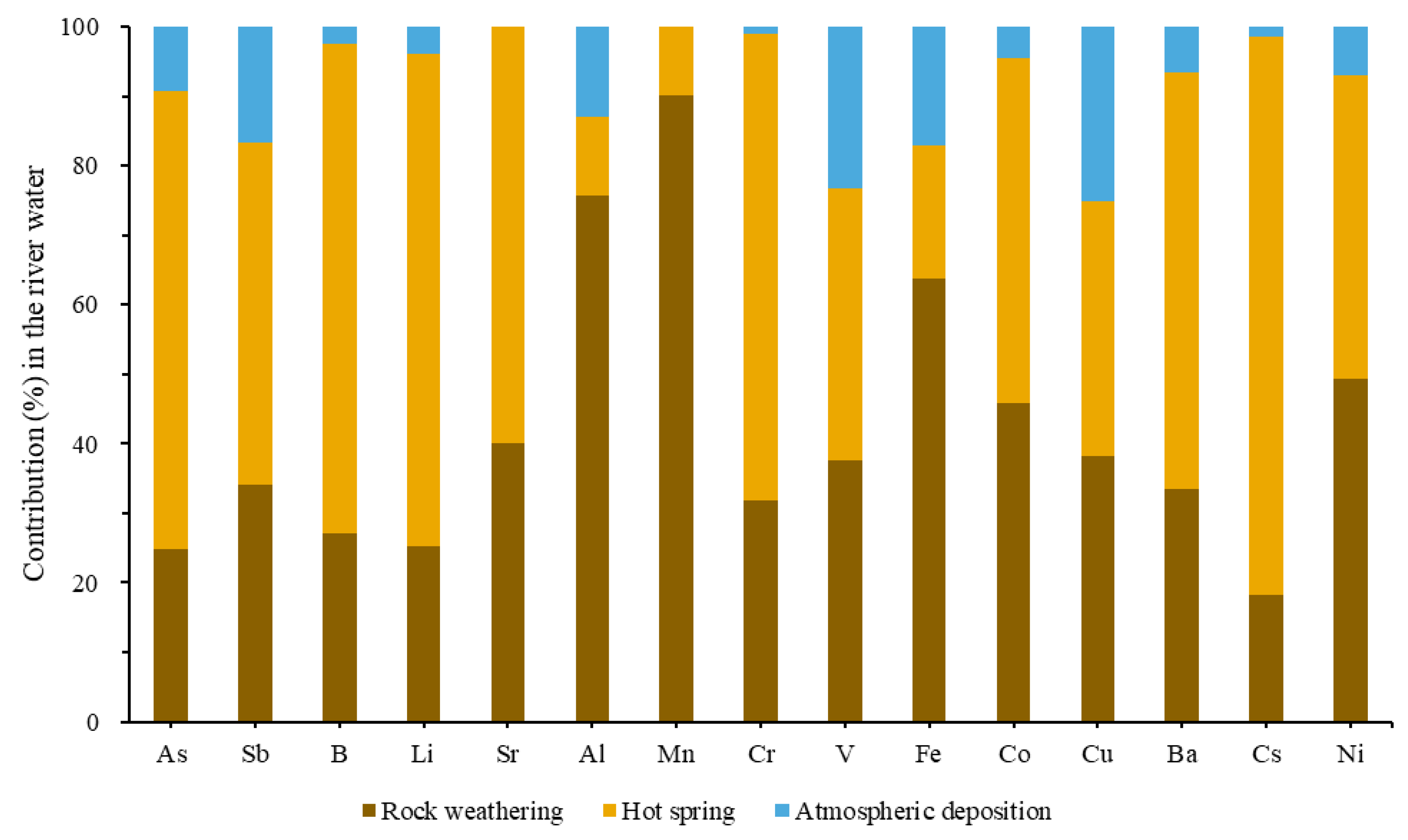
Three influencing factors were identified using the PMF model, and the contributions of each pollution source to solutes in the river water are shown in Figure 6. The specific calculation results are available in Table S6. Factor 1 accounted for 42.4% of the total measured trace metals, with relatively high levels of Al, Mn, and Fe. According to previous studies, the upper reaches of the YTR basin are sparsely populated, mainly engaged in agriculture and animal husbandry, and lack significant industrial pollution sources. Rock weathering is recognized as the primary source of Al, Mn, and Fe, accounting for contributions much higher than those from other pathways, such as atmospheric deposition and human activities [67]. The upper basin features extensive exposure of bedrocks, including granite, gneiss, shale, schist, phyllite, and rocks associated with ophiolite belts. These parent rocks are generally rich in aluminosilicate minerals (e.g., feldspar, mica), ferromagnesian silicate minerals (e.g., pyroxene, amphibole), and Fe-Mn-bearing minerals such as rhodochrosite and magnetite, which serve as primary sources of Al, Mn, and Fe [62]. Additionally, significant positive correlations among Al, Mn, and Fe were observed in river water (p < 0.05), further confirming their common origin. The ophiolite belts and podiform chromitite bodies along the YTR suture zone serve as important additional sources of Al and Fe. High-Al chromitite bodies identified in the Purang intrusion in the western part of the suture zone release Al-bearing minerals through weathering, thereby directly increasing background Al levels in nearby river reaches. Meanwhile, ferromagnesian minerals in mantle peridotite undergo serpentinization and supergene weathering, releasing large amounts of Fe and Mn, which are characteristic sources of these elements in the upper reaches of rivers [68]. Essentially, this process is a specific form of rock weathering, further underscoring rock weathering’s dominant role. Therefore, it is reasonable to hypothesize that rock weathering is the primary source of Al, Mn, and Fe, and Factor 1 can therefore be defined as the rock weathering source.
Factor 2 accounted for 48.9% of the total trace metals measured, with relatively high levels of As, B, Li, and Cs. Recent research shows that hot springs in the southern part of the YTR basin typically have abnormal concentrations of As, B, Cs, and Li—ranging from 100 to 10,000 times higher than in typical water bodies. These hot springs have been identified as the primary source of As, B, Cs, and Li in the YTR’s water [56]. Lithium isotope analysis revealed that the δ7Li values of Li-rich hot springs in the upper YTR are significantly low. After the river receives recharge from these hot springs, its δ7Li value drops from +8.21‰ (mainly from silicate weathering) to +0.14‰, aligning closely with the isotopic signature of hot spring fluids [69]. This suggests that Li in the river mainly comes from hot springs rather than from silicate weathering. Additionally, a strong positive correlation was found among As, B, Cs, and Li in the YTR’s water (p < 0.001), further indicating that the accumulation of these elements in the river is mainly due to hot spring input. Therefore, we can conclude that Factor 2 is linked to hot spring input.
Factor 3 accounted for 8.7% of the total measured trace metals, with relatively high relative contents of Cu and V. HMs in the YTR primarily originate from three significant sources: rock weathering, hot spring input, and atmospheric deposition. Except for Hg, the contribution of atmospheric deposition to other HMs is significantly lower than that of rock weathering and hot spring input [70]. Meanwhile, in the study of the concentration–discharge (C-Q) relationship for Cu and V, these elements were identified as chemically stable (see Figure 5), and their source contributions showed no apparent differences between the wet and dry seasons. This observation is consistent with previous research, which reported that atmospheric deposition supplements riverine HMs through wet deposition during the wet season and dry deposition during the dry season [71]. Previous studies have confirmed through flux balance methods and isotope tracing techniques that the proportion of Cu from atmospheric deposition in certain rivers can reach 40–50% [72], and the proportion of V from atmospheric deposition can reach 60–80% [73]. Considering that the basins discussed in the previous literature may have a higher contribution from atmospheric deposition due to human emissions, the proportion of Cu from atmospheric deposition in the upper reaches of Qinghai Lake, which is also a remote high-altitude basin, is only 8–18% [74]. This is similar to the proportion of Cu contributed by Factor 3 to the total Cu in this study. Therefore, atmospheric deposition is most likely the additional source of Cu and V, and Factor 3 can be linked to atmospheric deposition as a potential source.
In summary, the elements As, B, Li, Sr, Cr, Ba, and Cs in the YTR’s water mainly come from hot springs throughout the year, with hot spring inputs accounting for 59.9–80.4% of their total concentrations. In contrast, rock weathering contributes less, and atmospheric precipitation has a negligible effect. This matches the strong positive correlations among these elements (p < 0.001). These elements show a significant negative correlation with river discharge, suggesting that, during the rainy season, their concentrations decrease primarily due to dilution from high rainfall. Unlike these elements, Al, Mn, and Fe mainly originate from internal sources, such as rock weathering, with contributions ranging from 63.7% to 90.2%. This shows that these elements are mainly affected by increased physical erosion during the wet season, which causes more of them to enter the river water [45], raising their concentrations. For Cu and V, about 20% of their total amounts comes from atmospheric deposition, and their overall fluxes do not change significantly between the wet and dry seasons.

5. Conclusions

This study provides a comprehensive assessment of the HM pollution status and the HM sources in the upper reaches of the YTR basin. The water quality in the upper YTR is excellent, with WQI values below 50. However, As and B pose specific ecological risks, especially during the dry season. The SPM shows moderate-to-severe pollution levels for As and B, with Igeo values ranging from 0.7 to 2.5; these elements, along with Cd, indicate potential ecological risks. Despite these concerns, the overall ecological risk of SPM remains low (RI < 150). The source apportionment results from the PMF model indicate that As, B, Li, Sr, Cr, Ba, and Cs in surface water mainly originate from geothermal springs, accounting for 60–80% of their total amounts. These elements tend to have higher levels during the dry season due to input from high-concentration geothermal spring water, with lower levels during the wet season because of dilution. Geothermal springs were identified as the primary sources of ecological risks related to As and B. Conversely, Al, Mn, and Fe mainly originate from rock weathering, accounting for 64–90% of their total amounts, with their levels affected by weathering and erosion. Cu and V primarily come from atmospheric deposition, showing consistent fluxes and simple dilution patterns. Although this study quantitatively identified the sources of HMs in the YTR, several limitations remain. Future studies will be valuable to investigate more sampling locations along the river channel and apply isotope tracing technology to enhance understanding of HM cycling and its environmental effects in the YTR basin and the TP.

Supplementary Materials

The following supporting information can be downloaded at https://www.mdpi.com/article/10.3390/w18010113/s1, Figure S1: Clustering Analysis Chart of Heavy Metal Element Concentrations in YTR; Table S1: Heavy metal concentration levels in surface water and WQI values; Table S2: Statistical description of heavy metal concentrations in river water; Table S3: SPM metal concentration and environmental assessment indicators; Table S4: Statistical description of heavy metal concentrations in riverine SPM; Table S5: Comparison of SPSS (IBM SPSS Statistics 27) descriptive analysis between dry season and wet season; Table S6: Calculation of PMF results for heavy metal contributions from different sources.

Author Contributions

Writing—original draft preparation, G.Z. and H.D.; data curation, J.Z., H.S. and G.W.; writing—review and editing, G.Z. and Z.X.; supervision, Z.X.; funding acquisition, Z.X. All authors have read and agreed to the published version of the manuscript.

Funding

The National Key Research and Development Program of China (No. 2020YFA0607700); the National Natural Science Foundation of China (No. 42273050).

Data Availability Statement

The original contributions presented in this study are included in the article/Supplementary Materials. Further inquiries can be directed to the corresponding author.

Conflicts of Interest

The authors declare no conflicts of interest.

Abbreviations

The following abbreviations are used in this manuscript:
HMHeavy metal
TPTibetan Plateau
YTRYarlung Tsangpo River
WQIWater quality index
IgeoGeological accumulation index
PERIPotential ecological risk index
PMFPositive matrix factorization
SPMSuspended particulate matter
CConcentration
QDischarge

References

  1. Xiao, J.; Jin, Z.; Wang, J. Geochemistry of trace elements and water quality assessment of natural water within the Tarim River Basin in the extreme arid region. NW China. J. Geochem. Explor. 2014, 136, 118–126. [Google Scholar] [CrossRef]
  2. Bastami, K.D.; Taheri, M.; Bagheri, H. Response of sediment-dwelling annelida community in relation to geochemical parameters in the Gorgan Bay, Caspian Sea. Int. J. Environ. Sci. Technol. 2014, 11, 2025–2036. [Google Scholar] [CrossRef][Green Version]
  3. Bodin, N.; N’Gom-Kâ, R.; Kâ, S.; Thiaw, O.T.; De Morais, L.T.; Le Loc’h, F.; Rozuel-Chartier, E.; Auger, D.; Chiffoleau, J.-F. Assessment of trace metal contamination in mangrove ecosystems from Senegal, West Africa. Chemosphere 2013, 90, 150–157, 0045-6535. [Google Scholar] [CrossRef]
  4. Xu, X.; Lu, C.; Shi, X.; Gao, S. World water tower: An atmospheric perspective. Geophys. Res. Lett. 2008, 35, L20815. [Google Scholar] [CrossRef]
  5. Han, G.L.; Li, X.Q. Calcium isotopic evidence for secondary carbonate precipitation in a large river catchment, Southeastern Tibetan Plateau. Sci. China Earth Sci. 2025, 68, 4163–4174. [Google Scholar] [CrossRef]
  6. Hren, M.T.; Chamberlain, C.P.; Hilley, G.E.; Blisniuk, P.M.; Bookhagen, B. Major ion chemistry of the Yarlung Tsangpo–Brahmaputra river: Chemical weathering, erosion, and CO2 consumption in the southern Tibetan plateau and eastern syntaxis of the Himalaya. Geochim. Cosmochim. Acta 2007, 71, 2907–2935. [Google Scholar] [CrossRef]
  7. Liu, M. Boron Geochemistry of the Geothermal Waters from Typical Hydrothermal Systems in Tibet. Ph.D. Thesis, China University of Geoscience, Beijing, China, 2018. [Google Scholar]
  8. Guo, Q.; Wang, Y.; Liu, W. B, As, and F contamination of river water due to wastewater discharge of the Yangbajing geothermal power plant, Tibet, China. Environ. Geol. 2008, 56, 197–205. [Google Scholar] [CrossRef]
  9. Huang, X.; Sillanpää, M.; Gjessing, E.T.; Peräniemi, S.; Vogt, R.D. Water quality in the southern Tibetan Plateau: Chemical evaluation of the Yarlung Tsangpo (Brahmaputra). River Res. Appl. 2011, 27, 113–121. [Google Scholar] [CrossRef]
  10. Li, S.; Wang, M.; Yang, Q.; Wang, H.; Zhu, J.; Zheng, B.; Zheng, Y. Enrichment of arsenic in surface water, stream sediments and soils in Tibet. J. Geochem. Explor. 2013, 135, 104–116. [Google Scholar] [CrossRef]
  11. Wang, X.; Dan, Z.; Cui, X.; Zhang, R.; Zhou, S.; Wenga, T.; Yan, B.; Chen, G.; Zhang, Q.; Zhong, L. Contamination, ecological and health risks of trace elements in soil of landfill and geothermal sites in Tibet. Sci. Total Environ. 2020, 715, 136639. [Google Scholar] [CrossRef] [PubMed]
  12. Zhang, X.P.; Deng, W.; Yang, X.M. The background concentrations of 13 soil trace elements and their relationships to parent materials and vegetation in Xizang (Tibet), China. J. Asian Earth Sci. 2002, 21, 167–174. [Google Scholar] [CrossRef]
  13. Zhang, Y.; Sillanpää, M.; Li, C.; Guo, J.; Qu, B.; Kang, S. River water quality across the Himalayan regions: Elemental concentrations in headwaters of Yarlung Tsangbo, Indus and Ganges River. Environ. Earth Sci. 2015, 73, 4151–4163. [Google Scholar] [CrossRef]
  14. Zhang, Y.F.; Tan, H.B.; Zhang, W.J.; Huang, J.Z.; Zhang, Q. A new geochemical perspective on hydrochemical evolution of the Tibetan geothermal system. Geochem. Int. 2015, 53, 1090–1106. [Google Scholar] [CrossRef]
  15. Zhang, Q.; Wang, S.; Yousaf, M.; Wang, S.; Nan, Z.; Ma, J.; Wang, D.; Zang, F. Hydrochemical characteristics and water quality assessment of surface water in the northeast Tibetan Plateau of China. Water Supply 2017, 18, 1757–1768. [Google Scholar] [CrossRef]
  16. Zhang, Y.; Li, S.; Zheng, L.; Chen, J.; Zheng, Y. Evaluation of arsenic sorption and mobility in stream sediment and hot spring deposit in three drainages of the Tibetan Plateau. Appl. Geochem. 2017, 77, 89–101. [Google Scholar] [CrossRef]
  17. Masson, M.; Schäfer, J.; Blanc, G.; Pierre, A. Seasonal variations and annual fluxes of arsenic in the Garonne, Dordogne and Isle Rivers, France. Sci. Total Environ. 2007, 373, 196–207. [Google Scholar] [CrossRef]
  18. Zhao, Z.; Li, S.; Xue, L.; Liao, J.; Zhao, J.; Wu, M.; Wang, M.; Sun, J.; Zheng, Y.; Yang, Q. Effects of dam construction on arsenic mobility and transport in two large rivers in Tibet, China. Sci. Total Environ. 2020, 741, 140406. [Google Scholar] [CrossRef]
  19. Zeng, J.; Han, G.L.; Yang, K.H. Assessment and sources of heavy metals in suspended particulate matter in a tropical catchment, Northeast Thailand. J. Clean. Prod. 2020, 265, 121898. [Google Scholar] [CrossRef]
  20. Islam, S.M.N.; Rahman, S.H.; Chowdhury, D.A.; Rahman, M.M.; Tareq, S.M. Seasonal variations of arsenic in the Ganges and Brahmaputra River, Bangladesh. J. Sci. Res. 2012, 4, 65–75. [Google Scholar] [CrossRef]
  21. Norris, G.; Duvall, R.; Brown, S.; Bai, S. EPA Positive Matrix Factorization (PMF) 5.0 Fundamentals and User Guide; US Environmental Protection Agency: Washington, DC, USA, 2014. [Google Scholar]
  22. Huang, X.; Sillanpää, M.; Duo, B.U.; Gjessing, E.T. Water quality in the Tibetan plateau: Metal contents of four selected rivers. Environ. Pollut. 2008, 156, 270–277. [Google Scholar] [CrossRef]
  23. Liu, J.; Yao, Z.; Chen, C. Evolution trend and causation analysis of the runoff evolution in the Yarlung Zangbo river basin. J. Nat. Resour. 2007, 22, 471–477. [Google Scholar]
  24. You, Q.; Kang, S.; Wu, Y.; Yan, Y. Climate change over the Yarlung Zangbo river basin during 1961–2005. J. Geogr. Sci. 2007, 17, 409–420. [Google Scholar] [CrossRef]
  25. Liu, T. Hydrological characteristics of Yalungzangbo River. Acta Geogr. Sin. 1999, 54, 157–164. [Google Scholar]
  26. Aitchison, J.C.; Davis, A.M.; Luo, H. New constraints on the India–Asia collision: The lower Miocene Gangrinboche conglomerates, Yarlung Tsangpo suture zone, SE Tibet. J. Asian Earth Sci. 2002, 21, 251–263. [Google Scholar] [CrossRef]
  27. GBW07301; Certified Reference Material for Composition Analysis of Stream Sediment. Institute of Geophysical and Geochemical Exploration. Chinese Academy of Geological Sciences: Langfang, China, 1985.
  28. GBW07311; Certified Reference Material for Composition Analysis of Stream Sediment. Institute of Geophysical and Geochemical Exploration. Chinese Academy of Geological Sciences: Langfang, China, 1985.
  29. Lumb, A.; Sharma, T.C.; Bibeault, J.F. A review of genesis and evolution of Water Quality Index (WQI) and some future directions. Water Qual. Expo. Health 2011, 3, 11–24. [Google Scholar] [CrossRef]
  30. GB5749-2006; Standards for Drinking Water Quality. Ministry of Health: Beijing, China, 2007.
  31. Chen, H.; Teng, Y.; Lu, S.; Wang, Y.; Wang, J. Contamination features and health risk of soil heavy metals in China. Sci. Total Environ. 2015, 512–523, 143–153. [Google Scholar] [CrossRef]
  32. Chen, P.F.; Li, C.L.; Kang, S.C.; Zhang, Q.G.; Gao, S.P. The geochemical characteristics of sediments of the Yarlung Zangbo River. Geochimica 2012, 41, 387–392. [Google Scholar]
  33. Hakanson, L. An ecological risk index for aquatic pollution control: A sedimentological approach. Water Res. 1980, 14, 975–1001, 0043-1354. [Google Scholar] [CrossRef]
  34. Suresh, G.; Ramasamy, V.; Meenakshisundaram, V.; Venkatachalapathy, R.; Ponnusamy, V. Influence of mineralogical and heavy metal composition on natural radionuclide contents in the river sediments. Appl. Radiat. Isot. 2011, 69, 1466–1474. [Google Scholar] [CrossRef]
  35. Chen, R.; Chen, H.; Song, L.; Yao, Z.; Meng, F.; Teng, Y. Characterization and source apportionment of heavy metals in the sediments of Lake Tai (China) and its surrounding soils. Sci. Total Environ. 2019, 694, 133819. [Google Scholar] [CrossRef]
  36. World Health Organization. Guidelines for Drinking-Water Quality, 4th ed.; World Health Organization: Geneva, Switzerland, 2011. [Google Scholar]
  37. Li, C.; Kang, S.; Chen, P.; Zhang, Q.; Mi, J.; Gao, S.; Sillanpää, M. Geothermal spring causes arsenic contamination in river waters of the southern Tibetan Plateau, China. Environ. Earth Sci. 2014, 71, 4143–4148. [Google Scholar] [CrossRef]
  38. Qu, B.; Sillanpää, M.; Zhang, Y.; Guo, J. Water chemistry of the headwaters of the Yangtze River. Environ. Earth Sci. 2015, 74, 6443–6458. [Google Scholar] [CrossRef]
  39. Yu, C.; Sun, Y.; Zhong, X.; Yu, Z.; Li, X.; Yi, P.; Jin, H.; Luo, D. Arsenic in permafrost affected rivers and lakes of Tibetan Plateau, China. Environ. Pollut. Bioavailab. 2019, 31, 226–232. [Google Scholar] [CrossRef]
  40. Chen, J.; Wang, F.; Xia, X.; Zhang, L. Major element chemistry of the Changjiang (Yangtze River). Chem. Geol. 2002, 187, 231–255. [Google Scholar] [CrossRef]
  41. Immerzeel, W.W.; van Beek, L.P.; Bierkens, M.F. Climate change will affect the Asian water towers. Science 2010, 328, 1382–1385. [Google Scholar] [CrossRef]
  42. Wang, M.; Li, S.; Wang, H.; Xiao, T.; Zheng, B. Distribution of arsenic in surface water in Tibet. Environ. Sci. 2012, 33, 3411–3416. [Google Scholar]
  43. Jin, X.; Zhang, X.; Zhu, Y. Characteristics of suspended particulate matter in a typical slow-moving river of northern China: Insight into its structure and motion behavior. Chemosphere 2018, 202, 521–529. [Google Scholar] [CrossRef]
  44. Atkinson, C.F.; Miller, G.L.; Aumen, N.G. Influence of season, size, and collection site on surface area of fine particular matter in streams. J. N. Am. Benthol. Soc. 1993, 12, 410–417. [Google Scholar] [CrossRef]
  45. Smedley, P.L.; Kinniburgh, D.G. A review of the source, behaviour and distribution of arsenic in natural waters. Appl. Geochem. 2002, 17, 517–568. [Google Scholar] [CrossRef]
  46. Liu, W.; Sun, H.; Li, Y.; Xu, Z. Hydrochemistry and carbon isotope characteristics of Nujiang River water: Implications for CO2 budgets of rock weathering in the Tibetan Plateau. Sci. China Earth Sci. 2023, 66, 2953–2970. [Google Scholar] [CrossRef]
  47. Wang, L.; Wang, Y.; Xu, C.; An, Z.; Wang, S. Analysis and evaluation of the source of heavy metals in water of the River Changjiang. Environ. Monit. Assess. 2011, 173, 301–313. [Google Scholar] [CrossRef]
  48. Liang, W.D.; Hu, X.M. Contrasting provenance budgets for suspended load and bedload of the Yarlung Tsangpo, Tibet: Lhasa block or Himalaya? Geology 2025, 53, 333–337. [Google Scholar] [CrossRef]
  49. Gaillardet, J.; Viers, J.; Dupré, B. Trace elements in river waters. Treatise Geochem. 2003, 5, 605. [Google Scholar]
  50. Gorny, J.; Billon, G.; Lesven, L.; Dumoulin, D.; Madé, B.; Noiriel, C. Arsenic behavior in river sediments under redox gradient: A review. Sci. Total Environ. 2015, 505, 423–434. [Google Scholar] [CrossRef]
  51. Bundschuh, J.; Litter, M.I.; Parvez, F.; Román-Ross, G.; Nicolli, H.B.; Jean, J.S.; Liu, C.; Lopez, D.; Armienta, M.A.; Guilherme, L.R.G.; et al. One century of arsenic exposure in Latin America: A review of history and occurrence from 14 countries. Sci. Total Environ. 2012, 429, 2–35. [Google Scholar] [CrossRef]
  52. Zhou, L.; Xu, Z.F.; Zhou, J.W.; Fan, P.K. Natural arsenic source, migration, and flux in a catchment on the Southern Tibetan Plateau. Sci. Total Environ. 2022, 838, 155898. [Google Scholar] [CrossRef]
  53. Sakata, M. Relationship between adsorption of arsenic(III) and boron by soil and soil properties. Environ. Sci. Technol. 1987, 21, 1126–1130. [Google Scholar] [CrossRef]
  54. Zhang, J.W.; Yan, Y.N.; Zhao, Z.Q.; Li, X.D.; Guo, J.Y.; Ding, H.; Cui, L.F.; Meng, J.L.; Liu, C.Q. Spatial and seasonal variations of dissolved arsenic in the Yarlung Tsangpo River, southern Tibetan Plateau. Sci. Total Environ. 2021, 760, 143416. [Google Scholar] [CrossRef]
  55. Qu, B.; Zhang, Y.; Kang, S.; Sillanpää, M. Water chemistry of the southern Tibetan Plateau: An assessment of the Yarlung Tsangpo river basin. Environ. Earth Sci. 2017, 76, 74. [Google Scholar] [CrossRef]
  56. Qu, B.; Zhang, Y.; Kang, S.; Sillanpää, M. Water quality in the Tibetan Plateau: Major ions and trace elements in rivers of the “Water Tower of Asia”. Sci. Total Environ. 2019, 649, 571–581. [Google Scholar] [CrossRef]
  57. Tian, Y.; Yu, C.; Zha, X.; Wu, J.; Gao, X.; Feng, C.; Luo, K. Distribution and potential health risks of arsenic, selenium, and fluorine in natural waters in Tibet, China. Water 2016, 8, 568. [Google Scholar] [CrossRef]
  58. Mao, H.R.; Liu, C.Q.; Zhao, Z.Q. Source and evolution of dissolved boron in rivers: Insights from boron isotope signatures of end-members and model of boron isotopes during weathering processes. Earth Sci. Rev. 2019, 190, 439–459. [Google Scholar] [CrossRef]
  59. Wyness, A.J.; Parkman, R.H.; Neal, C. A summary of boron surface water quality data throughout the European Union. Sci. Total Environ. 2003, 314, 255–269. [Google Scholar] [CrossRef]
  60. Kearey, P.; Wei, H. Geothermal fields of China. J. Volcanol. Geotherm. Res. 1993, 56, 415–428. [Google Scholar] [CrossRef]
  61. Guo, Q. Hydrogeochemistry of high-temperature geothermal systems in China: A review. Appl. Geochem. 2012, 27, 1887–1898. [Google Scholar] [CrossRef]
  62. Liang, Y.; Zhang, L.; Wang, Y. Provenance of sand and mud in the Yarlung Zangbo River, southern Tibet: Implications for erosion patterns in the Himalayan-Tibetan orogen. Acta Sedimentol. Sin. 2025, 43, 2101–2115. [Google Scholar]
  63. Godsey, S.E.; Kirchner, J.W.; Clow, D.W. Concentration-discharge relationships reflect chemostatic characteristics of US catchments. Hydrol. Process. 2009, 23, 1844–1864. [Google Scholar] [CrossRef]
  64. Armijos, E.; Moquet, J.S.; Guyot, J.L.; Pizarro, P. Yields of suspended sediment and dissolved solids from the Andean basins of Ecuador. Hydrol. Sci. J. 2013, 58, 1478–1494. [Google Scholar] [CrossRef]
  65. Bu, H.M.; Song, X.F.; Guo, F. Dissolved trace elements in a nitrogen-polluted river near to the Liaodong Bay in Northeast China. Mar. Pollut. Bull. 2017, 114, 547–554. [Google Scholar] [CrossRef]
  66. Clow, D.W.; Mast, M.A. Mechanisms for chemostatic behavior in catchments: Implications for CO2 consumption by mineral weathering. Chem. Geol. 2010, 269, 40–51. [Google Scholar] [CrossRef]
  67. Chen, P.F.; Li, C.L.; Kang, S.C.; Zhang, Q.G.; Gao, S.P. Geochemical elements of surface sediments in the Yarlung Zangbo River. Geochimica 2012, 41, 367–372. [Google Scholar]
  68. Xiong, F.H.; Yang, J.S.; Liu, Z.; Guo, G.L.; Chen, S.Y.; Xu, X.Z.; Li, Y.; Liu, F. High-Cr and high-Al chromitite found in western Yarlung-Zangbo suture zone in Tibet. Acta Petrol. Sin. 2013, 29, 1878–1908. [Google Scholar]
  69. Liang, Y.; Zhang, H.; Wang, Y. Geochemical tracing of lithium and boron in the Yarlung Zangbo River: Implications from hot spring inputs. J. Asian Earth Sci. 2025, 210, 105892. [Google Scholar]
  70. Gong, D.Q.; Wang, Z.F.; Zhang, Y.L.; Hu, X.Y.; Wei, B. Enrichment Levels and Source Apportionment of Heavy Metals in Grassland Soil of the One River and Its Two Tributaries in Xizang. Environ. Sci. 2025, 46, 6046–6055. [Google Scholar]
  71. Zhang, Q.G.; Feng, X.B.; Wang, X. Sources and accumulation mechanisms of mercury in biological monitors along Himalayan valleys. Environ. Sci. Technol. 2024, 58, 18765–18775. [Google Scholar]
  72. Liu, T.; Krisch, S.; Vieira, L.H.; Hopwood, M.J.; Achterberg, E.P. Trace Metal Fluxes of Cd, Cu, Pb and Zn from the Congo River into the South Atlantic Ocean Are Supplemented by Atmospheric Inputs. Geophys. Res. Lett. 2023, 50, e2023GL107150. [Google Scholar] [CrossRef]
  73. Hall, G.E.; Carey, J.H.; Wu, S.; Diamond, M.L. Atmospheric Deposition of Vanadium in the Athabasca Oil Sands Region: Implications for Aquatic Ecosystems. Environ. Sci. Technol. 2020, 54, 7345–7353. [Google Scholar]
  74. Lv, D.; Wang, L.; Ge, X.; Zhang, Y.; Ye, Q.; Huang, Y.; Duan, L. Sulfur, Nitrogen and Heavy Metals in Headwater Streams of Upper Qinghai Lake, Northeast Qinghai–Tibet Plateau: Possible Pollution by Atmospheric Deposition. ACS EST Water 2024, 7, 2814–2825. [Google Scholar]
Figure 1. (a) DEM (Digital Elevation Model) map of the YTR basin; (b) DEM map of the sampling site.
Water 18 00113 g001
Figure 2. Box plot of dissolved elements in the YTR water.
Water 18 00113 g002
Figure 3. Box plot of element concentrations in SPM in the YTR.
Water 18 00113 g003
Figure 4. (a) Correlation analysis of trace elements in river water in the YTR. (b) Correlation analysis of trace elements in SPM in the YTR.
Water 18 00113 g004
Figure 5. The relationship between ion concentration (C) and discharge (Q) in the YTR.
Water 18 00113 g005
Figure 6. Contribution of trace elements in surface water from potential sources based on the PMF model.
Water 18 00113 g006
Table 1. Igeo and pollution levels.
IgeoLevelsPollution Degree
<00Practically unpolluted
0–11Unpolluted to moderately polluted
1–22Moderately polluted
2–33Moderately to heavily polluted
3–44Heavily polluted
4–55Heavily to extremely polluted
>56Extremely polluted
Table 2. Classification of PERI.
Assessment CriterionPERI
LowModerateConsiderableHighVery High
E r i <4040–8080–160160–320>320
RI <150 150–300 300–600 >600 -
Disclaimer/Publisher’s Note: The statements, opinions and data contained in all publications are solely those of the individual author(s) and contributor(s) and not of MDPI and/or the editor(s). MDPI and/or the editor(s) disclaim responsibility for any injury to people or property resulting from any ideas, methods, instructions or products referred to in the content.