Quantifying Rainfall-Induced Instability Thresholds in Arid Open-Pit Mine Slopes: GeoStudio Insights from a 12-Hour Saturation Window


 ,
,
Abstract
1. Introduction
2. Materials and Methods
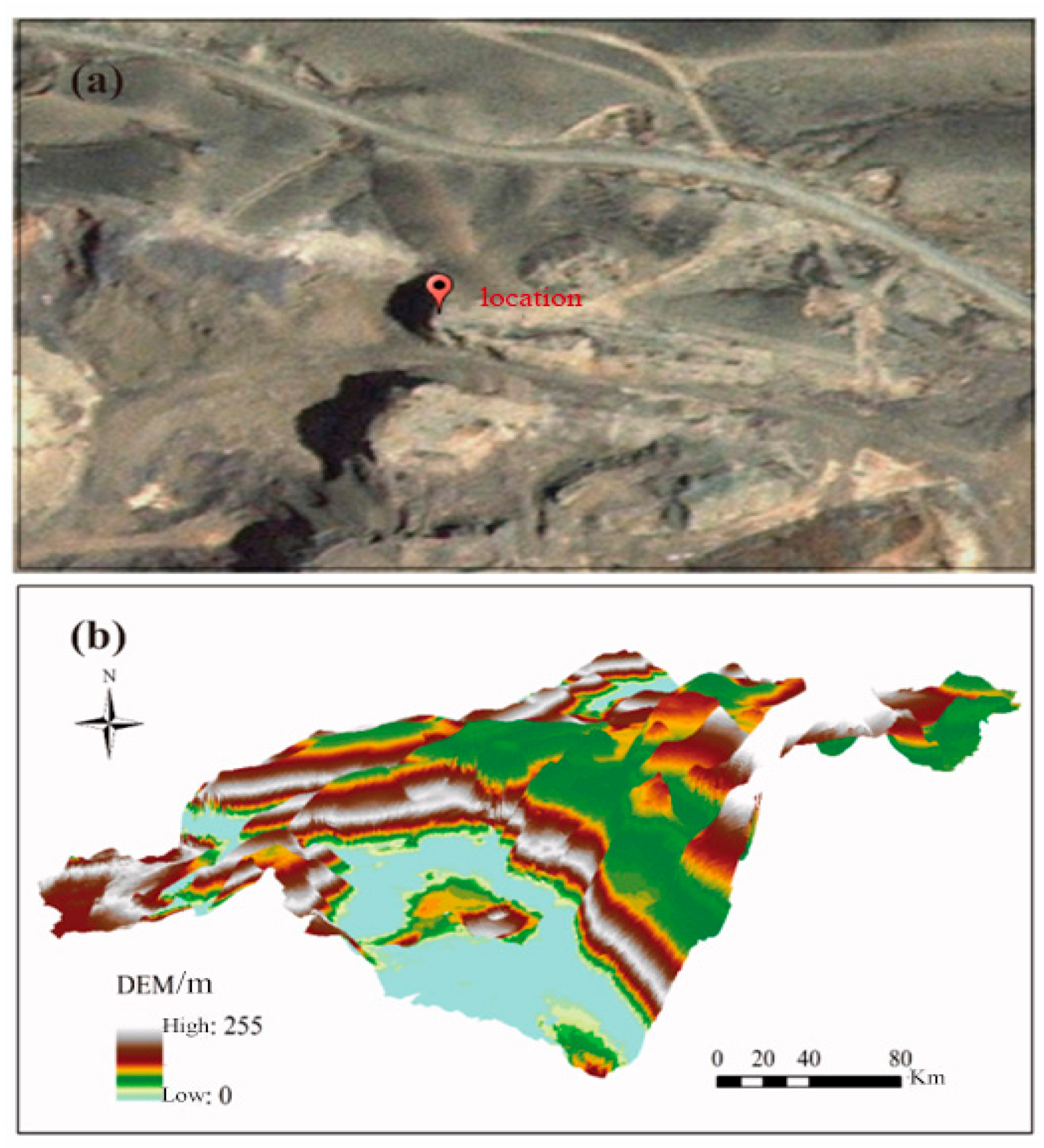
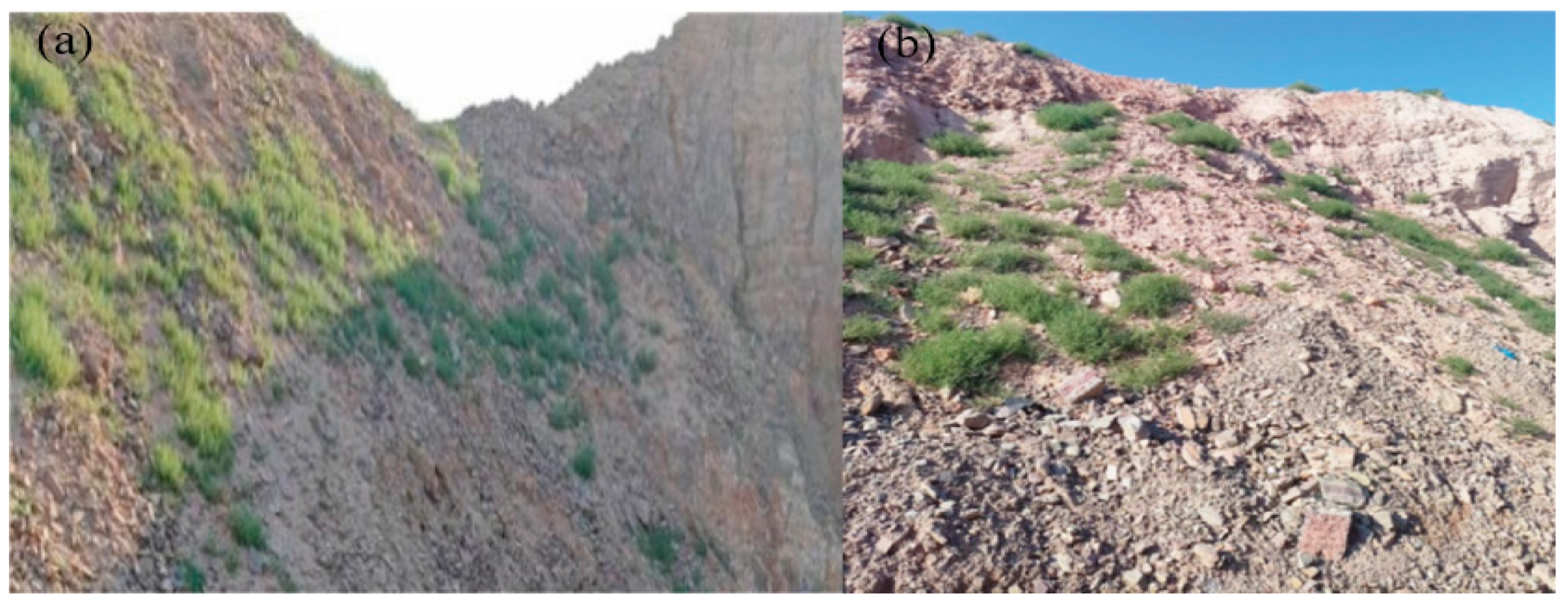
2.1. Study Area
2.2. Introduction to GeoStudio Modeling
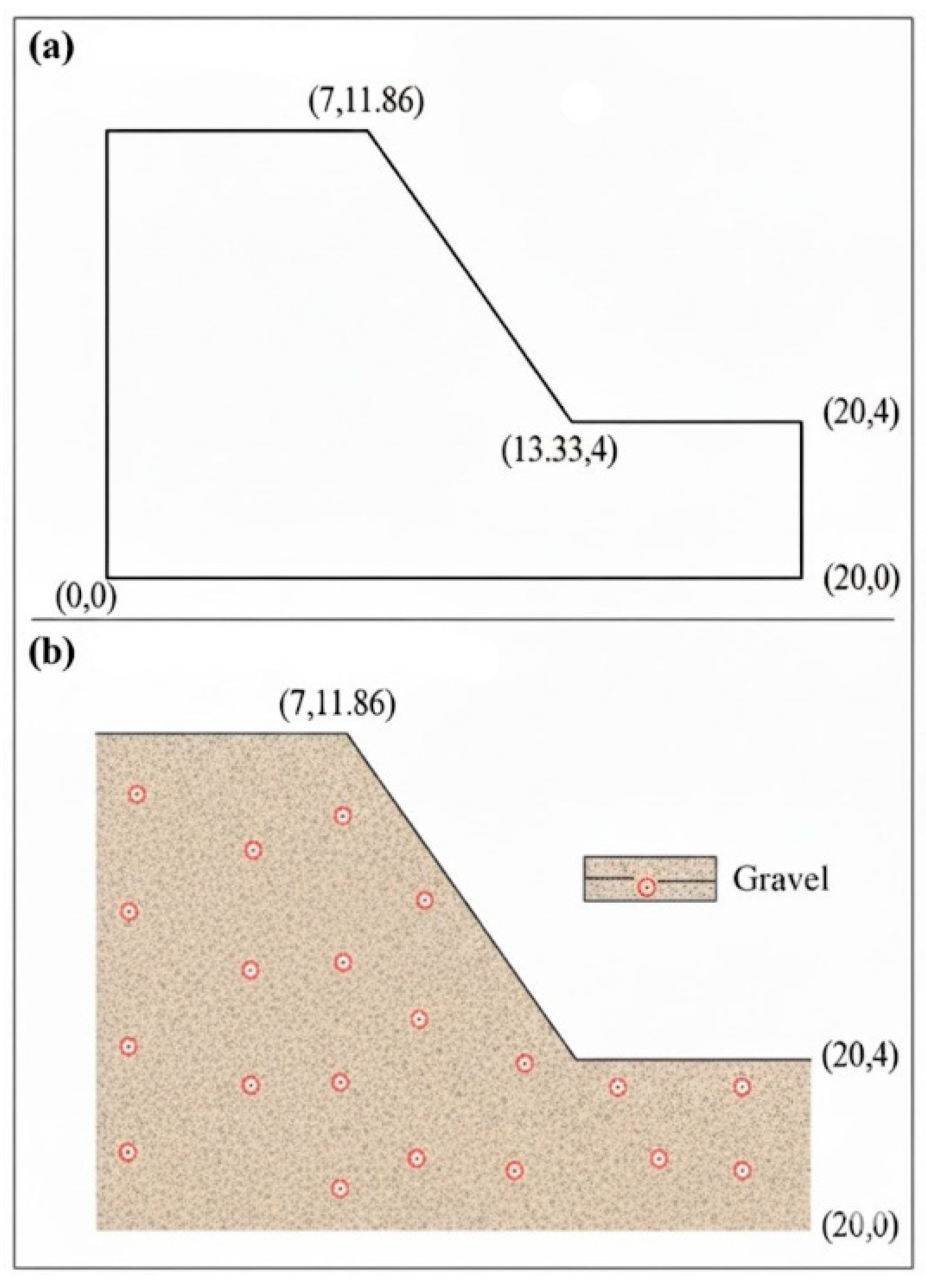
2.3. Model Establishment
2.4. Calculation Principles
2.5. Parameter Determination
3. Numerical Simulation Analysis
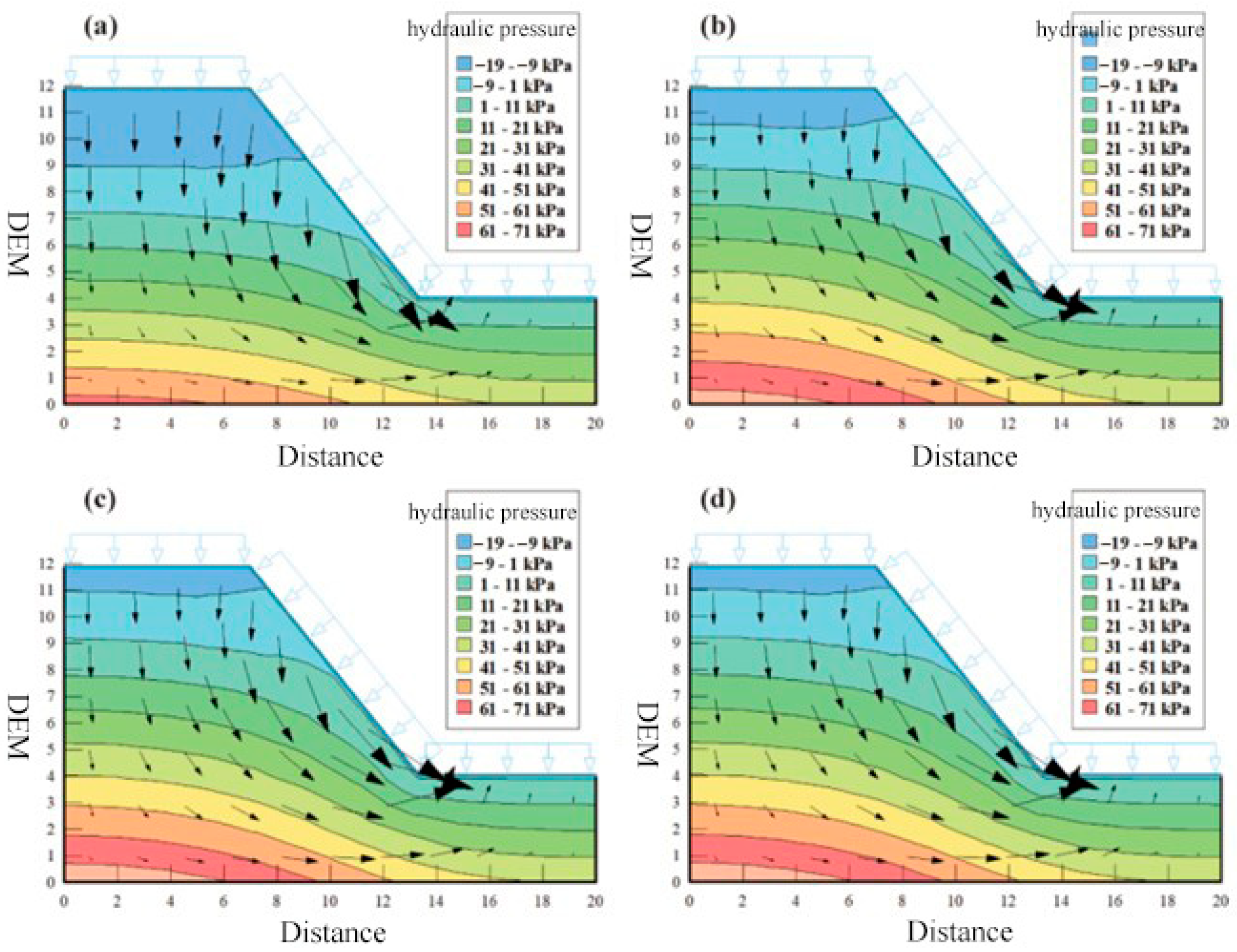
3.1. Seepage Field Analysis
3.2. Stability Analysis
4. Discussion
- Routine monitoring is sufficient under normal summer rainfall (≤50 mm/h).
- When short-term forecasts predict intensities ≥ 80 mm/h or cumulative rainfall > 150 mm in ≤12 h, operators should activate Level-II or Level-I early-warning protocols (restricted access, intensified drainage, and temporary suspension of blasting/loading near the highwall).
- Permanent mitigation should prioritize surface drainage systems capable of handling 150–200 mm/h runoff (e.g., crest intercepting ditches, armored downhill channels) and rapid-response dewatering pumps, rather than costly full-slope reinforcement, given the rarity of triggering events.
5. Conclusions
- i.
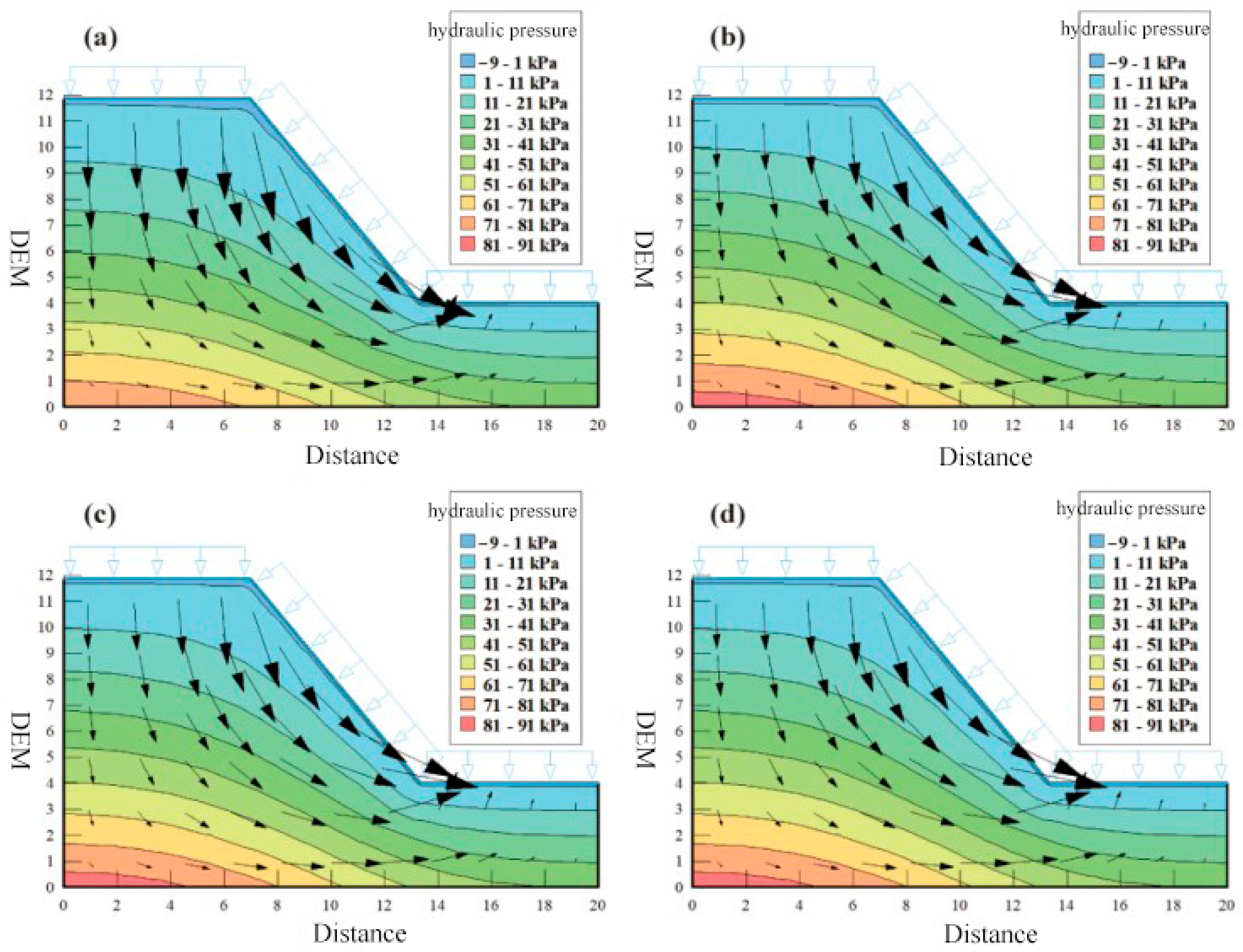
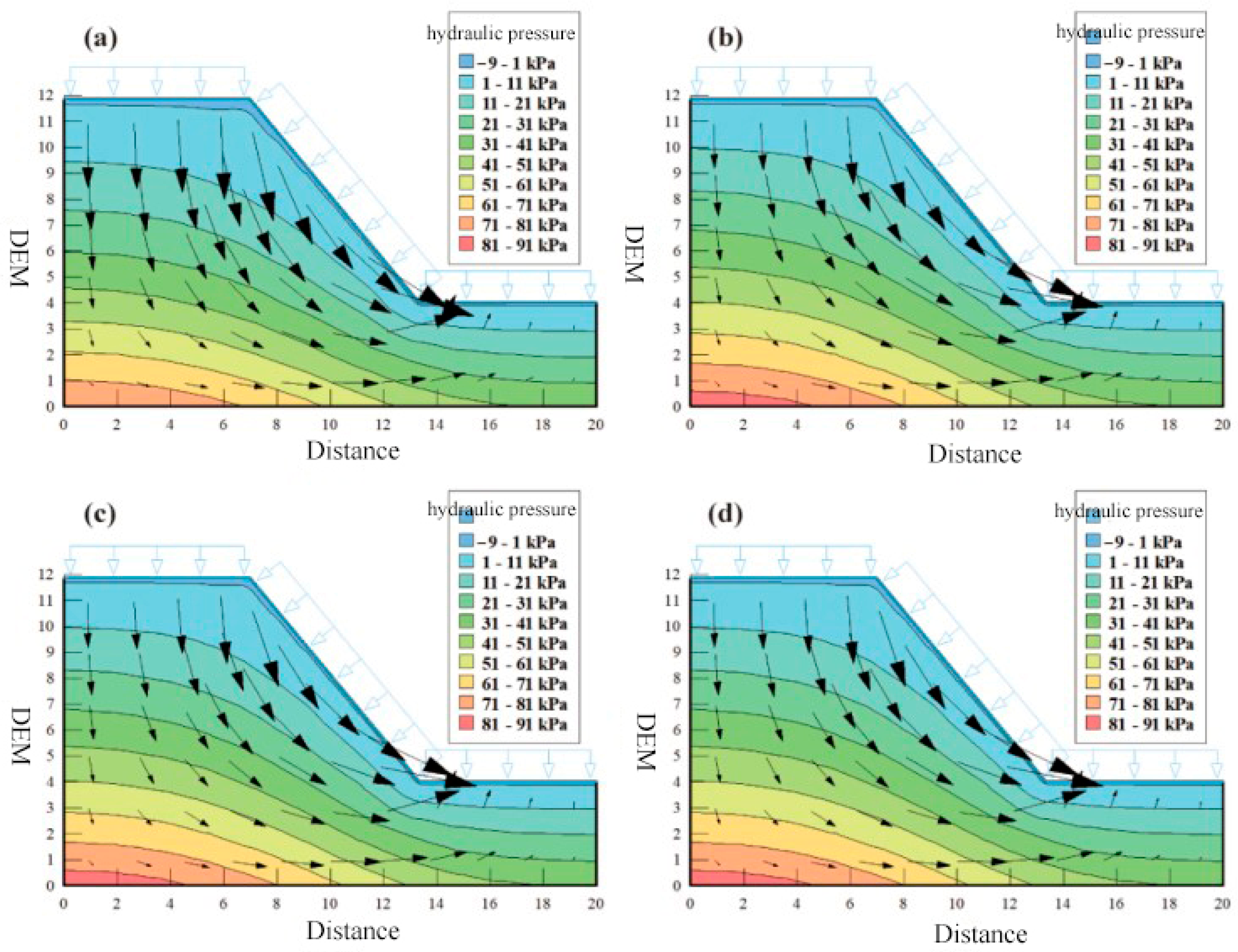
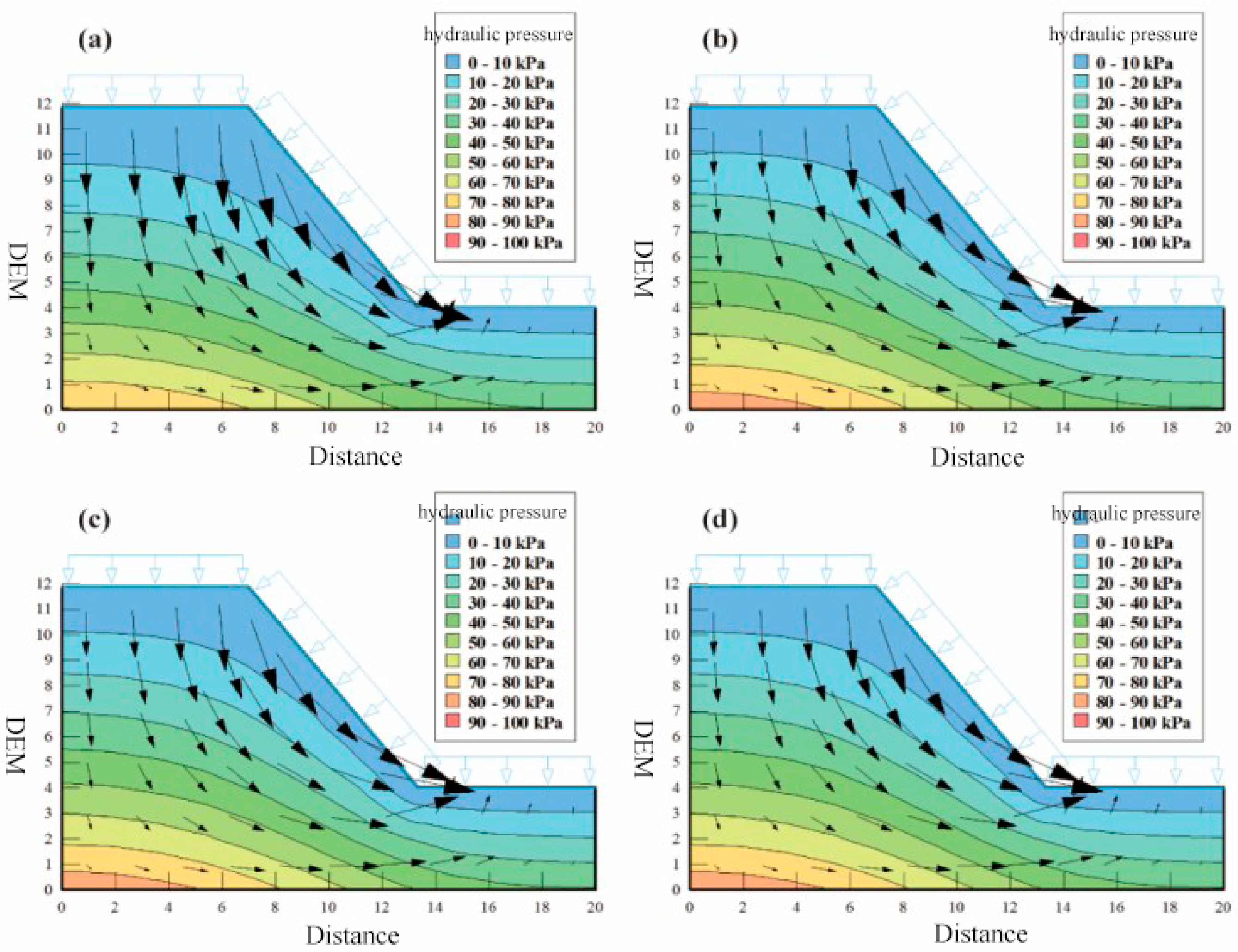
- In the natural state, increasing rainfall duration and amount cause gradual infiltration into the soil cover, elevating pore-water pressure. Under intensities ≥ 100 mm/h, pressures peak and stabilize after ~12 h as the low-permeability gravelly sand (ks ≈ 2.1 × 10⁻⁴ cm/s) reaches saturation, demonstrating an “infiltration buffering effect” unique to arid soils with high initial suction. This leads to sharp shear-strength reduction along potential failure surfaces, triggering shallow translational sliding.
- ii.
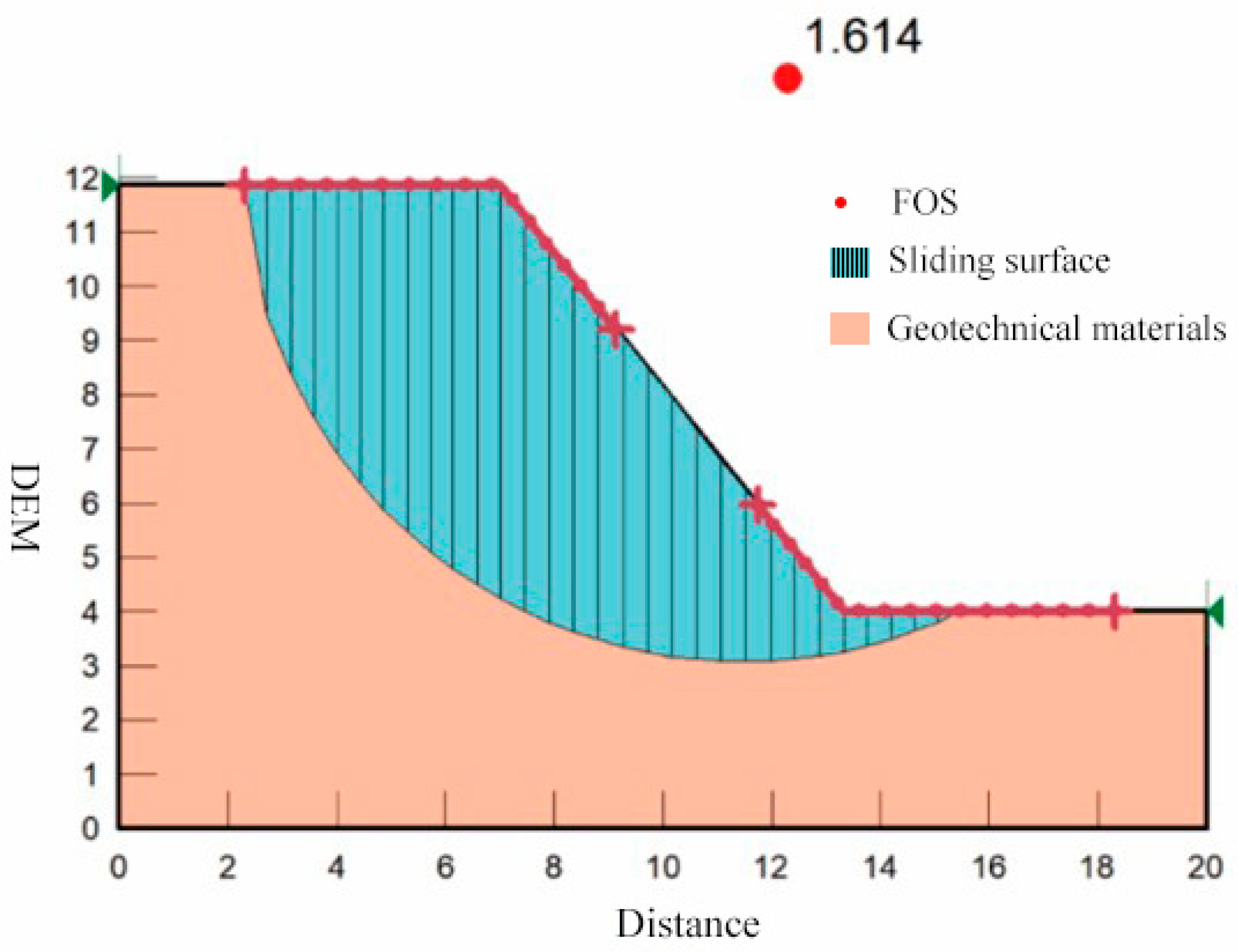
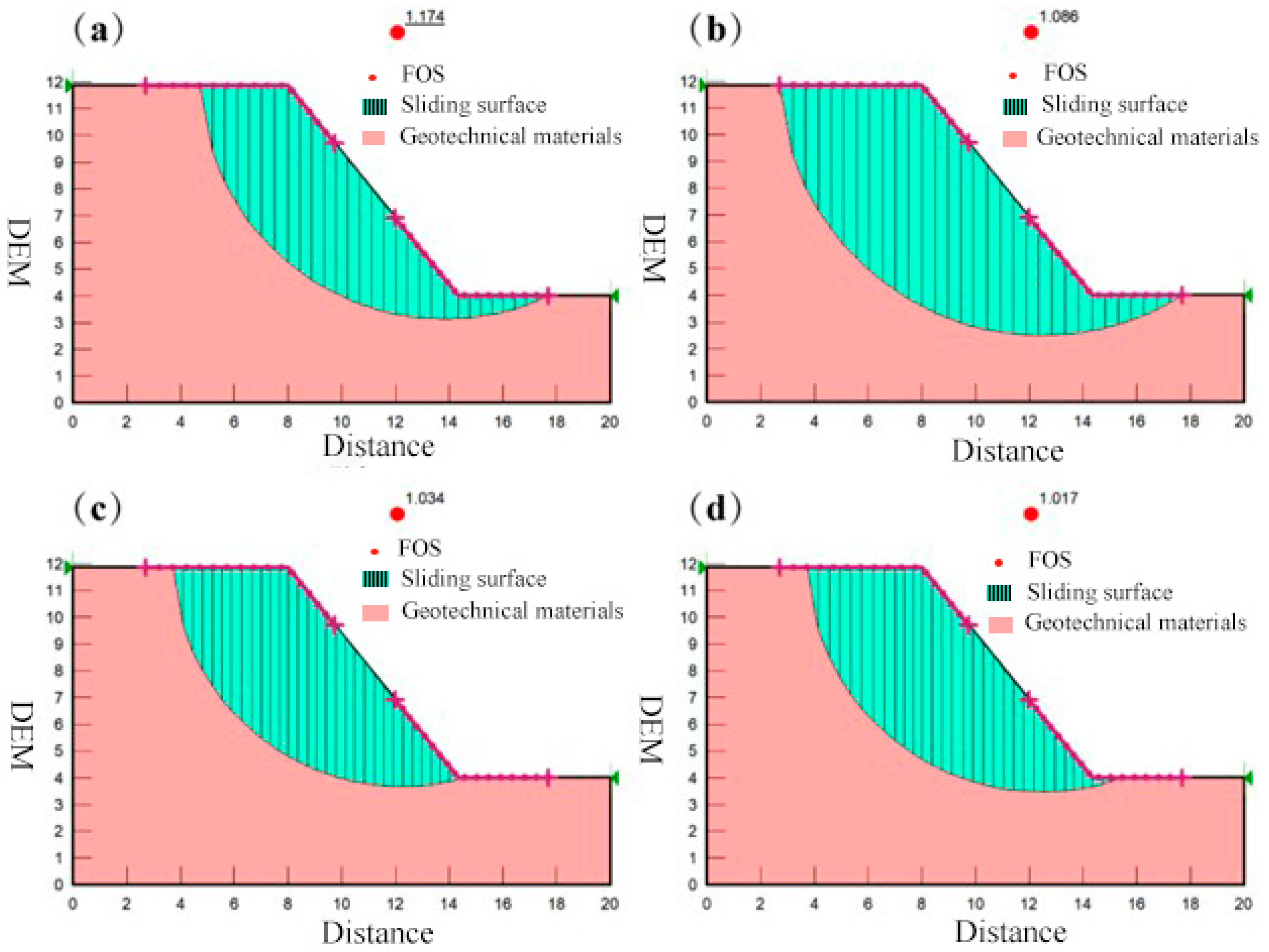
- The slope maintains acceptable stability (FOS > 1.05, basically stable per GB/T 32864-2016) under intensities ≤ 50 mm/h over 24 h. At ≥100 mm/h, FOS declines rapidly within the first 12 h, stabilizing in the less-stable range (1.00–1.05) or becoming unstable (FOS ≈0.98 at 200 mm/h without protection). These thresholds are 2–3 times higher than in humid regions (e.g., FOS < 1 at 20–50 mm/h), highlighting arid resilience to short convective bursts but vulnerability to climate-intensified extremes.
- iii.
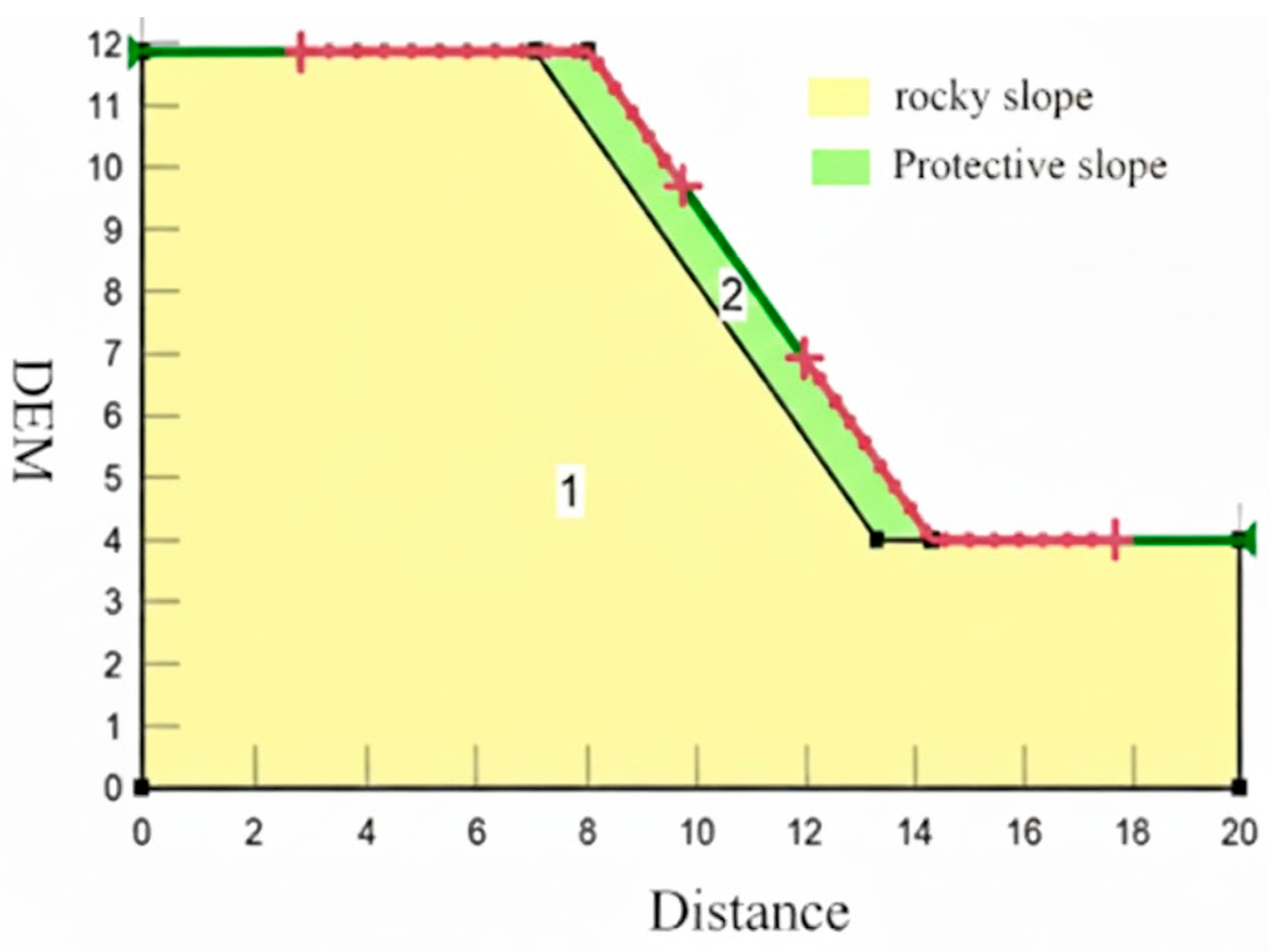
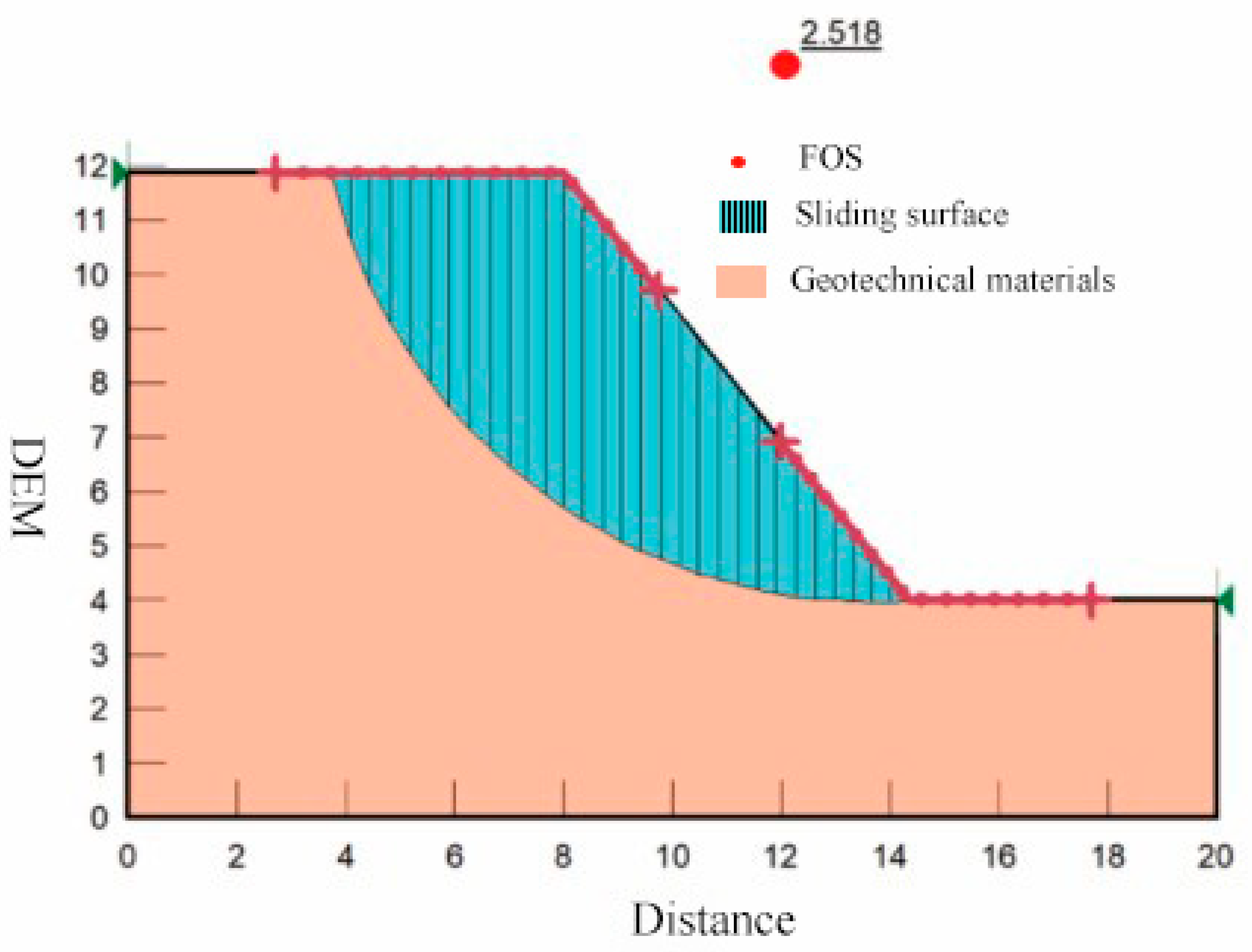
- Slope protection with 0.40 m thick mortared rubble masonry (c = 350 kPa, φ = 42°, effectively impermeable) elevates natural FOS to 2.52 and maintains FOS > 1.01 even under 200 mm/h rainfall, primarily by blocking infiltration and adding resisting forces. This simple measure substantially enhances safety, with failure surfaces shifting deeper or becoming non-critical.
- iv.
- Practical implications include operational thresholds: routine monitoring for ≤50 mm/h forecasts; and Level-II/I early-warning (restricted access, drainage activation) for >80–100 mm in 6–12 h. Mitigation should prioritize low-cost drainage (e.g., crest ditches for 200 mm/h runoff) over full reinforcement, given event rarity in Ningxia (annual precipitation 181 mm).
Author Contributions
Funding
Data Availability Statement
Acknowledgments
Conflicts of Interest
References
- Zhao, X.; Li, H.; Li, P.; Chen, Y.; Dai, Q.; Shi, P.; Li, X.; Qu, Y.; Ma, J. Impact of Mining Area Steep Slope Conditions on the Soil and Water Conservation Benefits of Ecological Restoration. Water 2025, 17, 256. [Google Scholar] [CrossRef] [Scilit]
- Liu, W.; Sheng, G.; Kang, X.; Yang, M.; Li, D.; Wu, S. Slope Stability Analysis of Open-Pit Mine Considering Weathering Effects. Appl. Sci. 2024, 14, 8449. [Google Scholar] [CrossRef] [Scilit]
- Zhou, M.J.; Shi, Z.M.; Cui, K.F.E.; Zhang, G.D.; Peng, M. Side Slope Stability Analysis during Landslide Dam Breaching Using SPH Method. Geo-Risk 2023, 2023, 280–290. [Google Scholar]
- Shao, L.; Wang, H.; Jiang, Z. Stability analysis of geotechnical structures based on finite element limit equilibrium method. China Min. Mag. 2021, 30, 170–177. [Google Scholar]
- Ding, H.; Li, Y.; Li, H. Analysis of the failure mechanism and stability of the Jianshanying landslide in Shuicheng County, Guizhou Province. Sci. Technol. Eng. 2021, 21, 10903–10908. [Google Scholar]
- Zhang, W.; Tong, L. Stability Analysis of Xiaolinghou Landslide Based on GeoStudio. Shaanxi Water Conserv. 2023, 10, 115–117+120. [Google Scholar]
- Huang, J.; Lu, D.; Lin, W.; Yang, Q. Enhancing slope stability prediction through integrated PCA-SSA-SVM modeling: A case study of LongLian expressway. Front. Earth Sci. 2024, 12, 1429601. [Google Scholar] [CrossRef] [Scilit]
- Steiakakis, E.; Xiroudakis, G.; Lazos, I.; Vavadakis, D.; Bazdanis, G. Stability Analysis of a Multi-Layered Slope in an Open Pit Mine. Geosciences 2023, 13, 359. [Google Scholar] [CrossRef] [Scilit]
- Cheng, Y.M.; Lansivaara, T.; Wei, W.B. Two-dimensional slope stability analysis by limit equilibrium and strength reduction methods. Comput. Geotech. 2007, 34, 137–150. [Google Scholar] [CrossRef] [Scilit]
- Griffiths, D.V.; Lane, P.A. Slope stability analysis by finite elements. Géotechnique 1999, 49, 387–403. [Google Scholar] [CrossRef] [Scilit]
- Qin, F.; Liu, T.; Yang, F.; Ge, Q. Stability of side slopes in mining area and the evaluation of eco-environment health. J. Environ. Prot. Ecol. 2022, 23, 1407–1416. [Google Scholar]
- Song, X.; Tan, Y. Experimental study on the stability of vegetated earthen slopes under intense rainfall. Soil Tillage Res. 2024, 238, 106028. [Google Scholar] [CrossRef] [Scilit]
- He, Z.; Wang, F. Transient seepage stability analysis of slope in open-pit mine based on GeoStudio. Min. Technol. 2023, 23, 161–164. [Google Scholar]
- Xie, X.; Zhang, G. Stability Analysis and Evaluation of an Open-Pit Mine Slope Based on GeoStudio. Min. Eng. 2021, 9, 325–333. [Google Scholar] [CrossRef]
- Penning, R.; dos Santos Sanchez, B.; Tamayo, J.L.P.; Jiménez, K. Use of random fields in slope stability analysis and application to a case history. J. Braz. Soc. Mech. Sci. Eng. 2025, 47, 290. [Google Scholar] [CrossRef] [Scilit]
- Li, K.; Liu, D.; Wang, Y.; She, N. Quantitative Risk Assessment and Application of Landslide Disaster in Chongqing. In Proceedings of the 2nd International Conference on Green Energy, Environment and Sustainable Development (GEESD2021); IOS Press: Amsterdam, The Netherlands, 2021. [Google Scholar]
- Zi, F.; Tang, L.; Cao, Y.; Xiao, Y. Study on the Stability of High and Steep Slopes of Open-Air Dump with Various Slope Ratios Under Rainfall Conditions. Appl. Sci. 2025, 15, 2965. [Google Scholar] [CrossRef] [Scilit]
- Wang, X.; Li, Y.; Yan, M.; Gong, X. Changes in temperature and precipitation extremes in the arid regions of China during 1960–2016. Front. Ecol. Evol. 2022, 10, 902813. [Google Scholar] [CrossRef] [Scilit]
- Falamaki, A.; Shafiee, A.; Shafiee, A.H. Under and post-construction probabilistic static and seismic slope stability analysis of Barmshour Landfill, Shiraz City, Iran. Bull. Eng. Geol. Environ. 2021, 80, 5451–5465. [Google Scholar] [CrossRef] [Scilit]
- Bar, N.; McQuillan, A. 3D limit equilibrium slope stability analysis for anisotropic and faulted rock masses in Australian coal and iron ore mines. In Proceedings of the ISRM International Symposium-Asian Rock Mechanics Symposium, Singapore, 29 October–3 November 2018; ISRM: Lisbon, Portugal, 2018. [Google Scholar]
- Shi, Z.M.; Shen, D.Y.; Peng, M.; Zhang, L.L.; Wang, F.; Zhene, X. Slope stability analysis considering rainfall infiltration in multi-layered unsaturated soil. J. Hydraul. Eng. 2016, 47, 977–985. [Google Scholar]
- Huo, A.; Zhao, Z.; Wang, X.; Yang, L.; Zhong, F.; Chen, J. Hydrological Response Changes and Optimization of Gully Channel Consolidation and Loess Protection Project in the Malian River Basin. Prog. Water Sci. 2023, 34, 867–876. [Google Scholar]
- Hou, T.S.; Duan, X.; Liu, H.Y. Study on stability of exit slope of Chenjiapo tunnel under condition of long-term rainfall. Environ. Earth Sci. 2021, 80, 590. [Google Scholar] [CrossRef] [Scilit]
- Wu, L.Z.; Zhou, Y.; Sun, P.; Shi, J.S.; Liu, G.G.; Bai, L.Y. Laboratory characterization of rainfall-induced loess slope failure. Catena 2017, 150, 1–8. [Google Scholar] [CrossRef] [Scilit]
- Wang, H.; Wang, G.; Hu, Z.; He, X.; Gong, Y.; Zhang, G.; He, Z.; Yan, J.; Zhang, Y. Formation mechanism and risk assessment of debris flow geological disasters in Lihong Road, Litong District, Wuzhong City, Ningxia. Front. Earth Sci. 2025, 13, 1550360. [Google Scholar] [CrossRef] [Scilit]
- Li, Q.; Wang, Y.; Li, X.; Gong, B. Rainfall–Mining Coupling Effects on Slope Failure Mechanism and Evolution Process: A Case Study of Open-Pit to Underground Mining. Water 2024, 16, 740. [Google Scholar] [CrossRef] [Scilit]
- Li, Y.-G.; Zhang, Y.; Wu, Z.; Li, Y.; Zhang, X. Scientific Investigation of Continental Earthquakes and Relevant Studies; Springer Nature: Berlin/Heidelberg, Germany, 2025. [Google Scholar]
- Taskiran, T.; Alli, S.; Yilmaz, Y. Hydro–Mechanical Behaviour of a Rainfall-Induced Landslide by Instrumental Monitoring: Landslide–Rainfall Threshold of the Western Black Sea Bartin Region of Türkiye. Appl. Sci. 2023, 13, 8703. [Google Scholar] [CrossRef] [Scilit]
- Larsen, M.C.; Simon, A. A rainfall intensity-duration threshold for landslides in a humid-tropical environment, Puerto Rico. Geogr. Ann. Ser. A Phys. Geogr. 1993, 75, 13–23. [Google Scholar] [CrossRef] [Scilit]
- Nikolopoulos, D.; Sultan, M.; Alam, A.; Cantzos, D.; Priniotakis, G.; Papoutsidakis, M.; Javed, F.; Prezerakos, G.; Siddique, J.; Ali Shah, M. Comparison of Backprojection Techniques for Rupture Propagation Modelling of the M w = 7.8 Mainshock Earthquake near Kahramanmaras and the M w = 7.5 Second-Largest Mainshock near Elbistan, Turkey, 2023. Geosciences 2025, 15, 146. [Google Scholar] [CrossRef] [Scilit]



| Attribute | Unit Weight (KN/m3) | Permeability Coefficient (cm s−1) | Cohesion (c/kPa) | Internal Friction Angle Φ (°) | Saturated Moisture Content | Residual Moisture Content |
|---|---|---|---|---|---|---|
| Clay-bearing | 16 | 2.12 × 10⁻⁴ | 5 | 31 | 0.5 | 0.05 |
| Rainfall Time | 20 mm/h | 50 mm/h | 100 mm/h | 200 mm/h |
|---|---|---|---|---|
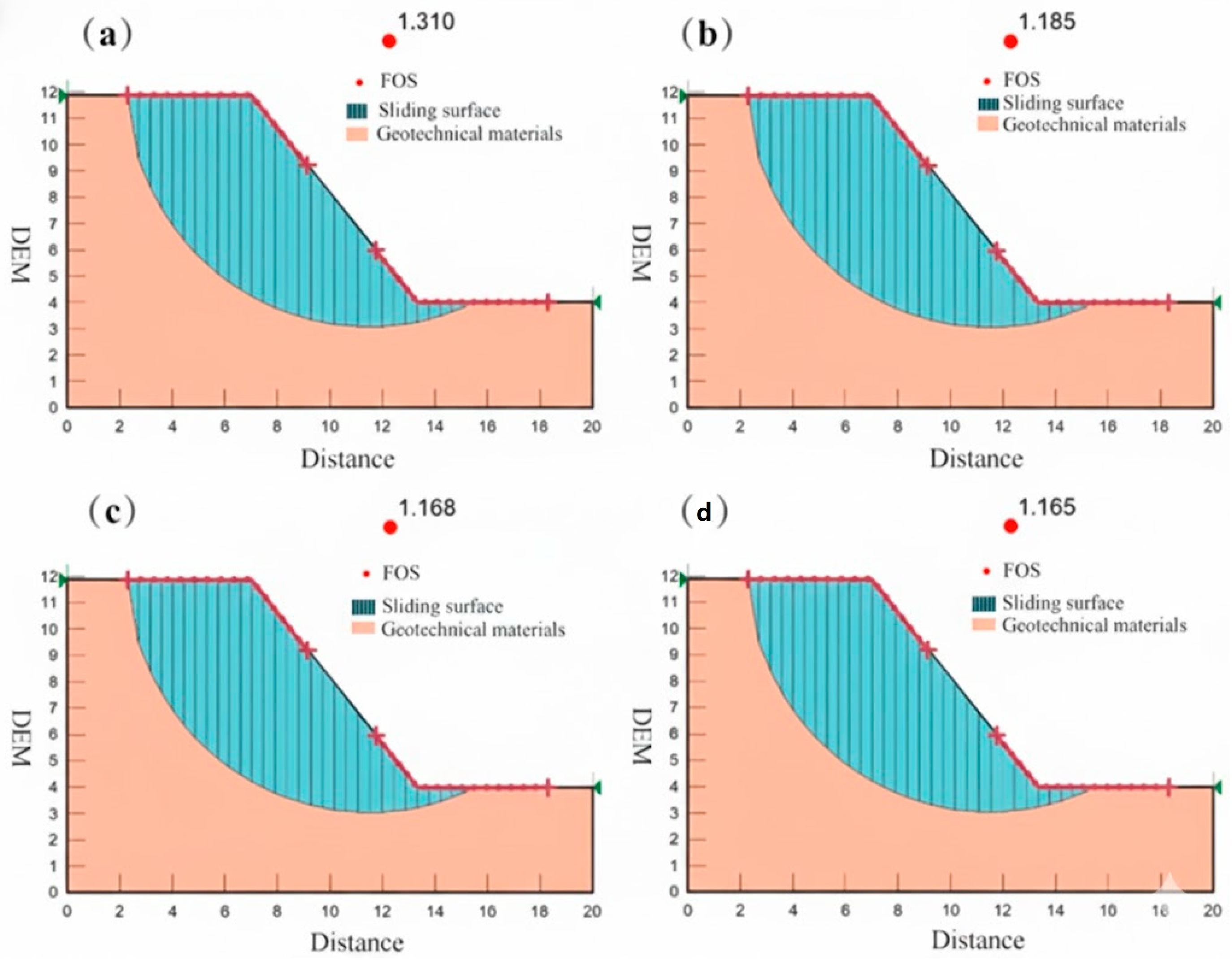
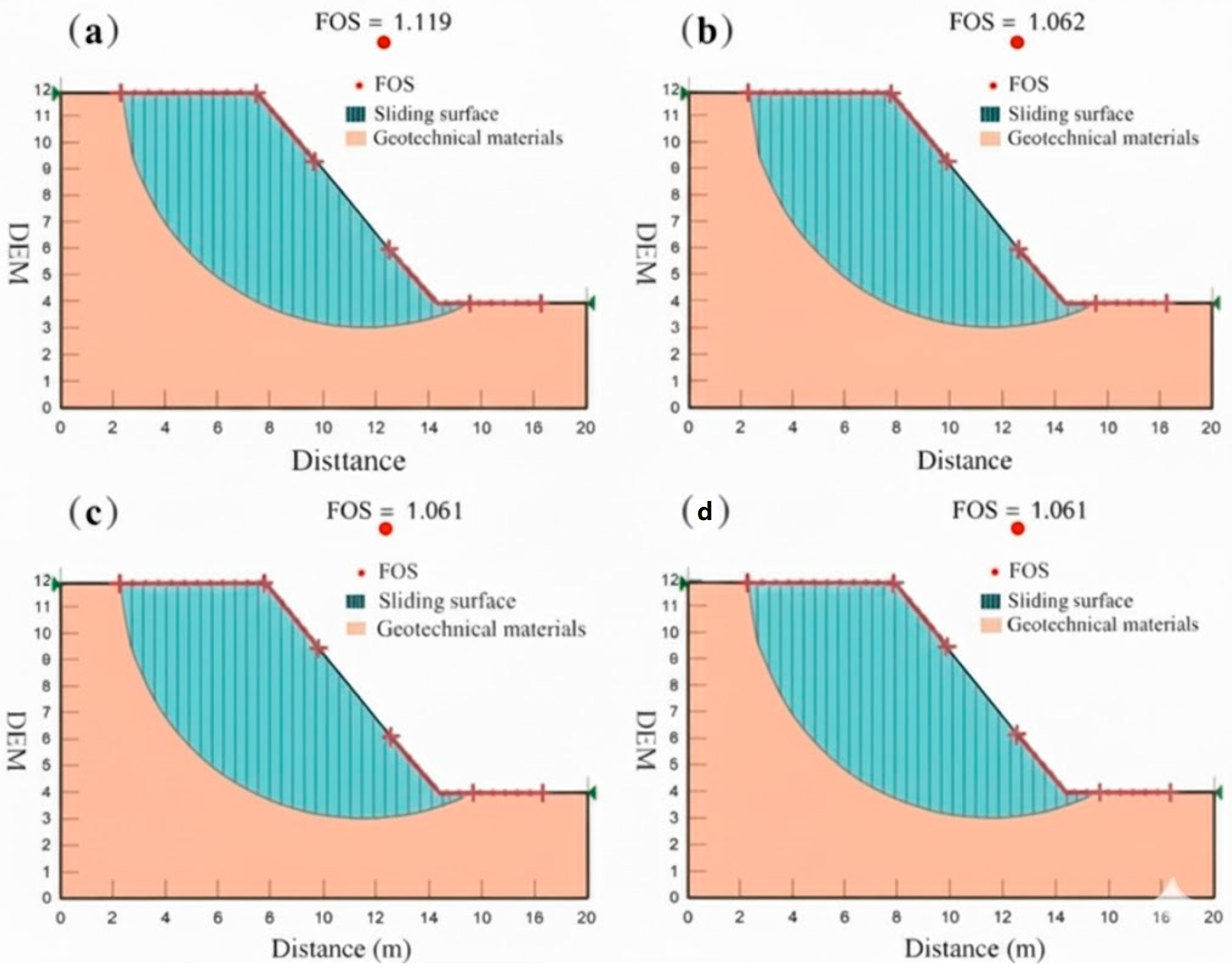
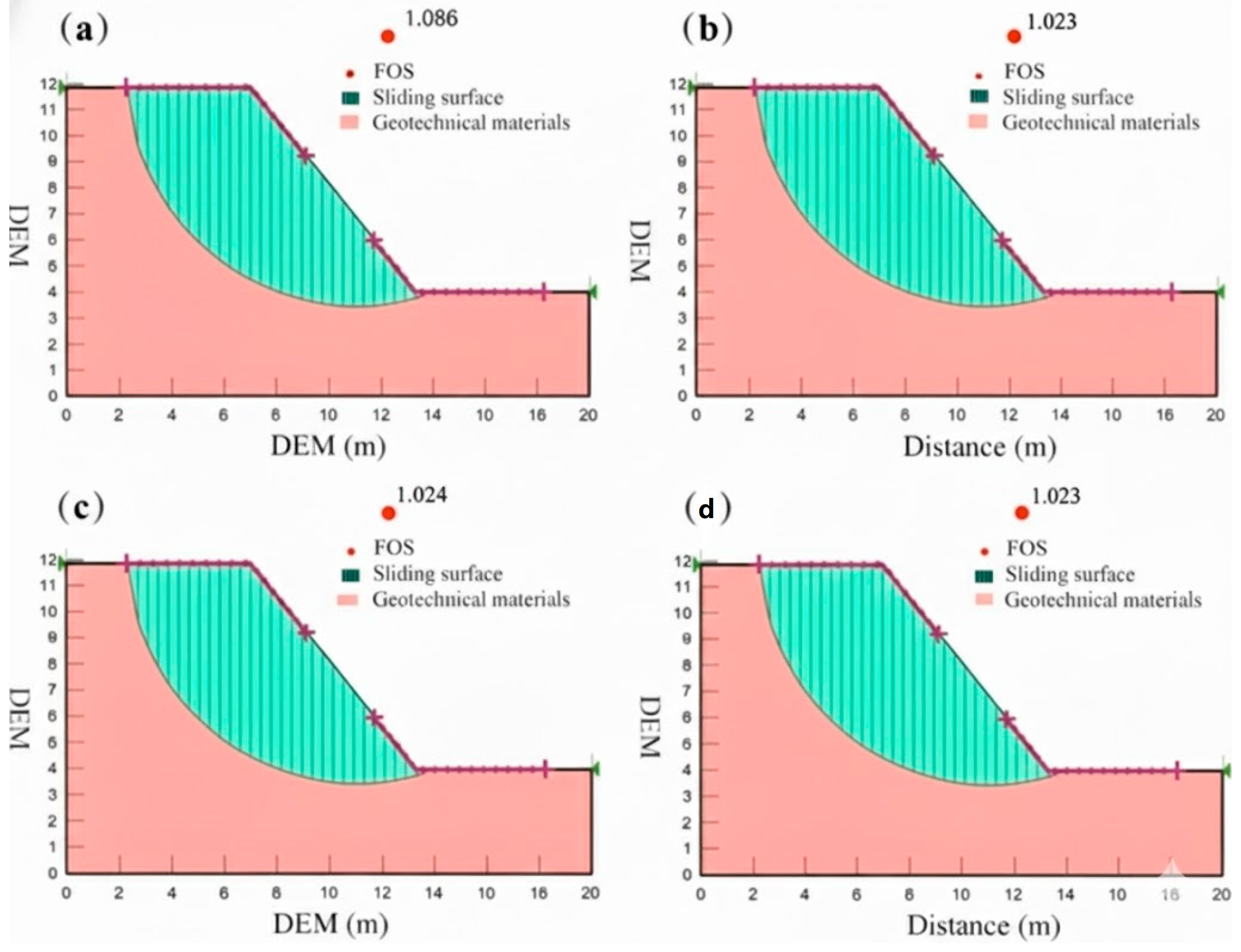
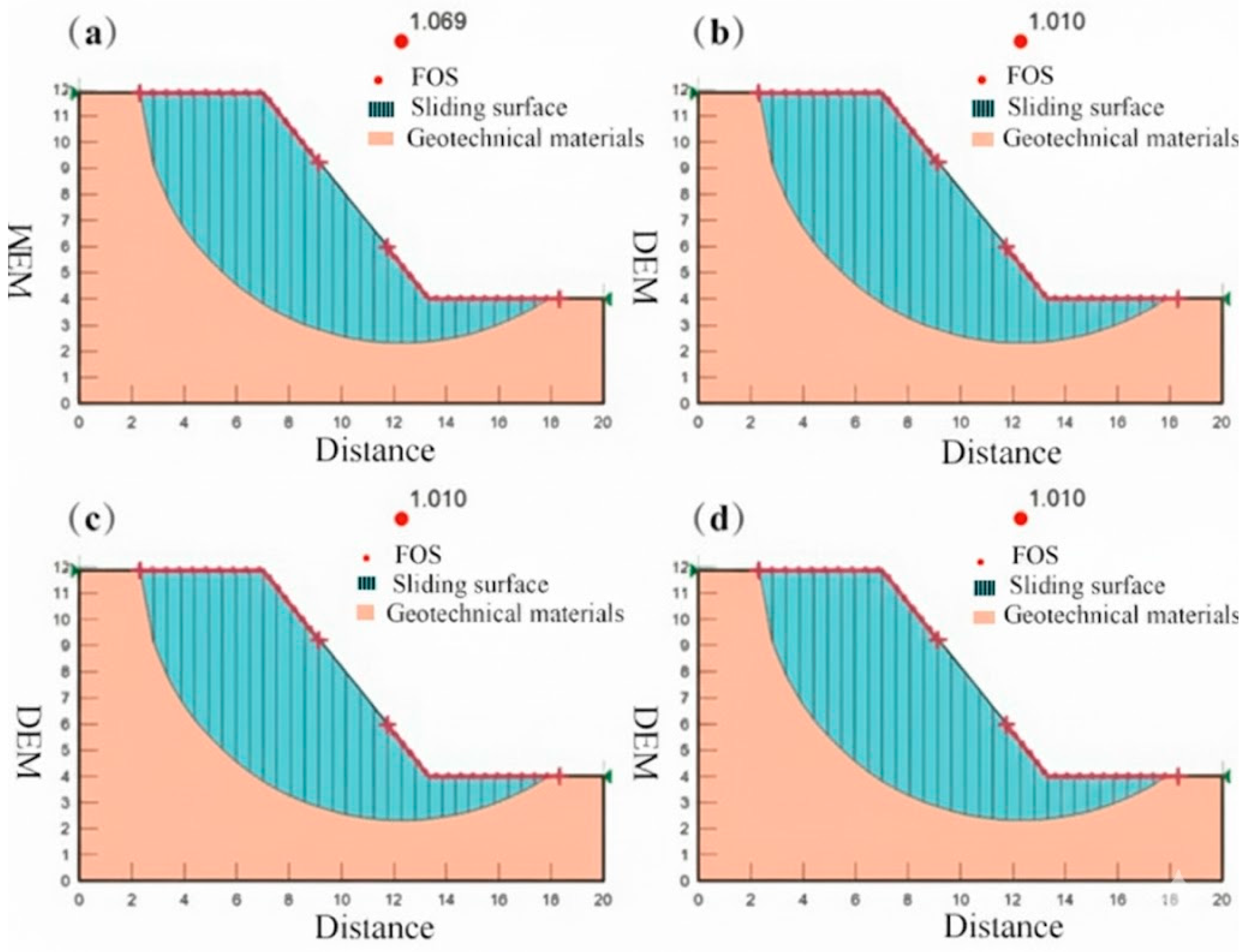
| 6 h | 1.310 | 1.119 | 1.086 | 1.069 |
| 12 h | 1.185 | 1.061 | 1.024 | 1.010 |
| 18 h | 1.168 | 1.061 | 1.024 | 1.010 |
| 24 h | 1.165 | 1.061 | 1.024 | 1.010 |
| Stability Level | Instability | Lack of Stability | Basically Stable | Stable |
|---|---|---|---|---|
| Stability coefficient and probability of instability | Fs ≤ 1.0 Pi = 1 | 1.0 ≤ Fs < 1.05 0.8 ≤ Pi < 1 | 1.05 ≤ Fs < 1.15 0.2 ≤ Pi < 0.8 | Fs > 1.15 Pi = 0.8 |
Disclaimer/Publisher’s Note: The statements, opinions and data contained in all publications are solely those of the individual author(s) and contributor(s) and not of MDPI and/or the editor(s). MDPI and/or the editor(s) disclaim responsibility for any injury to people or property resulting from any ideas, methods, instructions or products referred to in the content. |
© 2025 by the authors. Licensee MDPI, Basel, Switzerland. This article is an open access article distributed under the terms and conditions of the Creative Commons Attribution (CC BY) license.
Share and Cite
Zhang, J.; Zhao, H.; Huang, W.; Li, X.; Wang, G.; Ahmed, A.; Liu, F.; Gao, Y.; Gong, Y.; Hu, J.; et al. Quantifying Rainfall-Induced Instability Thresholds in Arid Open-Pit Mine Slopes: GeoStudio Insights from a 12-Hour Saturation Window. Water 2026, 18, 10. https://doi.org/10.3390/w18010010
Zhang J, Zhao H, Huang W, Li X, Wang G, Ahmed A, Liu F, Gao Y, Gong Y, Hu J, et al. Quantifying Rainfall-Induced Instability Thresholds in Arid Open-Pit Mine Slopes: GeoStudio Insights from a 12-Hour Saturation Window. Water. 2026; 18(1):10. https://doi.org/10.3390/w18010010
Chicago/Turabian StyleZhang, Jia, Haoyue Zhao, Wei Huang, Xinyue Li, Guorui Wang, Adnan Ahmed, Feng Liu, Yu Gao, Yongfeng Gong, Jie Hu, and et al. 2026. "Quantifying Rainfall-Induced Instability Thresholds in Arid Open-Pit Mine Slopes: GeoStudio Insights from a 12-Hour Saturation Window" Water 18, no. 1: 10. https://doi.org/10.3390/w18010010
APA StyleZhang, J., Zhao, H., Huang, W., Li, X., Wang, G., Ahmed, A., Liu, F., Gao, Y., Gong, Y., Hu, J., Zhu, Y., & Memon, S. Q. (2026). Quantifying Rainfall-Induced Instability Thresholds in Arid Open-Pit Mine Slopes: GeoStudio Insights from a 12-Hour Saturation Window. Water, 18(1), 10. https://doi.org/10.3390/w18010010