
Article

Impact of the Reynolds Numbers on the Velocity of Floating Microplastics in Open Channels

by
Jiachen Li
1,
Zhichao Wang
1,2,3,*,
Weiping Li
1,2,
Shuangyi Jing
1,2,
Caio Graco-Roza
3 and
Lauri Arvola
3
1
College of Environment and Energy Resources, Inner Mongolia University of Science and Technology, Baotou 014010, China
2
Cooperative Innovation Center of Ecological Protection and Comprehensive Utilization in Inner Mongolia Section of the Yellow River Basin, Baotou 014010, China
3
Lammi Biological Station, University of Helsinki, FI-16900 Lammi, Finland
*
Author to whom correspondence should be addressed.
Water 2025, 17(4), 588; https://doi.org/10.3390/w17040588
Submission received: 3 January 2025 / Revised: 11 February 2025 / Accepted: 14 February 2025 / Published: 18 February 2025

Abstract

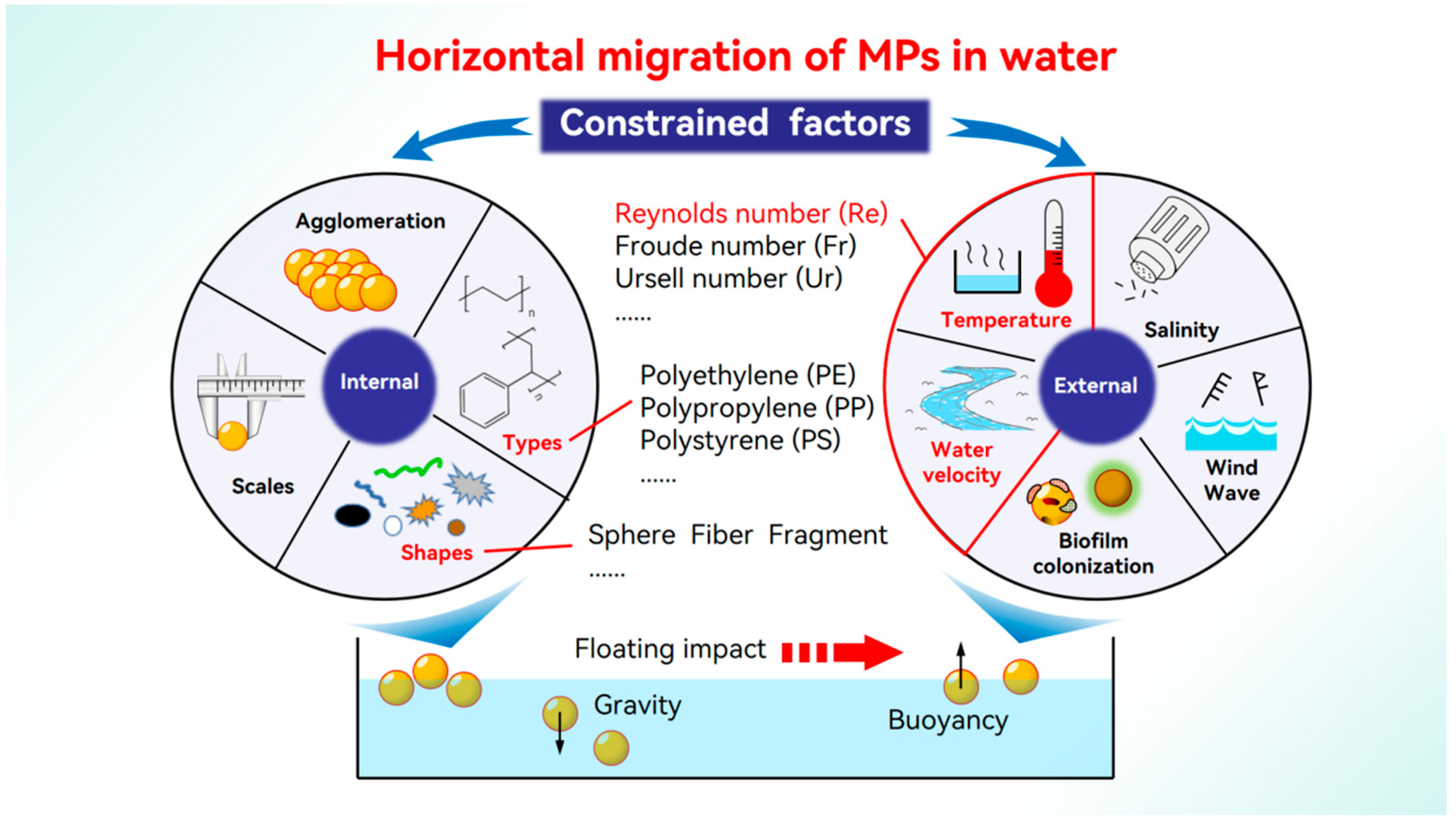
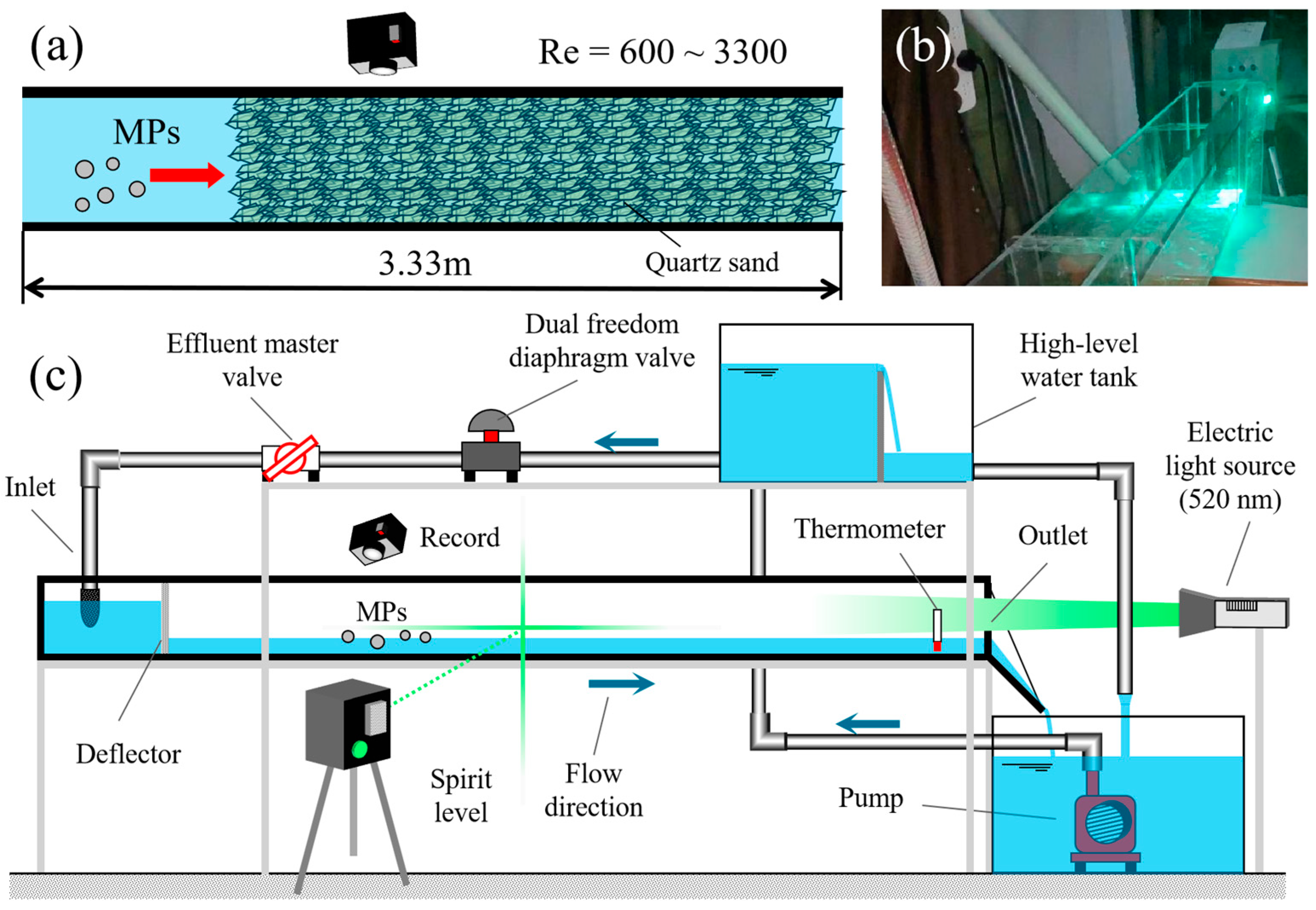
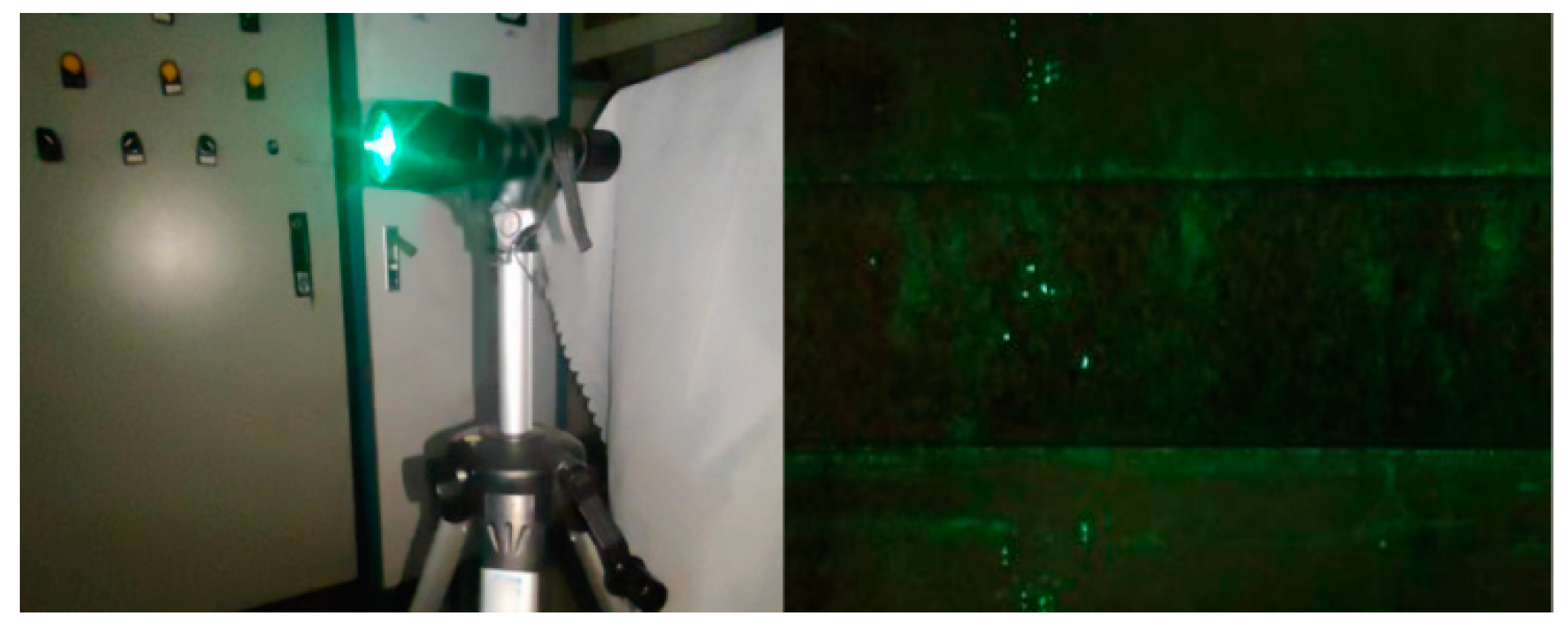
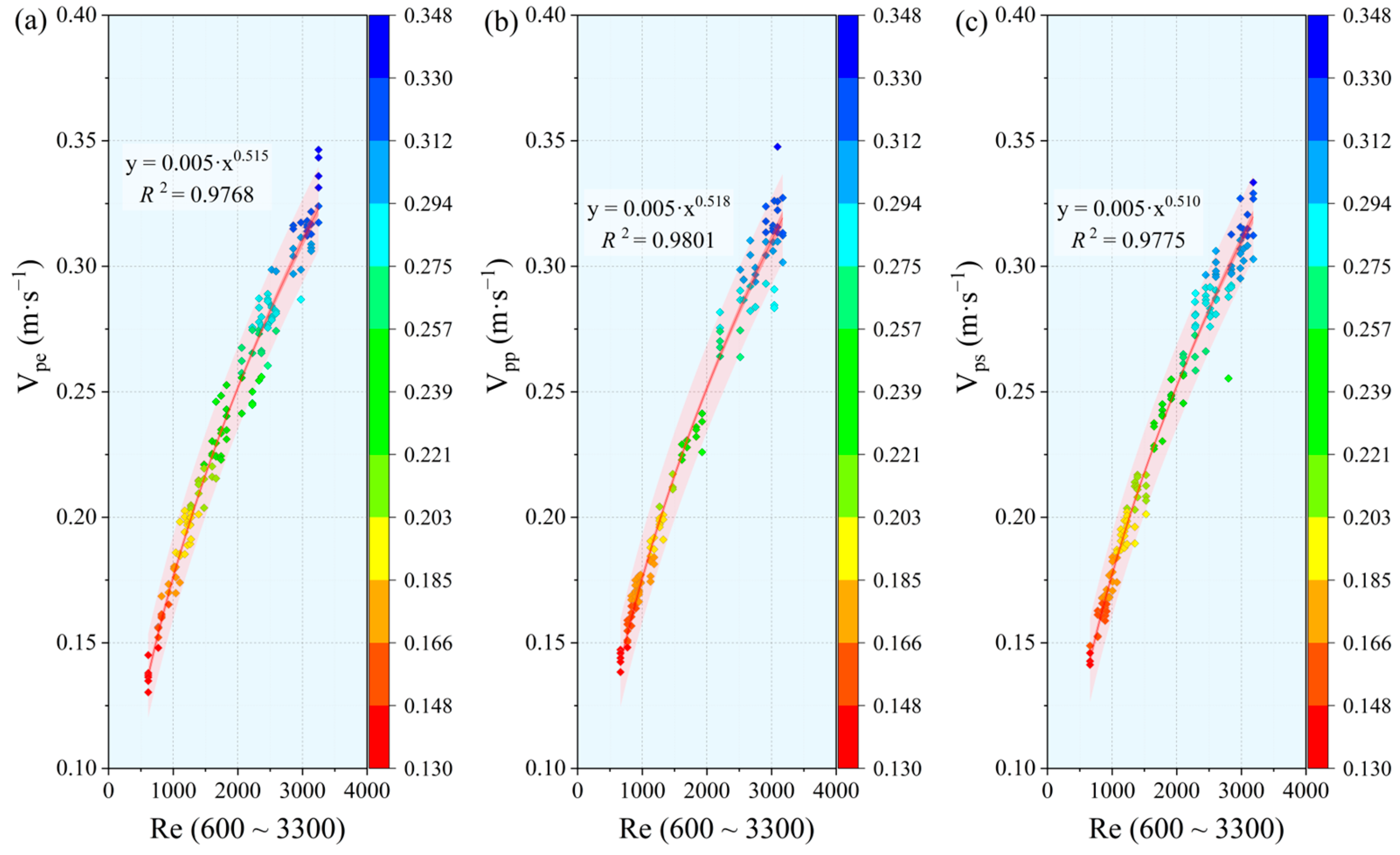
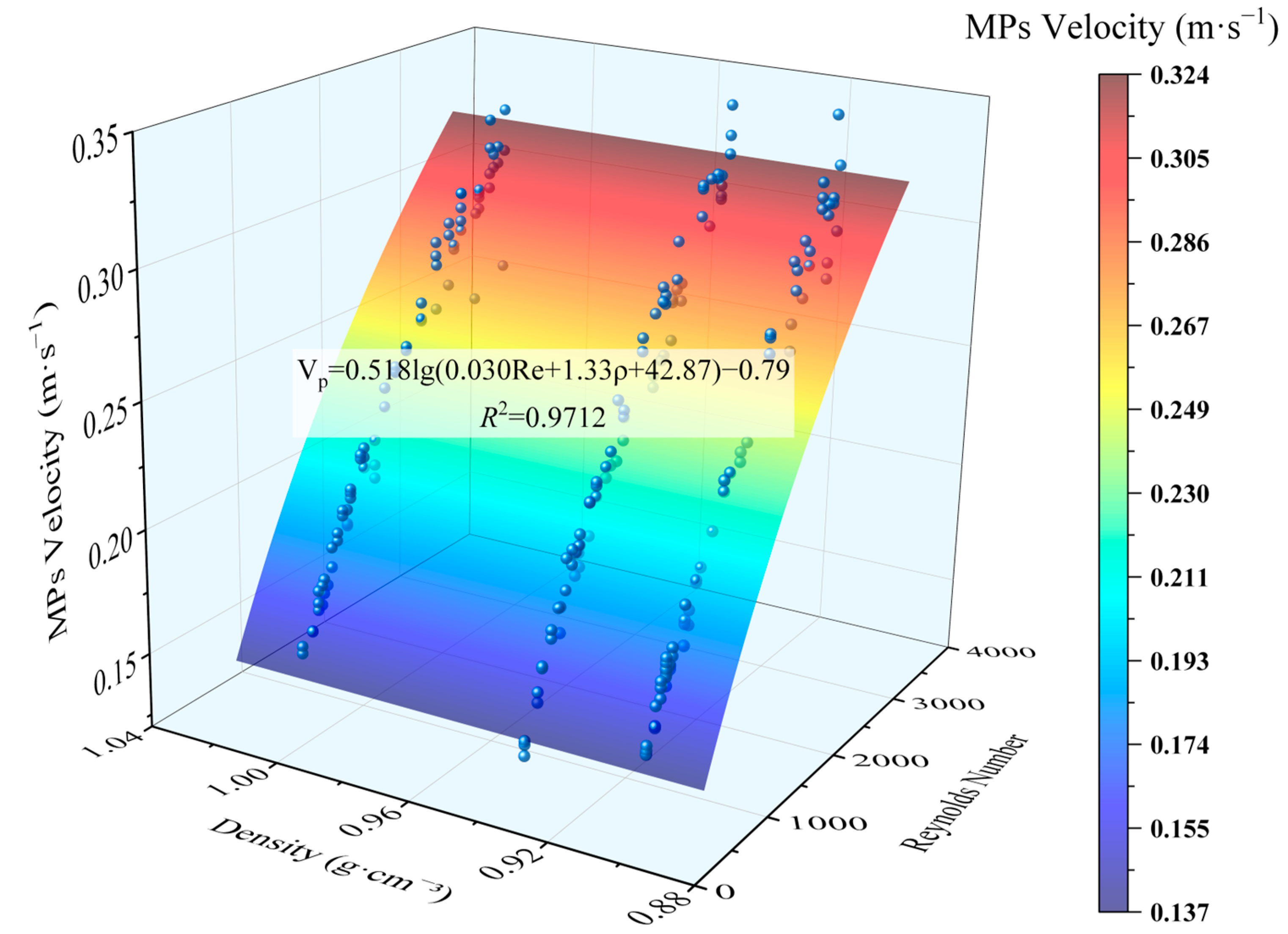
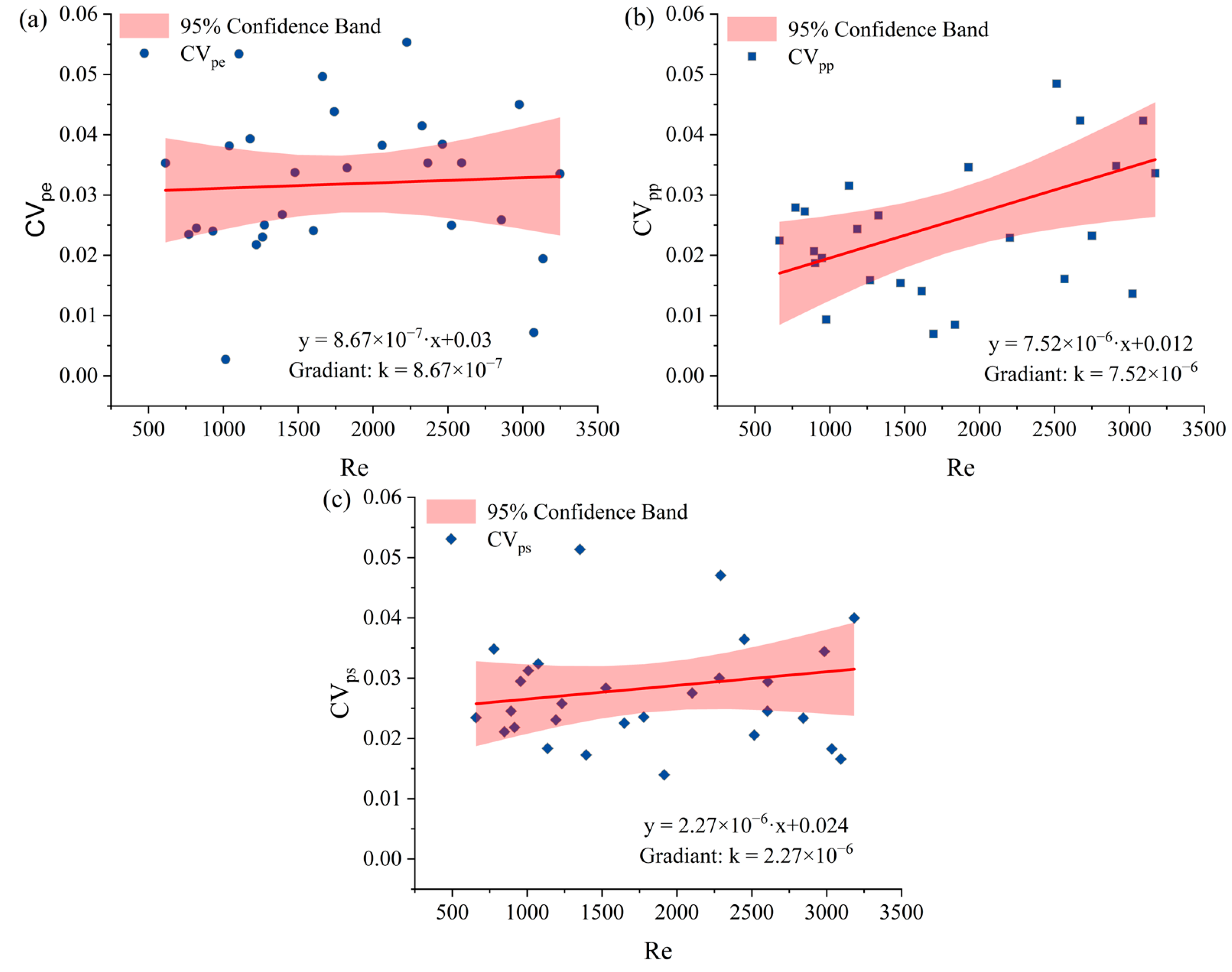
Quantitatively analyzing the factors influencing the horizontal migration of microplastics (MPs) in water bodies and understanding their movement patterns are crucial for explaining and predicting their transport principles and final destinations. This study used nearly spherical polyethylene (PE), polypropylene (PP), and polystyrene (PS) MPs as experimental subjects. By tracking their motion characteristics through video recording, we established relationships among the Reynolds number (Re), MP density, and floating velocity. The results showed that the Re and MP density jointly affect the horizontal drift of MPs. The horizontal floating velocity of MPs significantly increases with the increase in the Re and shows a power function growth trend. The difference in density of MPs mainly affects their dispersion during the floating process. Moreover, the coefficient of variation (CV) of PP’s horizontal floating velocity increased with the Re, suggesting PP’s motion is more random and discrete than that of PE and PS. Ultimately, we fitted the horizontal floating velocity of MPs to the equation to comprehensively evaluate the relationship between the floating velocity, Re, and density of MPs. This analysis underscores that the Re predominantly influences the MP velocity in water, while the MP density chiefly impacts the discrete nature of their motion.
Keywords: microplastics (MPs); Reynolds number (Re); velocity; open channels microplastics (MPs); Reynolds number (Re); velocity; open channels