


Abstract
Copper (Cu) pollution poses environmental and health risks. Owing to its adaptability and potential for water purification, Nymphoides peltata (N. peltata) is being considered for use in the remediation of Cu pollution. However, the feasibility of using N. peltata for the remediation of Cu-polluted water bodies has not yet been assessed. Here, the physiological response of N. peltata to Cu stress was determined. N. peltata samples were exposed to varying Cu concentrations (0.2, 0.4, 0.6 and 0.8 mg∙L−1), and the activities of glutamine synthetase (GS), nitrate reductase (NR), nitrite reductase (NiR), ribulose-1,5-diphosphate carboxylase (Rubisco), and glycolate oxidase (GO) were measured together with the concentrations of photosynthetic pigments. The results revealed that under Cu stress, NR and GS activities significantly decreased, while NiR activity significantly increased. Exposure to 0.2 mg∙L−1 Cu promoted chlorophyll synthesis and enhanced Rubisco and GO activities; in contrast, exposure to Cu concentrations above 0.4 mg∙L−1 significantly inhibited the aforementioned parameters. These findings indicate that Cu stress, regardless of concentration, significantly affects nitrogen metabolism in N. peltata by decelerating nitrate reduction and impairing the ammonification process. Meanwhile, only high Cu concentrations significantly affected photosynthesis. N. peltata can survive low Cu stress by regulating its photosynthetic enzymes. Therefore, N. peltata has potential for the ecological restoration of water bodies polluted with low Cu concentrations.
1. Introduction
Copper (Cu) is an important heavy metal and several regions worldwide are affected by Cu pollution, which intensifies every year [1]. Previous studies have reported the state of Cu pollution in China. For instance, the average Cu concentration in the Hun River in northeastern Liaoning was 0.1057–0.1533 mg∙L−1 (2013), exceeding the Class IV standard of China’s environmental quality standards for surface water [2]. The Baihe Valley in the Ba River Basin in Guanzhong exhibits slight Cu pollution, with an average Cu concentration 2.4 times the background value of surface soil in Shaanxi Province [3]. A survey [4] on Cu pollution levels across 31 provincial capital cities in China revealed that the Cu pollution level in soil has reached 102.5 mg∙kg−1. Other studies [5] have also reported that the Cu concentration in the soil in mining areas has reached up to 739 mg∙kg−1.
Excessive Cu release into the environment destroys ecosystems and poses health risks to humans either via the food chain or direct exposure. Overconsumption of Cu can lead to multi-organ toxic effects, including liver and kidney enlargement, tissue hardening, gastrointestinal inflammation, and hematological disorders such as hemolytic anemia and jaundice. Cu accumulation in the body is also closely associated with the progression of diabetes and induction of retinal and peripheral neuropathies [6,7].
Nonetheless, Cu is an essential trace nutrient for plant growth and development. Hence, using plants to volatilize and absorb Cu from water or soil is an effective, environmentally friendly, and inexpensive strategy for Cu pollution remediation. However, the range of Cu levels suitable for plant growth is very narrow [8], and excessive Cu uptake can affect key enzymes involved in nitrogen metabolism in plants [9], such as glutamine synthetase (GS), nitrate reductase (NR), and nitrite reductase (NiR). Studies have shown that when the Cu concentration is approximately 25–100 µmol∙L−1, NiR activity in loofah roots decreases as NR activity increases [10]. A study assessing the effect of Cu on the GS activity in rice leaves demonstrated that under Cu stress, GS activity in control leaves remained unchanged within 24 h of cultivation, while that in Cu-treated leaves decreased [11,12].
Excess Cu ions inhibit the absorption of iron, thereby affecting the synthesis of photosynthetic pigments in plants, leading to incomplete chloroplasts, altered plastid membrane components, and restricted photosynthetic electron transfer [13]. Chlorophyll content, ribulose-1,5-bisphosphate carboxylase (Rubisco), and glycolate oxidase (GO) activities are key physiological indicators for assessing photosynthetic efficiency. Studies have shown that Cu stress significantly reduces Rubisco activity in barley [14], the chlorophyll content and growth of seagrass (Halophila ovalis) [15], and chlorophyll content and photosynthetic activity of coontail (Ceratophyllum demersum) [16].
Nymphoides peltata, a perennial floating aquatic plant belonging to the family Menyanthaceae and genus Nymphoides, is widely distributed across Eurasia [17]. It is known for its medicinal value, landscaping applications, adaptability, propagation success, and potential for water purification; thus, it is widely used for restoring water bodies, such as rivers and lakes [18,19]. However, the feasibility of using N. peltata for the remediation of Cu-polluted water bodies has not yet been assessed, and its physiological response to Cu stress has not yet been determined.
This study aimed to (1) examine the effects of different Cu concentrations on the nitrogen metabolism-related enzymes of N. peltata, (2) examine the effects of different Cu concentrations on the photosynthetic characteristics of N. peltata, and (3) provide baseline information to support the application of N. peltata in the ecological restoration of aquatic environments.
2. Materials and Methods
2.1. Test Plant
Nymphoides peltata samples with uniform growth were collected from ponds at the Pinggu Aquaculture Base in Beijing. The samples were thoroughly washed with tap water to remove attached particles and other organisms and then transferred to a light incubator in the laboratory to propagate the culture for more than 6 months using 1/4-strength modified Hoagland’s medium (Coolaber Science & Technology Co., Ltd., Beijing, China). During domestication and experimentation, the ambient temperature, photoperiod, and light intensity were maintained at 25 ± 0.5 °C, 16:8 light–dark cycle, and 20,000 lx, respectively. Once sufficient biomass was obtained, the samples were used in subsequent experiments.
2.2. Experimental Design
2.2.1. Concentration Gradient
Based on the relevant literature [20,21,22,23,24,25,26,27,28,29,30,31] and preliminary experimental results, the Cu2+ concentrations in hydroponic nutrient treatment solutions were set at 0.2, 0.4, 0.6, and 0.8 mg∙L−1. The nutrient solution without Cu2+ was designated as the control. Copper was administered as CuSO4·5H2O, which dissociates into Cu2+ ions in aqueous solution. The specific protocol involved initially dissolving CuSO4·5H2O in deionized water to prepare a stock solution, followed by dilution with quarter-strength Hoagland nutrient solution to achieve final treatment solutions with target Cu2+ concentrations of 0.2, 0.4, 0.6, and 0.8 mg·L−1 (expressed as the nominal concentration of free Cu2+ ions in the aqueous phase). All concentrations refer to the nominal concentration of free Cu2+ in solution. Stock solutions were prepared immediately before use to prevent potential hydrolysis or oxidation during prolonged storage.
2.2.2. Preparation and Exposure of Experimental Plants
Vigorous N. peltata plants with similar growth were selected, washed clean with sterile water, and then cultivated in 1/4-strength modified Hoagland’s solution for 7 days. Subsequently, the plants were transferred to the treatment and control hydroponic solutions, with 15 plants per group, following the three parallel group setup. During the experiment, half of the nutrient solution was replaced every day, and the leaves of the plants were sampled for relevant measurements on days 0, 1, 3, 5, 7, and 9 after treatment.
2.3. Physiological Measurements
The Glutamine Synthetase (GS), Nitrate Reductase (NR), Nitrite Reductase (NiR) and Photosynthetic pigment levels as well as Ribulose-1,5-Bisphosphate Carboxylase (Rubisco) and Glycolate Oxidase (GO) activities in N. peltata leaves were measured on days 0, 1, 3, 5, 7, and 9, following the measurement procedures and calculation methods indicated in the respective kits provided by Suzhou GRS Biotechnology (Suzhou, China). The specific procedures were as follows: Leaf samples (0.1 g) harvested and stored at −80 °C were placed in a pre-chilled mortar, and an appropriate amount of pre-cooled extraction buffer was added for thorough grinding. After homogenization, the samples were centrifuged at 4 °C and 12,000 rpm for 10 min to collect the supernatant containing crude enzymes. Subsequently, following the manufacturer’s instructions for the assay kits, the supernatant was used to analyze the corresponding enzyme activities: NR was measured at 530 nm, NiR and GS at 540 nm, GO at 324 nm, Rubisco at 340 nm, and chlorophyll at 665 nm and 649 nm.
2.4. Data Processing
The experimental results are expressed as the mean ± standard deviation of the three parallel experiments. Using SPSS 26.0, one-way analysis of variance was performed to determine the differences among the groups in terms of the concentrations and activities of photosynthetic and nitrogen metabolism-related enzymes. Least significant difference and Duncan’s multiple comparison analyses were performed to identify the groups that differed significantly. Correlation statistics (p) were used to assess the relationship between each indicator and Cu concentration, with p < 0.05 indicating a statistically significant difference.
3. Results
3.1. Effect of Cu Stress on NR Activity in N. peltata Leaves
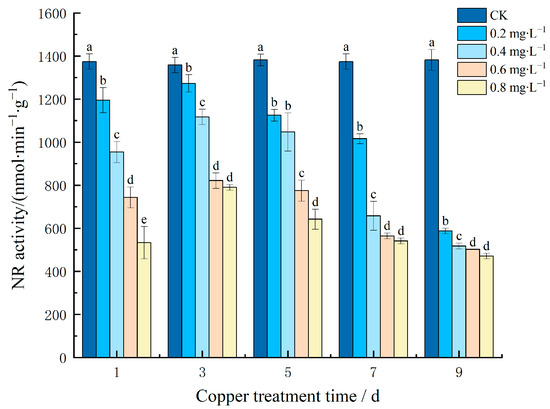
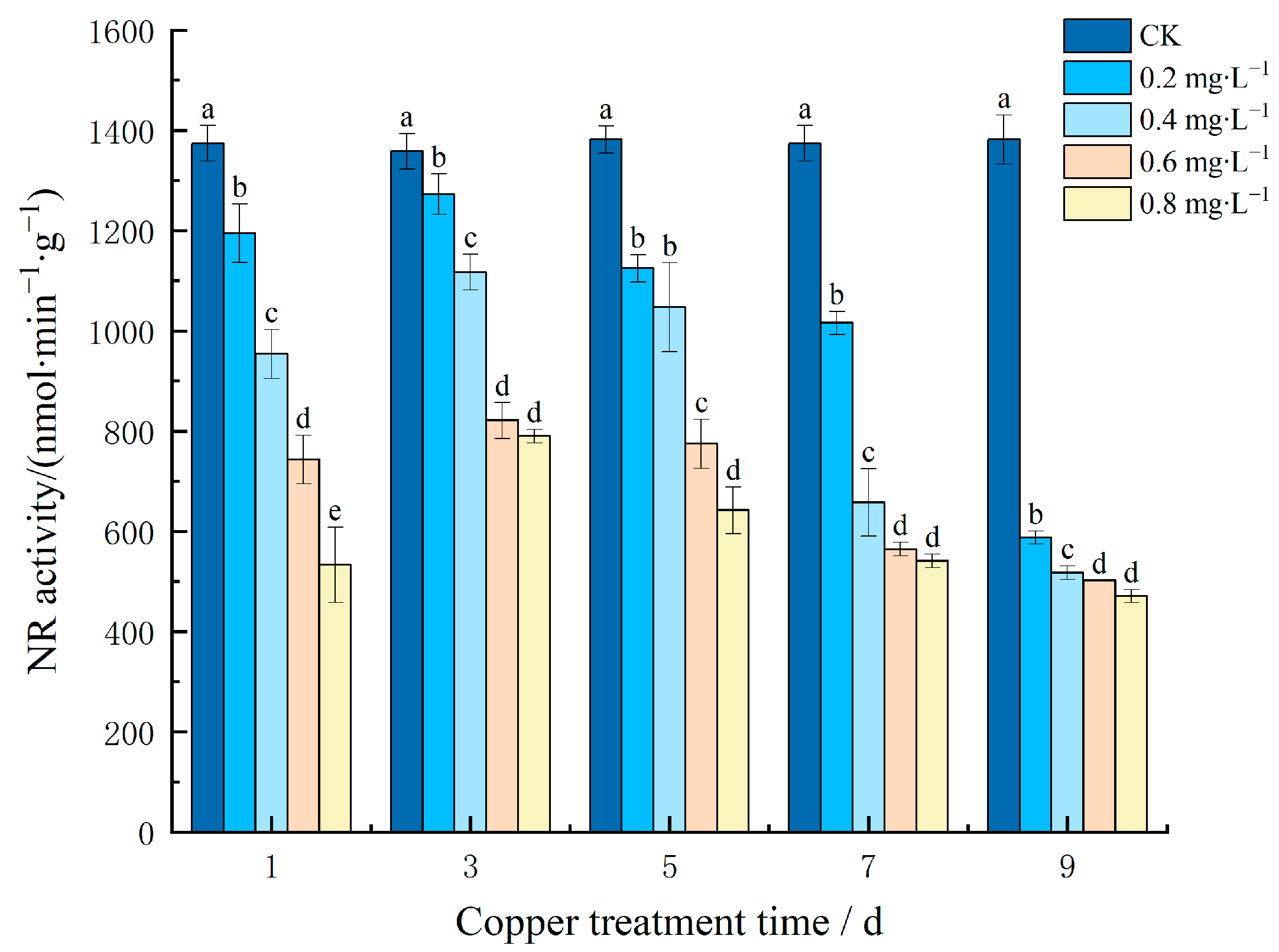
Figure 1 shows the changes in NR activity in the control and Cu-treated N. peltata leaves over time. At the same time, NR activity in the treatment groups significantly differed from that in the control group (p < 0.05). NR activity in each treatment group gradually decreased as Cu concentration increased. In particular, the group treated with 0.8 mg∙L−1 Cu exhibited the greatest decline in NR activity, and decreased by 61.19%, 41.84%, 53.52%, 60.62%, and 65.92% on days 1, 3, 5, 7, and 9, respectively, compared with the control group. Within the same Cu treatment group, NR activity exhibited an upward trend on Day 3, followed by a downward trend on Days 5, 7, and 9. On Day 9, NR activity in all treatment groups decreased to its lowest value. The NR activity in the groups treated with 0.2, 0.4, 0.6, and 0.8 mg∙L−1 Cu decreased by 57.46%, 62.54%, 63.66%, and 65.92%, respectively, compared to that in the control group.
Figure 1.
Effect of copper stress on nitrate reductase (NR) activity in Nymphoides peltata leaves. Note: Different letters above the bars indicate significant differences at p < 0.05. The same convention applied below.
3.2. Effect of Cu Stress on NiR Activity in N. peltata Leaves
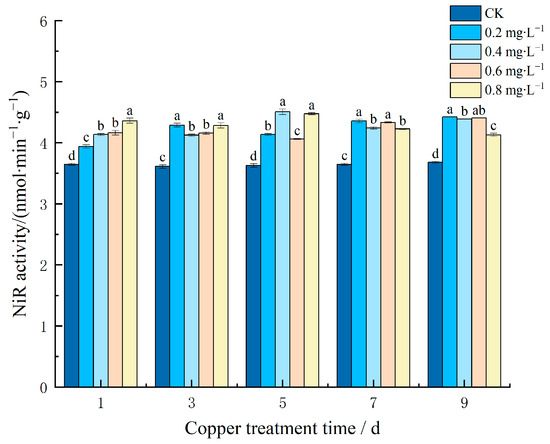
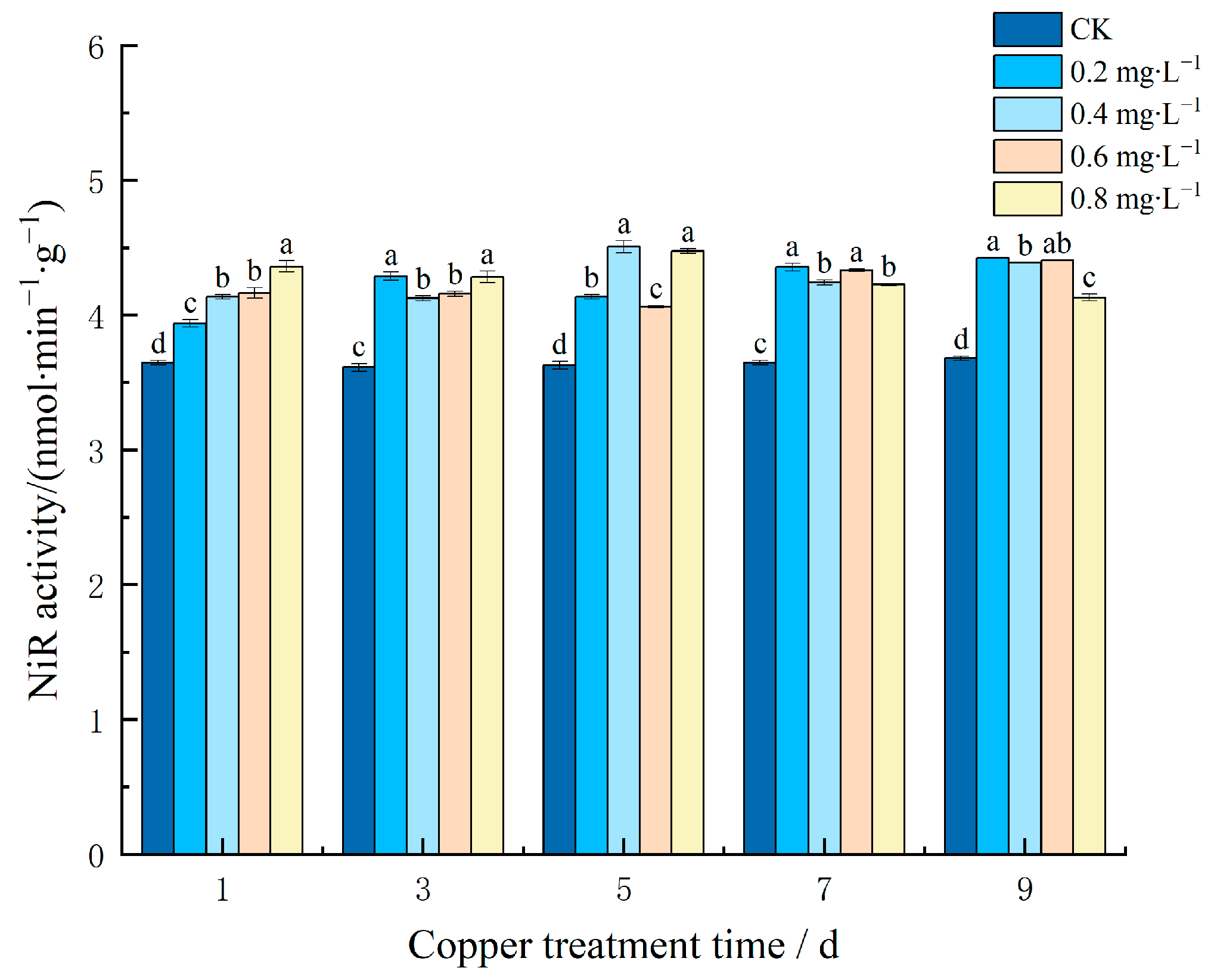
Figure 2 shows the changes in NiR activity in the control and Cu-treated N. peltata leaves over time. At the same time, the NiR activity in all treatment groups was significantly higher than that in the control group (p < 0.05). The peak NiR activity in the groups treated with 0.2, 0.4, 0.6, and 0.8 mg∙L−1 Cu increased by 21%, 24%, 20%, and 23%, respectively, compared to that in the control group.
Figure 2.
Effect of copper stress on nitrite reductase (NiR) activity in Nymphoides peltata leaves.
The differences in NiR activity among the treatment groups exhibited divergent patterns over time. On Day 1, NiR activity varied substantially across the treatment groups and significantly differed between the control and treatment groups. As Cu exposure continued, NiR activity stabilized in the treatment groups, despite minimal fluctuations; however, it remained significantly different from that in the control group. This result indicates that NiR activity can respond rapidly to Cu stress, enabling plant adaptation.
3.3. Effect of Cu Stress on GS Activity in N. peltata Leaves
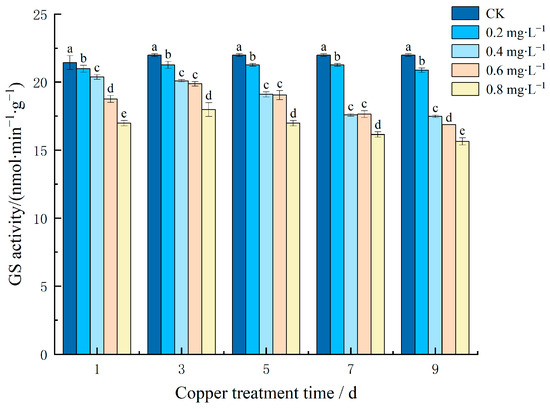
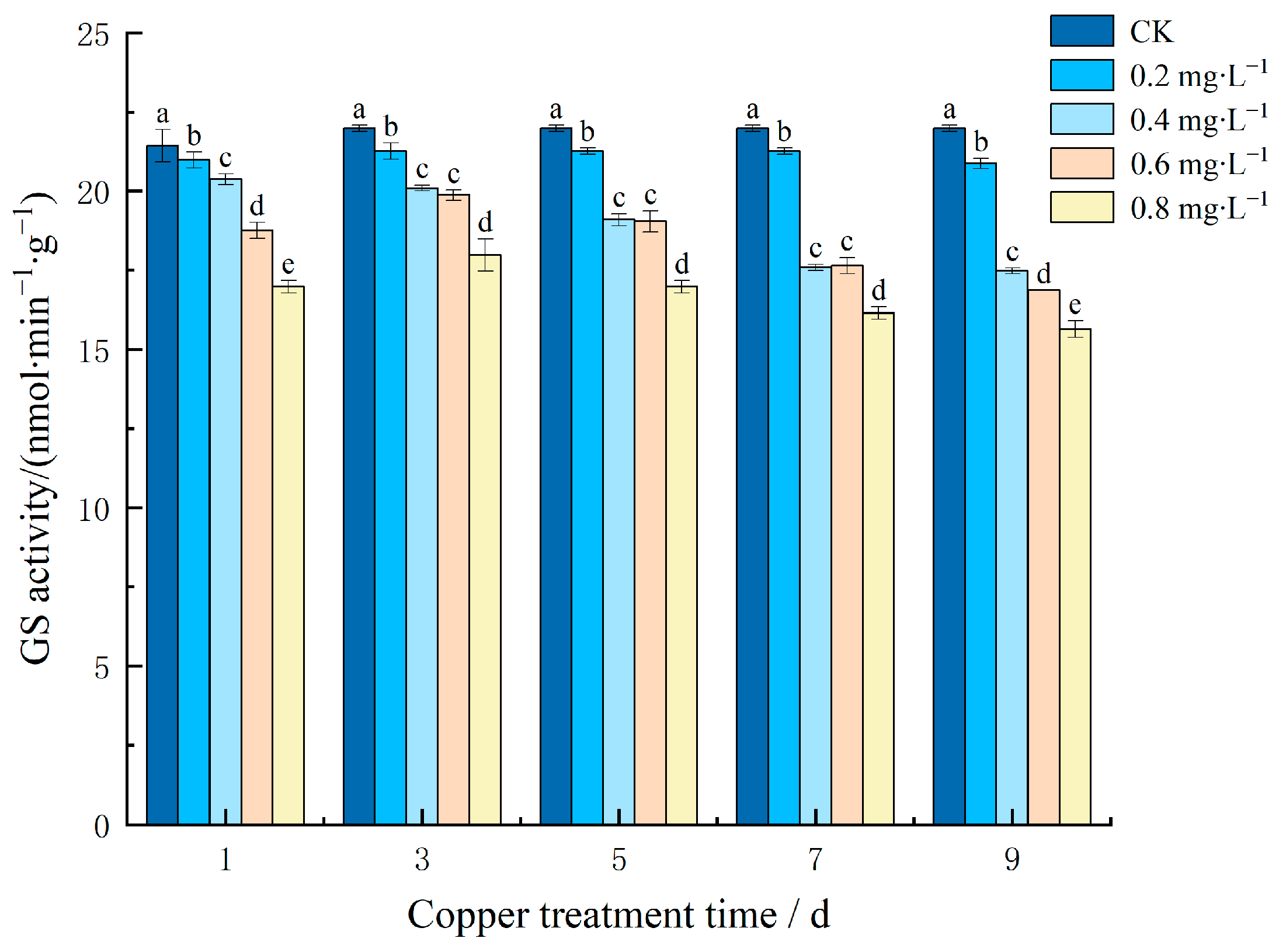
Figure 3 shows the changes in GS activity in the control and Cu-treated N. peltata leaves over time. At each time point, GS activity gradually decreased as Cu concentration increased, and all treatment groups significantly differed from the control (p < 0.05). The GS activity in the group treated with 0.8 mg∙L−1 Cu decreased by 22.78%, 18.24%, 22.78%, 26.6%, and 28.8% compared with the control group on Days 1, 3, 5, 7, and 9, respectively.
Figure 3.
Effect of copper stress on glutamine synthetase (GS) activity in Nymphoides peltata leaves.
Under prolonged Cu exposure, the GS activity in the groups treated with 0.6 and 0.8 mg∙L−1 Cu exhibited an increasing trend on day 3, followed by a decreasing trend on days 5, 7, and 9.
3.4. Effect of Cu Stress on the Photosynthetic Pigment Content of N. peltata Leaves
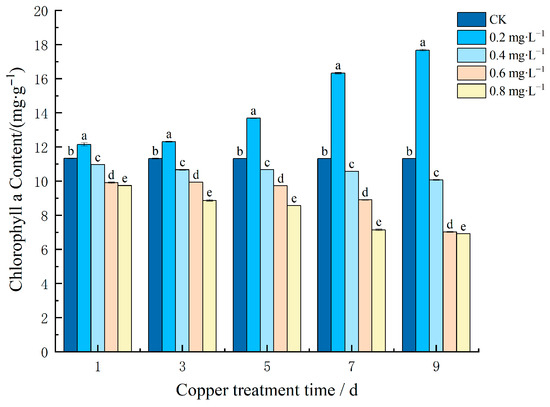
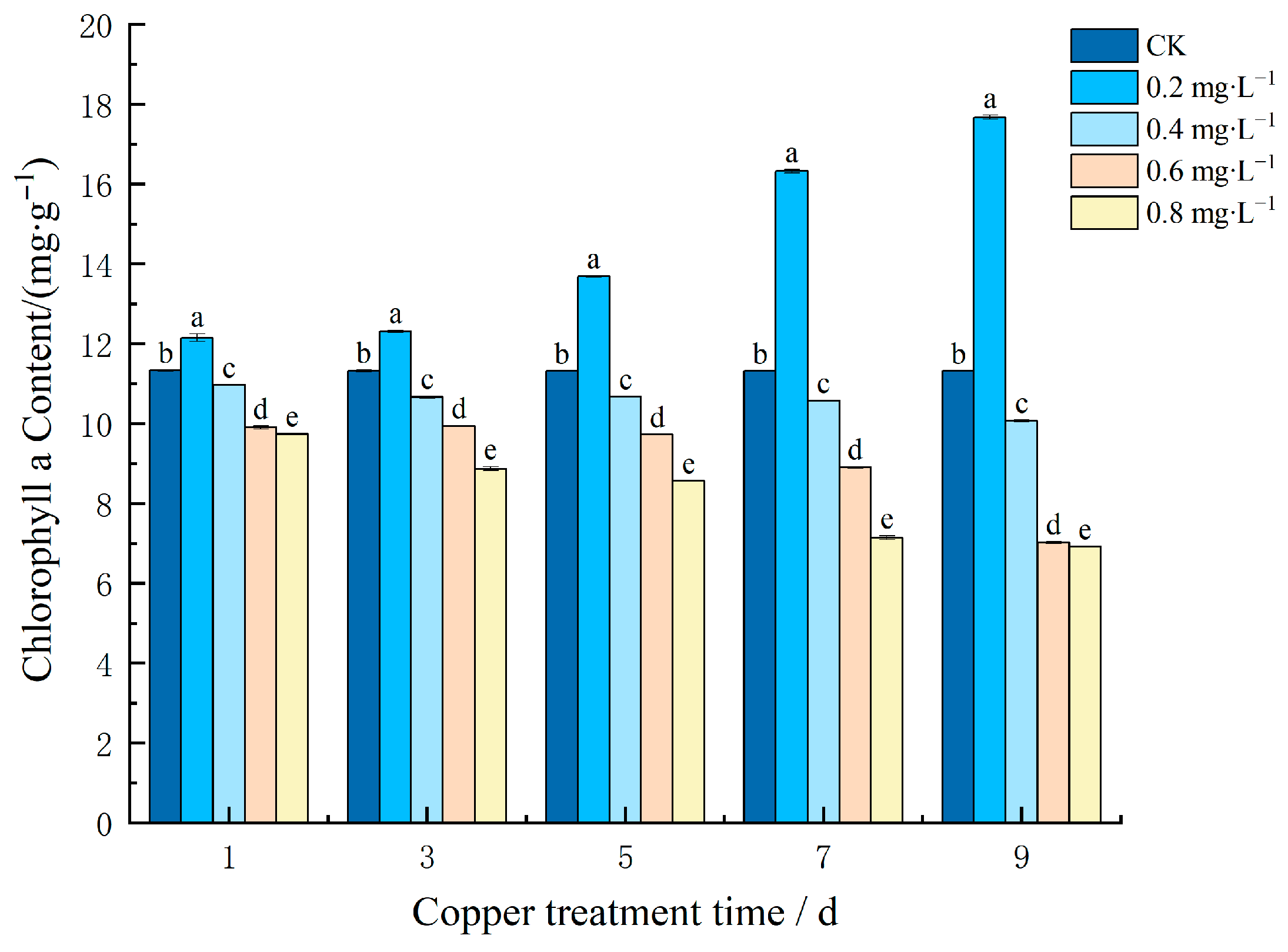
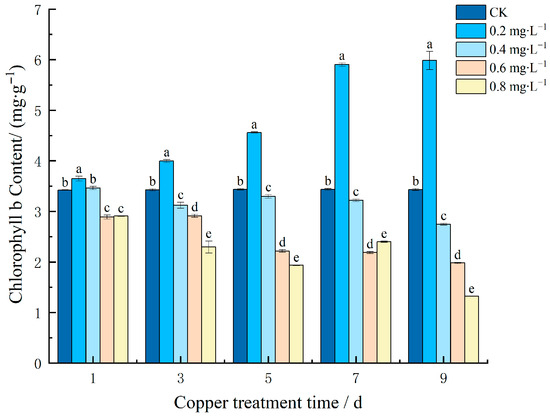
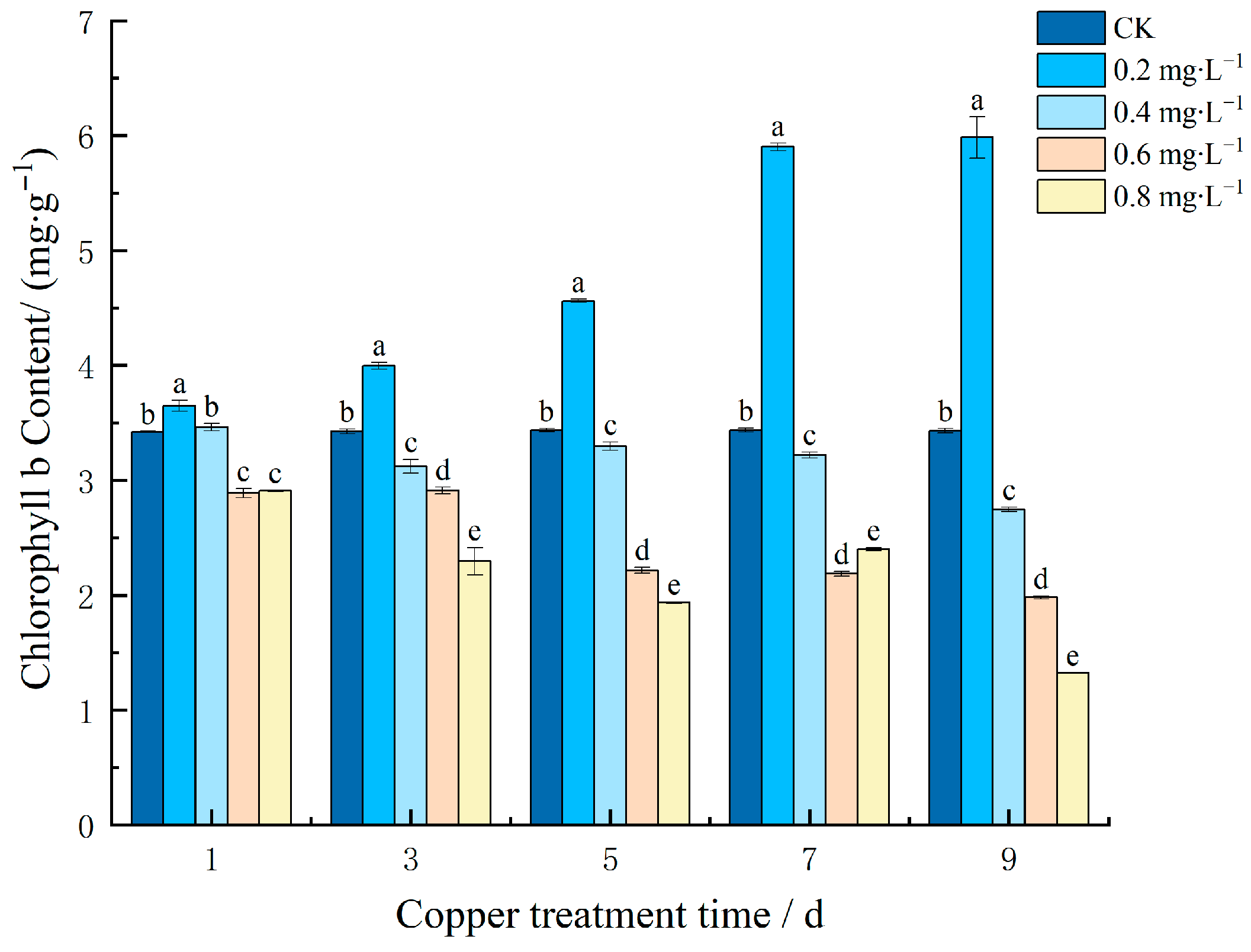
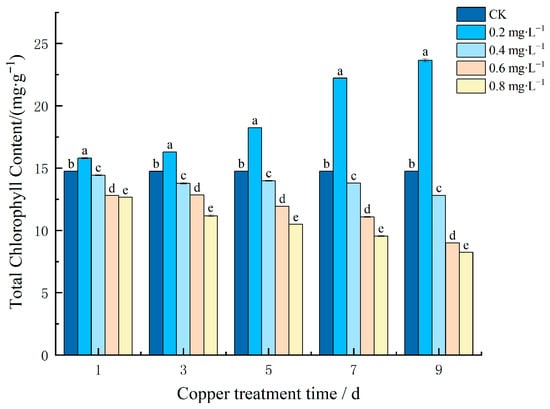
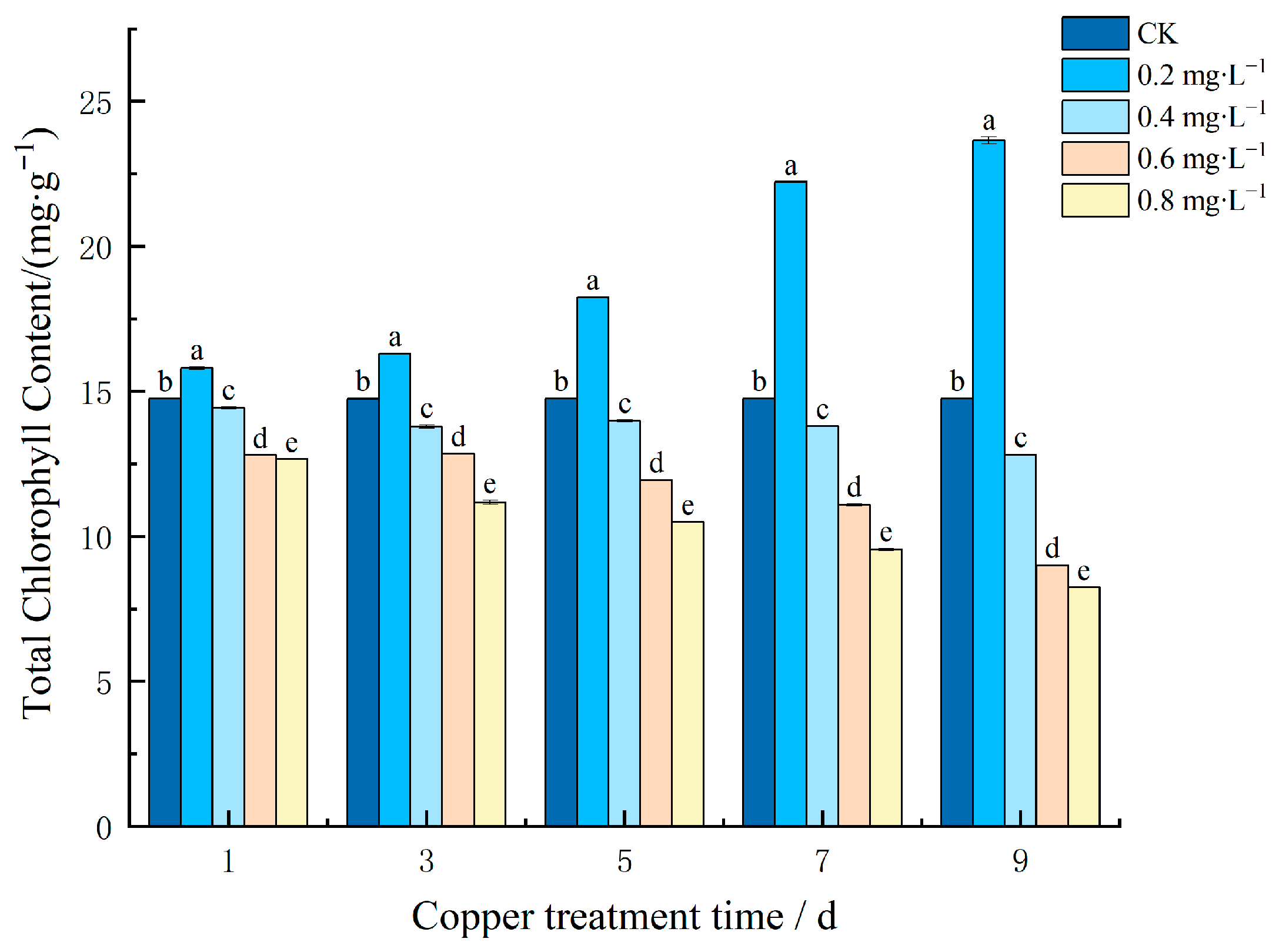
Figure 4, Figure 5 and Figure 6 show the chlorophyll a, chlorophyll b, and total chlorophyll concentrations, respectively, in the control and Cu-treated N. peltata leaves. At the same time, the chlorophyll a, chlorophyll b, and total chlorophyll concentrations in the leaves treated with 0.2 mg∙L−1 Cu were significantly higher than those in the control leaves (p < 0.05). In contrast, chlorophyll a, chlorophyll b, and total chlorophyll concentrations in the leaves treated with 0.4, 0.6, and 0.8 mg∙L−1 Cu were significantly lower than those in the control leaves (p < 0.05).
Figure 4.
Changes in chlorophyll a content of Nymphoides peltata leaves under copper stress.
Figure 5.
Changes in chlorophyll b content of Nymphoides peltata leaves under copper stress.
Figure 6.
Changes in total chlorophyll content of Nymphoides peltata leaves under copper stress.
As exposure to Cu stress prolonged, the chlorophyll a, chlorophyll b, and total chlorophyll concentrations in the leaves treated with 0.2 mg∙L−1 Cu gradually increased. Their peak values on Day 9 increased by 56%, 74%, and 60%, respectively, compared with the control leaves. In contrast, the chlorophyll a, chlorophyll b, and total chlorophyll concentrations in the leaves treated with 0.4, 0.6, and 0.8 mg∙L−1 Cu exhibited a declining trend. Specifically, the values of all chlorophyll parameters in the leaves treated with 0.8 mg∙L−1 Cu significantly decreased by 38.91%, 61.44%, and 44.15% compared to that in the control leaves (p < 0.05).
3.5. Effect of Cu Stress on Rubisco Activity in N. peltata Leaves
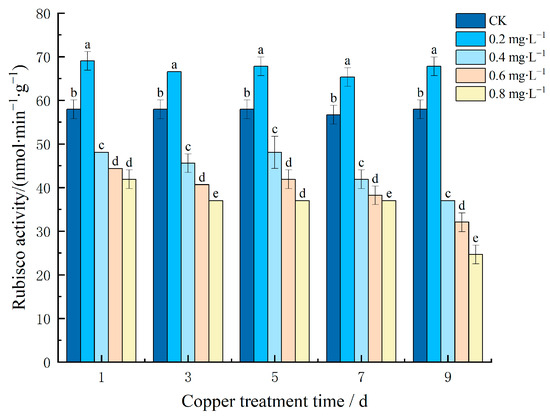
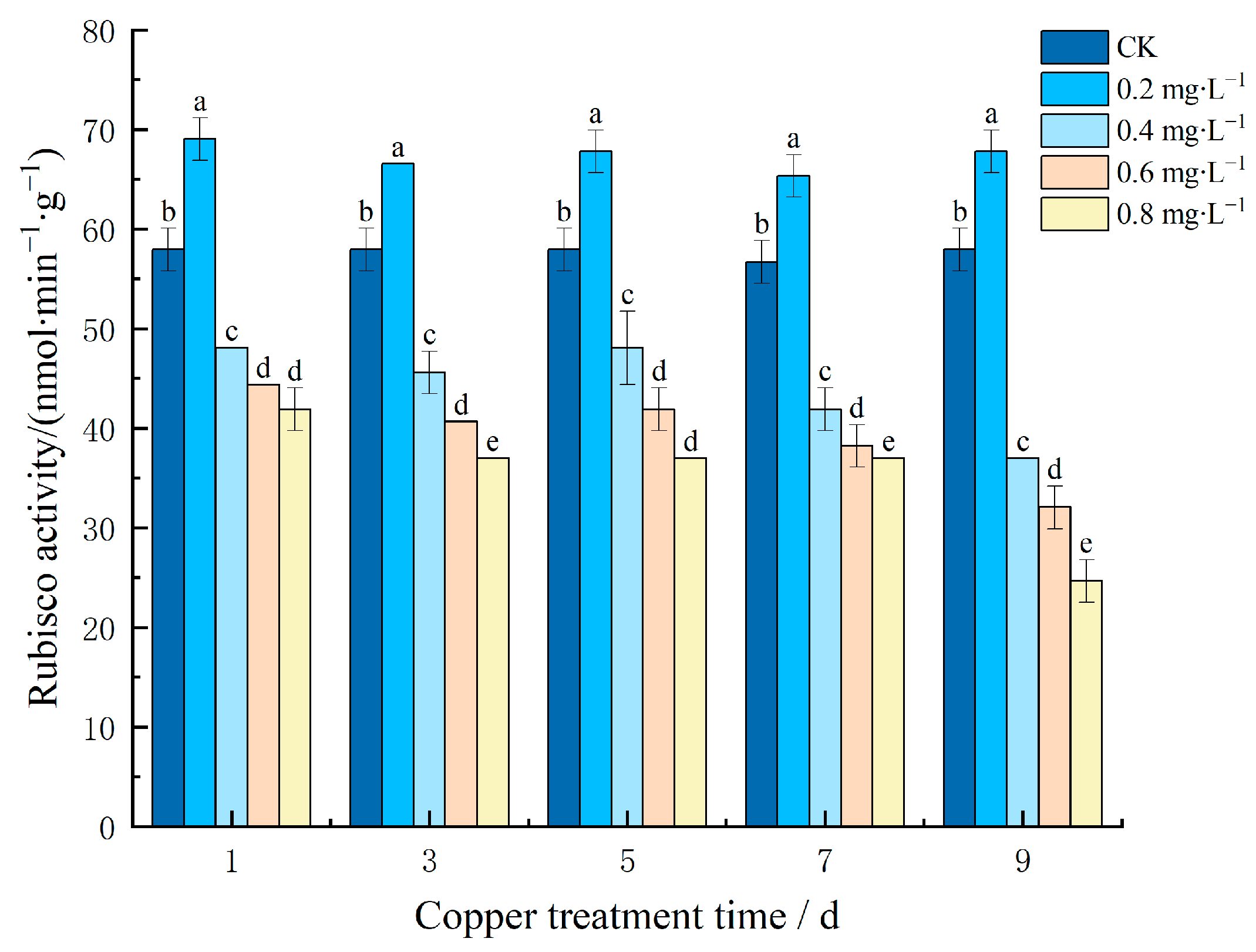
Figure 7 shows the changes in Rubisco activity in the control and Cu-treated N. peltata leaves over time. At the same time point, Rubisco activity was significantly higher in the group treated with 0.2 mg∙L−1 Cu than in the control group (p < 0.05). Compared to that in the control group (p < 0.05), Rubisco activity significantly decreased in the leaves treated with Cu at concentrations exceeding 0.4 mg∙L−1.
Figure 7.
Effect of copper stress on Rubisco activity in Nymphoides peltata leaves.
As Cu exposure prolonged, Rubisco activity did not significantly change in the group treated with 0.2 mg∙L−1 Cu. In contrast, Rubisco activity consistently declined in the groups treated with 0.4, 0.6, and 0.8 mg∙L−1 Cu until the maximum reduction was reached on Day 9. Rubisco activity in the groups treated with 0.4, 0.6, and 0.8 mg∙L−1 Cu decreased by 36.18%, 44.69%, and 57.45%, respectively, compared with the control group.
3.6. Effect of Cu Stress on GO Activity in N. peltata Leaves
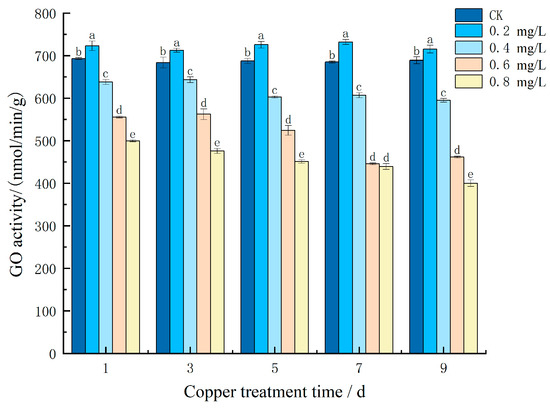
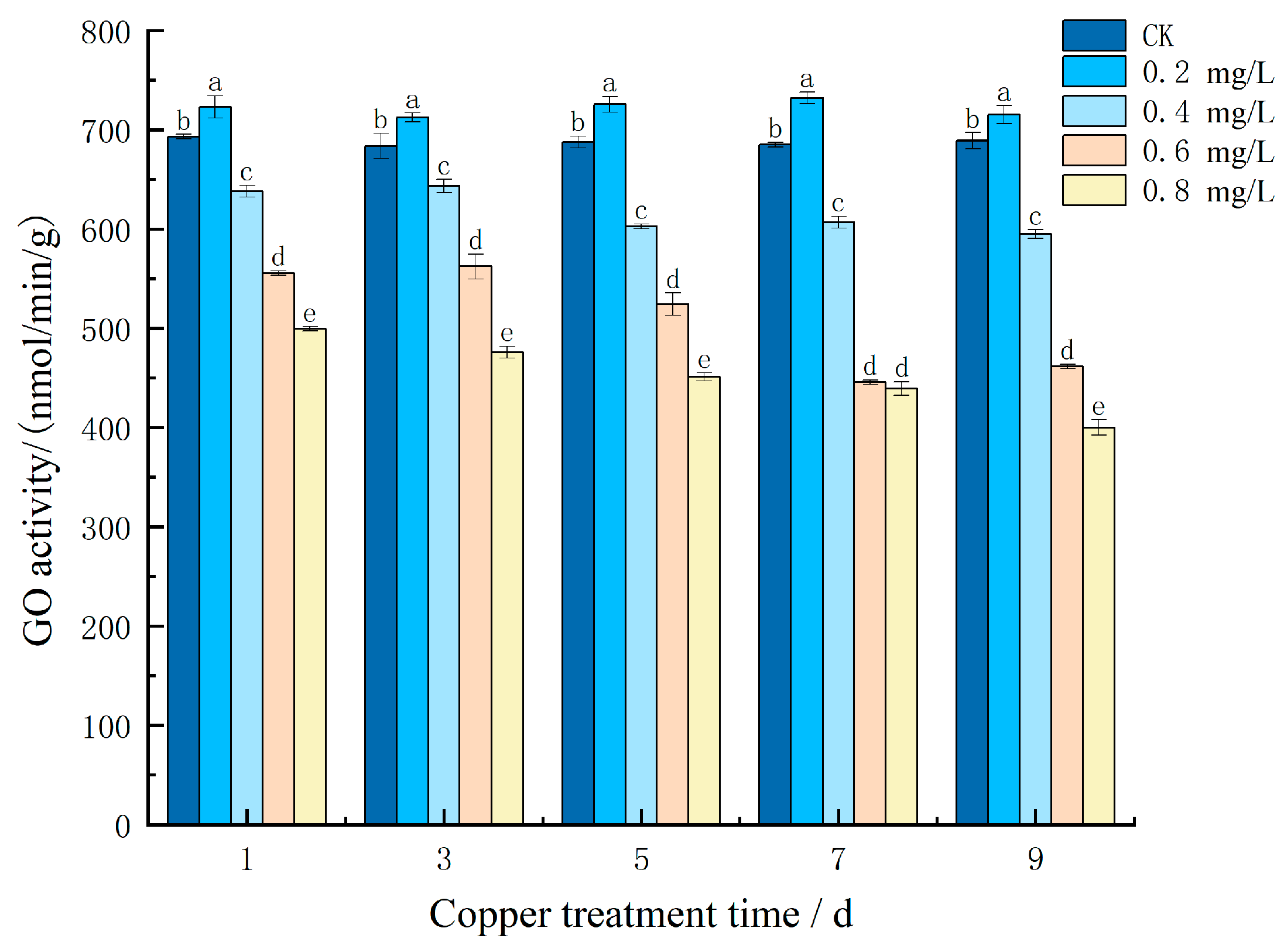
Figure 8 shows the temporal changes in GO activity in the control and Cu-treated N. peltata leaves. At the same time point, GO activity was significantly higher in the group treated with 0.2 mg∙L−1 Cu than in the control group (p < 0.05). However, at Cu concentrations ≥ 0.4 mg∙L−1, GO activity decreased with increasing Cu concentration and was significantly lower than that in the control group (p < 0.05).
Figure 8.
Effect of copper stress on glycolate oxidase (GO) activity in Nymphoides peltata leaves.
Under prolonged Cu exposure, GO activity in the group treated with 0.2 mg∙L−1 Cu did not significantly change over time. In contrast, the GO activity in the groups treated with 0.4, 0.6, and 0.8 mg∙L−1 consistently declined until the maximum reduction was recorded on day 9. The GO activity in the groups treated with 0.4, 0.6, and 0.8 mg∙L−1 decreased by 13.50%, 33.33%, and 41.83%, respectively, compared with the control group.
3.7. Correlation Analysis of Enzyme Activities in N. peltata Leaves
Table 1 presents the results of the correlation analysis of the enzymes involved in nitrogen metabolism and photosynthesis in N. peltata leaves. Significant correlations were observed between the measured parameters. Specifically, NR showed a highly significant positive correlation with GS, whereas both enzymes were significantly negatively correlated with NiR (p < 0.01). Among the photosynthetic parameters, chlorophyll content, Rubisco, and GO were highly significant positively correlated with each other (p < 0.01). Furthermore, the nitrogen metabolism-related enzymes NR and GS also showed significant or highly significant positive correlations with chlorophyll content, Rubisco, and GO activity.
Table 1.
Correlation between key enzyme activities in the leaves of Nymphoides peltata under copper stress.
4. Discussion
This study systematically investigated the physiological and molecular responses of the floating-leaved plant N. peltata to varying copper concentrations. Currently, research directly addressing copper toxicity in N. peltata remains relatively limited. However, related literature indicates significant variability in copper tolerance among different plant species: copper concentrations as low as 5–50 µg·L−1 can be toxic to Zostera marina [21],the copper concentration inhibiting growth in Lemna aequinoctialis is 16 ± 1.0 µg·L−1 (equivalent to 0.016 ± 0.001 mg·L−1) [22], the 72-h EC50 of copper for Spirodela polyrhiza is 365–607 µg·L−1 (0.365–0.607 mg·L−1) [23], the 7-day EC50 of copper for Lemna minor is 9.7 µM [24]. Lakatos and Ince reported an EC50 for Cu of 23.6 μ M at day seven whereas Teisseire et al. recorded an EC50 value of 2.52 μ M after the same exposure duration [25,26,27], indicating intraspecific response variation. The EC50 of copper for Lemna gibba L. ranges from 0.37 to 1.86 mg·L−1 [28]. the 7-day EC50 of copper for rice seed germination is 7.29 mg·L−1 [29]. the median lethal concentration (LC50) of copper for Chinese cabbage seed germination is 0.348 mM·L−1 (approximately 22.1 mg·L−1) [30]. and the EC50 for the hyperaccumulator Elsholtzia splendens is as high as about 480 mg·L−1 [31]. Based on the aforementioned literature and pre-experimental results (under 0.8 mg·L−1 copper treatment, N. peltata exhibited stress symptoms such as leaf yellowing and root browning, but the survival rate remained above 90%, making it suitable for long-term experiments), the concentrations of 0.2, 0.4, 0.6, and 0.8 mg·L−1 were selected for subsequent studies.
4.1. Effects of Cu Stress on Key Enzymes of Nitrogen Metabolism
Nitrogen is an essential component of amino acids, proteins, and various nitrogen-containing compounds in plants and plays a vital role in plant growth, development, and metabolic processes [32]. Among the key enzymes involved in nitrogen transformation, including NR, NiR, GS, glutamate synthase, and glutamate dehydrogenase [33], NR, NiR, and GS are critical rate-limiting enzymes that regulate nitrogen assimilation pathways. As the first enzyme involved in nitrate assimilation, NR plays a pivotal regulatory role in plant nitrogen metabolism [34]. Once absorbed by plants, nitrate is first reduced to nitrite by NR in mesophyll cells and root systems. The resulting nitrite is then reduced to ammonia by NiR within the plastids of each cell. The generated ammonium is primarily assimilated efficiently through the GS/GOGAT cycle: glutamine synthetase (GS) catalyzes the combination of glutamate and ammonium to form glutamine, followed by glutamate synthase (GOGAT), which converts it into two molecules of glutamate. This cycle consumes only one molecule of ATP per ammonium molecule assimilated, and serves as the core pathway for ammonium assimilation in plants. Concurrently, the GDH pathway acts as a supplementary route, catalyzing the synthesis of glutamate from α-ketoglutarate and ammonium under conditions of high ammonium or stress, and plays a role in nitrogen remobilization. Glutamate and glutamine function as amino donors, synthesizing other amino acids via transamination, which subsequently form nitrogen-containing organic compounds such as proteins and nucleic acids [32].The entire pathway is finely regulated by nitrate signaling, end-product feedback, carbon–nitrogen balance, and hormonal networks, constituting a dynamically coordinated system for nitrogen assimilation and redistribution.
Studies have shown that NR activity in the leaves and roots of Cu-treated mung bean seedlings significantly decreases with prolonged exposure time [9]. Xiong et al. [35] demonstrated that under Cu stress, the Cu content of the roots and shoots of Chinese cabbage increased, whereas NR activity decreased. Similarly, the results of the present study revealed that NR activity in N. peltata leaves was suppressed under Cu stress, indicating a deceleration in nitrate reduction and a decreased conversion rate of nitrate to nitrite.
NiR is the second enzyme responsible for converting nitrite into ammonium [36]. The results of the present study indicate that elevated NiR activity under Cu stress accelerates nitrite degradation in N. peltata leaves. This compensatory increase in NiR activity may enhance the conversion of nitrite to ammonium, thereby facilitating subsequent assimilation processes and preventing nitrite accumulation-induced toxicity.
GS is a key enzyme in the conversion of ammonium into amino acids [37]. It drives ammonium assimilation by catalyzing the transformation of ammonium into glutamine, which in turn provides nitrogen for the synthesis of amino acids and proteins, thereby supporting leaf growth and cellular repair. This process prevents ammonium toxicity and maintains nitrogen metabolic homeostasis through synergistic interactions with other nitrogen metabolism-related enzymes. Thus, GS activity is a vital indicator for assessing the nitrogen assimilation capacity of plants. A previous study on cyanobacterial nitrogen metabolism demonstrated that Cu stress-induced suppression of GS activity leads to growth inhibition [38]. GS activity has been observed to decrease under Cu stress in several plant species [14,39]. In the present study, the GS activity in N. peltata leaves decreased under Cu stress, with a more pronounced reduction being observed under prolonged exposure. This result is consistent with previous research, indicating that Cu stress inhibits the assimilation and reduction in ammonium nitrogen during leaf growth.
4.2. Effects of Cu Stress on the Photosynthetic System and Related Enzyme Activities
Photosynthesis is crucial for plant growth, and Cu stress can significantly affect this process. Studies have shown that low-concentration Cu stress can enhance photosynthesis in navel orange seedlings, whereas high concentrations elicit pronounced inhibitory effects [40]. Key physiological indicators for assessing photosynthetic efficiency primarily include chlorophyll content as well as Rubisco and GO activities. Changes in chlorophyll content typically reflect plant adaptability to environmental conditions [41]. Related studies have indicated that heavy metal stress can inhibit chlorophyll synthesis in plants. The decrease in chlorophyll content may be attributed to heavy metals binding to the sulfhydryl groups (−SH) in chloroplast proteins or displacing essential ions such as Fe2+ and Mg2+, thereby disrupting chloroplast structure and function and ultimately leading to chlorophyll degradation [42]. The results of the present study demonstrated that exposure to 0.2 mg∙L−1 Cu increased the chlorophyll a, chlorophyll b, and total chlorophyll concentrations in N. peltata leaves, whereas exposure to Cu concentrations exceeding 0.4 mg∙L−1 decreased the chlorophyll parameters.
Rubisco participates in both photosynthesis and photorespiration [43]. As a key carboxylase in the C3 carbon reaction of photosynthesis and an essential oxygenase in photorespiration, its concentration directly affects the net photosynthetic yield of plants. The results of the present study revealed that exposure to 0.2 mg∙L−1 Cu enhanced Rubisco activity, whereas exposure to concentrations exceeding 0.4 mg∙L−1 suppressed it. These results are consistent with the variation pattern of photosynthetic pigments observed in N. peltata leaves in this study and align with the response of Rubisco in Ulva compressa to Cu stress [44]. These findings suggest that exposure to 0.2 mg∙L−1 Cu promotes photosynthesis in N. peltata, while higher concentrations (>0.4 mg∙L−1) inhibit it. The mechanism underlying this response involves excessive Cu disrupting pigment composition and chloroplast structure, thereby impairing biosynthesis and photosynthesis, reducing the net photosynthetic rate, and limiting Rubisco activity.
GO is a key enzyme in the glycolate cycle and plays a critical role in plant photorespiration by catalyzing the oxidation of glycolate to glyoxylate and hydrogen peroxide. The results of this study revealed that exposure to 0.2 mg∙L−1 Cu stress increased GO activity and accelerated photorespiration rates, whereas exposure to Cu concentrations exceeding 0.4 mg∙L−1 suppressed GO activity and reduced photorespiration. This study further demonstrated that Cu concentrations above 0.4 mg∙L−1 significantly inhibited GO activity, leading to impaired photorespiratory metabolism. Combined with chlorophyll degradation and decreased Rubisco activity, these effects collectively contributed to the overall decline in the photosynthetic capacity of N. peltata.
4.3. Correlation Analysis Between Nitrogen Metabolism and Photosynthesis
The results of the correlation analysis among key nitrogen metabolism-related and photosynthetic enzymes in N. peltata revealed a highly significant positive correlation between NR and GS activities. As the rate-limiting enzyme in nitrate assimilation, increased NR activity is often accompanied by elevated GS expression which enhances ammonium fixation. Previous studies have shown that cadmium exposure induces coordinated changes in NR and GS activities during plant nitrogen assimilation, where elevated NR activity can subsequently induce GS activation [45]. Furthermore, NR activity exhibited significant or highly significant positive correlations with chlorophyll content as well as Rubisco and GO activities. This finding indicates that the reduction in NR activity under Cu stress may be associated with Cu-induced impairment of photosynthesis. Campbell [46] noted that carbohydrates are essential substrates for NR expression. The decrease in NR activity in Cu-stressed plants may have resulted from the reduced carbohydrate supply caused by Cu-induced impairment of photosynthesis. In the present study, Cu treatment significantly reduced the chlorophyll content of N. peltata leaves, suggesting that photosynthesis was likely impaired due to the inhibition of chlorophyll synthesis. This supports the hypothesis that Cu indirectly affects NR activity by suppressing photosynthesis. Furthermore, the reduction in NR and GS activities under Cu stress may be linked to photosynthetic inhibition. GS also exhibited a highly significant positive correlation with chlorophyll content as well as Rubisco and GO activities, which could be attributed to the ATP requirement for GS function. Masclaux-Daubresse et al. [47] demonstrated that the supply of ATP, ferredoxin, and NADPH—products derived from photosynthesis, respiration, and photorespiration pathways—serves as a key limiting factor for nitrogen assimilation. This study suggests that under Cu stress, the inhibition of photosynthesis impedes ATP synthesis, which may consequently constrain the catalytic efficiency of GS. This mechanism likely explains the observed decline in GS activity with increasing Cu concentrations.
5. Conclusions
This study investigated the effects of exposure to varying Cu concentrations on key physiological parameters in N. peltata leaves, including nitrogen metabolism-related enzymes (GS, NR, and NiR) and photosynthetic indicators (chlorophyll content, Rubisco, and GO activities). The results demonstrated that Cu stress significantly suppressed NR and GS activities, while notably promoting NiR activity across all treatment concentrations. A concentration-dependent biphasic response was observed in the photosynthetic parameters: exposure to 0.2 mg∙L−1 Cu enhanced chlorophyll content as well as Rubisco and GO activities, whereas exposure to Cu concentrations exceeding 0.4 mg∙L−1 caused a progressive decline in the values of these indicators. Correlation analysis further revealed significant positive correlations between NR and GS activities, which were also correlated with photosynthetic parameters.
In summary, Cu stress significantly disrupted both nitrogen metabolism and photosynthesis in N. peltata. Decrease in NR activity impairs nitrate reduction, leading to nitrate accumulation and disrupting of the substrate supply for subsequent nitrogen assimilation. The suppression of GS activity hinders ammonium assimilation, resulting in the accumulation of toxic ammonia derived from photorespiration and other metabolic processes. Coordinated inhibition of NR and GS disrupts the entire nitrogen metabolic pathway, while the observed increase in NiR activity may represent a compensatory response to NR suppression. In terms of photosynthesis, Cu stress impairs photosynthetic function. At concentrations above 0.4 mg∙L−1, Cu likely inhibits photosynthetic pigment synthesis and reduces ATP and carbohydrates production, thereby limiting the activity of key nitrogen assimilation enzymes, such as NR and GS. This ultimately decreases both nitrogen metabolism efficiency and photosynthetic performance. The observed changes in enzyme activities related to nitrogen metabolism reflect the ability of plants to monitor and regulate their nitrogen status under Cu stress, thereby minimizing detrimental effects. These findings provide valuable insights for utilizing plants in the remediation of heavy metal-contaminated water bodies. Future research will build upon this work by further focusing on the oxidative stress response induced by copper stress and deeply analyze the regulatory network among reactive oxygen species metabolism, the antioxidant defense system, and phytoremediation performance, thereby providing a more comprehensive scientific foundation for optimizing the physiological and ecological basis of phytoremediation technology.
Author Contributions
Conceptualization, C.J.; methodology, C.J.; software, S.Q. and L.L.; validation, S.Q. and C.J.; formal analysis, S.Q. and C.J.; investigation, S.L. and C.J.; resources, Q.Z., C.J., Y.W., R.R. and J.X.; data curation, S.Q., S.L. and C.J.; writing—original draft preparation, S.Q.; writing—review and editing, C.J. and Q.Z.; visualization, Q.Z., C.J., Y.W., R.R. and J.X.; supervision, Q.Z., C.J., Y.W., R.R. and J.X.; project administration, Q.Z., C.J., Y.W. and R.R.; funding acquisition, Q.Z., C.J., Y.W. and R.R. All authors have read and agreed to the published version of the manuscript.
Funding
The authors gratefully acknowledge the financial support provided by Director Fund Project of Fisheries Science Institute, Beijing Academy of Agriculture and Forestry Sciences (JJPY-2025-05); Beijing Academy of Agriculture and Forestry Sciences Exploratory Research Project TSXM (202516); the Special Project for Building Scientific and Technological Innovation Capacity of Beijing Academy of Agricultural and Forestry Sciences (KJCX20251205); the Beijing Aquaculture Innovation Team of the Modern Agricultural Industry Technology System (BAIC07-2025-07); and Hebei Province Key R&D Programme Project (22326701D,19226703D), which were essential for conducting this work.
Data Availability Statement
The original contributions presented in this study are included in the article material. Further inquiries can be directed to the corresponding authors.
Acknowledgments
We greatly appreciate the careful works and constructive suggestions of the editor and all anonymous reviewers.
Conflicts of Interest
The authors declare no conflicts of interest.
References
- Bekturganov, Z.; Tussupova, K.; Berndtsson, R.; Sharapatova, N.; Aryngazin, K.; Zhanasova, M. Water related health problems in Central Asia—A Review. Water 2016, 8, 219. [Google Scholar] [CrossRef] [Scilit]
- Zhang, K.; Su, F.-L.; Liu, X.-M.; Song, Z.; Feng, X. The average concentration function of dissolved copper in Hun River, Liaoning province, Northeastern China. Environ. Sci. Pollut. Res. 2017, 24, 27225–27234. [Google Scholar] [CrossRef] [Scilit] [PubMed]
- Wu, M.; Jia, Y.; Zhang, Y.; Wen, R.; Guo, J.; Wang, N.; Liu, W.; Qiu, H.; Wang, H.; Xian, Y.; et al. Heavy metal pollution from copper smelting during the Shang Dynasty at the Laoniupo site in the Bahe River valley, Guanzhong Basin, China. J. Geogr. Sci. 2021, 31, 1675–1693. [Google Scholar] [CrossRef] [Scilit]
- Zhang, X.; Zha, T.; Guo, X.; Meng, G.; Zhou, J. Spatial distribution of metal pollution of soils of Chinese provincial capital cities. Sci. Total Environ. 2018, 643, 1502–1513. [Google Scholar] [CrossRef] [Scilit] [PubMed]
- Sun, Z.; Xie, X.; Wang, P.; Hu, Y.; Cheng, H. Heavy metal pollution caused by small-scale metal ore mining activities: A case study from a polymetallic mine in South China. Sci. Total Environ. 2018, 639, 217–227. [Google Scholar] [CrossRef] [Scilit]
- Charkiewicz, A.E. Is Copper Still Safe for Us? What Do We Know and What Are the Latest Literature Statements? Curr. Issues Mol. Biol. 2024, 46, 8441–8463. [Google Scholar] [CrossRef] [Scilit]
- Pu, J.; Tian, G.; Li, B.; Chen, D.; He, J.; Zheng, P.; Mao, X.; Yu, J.; Huang, Z.; Yu, B. Trace Mineral Overload Induced Hepatic Oxidative Damage and Apoptosis in Pigs with Long-Term High-Level Dietary Mineral Exposure. J. Agric. Food Chem. 2016, 64, 1841–1849. [Google Scholar] [CrossRef] [Scilit]
- Yruela, I. Copper in plants: Acquisition, transport and interactions. Funct. Plant Biol. 2009, 36, 409–430. [Google Scholar] [CrossRef] [Scilit]
- Güleryüz, G.; Erdemir, Ü.S.; Arslan, H.; Akpinar, A.; Çiçek, A.; Güçer, Ş. Variation in trace element mobility and nitrogen metabolism of Verbascum olympicum Boiss. under copper stress. Chem. Ecol. 2015, 31, 494–509. [Google Scholar] [CrossRef] [Scilit]
- Zhang, L.-L.; He, X.-J.; Chen, M.; An, R.-D.; An, X.-L.; Li, J. Responses of nitrogen metabolism to copper stress in Luffa cylindrica roots. J. Soil Sci. Plant Nutr. 2014, 14, 616–624. [Google Scholar] [CrossRef] [Scilit]
- Chen, L.-M.; Kao, C.H. Relationship between ammonium accumulation and senescence of detached rice leaves caused by excess copper. Plant Soil 1998, 200, 169–173. [Google Scholar] [CrossRef] [Scilit]
- Yu, C.C.; Hung, K.T.; Kao, C.H. Nitric oxide reduces Cu toxicity and Cu-induced NH4+ accumulation in rice leaves. J. Plant Physiol. 2005, 162, 1319–1330. [Google Scholar] [CrossRef] [Scilit]
- Drążkiewicz, M.; Skórzyńska-Polit, E.; Krupa, Z. Copper-induced oxidative stress and antioxidant defence in Arabidopsis thaliana. Biometals 2004, 17, 379–387. [Google Scholar] [CrossRef] [Scilit] [PubMed]
- Demirevska-Kepova, K.; Simova-Stoilova, L.; Stoyanova, Z.; Hölzer, R.; Feller, U. Biochemical changes in barley plants after excessive supply of copper and manganese. Environ. Exp. Bot. 2004, 52, 253–266. [Google Scholar] [CrossRef] [Scilit]
- Ralph, P.J.; Burchett, M.D. Photosynthetic response of Halophila ovalis to heavy metal stress. Environ. Pollut. 1998, 103, 91–101. [Google Scholar] [CrossRef] [Scilit]
- Rama Devi, S.; Prasad, M.N.V. Copper toxicity in Ceratophyllum demersum L. (Coontail), a free floating macrophyte: Response of antioxidant enzymes and antioxidants. Plant Sci. 1998, 138, 157–165. [Google Scholar] [CrossRef] [Scilit]
- Zhou, X.; Lv, Y.; Zhang, J.; Wang, D.; Wang, Z.; Zhou, Y.; Wang, W. The complete chloroplast genome sequence of Nymphoides peltata (SGGmel.) Kuntze. Mitochondrial DNA Part B-Resour. 2022, 7, 1406–1407. [Google Scholar] [CrossRef] [Scilit]
- Lavid, N.; Schwartz, A.; Lewinsohn, E.; Tel-Or, E. Phenols and phenol oxidases are involved in cadmium accumulation in the water plants Nymphoides peltata (Menyanthaceae) and Nymphaeae (Nymphaeaceae). Planta 2001, 214, 189–195. [Google Scholar] [CrossRef] [Scilit]
- Pan, S.; Zhang, W.; Li, Y.; Zhou, P.; Zhang, H.; Niu, L.; Wang, L. Understanding the ecological processes governing hydrophyte-associated bacterial communities involved in hydrophyte growth and development. J. Environ. Manag. 2022, 312, 114952. [Google Scholar] [CrossRef] [Scilit] [PubMed]
- Fu, Y.; Li, F.; Xu, T.; Cai, S.; Chu, W.; Qiu, H.; Sha, S.; Cheng, G.; Xu, Q. Bioaccumulation, subcellular, and molecular localization and damage to physiology and ultrastructure in Nymphoides peltata (Gmel.) O. Kuntze exposed to yttrium. Environ. Sci. Pollut. Res. 2014, 21, 2935–2942. [Google Scholar] [CrossRef] [Scilit]
- Zhao, J.-S.; Zhang, Q.; Liu, J.; Zhang, P.-D.; Li, W.-T. Effects of copper enrichment on survival, growth and photosynthetic pigment of seedlings and young plants of the eelgrass Zostera marina. Mar. Biol. Res. 2016, 12, 695–705. [Google Scholar] [CrossRef] [Scilit]
- Charles, A.L.; Markich, S.J.; Ralph, P. Toxicity of uranium and copper individually, and in combination, to a tropical freshwater macrophyte (Lemna aequinoctialis). Chemosphere 2006, 62, 1224–1233. [Google Scholar] [CrossRef] [Scilit] [PubMed]
- Lee, H.; De Saeger, J.; Bae, S.; Kim, M.; Depuydt, S.; Heynderickx, P.M.; Wu, D.; Han, T.; Park, J. Giant Duckweed (Spirodela polyrhiza) Root Growth as a Simple and Sensitive Indicator of Copper and Chromium Contamination. Toxics 2023, 11, 9. [Google Scholar] [CrossRef] [Scilit]
- Drost, W.; Matzke, M.; Backhaus, T. Heavy metal toxicity to Lemna minor: Studies on the time dependence of growth inhibition and the recovery after exposure. Chemosphere 2007, 67, 36–43. [Google Scholar] [CrossRef] [Scilit] [PubMed]
- Lakatos, G.; Mészáros, I.; Bohátka, S.; Szabó, S.; Makádi, M.; Csatlós, M.; Langer, G. Application of Lemna species in ecotoxicological studies of heavy metals and organic biocides. Sci. Total Environ. 1993, 134, 773–778. [Google Scholar] [CrossRef] [Scilit]
- Montvydiene, D.; Marciulioniene, D. Assessment of toxic interaction of metals in binary mixtures using Lepidium sativum and Spirodela polyrrhiza. Pol. J. Environ. Stud. 2007, 16, 777–783. [Google Scholar]
- Teisseire, H.; Couderchet, M.; Vernet, G. Toxic responses and catalase activity of Lemna minor L. Exposed to folpet, copper, and their combination. Ecotoxicol. Environ. Saf. 1998, 40, 194–200. [Google Scholar] [CrossRef] [Scilit]
- Irfan, M.; Meszaros, I.; Szabo, S.; Olah, V. Comparative Phytotoxicity of Metallic Elements on Duckweed Lemna gibba L. Using Growth- and Chlorophyll Fluorescence Induction-Based Endpoints. Plants 2024, 13, 2. [Google Scholar] [CrossRef] [Scilit]
- Liu, X.; Su, H.; Wang, F.; Ma, B.; Tao, Y.; Cao, K.; Shen, Y.; Zhao, W.; Wei, Y.; Wu, F. Understanding the Role of Low-Dose Polystyrene Microplastic in Copper Toxicity to Rice Seed (Oryza sativa L.). Environ. Toxicol. Chem. 2024, 43, 1870–1879. [Google Scholar] [CrossRef] [Scilit]
- Xiong, Z.T.; Wang, H. Copper toxicity and bioaccumulation in Chinese cabbage (Brassica pekinensis Rupr.). Environ. Toxicol. 2005, 20, 188–194. [Google Scholar] [CrossRef] [Scilit]
- Shi, J.; Peng, C.; Yang, Y.; Yang, J.; Zhang, H.; Yuan, X.; Chen, Y.; Hu, T. Phytotoxicity and accumulation of copper oxide nanoparticles to the Cu-tolerant plant Elsholtzia splendens. Nanotoxicology 2014, 8, 179–188. [Google Scholar] [CrossRef] [Scilit]
- Cruz, C.; Bio, A.F.M.; Domínguez-Valdivia, M.D.; Aparicio-Tejo, P.M.; Lamsfus, C.; Martins-Loução, M.A. How does glutamine synthetase activity determine plant tolerance to ammonium? Planta 2006, 223, 1068–1080. [Google Scholar] [CrossRef] [Scilit] [PubMed]
- Singh, M.; Singh, V.P.; Prasad, S.M. Responses of photosynthesis, nitrogen and proline metabolism to salinity stress in Solanum lycopersicum under different levels of nitrogen supplementation. Plant Physiol. Biochem. 2016, 109, 72–83. [Google Scholar] [CrossRef] [Scilit]
- Hong, H.-S.; Wang, Y.-J.; Wang, D.-Z. Response of phytoplankton to nitrogen addition in the Taiwan strait upwelling region: Nitrate reductase and glutamine synthetase activities. Cont. Shelf Res. 2011, 31, S57–S66. [Google Scholar] [CrossRef] [Scilit]
- Xiong, Z.-T.; Liu, C.; Geng, B. Phytotoxic effects of copper on nitrogen metabolism and plant growth in Brassica pekinensis Rupr. Ecotoxicol. Environ. Saf. 2006, 64, 273–280. [Google Scholar] [CrossRef] [Scilit] [PubMed]
- Esen, M.; Urek, R.O. Ammonium nitrate and iron nutrition effects on some nitrogen assimilation enzymes and metabolites in Spirulina platensis. Biotechnol. Appl. Biochem. 2015, 62, 275–286. [Google Scholar] [CrossRef] [Scilit]
- Lea, P.J.; Miflin, B.J. Glutamate synthase and the synthesis of glutamate in plants. Plant Physiol. Biochem. 2003, 41, 555–564. [Google Scholar] [CrossRef] [Scilit]
- Singh, V.P.; Srivastava, P.K.; Prasad, S.M. Uv-B Induced Differential Effect on Growth and Nitrogen Metabolism in Two Cyanobacteria Under Copper Toxicity. Cell. Mol. Biol. 2012, 58, 85–95. [Google Scholar] [CrossRef]
- Burzyñski, M.; Buczek, J. The effect of Cu2+ on uptake and assimilation of ammonium by cucumber seedlings. Acta Physiol. Plant. 1997, 19, 3–8. [Google Scholar] [CrossRef] [Scilit]
- Zhang, G.-J.; Jiang, H.; Zheng, L.-Q.; Chen, J.; Qiu, D.-L.; Liu, X.-H. Effect of copper stress on photosynthesis of navel orange seedlings. Chin. J. Eco-Agric. 2009, 17, 130–134. [Google Scholar] [CrossRef] [Scilit]
- Zhou, Y.-W.; Xu, X.-G.; Han, R.-M.; Zhou, X.-H.; Feng, D.-Y.; Li, Z.-C.; Wang, G.-X. Effect of Nutrient Loadings on the Regulation of Water Nitrogen and Phosphorus by Vallisneria natans and Its Photosynthetic Fluorescence Characteristics. Huan Jing Ke Xue 2018, 39, 1180–1187. [Google Scholar] [CrossRef] [PubMed]
- Shahbaz, M.; Tseng, M.H.; Stuiver, C.E.E.; Koralewska, A.; Posthumus, F.S.; Venema, J.H.; Parmar, S.; Schat, H.; Hawkesford, M.J.; De Kok, L.J. Copper Exposure Interferes with the Regulation of the Uptake, Distribution and Metabolism of Sulfate in Chinese Cabbage. J. Plant Physiol. 2010, 167, 438–446. [Google Scholar] [CrossRef] [Scilit]
- Prywes, N.; Phillips, N.R.; Tuck, O.T.; Valentin-Alvarado, L.E.; Savage, D.F. Rubisco Function, Evolution, and Engineering. Annu. Rev. Biochem. 2023, 92, 385–410. [Google Scholar] [CrossRef] [Scilit] [PubMed]
- Laporte, D.; Rodríguez, F.; González, A.; Zúñiga, A.; Castro-Nallar, E.; Sáez, C.A.; Moenne, A. Copper-induced concomitant increases in photosynthesis, respiration, and C, N and S assimilation revealed by transcriptomic analyses in Ulva compressa (Chlorophyta). BMC Plant Biol. 2020, 20, 25. [Google Scholar] [CrossRef] [Scilit]
- Gouia, H.; Suzuki, A.; Brulfert, J.; Ghorbal, M.H. Effects of cadmium on the co-ordination of nitrogen and carbon metabolism in bean seedlings. J. Plant Physiol. 2003, 160, 367–376. [Google Scholar] [CrossRef] [Scilit]
- Campbell, W.H. Nitrate Reductase Structure, Function and Regulation: Bridging the Gap between Biochemistry and Physiology. Annu. Rev. Plant Physiol. Plant Mol. Biol. 1999, 50, 277–303. [Google Scholar] [CrossRef] [Scilit]
- Masclaux-Daubresse, C.; Daniel-Vedele, F.; Dechorgnat, J.; Chardon, F.; Gaufichon, L.; Suzuki, A. Nitrogen uptake, assimilation and remobilization in plants: Challenges for sustainable and productive agriculture. Ann. Bot. 2010, 105, 1141–1157. [Google Scholar] [CrossRef] [Scilit] [PubMed]

Disclaimer/Publisher’s Note: The statements, opinions and data contained in all publications are solely those of the individual author(s) and contributor(s) and not of MDPI and/or the editor(s). MDPI and/or the editor(s) disclaim responsibility for any injury to people or property resulting from any ideas, methods, instructions or products referred to in the content. |
© 2025 by the authors. Licensee MDPI, Basel, Switzerland. This article is an open access article distributed under the terms and conditions of the Creative Commons Attribution (CC BY) license (https://creativecommons.org/licenses/by/4.0/).