Article

Instantaneous Relief and Persistent Control of Sludge Bulking: Changes in Bacterial Flora Due to Freeze–Thaw and Carbon Source Conversion

College of Ecology and Environmental, Xinjiang University, Urumqi 830046, China
*
Author to whom correspondence should be addressed.
Water 2025, 17(24), 3553; https://doi.org/10.3390/w17243553
Submission received: 28 October 2025 / Revised: 8 December 2025 / Accepted: 12 December 2025 / Published: 15 December 2025
(This article belongs to the Section Wastewater Treatment and Reuse)

Abstract

Sludge bulking is a phenomenon that seriously affects the operation of activated sludge wastewater treatment plants (WWTPs). In this study, synthetic wastewater and a sequencing batch reactor (SBR) were employed to investigate the control of freeze–thaw on sludge bulking and the changes in sludge flora. The results observed that an imbalanced carbon–nitrogen–phosphorus ratio (C:N:P) in wastewater significantly increased the relative abundance of Thiothrix from 0.04% to 26.00%, while the sludge volume index (SVI) rose from 61 to 228 mL/g, leading to filamentous bulking. The bulking sludge was frozen at −40 °C for 7 days and then naturally thawed. After being reintroduced into the reactor, the relative abundance of Thiothrix rapidly decreased to 0.18%, and the sludge settling performance temporarily returned to normal, but it could not operate stably. Six days later, severe non-filamentous sludge bulking recurred. The relative abundance of Zoogloea increased markedly from 12.96% to 62.26%, and the SVI reached 260 mL/g. When the carbon source was replaced with glucose, the settling performance of the sludge eventually recovered. Studies have shown that the higher the content of extracellular polymer substances (EPSs) is, the worse the settling performance of sludge is. This study provides new technical ideas for the control of sludge bulking.

1. Introduction

The activated sludge process is the most commonly used biological wastewater treatment technology due to its low cost and stable performance [1,2]. However, sludge bulking remains a major bottleneck restricting the stable operation of this process [3,4]. Once sludge bulking occurs in wastewater treatment plants (WWTPs), it leads to deteriorated sludge settling properties and poor effluent quality. It is reported that more than half of WWTPs worldwide operating with the activated sludge process have experienced sludge bulking problems [5,6]. Sludge bulking is typically categorized into filamentous and non-filamentous types [7]. The former is caused by the excessive growth of filamentous bacteria, whereas the latter results from the overproduction of highly hydrophilic and viscous extracellular polymeric substances (EPSs) by floc-forming bacteria [8,9]. Most bulking cases are filamentous in nature, while non-filamentous bulking occurs less frequently [10]. The causes of sludge bulking are multifactorial and mainly associated with influent characteristics, process configuration, and environmental conditions [11,12].
To control sludge bulking, various physical, chemical and biological methods have been proposed [13,14,15]. Freeze–thaw was a physical treatment technique that involves cyclic freezing at low temperature and thawing at ambient temperature [16]. As a physical approach, freeze–thaw offered several advantages. It eliminated the need for chemical additives and prevented secondary metal pollution from Fe3+/Al3+ salts, making it an economical and environmentally sustainable method [17,18,19]. When sludge is frozen, water within the sludge pores and flocs freeze to form ice crystals [18]. The growing ice crystals promote the aggregation of dispersed colloidal particles into larger flocs [20]. EPSs are macromolecular substances released by activated sludge into the extracellular environment, mainly composed of proteins, polysaccharides, lipids, and nucleic acids [21]. The EPS of sludge can be disrupted during the growth of ice crystals, leading to the release of bound water and a consequent compaction of the floc structure [22,23]. These two effects facilitate the transformation of sludge flocs from a loose to a dense structure, fundamentally improving their settling performance [24,25].
The freeze–thaw process not only has a notable impact on sludge settling behavior but also influences microbial communities. Low temperatures suppress microbial enzyme activity and respiration as well as electron transport, causing microorganisms to enter dormant or low-metabolic states [26]. The number of microorganisms in can sludge decrease significantly; Chu et al. [27] reported that the bacterial population in sludge was reduced by approximately 67% after freeze–thaw treatment. The abundance of Actinobacteria was significantly reduced after freezing, indicating that low-temperature stress had a pronounced inhibitory effect on microorganisms that are not cold-tolerant [28]. Cold-tolerant taxa such as Clostridium and Porphyromonadaceae exhibited increased relative abundances and became dominant after the freeze–thaw process [29]. Different freeze–thaw intensities could also significantly affect the structure of microbial communities [30]. Under the strong freezing conditions (−15 °C), the relative abundance of Euryarchaeota increased markedly, while that of Proteobacteria decreased from 49.5% to 7.6%. Under the mild freezing conditions (−5 °C), the abundance of Firmicutes increased by 15.9%. In areas such as Xinjiang and Heilongjiang in China, the average temperature remains below 0 °C from November to the following March [31,32], providing realistic feasibility for applying freeze–thaw processes.
Previous research on freeze–thaw treatment has primarily emphasized its physical mechanisms on sludge flocs. However, the associated microbial community dynamics and the long-term stability of sludge bulking control under freeze–thaw conditions remain insufficiently explored. This study constructed a sequencing batch reactor (SBR) fed with synthetic wastewater and subjected the activated sludge to freezing at −40 °C for 7 days. The objectives of this study were: (1) to examine the efficiency and long-term stability of freeze–thaw treatment for controlling sludge bulking; (2) to investigate the dynamic variations in microbial community composition during the freeze–thaw process; and (3) to explore the changes in EPS composition and content, and to clarify the relationship between EPS and sludge settling performance. The findings provide theoretical insights and practical implications for the development of efficient and sustainable sludge bulking control strategies in wastewater treatment systems.

2. Materials and Methods

2.1. Experimental Equipment and Operation Mode

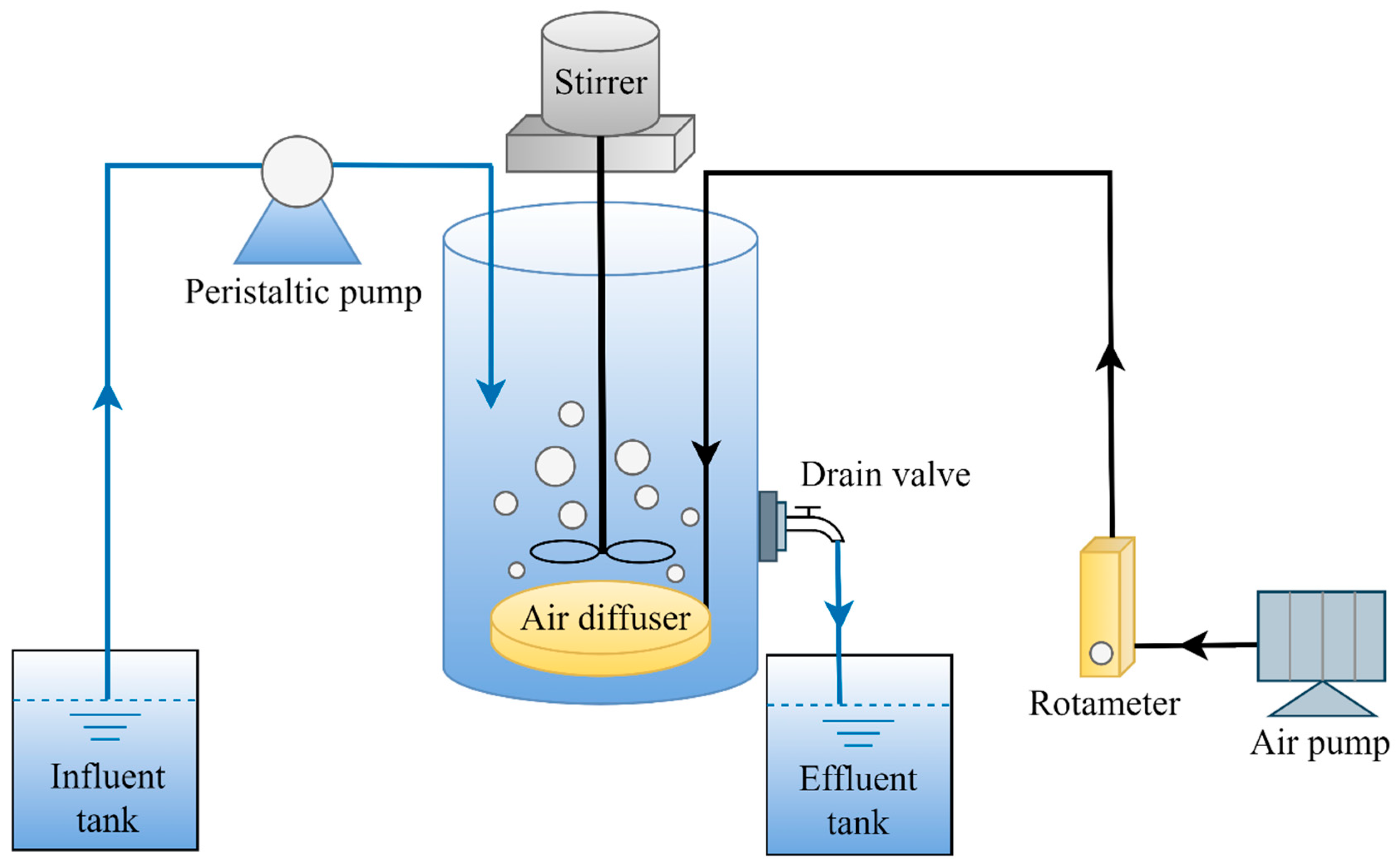
In this study, an SBR made of plexiglass with an effective volume of 10 L was used, as shown in Figure 1. The experiments were operated at room temperature (18–23 °C). The reactor was run in two cycles per day, with each cycle including 10 min of influent feeding, 420 min of aeration, 260 min of settling, 10 min of effluent withdrawal, and 20 min of idle time. To maintain stable operational performance, excess sludge was removed once a day by withdrawing 100 mL of mixed liquor from the reactor during the aeration stage of the first operational cycle. The sludge age was approximately 27 days. The F/M ratio during the experimental period remained within the range of 0.12–0.19 kg COD/(kgMLSS·d).

2.2. Synthetic Wastewater and Experimental Process

The experiment lasted for 240 days. Synthetic wastewater was used as the influent, in which sodium acetate or glucose, NH4Cl, and KH2PO4 served as the sources of chemical oxygen demand (COD), total nitrogen, and total phosphorus, respectively. The influent also contained NaHCO3 (500 mg/L), MgSO4 (25 mg/L), and CaCl2 (30 mg/L). NaHCO3 was included to maintain the pH within the range of 6.0–8.5. MgSO4, CaCl2 and KH2PO4 supplied the essential nutrients (Mg2+, Ca2+, PO43− and K+) required for the metabolism and growth of bacteria. In addition, a trace element stock solution was added at 1 mL/L, and its composition is listed in Table 1. To induce sludge bulking, from day 1 to day 54, synthetic wastewater with an unbalanced ratio of carbon, nitrogen and phosphorus was adopted, with COD at 500 mg/L, total nitrogen at 50 mg/L and total phosphorus at 5 mg/L. The classical C:N:P ratio required for normal microbial growth in aerobic biological treatment is 100:5:1. The C:N:P ratio of 100:10:1 was selected in this study to induce sludge bulking, based on previous research indicating that an imbalance in the C:N:P ratio is a key factor triggering sludge bulking [33]. To control sludge bulking, between days 55 and 233, the influent total nitrogen concentration was reduced to 25 mg/L, and the carbon–nitrogen–phosphorus ratio (C:N:P) was adjusted to 100:5:1, as required for aerobic activated sludge [34]. However, the sludge bulking condition did not improve. On day 69, after the experimental operation was stopped, the entire sludge slurry inside the reactor was removed using a siphon and transferred into a sealed plastic bag. The sample was then placed in a −40 °C freezer and frozen for 7 days. After freezing, the samples were placed on the laboratory bench and allowed to thaw naturally at room temperature (21 °C) and standard atmospheric pressure for 10 h. Subsequently, the thawed mixture was poured back into the reactor to initiate the subsequent experiments. After freeze–thaw, the settling performance of the sludge improved rapidly, and the sludge volume index (SVI) dropped to 72 mL/g. But this state only lasted for a short 6 days. Starting from day 106, sludge bulking reoccurred and became more severe, with the SVI increasing to 176 mL/g. This bulking persisted for 69 days. To control sludge bulking, the carbon source was switched from sodium acetate to glucose on day 175, with the COD concentration remaining unchanged. Subsequently, the sludge settleability gradually began to improve. On day 195, the sludge settling performance returned to normal and remained stable for the subsequent 38 days of operation.

2.3. Sample Collection

To investigate the microbial community dynamics during the sludge bulking and control process, a total of six sludge samples were collected. The specific sampling information is summarized in Table 2. For each labeled sludge sample, three independent subsamples were randomly collected from different spatial locations within the reactor. These subsamples were subsequently combined into a single composite sample for further analysis. The seed sludge F1 was obtained from a well-operated oxidation ditch process municipal WWTP in Altay City, Xinjiang. The mixed liquor suspended solid (MLSS) concentration was 4236 mg/L, with an SVI of 99 mL/g, indicating excellent settleability. Samples F2, F3 and F4 were bulking sludge samples, while F5 and F6 were sludge samples with good settleability.

2.4. Water Quality Analysis Methods

COD was measured using the rapid digestion spectrophotometric method with a Hach DRB200 digester (Loveland, CO, USA). Ammonium nitrogen (NH4+-N) was analyzed using the Nessler reagent spectrophotometric method with a Hach DR6000 spectrophotometer (Loveland, CO, USA). The water temperature was measured using a mercury thermometer. DO was measured with a portable DO analyser (Sima AR8406, Guangdong, China). MLSS were measured using the gravimetric method. SVI was calculated as the ratio of the sludge volume, after allowing 1 L of mixture to settle for 30 min in a measuring cylinder, to the MLSS.

2.5. EPS Extraction Methods and Component Analysis Methods

EPSs are classified into three fractions, soluble EPS (S-EPS), loosely bound EPS (LB-EPS), and tightly bound EPS (TB-EPS) [35]. A mixed liquor sample of activated sludge was centrifuged at 5500 rpm for 10 min at 4 °C, and the supernatant was collected as S-EPS. The residual sludge in the centrifuge tube was resuspended in deionized water and centrifuged at 5500 rpm for 20 min at 4 °C, and the supernatant was collected as LB-EPS. The residual sludge pellet was re-suspended in an equal volume (1:1, v/v) of deionized water and 2% EDTA solution and incubated at room temperature for 3 h. Subsequently, the mixture was centrifuged at 12,300 rpm for 20 min at 4 °C to collect TB-EPS. All extracted EPS fractions were filtered through 0.22 μm membranes and stored at 4 °C until analysis.
The contents of polysaccharides and proteins in the EPS were quantified. The polysaccharides content was measured by the anthrone-sulfuric acid method using glucose as the standard [36]. The contents of proteins were measured by the Lowry method using bovine serum albumin as the standard [37]. Both polysaccharides and proteins concentrations were expressed as milligrams per gram of MLSS (mg/g MLSS).

2.6. DNA Extraction, PCR Amplification, and Illumina Sequencing

Microbial DNA was extracted from sludge samples using the E.Z.N.A. Soil DNA Kit (Omega Bio-tek, Norcross, GA, USA). The final DNA concentration and purification were determined by NanoDrop 2000 spectrophotometer (Thermo Scientific, Waltham, MA, USA), and the quality was verified by 1% agarose gel electrophoresis.
The V4–V5 hypervariable regions of the bacteria 16S rRNA gene was amplified for all samples with primers 515F (5′-GTGCCAGCMGCCGCGG-3′) and 907R (5′-CCGTCAATTCMTTTRAGTTT-3′) [38]. In addition, the fungal 18S rRNA gene was amplified for samples F1, F2, and F5 with primers SSU0817F (5′-TTAGCATGGAATAATRRAATAGGA-3′) and 1196R (5′-TCTGGACCTGGTGAGTTTCC-3′) [39]. The PCR reactions were conducted under the following program: 3 min of denaturation at 95 °C, 27 cycles of 30 s at 95 °C, 30 s for annealing at 55 °C, and 45 s for extension at 72 °C, and a final extension at 72 °C for 10 min. The PCR products were extracted from 2% agarose gels and further purified using the AxyPrep DNA Gel Extraction Kit (Axygen, Union City, CA, USA). Then, the products were quantified using a QuantiFluor (Promega, Madison, WI, USA).
The raw sequences obtained from the Illumina platform were subjected to quality filtering to generate high-quality reads. Operational taxonomic units (OTUs) were clustered at a 97% sequence similarity, and representative sequences from each OTU were compared against the SILVA database for taxonomic annotation. The raw sequencing data were deposited into the NCBI Sequence Read Archive (SRA) database under the accession number SRP127293.

2.7. Data Analysis

Figures and charts were generated using OriginPro 2024. The Chao, Shannon, and Coverage indices were calculated with the Mothur program (v.1.30.1). Relative abundance was calculated as the number of reads assigned to a given taxon divided by the total number of valid reads per sample. Correlation analyses were performed in R software (v.4.2.1).

3. Results and Discussion

3.1. Performance of the Reactor

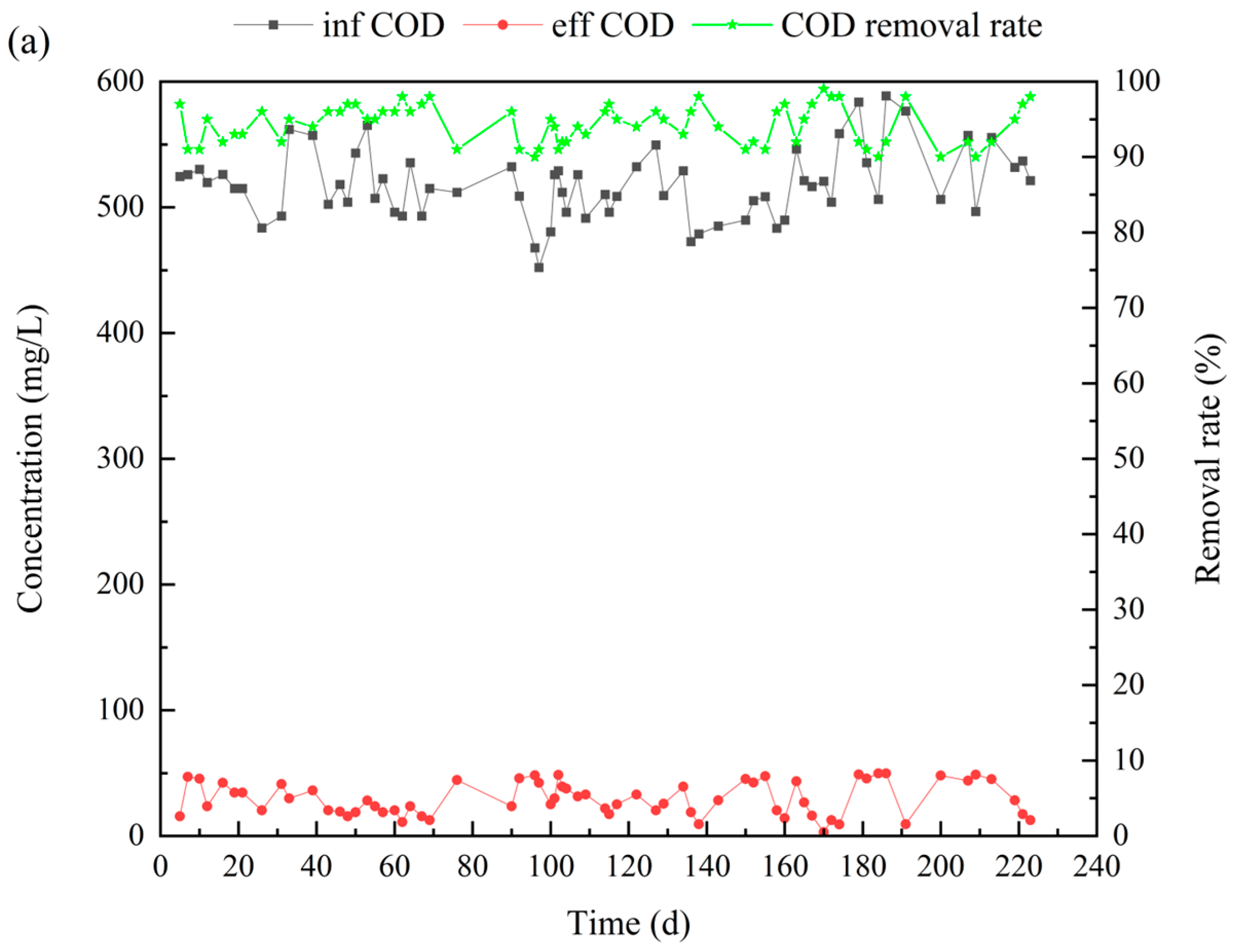
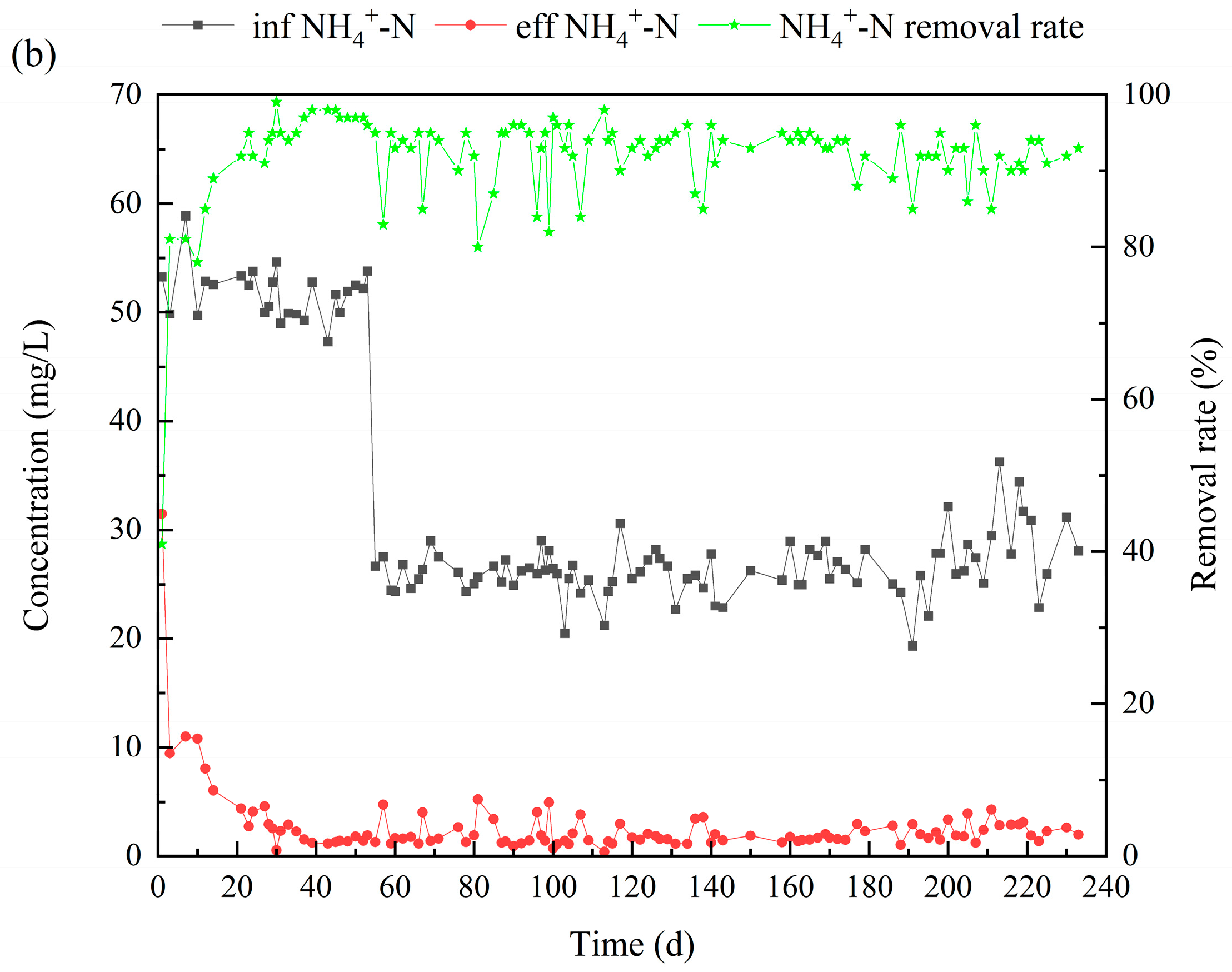
To ensure the engineering applicability of the sludge bulking control strategy, this study continuously monitored the effluent COD and NH4+-N concentrations during reactor operation. As nationally controlled indicators for water pollution control in China, compliance with discharge standards for these parameters is a fundamental prerequisite for evaluating the effectiveness of the bulking control approach. The effluent COD and NH4+-N concentrations of the reactor consistently met the Class I-A discharge standard specified in the Chinese National Standard Discharge Standard of Pollutants for Municipal Wastewater Treatment Plants (GB 18918-2002) [40]. The COD effluent concentration should not exceed 50 mg/L, and the NH4+-N effluent concentration should not exceed 5 mg/L.
The influent COD fluctuated between 452.1 and 588.7 mg/L, slightly deviating from the designed value of 500 mg/L (Figure 2a). The effluent COD concentration ranged from 3.1 to 49.7 mg/L, corresponding to an average removal efficiency of 94.0%. In addition to COD removal, NH4+-N was also investigated to further assess the performance of the reactor. From days 1 to 54, the influent NH4+-N concentration was maintained at 47.3–58.9 mg/L, and the average effluent concentration was 4.8 mg/L, achieving an average removal efficiency of 90.9% (Figure 2b). During days 55–233, the influent C:N:P was adjusted, with influent NH4+-N concentrations varying between 20.5 and 30.6 mg/L. The effluent NH4+-N concentration was maintained between 0.4 and 4.8 mg/L, indicating a stable nitrogen removal rate of 92.2%. These results confirm that the system consistently maintained excellent pollutant removal performance.

3.2. Microscopic Examination of Sludge

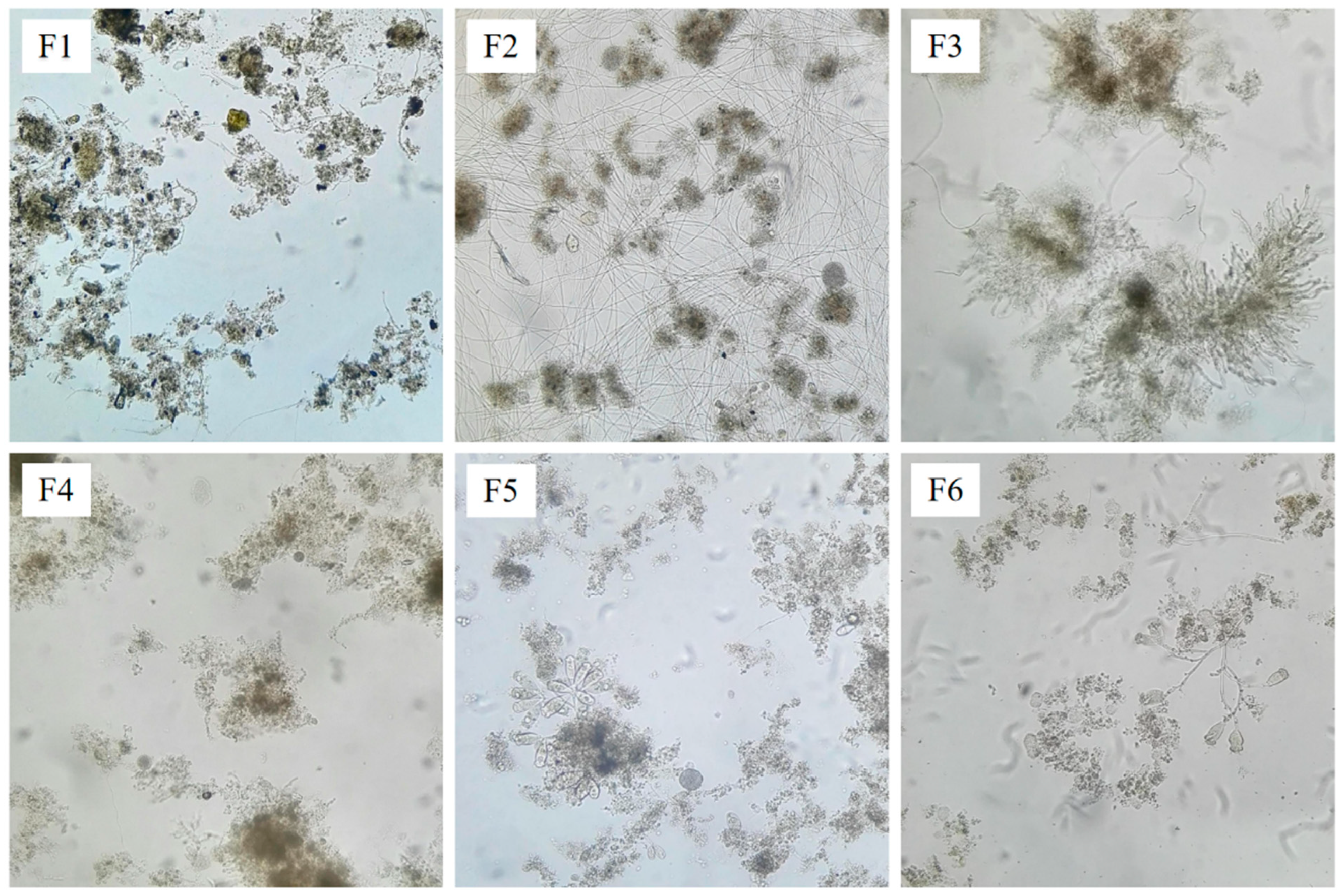
In this study, optical microscopy was employed to examine the morphological characteristics of the activated sludge. This classical and direct technique allows clear characterization of floc structure as well as the abundance and morphology of filamentous bacteria. These observations provide essential morphological evidence for the rapid diagnosis of the type and severity of sludge bulking. The structural characteristics of sludge flocs were observed under an optical microscope, as presented in Figure 3. In seed sludge F1, the flocs appeared relatively large and compact with well-defined edges. Filamentous bacteria were present in moderate abundance and distribution, providing structural support. The sludge sample F2 exhibited a substantial proliferation of filamentous bacteria, with an SVI of 228 mL/g. This proliferation disrupted the compact structure of the flocs, resulting in a severe filamentous bulking.
After 7 days of freeze–thaw treatment, the sludge sample F3 exhibited numerous dense and dark microbial aggregates. These aggregates exhibited irregular finger-like extensions at the floc edges, a structural feature similar to those reported for Zoogloea-dominated flocs [41]. In sludge sample F4, the flocs appeared looser and more irregular in size compared with sludge sample F3. The abundance of filamentous bacteria surrounding the flocs was markedly reduced in both F3 and F4, while the SVI remained relatively high at 260 mL/g, indicating that filamentous bulking had shifted to non-filamentous bulking.
In sludge samples F5 and F6 where glucose was supplied as the carbon source, the flocs were compact with clearly defined edges and protozoa such as Vorticella and rotifers were observed. These protozoa are widely recognized as indicator organisms of good treatment performance, mature sludge systems, and stable microbial communities [42,43]. In contrast, protozoa were not detected when sodium acetate served as the carbon source. This phenomenon may be associated with bacterial growth patterns, which are regulated by the molecular characteristics of different carbon sources. The metabolism of glucose promotes dispersed bacterial growth and the production of numerous free cells, which provide abundant food resources for protozoan growth and reproduction [44]. In comparison, sodium acetate, a simple and readily utilized small-molecule organic acid [45], facilitates the rapid formation of dense microbial flocs, which suppresses the release of free bacteria. The lack of food resources consequently prevents protozoa from establishing effective populations in the acetate-fed system. During the experimental period, the DO was maintained within the range of 2.4–5.7 mg/L, and the pH was effectively maintained between 6.0 and 8.5 through the addition of NaHCO3. Since both DO and pH were excluded as potential factors affecting protozoa, the observed recurrence can be primarily attributed to the change in carbon source. Although protozoa are not the major contributors to pollutant removal, their occurrence is generally considered indicative of improved effluent quality.

3.3. Structure of the Bacterial and Fungal Community

This study employed high-throughput sequencing, a technique widely used in environmental microbiology, to elucidate the mechanisms of sludge bulking by characterizing the microbial community structure of activated sludge. High-throughput sequencing analyses were performed across different bulking and recovery stages.

3.3.1. Bacterial Community Diversity

The bacterial diversity indices from 16S rDNA for all samples were presented in Table 3. The coverage index of all six samples was greater than 0.990, demonstrating that the vast majority of bacteria in the sludge were detected. The Chao, Shannon, and Heip indices represent microbial community richness, diversity, and evenness, respectively [46]. As shown by these indices, the seed sludge F1 exhibited the highest bacterial richness, diversity, and evenness, whereas the non-filamentous bulking sludge F3 had the lowest values for these indices. After sludge bulking occurred, the Chao, Shannon, and Heip indices of the sludge all exhibited a decline. When the sludge settling performance returned to normal, the microbial diversity increased again.

3.3.2. Bacterial Community Composition at the Phylum Level

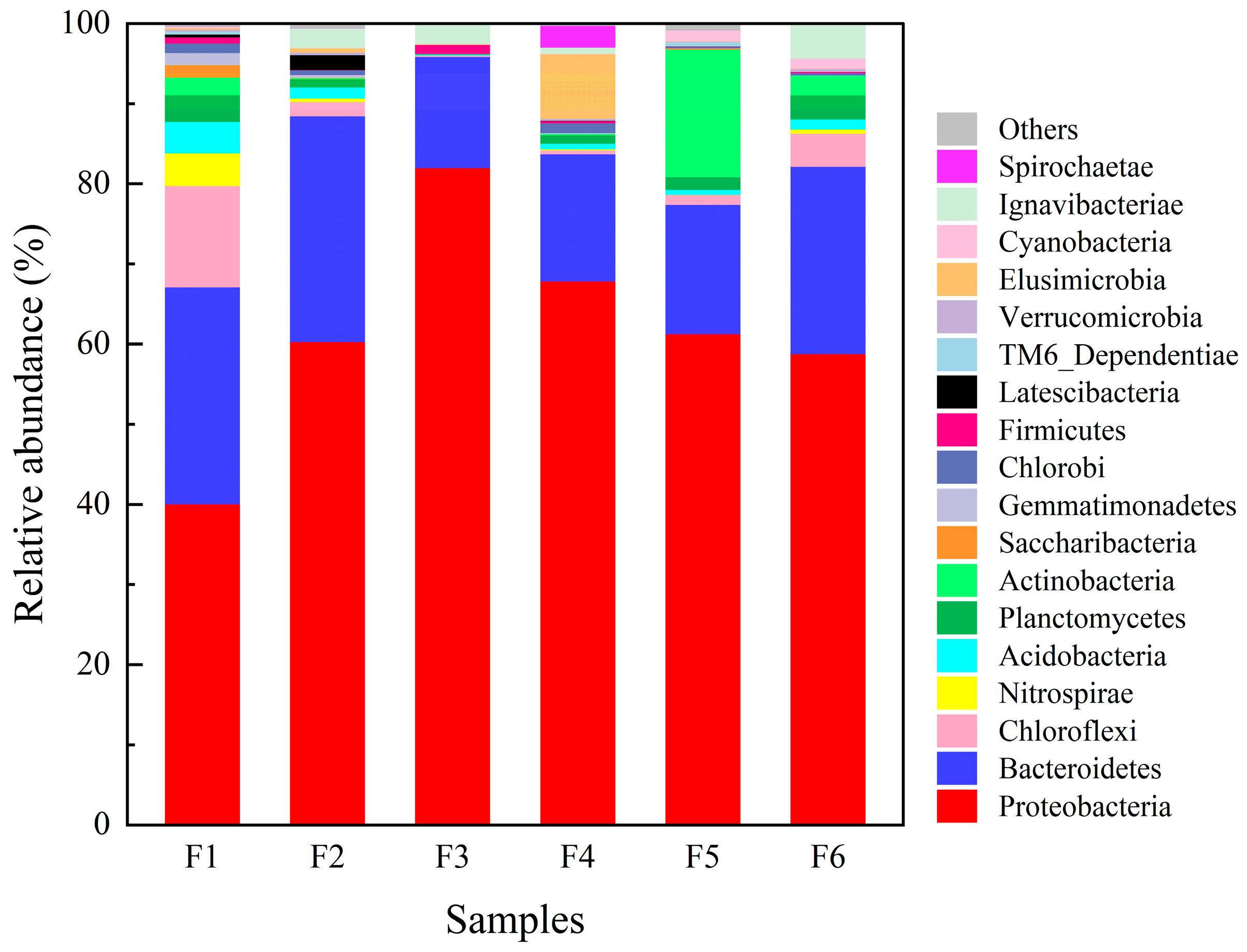
Twenty-eight bacterial phyla were identified in all sludge samples, among which the top ten phyla were presented in Figure 4. In all sludge samples, Proteobacteria and Bacteroidetes were the most abundant phyla, which was consistent with earlier studies [47,48]. The relative abundance of Proteobacteria ranged from 39.94% to 81.91%. Proteobacteria are widely recognized as the dominant phylum responsible for nitrogen and phosphorus removal as well as organic matter degradation, and Proteobacteria are essential for the stable operation of activated sludge systems in WWTPs [49]. The relative abundance of Bacteroidetes ranged from 13.92% to 28.19%, and this phylum plays a vital role in nutrient metabolism and the degradation of complex compounds [50].
Chloroflexi existed within the floc structure of activated sludge and promoted flocculation of the sludge [51]. The relative abundance of Chloroflexi was 12.60% in seed sludge sample F1. It markedly declined to 1.77% in the filamentous bulking sample F2 and further decreased to only 0.12% and 0.49% in the non-filamentous bulking samples F3 and F4, respectively. When the sludge settling performance recovered in samples F5 and F6, the relative abundance of Chloroflexi increased to 1.21% and 4.15%, respectively, indicating that Chloroflexi plays an important role in maintaining good sludge settleability.

3.3.3. Bacterial Community Composition at the Genus Level

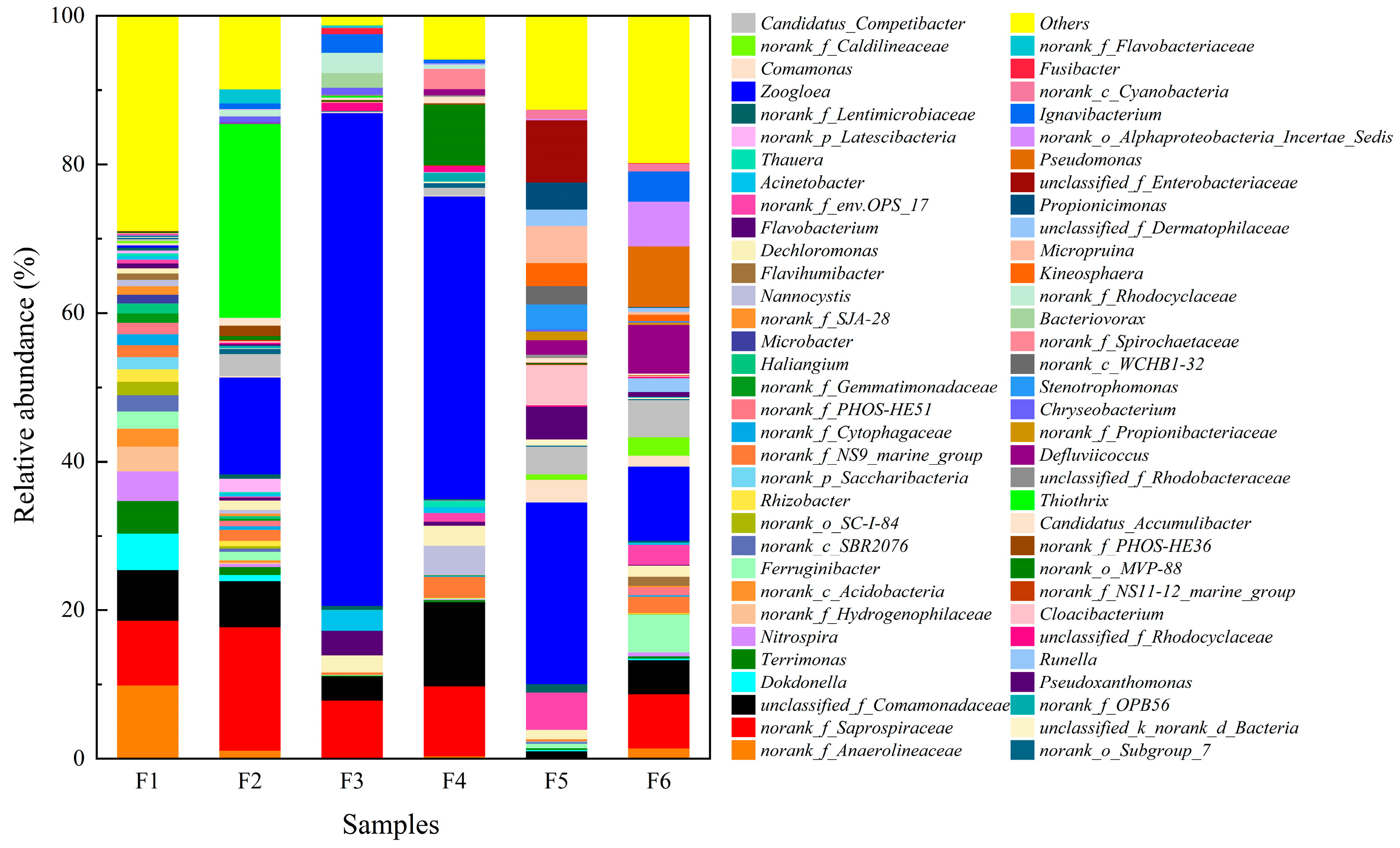
A total of 355 bacterial genera were observed in all sludge samples, of which the top 20 genera are shown in Figure 5. In seed sludge F1, the relative abundance of Thiothrix was only 0.04%, but it increased sharply to 26.00% in filamentous bulking sludge F2. When sodium acetate was used as the carbon source, Thiothrix proliferation was associated with filamentous sludge bulking. This observation agreed well with the results reported by Gao et al. [52], who operated an SBR under laboratory conditions and found that Thiothrix was the dominant genus responsible for sludge bulking, with its relative abundance rising significantly from 0.01% to 12.69%. Thiothrix has also been reported in bulking sludge from both municipal and industrial WWTPs [53,54]. After the freeze–thaw treatment, the relative abundance of Thiothrix reduced to 0.18% and 0.01% in the non-filamentous bulking sludge samples F3 and F4, respectively. Thiothrix was not detected in sludge samples F5 and F6, where its relative abundance was 0.00%, suggesting that the freeze–thaw treatment effectively suppressed filamentous bulking caused by Thiothrix.
The relative abundance of Zoogloea during the reactor operation varies significantly. In seed sludge F1, Zoogloea accounted for only 0.28%, but its proportion markedly increased to 12.96% in sludge sample F2, where filamentous sludge bulking occurred. After the freeze–thaw treatment, the relative abundance further increased to 66.26% in sludge sample F3 and 40.64% in sludge sample F4, suggesting that the proliferation of Zoogloea contributed to the occurrence of non-filamentous sludge bulking. When sludge settleability recovered, the relative abundance decreased to 24.39% in sludge sample F5 and further decreased to 10.04% in sludge sample F6 as the system reached stable operation. Zoogloea is an aerobic bacterium that plays a representative role in the formation of activated sludge flocs [55]. It is reported that Zoogloea could proliferate extensively even at temperatures below 5 °C, and its ability to form microbial aggregates provides protection against environmental stress [56]. Moreover, Zoogloea is commonly found in activated sludge from WWTPs, where it plays an important role in floc formation by secreting EPS to promote sludge aggregation [9]. However, excessive proliferation of Zoogloea and the subsequent accumulation of viscous polysaccharides can lead to non-filamentous sludge bulking [54].
Freeze–thaw treatment selectively promotes Zoogloea growth, likely due to its unique physiological resistance and the ecological niche vacated after freeze–thaw treatment. The severe freeze–thaw process imposes strong selective pressure on the microbial community. Zoogloea exhibits higher survival rates due to its ability to secrete abundant capsules and EPS, effectively buffering physical damage from ice crystals and activating stress response mechanisms like cold shock to withstand low-temperature stress [57,58]. In addition, competition is reduced within the weakened community after thawing. Surviving Zoogloea rapidly occupies the dominant ecological niche by leveraging its rapid proliferation and viscous EPS secretion. The excessive EPS ultimately leads to the formation of large, highly hydrated flocs, resulting in viscous non-filamentous sludge bulking.

3.3.4. Fungal Community Composition at the Phylum and Genus Levels

The fungal diversity indices for three samples were presented in Table 4. The coverage index of three samples was 0.999, demonstrating that the vast majority of fungi in the sludge were detected. The Chao, Shannon, and Heip indices were substantially lower than those obtained for bacteria, suggesting that fungal diversity and richness in the sludge were much lower, which is consistent with the findings of Wei et al. [59].
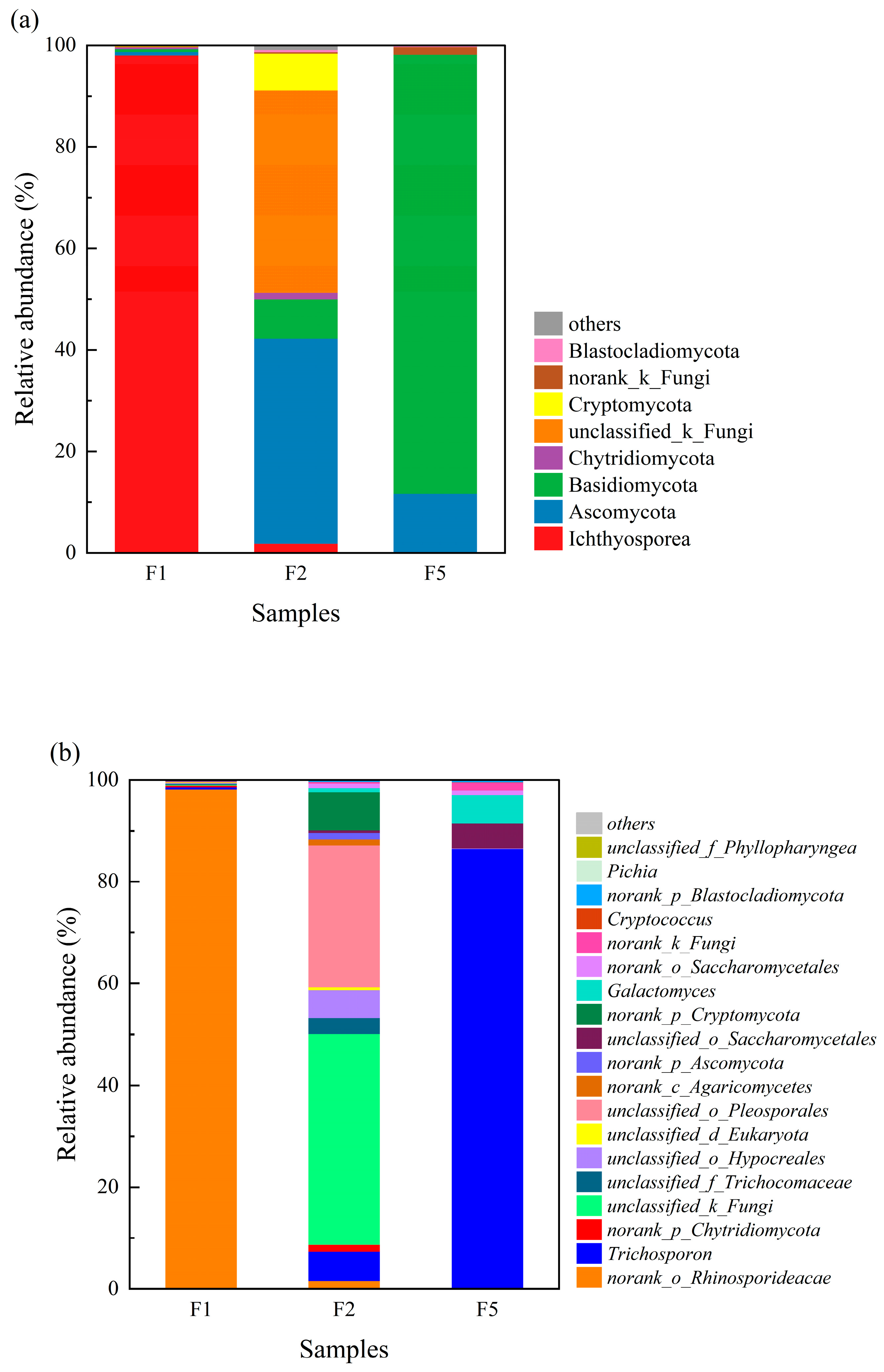
A total of thirteen fungal phyla were observed in samples F1, F2, and F5, and the results are presented in Figure 6a. The predominant phyla in the three sludge samples were Ichthyosporea, Ascomycota, and Basidiomycota. Ichthyosporea, a phylum commonly reported from diverse marine-associated environments [60], was the predominant fungal phylum in seed sludge F1, with a relative abundance of 97.94%. Ascomycota is among the most prevalent and abundant fungal phyla in activated sludge systems, which are considered the major fungal groups from municipal WWTPs [61,62]. The relative abundance of Ascomycota was only 0.66% in seed sludge F1 but increased to 40.44% in filamentous bulking sludge F2 and then declined to 11.63% in well-settling sludge F5. These results suggest that Ascomycota may have contributed to filamentous sludge bulking, consistent with the findings of Feng et al. [63].
A total of 33 fungal genera were detected at the genus level, and their relative abundances are shown in Figure 6b. Only a small portion of the fungal sequences could be taxonomically assigned to known genera in the database, while the majority were classified as norank or unclassified [64,65]. In seed sludge F1, norank_o_Rhinosporideacae was the dominant genus with a relative abundance of 97.94%, while unclassified_o_Pleosporales was the most abundant genus in bulked sludge F2, with a relative abundance of 28.69%.
It is reported that Trichosporon [66] and Penicillium [67] could cause sludge bulking. In well-settling sludge F5, Trichosporon became the dominant genus with a relative abundance of 86.38%, whereas its abundance in filamentous bulking sludge F2 was only 5.54%. This observation contrasts with previous reports suggesting that Trichosporon impairs sludge settleability. The freeze–thaw treatment likely altered the fungal habitat within the sludge, and these changes may have affected the physiological activity of Trichosporon. The contribution of fungal biomass to the microbial community was minimal. Consequently, despite the dominance of Trichosporon within the fungal community, the settling performance of sludge was ultimately governed by the bacterial community.

3.4. Changes in EPS Composition

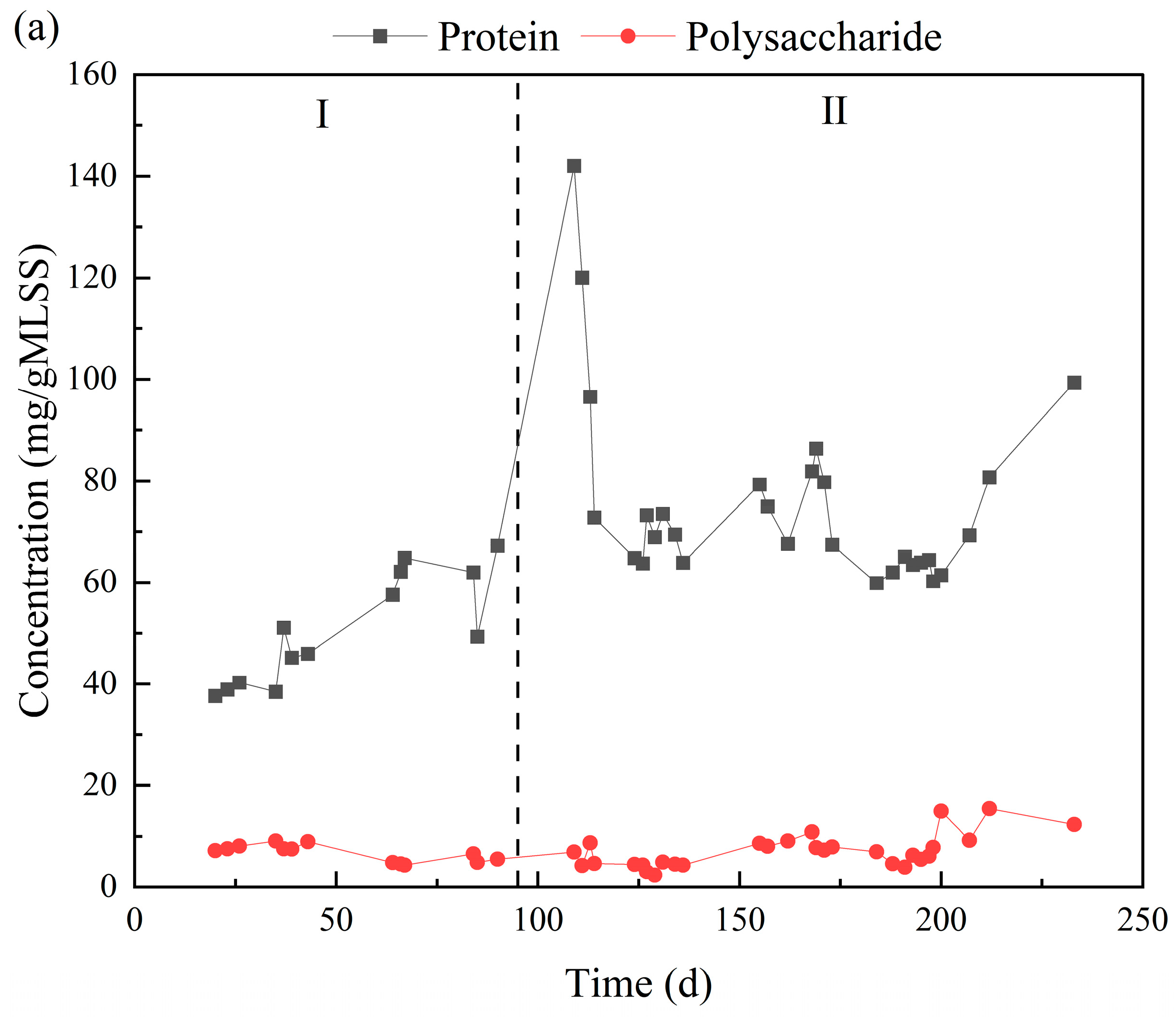
EPSs are widely recognized as key factors influencing sludge settleability and stability [68]. Accordingly, this study systematically analyzed the composition and content of EPS in different sludge samples. The primary objective was to clarify the quantitative relationship between EPS and settleability performance indicators such as the SVI, thereby providing a microscopic explanation for the causes of sludge bulking. Among EPS constituents, proteins and polysaccharides are the predominant components [69]. In this study, proteins concentrations varied between 37.64 and 142.04 mg/g MLSS, while polysaccharides concentrations ranged from 0.63 to 15.46 mg/g MLSS. As shown in Figure 7a, the protein content in EPS was significantly higher than polysaccharides, which is consistent with previous studies [70,71]. The changes in the components within EPS can be divided into two stages. Before freeze–thaw treatment (days 1–96, Stage I), the protein concentration remained within 37.64–67.21 mg/g MLSS. After the freeze–thaw process (days 97–233, Stage II), the protein content increased markedly, showing a rapid rise to 142.04 mg/g MLSS at the beginning of the treatment and then stabilizing in the range of 59.84–99.38 mg/g MLSS. In contrast, the variation in polysaccharide content was relatively small. These results indicate that the freeze–thaw process had a more pronounced effect on the protein fraction of EPS. The formation of ice crystals during freezing caused mechanical disruption of microbial cell membranes, resulting in cell lysis and the release of intracellular proteins. During thawing, these soluble proteins were incorporated into the EPS matrix, thereby increasing the overall protein content.
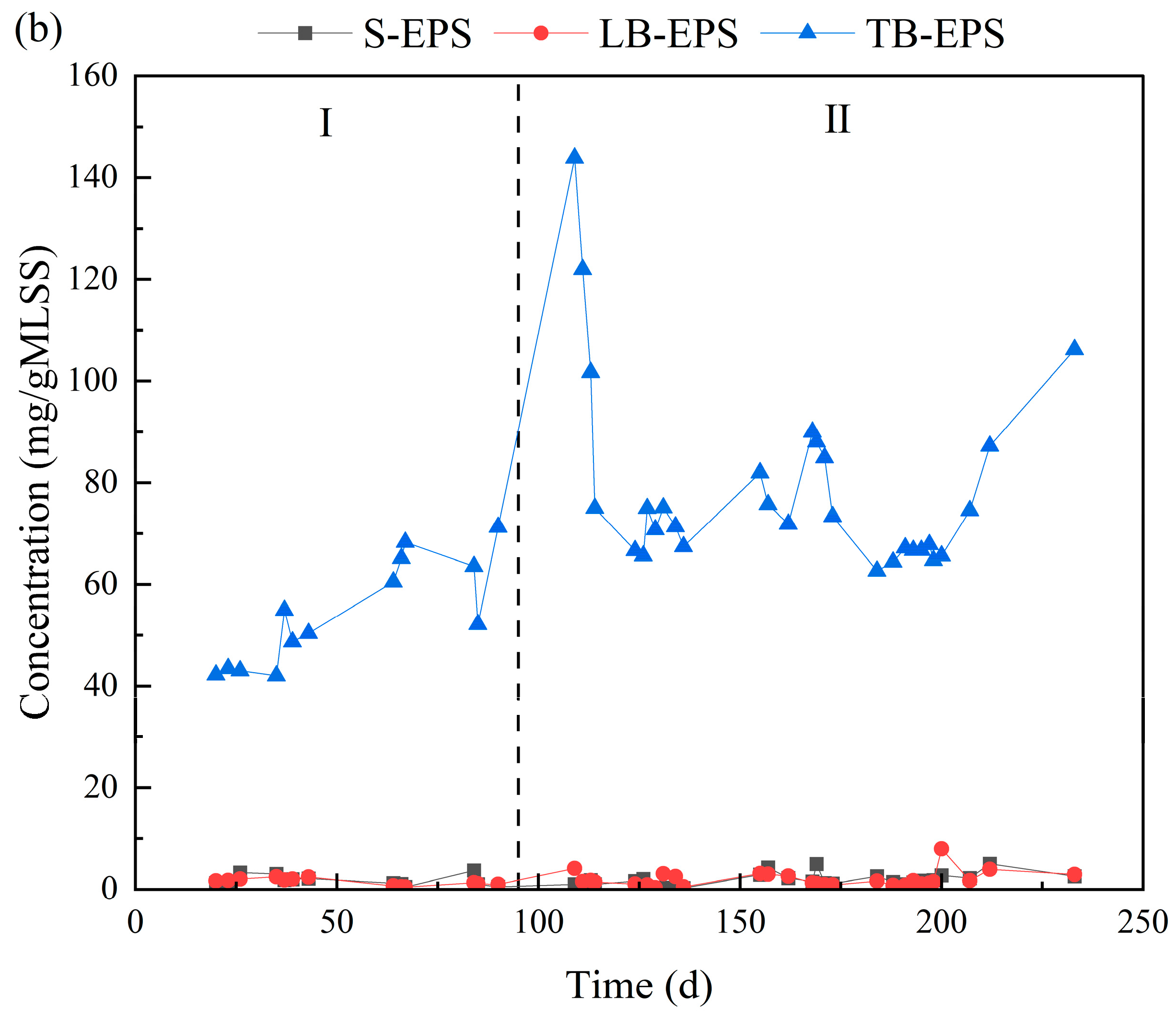
Furthermore, the contents of different EPS fractions were analyzed. The concentrations of S-EPS, LB-EPS, and TB-EPS ranged from 0–5.04, 0.30–7.98, and 42.03–143.83 mg/g MLSS, respectively. As illustrated in Figure 7b, TB-EPS accounted for the largest proportion of EPS, followed by LB-EPS, while S-EPS was the least abundant. This finding agrees with the conclusion of Basuvaraj et al. [72], who reported that TB-EPS is typically the dominant fraction in activated sludge. Before the freeze–thaw treatment (Stage I), TB-EPS was the predominant component, with concentrations ranging from 42.03 to 71.24 mg/g MLSS. After freeze–thaw (Stage II), TB-EPS exhibited a similar trend to that of proteins, showing a rapid increase to 143.83 mg/g MLSS at the initial stage and then remaining within 62.60–106.18 mg/g MLSS. The freeze–thaw process likely caused cell rupture, releasing intracellular macromolecules such as proteins and polysaccharides. During the thawing phase, these substances may have been re-adsorbed within the sludge floc matrix, forming a new tightly bound layer, which led to an increase in the TB-EPS content.
Correlation analysis demonstrated a significant positive association between total EPS content and SVI (r = 0.51, p = 0.002). The higher the content of EPS, the worse the settling performance of sludge. A similar trend was reported in earlier studies [73,74], where it was suggested that excessive EPS accumulation might disrupt the sludge floc structure and consequently deteriorate sludge settleability. Liu et al. [75] investigated EPS in four different types of sludge and demonstrated that excessive proteins may lead to overexposure of hydrophobic clusters, increasing floc surface roughness and bound water content, thereby elevating SVI.

4. Conclusions

This study employed an SBR to investigate the effects of freeze–thaw treatment on sludge bulking control and microbial community dynamics. 16S rDNA high-throughput sequencing revealed that the use of sodium acetate as the carbon source under an imbalanced C:N:P led to excessive proliferation of Thiothrix. Its relative abundance increased from 0.04% to 26.00%, thereby inducing filamentous sludge bulking. The bacterial community structure shifted markedly after freeze–thaw treatment, with Thiothrix abundance declining from 26.00% to 0.18% and sludge settleability temporarily restored. However, the relative abundance of Zoogloea increased from 12.96% to 66.26%, causing non-filamentous sludge bulking. When the carbon source was switched to glucose, the abundance of Zoogloea decreased to 10.03% and sludge settleability was recovered. The results indicated that freeze–thaw treatment effectively suppressed filamentous bulking, but it concurrently promoted the enrichment of Zoogloea, which resulted in non-filamentous bulking. The protein content in EPS was markedly higher than that of polysaccharides, and the TB-EPS fraction represented the dominant component. Correlation analysis demonstrated a significant positive relationship between total EPS and SVI (r = 0.51, p = 0.002), suggesting that excessive EPS accumulation may deteriorate sludge settleability. In conclusion, although freeze–thaw treatment can temporarily alleviate sludge bulking, its control effectiveness is not sustainable under long-term operation. This study provides important insights for developing stable and effective bulking control strategies in activated sludge systems.
However, limitations also exist in our study. For example, the research employed a time-series design in which samples were collected at six key nodes corresponding to the critical shifts in sludge settling performance. This sampling strategy may have resulted in the loss of some continuous information during transitional periods. In addition, the findings were obtained from a specific sludge source under defined experimental conditions, and thus the generalizability of the conclusions remains to be validated. Future studies could increase the sampling frequency at critical stages and incorporate sludge samples from diverse sources, which would allow a more comprehensive characterization of microbial community succession and facilitate verification of the universality of the observed patterns.

Author Contributions

Conceptualization, formal analysis, writing—original draft, H.L.; writing—review and editing, H.Y.; writing—review and editing, conceptualization, resources, and funding acquisition, J.Y.; formal analysis, S.X. All authors have read and agreed to the published version of the manuscript.

Funding

This work was supported by the National Natural Science Foundation of China (No. 52160005).

Data Availability Statement

The original contributions presented in this study are included in the article. Further inquiries can be directed to the corresponding author.

Conflicts of Interest

The authors declare no conflicts of interest.

References

  1. Lv, T.; Wang, D.; Zheng, X.; Hui, J.; Cheng, W.; Zhang, Y. Study on specific strategies of controlling or preventing sludge bulking in S2EBPR process. J. Environ. Chem. Eng. 2023, 11, 110363. [Google Scholar] [CrossRef]
  2. Gao, C.; Tian, Z.; Yang, F.; Sun, D.; Liu, W.; Peng, Y. Absence of nitrogen and phosphorus in activated sludge: Impacts on flocculation characteristics and the microbial community. J. Water Process Eng. 2023, 54, 103984. [Google Scholar] [CrossRef]
  3. Cisterna-Osorio, P.; Calabran-Caceres, C.; Tiznado-Bustamante, G.; Bastias-Toro, N. Influent with particulate substrate, clean, innocuous and sustainable solution for bulking control and mitigation in activated sludge process. Water 2021, 13, 984. [Google Scholar] [CrossRef]
  4. Bakos, V.; Gyarmati, B.; Csizmadia, P.; Till, S.; Vachoud, L.; Nagy Göde, P.; Tardy, G.M.; Szilágyi, A.; Jobbágy, A.; Wisniewski, C. Viscous and filamentous bulking in activated sludge: Rheological and hydrodynamic modelling based on experimental data. Water Res. 2022, 214, 118155. [Google Scholar] [CrossRef]
  5. Seguel Suazo, K.; Dobbeleers, T.; Dries, J. Bacterial community and filamentous population of industrial wastewater treatment plants in Belgium. Appl. Microbiol. Biotechnol. 2024, 108, 43. [Google Scholar] [CrossRef]
  6. Fei, X.; Yue, Y.; Jiao, X.; Chi, Y.; Ding, Z.; Bai, Y. Effect of temperature on the relationship between quorum-sensing and sludge bulking. J. Water Process Eng. 2024, 58, 104883. [Google Scholar] [CrossRef]
  7. Yin, M.; Wu, Y.; Li, D.; Zhang, Y.; Bian, X.; Li, J.; Pei, Y.; Cui, Y.; Li, J. Non-filamentous bulking of activated sludge induced by graphene oxide: Insights from extracellular polymeric substances. Bioresour. Technol. 2024, 399, 130574. [Google Scholar] [CrossRef]
  8. Sam, T.; Le Roes-Hill, M.; Hoosain, N.; Welz, P.J. Strategies for controlling filamentous bulking in activated sludge wastewater treatment plants: The old and the new. Water 2022, 14, 3223. [Google Scholar] [CrossRef]
  9. Wang, S.; Wang, G.; Yan, P.; Chen, Y.; Fang, F.; Guo, J. Non-filamentous sludge bulking induced by exopolysaccharide variation in structure and properties during aerobic granulation. Sci. Total Environ. 2023, 876, 162786. [Google Scholar] [CrossRef] [PubMed]
  10. Lu, X.; Chen, C.; Fu, L.; Cui, B.; Zhou, D. Social network of filamentous Sphaerotilus during activated sludge bulking: Identifying the roles of signaling molecules and verifying a novel control strategy. Chem. Eng. J. 2023, 454, 140109. [Google Scholar] [CrossRef]
  11. Rossetti, S.; Tomei, M.C.; Nielsen, P.H.; Tandoi, V. “Microthrix parvicella”, a filamentous bacterium causing bulking and foaming in activated sludge systems: A review of current knowledge. FEMS Microbiol. Rev. 2005, 29, 49–64. [Google Scholar] [CrossRef] [PubMed]
  12. Chen, G.; Fan, J.; Liu, R.; Zeng, G.; Chen, A.; Zou, Z. Removal of Cd(II), Cu(II) and Zn(II) from aqueous solutions by live Phanerochaete chrysosporium. Environ. Technol. 2012, 33, 2653–2659. [Google Scholar] [CrossRef] [PubMed]
  13. Khoshniyat, R.; Asgari, G.; Ghahramani, E.; Daigger, G.T. Mechanisms of magneto-coagulation of the sludge in activated sludge bulking processes. Microb. Cell Fact. 2025, 24, 197. [Google Scholar] [CrossRef]
  14. Liang, Y.; Wang, R.; Sun, W.; Sun, Y. Advances in chemical conditioning of residual activated sludge in China. Water 2023, 15, 345. [Google Scholar] [CrossRef]
  15. Yao, J.; Liu, J.; Zhang, Y.; Xu, S.; Hong, Y.; Chen, Y. Adding an anaerobic step can rapidly inhibit sludge bulking in SBR reactor. Sci. Rep. 2019, 9, 10843. [Google Scholar] [CrossRef]
  16. Hui, K.; Song, L.; Yin, Z.; Song, H.; Wang, Z.; Gao, W.; Xuan, L. Freeze–thaw combined with activated carbon improves electrochemical dewaterability of sludge: Analysis of sludge floc structure and dewatering mechanism. Environ. Sci. Pollut. Res. 2022, 29, 20333–20346. [Google Scholar] [CrossRef]
  17. Sun, F.; Xiao, K.; Zhu, W.; Withanage, N.; Zhou, Y. Enhanced sludge solubilization and dewaterability by synergistic effects of nitrite and freezing. Water Res. 2018, 130, 208–214. [Google Scholar] [CrossRef]
  18. Xu, Y.; Wu, Y.; Zhang, X.; Chen, G. Effects of freeze-thaw and chemical preconditioning on the consolidation properties and microstructure of landfill sludge. Water Res. 2021, 200, 117249. [Google Scholar] [CrossRef]
  19. Zhang, M.; Yang, Y.; Su, X.; Sun, F.; Liu, J.; Chen, Y.; Lu, D.; Dong, F.; Xiao, X.; Zhou, Y. Freezing-activated oxidation with nitrite and H2O2 for efficient waste activated sludge solubilization and filterability. Water Res. 2025, 286, 124196. [Google Scholar] [CrossRef]
  20. Zhang, X.; Ye, P.; Fujii, M.; Kondo, G. The application of freeze-thaw cycle treatment on landfill sludge: Impact on physicochemical properties and physical-mechanical characteristics. J. Clean. Prod. 2024, 468, 143106. [Google Scholar] [CrossRef]
  21. Hasan, H.A.; Rahim, N.F.; Alias, J.; Ahmad, J.; Said, N.S.; Ramli, N.N.; Buhari, J.; Abdullah, S.R.; Othman, A.R.; Jusoh, H.H.; et al. A review on the roles of extracellular polymeric substances (EPSs) in wastewater treatment: Source, mechanism study, bioproducts, limitations, and future challenges. Water 2024, 16, 2812. [Google Scholar] [CrossRef]
  22. Yin, L.; Guo, Y.; Wang, Z.; Shan, Y.; Duan, P.; Wang, C. Steam explosion coupled with freeze-thaw cycles: An efficient and environmentally friendly method for deep dewatering of sewage sludge. J. Water Process Eng. 2023, 51, 103462. [Google Scholar] [CrossRef]
  23. Wu, Y.; Gao, M.; Zhang, X.; Zhang, Y.; Ji, J. Effect of initial water content on the dewatering performance of freeze-thaw preconditioned landfill sludge. Environ. Res. 2023, 239, 117356. [Google Scholar] [CrossRef]
  24. Wu, Y.; Li, R.; Zhang, X.; Gao, M.; Vuong, V.Q.; Quang, C.N.X. Improving sludge dewaterability through freeze-thaw pretreatment: Ice crystal morphology controls consolidation and rheological enhancement. Environ. Res. 2025, 286, 122758. [Google Scholar] [CrossRef]
  25. Peng, S.; Hu, A.; Ai, J.; Zhang, W.; Wang, D. Changes in molecular structure of extracellular polymeric substances (EPS) with temperature in relation to sludge macro-physical properties. Water Res. 2021, 201, 117316. [Google Scholar] [CrossRef] [PubMed]
  26. Li, S.; Zhou, M.; Guan, S.; Ma, L.; Zhu, S.; Wang, Y.; Chen, Y.; Sui, Y.; Jiao, X. Soil nitrogen-hydrolyzing enzyme activities respond differently to the freeze-thaw temperature and number of cycles. Sci. Rep. 2025, 15, 19026. [Google Scholar] [CrossRef] [PubMed]
  27. Chu, C.P.; Feng, W.C.; Chang, B.-V.; Chou, C.H.; Lee, D.J. Reduction of microbial density level in wastewater activated sludge via freezing and thawing. Water Res. 1999, 33, 3532–3535. [Google Scholar] [CrossRef]
  28. Yin, S.; Wang, C.; Abalos, D.; Guo, Y.; Pang, X.; Tan, C.; Zhou, Z. Seasonal response of soil microbial community structure and life history strategies to winter snow cover change in a temperate forest. Sci. Total Environ. 2024, 949, 175066. [Google Scholar] [CrossRef]
  29. Phalakornkule, C.; Nuchdang, S.; Khemkhao, M.; Mhuantong, W.; Wongwilaiwalin, S.; Tangphatsornruang, S.; Champreda, V.; Kitsuwan, J.; Vatanyoopaisarn, S. Effect of freeze–thaw process on physical properties, microbial activities and population structures of anaerobic sludge. J. Biosci. Bioeng. 2017, 123, 474–481. [Google Scholar] [CrossRef]
  30. Li, Y.; Su, F.; Li, M.; Wang, Y.; Qian, J. Effects of freeze-thaw intensities on N2O release from subsurface wastewater infiltration system. J. Environ. Chem. Eng. 2023, 11, 110134. [Google Scholar] [CrossRef]
  31. Wang, X.; Zheng, M.; Zhang, W.; Zhang, S.; Yang, T. Experimental study of a solar-assisted ground-coupled heat pump system with solar seasonal thermal storage in severe cold areas. Energy Build. 2010, 42, 2104–2110. [Google Scholar] [CrossRef]
  32. Liang, Z.; Yao, J.; Ma, H.; Peng, W.; Xia, X.; Chen, Y. A sludge bulking wastewater treatment plant with an oxidation ditch-denitrification filter in a cold region: Bacterial community composition and antibiotic resistance genes. Environ. Sci. Pollut. Res. 2023, 30, 33767–33779. [Google Scholar] [CrossRef]
  33. Guo, J.; Peng, Y.; Wang, S.; Yang, X.; Yuan, Z. Filamentous and non-filamentous bulking of activated sludge encountered under nutrients limitation or deficiency conditions. Chem. Eng. J. 2014, 255, 453–461. [Google Scholar] [CrossRef]
  34. Yang, F.; Wang, S.; Li, H.; Wang, G.; Wang, Y.; Yang, J.; Chen, Y.; Yan, P.; Guo, J.; Fang, F. Differences in responses of activated sludge to nutrients-poor wastewater: Function, stability, and microbial community. Chem. Eng. J. 2023, 457, 141247. [Google Scholar] [CrossRef]
  35. Huang, L.; Jin, Y.; Zhou, D.; Liu, L.; Huang, S.; Zhao, Y.; Chen, Y. A review of the role of extracellular polymeric substances (EPS) in wastewater treatment systems. Int. J. Environ. Res. Public Health 2022, 19, 12191. [Google Scholar] [CrossRef]
  36. Garnier, C.; Görner, T.; Lartiges, B.S.; Abdelouhab, S.; de Donato, P. Characterization of activated sludge exopolymers from various origins: A combined size-exclusion chromatography and infrared microscopy study. Water Res. 2005, 39, 3044–3054. [Google Scholar] [CrossRef]
  37. Martínez, O.F. Role of exopolymeric protein on the settleability of nitrifying sludges. Bioresour. Technol. 2004, 94, 43–48. [Google Scholar] [CrossRef]
  38. Wang, B.; Peng, Y.; Guo, Y.; Zhao, M.; Wang, S. Illumina MiSeq sequencing reveals the key microorganisms involved in partial nitritation followed by simultaneous sludge fermentation, denitrification and anammox process. Bioresour. Technol. 2016, 207, 118–125. [Google Scholar] [CrossRef] [PubMed]
  39. Rousk, J.; Bååth, E.; Brookes, P.C.; Lauber, C.L.; Lozupone, C.; Caporaso, J.G.; Knight, R.; Fierer, N. Soil bacterial and fungal communities across a pH gradient in an arable soil. ISME J. 2010, 4, 1340–1351. [Google Scholar] [CrossRef] [PubMed]
  40. GB 18918-2002; Discharge Standard of Pollutants for Municipal Wastewater Treatment Plants. Ministry of Environmental Protection of China: Beijing, China, 2002. (In Chinese)
  41. Rosselló-Mora, R.A.; Wagner, M.; Amann, R.; Schleifer, K.H. The abundance of Zoogloea ramigera in sewage treatment plants. Appl. Environ. Microbiol. 1995, 61, 702–707. [Google Scholar] [CrossRef]
  42. Rivas-Castillo, A.M.; Garcia-Barrera, A.A.; Garrido-Hernandez, A.; Martinez-Valdez, F.J.; Cruz-Romero, M.S.; Quezada-Cruz, M. Ciliated peritrichous protozoa in a tezontle-packed sequencing batch reactor as potential indicators of water quality. Pol. J. Microbiol. 2022, 71, 539–551. [Google Scholar] [CrossRef]
  43. Pajdak-Stós, A.; Kocerba-Soroka, W.; Fyda, J.; Sobczyk, M.; Fiałkowska, E. Foam-forming bacteria in activated sludge effectively reduced by rotifers in laboratory- and real-scale wastewater treatment plant experiments. Environ. Sci. Pollut. Res. 2017, 24, 13004–13011. [Google Scholar] [CrossRef]
  44. Huynh, T.T.; McDougald, D.; Klebensberger, J.; Al Qarni, B.; Barraud, N.; Rice, S.A.; Kjelleberg, S.; Schleheck, D. Glucose starvation-induced dispersal of Pseudomonas aeruginosa biofilms is cAMP and energy dependent. PLoS ONE 2012, 7, e42874. [Google Scholar] [CrossRef]
  45. Fu, X.; Hou, R.; Yang, P.; Qian, S.; Feng, Z.; Chen, Z.; Wang, F.; Yuan, R.; Chen, H.; Zhou, B. Application of external carbon source in heterotrophic denitrification of domestic sewage: A review. Sci. Total Environ. 2022, 817, 153061. [Google Scholar] [CrossRef]
  46. Chen, Z.; Gao, C.; Hu, X.; Gao, Y.; Zhou, J.; Peng, Y. Effects of oleic acid on activated sludge systems: Performance, extracellular polymeric substances (EPS) and microbial communities. J. Environ. Chem. Eng. 2025, 13, 116582. [Google Scholar] [CrossRef]
  47. Ma, Y.; Rui, D.; Dong, H.; Zhang, X.; Ye, L. Large-scale comparative analysis reveals different bacterial community structures in full- and lab-scale wastewater treatment bioreactors. Water Res. 2023, 242, 120222. [Google Scholar] [CrossRef] [PubMed]
  48. Luo, L.; Yao, J.; Liu, W.; Yang, L.; Li, H.; Liang, M.; Ma, H.; Liu, Z.; Chen, Y. Comparison of bacterial communities and antibiotic resistance genes in oxidation ditches and membrane bioreactors. Sci. Rep. 2021, 11, 8955. [Google Scholar] [CrossRef] [PubMed]
  49. Yang, C.; Zhang, W.; Liu, R.; Li, Q.; Li, B.; Wang, S.; Song, C.; Qiao, C.; Mulchandani, A. Phylogenetic diversity and metabolic potential of activated sludge microbial communities in full-scale wastewater treatment plants. Environ. Sci. Technol. 2011, 45, 7408–7415. [Google Scholar] [CrossRef]
  50. Su, Z.; Zhao, J.; Lu, Z.; Wang, M.; Guo, C.; Song, X.; Guo, X.; Cai, M.; Wu, Z. The effects of different temperature conditions on sludge characteristics and microbial communities of nitritation denitrification. J. Water Process Eng. 2022, 50, 103283. [Google Scholar] [CrossRef]
  51. Speirs, L.B.M.; Rice, D.T.F.; Petrovski, S.; Seviour, R.J. The phylogeny, biodiversity, and ecology of the Chloroflexi in activated sludge. Front. Microbiol. 2019, 10, 2015. [Google Scholar] [CrossRef] [PubMed]
  52. Gao, C.; Zhou, J.; Gao, Y.; Chen, Z.; Hu, X.; Peng, Y. Characteristics of microbial communities and extracellular polymeric substances during Thiothrix-induced sludge bulking process. J. Environ. Chem. Eng. 2025, 13, 116105. [Google Scholar] [CrossRef]
  53. Kämpfer, P.; Weltin, D.; Hoffmeister, D.; Dott, W. Growth requirements of filamentous bacteria isolated from bulking and scumming sludge. Water Res. 1995, 29, 1585–1588. [Google Scholar] [CrossRef]
  54. Wang, P.; Yu, Z.; Qi, R.; Zhang, H. Detailed comparison of bacterial communities during seasonal sludge bulking in a municipal wastewater treatment plant. Water Res. 2016, 105, 157–166. [Google Scholar] [CrossRef] [PubMed]
  55. Li, S.; Fei, X.; Chi, Y.; Cao, L. Impact of the acetate/oleic acid ratio on the performance, quorum sensing, and microbial community of sequencing batch reactor system. Bioresour. Technol. 2020, 296, 122279. [Google Scholar] [CrossRef] [PubMed]
  56. Gonzalez-Martinez, A.; Muñoz-Palazon, B.; Maza-Márquez, P.; Rodriguez-Sanchez, A.; Gonzalez-Lopez, J.; Vahala, R. Performance and microbial community structure of a polar Arctic Circle aerobic granular sludge system operating at low temperature. Bioresour. Technol. 2018, 256, 22–29. [Google Scholar] [CrossRef] [PubMed]
  57. Huang, K.; He, Y.; Wang, W.; Jiang, R.; Zhang, Y.; Li, J.; Zhang, X.X.; Wang, D. Temporal differentiation in the adaptation of functional bacteria to low-temperature stress in partial denitrification and anammox system. Environ. Res. 2023, 244, 117933. [Google Scholar] [CrossRef]
  58. Li, Y.; Zhao, W.; Wang, Q.; Wang, H.; Sun, Z.; Li, T.; Li, B.; Wang, J. Investigation of the cold-adapted membrane-aerated biofilm reactor: Performance analysis and community dynamics characterization. Chem. Eng. J. 2025, 519, 165157. [Google Scholar] [CrossRef]
  59. Wei, Z.; Liu, Y.; Feng, K.; Li, S.; Wang, S.; Jin, D.; Zhang, Y.; Chen, H.; Yin, H.; Xu, M.; et al. The divergence between fungal and bacterial communities in seasonal and spatial variations of wastewater treatment plants. Sci. Total Environ. 2018, 628–629, 969–978. [Google Scholar] [CrossRef]
  60. Shabardina, V.; Dharamshi, J.E.; Ara, P.S.; Antó, M.; Bascón, F.J.; Suga, H.; Marshall, W.; Scazzocchio, C.; Casacuberta, E.; Ruiz-Trillo, I. Ichthyosporea: A window into the origin of animals. Commun. Biol. 2024, 7, 915. [Google Scholar] [CrossRef]
  61. Maza-Márquez, P.; Vilchez-Vargas, R.; Kerckhof, F.M.; Aranda, E.; González-López, J.; Rodelas, B. Community structure, population dynamics and diversity of fungi in a full-scale membrane bioreactor (MBR) for urban wastewater treatment. Water Res. 2016, 105, 507–519. [Google Scholar] [CrossRef]
  62. Chouari, R.; Leonard, M.; Bouali, M.; Guermazi, S.; Rahli, N.; Zrafi, I.; Morin, L.; Sghir, A. Eukaryotic molecular diversity at different steps of the wastewater treatment plant process reveals more phylogenetic novel lineages. World J. Microbiol. Biotechnol. 2017, 33, 44. [Google Scholar] [CrossRef] [PubMed]
  63. Feng, Z.; Lu, X.; Chen, C.; Huo, Y.; Zhou, D. Transboundary intercellular communications between Penicillium and bacterial communities during sludge bulking: Inspirations on quenching fungal dominance. Water Res. 2022, 221, 118829. [Google Scholar] [CrossRef]
  64. Ogwugwa, V.H.; Oyetibo, G.O.; Amund, O.O. Taxonomic profiling of bacteria and fungi in freshwater sewer receiving hospital wastewater. Environ. Res. 2021, 192, 110319. [Google Scholar] [CrossRef]
  65. Zhang, M.; Yao, J.; Wang, X.; Hong, Y.; Chen, Y. The microbial community in filamentous bulking sludge with the ultra-low sludge loading and long sludge retention time in oxidation ditch. Sci. Rep. 2019, 9, 13693. [Google Scholar] [CrossRef]
  66. Zheng, S.; Sun, J.; Han, H. Effect of dissolved oxygen changes on activated sludge fungal bulking during lab-scale treatment of acidic industrial wastewater. Environ. Sci. Technol. 2011, 45, 8928–8934. [Google Scholar] [CrossRef]
  67. Petrovski, S.; Tillett, D.; Seviour, R.J. Isolation and complete genome sequence of a bacteriophage lysing Tetrasphaera jenkinsii, a filamentous bacteria responsible for bulking in activated sludge. Virus Genes 2012, 45, 380–388. [Google Scholar] [CrossRef]
  68. Xie, F.; Tian, C.; Ma, X.; Ji, L.; Zhao, B.; Danish, M.E.; Gao, F.; Yang, Z. Seasonal temperature effects on EPS composition and sludge settling performance in full-scale wastewater treatment plant: Mechanisms and mitigation strategies. Fermentation 2025, 11, 532. [Google Scholar] [CrossRef]
  69. Sheng, G.; Yu, H.; Li, X. Extracellular polymeric substances (EPS) of microbial aggregates in biological wastewater treatment systems: A review. Biotechnol. Adv. 2010, 28, 882–894. [Google Scholar] [CrossRef] [PubMed]
  70. Yin, C.; Meng, F.; Chen, G. Spectroscopic characterization of extracellular polymeric substances from a mixed culture dominated by ammonia-oxidizing bacteria. Water Res. 2015, 68, 740–749. [Google Scholar] [CrossRef]
  71. Chen, X.; Kong, F.; Fu, Y.; Si, C.; Fatehi, P. Improvements on activated sludge settling and flocculation using biomass-based fly ash as activator. Sci. Rep. 2019, 9, 14590. [Google Scholar] [CrossRef]
  72. Basuvaraj, M.; Fein, J.; Liss, S.N. Protein and polysaccharide content of tightly and loosely bound extracellular polymeric substances and the development of a granular activated sludge floc. Water Res. 2015, 82, 104–117. [Google Scholar] [CrossRef] [PubMed]
  73. Hou, X.; Liu, S.; Zhang, Z. Role of extracellular polymeric substance in determining the high aggregation ability of anammox sludge. Water Res. 2015, 75, 51–62. [Google Scholar] [CrossRef] [PubMed]
  74. Melo, A.; Quintelas, C.; Ferreira, E.C.; Mesquita, D.P. The role of extracellular polymeric substances in micropollutant removal. Front. Chem. Eng. 2022, 4, 778469. [Google Scholar] [CrossRef]
  75. Liu, X.; Liu, J.; Deng, D.; Li, R.; Guo, C.; Ma, J.; Chen, M. Investigation of extracellular polymeric substances (EPS) in four types of sludge: Factors influencing EPS properties and sludge granulation. J. Water Process Eng. 2021, 40, 101924. [Google Scholar] [CrossRef]
Figure 1. Schematic of the reactor.
Water 17 03553 g001
Figure 2. Removal performance of the reactor. (a) Concentrations and removal rates of COD. (b) Concentrations and removal rates of NH4+-N.
Water 17 03553 g002aWater 17 03553 g002b
Figure 3. Microscopic examination of sludge (100×). (F1) Sludge on day 1; (F2) Sludge on day 69; (F3) Sludge on day 110; (F4) Sludge on day 150; (F5) Sludge on day 197; (F6) Sludge on day 222.
Water 17 03553 g003
Figure 4. The bacterial community at the phylum level.
Water 17 03553 g004
Figure 5. The bacterial community at the genus level.
Water 17 03553 g005
Figure 6. Variation in relative abundance of fungal community. (a) The fungal community at the phylum levels. (b) The fungal community at the genus levels.
Water 17 03553 g006
Figure 7. Variation in the EPS during the experimental period. (a) Changes in protein and polysaccharide concentrations. (b) Changes in S-EPS, LB-EPS, and TB-EPS concentrations.
Water 17 03553 g007aWater 17 03553 g007b
Table 1. The composition of the trace element solution.
Chemical CompositionWeighing Dosage (mg/L)
FeSO4·7H2O20
Na2MoO4·2H2O10
CaCl2·6H2O50
CuSO4·5H2O50
H3BO350
Table 2. Sampling time, sludge performance and water temperature of the operation.
SampleDays of Operation (d)SV (%)SVI (mL·g−1)MLSS (mg·L−1)Carbon SourceDO (mg·L−1)Water Temperature (°C)
F1126995652sodium acetate-19
F269912283984sodium acetate4.219
F3110351692070sodium acetate5.718
F4150812603109sodium acetate4.221
F519735784079glucose2.422
F622230762639glucose3.523
Note: “-” indicates no measurement.
Table 3. Diversity of the bacterial communities.
SampleSequencesOUTsCoverageChaoShannonHeip
F131,7175650.9976044.9880.258
F242,8195170.9965373.7620.083
F342,0062250.9963151.7830.022
F441,1043550.9964182.8670.047
F542,3773310.9973963.5810.105
F642,8893560.9973794.3300.213
Table 4. Diversity of the fungal communities.
SchemeSequencesOUTsCoverageChaoShannonHeip
F131,238440.999440.1610.004
F230,958520.999522.0230.131
F539,396160.999170.6190.057
Disclaimer/Publisher’s Note: The statements, opinions and data contained in all publications are solely those of the individual author(s) and contributor(s) and not of MDPI and/or the editor(s). MDPI and/or the editor(s) disclaim responsibility for any injury to people or property resulting from any ideas, methods, instructions or products referred to in the content.