Review

Heterogeneous Catalytic Ozonation for Degradation of Pharmaceutically Active Compounds (PHACs) in Wastewater: A Review

1
Shanghai Municipal Engineering Design and Research Institute, Shanghai 200092, China
2
College of South to North Water Diversion/College of Water Resources and Modern Agriculture, Nanyang Normal University, Nanyang 473061, China
*
Author to whom correspondence should be addressed.
Water 2025, 17(24), 3490; https://doi.org/10.3390/w17243490 (registering DOI)
Submission received: 30 October 2025 / Revised: 12 November 2025 / Accepted: 7 December 2025 / Published: 10 December 2025
(This article belongs to the Special Issue Advances in Control Technologies for Emerging Contaminants in Water)

Abstract

Catalytic ozonation has been widely utilized in environmental applications, such as the removal of pharmaceutical active compounds (PHACs) from wastewater, due to its outstanding catalytic efficiency. To further enhance its performance and expand its practical application, ozone-based hybrid processes have been investigated, including ultraviolet radiation/ozonation, hydrogen peroxide/ozonation, ultrasonication/ozonation, and biological treatment/ozonation. Ozone degrades pollutants via two primary pathways: direct oxidation (via molecular ozone) and indirect oxidation (via reactive intermediates). Enhancing ozone decomposition into various reactive oxygen species (ROS), predominantly hydroxyl radicals, can significantly augment the degradation efficiency of pollutants. The surface adsorption and electron transfer processes of catalysts can promote ozone activation and decomposition into ROS to achieve the efficient degradation and mineralization of pollutants. Among catalysts, Mn-based catalysts have been extensively studied in past research. They have demonstrated exceptional performance when combined with other metals, such as Mn/Ce, Mn/Fe, and Mn/Co, etc., due to synergistic effects arising from bimetallic interactions. The inherent characteristics of catalyst supports may also influence the generation process of ROS. Choosing an appropriate support is conducive to promoting the uniform distribution of catalytic active sites on the catalyst surface and avoiding the agglomeration of metal particles, and it is also beneficial for the recovery and reuse of the catalyst. Furthermore, coupling catalytic ozonation processes with techniques like high-gravity technology, jet reactor systems, and micro–nano-bubbles can improve the utilization efficiency of ozone by exploiting gas cavitation effects. In this paper, we summarize the research progress in the degradation of PHACs using catalytic ozonation and discuss strategies for improving the mass transfer efficiency of ozone in water. Finally, the challenges and opportunities associated with applying catalytic ozonation in practical applications are also discussed.

1. Introduction

Pharmaceutically active compounds (PHACs) are a type of emerging contaminant (EG) with biological or pharmacological activity [1]. The generation of PHACs is primarily attributed to the activities of hospitals, the pharmaceutical industry, and livestock husbandry [2]. Unmetabolized pharmaceuticals are excreted into the environment when humans administer medication to treat diseases [3,4]. The overuse of veterinary drugs in agricultural production, especially antibiotics, also leads to the inevitable spread of PHACs into surface water, groundwater, and the atmosphere [5]. Based on previous research, the most commonly detected pollutant classes in the environment include antibiotics, analgesics, non-steroidal anti-inflammatory drugs (NSAIDs), β-blockers, etc., which exhibit concentrations ranging from ng L−1 to μg L−1 in wastewater streams [6,7,8]. The introduction of contaminants into aquatic environments may have potential detrimental impacts on ecosystems and human health [1,9,10]. However, the high persistence of PHACs presents challenges for conventional wastewater treatment technologies in achieving their complete and harmless degradation [11]. Therefore, the rapid development of an efficient wastewater treatment process is necessary to effectively eliminate PHACs from water bodies.
Advanced oxidation processes (AOPs) have been extensively researched and demonstrated to exhibit high efficacy in the degradation of various organic compounds over the past few decades [12]. These organic compounds include persistent, toxic, carcinogenic, mutagenic, and bio-accumulative pollutants [13]. AOPs can generate free radicals and non-free radicals with strong oxidizing properties, such as hydroxyl radicals (OH), persulfate radicals ( S O 4 ) superoxide radicals ( O 2 ), hydroperoxide radicals (OOH), and singlet oxygen (1O2), through a chain reaction mechanism [14]. This can significantly improve the biodegradability and remove refractory organic compounds from wastewater [15]. Finally, organic contaminants can be transformed into smaller organic molecules or harmless byproducts (H2O and CO2) by redox reactions.
Among the numerous AOP technologies, ozone-based AOP technology has been extensively studied. Ozone (O3) is an unstable allotrope of oxygen with a pungent odor, and it exhibits high activity in chemical reactions [16]. Ozone has an oxidation potential of up to 2.07 V [17]. Moreover, hydroxyl radicals and superoxide radicals generated from ozone decomposition have higher oxidation potentials of 2.80 V and 2.40 V, respectively [18]. Ozone-based AOPs effectively decompose larger organic compounds into smaller organic molecules, thereby significantly enhancing the degradation efficiency of compounds. However, the use of ozone alone has disadvantages such as low utilization efficiency and weak product selectivity, and it cannot achieve the complete mineralization of recalcitrant organic compounds [19,20,21]. To overcome these disadvantages, researchers have developed ozonation hybrid processes involving ozone/ultraviolet radiation, ozone/hydrogen peroxide, ozone/sonication, and ozone/biological treatment. Meanwhile, the relatively low mass transfer efficiency of ozone in water results in a limited ozone utilization rate. For this reason, researchers have developed various devices and technologies, such as high-gravity rotating packed beds, jet injectors, micro–nano-bubbles, and membrane contactors, to enhance ozone utilization. The cavitation effect can enhance the gas–liquid mixing efficiency, allowing ozone gas to be more uniformly distributed in the liquid phase and generating a greater number of smaller ozone bubbles. Additionally, the locally generated high-pressure and high-temperature conditions further facilitate the activation and decomposition of ozone.
The catalytic ozonation process is widely regarded as a promising method for the degradation of pollutants [22,23]. It can be divided into homogeneous catalytic reactions and heterogeneous catalytic reactions. Using metal ions (Mn2+, Fe2+/3+, Zn2+, Co2+, Ni2+, etc.) as catalysts for wastewater treatment in homogeneous catalytic systems can improve the degradation of organic compounds to some extent. However, the homogeneous catalytic reaction results in the introduction of additional metal ions into the solution, which requires further processing [24]. By contrast, a heterogeneous catalytic system uses synthetic solid materials as catalysts, which is more economical and environmentally friendly [25]. Common catalysts encompass a variety of materials, including metal oxides, carbon-based substances, and composite materials. The surface of the catalyst is typically adorned with multiple functional groups, which facilitate the adsorption of organic pollutants and ozone molecules from water onto the active sites of the catalyst, thereby enhancing the proton transfer efficiency in aqueous solutions.
In this paper, the catalytic ozonation process for the degradation of PHACs is comprehensively reviewed. The general mechanism of the synergistic degradation of PHACs via various ozone-based AOP technologies is systematically summarized. Moreover, considering the enhancements of the reaction devices, we systematically summarize the strategies for improving the ozone utilization efficiency. Furthermore, the challenges faced by catalytic ozonation in practical applications are analyzed in depth.

2. Ozone-Based AOPs for Water Treatment

2.1. Reaction Mechanism of Ozone-Based AOPs

The three oxygen atoms in an ozone molecule are connected by σ-bonds and π-bonds, and the bond angle and bond length are approximately 116.8° and 127.8 pm, respectively [26]. The bond lengths of ozone molecules fall between those of a single O-O bond (~148 pm) and a double O=O bond (~112 pm). The distinctive structure of ozone molecules imparts properties to the chemical bond that lie between those of a weak single bond and a strong double bond. The high oxidation–reduction potential of ozone enables it to efficiently degrade a wide range of organic and inorganic compounds. The degradation of pollutants by ozone primarily proceeds via two pathways: (1) direct oxidation by ozone molecules and (2) indirect oxidation through the generation of reactive free radicals (primarily OH) formed during ozone decomposition [27].

2.1.1. Oxidation–Reduction Reaction

The oxidation–reduction reaction is a type of chemical reaction wherein the oxidation states of elements undergo changes before and after the reaction. Ozone typically acts as an oxidizing agent by accepting electrons during redox reactions with organic compounds, resulting in a decrease in its valence state from 0 to a lower valence state. Furthermore, hydroxyl radicals typically play a pivotal role in the degradation of organic compounds due to the limited oxidation efficiency of ozone molecules towards some refractory organic pollutants. The oxidation pathway of organic compounds by ozone can be simplified as depicted in Equation (1).
R C R + O 3 O z o n e   i n t e r m e d i a t e O x i d a t i o n   p r o d u c t s + O 2
R and R′ represent other functional groups of organic compounds, which can be hydrogen atoms, alkyl groups, aryl groups, etc.

2.1.2. Cycloaddition Reaction

The primary mechanism of cycloaddition reactions involves the fusion of two conjugated systems to yield a cyclic molecule. During this process, the interaction between double bonds facilitates the formation of two σ-bonds at the terminal carbon atoms of both reactants, resulting in the creation of a larger cyclic molecule [28]. For example, a proposed cycloaddition reaction mechanism between ozone and alkene compounds was introduced by Criegee, which has been widely accepted in the scientific literature [29]. Firstly, ozone molecules undergo 1,3-dipolar cycloaddition reactions with the unsaturated bonds in alkenes and form primarily ozonide. Secondly, the primary ozonide undergoes a rearrangement reaction to yield a zwitterion molecule. Finally, the zwitterion molecule is converted into the final products (such as ketones and aldehydes) through chain reactions [30].

2.1.3. Electrophilic Substitution Reaction

Ozone is referred to as an electrophile because it exhibits an electrophilic nature when reacting with organic compounds. The electrophilic substitution reactions between ozone and organic compounds primarily occur at positions characterized by higher electron densities within the molecular structures of organic compounds, particularly in substituted benzene structures featuring electron-donating groups (such as -OH, -CH3, and -NH2) [31,32]. By disrupting specific structures within organic molecules, organic compounds can be converted into substances that are easier to handle or less harmful.

2.1.4. Nucleophilic Reaction

The nucleophilic property of ozone molecules arises from the negative charge present on the terminal oxygen atom. A nucleophilic reaction of ozone involves the interaction between an oxygen atom within an ozone molecule and a functional group in an electrophile (such as compounds containing carbonyl or double and triple carbon–nitrogen bonds), resulting in the displacement of the functional group from the carbon backbone by an oxygen atom [33]. However, this reaction has only been confirmed in a non-aqueous solution system [18].

2.1.5. Indirect Reaction Mechanism

Apart from the direct oxidation of organic compounds by ozone molecules, another pathway involves the free radical oxidation of organic compounds. The free radicals produced by hydrolysis reactions of ozone are mainly hydroxyl radicals [34], which can be illustrated by the following equations:
O 3 +   O H H O 4
H O 4 H O 2 + O 2
The generated H O 2 and O 2 radicals, as described in the above equations, are reactive in solution and will convert to O2 and HO2 in the absence of ozone molecules. Subsequently, O2 and H O 2 rapidly undergo protonation to form H2O2 [35]. However, the presence of oxygen molecules can facilitate the generation of OH radicals through Equations (4)–(6).
O 3 + O 2 O 3 + O 2
O 3 O + O 2
O + H 2 O     O H + O H

2.2. Ultraviolet Radiation/Ozonation

Ultraviolet (UV) radiation can be divided into conventional UV radiation (with a wavelength range of 200–400 nm) and vacuum–ultraviolet (VUV) radiation (with a wavelength range of 150–200 nm) [36,37]. When O3 is employed as the sole oxidant for the degradation of organic pollutants, its efficacy is limited, and it has a propensity to generate toxic byproducts, such as bromate [38]. By combining ultraviolet radiation with ozonation, the degradation efficiency and mineralization of compounds can be enhanced by increasing OH yields through O3 decomposition [39]. Simultaneously, this process facilitates the removal of both odor and colorants from water, thereby enhancing the quality of effluents.
During the operation of UV/O3 and VUV/O3 reaction devices, the wavelengths of ultraviolet are generally 254 nm and 185 nm, respectively [40]. On the one hand, VUV/O3 can generate OH in situ by direct water homolysis and ionization (Equation (7) [41]). On the other hand, the synergistic effect of ultraviolet radiation and ozone facilitates the degradation of ozone molecules in water and further promotes the generation of OH radicals according to Equations (8)–(10).
H 2 O h ν H + O H
O 3 h ν   O 2 + O
O + H 2 O 2   O H
2   O + H 2 O H + O H H 2 O 2
Additionally, OH radicals can be generated through indirect reactions according to Equations (11)–(13).
H 2 O h ν + O 3 O 2 + H 2 O 2
H 2 O 2 h ν   2   O H
2   O 3 + H 2 O 2 2   O H + 3 O 2
The ultraviolet radiation intensity, added amount of ozone, and solution pH value are crucial factors in the ultraviolet radiation ozonation process in terms of ensuring the optimal degradation efficiency of compounds [42]. Feng et al. adopted the VUV/O3 process to remove refractory organic matter from the secondary effluent of a naproxen (NPX) pharmaceutical plant. After 90 min of reaction, the naproxen removal rate and total organic carbon removal rate were 99.90% and 54.81%, respectively [43]. However, the equipment and maintenance processes for ultraviolet light and ozone generators are relatively expensive, which may increase the overall cost of water treatment.

2.3. Hydrogen Peroxide/Ozonation

Hydrogen peroxide (H2O2) can function as both an oxidizing agent and a reducing agent in chemical reactions, but its redox activity is relatively weak (E0 = 1.77 V vs. NHE). In general, for compounds that exhibit resistance to O3 oxidation, the degradation efficiency of these compounds is determined by the concentration of OH radicals in water, rather than the ozone concentration [44]. The incorporation of H2O2 into the reaction process can enhance the decomposition of ozone, leading to the formation of OH radicals and thus facilitating the rapid degradation of refractory organic compounds. The reaction of O3 and H2O2 is commonly termed the peroxone process [45]. Theoretically, one ozone molecule can generate one hydroxyl radical according to Equation (14). However, Fischbacher et al. experimentally demonstrated that the efficiency of OH formation in the peroxone process was only 50% [46].
2   O 3 + H 2 O 2 2   O H + 3   O 2
In an aqueous solution, H2O2 undergoes decomposition to yield H O 2 and H+ (Equation (15)), which subsequently react with O3 to generate H O 5 (Equation (16)). Then, H O 5 can generate OH radicals via chain reactions (Equations (17)–(19)) or produce two molecules of O2 in their ground state (3O2) and OH through competitive reactions (Equation (20)).
2   H 2 O 2 H O 2 + H +
O 3 + H O 2   H O 5  
H O 5 O 3 + H O 2  
O 3   O + O 2
O + H 2 O O H + O H
H O 5 2 3 O 2 + O H
The H2O2/O3 process exhibits enhanced resistance to pH fluctuations compared to the O3 process. The H2O2/O3 process also demonstrates superior degradation efficiency with increasing solution pH values. The reason for this is that H2O2 is more easily decomposed to H O 2 under weakly alkaline conditions, thereby promoting the generation of OH radicals [47].
Prior to discharging treated water, it is necessary to further eliminate any residual H2O2 present in the wastewater when employing the H2O2/O3 process for compound degradation.

2.4. Ultrasonication/Ozonation

Ultrasonication (US) combined with ozone has been shown to enhance the concentration of OH radicals in a solution and improve the removal efficiency of compounds in water [48]. The synergistic effect of the US/O3 process in the degradation of compounds is primarily demonstrated through three aspects: (i) the cavitation effect of ultrasound can disrupt the structures of organic molecules, making them more susceptible to degradation by ozone; (ii) the ultrasound-induced cavitation effect can generate a substantial quantity of tiny bubbles, which can function as supports for ozone and improve the dispersion and solubility of ozone in water; (iii) ultrasound promotes the decomposition of ozone to produce more OH radicals.
Under conditions of extreme temperature and pressure fields, water molecules disintegrate into H and OH radicals through thermal decomposition during cavitational collapse (Equation (21)) [49].
H 2 O U S O H + H
Meanwhile, this process enhances the production of OH radicals through ozone decomposition occurring within a cavitation bubble in the vapor phase (Equations (22)–(24)) [50].
O 3 U S O 2 + O
O + H 2 O 2   O H
2   O H H 2 O 2
In the US/O3 process, there are some disadvantages in terms of low ultrasound energy utilization efficiency, the high turbidity of the solution, and high operating costs. The process parameters need to be optimized—particularly the power density, ultrasonic frequency, and irradiation time—to improve the overall process efficiency [51].

2.5. Biological Treatment/Ozonation

For the efficient removal of high-concentration organic compounds from wastewater, the single ozone treatment process requires a large amount of ozone and substantial chemical consumption [52]. In contrast, biological treatment (BT) is an efficient, environmentally friendly, and cost-effective approach that effectively degrades the majority of pollutants in water, with the exception of unbiodegradable compounds (e.g., diclofenac, carbamazepine, parabens, diazepam) [53]. The combination of biological treatment and ozonation can effectively degrade compounds by harnessing their respective advantages. According to the addition sequence of ozone, the biological treatment/ozone hybrid process can be divided into two types: ozone pre-treatment and ozone post-treatment. The intermediate products generated following ozone pre-treatment typically exhibit enhanced biodegradability compared to their precursors, while ozone post-treatment facilitates the removal of non-biodegradable and toxic constituents, thereby reducing ozone consumption. Common hybrid processes encompass ozone/biological activated carbon [54], ozone/biological aerated filters [55], ozone/membrane bioreactors [56], and ozone/constructed wetlands [57].

3. Effects of Catalysts on Ozonation Degradation of PHACs

The influence of catalysts on the catalytic ozonation degradation of PHACs is primarily demonstrated in aspects such as increasing the degradation efficiency and reaction rates of organic compounds, reducing the formation of toxic byproducts, and improving the mineralization of pollutants. Regarding the types of catalysts, they can be divided into metallic oxides, carbon materials, composite materials, and metal/metallic oxides on supporters.

3.1. Metallic Oxides

3.1.1. Manganese Oxide

Among the numerous transition metallic oxides, manganese oxide has been extensively investigated due to its excellent catalytic activity and environmentally friendly nature. Manganese oxide has multiple oxidation states (Mn+2, Mn+3, and Mn+4) and diverse crystal structures [58]. The types of manganese oxide existing in nature include MnO, MnO2, Mn2O3, Mn2O5, Mn3O4, etc. Among them, MnO2 is the one that has been the most thoroughly studied. MnO2 is considered one of the best catalysts for the ozone catalytic oxidation process because it has good decomposition efficiency for ozone molecules [59]. MnO2 can be divided into six types according to the crystal form, namely α-MnO2, β-MnO2, γ-MnO2, δ-MnO2, ε-MnO2, and λ-MnO2 (Figure 1) [60].
The performance of catalysts may be influenced by the different crystal structures observed in MnO2 (Table 1). He et al. [61] synthesized α-, β-, and γ-types of MnO2 by a hydrothermal method. The degradation efficiency and the total organic carbon (TOC) removal rate for ibuprofen (IBU) and metoprolol (MET) were optimal when using α-MnO2 as the catalyst compared to β-MnO2 and γ-MnO2. The abundance of oxygen vacancies in the pore structure of α-MnO2 facilitates efficient ozone utilization and enhances the generation of ROS (Figure 1) [61]. Furthermore, the selectivity of the products is also influenced by the Mn+3/Mn+4 ratio in the catalyst. De la Cruz et al. prepared different crystal forms of MnO2, all of which achieved the complete degradation of bisphenol A (BPA) within 120 min. However, γ-MnO2 showed the highest TOC removal (51%) due to having the largest Mn+3/Mn+4 ratio [62]. Liu et al. discovered that the addition of 10 mg/L oxalic acid (OA) significantly enhanced the degradation efficiency of 4-chlorobenzoic acid (p-CBA) in the ozonation process. Under low-dose ozone conditions, the k value of β-MnO2/OA/O3 was 1.541 min−1, which was four times that of O3 alone (0.364 min−1) [63]. It is noteworthy that the catalytic efficiency of MnO2 primarily depends on the acidity or alkalinity of the solution, as the decomposition of ozone is significantly influenced by the pH value of the solution [64].

3.1.2. Oxides/Iron Hydroxides

Fe-based catalysts are extensively employed in catalytic ozonation processes because of their advantages, such as low costs and environmental friendliness. Nevertheless, unmodified Fe-based materials exhibit lower specific surface areas and catalytic activity, necessitating modification to enhance the catalytic activity (Table 1). Pelalak et al. employed plasma technology for the treatment of goethite, resulting in a significant increase in the OH concentration on the surface of the catalyst (α-FeOOH), from 1.21 to 2.86 mmol g−1, compared to the untreated sample. After 40 min of reaction, 96.05% degradation efficiency and 56.69% TOC removal for sulfasalazine (SSZ) were achieved [66]. In a further work, Pelalak prepared an iron (III) oxyhydroxide catalyst via the plasma technology modification of natural limonite, which achieved 80.4% TOC removal for phenanthrene (PhP) after a 120 min reaction [67]. The catalytic performance of Fe-based catalysts can be influenced by the pH of the solution. Initially, pollutants may be mainly degraded through a heterogeneous catalytic ozonation process. However, as iron ions leach into the solution, a homogeneous catalytic ozonation process might also occur [68].

3.1.3. Aluminum Oxides

Aluminum oxides possess unique structures (such as α-Al2O3 and γ-Al2O3), and they are frequently investigated in heterogeneous catalytic ozonation processes in order to degrade contaminants from wastewater (Table 1). For instance, Ghorban Asgari et al. employed Al2O3 nanoparticles as a catalyst and achieved the complete removal (100%) of dexamethasone (DEX) within 12 min under optimized conditions. In comparison to the single O3 process, the utilization of Al2O3 nanoparticles resulted in enhanced removal efficiency of 67% [69]. Omid Nemati Sani et al. investigated the ozonation treatment of hospital wastewater, which had an initial concentration of 2.88 to 6.81 mg L−1 of ciprofloxacin (CPF). The degradation efficiency of CPF was only 39.66% (without γ-Al2O3) and 41.18% (with γ-Al2O3), respectively. The presence of anions can significantly affect the catalytic ozonation efficiency of γ-Al2O3 because they are able to compete with CPF molecules in reacting with the generated OH radicals [70].The utilization of Al2O3 as a support material is more favorable in comparison to its direct use as a catalyst, owing to its larger surface area and abundant and uniform pore structure.

3.2. Carbon Materials

Carbon materials, including activated carbon (AC), carbon nanotubes (CNTs), and reduced graphene oxide (rGO), exhibit exceptional adsorption capabilities towards organic compounds in water owing to their high specific surface areas and abundant pore structures [71]. In past research, carbon materials have found extensive application, not only in wastewater treatment but also in the purification of drinking water, facilitating the removal of contaminants [72,73]. They can enhance the potential for pollutants to interact with ozone molecules and their generated reactive substances via adsorption.
The catalytic performance of carbon materials in the presence of ozone often varies due to their distinct structures. Table 2 summarizes the performance of different carbon materials in the degradation of PHACs in catalytic ozonation processes. Gonçalves et al. investigated the catalytic performance of multi-walled carbon nanotubes (MWCNTs) and granular active carbon (GAC) as catalysts in the degradation of SMX. Based on the findings, MWCNTs exhibited superior catalytic performance compared to GAC, which could be attributed to their distinct surface chemistry and by the higher internal mass transfer resistances expected for activated carbons [74]. However, Orge et al. assessed the catalytic performance of three different carbon materials in the degradation of five PHACs. AC exhibited the best catalytic efficiency (~50% TOC removal) in practical wastewater treatment scenarios [75]. Additionally, Esquerdo et al. demonstrated that powdered active carbon could achieve optimal degradation efficiency for pollutants in a short time compared to GAC [76]. Consequently, it can be inferred that the catalytic performance of carbon materials may be subject to multiple influencing factors.
Although numerous studies have demonstrated the ability of carbon materials combined with ozone to achieve high levels of pollutant mineralization, they seem to have neglected the adsorption phenomenon exhibited by carbon materials during the calculation of mineralization. This oversight is significant because adsorption can play a crucial role in short-term kinetic processes involved in pollutant removal. Furthermore, it should be noted that pollutants adsorbed onto carbon materials may not undergo complete mineralization. Therefore, in subsequent research work, researchers should meticulously investigate and evaluate the contributions of both adsorption and catalytic ozonation in the process of pollutant degradation.

3.3. Metal–Organic Frameworks

Metal–organic frameworks (MOFs) represent a novel class of porous solid materials composed of metal ions and organic linkers. MOFs have found extensive application in advanced oxidation processes due to their exceptional attributes, including large specific surface areas, controllable chemical compositions, regulatable pore structures, and diverse functional groups. Metal centers and organic ligands are significant constituents of MOFs. On the one hand, metal centers can function as Lewis acid sites (LAS), facilitating the rapid adsorption of ozone and organic compounds from water onto the active surface of the catalyst, thereby promoting the decomposition of ozone molecules to generate various ROS for the efficient oxidation of organic compounds. On the other hand, organic ligands are mainly used to connect the metal centers to form a framework structure. Their channel diameters enable the uniform dispersion of adsorbed organic molecules on the metal active sites of the catalyst [80].
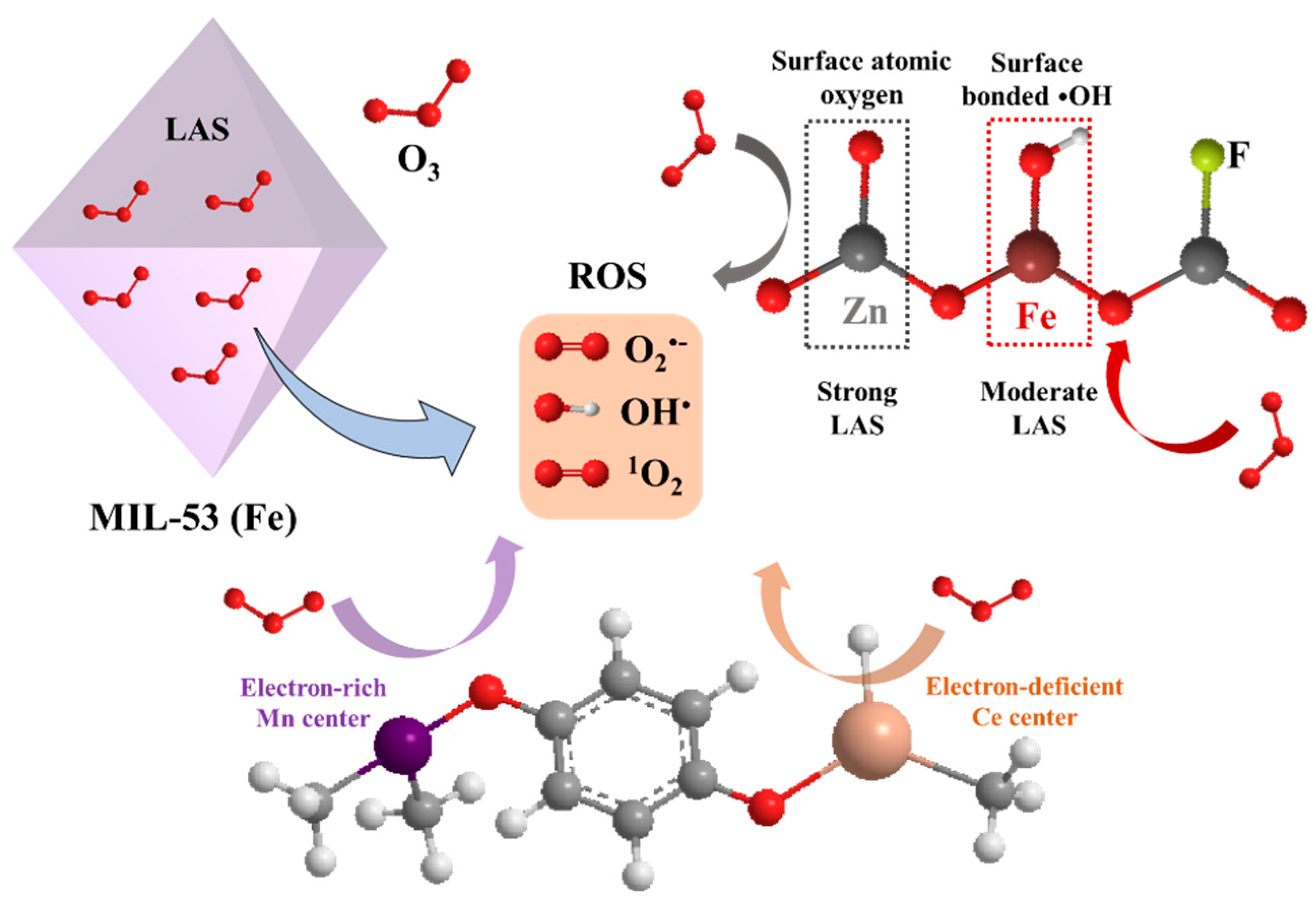
Table 3 summarizes the performance of MOF catalysts for the degradation of PHACs in catalytic ozonation processes. The synthesized MOF catalysts usually have high adsorption capacities, which can enhance the proton transfer efficiency in water. For instance, Bardia et al. prepared a CM-500 catalyst, which achieved nearly 30% adsorption removal of cefixime (CFX) within the first 30 min at a catalyst dosage of 0.5 g/L. Subsequently, the complete degradation of CFX was accomplished in the presence of ozone [81]. The catalytic performance of MOFs is influenced by the redox properties of the metal ions and the types of organic ligands. Yu et al., for the first time, investigated the performance of four Fe-MOFs in the ozonation degradation of organic compounds. Among them, MIL-53 (Fe) showed the highest catalytic activity due to its superior LAS and appropriate porosity [82]. Ozone can decompose on the surface LAS of MIL-53 (Fe) and generate various ROS (mainly OH radicals) to achieve the efficient degradation and mineralization of organic compounds (Figure 2). Incorporating other metals into a single metal center to form bimetallic centers may offer potential benefits in enhancing catalyst properties. The Fe3O4@Ce-UiO-66 catalyst prepared by Haleh et al. exhibited the enhanced availability of active sites and adsorptive centers to catalyze ozone decomposition due to the incorporation of Ce in the structure [83]. Moreover, the performance of MOFs can be further improved through non-metal doping. Li et al. introduced metal Zn and Si-F groups into the Fe-MCM-41 framework to prepare a FFeZnM catalyst with hydrophobic sites and multiple active centers (Figure 2) [84]. The water contact angle of FFeZn increased from 4.5° to 52.3° compared to MCM-41. Moreover, the existence of hydrophobic and electron-withdrawing Si-F units enhanced the proton transfer efficiency at the LAS of Fe and Zn, thereby promoting ozone decomposition into ROS. However, addressing the long-term stability and higher cost issues of MOF catalysts is necessary through further research.

3.4. Metal/Metallic Oxides Loaded on Support Materials

Supports play a crucial role in the catalytic performance of catalysts. Common types of supports include metallic oxides, carbon materials, metal–organic frameworks, molecular sieves, membrane supports, etc. They possess a high specific surface area and a favorable pore structure, which can aid in aspects such as evenly dispersing metal particles, increasing the active sites of the catalyst, accelerating the proton transfer efficiency, and improving catalyst stability in heterogeneous systems. Table 4 summarizes the metal/metal oxides loaded on different supports for the catalytic ozonation degradation of PHACs.

3.4.1. Metallic Oxides as Supports

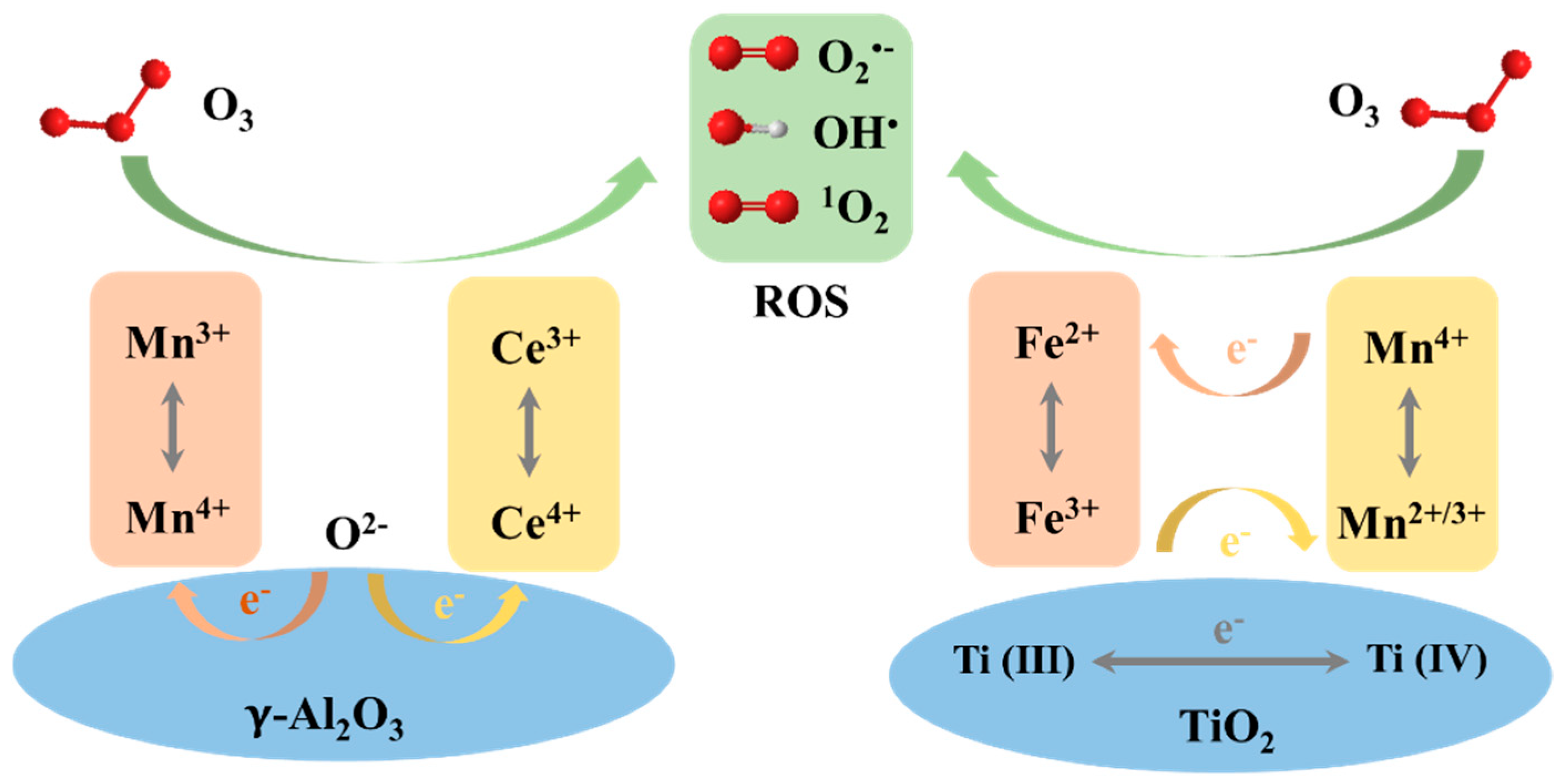
Alumina is a widely employed support material for catalysts due to its notable characteristics, including a large specific surface area, a low cost, and stable mechanical properties [98]. Under specific conditions, powdered alumina catalysts can be suspended in water to enhance the degradation efficiency of organic compounds. Bing et al. successfully achieved the complete degradation and mineralization of IBU within 60 min by loading Ti onto mesoporous alumina [89]. Surface reactive oxygen species and peroxide species act as primary active species for IBU degradation, instead of OH radicals. However, the separation of catalysts from water poses a problem worthy of consideration. Spherical alumina can effectively address this issue owing to its larger particle size. A bimetallic catalyst loaded on alumina often exhibits superior catalytic performance compared to monometallic catalysts due to the bimetallic synergistic effect (Figure 3) [88]. Overall, alumina-based catalysts possess sufficient oxygen vacancies, high electron transfer capacities, and low charge transfer resistance, which facilitate ozone decomposition into ROS for enhanced organic compound degradation efficiency.
TiO2 is also a common metallic oxide support in the field of photocatalytic ozonation. The combination of ozone and photocatalysis holds great potential in various aspects, such as enhancing the removal efficiency and mineralization of organic compounds [99]. Ozone, being an electrophilic substance that acts as an electron acceptor, effectively reduces the electron–hole recombination of the photocatalyst while adsorbing onto its surface [100]. You et al. initially loaded Mn/Fe metals onto a TiO2 support to achieve the photocatalytic ozonation degradation of pharmaceuticals and personal care products (PPCPs) [91]. The redox electron pairs of Fe (II)/Fe (III) and Mn (II)/Mn (III)/Mn (IV) increased the oxygen vacancies on the catalyst surface compared to bare TiO2, which is beneficial for the decomposition of ozone into reactive oxygen species (Figure 3). Furthermore, Mn/Fe bimetallic nanoparticles functioned as electron donors to functionalize TiO2 by accelerating the conversion of Ti (IV) to Ti (III) and enhanced the generation of O 2 . Meanwhile, the presence of O 2 improved the production of OH and 1O2, thereby promoting organic mineralization. The unique properties of TiO2 enable it to efficiently facilitate the decomposition of ozone and generate ROS during photocatalytic ozonation, thereby accelerating the degradation of organic compounds.

3.4.2. Carbon Materials as Supports

Carbon materials are extensively employed as catalyst supports due to their large surface areas and porous structures, which provide abundant active sites for metal deposition and ensure the uniform distribution of metal particles through interactions. Moreover, the excellent conductivity of carbon materials facilitates electron transfer in redox reactions, thereby enhancing the catalytic reaction rate. Sui et al. demonstrated that loading MnOx particles onto MWCNTs significantly enhanced the degradation efficiency and mineralization of ciprofloxacin (CF) [94]. Additionally, a MnOx/MWCNT catalyst achieved more effective antibacterial activity inhibition than that in ozone alone. Furthermore, the functional group modification of carbon material supports prior to metal particle loading can further enhance catalyst performance. Common modification methods include amination, carboxylation, hydroxylation, etc. [101]. In the research conducted by Xu et al., the removal rate of cephalexin (CFX) was increased from 38% to 50% through the use of amino-functionalized GO followed by MnO2 particle loading [93]. The strong bonding between MnOx and GO was enhanced by the formation of MnO2-NH2-GO with amino functional groups, which improved the catalyst stability.
As previously mentioned, in the active sites of catalysts, the electron transfer between high-valence metal ions and low-valence metal ions can promote the decomposition of ozone to generate various ROS and thus improve the catalytic efficiency. However, the oxygen-containing functional groups on the surface of carbon also possess similar capabilities. Zhang et al. loaded Co-Mn-Fe onto sludge biochar to synthesize a layered polymetallic hydroxide (SBC-LDH) catalyst [102]. In the catalytic ozonation reaction, it is estimated that approximately 54.51% and 45.49% of the electron supply for ozone decomposition is contributed by oxygen-containing functional groups and metal ions, respectively. They jointly promote the decomposition of ozone into various ROS to participate in the degradation of tetracycline hydrochloride (TCH). To address the issue of metal ion leaching from carbon materials, some single-atom catalysts have been developed. Ye et al. used carbon black as a support to prepare single-atom catalysts with different transition metals [92]. Among them, Co-NC exhibited exceptional catalytic ozonation performance due to its abundant LAS, faster electron transfer rate, and lower energy requirements for ozone adsorption and conversion. In general, carbon materials as catalyst supports have great research potential, but they still need to be multifunctionally designed to meet the needs of different application scenarios.

3.4.3. Molecular Sieves as Supports

Molecular sieves, which can be either naturally occurring or artificially synthesized, represent a class of hydrated aluminosilicate composite materials. The framework of molecular sieves is constructed through the combination of SiO4 and AlO4 tetrahedra by means of shared oxygen atoms, thereby generating a three-dimensional network-structured crystal. This unique structure imparts molecular sieves with a large number of channels and cavities possessing a uniform pore diameter, which serve as highly efficient deposition sites for metal particles. Moreover, the distinctive structure enables molecular sieves to exhibit selective adsorption and separation capabilities towards diverse molecules, rendering them suitable catalyst supports.
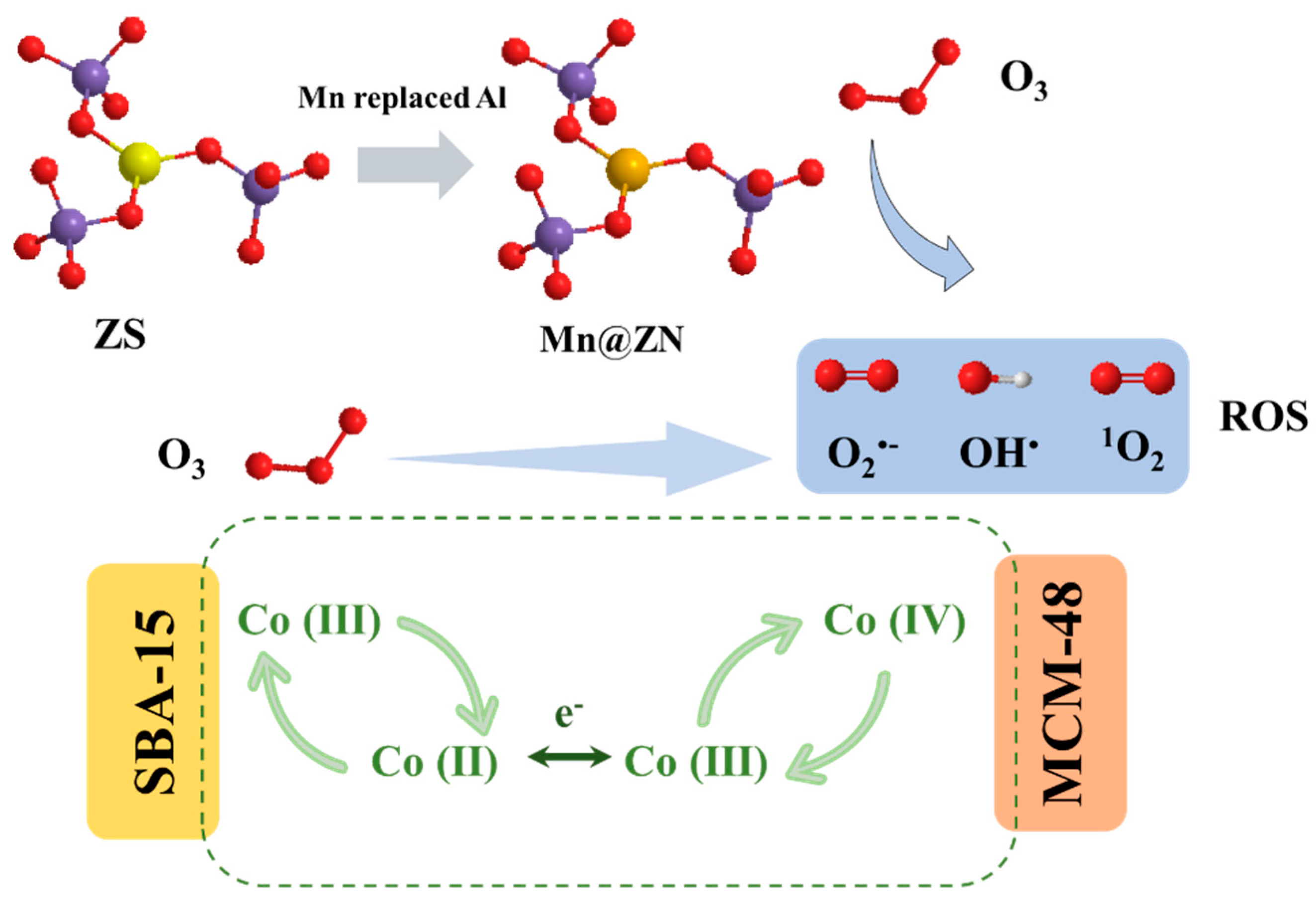
Zeolite, a widely studied catalyst support, has gained significant attention in research on catalytic ozonation. Zhang et al. successfully loaded metal Ce onto natural zeolite to synthesize a CZ catalyst and achieved a 100% removal rate and 21.8% mineralization of penicillin G [95]. The observed reaction rate constant Kobs increased from 0.145 min−1 to 0.280 min−1 when compared with ozone alone. In addition, artificially synthesized zeolites exhibit more uniform pore sizes compared to natural zeolite, which can potentially enhance catalyst performance. Zeolite 5A is an example of an artificially synthesized zeolite that possesses a unique cage-like structure and three-dimensional pore architecture. Zeng et al. successfully anchored Mn in a molecular nest of zeolite 5A (Figure 4), enhancing the efficiency and stability of catalytic ozonation [103]. Even after undergoing continuous cycling ten times, over 88% degradation of CLX could be achieved within 2 min.
Besides zeolites, various artificially synthesized molecular sieves, such as ZSM-5, MCM-48, and SBA-15, have been extensively employed as catalyst supports. Li et al. introduced the bimetallic doping of Co and Ce into SBA-15 [96]. The bimetallic doping led to higher CA degradation efficiency compared to single-metal doping. Moreover, bimetallic doping resulted in the generation of stronger LAS, and the redox cycle of Co2+/Co3+ and Ce3+/Ce4+ played a pivotal role in O3 activation and decomposition processes (Figure 4). Additionally, selecting an appropriate support can enhance pollutant mineralization. For instance, when Li et al. deposited Co/Ce bimetal particles onto the surface of a three-dimensional mesoporous molecular sieve, MCM-48, the TOC removal rate for CA increased from 24.1% to 83.6% [104]. In conclusion, molecular sieves used as catalyst supports possess many advantages. Currently, further research is required in designing and synthesizing novel molecular sieves with functional modifications, as well as investigating the mechanisms of their synergistic effects with metals or metal oxides.

3.4.4. Membrane Sieves as Supports

Ozone/membrane catalytic oxidation hybrid technology is primarily utilized for the removal of low or trace concentrations of organic contaminants in water [105]. As a catalyst support, the membrane has the advantages of a high specific surface area, abundant active sites, and good mass transfer efficiency. Simultaneously, ozone exhibits strong oxidizing properties that can degrade surface contaminants on the membrane to inhibit fouling issues. Regarding the methods employed to load metal particles onto the membrane support, they can be categorized into in situ reduction, layer-by-layer coating, dip coating, and sol–gel methods [105]. Zhang et al. successfully achieved the in situ growth of a Mn/Co composite bimetallic oxide spinel structure on a ceramic membrane surface [97]. Due to the presence of multivalent states of Mn and Co, electron transfer and ozone decomposition reactions were facilitated, resulting in degradation efficiency of 90.6% towards bisphenol A within 60 min, while demonstrating remarkable anti-fouling capabilities. Additionally, the number of coatings and the impregnation time during catalyst preparation had an effect on the catalyst performance. S. Byun et al. discovered that MnO2 nanoparticles displayed superior performance when coated 20 times compared to coatings applied 30 or 40 times [106]. An increase in coating frequency may result in the excessive coverage of active sites by metal particles or aggregation, leading to increased mass transfer resistance. In conclusion, the utilization of membranes as catalyst supports for the degradation of low/trace concentrations of organic contaminants in water through catalytic ozonation has obvious advantages. However, further optimization is still required to enhance its catalytic efficiency and stability.

4. Methods to Enhance Mass Transfer Efficiency of Ozone in Water

In heterogeneous catalytic ozonation systems, the proton transfer efficiency across the gas–liquid–solid domains often has a critical influence on the degradation efficiency of pollutants. Ozone, a weakly polar molecule, readily undergoes decomposition and self-decomposition upon dissolution in water. The solubility of ozone in water is affected by several factors, such as the temperature, solution pH, and liquid surface ozone pressure. During a stable equilibrium state, ozone dissolution in water obeys Henry’s law. The solubility coefficient in neutral and weakly acid environments is close to 0.3, while the process of the decomposition of ozone in water is characterized by reaction orders of 1, 1.5, and 2, respectively [107]. Consequently, the solubility of ozone in pure water at room temperature and pressure is low. In order to improve the utilization efficiency and the mass transfer of ozone in water, several auxiliary techniques/devices have been developed, such as high-gravity technology, injector devices, micro- and nano-bubble devices, and membrane transfer technology.

4.1. High-Gravity Rotating Packed Bed

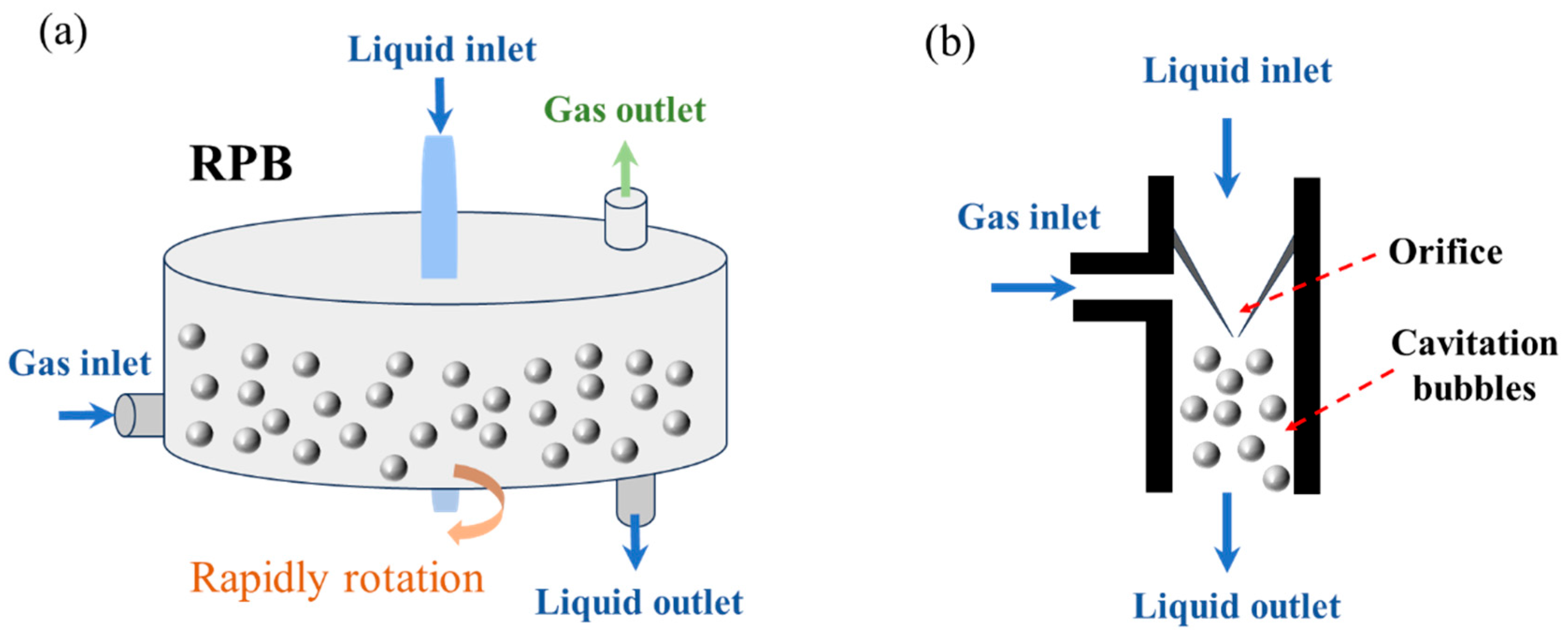
High-gravity technology is a recognized chemical process intensification technique that mainly relies on a rotating packed bed (RPB) device to improve the ozone utilization efficiency [108]. The centrifugal force generated by the high-speed rotation of the RPB device thoroughly mixes and disperses water and ozone into tiny droplets and bubbles, which in turn increases the solubility of ozone in water (Figure 5a). In addition, the rapid surface renewal due to the cutting of the liquid into smaller films or droplets can effectively increase the liquid–solid interfacial area and reduce the external diffusion resistance by maintaining a high concentration gradient at the interface [109]. Simultaneously, high-gravity technology can also accelerate the self-decomposition of ozone in water, resulting in the increased production of ·OH radicals to promote indirect hydroxyl radical oxidation reactions and significantly improve the pollutant mineralization efficiency [110]. It has been reported that the overall mass transfer coefficient of ozone and the total decomposition rate constant were increased by 44.86% and 47.41%, respectively, compared to traditional bubble reactors (BR) when using an RPB [111]. The rotational speed of the RPB had an effect on the degradation efficiency of the pollutants. As the rotational speed increases, thinner liquid films become more favorable for ozone adsorption on catalyst surfaces, leading to the enhanced generation of OH radicals and the improved degradation of pollutants. However, when the rotational speed is further increased, the liquid remains on the catalyst surface for a shorter time, which results in a decrease in ozone decomposition and thus reduced pollutant degradation [112].

4.2. Hydrodynamic Cavitation Reactor

The hydrodynamic cavitation reactor is a device that effectively improves the gas–liquid mixing efficiency. It has the advantages of simple construction and good mixing effects. There are many types of hydrodynamic cavitation reactors. Venturi-based cavitating devices are common. Figure 5b shows a schematic diagram of a Venturi device, which consists of three parts: a nozzle, suction chamber, and diffuser tube. According to Bernoulli’s principle, the high-speed jet flow generated through the nozzle will form negative pressure in the suction chamber. Subsequently, ozone is mixed with water in the suction chamber and forms tiny ozone bubbles in the diffuser, thereby improving the mixing efficiency of ozone and water. In addition, due to the cavitation effect, ozone molecules will undergo gas implosion within the diffuser, resulting in a strong shock wave with great destructive power [113]. The instantaneous temperature and pressure inside the collapsed bubble can reach 4726.8 °C and 9869 atm, respectively. This may contribute to the activation of ozone molecules, thus generating more OH, involved in the degradation of organic pollutants [113]. Katiyar et al. investigated the effects of the fluid cavitation-assisted degradation of oseltamivir phosphate (OP) by different AOP processes, and they showed that HC/ozone technology could achieve about 70% OP mineralization in the first 30 min of the reaction, which was much higher than in the HC/Fenton and HC/hydrogen peroxide systems [114].
During the reaction process, the inlet pressure of the Venturi device is usually influenced by the geometry of the Venturi tube, thereby affecting the degradation efficiency of organic pollutants. The intensity of local turbulence will increase as the inlet pressure increases, which in turn promotes the decomposition of ozone into OH when the collapse intensity of the cavity is high. However, when the optimal inlet pressure is exceeded, the cavity at the diffusion tube will gather to form a large cavity cloud, resulting in lower collapse efficiency of randomly growing ozone bubbles—resulting in a decrease in the degradation efficiency of organic pollutants [115]. Therefore, it is necessary to select the appropriate type of Venturi device and optimize the operating parameters of the device to improve the catalytic ozonation efficiency according to different practical situations.

4.3. Micro–Nano-Bubble Technology

In water treatment, conventional aeration methods generate ozone bubbles with large diameters, which leads to drawbacks such as uneven dispersion in water, poor mass transfer efficiency, and low ozone utilization efficiency. In order to solve these problems, micro–nano-bubble (MNB) technology has been widely researched and applied. MNBs are defined as bubbles with diameters of typically less than 100 microns or less than 1 micron [116], and they are characterized by large specific surface areas, rapid mass transfer rates, and high internal pressures [117]. The generation of ozone micro–nano-bubbles primarily relies on the cavitation effects induced by ultrasound and specialized gas–liquid shear techniques [118]. On the one hand, MNBs are able to provide more gas–liquid contact interfaces per unit volume of water due to their tiny sizes and large numbers, thus significantly increasing the ozone concentration in water. On the other hand, the pressure in ozone MNBs is several times higher than the atmospheric pressure, so the energy generated when a large number of bubbles collapse is conducive to the activation and decomposition of ozone into OH. Zhang et al. investigated the effects of ozone MNBs on the degradation of pharmaceutical pollutants in hospital wastewater and showed that the concentration of ozone in the water when ozone MNBs were employed was approximately twice as high as that with conventional aeration [119]. Overall, MNB technology is an ideal method to improve the mass transfer efficiency and ozone utilization, but the precise underlying mechanisms require further investigation.

4.4. Membrane Transfer Technology

In addition to the traditional direct gas–liquid mixing method, an emerging technology known as the ozone membrane contactor has garnered increased attention [120]. This technology utilizes a hydrophobic membrane to introduce ozone into the aqueous solution, significantly enhancing both the mass transfer rate and utilization of ozone, thereby reducing the amount of ozone used and the energy consumption. Ozone gas is introduced into the gas-phase side of the membrane contactor through the gas inlet in a reaction. Driven by the concentration gradient, ozone molecules diffuse from the gas-phase bulk to the membrane surface. Meanwhile, due to the hydrophobic nature of the membrane, ozone dissolves at the gas–liquid interface within the membrane pores and subsequently diffuses through the pores toward the liquid-phase side. On the liquid-phase side, the dissolved ozone undergoes redox reactions with pollutants, thus achieving the removal of pollutants. Chen et al. systematically investigated the influence of process parameters on the ozone mass transfer coefficient [121]. When the gas flow rate was increased from 0.25 mL/min to 1.00 mL/min, the ozone mass transfer coefficient in water increased from 9.47 × 10⁻⁶ m/s to 1.84 × 10⁻⁵ m/s. Additionally, the mass transfer coefficient is positively correlated with the ozone concentration, liquid flow rate, and membrane pore size, while it is negatively correlated with the membrane thickness. Moreover, due to the accelerated self-decomposition rate of ozone under alkaline conditions, the mass transfer coefficient initially increases and then decreases with rising pH levels. Overall, both the membrane properties and process parameters play a crucial role in the efficiency of catalytic ozonation. Enhancements in membrane performance can be facilitated by loading metal/non-metal active sites on the membrane support. Further optimization of these process parameters can enhance the overall performance of the system.

5. Challenges in Practical Applications

Catalytic ozonation has been widely used in the treatment of wastewater containing PHACs due to its excellent catalytic efficiency. Given the fact that ozone decomposes very easily in water and the main decomposition product is oxygen, it shows significant advantages in the treatment process, as there is almost no need for the additional treatment of ozone residues in the water. However, in practical application scenarios, catalytic ozonation also faces a series of challenges when degrading actual wastewater.

5.1. Catalyst Performance

In practical application scenarios, the pollutant degradation efficiency, product selectivity, and long-term stability are critical metrics in evaluating catalyst performance. At the same time, in order to meet the demands of large-scale application, the preparation processes of catalysts should be streamlined while maintaining low usage costs. Through the optimization of the active components in the catalyst, such as the construction of a bimetallic combination system or the introduction of non-metallic elements for doping, the electron transfer rate on the surface of the catalyst can be accelerated, which can significantly improve the performance of the catalyst. In addition, the selection of support materials with high specific surface areas, excellent pore structures, and excellent chemical stability is also important in improving the catalyst performance.

5.2. Catalyst Separation and Recovery

In heterogeneous catalytic ozonation systems, the separation and recovery of catalysts represent a critical challenge that must be addressed. On the one hand, ineffective separation and recovery can lead to catalyst discharge into the environment via wastewater, posing potential risks to water bodies and ecosystems. On the other hand, successful separation and recovery not only facilitate resource recycling but also substantially reduce the operational costs. Consequently, selecting catalyst supports with large particle sizes and ease of separation, such as granular activated carbon, spherical alumina, and molecular sieves, holds significant practical value.

5.3. Catalyst Regeneration and Reuse

Catalysts’ costs and environmental impacts, along with their scale-up feasibility, stability, and reusability in real environments, are core challenges restricting the practical application of heterogeneous catalytic ozonation. Economically, catalyst regeneration must be more cost-effective than replacing deactivated catalysts—high energy or chemical consumption will render the technology uncompetitive in real-field applications—while environmentally, inefficient regeneration may trigger secondary pollution (e.g., reagent leakage) or increased carbon emissions, further limiting its practicality. Additionally, scaling up from laboratory to industrial settings faces hurdles such as uneven mass transfer in large reactors and mismatched catalyst dosages with actual water volumes, and complex impurities in real environmental water (e.g., humic acids, heavy metals) can easily cause catalyst poisoning or fouling, impairing its stability. Catalysts also require stable activity over multiple use cycles (≥5–10 cycles) without structural degradation, as poor reusability drastically increases the operational costs. Addressing these interrelated challenges relies on developing low-cost, low-pollution regeneration technologies; optimizing reactor design for scale-up; and engineering catalysts with strong anti-poisoning performance.

5.4. Removal of Mixed Pollutants

The composition of actual wastewater systems is highly complex, often containing multiple PHACs alongside other pollutants such as metal ions and inorganic salts. These different types of pollutants may interact in complex ways with catalysts, potentially compromising their stability. In view of this, it is necessary to investigate the simultaneous removal of mixed pollutants in future research work. Furthermore, catalytic ozonation for the degradation of pollutants can potentially generate more toxic intermediate byproducts, such as bromate, so it is imperative to delve into the mechanisms of the catalytic ozonation reaction to elucidate the degradation pathways of PHACs and the formation mechanisms of these byproducts.

5.5. Dynamic Changes in Solution pH

The pH value of the solution significantly influences the catalytic ozonation process. Numerous previous studies have examined the impact of the initial pH on the efficiency of catalytic ozonation. However, it should not be overlooked that the pH value exhibits dynamic changes throughout the reaction process. In practical wastewater treatment applications, considering the dynamic nature of the solution pH, real-time online monitoring of pH variations is essential to ensure that the catalytic ozonation reaction consistently operates under optimal pH conditions. This approach allows for timely adjustments in the treatment process, thereby maintaining system stability and enhancing the overall wastewater treatment efficiency.

5.6. Ozone Utilization Efficiency

The low solubility of ozone in water and the poor mass transfer efficiency between the gas, liquid, and solid phases have resulted in suboptimal utilization rates of ozone in practical applications. To enhance the ozone utilization efficiency, catalytic ozonation technology can be integrated with specific tools such as high-gravity rotary packed beds, Venturi tube injectors, micro–nano-bubble devices, and membrane contactors. By systematically exploring the optimal parameters for each process, it will be possible to fully leverage the advantages of these combined processes and facilitate the engineering application and development of related technologies.
In general, the catalytic ozonation process for the degradation of PHACs in wastewater has good application prospects. By developing and optimizing appropriate catalysts, the degradation efficiency of PHACs can be substantially enhanced. However, practical applications must address multiple critical challenges: catalyst deactivation, separation and recovery, the impact of complex wastewater matrices, and the potential environmental toxicity of ozone itself. As an advanced oxidation process with strong remediation potential, ozonation may generate harmful byproducts if not properly optimized or coupled with effective post-treatment to remove or neutralize them [122,123]. Addressing all these issues is essential to ensure the sustainable and efficient operation of wastewater treatment systems.

6. Conclusions

In response to the global demand for improved wastewater purification technologies, this review provides a comprehensive overview of recent research results on the degradation of PHACs by the catalytic ozonation method. These studies have demonstrated the significant effectiveness of catalytic ozonation in treating wastewater containing PHACs, which showcases broad industrial applicability and substantial practical application potential. Researchers primarily enhance the efficiency of catalytic ozonation through three main dimensions: (1) enhancing the performance of catalysts, such as increasing the oxygen vacancies on the catalyst surface, optimizing the acidity and alkalinity of the catalyst surface, and constructing bimetallic active components; (2) thoroughly investigating the synergistic effects of catalytic ozonation combined with other processes, such as ultraviolet light and hydrogen peroxide, which activate ozone to promote the generation of ROS; (3) optimizing the reaction device, such as using high-gravity rotating packed beds, jet injectors, and micro–nano-bubbles, which leverage cavitation effects and improve the ozone mass transfer efficiency in water. By improving the catalyst preparation process and screening for more efficient catalytic components, it will be possible to further enhance both the degradation efficacy and long-term stability of catalysts. Catalysts with high activity are the critical factor in expanding the application of catalytic ozonation in practical wastewater treatment. Additionally, integrating catalytic ozonation technology with advanced process control strategies enables the real-time adjustment and control of operational parameters based on varying water qualities, ensuring optimal reaction conditions and thereby improving the efficiency and reliability of wastewater treatment. The catalytic removal of contaminants in ozonation and advanced oxidation processes offers an effective method for the simultaneous achievement of contamination abatement and environmental protection.

Author Contributions

Conceptualization, Y.Y. and J.P.; methodology, J.P.; validation, Y.Y. and X.Z.; formal analysis, X.Z.; investigation, Y.Y.; resources, Y.Y.; data curation, Y.Y.; writing—original draft preparation, Y.Y.; writing—review and editing, X.Z.; visualization, J.P.; supervision, J.P.; project administration, X.Z.; funding acquisition, X.Z. All authors have read and agreed to the published version of the manuscript.

Funding

This research was funded by the Shanghai Rising-Star Program (24QB2705700) and the Key Research Project of Shanghai Construction Group Co., Ltd. (grant number K2023K015).

Data Availability Statement

The original contributions presented in this study are included in the article. Further inquiries can be directed to the corresponding author.

Acknowledgments

This work was supported by the Shanghai Chengtou Technology Innovation Plan Project.

Conflicts of Interest

Authors Yifeng Yang and Xin Zhang were employed by the Shanghai Municipal Engineering Design Institute (Group) Co., Ltd. The remaining authors declare that the research was conducted in the absence of any commercial or financial relationships that could be construed as a potential conflict of interest. The authors declare that this study received funding from the Shanghai Rising-Star Program (24QB2705700) and the Key Research Project of Shanghai Construction Group Co., Ltd. (grant number K2023K015). The funders were not involved in the study design; the collection, analysis, or interpretation of the data; the writing of this article; or the decision to submit it for publication.

References

  1. Valdez-Carrillo, M.; Abrell, L.; Ramírez-Hernández, J.; Reyes-López, J.A.; Carreón-Diazconti, C. Pharmaceuticals as emerging contaminants in the aquatic environment of Latin America: A review. Environ. Sci. Pollut. Res. 2020, 27, 44863–44891. [Google Scholar] [CrossRef]
  2. Nguyen, M.-K.; Lin, C.; Bui, X.-T.; Rakib, M.R.J.; Nguyen, H.-L.; Truong, Q.-M.; Hoang, H.-G.; Tran, H.-T.; Malafaia, G.; Idris, A.M. Occurrence and fate of pharmaceutical pollutants in wastewater: Insights on ecotoxicity, health risk, and state–of–the-art removal. Chemosphere 2024, 354, 141678. [Google Scholar] [CrossRef]
  3. Ternes, T.A. Occurrence of drugs in German sewage treatment plants and rivers. Water Res. 1998, 32, 3245–3260. [Google Scholar] [CrossRef]
  4. Petrie, B.; Camacho-Muñoz, D. Analysis, fate and toxicity of chiral non-steroidal anti-inflammatory drugs in wastewaters and the environment: A review. Environ. Chem. Lett. 2021, 19, 43–75. [Google Scholar] [CrossRef]
  5. Vinayagam, V.; Murugan, S.; Kumaresan, R.; Narayanan, M.; Sillanpää, M.; Viet N Vo, D.; Kushwaha, O.S.; Jenis, P.; Potdar, P.; Gadiya, S. Sustainable adsorbents for the removal of pharmaceuticals from wastewater: A review. Chemosphere 2022, 300, 134597. [Google Scholar] [CrossRef]
  6. Petrovic, M.; Skrbic, B.; Zivancev, J.; Ferrando-Climent, L.; Barcelo, D. Determination of 81 pharmaceutical drugs by high performance liquid chromatography coupled to mass spectrometry with hybrid triple quadrupole-linear ion trap in different types of water in Serbia. Sci. Total Environ. 2014, 468, 415–428. [Google Scholar] [CrossRef] [PubMed]
  7. Newman, B.K.; Velayudan, A.; Petrović, M.; Álvarez-Muñoz, D.; Čelić, M.; Oelofse, G.; Colenbrander, D.; le Roux, M.; Ndungu, K.; Madikizela, L.M.; et al. Occurrence and potential hazard posed by pharmaceutically active compounds in coastal waters in Cape Town, South Africa. Sci. Total Environ. 2024, 949, 174800. [Google Scholar] [CrossRef] [PubMed]
  8. Duan, L.; Zhang, Y.; Wang, B.; Zhou, Y.; Wang, F.; Sui, Q.; Xu, D.; Yu, G. Seasonal occurrence and source analysis of pharmaceutically active compounds (PhACs) in aquatic environment in a small and medium-sized city, China. Sci. Total Environ. 2021, 769, 144272. [Google Scholar] [CrossRef]
  9. Parolini, M. Toxicity of the Non-Steroidal Anti-Inflammatory Drugs (NSAIDs) acetylsalicylic acid, paracetamol, diclofenac, ibuprofen and naproxen towards freshwater invertebrates: A review. Sci. Total Environ. 2020, 740. [Google Scholar] [CrossRef]
  10. Ahmed, S.F.; Mofijur, M.; Nuzhat, S.; Chowdhury, A.T.; Rafa, N.; Uddin, M.A.; Inayat, A.; Mahlia, T.M.I.; Ong, H.C.; Chia, W.Y.; et al. Recent developments in physical, biological, chemical, and hybrid treatment techniques for removing emerging contaminants from wastewater. J. Hazard. Mater. 2021, 416, 125912. [Google Scholar] [CrossRef]
  11. Khataee, A.; Arefi-Oskoui, S.; Fathinia, M.; Fazli, A.; Hojaghan, A.S.; Hanifehpour, Y.; Joo, S.W. Photocatalysis of sulfasalazine using Gd-doped PbSe nanoparticles under visible light irradiation: Kinetics, intermediate identification and phyto-toxicological studies. J. Ind. Eng. Chem. 2015, 30, 134–146. [Google Scholar] [CrossRef]
  12. Yu, G.; Wang, Y.; Cao, H.; Zhao, H.; Xie, Y. Reactive Oxygen Species and Catalytic Active Sites in Heterogeneous Catalytic Ozonation for Water Purification. Environ. Sci. Technol. 2020, 54, 5931–5946. [Google Scholar] [CrossRef]
  13. Jamali, G.A.; Devrajani, S.K.; Memon, S.A.; Qureshi, S.S.; Anbuchezhiyan, G.; Mubarak, N.M.; Shamshuddin, S.Z.M.; Siddiqui, M.T.H. Holistic insight mechanism of ozone-based oxidation process for wastewater treatment. Chemosphere 2024, 359, 142303. [Google Scholar] [CrossRef]
  14. Wang, J.; Wang, S. Reactive species in advanced oxidation processes: Formation, identification and reaction mechanism. Chem. Eng. J. 2020, 401, 126158. [Google Scholar] [CrossRef]
  15. Priyadarshini, M.; Das, I.; Ghangrekar, M.M.; Blaney, L. Advanced oxidation processes: Performance, advantages, and scale-up of emerging technologies. J. Environ. Manag. 2022, 316, 115295. [Google Scholar] [CrossRef]
  16. Epelle, E.I.; Macfarlane, A.; Cusack, M.; Burns, A.; Okolie, J.A.; Mackay, W.; Rateb, M.; Yaseen, M. Ozone application in different industries: A review of recent developments. Chem. Eng. J. 2023, 454, 140188. [Google Scholar] [CrossRef]
  17. Tian, M.; Chang, J.; Ding, J.; Yin, Y. Impact of coexisting components on the catalytic ozonation of emerging contaminants in wastewater. Sep. Purif. Technol. 2025, 362, 131847. [Google Scholar] [CrossRef]
  18. Wang, J.; Chen, H. Catalytic ozonation for water and wastewater treatment: Recent advances and perspective. Sci. Total Environ. 2020, 704, 135249. [Google Scholar] [CrossRef] [PubMed]
  19. Chen, H.; Wang, J. Catalytic ozonation of sulfamethoxazole over Fe3O4/Co3O4 composites. Chemosphere 2019, 234, 14–24. [Google Scholar] [CrossRef] [PubMed]
  20. Wang, J.; Quan, X.; Chen, S.; Yu, H.; Liu, G. Enhanced catalytic ozonation by highly dispersed CeO2 on carbon nanotubes for mineralization of organic pollutants. J. Hazard. Mater. 2019, 368, 621–629. [Google Scholar] [CrossRef]
  21. Bai, H.; Liang, L.; Cao, P.; Zhang, H.; Chen, S.; Yu, H.; Quan, X. MgAl2O4 incorporated catalytic ceramic membrane for catalytic ozonation of organic pollutants. Appl. Catal. B Environ. 2024, 343, 123527. [Google Scholar] [CrossRef]
  22. Niu, J.; Yuan, R.; Chen, H.; Zhou, B.; Luo, S. Heterogeneous catalytic ozonation for the removal of antibiotics in water: A review. Environ. Res. 2024, 262, 119889. [Google Scholar] [CrossRef] [PubMed]
  23. Ren, T.; Yin, M.; Chen, S.; Ouyang, C.; Huang, X.; Zhang, X. Single-Atom Fe-N4 Sites for Catalytic Ozonation to Selectively Induce a Nonradical Pathway toward Wastewater Purification. Environ. Sci. Technol. 2023, 57, 3623–3633. [Google Scholar] [CrossRef]
  24. Wu, C.-H.; Kuo, C.-Y.; Chang, C.-L. Homogeneous catalytic ozonation of C.I. Reactive Red 2 by metallic ions in a bubble column reactor. J. Hazard. Mater. 2008, 154, 748–755. [Google Scholar] [CrossRef]
  25. Sun, X.; Wang, G.; Feng, H.; Miao, X.; Zhou, S.; Wang, D.; Huang, L.; Wang, K. Preparation of sludge-based materials and their environmentally friendly applications in wastewater treatment by heterogeneous oxidation technology. Environ. Sci. Pollut. Res. 2022, 29, 332–348. [Google Scholar] [CrossRef]
  26. Green, D.W.; Ervin, K.M. Anharmonicity and bond angle of matrix-isolated ozone. J. Mol. Spectrosc. 1981, 88, 51–63. [Google Scholar] [CrossRef]
  27. Wang, J.L.; Xu, L.J. Advanced Oxidation Processes for Wastewater Treatment: Formation of Hydroxyl Radical and Application. Crit. Rev. Environ. Sci. Technol. 2012, 42, 251–325. [Google Scholar] [CrossRef]
  28. Huisgen, R. Cycloaddition—Definition, Classification, and Characterization. Angew. Chem. Int. Ed. 1968, 7, 321–328. [Google Scholar] [CrossRef]
  29. Criegee, R. Mechanism of Ozonlysis. Angew. Chem. Int. Ed. 1975, 14, 745–752. [Google Scholar] [CrossRef]
  30. Yang, J.; Miao, J.; Li, X.; Xu, W. Cycloaddition of ozone to allyl alcohol, acrylic acid and allyl aldehyde: A comparative DFT study. Chem. Phys. 2013, 415, 161–167. [Google Scholar] [CrossRef]
  31. Tekle-Röttering, A.; von Sonntag, C.; Reisz, E.; Eyser, C.v.; Lutze, H.V.; Türk, J.; Naumov, S.; Schmidt, W.; Schmidt, T.C. Ozonation of anilines: Kinetics, stoichiometry, product identification and elucidation of pathways. Water Res. 2016, 98, 147–159. [Google Scholar] [CrossRef] [PubMed]
  32. Hoigné, J.; Bader, H. Rate constants of reactions of ozone with organic and inorganic compounds in water—I: Non-dissociating organic compounds. Water Res. 1983, 17, 173–183. [Google Scholar] [CrossRef]
  33. Riebel, A.H.; Erickson, R.E.; Abshire, C.J.; Bailey, P.S. Ozonation of Carbon-Nitrogen Double Bonds. I. Nucleophilic Attack of Ozone1. J. Am. Chem. Soc. 1960, 82, 1801–1807. [Google Scholar] [CrossRef]
  34. Dai, M.; Niu, Q.; Wu, S.; Lin, Y.; Biswas, J.K.; Yang, C. Hydroxyl radicals in ozone-based advanced oxidation of organic contaminants: A review. Environ. Chem. Lett. 2024, 22, 3059–3106. [Google Scholar] [CrossRef]
  35. Karlinskii, B.Y.; Altshuler, H.N. Ozonolysis of isoquinoline in a polystyrene-based sulfonate cation exchanger. Coke Chem. 2017, 60, 42–45. [Google Scholar] [CrossRef]
  36. Buchanan, W.; Roddick, F.; Porter, N. Formation of hazardous by-products resulting from the irradiation of natural organic matter: Comparison between UV and VUV irradiation. Chemosphere 2006, 63, 1130–1141. [Google Scholar] [CrossRef]
  37. Ratpukdi, T.; Siripattanakul, S.; Khan, E. Mineralization and biodegradability enhancement of natural organic matter by ozone–VUV in comparison with ozone, VUV, ozone–UV, and UV: Effects of pH and ozone dose. Water Res. 2010, 44, 3531–3543. [Google Scholar] [CrossRef]
  38. Heeb, M.B.; Criquet, J.; Zimmermann-Steffens, S.G.; von Gunten, U. Oxidative treatment of bromide-containing waters: Formation of bromine and its reactions with inorganic and organic compounds—A critical review. Water Res. 2014, 48, 15–42. [Google Scholar] [CrossRef] [PubMed]
  39. Gong, J.; Liu, Y.; Sun, X. O3 and UV/O3 oxidation of organic constituents of biotreated municipal wastewater. Water Res. 2008, 42, 1238–1244. [Google Scholar] [CrossRef]
  40. Fu, P.; Feng, J.; Yang, H.; Yang, T. Degradation of sodium n-butyl xanthate by vacuum UV-ozone (VUV/O3) in comparison with ozone and VUV photolysis. Process Saf. Environ. Prot. 2016, 102, 64–70. [Google Scholar] [CrossRef]
  41. He, X.; Chi, H.; He, M.; Zhang, B.; Zhang, J.; Wang, D.; Ma, J. Efficient removal of halogenated phenols by vacuum-UV system through combined photolysis and OH oxidation: Efficiency, mechanism and economic analysis. J. Hazard. Mater. 2021, 403, 123286. [Google Scholar] [CrossRef]
  42. Yang, S.; Song, Y.; Chang, F.; Wang, K. Evaluation of chemistry and key reactor parameters for industrial water treatment applications of the UV/O3 process. Environ. Res. 2020, 188, 109660. [Google Scholar] [CrossRef]
  43. Feng, X.; Sun, D. Degradation characteristics of refractory organic matter in naproxen pharmaceutical secondary effluent using vacuum ultraviolet–ozone treatment. J. Hazard. Mater. 2023, 459, 132056. [Google Scholar] [CrossRef] [PubMed]
  44. Chen, F.; Zhang, Y.-S.; Bai, C.-W.; Huang, X.-T.; Sun, Y.-J.; Chen, X.-J. Ozone meets peroxides: A symphony of hybrid techniques in wastewater treatment. Chem. Eng. J. 2024, 483, 149129. [Google Scholar] [CrossRef]
  45. Merényi, G.; Lind, J.; Naumov, S.; Sonntag, C. Reaction of Ozone with Hydrogen Peroxide (Peroxone Process): A Revision of Current Mechanistic Concepts Based on Thermokinetic and Quantum-Chemical Considerations. Environ. Sci. Technol. 2010, 44, 3505–3507. [Google Scholar] [CrossRef]
  46. Fischbacher, A.; von Sonntag, J.; von Sonntag, C.; Schmidt, T.C. The •OH Radical Yield in the H2O2 + O3 (Peroxone) Reaction. Environ. Sci. Technol. 2013, 47, 9959–9964. [Google Scholar] [CrossRef] [PubMed]
  47. Cheng, Y.; Kang, J.; Yan, P.; Shen, J.; Chen, Z.; Zhu, X.; Tan, Q.; Shen, L.; Wang, S.; Wang, S. Surface oxygen vacancies prompted the formation of hydrated hydroxyl groups on ZnOx in enhancing interfacial catalytic ozonation. Appl. Catal. B Environ. 2024, 341, 123325. [Google Scholar] [CrossRef]
  48. Anandan, S.; Kumar Ponnusamy, V.; Ashokkumar, M. A review on hybrid techniques for the degradation of organic pollutants in aqueous environment. Ultrason. Sonochem. 2020, 67, 105130. [Google Scholar] [CrossRef]
  49. Kıdak, R.; Doğan, Ş. Medium-high frequency ultrasound and ozone based advanced oxidation for amoxicillin removal in water. Ultrason. Sonochem. 2018, 40, 131–139. [Google Scholar] [CrossRef]
  50. Rekhate, C.V.; Srivastava, J.K. Recent advances in ozone-based advanced oxidation processes for treatment of wastewater- A review. Chem. Eng. J. Adv. 2020, 3, 100031. [Google Scholar] [CrossRef]
  51. Das, P.P.; Dhara, S.; Samanta, N.S.; Purkait, M.K. Advancements on ozonation process for wastewater treatment: A comprehensive review. Chem. Eng. Process.—Process Intensif. 2024, 202, 109852. [Google Scholar] [CrossRef]
  52. Jeong, G.; Kim, T.; Jeon, H.; Lee, G.; Jung, S.; Seo, S.; Jang, A. Pilot scale application of a hybrid process based on ozone and BAF process: Performance evaluation for livestock wastewater treatment in a real environment. J. Water Process Eng. 2024, 66, 105989. [Google Scholar] [CrossRef]
  53. Onesios, K.M.; Yu, J.T.; Bouwer, E.J. Biodegradation and removal of pharmaceuticals and personal care products in treatment systems: A review. Biodegradation 2009, 20, 441–466. [Google Scholar] [CrossRef] [PubMed]
  54. van Gijn, K.; van Dam, M.R.H.P.; de Wilt, H.A.; de Wilde, V.; Rijnaarts, H.H.M.; Langenhoff, A.A.M. Removal of micropollutants and ecotoxicity during combined biological activated carbon and ozone (BO3) treatment. Water Res. 2023, 242, 120179. [Google Scholar] [CrossRef]
  55. Ding, L.; Tian, Q.; Yang, R.; Zhu, J.; Guo, Q.; Fang, G. Ozone/biological aerated filter integrated process for recycled paper mill wastewater: A pilot-scale study. Biochem. Eng. J. 2024, 211, 109466. [Google Scholar] [CrossRef]
  56. Pollice, A.; Laera, G.; Cassano, D.; Diomede, S.; Pinto, A.; Lopez, A.; Mascolo, G. Removal of nalidixic acid and its degradation products by an integrated MBR-ozonation system. J. Hazard. Mater. 2012, 203–204, 46–52. [Google Scholar] [CrossRef]
  57. Lancheros, J.C.; Madera-Parra, C.A.; Caselles-Osorio, A.; Torres-López, W.A.; Vargas-Ramírez, X.M. Ibuprofen and Naproxen removal from domestic wastewater using a Horizontal Subsurface Flow Constructed Wetland coupled to Ozonation. Ecol. Eng. 2019, 135, 89–97. [Google Scholar] [CrossRef]
  58. Wang, P.; Zhang, X.; Zhang, X.; Du, P.; Zhou, B.; Meng, F.; Wei, C.; Zhou, L.; Wen, G.; Wang, Y. Manganese oxide catalytic materials for degradation of organic pollutants in advanced oxidation processes: A review. J. Water Process Eng. 2024, 66, 106048. [Google Scholar] [CrossRef]
  59. Xu, Z.; Yang, W.; Si, W.; Chen, J.; Peng, Y.; Li, J. A novel γ-like MnO2 catalyst for ozone decomposition in high humidity conditions. J. Hazard. Mater. 2021, 420, 126641. [Google Scholar] [CrossRef]
  60. Nawaz, F.; Cao, H.; Xie, Y.; Xiao, J.; Chen, Y.; Ghazi, Z.A. Selection of active phase of MnO2 for catalytic ozonation of 4-nitrophenol. Chemosphere 2017, 168, 1457–1466. [Google Scholar] [CrossRef]
  61. He, Y.; Wang, L.; Chen, Z.; Shen, B.; Wei, J.; Zeng, P.; Wen, X. Catalytic ozonation for metoprolol and ibuprofen removal over different MnO2 nanocrystals: Efficiency, transformation and mechanism. Sci. Total Environ. 2021, 785, 147328. [Google Scholar] [CrossRef]
  62. Itzany Janet, D.L.C.; Rodríguez Santillán, J.L.; Fuentes, I.; Tiznado, H.; Vazquez-Arce, J.L.; Romero-Ibarra, I.; Guzmán, C.J.I.; Gutiérrez, H.M. Effect of crystalline phase of MnO2 on the degradation of Bisphenol A by catalytic ozonation. J. Environ. Chem. Eng. 2023, 11, 110753. [Google Scholar] [CrossRef]
  63. Liu, J.; Yuan, X.; Sans, C. Insights into the role of β-MnO2 and oxalic acid complex expediting ozonation: Structural properties and mechanism. Sep. Purif. Technol. 2024, 341, 126904. [Google Scholar] [CrossRef]
  64. Tong, S.-P.; Liu, W.-P.; Leng, W.-H.; Zhang, Q.-Q. Characteristics of MnO2 catalytic ozonation of sulfosalicylic acid and propionic acid in water. Chemosphere 2003, 50, 1359–1364. [Google Scholar] [CrossRef]
  65. Zhao, S.-X.; Luo, K.; Wang, Y.-F.; Zhao, S.-J.; Zhang, X. Synthesis of petal-like δ-MnO2 and its catalytic ozonation performance. New J. Chem. 2018, 42, 6770–6777. [Google Scholar] [CrossRef]
  66. Pelalak, R.; Alizadeh, R.; Ghareshabani, E. Enhanced heterogeneous catalytic ozonation of pharmaceutical pollutants using a novel nanostructure of iron-based mineral prepared via plasma technology: A comparative study. J. Hazard. Mater. 2020, 392, 122269. [Google Scholar] [CrossRef]
  67. Pelalak, R.; Heidari, Z.; Alizadeh, R.; Ghareshabani, E.; Nasseh, N.; Marjani, A.; Albadarin, A.B.; Shirazian, S. Efficient oxidation/mineralization of pharmaceutical pollutants using a novel Iron (III) oxyhydroxide nanostructure prepared via plasma technology: Experimental, modeling and DFT studies. J. Hazard. Mater. 2021, 411, 125074. [Google Scholar] [CrossRef] [PubMed]
  68. Oputu, O.; Chowdhury, M.; Nyamayaro, K.; Fatoki, O.; Fester, V. Catalytic activities of ultra-small β-FeOOH nanorods in ozonation of 4-chlorophenol. J. Environ. Sci. 2015, 35, 83–90. [Google Scholar] [CrossRef] [PubMed]
  69. Asgari, G.; Salari, M.; Faraji, H. Performance of heterogeneous catalytic ozonation process using Al2O3 nanoparticles in dexamethasone removal from aqueous solutions. Desalination Water Treat. 2020, 189, 296–304. [Google Scholar] [CrossRef]
  70. Nemati Sani, O.; Fezabady, A.A.N.; Yazdani, M.; Taghavi, M. Catalytic ozonation of ciprofloxacin using γ-Al2O3 nanoparticles in synthetic and real wastewaters. J. Water Process Eng. 2019, 32, 100894. [Google Scholar] [CrossRef]
  71. Sabzehmeidani, M.; Mahnaee, S.; Ghaedi, M.; Heidari, H.; Roy, V. Carbon based materials: A review of adsorbents for inorganic and organic compounds. Mater. Adv. 2021, 2, 598–627. [Google Scholar] [CrossRef]
  72. Beijer, K.; Björlenius, B.; Shaik, S.; Lindberg, R.H.; Brunström, B.; Brandt, I. Removal of pharmaceuticals and unspecified contaminants in sewage treatment effluents by activated carbon filtration and ozonation: Evaluation using biomarker responses and chemical analysis. Chemosphere 2017, 176, 342–351. [Google Scholar] [CrossRef]
  73. Cantoni, B.; Ianes, J.; Bertolo, B.; Ziccardi, S.; Maffini, F.; Antonelli, M. Adsorption on activated carbon combined with ozonation for the removal of contaminants of emerging concern in drinking water. J. Environ. Manag. 2024, 350, 119537. [Google Scholar] [CrossRef]
  74. Gonçalves, A.G.; Órfão, J.J.M.; Pereira, M.F.R. Catalytic ozonation of sulphamethoxazole in the presence of carbon materials: Catalytic performance and reaction pathways. J. Hazard. Mater. 2012, 239–240, 167–174. [Google Scholar] [CrossRef]
  75. Orge, C.A.; Graça, C.A.L.; Restivo, J.; Pereira, M.F.R.; Soares, O.S.G.P. Catalytic ozonation of pharmaceutical compounds using carbon-based catalysts. Catal. Commun. 2024, 187, 106863. [Google Scholar] [CrossRef]
  76. Aldeguer Esquerdo, A.; Sentana Gadea, I.; Varo Galvañ, P.J.; Prats Rico, D. Efficacy of atrazine pesticide reduction in aqueous solution using activated carbon, ozone and a combination of both. Sci. Total Environ. 2021, 764, 144301. [Google Scholar] [CrossRef]
  77. Sánchez-Polo, M.; Rivera-Utrilla, J.; Prados-Joya, G.; Ferro-García, M.A.; Bautista-Toledo, I. Removal of pharmaceutical compounds, nitroimidazoles, from waters by using the ozone/carbon system. Water Res. 2008, 42, 4163–4171. [Google Scholar] [CrossRef]
  78. Fan, X.; Restivo, J.; Órfão, J.J.M.; Pereira, M.F.R.; Lapkin, A.A. The role of multiwalled carbon nanotubes (MWCNTs) in the catalytic ozonation of atrazine. Chem. Eng. J. 2014, 241, 66–76. [Google Scholar] [CrossRef]
  79. Wang, Y.; Xie, Y.; Sun, H.; Xiao, J.; Cao, H.; Wang, S. Efficient Catalytic Ozonation over Reduced Graphene Oxide for p-Hydroxylbenzoic Acid (PHBA) Destruction: Active Site and Mechanism. ACS Appl. Mater. Interfaces 2016, 8, 9710–9720. [Google Scholar] [CrossRef] [PubMed]
  80. Zheng, H.; Hou, Y.; Li, S.; Ma, J.; Nan, J.; Li, T. Recent advances in the application of metal organic frameworks using in advanced oxidation progresses for pollutants degradation. Chin. Chem. Lett. 2022, 33, 5013–5022. [Google Scholar] [CrossRef]
  81. Rezvani, B.; Nabavi, S.R.; Ghani, M. Magnetic nanohybrid derived from MIL-53(Fe) as an efficient catalyst for catalytic ozonation of cefixime and process optimization by optimal design. Process Saf. Environ. Prot. 2023, 177, 1054–1071. [Google Scholar] [CrossRef]
  82. Yu, D.; Wu, M.; Hu, Q.; Wang, L.; Lv, C.; Zhang, L. Iron-based metal-organic frameworks as novel platforms for catalytic ozonation of organic pollutant: Efficiency and mechanism. J. Hazard. Mater. 2019, 367, 456–464. [Google Scholar] [CrossRef]
  83. Mohebali, H.; Moussavi, G.; Karimi, M.; Giannakis, S. Catalytic ozonation of Acetaminophen with a magnetic, Cerium-based Metal-Organic framework as a novel, easily-separable nanocomposite. Chem. Eng. J. 2022, 434, 134614. [Google Scholar] [CrossRef]
  84. Li, X.; Chen, W.; Liu, D.; Liao, G.; Wang, J.; Tang, Y.; Li, L. Enhancing water purification through F and Zn-modified Fe-MCM-41 catalytic ozonation. J. Hazard. Mater. 2023, 460, 132357. [Google Scholar] [CrossRef]
  85. Mohebali, H.; Moussavi, G.; Karimi, M.; Giannakis, S. Development of a magnetic Ce-Zr bimetallic MOF as an efficient catalytic ozonation mediator: Preparation, characterization, and catalytic activity. Sep. Purif. Technol. 2023, 315, 123670. [Google Scholar] [CrossRef]
  86. He, H.; Chen, W.; Zhou, J.; Li, X.; Wang, J.; Li, L. Efficient catalytic ozonation for ibuprofen through electron-deficient/rich centers over cerium-manganese doped carbon. Sep. Purif. Technol. 2024, 334, 126013. [Google Scholar] [CrossRef]
  87. Liu, H.; Gao, Y.; Wang, J.; Pan, J.; Gao, B.; Yue, Q. Catalytic ozonation performance and mechanism of Mn-CeOx@γ-Al2O3/O3 in the treatment of sulfate-containing hypersaline antibiotic wastewater. Sci. Total Environ. 2022, 807, 150867. [Google Scholar] [CrossRef] [PubMed]
  88. Wang, Q.; He, C.; Shan, Y.; Zhang, Z.; Li, J. Catalytic ozonation of atenolol by Mn-Ce@Al2O3 catalysts: Efficiency, mechanism and degradation pathways. J. Environ. Chem. Eng. 2023, 11, 109444. [Google Scholar] [CrossRef]
  89. Bing, J.; Hu, C.; Zhang, L. Enhanced mineralization of pharmaceuticals by surface oxidation over mesoporous γ-Ti-Al 2O3 suspension with ozone. Appl. Catal. B Environ. 2017, 202, 118–126. [Google Scholar] [CrossRef]
  90. Liu, S.; He, Z.; Liao, X.; Liu, X.; Gao, M.; Zhang, H.; Zou, J.; Zhou, Z.; Yuan, B.; Yang, Z. Catalytic ozonation performance and mechanisms of Cu-Co/γ-Al2O3 to achieve antibiotics and ammonia simultaneously removal in aquaculture wastewater. Process Saf. Environ. Prot. 2024, 191, 552–564. [Google Scholar] [CrossRef]
  91. You, N.; Deng, S.-H.; He, H.; Hu, J. Ferromanganese oxide-functionalized TiO2 for rapid catalytic ozonation of PPCPs through a coordinated oxidation process with adjusted composition and strengthened generation of reactive oxygen species. Water Res. 2024, 258, 121813. [Google Scholar] [CrossRef]
  92. Ye, G.; Zhou, Z.; Zhao, Z.; Zong, Y.; Chen, Z.; Lei, Z.; Wu, D. High-efficient M-NC single-atom catalysts for catalytic ozonation in water purification: Performance and mechanisms. J. Hazard. Mater. 2024, 477, 135289. [Google Scholar] [CrossRef]
  93. Xu, J.; Li, Y.; Qian, M.; Pan, J.; Ding, J.; Guan, B. Amino-functionalized synthesis of MnO2-NH2-GO for catalytic ozonation of cephalexin. Appl. Catal. B Environ. 2019, 256, 117797. [Google Scholar] [CrossRef]
  94. Sui, M.; Xing, S.; Sheng, L.; Huang, S.; Guo, H. Heterogeneous catalytic ozonation of ciprofloxacin in water with carbon nanotube supported manganese oxides as catalyst. J. Hazard. Mater. 2012, 227–228, 227–236. [Google Scholar] [CrossRef]
  95. Zhang, J.; Xiong, Z.; Wei, J.; Song, Y.; Ren, Y.; Xu, D.; Lai, B. Catalytic ozonation of penicillin G using cerium-loaded natural zeolite (CZ): Efficacy, mechanisms, pathways and toxicity assessment. Chem. Eng. J. 2020, 383, 123144. [Google Scholar] [CrossRef]
  96. Li, X.; Lu, J.; Liu, Y.; Chen, W.; Liang, J.; Guo, X.; Wang, J.; Huang, R.; Li, L. Degradation of clofibric acid by ozonation assisted by Co-Ce-SBA-15: Role of interfacial electron migration. J. Water Process Eng. 2024, 63, 105563. [Google Scholar] [CrossRef]
  97. Zhang, E.; Zhao, P.; Xu, G.; Meng, F.; Wang, X.; Gao, Y.; Liu, L.; Jin, S. High efficiency manganese cobalt spinel structure catalytic ozonation ceramic membrane for In Situ BPA degradation and membrane fouling elimination. J. Environ. Chem. Eng. 2024, 12, 111774. [Google Scholar] [CrossRef]
  98. Park, J.; An, S.; Jho, E.H.; Bae, S.; Choi, Y.; Choe, J.K. Exploring reductive degradation of fluorinated pharmaceuticals using Al2O3-supported Pt-group metallic catalysts: Catalytic reactivity, reaction pathways, and toxicity assessment. Water Res. 2020, 185, 116242. [Google Scholar] [CrossRef]
  99. Palomares-Reyna, D.; Carrera-Crespo, J.E.; Sosa-Rodríguez, F.S.; Romero-Ibarra, I.C.; Castañeda-Galván, A.A.; Morales-García, S.S.; Vazquez-Arenas, J. Degradation of cefadroxil by photoelectrocatalytic ozonation under visible-light irradiation and single processes. J. Photochem. Photobiol. A Chem. 2022, 431, 113995. [Google Scholar] [CrossRef]
  100. Domingues, E.; Jesus, F.; Alvim, M.; Cotas, C.; Mazierski, P.; Pereira, J.L.; Gomes, J. PPCPs abatement using TiO2-based catalysts by photocatalytic oxidation and ozonation: The effect of nitrogen and cerium loads on the degradation performance and toxicity impact. Sci. Total Environ. 2023, 887, 164000. [Google Scholar] [CrossRef]
  101. Speranza, G. The Role of Functionalization in the Applications of Carbon Materials: An Overview. C-J. Carbon Res. 2019, 5, 84. [Google Scholar] [CrossRef]
  102. Zhang, J.; Yang, L.; Liu, C.; Ma, J.; Yan, C.; Mu, S.; Yu, M. Efficient degradation of tetracycline hydrochloride wastewater by microbubble catalytic ozonation with sludge biochar-loaded layered polymetallic hydroxide. Sep. Purif. Technol. 2024, 340, 126767. [Google Scholar] [CrossRef]
  103. Zeng, Y.; Zhuo, Q.; Dai, L.; Guan, B. Mn anchored zeolite molecular nest for enhanced catalytic ozonation of cephalexin. Chemosphere 2023, 335, 139058. [Google Scholar] [CrossRef] [PubMed]
  104. Li, S.; Li, X.; Wu, H.; Sun, X.; Gu, F.; Zhang, L.; He, H.; Li, L. Mechanism of Synergistic Effect on Electron Transfer over Co-Ce/MCM-48 during Ozonation of Pharmaceuticals in Water. ACS Appl. Mater. Interfaces 2019, 11, 23957–23971. [Google Scholar] [CrossRef]
  105. Xie, X.; Wang, L.; Wei, J.; He, H.; Guo, Z.; Wang, C.; Wen, X.; Song, Y. Progress in ceramic membrane coupling ozonation process for water and wastewater treatment: A critical review. Chem. Eng. J. 2024, 493, 152475. [Google Scholar] [CrossRef]
  106. Byun, S.; Davies, S.H.; Alpatova, A.L.; Corneal, L.M.; Baumann, M.J.; Tarabara, V.V.; Masten, S.J. Mn oxide coated catalytic membranes for a hybrid ozonation–membrane filtration: Comparison of Ti, Fe and Mn oxide coated membranes for water quality. Water Res. 2011, 45, 163–170. [Google Scholar] [CrossRef]
  107. Egorova, G.; Voblikova, V.; Sabitova, L.; Tkachenko, I.; Tkachenko, S.; Lunin, V. Ozone Solubility in Water. Mosc. Univ. Chem. Bull. 2015, 70, 207–210. [Google Scholar] [CrossRef]
  108. Jiao, W.; Luo, S.; He, Z.; Liu, Y. Applications of high gravity technologies for wastewater treatment: A review. Chem. Eng. J. 2017, 313, 912–927. [Google Scholar] [CrossRef]
  109. Ren, G.; Li, Z.; Miao, F.; Shang, R.; Wu, W.; Liu, Y.; Jiao, W. Preparation of Mn-FeOX/ZSM-5 by high-gravity method for heterogeneous catalytic ozonation of nitrobenzene. J. Clean. Prod. 2022, 380, 134997. [Google Scholar] [CrossRef]
  110. Jiao, W.; Shao, S.; Yang, P.; Gao, K.; Liu, Y. Kinetics and mechanism of nitrobenzene degradation by hydroxyl radicals-based ozonation process enhanced by high gravity technology. Front. Chem. Sci. Eng. 2021, 15, 1197–1205. [Google Scholar] [CrossRef]
  111. Jiao, W.; Wei, X.; Shao, S.; Liu, Y. Catalytic decomposition and mass transfer of aqueous ozone promoted by Fe-Mn-Cu/γ-Al2O3 in a rotating packed bed. Chin. J. Chem. Eng. 2022, 45, 133–142. [Google Scholar] [CrossRef]
  112. Miao, F.; Cheng, T.; Wang, L.; Li, K.; Bao, M.; Ma, C.; Nie, K.; Liu, Y.; Jiao, W. Treatment of high-salt phenol wastewater by high-gravity technology intensified Co-Mn/γ-Al2O3 catalytic ozonation: Treatment efficiency, inhibition and catalytic mechanism. Chem. Eng. Sci. 2024, 292, 120019. [Google Scholar] [CrossRef]
  113. Gągol, M.; Przyjazny, A.; Boczkaj, G. Wastewater treatment by means of advanced oxidation processes based on cavitation—A review. Chem. Eng. J. 2018, 338, 599–627. [Google Scholar] [CrossRef]
  114. Katiyar, J.; Bhoi, R.G.; Saharan, V.K. Improved degradation of oseltamivir phosphate, an antiviral drug, through hydrodynamic cavitation based hybrid advanced oxidation processes: An insight into geometrical parameter optimization. Chem. Eng. Process.—Process Intensif. 2024, 200, 109796. [Google Scholar] [CrossRef]
  115. Mohod, A.V.; Teixeira, A.C.S.C.; Bagal, M.V.; Gogate, P.R.; Giudici, R. Degradation of organic pollutants from wastewater using hydrodynamic cavitation: A review. J. Environ. Chem. Eng. 2023, 11, 109773. [Google Scholar] [CrossRef]
  116. Ning, R.; Yu, S.; Li, L.; Snyder, S.A.; Li, P.; Liu, Y.; Togbah, C.F.; Gao, N. Micro and nanobubbles-assisted advanced oxidation processes for water decontamination: The importance of interface reactions. Water Res. 2024, 265, 122295. [Google Scholar] [CrossRef] [PubMed]
  117. Zhang, E.; Xu, G.; Wang, H.; Jin, S.; Wang, X.; Liu, L.; Tian, J. Ultra-high efficient catalytic degradation of BPA by ozone-function microbubble aerated ceramic membrane for water purification. Ceram. Int. 2024, 50, 54447–54457. [Google Scholar] [CrossRef]
  118. Agarwal, A.; Ng, W.J.; Liu, Y. Principle and applications of microbubble and nanobubble technology for water treatment. Chemosphere 2011, 84, 1175–1180. [Google Scholar] [CrossRef]
  119. Zhang, H.; Li, J.; Ye, S.; Zou, X.; Fei, R.; Hu, X.; Li, J. High-efficiently utilizing micro-nano ozone bubbles to enhance electro-peroxone process for rapid removal of trace pharmaceutical contaminants from hospital wastewater. Water Res. 2024, 259, 121896. [Google Scholar] [CrossRef]
  120. Bein, E.; Zucker, I.; Drewes, J.E.; Hübner, U. Ozone membrane contactors for water and wastewater treatment: A critical review on materials selection, mass transfer and process design. Chem. Eng. J. 2021, 413, 127393. [Google Scholar] [CrossRef]
  121. Chen, X.; Wang, X.; Li, Y.; Ma, J.; Wang, Z. Bubbleless membrane contactor for enhanced ozone mass transfer and ozonation for water purification. Sep. Purif. Technol. 2024, 349, 127823. [Google Scholar] [CrossRef]
  122. von Gunten, U. Oxidation Processes in Water Treatment: Are We on Track? Environ. Sci. Technol. 2018, 52, 5062–5075. [Google Scholar] [CrossRef] [PubMed]
  123. Zilberman, A.; Gozlan, I.; Avisar, D. Pharmaceutical Transformation Products Formed by Ozonation—Does Degradation Occur? Molecules 2023, 28, 1227. [Google Scholar] [CrossRef]
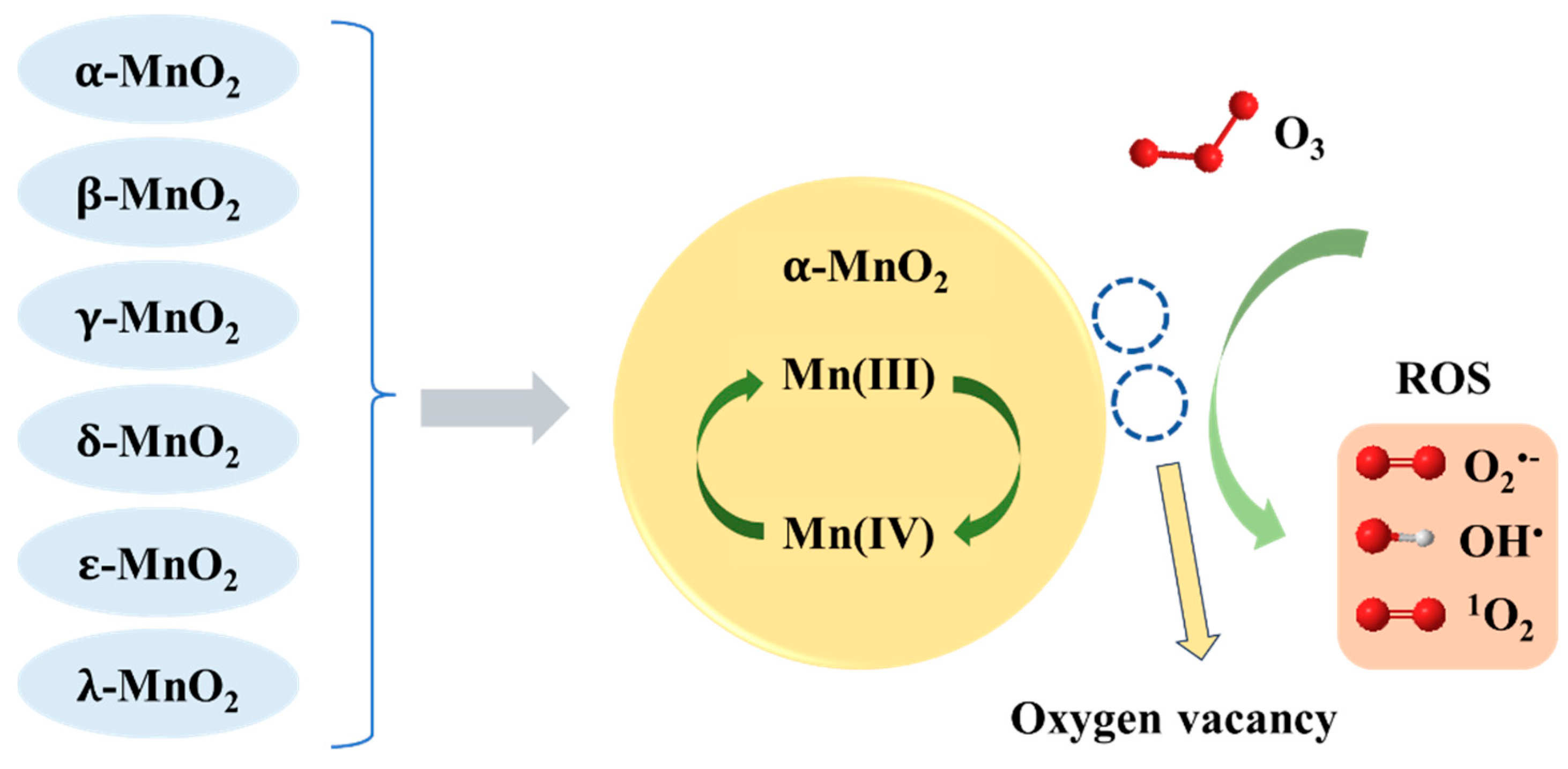
Figure 1. Classification of MnO2 and catalytic ozonation mechanism.
Water 17 03490 g001
Figure 2. Catalytic ozonation mechanism of metal–organic frameworks.
Water 17 03490 g002
Figure 3. Catalytic ozonation mechanism using metallic oxides as the support.
Water 17 03490 g003
Figure 4. Catalytic ozonation mechanism using a molecular sieve as the support.
Water 17 03490 g004
Figure 5. Schematic diagrams of devices: (a) rotating packed bed device and (b) jet injector.
Water 17 03490 g005
Table 1. The performance of metallic oxides in the degradation of PHACs during catalytic ozonation processes.
CatalystCompoundReaction ConditionsRemoval Rate (%)Mineralization Rate (%)Reference
α-MnO2Metoprolol (MET)[O3] = 0.5 mg/min
[Cat.] = 0.20 g/L
[C0(MET)] = 10 mg/L
[Time] = 30 min
pH = 7
99.62~38[61]
β-MnO24-Chlorobenzoic acid (pCBA)[O3] = 2 mg/L
[Cat.] = 50 mg/L
[C0(pCBA)] = 50 mg/L
[Time] = 120 min
pH = 7
90.40-[63]
δ-MnO2Bisphenol A
(BPA)
[O3] = 10 mg/L
[Cat.] = 100 mg/L
[C0(BPA)] = 50 mg/L
[Time] = 20 min
pH = 7
68.20-[65]
γ-MnO2Bisphenol A
(BPA)
[O3] = 15 ± 0.1 mg/L
[Cat.] = 100 mg/L
[C0(BPA)] = 50 mg/L
[Time] = 120 min
pH = 7
10051[62]
α-FeOOHSulfasalazine (SSZ)[O3] = 5 mg/min
[Cat.] = 1.5 mg/L
[C0(SSZ)] = 10 mg/L
[H2O2] = 0.1 mmol/L
[Time] = 40 min
pH = 7
96.0556.69[66]
FeO/FeOOHPhenazopyridine (PhP)[O3] = 15 mg/L
[Cat.] = 1.2 g/L
[C0(PhP)] = 0.2 mmol/L
[Time] = 120 min
pH = 6.7
98.6080.40[67]
β-FeOOH4-Chlorophenol (4-CP)[O3] = 0.6 mg/min
[Cat.] = 0.1 g/L
[C0(4-CP)] = 2 mmol/L
[Time] = 40 min
pH = 3.5
99-[68]
Al2O3Dexamethasone (DEX)[O3] = 5 mL/min
[Cat.] = 1.0 g/L
[C0(DEX)] = 10 mg/L
[Time] = 30 min
pH = 7
~100~60[69]
γ-Al2O3Ciprofloxacin (CPF)[O3] = 14 mg/min
[Cat.] = 0.55 g/L
[C0(CPF)] = 10 mg/L
[Time] = 60 min
pH = 9.5
93-[70]
Note: Cat.: catalyst dosage, C0: initial concentration of pollutant.
Table 2. The performance of carbon materials in the degradation of PHACs during catalytic ozonation processes.
CatalystCompoundReaction ConditionsRemoval Rate (%)Mineralization Rate (%)Reference
ACDimetridazole
(DMZ)
[O3] = saturated solution
[AC] = 250 mg/L
[C0(DMZ)] = 30 mg/L
[Time] = 30 min
pH = 6
~100~25[77]
MWCNTsAtrazine
(ATZ)
[O3] = 50 mg/min
[MWCNTs] = 100 mg/L
[C0(ATZ)] = 10 mg/L
[Time] = 120 min
pH = 5.25
~100~80[78]
MWCNTsSulfamethoxazole
(SMX)
[O3] = 50 mg/L
[MWCNTs] = 100 mg/L
[C0(SMX)] = 50 mg/L
[Time] = 180 min
pH = 6
~100 in
30 min
35[74]
GACIbuprofen
(IBU)
[O3] = 50,000 mg N m−3
[GAC] = 500 mg/L
[C0(IBU)] = 20 mg/L
[Time] = 180 min
~100 in
60 min
81[75]
rGOp-Hydroxybenzoic acid (PHBA)[O3] = 20 mg/L
[rGO] = 0.1 g/L
[C0(PHBA)] = 20 mg/L
[Time] = 60 min
pH = 3.5
~100 in
30 min
~90[79]
Note: Cat.: catalyst dosage, C0: initial concentration of pollutant.
Table 3. The performance of MOF catalysts in the degradation of PHACs during catalytic ozonation processes.
CatalystCompoundReaction ConditionsRemoval Rate (%)Mineralization Rate (%)Reference
Fe3O4@Ce-UiO-66Acetaminophen
(ACT)
[O3] = 0.8 mg/min
[Cat.] = 0.08 g/L
[C0] = 25 mg/L
[Time] = 10 min
pH = 7
>9914.1[83]
Fe3O4/CeZrUiO-66Ciprofloxacin
(CIP)
[O3] = 200 mL/min
[Cat.] = 0.1 g/L
[C0] = 30 mg/L
[Time] = 60 min
pH = 8
94 in
30 min
54[85]
CeOx/MnOx/C-MOFIbuprofen
(IBU)
[O3] = 23 mg/h
[Cat.] = 0.1 g/L
[C0] = 5 mg/L
[Time] = 90 min
pH = 5
~100-[86]
CM-500Cefixime
(CFX)
[O3] = 2.15 mg/min
[Cat.] = 0.5 g/L
[C0] = 20 mg/L
[Time] = 30 min
pH = 4
9766[81]
F-Fe-Zn-MCM-41 (FFeZnM)Ibuprofen
(IBU)
[O3] = 50 mg/h
[Cat.] = 0.5 g/L
[C0] = 10 mg/L
[Time] = 120 min
pH = 5
93.4 in
30 min
46.6[84]
Table 4. The performance of metal/metallic oxides loaded on supports in the degradation of PHACs during catalytic ozonation processes.
CatalystCompoundReaction ConditionsRemoval Rate (%)Mineralization Rate (%)Reference
Mn-CeOx@γ-Al2O3Ciprofloxacin
(CIP)
[O3] = 13.96 mg/L
[Cat.] = 0.08 g/L
[C0] = 50 mg/L
[Time] = 120 min
pH = 8.5
~100 in
40 min
71.2[87]
Mn-Ce@Al2O3Atenolol
(ATL)
[O3] =14.8 mg/L
[Cat.] = 0.1 g/L
[C0] = 10 mg/L
[Time] = 60 min
pH = 9.2
~10062.8[88]
γ-Ti-Al2O3Ibuprofen
(IBU)
[O3] = 30 mg/L
[Cat.] = 1.5 g/L
[C0] = 10 mg/L
[Time] = 60 min
pH = 7
~100~100[89]
Cu-Co/Al2O3Tetracycline
(TC)
[O3] = 30 mg/L
[Cat.] = 0.2 g/L
[C0] = 100 uM/L
[Time] = 30 min
pH = 4
~100-[90]
Ferromanganese oxide (MFOx) MFOx@TiO2Ibuprofen
(IBU)
[O3] = 15 mg/L
[Cat.] = 0.5 g/L
[C0] = 10 mg/L
[Time] = 30 min
pH = 7
100% in
10 min
46[91]
Cobalt and nitrogen-doped carbon (Co-NC)Sulfamethoxazole (SMX)[O3] = 15 mg/L
[Cat.] = 0.1 g/L
[C0] = 10 mg/L
[Time] = 15 min
pH = 6.1
99.1311.93[92]
MnO2-NH2-GOCefalexin
(CLX)
[O3] = 0.12 mg/L
[Cat.] = 25 mg/L
[C0] = 1 mg/L
[Time] = 5 min
pH = 6.2
50.3-[93]
MnOx/MWCNTsTetracycline hydrochloride (TCH)[O3] = 0.4 mg/min
[Cat.] = 1 g/L
[C0] = 30.2 uM/L
[Time] = 15 min
pH = 7
>8538.3[94]
Cerium-loaded natural zeolite
(CZ)
Penicillin G
(PG)
[O3] = 6 mg/min
[Cat.] = 2 g/L
[C0] = 50 mg/L
[Time] = 20 min
pH = 4.5
~99.521.2[95]
Co-Ce-SBA-15
(SBA: Santa Barbara Amorphous)
Clofibric acid (CA)[O3] = 50 mg/h
[Cat.] = 0.5 g/L
[C0] = 10 mg/L
[Time] = 90 min
pH = 4.5
98.7 in
30 min
58.3[96]
MCOs-modified ceramic membrane (CCM)Bisphenol A (BPA)[O3] = 4 g/h
[Cat.] = diameter of 2 cm
[C0] = 20 mg/L
[Time] = 60 min
pH = 6
90.6-[97]
Note: Cat.: catalyst dosage, C0: initial concentration of pollutant.
Disclaimer/Publisher’s Note: The statements, opinions and data contained in all publications are solely those of the individual author(s) and contributor(s) and not of MDPI and/or the editor(s). MDPI and/or the editor(s) disclaim responsibility for any injury to people or property resulting from any ideas, methods, instructions or products referred to in the content.