Article

Resource Monitoring and Heat Recovery in a Wastewater Treatment Plant: Industrial Decarbonisation of the Food and Beverage Processing Sector

1
School of Engineering, RMIT University, 124 La Trobe Street, Melbourne, VIC 3000, Australia
2
Trinity Business School, Trinity College Dublin, D02 PN40 Dublin, Ireland
3
Department of Civil, Structural & Environmental Engineering, Trinity College Dublin, D02 PN40 Dublin, Ireland
*
Author to whom correspondence should be addressed.
Water 2025, 17(23), 3419; https://doi.org/10.3390/w17233419 (registering DOI)
Submission received: 27 October 2025 / Revised: 27 November 2025 / Accepted: 28 November 2025 / Published: 1 December 2025
(This article belongs to the Special Issue Energy Use Assessment and Management in Wastewater Systems)

Abstract

To achieve net-zero targets globally, industrial decarbonisation is a major priority. This paper examines lost energy resources in a wastewater treatment plant (WWTP) and the deployment of novel wastewater heat recovery (WWHR) technology in the food and beverage processing industry. Four industrial WWTPs were monitored in Ireland to quantify the available embedded energy. Post monitoring, WWHR technology was developed to be integrated within existing infrastructure without compromising the primary function, and evaluated in real operating conditions. On average, 1.11–2.55 GWh/a of embedded energy was measured within the wastewater. The direct WWHR pilot plant resulted in a projected recovery rate of 10.89 MWh/a, leading to substantial economic savings and emission reductions. Incorporating a water-to-water heat pump incurred energy savings of 13.5 MWh/a. Nationally, the energy recovery potential was assessed to be 82.1 GWh/a in Ireland and 476.9 GWh/a in the UK. A large proportion of the energy embedded in this wastewater remains to be recovered and, based on the monitoring campaign, could amount to 118.5 TWh/a and 20.4 TWh/a for the UK and Ireland, respectively. WWHR could serve a prominent role in increasing operational energy efficiency of manufacturing processes by enacting energy, economic and emission savings, thus leading to industrial decarbonisation.

1. Introduction

The European Union (EU) has stepped up its ambition to obtain a climate-neutral future by setting a 55% reduction target in greenhouse gas emissions below 1990 levels by 2030 [1]. In order to mitigate the effects of climate change, provisional targets have been set to achieve improvements in energy efficiency by 32.5% and ensure renewable energy comprises 42.5% of energy generation within the EU by 2030. Of this, the industry must maintain a 1.6% annual increase in renewable energy [2,3]. In addition, the advent of a regulatory framework for environmental, social, and corporate governance (ESG) reporting has changed the industry sector dynamics, which accounts for 7% of the final energy heating use. Space and water heating end uses make up 8.7% of this total, and only 4.6% of this energy demand is supplied by renewable technology within the EU [4], a low proportion considering 23.1% of the overall primary energy for heating within the EU is supplied by renewables. In addition, the other 93.3% is subsumed by process heating and cooling, mechanical energy, lighting, electrical appliances and other end uses, primarily using fossil fuels [4]. An increase in supplied renewable energy is required for industrial decarbonisation, and the classification of embedded energy in wastewater as a renewable source of energy under EU Directive 2018/2001 and its subsequent recovery is a viable method for improving this share [5].
Waste heat can be recovered at various points within the transportation and treatment process of wastewater: local to the component, at the building level, along the sewer system or at the wastewater treatment plant (WWTP) [6,7]. From a local heat recovery perspective, an investigation by Ma et al. [8] found that waste heat recovery from low-grade waste heat (i.e., temperatures below 150 °C) within China’s iron and steel industry was only 2%. Domestically, Frijins et al. [9] found that the 7.2 million households in the Netherlands produced a theoretical waste heat potential of 56,000 TJ/a. In the UK hospitality and food service sector, Spriet and McNabola [10] demonstrated a potential heat recovery of 1.24 TWh/a using WWHR, and, within the food processing industry, approximately 60% of the embedded energy could be potentially recovered [11]. Downstream of a building in a sewer system, Schmid [12] found that 7% of Switzerland’s thermal energy demand for heating and hot water could be powered through the 15–30% of thermal energy lost after provision to buildings, depending on consumption and insulation levels, a projection of 6000 GWh/a of embedded energy. An Austrian study found the potential for thermal energy recovery of 3144 GWh/a from WWTPs assuming maximum energy recovery, demonstrating the requirements to upscale wastewater heat recovery technology (WWHR) [13]. Spriet et al. [14] found that the embedded energy for a WWTP in Tullamore, Ireland, could be used to meet a local manufacturing facility’s base load heat demand.
The variation in available embedded energy based on the location in the WWTP system and differences in the treatment system type and scale has led to the development of different forms of technological innovations targeting the exploitation of WWHR [15]. The design of WWHR is classified by the heat exchanger (HX) structure and its configuration. The former is concerned with the HX location and design, and the latter with its application. Understanding the key performance indicators such as HX area, effectiveness and operational parameters is essential to maximising the recovered heat from the total embedded energy in the wastewater [16,17]. Vertical and horizontal concentric copper HXs have been used to extract waste heat for reuse within a building’s operations. Wong et al. [18] investigated heat recovery from shower units with a counter-flow HX installed horizontally in the drain line and recovered 4–15% of the embedded heat energy. Zaloum et al. [19] found up to 1385 kWh could be recovered depending on the vertical HX design for a shower unit. For a commercial kitchen, a pilot study incorporating a vertical HX was installed in the wastewater line and recovered 240 kWh per month [20]. Using a centralised system where all of the hot wastewater is collected and stored in a tank dedicated to WWHR, a spherical HX resulted in a 34–60% recovery rate depending on the operational parameters [21]. However, the addition of dedicated WWHR infrastructure, such as storage tanks, may lead to excessive capital costs at larger scales. Murali et al. [22] adapted the concentric HX used in the shower units into a direct heat recovery array system where wastewater from a WWTP in a beef processing plant was diverted into a header supplying the array system, resulting in 14 MWh/a of energy savings.
With regard to the configuration aspect of WWHR, the recovered heat can be used in one of two ways: direct transfer to preheat water supply [23,24] or coupled to an energy system such as heat pumps [25,26]. For example, a Canadian study found that direct recovery by pre-heating the cold-water supply to a shower unit could lead to savings of 2.2–10.5 GJ/a per 100 L of hot water used in a shower [27]. In a Zambian food processing facility, a pilot WWHR system integrated into an intermittent boiler blowdown process energy recovery potential ranged from 119 to 158 MWh/a [28]. Indirect recovery also has significant potential with much larger applications, especially for WWTPs. One of the largest waste heat recovery systems in the world, located in Stockholm, Sweden, is producing 1235 GWh/a from the WWTP using water-to-water heat pumps and supplying 95,000 residential buildings [29,30]. Maddah et al. [31] found that 41 GWh/a could be recovered from casting factories in Iran with waste source water-to-water heat pumps.
A related developmental step is proposed herein, where novel WWHR technology in the form of suspended panels has been developed and deployed into a working industrial WWTP in the food processing industry. A pilot plant was installed in a sump tank, which was the nearest downstream location to the wastewater discharge from the manufacturing processes after the initial screening phase. The development of WWHR technology in this paper focuses on integrating HXs within the existing WWTP infrastructure without compromising its primary function, and to avoid the capital costs of additional infrastructure. As such, this paper aims to develop novel WWHR technology in terms of its application to industrial food and beverage processing wastewater, where the influent temperature and contaminant water quality concentrations are higher than municipal wastewater, while the volumes are lower, and significant differences exist in the pattern of wastewater production over time. This paper aims to develop WWHR technology, which is novel in terms of its design, focusing on retrofit and integration in existing WWTP infrastructure, and modularity of the HX design for widespread application.
Assessing the potential for WWHR heat recovery technology requires a series of steps from monitoring to deployment and performance assessment (Figure 1). The energy embedded in wastewater was initially evaluated at four different food and beverage manufacturing sites to ascertain WWHR feasibility in this sector and identify the most promising pilot location. A pilot WWHR system was then installed, and the heat recovery rate was evaluated at a single WWTP site. Moreover, the evaluation assessed the magnitude of the energy, economic and carbon emission savings with a direct and indirect system incorporating a water-to-water heat pump. From this and using the direct heat recovery results, the embedded energy available and heat recovery potential were projected at a national scale for the UK and Ireland’s food and beverage processing sector. The research findings within this paper will advance WWHR in the industrial sector worldwide by positively impacting their economic and environmental outcomes through increased renewable energy generation, lowering of carbon emissions and offsetting fuel costs.

2. Materials and Methods

2.1. Initial Monitoring Campaign

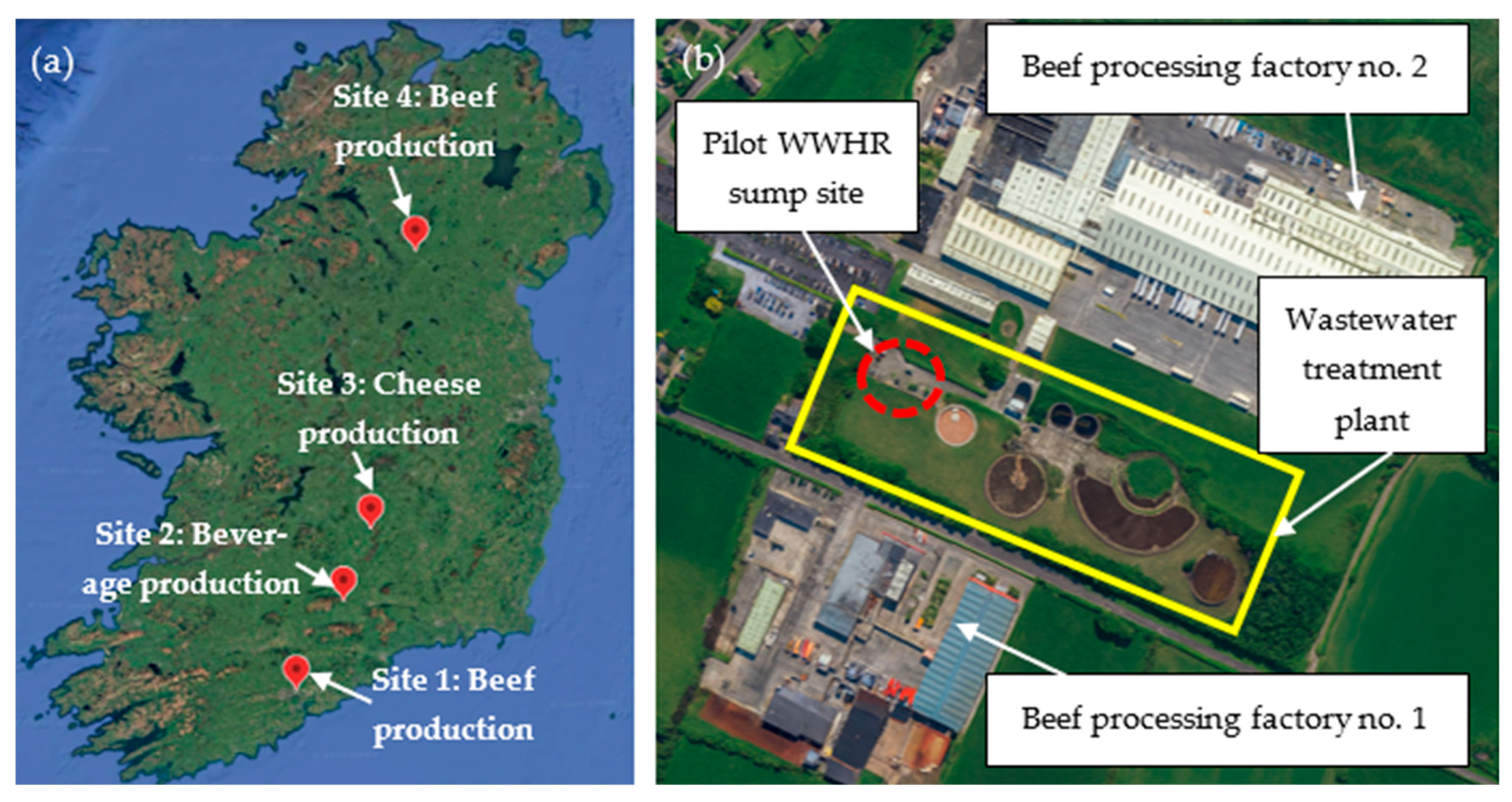
Establishing a WWHR system in the food and beverage processing industry requires an evaluation of the available embedded energy in the typical on-site industrial WWTP at production facilities. Four sites were chosen for the survey in Ireland, and their locations are shown in Figure 2a. A monitoring campaign was enacted, measuring the wastewater temperature in a WWTP sump/inlet, thus capturing the temperature profile at the nearest point to the manufacturing facility. The wastewater flow rates were supplied by the manufacturing companies, coinciding with their respective temperature monitoring period, and were not directly measured by the authors. The first site assessed was a processing plant specialising in beef production (Site 1). Murali et al. [22] previously examined temperature profiles of the WWTP inlet, outlet and dissolved air flotation (DAF) tank at this facility in order to assess the optimum location for WWHR, by considering the available energy resources, technological deployment and operability of the WWHR system. The other WWTPs at industrial production facilities where data was collected were Site 2, a beverage processing plant with a focus on soft drinks, a cheese processing plant (Site 3) and another beef processing factory (Site 4). Temperature monitoring of the wastewater was conducted in 2018 at Sites 1, 2, and 3, where data were logged between 3 January 2018 and 26 January 2018, 23 January 2018 and 15 February 2018, and 14 June 2018 and 5 October 2018, respectively. Wastewater temperature data from Site 4 were collected from 3 August 2022 to 21 September 2022, and permission was subsequently obtained for a trial implementation of novel WWHR technology. The wastewater temperature data from all sites were disaggregated further based on the time of day using box and whisker plots to allow comparison between sites. An overview of the pilot site can be viewed in Figure 2b, illustrating the wastewater supply from two separate beef processing facilities supplying a single industrial WWTP, and the location of the sump where the wastewater temperature was monitored.

2.2. Wastewater Heat Recovery Experimental Set-Up

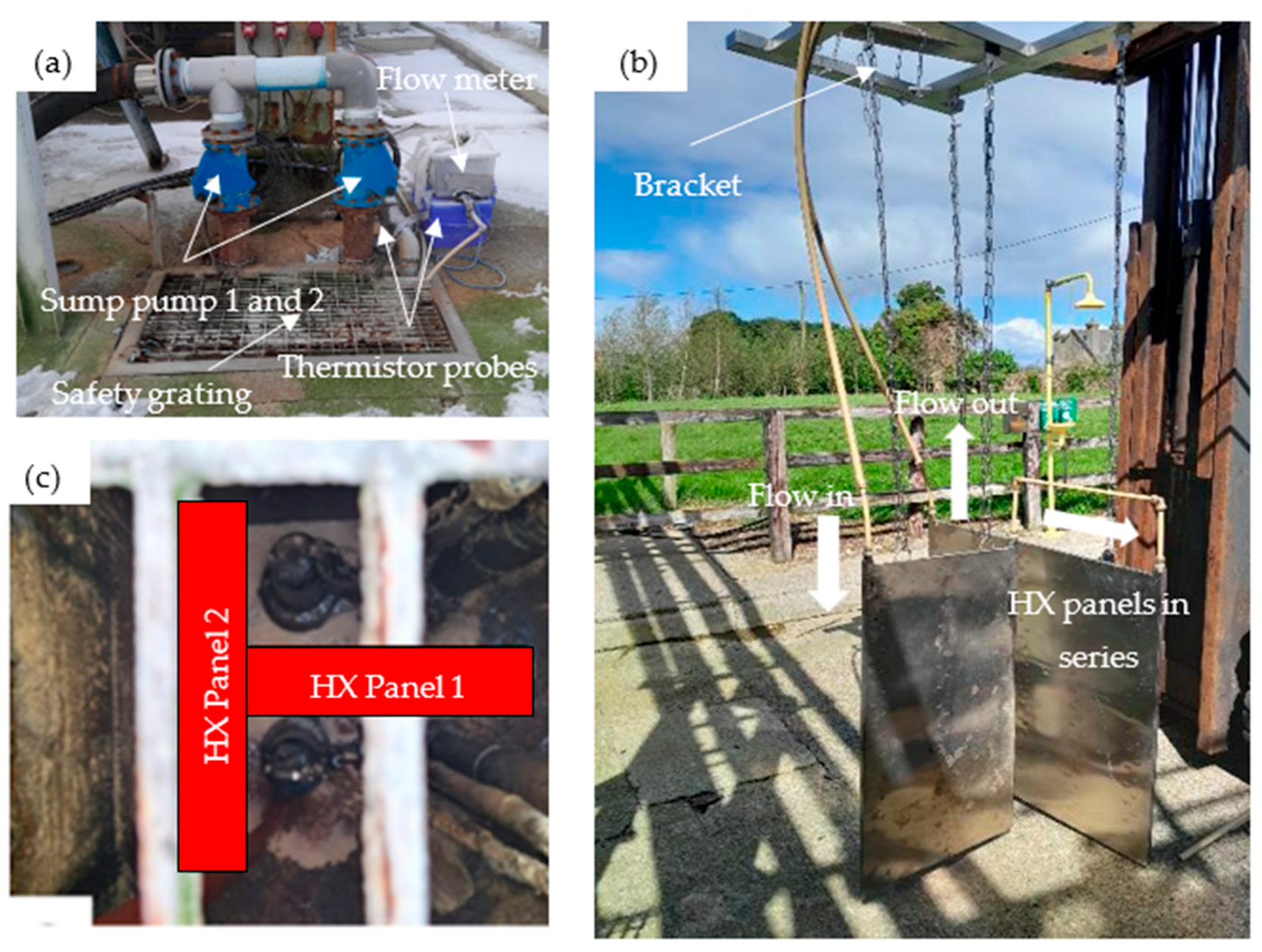
After the monitoring campaign at the four sites, a novel WWHR was developed for integration into the wastewater sump at Site 4, as shown in Figure 3a, due to the ease of access and space requirements for the experimental apparatus. A modular HX design was developed to allow its integration within the existing sump tank without interfering with the primary function of this process (pumping wastewater from this collection point to a downstream dissolved aeration flotation (DAF) tank). The modular design comprised two cuboid panels: 1 m × 0.6 m × 0.03 m (HX Panel 1) and 1 m × 1 m × 0.03 m (HX Panel 2) using 0.002 m thick stainless-steel plates with an internal 0.035 m channel profile for water flow (see Supplemental Information Figure S1 for manufacturing drawings details). These were installed in July 2024. The HX inlet was connected to a water source, supplied from the factory’s operational on-site rainwater harvesting tank, and the HX outlet looped back into the system to conserve water during testing. The HX panels were integrated within a pump sump, which was located below ground level with access from the surface (Figure 3a). The two HX panels were connected in series and suspended using a custom-made bracket installed at ground level, which allowed a safety grating to be placed on top (Figure 3b). The HX panels were positioned in a perpendicular T-shaped arrangement (Figure 3c) as space was limited by the positioning of sump pumps and the sump inlet. This layout enabled integration of the panel design in the tank without disrupting the pump operation or maintenance. Alternative layout arrangements are possible for other WWTP tank designs/functions.
Thermistor temperature probes (Lascar EL-P-TP+) and dataloggers with an accuracy of ±0.1 °C and resolution of 0.1 °C were installed upstream and downstream of the HX system, capturing temperature data (°C) for the HX inlet (Ti) and outlet (To). The HX flow rate ( m ˙ H X ) was constant and set to 1.2 m3/h, the maximum allowable input by the rainwater harvesting system and high enough to cater for a 7 kW heat pump. This allowed an energy analysis comparison of direct and indirect WWHR systems. The flow rate was verified using a 6–100 L/min RS PRO Flow Meter with a ±0.75% accuracy. In situ testing was conducted from 17 July 2024 to 10 December 2024, and the temperature data was logged every ten minutes.

2.3. Energy Recovery and Techno-Economic Analysis

The effectiveness of the WWHR system installed in the WWTP sump required a thermal evaluation of the available heating power, Q H X (kW) across the testing period and an annual evaluation of the energy, E (kWh) recovered for use. The evaluation was performed for the direct system with the annual hourly usage (t) based on the operational activity of the site. This was considered to be from 08:00 to 18:00 over a 249-day period. This accounts for the operational Monday–Friday work week and public holidays, which are typical in the UK and Ireland. It should be noted that factory operations cease at 17:00, but support staff are present on site continuously. Therefore, energy recovery was considered until 18:00, allowing for wastewater generated up to 17:00 and includes the potential for energy storage. Power and energy recovery were calculated as follows:
Q H X = m ˙ H X C p ( T o T i )
E = Q H X t
where C p is the specific heat capacity (J⋅kg−1⋅K−1). The indirect system incorporating a water-to-water heat pump was not directly measured but assessed using a linear regression model (Equation (3)) using the coefficient of performance (COP) versus the required temperature lift (TL) based on the technical performance data from 26 water-to-water heat pumps [32]. COP is a measure of the operating efficiency of the heat pump, comparing the thermal energy ( Q o u t ) produced relative to the electricity consumption ( W i n ) requirements (Equation (4)). TL stipulates the temperature difference between the low-temperature heating source and high high-temperature heat sink.
log 10   C O P = 0.01052 ( 1.012 T L )
C O P = Q o u t W i n
The replacement of fossil fuel with a renewable energy source in the form of WWHR can be evaluated for a direct and indirect system using Equations (1)–(4). A techno-economic analysis (TEA) was then used to ascertain the cost savings and discounted payback period (PBP) over the life cycle. A life cycle cost (LCC) analysis can evaluate the economic impact of displacing the energy consumption from a fossil fuel boiler, in this case, gas, with an assumed 90% boiler operating efficiency. The LCC calculation is shown in Equation (5) as the sum of the present value (PV) of the investment cost, replacement cost, end of life residual value, energy cost and operations and maintenance costs [33,34].
L C C = n = 1 p C n 1 + d n
where d , p , n and C are the discount factor, lifecycle period, current year and the cost, respectively. Fujita and Strecker [35] sampled the weighted average cost of capital in order to determine the average discount factor in various sub-sectors of an economy. They found for the food processing industry, an average discount factor of 7.3% and it was selected for this reason. For the direct system, a life cycle period of 12.5 years was chosen based on an analogous periodical replacement or end-of-life comparison to stainless steel piping in a WWTP [36]. A 25-year life cycle was selected for the indirect system incorporating the water-to-water heat pump [37,38] with a replacement of the HX panels in 12.5 years.
The gas price rate in Ireland for a business is divided into five bands (I1–I5) with varying unit prices dependent on the total annual usage. The unit price is given as 0.12, 0.086, 0.068, 0.053 and 0.032 EUR/kWh with a 3.4% escalation rate and was extracted from the Irish national fuel price database for commercial businesses [39]. The electricity price bands (IA–IG) unit cost follows the same principle of total usage with rates of 0.3534, 0.33, 0.2728, 0.2334, 0.2195, 0.2102, and 0.192 EUR/kWh. For simplicity, when analysing the indirect system, I1–IA, I5–IG, and I1–IG and the average across the bands were paired for analysis, allowing an impact analysis of the effect that different fuel prices and systems have on PBP. The final requirement for the LCC analysis is the capital cost to manufacture the two HX panels and purchase a 7 kW heat pump. Spriet and McNabola [32] also developed a power regression model using the catalogue price for the 26 water-to-water heat pumps, comparing the rated power with the price per kW. This is expressed as
p r i c e   p e r   k W = 8831 ( Q o u t 1.09 )
Using Equation (6) results in a water-to-water heat pump capital cost of EUR 7412, and the HX panels manufacturing costs as per the supplier were EUR 2000. The cost of labour and ancillary equipment was neglected, as this can be highly variable and dependent on location, the work being carried out by an independent contractor, or an internal maintenance team. Hence, the direct system’s total capital cost amounted to EUR 2000 as the cold supply would be fed from an existing line within the facility, and the indirect system, incorporating a water-to-water heat pump, is EUR 9412. Maintenance costs of EUR 249 and EUR 149 per annum for a heat pump and gas boiler, respectively, were taken from Bord Gáis Energy, a privately owned utility company specialising in boiler servicing [40].
Finally, introducing a WWHR system into the supply of energy to the factory operation will result in an improved operational carbon footprint, leading to a positive impact on the environment, a key component of ESG standards. The operational emissions have been assessed using the recovered energy and a conversion factor of 0.204 kg CO2e per kWh for gas and 0.2548 kg CO2e per kWh for electricity [41]. The whole life cycle carbon assessment was analysed by incorporating the embodied emissions from the HX panels and water-to-water heat pump. In addition, as both the UK and EU operate a broadly similar emissions trading scheme (ETS), a separate LCC was carried out for the direct and indirect systems, incorporating potential fines of EUR100 per tonne of excess CO2e emissions [42] and will be based on the WWHR emission offset rates.

2.4. Food and Beverage Process Market Composition

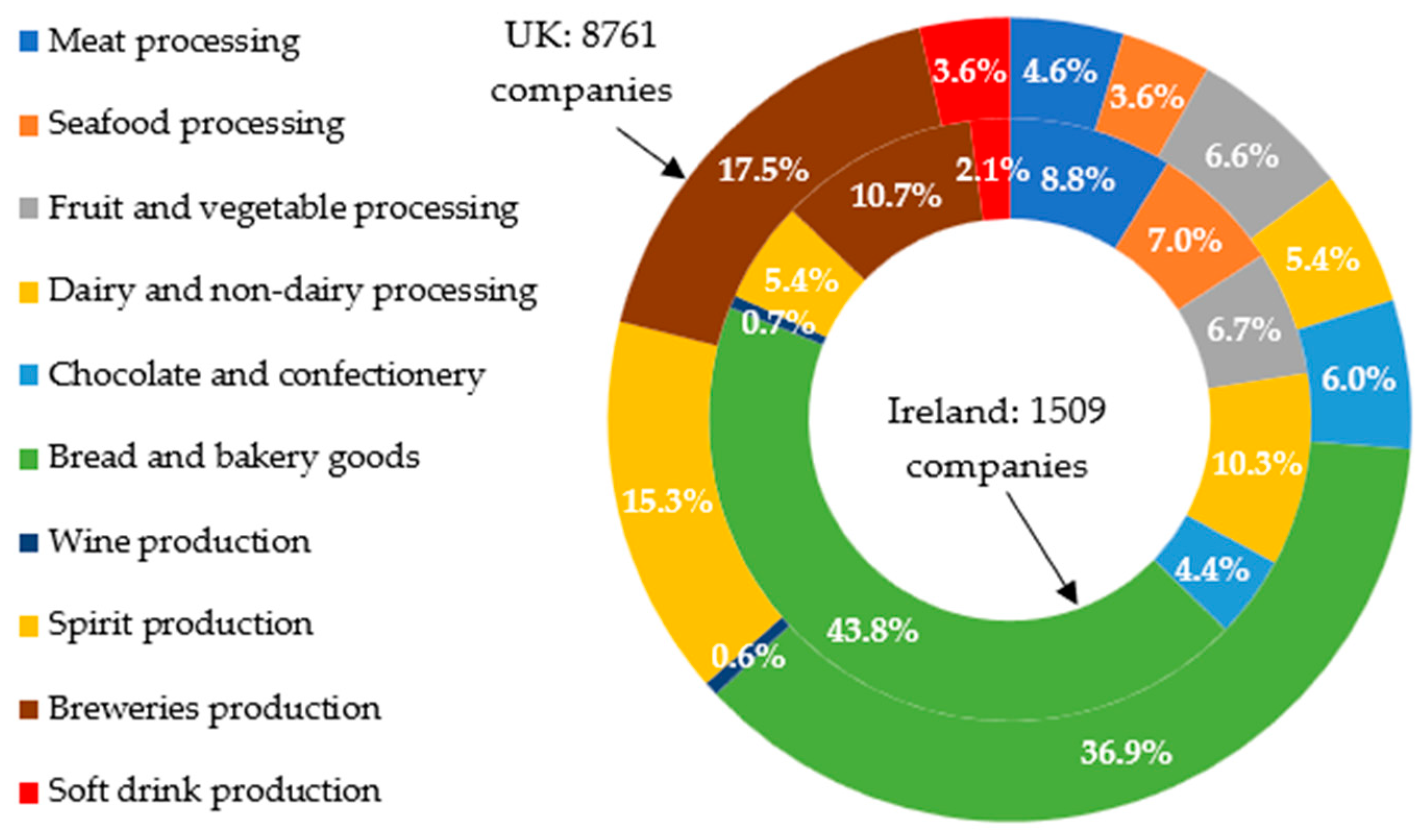
The monitoring campaign and heat recovery assessment had two main goals: to identify the available embedded energy across multiple food and beverage processing facilities and to estimate the potential for recoverable energy at scale using the modular HX panels (see Figure 3). A sector-wide analysis was carried out, which involved a disaggregation of the food and beverage processing industry into its respective market categories. Two countries with a similarly developed infrastructure and heritage in the food and beverage processing industry, but with vastly different levels of economic output, were chosen for evaluation: the UK and Ireland. Using IBIS World, a leading provider of industry market research, reports, and statistics [43], the total market size for the UK and Ireland in the food and beverage industry was found to contain 8761 and 1509 companies, respectively. This total was aggregated from the 11 sub-sectors identified in Figure 4 and was used to extrapolate the available energy resources at a national scale that are currently lost and possibly recoverable in WWTPs.

3. Results and Discussions

3.1. Embedded Energy in the Wastewater from Four Food and Beverage Processing Industries

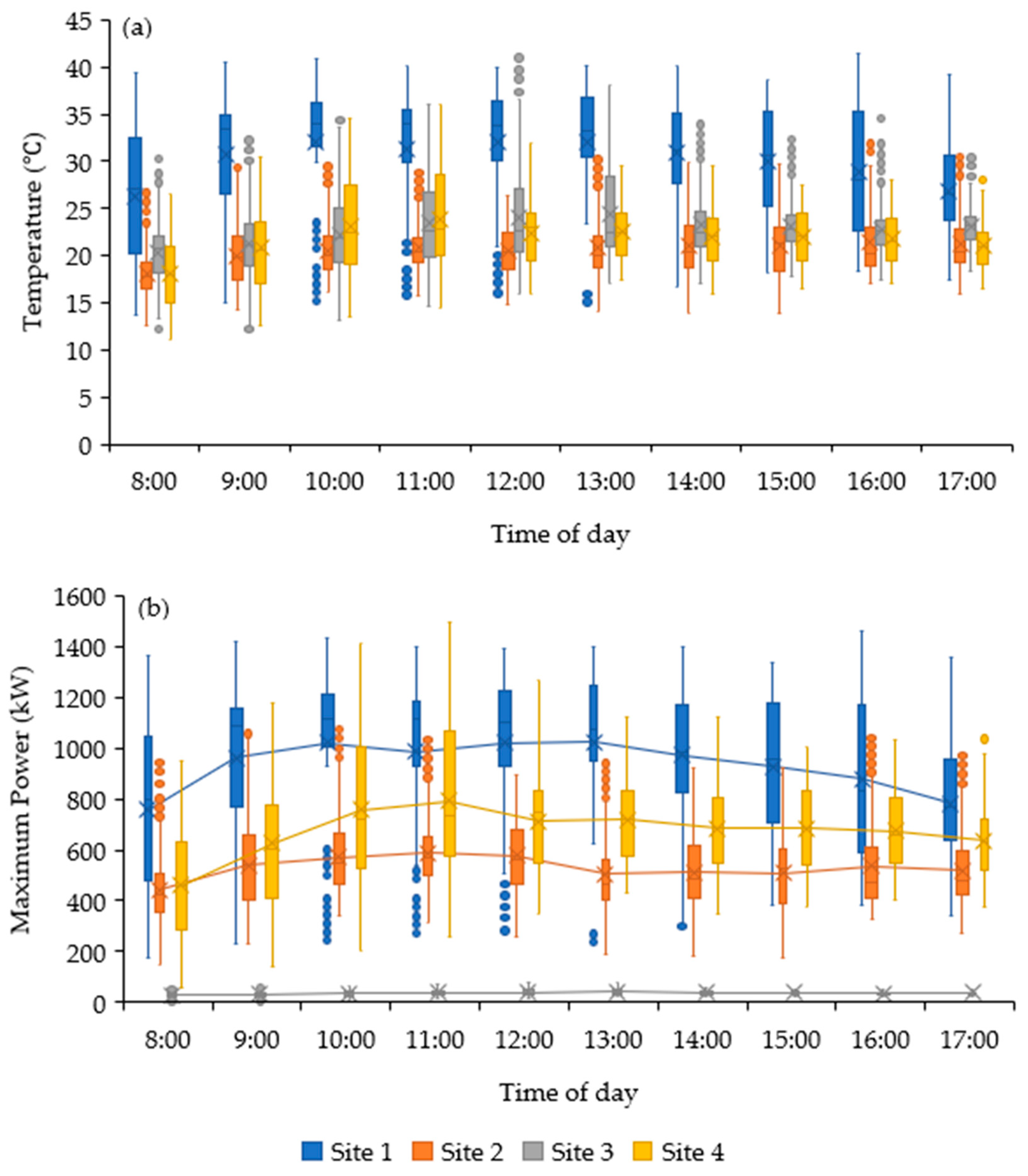
The monitoring campaign was focused on examining the wastewater temperature in four different sites and, by extension, the embedded energy. Site 1, a beef processor, had the highest wastewater average and median temperatures across the operational factory hours (Figure 5a). The average temperature ranged from 26.3 to 32 °C during an 08:00–17:00 time period, and peak temperatures approached 40 °C. These temperatures should be considered in light of the average ambient temperature in Ireland of 9.8 °C. The measured data had a more negative skew in the morning, where the average and median temperatures aligned for a more equal distribution in the afternoon. In the case of Site 2, the wastewater from the beverage production had the lowest average temperatures throughout the day, ranging from 18.1 to 21.5 °C, with a maximum of approximately 28 °C. The dairy production at Site 3’s average wastewater temperature mostly exceeded that of Sites 2 and 4 at 20–24.4 °C, whereas Site 4’s wastewater temperature ranged from 18 to 23.8 °C. In contrast to Site 1, the temperatures for Sites 2 to 4 are slightly more skewed towards wastewater temperatures higher than the median. The maximum variation (i.e., whisker) was 29.9 °C, 38.1 °C, and 36 °C for Sites 2, 3 and 4, respectively.
It should be noted that the wastewater temperatures are not only dependent on factory production rates and processes used, but also on the distance between the wastewater measurement point and the production source. This can be clearly seen with Sites 1 and 4, which are both beef processing facilities but have very different wastewater temperature profiles. To ascertain the available power in the wastewater system, the flow rate is required and an assumption about the minimum operating temperature of the fresh water supply in the HX (assumed to be 10 °C here), if the maximum WWHR is achievable. For this, the average daily wastewater flow rate was provided by the companies and not directly measured by the authors. Sites 1, 2, 3 and 4 wastewater flow rates were found to be 40, 47, 2.5 and 49.5 m3/h, respectively. This results in a very different site-by-site comparison as illustrated in Figure 5b.
Site 3 had a drastically lower power range as the dairy production is small in scale based on their volume of wastewater production per hour, although there is still, on average, approximately 30 kW of power available. The thermal power of the other three sites (1, 2 and 4) has far greater production capacity based on their wastewater flow rates. Across these three sites, the average power ranges from 444 to 1024 kW, a substantial loss of green energy resource to the environment per facility. The total annual amount of energy embedded in this wastewater, based on ten hours per day across 249 days per year (excludes weekends and public holidays), equates to 1.11–2.55 GWh/a per facility.

3.2. Pilot Heat Recovery Analysis in a Wastewater Sump

3.2.1. Direct Heat Recovery System

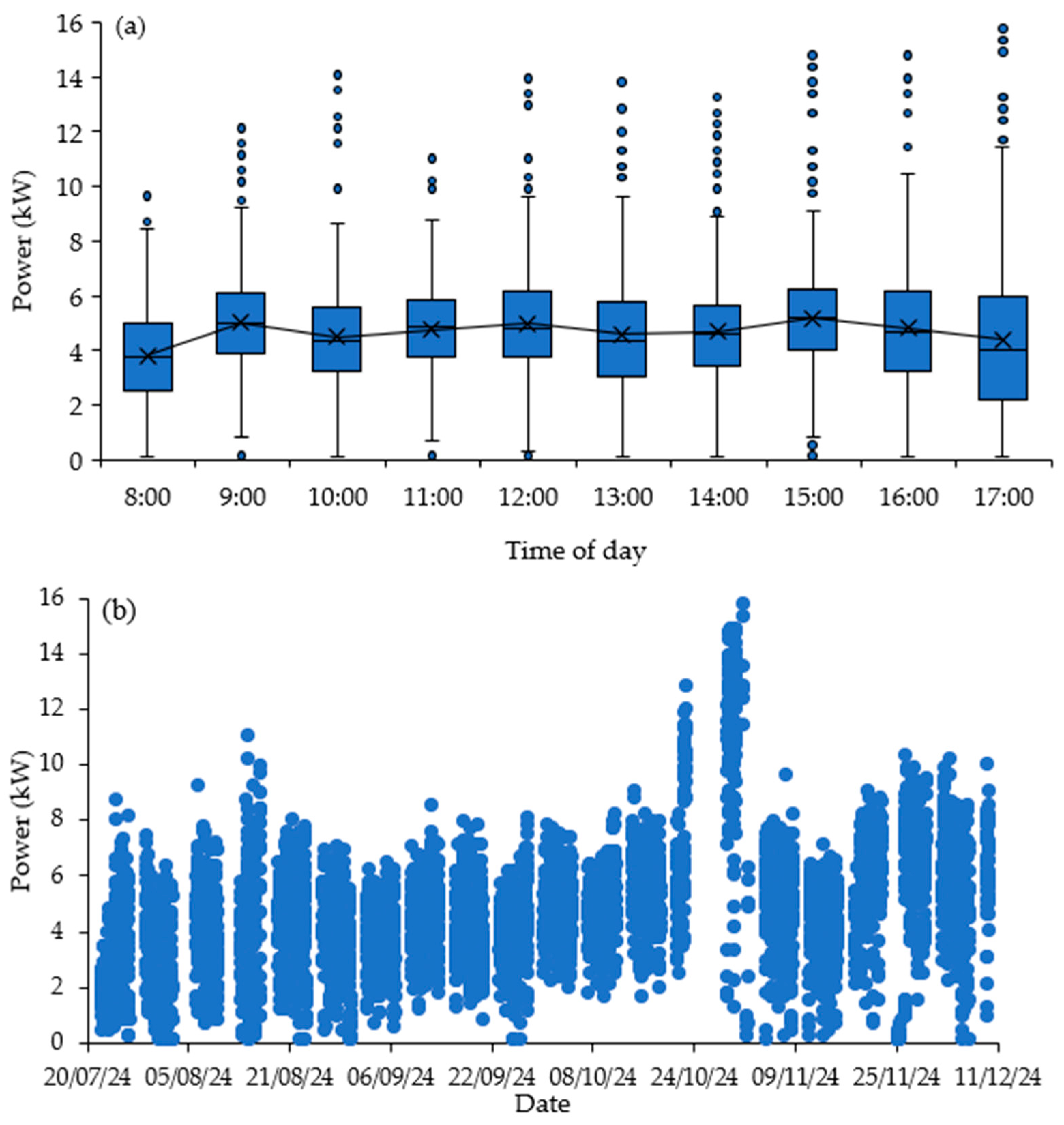
The pilot WWHR system testing began in July 2024 at Site 4 to evaluate the available power and energy usage in the HX system. Similarly to the monitoring campaign for the available energy resources, the heating power was only assessed from Monday to Friday during operational hours (Figure 6a). Site 4’s main manufacturing activity occurs from 08:00 to 17:00, but data up to 17:59 were included as residual heat remains after the working shift ends. The thermal power was fairly consistent over the day, albeit with a large spread of data, yielding an average of 4.5–5.2 kW throughout the day, with the maximum whisker fluctuating from 8.6 to 11.4 kW and the lower range approaching 0. A drop off can be seen based on power distribution towards the end of the day when the factory’s operations are winding down. Again, if considering the factory operation using the recovered heat over the entire testing period of 97 days at ten hours per day and extrapolating for the year (assuming 249 days of operations), the two HX panels in series recovered 10,874 kWh/a of energy. The trends in Figure 6b show that over the testing period, there was no substantive drop in the HX performance. This indicates the HX panels are not degraded by fouling, which would limit the rate of long-term heat transfer. Some spikes in temperature were observed in October that coincided with holidays and were attributed to plant shutdowns, leading to a build-up of energy in the panels.
The wide array of power available is the result of cold-water temperature, wastewater temperature, flow rate and depth variation. The HX inlet supply water temperature will fluctuate as a rainwater harvesting system was used, which is exposed to the ambient temperature. For the wastewater, the sump water levels change using a low and high limit switch controlling the pumps, with the panels located at the minimum allowable depth in the sump. Therefore, periods will occur where the HX panels are only partially submerged due to their 1 m depth and the offset distance of the panel bottom and sump floor (which was not measurable due to health and safety restrictions in confined spaces with wastewater). The wastewater flow rates and temperatures are also not consistent throughout the day and are based on the facilities’ outputs. Again, a limitation of this study occurred as neither was measurable during testing, so as not to impede the maintenance operations long-term and through the inability to safely access the system. For this reason, only the power is assessed in Figure 6 as each variable will influence the heat recovery rate in the HX system. Future work should seek to correlate the impact each variable has upon the heat recovery using lab-scale experiments or computational models.

3.2.2. Indirect Heat Recovery System Incorporating Water-to-Water Heat Pump

The HX system was deliberately configured to also allow the incorporation of a 7 kW water-to-water heat pump into the system. The linear regression model for COP vs. temperature lift (Equations (3) and (4)) was used to estimate the COP based on the temperature of the heating circuit at 35, 45 and 55 °C. The average temperature from the HX outlet was used to assess COP (Table 1) and was found to range from 4.37 to 7.1, an excellent operating efficiency range and improvement on the reported estimated COP of 3.29 [4]. A standard deviation (S.D.) of 3.02 °C was found with the outlet temperature and correlated to the ambient weather conditions, as the HX water supply becomes colder in the winter, COP is reduced. Hence, the 7 kW water-to-water heat pump could supply 17,570 kWh/a of thermal energy at the expense of 2467–4004 kWh/a of electrical energy consumption, depending on the operating heat sink temperature. Although it should be noted that for the size of the facilities at Sites 1, 2 and 4, the HX system would need to be scaled up for a much larger water-to-water heat pump; the test here is a viability assessment. The sump itself could readily support more HX panels on the walls and suspended in the tank without interfering with the pumping operations. This would increase the surface area and allow for a greater HX flow rate. Based on the embedded energy configured from Figure 5, a small fraction of the energy has been recovered, but at a larger scale, further assessment would be required on the optimum number of panels in relation to the heat transfer efficiency as the wastewater temperature decreases.

3.3. Techno-Economic Analysis and Carbon Assessment of the HX System

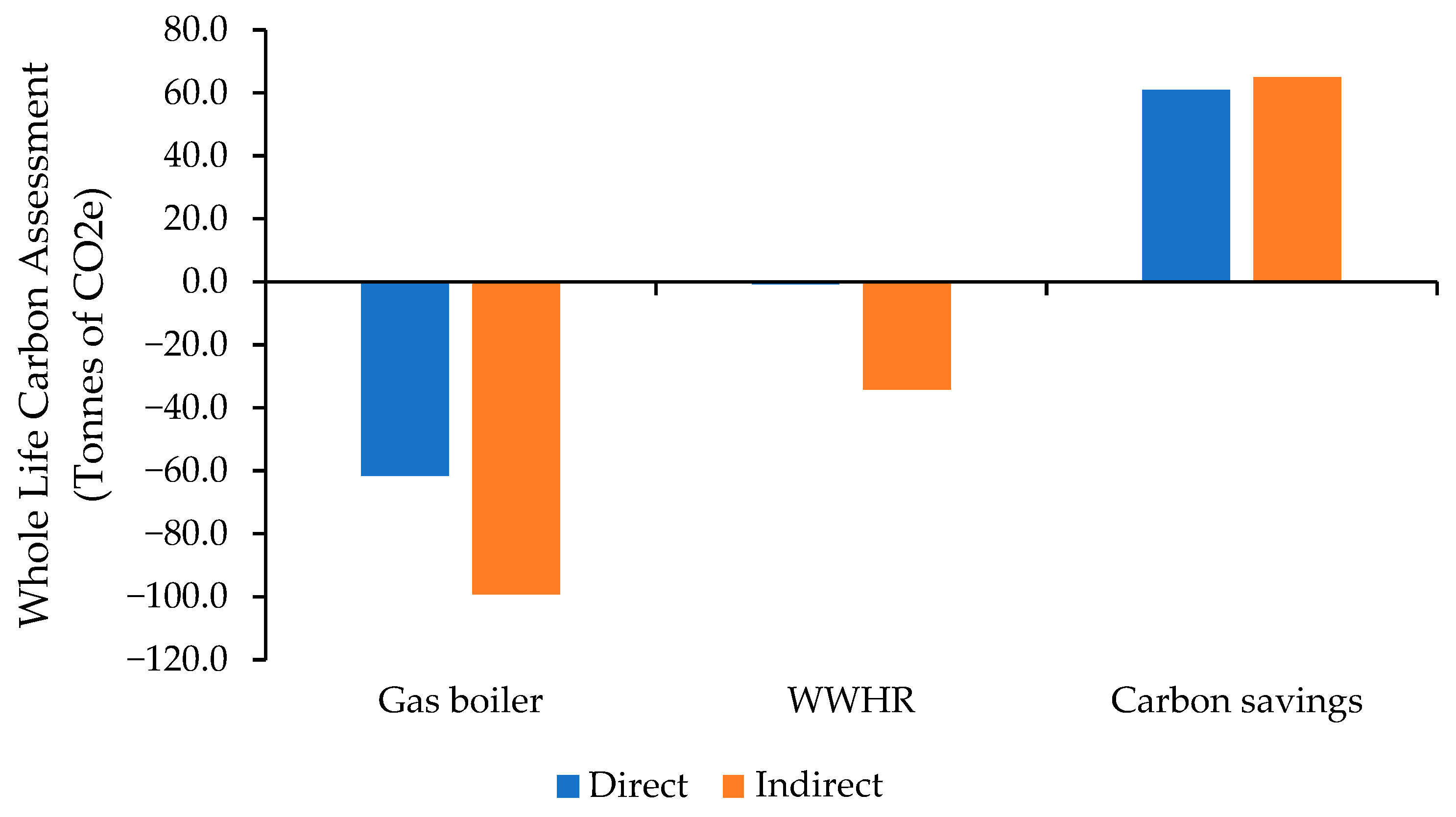
The WWHR system set-up will have a major impact on the whole life carbon emissions of the WWTPs. The system was evaluated assuming that the gas boiler (used for comparison as the base case) would not need replacement in the next 25 years, and so only the operational energy consumption was evaluated. For the WWHR, both operational and embodied carbon were considered for the direct and indirect systems. With stainless steel, an embodied carbon emission coefficient of 5.01 was used based on an LCA analysis of components in the water infrastructure sector by Georgiou et al. [44] with the HX panel weights of 45 kg and 27.17 kg. The water-to-water heat pump embodied emissions were estimated using a 0.08 CO2e/kWh factor as given by Finnegan et al. [45]. The results illustrated in Figure 7 show that over the 25-year life cycle, the direct system’s carbon emission savings of 60.9 tonnes of CO2e emissions are slightly less than the indirect WWHR system’s 64.9 tonnes of CO2e emissions. This means the addition of the heat pump’s embodied emissions did not outweigh the operational emission savings, and the whole system has a lower carbon footprint.
The development of any new engineering system needs to be financially attractive for prospective customers, in this case, the food and beverage processing manufacturers. This TEA examined the economic viability of incorporating direct and indirect system set-ups into the manufacturing facility’s operation. The most important aspect here is the energy cost per kWh for a business, and this typically is lower for a company with major operational activities, a large market share, and a high carbon footprint. The results from Table 2 show that discounted PBP can be achieved using a direct WWHR system within two years for fuel band I1 (0.12 EUR/kWh) and extending to 4 years for the lowest fuel band I5 (0.032 EUR/kWh). The PBP was reduced by one year in some instances, with an ETS non-compliance penalty applied. With an assumed 12.5-year lifespan, the system will incur significant savings for any potential WWHR technology adopter.
The indirect system was examined with an output of 55 °C hot water, as these types of manufacturing processes typically use water at 80 °C or higher, where there is a demand for steam. A water-to-water heat pump is not typically capable of achieving this and is usually part of dual dual-source heating network (either boosted using an electrical immersion or a gas boiler). The LCC analysis found that an indirect approach is more susceptible to the fuel price difference between gas and electricity. The results show that (1) when the two highest rates for gas and electricity (I1–IA) were used, a 14 year discounted PBP occurred, lowering to 10 years with an ETS non-compliance penalty; (2) for the lowest fuel prices, the renewable system becomes non-viable (NV) (3); with the highest gas price band and lowest electricity band, discounted PBP is achieved in 7 (with) and 8 (without) years the ETS penalty applied; and (4) the NV threshold is passed with a life cycle loss of −EUR 3754 or −EUR 735 using the average price across the fuel bands. All in all, given that the level of energy and gas usage is tied to the fuel band (i.e., the more energy used, the less the business pays), this means that a business using a large supply of electricity and a low supply of gas will benefit from installing the indirect WWHR. If the opposite is true, it will not be financially feasible to proceed. It should be noted that for both system types, the annual energy savings in this assessment assume no loss of energy to the environment in transit to the manufacturing facility from the WWTP and the additional labour and ancillary equipment costs for integration into the facility were also neglected.

3.4. Heat Recovery at a National Scale: A Disaggregated Analysis of the Food and Beverage Processing Industry

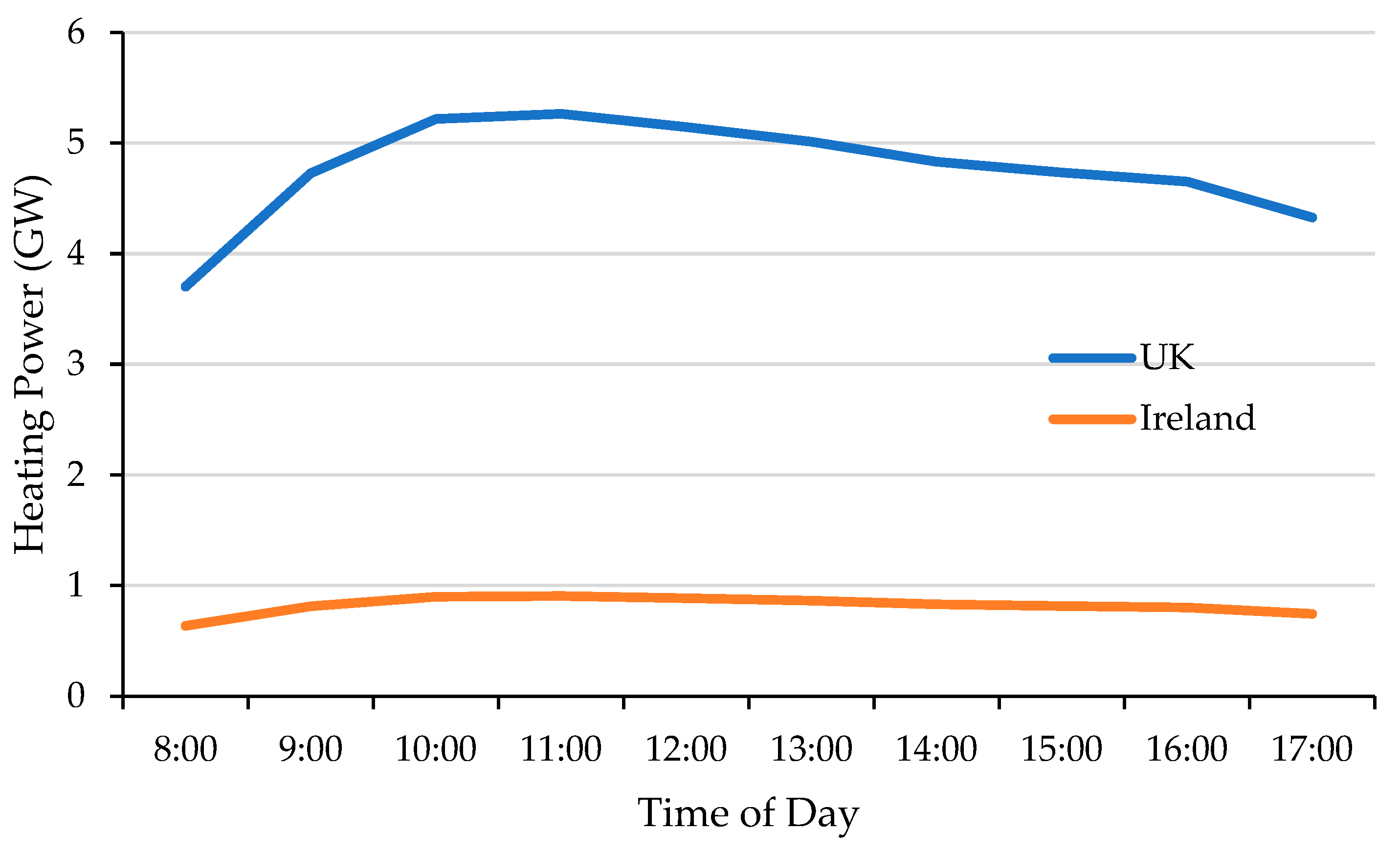
The food and beverage processing industry is one of the largest manufacturing sectors in the UK and Ireland, and a major user of fossil fuels in their activities. A large quantity of heat is wasted as a byproduct in their manufacturing processes into the environment. To ascertain the available energy resources embedded in the sector’s wastewater at a national scale, the four monitored sites were amalgamated to provide an extrapolation correlated with the number of businesses operating in the sector, thus providing an indication of the national overview. The maximum heating power on average available throughout the UK and Ireland from 08:00 to 17:59 in WWTPs corresponding to the food and beverage processing sector ranges from 3.7 to 5.3 GW and 0.6 to 0.9 GW (Figure 8), respectively. If evaluated over the 10 h and 249 days of operational activity per annum, using a daily average and assuming maximum energy recovery, 118.5 TWh/a and 20.4 TWh/a for the UK and Ireland of embedded energy could be available, respectively. Therefore, a substantial amount of thermal energy is currently dissipating into the environment, which could be transformed into a vital component of the sector’s decarbonisation and transition towards greener operating practices. This is in line with Neugebauer et al.’s [13] Austrian study, where 632 WWTPs were assessed for their potential for WWHR (out of 1842 WWTPs in 2012), with an assumed wastewater temperature of 10 °C, wastewater cooling to 5 °C with heat recovery and 1148 million m3/a of flow. The results here found a recovery rate of 3.1 TWh/a. In this study, more companies are assessed in the UK and Ireland, and the actual average wastewater temperatures are higher based on the actual sensor data. Considering Ireland and Austria have similar gross domestic products, there are clearly many TWhs of energy being lost annually at a national scale.
While the embedded heat formulation assumes ideal WWHR conditions where all the energy is extracted, lowering the wastewater temperature to 10 °C, achieving this in reality is unlikely. Another limitation of this ideal WWHR analysis is that the company size bias was not considered. Therefore, a more conservative estimate of the annual energy recovery can be projected for the entire sector using the WWHR data from the pilot system. A large scope exists for the expansion of the HX system in the WWTP sump, whereby additional panels on the walls and suspended from the ceiling could be installed. In this case, it is assumed that the HX surface area can be increased by a five-fold minimum. Exact measurements of the sump dimensions were not possible due to the inherent safety risk, but this could easily be accommodated with a wetted depth of 1–4 m and apparent minimum length and width of 2–3 m. A five-fold increase was chosen as a reasonable estimate for five 1.6 m × 1 m × 0.03 m HX panel installations.
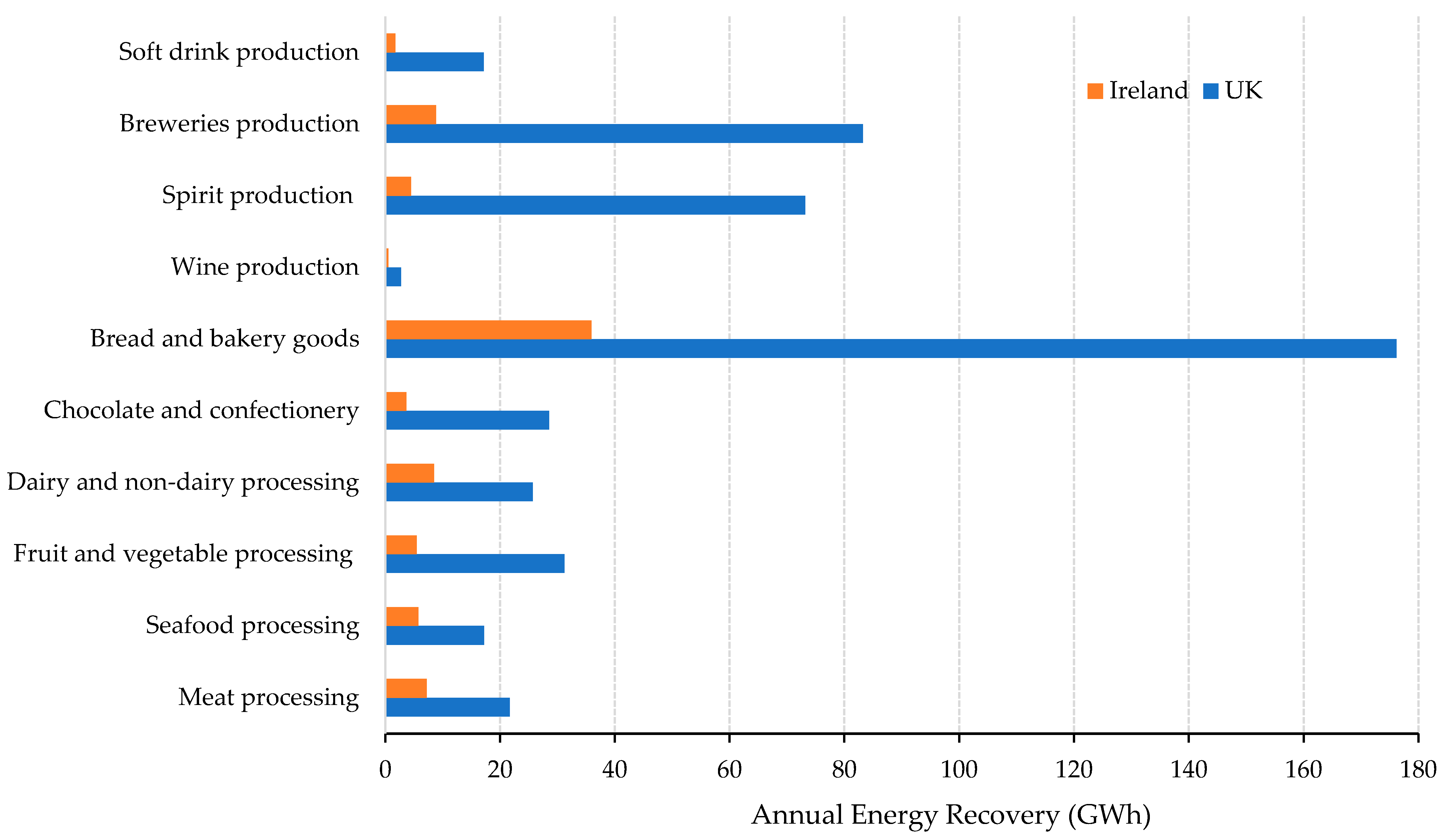
The results from Figure 9 break down the available recoverable energy across a ten-hour working day with a Mon-Fri operation in each sub-sector of the food and beverage processing industry. It is projected that the total amount of recoverable thermal energy for the UK and Ireland is 476.9 and 82.1 GWh/a, respectively, with the direct system set-up. From an operational carbon emission perspective, this equates to 97.29 kt CO2e/a of emission savings in the UK and 16.75 kt CO2e/a in Ireland. For comparison, a Zambian WWHR study [46] in the food and beverage processing industry found a heat resource of 8.4 GWh/a could be recovered nationally from blow downs and cleaning-in-place processes, for 36 registered companies, again demonstrating a need for innovation and scale-up in this sector. Additionally, both Mancusi-Ungaro et al.’s [46] and Neugebauer et al.’s [13] results are based on assumed theoretical energy recovery rates. In this study, the innovation and practical implications arise from a real-world WWHR field test in a WWTP where the energy recovery rates are physically quantified. This is a first-of-its-kind retrofittable and modular HX system installed at the wastewater system’s entry point, extracting energy before significant wastewater cooling can occur.

3.5. WWTP Sump Designs

The results from the study were positive and demonstrated the viability of WWHR irrespective of the high nutrient content and solids concentration in the primary screened wastewater found in the sump. The modular and integrated design of the HX panels was shown to have no impact on pump operations or downstream wastewater treatment. The vertical nature of the HX panels and the shear force of the incoming flow appeared to prevent any notable build-up of fouling biofilms over the 97 days of operation, as evidenced by the thermal power trends. Although biofilm will naturally form over a longer period of time, more testing is required to determine when this might occur. The system tested here was, however, a scaled prototype and only extracted a small annual proportion of the embedded energy in the wastewater. For the system to be scaled up, additional designs will need to be considered that will increase the surface area of the HX panels and be tested in the future. One option is to retrofit the sump chamber, adding panels to the walls and suspending more in the centre of the chamber. Future investigations will need to assess the optimum HX surface area requirements and impact on the HX system’s effectiveness as the wastewater cools. The difficulty in this is not only the work or technological means, but the health and safety aspect of physically entering the confined chamber, where guidelines must be developed and enacted for retrofit work.

3.6. Impact of Electrical Grid on the Economic Viability of Heat Pump Integration into WWHR and Government Policy

Another major takeaway from this study is the influence energy prices have on the adoption of renewable energy technology in industrial decarbonisation with regard to economic viability. It should be noted that the LCC analysis was limited to Ireland, as the UK will have a different set of fuel band rates compared to Ireland (and internally across England, Wales, Scotland and Northern Ireland), which are typically lower for both gas and electricity. For this reason, the national comparison was restricted to annual energy recovery only. Still, over a 25-year LCC, the indirect WWHR system was unviable in some instances due to a large difference in current unit prices between electricity and gas. The water-to-water heat pump was projected to have a COP of 4.37 at 55 °C when integrated into the WWHR system, which means the ratio of electricity to gas unit price cannot exceed this for the system to be viable. In many facilities, the largest energy users will be on the lower usage rates, thus disincentivising corporations from adopting renewable systems. Government policy should address two key areas to circumvent this issue: a reduction in the electrical grid’s emissions, leading to a lower carbon emission factor, and addressing the disparity in the electrical and gas unit prices. Narrowing the cost difference between the unit energy prices of both should lead to more uptake in heat pump technology. This can be achieved either through a greater carbon tax on gas usage or cost reductions in the electrical unit price by incorporating more sustainable and cost-effective energy generation infrastructure into the grid. Finally, policy should also simultaneously address regulating green technology usage and increasing the non-compliance penalties for EU and UK ETS emission targets as part of an industrial decarbonisation strategy.

4. Conclusions

The paper analysed the available embedded energy in industrial WWTPs for the food and beverage manufacturing industry and demonstrated a novel approach to extracting energy from a WWTP sump tank using modular cuboid HX panels integrated within an existing infrastructure and submerged in highly concentrated wastewater streams. The system was found to operate efficiently with no evidence of fouling degrading the heat recovery rate over a nearly six-month pilot study period. Industrial decarbonisation is growing in prominence, and novel renewable energy technology is needed to speed up this transition. The findings from this study demonstrated that a substantial amount of energy is being lost into the environment in WWTPs, and significant energy, emission and cost savings associated with the deployment of WWHR technology into the WWTP’s sump could be achieved. This WWHR technology could offset both space and/or process heating and cooling.
Firstly, the monitoring campaign across the four food and beverage manufacturing sites found an average of 1.11–2.55 GWh/a of energy embedded in the wastewater, depending on the operational output of the facility. Secondly, the subsequent WWHR deployment and testing found 10,874 kWh/a of energy would be recovered using a direct system and 13,499 kWh/a for an indirect system incorporating a water-to-water heat pump, achieving whole life carbon emission reductions of 60.9 and 64.9 tonnes of CO2e, respectively. From a financial perspective, LCC savings of EUR 3946 to EUR 16,679 for the former and loss/savings range of −EUR 12,962 to EUR 17,721 for the latter were projected, which is dependent on the unit cost of gas and electricity and compliance with their industry ETS allowance. Thirdly, at a national scale, using market research data for the sector, the estimated aggregated maximum WWHR potential available across the UK amounts to 118.5 TWh/a and 20.4 TWh/a for the Republic of Ireland. Using the WWHR technology developed here, and assuming that the panels could be retrofitted to increase the surface available for heat transfer, 82.1 GWh/a of energy could be recovered in the Republic of Ireland and 476.9 GWh/a in the UK. The study has found that a viable source of renewable energy exists in such WWTPs and demonstrated novel technological advancement for extraction, thus contributing to industrial decarbonisation of the food and beverage processing industry.

Supplementary Materials

The following supporting information can be downloaded at: https://www.mdpi.com/article/10.3390/w17233419/s1, Figure S1: (a) HX Panel 1 (b) HX Panel 2.

Author Contributions

Conceptualization, B.C., P.C., M.K.M., L.G. and A.M.; methodology, B.C., M.K.M., L.M., L.N. and A.M.; formal analysis, B.C., P.C., M.K.M., L.G., L.M., L.N. and A.M.; investigation, B.C., P.C., M.K.M., L.G. and A.M.; resources, P.C., L.G. and A.M.; writing—original draft preparation, B.C.; writing—review and editing, P.C., M.K.M., L.G., L.M., L.N. and A.M.; visualisation, B.C.; supervision, P.C., L.G. and A.M.; project administration, A.M.; funding acquisition, P.C., L.G. and A.M. All authors have read and agreed to the published version of the manuscript.

Funding

The authors would like to acknowledge that this research was partly funded by Enterprise Ireland through the Commercialisation Fund, award number CF20221928. The views within this study are those of the authors and do not represent the funding agency or site operator.

Data Availability Statement

The original contributions presented in this study are included in the article. Further inquiries can be directed to the corresponding author.

Conflicts of Interest

The authors declare no conflicts of interest.

References

  1. European Commission, Directorate-General for Climate Action. Communication from the Commission to the European Parliament, the Council, the European Economic and Social Committee and the Committee of the Regions, Stepping Up Europe’s 2030 Climate Ambition Investing in a Climate-Neutral Future for the Benefit of Our People. 2020. Available online: https://eur-lex.europa.eu/legal-content/EN/TXT/?uri=CELEX:52020DC0562 (accessed on 20 July 2023).
  2. European Commission. Accelerate the Rollout of Renewable Energy. European Green Deal: EU Agrees Stronger Legislation to Accelerate the Rollout of Renewable Energy. 2023. Available online: https://ec.europa.eu/commission/presscorner/detail/en/IP_23_2061 (accessed on 20 July 2023).
  3. Considine, B.; McNabola, A.; Kumar, P.; Gallagher, J. A Numerical Analysis of Particulate Matter Control Technology Integrated with HVAC System Inlet Design and Implications on Energy Consumption. Build. Environ. 2022, 211, 108726. [Google Scholar] [CrossRef]
  4. Directorate-General for Energy (European Commission); E-Think; Fraunhofer ISI; TU Wien; Viegand Maagoe; Öko-Institut e.V.; Kranzl, L.; Fallahnejad, M.; Büchele, R.; Müller, A.; et al. Renewable Space Heating Under the Revised Renewable Energy Directive: ENER/C1/2018-494: Final Report; Publications Office of the European Union: Luxembourg, 2022. [Google Scholar] [CrossRef]
  5. European Union. Directive (EU) 2018/2001 of the European Parliament and of the Council of 11 December 2018—On the Promotion of the Use of Energy from Renewable Sources. Off. J. Eur. Union 2018, 61, 1–210. [Google Scholar]
  6. Culha, O.; Gunerhan, H.; Biyik, E.; Ekren, O.; Hepbasli, A. Heat Exchanger Applications in Wastewater Source Heat Pumps for Buildings: A Key Review. Energy Build. 2015, 104, 215–232. [Google Scholar] [CrossRef]
  7. Nagpal, H.; Spriet, J.; Murali, M.K.; McNabola, A. Heat Recovery from Wastewater—A Review of Available Resource. Water 2021, 13, 1274. [Google Scholar] [CrossRef]
  8. Ma, G.; Cai, J.; Zeng, W.; Dong, H. Analytical Research on Waste Heat Recovery and Utilization of China’s Iron & Steel Industry. Energy Procedia 2012, 14, 1022–1028. [Google Scholar] [CrossRef]
  9. Frijns, J.; Hofman, J.; Nederlof, M. The Potential of (Waste)Water as Energy Carrier. Energy Convers. Manag. 2013, 65, 357–363. [Google Scholar] [CrossRef]
  10. Spriet, J.; McNabola, A. Decentralized Drain Water Heat Recovery from Commercial Kitchens in the Hospitality Sector. Energy Build. 2019, 194, 247–259. [Google Scholar] [CrossRef]
  11. Luo, Y.; Jagtap, S.; Trollman, H.; Garcia-Garcia, G. A Framework for Recovering Waste Heat Energy from Food Processing Effluent. Water 2023, 15, 12. [Google Scholar] [CrossRef]
  12. Schmid, F. Sewage Water: Interesting Heat Source for Heat Pumps and Chillers; HPT—Heat Pumping Technologies: Rapperswil, Switzerland, 2008; Available online: https://heatpumpingtechnologies.org/publications/sewage-water-interesting-heat-source-forheat-pumps-and-chillers/ (accessed on 20 July 2023).
  13. Neugebauer, G.; Kretschmer, F.; Kollmann, R.; Narodoslawsky, M.; Ertl, T.; Stoeglehner, G. Mapping Thermal Energy Resource Potentials from Wastewater Treatment Plants. Sustainability 2015, 7, 12988–13010. [Google Scholar] [CrossRef]
  14. Spriet, J.; McNabola, A.; Neugebauer, G.; Stoeglehner, G.; Ertl, T.; Kretschmer, F. Spatial and Temporal Considerations in the Performance of Wastewater Heat Recovery Systems. J. Clean. Prod. 2020, 247, 119583. [Google Scholar] [CrossRef]
  15. Wehbi, Z.; Taher, R.; Faraj, J.; Lemenand, T.; Mortazavi, M.; Khaled, M. Waste Water Heat Recovery Systems Types and Applications: Comprehensive Review, Critical Analysis, and Potential Recommendations. Energy Rep. 2023, 9, 16–33. [Google Scholar] [CrossRef]
  16. Wallin, J. Case Studies of Four Installed Wastewater Heat Recovery Systems in Sweden. Case Stud. Therm. Eng. 2021, 26, 101108. [Google Scholar] [CrossRef]
  17. Ziemele, J.; Volkova, A.; Latõšov, E.; Murauskaitė, L.; Džiuvė, V. Comparative Assessment of Heat Recovery from Treated Wastewater in the District Heating Systems of the Three Capitals of the Baltic Countries. Energy 2023, 280, 128132. [Google Scholar] [CrossRef]
  18. Wong, L.T.; Mui, K.W.; Guan, Y. Shower Water Heat Recovery in High-Rise Residential Buildings of Hong Kong. Appl. Energy 2010, 87, 703–709. [Google Scholar] [CrossRef]
  19. Zaloum, C.; Gusdorf, J.; Parekh, A. Drainwater Heat Recovery Performance Testing at Canadian Centre for Housing Technology, 07–116, Canadian Centre for Housing Technology. 2007. Available online: https://publications.gc.ca/collections/collection_2008/cmhc-schl/nh18-22/NH18-22-107-116E.pdf (accessed on 24 July 2023).
  20. Spriet, J.; Singh, A.P.; Considine, B.; Murali, M.K.; McNabola, A. Design and Long-Term Performance of a Pilot Wastewater Heat Recovery System in a Commercial Kitchen in the Tourism Sector. Water 2023, 15, 3646. [Google Scholar] [CrossRef]
  21. Torras, S.; Oliet, C.; Rigola, J.; Oliva, A. Drain Water Heat Recovery Storage-Type Unit for Residential Housing. Appl. Therm. Eng. 2016, 103, 670–683. [Google Scholar] [CrossRef]
  22. Murali, M.K.; Spriet, J.; McNabola, A. Recycling Waste Heat from Industrial Wastewater Treatment Processes. In Proceedings of the 40th IAHR World Congress, Vienna, Austria, 21–25 August 2023; pp. 1570–1576. [Google Scholar] [CrossRef]
  23. Jadwiszczak, P.; Niemierka, E. Thermal Effectiveness and NTU of Horizontal Plate Drain Water Heat Recovery Unit—Experimental Study. Int. Commun. Heat Mass Transf. 2023, 147, 106938. [Google Scholar] [CrossRef]
  24. Considine, B.; Coughlan, P.; Murali, M.K.; Nikou, N.; Gill, L.; McNabola, A. Techno-Economic Analysis of Wastewater Heat Recovery in the Hospitality Sector: A Case Study of a Commercial Kitchen’s Grease Interceptor. J. Build. Eng. 2025, 105, 112359. [Google Scholar] [CrossRef]
  25. Liu, Z.; Ma, L.; Zhang, J. Application of a Heat Pump System Using Untreated Urban Sewage as a Heat Source. Appl. Therm. Eng. 2014, 62, 747–757. [Google Scholar] [CrossRef]
  26. Postrioti, L.; Baldinelli, G.; Bianchi, F.; Buitoni, G.; Maria, F.D.; Asdrubali, F. An Experimental Setup for the Analysis of an Energy Recovery System from Wastewater for Heat Pumps in Civil Buildings. Appl. Therm. Eng. 2016, 102, 961–971. [Google Scholar] [CrossRef]
  27. Zaloum, C.; Gusdorf, J.; Parekh, A. Performance Evaluation of Drain Water Heat Recovery Technology at the Canadian Centre for Housing Technology; Sustainable Buildings and Communities Natural Resources Canada Ottawa: Ottawa, ON, Canada, 2007. [Google Scholar]
  28. Murali, M.K.; Mancusi-Ungaro, E.; Tembo, D.B.; Hampwaye, G.; Coughlan, P.; McNabola, A. Wastewater Heat Recovery in Industrial Food Production in Zambia: Pilot Plant Implementation, Performance Monitoring, and Wider Uptake Potential; OSF, 2024; Available online: https://osf.io/preprints/osf/5rzu8_v1 (accessed on 27 November 2025).
  29. Mikkonen, L.; Rämö, J.; Keiski, R.; Pongrácz, E. Heat Recovery from Wastewater: Assessing the Potential in Northern Areas. In Proceedings of the Water Research Conference, Oulu, Finland, 13–15 August 2013. [Google Scholar] [CrossRef]
  30. Golzar, F.; Silveira, S. Impact of Wastewater Heat Recovery in Buildings on the Performance of Centralized Energy Recovery—A Case Study of Stockholm. Appl. Energy 2021, 297, 117141. [Google Scholar] [CrossRef]
  31. Maddah, S.; Deymi-Dashtebayaz, M.; Maddah, O. 4E Analysis of Thermal Recovery Potential of Industrial Wastewater in Heat Pumps: An Invisible Energy Resource from the Iranian Casting Industry Sector. J. Clean. Prod. 2020, 265, 121824. [Google Scholar] [CrossRef]
  32. Spriet, J.; McNabola, A. Decentralized Drain Water Heat Recovery: A Probabilistic Method for Prediction of Wastewater and Heating System Interaction. Energy Build. 2019, 183, 684–696. [Google Scholar] [CrossRef]
  33. Coyle, D. A Life Cycle Cost Analysis of an Irish Dwelling Retrofitted to Passive House Standard: Can Passive House Become a Cost-Optimal Low-Energy Retrofit Standard? Master’s Thesis, Technological University Dublin, Dublin, Ireland, 2015. [Google Scholar]
  34. Considine, B.; Liu, Y.; McNabola, A. Energy Savings Potential and Life Cycle Costs of Deep Energy Retrofits in Buildings with and without Habitable Style Loft Attic Conversions: A Case Study of Irelands Residential Sector. Energy Policy 2024, 185, 113980. [Google Scholar] [CrossRef]
  35. Fujita, K.S.; Strecker, J. Commercial, Industrial, and Institutional Discount Rate Estimation for Efficiency Standards Analysis. Sector-Level Data 1998–2023. 2024. Available online: https://eta-publications.lbl.gov/sites/default/files/commercial_industrial_discount_rates_2024_0506.pdf (accessed on 5 July 2024).
  36. Nagels, M.; Verhoeven, B.; Larché, N.; Dewil, R.; Rossi, B. Comparative Life Cycle Cost Assessment of (Lean) Duplex Stainless Steel in Wastewater Treatment Environments. J. Environ. Manag. 2022, 306, 114375. [Google Scholar] [CrossRef] [PubMed]
  37. Smith, M.; Bevacqua, A.; Tembe, S.; Lal, P. Life Cycle Analysis (LCA) of Residential Ground Source Heat Pump Systems: A Comparative Analysis of Energy Efficiency in New Jersey. Sustain. Energy Technol. Assess. 2021, 47, 101364. [Google Scholar] [CrossRef]
  38. Unitherm. Water Source Heat Pumps: Everything You Need to Know; Unitherm Heating Systems: Newcastle, Ireland, 2024; Available online: https://unitherm.co.uk/blogs/news/water-source-heat-pumps (accessed on 21 January 2025).
  39. SEAI. Commercial Fuel Cost Comparison. 2024. Available online: https://www.seai.ie/publications/Commercial-Fuel-Cost-Comparison.pdf (accessed on 5 June 2024).
  40. Bord Gáis Energy. Servicing|Boiler and Heat Pump Services. Bord Gáis Energy. 2024. Available online: https://www.bordgaisenergy.ie/services/service (accessed on 27 September 2023).
  41. Energy Data Downloads|SEAI Statistics|SEAI. Energy Data Downloads. 2023. Available online: https://www.seai.ie/data-and-insights/seai-statistics/key-statistics/energy-data/#comp00005c0fcbea00000088e671a3 (accessed on 15 March 2023).
  42. Smith, R. Directive 2008/94/EC of the European Parliament and of the Council of 22 October 2008; Core EU Legislation; Macmillan Education: London, UK, 2015; pp. 423–426. [Google Scholar] [CrossRef]
  43. Ibisw Inc. IBISWorld—Industry Market Research, Reports, & Statistics; IBISWorld: Melbourne, VIC, Australia, 2024; Available online: https://www.ibisworld.com/default.aspx (accessed on 31 October 2024).
  44. Georgiou, E.; Raffin, M.; Colquhoun, K.; Borrion, A.; Campos, L.C. The Significance of Measuring Embodied Carbon Dioxide Equivalent in Water Sector Infrastructure. J. Clean. Prod. 2019, 216, 268–276. [Google Scholar] [CrossRef]
  45. Finnegan, S.; Jones, C.; Sharples, S. The Embodied CO2e of Sustainable Energy Technologies Used in Buildings: A Review Article. Energy Build. 2018, 181, 50–61. [Google Scholar] [CrossRef]
  46. Mancusi-Ungaro, E.; Murali, M.K.; Coughlan, P.; Hampwaye, G.; Tembo, D.B.; McNabola, A. Assessing wastewater heat resources in Zambian food and beverage processing: Case studies, regional assessment, and implications. Energy Convers. Manag. X 2025, 26, 100968. [Google Scholar] [CrossRef]
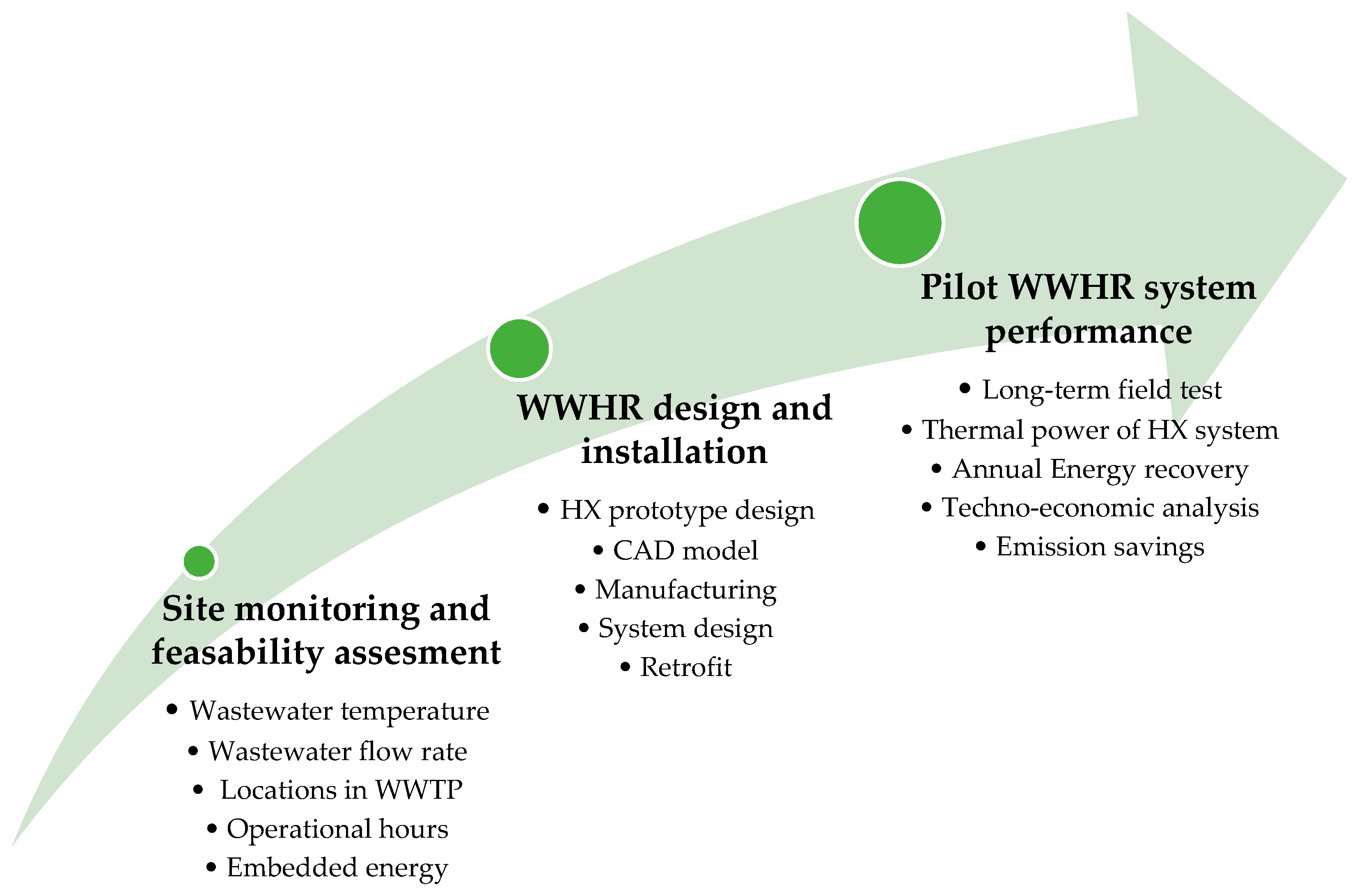
Figure 1. Research procedures for integrating and evaluating WWHR technology feasibility, deployment, and performance in WWTPs.
Water 17 03419 g001
Figure 2. (a) Food and beverage processing plant locations in Ireland; (b) WWTP layout for Site 4.
Water 17 03419 g002
Figure 3. (a) Overview of WWHR test site, (b) suspended HX system in series, and (c) HX placement inside sump.
Water 17 03419 g003
Figure 4. Breakdown of food and beverage company market sizes in the UK and Ireland.
Water 17 03419 g004
Figure 5. Box and whisker plot of (a) wastewater temperature and (b) maximum power.
Water 17 03419 g005
Figure 6. (a) Box and whisker plots of the available heating power during operational hours and (b) heating power measured at ten-minute intervals during operational hours across the testing period.
Water 17 03419 g006
Figure 7. Whole life carbon assessment for direct and indirect WWHR over a 25-year period.
Water 17 03419 g007
Figure 8. Average heating power in the wastewater of the food and beverage processing industry at a national scale.
Water 17 03419 g008
Figure 9. Annual energy recovery by sub-sector for the food and beverage process industry.
Water 17 03419 g009
Table 1. Operating efficiency of an indirect water-to-water heat pump using WWHR.
AverageS.D.
Temperature outlet19.59 °C3.02 °C
COP @ 35 °C7.100.51
COP @ 45 °C5.570.40
COP @ 55 °C4.370.31
Win @ 35 °C0.99 kW0.07 kW
Win @ 45 °C1.26 kW0.10 kW
Win @ 55 °C1.61 kW0.12 kW
Annual electrical energy use @ 35 °C2467 kWh185 kWh
Annual electrical energy use @ 45 °C3143 kWh300 kWh
Annual electrical energy use @ 55 °C4004 kWh487 kWh
Table 2. TEA into the viability of a direct and indirect WWHR.
Fuel BandThermal EnergyElectrical EnergyCapital CostO&M CostETSLCC SavingsPBPLCC SavingsPBP
EUR/kWhkWh/akWh/aEUREUREUR/aEURyrsEURyrs
Direct SystemWithout ETS non-complianceWith ETS non-compliance
I110,874N/A2000200 for gas boiler only24714,8192EUR 16,6792
I210,5632EUR 12,5132
I383573EUR 10,3082
I465193EUR 84702
I539464EUR 58973
Indirect system with water-to-water heat pump (COP at 55 °C)Without ETS non-complianceWith ETS non-compliance
I1–IA17,50340049412200 and 249 for gas boiler and heat pump, respectively266629214EUR 931110
I5–IG−12,692NV−EUR 9674NV
I1–IG14,7038EUR 17,7217
Average−3754NV−EUR 735NV
Disclaimer/Publisher’s Note: The statements, opinions and data contained in all publications are solely those of the individual author(s) and contributor(s) and not of MDPI and/or the editor(s). MDPI and/or the editor(s) disclaim responsibility for any injury to people or property resulting from any ideas, methods, instructions or products referred to in the content.