Article

Identification of Groundwater Recharge Potential Zones in Islamabad and Rawalpindi for Sustainable Water Management


1
Department of Environmental Sciences, Faculty of Biological Sciences, Quaid-I-Azam University, Islamabad 45320, Pakistan
2
International Research Center in Critical Raw Materials and Advanced Industrial Technologies, Universidad de Burgos, 09001 Burgos, Spain
*
Author to whom correspondence should be addressed.
Water 2025, 17(23), 3392; https://doi.org/10.3390/w17233392
Submission received: 29 October 2025 / Revised: 25 November 2025 / Accepted: 26 November 2025 / Published: 28 November 2025

Abstract

Groundwater is a vital freshwater resource for Pakistan, particularly in the rapidly urbanizing cities of Rawalpindi and Islamabad. However, rising demand, changing land use, and climate uncertainty pose significant risks to its long-term availability. This study employs the Analytic Hierarchy Process (AHP), Remote Sensing (RS), and Geographic Information System (GIS) to map groundwater potential zones (GWPZs). A total of eleven parameters, including Rainfall, slope, elevation, drainage density, soil type, water table depth, land use/land cover (LULC), and remote sensing indices (NDVI, MSI, TWI, and LST), were used for the identification of groundwater potential zones. The results showed that 51.96% of the study area is classified as having “moderate” groundwater potential, while 5.64% and 33.09% are categorized as “very high” and “high” potential zones, respectively. Conversely, 8.25% and 1.04% of the area are classified as “low” and “very low” zones, respectively. Parameters such as steep slopes, urbanization, and high land surface temperatures hinder recharge, whereas gentle slopes, vegetation, and shallow water tables enhance recharge potential. In semi-arid, urbanizing areas, the integrated AHP–GIS–RS techniques provide a reliable and cost-effective method for mapping GWPZs, offering essential decision support for sustainable water resource management.

1. Introduction

One important natural resource is groundwater, particularly in areas with limited surface water. Only 2.5 percent of the Earth’s surface is freshwater suitable for human use, despite the fact that water makes up 71% of the planet [1]. Half of the world’s freshwater reserves are exploited [2,3]. Approximately 99% of freshwater is stored in underground aquifers [4], and groundwater has emerged as a critical source of freshwater for agricultural, domestic, and industrial purposes, constituting approximately one-sixth of the Earth’s freshwater resources [5]. One-fourth of the global population depends on groundwater aquifers to meet their water requirements [6]. Over the last five decades, global water extraction has tripled from 1382 to 3973 km3 per year, and projections suggest that by 2030, extraction will reach nearly 5235 km3 annually [7]. Population growth and agricultural expansion have stressed groundwater, causing overexploitation and deterioration of water quality [8]. Excessive groundwater extraction has led to declining water tables, dry wells, declining water quality, rising pumping expenses, and subsidence of land [9]. The major causes of groundwater depletion include uneven extraction, inefficient irrigation practices, and low recharge capacity [10,11]. Climate change has altered precipitation patterns and increased evapotranspiration rates, thereby reducing groundwater recharge potential [12]. Groundwater is more critical than surface water for sustaining life [13]. Groundwater availability has decreased worldwide, with South Asia becoming the most water-stressed region [14] and highly dependent on groundwater for agriculture and domestic needs [15]. India, Pakistan, and Bangladesh rank among the most water-stressed countries [14,16,17].
Pakistan is the fourth largest consumer of groundwater globally. Although groundwater plays a crucial role in ensuring food and water security, it faces significant threats and requires improved management strategies [11]. In Pakistan, 60–70% of the population depends on groundwater for their livelihood [18]. Sustainable groundwater management is vital for Pakistan’s prosperity and ensuring food security. Furthermore, overextraction, waterlogging, and contamination continue to threaten groundwater sustainability, with cascading effects on agriculture, human health, drought resilience, and the environment [19,20]. To preserve groundwater sustainability, it is crucial to maintain its role as a reliable water source and lifeline for farmers [21,22]. The use of groundwater in agriculture has increased dramatically, rising from 8% of the total agricultural water supply in 1960 to nearly 60% by 2010 [23]. Similarly, some studies had reported that Pakistan experiences a 2–3 ft. annual decline in groundwater tables, primarily because of continuous overextraction [24,25]. This alarming trend underscores the urgent need for efficient monitoring and management of groundwater resources [26]. Advanced spatial and analytical tools are necessary to better understand groundwater dynamics and support sustainable planning. Consequently, scientists have resorted to RS and GIS, which offer more accurate and consistent mapping of groundwater potential zones over large areas [7,20,26].
Recent studies have improved these methods even more by using multi-criteria decision-making, including AHP [26], Weighted Overlay [27], Frequency Ratio [28], and machine learning algorithms such as Random Forest and SVM [8]. These sophisticated techniques not only address the limitations of traditional methods but also allow for the incorporation of a range of hydrogeological, environmental, and socioeconomic factors, providing comprehensive and accurate solutions to groundwater management challenges. Even though the combination of AHP and GIS would provide a robust tool, particularly in the data-scarcity scenario, the field of groundwater potential zones mapping is evolving quickly. Recent approaches to this matter are often based on composite methodologies involving the combination of the Machine Learning methodology with the Remote Sensing data to facilitate predictive modeling [16]. Discuss the similarities and differences in application of Multi-Criteria Decision Analysis (MCDA) methods in assessing methodology appropriateness [11]. Use high-level satellite monitoring systems to conduct an accurate evaluation of groundwater [23]. The comprehensive understanding of these paradigms is essential both to contextualize the methodology applied in the current research and guide further research directions. Considering the increasing water insecurity, the primary goal of this study is to develop a comprehensive and integrated geospatial model to identify and map the Groundwater Potential Zones (GWPZs) in the Islamabad-Rawalpindi metropolitan area. The secondary objectives are: (1) to develop an AHP-GIS model that is particularly appropriate in the hydrogeological and urban complexity of this semi-arid environment; (2) to quantitatively assess the relative impact of eleven important parameters, including remote sensing indices, on the dynamics of groundwater recharge; and (3) to create a spatial decision-support system, which could subsequently be used to inform sustainable management of water resources. The novelty of this study stems from its holistic application of established methods to an area that is critically understudied and undergoing rapid urbanization. This integrated and scalable framework supports sustainable groundwater management, offering valuable insights for policymakers and water resource planners in semi-arid environments.

2. Materials and Methods

2.1. Study Area

The twin cities, Islamabad and Rawalpindi constitute one of Pakistan’s largest metropolitan regions. Islamabad, the federal capital, spans approximately 906.5 km2, with a total population of 2.3 million [29]. Adjacent to it, Rawalpindi covers about 415 km2 and has more than 5 million inhabitants, making it one of the most densely populated cities in the country (Figure 1). The climate of this region is humid subtropical with hot summers and mild to cool winters [30,31].
In this study, we utilized various authoritative datasets to assess groundwater potential and land surface characteristics. Temperature and rainfall data were obtained from the Pakistan Meteorological Department (PMD), Islamabad. Soil data were collected from the Digital Soil Map of the World (DMSW). Topographic information, including terrain features and drainage density were obtained using a Digital Elevation Model (DEM), accessible through the USGS website (https://www.usgs.gov/centers/eros/science/usgs-eros-archive-digital-elevation-shuttle-radar-topography-mission-srtm-1?utm (accessed on 24 March 2025), which was instrumental in the computation of slope, elevation, and topographic wetness index (TWI). Land Use/Land Cover (LULC), Modified Soil index (MSI), and Land Surface Temperature (LST) data were obtained from Landsat 8, available via the USGS Earth Explorer platform (https://earthexplorer.usgs.gov/ (accessed on 24 March 2025). Soil classification data was obtained from the Soil Survey of Pakistan. Finally, groundwater table data was obtained from the Pakistan Council of Research in Water Resources. (PCRWR), Islamabad.

2.2. Preparation of Thematic Maps

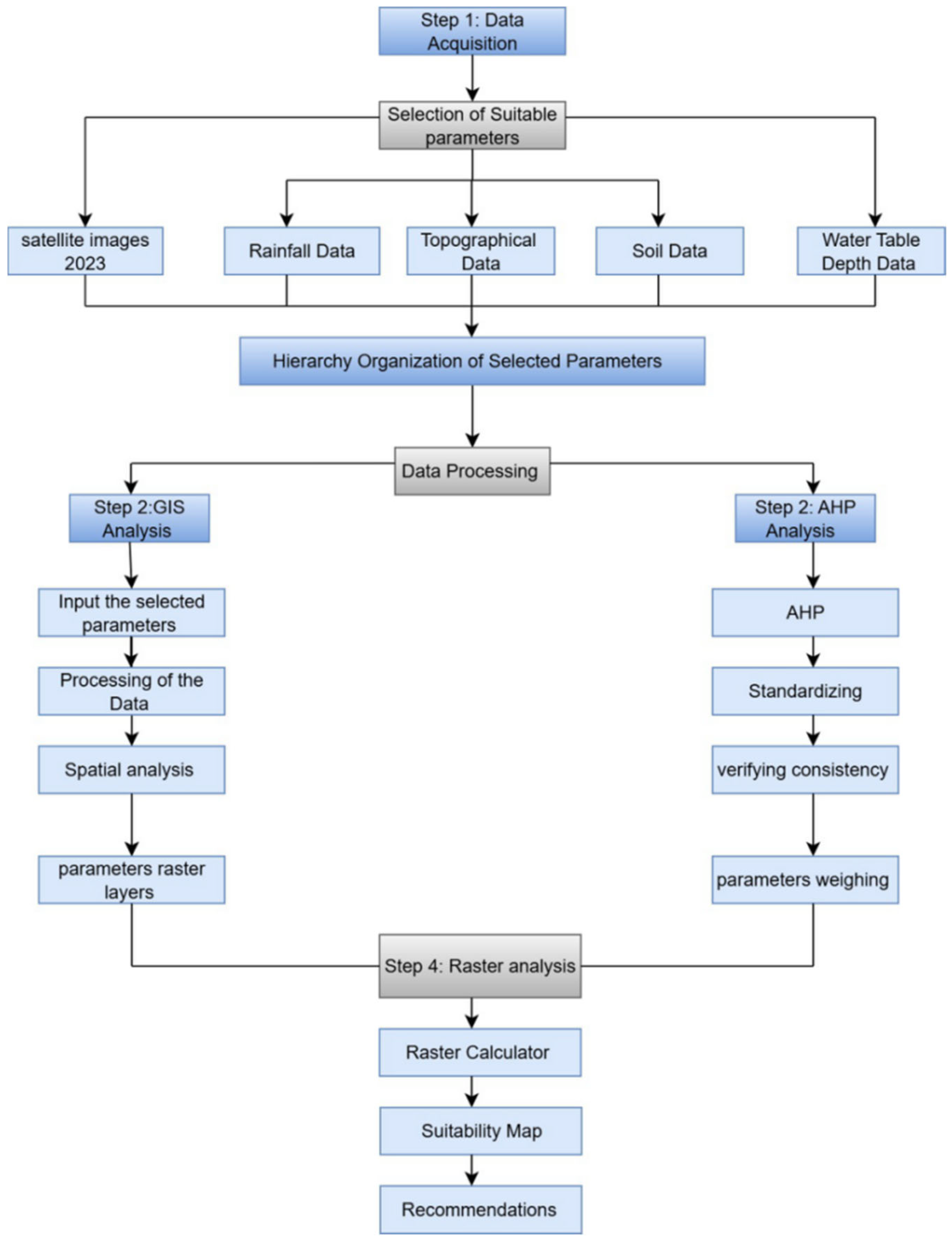
In order to visualize the spatial distributions of the variables impacting groundwater recharge in a GIS environment, thematic maps were created. Every parameter was organized according to its possible role in the recharge, as indicated in Table 1 which also contains the % coverage, class ratings, ranks, and weights. Figure 2 depicts the methodology’s workflow, including the data sources and processing stages.

2.2.1. Drainage Density

According to [32], Drainage density plays an important role in revealing details about the permeability of rocks and the area’s stream network, as well as giving an idea of the groundwater recharge in that region. A region with low drainage density might enable surface water to be retained for a longer duration, facilitating infiltration under suitable geological conditions (high porosity and permeability) [33]. However, regions at high elevations frequently exhibit a considerable drainage density because of their steep inclines and minimal infiltration, leading to increased overland flow and stream formation, whereas low-elevation areas frequently have poor drainage densities [34]. The steps performed were Arc-Toolbox > Spatial Analyst tools > Hydrology > Fill > Flow Direction > Flow Accumulation > Math > Logical > Greater Than tool > Stream Link tool > Stream Order > Stream. Finally, the drainage density was calculated using the following formula (Equation (1)) in the Raster calculator:
D r a i n a g e   d e n s i t y = T o t a l   s t r e a m R i v e r   l e n g t h T o t a l   d r a i n a g e   a r e a

2.2.2. Slope

The slope is an important parameter for managing the influence of the infiltration process. Gentle slopes enhance water absorption, whereas steep inclines boost runoff, restricting replenishment [35]. As the steepness increased, the percolation rate decreased because of the rapid overland flow. Hence, the existence of strong groundwater recharge potential zones is indicated by moderate and flat slopes [36]. In the AHP for groundwater potential zoning, slope information assists in recognizing regions that favor recharge and those at risk of significant runoff [37].

2.2.3. Elevation

Elevation plays a critical role in shaping the physical and environmental characteristics of regions. It influences local climate conditions, soil properties, vegetation distribution, water flow, and land use suitability [38]. In Rawalpindi and Islamabad, elevation affects temperature variations, with higher altitudes generally corresponding to lower temperatures, which can also influence Land Surface Temperature (LST) patterns [39].

2.2.4. Normalized Difference Vegetation Index (NDVI)

The Normalized Difference Vegetation Index (NDVI) is commonly used to assess vegetation characteristics by utilizing the near-infrared (NIR) (Band 8) and RED band (Band 4) from Landsat 8 images. In the context of GWPZ, NDVI helps identify areas with dense vegetation, which often correlate with regions of higher soil moisture and potential groundwater recharge zones [40]. The NDVI is determined by using Equation (2):
N D V I = N I R R E D N I R + R E D
This denotes the distinction between red band (which captures vegetation) and the NIR band (which reflects vegetation). NDVI values are influenced by the greenness of vegetation, with values approaching 1 indicating greater health. It serves as a crucial factor in managing surface runoff and infiltration, thereby influencing groundwater recharge [41].

2.2.5. Land Use Land Cover

Land Use/Land Cover (LULC) plays a pivotal role in the assessment and delineation of groundwater potential zones. It provides critical information about the physical characteristics and human utilization of the land surface, which directly influences the rate of infiltration, surface runoff, and groundwater recharge [42,43]. Conversely, developed regions with non-porous surfaces enhance runoff, restrict infiltration, and diminish the recharge capability [44].

2.2.6. Soil Classification

Soil properties have a significant impact on groundwater recharge. The two main varieties of soil are sandy and loamy, and both are good for replenishing groundwater. However, because clayey or compacted soils are not highly permeable, infiltration will be poor in these conditions [45]. Because soil type has a significant impact on groundwater dynamics, the AHP included it as a parameter. Based on the interplay between physical elements and soil features, such mapping leads to the identification of potential groundwater recharge regions [46]. After processing the soil data and location data in ArcGIS Pro 3.3, the inverse distance weighting (IDW) tool was utilized to interpolate the data and produce continuous surface maps. Soil zones were created and the spatial soil variation in the study region was displayed using the natural neighbor tool [47].

2.2.7. Water Table Depth

The water table depth is directly related to groundwater recharge. A high water table in an area implies that the capability of groundwater recharge is also high [48]. A major parameter for determining the sustainability of underground water resources is the groundwater level [49]. The groundwater table depth data was collected through field survey and subjected to analysis and interpolation through ArcGIS 10.8 using the IDW method. The basis for choosing IDW was that it was found to be effective in the estimation of unknown values based on the vicinity of other data points, and it realistically exhibited the variability of groundwater in the region [50].

2.2.8. Moisture Stress Index

The moisture Stress Index (MSI) is a remote sensing-derived index that helps assess vegetation moisture content [51]. It is calculated using Equation (3).
M S I = S W I R N I R
The MSI map represents spatial variations in vegetation moisture content across the study area. Reduced groundwater recharge, decreased water retention, and vegetation stress are all indicated by higher MSI values [51]. In contrast, low MSI values indicate healthy vegetation and good water-holding capacity, leading to recharge.

2.2.9. Topographic Wetness Index

The Topographic Wetness Index (TWI) is used to estimate soil moisture and water accumulation in an area based on the slope and upslope contributing area. This helps in analyzing groundwater potential. The TWI map provides valuable insights into the spatial distribution of potential moisture accumulation across the study area.

2.2.10. Land Surface Temperature (LST)

Surface Temperature prevails over groundwater temperature and warms the surface in case of temperature increase, which also influences the evapotranspiration rates of vegetation cover in the region. It can be seen in the Land Surface Temperature Map of twin cities that the region around the vegetation cover in the city, which predominantly is the areas that are not urbanized (Margalla hills), had low to moderate temperatures [52]. In the case of confirmation, elevated LST will show geographical locations with high evaporation and low recharge potential that could be conserved and recharged in a less-altered region [53].

2.2.11. Rainfall

An important element affecting groundwater recharge is rainfall, especially in semi-urban and urban areas [54] such as the twin cities of Rawalpindi and Islamabad. ArcGIS was used to map the spatial distribution of the classified annual rainfall. The impact of this high rainfall is that there is a high possibility of natural groundwater recharge, especially around and within Islamabad. The low rainfall area, on the other hand, which is mainly the southern and western regions of Rawalpindi, implies a poor recharging capability.

2.3. Analytical Hierarchy Process (AHP)

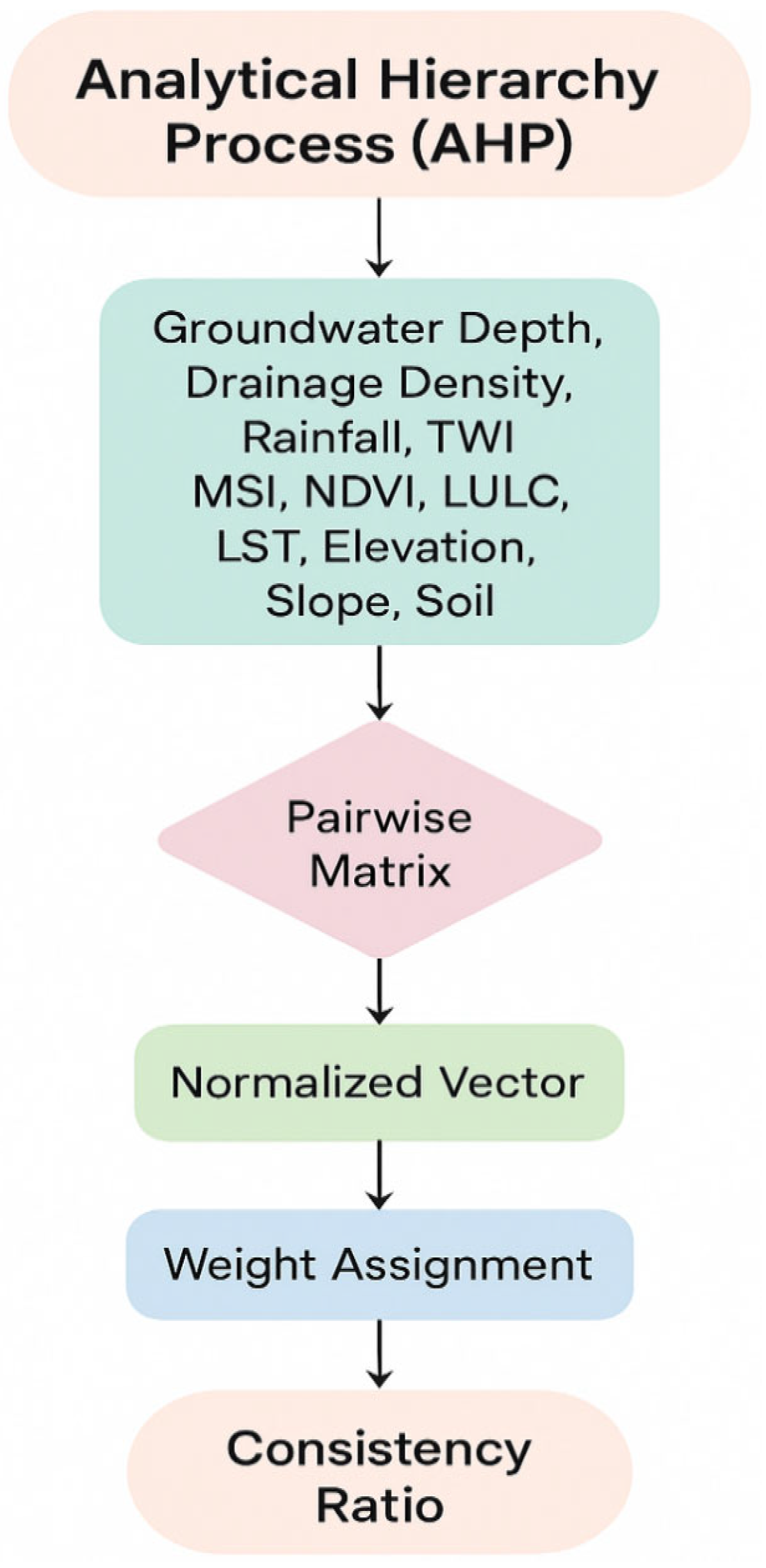
In the early 1970s, American mathematician and operations researcher Dr. Thomas L. Saaty created AHP as a framework for decision-making to assist with intricate choices incorporating numerous factors [55]. Although other modern techniques like machine learning algorithms, i.e., Random Forests and Support Vector Machines have shown promising results in the process of specification of groundwater potential [8], the AHP was selected in this case due to its effectiveness in data-scarce conditions and systematic incorporation of subjective opinion. AHP offers a clear-cut system in which stakeholders can engage in the decision-making process of water resources [56], and this approach can be especially useful in swiftly urbanizing areas with insufficient hydrogeological information. In addition, AHP is associated with consistency -checking mechanism which eradicates the fear of subjectivity by exposing expert evaluation to quantitative validation [55]. In this study, the AHP method is applied to assess the groundwater potential zoning of the study area using normalized weights. In this approach, we selected the factors influencing groundwater recharge potential, assigned them relative weights (Table 2), developed a pairwise comparison matrix (Table 3), and calculated a normalized priority vector (Table 4) to assess the relative significance of the twelve parameters in relation to the model’s objectives (Figure 3).

2.3.1. Criteria Weights Assignment

The weight allocations have been based on two guiding pillars: the first continued application of known hydrological principles, which are especially relevant in semi-arid environments; the second one relied on empirical experience in the study area, i.e., Islamabad-Rawalpindi. The final weights are shown in Table 1. Therefore, the weight of rainfall was assigned the largest portion of 26%, which is the main recharger of the groundwater in water-stressed landscapes like Pakistan, whereby the variability of rainfall has a direct effect on the recharge of aquifers. Such a strong weighting is consistent with the results of water-availability investigations carried out on the same climatic regimes worldwide [57]. While the weight of LST in the analytical model was low at 1%, indicating that it is an indirect determinant. The main effect of LST on groundwater recharge is the control of the rates of evapotranspiration, which is better reflected in vegetation indices like NDVI and LULC features [41,52].

2.3.2. Comparison Matrix for Paired Criteria

The GIS context was the platform used to perform a weighted overlay analysis to determine the groundwater potential zone in the study area. The AHP was used to analyze the significance of factors, compute weights, evaluate pairwise comparisons, and analyze matrix consistency [58]. The pairwise comparison process was carried out by systematically assessing each factor (e.g., land cover) with other factors using Saaty’s 1–9 scale scores to evaluate the effects of drought vulnerability. Based on the opinion of the experts, these scores were assigned because it was necessary to ensure that the analysis would consider the local knowledge available and contextualized responses. A pairwise comparison matrix in 11 × 11, designed using Excel, was utilized to calculate the normalized principal eigenvector and used to develop a collective measurement of the region affected by drought (Table 3).

2.3.3. Assessing Matrix Consistency

According to Brunelli et al. [59], the consistency ratio (CR) is a reliability metric used to assess pairwise comparison matrices in AHP. The CR evaluates expert judgment consistency by comparing the eigenvalue (λmax) and the random index (RI) for the specified number of factors. When CR reaches or exceeds 0.1 (10%), the matrix needs revision because the results demonstrate inconsistency. The consistency index (CI) helps derive the CR value from Equation (4), ensuring that model weight assignments maintain scientific validity and robustness:
C I = λ m a x n n 1
C I = 11.84     11 11 1
C I = 0.08
where CI is the consistency index, and RI is the random index. The values for RI and CI are provided in Table 5 and Table 6, respectively. CR is calculated using Equation (5):
C R   =   C I R I
C R =   0.08 1.51
C R = 0.05
where RI is the random index and CI is the consistency index. The corresponding RI values are given in the Tables. CR is computed using the equation above.

2.4. Assessment and Validation of Groundwater Potential Areas

The accuracy of groundwater potential zoning was thoroughly tested to confirm its reliability based on field observation and water table depth records. In hydrogeological studies, the groundwater potential maps obtained as the results of the research are usually checked with respect to the real data obtained in the field and statistical indicators, e.g., the overall accuracy and Kappa coefficient. In the Vamanapuram River Basin in India, for example, Arulbalaji et al. [60] verified groundwater potential zones with an average accuracy of 85%. Similarly, a study in Jinan, China, combined a receiver operating characteristic (ROC) with observed groundwater points with a test site in the intricate karst terrain, which gained 0.736 area under the curve (AUC) and a correct classification of 74% [61]. The importance of data validation methodologies employing several approaches in hard-rock contexts was highlighted by [62], who revealed a 68% correlation between hydro-geophysical vertical electrical sounding (VES) measurements and groundwater potential maps produced by GIS in Nigeria.
The groundwater potential zoning in this study was evaluated in the two-pronged method. To start with, the consistency check was conducted to assess the capability of the model to reflect the relationship between the input parameters and the measured groundwater depth reasonably well. It entailed overlaying the resultant map of GWPZ over the initial groundwater depth data points on which the input thematic layer was made. This is to check the internal logical consistency of the AHP model, such that the assigned weights and parameter interaction provide a spatial output that matches the known groundwater reality in the area. Although this is on the same dataset, this is a critical test on the integrity of the model. Second, and realizing the weakness of the first step, we propose future validation on independent datasets. These may be hydraulic parameters such as specific yield (pumping tests), ground water quality parameters (e.g., nitrate concentration as a proxy to residence time) or high-resolution geophysical data (e.g., Electrical Resistivity Imaging) that were not factored into the model development.
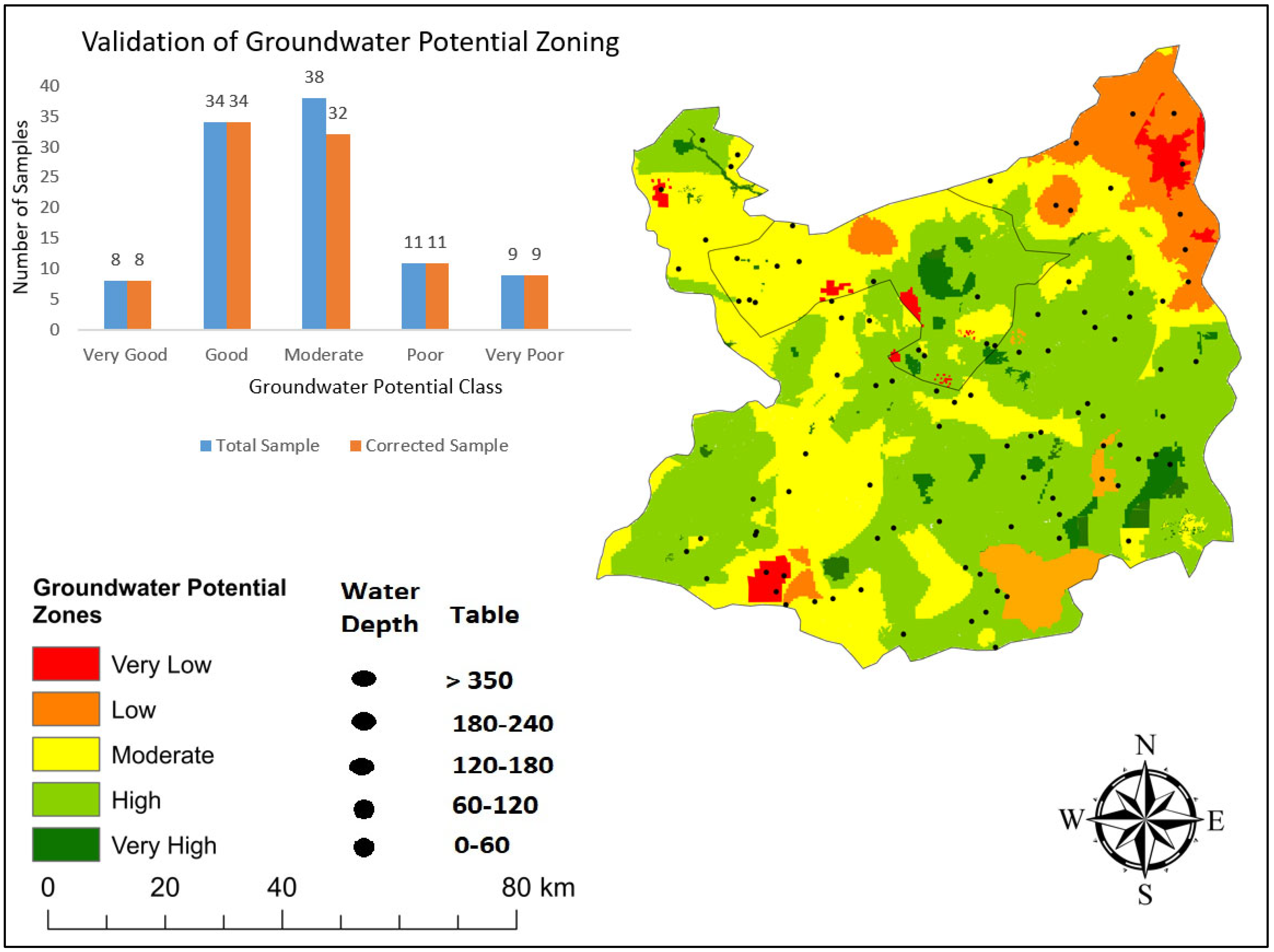
Water table depth measurements at 100 points were collected both within the study area and the surrounding areas that have diverse topography and varying hydrogeological conditions. The observed water depth ranged between 600 m and more than 350 m, both representing high levels of variation in groundwater availability in the region. According to these measurements, it was possible to classify the observations into the following five classes of potential:
  • Very Good Potential: 0–60 m
  • Good Potential: 60–120 m
  • Moderate Potential: 120–180 m
  • Low Potential: 180–240 m
  • Very Low Potential: greater than 350 m

2.5. Kappa (K) Analysis

To evaluate the reliability of the classification beyond the overall accuracy, the Kappa coefficient (κ) was calculated using Equation (6). Kappa analysis is a robust statistical measure that assesses the degree of agreement between the predicted classifications (such as groundwater potential zones) and the actual ground truth data, while accounting for agreement that may occur by chance. Unlike the overall accuracy, which simply reflects the percentage of correctly classified samples, the Kappa coefficient provides a more rigorous evaluation by incorporating the expected accuracy owing to random chance.
K = o v e r a l l   a c c u r a c y e x p e c t e d   a g r e e m e n t 1 e x p e c t e d   a g r e e m e n t

3. Results

3.1. Spatial Analysis of Parameters

Eleven effective parameters, including LULC, rainfall distribution, drainage density, soil type, slope, NDVI, TWI, MSI, groundwater table depth, and LST, were combined in an extensive geospatial modeling process to map groundwater potential areas. To determine their relative significance in the groundwater potential zone, these characteristics were analyzed using GIS-based AHP. The findings of the analysis regarding the recharge potential are as follows:
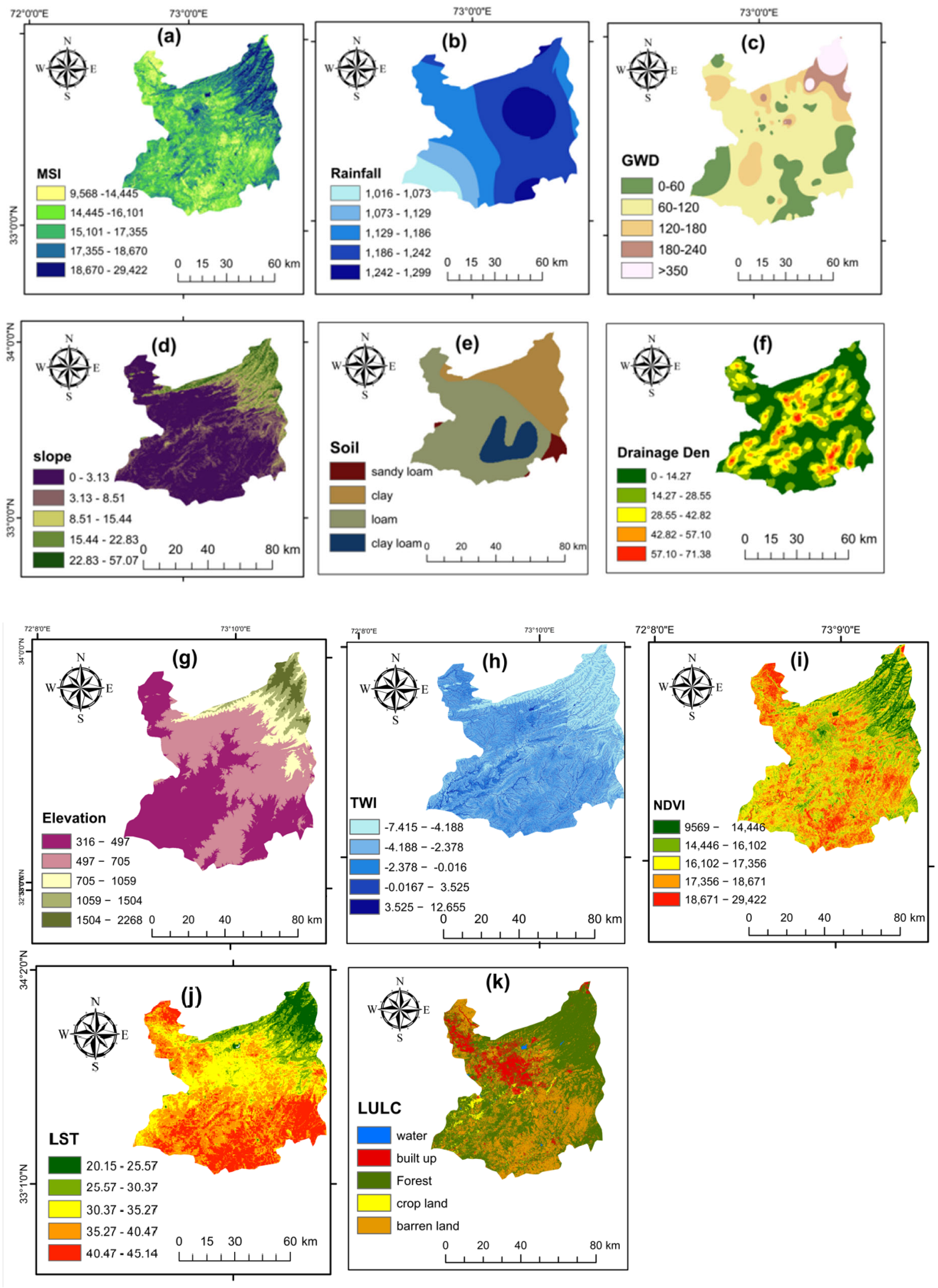
The Moisture Stress Index (MSI)Figure 4a, shows that a significant portion of the study area is under moderate to moderately high moisture stress, with 32.09% falling in category 3 and 29.39% in category 4. The remaining area was distributed between classes 2 (low moisture stress) and 5 (very high moisture stress), covering 19.28% and 12.36% of the total area, respectively. Very low moisture stress (class 1) constituted only 6.87% of the region. These patterns were closely correlated with groundwater depth. In Figure 4b, the spatial distribution of Rainfall shows that approximately 65.86% of the research area is covered by zones of moderate to high precipitation. Despite adequate rainfall, these zones may not necessarily correspond to shallow groundwater due to factors such as steep slopes, high runoff, and low soil infiltration, which can limit recharge. Areas with 1000–1200 mm of rainfall demonstrate favorable conditions for groundwater recharge, whereas those receiving only 480–533 mm of rainfall show limited recharge potential. To enhance groundwater sustainability, especially in urbanizing semi-arid regions like Rawalpindi and Islamabad, techniques such as rainwater collection, permeable surfaces, and soil moisture conservation are recommended.
The Groundwater Table distribution in Figure 4c is divided into shallow, moderate, and deep aquifer zones. The northern part of the region shows depths exceeding 240 m, indicating low recharge or overextraction, while the shallower zones (0–60 m) are more favorable for natural recharging. The southern, eastern, and western sectors mostly exhibit moderate depths (>180 m). Vegetation patterns also reflect how land use influences recharge dynamics, with vegetated areas promoting greater infiltration, whereas degraded or impermeable surfaces lead to deeper water tables and lower recharges. The Slope plays a critical role in groundwater recharge, as shown in Figure 4d. Approximately 78% of the terrain is flat (0–3.1°), providing optimal conditions for recharge owing to enhanced infiltration and reduced runoff, which results in shallower groundwater levels. In contrast, steep slopes (>25°), which cover around 6% of the land, are associated with deep water tables and low recharge due to limited infiltration. The Soil Classification in Figure 4e reveals that loam soils, which cover about 56.3% of the region, are permeable and support groundwater infiltration and recharge. In contrast, clay soils, which make up 30.01% of the area, have low permeability and restrict water flow, resulting in less recharge and deeper groundwater levels. Finally, Drainage Density depicted in Figure 4f shows that 29.04% of the region falls under Class 1, indicating areas with low drainage density (0–14.27 km/km2). These areas, characterized by sparse drainage systems, promote higher surface water conservation and infiltration, making them highly suitable for groundwater recharge as water percolates more easily into the ground, ensuring the long-term availability of groundwater resources.
The Elevation profile in Figure 4g ranges from 316 to 2268 m above sea level, with most of the area at low to moderate altitudes. The flatter regions (316–497 m) cover 17.8% of the area and are ideal for groundwater recharge. High-altitude areas (>1504 m) constitute only 5.7% of the region, characterized by steep slopes and shallow soils. The Topographic Wetness Index (TWI) in Figure 4h ranges from 12.655 to −7.415, with most of the area in low to moderate TWI classes, indicating limited surface water accumulation and low soil moisture retention. The Normalized Difference Vegetation Index (NDVI) in Figure 4i shows moderate vegetation conditions across 46.5% of the area, while only 7.9% is densely vegetated. Vegetation enhances infiltration, thereby aiding groundwater recharge. Land Surface Temperature (LST) in Figure 4j ranges from −0.15 °C to 42.45 °C, with higher temperatures (37.19–42.45 °C) in urban and barren areas, which hinder groundwater replenishment due to low infiltration. Cooler areas (<20.66 °C), primarily in forested highlands, support recharge. Land Use and Land Cover (LULC) in Figure 4k reveals that croplands (39.5%) and forests (28.7%) are the most conducive to recharge, while barren and built-up lands (28.7%) limit infiltration. Water bodies contribute 3.1% to the local recharge.

3.2. Development of Groundwater Potential Zoning

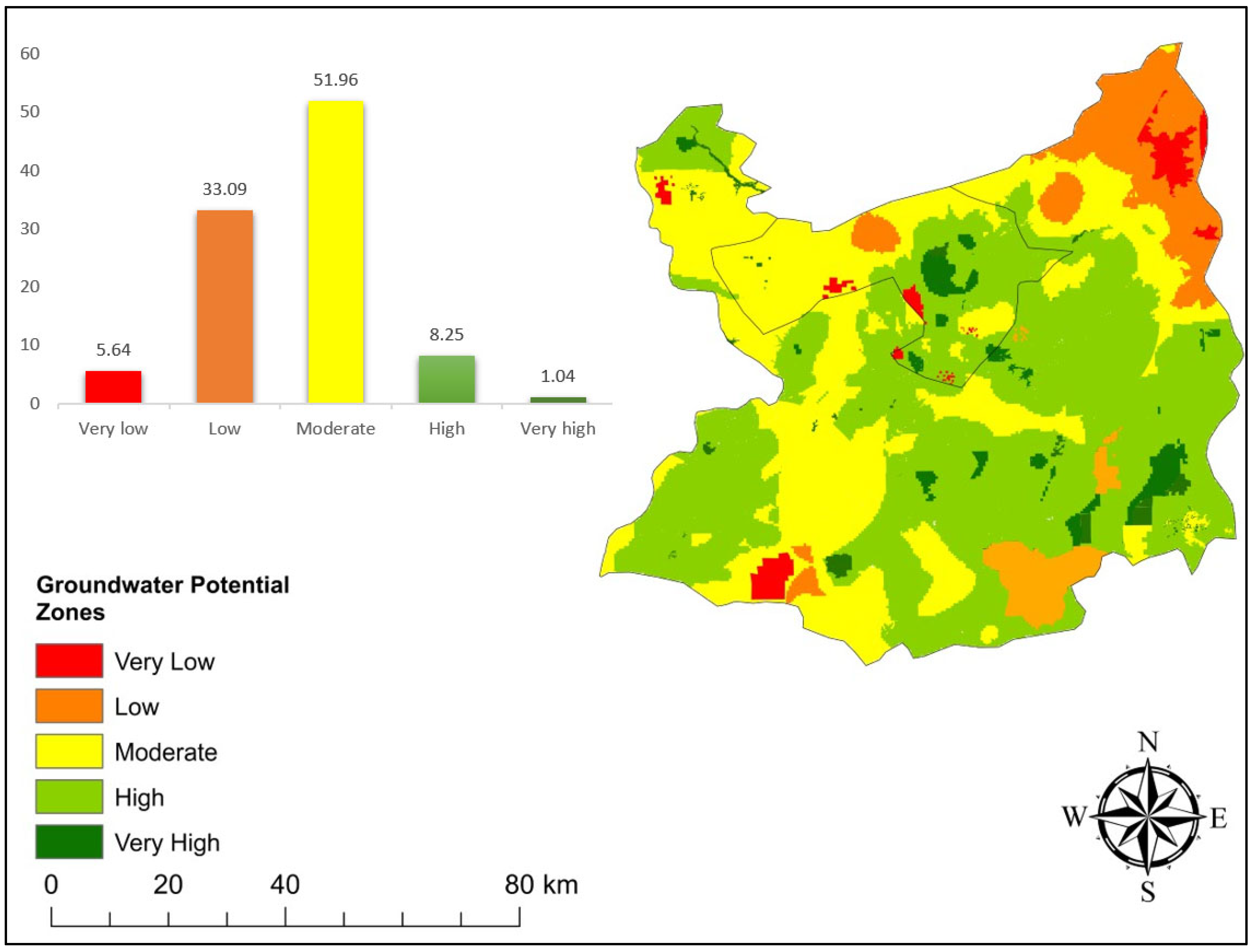
The spatial distribution of Groundwater Potential Zones (GWPZs) in the Rawalpindi and Islamabad area is shown in Figure 5 along with the ways in which topography, climatic, and LULC factors affect the groundwater recharge dynamics in the area. The potential area under Category 1 (very high) is only 5.64% of the total area and was concentrated mostly in low topography areas such as valley floors and drainage channels across the natural terrain. The recharge conditions present in the zone are optimal, that is a high TWI, dense vegetation cover (high NDVI), moderate elevation, and land use in the form of forests or crops. These regions benefit from a long-term, permanent period of surface water retention and superior infiltration, which improves replenishment. The study area’s 33.09% potential zone is primarily composed of wooded and agricultural regions with moderate slopes and is classified as a high-potential zone. Favorable TWI values, moderate LST, and uniform vegetation cover characterize these regions and foster moderate to high groundwater recharge. The majority, roughly 51.96%, falls into the zone of moderate potential, which is mostly located in the region’s middle transitional area and includes a variety of land use activities, including farmed and built-up areas. Given the varying levels of soil permeability and coverage, as well as the sections of runoff and infiltration, the recharge potential in this instance was medium.
However, the low potential area, which makes up 8.2% of the total area, is linked to highlands or arid regions with steep slopes, low NDVI, high LST, and minimal surface retention. These land use and geomorphological factors slow infiltration and speed up runoff, reducing groundwater replenishment. Less than 2% of the entire area is made up of the very low potential prospective zone, which is primarily composed of steep mountains and isolated rocky outcrops. These locations are the least suitable for groundwater recharge because of the shallow soils that have grown there, which have very little permeability for water, little vegetation, and little surface water cover.

3.3. Comparative Analysis with Relevant Studies

In order to contextualize our findings in the wider academic discourse, as well as to emphasize the original input of the study, we have directly compared the findings with those of other relevant studies, which used diverse methodologies and were based on different geographic settings. Table 7 gives a small but comprehensive overview, concentrating on the methodology, the measure of accuracy, and the key findings related to the dynamics in the cities and the groundwater resources.

3.4. Groundwater Potential Zones Model Consistency Check and Accuracy Assessment

Of the 100 water table depths, 94 were correctly categorized into the corresponding groundwater potential zones, while six showed inconsistencies (Figure 5). The following formula was used to determine the groundwater potential zoning map’s overall correctness:
Overall   Accuracy   =   94 100 × 100   =   94 %
With an overall groundwater potential zoning accuracy of 94%, there was a high degree of agreement between the projected and observed values. From 60 m to over 320 m, the reported water depths varied significantly in terms of groundwater availability. Table 8 shows the sample accuracy figures. The model’s accuracy was first assessed through an internal consistency check using the groundwater depth data, while acknowledging this limitation and proposing future validation with truly independent datasets such as pumping tests or geophysical surveys.
In Kappa analysis, the Percentage Correct Agreement with Observed Values is the proportion of correct samples for each class [63]. Pe can be calculated as the sum of the expected proportion of each class being correctly classified by chance (Table 9).
The Kappa coefficient (K) is then calculated as follows:
K = 0.95 0.2446 1 0.2446
K = 0.7054 0.7554
K = 0.933
The groundwater potential zoning model validation results prove the predictive reliability and accuracy rates to be rather high. This Kappa coefficient of 0.933 shows an almost perfect agreement with the predicted zones of groundwater potential and reference data, which reflects beyond doubt that the statistical result of the classification output is highly reliable [64]. The overall accuracy of this model is 94% which is very high as compared to the range of accuracy reported in similar studies that range between 74 and 85% [65]. Such a high level of performance is an indicator of the potency of the integrated AHP and GIS approach used in the current study (Figure 6).

4. Discussion

This study demonstrates the effectiveness of integrating GIS, remote sensing, and AHP techniques in delineating groundwater potential zones (GWPZs) for the Rawalpindi–Islamabad region. A total of 12 different parameters were used in our approach, including hydro-climatic, topographic, land cover, and remote sensing indices (NDVI, MSI, TWI, and LST), in contrast to earlier research in semi-arid areas that depended on fewer parameters or single approaches. This integration improved spatial accuracy and ensured scientific rigor through pairwise ratio checks and expert validation within the AHP framework. The model achieved a classification accuracy of 94% with a Kappa coefficient of 0.93, significantly higher than comparable studies conducted in Ethiopia, India, Saudi Arabia, and Pakistan.
The finding indicates that the spatial distribution of recharge potential is not arbitrary, but the direct product of the complex interaction between geomorphology, pedology, and accelerating urbanization of the region. The fact that the identification of very high and high potential zones mainly located around the Rawal Lake catchment and the neighboring low-lying valleys in the Pothohar Plateau, is a direct testament to the presence of favorable hydrogeological convergence. The low slopes (0–3.1) characterize these areas and maximize the infiltration by reducing surface run off. This topography is further enhanced by the dominance of loamy soils which are previously used and can be able to hold a lot of water thus making deep percolation into the underlying aquifer systems. Geologically, they are often in areas of alluvial deposition related to seasonal drainage lines and which are natural conduits of recharge. On the other hand, the fact that the model outlines low and very low possible areas in the steeper North and western sectors and in the heavily populated cores reflects the high importance of geomorphology and land use change. The steep slope (>22 grading) encourages the quick runoff, but the natural constraint is highly aggravated through urbanization. Increased built-up areas also present massive impervious surfaces which entirely block the relationship between precipitation and the subsurface, changing the local hydrological cycle to its very core. This conclusion is consistent with the literature on urban heat islands that indicate the combined effect of urbanization on surface energy balance and hydrological cycles.
The importance of the LULC and LST that this analysis revealed corresponds closely to the literature available on the use of integrated Machine Learning (ML) and Remote Sensing (RS) within cities [66]. The fact that we use RS-derived indices (NDVI, MSI, LST) in the AHP framework reflects the importance of feature used in many ML models, and this aspect supports the usefulness of RS data in capturing surface dynamics that affect groundwater [67]. Although our study used AHP to weigh, alternative tools like ML algorithms (e.g., Random Forest, SVM) may be investigated in the future in this area since it could capture more non-linear associations on how these factors relate to groundwater occurrence and as such supplement the transparency of our AHP method.
Recharge variability was also significantly influenced by hydro-climatic factors. While lower rainfall zones showed limited replenishing capacity, areas with annual rainfall between 1000 and 1200 mm showed good recharge. Similarly, land surface temperature (LST) had a significant impact on recharge efficiency: places with high thermal stress (36–39 °C) demonstrated decreased infiltration because of evapotranspiration losses, whereas cooler locations (20–24 °C) promoted recharging. With shallow aquifers (20–94 m) showing active recharge zones and deeper aquifers (>203 m) showing restricted recharge capacity, aquifer depth further highlighted regional disparities in recharge capability. When taken as a whole, these results demonstrate how intricately geology, climate, and human influences interact to shape groundwater sustainability.
Application of the AHP to our multi-criteria decision analysis (MCDA) model has been successful as per the various studies that utilize geospatial techniques and MCDA to identify the areas of groundwater potential [11,57]. The fact that it has a high accuracy (94%, Kappa = 0.933) supports the idea that AHP is suitable in modeling the complex interaction of factors that are inherent to the Islamabad-Rawalpindi area. Comparative studies, like the one conducted by Kumar and Pandey [11], habitually evaluate the efficacy of various MCDA techniques, such as AHP, Fuzzy Logic, and TOPSIS. Although our present study focused on AHP, the consistency tests inherent in the AHP technique (CR = 0.041) provided strong support to the expert-based weighting system. Future studies may clearly compare AHP against other MCDA methods in this research field as proposed by the comparative paradigm highlighted by Kumar and Pandey [11], in a bid to hone the insight of methodological sensitivities and determine the best methods of using them to analogous semi-arid urban basins.
The use of heterogeneous satellite-derived datasets; Landsat to LULC, NDVI, MSI, and LST; and SRTM DEM to monitor topography makes an unshakable claim on this study as a paradigm of using the point-to-satellite-techniques to monitor groundwater [23,57]. Their effective use and combination in remote-sensing products have shown their critical role in measuring spatially distributed parameters that would be crucial in mapping the potential zones of groundwater, which is in line with the overall view by [23]. We found that satellite indices, including NDVI (vegetation stress), MSI (moisture stress), and LST (thermal stress) are useful proxies of surface conditions, which affect recharge potential. As emphasized in the literature, the new possibilities of the further development of satellite missions (e.g., increased resolution, new sensors) can provide good opportunities to improve the spatial and time resolution of input data to provide a better understanding of the potential of groundwater in the dynamic environment, which is probabilistically the case of Islamabad-Rawalpindi.
The results show that most of the study areas face moderate to moderately high moisture stress, associated with the considerable depth to groundwater. This is consistent with earlier research emphasizing the influence of deep groundwater on moisture accessibility [68]. The distribution of moisture stress indicates that regions experiencing less moisture stress probably possess better access to groundwater or more advantageous rainfall patterns. These differences highlight the necessity for focused measures, like enhanced water conservation and groundwater replenishment approaches, to alleviate moisture stress effects.
Loam soils, covering 56.3% of the study area, facilitate groundwater infiltration and recharge due to their permeability. In contrast, clay soil (30.01% of the area) restricts water flow, resulting in deeper groundwater tables and limited recharge. These findings align with previous studies highlighting the restrictive nature of clay soils on groundwater flow [69]. This highlights how crucial soil type is for managing groundwater and recharge capacity.
Although the AHP-GIS model provides a solid and clear evaluation, it is still necessary to question the consequences of the weight obtained in this complex urban setting. The extreme importance of the weighting of the rainfall (26) and the depth of groundwater (28) is justified considering that the given variables are the most significant drivers in a semi-arid environment. However, the inclusion of weights on parameters like the LULC and the drainage density should be re-examined. The model inherently punishes developed land, but does not take into consideration the invisible urban hydrological processes, i.e., the possible slow, persistent recharging of land due to leaky water-supply and sewerage systems, a phenomenon that many older urban centers have been demonstrating [70]. Similarly, the high weight attributed to a low natural drainage density can fail to capture an urban environment that is characterized by engineered storm water conveyance networks that are meant to hasten water off recharge areas. This point to an acute drawback: the model is optimized towards natural processes and as a result, it can underestimate the prospect of managed aquifer recharge interventions that can be incorporated into the urban landscape.
Our analysis revealed that approximately 38.73% of the study area falls under high to very high groundwater potential zones. Among these, 33.09% shows high potential, while 5.64% represents very high potential. Moderate potential zones cover about 51.96% of the area. In contrast, 8.25% and 1.04% of the area fall under low and very low potential zones, respectively. This classification highlights the spatial variability in groundwater recharge capacity. The results reflect the effectiveness of GIS and AHP-based techniques in delineating potential recharge zones. These zones are predominantly located along the Rawal lake, where conditions such as shallow water tables, gentle slopes, high drainage density, and vegetated land cover favor recharge. This study has several drawbacks despite its contributions. It is possible that finer-scale differences in groundwater dynamics were missed by using medium-resolution satellite photos (30 m). Seasonal variations and the long-term effects of climate change are examples of temporal shifts that are not captured using static environmental data. Due to a lack of data, significant hydrogeological aspects were not included, such as groundwater extraction rates and aquifer transmissivity, and subjectivity may be introduced into the AHP framework by expert judgment. Additionally, temporal generalization is constrained because the investigation is restricted to the year 2023. Future research could improve model accuracy and applicability by addressing these limitations by utilizing longer-term hydrological monitoring, higher-resolution datasets, and more field-based validation.

5. Conclusions

This study mapped the potential zones of groundwater in Rawalpindi District and Islamabad by coordinating Remote Sensing (RS), GIS, and AHP. Various thematic layers, such as precipitation, land surface temperature, NDVI, soil type, land use/land cover, elevation, slope, moisture stress index, topographic wetness index, and drainage density, were statistically analyzed to determine their effects on groundwater occurrence and groundwater recharge potential. AHP-weight weightages were objectively calculated, and confidence rates on the relative importance of the said parameters in groundwater recharge were determined. The results revealed that areas characterized by low slope or high precipitation, forest cover, loamy soil, low drainage density, and shallow groundwater tables were high potential zones, while high slope or barren land and Clayey soils, dense drainage, and groundwater tables were low to high potential zones. In general, it was identified that Rawalpindi District and Islamabad have different groundwater potential, and there is existence of some significant areas with the opportunity of groundwater sustainably. Water resource managers should prioritize the preservation of places classified as having very high and high potential, since this should be made possible by certain land use plans, considering the information presented above. The utilization of managed aquifer recharge strategies, such as permeable pavement systems and rainfall collection programs, cannot be disregarded in the larger moderate zones seen in metropolitan contexts. Further research should focus on the combinations of data and parameters related to the properties of aquifers and their extraction rates so that the next step in the evolution of potential mapping should be the creation of a sustainable groundwater budget model.

Author Contributions

Conceptualized overall research design, A.S. and H.Z.; image analysis, All parameters’ maps, H.Z.; validation, A.S.; investigation, G.H.S. and A.H.A.K.; writing—original draft preparation, H.Z. Writing—Review, A.S., G.H.S., M.I., A.H.A.K.; Supervision, A.S. All authors have read and agreed to the published version of the manuscript.

Funding

This research received no external funding.

Data Availability Statement

The raw data supporting the conclusions of this article will be made available by the authors on request.

Acknowledgments

The authors wish to thank the USGS (http://earthexplorer.usgs.gov/ accessed on 24 March 2025) for providing the needed data for this study.

Conflicts of Interest

The authors declare no conflicts of interest.

References

  1. Li, J.; Lu, C.; Hu, J.; Chen, Y.; Ma, J.; Chen, J.; Wu, C.; Liu, B.; Shu, L. Determining the Groundwater Level in Hilly and Plain Areas From Multisource Observation Data Combined With a Machine Learning Approach. Hydrol. Process. 2025, 39, e70088. [Google Scholar] [CrossRef]
  2. Kumari, M.; Singh, S.; Kumar, A. Groundwater Prospect Zone Mapping: A Geospatial Investigation with Decision Making in Mahendergarh District, Haryana. Asian J. Water Environ. Pollut. 2024, 21, 131–141. [Google Scholar] [CrossRef]
  3. Cooke, S.J.; Piczak, M.L.; Nyboer, E.A.; Michalski, F.; Bennett, A.; Koning, A.A.; Hughes, K.A.; Chen, Y.; Wu, J.; Cowx, I.G. Managing exploitation of freshwater species and aggregates to protect and restore freshwater biodiversity. Environ. Rev. 2023, 32, 414–437. [Google Scholar] [CrossRef]
  4. McCartney, M.; Rex, W.; Yu, W.; Uhlenbrook, S.; Von Gnechten, R. Change in Global Freshwater Storage; International Water Management Institute (IWMI): Colombo, Sri Lanka, 2022; Volume 202. [Google Scholar]
  5. Liu, Q.; Bao, S.; Yan, H.; Wang, H.; Wang, Y.; Zhang, R. Enhancing Sea Surface Salinity Short-Term Prediction Using Physically Informed Deep Learning. Appl. Ocean Res. 2025, 165, 104832. [Google Scholar] [CrossRef]
  6. Muratoglu, A.; Wassar, F. Water at the intersection of human rights and conflict: A case study of Palestine. Front. Water 2024, 6, 1470201. [Google Scholar] [CrossRef]
  7. Tabassum, A.; Sajjad, A.; Sajid, G.H.; Ahmad, M.; Iqbal, M.; Khan, A.H.A. Assessing Recharge Zones for Groundwater Potential in Dera Ismail Khan (Pakistan): A GIS-Based Analytical Hierarchy Process Approach. Water 2025, 17, 1586. [Google Scholar] [CrossRef]
  8. Avcı, C.; Budak, M.; Yağmur, N.; Balçık, F. Comparison between random forest and support vector machine algorithms for LULC classification. Int. J. Eng. Geosci. 2023, 8, 1–10. [Google Scholar] [CrossRef]
  9. Khorrami, M.; Malekmohammadi, B. Effects of excessive water extraction on groundwater ecosystem services: Vulnerability assessments using biophysical approaches. Sci. Total Environ. 2021, 799, 149304. [Google Scholar] [CrossRef]
  10. Du, J.; Laghari, Y.; Wei, Y.-C.; Wu, L.; He, A.-L.; Liu, G.-Y.; Yang, H.-H.; Guo, Z.-Y.; Leghari, S.J. Groundwater depletion and degradation in the North China Plain: Challenges and mitigation options. Water 2024, 16, 354. [Google Scholar] [CrossRef]
  11. Kumar, A.; Pandey, A.C. Geoinformatics based groundwater potential assessment in hard rock terrain of Ranchi urban environment, Jharkhand state (India) using MCDM–AHP techniques. Groundw. Sustain. Dev. 2016, 2, 27–41. [Google Scholar] [CrossRef]
  12. Halder, S.; Roy, M.B.; Roy, P.K. Analysis of groundwater level trend and groundwater drought using Standard Groundwater Level Index: A case study of an eastern river basin of West Bengal, India. SN Appl. Sci. 2020, 2, 507. [Google Scholar] [CrossRef]
  13. Re, V.; Manzione, R.L.; Abiye, T.A.; Mukherji, A.; MacDonald, A. Introduction: Groundwater, sustainable livelihoods and equitable growth. In Groundwater for Sustainable Livelihoods and Equitable Growth; CRC Press: Boca Raton, FL, USA, 2022; pp. xvii–xxiv. [Google Scholar]
  14. Gupta, M.; Chinnasamy, P. Trends in groundwater research development in the South and Southeast Asian Countries: A 50-year bibliometric analysis (1970–2020). Environ. Sci. Pollut. Res. 2022, 29, 75271–75292. [Google Scholar] [CrossRef] [PubMed]
  15. Sikka, A.K.; Alam, M.F.; Pavelic, P. Managing groundwater for building resilience for sustainable agriculture in South Asia. Irrig. Drain. 2021, 70, 560–573. [Google Scholar] [CrossRef]
  16. Al Kafy, A.; Al Rakib, A.; Akter, K.S.; Rahaman, Z.A.; Jahir, D.M.A.; Subramanyam, G.; Bhatt, A. The operational role of remote sensing in assessing and predicting land use/land cover and seasonal land surface temperature using machine learning algorithms in Rajshahi, Bangladesh. Appl. Geomat. 2021, 13, 793–816. [Google Scholar] [CrossRef]
  17. Paria, B.; Pani, A.; Mishra, P.; Behera, B. Irrigation-based agricultural intensification and future groundwater potentiality: Experience of Indian states. SN Appl. Sci. 2021, 3, 449. [Google Scholar] [CrossRef]
  18. Ahmad, S.; Zahra, J.; Ali, M.; Ali, S.; Iqbal, S.; Kamal, S.; Tahir, M.; Aborode, A.T. Impact of water insecurity amidst endemic and pandemic in Pakistan: Two tales unsolved. Ann. Med. Surg. 2022, 81, 104350. [Google Scholar] [CrossRef]
  19. Chai, Y.; Miao, C.; Gentine, P.; Mudryk, L.; Thackeray, C.W.; Berghuijs, W.R.; Zwiers, F. Constrained Earth System Models Show a Stronger Reduction in Future Northern Hemisphere Snowmelt Water. Nat. Clim. Change 2025, 15, 514–520. [Google Scholar] [CrossRef]
  20. Ashraf, A.; Jabeen, M.; Ditta, S.A.; Ahmad, Z. Examining groundwater sustainability through influential floods in the Indus Plain, Pakistan. Sustain. Water Resour. Manag. 2023, 9, 56. [Google Scholar] [CrossRef]
  21. Yousaf, B.; Javid, K.; Mahmood, S.; Habib, W.; Hussain, S. Delineating groundwater potential zones using integrated remote sensing and GIS in Lahore, Pakistan. Environ. Monit. Assess. 2024, 196, 884. [Google Scholar] [CrossRef]
  22. Wei, W.; Xu, W.; Deng, J.; Guo, Y. Self-Aeration Development and Fully Cross-Sectional Air Diffusion in High-Speed Open Channel Flows. J. Hydraul. Res. 2022, 60, 445–459. [Google Scholar] [CrossRef]
  23. Mohammed, A.; Samara, F.; Alzaatreh, A.; Knuteson, S.L. Statistical analysis for water quality assessment: A case study of Al Wasit Nature Reserve. Water 2022, 14, 3121. [Google Scholar] [CrossRef]
  24. Raheem, A.; Ahmad, I.; Arshad, A.; Liu, J.; Rehman, Z.U.; Shafeeque, M.; Rahman, M.M.; Saifullah, M.; Iqbal, U. Numerical modeling of groundwater dynamics and management strategies for the sustainable groundwater development in water-scarce agricultural region of Punjab, Pakistan. Water 2023, 16, 34. [Google Scholar] [CrossRef]
  25. Ashiq, M.M.; Rehman, H.U.; Khan, N.M. Impact of large diameter recharge wells for reducing groundwater depletion rates in an urban area of Lahore, Pakistan. Environ. Earth Sci. 2020, 79, 403. [Google Scholar] [CrossRef]
  26. Garg, V.; Kumar, M.; Dashora, M.; Kumar, R.; Singh, A.; Kumar, A. Delineating Potential Groundwater Recharge Zones in the Semi—Arid Eastern Plains of Rajasthan, India. CLEAN–Soil Air Water 2025, 53, e202400013. [Google Scholar] [CrossRef]
  27. Ghanim, A.A.; Al-Areeq, A.M.; Benaafi, M.; Al-Suwaiyan, M.S.; Aghbari, A.A.A.; Alyami, M. Mapping groundwater potential zones in the Habawnah Basin of Southern Saudi Arabia: An AHP-and GIS-based approach. Sustainability 2023, 15, 10075. [Google Scholar] [CrossRef]
  28. Abdekareem, M.; Al-Arifi, N.; Abdalla, F.; Mansour, A.; El-Baz, F. Fusion of remote sensing data using GIS-based AHP-weighted overlay techniques for groundwater sustainability in arid regions. Sustainability 2022, 14, 7871. [Google Scholar] [CrossRef]
  29. GoP. District Census Report, Islamaabad 2025. Available online: https://www.pbs.gov.pk/census-2023-district-wise/results/003 (accessed on 30 September 2025).
  30. Khan, N.; Gaire, N.P.; Rahmonov, O.; Ullah, R. Multi-century (635-year) spring season precipitation reconstruction from northern Pakistan revealed increasing extremes. Sci. Rep. 2024, 14, 92. [Google Scholar] [CrossRef]
  31. Khan, A.U.; Ahmad, S.; Ahmad, K.; Azmat, M.; Dahri, Z.H.; Khan, M.W.; Iqbal, Z. Hydro-Climatic variability in the Potohar Plateau of Indus River Basin under CMIP6 climate projections. Theor. Appl. Climatol. 2025, 156, 20. [Google Scholar] [CrossRef]
  32. Abdullateef, L.; Tijani, M.N.; Nuru, N.A.; John, S.; Mustapha, A. Assessment of groundwater recharge potential in a typical geological transition zone in Bauchi, NE-Nigeria using remote sensing/GIS and MCDA approaches. Heliyon 2021, 7, e06762. [Google Scholar] [CrossRef]
  33. Wang, Q.; Liu, Y.; Zhu, G.; Lu, S.; Chen, L.; Jiao, Y.; Wang, Y. Regional Differences in the Effects of Atmospheric Moisture Residence Time on Precipitation Isotopes over Eurasia. Atmos. Res. 2025, 314, 107813. [Google Scholar] [CrossRef]
  34. Yuan, G.-Y.; Ni, B.-Y.; Wu, Q.-G.; Xue, Y.-Z.; Han, D.-F. Ice Breaking by a High-Speed Water Jet Impact. J. Fluid Mech. 2022, 934, A1. [Google Scholar] [CrossRef]
  35. Li, L.N.; Chen, J.H.; Gao, C.Ø.; Zhou, Z.H.; Li, M.; Zhang, D.; Chen, X.H. Peridynamics Simulation of Hydraulic Fracturing in Three-Dimensional Fractured Rock Mass. Phys. Fluids 2025, 37, 073628. [Google Scholar] [CrossRef]
  36. Li, F.; Lu, H.; Wang, G.; Qiu, J. Long-Term Capturability of Atmospheric Water on a Global Scale. Water Resour. Res. 2024, 60, e2023WR034757. [Google Scholar] [CrossRef]
  37. Upwanshi, M.; Damry, K.; Pathak, D.; Tikle, S.; Das, S. Delineation of potential groundwater recharge zones using remote sensing, GIS, and AHP approaches. Urban Clim. 2023, 48, 101415. [Google Scholar] [CrossRef]
  38. Kumari, A.; Singh, A. Delineation of groundwater potential zone using analytical hierarchy process. J. Geol. Soc. India 2021, 97, 935–942. [Google Scholar] [CrossRef]
  39. Rehman, A.; Qin, J.; Pervez, A.; Khan, M.S.; Ullah, S.; Ahmad, K.; Rehman, N.U. Land-use/land cover changes contribute to land surface temperature: A case study of the Upper Indus Basin of Pakistan. Sustainability 2022, 14, 934. [Google Scholar] [CrossRef]
  40. Rehman, A.; Islam, F.; Tariq, A.; Ul Islam, I.; Brian, J.D.; Bibi, T.; Ahmad, W.; Ali Waseem, L.; Karuppannan, S.; Al-Ahmadi, S. Groundwater potential zone mapping using GIS and Remote Sensing based models for sustainable groundwater management. Geocarto Int. 2024, 39, 2306275. [Google Scholar] [CrossRef]
  41. Chai, Y.; Miao, C.; Slater, L.; Ciais, P.; Berghuijs, W.R.; Chen, T.; Huntingford, C. Underestimating Global Land Greening: Future Vegetation Changes and Their Impacts on Terrestrial Water Loss. One Earth 2025, 8, 101176. [Google Scholar] [CrossRef]
  42. Abegeja, D.; Nedaw, D. Identification of groundwater potential zones using geospatial technologies in Meki Catchment, Ethiopia. Geol. Ecol. Landsc. 2025, 9, 1160–1175. [Google Scholar] [CrossRef]
  43. Mengistu, T.D.; Chang, S.W.; Kim, I.-H.; Kim, M.-G.; Chung, I.-M. Determination of potential aquifer recharge zones using geospatial techniques for proxy data of Gilgel Gibe Catchment, Ethiopia. Water 2022, 14, 1362. [Google Scholar] [CrossRef]
  44. Zahran, H.; Ali, M.Z.; Jadoon, K.Z.; Yousafzai, H.U.K.; Rahman, K.U.; Sheikh, N.A. Impact of urbanization on groundwater and surface temperature changes: A case study of Lahore city. Sustainability 2023, 15, 6864. [Google Scholar] [CrossRef]
  45. Garrett, S.R.; Vahedifard, F. Full-Scale Testing of Lateral Pressures in an Expansive Clay upon Infiltration. J. Mater. Civ. Eng. 2025, 37, 04024491. [Google Scholar] [CrossRef]
  46. Achu, A.; Reghunath, R.; Thomas, J. Mapping of groundwater recharge potential zones and identification of suitable site-specific recharge mechanisms in a tropical river basin. Earth Syst. Environ. 2020, 4, 131–145. [Google Scholar] [CrossRef]
  47. Wei, Z.; Kou, J.; Miao, L.; Hu, F.; Li, L.; Wu, X.; Meng, L. Exploring Diurnal Variation in Soil Moisture via Sub-Daily Estimates Reconstruction. J. Hydrol. 2025, 662, 134005. [Google Scholar] [CrossRef]
  48. He, M.; Dong, J.; Liu, X.; Kang, S.; Sun, Y.; Deng, L.; Zhang, X. Lithium Isotope Fractionation in Weinan Loess and Implications for Pedogenic Processes and Groundwater Impact. Glob. Planet. Change 2025, 252, 104865. [Google Scholar] [CrossRef]
  49. Cuthbert, M.O.; Gleeson, T.; Bierkens, M.; Ferguson, G.; Taylor, R. Defining renewable groundwater use and its relevance to sustainable groundwater management. Water Resour. Res. 2023, 59, e2022WR032831. [Google Scholar] [CrossRef]
  50. Li, Z. An enhanced dual IDW method for high-quality geospatial interpolation. Sci. Rep. 2021, 11, 9903. [Google Scholar] [CrossRef]
  51. Singh, G.; Bisht, D.S. Soil moisture–vegetation stress–based agricultural drought index integrating remote sensing–derived soil moisture and vegetation indices. In Integrated Drought Management, Volume 2; CRC Press: Boca Raton, FL, USA, 2023; pp. 445–462. [Google Scholar]
  52. Vohra, R.; Kumar, A.; Jain, R.; Hemanth, D.J. Analysis and prediction of land surface temperature with increasing urbanisation using satellite imagery. Heliyon 2024, 10, e40378. [Google Scholar] [CrossRef]
  53. Baghel, S.; Tripathi, M.; Khalkho, D.; Al-Ansari, N.; Kumar, A.; Elbeltagi, A. Delineation of suitable sites for groundwater recharge based on groundwater potential with RS, GIS, and AHP approach for Mand catchment of Mahanadi Basin. Sci. Rep. 2023, 13, 9860. [Google Scholar] [CrossRef]
  54. Vivek, S.; Umamaheswari, R.; Subashree, P.; Rajakumar, S.; Mukesh, P.; Priya, V.; Sampathkumar, V.; Logesh, N.; Ganesh Prabhu, G. Study on groundwater pollution and its human impact analysis using geospatial techniques in semi-urban of south India. Environ. Res. 2024, 240, 117532. [Google Scholar]
  55. Saaty, T.L. Decision making with the analytic hierarchy process. Int. J. Serv. Sci. 2008, 1, 83–98. [Google Scholar] [CrossRef]
  56. Saaty, T.L. How to make a decision: The analytic hierarchy process. Eur. J. Oper. Res. 1990, 48, 9–26. [Google Scholar] [CrossRef]
  57. Alam, M.; Chauhan, P.; Thakural, L.N.; Malviya, D.; Ahmad, R.; Sajid, M. Identification of groundwater recharge potential zone using geospatial approaches and multi criteria decision models in Udham Singh Nagar district, Uttarakhand, India. Adv. Space Res. 2025, 75, 1931–1944. [Google Scholar] [CrossRef]
  58. Kumar, S.; Chanda, K.; Pasupuleti, S. Spatiotemporal analysis of extreme indices derived from daily precipitation and temperature for climate change detection over India. Theor. Appl. Climatol. 2020, 140, 343–357. [Google Scholar] [CrossRef]
  59. Brunelli, M. Introduction to the Analytic Hierarchy Process; Springer: Berlin/Heidelberg, Germany, 2014. [Google Scholar]
  60. Venkatesan, G.; Kalyan, T.P.; Sudheer, B.; Kumar, K.M. Precipitation Disparity’s Impact on Groundwater Fluctuation Using Geospatial Techniques in the Ranipet District of Southern India. Asian J. Water Environ. Pollut. 2024, 21, 77–89. [Google Scholar] [CrossRef]
  61. Shao, Z.; Huq, M.E.; Cai, B.; Altan, O.; Li, Y. Integrated remote sensing and GIS approach using Fuzzy-AHP to delineate and identify groundwater potential zones in semi-arid Shanxi Province, China. Environ. Model. Softw. 2020, 134, 104868. [Google Scholar] [CrossRef]
  62. Zhang, T.; Huang, X.; Luo, Z.; Zheng, Y.; Zeng, Y.; Tang, Y.; Xu, B. Risk Assessment and Classification of Reusability of Backwash Water from Drinking Water Treatment Plants. Energy Environ. Sustain. 2025, 1, 100030. [Google Scholar] [CrossRef]
  63. Shin, Y.; Park, J.-S. Modeling climate extremes using the four-parameter kappa distribution for r-largest order statistics. Weather Clim. Extrem. 2023, 39, 100533. [Google Scholar] [CrossRef]
  64. Masood, A.; Tariq, M.A.U.R.; Hashmi, M.Z.U.R.; Waseem, M.; Sarwar, M.K.; Ali, W.; Farooq, R.; Almazroui, M.; Ng, A.W. An overview of groundwater monitoring through point-to satellite-based techniques. Water 2022, 14, 565. [Google Scholar] [CrossRef]
  65. Opoku, P.A.; Shu, L.; Amoako-Nimako, G.K. Assessment of groundwater potential zones by integrating hydrogeological data, geographic information systems, remote sensing, and analytical hierarchical process techniques in the Jinan Karst Spring Basin of China. Water 2024, 16, 566. [Google Scholar] [CrossRef]
  66. Patil, S.G.; Mohite, N.M. Identification of groundwater recharge potential zones for a watershed using remote sensing and GIS. Int. J. Geomat. Geosci. 2014, 4, 485–498. [Google Scholar]
  67. Ahmad, S.F.; Farooq, R.; Waseem, M.; Kohnova, S. How do land use changes affect temperature and groundwater in urban areas? An integrated remote sensing and machine learning approach. Adv. Space Res. 2025, 76, 3963–3987. [Google Scholar] [CrossRef]
  68. Gupta, P.; Sarma, K. Evaluation of groundwater quality and depth with respect to different land covers in Delhi, India. Int. J. Appl. Sci. Eng. Res. 2013, 2, 630–643. [Google Scholar]
  69. Murphy, N.P.; Waterhouse, H.; Dahlke, H.E. Influence of agricultural managed aquifer recharge on nitrate transport: The role of soil texture and flooding frequency. Vadose Zone J. 2021, 20, e20150. [Google Scholar] [CrossRef]
  70. Yadav, S.K. Land cover change and its impact on groundwater resources: Findings and recommendations. In Groundwater-New Advances and Challenges; IntechOpen: London, UK, 2023. [Google Scholar]
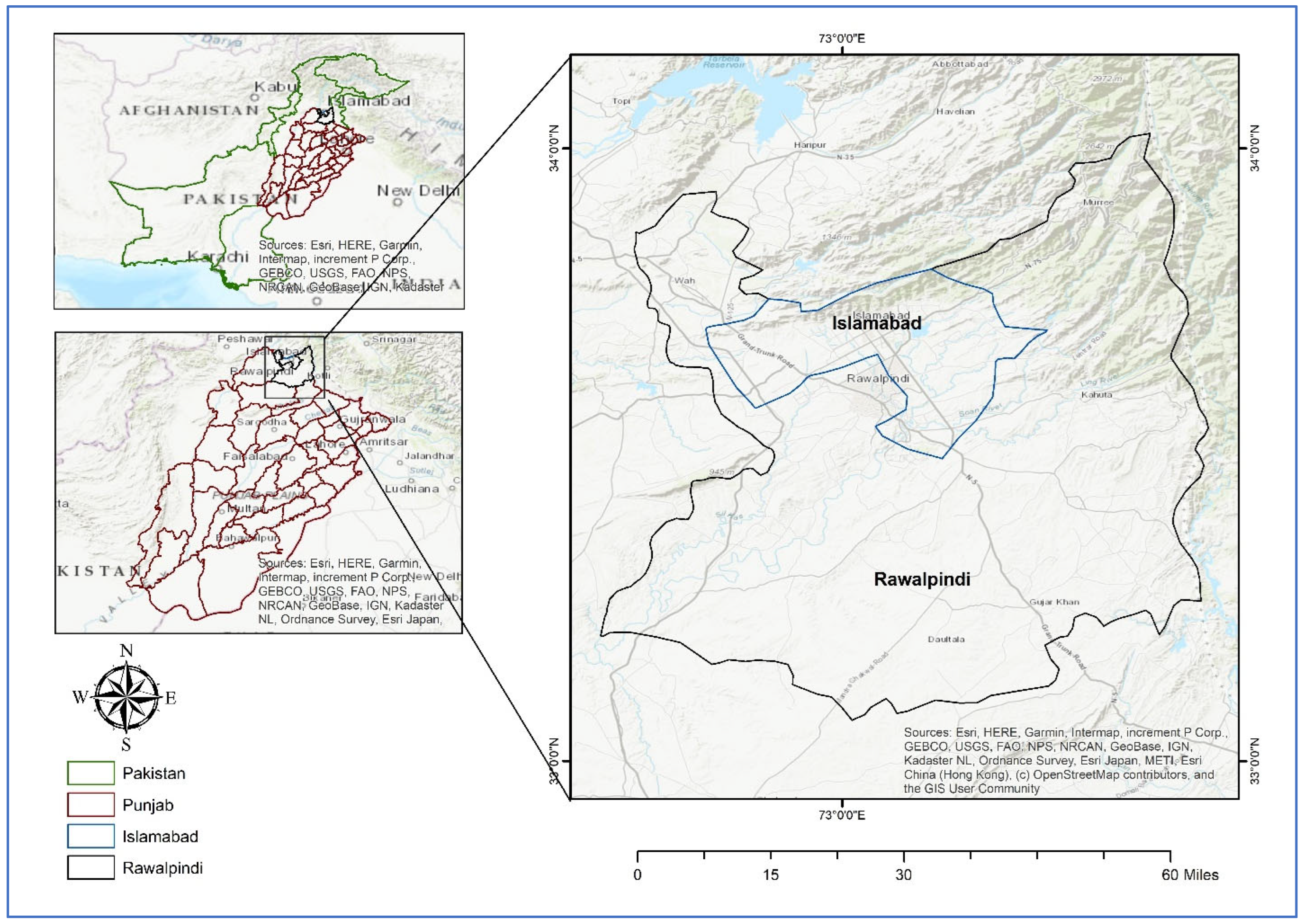
Figure 1. Spatial location of the Rawalpindi district and Islamabad.
Water 17 03392 g001
Figure 2. Workflow of the methodology for delineating groundwater potential zones.
Water 17 03392 g002
Figure 3. Methodological outline of AHP.
Water 17 03392 g003
Figure 4. Thematic maps of parameters (a) MSI, (b) rainfall, (c) GWD, (d) Slope, (e) soil, (f) drainage density, (g) elevation, (h) TWI, (i) NDVI, (j) LST, (k) LULC.
Water 17 03392 g004
Figure 5. Groundwater potential zone.
Water 17 03392 g005
Figure 6. Validation of groundwater potential zones.
Water 17 03392 g006
Table 1. Ratings and weights of parameters influencing groundwater recharge potential.
Influence ParametersValuesUnitPotentialityRatingWeight Assigned (%)
Precipitation1242.80–1299.39
1186.20–1242.80
1129.61–1186.20
1073.01–1129.61
1016.42–1073.01
mmVery High
High
Moderate
Low
Very Low
5
4
3
2
1
20
LST−0.1524–20.6631
20.6631–30.3900
30.3900–34.4753
34.4753–37.1988
37.1988–42.4548
levelVery Low
Low
Moderate
High
Very High
5
4
3
2
1
2
NDVI9569–14,446
14,446–16,102
16,102–17,356
17,356–18,671
18,671–29,422
levelVery Low
Low
Moderate
High
Very High
1
2
3
4
5
2
Soil Type ClassificationLoam
Clay
Clay loam
Sandy loam
levelVery High
High
Moderate
Low
5
4
2
1
15
Land Use/Land CoverWater
Forest
Range land
Built Up
Barren
levelVery High
High
Moderate
Low
Very Low
5
4
3
2
1
3
Elevation316–497
497–705
705–1059
1059–1504
1504–2268
levelVery High
High
Moderate
Low
Very Low
5
4
3
2
1
4
Slope0–3.1337
3.1337–8.5057
8.5057–15.444
15.444–22.83
22.831–57.0781
levelVery High
High
Moderate
Low
Very Low
5
4
3
2
1
6
MSI9568–14,445
14,445–16,101
16,101–17,355
17,355–18,670
18,670–29,422
levelVery Low
Low
Moderate
High
Very High
1
2
3
4
5
2
TWI3.5253–12.655
−0.016–3.5253
−2.378–−0.016
−4.188–−2.378
−7.415–−4.188
levelVery High
High
Moderate
Low
Very Low
5
4
3
2
1
8
Drainage Density57.104–71.380
42.828–57.104
28.552–42.828
14.276–28.552
0–14.276
levelVery Low
Low
Moderate
High
Very High
1
2
3
4
5
11
Ground Water Depth>320
240–300
120–240
60–120
0–60
meterVery Low
Low
Moderate
High
Very High
1
2
3
4
5
28
Table 2. Relative scale values.
ScoreImportance IntensityDefinition
1Equal ImportanceBoth elements contribute equally.
3Moderate ImportanceOne element ranks moderately higher than the other.
5Strong importanceOne element has substantial importance over the other.
7Very Strong ImportanceOne element demonstrates a strong preference over the other.
9Extreme ImportanceOne element demonstrates extreme preference over the other.
2, 4, 6, 8Intermediate ValuesValues when importance lies between two intensities.
Table 3. Pairwise comparison matrix.
FactorsPrecipitationGWLSlopeSoilDrainage
Density
LULCTWIElevationNDVIMSILST
Precipitation12334556678
Groundwater level1/21223445567
Slope1/31122334456
Soil1/31/21/212223345
Drainage density1/41/31/21/21223344
LULC1/51/41/31/21/2122334
TWI1/51/41/31/21/21/212233
Elevation1/601/41/31/31/211223
NDVI1/61/51/41/31/31/31/21/2122
MSI1/71/61/51/41/41/31/31/21/212
LST1/81/71/61/51/41/41/31/31/21/21
Sum3.425.548.5310.6214.1718.9220.6727.3330.0037.5045.00
Table 4. Normalized vector for key groundwater potential parameters.
FactorsRainfallGW lvlSlopeSoilDrainageLULCTWIElevationNDVIMSILSTSumCriteria Weights
Rainfall0.290.360.350.280.280.260.240.210.20.180.172.860.26
GW lvl0.140.230.250.180.210.210.190.180.160.160.152.030.18
Slope0.090.110.120.180.140.150.140.140.130.130.131.480.13
Soil0.090.050.060.090.140.100.090.100.10.100.111.110.10
Drainage0.070.030.060.040.070.100.090.100.10.100.080.910.08
LULC0.050.030.040.040.030.050.090.070.10.080.080.710.06
TWI0.050.020.040.030.030.020.040.070.060.080.060.580.05
Elevation0.040.020.040.020.020.020.020.030.060.050.060.440.04
NDVI0.040.020.030.010.020.020.020.010.030.050.040.360.03
MSI0.040.020.040.010.010.020.160.010.010.020.040.270.02
LST0.030.010.040.010.010.010.160.010.010.010.020.210.01
Table 5. Priority vector matrix consistency index (CI).
FactorRainfallWater DepthSlopeSoilDrainage DensityLULCTWIElevationNDVIMSILSTSUMConsistency Vector
Rainfall0.260.360.400.300.330.320.260.240.190.170.153.0311.66
Water Depth0.130.180.260.200.250.260.210.200.160.150.132.1611.71
Slope0.080.090.130.200.160.190.150.160.130.120.111.5711.65
Soil0.080.090.060.100.160.130.100.120.090.100.091.1611.55
Drainage Density0.060.060.060.050.080.130.100.120.090.100.070.9611.53
LULC0.050.040.040.050.040.060.100.080.090.070.070.7311.33
TWI0.050.040.040.050.040.030.050.080.060.070.050.6011.27
Elevation0.040.030.030.030.020.030.020.040.060.050.050.4411.14
NDVI0.040.030.030.030.020.020.020.020.030.050.030.3611.16
MSI0.030.030.020.020.020.020.010.010.010.020.030.2811.18
LST0.030.030.020.020.020.010.010.070.010.010.010.2111.31
Average11.41
Table 6. Random index (RI).
n1234567891011
RI000.580.91.121.241.321.411.451.491.51
Table 7. Groundwater potential zones.
GWPZArea (km2)Percentage %
Very High 6.96425.64
High55.11333.09
Moderate221.0551.96
Low 347.098.25
Very Low37.7061.04
Table 8. Sample accuracy check.
ClassVery GoodGoodModeratePoorVery PoorTotalCorrect Samples
Very Good8000088
Good0340003434
Moderate0032603832
Poor0001101111
Very Poor0000999
Total8343211910094
Table 9. Expected agreement calculation (Pe).
ClassTotalProportionCorrect SampleExpected Contribution
Very Good88/100 = 0.0880.08 × 0.08
Good3434/100 = 0.34340.34 × 0.34
Moderate3838/100 = 0.38320.32 × 0.32
Poor1111/100 = 0.11110.11 × 0.11
Very Poor99/100 = 0.0990.09 × 0.09
Disclaimer/Publisher’s Note: The statements, opinions and data contained in all publications are solely those of the individual author(s) and contributor(s) and not of MDPI and/or the editor(s). MDPI and/or the editor(s) disclaim responsibility for any injury to people or property resulting from any ideas, methods, instructions or products referred to in the content.