Article

Hydrochemistry and Geothermal Potential of Żary Pericline (SW Poland)

by
Barbara Kiełczawa
Faculty of Geoengineering, Mining and Geology, Wrocław University of Science and Technology, 27 Wybrzeże Wyspiańskiego, 50-370 Wrocław, Poland
Water 2025, 17(17), 2647; https://doi.org/10.3390/w17172647
Submission received: 11 July 2025 / Revised: 1 September 2025 / Accepted: 5 September 2025 / Published: 7 September 2025
(This article belongs to the Section Hydrogeology)

Abstract

The mineralization of groundwater within the Żary pericline exhibits a broad range, from 0.2 to 0.3 g/L up to 401 g/L, with the majority classified as brines. These waters are predominantly chloride-rich, characterized by variable concentrations of cations such as Na+, K+, Ca2+, and Mg2+. Their chemical composition varies by geological formation: Na-Cl and Mg-Cl types dominate in the Triassic strata, while more complex mixtures are observed in the Zechstein and Rotliegend formations. Brine formation and evolution are primarily influenced by evaporation and ion exchange processes, particularly Na+/Ca2+ exchange. These brines represent residual evaporative fluids that migrate through the subsurface during sediment compaction and tectonic deformation. The observed variability in mineral content suggests the occurrence of hydrochemical inversion within the geological layers. Groundwater temperatures range from 20 °C to 55 °C at depths between 490 and 1525 meters below ground level. The geothermal gradient spans from 3.55 °C/100 m to 4 °C/100 m, with the highest values recorded in the western and northwestern sectors of the pericline. These thermal conditions indicate promising potential for geothermal energy development in the region.

1. Introduction

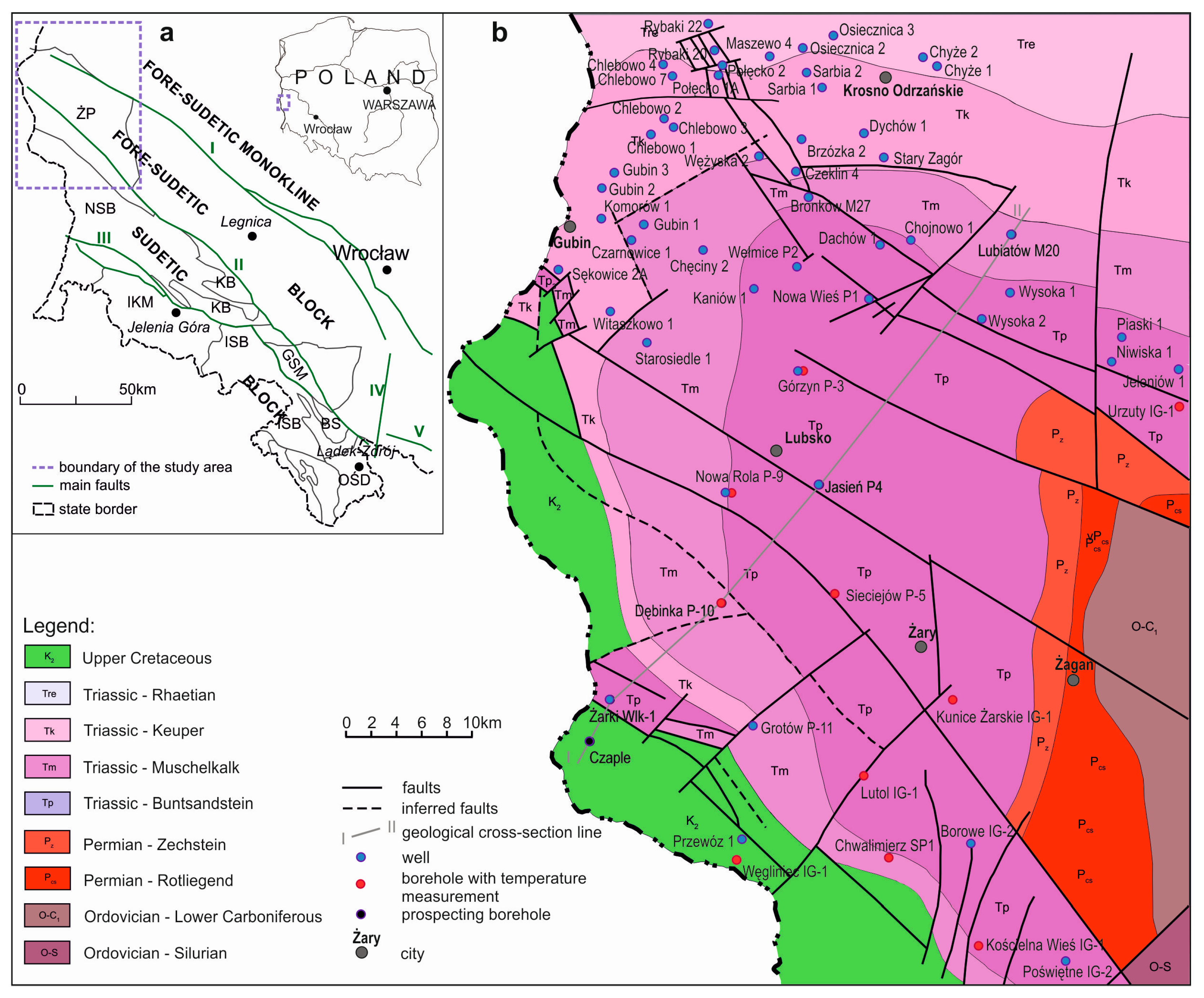
The Żary pericline is located at the boundary between tectonic units of the Sudetic block. The pericline, together with the fore-Sudetic block and the Sudetes, forms the so-called Lower Silesian block (Figure 1).
Until the 1960s, this part of the Lower Silesian block and the fore-Sudetic monocline were the object of intensive prospection for oil and gas deposits, particularly in the peripheral zones of the pericline. Until the mid-1970s, the geological setting of the central part of this unit remained poorly recognized. In 1975–1977, detailed studies of the stratigraphy of individual units and the paleogeography of the Permian and Mesozoic series were conducted [1,2,3,4,5,6,7], as were others. Hydrocarbon exploration subsequently focused on the development of the Zechstein (Main Dolomite) sediment series [8,9,10,11]. In the following years, the main objective of exploration within the pericline shifted to finding metal ore deposits (copper and silver). The results provided new insights into the sedimentation conditions and the petrography of the bedrock of the Żary pericline and the Permo-Triassic sedimentary series. Based on the hydrodynamic characteristics of the encountered aquifers, as well as the hydrochemical indicators of the studied waters, prospective locations of hydrocarbon accumulation were indicated [12,13]. Moreover, Łaszcz-Filakowa [14,15,16] proposed hypotheses concerning the genesis and metamorphism of Triassic and Permian brines throughout the fore-Sudetic monocline. The possible balneotherapeutic and recreational use of the waters in the adjacent regions was also analyzed [17,18].
This article presents the hydrochemical and thermal characteristics of Permian and Triassic waters within the Żary pericline. This is an extension of previous studies as it conducts an analysis of the degree of saturation of brines with respect to selected rock-forming minerals and a spatial analysis of the variability in water chemistry. This research enabled the updating and refinement of the existing hypotheses concerning the processes shaping the chemical properties of these waters. The analysis of thermal conditions provided a more detailed picture of the thermal potential of this part of the Lower Silesian block, discussed by Bruszewska [19] and Majorowicz [20]. The presented spatial variability in water chemistry and thermal conditions enables the reasonable management of both water and Earth’s heat, which is an important element of national raw material policies.
Figure 1. Tectonic units of the Lower Silesian block (a) and the documentation map (b) against the geological structure of the study area (based on refs. [21,22]); explanatory notes to map (a): ŻP—Żary Pericline; NSB—north Sudetic basin; IKM—Izera-Karkonosze Massif; KB—Kaczawa Belt; ISB—Intra-Sudetic Basin; GSM—Góry Sowie Massif; BS—Bardo Structure; OŚD—Orlica-Śnieżnik Dome; I—Odra Fault; II—Sudetic Marginal Fault; III—Intra-Sudetic Fault; IV—Nyznerov Thrust; V—Kędzierzyn-Paczków Fault.
Water 17 02647 g001

1.1. Geological Settings

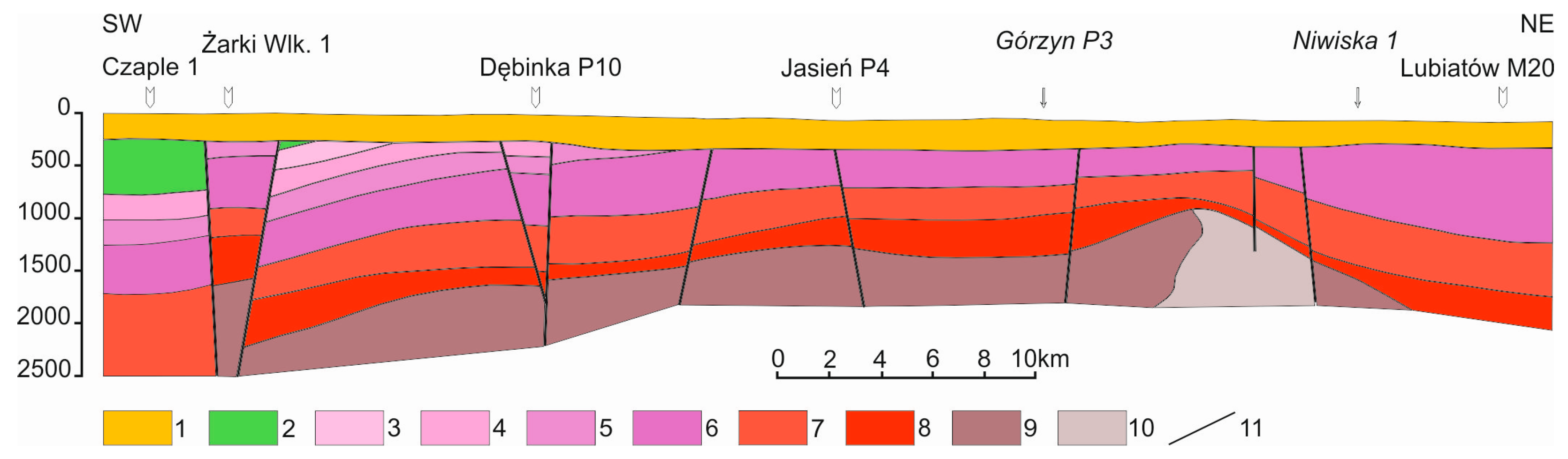
Geologically, the Żary pericline is located within the boundary zone between two large tectonic units: the fore-Sudetic monocline to the north and the fore-Sudetic block to the south and the southeast (Figure 1a). Its geological setting comprises rocks of several structural stages (Figure 1b). Early Paleozoic formations, intensely deformed during the Variscan orogenic cycle, are discordantly overlain by Permo-Mesozoic sedimentary series. These successions exhibit a regional monoclinal dip directed toward the northwest and west, locally complicated by structural culminations (Figure 2).
The sub-Permian crystalline basement of the Żary pericline is composed predominantly of feldspar–mica schists, amphibolites, quartzites, and gneisses, constituting a polymetamorphic complex [23]. In the Kaniów area (the northern part of the Żary pericline), granitoids classified by Górecka et al. [24] as Variscan orogeny formations are exposed. In the southern part, Late Palaeozoic quartz–feldspar schists and phyllites have been found [23,25]. Structurally higher levels of the succession are represented by Carboniferous siliciclastic sequences, comprising sandstones, mudstones, and shales. These strata have been documented across multiple boreholes: in the eastern (Piaski 1, Niwiska 1), central (Nowa Rola P-9, Sieciejów P-5), and southern (Lutol IG-1, Przewóz 1) parts of the pericline (Figure 1b) [21,24].
Permian deposits discordantly overlie the eroded and folded pre-Permian bedrock (Figure 2). In the Lower Permian (Rotliegend), the central part of the pericline (between Poświętne in the south and Czeklin in the north) was occupied by an uplifted volcanogenic massif directly overlain by Zechstein deposits (Upper Permian). The Rotliegend deposits are predominantly sandstone and conglomerate series interspersed with claystone and mudstone packages with the smallest thicknesses in the northernmost (Kaniów 1) and southernmost (Poświętne IG-1) parts of the pericline. Towards the SW and W, deposit thickness increases sharply and reaches several hundred meters (e.g., Lutol IG-1—about 500 m). Within the tectonic zone extending from Czeklin (Czeklin 1) through Sieciejów (Sieciejów P5) to Kunice Żarskie (Kunice Żarskie IG-1) and Kościelna Wieś (Kościelna Wieś IG-1), Lower Rotliegend volcanic rocks (dacites, andesites, and melaphyres) occur [21].
The Zechstein succession consists mostly of four gypsum–halite cyclothems with total thicknesses reaching c. 400–500 m in the central (Dębinka P-10) and northern (Wełmice P2, Bronków M27) parts. Sedimentation begins with fine-grained sandy sediments and copper-bearing shales (clay shales, mudstones, and marls shale) enriched in metal (Cu-Ag) sulfides. The first cyclothem (Werra) is composed of carbonate deposits (basal limestone and dolomite), followed by sulphate and halite accumulations representing the oldest salt horizons. On the previously mentioned elevated ridge, a carbonate platform developed at that time [5,6]. The second cyclothem (Stassfurt) includes the main dolomite, overlain by older halite, as well as potassium and screening anhydrite deposits. In the area of Rybaki, potassium salts have been identified [1,3]. The third cyclothem (Leine) consists of salt clays, platy dolomite, and gypsum–salt series. The total thickness of this cyclothem increases towards the NW [5]. The final cyclothem (Aller) contains red salt clays, lower and upper anhydrite, and the youngest halite, but these series are incomplete across extensive areas [1,5,6,21].
The cyclothem sediments are covered with Triassic deposits of considerable thickness (500–600 m), comprising red sandstones, conglomerates, mudstones, and Buntsandstein claystones. These are successively overlain by limestones, marls, Roethian gypsum deposits, and Muschelkalk sequences, including limestones, dolomitic limestones, marls, marly claystones, and clay–gypsum–anhydrite interbeds (Figure 2). Upper Triassic (Keuper) units, in the form of terrigenous sediments with sulphate interlayers, have been identified in the W and N parts of the pericline. The youngest Mesozoic deposits, of Cretaceous age, occur in the southern part, at the border with the north Sudetic basin (Figure 1b). As in the broader Sudetes, Jurassic sediments are absent [26].
The Cenozoic cover consists of sand, gravels, and clays varying in thickness, formed during three glaciations and the related interstadial periods. The youngest sediments are Holocene sands, gravels, peats, and clays [1,21].

1.2. Tectonic Setting

The Żary pericline closes the fore-Sudetic block by forming an arc to its northwest (Figure 1a). To the NE and N, the pericline is bounded by the Middle Odra dislocation zone, while to the SW, it is limited by a dislocation zone extending from the Sudetic marginal fault. The northern margin of the pericline merges with the fore-Sudetic monocline, whereas the southern margin transitions into the north Sudetic basin (Figure 1a). Within the pericline, approximately parallel faults with a WNW-ESE strike subdivide the structure into smaller tectonic blocks. The most structurally elevated part extends between Górzyn (in the west) and Niwiska (in the east). This is the western part of the area, visibly elevated in the Lower Permian, and it has been referred to by Peryt [5] as the Szprotawa elevation (Figure 2). Erosion surfaces at the boundaries between the Werra-Stassfurt and Aller-Leine cyclothems, as well as at the Permian–Triassic contact, record episodes of tectonic activity in this area. The Cretaceous (Laramide) tectonic movements reactivated older settings and finally shaped the present-day structural configuration of the Żary pericline [1,5].

1.3. Hydrogeology

Due to the excessive cost, time requirements, and technical parameters of the exploration wells (small diameters), hydrocarbon and copper ore prospection provided incomplete hydrogeological data (the depth of the drilled horizon and results of limited physicochemical analyses). If research was conducted, it was limited to properties related to the occurrence of the sought-for minerals.
In the pericline area, aquifer systems are in Quaternary, Neogene, Mesozoic, and Late Palaeozoic formations. In the Quaternary system, water occurs in multigrain hydroglacial and fluvial gravels. Together with the Neogene horizon, these constitute the main usable aquifers. In older formations, the water regime depends strictly on aquifer lithology and tectonics.
The Upper Cretaceous sandy deposits form the first fissure–pore-type aquifer system with a subartesian or artesian water table [27]. Sandy, marly, and carbonate Triassic deposits exhibit waterlogging locally in the zones of water-bearing fissures. This aquifer system is characterized by low capacity and low mineral content increasing with distance from the zones of sub-Cenozoic outcrops [21,28]. Sampling in the northern part of the Żary pericline has shown the presence of brines with mineral content ranging from 11 to approximately 330 g/L [12,15].
The Late Paleozoic aquifer system is primarily composed of Permian-aged deposits. Within the Żary pericline, Zechstein sediments are extensively saturated with water and exhibit elevated hydrostatic pressures, frequently resulting in artesian wells. The aquifer is predominantly constituted by fractured and karstified carbonate rocks, including limestones and dolomites. Of particular significance is the principal dolomite aquifer, associated with the Stassfurt cyclothem, which is overlain by a sequence of evaporitic deposits such as anhydrite, halite, and potassium–magnesium salts [15,29]. The underlying aquifer, known as the Rotliegend, comprises beds of sand and conglomerate that are fissured and display variability in grain size and porosity. The hydrochemical characteristics of this aquifer have been shaped by dynamic sedimentary environments, which in turn influenced the prevailing geochemical conditions. It is noteworthy that the Rotliegend and Zechstein carbonate formations within the Permian aquifer system are frequently treated as a unified hydrogeological unit. This composite aquifer consists of carbonate Zechstein sediments alongside Rotliegend conglomerates and sandstones and is hydraulically confined by evaporitic layers of the Werra cyclothem [15,29].
Older stratigraphic units, even if drilled, were not studied in terms of hydrogeology.
Tectonic fault zones act as preferential pathways for hydraulic connectivity, enabling cross-formational flow and mixing between discrete aquifer systems. Elevated hydrostatic pressures can induce the ascending migration of deep-seated brines [27]. Brines of Permian and Triassic origin, ascending along fault planes and fractures, pose a potential risk to the chemical integrity of overlying potable aquifers. In addition, sulfide mineralization within the Zechstein succession constitutes a secondary source of trace elements further influencing groundwater geochemistry.

2. Materials and Methods

This research was carried out using the results of physicochemical analyses of the waters encountered during exploration and/or deposit drilling within the Żary pericline over various periods, beginning in the 1960s. The data were compiled from published reports and archival records available in the Central Geological Database. Due to differences in the availability and completeness of the material, data enabling a hydrochemical description of the Triassic, Zechstein, and Rotliegend aquifers were selected. In total, data from 42 wells were verified (Figure 1b), and the results of 52 physicochemical analyses of waters from the Triassic (T), Zechstein (P2), Rotliegend (P1), and undivided Permian (P1+2—Rotliegend and Zechstein limestones) aquifers were included. The proposed chemical classification was based on the scheme published by Szmytówna [30], according to which the chemical type of water is determined by the ions present at concentrations equal to or greater than 20% meq/L. It was assumed that concentrations of the main ions equal to or exceeding 50% meq/L define the primary chemical water types, while subgroups were identified based on ion concentrations equal to or greater than 20% meq/L. The dataset comprised concentrations of the main ions (Na+, K+, Ca2+, Mg2+, Cl, SO42+, HCO3) and water mineralization expressed as a dry residue (in the text and in the graphs marked as M). In most archived analyses, the sodium ion content is expressed as the sum of Na+ and K+ ions.
Hydrogeochemical analyses were carried out using the AquaChem and PhreeqCI applications [31,32] to determine the saturation state of the analyzed waters with respect to the major rock-forming minerals and to assess the relative correlations among the main ion concentrations. Owing to the anomalously high concentrations of silica (caused by drilling fluid), the saturation indices (SI) with respect to aluminosilicates were not determined. The SI indicates whether minerals are dissolving or precipitating. Values between −0.5 and +0.5 reflect equilibrium with the selected mineral; SI > +0.5 indicates supersaturation and a tendency for precipitation, whereas SI < −0.5 indicates undersaturation and a tendency for dissolution. For potassium-bearing minerals, K+ concentrations were estimated from the seawater K/Cl ratio. Brines with charge-balance errors exceeding 5% were excluded from SI calculations. Sodium concentrations, corrected by subtracting K+ from the combined Na+ + K+ values, were used to evaluate possible ion exchange processes.
Analyses conducted in deep boreholes were used to assess geothermal conditions and their variability within the discussed unit. In a few boreholes (Figure 1b), bottom-hole temperatures were measured, usually after a shutdown period of 10–14 days. To visualize the thermal regime, a map of spatial variability in the heat flux density (HF) was prepared. Due to differences in the well depth, data from various measurement intervals were considered. The geothermal gradient was determined for sections extending from 0.5 km up to the bottom of the hole. The shallowest intervals were excluded to minimize the influence of shallow groundwater circulation. Rock thermal conductivity values were drawn from the literature [33,34,35,36]. For each borehole section, thermal conductivity was calculated as a weighted average, with the thicknesses of lithological units serving as weights. While interpreting the thermal conditions on the boundaries of the pericline, data from the neighboring geological units (the fore-Sudetic monocline and the north Sudetic basin) were considered.

3. Results

3.1. Fluid Chemistry

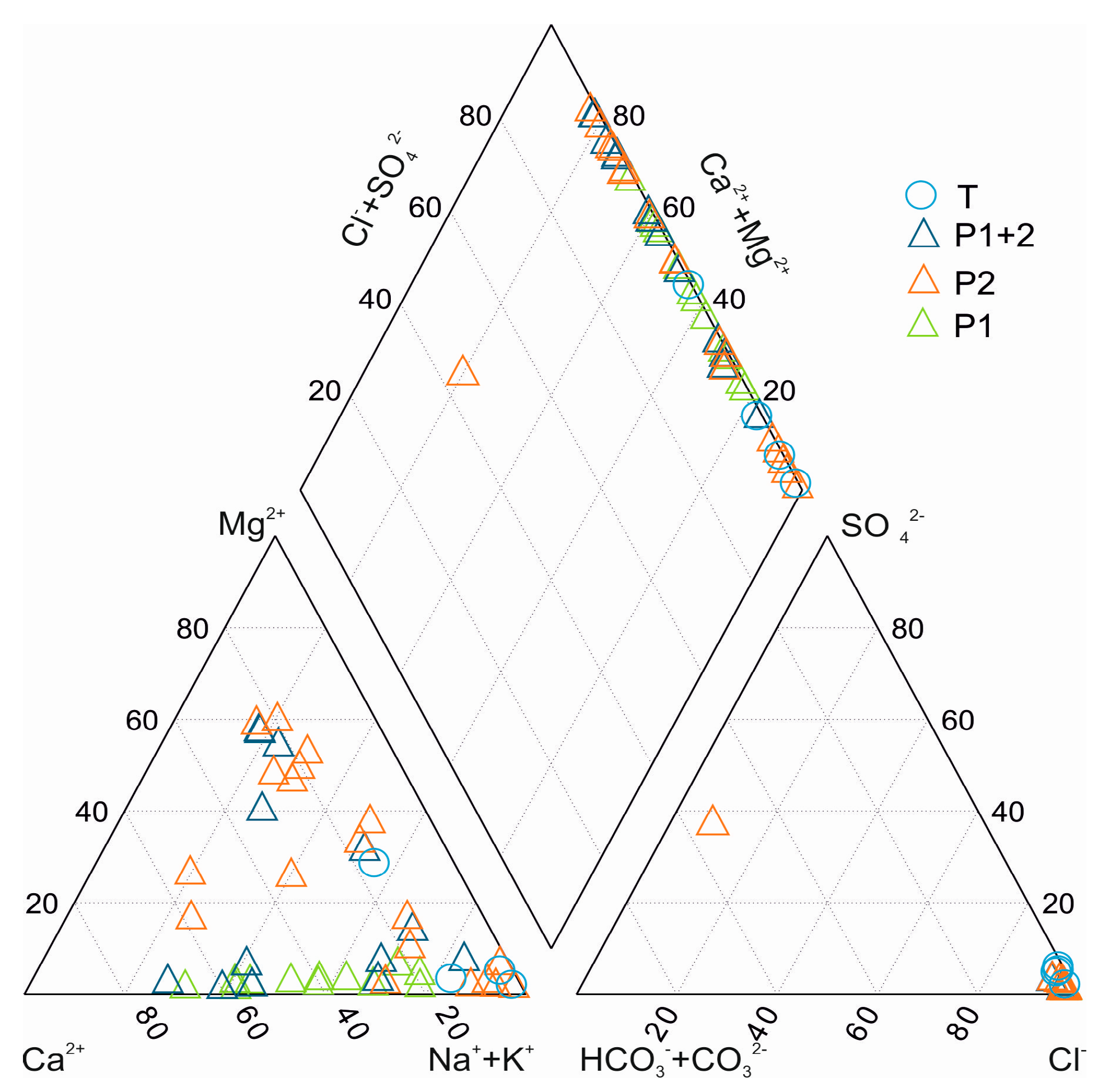
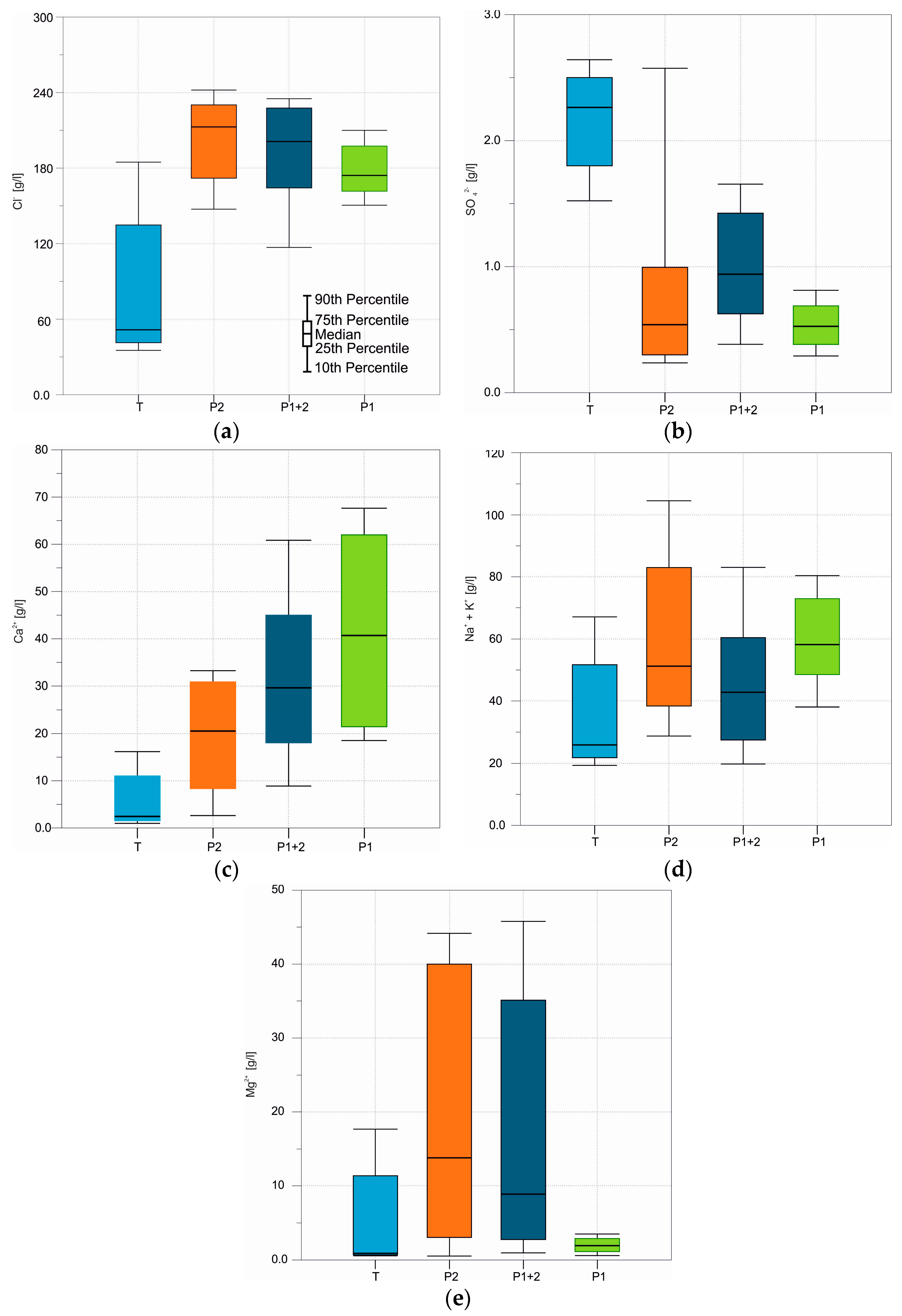
Chloride ions dominate the anion group, ranging from approximately 93% meq/L to 100% meq/L (Figure 3 and Figure 4a). The highest sulphate concentrations are associated with Triassic (T) aquifers (Figure 4b). Bicarbonate-type waters (Borowe IG-2) and bicarbonate–sulphate waters (Poświętne IG-2) were identified in only two wells. Among the cations, sodium ions are predominant in most samples with proportions ranging from c. 15.5% meq/L to c. 98% meq/L (Figure 3).
The maximum concentrations of calcium and magnesium are approximately 72% meq/L and c. 61% meq/L, respectively (Figure 3). Ca2+ and Na+ ions predominate in the P1 brines, whereas Mg2+ ions predominate in the P2 and P1+2 brines (Figure 4c–e).
The chemical composition of the waters is controlled by the dissolution and leaching of sedimentary series [37,38].
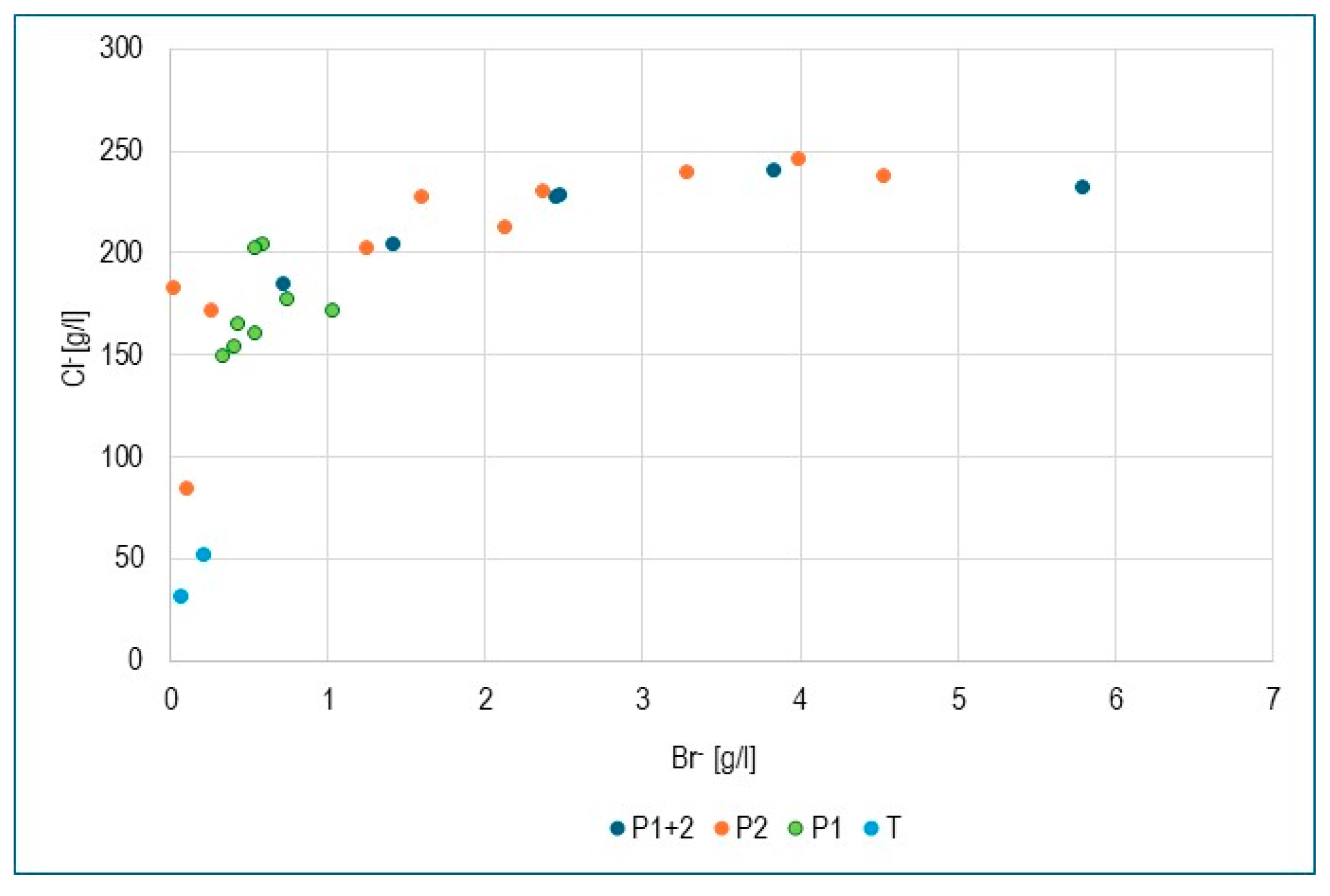
Among the minor components of the studied waters, high concentrations of bromide (Br) were observed. In the Triassic aquifer, Br concentrations range from ~0.1 to 0.2 g/L, whereas Permian brines contain between 0.1 and 5.8 g/L (Figure 5). This variation is attributed to the inflow of seawater and/or meteoric waters to the new Triassic basin [39]. The highest concentrations occur in the northwestern part of the pericline, in areas of potassium–magnesium salt deposition. Notably Br contents in salts exhibit considerable variation across individual cyclothems, ranging from 20 to 140 ppm (Werra), 60 to 260 ppm (Stassfurt), 0 to 170 ppm (Leine), and 40 to 125 ppm (Aller) [40].
Variation in Br and Cl concentrations indicates that P1 brines do not mix with waters from the overlying younger aquifers (Figure 5) [41].
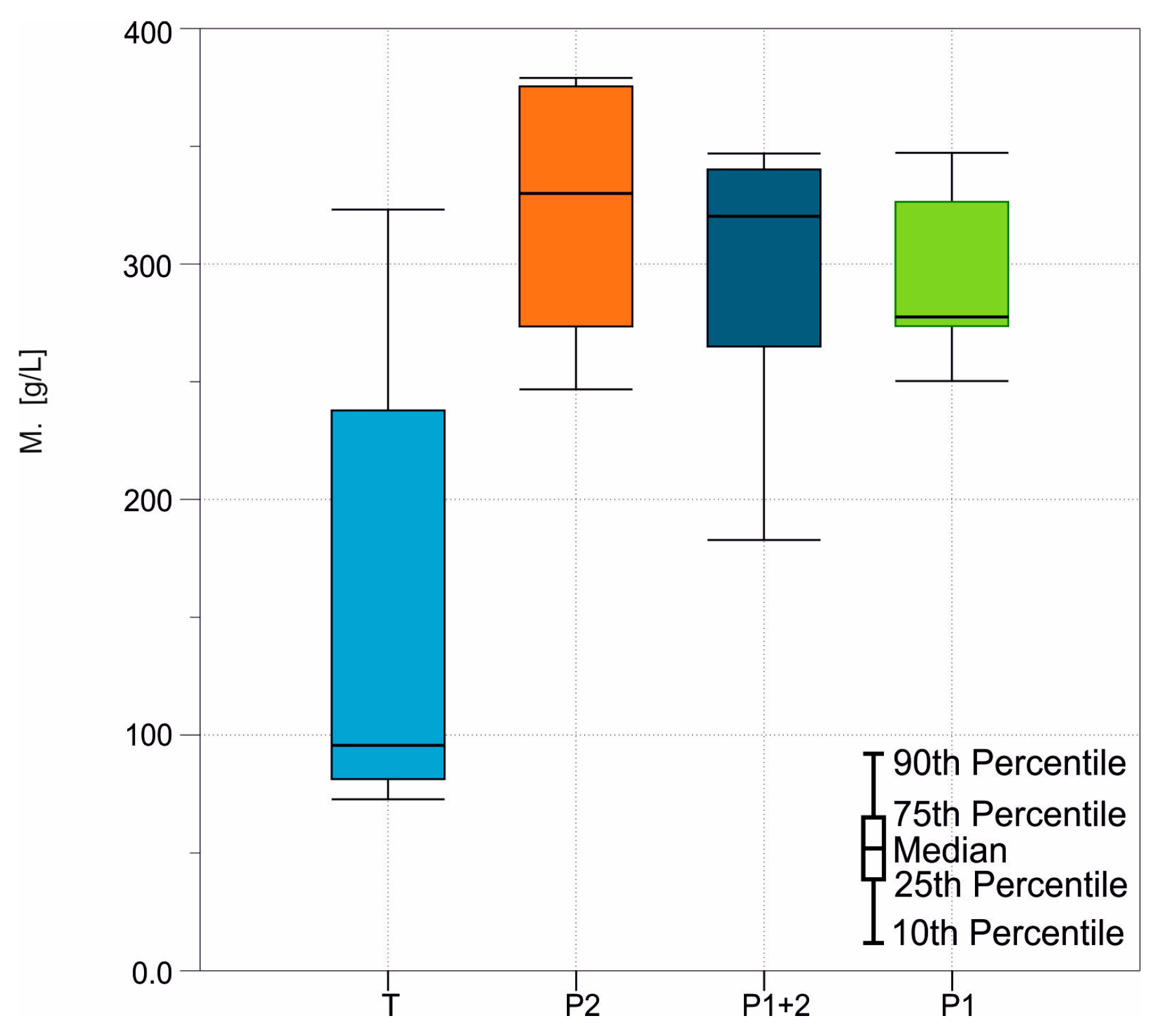
The mineralization of analyzed waters ranges from 18.2 g/L to about 400 g/L, classifying them as saline waters and brines (Table 1).
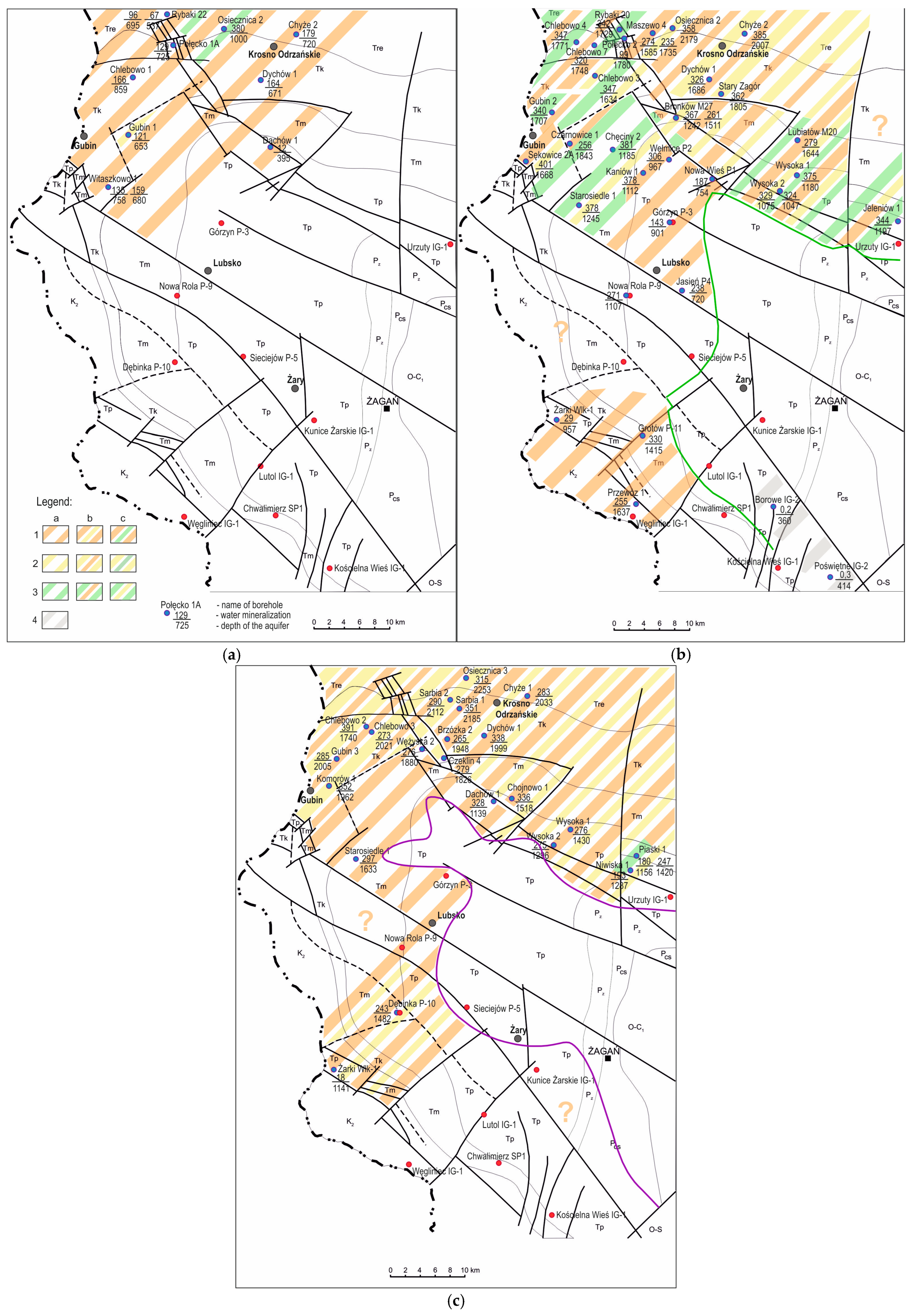
Brines from the Triassic (T) aquifer exhibit the lowest mineralization among all the studied aquifers. The highest M (mineralization) was recorded in the Osiecznica-Chyże region, whereas significantly lower mineralization was observed in the tectonic zones (Rybaki 22, Dachów 1, and Witaszkowo 1) compared with other areas of aquifer occurrence (Figure 6 and Figure 7a, Table 1).
The highest M is characteristic of Zechstein (P2) groundwaters (Figure 6 and Figure 7b, Table 1). The areas of Połęcko (Połęcko 2) and Żarki Wielkie (Żarki Wlk.-1) have water with exceptionally low mineralization compared to adjacent wells (99 g/L and 29 g/L, respectively).
The only exceptions occur in the Borowe IG-2 and Poświętne IG-2 wells, where waters differing in both M and the chemical composition were identified in the shallowest P2 zones (360 and 414 m bgl, respectively). These waters exhibit very low mineralization, ranging from 0.2 to 0.3 g/L; in contrast, the highest M value (401 g/L) was recorded in the Sękowice 1A well (Figure 7b).
Similarly to the P2 brines, the Żarki Wielkie area is characterized by the occurrence of waters with exceptionally low mineralization (29 g/L) at a depth of over 1.1 km (Figure 6 and Figure 7b). The lowest values of this parameter were recorded in the eastern part of the analyzed area, with mineralization increasing westward.
The mineralization of the Rotliegend (P1) brines ranges from c. 240 g/L to about 350 g/L, with most samples having a mineralization less than 300 g/L, with a general rising trend as the depth at which they occur increases (Figure 6 and Figure 7c).
Within the Permian aquifer system, a disturbance in vertical hydrochemical zonality was observed, as P2 brines exhibit higher M than the brines in the P1 aquifer. This is exemplified by the Wysoka 1, Wysoka 2, and Starosiedle 1 wells (Figure 7b,c).
Triassic waters (T), previously analyzed in the NW part of the studied area (Figure 7a), are Na-Cl brines varying in the proportions of Mg2+ (Osiecznica area) and Ca2+ (Gubin area).
Considering the brine mineralization and ionic ratios in the undivided Permian (P1+2), these brines were assigned to the P1 and P2 horizons. The following maps present the spatial variability in brine types, according to this division.
The Zechstein aquifer (P2) dominates the area, with Na-Cl brines prevailing. Towards the NW of the pericline (Rybaki 20, Chęciny 2, Chlebowo 4), the water types shift to Mg-Cl and Mg-Na-Cl. Mg-Cl brines also occur near the eastern margin of the pericline (Jeleniów). The area of Krosno Odrzańskie (Chyże 2, Dychów 1, Stary Zagór) contains Na-Ca-Cl brines. In the south part of the pericline, Na-Cl brines dominate. Outside the saline formation zone (Borowe IG-1 and Poświętne IG-2), waters are of the Ca-HCO3 type (Figure 7b).
The Rotliegend aquifer (P1) was identified in the same area as the P2 aquifer. The average depth exceeded 2 km (Sarbia 1, Chlebowo 3) (Table 1, Figure 7c). Waters are dominated by Na-Ca-Cl and Na-Cl, with Ca-Cl brines restricted to the northwestern margin. In the northern part, a gradual change in water type is observed: from Na–Ca–Cl in the eastern pericline (Piaski 1–Wysoka 1, 2), through Ca–Cl in the central part (Wężyska 2–Starosiedle 1), to Ca–Na–Cl in the west (Komorów 1–Chlebowo 3). In general, the proportion of sodium in the discussed waters increases with depth.
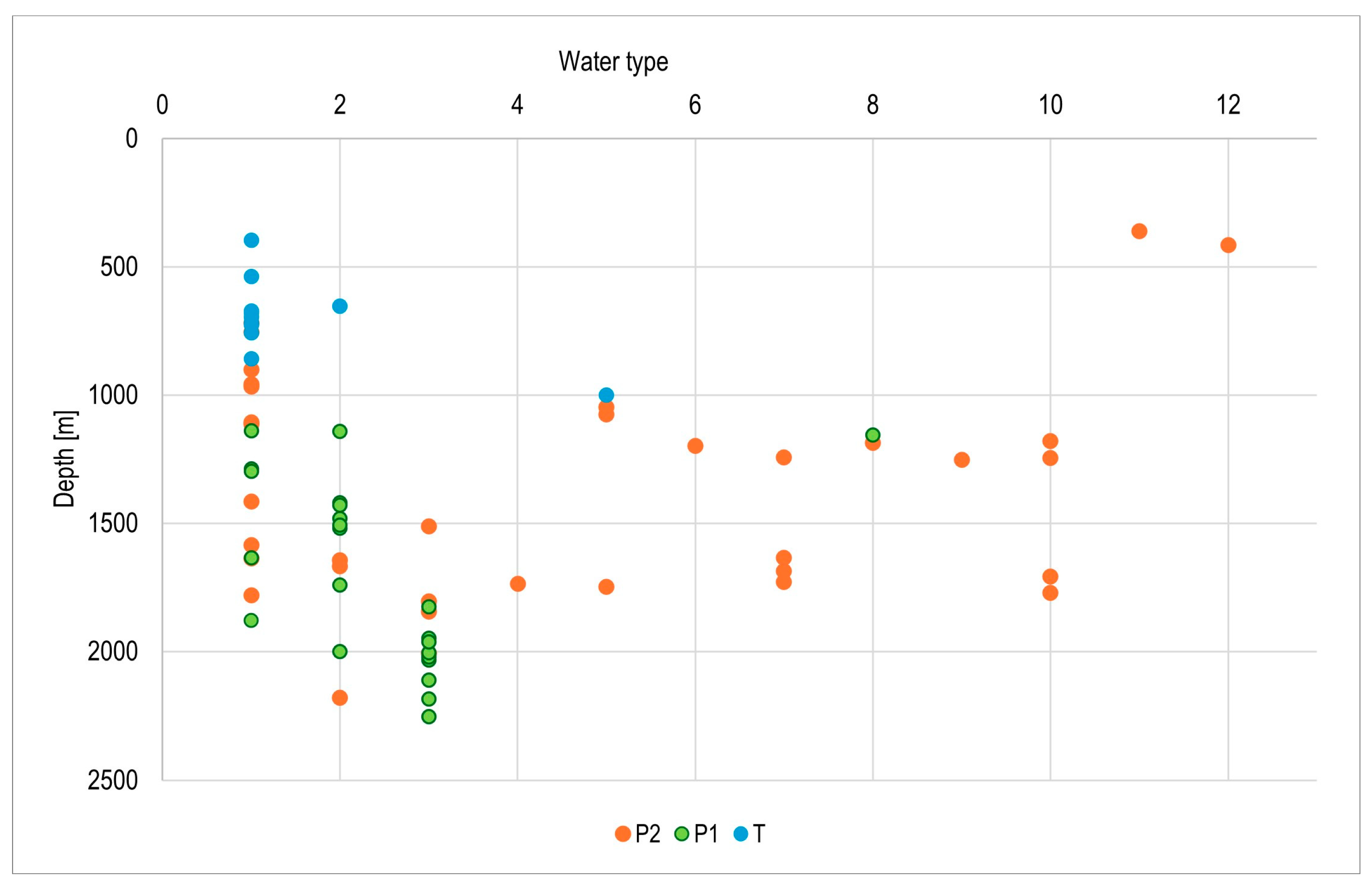
When the variation in the chemical types of waters is compared with the depths at which they occur, it can be observed that the chemical type changes from Na-Cl to Na-Ca-Cl and Ca-Na-Cl as the depth increases. In contrast, Triassic Na–Cl waters display a stable composition, whereas P2 waters exhibit the greatest variability and the highest Mg2+ concentrations (Figure 8).

3.2. Potential Mechanisms of Groundwater Salinization

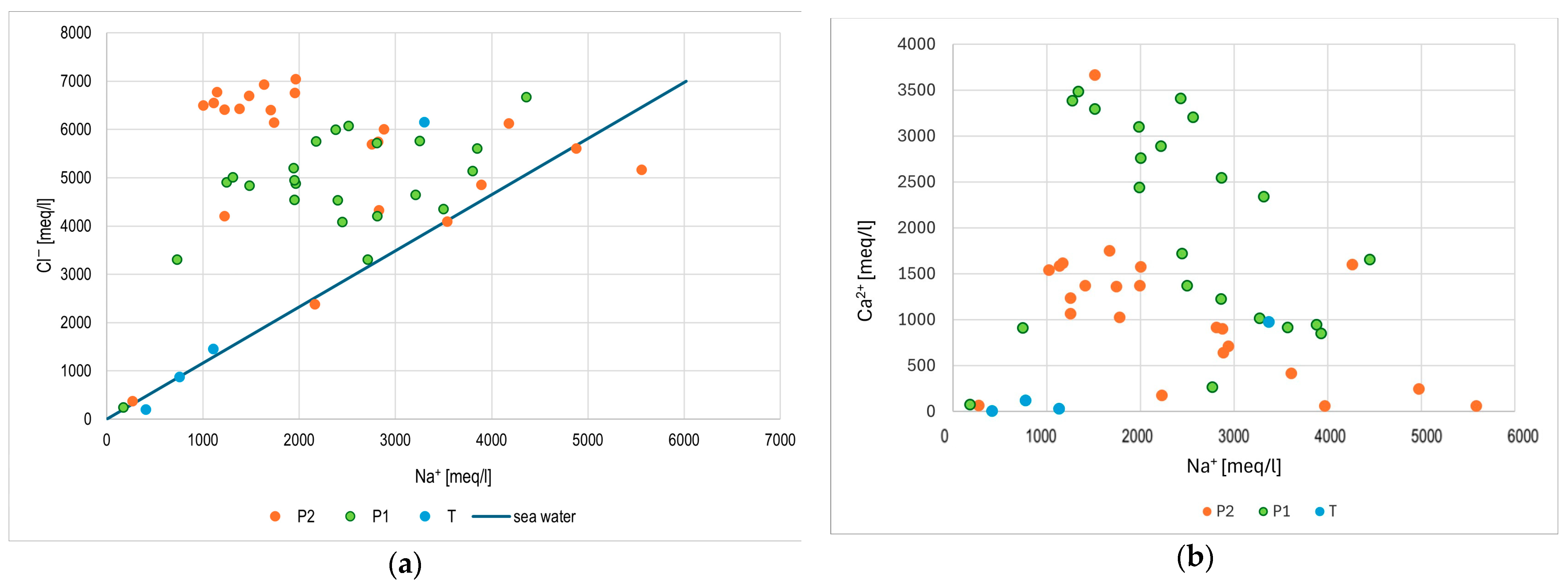
To analyze the processes contributing to the formation of minerals in the discussed waters, sets of ionic relations were compiled. As can be seen in Figure 9a, only a small number of waters display a sodium–chlorine concentration ratio consistent with the halite dissolution line. The obtained image indicates that halite dissolution is the primary process that supplies both ions to brines in the Triassic (T) aquifer. Many brines deviate from the linear relationship between Na+ and Cl, suggesting that additional processes significantly affect the concentrations of these ions [42]. The deficit of Na+ ions is probably caused by their exchange with Ca2+ ions present in the rock medium (e.g., in clay minerals), which follows the general relation Na+ + 0.5Ca2+ − X ↔ 0.5Ca2++Na+ − X [32]. This probable exchange may be confirmed by the variation in calcium and sodium concentrations in the studied waters, and depending on the intensity of the process, two groups of brines can be distinguished (Figure 9b). The potential for ion exchange in the brines of these sedimentary formations was previously suggested by Łaszcz-Filakowa [15].
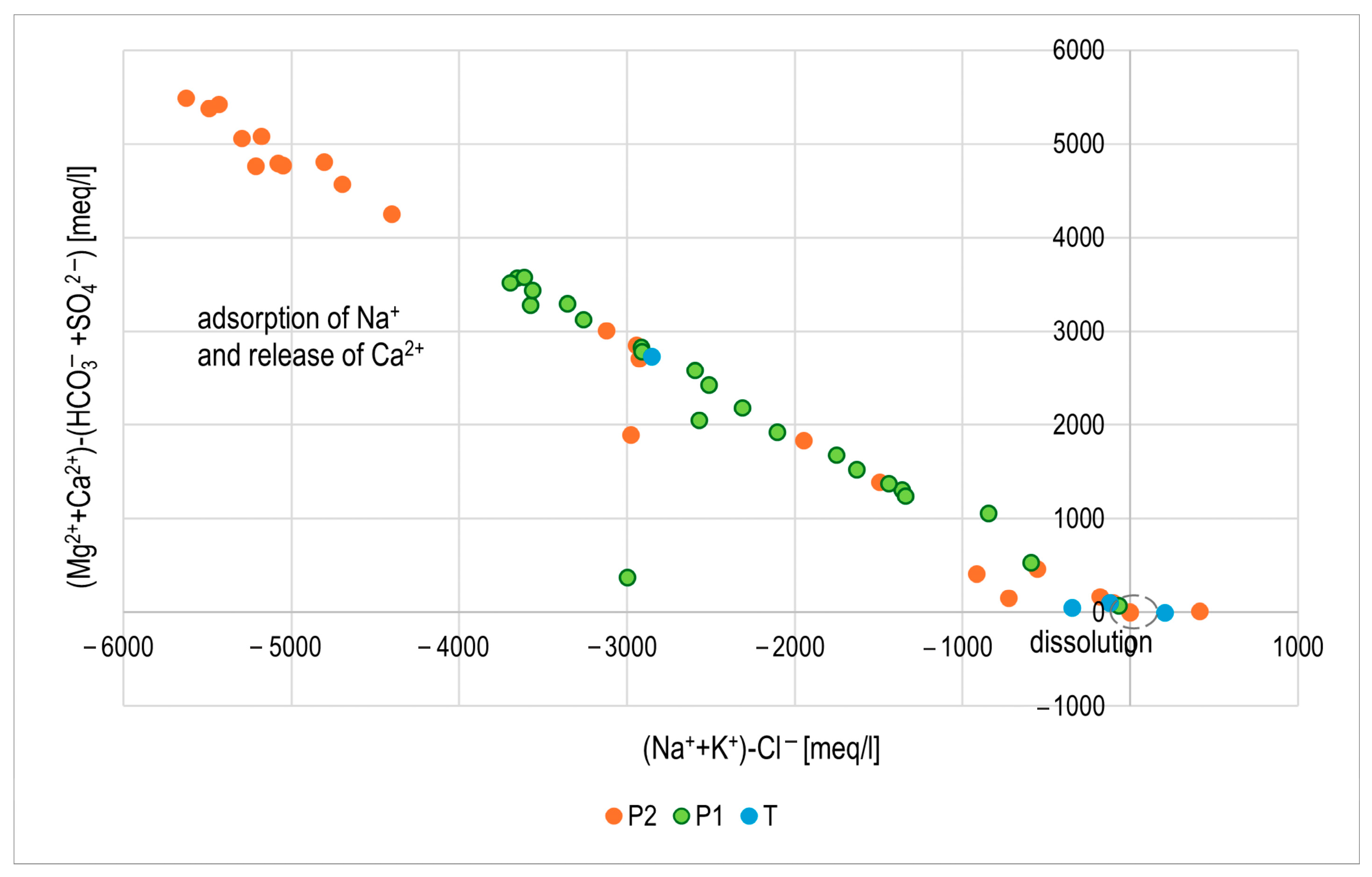
This interpretation is further supported by the mutual ratios of ions in carbonate minerals (e.g., calcite, dolomite, magnesite) to salt-forming ions (e.g., halite, sylvite) (Figure 10). Nearly all water samples plot along a straight line with a slope of −1, indicating strong Na+ ion adsorption and release of Ca2+ ion from the rock medium [43,44]. Only wells with bicarbonate waters (Poświętne IG-2, Borowe IG-2) fall within the dissolution field.
This hypothesis could also be consistent with the observed “enrichment” of the waters in Ca2+ ions and/or their “depletion” in Na+ ions, defined as deviations of the measured concentrations from the seawater dilution line. In Figure 10, the brines tend to shift toward the positions representing an increase in the Ca2+ and Mg2+ contents in relation to a decrease in the Na+ contents, reflecting active cation exchange processes [45,46].
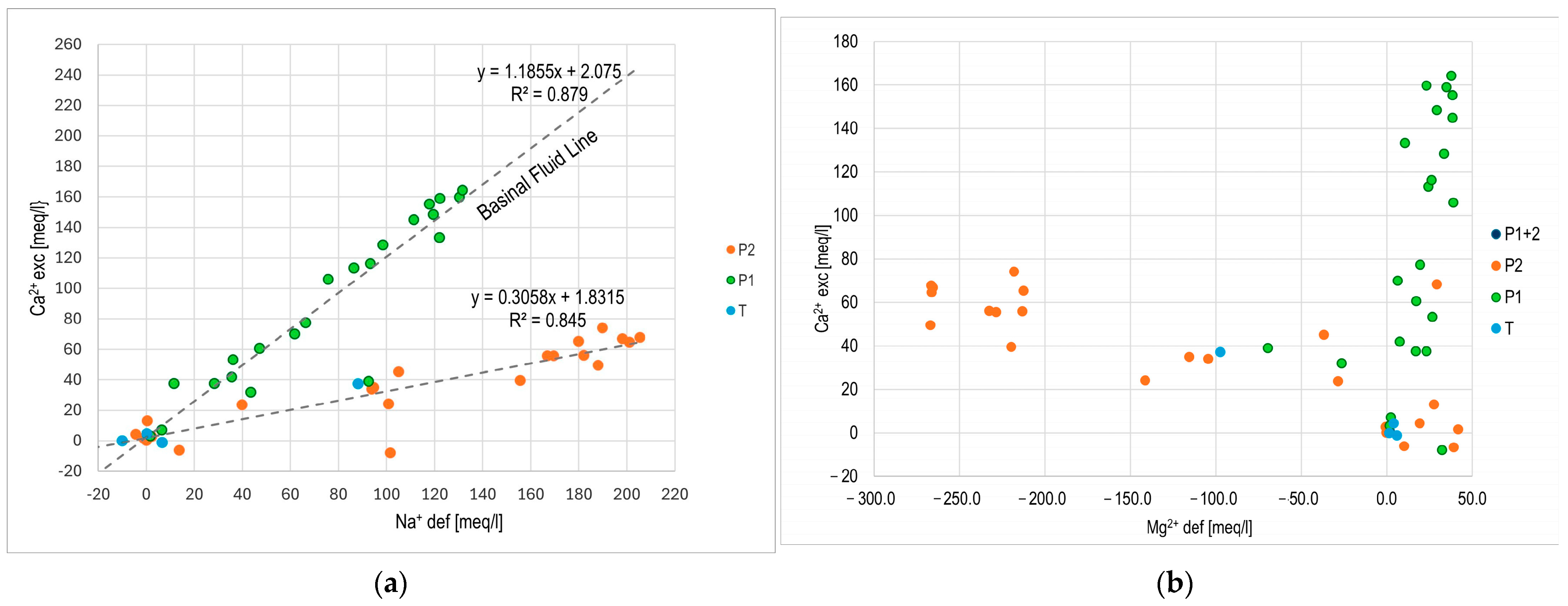
The enrichment in Ca2+ ions is defined as Ca2+ measured in excess of the expected concentration along the seawater dilution line. Similarly, a deficit in Na+ ions is defined in relation to the seawater dilution line with a unit slope indicating the exchange of 2Na+ − Ca2+ (Figure 11a). This line is referred to as the “Basinal Fluid Line” [46,47,48]. The P1 brines lie a bit above this line, indicating the development of ion exchange processes. The P2 and T brines lie below this line, suggesting their evaporative origin [46]. If the analyzed brines were transformed by dolomitization, a linear relationship between excess Ca2+ and Mg2+ ions deficit should be expected, which is not the case in Figure 11b. The obtained image indicates that the dolomitization of calcite is not the main source of the enrichment of the discussed brines in Ca2+ ions.
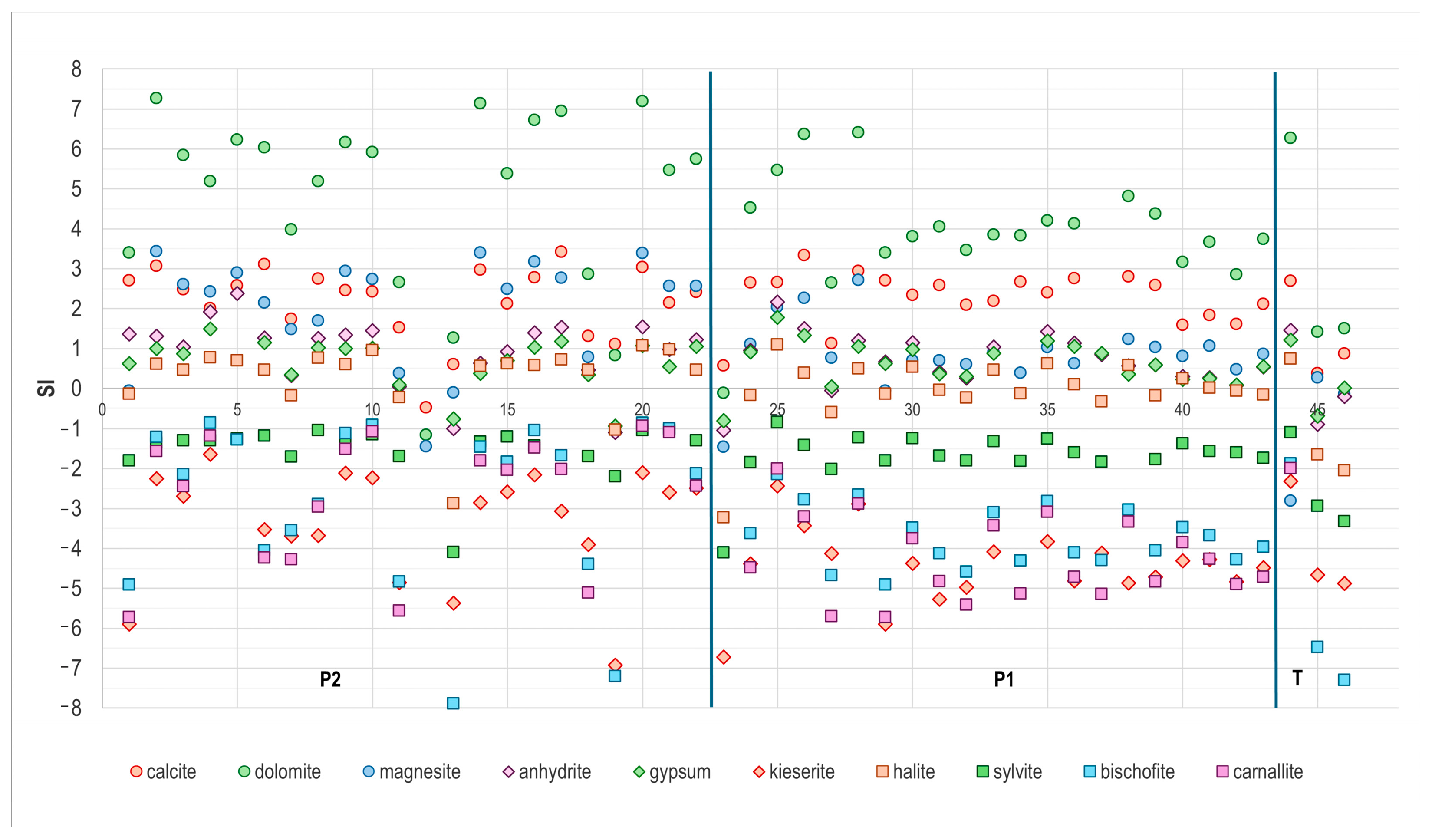
The ion exchange reactions, which significantly affect the chemical composition of the analyzed brines, are evidenced by an analysis of their saturation with respect to the main rock-forming minerals. The calculated values of the saturation index (SI) order minerals with decreasing saturation degrees corresponding to the crystallization sequence of cyclothem formations: dolomite > calcite ≥ aragonite > anhydrite > gypsum > halite > bischofite ≥ kieserite> sylvite > carnallite (Figure 12).
The brines exhibit significant supersaturation with respect to carbonates (dolomite, calcite, magnesite) and anhydrite. Most of the P2 samples are characterized by slight supersaturation with respect to halite and gypsum. Rotliegend brines are in thermodynamic equilibrium with halite and gypsum or show slight supersaturation with gypsum. These minerals are dissolved in Triassic brines. It can be observed that the variability in the SI indicators in the P2 brines is significantly greater than that in the P1 brines. This suggests that the processes affecting the chemistry of P2 brines are more intense and that the hydrochemical conditions in P1 are more stable.

3.3. The Geothermal Potential of the Żary Pericline

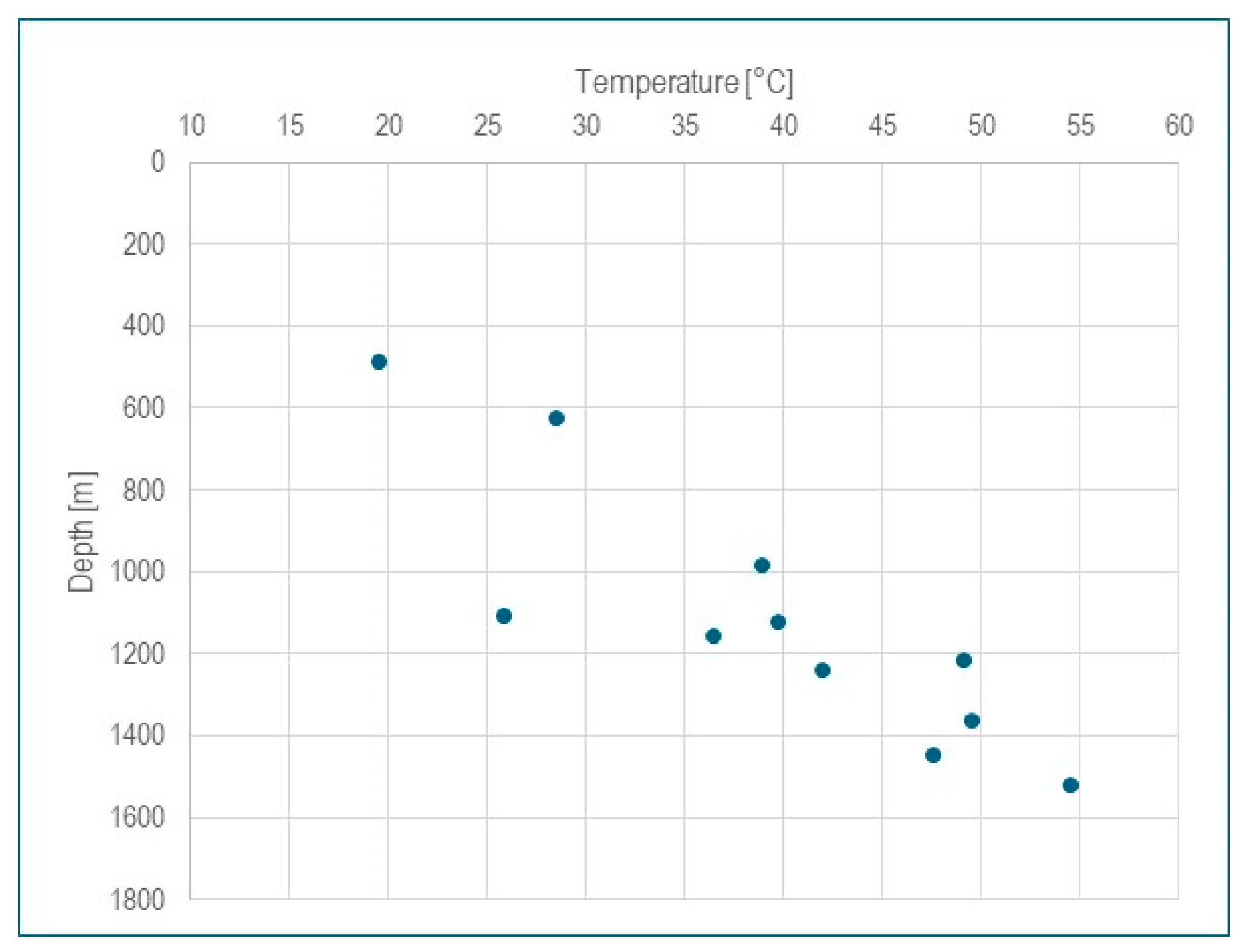
Within the discussed tectonic unit, the water temperatures measured at the bottom of boreholes (red points in Figure 1b) range from c. 20 °C to c. 55 °C at the depths of c. 490 m and 1525 m bgl, respectively. One well located in the southern, marginal part of the pericline (with a temperature of c. 26 °C at a depth of more than 1.1 km) deviates from the general trend in temperature change (Figure 13).
The generalized geothermal gradient determined based on the data from these boreholes ranges from 3.55 °C/100 m to 4 °C/100 m.
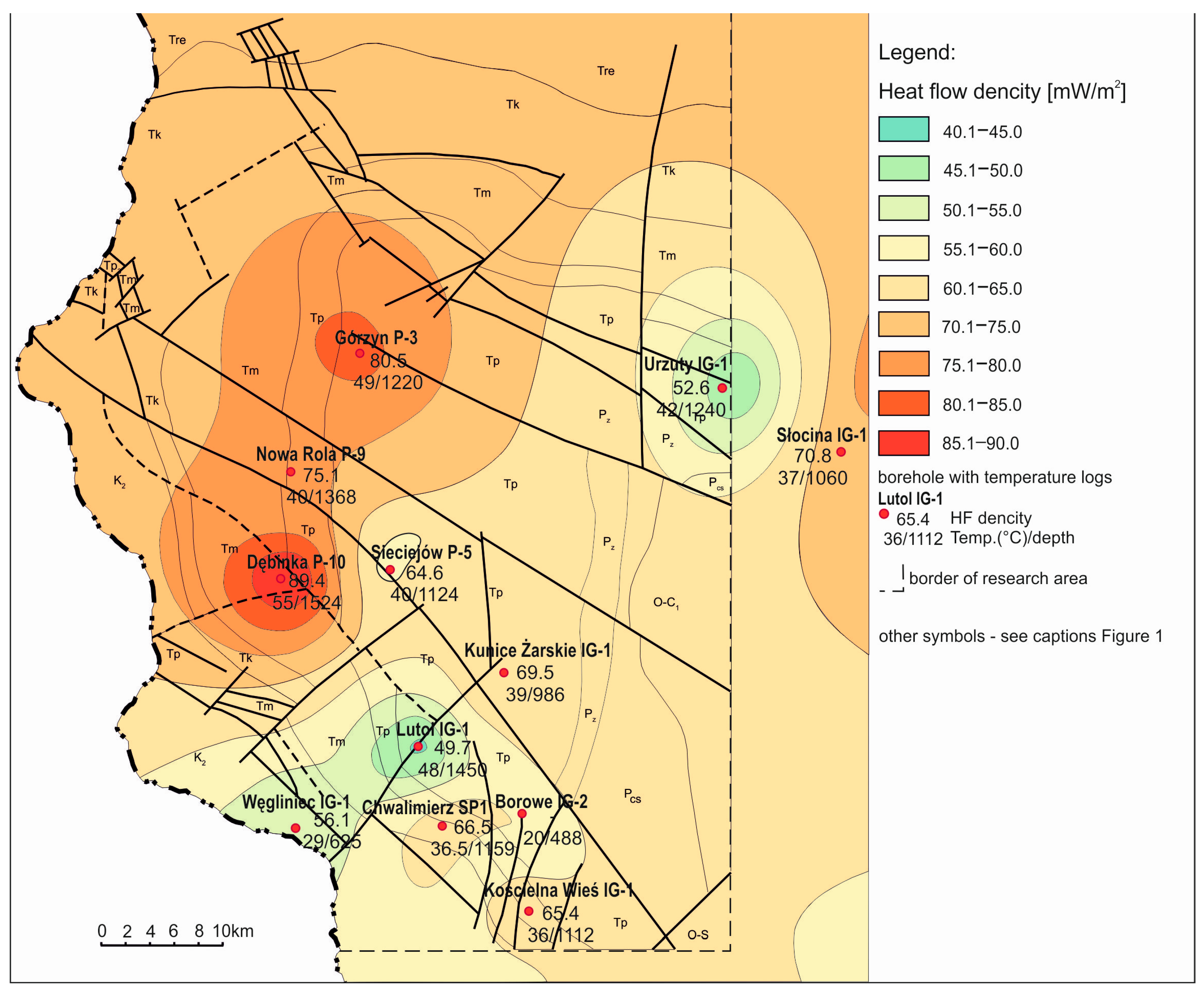
The thermal conditions are shown on a heat flux density (HF) map (Figure 14), where the impact of the block structure of the Żary pericline is clearly visible. The most favorable thermal conditions and thus the highest thermal potential are observed in the W, NW, and N parts of this unit. The HF values in these areas range from approximately 80 mW/m2 to about 90 mW/m2. The maximum values occur in boreholes located around the middle Odra fault system extinction.
Less favorable thermal conditions are observed in the central, central-eastern, and southern parts, with HF values ranging from 50 to 56 mW/m2. Toward the SE, i.e., in the axial parts of the north Sudetic syncline, the heat flux values increase slightly (up to c. 66 mW/m2). Significantly higher values are recorded east of the Żary pericline, near the boundary with the fore-Sudetic monocline [22].
Based on the determined geothermal gradient, temperatures of 70–80 °C can be expected at a depth of 2 km. Analyzing the thermal conditions of Poland and eastern Germany, Szuman et al. [49] obtained very similar temperatures. This suggests that the heat flow (HF) pattern presented here is likely to continue west of the pericline. Majorowicz [20] and Szuman et al. [49], considering the influence of paleoclimate on the development of thermal conditions, also obtained analogous HF values (80–90 mW/m2) for the pericline area. However, according to these authors, the HF density on the German side is approximately 20 mW/m2 lower. Nevertheless, the thermal parameters observed are very promising and could potentially serve as a source of energy for direct use in district heating.

4. Discussion

The chemical composition of marine brines in the fore-Sudetic region reflects a prolonged geochemical evolution originating from Permian and Triassic seawater [15,27,38]. Early sedimentation progressed from continental to lagoonal and fully marine conditions, fostering varied lithofacies development. In uplifted zones, meteoric water infiltration facilitated mixing, altering both M and ionic composition [1,40].
Initially, brines were dominated by Na+ and Cl due to halite dissolution. Over time, the influence of hydrated evaporite minerals led to Ca2+- and Mg2+-rich brines with reduced Na+ concentrations. Such brines are typically found near potassium–magnesium salts (Figure 7b). Hydrocarbon-related brines are usually Na-Ca-Cl types with elevated Br levels [50]. These fluids are interpreted as residual pore waters from evaporites, mobilized by sediment compaction or tectonic deformation [51]. Their chemistry evolved further due to secondary mineral precipitation (e.g., calcite, aragonite) and ion exchange processes (Figure 10).
Compared to modern seawater, these brines have lower Mg2+ and SO42− but higher Ca2+ concentrations—likely due to sulfate depletion via gypsum and anhydrite crystallization and calcium influx from Na+/Ca2+ exchange [50,52]. Brines follow the classical sequence of seawater evaporation: the initial precipitation of carbonates, followed by sulphates, halite, and later-stage potassium salts (bischofite, carnallite) [51,53,54]. Advanced stages involve MgCl2-rich lyes, initiating dolomitization and potentially magnesite formation at elevated temperatures (Figure 12).
Peryt [55] showed that the dolomitization of Permian carbonates was induced by MgCl2-rich brines at temperatures of 38–67 °C during Zechstein evaporite deposition. Saturation indices (Figure 12) and the decoupling of Ca2+ and Mg2+ trends (Figure 11b) support ongoing ion exchange (Na+/Ca2+) and progressive chemical alteration.
Brines have evolved from penesaline (M ~250 g/L) to supersaline types (>350 g/L), indicative of extensive evaporation and compaction [41]. The most concentrated brines (e.g., Sękowice 2A, Chęciny 2, Chlebowo 2) occur in the NW pericline, while those east of the pericline may represent post-crystallization seawater with fossil intralayer contributions [56].
In deeper basin zones, sediment compaction and geothermal gradients promoted the formation of thermobaric brines, influenced by the dehydration of clay and evaporitic minerals (e.g., gypsum, carnallite) [41]. These brines may migrate via convective flow or pressure gradients associated with hydrocarbon generation—consistent with the borehole data obtained during exploration drilling.

5. Conclusions

The groundwaters of the Żary pericline range from low-mineralized (0.2–0.3 g/L) to highly saline brines (≤401 g/L), with chloride types prevailing. Cation proportions (Na+, K+, Ca2+, Mg2+) vary with stratigraphy and depth, along the E-NW and E-W directions. The Permian aquifer exhibits a disturbance in the vertical hydrochemical zonation. Zechstein (P2) brines are often more mineralized than Rotliegend (P1) brines (e.g., Wysoka 1, Wysoka 2, Starosiedle 1 wells), consistent with observations from the fore-Sudetic [16].
Brine composition reflects evaporation, ion exchange (notably Na+/Ca2+), dissolution, and precipitation of secondary minerals.
The dominant waters of the P1 horizon are Na-Ca-Cl and Na-Cl brines. Mg-Cl and Mg-Na-Cl brines prevail in the northwestern part of the P2 horizon.
Brines previously identified as the so-called undivided Permian aquifer (P1 + P2) have been classified as the Zechstein (P2) and Rotliegend horizons (P1) represented by boreholes from the Chlebowo–Rybaki–Gubin and Krosno Odrzańskie (e.g., Sarbia, Osiecznica, Dachów, Brzózka, Chyże, and Żarki Wlk.) regions, respectively.
The brines record multi-stage evolution from primarily marine brines to the redeposition of older evaporites and admixture with younger marine and meteoric waters. They form aquifers with strongly reduced or even locally stagnant waters with evidence of fossil and paleoinfiltration waters. Additionally, movements of the Alpine orogeny, uplifting the foreland and shaping the present block structure of the Sudetes, facilitated the westward and northwestward migration of synsedimentary waters. However, isolated occurrences of low-mineralized, HCO3-rich waters imply contact with meteoric waters. They are the shallowest part of the P2 horizon in the margin of the Permian sedimentation basin.
The hydrochemical regime in the P1 brine horizon exhibits greater stability relative to that in P2. The SI values with respect to carbonate and sulphate minerals indicate high potential for scaling in production systems.
Brine inflow can disrupt both hydraulic and thermal gradients within geothermal reservoirs and disturb geochemical equilibria, thereby intensifying scaling and corrosion processes limiting well and reservoir performance. Such hydrogeochemical alterations may also mask the primary fluid signature of the system, complicating reservoir characterization and long-term resource assessment.
The Żary pericline exhibits favorable geothermal conditions, with water temperatures ranging from 20 °C to 55 °C at depths of 490 and 1525 m, respectively. The geothermal gradient (3.55–4 °C/100 m) and heat flow (HF) values of up to 90 mW/m2 in the western and northwestern parts indicate significant potential for district heating. For local authorities and investors, HF mapping can be a crucial tool for the strategic planning, development, and sustainable management of geothermal energy projects.
Future investigations should focus on developing integrated hydrogeological and thermal models of the Żary pericline. Achieving this objective will require an advanced chemical characterization of brines, with particular emphasis on the quantification of major, minor, and trace metal concentrations.

Funding

This research was supported by Wrocław University of Science and Technology, Faculty of Geoengineering, Mining and Geology (4001/0020/23). This research was co-funded in part by a research subsidy from the Polish Ministry of Science and Higher Education granted for 2025, and by the Polish National Fund for Environmental Protection and Water Management (agreement 579/2021/Wn-07/FG-go-dn/D).

Data Availability Statement

The data presented in this study are available on request from the corresponding author due to project-related restrictions.

Conflicts of Interest

The author declares no conflict of interest. The funders had no role in the design of this study; in the collection, analyses, or interpretation of data; in the writing of the manuscript; or in the decision to publish the results.

References

  1. Deczkowski, Z.; Oszczepalski, S.; Rydzewski, A. Geology of the Żary Pericline and its economic potential. In Geology and Mineral Resources of the Żary Pericline, 1st ed.; Oszczepalski, S., Ed.; Wydawnictwo Państwowy Instytu Geologiczny Wyd. PIG: Warszawa, Poland, 1995; No CL; pp. 7–22. [Google Scholar]
  2. Karnkowski, P.H.; Tomaszewski, J.B.; Żołnierczyk, T. Budowa geologiczna oraz surowce utworów permu i mezozoiku Ziemi Lubuskiej i Legnicko-głogowskiego Okręgu Miedziowego. In Przewodniki 50 Zjazdów Naukowych PTGeol, 1st ed.; Jerzmański, J., Ed.; Wydawnictwa Geologiczne Wyd. Geol.: Warszawa, Poland, 1978; pp. 42–65. [Google Scholar]
  3. Peryt, T.M.; Kasprzyk, A. Stratygrafia i historia sedymentacji cechsztynu niecki północnosudeckiej. Prz. Geol. 1992, 40, 457–467. [Google Scholar]
  4. Raczyński, P. Warunki sedymentacji osadów cechsztynu w niecce północnosudeckiej. Prz. Geol. 1997, 45, 693–699. [Google Scholar]
  5. Peryt, T.M. Cechsztyn w otoczeniu bloku przedsudeckiego. Kwart. Geol. 1981, 25, 75–91. [Google Scholar]
  6. Oszczepalski, S.; Rydzewski, A. Zechstein polymetallic mineralization on the Żary Pericline. In Geology and Mineral Resources of the Żary Pericline, 1st ed.; Oszczepalski, S., Ed.; Wydawnictwo Pańswtowy Instytut Geologiczny Wyd. PIG: Warszawa, Poland, 1995; No CL; pp. 23–34. [Google Scholar]
  7. Śliwiński, W.; Raczyński, P.; Wojewoda, J. Sedymentacja utworów epiwaryscyjskiej pokrywy osadowej w basenie północnosudeckim. In Sudety Zachodnie: Od Wendu do Czwatorzędu, 1st ed.; Ciężkowski, W., Ed.; Wydawnictwo WIND Wyd. WIND: Wrocław, Poland, 2003; pp. 119–126. [Google Scholar]
  8. Karnkowski, P.H. Perspektywy odkrycia ropy naftowej i gazu w południowo-zachodniej Polsce. Prz. Geol. 1971, 19, 175–179. [Google Scholar]
  9. Karnkowski, P.H. Problemy poszukiwań złóż ropy naftowej i gazu ziemnego w PRL. Prz. Geol. 1984, 32, 1–8. [Google Scholar]
  10. Karnkowski, P.H. Rozwój prac poszukiwawczych w utworach cechsztynu na Niżu Polskim w latach 1945–2000. Prz. Geol. 2000, 48, 423–428. [Google Scholar]
  11. Karnkowski, P.H. Modelowanie procesów generacji węglowodorów w utworach cechsztyńskich basenu polskiego. Prz. Geol. 2000, 48, 443–447. [Google Scholar]
  12. Bojarski, L.; Sokołowski, A. Hydrodynamic and Hydrochemical conditions of oil and gas deposits on the Żary Pericline. In Geology and Mineral Resources of the Żary Pericline, 1st ed.; Oszczepalski, S., Ed.; Wydawnictwo Państwowy Instytut GeologicznyWyd. PIG: Warszawa, Poland, 1995; No CL; pp. 61–76. [Google Scholar]
  13. Łaszcz-Filakowa, B. Występowanie gazów ziemnych w triasie dolnym Południowej części basenu permskiego na Niżu Polskim. Prz. Geol. 1978, 26, 432–437. [Google Scholar]
  14. Łaszcz-Filakowa, B. Wody mineralne i termalne. Biul. Inst. Geol. 1972, 257, 203–228. [Google Scholar]
  15. Łaszcz-Filakowa, B. Chemizm wód podziemnych pstrego piaskowca środkowego monokliny przedsudeckiej. Biul. Inst. Geol. 1978, 312, 30–127. [Google Scholar]
  16. Łaszcz-Filakowa, B. Groundwaters of Saxonian and Zechstein reservoir rocks in the Fore-Sudetic Monocline: Their chemistry and genesis. In Proceedings of the International Symposium on Central European Permian, Proceedings Geological Institute, Warsaw, Poland, 27–29 April 1981; pp. 625–656. [Google Scholar]
  17. Płochniewski, Z.; Stachowiak, J. Możliwości wykorzystania wód mineralnych w Zielonogórskiem. Kwart. Geol. 1976, 20, 197–213. [Google Scholar]
  18. Dzioba, T.; Żurawik, J. Wysoko zmineralizowane wody podziemne na terenie Ziemi Lubuskiej i ich wpływ na zagospodarowanie jezior. In Proceedings of the Sympozjum Jeziora Ziemi Lubuskiej Ich Wykorzystanie i Ochrona Przed Zanieczyszczeniem, Zielona Góra, Poland, 18–19 May 1976. [Google Scholar]
  19. Bruszewska, B. Warunki geotermiczne Dolnego Śląska. Prz. Geol. 2000, 48, 639–643. [Google Scholar]
  20. Majorowicz, J. Review of the heat flow mapping in Polish sedimentary basin across different tectonic terrains. Energies 2021, 14, 6103. [Google Scholar] [CrossRef]
  21. Chmielewski, A.; Oszczepalski, S. Profile Głębokich Otworów Wiertniczych PIG, Nowa Rola, 1st ed.; Wydawnictwo Państwowy Instytut Geologiczny—Państwowy Instytut Badawczy Wyd. PIG-PIB: Warszawa, Poland, 2021. [Google Scholar]
  22. Kiełczawa, B.; Wąsik, M.; Ciężkowski, W.; Kujawa, P.; Sieniawska, I. Geothermal potential of South-Western Poland. Gosp. Sur. Min. Min. Resour. Manag. 2025, 41, 5–27. [Google Scholar] [CrossRef]
  23. Oberc, J. Budowa geologiczna Polski, Tektonika cz. In 2 Sudety i Obszary Przyległe, 1st ed.; Wydawnictwa Geologiczne Wyd. Geol.: Warszawa, Poland, 1972. [Google Scholar]
  24. Górecka, T.; Juroszek, C.; Karwowski, L.; Kłapciński, J.; Lorenc, S.; Mierzejewski, M.; Sachanbiński, K.; Ślusarczyk, S. Utwory skalne podłoża permu zachodniej części monokliny przedsudeckiej i perykliny Żar oraz przyległej części bloku przedsudeckiego. Prace Nauk. Inst. Górn. PWroc. 1977, 22, 3–92. [Google Scholar]
  25. Grocholski, A. Serie krystaliczne bloku przedsudeckiego i związane z nimi perspektywy surowcowe. Biul. Inst. Geol. 1982, 341, 90–116. [Google Scholar]
  26. Żelaźniewicz, A.; Aleksandrowski, P. Regionalizacja tektoniczna Polski–Polska południowo-zachodnia. Prz. Geol. 2008, 56, 904–911. [Google Scholar]
  27. Bojarski, L. Atlas Hydrochemiczny i Hydrodynamiczny Paleozoiku i Mezozoiku Oraz Ascensyjnego Zasolenia Wód Podziemnych na Niżu Polskim, 1st ed.; Wydawnictwo Państwowy Instytut Geologiczny Wyd. PIG: Warszawa, Poland, 1996. [Google Scholar]
  28. Dzioba, T.; Jamkowa, E. Zarys wgłębnej budowy geologicznej w rejonie zielonogórskim z uwzględnieniem warunków hydrogeologicznych. In Proceedings of the Konferencja Naukowo Techniczna Oddziału Wojewódzkiego NOT w Zielonej Górze, Zielona Góra, Poland, 3 December 1971; pp. 7–31. [Google Scholar]
  29. Dąbrowski, T. Charakterystyka hydrochemiczna wód głębinowych w utworach permu monokliny przedsudeckiej. Acta Geol. Pol. 1973, 23, 763–808. [Google Scholar]
  30. Szmytówna, M. Balneochemia, Chemia wód Mineralnych i Peloidów w Polsce, 1st ed.; Wydawnictwo Państwowy Zakład Wydawnictw Lekarskich Wyd. Państ. Zakł. Wyd. Lekarskich: Warszawa, Poland, 1970. [Google Scholar]
  31. Waterloo Hydrogeologic. AquaChem 13.0 Water Quality Analysis Software; Waterloo Hydrogeologic: Waterloo, ON, Canada, 2024. [Google Scholar]
  32. Apello, C.A.J.; Postma, D. Geochemistry, Groundwater and Pollution, 2nd ed.; A.A. Balkema Publishers: Amsterdam, The Netherlands, 2007. [Google Scholar]
  33. Downorowicz, S. Parametry geotermiczne i termiczne kompleksów stratygraficzno-litologicznych obszaru złożowego rud miedzi Monokliny Przedsudeckiej. In Aktualne Problemy Geotermiczne Polski, 1st ed.; Downorowicz, S., Ed.; Wydawnictwo Towarzystwo Konsultantów Polskich Oddział Lubin Wyd. Tow. Konsul. Pol. Od. Lubin: Lubin, Poland, 2018; pp. 31–40. [Google Scholar]
  34. Plewa, S. Rozkład Parametrów Geotermalnych na Obszarze Polski, 1st ed.; Wyd. CPPGSMiE Polish Academy of SciencesPolska Akademia Nauk: Kraków, Poland, 1994. [Google Scholar]
  35. Plewa, M.; Plewa, S.; Sroka, K.; Śmiszek, R. New determinations of the terrestrial heat flow in Poland. Biul. Pol. Akad. Nauk. Earth Sci. 1995, 43, 207–223. [Google Scholar]
  36. Plewa, M.; Skowrońska, M.; Skowroński, A.; Śmiszek, R.; Sroka, K. Badania Ciepła Radiogenicznego Skał Krystalicznych i Osadowych Obszaru Sudeckiego, 1st ed.; Wyd. CPPGSMiE Polish Academy of SciencesPolska Akademia Nauk: Kraków, Poland, 1996. [Google Scholar]
  37. Łaszcz-Filakowa, B. Wskaźniki hydrochemiczne permu zachodniej części monokliny przedsudeckiej. Prz. Geol. 1966, 14, 293–296. [Google Scholar]
  38. Bojarski, L.; Sadurski, A. Wody podziemne głębokich systemów krążenia na Niżu Polskim. Prz. Geol. 2000, 48, 587–595. [Google Scholar]
  39. Kovalevych, V.M.; Peryt, T.M.; Carmona, V.; Sydor, D.V.; Vovnyuk, S.V.; Halas, S. Evolution of Permian seawater: Evidence from fluid inclusions in halite. N. Jb. Miner. Abh. 2002, 178, 27–62. [Google Scholar] [CrossRef]
  40. Czapowski, G. Upper Permian (Zechstein) salt deposits on the Żary Pericline. In Geology and Mineral Resources of the Żary Pericline, 1st ed.; Oszczepalski, S., Ed.; Wydawnictwo Państwowy Instytut Geologiczny Wyd. PIG: Warszawa, Poland, 1995; No CL; pp. 35–60. [Google Scholar]
  41. Warren, J.K. Evaporites: Sediments, Resources and Hydrocarbons, 1st ed.; Springer: Berlin/Heidelberg, Germany, 2006. [Google Scholar]
  42. Hem, J.D. Study and Interpretation of the Chemical Characteristics of Natural Water, 3rd ed.; U.S. Geological Survey Water-Supply: Alexandria, VA, USA, 1985. [Google Scholar]
  43. Soumaia, M.; Lotfi, D.; Yann, L.; Schäfer, G.; Mohamed, H.; Rajouene, M. Identifying the origin of groundwater salinisation in the Sidi El Hani basin (central-eastern Tunisia). J. Afr. Earth Sci. 2018, 147, 443–449. [Google Scholar] [CrossRef]
  44. Dhaoui, Z.; Zouari, K.; Taupin, J.-D.; Farouni, R. Hydrochemical and isotopic investigations as indicators of recharge processes of the Continental Intercalaire aquifer (eastern piedmont of Dahar, southern Tunisia). Environ. Earth Sci. 2016, 75, 1186. [Google Scholar] [CrossRef]
  45. Davisson, M.L.; Presser, T.S.; Criss, R.E. Geochemistry of tectonically expelled fluids from the northern Coast Ranges, Rumsey Hills, California, USA. Geochim. Cosmochim. Acta 1994, 58, 1687–1699. [Google Scholar] [CrossRef]
  46. Davisson, M.L.; Criss, R. Na-Ca-Cl relations in basinal fluids. Geochim. Cosmochim. Acta 1996, 60, 2743–2752. [Google Scholar] [CrossRef]
  47. Yu, H.; Ma, T.; Du, Y.; Chen, L. Genesis of formation water in the northern sedimentary basin of South China Sea: Clues from hydrochemistry and stable isotopes (D, 18O, 37Cl and 81Br). J. Geochem. Explor. 2019, 196, 57–65. [Google Scholar] [CrossRef]
  48. Cai, C.; Franks, S.; Aagaard, P. Origin and migration of brines from Paleozoic strata in Central Tarim, China: Constraints from 87Sr/86Sr, δD, δ18O and water chemistry. Appl. Geochem. 2001, 16, 1269–1284. [Google Scholar] [CrossRef]
  49. Szuman, I.; Kalita, J.Z.; Ewertowski, M. The impact of geothermal heat flux on the last Scandinavian ice sheet over W Poland and E Germany. Geogr. Ann. Ser. A Phys. Geogr. 2018, 100, 388–403. [Google Scholar] [CrossRef]
  50. Carpenter, A. Origin and chemical evolution of brines in sedimentary basins. In Proceedings of the SPE Annual Fall Technical Conference and Exhibition, Houston, TX, USA, 9–12 October 1978. [Google Scholar] [CrossRef]
  51. Dresel, P.E.; Rose, A.W. Chemistry and origin of oil and gas well brines in western Pennsylvania. In Open-File Report OFOG 10–01.0; Pennsylvania Geological Survey: Middletown, PA, USA, 2010. [Google Scholar]
  52. Engle, M.A.; Reyes, F.R.; Varonka, M.S.; Orem, W.H.; Ma, L.; Ianno, A.J.; Schell, T.M.; Xu, P.; Carroll, K.C. Geochemistry of formation waters from the Wolfcamp and “Cline” shales: Insights into brine origin, reservoir connectivity, and fluid flow in the Permian Basin, USA. Chem. Geol. 2016, 425, 76–92. [Google Scholar] [CrossRef]
  53. Zhong, J.; Lin, Y.; Wang, F.; Su, K.; Liu, Z.; Sheng, D.; Li, H.; Pang, B. Origin and Formation Mechanisms of Potassiumand Lithium-Rich Brines in the Triassic Strata of Northeastern Sichuan Basin, South China. Aquat. Geochem. 2024, 30, 163–178. [Google Scholar] [CrossRef]
  54. Garrett, D.E. Handbook of Lithium and Natural Calcium Chloride Their Deposits, Processing, Uses and Properties, 1st ed.; Elsevier: Amsterdam, The Netherlands, 2004. [Google Scholar]
  55. Peryt, T.M. The origin of Upper Permian basinal dolomites in SW Poland: Impact of ascending brines. Terra Nova 2021, 33, 483–493. [Google Scholar] [CrossRef]
  56. Szpakiewicz, M. Formowanie się składu chemicznego solanek w basenach sedymentacyjnych Niżu Polskiego. Kwart. Geol. 1983, 27, 781–796. [Google Scholar]
Figure 2. Geological cross-section. Descriptions: 1—Cenozoic sediments; 2—Cretaceous; 3—Keuper; 4—Muschelkalk; 5—Roetian; 6—Lower and Middle Buntsandstein; 7—Zechstein; 8—Rotliegend; 9—pre-Premian sediments; 10—granitoids; 11—faults (based on ref. [1]).
Water 17 02647 g002
Figure 3. Piper diagram showing ion concentrations in Permian and Triassic brines and saline waters in studied area; explanatory notes: T—Triassic; P2—Zechstein; P1+2—undivided Permian; P1—Rotliegend.
Water 17 02647 g003
Figure 4. Concentration of Cl (a), SO42− (b), Ca2+ (c), Na+ + K+ (d), and Mg2+ (e) in studied groundwaters; explanatory notes: T—Triassic; P2—Zechstein; P1+2—undivided Permian; P1—Rotliegend.
Water 17 02647 g004
Figure 5. Bromine vs. chloride concentrations; explanatory notes: T—Triassic; P2—Zechstein; P1+2—undivided Permian; P1—Rotliegend.
Water 17 02647 g005
Figure 6. The most common mineralization (M) of the studied waters; explanatory notes: T—Triassic; P2—Zechstein; P1+2—undivided Permian; P1—Rotliegend.
Water 17 02647 g006
Figure 7. Chemical types of groundwater: (a)—Triassic (T); (b)—Zechstein (P2); (c)—Rotliegend (P1). Explanations: 1a—Na-Cl; 1b—Na-Ca-Cl; 1c—Na-Mg-Cl; 2a—Ca-Cl; 2b—Ca-Na-Cl; 2c—Ca-Mg-Cl; 3a—Mg-Cl; 3b—Mg-Na-Cl; 3c—Mg-Ca-Cl; 4—Ca-HCO3; green line—extent of Zechstein salt sediments [40]; purple line—extent of Rotliegend sediments [21]; explanatory notes to geology in Figure 1.
Water 17 02647 g007
Figure 8. Chemical types of analyzed waters versus depth of aquifer; explanatory notes: 1—Na-Cl; 2—Na-Ca-Cl; 3—Ca-Na-Cl; 4—Na-Ca-Mg-Cl; 5—Na-Mg-Cl; 6—Mg-Cl; 7—Mg-Ca-Cl; 8—Mg-Ca-Na-Cl; 9—Mg-Na-Cl; 10—Mg-Na-Ca-Cl; 11—Ca-HCO3; 12—Ca-Mg-HCO3; T—Triassic; P2—Zechstein; P1—Rotliegend.
Water 17 02647 g008
Figure 9. Sodium versus chloride (a) and sodium versus calcium (b); explanatory notes: T—Triassic; P2—Zechstein; P1—Rotliegend.
Water 17 02647 g009
Figure 10. A plot of [(Ca2+ + Mg2+) − (SO42− + HCO3)] versus [(Na+ + K+) − Cl] of the water samples; explanatory notes: T—Triassic; P2—Zechstein; P1—Rotliegend.
Water 17 02647 g010
Figure 11. Ca2+ excess versus Na+ (a) and Mg2+ (b) deficit in Permian and Triassic brines (based on ref. [45]); explanatory notes: T—Triassic; P2—Zechstein; P1—Rotliegend.
Water 17 02647 g011
Figure 12. The saturation state of Permian and Triassic brines with respect to selected rock-forming minerals; explanatory notes: T—Triassic; P2—Zechstein; P1—Rotliegend.
Water 17 02647 g012
Figure 13. The temperature at the bottom of boreholes in the Żary pericline.
Water 17 02647 g013
Figure 14. Heat flux values against the geological setting of the Żary pericline (based on ref. [22], updated).
Water 17 02647 g014
Table 1. The water mineralization (M in g/L), aquifer depth (m bgl), and concentrations (Max/Min/Med) of main ions (g/L); the values in brackets are the minimum values that are clearly different from the others.
StratigraphyDepth of the Aquifer MNa+ + K+Ca2+Mg2+ClSO42−
Trias (T)537 (395)−108867 (12)/380/819/77/220.2/20/1.50.5/22/17/218/410.7/3/2
Perm (P2)720 (360)−217999 (29)/401/3298/130/501/73/190.4/47/1413/250/2070.1/5/0.5
Perm (P1+2)1139–2253180 (18)/391/32317/102/465/68/320.6/48/11117/240/2040.4/2/1
Perm (P1)1296–2020243/352/27732/90/590.5/70/410.2/4/2145/215/1740.1/2/0.5
Disclaimer/Publisher’s Note: The statements, opinions and data contained in all publications are solely those of the individual author(s) and contributor(s) and not of MDPI and/or the editor(s). MDPI and/or the editor(s) disclaim responsibility for any injury to people or property resulting from any ideas, methods, instructions or products referred to in the content.