Article

Water Temperature Model to Assess Impact of Riparian Vegetation on Jucar River and Spain

by
Carlos Miñana-Albanell
1,
Dongryeol Ryu
2 and
Miguel Ángel Pérez-Martín
1,*
1
Research Institute of Water and Environmental Engineering (IIAMA), Universitat Politècnica de València, 46022 Valencia, Spain
2
Department of Infrastructure Engineering, University of Melbourne, Melbourne, VIC 3052, Australia
*
Author to whom correspondence should be addressed.
Water 2024, 16(21), 3121; https://doi.org/10.3390/w16213121
Submission received: 31 August 2024 / Revised: 22 October 2024 / Accepted: 25 October 2024 / Published: 1 November 2024
(This article belongs to the Section Water and Climate Change)

Abstract

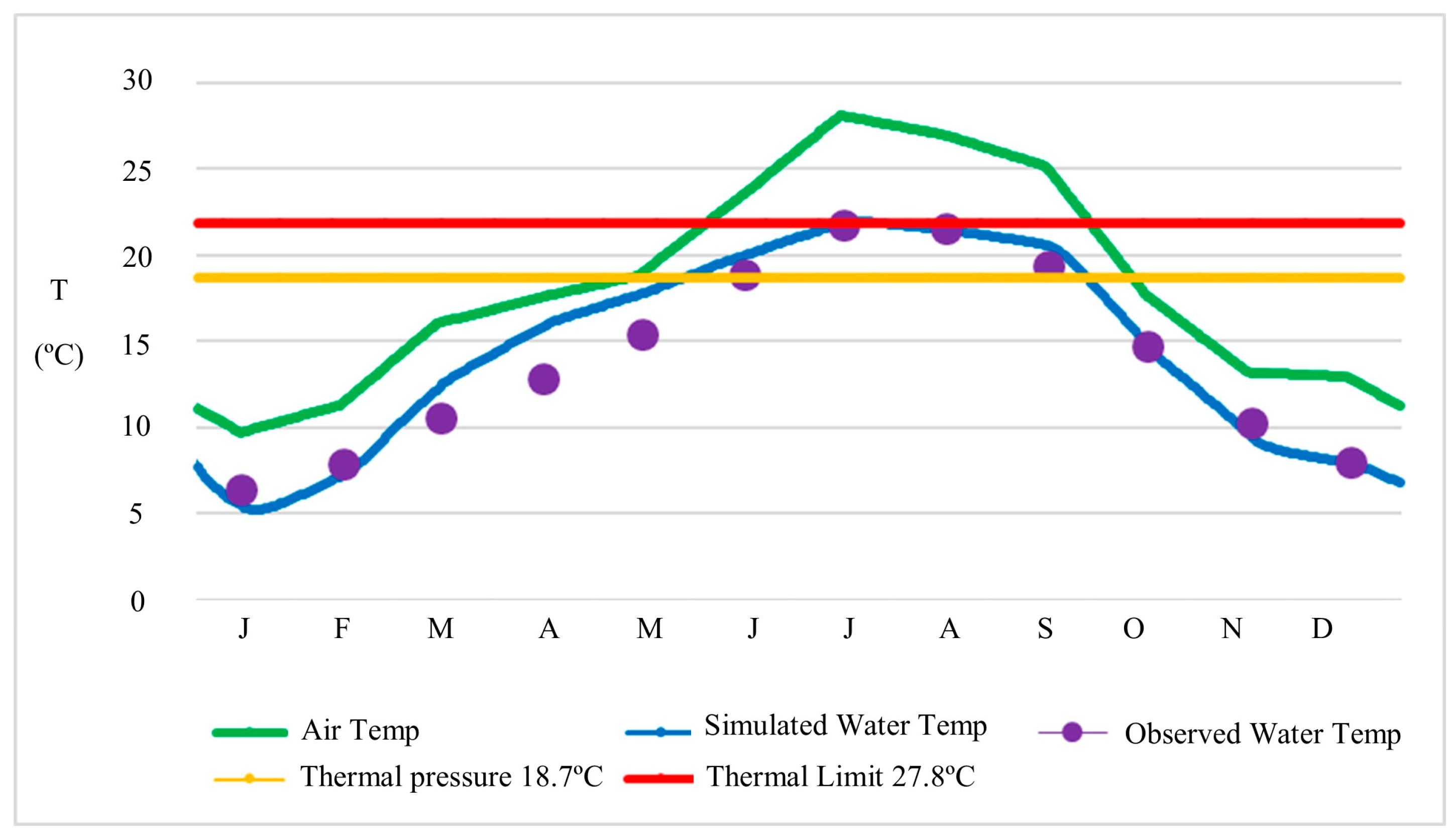
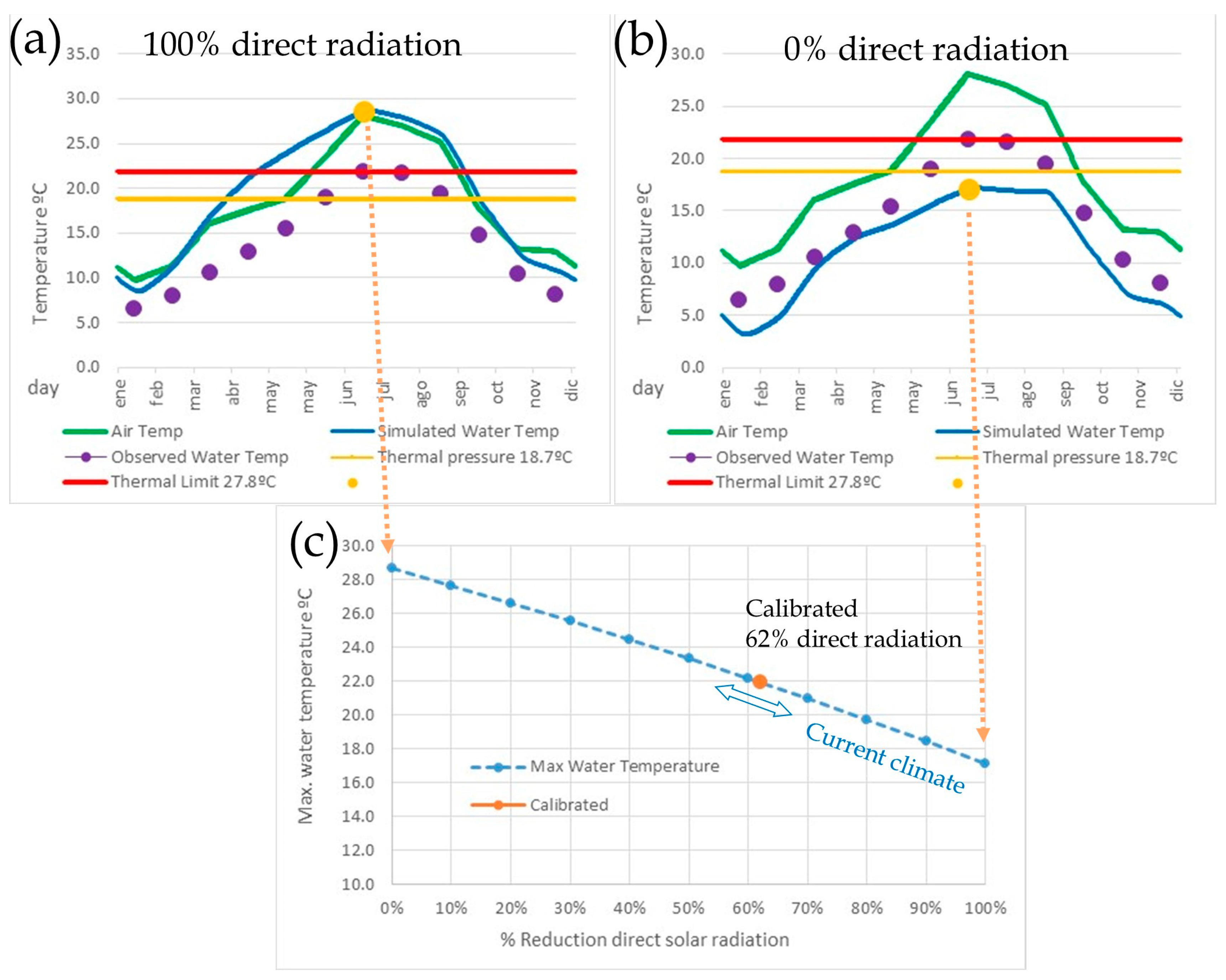
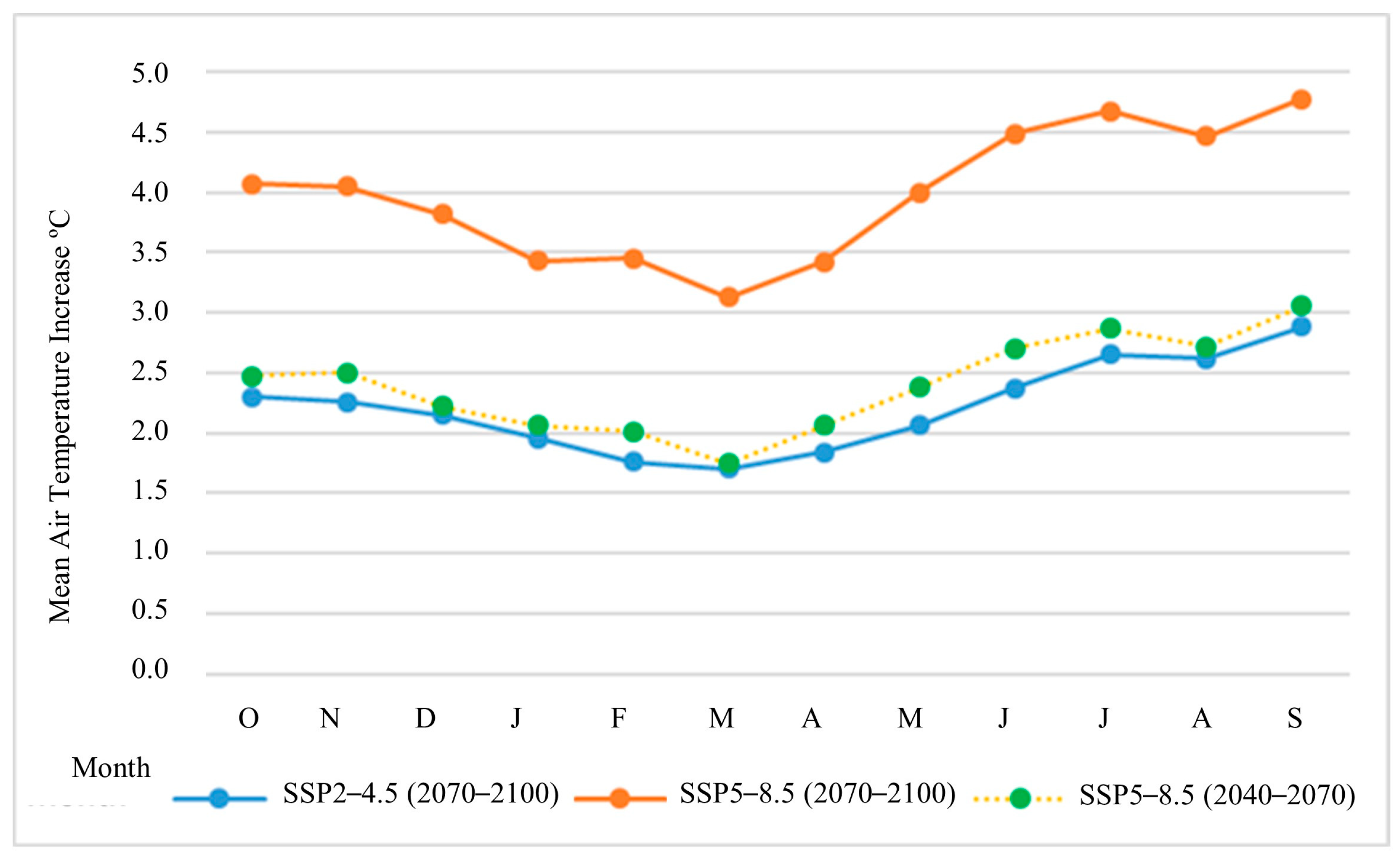
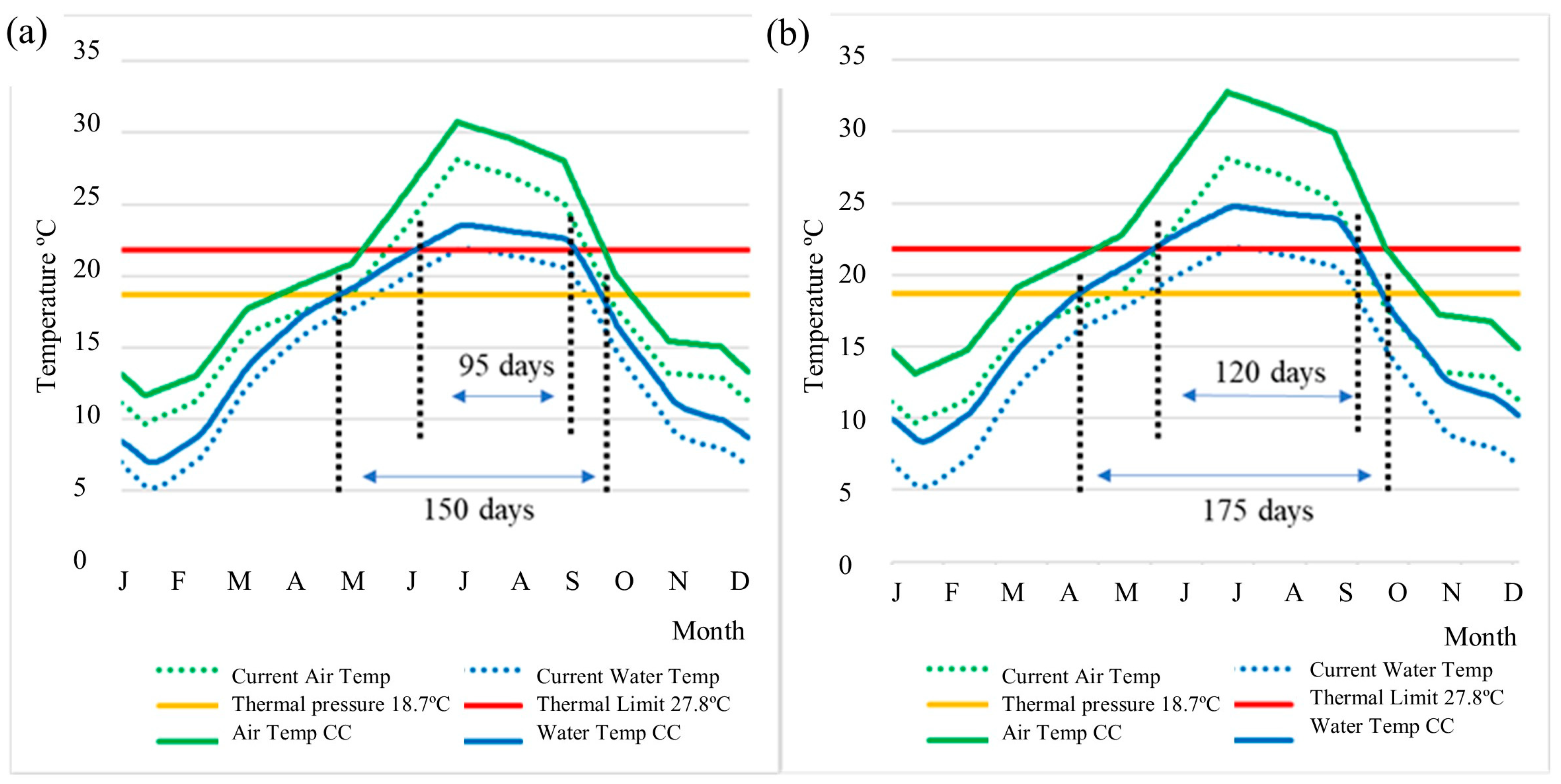
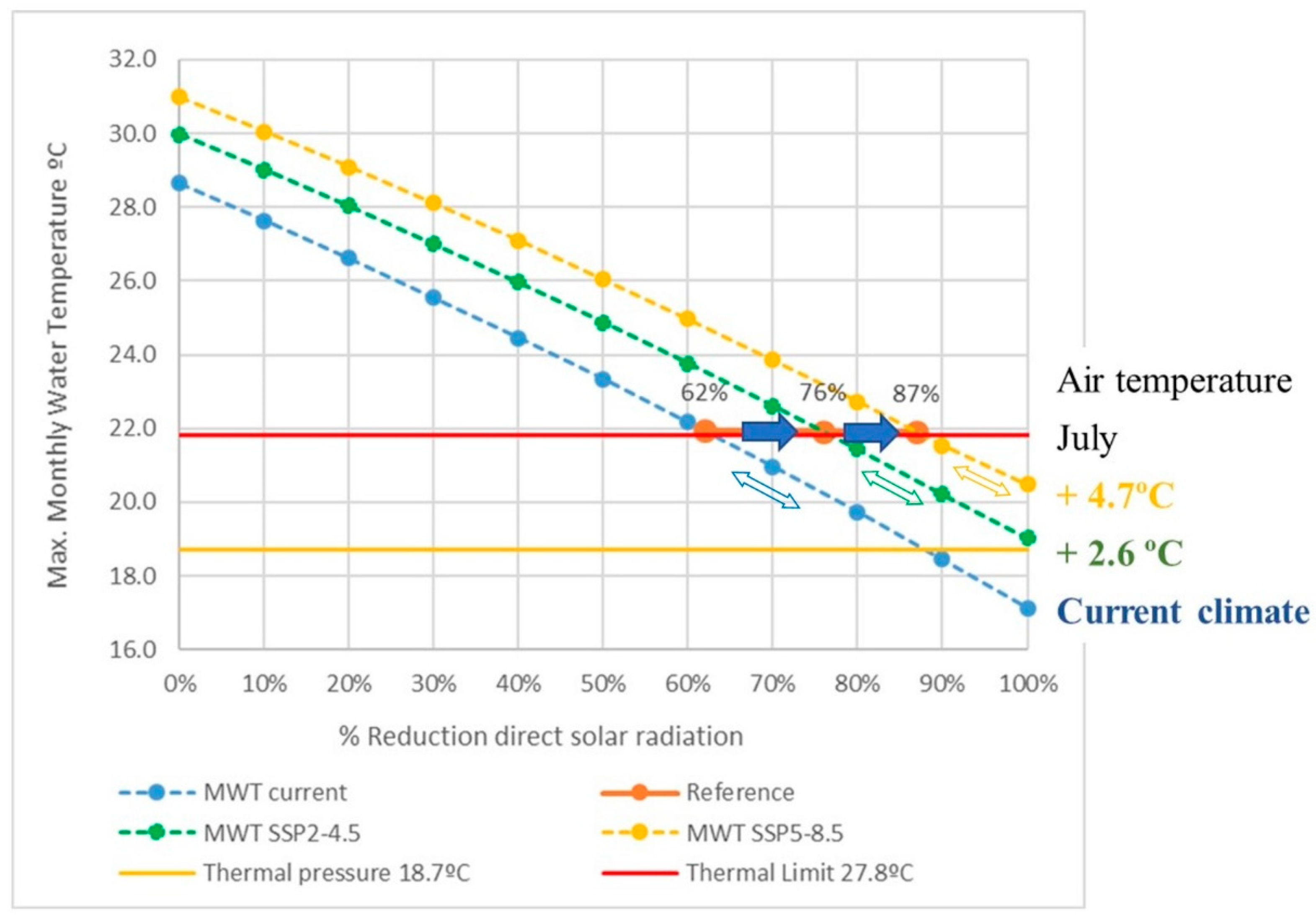
Water temperature is a critical factor for aquatic ecosystems, influencing both chemical and biological processes, such as fish growth and mortality; consequently, river and lake ecosystems are sensitive to climate change (CC). Currently proposed CC scenarios indicate that air temperature for the Mediterranean Jucar River will increase higher in summer, 4.7 °C (SSP5-8.5), resulting in a river water temperature increase in the hotter month; July, 2.8 °C (SSP5-8.5). This will have an impact on ecosystems, significantly reducing, fragmenting, or even eliminating natural cold-water species habitats, such as common trout. This study consists of developing a simulated model that relates the temperature of the river with the shadow generated by the riverside vegetation. The model input data are air temperature, solar radiation, and river depth. The model proposed only has one parameter, the shadow river percentage. The model was calibrated in a representative stretch of the Mediterranean river, obtaining a 0.93 Nash–Sutcliffe efficiency coefficient (NSE) that indicates a very good model fit, a 0.90 Kling–Gupta efficiency index (KGE), and a relative bias of 0.04. The model was also validated on two other stretches of the same river. The results show that each 10% increase in the number of shadows can reduce the river water temperature by 1.2 °C and, in the stretch applied, increasing shadows from the current status of 62% to 76–87% can compensate for the air temperature increase by CC. Generating shaded areas in river restorations will be one of the main measures to compensate for the rise in water temperature due to climate change.
Keywords: climate change; water temperature model; river restoration; cold-water habitats; brown trout climate change; water temperature model; river restoration; cold-water habitats; brown trout