Article

Karstic Aquifers—Simple or Hybrid Systems? Thermal Stories from Maaras Cave, Greece

by
Rannveig Øvrevik Skoglund
1,*,
Christos Pennos
1,
Aurel Perşoiu
2,3 and
Yorgos Sotiriadis
4
1
Department of Geography, University of Bergen, 5020 Bergen, Norway
2
Emil Racoviţă Institute of Speleology, Romanian Academy, 400006 Cluj-Napoca, Romania
3
Stable Isotope Laboratory, Ştefan cel Mare University, 720229 Suceava, Romania
4
Department of Geography, Aegean University, 81100 Mytilene, Greece
*
Author to whom correspondence should be addressed.
Water 2023, 15(3), 488; https://doi.org/10.3390/w15030488
Submission received: 16 December 2022 / Revised: 17 January 2023 / Accepted: 18 January 2023 / Published: 26 January 2023

Abstract

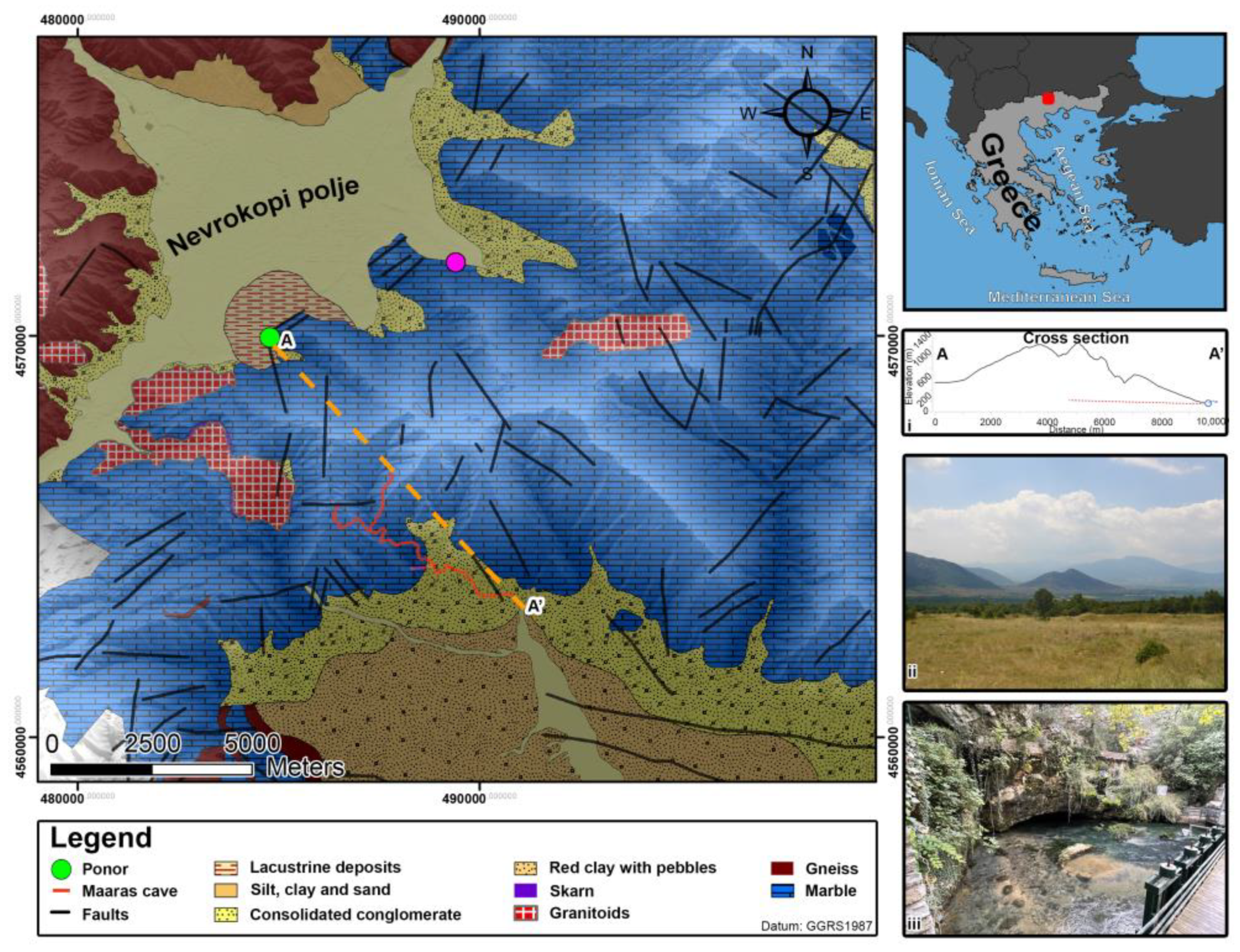
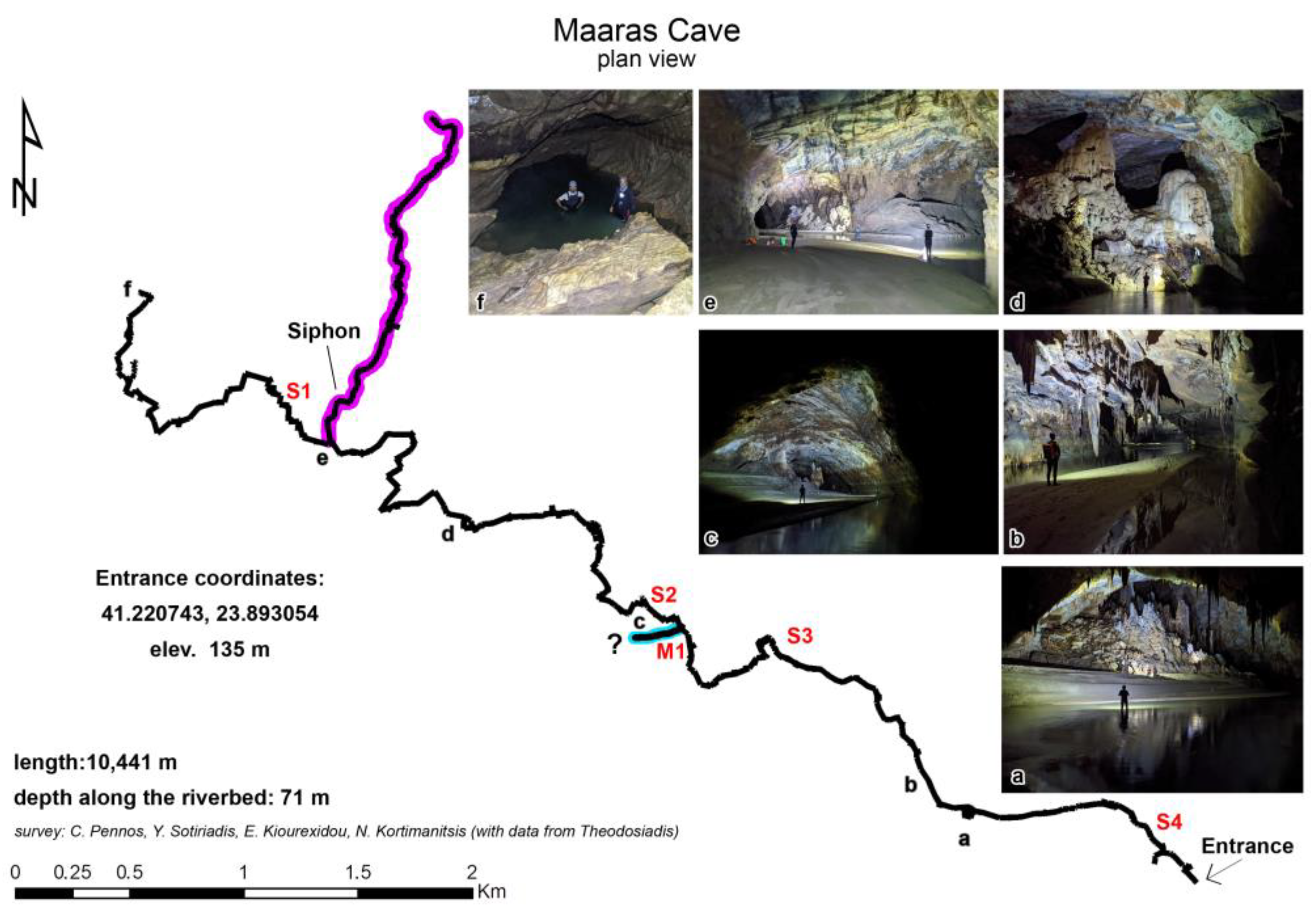
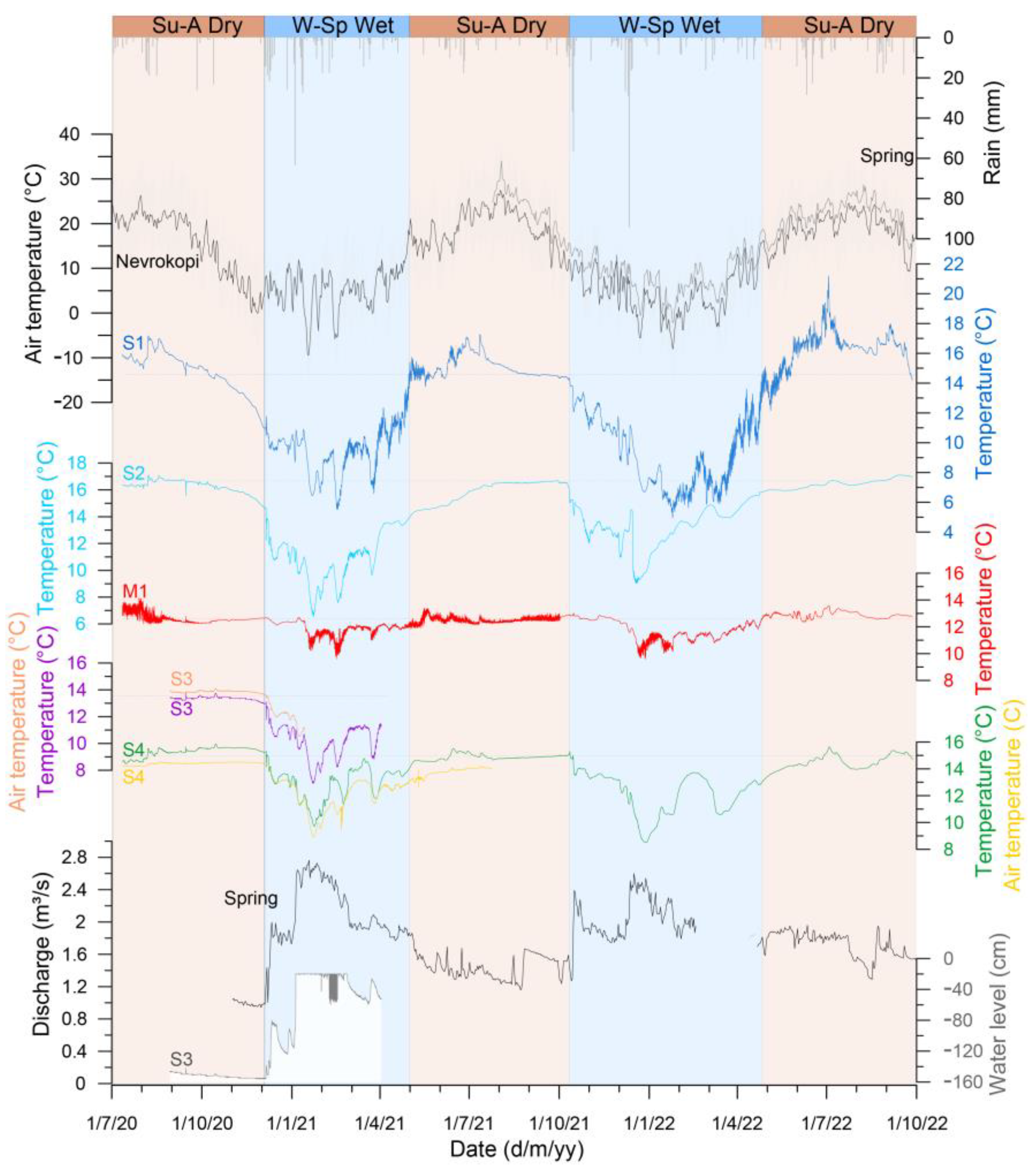
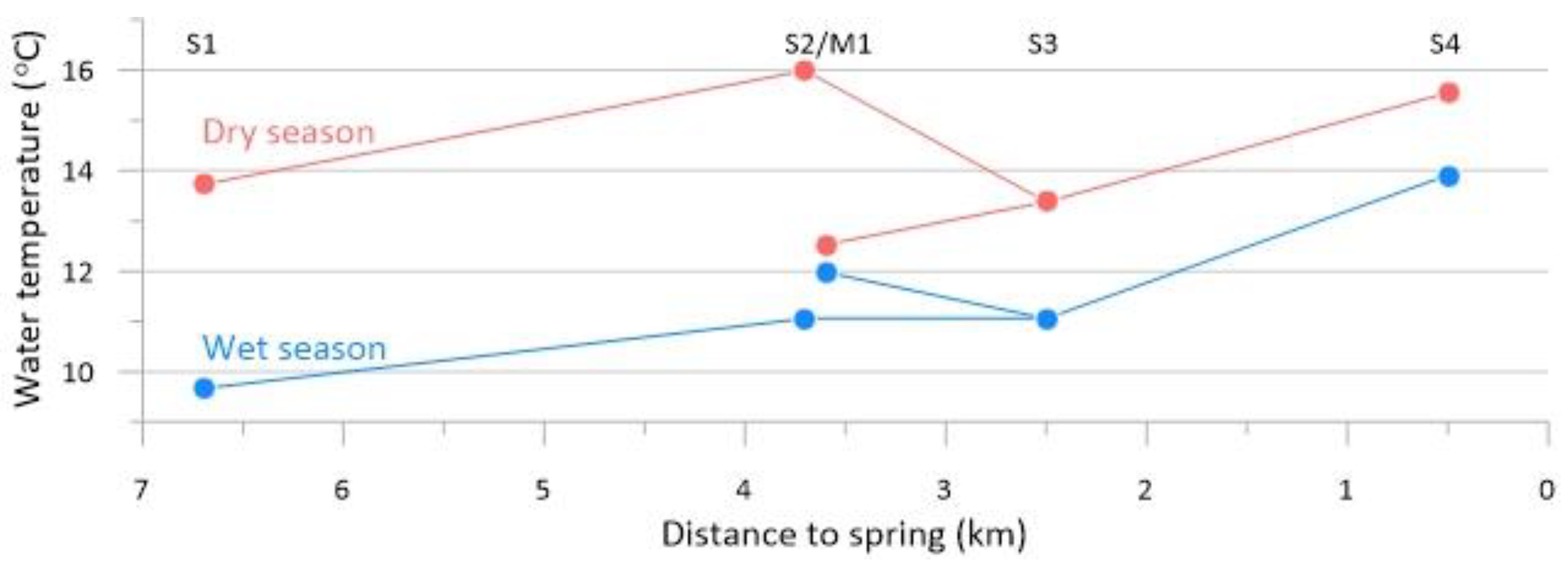
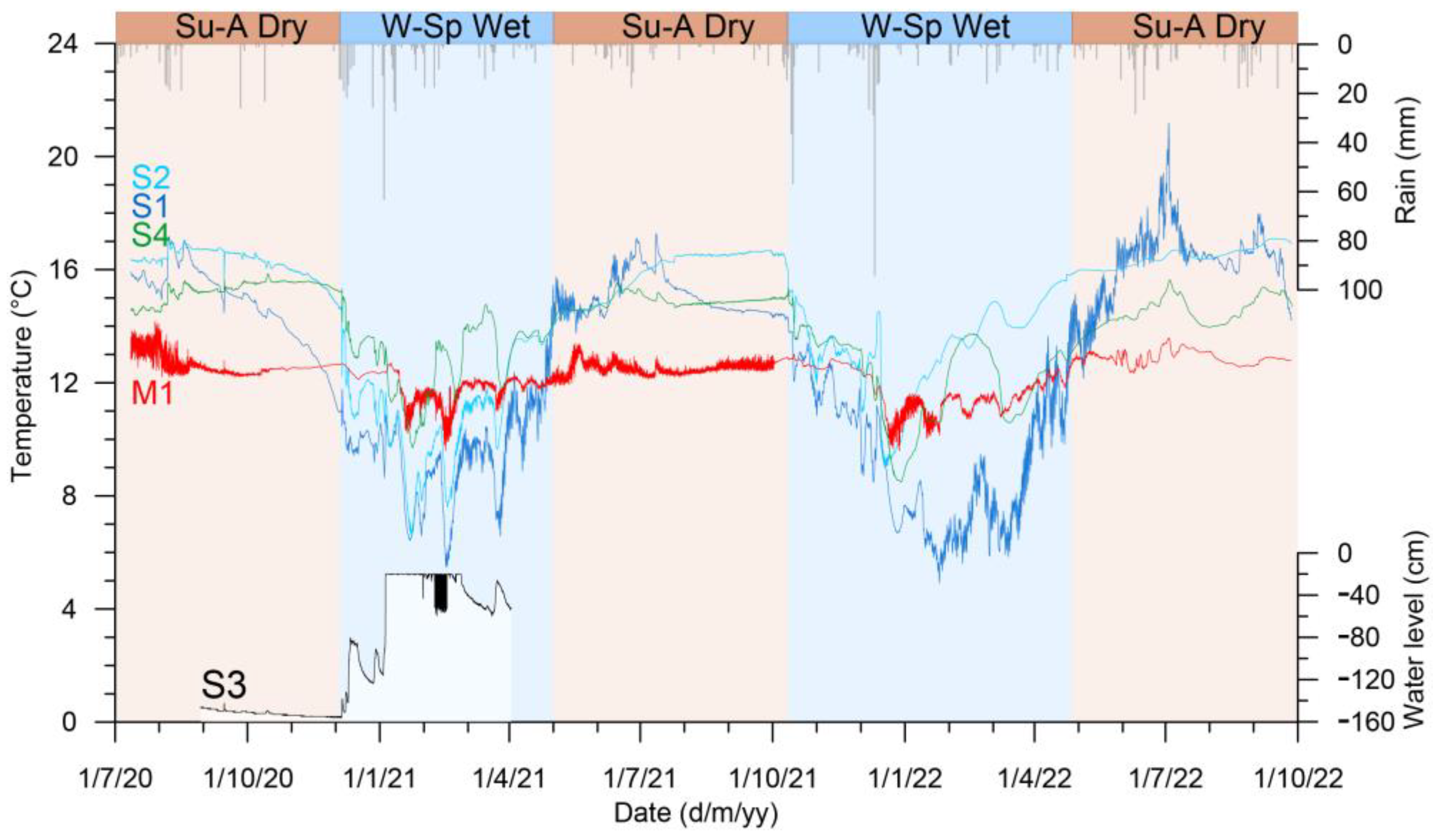
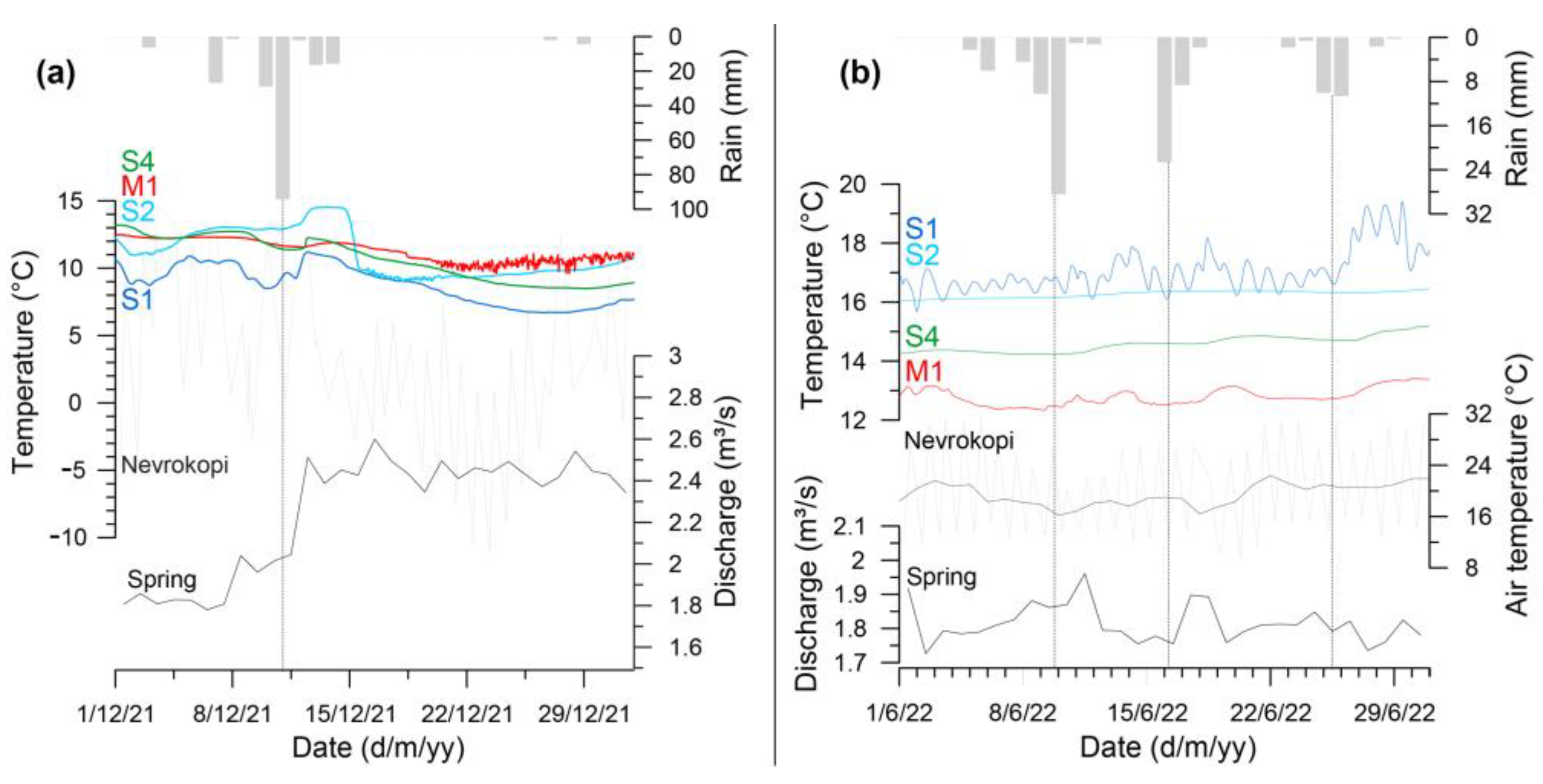
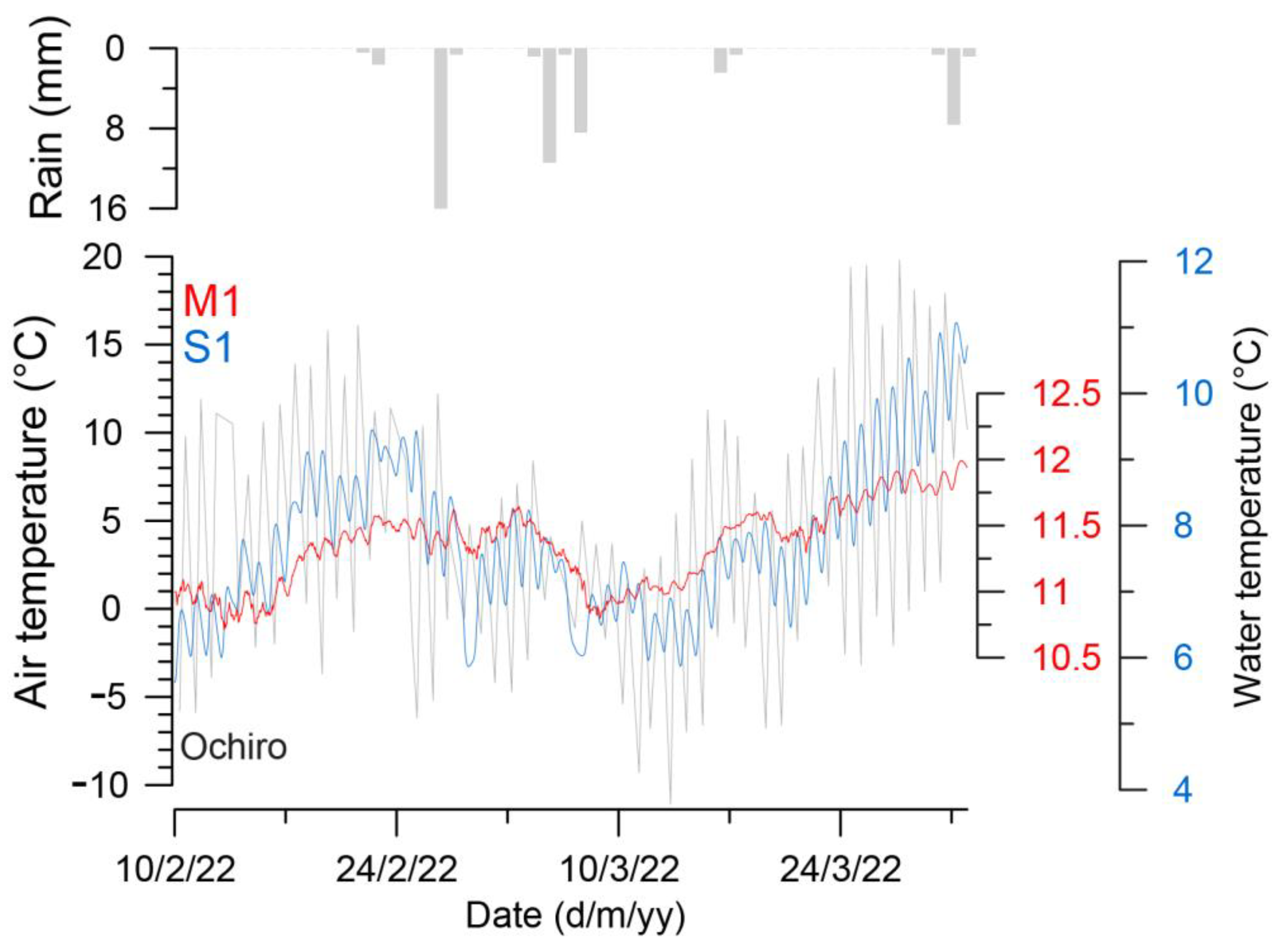
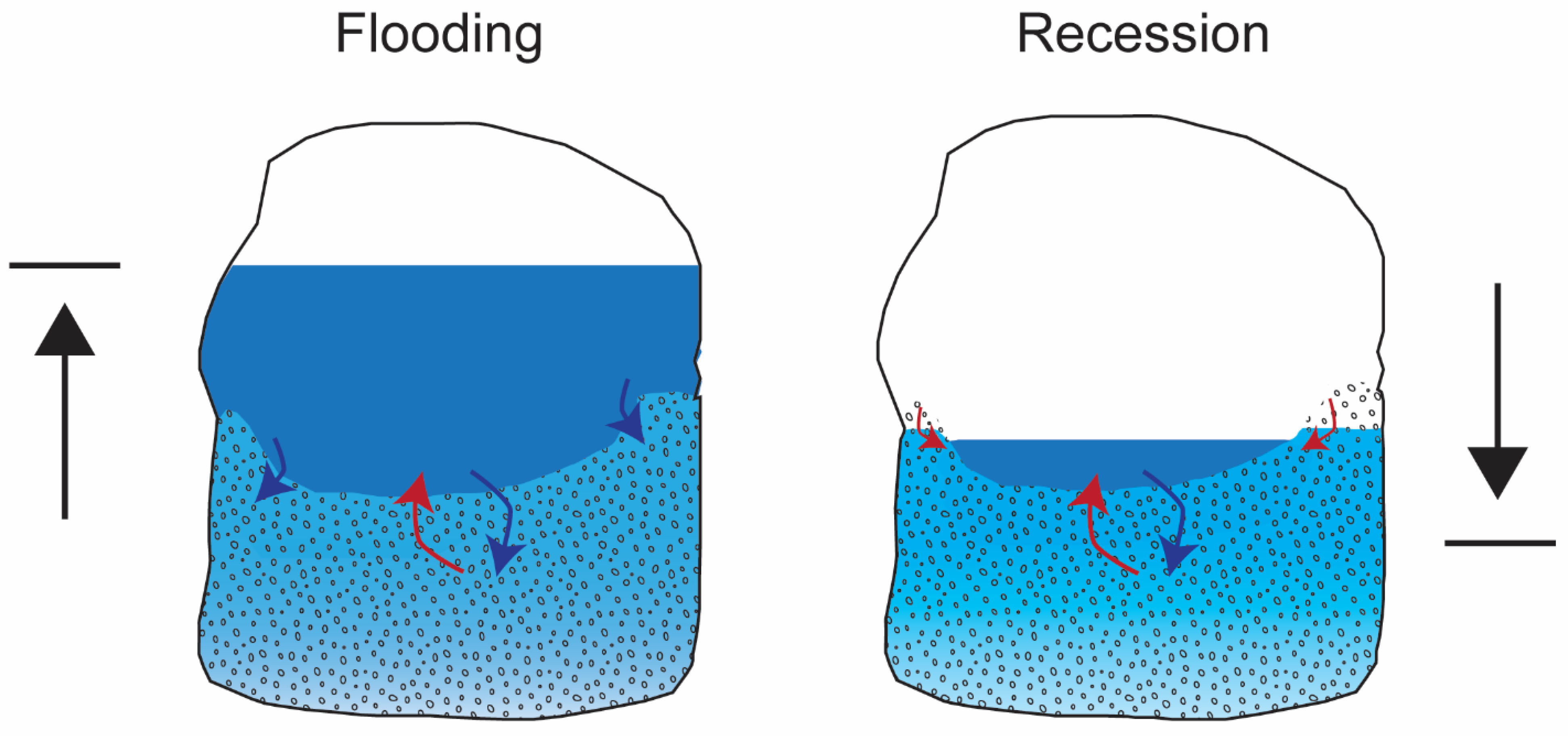
Karst systems, such as caves, provide a unique opportunity to study the groundwater from the inside in contrast to spring studies, where hydrographs, chemographs, and thermographs show an integrated signal from the entire catchment and aquifer. Studies from karst springs show that recharge and conduit characteristics significantly influence how the temperature signal is transmitted and thus could inform on the structure of underground flow paths. Here, we present monitoring temperature data from a two-year-long study of a 10 km long river cave, Maaras, in northern Greece. Our data from five measuring stations along the cave stream show how different flow paths transform the temperature signal. The catchment area consists of a polje impacting the recharge conditions that change seasonally from diffuse to concentrated. Diffuse recharge stabilizes the temperature regardless of the conduit conditions. However, temperature fluctuations occur on four different time scales: seasonal, event-based, diurnal, and hourly, indicating different passage conditions. Interaction between the cave stream and the in-cave porous aquifer in the clastic sediments strongly impacts the alteration of the thermal signal through the cave: temperature fluctuations are damped, and the temperature is raised.
Keywords: thermographs; karst aquifer; river cave; Maaras cave; Greece thermographs; karst aquifer; river cave; Maaras cave; Greece