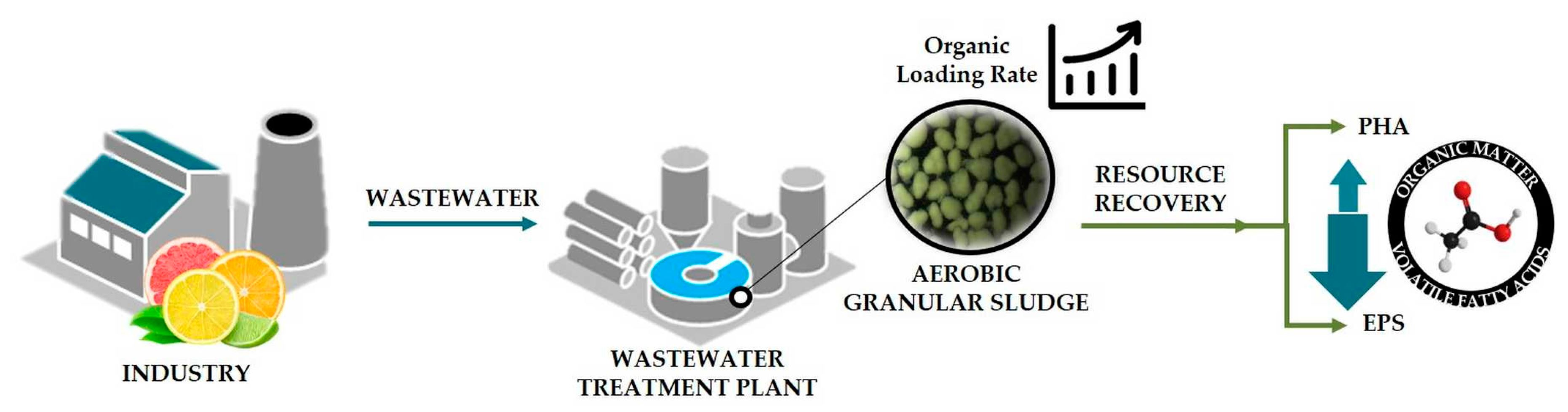
Biopolymer Recovery from Aerobic Granular Sludge and Conventional Flocculent Sludge in Treating Industrial Wastewater: Preliminary Analysis of Different Carbon Routes for Organic Carbon Utilization


Abstract
1. Introduction
2. Materials and Methods
2.1. Wastewater Characterization
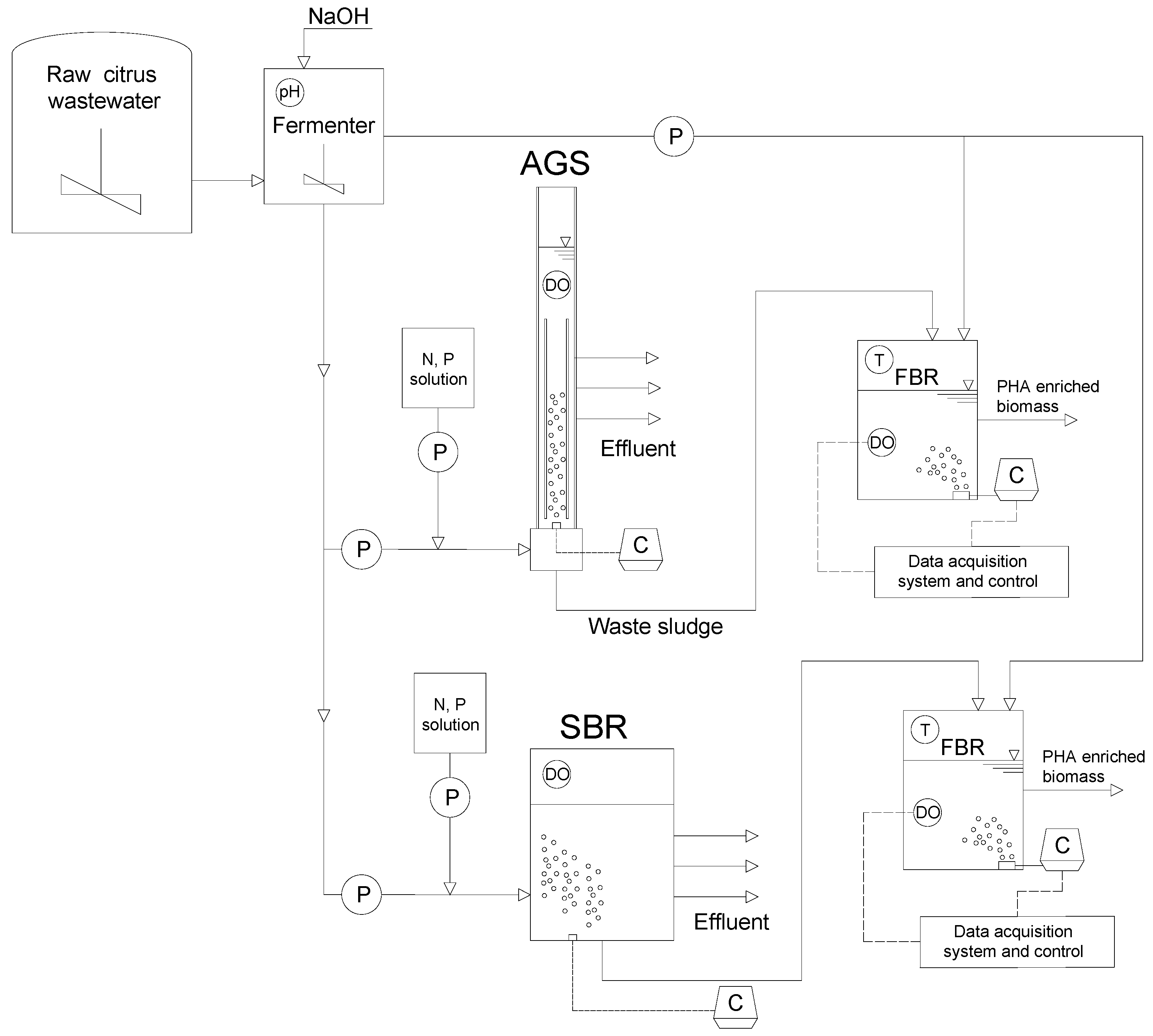
2.2. Experimental Setup
2.3. Operational Strategy of the Enrichment Reactors
2.4. Analytical Methods
2.5. Calculation
- CODd: total mass (g) of COD dosed during the entire accumulation assay until the maximum accumulation capacity was obtained;
- PHAp: mass of PHA produced (g), obtained as the difference between the final PHA mass at the end of the accumulation assay and that measured at the beginning. The following stoichiometric coefficients were assumed for referring PHA mass as COD (1.67 gCOD gPHB−1 e 1.92 gCOD gPHV−1);
- EPSp: the mass of EPS (g) produced, which was obtained as the sum of the proteins (PN) and carbohydrates (PS) produced during the assay multiplied by the respective stoichiometric coefficients obtained experimentally (1.36 gCOD gPS−1 e 1.40 gCOD gPN−1);
- CODr: the residual mass of COD obtained from the product of the reactor volume by the COD concentration measured in the supernatant at the end of the accumulation assay;
- Xp: the new biomass produced during the assay, measured as the volatile suspended solids produced during the accumulation assay as COD (1.42 gCOD gVSS−1), minus the mass of biopolymers (EPS+PHA) as COD and the residual COD at the end of the assay.
3. Results
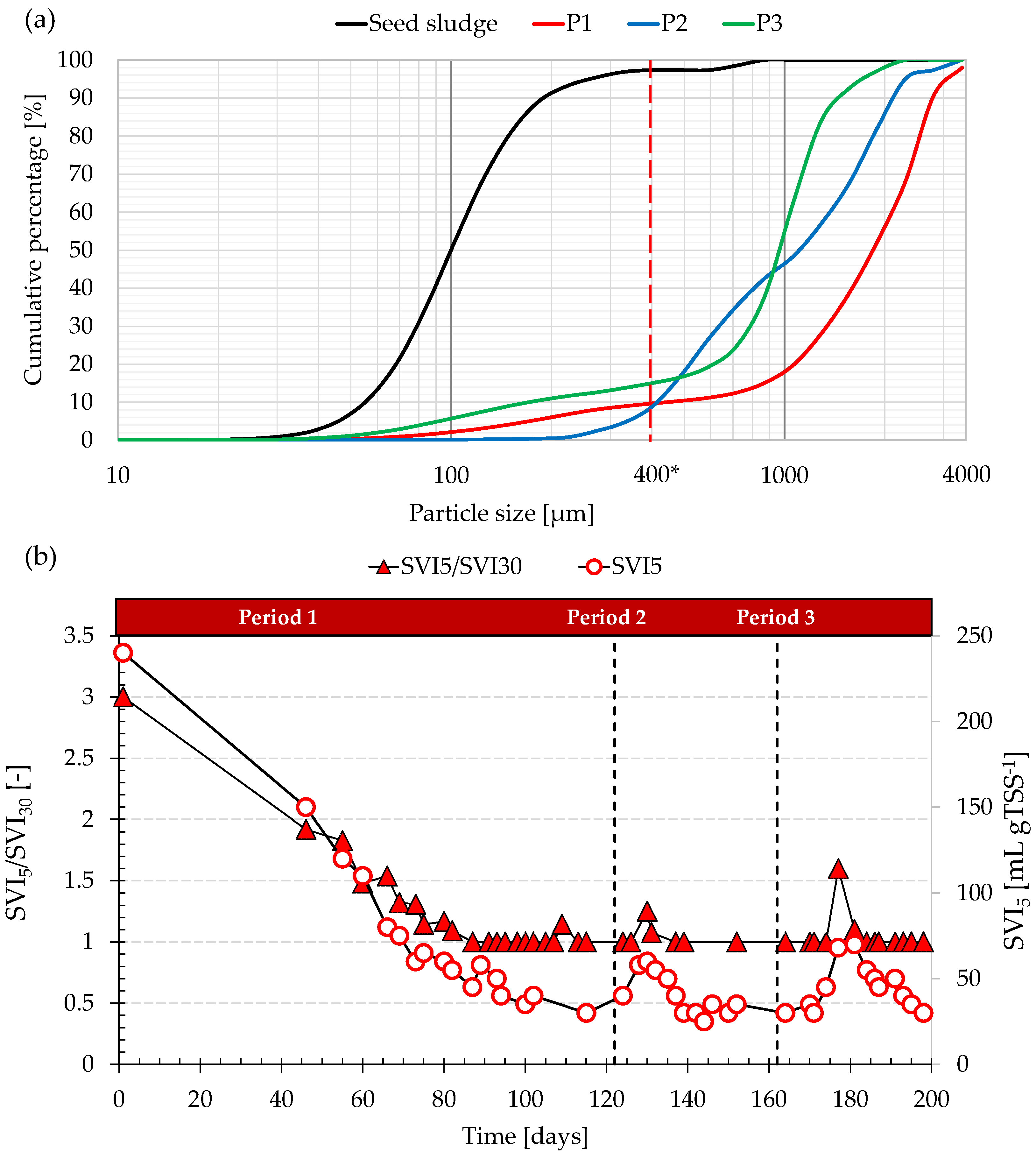
3.1. Characteristics of Aerobic Granular Sludge
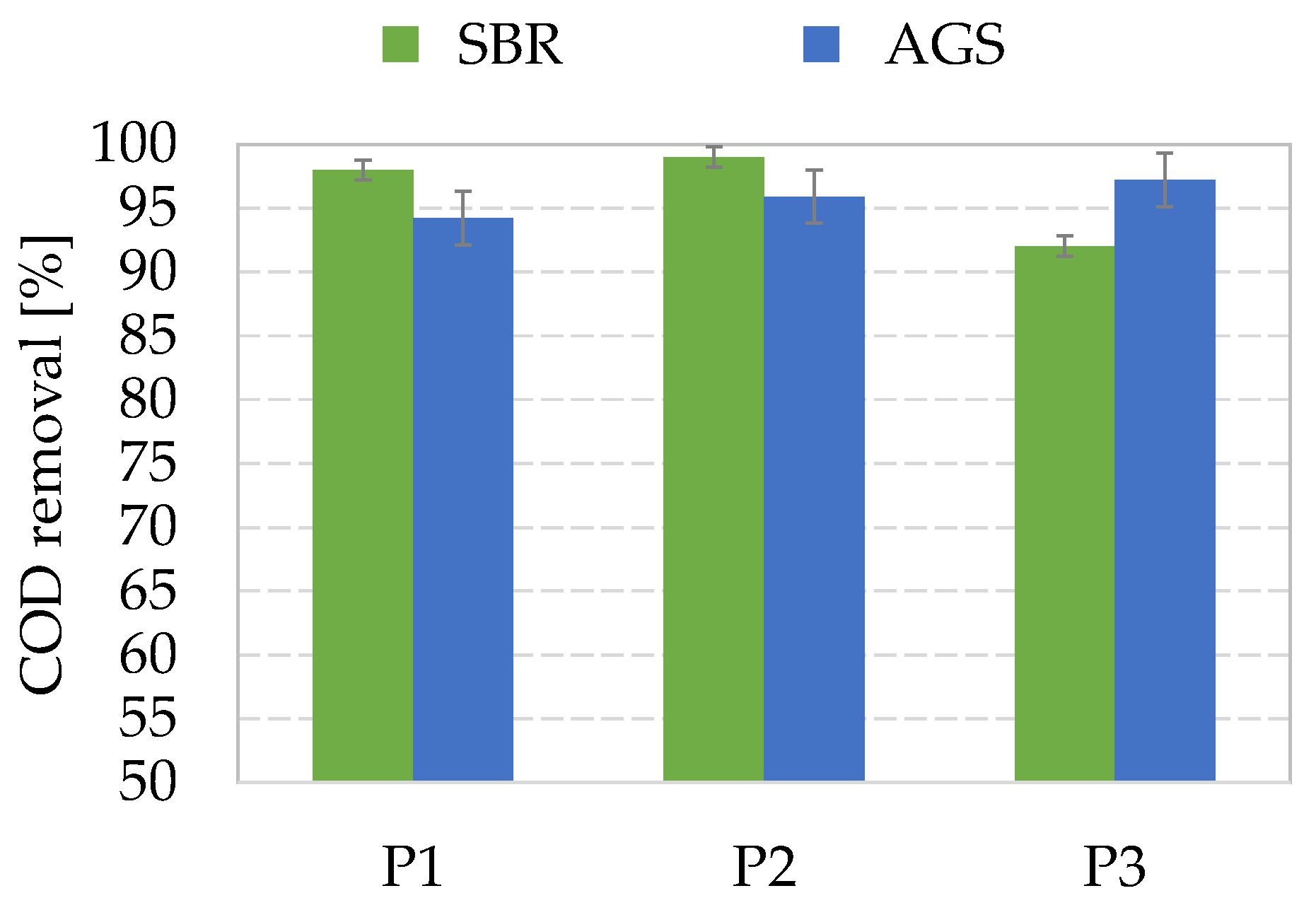
3.2. COD Removal Performances in the Enrichment AGS and SBR Reactors
3.3. Assessment of Biopolymers Accumulation Capacity
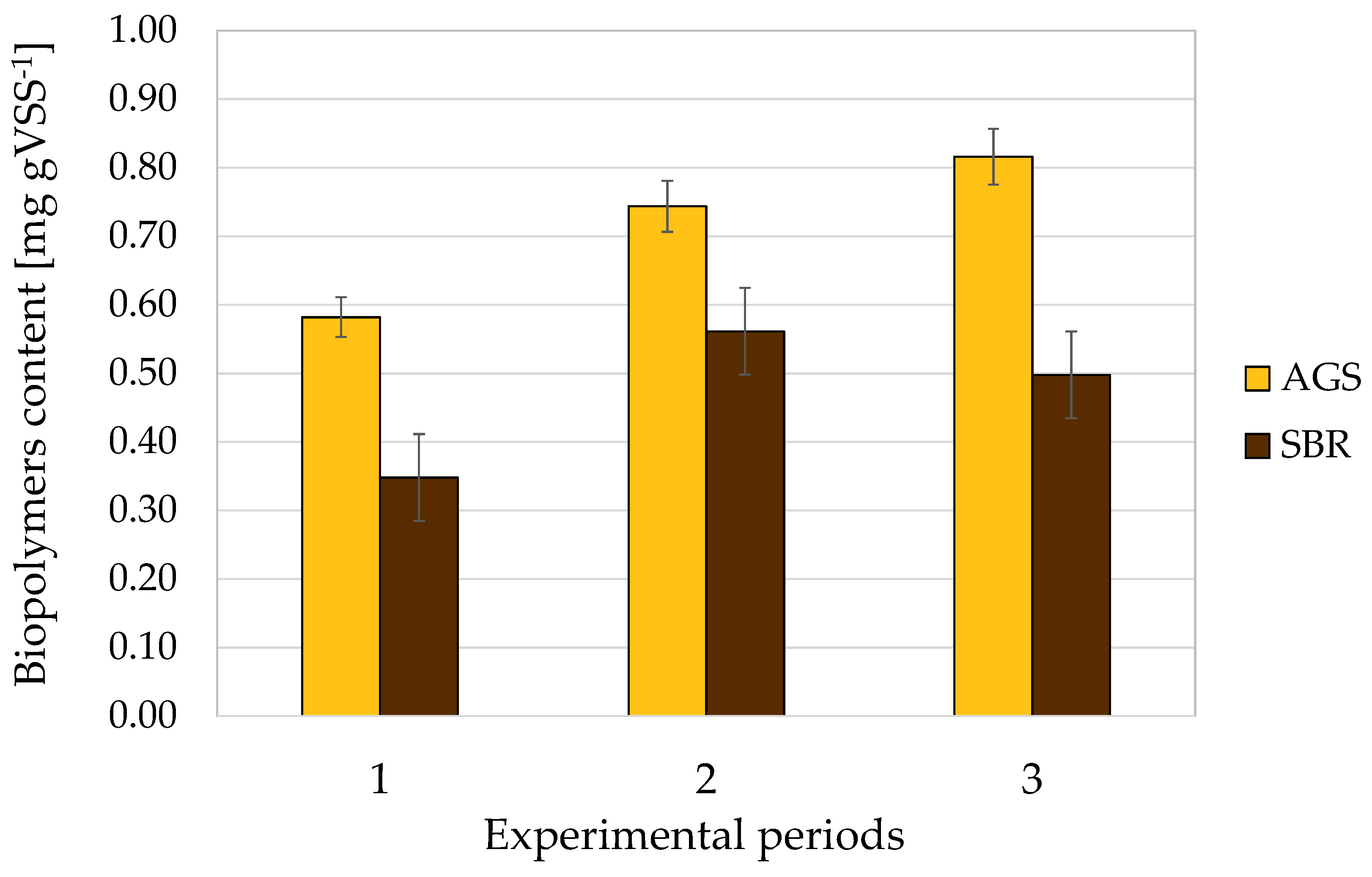
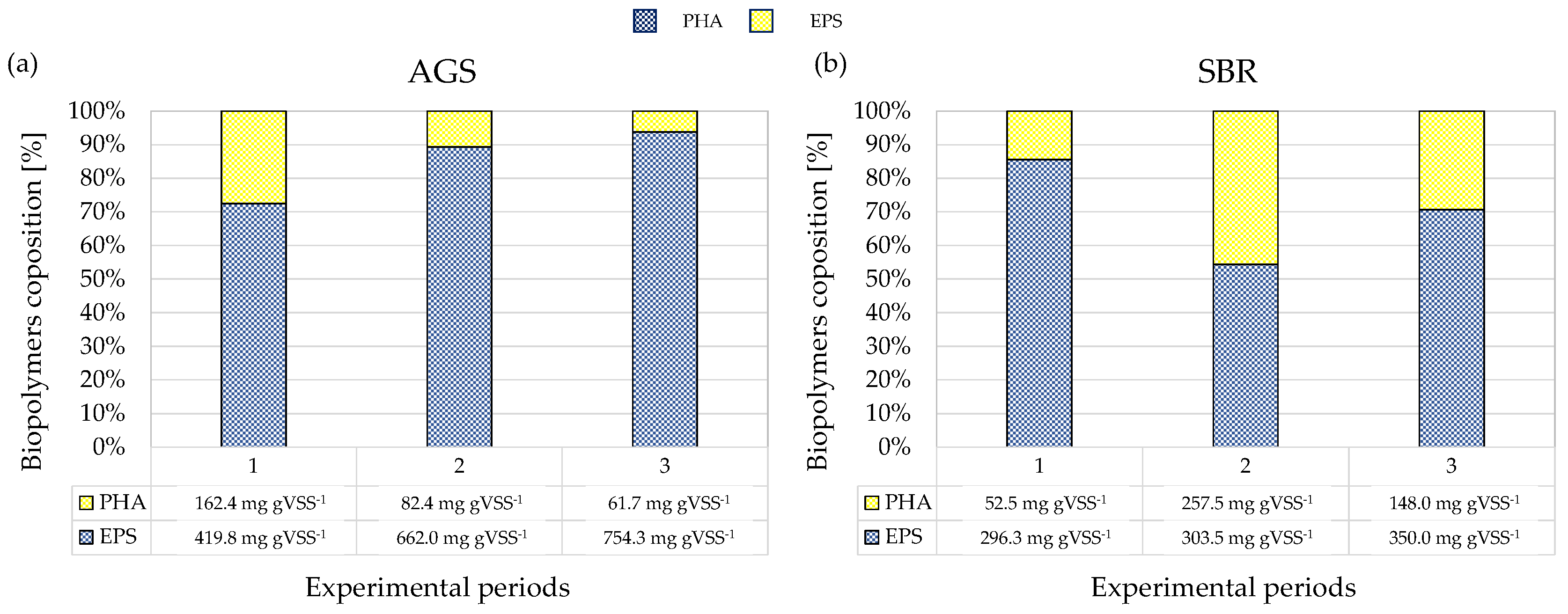
3.4. Biopolymers Composition
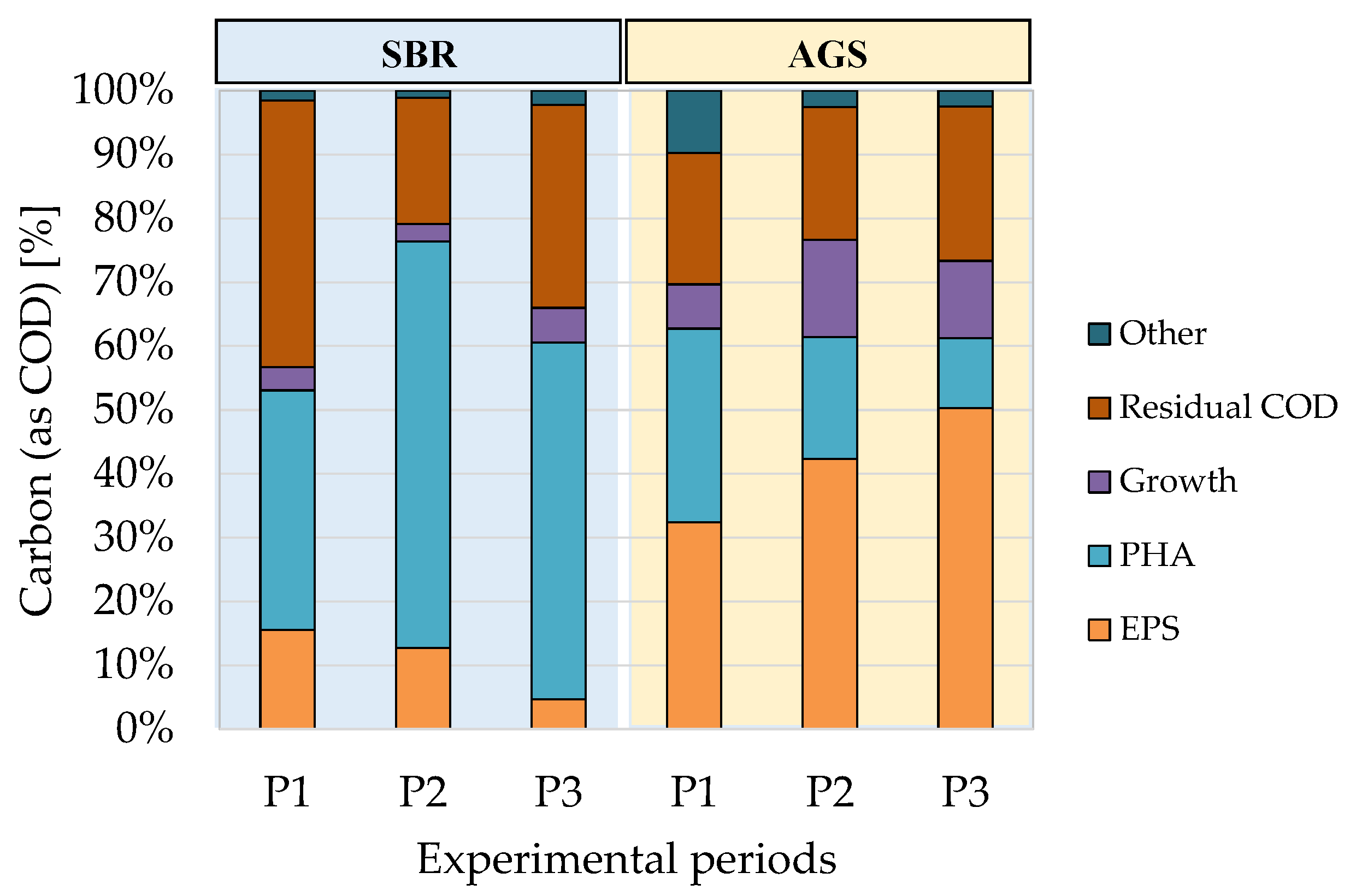
3.5. Analysis of Carbon Utilization in the FBRs
3.6. Potential Social and Economic Impact of Biopolymer Recovery from Citrus Wastewater
4. Conclusions
Author Contributions
Funding
Data Availability Statement
Acknowledgments
Conflicts of Interest
References
- Senthil Kumar, P.; Sivaranjanee, R.; Sundar Rajan, P.; Saravanan, A. Carbon sphere: Synthesis, characterization and elimination of toxic Cr(VI) ions from aquatic system. J. Ind. Eng. Chem. 2018, 60, 307–320. [Google Scholar] [CrossRef] [Scilit]
- Conca, V.; da Ros, C.; Valentino, F.; Eusebi, A.L.; Frison, N.; Fatone, F. Long-term validation of polyhydroxyalkanoates production potential from the sidestream of municipal wastewater treatment plant at pilot scale. Chem. Eng. J. 2020, 390, 124627. [Google Scholar] [CrossRef] [Scilit]
- Saravanan, A.; Senthil Kumar, P.; Jeevanantham, S.; Karishma, S.; Tajsabreen, B.; Yaashikaa, P.R.; Reshma, B. Effective water/wastewater treatment methodologies for toxic pollutants removal: Processes and applications towards sustainable development. Chemosphere 2021, 280, 130595. [Google Scholar] [CrossRef] [Scilit] [PubMed]
- Shen, Y.; Linville, J.L.; Urgun-Demirtas, M.; Mintz, M.M.; Snyder, S.W. An overview of biogas production and utilization at full-scale wastewater treatment plants (WWTPs) in the United States: Challenges and opportunities towards energy-neutral WWTPs. Renew. Sustain. Energy Rev. 2015, 50, 346–362. [Google Scholar] [CrossRef] [Scilit]
- Gherghel, A.; Teodosiu, C.; De Gisi, S. A review on wastewater sludge valorisation and its challenges in the context of circular economy. J. Clean. Prod. 2019, 228, 244–263. [Google Scholar] [CrossRef] [Scilit]
- Sabapathy, P.C.; Devaraj, S.; Meixner, K.; Anburajan, P.; Kathirvel, P.; Ravikumar, Y.; Zabed, H.M.; Qi, X. Recent developments in Polyhydroxyalkanoates (PHAs) production—A review. Bioresour. Technol. 2020, 306, 123132. [Google Scholar] [CrossRef] [Scilit] [PubMed]
- Shahid, S.; Razzaq, S.; Farooq, R.; Nazli, Z.i.H. Polyhydroxyalkanoates: Next generation natural biomolecules and a solution for the world’s future economy. Int. J. Biol. Macromol. 2021, 166, 297–321. [Google Scholar] [CrossRef] [Scilit]
- Koller, M.; Maršálek, L.; de Sousa Dias, M.M.; Braunegg, G. Producing microbial polyhydroxyalkanoate (PHA) biopolyesters in a sustainable manner. New Biotechnol. 2017, 37, 24–38. [Google Scholar] [CrossRef] [Scilit]
- Andreasi Bassi, S.; Boldrin, A.; Frenna, G.; Astrup, T.F. An environmental and economic assessment of bioplastic from urban biowaste. The example of polyhydroxyalkanoate. Bioresour. Technol. 2021, 327, 124813. [Google Scholar] [CrossRef] [Scilit]
- Cruz, R.A.P.; Oehmen, A.; Reis, M.A.M. The impact of biomass withdrawal strategy on the biomass selection and polyhydroxyalkanoates accumulation of mixed microbial cultures. New Biotechnol. 2022, 66, 8–15. [Google Scholar] [CrossRef] [Scilit]
- Lee, S.Y.; Stuckey, D.C. Separation and biosynthesis of value-added compounds from food-processing wastewater: Towards sustainable wastewater resource recovery. J. Clean. Prod. 2022, 357, 131975. [Google Scholar] [CrossRef] [Scilit]
- Wang, K.; Hobby, A.M.; Chen, Y.; Chio, A.; Jenkins, B.M.; Zhang, R. Techno-economic analysis on an industrial-scale production system of polyhydroxyalkanoates (PHA) from cheese by-products by halophiles. Processes 2022, 10, 17. [Google Scholar] [CrossRef] [Scilit]
- Yadav, G.; Mishra, A.; Ghosh, P.; Sindhu, R.; Vinayak, V.; Pugazhendhi, A. Technical, economic and environmental feasibility of resource recovery technologies from wastewater. Sci. Total Environ. 2021, 796, 149022. [Google Scholar] [CrossRef] [Scilit] [PubMed]
- Nouha, K.; Kumar, R.S.; Balasubramanian, S.; Tyagi, R.D. Critical review of EPS production, synthesis and composition for sludge flocculation. J. Environ. Sci. 2018, 66, 225–245. [Google Scholar] [CrossRef] [Scilit]
- Liu, Y.Q.; Liu, Y.; Tay, J.H. The effects of extracellular polymeric substances on the formation and stability of biogranules. Appl. Microbiol. Biotechnol. 2004, 65, 143–148. [Google Scholar] [CrossRef] [Scilit] [PubMed]
- Licciardello, G.; Catara, A.F.; Catara, V. Production of polyhydroxyalkanoates and extracellular products using Pseudomonas corrugata and P. mediterranea: A review. Bioengineering 2019, 6, 105. [Google Scholar] [CrossRef] [Scilit] [PubMed]
- Hamza, R.; Rabii, A.; Ezzahraoui, F.Z.; Morgan, G.; Iorhemen, O.T. A review of the state of development of aerobic granular sludge technology over the last 20 years: Full-scale applications and resource recovery. Case Stud. Chem. Environ. Eng. 2022, 5, 100173. [Google Scholar] [CrossRef] [Scilit]
- Kopperi, H.; Amulya, K.; Venkata Mohan, S. Simultaneous biosynthesis of bacterial polyhydroxybutyrate (PHB) and extracellular polymeric substances (EPS): Process optimization and Scale-up. Bioresour. Technol. 2021, 341, 125735. [Google Scholar] [CrossRef] [Scilit]
- Karakas, I.; Sam, S.B.; Cetin, E.; Dulekgurgen, E.; Yilmaz, G. Resource recovery from an aerobic granular sludge process treating domestic wastewater. J. Water Process Eng. 2020, 34, 101148. [Google Scholar] [CrossRef] [Scilit]
- He, Q.; Wang, H.; Chen, L.; Gao, S.; Zhang, W.; Song, J.; Yu, J. Robustness of an aerobic granular sludge sequencing batch reactor for low strength and salinity wastewater treatment at ambient to winter temperatures. J. Hazard. Mater. 2020, 384, 121454. [Google Scholar] [CrossRef] [Scilit]
- Pronk, M.; Neu, T.R.; van Loosdrecht, M.C.M.; Lin, Y.M. The acid soluble extracellular polymeric substance of aerobic granular sludge dominated by Defluviicoccus sp. Water Res. 2017, 122, 148–158. [Google Scholar] [CrossRef] [Scilit] [PubMed]
- Cui, Y.W.; Shi, Y.P.; Gong, X.Y. Effects of C/N in the substrate on the simultaneous production of polyhydroxyalkanoates and extracellular polymeric substances by Haloferax mediterranei via kinetic model analysis. RSC Adv. 2017, 7, 18953–18961. [Google Scholar] [CrossRef] [Scilit]
- Beun, J.J.; Van Loosdrecht, M.C.M.; Heijnen, J.J. Aerobic granulation in a sequencing batch airlift reactor. Water Res. 2002, 36, 702–712. [Google Scholar] [CrossRef] [Scilit]
- Corsino, S.F.; Di Trapani, D.; Traina, F.; Cruciata, I.; Scirè Calabrisotto, L.; Lopresti, F.; La Carrubba, V.; Quatrini, P.; Torregrossa, M.; Viviani, G. Integrated production of biopolymers with industrial wastewater treatment: Effects of OLR on process yields, biopolymers characteristics and mixed microbial community enrichment. J. Water Process Eng. 2022, 47, 102772. [Google Scholar] [CrossRef] [Scilit]
- Pereira, J.; Queirós, D.; Lemos, P.C.; Rossetti, S.; Serafim, L.S. Enrichment of a mixed microbial culture of PHA-storing microorganisms by using fermented hardwood spent sulfite liquor. New Biotechnol. 2020, 56, 79–86. [Google Scholar] [CrossRef] [Scilit]
- APHA. Standard Methods for the Examination of Water and Wastewater; APHA: Washington, DC, USA, 2012; ISBN 978-0875532356. [Google Scholar]
- de Kreuk, M.K. Aerobic Granular Sludge Scaling Up a New Technology; DANS: Delft, The Netherlands, 2006; ISBN 9789090207674. [Google Scholar]
- Fiorese, M.L.; Freitas, F.; Pais, J.; Ramos, A.M.; De Aragão, G.M.F.; Reis, M.A.M. Recovery of polyhydroxybutyrate (PHB) from Cupriavidus necator biomass by solvent extraction with 1,2-propylene carbonate. Eng. Life Sci. 2009, 9, 454–461. [Google Scholar] [CrossRef] [Scilit]
- Le-Clech, P.; Chen, V.; Fane, T.A.G. Fouling in membrane bioreactors used in wastewater treatment. J. Membr. Sci. 2006, 284, 17–53. [Google Scholar] [CrossRef] [Scilit]
- Lowry, O.H.; Rosebrough, N.J.; Farr, A.L.; Randall, R.J. Protein measurement with the Folin-Phenol Reagent. J. Biol. Cemistry 1951, 193, 265–275. [Google Scholar] [CrossRef] [Scilit]
- DuBois, M.; Gilles, K.A.; Hamilton, J.K.; Rebers, P.A.; Smith, F. Colorimetric method for determination of sugars and related substances. Anal. Chem. 1956, 28, 350–356. [Google Scholar] [CrossRef] [Scilit]
- Iorhemen, O.T.; Liu, Y. Effect of feeding strategy and organic loading rate on the formation and stability of aerobic granular sludge. J. Water Process Eng. 2021, 39, 101709. [Google Scholar] [CrossRef] [Scilit]
- Devlin, T.R.; di Biase, A.; Kowalski, M.; Oleszkiewicz, J.A. Granulation of activated sludge under low hydrodynamic shear and different wastewater characteristics. Bioresour. Technol. 2016, 224, 229–235. [Google Scholar] [CrossRef] [Scilit] [PubMed]
- Directive 91/271/EEC The Urban Waste Water Treatment Directive. 1991. Available online: https://eur-lex.europa.eu/legal-content/EN/TXT/?uri=celex%3A31991L0271 (accessed on 12 November 2022).
- Hreiz, R.; Latifi, M.A.; Roche, N. Optimal design and operation of activated sludge processes: State-of-the-art. Chem. Eng. J. 2015, 281, 900–920. [Google Scholar] [CrossRef] [Scilit]
- Fang, F.; Xu, R.Z.; Huang, Y.Q.; Wang, S.N.; Zhang, L.L.; Dong, J.Y.; Xie, W.M.; Chen, X.; Cao, J.S. Production of polyhydroxyalkanoates and enrichment of associated microbes in bioreactors fed with rice winery wastewater at various organic loading rates. Bioresour. Technol. 2019, 292, 121978. [Google Scholar] [CrossRef] [Scilit]
- Dionisi, D.; Majone, M.; Vallini, G.; Di Gregorio, S.; Beccari, M. Effect of the applied organic load rate on biodegradable polymer production by mixed microbial cultures in a sequencing batch reactor. Biotechnol. Bioeng. 2006, 93, 76–88. [Google Scholar] [CrossRef] [Scilit] [PubMed]
- Dionisi, D.; Carucci, G.; Petrangeli Papini, M.; Riccardi, C.; Majone, M.; Carrasco, F. Olive oil mill effluents as a feedstock for production of biodegradable polymers. Water Res. 2005, 39, 2076–2084. [Google Scholar] [CrossRef] [Scilit]
- Argiz, L.; Fra-Vázquez, A.; del Río, Á.V.; Mosquera-Corral, A. Optimization of an enriched mixed culture to increase PHA accumulation using industrial saline complex wastewater as a substrate. Chemosphere 2020, 247, 125873. [Google Scholar] [CrossRef] [Scilit] [PubMed]
- Huang, L.; Chen, Z.; Wen, Q.; Zhao, L.; Lee, D.J.; Yang, L.; Wang, Y. Insights into Feast-Famine polyhydroxyalkanoate (PHA)-producer selection: Microbial community succession, relationships with system function and underlying driving forces. Water Res. 2018, 131, 167–176. [Google Scholar] [CrossRef] [Scilit]
- Corsino, S.F.; Capodici, M.; Di Pippo, F.; Tandoi, V.; Torregrossa, M. Comparison between kinetics of autochthonous marine bacteria in activated sludge and granular sludge systems at different salinity and SRTs. Water Res. 2019, 148, 425–437. [Google Scholar] [CrossRef] [Scilit]
- Yuan, Q.; Gong, H.; Xi, H.; Xu, H.; Jin, Z.; Ali, N.; Wang, K. Strategies to improve aerobic granular sludge stability and nitrogen removal based on feeding mode and substrate. J. Environ. Sci. 2019, 84, 144–154. [Google Scholar] [CrossRef] [Scilit]
- Wen, Q.; Chen, Z.; Wang, C.; Ren, N. Bulking sludge for PHA production: Energy saving and comparative storage capacity with well-settled sludge. J. Environ. Sci. 2012, 24, 1744–1752. [Google Scholar] [CrossRef] [Scilit]
- Lin, Y.; de Kreuk, M.; van Loosdrecht, M.C.M.; Adin, A.; Meng, F.; Liu, D.; Pan, Y.; Xi, L.; Yang, D.; Huang, W.; et al. Simultaneous recovery of phosphorus and alginate-like exopolysaccharides from two types of aerobic granular sludge. Bioresour. Technol. 2022, 14, 139–165. [Google Scholar] [CrossRef] [Scilit]
- Campo, R.; Carretti, E.; Lubello, C.; Lotti, T. Recovery of structural extracellular polymeric substances (sEPS) from aerobic granular sludge: Insights on biopolymers characterization and hydrogel properties for potential applications. J. Environ. Manag. 2022, 324, 116247. [Google Scholar] [CrossRef] [Scilit] [PubMed]
- Felz, S.; Vermeulen, P.; van Loosdrecht, M.C.; Lin, Y.M.; Sharma, P.K.; Al-Zuhairy, S.; Aarstad, O.A. Extraction of structural extracellular polymeric substances from aerobic granular sludge. Water Res. 2016, 2016, 54534. [Google Scholar] [CrossRef] [Scilit] [PubMed]
- Valentino, F.; Morgan-Sagastume, F.; Campanari, S.; Villano, M.; Werker, A.; Majone, M. Carbon recovery from wastewater through bioconversion into biodegradable polymers. New Biotechnol. 2017, 37, 9–23. [Google Scholar] [CrossRef] [Scilit]
- Ghosh, S.; Chakraborty, S. Production of polyhydroxyalkanoates (PHA) from aerobic granules of refinery sludge and Micrococcus aloeverae strain SG002 cultivated in oily wastewater. Int. Biodeterior. Biodegrad. 2020, 155, 105091. [Google Scholar] [CrossRef] [Scilit]
- Pittmann, T.; Steinmetz, H. Polyhydroxyalkanoate production as a side stream process on a municipal waste water treatment plant. Bioresour. Technol. 2014, 167, 297–302. [Google Scholar] [CrossRef] [Scilit]
- de Carvalho, C.D.A.; Dos Santos, A.F.; Ferreira, T.J.T.; Lira, V.N.S.A.; Barros, A.R.M.; Dos Santos, A.B. Resource recovery in aerobic granular sludge systems: Is it feasible or still a long way to go? Chemosphere 2021, 274, 129881. [Google Scholar] [CrossRef] [Scilit]
- Tay, J.H.; Liu, Q.S.; Liu, Y. Aerobic granulation in sequential sludge blanket reactor. Water Sci. Technol. 2002, 46, 13–18. [Google Scholar] [CrossRef] [Scilit]
- Xu, J.; Pang, H.; He, J.; Nan, J. The effect of supporting matrix on sludge granulation under low hydraulic shear force: Performance, microbial community dynamics and microorganisms migration. Sci. Total Environ. 2020, 712, 136562. [Google Scholar] [CrossRef] [Scilit]
- Tan, C.H.; Koh, K.S.; Xie, C.; Tay, M.; Zhou, Y.; Williams, R.; Ng, W.J.; Rice, S.A.; Kjelleberg, S. The role of quorum sensing signalling in EPS production and the assembly of a sludge community into aerobic granules. ISME J. 2014, 8, 1186–1197. [Google Scholar] [CrossRef] [Scilit]


| Parameter | Value |
|---|---|
| TCOD [mg L−1] | 4486 ± 391 |
| SCOD [mg L−1] | 3281 ± 195 |
| TN [mg L−1] | 21 ± 7 |
| TP [mg L−1] | 12.1 ± 4.3 |
| pH [-] | 4.2 ± 0.3 |
| P1 | P2 | P3 | ||||
|---|---|---|---|---|---|---|
| AGS | SBR | AGS | SBR | AGS | SBR | |
| Duration [d] | 126 | 78 | 37 | 32 | 41 | 62 |
| Daily flow [L d−1] | 0.90 | 5 | 1.80 | 10 | 2.72 | 15 |
| VER [-] | 0.11 | 0.11 | 0.22 | 0.23 | 0.33 | 0.34 |
| Biomass concentration [gTSS L−1] | 4.89 ± 0.21 | 4.56 ± 0.12 | 5.11 ± 0.09 | 4.42 ± 0.09 | 5.06 ± 0.11 | 4.46 ± 0.15 |
| OLR [kgCOD m−3d−1] | 1.02 ± 0.06 | 1.07 ± 0.03 | 2.08 ± 0.04 | 2.04 ± 0.09 | 3.12 ± 0.08 | 3.05 ± 0.15 |
| F/M [kgCOD kgTSS−1d−1] | 0.20 ± 0.03 | 0.22 ± 0.08 | 0.41 ± 0.06 | 0.43 ± 0.04 | 0.62 ± 0.08 | 0.63 ± 0.05 |
| SRT [d] | 23 ± 1 | 22 ± 2 | 10 ± 3 | 7.0 ± 1.5 | 9 ± 1.6 | 5.1 ± 0.9 |
| P1 | P2 | P3 | ||||
|---|---|---|---|---|---|---|
| AGS | SBR | AGS | SBR | AGS | SBR | |
| DO [mgO2 L−1] | 4.32 | 4.96 | 3.84 | 4.12 | 3.68 | 3.91 |
| pH [-] | 8.12 | 8.03 | 7.99 | 8.31 | 8.19 | 8.27 |
| T [°C] | 21.3 | 21.5 | 22.7 | 22.5 | 24.1 | 23.9 |
Disclaimer/Publisher’s Note: The statements, opinions and data contained in all publications are solely those of the individual author(s) and contributor(s) and not of MDPI and/or the editor(s). MDPI and/or the editor(s) disclaim responsibility for any injury to people or property resulting from any ideas, methods, instructions or products referred to in the content. |
© 2022 by the authors. Licensee MDPI, Basel, Switzerland. This article is an open access article distributed under the terms and conditions of the Creative Commons Attribution (CC BY) license (https://creativecommons.org/licenses/by/4.0/).
Share and Cite
Traina, F.; Corsino, S.F.; Torregrossa, M.; Viviani, G. Biopolymer Recovery from Aerobic Granular Sludge and Conventional Flocculent Sludge in Treating Industrial Wastewater: Preliminary Analysis of Different Carbon Routes for Organic Carbon Utilization. Water 2023, 15, 47. https://doi.org/10.3390/w15010047
Traina F, Corsino SF, Torregrossa M, Viviani G. Biopolymer Recovery from Aerobic Granular Sludge and Conventional Flocculent Sludge in Treating Industrial Wastewater: Preliminary Analysis of Different Carbon Routes for Organic Carbon Utilization. Water. 2023; 15(1):47. https://doi.org/10.3390/w15010047
Chicago/Turabian StyleTraina, Francesco, Santo Fabio Corsino, Michele Torregrossa, and Gaspare Viviani. 2023. "Biopolymer Recovery from Aerobic Granular Sludge and Conventional Flocculent Sludge in Treating Industrial Wastewater: Preliminary Analysis of Different Carbon Routes for Organic Carbon Utilization" Water 15, no. 1: 47. https://doi.org/10.3390/w15010047
APA StyleTraina, F., Corsino, S. F., Torregrossa, M., & Viviani, G. (2023). Biopolymer Recovery from Aerobic Granular Sludge and Conventional Flocculent Sludge in Treating Industrial Wastewater: Preliminary Analysis of Different Carbon Routes for Organic Carbon Utilization. Water, 15(1), 47. https://doi.org/10.3390/w15010047