Article

Coupling Coordination and Influencing Factors of Land Development Intensity and Urban Resilience of the Yangtze River Delta Urban Agglomeration

1
School of Public Administration, Central China Normal University, Wuhan 430070, China
2
School of Civil Engineering and Architecture, Wuhan Institute of Technology, Wuhan 430070, China
*
Author to whom correspondence should be addressed.
Water 2022, 14(7), 1083; https://doi.org/10.3390/w14071083
Submission received: 1 March 2022 / Revised: 22 March 2022 / Accepted: 27 March 2022 / Published: 29 March 2022
(This article belongs to the Special Issue Optimal Utilization and Management of Natural Resources)

Abstract

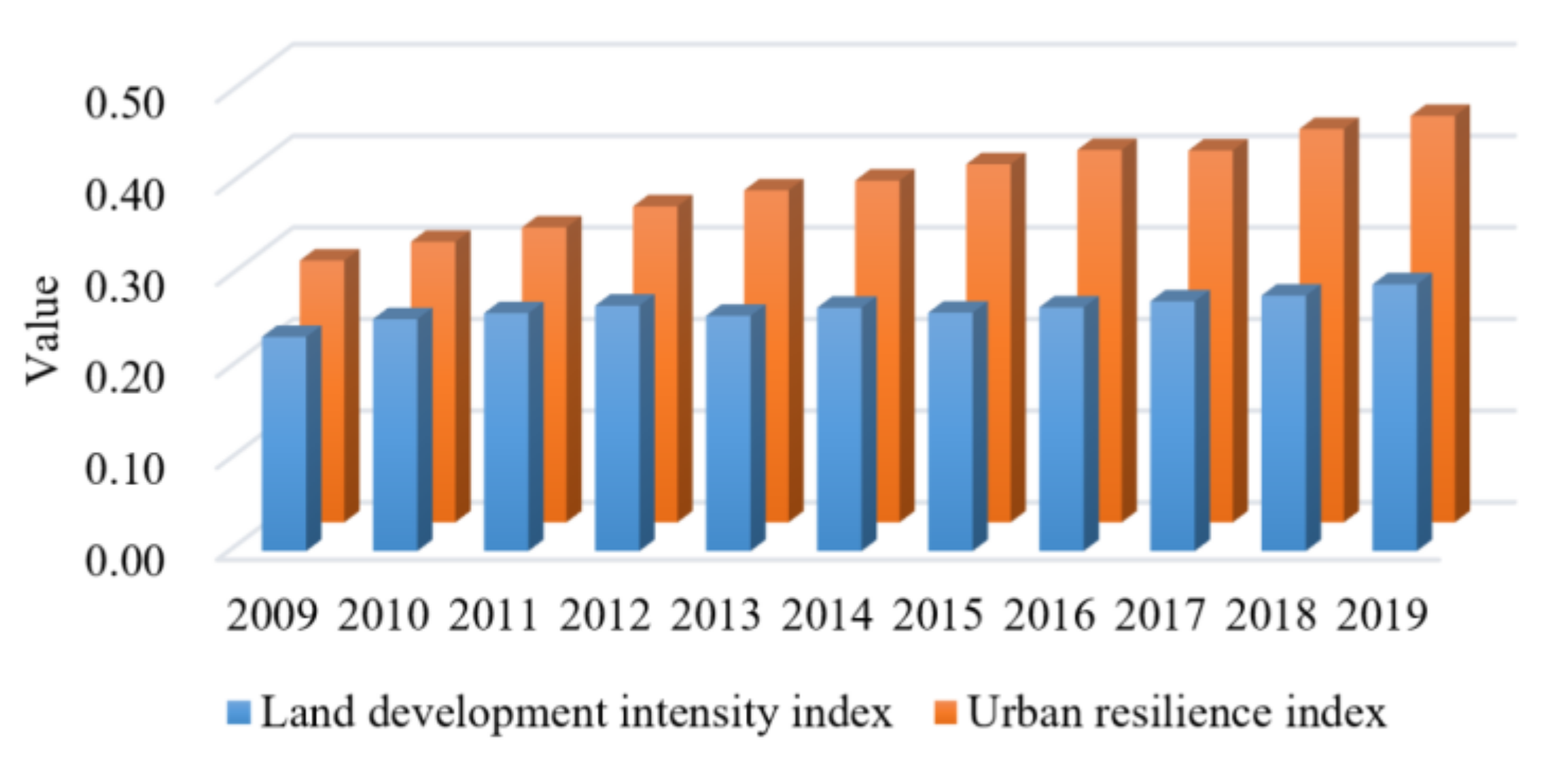
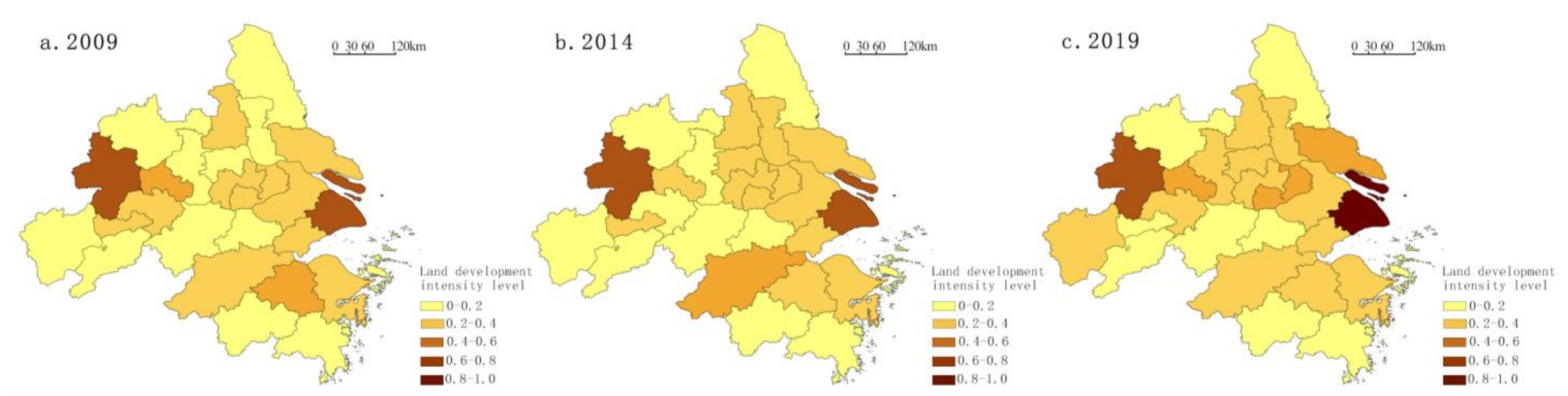
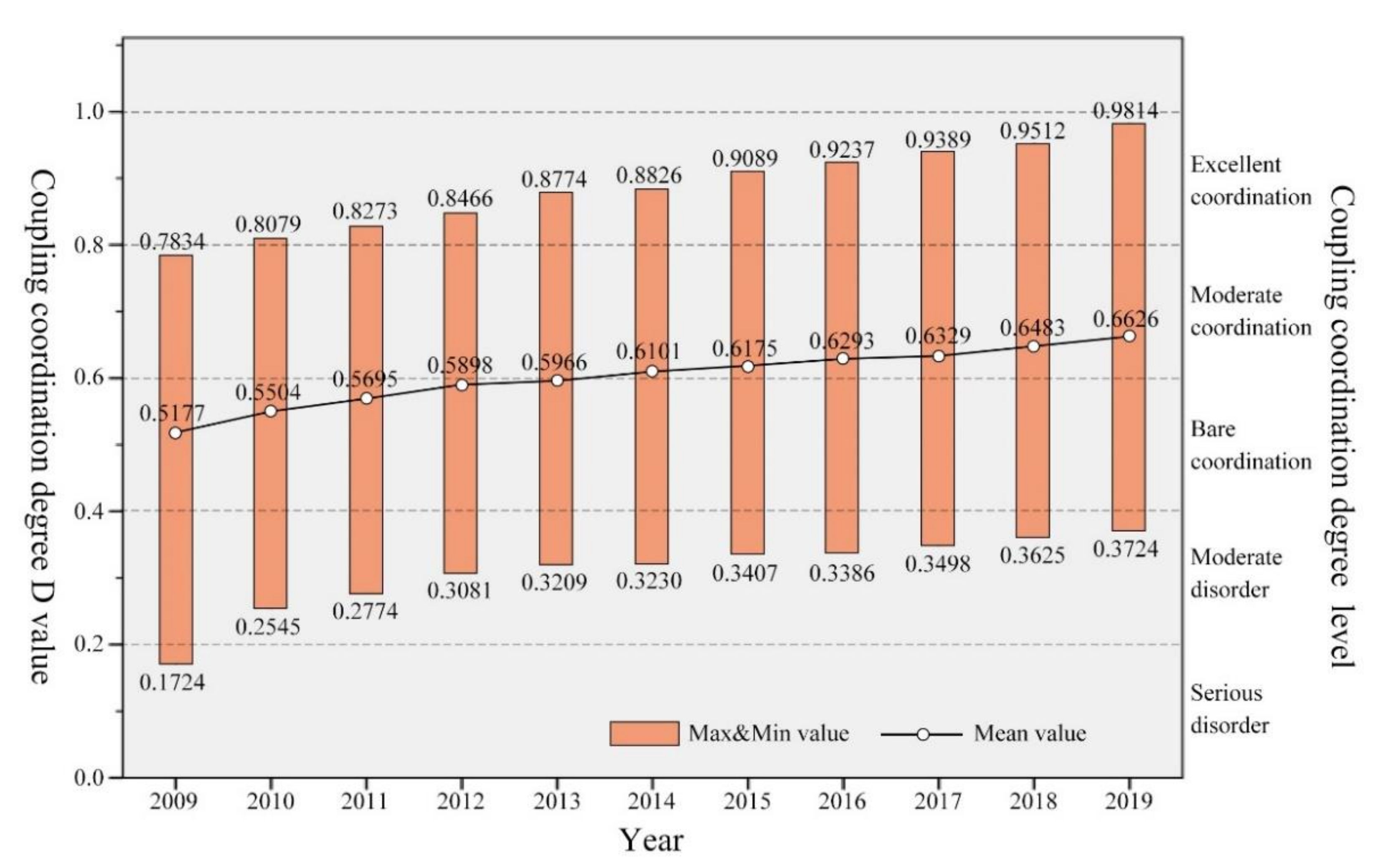
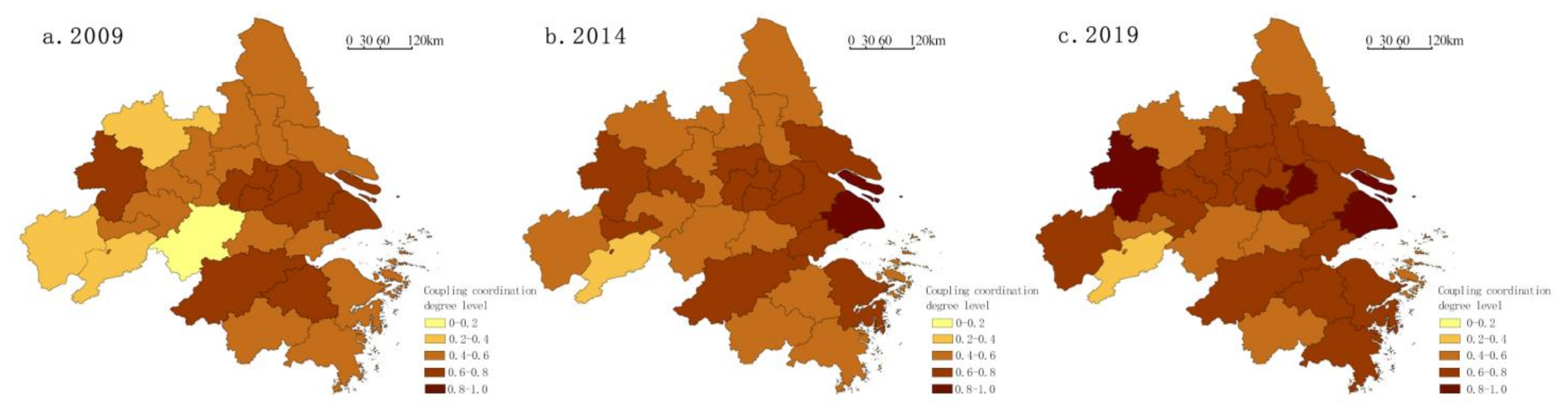
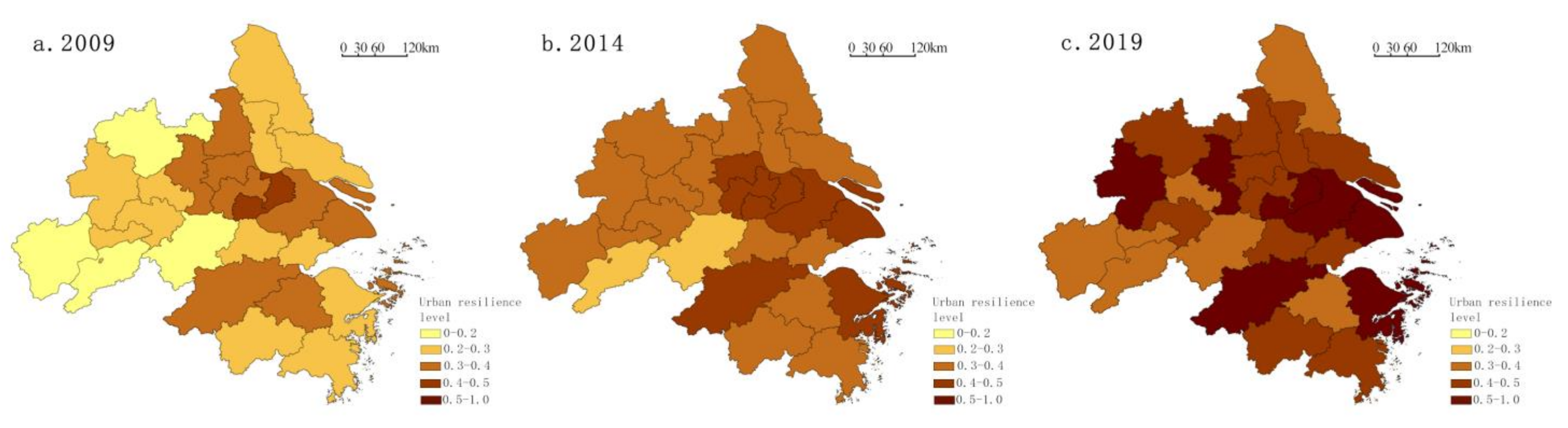
The rapid urbanization of the Yangtze River Delta urban agglomeration has led to the convergence of population, land and capital. The coordination between land development intensity and urban resilience has become a key issue in the post-urbanization period. From the perspective of regional overall and coordinated development, we constructed an evaluation index system of land development intensity and urban resilience. Then, the comprehensive evaluation model, coupling coordination degree model and panel Tobit regression model were adopted to systematically study the temporal and spatial differentiation of and influencing factors on the coupling coordination degree between land development intensity and urban resilience in the Yangtze River Delta urban agglomeration from 2009 to 2019. The results show that from 2009 to 2019, the land development intensity exhibited a slow and fluctuating increase, while the urban resilience displayed continuous growth, and the level of land development intensity generally lagged behind that of urban resilience. From 2009 to 2019, the average coupling coordination degree between land development intensity and urban resilience in the Yangtze River Delta urban agglomeration increased from 0.5177 to 0.6626, which generally changed from bare coordination to moderate coordination. In terms of spatial distribution, the coastal cities and cities along the Yangtze River were characterized by high coupling coordination degrees, which formed a “T” shape distribution pattern. In addition, the coupling coordination types showed certain spatio-temporal heterogeneity among cities. Finally, land economic benefit, green industrial development, scientific and technological innovation, social management and infrastructure all had significant impacts on the coupling and coordination between land development intensity and urban resilience in the Yangtze River Delta urban agglomeration.
Keywords: land development intensity; urban resilience; coupling coordination; panel tobit regression model land development intensity; urban resilience; coupling coordination; panel tobit regression model