Article

The 2030 Agenda as Agenda Setting Event for Water Governance? Evidence from the Cuautla River Basin in Morelos and Mexico

by
Anita Breuer
1,* and
Ursula Oswald Spring
2
1
German Development Institute/Deutsches Institut für Entwicklungspolitik, 53113 Bonn, Germany
2
Regional Multidisciplinary Research Centre (CRIM-UNAM), National University of Mexico, Mexico City 04510, Mexico
*
Author to whom correspondence should be addressed.
Water 2020, 12(2), 314; https://doi.org/10.3390/w12020314
Submission received: 11 December 2019 / Revised: 14 January 2020 / Accepted: 15 January 2020 / Published: 21 January 2020
(This article belongs to the Special Issue Attention and Water Governance: An Agenda-Setting Perspective)

Abstract

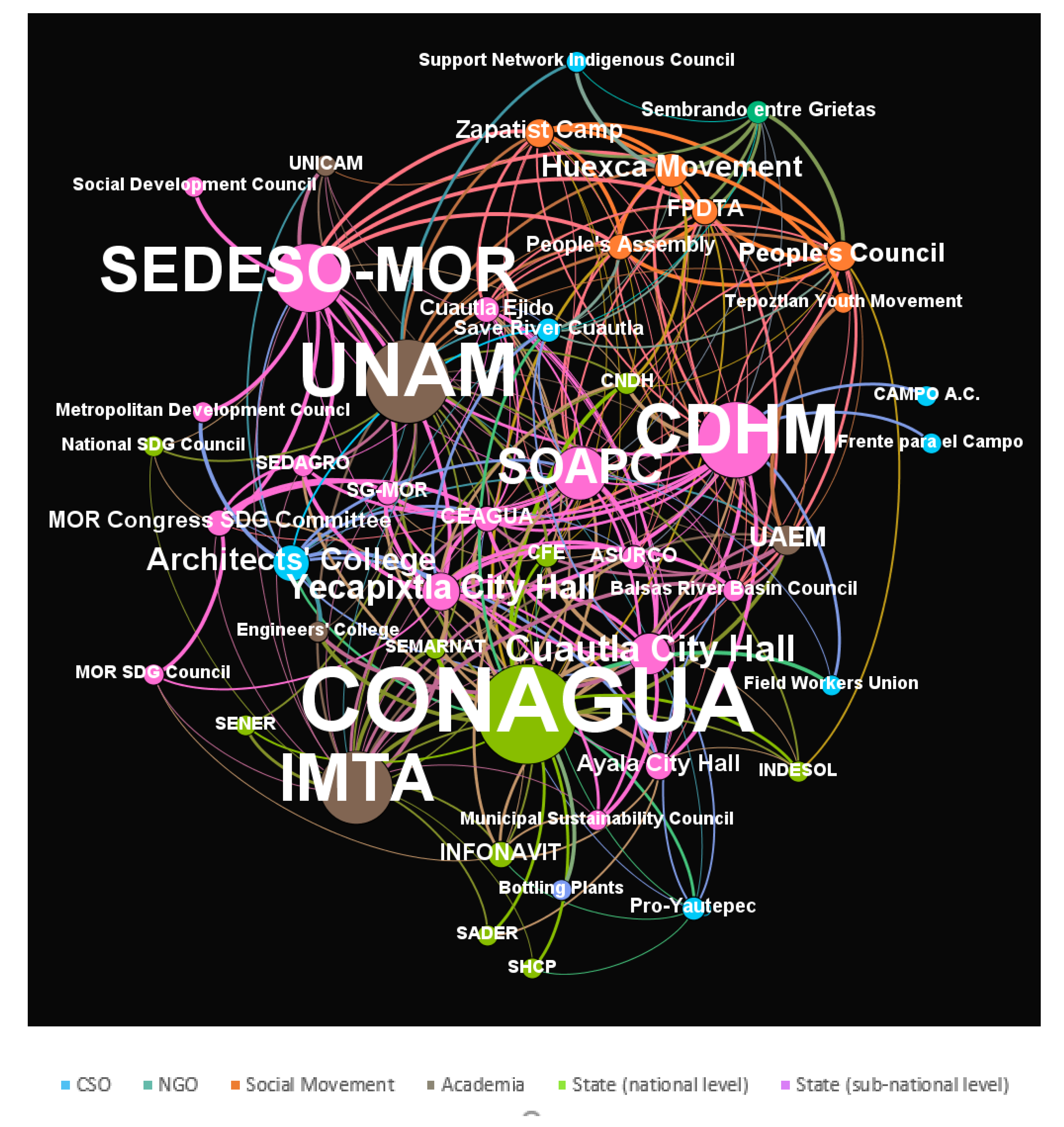
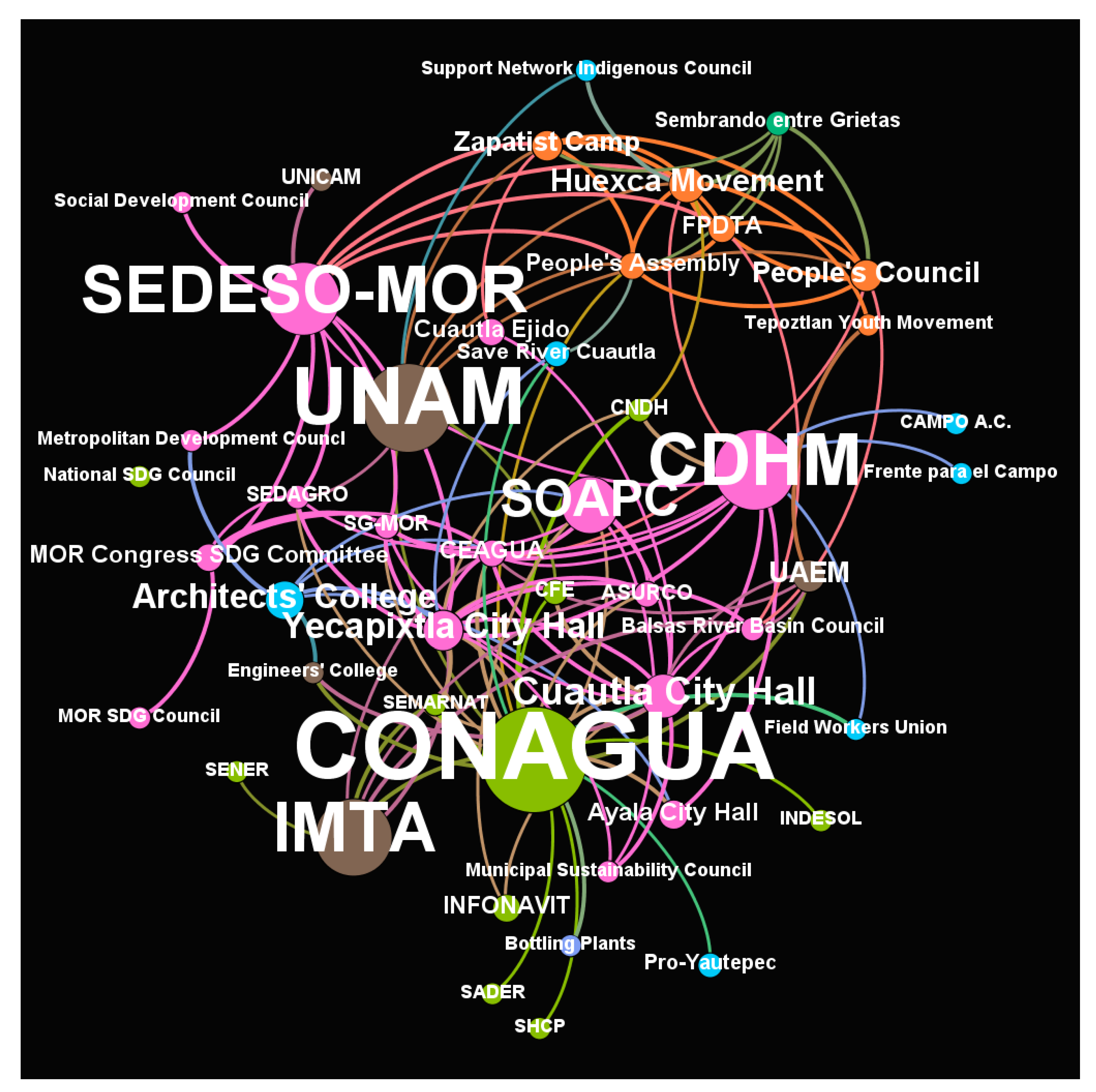
Policy science has developed various approaches, such as agenda-setting and goal-setting theory, aimed at explaining the emergence of policy shifts and behavioural changes. The 2030 Agenda sets an ambitious vision for human development in times of global environmental change and makes for an interesting subject to study the explanatory power of these approaches. While the Sustainable Development Goals (SDGs) enshrined in the 2030 Agenda resulted from a process of intergovernmental negotiations, they will ultimately have to be implemented by national governments. Using the case of Mexico, we take the governance of water as a starting point to investigate whether the 2030 Agenda has indeed become a focusing event for sustainability transformation. Building on data from 33 expert interviews and findings of a Social Network Analysis of communications between water stakeholders from different sectors in the Cuautla River Basin, we conclude that major paradigm shifts in water governance in Mexico are thus far rather attributable to domestic focusing events and windows of opportunity than to the motivating impact of globally set goals. The Mexican case also illustrates that the implementation of the 2030 Agenda is strongly dependent on political will at the highest level. Ensuring the continuity of its implementation across administrations will, therefore, require mainstreaming and anchoring the SDGs into the sectorial strategies that determine activities at the lower working level of government.
Keywords: water governance; 2030 agenda; SDGs; agenda setting; sustainability; Mexico water governance; 2030 agenda; SDGs; agenda setting; sustainability; Mexico