1. Introduction
Visual observations of snow cover features reported to avalanche warning agencies and hydrological or meteorological forecasting offices by field observers are essential for snow cover assessment, avalanche forecasting or the verification of weather forecasts. These observations provide real-time information on snowpack and meteorological conditions unavailable from automated measurements alone. Importantly, observational data can be communicated to warning agencies and forecasting offices by individuals with varying levels of expertise, including non-experts or less trained personnel, thereby adding to the overall information available. To accurately interpret field observations and assess the consequences of the observations for snowpack stability, water availability or weather conditions as well as their spatial variability, understanding the underlying physical processes is essential and an important precondition for the correct integration of observations into forecasting routines and models.
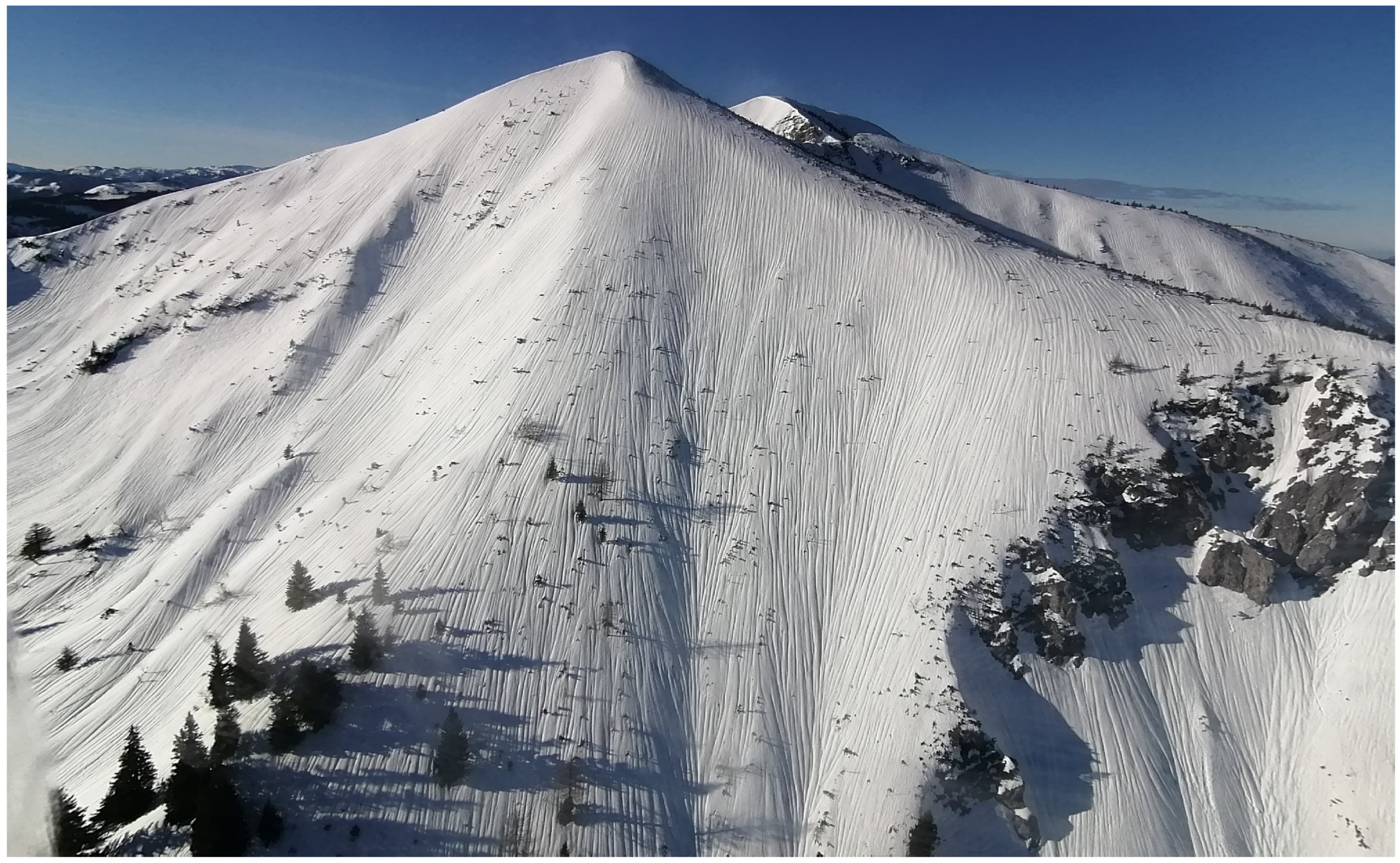
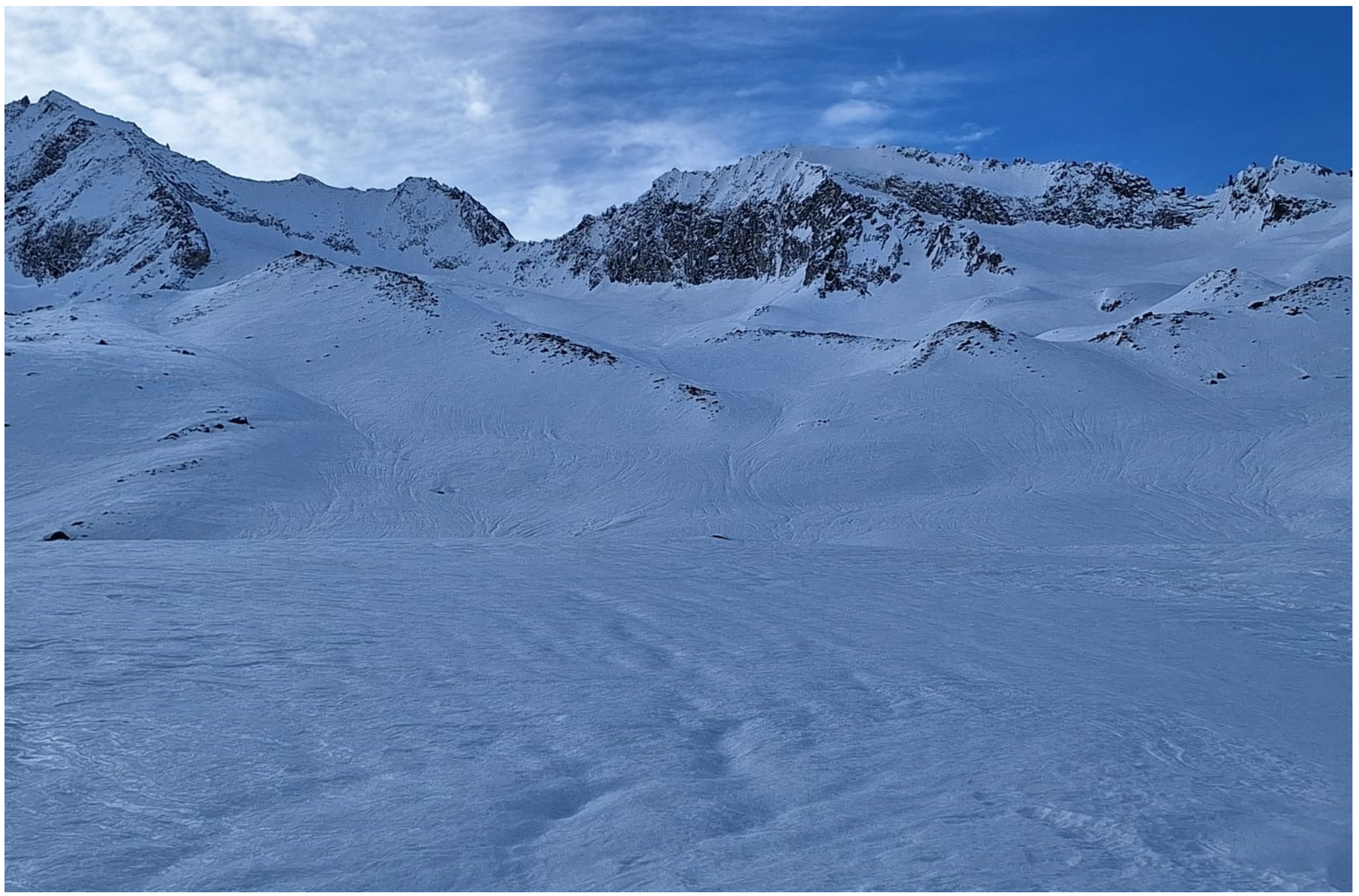
Rills on the snow surface (
Figure 1) are among the surface features frequently reported from the field. As described by La Chapelle (2001), rills result from the percolation of liquid water through the snowpack, which subsequently concentrates in subsurface flow channels [
1]. A phenomenon known as “snow dimples”, which shares a similar formation mechanism with rills but occurs on flat terrain, was described by Nohguchi (1984) in Nagaoka, Japan [
2,
3]. In situ observation of the formation of snow dimples on artificial snow layers were performed by Shimada et al. (2017), who found that the “dimples” form due to a concentration of water movement within the snow, depending on the amount of liquid water and the original properties of the dry snow [
4]. The international classification for seasonal snow on the ground [
5] mentions roughness elements of the snow surface attributed to deposition, ablation, rain, melt, or sublimation processes.
The formation of rills on the snow surface is commonly attributed mainly to rain-on-snow (ROS) events [
6]. Tremper (2008) states that rills on the snow surface are usually taken as an indicator that it rained on the snow surface, “Prolonged or hard rain on new snow forms drainage channels (also called “rill marks”) down in fall line and makes a corrugated pattern in the surface snow” [
7] (p. 124), while Harvey et al. (2012) show a photo of a “typical snow surface with flow channel after a period of rain” [
8] (p. 49).
The origin of the water causing the rills is important for the spatial distribution of wet snow. In case of rain on snow, all slopes below the elevation where snow turns to rain (snow level in the U.S. forecasting system) are affected [
9]. When water infiltration is due to melting, wet-snow is expected to be more pronounced for sunny slopes (higher solar radiation) and lower elevations (higher air temperature).
Thus, in particular for avalanche forecasting, the rills are used as indicators for several key factors: the elevation of the snowfall level (altitude above sea level at which precipitation falls as snow which is deposited on the ground), wet-snow [
10,
11] or glide-snow [
12,
13,
14] avalanche conditions, the formation of crusts within the snowpack, crust-related weak layers within the snowpack and generally the overall stability [
15,
16,
17,
18] of the snowpack. Also the flow conditions of potential avalanches change with snow type and temperature [
19]. The source of the liquid water forming the observed rills is thus important for drawing the right conclusions for forecasting routines and modeling.
In this paper, we study a widespread rill formation event in the Austrian Alps in December 2023. We compare the liquid water input from melt processes with that from rain during the formation of the rills. By combining field observations, measurements as well as model simulations, we seek to enhance the understanding of the processes driving surface rill development.
2. Materials and Methods
2.1. Field Site Overview and Meteorological Data
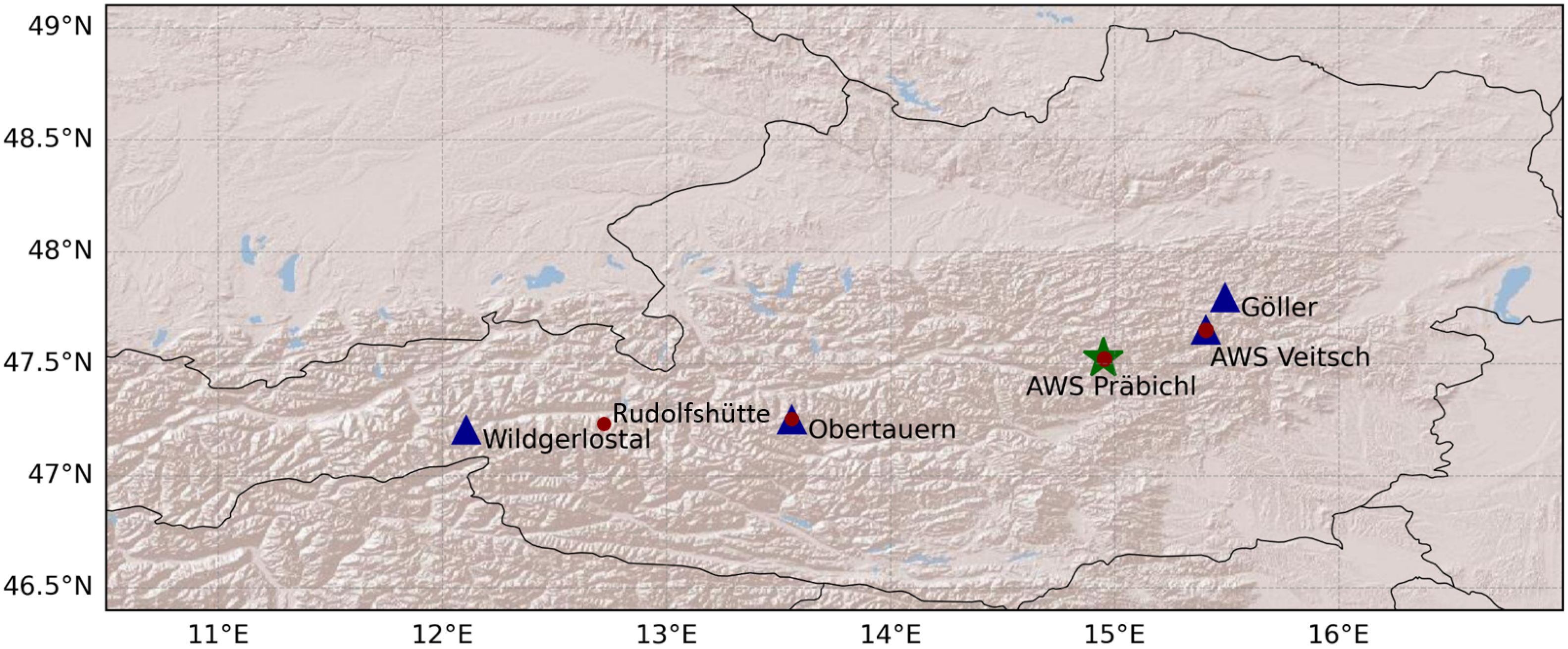
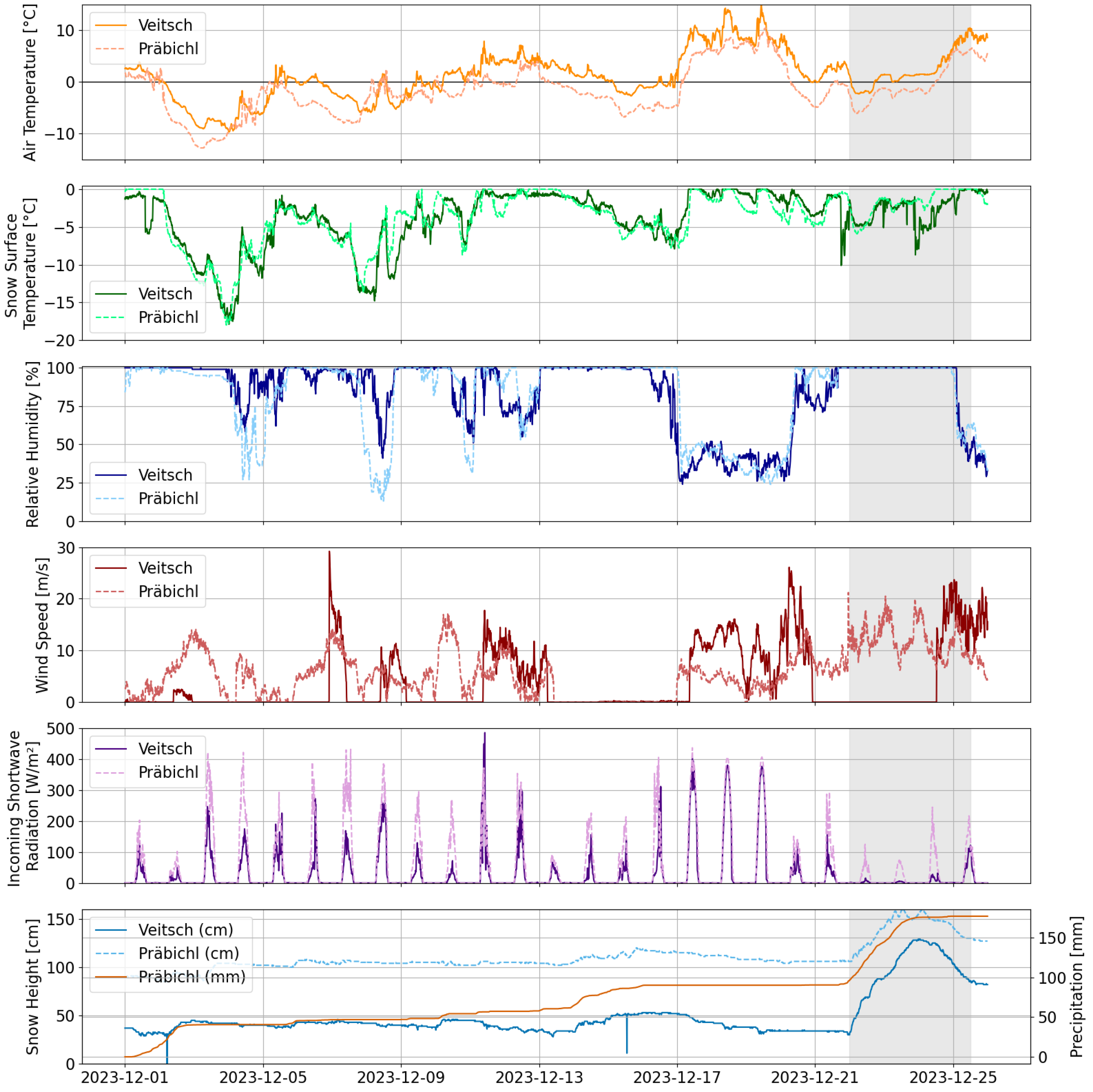
This study is based on field observations and data from automatic weather stations (AWS) in the Präbichl and Brunnalm/Hohe Veitsch skiing areas (
Figure 2 and
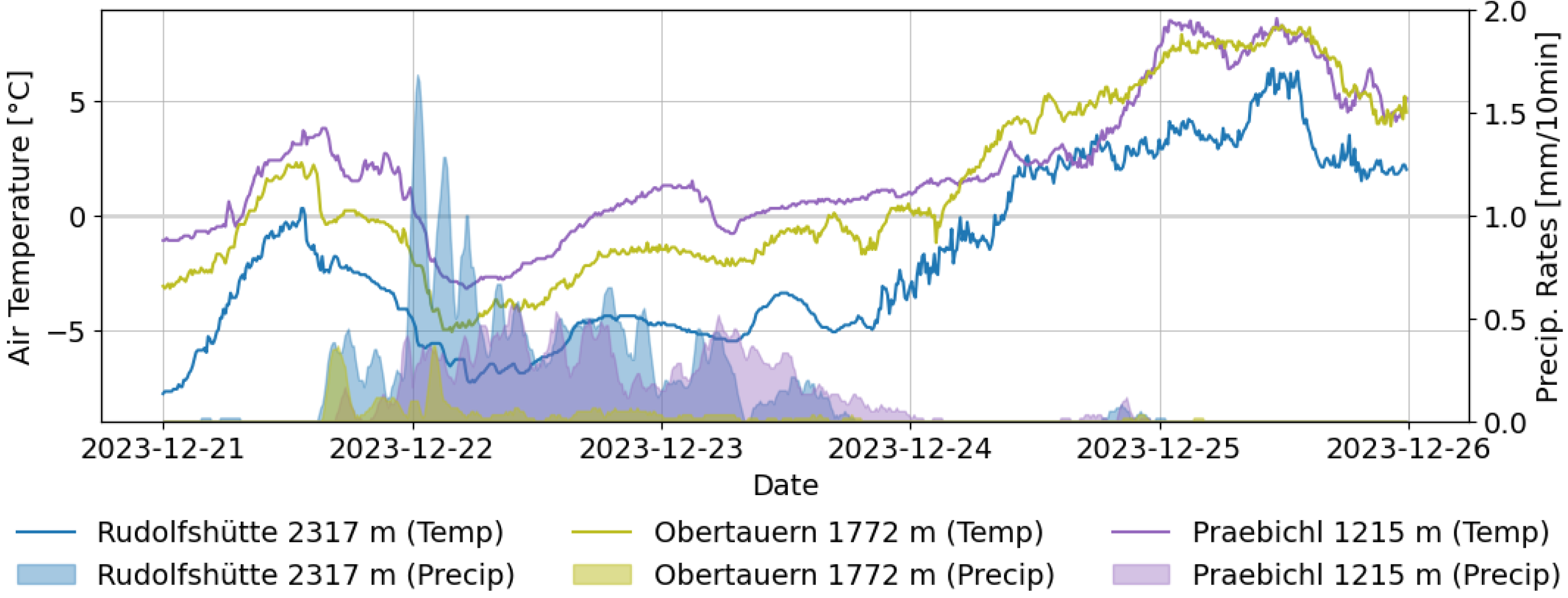
Figure 3). To place these observations in a broader regional context, precipitation and temperature data from the Rudolfshütte and Obertauern AWSs are also included (
Figure 4).
The AWS Präbichl and Hohe Veitsch are situated along the main Alpine divide in the Eastern Austrian Alps, approximately 40 km apart in a straight-line distance, sharing similar topographic settings and elevation ranges. Meteorologically, both sites are characterized by their susceptibility to northerly to north-westerly orographic precipitation events, which frequently impact the region during winter. Their proximity suggests that meteorological conditions at the two AWS are likely to be broadly similar, making them a suitable pair for further analysis of the atmospheric conditions preceding rill formation in the Eastern Austrian Alps. The Rudolfsütte is located at 2317 m and approximately 250 km to the West of Präbichl, providing data from the westernmost part of our observation areas. Observational data from the AWS Obertauern Pass located at 1772 m in the Central Austrian Alps are used to close the gap between Eastern and Western Austrian Alps. The temporal resolution of observational data on the AWSs was 10 min. The meteorological data spans the early winter period up to 31 December 2023, allowing for a comprehensive review of meteorological conditions leading up to the observed phenomena.
At Präbichl, the dense network of TAWES (semi-automatic weather station) and AWS provides a range of measurements across different elevations, of which the following were used in this study:
Precipitation and air pressure at 1214 m (TAWES);
Snow height, air temperature, relative humidity, incoming short-wave radiation, snow surface temperature and wind measurements at 1731 m (AWS);
Wind measurements at 1907 m (AWS).
AWS Hohe Veitsch contributed the following data:
Snow height, air temperature, relative humidity, snow surface temperature, as well as measurements of incoming and reflected shortwave radiation and incoming and outgoing longwave radiation at 1323 m;
Wind measurements at 1973 m.
AWS Obertauern and Rudolfshütte contributed:
2.2. Weather Conditions
Following initial snowfall events at alpine elevations (>2000 m) in early November, a continuous snow cover formed above mid-elevations (around 1500 m) from mid-November onward. Variable weather conditions, characterized by repeated precipitation and occasional ROS events at alpine elevations, followed by cold periods with snowfall and wind, resulted in a rather heterogeneous early-winter snowpack structure, with layers of differing hardness and density.
From mid-December onward (
Figure 3), the onset of a pronounced Azores High brought several days of mild and sunny weather to the Eastern Alps, with temperatures reaching up to +8 °C at 2000 m (
Figure 3, uppermost panel—air temperatures at AWS Veitsch at 1323 m reached a maximum of 15 °C on 18 and 19 December 2023). This warm period caused the snowpack to settle further, and by 21 December 2023 a compact snow base had developed, primarily composed of melt–freeze crusts, interspersed with softer layers of snow grains at different stages of settling (see
Section 2.3 for details on snowpack structure).
Beginning on 22 December 2023, a shift to a stormy north-west weather pattern led to significant snowfall, particularly along the northern flanks of the Alps where orographic precipitation frequently contributes to large precipitation amounts. Measured accumulations of new snow reached 60 cm to 100 cm within approximately 48 h (22 to 24 December 2023,
Figure 3 lowermost panel). Most of the snowfall occurred at relatively high temperatures, around or slightly above 0 °C resulting in a warm layer of fresh snow (
Figure 3, uppermost panel). The snowstorm ended on 24 December 2023 and was immediately followed by an influx of warm air masses into the Eastern Alps. Due to the warm conditions, the new snow stabilized rapidly, becoming compact and free of significant weak layers, even at higher elevations.
2.3. Snow Cover Observations
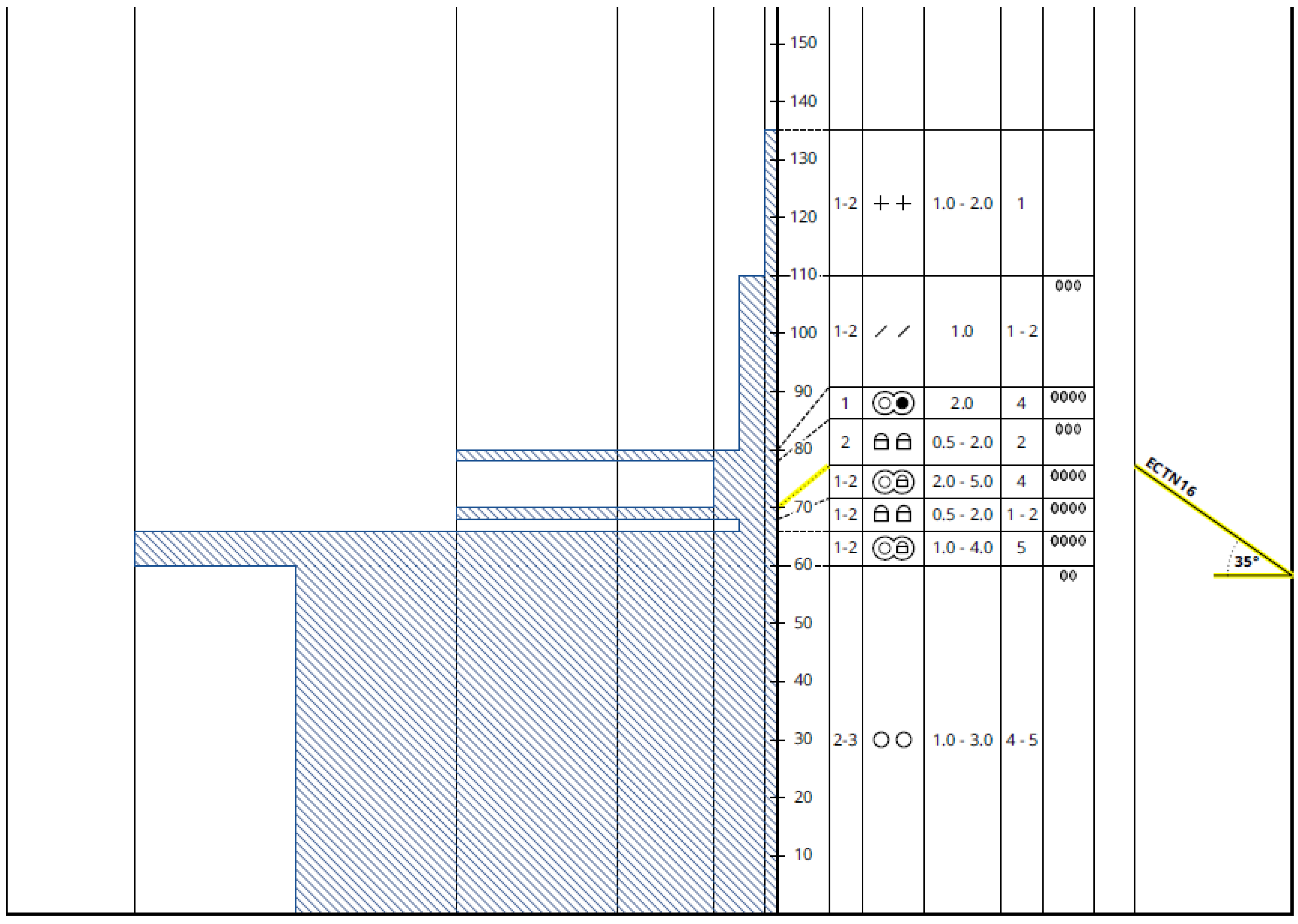
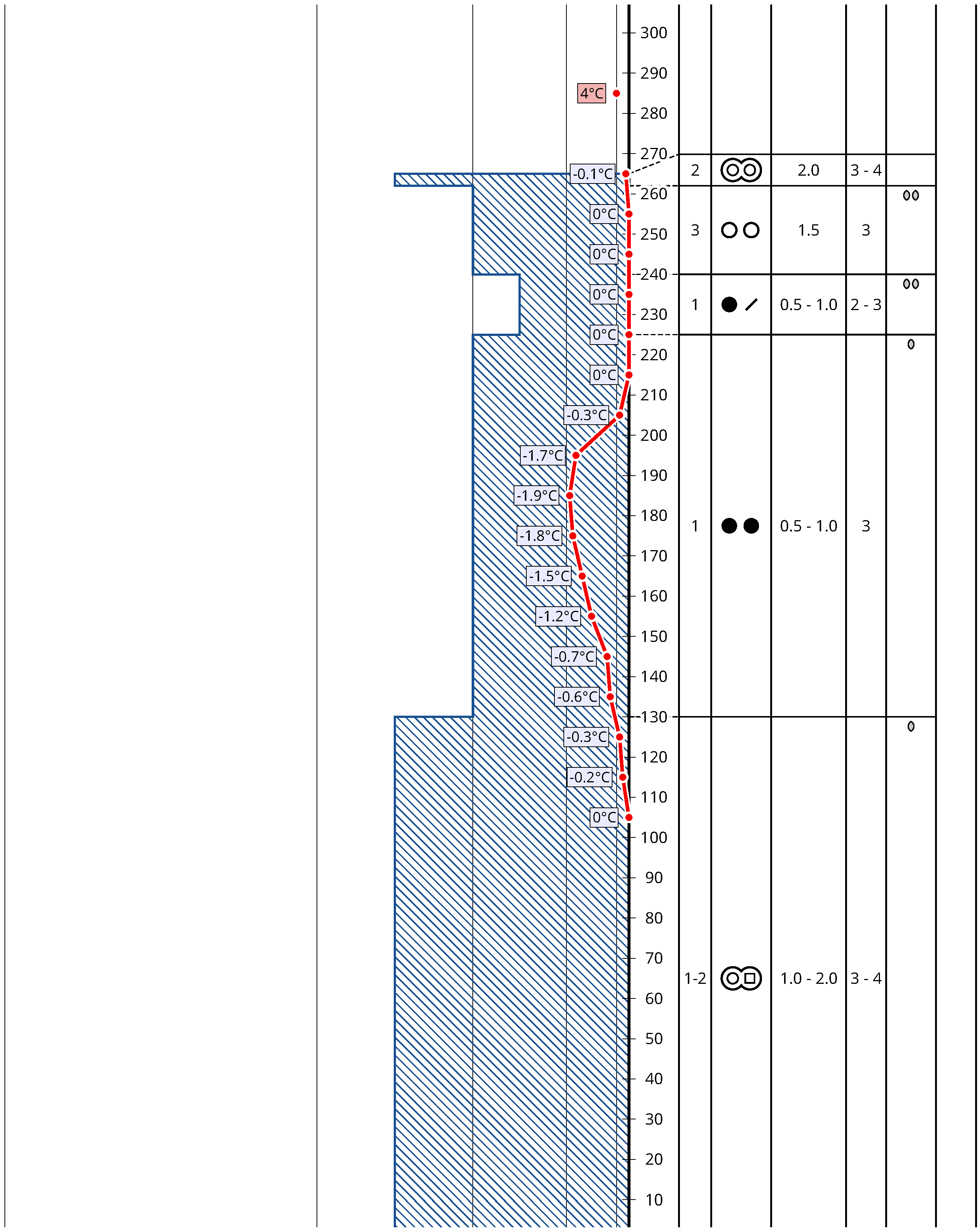
Manually observed snow profiles from the latter half of December 2023 (see
Figure 5 and
Figure 6) provide information on snowpack stratigraphy at this time. Snow grain types and related symbols follow the International Classification for Seasonal Snow on the Ground [
5].
Both profiles feature a thick basal layer of compact and hard melt forms (○) or melt–freeze crusts (

). Above this layer, differences in the middle snowpack structure are evident, which can be attributed to differences in elevation and local conditions. The two sites are separated by approximately 400 m in elevation, which likely marked the boundary between rain and snow during repeated early-winter precipitation events.
The profile from Radmer (
Figure 5) shows alternating melt–freeze crusts (

,

) and rounding faceted crystals (

), whereas the profile at Vordernberger Griesmauer (
Figure 6) reveals a relatively uniform layer of compact rounded grains (•). Additionally, the snow depth at the Vordernberger Griesmauer site was approximately twice as high, suggesting frequent loading with wind-transported snow. The south-facing orientation of this site, leading to increased solar radiation, likely resulted in lower temperature gradients, reduced constructive metamorphism and enhanced snowpack settling, explaining the presence of the compact layer of rounded grains (•).
The top layers of both profiles reflect the fresh snow from the recent snowfall event between 22 and 24 December 2023. On 23 December 2023, the Radmer profile (
Figure 5) shows precipitation particles (+) in the upper layers. However, slightly moist (1–2) conditions were already observed within these fresh snow layers, likely due to air temperatures near 0 °C during the snowfall. By the morning of 25 December 2023, the Griesmauer profile (
Figure 6) indicated that the uppermost layers had already transitioned to moist (2) or wet snow (3), with crystals transforming into melt forms (○) or rounded grains and decomposing and fragmented precipitation particles (•/). The melt–freeze crust (

) on the surface formed by cooling during the previous night. The temperature profile at Vordernberger Griesmauer further indicates that the thick layer of rounded grains remained below 0 °C. This suggests that the layer still preserved cold content from an earlier cold period. Because deeper snow layers are less affected by diurnal temperature variations, they warm only slowly through conductive heat transfer within the snowpack.
These observations highlight the significant changes experienced by the snowpack upper layers within this short period.
2.4. Field Observations of Rills
Widespread rills on the snow surface were observed by avalanche forecasters from the Styrian and Lower Austrian Avalanche Warning Services during a field campaign near the Präbichl skiing area on 25 December 2023 [
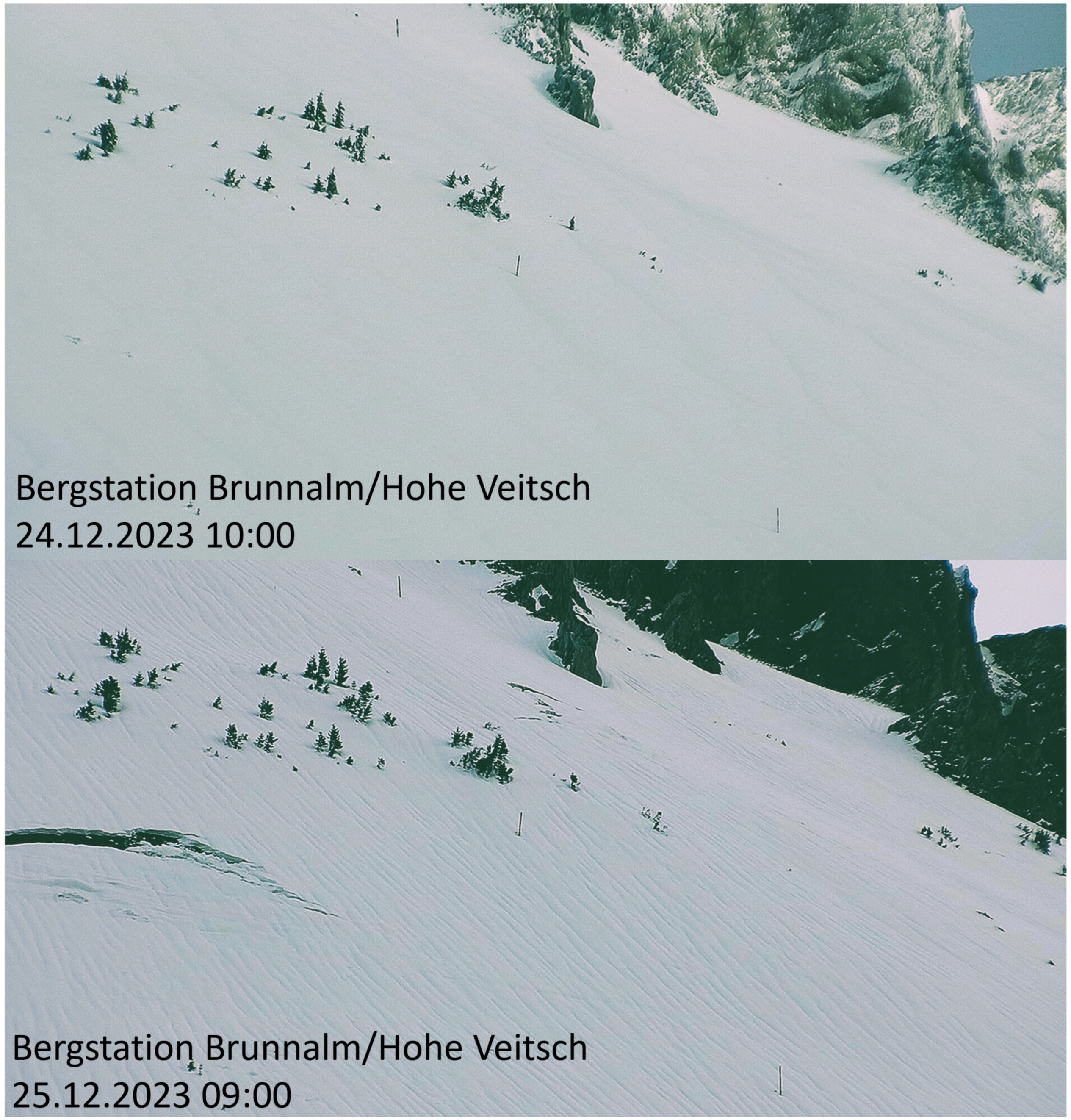
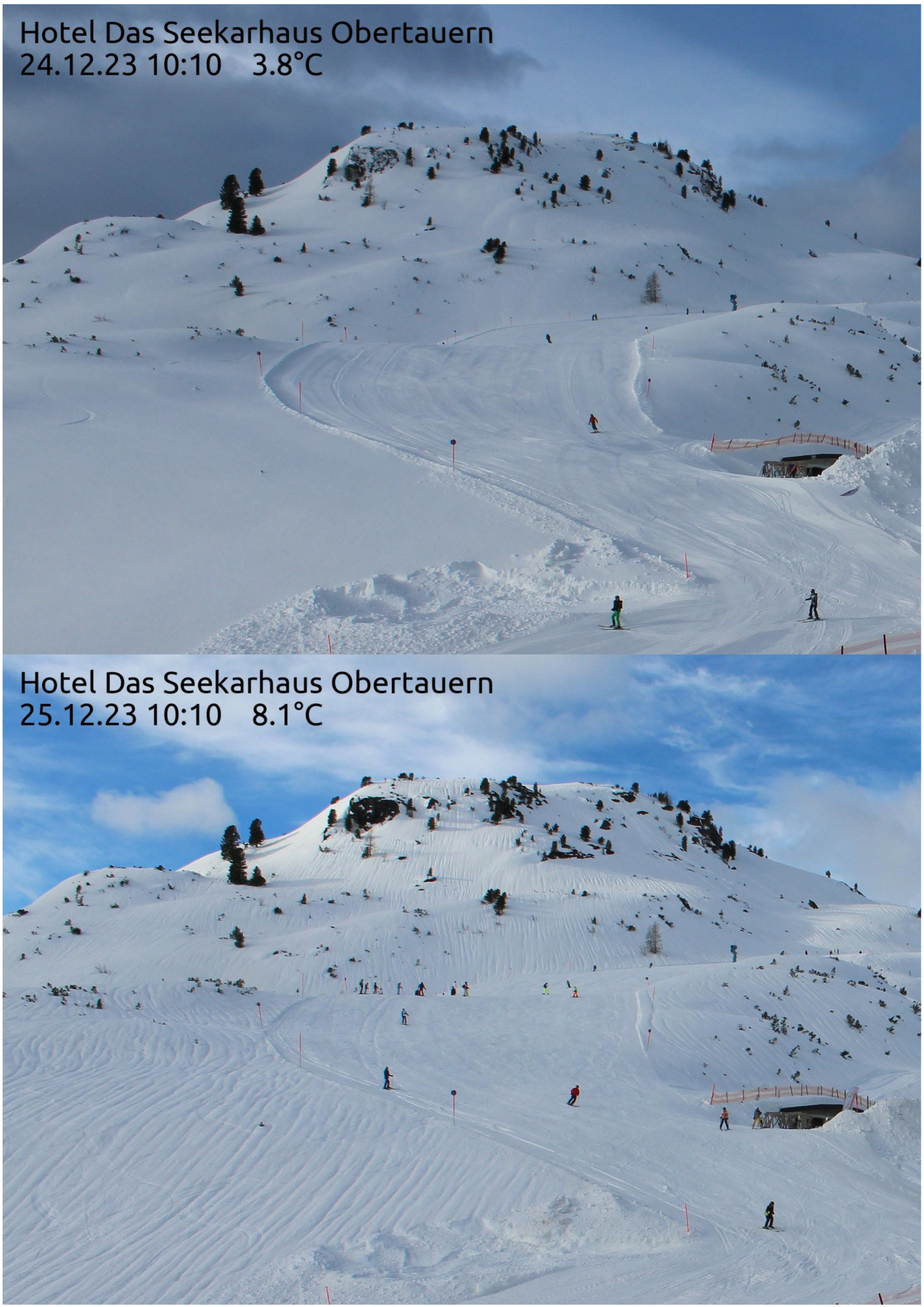
20]. To evaluate the extent of the rills on a larger scale, additional sources of snow observations, including webcam imagery, were analyzed. The observations and webcam images revealed widespread rill development across the Austrian Alps, spanning from regions such as Göller (
Figure 1) and Veitsch (
Figure 7), along the main Alpine divide towards the west, including Obertauern (
Figure 8) and extending as far as the western Hohe Tauern, such as Wildgerlostal (
Figure 9). The spacial distribution covers approximately 263 km in straight-line distance.
2.5. Surface Energy Balance Calculations
To determine the factors driving the formation of the observed rills, we calculated the available energy for snowmelt per unit area based on the surface energy balance of the snowpack. Assuming the snow surface behaves as an infinitesimally thin layer with no heat capacity, the principle of energy conservation dictates that the energy fluxes into the surface must balance those leaving it. Following Wallace and Hobbs (2006) [
21], the surface energy flux is therefore expressed as
where
= energy flux at the snow surface,
= net long-wave radiative flux (measured),
= net short-wave radiative flux (measured),
H = sensible heat flux,
E = latent heat flux,
= advective heat flux (e.g., by rain),
The ground heat flux
is neglected in this surface energy balance approach, assuming that the snowpack provides sufficient thermal insulation to decouple the snow surface from the underlying ground.
is determined by
where
= rain mass flux per unit area (measured),
= specific heat capacity of water = 4186,
= temperatures of the rain (assumed equal to air temperature) and the snow surface (measured).
Applying the bulk aerodynamic approach [
21] the sensible heat flux
H and the latent heat flux
E can be calculated by
where
= density of the air, assumed constant = 1.225, ;
= specific heat capacity of air = 1004, ;
= latent heat of sublimation = , ;
= wind velocity (measured), ;
= dimensionless bulk transfer coefficients for heat and water vapor, ;
= temperatures of the air and the snow surface (measured), ;
= specific humidities of air and the snow surface, .
We used conservative
and
for heat and water vapor transfer, respectively, as suggested in literature, assuming a flat snow surface under statically neutral conditions [
21,
22].
is the specific humidity of the snow surface (uppermost layer), for which we assume saturation. This means that the relative humidity at the surface is RH = 1 and the vapor pressure at the snow surface equals the saturation vapor pressure over ice, i.e.,
, where
is calculated using the surface temperature
measured at the AWS (Equation (
7)).
Specific humidities are determined by
where
using the water vapor pressure
where
= saturated vapor pressure, ;
= relative humidity (measured), [-].
is determined via
and the air pressure
is calculated by the barometric equation
where
p = air pressure at Veitsch and Präbichl, ;
= air temperature at Veitsch resp. Präbichl (measured), ;
g = gravitational acceleration = 9.81, ;
R = specific gas constant for dry air = 287.05, ;
L = temperature lapse rate = , .
Ultimately,
(Equation (
1)) represents a 10 min averaged energy flux per unit area, based on the 10 min measurements of the AWS. To determine the total energy available over a 10 min period, the mean flux is integrated over the averaging period (in this case 10 min):
where
represents the total energy available
per unit area over a 10 min interval.
2.6. Estimation of Potential Meltwater Production
The potential meltwater production
based on the surface energy balance
was then estimated by
where
= potential amount of meltwater per time interval (10 min) ;
= energy available for snowmelt per unit area ;
= latent heat of fusion .
The energy per unit area available for snowmelt
is determined by
where the energy needed to heat the upper 1 cm of the snow to the melting point 0 °C,
, is estimated by
with
= heat energy per unit area ;
= specific heat capacity of ice and snow ;
= mass of snow to heat to 0 °C ;
= snow surface temperature [K].
The snow volume is , and is the assumed density of the fresh snow layer.
The energy available for the snow melt is strongly influenced by . In this study, we assume that only the uppermost 1 cm of snow is heated to the melting point within each 10 min interval, with no energy lost to other processes such as subsurface heat transfer into deeper snow layers, refreezing or liquid water transport within the snowpack. To minimize the impact of this assumption, calculations have been restricted to periods when the snow surface temperature was generally at 0 °C. However, a minor effect remains for periods when the measured snow surface temperature temporarily drops below 0 °C.
Data used for this study was quality-controlled and preprocessed to remove erroneous values and fill data gaps. Additionally, corrections for sensor biases and inconsistencies were applied to ensure the reliability of the dataset.
2.7. SNOWPACK Modeling
We conducted snow cover simulations using the physically-based SNOWPACK model [
23,
24], driven by meteorological measurements from AWS Präbichl (1731 m). As a water transport scheme we used the traditional bucket model [
23]. Our simulations provide detailed insights into the evolution of snowpack stratigraphy, as well as the presence and transport of liquid water within the snowpack.
3. Results
On the morning of 25 December 2023, avalanche forecasters from the Styrian Avalanche Warning Service reported extensive formation of rills, observed at least up to 1900 m. Hourly webcam imagery from Brunnalm/Hohe Veitsch, covering elevation ranges between 1400 m and 1700 m (
Figure 7), as well as from the Obertauern skiing area further west, corroborates this observation and documents the overnight formation of rills despite minimal liquid precipitation (
Figure 4). The following section presents the results of the investigation conducted in this study to address this phenomenon.
3.1. Surface Energy Balance Calculation Results
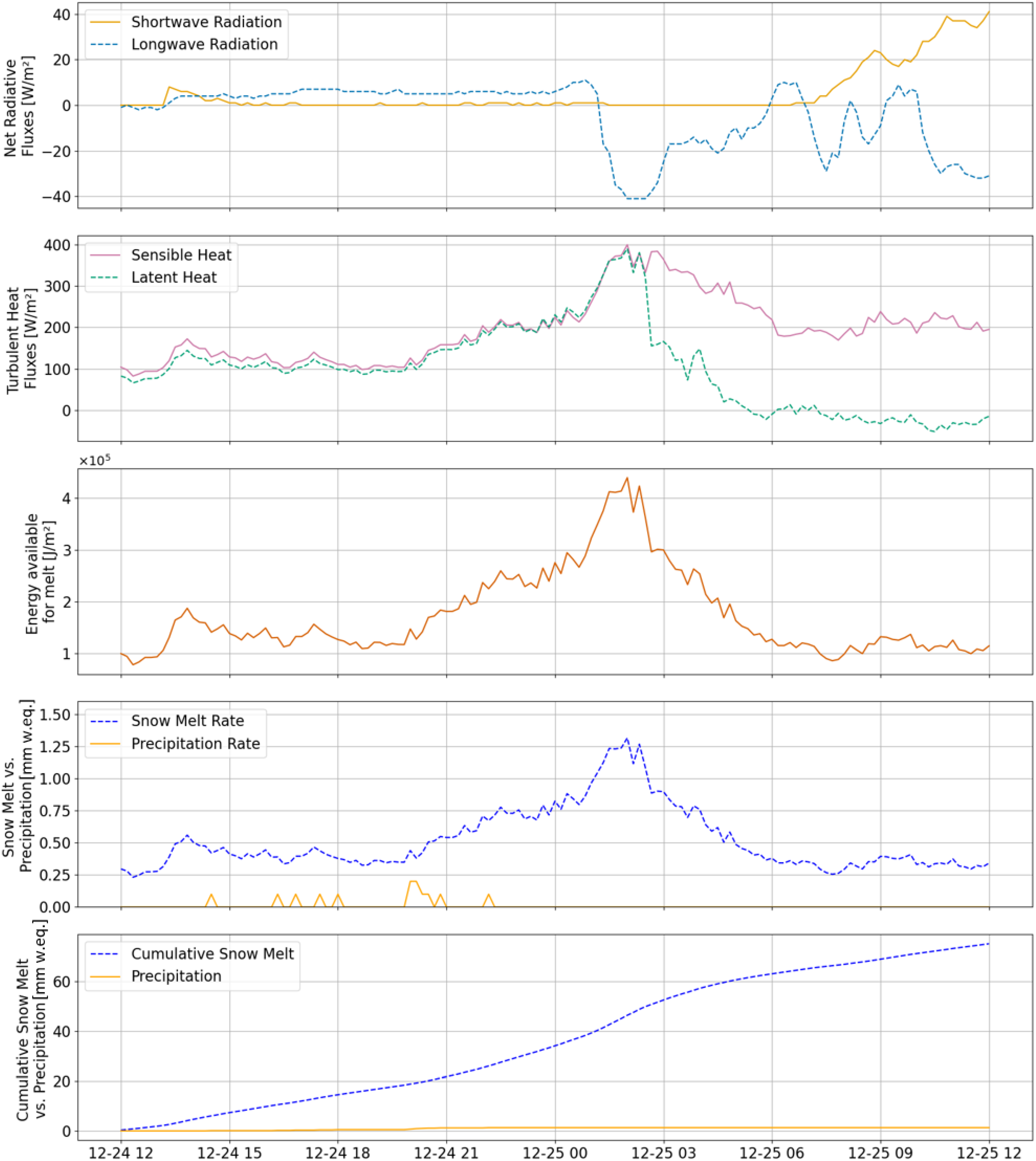
Surface energy balance components, along with estimated snowmelt and measured precipitation rates for the period from 24 December 2023, 12 CET, to 25 December 2023, 12 CET, are presented in
Figure 10. To compensate for missing wind measurements caused by frozen instruments, wind data from AWS Veitsch were supplemented with measurements from AWS Präbichl to obtain these results. According to Equation (
1), the total energy flux at the snow surface was calculated as the sum of net shortwave and net longwave radiative fluxes, turbulent heat fluxes (sensible and latent) and the advective heat flux. The radiative components were measured directly at AWS Veitsch, whereas the remaining fluxes were calculated as described in the formulas in
Section 2.5.
Figure 3 shows that the main phase of precipitation concluded around midnight on 23 December 2023. Thereafter, only 1.3 mm of precipitation was recorded between 24 December 2023 at noon and midnight, as presented by the precipitation rates in
Figure 10. During this period, air temperatures at the AWS locations (1731 m and 1323 m) had already risen to or slightly above 0 °C, suggesting that precipitation likely occurred in liquid or mixed form (
Figure 3, upper panel), resulting in an initial but minor liquid water input into the fresh snow. However, in the subsequent hours, potential meltwater production was estimated and modeled to be roughly two orders of magnitude greater than the recorded liquid precipitation in the afternoon of 24 December 2023 (
Table 1). Based on this calculation, the measured precipitation accounted for only about 1.7% of the total liquid water input (precipitation plus potential snowmelt), supporting the interpretation that melt processes played the dominant role in generating liquid water available for rill formation, compared with direct liquid precipitation input.
3.2. SNOWPACK Modelling Results
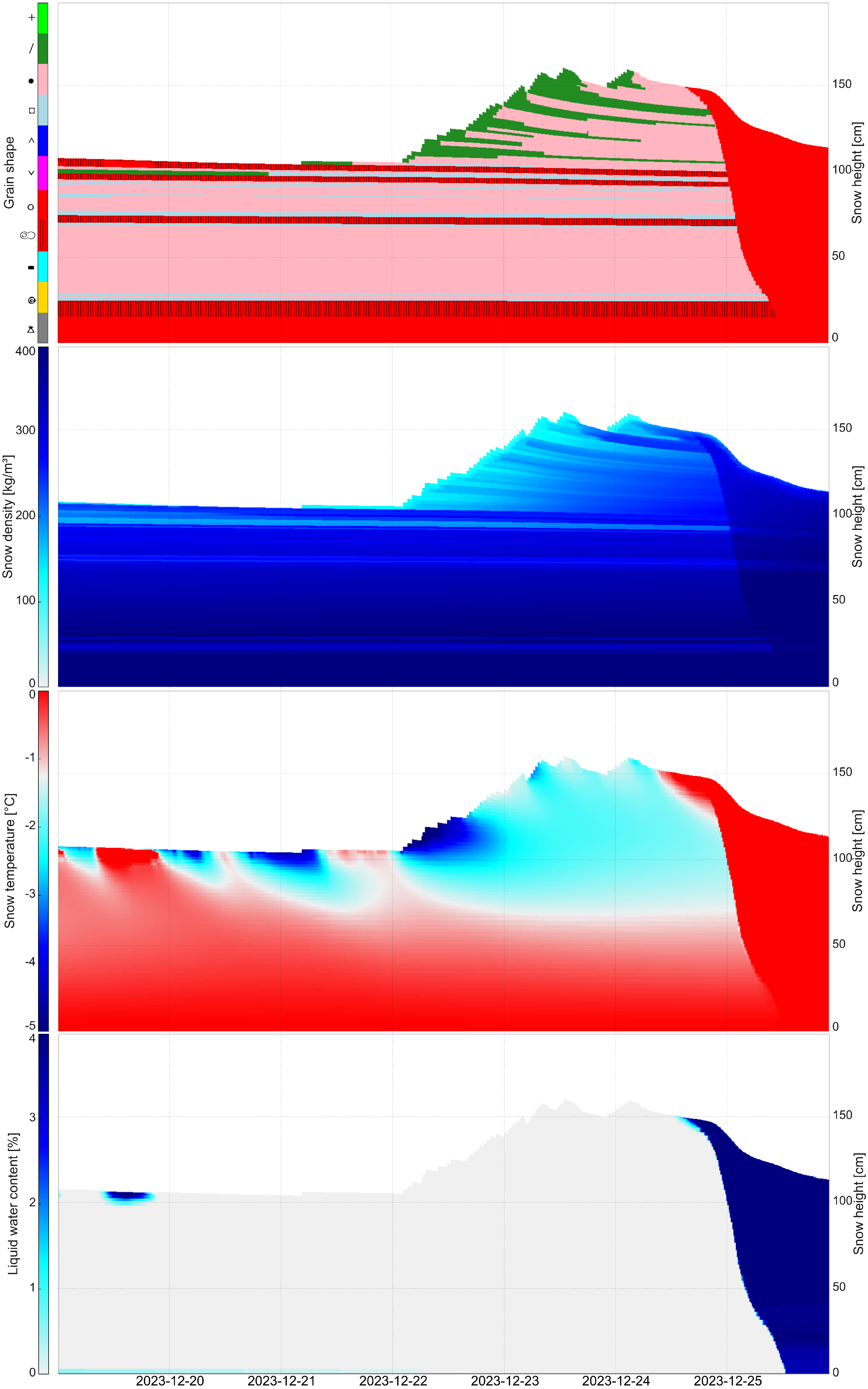
Figure 11 shows the SNOWPACK simulation results for the period from 19 to 25 December 2023, visualised using
niviz.org, the standard tool for displaying SNOWPACK output. The figure includes the simulated evolution of snow grain type, snow density, snow temperature and liquid water content.
The simulated snow grain types (
Figure 11, upper panel) indicate that the fresh snow from the main snowfall event accumulated on an older, well-compacted snowpack, primarily composed of rounded grains (•) and melt–freeze crusts (

), which are consistent with the manually observed snow profiles presented above. The freshly deposited snow consisted predominantly of decomposing and fragmented precipitation particles (/), likely reflecting wind transport and mechanical fragmentation of new snow. These particles rapidly underwent settling and sintering, gradually transitioning towards rounded grains (•).
Before the precipitation event, the upper approximately 50 cm of the snowpack exhibited a pronounced diurnal temperature cycle (
Figure 11, third panel), with cooling during clear nights and warming during the day, although temperatures mostly remained below the melting point. At the beginning of the snowfall event, snowfall associated with a north-westerly storm occurred at low air temperatures, as reflected by the dark blue colours of the newly deposited snow layers. Later, under rising air temperatures, the newly deposited snow was comparatively warm, as indicated by light blue to white colours, and therefore had a substantially lower cold content. In terms of density (see
Figure 11, second panel), the fresh snow was substantially less dense than the pre-existing, well-settled snowpack, particularly when compared with the dense melt–freeze crust at the old snow surface. This strong contrast in density and snow structure likely influenced the timing and rate of water percolation.
The model results further indicate that wetting of the snowpack (see
Figure 11, lowermost panel) began during the afternoon and evening of 24 December 2023, coinciding with the onset of liquid precipitation, as simulated by SNOWPACK and measured at the automatic weather stations. However, liquid water did not immediately percolate through the full snow column but initially remained confined to the upper snow layers and then progressed downward during the night. Notably, even after precipitation ceased, the simulations indicate a continued increase in liquid water content, suggesting that meltwater production driven by surface energy fluxes made a major contribution to the total amount of liquid water within the snowpack. Consistent with observational data, the model results indicate that precipitation accounted for only approximately 2.5% of the total liquid water input, with meltwater production contributing the remaining fraction.
By the night and morning of 25 December 2023, the SNOWPACK simulations suggested near-isothermal conditions and deep percolation of liquid water within the snowpack. However, the comparatively uniform wetting shown by the model reflects the simplified bucket scheme [
23,
25] used for water transport in SNOWPACK. In nature, percolation through such a strongly layered snowpack would likely have been more heterogeneous and preferential, particularly on steep slopes.
4. Discussion
4.1. Energy-Driven Snow Melt and Snowpack Response to Atmospheric Conditions
The estimated potential meltwater production during the morning of 25 December 2023 was significantly greater than the accumulated liquid water from rainfall during the evening of 24 December 2023. While only 1.3 mm of rain was recorded, the estimated potential snowmelt from the positive surface energy balance reached 75.2 mm w.eq. in the calculations and 50.8 mm w.eq. in the SNOWPACK model. Taken together, these results show that energy-driven snowmelt was the predominant source of liquid water input into the snowpack during this period, far exceeding the contribution from direct precipitation. Both the manual snow profiles as well as the snowpack simulations show low-density new snow on top of the snowpack just before the melt event. We conclude that the combination of the relatively warm, low density-snow at the top of the snowpack and the liquid water from the melt-process were the main factors producing the widespread rill formation. Our findings are consistent with classical snow hydrological studies showing that the state of the snowpack is a key control on how readily liquid water is generated and transmitted through the snow cover [
26]. More generally, we assume that rills will generally form if we have warm low-density snow (which is easily deformable) from a fresh snowfall at the top of the snowpack and an input of liquid water, either from melt or from liquid precipitation, shortly after.
The present study focuses on the source and magnitude of the liquid water input into the snow cover. The detailed formation dynamics of the rills themselves and direct observations of water flow within the rills require further research. Nevertheless, our study demonstrates that the occurrence of rills on the snow surface should not automatically be interpreted as evidence of a rain-on-snow event. Even with our simplified energy balance approach used for calculating the amount of liquid water produced by snow melt, both the surface energy balance calculation and the SNOWPACK simulations consistently support the same qualitative conclusion: meltwater input substantially exceeded rainfall during our rill-formation event.
The modeled snow temperatures suggest that the fresh snow had minimal cold content, allowing the snowpack to quickly respond to energy input, leading to accelerated warming and subsequent wetting. In contrast, prior to the snowfall event, the hard snow surface was able to accumulate a substantial cold reserve during cloudless nights with low relative humidity, which slowed or even prevented the formation of meltwater. Additionally, low relative humidity during the earlier period likely enhanced sublimation losses, further reducing the available liquid water [
27,
28]. The simulations further indicate progressive wetting and downward redistribution of liquid water within the snowpack. Although the modeled volumetric LWC values remained mostly within the range of only a few percent (
Figure 11, lowermost panel), such values are already consistent with the onset of efficient gravitational water flow in snow. In this context, Mitterer and Schweizer [
29] use 3 vol.% as a reference value for the onset of efficient percolation. However, the comparatively uniform wetting pattern in the simulation reflects the use of the bucket scheme for water transport in SNOWPACK and actual water flow in a strongly layered snowpack was likely more heterogeneous and preferential.
Overall, the modeled and calculated snowmelt correspond well to the observed snow height reductions measured at the stations during this period. In
Figure 3, both stations show a snow height reduction of over 50 cm between 24 and 25 December 2023. For fresh snow at moderate temperatures, a common rule of thumb is that 1 mm of precipitation corresponds to approximately 1 cm of snow accumulation. Applying this in reverse, melting 50 cm of fresh snow would yield approximately 50 mm of snow water equivalent. For more densely packed snow, an even higher snow water equivalent would be expected. The calculated and modeled values fall within this range, indicating plausible magnitudes of snowmelt.
4.2. Energy Used for Warming vs. Snowmelt
To derive an estimate of potential meltwater production, we calculated the surface energy balance (Equation (
1)). Our approach includes radiative components as well as turbulent and advective heat exchange at the snow surface. It therefore accounts for surface cooling or warming associated with mass transfer by evaporation, sublimation, condensation, or deposition. However, it does not explicitly resolve subsurface heat transfer into deeper snow layers, nor the retention, refreezing and transport of liquid water within the snowpack, all of which may modify both the net energy available for snowmelt and the internal water-flow processes relevant to rill formation.
In our energy balance calculation, we assume that the energy available at the snow surface, after accounting for turbulent and radiative fluxes, is subsequently available for snow warming and melt. Because subsurface processes are neglected, the resulting energy-balance calculation may overestimate the absolute amount of potential meltwater production. These processes are represented more comprehensively in the SNOWPACK simulations, which likely explains, at least in part, why the model yields slightly lower melt estimates than the analytic energy-balance approach. However, the main purpose of our calculation is not to reproduce the exact amount of meltwater, but to provide a first-order estimate of its potential magnitude.
Even though subsurface heat transfer into deeper snow layers is not explicitly resolved, the energy available for snowmelt is strongly influenced by the assumed amount of energy required to warm the near-surface snow to the melting point. Our calculation assumes that only the uppermost 1 cm of the snow cover is raised to 0 °C before meltwater production starts. Our assumption is motivated by the short 10 min calculation interval and by the fact that the energy relevant for melt initiation is concentrated primarily in the near-surface snow layers. In particular, the vertical distribution of radiative energy in snow supports this approximation. The penetration depth of radiation into snow depends on several factors, including the wavelength of the incoming radiation and the microphysical properties of the snow. Snow behaves approximately as a black body in the long-wave spectrum, so long-wave radiation is absorbed essentially at the surface and the associated energy is subsequently transferred downward by conduction over time [
30,
31]. In contrast, short-wave radiation is partly reflected at the surface and partly penetrates into the snowpack, where it is absorbed with depth; this attenuation depends strongly on snow properties such as grain shape and structure [
31,
32,
33]. Studies on light penetration in snow show that solar irradiance decreases approximately exponentially with depth, with a substantial fraction of absorbed energy concentrated in the near-surface snow layers, although the characteristic attenuation depth varies with snow type and conditions [
33,
34]. For the short 10 min time steps used here, we therefore treat 1 cm as a first-order approximation of the snow layer that must be warmed to the melting point before meltwater production starts.
To reduce the sensitivity to this assumption, we restricted the analysis to periods when the measured snow surface temperature was already at or close to 0 °C. Under these conditions, only a small amount of additional energy is required to warm the near-surface snow to the melting point and the remaining energy can be treated as potentially available for near-surface melt. We did not analyse periods with substantially colder snow surface conditions, because in such situations this simplification becomes more uncertain, as a larger fraction of the available energy may be used for warming and conductive heat transfer within the snowpack rather than for immediate meltwater production. This assumption nevertheless remains a simplification and may contribute to an overestimation of absolute melt amounts, particularly if a larger fraction of the available energy is used for warming deeper snow layers rather than for immediate meltwater production. A formal uncertainty analysis and sensitivity assessment were beyond the scope of the present study; accordingly, our conclusions should be interpreted primarily in a qualitative rather than strictly quantitative sense.
4.3. Choice of Data
This study primarily utilizes data from the automatic weather stations at Präbichl, which are located near the original observation site of the rills and provide measurements from relevant elevation ranges. These observations are complemented by surface energy balance data from AWS Veitsch. While this approach introduces some limitations compared to a fully localized dataset, the proximity of the stations and the similarity of their meteorological conditions ensure that these limitations remain minimal relative to the benefits of the combined dataset.
Surface energy balance calculations were primarily based on data from AWS Veitsch. However, due to sensor freezing, wind measurements at Veitsch were unavailable from 22 to 24 December 2023, necessitating the use of wind data from AWS Präbichl to fill this gap. Wind speeds at Präbichl were measured at two locations, both providing continuous and consistent recordings, with values generally slightly lower than those recorded at AWS Veitsch. Consequently, the calculated snowmelt rates based on Präbichl wind data were lower compared to those derived from Veitsch wind data.
Generally, it is important to acknowledge that wind measurement stations are typically positioned in exposed locations, where wind speeds tend to be higher than in more sheltered areas. As a result, these measurements may not fully represent conditions at the snow height and radiation balance measurement site at AWS Veitsch (1323 m), which is more sheltered. This discrepancy can influence the estimation of turbulent fluxes and energy balance calculations, potentially leading to an overestimation of wind-driven processes such as turbulent heat exchange and sublimation.
A further limitation of the present case study is that it does not include a spatially explicit analysis of slope aspect, elevation, or radiative forcing, owing to the limited availability of spatially distributed observational data and direct field observations. These factors nevertheless likely contributed to the spatial variability of rill formation across the wider observation area. In addition, while the preceding snowpack structure and its evolution are discussed qualitatively, the quantitative analysis of liquid water input focuses on the period from 24 to 25 December 2023 and therefore does not fully resolve the cumulative influence of earlier events on the eventual development of the observed rills.
5. Conclusions
Our study challenges the widely held assumption that rills are formed exclusively by rain-on-snow (ROS) events, revealing that meltwater generated from a positive surface energy balance can also lead to the development of rills. By analyzing snowpack characteristics, meteorological data, energy balance calculations and model simulations, we show that, in this case study, energy-driven snowmelt likely exceeded liquid precipitation input and was the dominant source of liquid water production. Specifically, during the morning of 25 December 2023 in Styria, Austria, estimated meltwater production reached 75.2 mm w.eq. based on energy balance calculations, while SNOWPACK simulations indicated 50.8 mm w.eq. of total snowmelt. In contrast, measured precipitation during the preceding evening amounted to only 1.3 mm, contributing roughly 2% of the total liquid water input in the energy balance and SNOWPACK simulations, respectively. This highlights the significant role of a positive energy balance in generating a significant amount of meltwater, which can lead to rill formation even in the absence of substantial rainfall. Our findings underscore the importance of considering both ROS events and energy-driven snow melt in interpreting meltwater channel formation. Atmospheric and snowpack conditions are pivotal in this process, challenging the traditional view that ROS events are the sole contributors.
Despite the conservative approach and assumptions taken in our analysis, the findings support the interpretation that liquid water generated from a positive energy balance, rather than solely from liquid precipitation, played a crucial role in the formation of these rills. The SNOWPACK simulations further corroborate this conclusion, demonstrating that liquid water content within the snowpack increased continuously even in the absence of additional precipitation. Although the detailed formation mechanism of the observed rills could not be resolved directly, our results show that their occurrence is better explained by meltwater production driven predominantly by positive surface energy balance than by substantial rainfall.
Our case study therefore highlights the necessity of accounting for multiple sources of liquid water in the analysis of rill formation, emphasizing that a comprehensive understanding requires consideration of both ROS events and energy-driven meltwater production. Moreover, our study clearly demonstrates that, in the analyzed case, a positive surface energy balance could have generated substantially more liquid water than rainfall; therefore, rills should not be automatically interpreted as evidence of ROS. However, the study provides weaker support for the exact mechanism by which this water led to the formation of the rills themselves.
Author Contributions
Conceptualization, V.H. and A.G.; methodology, V.H., A.G. and I.R.; software, V.H.; validation, V.H., A.G. and I.R.; formal analysis, V.H., A.G. and I.R.; investigation, V.H., A.G. and I.R.; resources, V.H., A.G. and I.R.; data curation, V.H.; writing—original draft preparation, V.H.; writing—review and editing, V.H., A.G. and I.R.; visualization, V.H. All authors have read and agreed to the published version of the manuscript.
Funding
This research received no external funding.
Institutional Review Board Statement
Not applicable.
Informed Consent Statement
Not applicable.
Data Availability Statement
The raw data supporting the conclusions of this article will be made available by the authors on request.
Acknowledgments
We thank our colleagues from the avalanche warning services as well as the avalanche observers and mountain guides who shared and discussed their field observations with us. Moreover, we want to thank the three anonymous reviewers for their insightful and constructive comments, supporting us to improve our paper.
Conflicts of Interest
The authors declare no conflicts of interest.
References
- LaChapelle, E.R. Secrets of the Snow: Visual Clues to Avalanche and Ski Conditions; University of Washington Press: Seattle, WA, USA, 2001. [Google Scholar]
- Nohguchi, Y. Formation of Dimple-Pattern on Snow I; Research report; Institute of Snow and Ice Studies, National Research Center for Disaster Prevention: Nagaoka, Japan, 1984. [Google Scholar] [CrossRef]
- Nohguchi, Y. Formation of Dimple-Pattern on Snow II; Research report; Institute of Snow and Ice Studies, National Research Center for Disaster Prevention: Nagaoka, Japan, 1984. [Google Scholar] [CrossRef]
- Shimada, W.; Motegi, T.; Yamaguchi, S.; Kosugi, K.; Abe, O. In-situ observation of the formation of snow dimples on artificial snow layers. Snow Ice 2017, 79, 539–548. [Google Scholar] [CrossRef] [PubMed]
- Fierz, C.; Armstrong, R.L.; Durand, Y.; Etchevers, P.; Greene, E.; McClung, D.M.; Nishimura, K.; Satyawali, P.K.; Sokratov, S.A. The International Classification for Seasonal Snow on the Ground; Technical report; IACS Contribution No. 1; ICSI–UCCS–IACS Working Group on Snow Classification: Paris, France, 2009. [Google Scholar]
- International Association of Hydrological Sciences. International Commission on Snow and Ice: Avalanche Atlas: Illustrated International Avalanche Classification; UNESCO: Paris, France, 1981; 265p. [Google Scholar]
- Tremper, B. Staying Alive in Avalanche Terrain, 2nd ed.; Mountaineers Books: Seattle, WA, USA, 2008. [Google Scholar]
- Harvey, S.; Rhyner, H.; Schweizer, J. Lawinenkunde: Praxiswissen für Einsteiger und Profis zu Gefahren, Risiken und Strategien; Outdoor-Praxis; Bruckmann: München, Germany, 2012; p. 192. [Google Scholar]
- European Avalanche Warning Services (EAWS). Avalanche Problems, Approved by General Assembly of EAWS, Davos, 2022. Typical Avalanche Problems—The Five Types of Avalanche Problems as Defined by EAWS. 2022. Available online: https://www.avalanches.org/standards/avalanche-problems/ (accessed on 15 January 2026).
- Baggi, S.; Schweizer, J. Characteristics of wet-snow avalanche activity: 20 years of observations from a high alpine valley (Dischma, Switzerland). Nat. Hazards 2009, 50, 97–108. [Google Scholar] [CrossRef]
- Reiweger, I.; Zöchling, M.; Forster, M.; Wiesinger, T.; Mitterer, C. Wet-snow fracture propagation. In Proceedings of the International Snow Science Workshop (ISSW 2016), Breckenridge, CO, USA, 2–7 October 2016; pp. 655–657. [Google Scholar]
- Reiweger, I.; Eberl, A.; Kindermann, E.; Gobiet, A. Glide-Snow Avalanche Monitoring and Development of a Site-Specific Glide-Snow Avalanche Warning Model at Planneralm in Styria, Austria. Appl. Sci. 2026, 16, 1426. [Google Scholar] [CrossRef]
- Hoffmann, M.; Brauner, M.; Rachoy, C.; Dolleschal, T.; Reiweger, I. Continuous Snow-Cover Monitoring and Avalanche Detection with a Novel Sensor Array Box. Sensors 2026, 26, 2041. [Google Scholar] [CrossRef]
- Resch, F.; Bair, E.; Peitzsch, E.; Miller, Z.; Fees, A.; van Herwijnen, A.; Reiweger, I. Comparison of the glide activity at two distinct regions using Swiss and U.S. datasets. In Proceedings of the International Snow Science Workshop ISSW 2023, Bend, OR, USA, 8–13 October 2023; pp. 144–149. [Google Scholar]
- Griesser, S.; Pielmeier, C.; Boutera Toft, H.; Reiweger, I. Stress measurements in the weak layer during snow stability tests. Ann. Glaciol. 2025, 65, e6. [Google Scholar] [CrossRef]
- Reiweger, I.; Schweizer, J. Measuring acoustic emissions in an avalanche starting zone to monitor snow stability. In Proceedings of the International Snow Science Workshop ISSW, Grenoble and Chamonix, France, 7–11 October 2013; pp. 942–944. [Google Scholar]
- Capelli, A.; Reiweger, I.; Schweizer, J. Acoustic emission signatures prior to snow failure. J. Glaciol. 2018, 64, 543–554. [Google Scholar] [CrossRef]
- Capelli, A.; Reiweger, I.; Lehmann, P.; Schweizer, J. Fiber-bundle model with time-dependent healing mechanisms to simulate progressive failure of snow. Phys. Rev. E 2018, 98, 023002. [Google Scholar] [CrossRef] [PubMed]
- Fischer, J.T.; Kaitna, R.; Heil, K.; Reiweger, I. The heat of the flow: Thermal equilibrium in gravitational mass flows. Geophys. Res. Lett. 2018, 45, 11219–11226. [Google Scholar] [CrossRef]
- Hatvan, V.; Gobiet, A.; Riegler, A.; Reiweger, I. Unraveling Unexpected Snowmelt Channels: A Case Study in the Austrian Alps. In Proceedings of the International Snow Science Workshop ISSW, Tromsø, Norway, 23–29 September 2024; pp. 635–642. [Google Scholar]
- Wallace, J.M.; Hobbs, P.V. Atmospheric Science: An Introductory Survey; Elsevier: Amsterdam, The Netherlands, 2006; 507p. [Google Scholar]
- Kondo, J.; Yamazawa, H. Bulk Transfer Coefficient over a Snow Surface. Bound.-Layer Meteorol. 1986, 34, 123–135. [Google Scholar] [CrossRef]
- Bartelt, P.; Lehning, M. A Physical SNOWPACK Model for the Swiss Avalanche Warning. Part I: Numerical Model. Cold Reg. Sci. Technol. 2002, 35, 123–145. [Google Scholar] [CrossRef]
- Hirashima, H.; Yamaguchi, S.; Sato, A.; Lehning, M. Numerical Modeling of Liquid Water Movement through Layered Snow Based on New Measurements of the Water Retention Curve. Cold Reg. Sci. Technol. 2010, 64, 94–103. [Google Scholar] [CrossRef]
- Wever, N.; Schmid, L.; Heilig, A.; Eisen, O.; Fierz, C.; Lehning, M. Verification of the multi-layer SNOWPACK model with different water transport schemes. Cryosphere 2015, 9, 2271–2293. [Google Scholar] [CrossRef]
- Rantz, S.E. Snowmelt Hydrology of a Sierra Nevada Stream; Technical Report 1779-R; U.S. Geological Survey: Washington, DC, USA, 1964.
- Stoy, P.C.; Peitzsch, E.; Wood, D.; Rottinghaus, D.; Wohlfahrt, G.; Goulden, M.; Ward, H. On the exchange of sensible and latent heat between the atmosphere and melting snow. Agric. For. Meteorol. 2018, 252, 167–174. [Google Scholar] [CrossRef]
- Harpold, A.A.; Brooks, P.D. Humidity Determines Snowpack Ablation under a Warming Climate. Proc. Natl. Acad. Sci. USA 2018, 115, 1215–1220. [Google Scholar] [CrossRef] [PubMed]
- Mitterer, C.; Schweizer, J. Analysis of the snow-atmosphere energy balance during wet-snow instabilities and implications for avalanche prediction. Cryosphere 2013, 7, 205–216. [Google Scholar] [CrossRef]
- Sturm, M.; Holmgren, J.; König, M.; Morris, K. The thermal conductivity of seasonal snow. J. Glaciol. 1997, 43, 26–41. [Google Scholar] [CrossRef]
- Brandt, R.E.; Warren, S.G. Solar-heating rates and temperature profiles in Antarctic snow and ice. J. Glaciol. 1993, 39, 99–110. [Google Scholar] [CrossRef][Green Version]
- O’Neill, A.D.J.; Gray, D.M. Solar Radiation Penetration through Snow. In The Role of Snow and Ice in Hydrology: Proceedings of the Banff Symposia; International Association of Hydrological Sciences: Wallingford, UK, 1973; pp. 227–241. [Google Scholar]
- Libois, Q.; Picard, G.; France, J.L.; Arnaud, L.; Dumont, M.; Carmagnola, C.M.; King, M.D. Influence of grain shape on light penetration in snow. Cryosphere 2013, 7, 1803–1818. [Google Scholar] [CrossRef]
- Fukami, H.; Kojima, K.; Aburakawa, H. The extinction and absorption of solar radiation within a snow cover. Ann. Glaciol. 1985, 6, 118–122. [Google Scholar] [CrossRef]
| Disclaimer/Publisher’s Note: The statements, opinions and data contained in all publications are solely those of the individual author(s) and contributor(s) and not of MDPI and/or the editor(s). MDPI and/or the editor(s) disclaim responsibility for any injury to people or property resulting from any ideas, methods, instructions or products referred to in the content. |







 ). Above this layer, differences in the middle snowpack structure are evident, which can be attributed to differences in elevation and local conditions. The two sites are separated by approximately 400 m in elevation, which likely marked the boundary between rain and snow during repeated early-winter precipitation events.
 ,
,  ) and rounding faceted crystals (
 ), whereas the profile at Vordernberger Griesmauer (Figure 6) reveals a relatively uniform layer of compact rounded grains (•). Additionally, the snow depth at the Vordernberger Griesmauer site was approximately twice as high, suggesting frequent loading with wind-transported snow. The south-facing orientation of this site, leading to increased solar radiation, likely resulted in lower temperature gradients, reduced constructive metamorphism and enhanced snowpack settling, explaining the presence of the compact layer of rounded grains (•).
 ) on the surface formed by cooling during the previous night. The temperature profile at Vordernberger Griesmauer further indicates that the thick layer of rounded grains remained below 0 °C. This suggests that the layer still preserved cold content from an earlier cold period. Because deeper snow layers are less affected by diurnal temperature variations, they warm only slowly through conductive heat transfer within the snowpack.
 ), which are consistent with the manually observed snow profiles presented above. The freshly deposited snow consisted predominantly of decomposing and fragmented precipitation particles (/), likely reflecting wind transport and mechanical fragmentation of new snow. These particles rapidly underwent settling and sintering, gradually transitioning towards rounded grains (•).