Article

Association Between Decreased Ambient PM2.5 and Kidney Disease Incidence: Evidence from the China Health and Retirement Longitudinal Study


1
School of Public Health, Zhejiang Chinese Medical University, Hangzhou 310053, China
2
Zhejiang International Science and Technology Cooperation Base of Air Pollution and Health, Hangzhou 310053, China
*
Authors to whom correspondence should be addressed.
These authors contributed equally to this work.
Atmosphere 2026, 17(2), 126; https://doi.org/10.3390/atmos17020126
Submission received: 2 December 2025 / Revised: 22 January 2026 / Accepted: 23 January 2026 / Published: 26 January 2026
(This article belongs to the Section Air Quality and Health)

Abstract

China has implemented a series of clean air policies, resulting in improved air quality since 2013. However, there remains a paucity of national prospective evidence regarding the relationship between fine particulate matter (PM2.5) and kidney disease (KD) incidence in China, as well as the potential mediating effects of lipid profiles in this association. This study aimed to assess the association of decreased PM2.5 concentration and KD incidence in China from 2013 to 2020. Utilizing data from the China Health and Retirement Longitudinal Study (CHARLS), we included 15,368 participants who were free of KD in 2013 and followed up until 2020. For each participant, we calculated the 3-year and 2-year average PM2.5 concentrations. The Cox proportional hazards model was employed to estimate the association between PM2.5 exposure and KD incidence. Mediation analyses were conducted using eight lipid indices, and subgroup analyses were performed. The annual average PM2.5 concentration for CHARLS participants reduced from 61.72 μg/m3 in 2013 to 32.75 μg/m3 in 2020. A reduction of 5 μg/m3 in 3-year and 2-year average PM2.5 concentrations was associated with 14.3% (hazard ratio [HR]: 0.857, 95% confidence interval [CI]: 0.841, 0.873) and 14.4% (HR: 0.856, 95% CI: 0.840, 0.873) reductions in KD incidence in the fully adjusted models. The TyG-BMI and TyG-WHtR indices exhibited small mediating effects of 7.36% (95% CI: 2.35%, 12.38%) and 4.48% (95% CI: 0.51%, 8.45%) on the relationship of PM2.5–KD, while other indicators did not demonstrate significant mediation. The findings of this study suggest that reductions in PM2.5 concentration were associated with a decreased incidence of KD during the period from 2013 to 2020. The implementation of clean air policies since 2013 may have contributed to the decrease in chronic diseases like KD.

1. Introduction

More than 850 million individuals worldwide have kidney disease (KD), including 843.6 million with chronic kidney disease (CKD), 13.3 million with acute kidney injury (AKI) and 3.9 million on renal replacement therapy (RRT) [1]. It is projected that by 2040, KD will rank as the fifth leading cause of years of life lost worldwide [2]. Notably, CKD represents the overwhelming and near-absolute majority of all KD cases, encompassing virtually the entire affected population. CKD was estimated with a prevalence rate between 10% and 15% and a mortality rate of approximately 1.5%, both of which are on an upward trajectory [3]. In China alone, based on the latest national surveillance (2018–2019), around 82 million adults were diagnosed with CKD, reflecting a prevalence rate of about 8.2% [4]. Several risk factors contribute to the development of CKD, including diabetes, dyslipidemia and hypertension [4]. In addition, from an environmental perspective, exposure to PM2.5 has been shown to impair renal function and elevate the risk of CKD [5,6,7,8,9], accounting for approximately 3.28 million CKD incident cases annually worldwide [10]. Following the implementation of a series of clean air policies, such as the “Air Pollution Prevention and Control Action Plan (APPCAP)” (2013–2017) and the “Blue Sky Protection Campaign (BSPC)” (2018–2020) by the government of China, there has been a marked improvement in the country’s air quality [11]. Over the past two decades, ambient PM2.5 concentrations in China followed an upward trajectory, peaking around 2013, followed by a substantial downward trend attributed to stringent emission control measures [12,13,14,15]. As a developing nation grappling with severe air pollution challenges, China has witnessed a significant reduction in major air pollutants since 2013. It is imperative to provide robust evidence on the impact of air pollution prevention policies on disease incidences like KD. Such evidence is essential for policymakers to determine whether the reduction of PM2.5 should serve as a strategy for controlling KD in real-world settings.
Currently, although several cohort-based studies have investigated KD development or renal function decline associated with ambient particulate matter levels in various regions, such as the United States, Thailand, South Korea and China [5,6,7,8,9,16,17,18,19], there is a lack of real-world investigations into whether the recent downward trajectory of PM2.5 was associated with KD incidence reduction following the implementation of air pollution prevention policies globally. To the best of our knowledge, longitudinal evidence regarding PM2.5 improvement and renal benefits is extremely limited in China during the recent period of the air pollution prevention policies; notably, a limited number of studies conducted in Taiwan or mainland China have explored the impact of PM2.5 reduction on CKD development or renal function [7,20,21,22]. These studies were either limited to a single city or based on earlier timeframes, failing to capture the more nationally significant PM2.5 reductions achieved in recent years. Although some national studies in China were conducted to investigate the impact of PM2.5 on CKD prevalence [23,24] or renal function [25], they were predominantly cross-sectional in design. Therefore, it is essential to conduct a national prospective cohort study to investigate the impact of decreasing PM2.5 concentrations on the incidence of KD in real-world settings, particularly in areas with relatively high levels of air pollution. Moreover, previous studies indicated that exposure to elevated PM2.5 concentrations was associated with dyslipidemia [26,27]. Dyslipidemia is a well-established independent risk factor for KD development, contributing to renal lipid deposition, inflammation and oxidative stress [28,29,30]. However, there is limited evidence regarding the mediating role of lipids in the relationship between real-world PM2.5 concentrations and KD risk.
In China, the concentration of ambient air pollutants has decreased since the implementation of the APPCAP and BSPC in 2013, providing an opportunity for a real-world experiment to explore the effects of PM2.5 reduction on KD incidence. Consequently, this study aimed to examine the relationship between PM2.5 concentrations and KD incidence from 2013 to 2020 using a national prospective cohort study. Additionally, we hypothesized that lipid profiles might mediate the relationship between PM2.5 exposure and KD incidence.

2. Materials and Methods

2.1. Study Area and Population

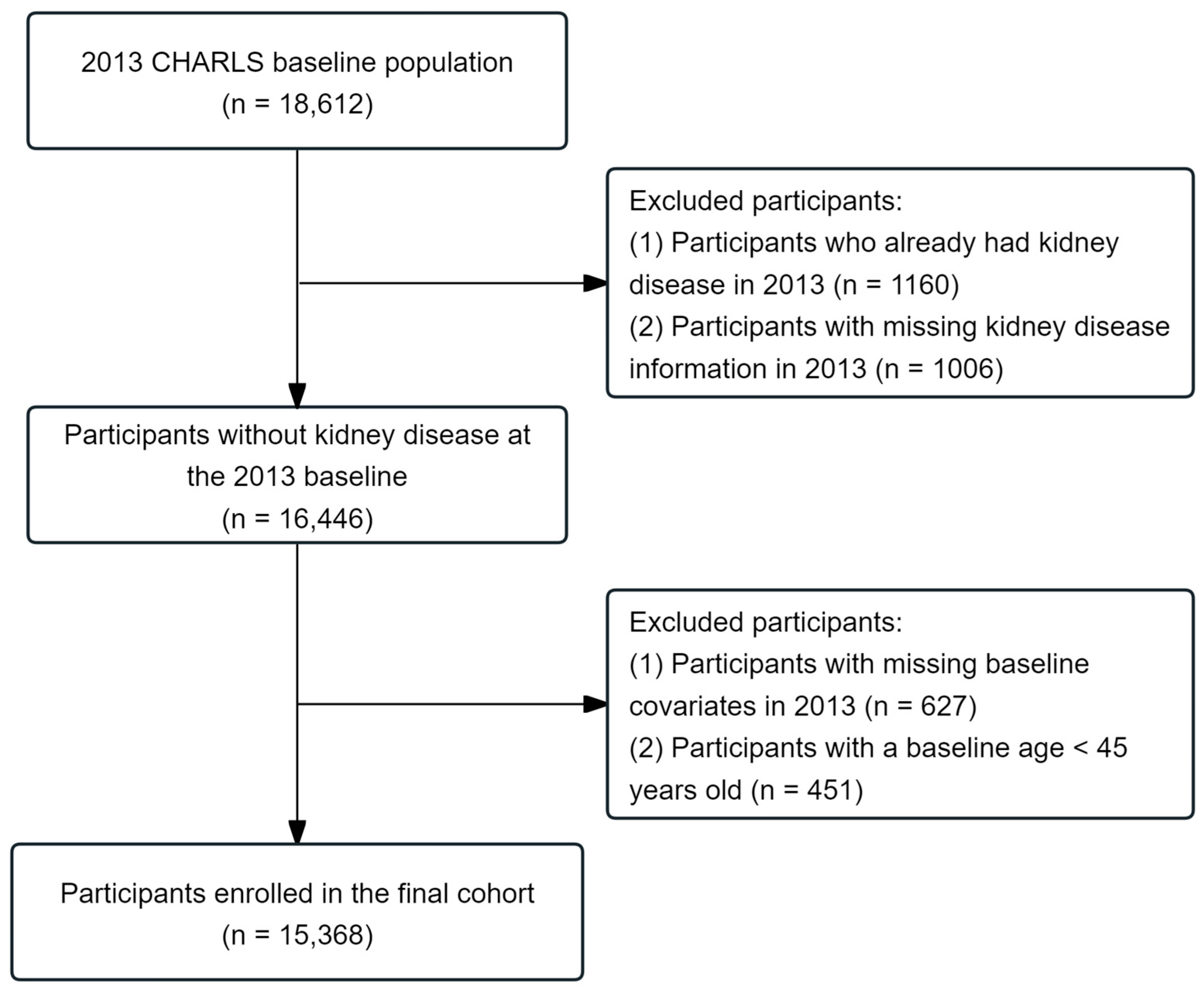
The participants in this study were drawn from an ongoing cohort of the China Health and Retirement Longitudinal Survey (CHARLS), with comprehensive details documented elsewhere [31]. Briefly, the baseline survey of the CHARLS was conducted between 2011 and 2012 to facilitate aging research, targeting individuals over 45 years of age in China. The cohort comprised participants from 28 provinces and 150 counties or districts. Data on demographic characteristics, lifestyles and health outcomes (e.g., KD) were collected through standardized questionnaires during the survey waves of 2013, 2015, 2018 and 2020. Additionally, trained examiners conducted blood tests to assess lipid and fasting glucose levels in 2011 and 2015. This study received approval from the biomedical ethics committee of Peking University (IRB00001052-11015 and IRB00001052-11014) in China. Given that policy implications emerged in 2013 and PM2.5 concentrations subsequently decreased in China, the study period spanned from 2013 to 2020 to investigate the relationship between PM2.5 exposure and KD incidence following the improvements in air quality. The participants included in 2013 were those without a history of KD and aged over 45 years. The participants who lacked information on KD (n = 1006), relevant covariates (n = 627) or were under the age of 45 (n = 451) were excluded from the study. Consequently, a total of 15,368 participants were included, as illustrated in Figure 1.

2.2. Assessments of Ambient PM2.5 Concentrations

The annual average PM2.5 concentrations were derived from the China High Air Pollutants Dataset (CHAP) between 2011 and 2020, with a spatial resolution of 1 km × 1 km. This dataset is widely utilized in research regarding air pollution and human health [32,33]. The CHAP dataset employs artificial intelligence to address missing data from MODIS MAIAC AOD products, integrating ground-based observations, atmospheric reanalysis and emission inventories to estimate ground-level PM2.5 concentrations, which provides comprehensive data on various air pollutants [34,35]. Due to the unavailability of detailed participant addresses from the CHARLS study, we estimated annual PM2.5 concentrations at the city level using ArcGIS 10.8. Finally, 3-year and 2-year average PM2.5 concentrations were both calculated before and based on the year of follow-up.

2.3. Outcomes

The incidence of KD was determined through self-reported physician-diagnosed outcomes as captured by questionnaires administered during subsequent visits. The participants were asked, “Have you been diagnosed with KD (except for tumor or cancer) by a doctor?” A response of “Yes” indicated an incidence of KD, while “No” indicated the participants without KD. Follow-up for each participant continued until KD incidence, loss to follow-up or the end of the study, whichever occurred first.

2.4. Covariates

In accordance with previous studies [20,36], covariates were selected a priori from the CHARLS database. These covariates included demographic characteristics and lifestyle factors, which were adjusted as potential confounders. The demographic characteristics encompassed age (<60, ≥60 years), gender (male, female), education level (primary school and below, junior high school, senior high school, college and above), marital status (never married, divorced, married) and residence (rural, urban). Lifestyle factors included alcohol consumption (never, former, current) and smoking status (never, former, current).

2.5. Statistical Analysis

Cox proportional hazards models were utilized to evaluate the association between 3-year and 2-year average PM2.5 concentrations and KD incidence during the period from 2013 to 2020. Additionally, PM2.5 concentrations were stratified into quartiles, with the fourth quartile (the highest) serving as the reference group for comparative analyses of the effects of reductions in PM2.5 concentrations, and trend tests were further performed. All covariates adjusted for in the models were obtained at the baseline of the study in 2013. Two models were employed: Model 1 adjusted for age and gender, while Model 2 included additional adjustments for marital status, education, smoking, alcohol consumption and residence based on Model 1. Restricted cubic splines (RCS) were used to investigate the exposure–response relationship between PM2.5 concentrations and KD incidence. Hazard ratios (HR) and 95% confidence intervals (CI) were calculated to assess the impact of a 5 µg/m3 decrease in PM2.5 on KD incidence. This decrement unit was selected to facilitate comparison with previous longitudinal studies [20] and represents a realistic target for air quality improvement policies.
Subgroup analyses were conducted to explore potential effect modification, as identified in previous studies [37]. Subgroups were classified as follows: (<60 or ≥60 years), gender (male or female), education (primary school and below, junior high school, senior high school or college and above), marital status (never married, divorced or married), alcohol drinking status (never, former or current drinker), smoking status (never, former or current smoker) and residential area (rural or urban). Interaction analyses were also conducted concerning the aforementioned covariates.
Additionally, several sensitivity analyses were performed. Initially, covariates based on participants’ self-reported doctor-diagnosed cardiovascular disease, diabetes or hypertension at baseline were incorporated as potential confounders. In addition, participants with cardiovascular disease, diabetes or hypertension at baseline were excluded to mitigate the potential impact of these conditions. Furthermore, mean PM2.5 concentrations for the follow-up year were utilized in place of the 3-year and 2-year average PM2.5 concentration assessments.
Given the established links between long-term PM2.5 exposure and dyslipidemia [26,27] and between dyslipidemia and KD risk [28,29,30], we hypothesized that lipid profiles mediated the association between long-term PM2.5 and KD development. The lipid profiles examined included total cholesterol (TC), triglycerides (TG), high-density lipoprotein cholesterol (HDL-C), low-density lipoprotein cholesterol (LDL-C) and fasting plasma glucose (FPG). Due to the unavailability of blood samples at the baseline in 2013, lipids data were obtained from the 2015 follow-up wave. Participants with missing values were further excluded. To evaluate insulin sensitivity, a critical risk factor for several metabolic diseases (e.g., cardiovascular diseases, diabetes and obesity) [38], we calculated these indicators as follows: Triglyceride-glucose index TyG = Ln (TG [mg/dL] × FPG [mg/dL]/2), TyG-Body mass index BMI = TyG × [body mass (kg)/height2 (m2)], TyG-waist-to-height ratio WHtR = TyG × (waist circumference/height) and atherogenic index of plasma (AIP) = log (TG/HDL-C). These lipids indicators were employed as mediators in the mediation analysis within the fully adjusted model (Model 2). Indirect, direct and proportion mediation were calculated in the study.
All statistical analyses were executed using R software (version 4.3.0) and the statistics platform available at https://www.medsta.cn/software (accessed on 22 January 2026). A two-tailed p-value of less than 0.05 was considered indicative of statistical significance.

3. Results

3.1. Descriptive Statistics

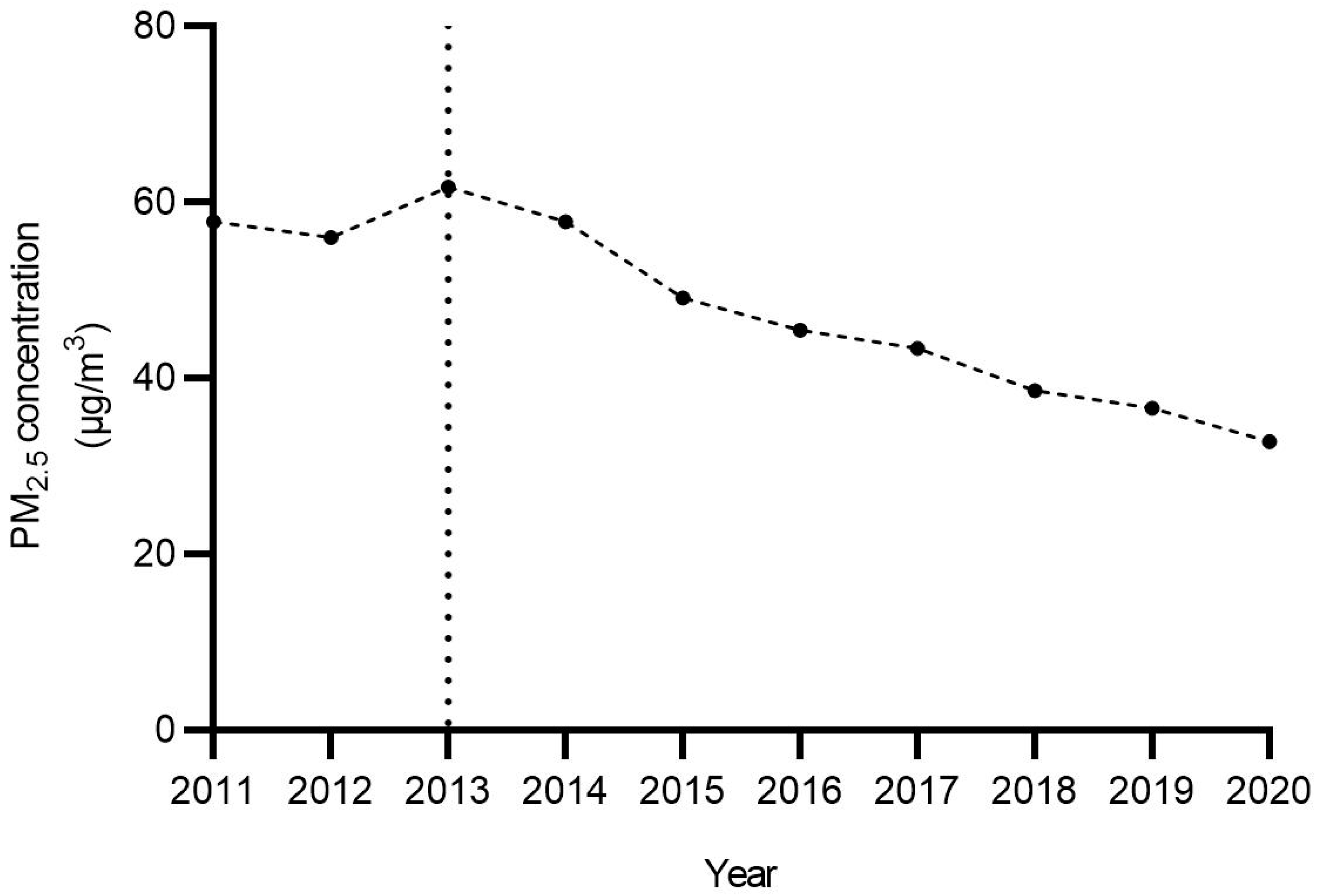
This cohort study encompassed 15,368 participants who had no history of KD at baseline in 2013. Of these participants, 52.80% were under the age of 60, and 53.06% were female, as detailed in Table 1. Furthermore, 66.26% of the participants had completed primary education or less, and 87.15% were married. Among the participants, 55.73% reported never having consumed alcohol, 59.10% had never smoked and 60.88% resided in urban areas. During the follow-up period, 1493 participants were diagnosed with KD. The annual average PM2.5 concentration for the participants in the CHARLS database from 2011 to 2020 was calculated, which peaked in 2013, followed by a consistent decline in subsequent years (Figure 2). The 3-year and 2-year average PM2.5 concentrations were 39.85 μg/m3 and 38.46 μg/m3, respectively (Table 1).

3.2. Association Between PM2.5 Level and KD Incidence

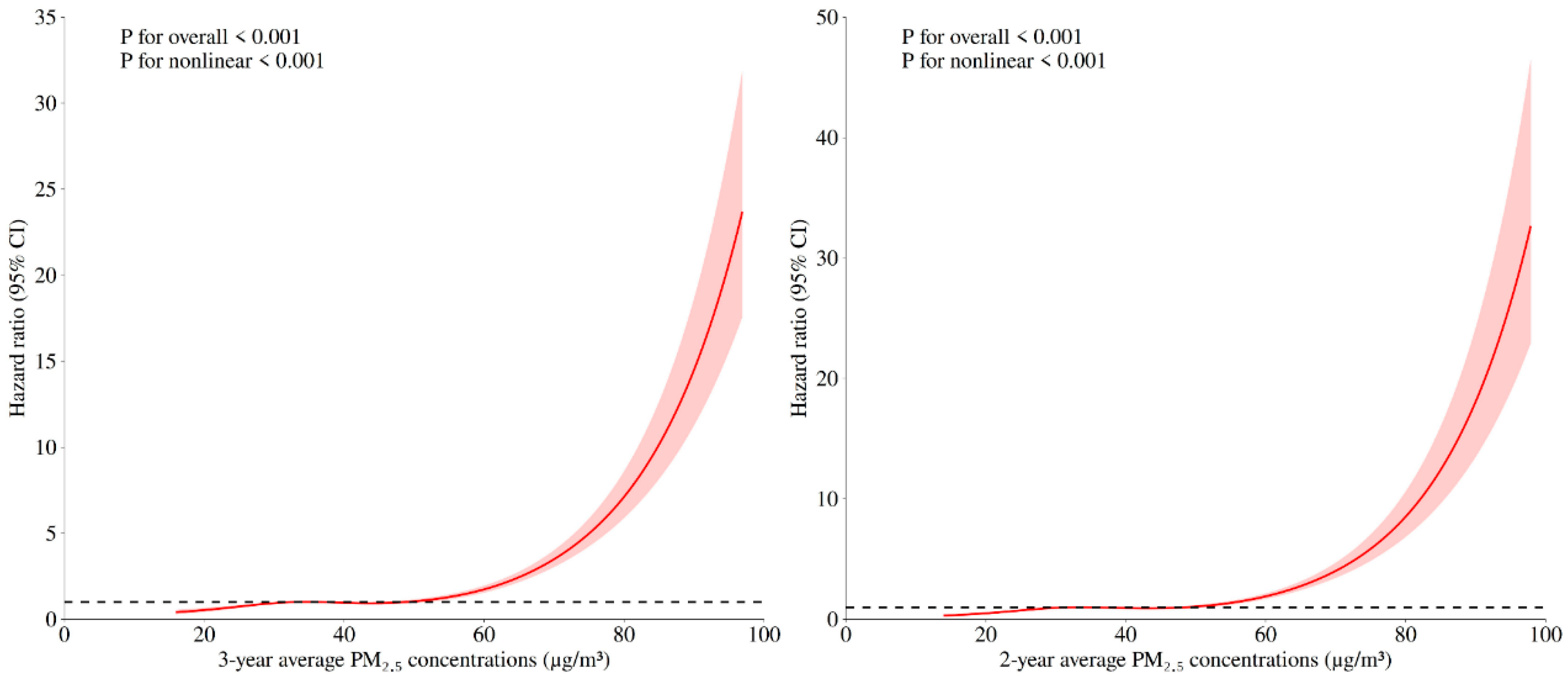
Table 2 and Figure 3 show the link between PM2.5 exposure and KD incidence. A reduction of 5 μg/m3 in 3-year and 2-year average PM2.5 concentrations was associated with 14.3% (HR: 0.857, 95% CI: 0.841, 0.873) and 14.4% (HR: 0.856, 95% CI: 0.840, 0.873) reductions in KD incidence in the fully adjusted models (Model 2), respectively, as shown in Table 2. Additionally, Table 2 demonstrates that compared to the reference group (Quartile 4), participants in the lower quartiles of the 3-year average PM2.5 exhibited significantly reduced risks of KD. Specifically, in the fully adjusted model (Model 2), the HRs were 0.434 (95% CI: 0.372, 0.506) for Quartile 1, 0.610 (95% CI: 0.530, 0.702) for Quartile 2 and 0.868 (95% CI: 0.760, 0.991) for Quartile 3, with a notable trend (p-trend < 0.001). The results were similar when using the 2-year PM2.5 levels, except that the association for Quartile 3 was not statistically significant in either Model 1 (p = 0.528) or Model 2 (p = 0.530). Furthermore, Figure 3 presents a significant non-linear positive association between PM2.5 exposure and KD incidence (p for non-linearity < 0.001).

3.3. Sensitivity Analyses

After adjusting for covariates including cardiovascular disease, diabetes and hypertension, or excluding participants with self-reported doctor-diagnosed cardiovascular disease, diabetes, hypertension, or all these three at baseline, the association between PM2.5 exposure and KD incidence remained statistically significant and slightly intensified (Tables S1 and S2). Furthermore, when the average PM2.5 concentrations for the follow-up year were substituted for the primary assessments, the results remained consistent, except that the association for Quartile 3 was not statistically significant in either Model 1 (p = 0.074) or Model 2 (p = 0.077) (Table S3).

3.4. Subgroup Analyses

In Table 3, the results among the subgroup analyses were all statistically significant across various variables, including age, gender, education level, marital status, alcohol consumption, smoking status and place of residence, except the subgroups of never married. The analyses revealed no significant interactions among these variables (Table 3).

3.5. Mediation Analyses

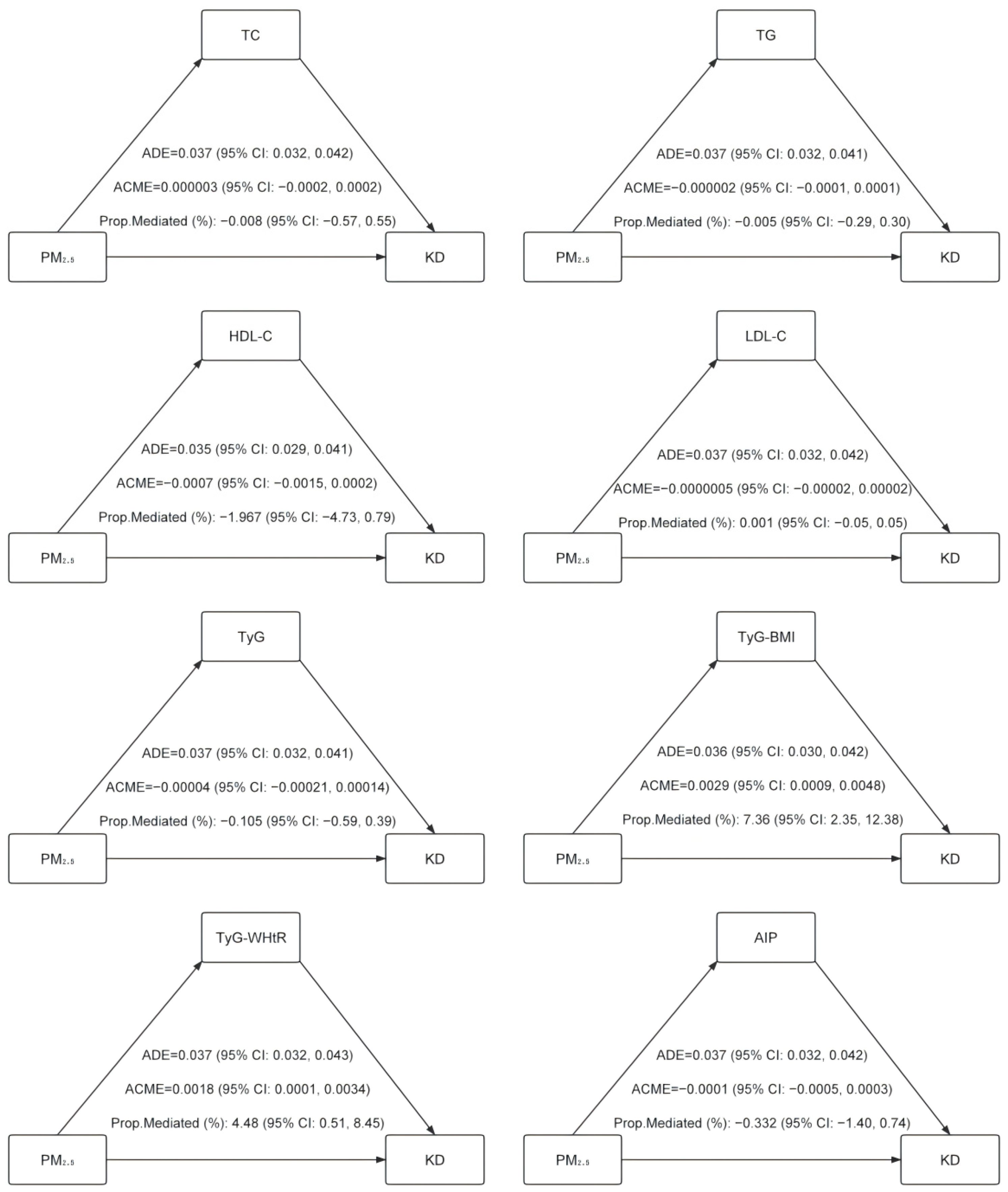
In the fully adjusted model, TyG-BMI and TyG-WHtR exhibited a small mediating effect (7.36%, 95% CI: 2.35%, 12.38% and 4.48%, 95% CI: 0.51%, 8.45%, respectively) on the PM2.5–KD relationship (Figure 4). Other indicators (TC, TG, HDL-C, LDL-C, TyG and AIP) did not demonstrate significant mediation.

4. Discussion

In this national prospective cohort study conducted in China, a reduced risk of KD incidence was associated with a decline in ambient PM2.5 concentrations from 2013 to 2020. It is well known that a series of clean air policies have been implemented in China since 2013, resulting in significant improvements in ambient air quality. To the best of our knowledge, there are few national prospective cohort epidemiological studies that assess the association between decreased PM2.5 concentrations and KD incidence following the implementation of clean air policies in the developing countries, along with the exploration of lipid profiles in this relationship.
Evidence regarding the impact of decreased ambient PM2.5 concentration on KD incidence in real-world settings of post-policy implementation remains limited in the developing countries that face severe air pollution challenges. Our findings aligned with longitudinal evidence from Taiwan, China, showing decreased CKD incidence was associated with reduced PM2.5 [20], and a nationwide quasi-experiment in mainland China establishing the link between policy-driven PM2.5 reduction and improved kidney function [21]. While Han et al. [21] provided landmark evidence for the period of 2011–2015, their analysis could not capture the more significant and sustained PM2.5 reductions achieved between 2015 and 2020. Although several studies globally have suggested an increased risk of CKD development associated with elevated PM2.5 levels in various countries, including the United States and China [5,6,7,8,9,16], our national prospective study filled the research gap by evaluating the association between real-world declines in PM2.5 and KD incidence reduction following the implementation of air quality improvement policies, as well as the mediation of lipids. For instance, within mainland China, some studies have examined the association between elevated PM2.5 and CKD incidence; these have typically focused on single regions, such as the city of Tianjin [9], Hunan Province [8] and the region of Taiwan [39]. Additionally, a recent meta-analysis involving 3.02 million adults also showed robust negative associations between PM2.5 and renal indicators identified [40]. Moreover, national studies in China have predominantly employed cross-sectional designs to investigate the impact of PM2.5 on CKD prevalence [23,24] or renal function [25]. Furthermore, our study was consistent with previous research on the other global health benefits of air quality improvement, specifically concerning outcomes such as life expectancy [41,42,43], mortality [44], hypertension [45], blood lipids [46], lung function [47,48], cognitive function [49] and depressive symptoms [50]. Consequently, evidence regarding the effect of decreasing PM2.5 concentration on KD incidence in China during the recent periods of air quality improvement remains limited. Further research is necessary to support the implementation of clean air policies aimed at reducing KD risk.
Our findings indicate that TyG-BMI and TyG-WHtR may play mediating roles in the relationship between PM2.5 exposure and KD incidence, while other lipid indicators (TC, TG, HDL-C, LDL-C, TyG and AIP) may not. Although a limited number of studies have identified certain lipid parameters or diabetes as mediators for related outcomes, there is a lack of direct evidence supporting the mediation role of lipids in the association between PM2.5 and KD. For instance, a prospective study on particulate matter pollutants and hyperuricemia reported that lipids (TC, LDL-C, HDL-C) mediated this relationship by 2% to 10%, while no significant mediation was observed for TG [51]. Another study found that diabetes mediated 4.8% (95% CI: 4.2, 5.8%) of the relationship between PM2.5 and CKD incidence in the United States [6]. The evidence supporting lipids as mediators is notably limited, and the toxicological mechanisms by which PM2.5 exposure induces renal damage are highly complex. The inconsistent mediation findings suggest that composite indices (TyG-BMI and TyG-WHtR), which holistically reflect metabolic health through insulin sensitivity and adiposity, were more relevant mediators of PM2.5-induced kidney damage than a traditional single lipid measure. Consequently, PM2.5 exposure appears more likely to cause kidney damage through pathways such as inflammation, oxidative stress and endothelial dysfunction [52,53]. The mediating effects of traditional single lipid indicators might be relatively mild and could not be assessed. Additionally, the selected simple lipid indicators may not adequately capture the lipid toxicity of PM2.5-induced renal damage. Further research is necessary to explore the potential mediating effects of more sensitive and composite lipid indicators across different populations and countries in the relationship between PM2.5 exposure and KD. Overall, although the relatively small mediating effects suggest that PM2.5 primarily exerted nephrotoxicity through direct mechanisms, the identification of metabolic-adiposity dysfunction highlighted a modifiable target. Thus, interventions improving metabolic-adiposity health might serve as a vital complementary strategy to environmental regulation for mitigating air pollution-related renal risks.
China has experienced significant improvements in ambient air quality after a series of clean air policies since 2013, marking a notable period of progress. The peak in PM2.5 concentrations for the participants from the CHARLS was also observed in 2013, followed by a consistent year-on-year decline (Figure 2). These findings are aligned with research on PM2.5 trends and its components in Chinese cities [12], which reported reductions in PM2.5 concentrations and its constituents in six Chinese cities following the implementation of the APPCA (2013–2017), compared to the period from 2009 to 2013. Consequently, several studies have been conducted to assess the impact of air quality improvement after clean air policies implemented in mainland China since 2013. These studies examined a range of outcomes, including life expectancy [41], mortality [44], blood lipids [46], cognitive function [49] and depressive symptoms [50]. For example, research on long-term PM2.5 exposure and life expectancy during the APPCAP implementation period from 2013 to 2017 in China indicated that a reduction of 10 μg/m3 in PM2.5 levels was associated with a 0.18 (95% CI: 0.06, 0.30) year increase in life expectancy [41]. However, there is limited evidence regarding the relationship between PM2.5 reduction since 2013 and the development of KD in China. It is crucial to establish robust evidence on whether the decline in PM2.5 concentrations reduces KD risk, as this information could inform future policy decisions aimed at further mitigating air pollution to protect public health.
This study has certain limitations. In the prospective cohort study, the assessment of PM2.5 concentration was conducted at the city level due to the absence of detailed information regarding participants’ addresses in the CHARLS dataset. This may mask intra-urban variations and introduce exposure misclassification. Nevertheless, this assessment approach aligned with previous studies regarding the health effects of air pollutants utilizing CHARLS data [54,55]. Such exposure misclassification is likely to underestimate the true association between exposure and health [54,55]. Future studies should aim at providing more precise PM2.5 exposure assessments. Additionally, due to the missing values and the refusal of blood donation for lipid indicators in the CHARLS database, some participants were further excluded. Furthermore, this study did not include other major air pollutants (e.g., NO2, O3), which may result in residual confounding. Consequently, the observed associations might partially reflect the collective health impact of the co-pollutants rather than the independent effect of PM2.5. Moreover, no statistically significant interactions were observed in the subgroup analyses. However, this should be interpreted with caution, as interaction tests generally require much larger sample sizes than main effect tests to achieve equivalent power [56]. The lack of significance in smaller subgroups may be attributable to insufficient statistical power rather than the absence of biological interaction, and thus these results should be considered exploratory. Lastly, the incidence of KD was determined through self-reported diagnosis from physicians, primarily due to the inconsistent availability of clinical biomarkers (e.g., blood samples) across all survey waves. While this method may introduce recall bias and underestimate the true incidence rate, such misclassification likely leads to an underestimation of the associations [57], suggesting that our findings are conservative estimates. The use of a single lipid measurement in 2015 may create a temporal mismatch in the mediation analysis. Although we assumed the spatial stability of pollution allowed the exposure to serve as a valid long-term proxy [15,58], this limitation introduced measurement error, which likely led to an underestimation of the mediation effect. Future research should incorporate longitudinal clinical measurements of KD to capture more accurate KD events (e.g., CKD, AKI) and determine incidence timing more precisely.

5. Conclusions

Based on this national prospective cohort study, we observed a significant association between decreased PM2.5 concentrations and a reduced risk of KD incidence following the implementation of China’s series of clean air policies since 2013. Specifically, a 5 µg/m3 decrease in PM2.5 was linked to an approximately 14% lower risk of developing KD. The continuation of these clean air policies should be prioritized as a pivotal public health strategy. Furthermore, TyG-BMI and TyG-WHtR may play mediating roles in the relationship between PM2.5 exposure and KD incidence, suggesting that metabolic-adiposity dysfunction may serve as a potential mechanistic pathway linking air pollution to renal damage. However, these findings should be interpreted in light of certain limitations, including the reliance on self-reported physician diagnoses and city level exposure assessments, which may introduce misclassification bias. Despite these constraints, the results underscore the public health benefits of air pollution control. Future research utilizing individual-level exposure monitoring and clinical diagnosis of KD is warranted to validate these findings, elucidate the underlying biological mechanisms and refine preventive strategies for vulnerable populations.

Supplementary Materials

The following supporting information can be downloaded at: https://www.mdpi.com/article/10.3390/atmos17020126/s1, Table S1. Association between PM2.5 concentration and KD incidence further adjusted for cardiovascular disease, diabetes and hypertension; Table S2. Association between PM2.5 concentration and KD incidence when excluding participants with cardiovascular disease, diabetes and hypertension; Table S3. Association between 1-year average PM2.5 concentration and KD incidence.

Author Contributions

Conceptualization, Y.W., L.Z. and R.C.; methodology, Y.W., Z.L., L.Z. and R.C.; formal analysis, Z.L. and F.C.; investigation, Y.W., R.C. and Q.W.; data curation, J.G., J.L. and J.X.; writing—original draft preparation, Y.W., Z.L., F.C. and L.Z.; writing—review and editing, L.Z., R.C., C.L. and Q.S.; project administration, C.L. and Q.S.; funding acquisition, Q.S. and L.Z. All authors have read and agreed to the published version of the manuscript.

Funding

This research was supported by the National Natural Science Foundation of China (82404218), the Zhejiang Provincial Natural Science Foundation of China under Grant No. LQ24H260002 and the Research Project of Zhejiang Chinese Medical University (No.2022RCZXZK06).

Institutional Review Board Statement

The study was conducted in accordance with the Declaration of Helsinki, and approved by the Institutional Review Board at Peking University via IRB00001052-11015 and IRB00001052-11014 in January 2011.

Informed Consent Statement

Informed consent was obtained from all subjects involved in the study.

Data Availability Statement

Data will be made available on request.

Conflicts of Interest

The authors declare no conflicts of interest.

Abbreviations

PM2.5fine particulate matter
KDkidney disease
HRhazard ratio
CIconfidence interval
CKDchronic kidney disease
AKIacute kidney injury
RRTrenal replacement therapy
CHAPChina High Air Pollutants Dataset
RCSrestricted cubic splines
TCtotal cholesterol
TGtriglyceride
HDL-Chigh-density lipoprotein cholesterol
LDL-Clow-density lipoprotein cholesterol
FPGfasting plasma glucose
BMIbody mass index
TyGtriglyceride-glucose index
WHtRwaist-to-height ratio
AIPatherogenic index of plasma
ACMEaverage causal mediation effects (indirect effect)
ADEaverage direct effects
Prop. Mediatedmediation proportion

References

  1. Jager, K.J.; Kovesdy, C.; Langham, R.; Rosenberg, M.; Jha, V.; Zoccali, C. A single number for advocacy and communication—Worldwide more than 850 million individuals have kidney diseases. Nephrol. Dial. Transplant. 2019, 34, 1803–1805. [Google Scholar] [CrossRef] [PubMed]
  2. Francis, A.; Harhay, M.N.; Ong, A.C.M.; Tummalapalli, S.L.; Ortiz, A.; Fogo, A.B.; Fliser, D.; Roy-Chaudhury, P.; Fontana, M.; Nangaku, M.; et al. Chronic kidney disease and the global public health agenda: An international consensus. Nat. Rev. Nephrol. 2024, 20, 473–485. [Google Scholar] [CrossRef]
  3. Bikbov, B.; Purcell, C.A.; Levey, A.S.; Smith, M.; Abdoli, A.; Abebe, M.; Adebayo, O.M.; Afarideh, M.; Agarwal, S.K.; Agudelo-Botero, M.; et al. Global, regional, and national burden of chronic kidney disease, 1990–2017: A systematic analysis for the Global Burden of Disease Study 2017. Lancet 2020, 395, 709–733. [Google Scholar] [CrossRef]
  4. Wang, L.; Xu, X.; Zhang, M.; Hu, C.; Zhang, X.; Li, C.; Nie, S.; Huang, Z.; Zhao, Z.; Hou, F.F.; et al. Prevalence of chronic kidney disease in China: Results from the Sixth China Chronic Disease and Risk Factor Surveillance. JAMA Intern. Med. 2023, 183, 298–310. [Google Scholar] [CrossRef]
  5. Bowe, B.; Xie, Y.; Li, T.; Yan, Y.; Xian, H.; Al-Aly, Z. Particulate matter air pollution and the risk of incident CKD and progression to ESRD. J. Am. Soc. Nephrol. 2018, 29, 218–230. [Google Scholar] [CrossRef]
  6. Bowe, B.; Xie, Y.; Yan, Y.; Xian, H.; Al-Aly, Z. Diabetes minimally mediated the association between PM2.5 air pollution and kidney outcomes. Sci. Rep. 2020, 10, 4586. [Google Scholar] [CrossRef] [PubMed]
  7. Chan, T.C.; Zhang, Z.; Lin, B.C.; Lin, C.; Deng, H.B.; Chuang, Y.C.; Chan, J.W.M.; Jiang, W.K.; Tam, T.; Chang, L.Y.; et al. Long-term exposure to ambient fine particulate matter and chronic kidney disease: A cohort study. Environ. Health Perspect. 2018, 126, 107002. [Google Scholar] [CrossRef]
  8. Duan, J.W.; Li, Y.L.; Li, S.X.; Yang, Y.P.; Li, F.; Li, Y.; Wang, J.; Deng, P.Z.; Wu, J.J.; Wang, W.; et al. Association of long-term ambient fine particulate matter (PM2.5) and incident CKD: A prospective cohort study in China. Am. J. Kidney Dis. 2022, 80, 638–647.e631. [Google Scholar] [CrossRef]
  9. Liu, H.; Shao, X.; Jiang, X.; Liu, X.; Bai, P.; Lin, Y.; Chen, J.; Hou, F.; Cui, Z.; Zhang, Y.; et al. Joint exposure to outdoor ambient air pollutants and incident chronic kidney disease: A prospective cohort study with 90,032 older adults. Front. Public Health 2022, 10, 992353. [Google Scholar] [CrossRef]
  10. Bowe, B.; Artimovich, E.; Xie, Y.; Yan, Y.; Cai, M.; Al-Aly, Z. The global and national burden of chronic kidney disease attributable to ambient fine particulate matter air pollution: A modelling study. BMJ Glob. Health 2020, 5, e002063. [Google Scholar] [CrossRef]
  11. Chen, C.; Fang, J.L.; Shi, W.Y.; Li, T.; Shi, X. Clean air actions and health plans in China. Chin. Med. J. 2020, 133, 1609–1611. [Google Scholar] [CrossRef] [PubMed]
  12. Wang, Q.; Fang, J.; Shi, W.; Dong, X. Distribution characteristics and policy-related improvements of PM2.5 and its components in six Chinese cities. Environ. Pollut. 2020, 266, 115299. [Google Scholar] [CrossRef]
  13. Ding, D.; Xing, J.; Wang, S.; Liu, K.; Hao, J. Estimated contributions of emissions controls, meteorological factors, population growth, and changes in baseline mortality to reductions in ambient PM2.5 and PM2.5-related mortality in China, 2013–2017. Environ. Health Perspect. 2019, 127, 067009. [Google Scholar] [CrossRef]
  14. Liang, F.; Xiao, Q.; Huang, K.; Yang, X.; Liu, F.; Li, J.; Lu, X.; Liu, Y.; Gu, D. The 17-y spatiotemporal trend of PM2.5 and its mortality burden in China. Proc. Natl. Acad. Sci. USA 2020, 117, 25601–25608. [Google Scholar] [CrossRef]
  15. Liu, S.; Geng, G.; Xiao, Q.; Zheng, Y.; Liu, X.; Cheng, J.; Zhang, Q. Tracking daily concentrations of PM2.5 chemical composition in China since 2000. Environ. Sci. Technol. 2022, 56, 16517–16527. [Google Scholar] [CrossRef]
  16. Blum, M.F.; Surapaneni, A.; Stewart, J.D.; Liao, D.; Yanosky, J.D.; Whitsel, E.A.; Power, M.C.; Grams, M.E. Particulate matter and albuminuria, glomerular filtration rate, and incident CKD. Clin. J. Am. Soc. Nephrol. 2020, 15, 311–319. [Google Scholar] [CrossRef] [PubMed]
  17. Paoin, K.; Ueda, K.; Vathesatogkit, P.; Ingviya, T.; Buya, S.; Dejchanchaiwong, R.; Phosri, A.; Seposo, X.T.; Kitiyakara, C.; Thongmung, N.; et al. Long-term air pollution exposure and decreased kidney function: A longitudinal cohort study in Bangkok Metropolitan Region, Thailand from 2002 to 2012. Chemosphere 2022, 287, 132117. [Google Scholar] [CrossRef]
  18. Jung, J.; Park, J.Y.; Kim, Y.C.; Lee, H.; Kim, E.; Kim, Y.S.; Lee, J.P.; Kim, H. Effects of air pollution on mortality of patients with chronic kidney disease: A large observational cohort study. Sci. Total Environ. 2021, 786, 147471. [Google Scholar] [CrossRef]
  19. Kim, Y.C.; Kim, E.; Jung, J.; Park, J.Y.; Lee, H.; Kim, D.K.; Kim, Y.S.; Lim, C.S.; Lee, J.P.; Kim, H. Clinical outcomes associated with long-term exposure to airborne particulate pollution in kidney transplant recipients. Environ. Health. 2021, 20, 61. [Google Scholar] [CrossRef] [PubMed]
  20. Bo, Y.; Brook, J.R.; Lin, C.; Chang, L.Y.; Guo, C.; Zeng, Y.; Yu, Z.; Tam, T.; Lau, A.K.H.; Lao, X.Q. Reduced ambient PM2.5 was associated with a decreased risk of chronic kidney disease: A longitudinal cohort study. Environ. Sci. Technol. 2021, 55, 6876–6883. [Google Scholar] [CrossRef]
  21. Han, Y.; Xue, T.; Kelly, F.J.; Zheng, Y.; Yao, Y.; Li, J.; Li, J.; Fan, C.; Li, P.; Zhu, T. Association of PM2.5 reduction with improved kidney function: A nationwide quasiexperiment among Chinese adults. Health Data Sci. 2022, 2022, 9846805. [Google Scholar] [CrossRef] [PubMed]
  22. Zeng, Y.; Lin, C.; Guo, C.; Bo, Y.; Chang, L.Y.; Lau, A.K.H.; Tam, T.; Yu, Z.; Lao, X.Q. Combined effects of chronic PM2.5 exposure and habitual exercise on renal function and chronic kidney disease: A longitudinal cohort study. Int. J. Hyg. Environ. Health 2021, 236, 113791. [Google Scholar] [CrossRef]
  23. Li, G.; Huang, J.; Wang, J.; Zhao, M.; Liu, Y.; Guo, X.; Wu, S.; Zhang, L. Long-term exposure to ambient PM2.5 and increased risk of CKD prevalence in China. J. Am. Soc. Nephrol. 2021, 32, 448–458. [Google Scholar] [CrossRef]
  24. Huang, J.; Li, G.; Wang, J.; Wu, S.; Guo, X.; Zhang, L. Associations between long-term ambient PM2.5 exposure and prevalence of chronic kidney disease in China: A national cross-sectional study. Lancet 2019, 394, S93. [Google Scholar] [CrossRef]
  25. Li, Q.; Wang, Y.Y.; Guo, Y.; Zhou, H.; Wang, Q.M.; Shen, H.-P.; Zhang, Y.P.; Yan, D.H.; Li, S.; Chen, G.; et al. Association between airborne particulate matter and renal function: An analysis of 2.5 million young adults. Environ. Int. 2021, 147, 106348. [Google Scholar] [CrossRef] [PubMed]
  26. McGuinn, L.A.; Coull, B.A.; Kloog, I.; Just, A.C.; Tamayo-Ortiz, M.; Osorio-Yanez, C.; Baccarelli, A.A.; Wright, R.J.; Tellez-Rojo, M.M.; Wright, R.O. Fine particulate matter exposure and lipid levels among children in Mexico city. Environ. Epidemiol. 2020, 4, e088. [Google Scholar] [CrossRef]
  27. Wang, K.; Zhao, Y.; Wang, Q.; Zhang, Y.; Zhang, Y. Association of PM2.5 with blood lipids and dyslipidaemia in a rural population of north-western China. Front. Environ. Sci. 2022, 10, 955279. [Google Scholar] [CrossRef]
  28. Liang, X.; Ye, M.; Tao, M.; Zheng, D.; Cai, R.; Zhu, Y.; Jin, J.; He, Q. The association between dyslipidemia and the incidence of chronic kidney disease in the general Zhejiang population: A retrospective study. BMC Nephrol. 2020, 21, 252. [Google Scholar] [CrossRef] [PubMed]
  29. Lin, J.; Li, Z.; Xu, J.; Pan, M.; Yin, T.; Wang, J.; Sun, Q.; Zheng, W.; Chen, R. Independent and joint associations of monocyte to high-density lipoprotein-cholesterol ratio and body mass index with cardiorenal syndrome: Insights from NHANES 2003–2020. Lipids Health Dis. 2024, 23, 153. [Google Scholar] [CrossRef]
  30. Vaziri, N.D. HDL abnormalities in nephrotic syndrome and chronic kidney disease. Nat. Rev. Nephrol 2016, 12, 37–47. [Google Scholar] [CrossRef]
  31. Zhao, Y.; Hu, Y.; Smith, J.P.; Strauss, J.; Yang, G. Cohort profile: The China Health and Retirement Longitudinal Study (CHARLS). Int. J. Epidemiol. 2014, 43, 61–68. [Google Scholar] [CrossRef]
  32. Xu, J.; Yin, T.; Pan, M.; Qin, L.; Zhang, L.; Wang, X.; Zheng, W.; Liu, C.; Chen, R. The mediating effect of TyG-related indicators between long-term exposure to particulate matter and cardiovascular disease: Evidence from a national longitudinal cohort study. Lipids Health Dis. 2024, 23, 319. [Google Scholar] [CrossRef]
  33. Zhang, F.; Li, T.; Chen, B.; Li, N.; Zhang, X.; Zhu, S.; Zhao, G.; Zhang, X.; Ma, T.; Zhou, F.; et al. Air pollution weaken your muscle? Evidence from a cross-sectional study on sarcopenia in central China. Ecotoxicol. Environ. Saf. 2023, 258, 114962. [Google Scholar] [CrossRef]
  34. Wei, J.; Li, Z.; Guo, J.; Sun, L.; Huang, W.; Xue, W.; Fan, T.; Cribb, M. Satellite-derived 1-km-resolution PM1 concentrations from 2014 to 2018 across China. Environ. Sci. Technol. 2019, 53, 13265–13274. [Google Scholar] [CrossRef] [PubMed]
  35. Wei, J.; Li, Z.; Xue, W.; Sun, L.; Fan, T.; Liu, L.; Su, T.; Cribb, M. The ChinaHighPM10 dataset: Generation, validation, and spatiotemporal variations from 2015 to 2019 across China. Environ. Int. 2021, 146, 106290. [Google Scholar] [CrossRef] [PubMed]
  36. Hu, Y.; Liang, Y.; Li, J.; Li, X.; Yu, M.; Cui, W. Correlation between atherogenic index of plasma and cardiovascular disease risk across Cardiovascular–kidney–metabolic syndrome stages 0–3: A nationwide prospective cohort study. Cardiovasc. Diabetol. 2025, 24, 40. [Google Scholar] [CrossRef]
  37. Liang, K.H.; Colombijn, J.M.T.; Verhaar, M.C.; Ghannoum, M.; Timmermans, E.J.; Vernooij, R.W.M. The general external exposome and the development or progression of chronic kidney disease: A systematic review and meta-analyses. Environ. Pollut. 2024, 358, 124509. [Google Scholar] [CrossRef]
  38. Dang, K.; Wang, X.; Hu, J.; Zhang, Y.; Cheng, L.; Qi, X.; Liu, L.; Ming, Z.; Tao, X.; Li, Y. The association between triglyceride-glucose index and its combination with obesity indicators and cardiovascular disease: NHANES 2003–2018. Cardiovasc. Diabetol. 2024, 23, 8. [Google Scholar] [CrossRef]
  39. Lin, S.Y.; Ju, S.W.; Lin, C.L.; Hsu, W.H.; Lin, C.C.; Ting, I.W.; Kao, C.H. Air pollutants and subsequent risk of chronic kidney disease and end-stage renal disease: A population-based cohort study. Environ. Pollut. 2020, 261, 114154. [Google Scholar] [CrossRef] [PubMed]
  40. Li, R.; Wang, K.; Li, M.; Liu, H.; You, Y.; Liu, D.; Guo, X.; Chen, J.; Wu, S. Association between ambient air pollution and renal function indicators: A comprehensive systematic review and meta-analysis. Environ. Res. 2025, 286, 122841. [Google Scholar] [CrossRef]
  41. Wu, Y.; Wang, W.; Liu, C.; Chen, R.; Kan, H. The association between long-term fine particulate air pollution and life expectancy in China, 2013 to 2017. Sci. Total Environ. 2020, 712, 136507. [Google Scholar] [CrossRef]
  42. Pope, C.A.; Ezzati, M.; Dockery, D.W. Fine particulate air pollution and life expectancies in the United States: The role of influential observations. J. Air Waste Manag. Assoc. 2013, 63, 129–132. [Google Scholar] [CrossRef] [PubMed]
  43. Correia, A.W.; Pope, C.A.; Dockery, D.W.; Wang, Y.; Ezzati, M.; Dominici, F. The effect of air pollution control on life expectancy in the United States: An analysis of 545 US counties for the period 2000 to 2007. Epidemiology 2013, 24, 23–31. [Google Scholar] [CrossRef]
  44. Zheng, Y.; Xue, T.; Zhang, Q.; Geng, G.; Tong, D.; Li, X.; He, K. Air quality improvements and health benefits from China’s clean air action since 2013. Environ. Res. Lett. 2017, 12, 114020. [Google Scholar] [CrossRef]
  45. Bo, Y.; Guo, C.; Lin, C.; Chang, L.-y.; Chan, T.-C.; Huang, B.; Lee, K.-P.; Tam, T.; Lau, A.K.H.; Lao, X.Q.; et al. Dynamic changes in long-term exposure to ambient particulate matter and incidence of hypertension in adults. Hypertension 2019, 74, 669–677. [Google Scholar] [CrossRef] [PubMed]
  46. Li, J.; Yao, Y.; Xie, W.; Wang, B.; Guan, T.; Han, Y.; Wang, H.; Zhu, T.; Xue, T. Association of long-term exposure to PM2.5 with blood lipids in the Chinese population: Findings from a longitudinal quasi-experiment. Environ. Int. 2021, 151, 106454. [Google Scholar] [CrossRef]
  47. Gauderman, W.J.; Urman, R.; Avol, E.; Berhane, K.; McConnell, R.; Rappaport, E.; Chang, R.; Lurmann, F.; Gilliland, F. Association of improved air quality with lung development in children. N. Engl. J. Med. 2015, 372, 905–913. [Google Scholar] [CrossRef]
  48. Frye, C.; Hoelscher, B.; Cyrys, J.; Wjst, M.; Wichmann, H.E.; Heinrich, J. Association of lung function with declining ambient air pollution. Environ. Health Perspect. 2003, 111, 383–387. [Google Scholar] [CrossRef]
  49. Yao, Y.; Lv, X.; Qiu, C.; Li, J.; Wu, X.; Zhang, H.; Yue, D.; Liu, K.; Eshak, E.S.; Lorenz, T.; et al. The effect of China’s Clean Air Act on cognitive function in older adults: A population-based, quasi-experimental study. Lancet Healthy Longev. 2022, 3, e98–e108. [Google Scholar] [CrossRef] [PubMed]
  50. Xue, T.; Guan, T.; Zheng, Y.; Geng, G.; Zhang, Q.; Yao, Y.; Zhu, T. Long-term PM2.5 exposure and depressive symptoms in China: A quasi-experimental study. Lancet Reg. Health West Pac. 2021, 6, 100079. [Google Scholar] [CrossRef]
  51. Zeng, C.; Guo, B.; Wan, Y.; Guo, Y.; Chen, G.; Duoji, Z.; Qian, W.; Danzhen, W.; Meng, Q.; Chen, L.; et al. The role of lipid profile in the relationship between particulate matters and hyperuricemia: A prospective population study. Environ. Res. 2022, 214, 113865. [Google Scholar] [CrossRef]
  52. Xu, W.; Wang, S.; Jiang, L.; Sun, X.; Wang, N.; Liu, X.; Yao, X.; Qiu, T.; Zhang, C.; Li, J.; et al. The influence of PM2.5 exposure on kidney diseases. Hum. Exp. Toxicol. 2022, 41, 9603271211069982. [Google Scholar] [CrossRef]
  53. Shubham, S.; Kumar, M.; Sarma, D.K.; Kumawat, M.; Verma, V.; Samartha, R.M.; Tiwari, R.R. Role of air pollution in chronic kidney disease: An update on evidence, mechanisms and mitigation strategies. Int. Arch. Occup. Environ. Health 2021, 95, 897–908. [Google Scholar] [CrossRef] [PubMed]
  54. Chen, Y.; Xu, Z.; Guo, Y.; Li, S.; Wang, Y.A.; Gasevic, D. Air pollution increases the risk of frailty: China Health and Retirement Longitudinal Study (CHARLS). J. Hazard. Mater. 2025, 492, 138105. [Google Scholar] [CrossRef] [PubMed]
  55. Xu, W.; Li, M.; Ma, X.; Lei, K.; Shi, W.; Liu, Z. The effect of air pollution on chronic liver disease and the modifying effect of physical activity: A nationwide study from CHARLS. BMC Public Health 2025, 25, 4378. [Google Scholar] [CrossRef]
  56. Brookes, S.T.; Whitely, E.; Egger, M.; Smith, G.D.; Mulheran, P.A.; Peters, T.J. Subgroup analyses in randomized trials: Risks of subgroup-specific analyses; power and sample size for the interaction test. J. Clin. Epidemiol. 2004, 57, 229–236. [Google Scholar] [CrossRef] [PubMed]
  57. Jurek, A.M.; Greenland, S.; Maldonado, G.; Church, T.R. Proper interpretation of non-differential misclassification effects: Expectations vs observations. Int. J. Epidemiol. 2005, 34, 680–687. [Google Scholar] [CrossRef]
  58. Xu, W.; Sun, J.; Liu, Y.; Xiao, Y.; Tian, Y.; Zhao, B.; Zhang, X. Spatiotemporal variation and socioeconomic drivers of air pollution in China during 2005–2016. J. Environ. Manag. 2019, 245, 66–75. [Google Scholar] [CrossRef]
Figure 1. Flowchart of participant inclusion and exclusion.
Atmosphere 17 00126 g001
Figure 2. Annual average concentrations of PM2.5. Note: The solid dots represent the annual average PM2.5 concentrations.
Atmosphere 17 00126 g002
Figure 3. Restricted cubic splines on the relationships between PM2.5 concentration and KD incidence. Note: The solid line represents the fitted restricted cubic spline curve while the shaded area indicates the 95% CI. The dashed horizontal line indicates HR = 1.0.
Atmosphere 17 00126 g003
Figure 4. Mediation effects of lipid profile in the relationship between PM2.5 concentration and KD incidence. Note: As missing values and refusals for blood donation, there were 9237, 9237, 9237, 9237, 9236, 7087, 7085 and 9237 participants for the mediation of TC, TG, HDL-C, LDL-C, TyG, TyG-BMI, TyG-WHtR and AIP, respectively.
Atmosphere 17 00126 g004
Table 1. Characteristics of study participants from the CHARLS.
CharacteristicsBaseline of Non-CKD
(n = 13,875)
All Participants
(n = 15,368)
Age category, n (%)
 <607382 (53.20)8115 (52.80)
 ≥606493 (46.80)7253 (47.20)
Gender, n (%)
 Male6418 (46.26)7214 (46.94)
 Female7457 (53.74)8154 (53.06)
Education level, n (%)
 Primary school and below9197 (66.28)10,183 (66.26)
 Junior high school2941 (21.20)3244 (21.11)
 Senior high school1463 (10.54)1633 (10.63)
 College and above274 (1.97)308 (2.00)
Marital status, n (%)
 Never113 (0.81)119 (0.77)
 Divorced1721 (12.40)1856 (12.08)
 Married12,041 (86.78)13,393 (87.15)
Alcohol drinking status, n (%)
 Never7795 (56.18)8564 (55.73)
 Former1357 (9.78)1562 (10.16)
 Current4723 (34.04)5242 (34.11)
Smoking status, n (%)
 Never8280 (59.68)9082 (59.10)
 Former2652 (19.11)3004 (19.55)
 Current2943 (21.21)3282 (21.36)
Place of residence, n (%)
 Rural5453 (39.30)6012 (39.12)
 Urban8422 (60.70)9356 (60.88)
TC, mg/dL183.78 ± 36.56183.72 ± 36.37
TG, mg/dL143.57 ± 91.61143.40 ± 91.53
HDL-C, mg/dL51.17 ± 11.6351.16 ± 11.58
LDL-C, mg/dL102.08 ± 28.95102.09 ± 28.86
TyG8.72 ± 0.658.72 ± 0.65
TyG-BMI209.27 ± 36.35209.67 ± 36.58
TyG-WHtR4.82 ± 0.714.83 ± 0.71
AIP0.39 ± 0.280.39 ± 0.28
3-year average PM2.5, μg/m339.52 ± 14.6339.85 ± 14.81
2-year average PM2.5, μg/m338.17 ± 14.4438.46 ± 14.53
Notes: TC: total cholesterol; TG: triglycerides; HDL-C: high-density lipoprotein cholesterol; LDL-C: low-density lipoprotein cholesterol; TyG: triglyceride-glucose index; TyG-BMI: triglyceride-glucose body mass index; TyG-WHtR: triglyceride-glucose waist-to-height ratio; AIP: atherogenic index of plasma; PM2.5: fine particulate matter.
Table 2. Association between PM2.5 concentration and KD incidence.
3-Year Average PM2.52-Year Average PM2.5
ModelModel 1Model 2Model 1Model 2
HR (95% CI)p-ValueHR (95% CI)p-ValueHR (95% CI)p-ValueHR (95% CI)p-Value
Per 5 µg/m3 decrease0.858
(0.842, 0.874)
<0.0010.857
(0.841, 0.873)
<0.0010.857
(0.841, 0.874)
<0.0010.856
(0.840, 0.873)
<0.001
Quartile 10.435
(0.373, 0.507)
<0.0010.434
(0.372, 0.506)
<0.0010.459
(0.393, 0.535)
<0.0010.457
(0.391, 0.533)
<0.001
Quartile 20.614
(0.534, 0.707)
<0.0010.610
(0.530, 0.702)
<0.0010.630
(0.547, 0.726)
<0.0010.625
(0.542, 0.721)
<0.001
Quartile 30.866
(0.759, 0.989)
0.0330.868
(0.760, 0.991)
0.0360.958
(0.839, 1.094)
0.5280.958
(0.839, 1.094)
0.530
Quartile 4Ref Ref Ref Ref
Trend test <0.001 <0.001 <0.001 <0.001
Note: Model 1 adjusted for age and gender. Model 2 further adjusted for marital status, education, smoking, alcohol consumption and residence.
Table 3. Association between PM2.5 concentration and KD incidence by potential modifiers.
Subgroupn (%)HR (95% CI)p for Interaction
Age category 0.240
 <608115 (52.80)0.846 (0.823, 0.869)
 ≥607253 (47.20)0.866 (0.844, 0.888)
Gender 0.487
 Male7214 (46.94)0.861 (0.840, 0.882)
 Female8154 (53.06)0.850 (0.827, 0.873)
Education level 0.374
 Primary school and below10,183 (66.26)0.856 (0.837, 0.875)
 Junior high school3244 (21.11)0.866 (0.830, 0.904)
 Senior high school1633 (10.63)0.855 (0.809, 0.904)
 College and above308 (2.00)0.783 (0.684, 0.897)
Marital status 0.973
 Never119 (0.77)0.788 (0.579, 1.073)
 Divorced1856 (12.08)0.872 (0.824, 0.923)
 Married13,393 (87.15)0.855 (0.839, 0.872)
Alcohol drinking status 0.213
 Never8564 (55.73)0.870 (0.848, 0.893)
 Former1562 (10.16)0.835 (0.796, 0.875)
 Current5242 (34.11)0.843 (0.816, 0.870)
Smoking status 0.424
 Never9082 (59.10)0.848 (0.827, 0.870)
 Former3004 (19.55)0.852 (0.821, 0.884)
 Current3282 (21.36)0.878 (0.845, 0.913)
Place of residence 0.431
 Rural6012 (39.12)0.847 (0.822, 0.873)
 Urban9356 (60.88)0.862 (0.842, 0.882)
Disclaimer/Publisher’s Note: The statements, opinions and data contained in all publications are solely those of the individual author(s) and contributor(s) and not of MDPI and/or the editor(s). MDPI and/or the editor(s) disclaim responsibility for any injury to people or property resulting from any ideas, methods, instructions or products referred to in the content.