Review

A Critical Analysis of Agricultural Greenhouse Gas Emission Drivers and Mitigation Approaches

1
Xi’an Key Laboratory of Environmental Simulation and Ecological Health in the Yellow River Basin, College of Urban and Environmental Sciences, Northwest University, Xi’an 710127, China
2
State Key Laboratory of Loess and Quaternary Geology, Institute of Earth Environment, Chinese Academy of Sciences, Xi’an 710061, China
3
School of Human Settlements and Civil Engineering, Xi’an Jiaotong University, Xi’an 710049, China
*
Authors to whom correspondence should be addressed.
Atmosphere 2026, 17(1), 97; https://doi.org/10.3390/atmos17010097
Submission received: 31 August 2025 / Revised: 12 January 2026 / Accepted: 13 January 2026 / Published: 17 January 2026
(This article belongs to the Special Issue Gas Emissions from Soil)

Abstract

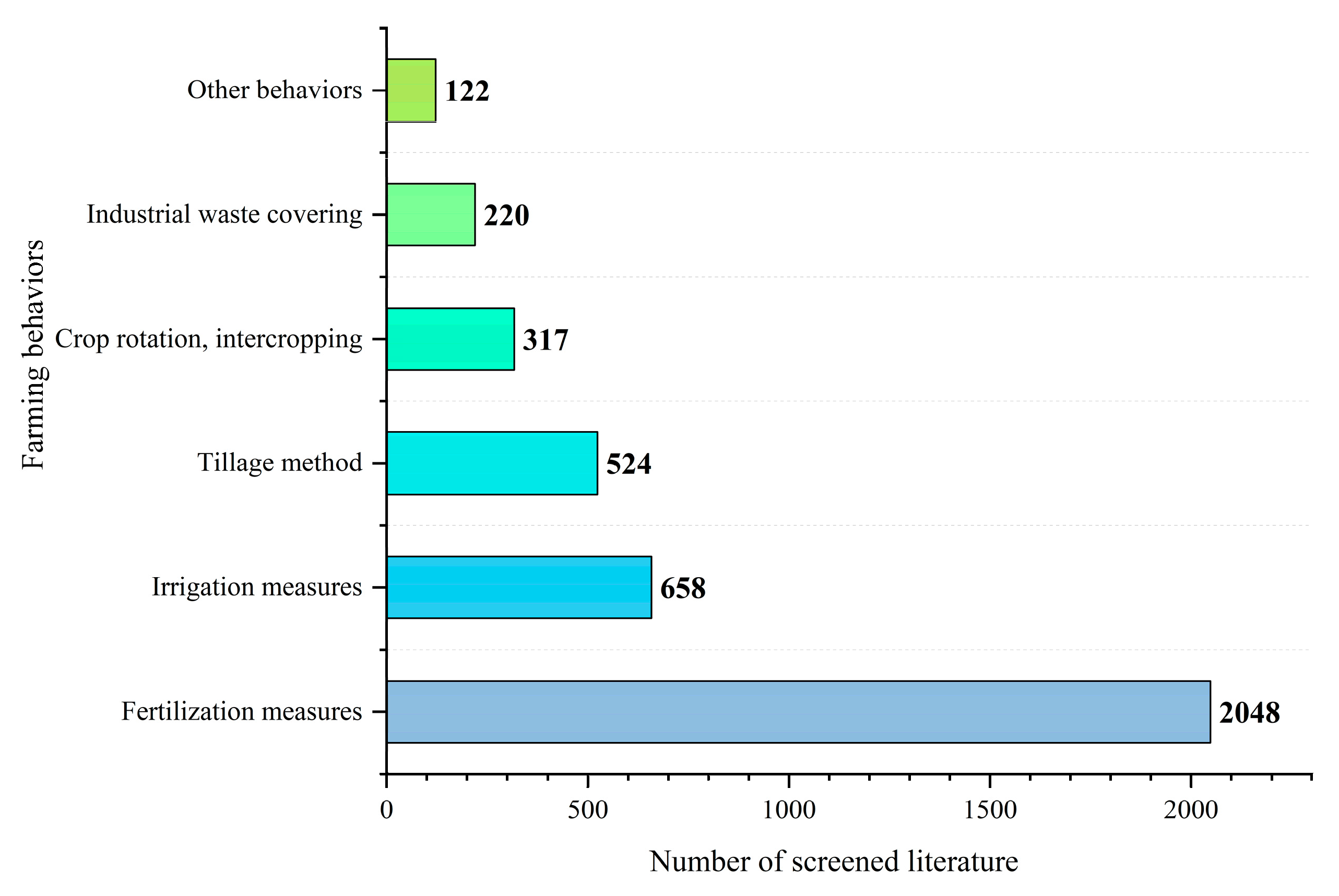
Agricultural activities are major contributors to global greenhouse gas (GHG) emissions, with methane (CH4) and nitrous oxide (N2O) emissions accounting for 40% and 60% of total agricultural emissions, respectively. Therefore, developing effective emission reduction pathways in agriculture is crucial for achieving carbon budget balance. This article synthesizes the impact of farmland management practices on GHG emissions, evaluates prevalent accounting methods and their applicable scenarios, and proposes mitigation strategies based on systematic analysis. The present review (2000–2025) indicates that fertilizer management dominates research focus (accounting for over 50%), followed by water management (approximately 18%) and tillage practices (approximately 14%). Critically, the effects of these practices extend beyond GHG emissions, necessitating concurrent consideration of crop yields, soil health, and ecosystem resilience. Therefore, it is necessary to conduct joint research by integrating multiple approaches such as water-saving irrigation, conservation tillage and intercropping of leguminous crops, so as to enhance productivity and soil quality while reducing emissions. The GHG accounting framework and three primary accounting methods (In situ measurement, Satellite remote sensing, and Model simulation) each exhibit distinct advantages and limitations, requiring scenario-specific selection. Further refinement of these methodologies is imperative to optimize agricultural practices and achieve meaningful GHG reductions.

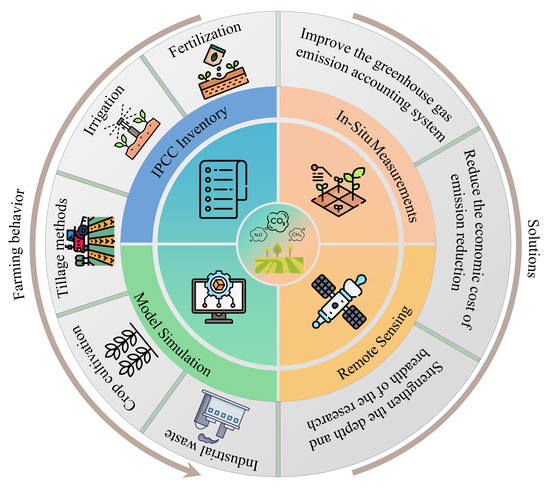

Graphical Abstract

1. Introduction

Accelerated industrialization and sustained population growth have driven a dramatic increase in anthropogenic greenhouse gas (GHG) emissions [1], resulting in unprecedented global surface warming. According to the Intergovernmental Panel on Climate Change (IPCC) Special Report on Global Warming of 1.5 °C, the global mean surface temperature is projected to rise by 1.5 °C between 2030 and 2052 [2], triggering cascading effects across natural systems: (i) sea-level rise and coastal ecosystem reorganization [3]; (ii) shifting disease vector distributions altering infectious disease epidemiology [4]; (iii) exacerbated air pollution due to enhanced atmospheric oxidation [5]; (iv) escalating infrastructure costs from intensifying extreme weather events [6]; (v) metabolic disruptions in crops threatening food security [7]. The IPCC Sixth Assessment Report (AR6) concludes that the 2011–2020 global surface temperature was 1.1 °C higher than pre-industrial (1850–1900) levels [8], with 89–132% of this warming attributable to human-induced GHG forcing [9]. The World Meteorological Organization (WMO) reported record-high atmospheric concentrations in 2023: carbon dioxide (CO2, 420.0 ± 0.1 ppm), methane (CH4, 1934 ± 2 ppb), and nitrous oxide (N2O, 336.9 ± 0.1 ppb), representing 151%, 265%, and 125% of pre-industrial values, respectively [10,11]. Climate models suggest current emission trajectories will breach the 2 °C threshold by 2040, risking irreversible climate tipping points [12,13,14].
Agriculture accounts for 30% of global GHG emissions, with annual growth rates exceeding 1.4% [15,16], making it the second-largest anthropogenic source after industrial activities. Emissions exhibit distinct sectoral drivers: CO2 primarily originates from crop respiration, agricultural residue burning, and fossil fuel combustion in farm machinery; CH4 emissions, representing 74.5% of agricultural GHGs, predominantly result from enteric fermentation in ruminants, methanogenesis in flooded rice paddies, and anaerobic manure decomposition; while N2O, accounting for 81.2% of sectoral emissions, mainly stems from nitrification–denitrification processes in fertilized soils and organic matter mineralization [17,18,19,20]. Critically, agroecosystems function as both net emitters and potential carbon sinks. Strategic interventions—such as conservation tillage, precision nutrient-water management, and agroforestry systems—could reduce emissions without compromising crop yields, positioning agriculture as a pivotal sector for climate mitigation. Agricultural emission reduction is critical to avoiding climate tipping points. Research on agricultural mitigation not only develops transformative solutions that maintain food production while achieving emission cuts, but also provides essential technical support for global climate policies.
Extensive research has quantified agricultural GHG emissions, establishing key drivers including climatic variables (precipitation, temperature), soil physicochemical properties (porosity), and microbial-enzyme interactions [21,22,23]. Nevertheless, mechanistic linkages between discrete farming practices and resultant GHG flux variations remain inadequately resolved. This stems from unresolved complexities such as nonlinear dose–response relationships, time-lagged biogeochemical feedbacks, and scaling discrepancies between point measurements and landscape-level fluxes. This review differs from previous reviews by providing a systematic and integrated analysis that bridges methodological evaluation, agricultural practice assessment, and scalable solution development. Unlike previous reviews that often focus on a single aspect, this study aims to deliver a comprehensive framework encompassing: (i) a critical comparison of accounting methods with scenario-specific guidance; (ii) a analysis of six dominant farming behaviors (fertilization, irrigation, tillage, crop rotation, industrial waste covering, and other interventions) based on a large corpus of 3657 studies (2000–2025); (iii) feasible mitigation pathways that consider economic viability and regional adaptability. The primary added value for academia lies in the novel synthesis of disparate research strands into a coherent narrative, identifying critical knowledge gaps and future research priorities. For the agricultural sector, this study offers evidence-based, context-aware strategies to achieve emission reduction without compromising productivity, thereby supporting policymakers, agricultural extension services, and farmers in making informed decisions for climate-smart agriculture.

2. Calculation Methods

Accurate quantification is the cornerstone of effective mitigation. This section critically evaluates the four primary methods for accounting agricultural GHG emissions, which is a prerequisite for understanding the impacts of farming behaviors discussed later. Robust quantification of agricultural GHG emissions through standardized methodological frameworks provides the essential scientific basis for constructing accurate emission inventories, evaluating mitigation potentials, and informing evidence-based climate policies. This section provides a hierarchical overview, first introducing the primary accounting framework, and then detailing the three broad categories of quantification methods that can be employed within such frameworks [24].

2.1. GHG Accounting Framework: IPCC Inventory

The Guidelines for National Greenhouse Gas Inventories (IPCC Guidelines) issued by the United Nations IPCC represent the globally accepted standard for agricultural GHG accounting [25]. Major emissions databases, including the Food and Agriculture Organization Statistical Database (FAOSTAT) and the Emissions Database for Global Atmospheric Research (EDGAR), adhere to IPCC classification and accounting methodologies. National GHG inventories similarly utilize the IPCC framework, but its tiered system incorporates region-specific parameters: Tier 1 employs default emission factors; Tier 2 requires localized activity data; and Tier 3 integrates ecological process models.
The IPCC inventory constitutes an emission-factor-based statistical accounting system encompassing four key sectors: Energy; Industrial Processes and Product Use (IPPU); Agriculture, Forestry, and Other Land Use (AFOLU); and Waste. Within agriculture, it categorizes emissions into four distinct sources: CH4 from rice cultivation; N2O from agricultural soils; CH4 from enteric fermentation in livestock; and N2O from manure management. Emissions from each source are quantified using the emission factor approach and aggregated to derive total agricultural GHG emissions [26]. Guidelines for Provincial GHG Inventories (Trial, China, 2011) adopted IPCC methods, further specifying agricultural sources as rice CH4, soil N2O, enteric CH4, and CH4/N2O from waste combustion [27]. However, GHG accounting remains sensitive to climatic conditions, agricultural management practices, and significant variability in emission factors. For example, IPCC 2019 reports rice CH4 emission factors across Asia, ranging from 0.2 to 6.7 t CO2-eq ha−1 yr−1 [25], reflecting differences of several orders of magnitude. It has also been demonstrated that process-based models can outperform IPCC Tier 1–2 methods in dairy systems by incorporating localized manure management and soil characteristics [28].
Current IPCC accounting also omits key sources: global freshwater aquaculture (estimated at 300–600 Mt CO2-eq yr−1), CO2 emissions from agricultural lime and urea application (~100 Mt CO2-eq yr−1 from carbonate dissolution) [29], and wetland management. Furthermore, emission factor updates exhibit temporal lag. Emission estimates have been significantly improved by deriving region-specific factors through nationwide sampling, which provides support for localized climate policy formulation [30]. Consequently, while suitable for large-scale estimates, IPCC methods exhibit limitations in accuracy for small-scale applications due to spatial and temporal variability [31].
Notably, China’s National GHG Emission Factor Database, jointly developed by the Ministry of Ecology and Environment and the National Bureau of Statistics and operational since January 2025, now provides critical data support within the national carbon accounting system. Its agricultural component includes factors for enteric fermentation, manure management, fuel combustion, and electricity consumption. However, gaps persist, including emission factors for specific crop cultivars (e.g., rice CH4 flux variations up to 300% between varieties) and agricultural waste treatment processes, pending further research.

2.2. GHG Quantification Methods

These are the scientific and technical approaches used to determine GHG fluxes or concentrations at various scales. They can be used independently in research or to generate data for higher-tier accounting within frameworks like the IPCC guidelines.

2.2.1. In Situ Measurement

In situ measurement represents a common approach for quantifying GHG fluxes in small-scale agricultural experiments, encompassing static chamber, dynamic chamber, and eddy covariance methodologies [32].
The static chamber method involves deploying a sealed enclosure over the soil or within livestock housing and measuring GHG concentrations at discrete intervals to calculate emission fluxes over the deployment period. While relatively simple to operate and cost-effective [33], this method lacks capacity for long-term continuous monitoring and may not accurately capture diurnal or short-term GHG emission dynamics. For instance, a typical chamber design comprises a stainless-steel base frame and detachable cubic compartments, featuring an internal circulation fan to ensure gas homogeneity during sampling [34]. Integrated gas chromatography (GC-14B; Shimadzu, Kyoto, Japan) with an electron capture detector (for N2O) and a flame ionization detector (for CO2 and CH4) enabled analyte quantification. However, the discontinuous sampling inherent in static chambers risks missing critical emission events [34].
The dynamic chamber technique addresses the temporal resolution limitation by incorporating a gas flow system, enabling continuous, long-term flux measurements and better resolution of emission dynamics. A constraint, however, is the small spatial footprint of the chamber, restricting its application to highly localized emission sources. An example of continuous monitoring instrumentation includes an open-path CO2 analyzer (LI-7500; Li-COR Inc., Lincoln, NE, USA), an open-path CH4 analyzer (LI-7700; Li-COR Inc.), and a three-dimensional sonic anemometer (CSAT-3; Campbell Scientific Inc., Logan, UT, USA) [35]. Nevertheless, the limited chamber area coverage can introduce errors due to spatial heterogeneity in sampling.
Eddy covariance methodology circumvents the spatial constraints of chamber-based approaches. It estimates the net ecosystem exchange of GHGs over a large footprint (e.g., field or grassland) by measuring high-frequency fluctuations in vertical wind speed, temperature, and gas concentrations [36]. Despite its advantages for landscape-scale flux estimation, eddy covariance requires sophisticated instrumentation and substantial expertise in data acquisition and processing. Furthermore, incomplete energy closure, particularly pronounced during nocturnal periods, can significantly impact the accuracy of carbon flux measurements [37].

2.2.2. Model Simulation

Model simulation approaches can be broadly classified into several categories: (1) Process-based models (e.g., DNDC, CLM) simulate carbon and nitrogen cycles based on biogeochemical mechanisms, enabling analysis of non-linear responses to environmental variables and human management; (2) Inventory data assimilation systems (e.g., EDGAR, Carbon Monitoring System—CMS) integrate multi-source data and model outputs using optimal estimation theory to produce continuous, spatiotemporally explicit, and uncertainty-quantified emission datasets; (3) Life cycle assessment (LCA) models operate at the product-system scale, using background databases and process modeling to quantify carbon footprints across entire supply chains; (4) Emerging machine learning approaches leverage multi-source data through techniques like neural networks or random forests for real-time emission hotspot detection and predictive mapping.
However, each approach exhibits distinct strengths and limitations in agricultural applications, presenting fundamental challenges in balancing accuracy with practical applicability [38]. A key limitation is high sensitivity to input data quality and parameterization. Terrestrial ecosystem models, for instance, consistently underestimate interannual variability in vegetation productivity, particularly in non-forest ecosystems [39]. Performance also varies significantly by crop type and emission pathway; Denitrification-Decomposition (DNDC) models better simulate CH4 emissions from rice paddies, while APSIM excels at predicting N2O from maize systems [40]. This specialization necessitates careful model selection but complicates comprehensive assessments of complex agricultural systems.
Further barriers include the computational intensity and demanding parameter requirements of advanced models. Although coupled crop-livestock models theoretically show potential for substantial emission reductions (e.g., ~40% [41]), their practical implementation requires extensive data collection and frequent parameter tuning. These challenges are compounded by difficulties in model validation against observational data and the limited transferability of site-specific calibrations to regional scales [42]. As agricultural systems face increasing climate variability, these limitations underscore the need for more adaptive modeling frameworks capable of better capturing non-linear feedbacks.

2.2.3. Remote Sensing Monitoring

Despite these limitations, remote sensing remains a valuable tool when integrated with other methods. Remote sensing comprises active and passive approaches. Active systems (e.g., GOSAT/TANSO-FTS, TROPOMI) deploy lidar or short-wave infrared spectrometers to detect reflected/scattered surface signals. Using optimal estimation inversion algorithms (such as the Full Physics Retrieval of NASA OCO-2), these derive XCO2/XCH4. They offer advantages in spatial resolution, revisit frequency, and daily coverage, though remain susceptible to cloud and aerosol interference. Passive systems (e.g., OCO-3, GOSAT-2) rely on solar radiation reflection, employing spectral fingerprint matching (e.g., SFIT4) to isolate gas absorption features. While suitable for large-scale surveys, they yield no data under nocturnal or low-light conditions.
Although remote sensing enables large-scale GHG detection, its application to agricultural emissions faces persistent technical challenges [43]. Fundamental constraints arise from the passive nature of measurements, compromising data quality and interpretation [44,45]. Atmospheric interference-notably clouds and aerosols-distorts spectral gas concentration measurements. The amplification of satellite data uncertainties by such effects (particularly in regions with high aerosol loads) has been quantified in previous studies [46]. Spatial resolution limitations further impede agricultural utility: most sensors fail to resolve field-scale emission sources or differentiate crop types-a challenge observed in volcanic studies, where mixed pixels lead to the underestimation of point-source emissions [47].
Remote sensing quantifies gas concentrations, not direct fluxes, necessitating inversion models to estimate emissions. This indirect approach introduces substantial uncertainty, often requiring ground validation [48]. Temporal resolution constraints also complicate monitoring of agricultural emissions, which fluctuate with management practices and crop phenology. Collectively, these limitations restrict the standalone use of remote sensing for agricultural GHG accounting, though integration with complementary methods retains value [49].

2.3. Comprehensive Comparison

In summary, each accounting method possesses distinct advantages and disadvantages, exhibiting inherent limitations [50]. Consequently, in practical research, it is common to combine several accounting methods. The comparison presented in Table 1 serves to facilitate a more intuitive understanding of these four methods, their applications, and their potential impacts on result analysis.

3. Methodology

3.1. Search Strategy and Study Selection

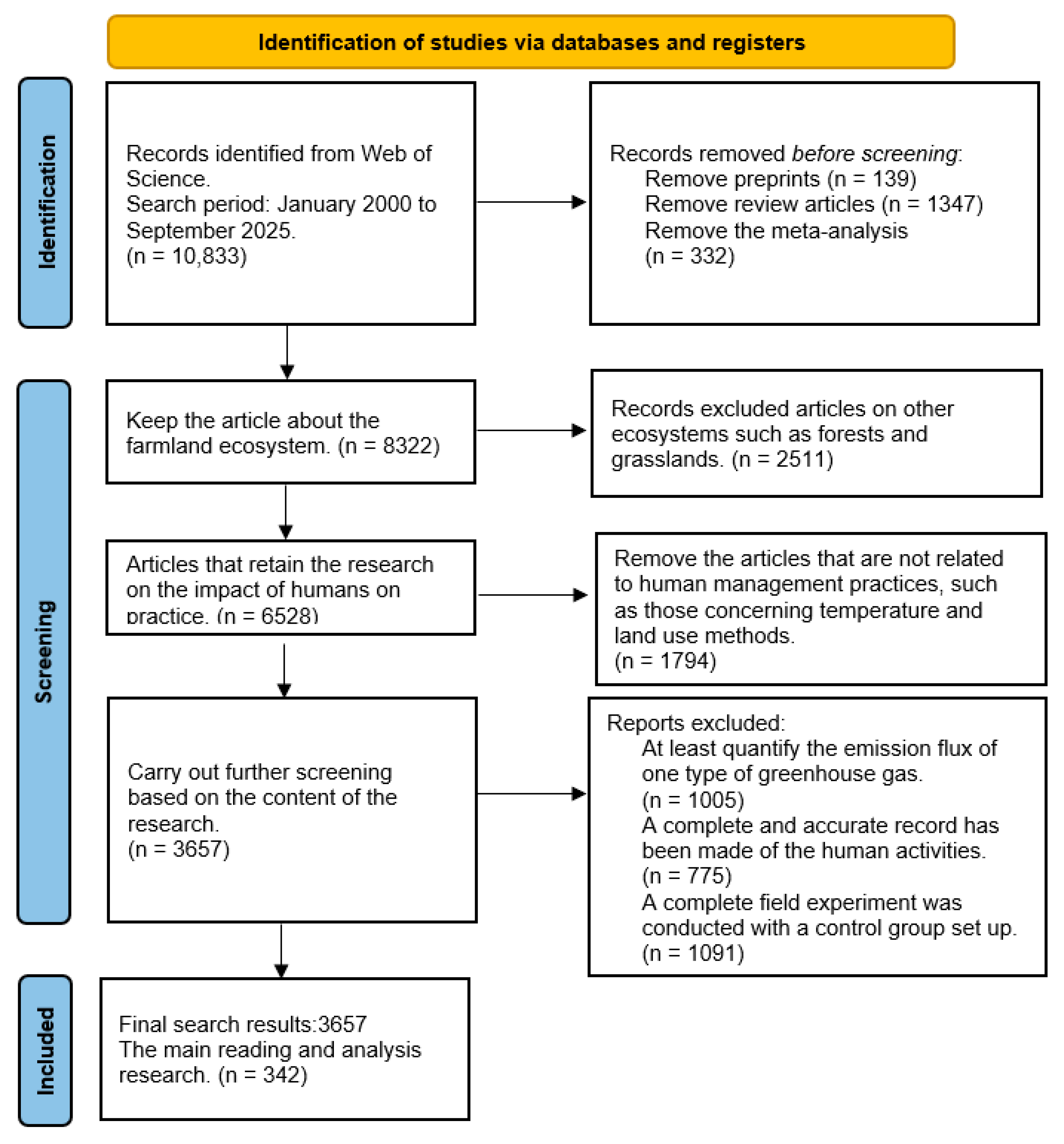
While soil moisture, temperature, pH, and microbial activity are well-established as fundamental controls on GHG emissions in agricultural systems [51,52,53,54], the mechanistic understanding of anthropogenic management practices-including irrigation regimes, tillage methods, and organic amendments like straw incorporation-remains fragmented, particularly regarding their interactive effects on CO2, CH4, and N2O fluxes. In order to have a clearer understanding of the interactions involved, a systematic search and analysis protocol was employed. The literature search was conducted using the Web of Science core database, covering the period from January 2000 to September 2025. The primary search string was: ((greenhouse gas OR GHG OR global warming potential OR GWP OR carbon dioxide OR methane OR nitrous oxide) AND (farmland OR cropland OR arable land OR agricultural soil)). This initial search yielded over 10,000 records.
Strict inclusion criteria were then applied to filter the studies: (i) field-based experiments with controlled comparisons; (ii) quantification of at least one GHG flux (CO2, CH4, or N2O); (iii) explicit documentation of specific agricultural management interventions. After title, abstract, and full-text screening, 3657 studies met all criteria and formed the core dataset for the analysis (Figure 1). Each study was categorized into one of six dominant farming practice types: fertilization measures, irrigation measures, tillage methods, crop rotation/intercropping, industrial waste covering, and other behaviors. We quantified the number of studies in each research category (Figure 2). This methodological approach ensures a transparent, structured, and replicable basis for the synthesis and analysis presented in the subsequent sections.

3.2. Data Extraction

A standardized data extraction form was developed and pilot-tested prior to the full-scale data collection. From each of the 3657 included studies, the following key variables were systematically extracted: Bibliographic information; Study context; Experimental details; Interventions; Methodology; Outcomes. The extracted data were synthesized to characterize the body of evidence. A summary of the key characteristics of the included studies is presented in Table 2, providing an overview of the research landscape covered by this review.

4. Farming Behavior

Building upon the understanding of accounting methodologies and the results of the paper screening (Figure 2, Table 2), this section systematically synthesizes the impact of predominant farming behaviors on GHG emissions.

4.1. Irrigation Measures

4.1.1. Influence

The research on irrigation’s effect on agricultural GHG emissions has evolved through two distinct phases. Initially, the first stage focused on establishing the fundamental mechanisms by which irrigation influences agricultural GHG emissions [55]. Subsequently, the second stage advanced toward quantifying the differential impacts of irrigation methods, while concurrently addressing emergent issues such as crop yield reduction [56] and the paradoxical GHG release associated with water-saving irrigation techniques [57].
Mechanistically, under stable annual rainfall regimes, irrigation acts as the primary determinant of soil moisture and WFPS (Water-Filled Porous Spaces). Post-irrigation saturation induces a cascade of microbial responses: (1) elevated soil moisture and WFPS stimulate plant root respiration and microbial activity, accelerating organic matter decomposition and CO2 emission; (2) the development of anaerobic microsites promotes methanogen activity and CH4 production [58]; (3) subsequent wet–dry cycles amplify nitrification–denitrification coupling, driving N2O fluxes. Notably, N2O emission peaks exhibit a well-defined temporal pattern, with fluxes reaching maxima within 12–72 h post-irrigation. This phenomenon arises from the transient oxygen dynamics: rapid nitrification (NH4+ → NO3) during initial oxygen depletion, followed by intense denitrification (NO3 → N2O/N2) at near-saturation conditions. Strategic mitigation through water-scarce irrigation disrupts these “hot moments” of microbial activity, positioning water management as a critical emissions control lever. Specifically, drip irrigation demonstrates dual benefits of enhanced water-use efficiency and suppressed GHG emissions via physicochemical pathways [59], while coastal systems may employ high-salinity irrigation to inhibit microbial activity [60]-though this requires rigorous soil salinity monitoring to prevent secondary salinization.
Contradicting earlier assumptions, emerging evidence reveals that groundwater drip irrigation induces substantial GHG degassing while concurrently reducing crop yields through water limitation-a previously overlooked trade-off [61]. Structurally, irrigation methods bifurcate into flood irrigation and drip irrigation (the latter subclassified as above-ground, surface, or subsurface systems). Particularly in arid/semi-arid regions where groundwater supplies ~70% of agricultural water [62], a critical complication arises: groundwater typically contains dissolved CO2 and N2O at concentrations 10 times higher than surface water. During pressurization-release cycles, these gases undergo direct atmospheric escape. Notably, degassing magnitudes have been quantified as surface drip irrigation > sub-surface drip irrigation > flood irrigation, challenging the conventional wisdom of drip irrigation’s universal emissions advantage [63]. This inversion may stem from: (1) flood irrigation’s surface sealing effect minimizing air-water interface, (2) drip emitter impacts enhancing turbulent degassing, and (3) subsurface systems reduced atmospheric exposure time [64]. Although subsurface drip irrigation exhibits degassing rates only slightly higher than flood irrigation and much lower than surface systems, its widespread adoption is limited by infrastructural and economic barriers.
The yield-emission nexus presents further complexity. Non-linear trade-offs in maize systems have been documented [65]: documented non-linear trade-offs in maize systems: 20% water reduction decreased CO2 emissions by 9.8% but incurred 4.9% yield loss, whereas 40% reduction exacerbated yield penalties to 30.9% despite 14.3% emissions reduction. In contrast, evidence from wheat systems suggests synergistic outcomes when combining deficit irrigation with ridge-furrow rainwater harvesting [66]—a divergence attributable to: (1) Hou’s singular focus on water volume reduction versus Ali’s integrated water retention strategy, and (2) interspecific (maize vs. wheat) and seasonal (summer vs. winter) experimental variations. This juxtaposition underscores the context-dependence of irrigation optimization strategies.

4.1.2. Existing Problems

Research on the impact of irrigation methods on GHG emissions in farmland has achieved notable progress, yet critical challenges remain. Different irrigation techniques exhibit substantial variations in their effects on CO2, CH4, and N2O fluxes. For instance, alternate wetting and drying irrigation reduces CH4 emissions by up to 70% compared to continuous flooding but often increases N2O release due to fluctuating redox conditions [67]. These interactions are governed by complex factors including soil physicochemical properties, microclimate fluctuations, and crop-specific rhizosphere processes, complicating the extrapolation of universal patterns.
Short-term field experiments (1–3 years) fail to capture long-term irrigation effects on soil carbon dynamics or microbial community succession. Additionally, findings from temperate systems rarely translate directly to arid or saline-alkali regions. Slightly saline irrigation, for example, suppresses N2O production by 15–40% in coastal farmlands but simultaneously diminishes soil methanotrophy, reducing CH4 uptake capacity by 25–50% [68].
Practical adoption faces multiple barriers. Precision irrigation systems such as automated drip networks require initial investments exceeding $1500 per hectare, rendering them inaccessible to smallholders in developing economies. Limited farmer awareness of emission-water management linkages, coupled with inadequate soil moisture monitoring infrastructure in 80% of Asian and African farmlands, further restricts implementation. Policy gaps-particularly the absence of standardized protocols for quantifying irrigation-induced emission reductions-hinder integration into carbon markets.
Future advancements demand parallel efforts in technology development and institutional support. Priorities include: low-cost ($300 per hectare) soil sensor networks for real-time water management; decadal-scale field trials assessing irrigation impacts on carbon–nitrogen cycling; policy frameworks aligning water-use efficiency subsidies with verifiable emission cuts; and unified methodologies for cross-regional meta-analyses of irrigation–GHG interactions.

4.2. Tillage Methods

4.2.1. Influence

Conventional tillage practices such as deep or rotary ploughing disrupt soil structure, accelerate erosion, diminish aggregate stability, deplete biodiversity and soil fertility, ultimately destabilizing the soil system [69]. Furthermore, traditional tillage often leads to the formation of a hard plough layer, impairing soil permeability and restricting root growth, which significantly hinders crop yield improvement [70]. Consequently, conservation tillage methods-including reduced tillage, no-till, and straw returning-have been widely adopted in field management to enhance soil quality. However, studies examining the effects of these practices on crop yields and GHG emissions exhibit considerable variability depending on crop type and study region, making it difficult to draw consistent conclusions across studies that employ the same tillage methods. This variability also introduces substantial uncertainty in estimating the agricultural sector’s potential to mitigate climate change.
No-till and reduced tillage can significantly lower GHG emissions by minimizing soil disturbance, thereby reducing the stability and quantity of soil aggregates. This leads to decreased microbial activity, slower decomposition of soil organic carbon (SOC), and reduced substrate availability [71]. Nevertheless, some studies argue that the effectiveness of no-till in mitigating climate change may be overstated. The additional organic carbon accumulated in no-till soils is often minimal, and its benefits may be lost after periodic soil cultivation, failing to achieve long-term climate mitigation [72]. Another concern is the observed yield reduction in crops such as rice and maize under no-till systems [73]. One possible explanation is that the absence of soil disturbance in no-till restricts the downward movement of nitrogen (N), phosphorus (P), and other essential nutrients, leading to their accumulation in the topsoil. This increases runoff losses and reduces nutrient availability for crops, counteracting the intended GHG mitigation effects [74].
To address these challenges, integrating no-till with complementary practices may help balance GHG mitigation with sustained crop yields. For example, rice-green manure rotation systems [75] involve incorporating green manure crops back into the field or using them as surface mulch to supply nutrients and organic matter. Introducing leguminous green manure into paddy fields can lower the soil carbon-to-nitrogen (C/N) ratio, reducing methanogen abundance and thereby inhibiting SOC conversion to CH4. Simultaneously, green manure crops enhance exogenous nitrogen supply, mitigating yield declines and avoiding the pollution risks associated with excessive organic fertilizer application.

4.2.2. Existing Problems

Current research on the influence of tillage methods on GHG emissions from agricultural land faces numerous challenges. The effects of different tillage practices exhibit high variability and are strongly dependent on environmental conditions. For instance, no-till and minimum tillage can reduce N2O emissions by 11%, though this effect is more pronounced in humid climates and soils with organic carbon content below 20 g/kg. Conversely, diversified crop rotation in temperate regions with moderately alkaline soils has been found to increase N2O emissions. In contrast, studies on rice cultivation in Hokkaido, Japan, reveal that minimum tillage promotes anaerobic soil conditions, leading to elevated CH4 emissions [76]. Such discrepancies likely stem from variations in soil characteristics and geographical factors, underscoring the need for multi-condition, long-term field experiments to clarify these relationships.
Additionally, conservation tillage methods such as straw returning and no-till sowing can increase soil organic matter by 13%, but their implementation depends on access to specialized machinery. High equipment costs limit adoption among smallholder farmers, while practical barriers-including insufficient farmer knowledge of new technologies, incomplete policy support, and regional adaptability issues (e.g., divergent emission mechanisms in arid areas versus paddy fields)-further impede the translation of research findings into widespread practice.

4.3. Fertilization Measures

4.3.1. Influence

Fertilizer management emerged as a dominant theme in over 50% of reviewed literature, establishing its critical role in agricultural GHG emissions. While conventional fertilizers enhance crop yields, their intensive application exacerbates GHG emissions [77]. Recent research has extensively explored organic fertilizers (e.g., manure, biogas residue, legume green manure) and soil amendments, elucidating their complex mechanisms in GHG mitigation while identifying pathways to reconcile emission reduction with yield improvement.
Organic fertilizers demonstrate multifaceted GHG mitigation potential in agricultural systems. Livestock manure, when fully composted and applied, can partially substitute synthetic nitrogen fertilizers, thereby reducing CO2 emissions from fertilizer production and mitigating N2O release during nitrification–denitrification. Aerobic composting conditions (e.g., optimized humidity and aeration) further suppress CH4 generation by favoring aerobic microbial activity [78]. Plant-derived amendments like straw incorporation [79] and green manure cover crops [80] enhance soil aggregation and organic matter content, increasing long-term carbon sequestration. Longitudinal studies indicate that three consecutive years of straw application elevates soil organic carbon stocks by 12–18%, indirectly lowering atmospheric CO2 [81]. High-carbon amendments such as biochar exhibit dual functionality their porous structure adsorbs soil nitrogen to reduce N2O emissions while modulating microbial communities to decrease paddy CH4 emissions by 20–30% through methanogen inhibition [82]. Strategic combinations of organic fertilizers with crop residues or microbial inoculants can optimize nutrient cycling [83], exemplified by legume–poultry manure co-application, which simultaneously reduces synthetic nitrogen demand via biological fixation and accelerates organic matter mineralization, preventing CH4 accumulation in waterlogged soils. These mechanisms collectively enable the “emission reduction–carbon sequestration” duality of organic fertilization, though precise dosage tailored to regional soil properties and crop requirements remains essential to avoid nitrogen leaching or salinization.
Soil amendments regulate GHG emissions through physicochemical and microbiological pathways. Biochar’s porous matrix sequesters ammonium and nitrate, diminishing nitrification–denitrification intermediates a 5% rice paddy application reduces N2O emissions by 30–50% [84]. Denitrification inhibitors exhibit complementary effects by suppressing reductase activity [85], while lime amendments in acidic paddy soils elevate pH to inhibit methanogenesis, achieving 40% CH4 reduction [86]. The alkaline environment also stabilizes denitrification inhibitors, prolonging their efficacy. Notably, coupling carbon amendments with nitrification inhibitors can stimulate methane-oxidizing bacteria [87], though such composite strategies require precise alignment with soil moisture and temperature to maintain inhibitor activity.

4.3.2. Existing Problems

Key challenges persist in understanding and implementing fertilization-based GHG mitigation, spanning mechanistic complexity and practical constraints. Mechanistically, emission patterns exhibit high context-dependence for instance, nitrogen fertilizer substitution with organic amendments reduces N2O but may elevate CO2 emissions [88], particularly in cool (<13 °C), low-organic-matter soils (<10 g/kg) where >30% substitution with manure exacerbates CO2 release. While biochar achieves optimal emission reduction at 50 t/ha, its efficacy depends on soil C/N ratio, being most effective in high-C/N soils but counterproductive in low-C/N systems.
Practical adoption faces economic and operational barriers. Although smart fertilization systems cut direct emissions by 21%, associated costs reduce net income by 33.8%. Mature composts sustain both CH4 reduction and crop yields but involve labor-intensive production. Ammonium sulfate minimizes global warming potential yet fails to enhance soil quality. Straw incorporation with reduced nitrogen lowers mineral leaching but increases CO2 emissions, necessitating trade-offs between environmental and agronomic outcomes. Disparities in regional adaptability, inadequate policy incentives, and limited farmer awareness further hinder technology transfer from research to practice.

4.4. Crop Rotation and Intercropping

4.4.1. Influence

Plant rotation and intercropping represent critical strategies for mitigating GHG emissions through optimized carbon and nitrogen cycling and enhanced microbial functionality within agricultural ecosystems. Rotation systems incorporating leguminous crops substantially reduce reliance on synthetic nitrogen fertilizers [89]. This reduction stems from rhizobial nitrogen fixation, which converts atmospheric N2 into plant-available ammonium while minimizing soil nitrate accumulation, thereby suppressing N2O production during nitrification and denitrification processes. Furthermore, the incorporation of leguminous residues elevates soil organic carbon stocks. Intercropping systems leverage root spatial complementarity and exudate-mediated interactions to modulate soil oxygenation and microbial community dynamics [90], collectively diminishing GHG efflux. Notably, in paddy ecosystems, winter green manure cultivation (e.g., balsamic acid) exerts dual benefits—reducing nitrogen inputs while releasing phenolic compounds that suppress methanogen activity, consequently lowering CH4 emissions during subsequent rice cultivation. Emerging research integrates precision agriculture (e.g., sensor-driven rotation algorithms) with advanced biotechnologies (e.g., CRISPR-edited low-methane rice) to synergistically enhance productivity and emission control.

4.4.2. Existing Problems

The efficacy of rotation and intercropping systems exhibits marked variability contingent upon emission pathways and environmental contexts. For example, winter wheat-summer maize intercropping effectively lowers combined CO2 and N2O fluxes, yet this mitigation capacity diminishes in acidic clay soils (pH < 6.5). Similarly, maize/peanut rotations enhance land equivalent ratios and ecosystem carbon outputs but necessitate biochar amendments for optimal performance. Although spring wheat–winter rapeseed rotations with 25% nitrogen reduction achieve 15.2% and 28.0% decreases in CO2 and N2O emissions, respectively, concomitant declines in soil urease activity may jeopardize long-term fertility. Practical implementation faces systemic barriers including unfavorable cost–benefit ratios, inadequate policy incentives, regional adaptation constraints, and limited farmer adoption of novel technologies—all contributing to delayed translational outcomes.

4.5. Industrial Waste Cover

4.5.1. Influence

Current research on the effects of plastic film and other industrial waste mulching on agricultural GHG emissions primarily examines how these materials regulate soil microenvironments, microbial activities, and carbon–nitrogen cycle processes. Plastic films alter surface energy balance, modulate soil temperature and moisture distribution, and consequently influence organic matter decomposition rates and nitrogen transformation pathways [91]. Transparent films enhance solar radiation absorption, elevating surface soil temperature and accelerating organic carbon mineralization. However, by inhibiting soil water evaporation, they may also maintain high humidity conditions that promote N2O generation via denitrification. In contrast, black or reflective films mitigate temperature fluctuations through shading effects, reducing microbial metabolic activity and thereby decreasing concurrent CO2 and N2O emissions. When recycled rubber particles or construction waste derivatives are employed as mulching materials, their porous structures and chemical inertness modify soil gas diffusion conditions, limiting anaerobic microzone formation and suppressing methanogenic activity. These materials also act as physical barriers, delaying organic matter decomposition by reducing direct contact with atmospheric oxygen [90]. Crucially, the net impact of mulching materials on GHG emissions is highly context-specific, contingent upon interactions among climate conditions, soil properties, and management practices.

4.5.2. Existing Problems

Studies indicate that transparent plastic film mulching exacerbates anaerobic conditions, increasing CH4 emissions by 30–40%. While black films or construction waste coverings reduce N2O emissions by 12–18%, their porous structures may disrupt soil gas diffusion dynamics, and long-term use poses risks of heavy metal accumulation. Practical implementation faces challenges such as high costs, operational complexity, and pronounced regional adaptability disparities. In arid regions, mulching may intensify soil acidification, whereas in paddy fields, waterlogged conditions could accelerate film degradation. Insufficient policy support and farmer apprehensions regarding environmental risks further constrain the adoption of these technologies.

4.6. Summary

Although the aforementioned classifications apply to distinct agricultural activities, many studies integrate analyses of multiple practices [92], probing potential synergies or antagonisms among them. Research extends beyond GHG emissions to encompass crop yields and soil environments [93]. A critical limitation persists current investigations into improved farming practices predominantly focus on GHG emissions, crop productivity, and soil fertility while overlooking economic viability, technical feasibility, and regional compatibility. This narrow scope hinders the translation of research findings into practical applications. Thus, further interdisciplinary studies are imperative to bridge these gaps.

5. Solutions

The preceding analysis of accounting limitations and behavioral impacts reveals clear gaps and opportunities. This section proposes integrated solutions targeting these specific challenges, with a critical assessment of their feasibility.

5.1. Accounting System

Contemporary GHG accounting systems confront fundamental methodological deficiencies—including pervasive data uncertainty, ill-defined system boundaries, and mechanistic design constraints [94]—that are compounded by inadequate assimilation of emerging monitoring technologies and disconnects between biophysical parameters and economic decision metrics [95]. These limitations critically undermine climate policy precision and global inventory reliability, erecting substantive barriers to standardized implementation.
To bridge these gaps, we propose an integrated verification framework deploying high-resolution satellites (e.g., OCO-3) to pinpoint regional emission anomalies, augmented by Unmanned Aerial Vehicle-mounted (UAV-mounted) laser spectroscopy for point-source flux quantification and Internet of Things (IoT) sensor networks enabling field-scale real-time validation. Concurrent establishment of dynamic emission factor databases with blockchain-secured traceability, coupled with multi-scale modelling integrating process-based simulations and socioeconomic datasets, would deliver a robust science–policy interface. This nexus empowers carbon credit certification and ecological compensation mechanisms while mitigating transboundary carbon leakage, thereby closing the loop from emissions monitoring to policy response. The technological components are largely mature, but their integration poses a significant challenge. The primary barriers are the high initial investment and the need for interdisciplinary collaboration among agronomists, remote sensing specialists, and data scientists. Pilot projects in technologically advanced regions are recommended before widespread rollout. The establishment of a dynamic emission factor database is feasible but requires sustained institutional support and data-sharing agreements.

5.2. Economic Costs and Equipment Complexity

Building on identified barriers to sustainable farming adoption–predominantly economic constraints and technical complexity [96]–we advocate a phased technology transition pathway. Near-term implementation prioritizes cost-effective interventions like lime-biochar composites, incentivized through regional carbon sink banking that monetizes verified mitigation outcomes. Medium-term strategy integrates modular precision agriculture systems, exemplified by solar-powered soil sensors coupled with drone-enabled variable fertilization to synergistically optimize resource use efficiency. Long-term transformation leverages Clustered Regularly Interspaced Short Palindromic Repeats-engineered (CRISPR-engineered) low-emission cultivars to fundamentally reconfigure agroecosystem carbon fluxes.
Concurrently, a multi-scale verification architecture synthesizing eddy covariance towers (landscape-level), IoT networks (field-level), and blockchain-secured data streams enables dynamic management optimization through continuous emissions feedback. Policy integration requires spatially differentiated mechanisms: equipment tax waivers in ecologically vulnerable zones, pre-certified carbon credits to de-risk adoption, and partnerships that democratize technology access–collectively forging an economically viable decarbonization trajectory. The near-term strategies (e.g., lime-biochar composites) are highly feasible due to low cost and ease of adoption. Medium-term strategies (precision agriculture) face economic barriers for smallholders, necessitating innovative financing models. Long-term strategies (CRISPR-engineered cultivars), while promising, are subject to regulatory hurdles and public acceptance. The proposed policy instruments are practical and can be adapted from existing agricultural subsidy frameworks.

5.3. Research Scale and Depth

Current research on GHG mitigation in farmland remains constrained by scale and depth limitations. Short-term field experiments (typically 1–3 years) focusing on single-practice interventions fail to capture synergistic effects among integrated measures–such as irrigation-fertilization-crop rotation coupling–while insufficient attention has been paid to how emission dynamics are modulated by geopedological heterogeneity (e.g., clayey vs. sandy soils) and crop-specific responses (e.g., rice vs. wheat). To address these critical gaps, we propose establishing a multi-scale networked long-term observation platform deploying 15-year fixed-position stations across major agroecological zones. This infrastructure would integrate eddy covariance towers with in situ sensor arrays to continuously monitor carbon and nitrogen fluxes under multi-practice interactions. Concurrently, an intelligent simulation–decision system should be developed, wherein deep learning models trained on assimilated multi-source data (soil properties, meteorology, microbial communities) would quantify long-term mitigation potentials of practice combinations and identify crop-specific nitrogen fertilizer threshold values. Further, a cross-regional adaptive trial framework could delineate national croplands into emission-reduction typologies using pedotransfer functions (PTFs) and machine learning clustering, enabling validation of tailored cover crop-biochar integration efficacy across divergent edaphic conditions (e.g., saline-alkali vs. acidic soils). Collectively, this “data–model–verification” closed-loop system will establish a spatio-temporally scalable theoretical foundation for climate-smart agriculture.

6. Summary and Prospect

Research on GHG emissions from agricultural systems has demonstrated the critical influence of farming practices on the global carbon cycle, established the complementary roles and inherent constraints of prevailing accounting methodologies, and delineated the complex emission consequences of diverse agricultural management approaches. Current challenges encompass the prohibitive costs of mitigation technologies [97], inadequate data quality [98], and barriers to cross-regional comparative analysis [99]. Future research priorities include overcoming these obstacles to achieve agricultural carbon neutrality through synergistic strategies integrating technological innovation, policy coherence, and multi-actor collaboration. Such efforts must simultaneously safeguard food security while advancing climate-smart agriculture, providing robust scientific frameworks and actionable pathways for global emission reductions.

Author Contributions

Y.Z. (Yezheng Zhu): Writing—original draft. Y.Z. (Yixuan Zhang): Visualization and Writing—Review and Editing. J.L.: Visualization. Y.L.: Data curation. C.L.: Writing—Review & Editing. D.C.: Writing—Review & Editing. C.Q.: Conceptualization and Project administration. All authors have read and agreed to the published version of the manuscript.

Funding

This study was jointly supported by the National Natural Science Foundation of China (Nos. 42471028), Natural Science Basic Research Program of Shaanxi (No. 2025JC-QYCX-032), and State Key Laboratory of Loess and Quaternary Geology, Institute of Earth Environment, CAS (SKLLOG2310).

Institutional Review Board Statement

Not applicable.

Informed Consent Statement

Not applicable.

Data Availability Statement

The study produced no new data.

Acknowledgments

We are especially grateful to the Editor, Associate Editor, and anonymous reviewers for their helpful comments and suggestions, which have improved the quality of the manuscript.

Conflicts of Interest

The authors declare no conflicts of interest.

Abbreviations

CO2Carbon dioxide
CH4methane
N2Onitrous oxide
GHGGreenhouse gas
IPCCIntergovernmental Panel on Climate Change of the United Nations
WMOWorld Meteorological Organization
FAOSTATFood and Agriculture Organization of the United Nations Statistical Data-base
EDGARGlobal Atmospheric Research Emissions Database
GCGas Chromatograph
DNDCDenitrification-Decomposition
APSIMAgricultural Production Systems sIMulator
GOSATGreenhouse gases Observing Satellite
TNASO-FTSThermal And Near-infrared Sensor for carbon Observation—Fourier Transform Spectrometer
TROPOMITropospheric Monitoring Instrument
OCO-2/3Orbiting Carbon Observatory-2/3
SFIT-4Spectral Fitting Algorithm-4
WFPSWater-Filled Porous Spaces
SOCsoil organic carbon
LCALife Cycle Assessment
pHpotential of hydrogen
GWPGlobal Warming Potential

References

  1. Ahmed, M.; Asim, M.; Ahmad, S.; Aslam, M. Climate change, agricultural productivity, and food security. In Global Agricultural Production: Resilience to Climate Change; Springer International Publishing: Cham, Switzerland, 2023; pp. 31–72. [Google Scholar]
  2. IPCC. Special Report on the Impacts of Global Warming of 1.5 °C Above Pre-Industrial Levels and Related Global Greenhouse Gas Emission Pathways, in the Context of Strengthening the Global Response to the Threat of Climate Change. In Sustainable Development, and Efforts to Eradicate Poverty; IPCC: Geneva, Switzerland, 2018; p. 32. [Google Scholar]
  3. Frederikse, T.; Landerer, F.; Caron, L.; Adhikari, S.; Parkes, D.; Humphrey, V.W.; Dangendorf, S.; Hogarth, P.; Zanna, L.; Cheng, L.; et al. The causes of sea-level rise since 1900. Nature 2020, 584, 393–397. [Google Scholar] [CrossRef]
  4. Wu, X.; Lu, Y.; Zhou, S.; Chen, L.; Xu, B. Impact of climate change on human infectious diseases: Empirical evidence and human adaptation. Environ. Int. 2016, 86, 14–23. [Google Scholar] [CrossRef]
  5. Fiore, A.M.; Naik, V.; Spracklen, D.V.; Steiner, A.; Unger, N.; Prather, M.; Bergmann, D.; Cameron-Smith, P.J.; Cionni, I.; Collins, W.J.; et al. Global air quality and climate. Chem. Soc. Rev. 2012, 41, 6663–6683. [Google Scholar] [CrossRef]
  6. Yu, M.; Robati, M.; Oldfield, P.; Wiedmann, T.; Crawford, R.; Nezhad, A.A.; Carmichael, D. The impact of value engineering on embodied greenhouse gas emissions in the built environment: A hybrid life cycle assessment. Build. Environ. 2020, 168, 106452. [Google Scholar] [CrossRef]
  7. Sade, N.; Peleg, Z. Future challenges for global food security under climate change. Plant Sci. 2020, 295, 110467. [Google Scholar] [CrossRef]
  8. Change Climate 2022. “Mitigating Climate Change”; Working Group III Contribution to the Sixth Assessment Report of the Intergovernmental Panel on Climate Change; IPCC: Geneva, Switzerland, 2022.
  9. Infante-Amate, J.; Travieso, E.; Aguilera, E. The history of a+ 3 °C future: Global and regional drivers of greenhouse gas emissions (1820–2050). Glob. Environ. Change 2025, 92, 103009. [Google Scholar]
  10. Ripple, W.J.; Wolf, C.; Gregg, J.W.; Rockström, J.; Mann, M.E.; Oreskes, N.; Lenton, T.M.; Rahmstorf, S.; Newsome, T.M.; Xu, C.; et al. The 2024 state of the climate report: Perilous times on planet Earth. BioScience 2024, 74, 812–824. [Google Scholar] [CrossRef]
  11. Filonchyk, M.; Peterson, M.P.; Zhang, L.; Hurynovich, V.; He, Y. Greenhouse gases emissions and global climate change: Examining the influence of CO2, CH4, and N2O. Sci. Total Environ. 2024, 935, 173359. [Google Scholar] [CrossRef]
  12. Mehmood, J.; Shahbaz, M.; Wang, J.; Malik, M.N. Unveiling the dynamics of agriculture greenhouse gas emissions: The role of energy consumptions and natural resources. Appl. Energy 2025, 379, 124946. [Google Scholar] [CrossRef]
  13. Cai, W.; Li, K.; Liao, H.; Wang, H.; Wu, L. Weather conditions conducive to Beijing severe haze more frequent under climate change. Nat. Clim. Change 2017, 7, 257–262. [Google Scholar]
  14. Frank, S.; Havlík, P.; Soussana, J.F.; Levesque, A.; Valin, H.; Wollenberg, E.; Kleinwechter, U.; Fricko, O.; Gusti, M.; Herrero, M.; et al. The years of some of the references have been bolded. compromising food security? Environ. Res. Lett. 2017, 12, 105004. [Google Scholar] [CrossRef]
  15. Xu, X.; Zhao, Q.; Guo, J.; Sun, M. Inequality in agricultural greenhouse gas emissions intensity has risen in rural China from 1993 to 2020. Nat. Food 2024, 5, 916–928. [Google Scholar] [CrossRef]
  16. Hasan, S.S.; Li, Z.; Zhang, F. Exploring regional variations in agricultural greenhouse gas emissions: Insights from Bangladesh’s districts. Geogr. Sustain. 2025, 6, 100298. [Google Scholar] [CrossRef]
  17. Zhang, L.; Zhang, F.; Zhang, K.; Wang, Y.; Agathokleous, E.; Fang, C.; Zhang, Z.; Wei, H.; Huo, Z. Nitrogen and organic matter managements improve rice yield and affect greenhouse gas emissions in China’s rice-wheat system. Field Crops Res. 2025, 326, 109838. [Google Scholar] [CrossRef]
  18. Wang, K.; Du, C.; Guo, X.; Gong, B.; Yang, L.; Zhao, X. Crop byproducts supplemented in livestock feeds reduced greenhouse gas emissions. J. Environ. Manag. 2024, 355, 120469. [Google Scholar] [CrossRef]
  19. Tadesse, K.A.; Lu, Z.; Shen, Z.; Daba, N.A.; Li, J.; Alam, M.A.; Lisheng, L.; Gilbert, N.; Legesse, T.G.; Huimin, Z. Impacts of long-term chemical nitrogen fertilization on soil quality, crop yield, and greenhouse gas emissions: With insights into post-lime application responses. Sci. Total Environ. 2024, 944, 173827. [Google Scholar] [CrossRef]
  20. Wang, G.; Zhao, M.; Zhao, B.; Liu, X.; Wang, Y. Reshaped Agriculture Eco-efficiency in China: From Greenhouse Gas Perspective. Ecol. Indic. 2025, 172, 113268. [Google Scholar] [CrossRef]
  21. Akbolat, D.; Senyigit, U. Short-term effect of different irrigation water levels on soil carbon dioxide (CO2) emission. Fresenius Environ. Bull. 2012, 21, 3869–3873. [Google Scholar]
  22. Fu, G.; Wu, J.; Han, J.; Zhao, L.; Chan, G.; Leong, K. Effects of substrate type on denitrification efficiency and microbial community structure in constructed wetlands. Bioresour. Technol. 2020, 307, 123222. [Google Scholar] [CrossRef]
  23. Cheng, G.; Chen, J.; Liu, J.J.; Zhang, A.F.; Wang, X.D.; Feng, H.; Zhao, Y. Comparative analysis on effect of wheat straw and its biochar amendment on net global warming potential under wheat-maize rotation ecosystem in the Guanzhong Plain. Huan Jing Ke Xue 2017, 38, 792–801. [Google Scholar]
  24. Piao, S.; He, Y.; Wang, X.; Chen, F. Estimation of China’s terrestrial ecosystem carbon sink: Methods, progress and prospects. Sci. China Earth Sci. 2022, 65, 641–651. [Google Scholar] [CrossRef]
  25. Lovelock, C.E.; Evans, C.; Barros, N.; Alm, J.; Garneau, M.; Harby, A.; Paré, D.; Lerche, H.; Sherman, B.S.; Zhang, C.; et al. 2019 Refinement to the 2006 IPCC Guidelines for National Greenhouse Gas Inventories; IPCC: Geneva, Switzerland, 2019; Volume 4: Agriculture, Forestry and Other Land Use, Chapter 7: Wetlands. [Google Scholar]
  26. Calone, R.; Fiore, A.; Pellis, G.; Cayuela, M.L.; Mongiano, G.; Lagomarsino, A.; Bregaglio, S. A harmonized dataset relating alternative farmer management practices to crop yield, soil organic carbon stock, nitrous oxide emissions, and nitrate leaching generated using IPCC methodologies and meta-analyses. Data Brief 2025, 58, 111226. [Google Scholar] [CrossRef]
  27. Yang, F.; Li, Y.; Xu, J. Review on urban GHG inventory in China. Int. Rev. Spat. Plan. Sustain. Dev. 2016, 4, 46–59. [Google Scholar] [CrossRef]
  28. Ouatahar, L.; Amon, B.; Bannink, A.; Amon, T.; Zentek, J.; Deng, J.; Janke, D.; Hempel, S.; Beukes, P.; van der Weerden, T.; et al. An integral assessment of carbon and nitrogen emissions in dairy cattle production systems: Comparing dynamic process-based greenhouse gas emissions factors with IPCC Tier 1 and Tier 2 approaches in confinement and pasture-based systems. J. Clean. Prod. 2025, 486, 144479. [Google Scholar] [CrossRef]
  29. Orkomi, A.A. Historical trends, underlying factors and the 2035 horizon situation of GHG emission in 16 Middle Eastern nations. Energy Sustain. Dev. 2025, 86, 101693. [Google Scholar] [CrossRef]
  30. Herlina, L.; Rani, D.S.; Susantoro, T.M.; Haris, A.; Yenti, E.; Adriany, R.; Hidayati, N.; Wijayako, R.S.; Atmoko, A.D.; Rahmadi, A.; et al. Indonesia’s country-specific CO2 emission factor based on gas fuels for greenhouse gas inventory in the energy sector. Environ. Pollut. 2025, 368, 125749. [Google Scholar]
  31. Li, H.; Jin, X.; Zhao, R.; Han, B.; Zhou, Y.; Tittonell, P. Assessing uncertainties and discrepancies in agricultural greenhouse gas emissions estimation in China: A comprehensive review. Environ. Impact Assess. Rev. 2024, 106, 107498. [Google Scholar] [CrossRef]
  32. Buzacott, A.J.; van den Berg, M.; Kruijt, B.; Pijlman, J.; Fritz, C.; Wintjen, P.; van der Velde, Y. A Bayesian inference approach to determine experimental Typha latifolia paludiculture greenhouse gas exchange measured with eddy covariance. Agric. For. Meteorol. 2024, 356, 110179. [Google Scholar] [CrossRef]
  33. Dore, S.; Hymus, G.J.; Johnson, D.P.; Hinkle, C.R.; Valentini, R.; Drake, B.G. Cross validation of open-top chamber and eddy covariance measurements of ecosystem CO2 exchange in a Florida scrub-oak ecosystem. Glob. Change Biol. 2003, 9, 84–95. [Google Scholar] [CrossRef]
  34. Ding, Y.; Li, C.; Li, Z.; Liu, S.; Zou, Y.; Gao, X.; Cai, Y.; Siddique, K.H.; Wu, P.; Zhao, X. Greenhouse gas emission responses to different soil amendments on the Loess Plateau, China. Agric. Ecosyst. Environ. 2023, 342, 108233. [Google Scholar] [CrossRef]
  35. Tang, W.; Yang, H.; Wang, W.; Chen, D.; Xu, C.; Zha, Q.; Hu, X. Effects of water allocation process on greenhouse gas emissions in drip-irrigated apple orchards on the Loess Plateau, China. Agric. Ecosyst. Environ. 2022, 338, 108077. [Google Scholar] [CrossRef]
  36. Cabral, O.M.; de Freitas, H.C.; Cuadra, S.V.; Nogueira, S.F.; Koenigkan, L.V.; Ligo, M.A.; de Andrade, C.A.; Gash, J.H.; da Rocha, H.R.; Rossi, P. Eddy covariance fluxes of greenhouse gasses observed in a renewed pasture in the southeast of Brazil. Agric. For. Meteorol. 2024, 356, 110177. [Google Scholar] [CrossRef]
  37. Zhang, Y.; Qin, Z.; Li, T.; Zhu, X. Carbon dioxide uptake overrides methane emission at the air-water interface of algae-shellfish mariculture ponds: Evidence from eddy covariance observations. Sci. Total Environ. 2022, 815, 152867. [Google Scholar]
  38. Chen, D.; Li, Y.; Grace, P.; Mosier, A.R. N2O emissions from agricultural lands: A synthesis of simulation approaches. Plant Soil 2008, 309, 169–189. [Google Scholar] [CrossRef]
  39. Lin, S.; Hu, Z.; Wang, Y.; Chen, X.; He, B.; Song, Z.; Sun, S.; Wu, C.; Zheng, Y.; Jia, X.; et al. Underestimated interannual variability of terrestrial vegetation production by terrestrial ecosystem models. Glob. Biogeochem. Cycles 2023, 37, e2023GB007696. [Google Scholar] [CrossRef]
  40. Olander, L.P.; Wollenberg, E.; Tubiello, F.N.; Herold, M. Synthesis and Review: Advancing agricultural greenhouse gas quantification. Environ. Res. Lett. 2014, 9, 075003. [Google Scholar] [CrossRef]
  41. Cai, Y.; Zhang, F.; Deng, X. Recoupled crop-livestock system can potentially reduce agricultural greenhouse gas emissions by over 40% in China. Environ. Impact Assess. Rev. 2025, 112, 107756. [Google Scholar] [CrossRef]
  42. Verma, M.; Friedl, M.A.; Law, B.E.; Bonal, D.; Kiely, G.; Black, T.A.; Wohlfahrt, G.; Moors, E.J.; Montagnani, L.; Marcolla, B.; et al. Improving the performance of remote sensing models for capturing intra-and inter-annual variations in daily GPP: An analysis using global FLUXNET tower data. Agric. For. Meteorol. 2015, 214, 416–429. [Google Scholar]
  43. Daughtry, C.S.; Hunt, E.R.; Beeson, P.C.; Milak, S.; Lang, M.W.; Serbin, G.; Alfieri, J.G.; McMarty, G.W.; Sadeghi, A.M. Remote sensing of soil carbon and greenhouse gas dynamics across agricultural landscapes. In Managing Agricultural Greenhouse Gases: Coordinated Agricultural Research through GRACEnet to Address our Changing Climate; Academic Press: Cambridge, MA, USA, 2012; pp. 385–408. [Google Scholar]
  44. Ikkala, L.; Wolff, F.; Marttila, H.; Ronkanen, A.K.; Alekseychik, P.; Rana, P.; Kohv, M.; Tahvanainen, T.; Tolvanen, A.; Haghighi, A.T.; et al. Remote sensing applications for monitoring restoration outcomes in boreal forestry-drained peatlands-Reviewed applications and future potential. Remote Sens. Environ. 2025, 333, 115093. [Google Scholar]
  45. Kumar, D.; Soni, A.; Kumar, M. Retrieval of land surface temperature from Landsat-8 thermal infrared sensor data. J. Hum. Earth Future 2022, 3, 159–168. [Google Scholar] [CrossRef]
  46. Worden, J.R.; Doran, G.; Kulawik, S.; Eldering, A.; Crisp, D.; Frankenberg, C.; O’Dell, C.; Bowman, K. Evaluation and attribution of OCO-2 XCO2 uncertainties. Atmos. Meas. Tech. 2017, 10, 2759–2771. [Google Scholar]
  47. Moradi, S.; Ghasemifar, E. Analysis of the gas emissions from volcanic activity in the East African rift using remote sensing during past two decades. Remote Sens. Appl. Soc. Environ. 2025, 37, 101471. [Google Scholar]
  48. Te, T.; Bagan, H.; Che, M.; Hou, X.; Uudus, B. Spatiotemporal variability of near-surface CO2 and its affecting factors over Mongolia. Environ. Res. 2023, 236, 116796. [Google Scholar] [CrossRef]
  49. Zhang, S.; Ma, J.; Zhang, X.; Guo, C. Atmospheric remote sensing for anthropogenic methane emissions: Applications and research opportunities. Sci. Total Environ. 2023, 893, 164701. [Google Scholar] [CrossRef]
  50. Jing, Y.; Wang, P.; Zhang, D.; Sun, H.; Li, S. Convergent control of soil temperature on seasonal carbon flux in Tibetan alpine meadows: An in-situ monitoring study. Ecol. Indic. 2023, 156, 111116. [Google Scholar] [CrossRef]
  51. Wang, Y.; Tian, Z.; Li, X.; Zhang, M.; Fang, Y.; Jiang, Y.; Liu, Y.; Liu, E.; Jia, Z.; Siddique, K.H.; et al. Straw-derived biochar regulates soil enzyme activities, reduces greenhouse gas emissions, and enhances carbon accumulation in farmland under mulching. Field Crops Res. 2024, 317, 109547. [Google Scholar] [CrossRef]
  52. Li, Q.; Yao, Z.; Zhao, L.; Fu, G.; Huo, L. Greenhouse gas emissions from the open-air storage of corn stover: Dynamics and environmental drivers over a two-year period. Fuel 2026, 412, 138135. [Google Scholar] [CrossRef]
  53. Liu, C.; Wang, Y.; Chen, H.; Sun, Q.; Jiang, Q.; Wang, Z. High level of winter warming aggravates soil carbon, nitrogen loss and changes greenhouse gas emission characteristics in seasonal freeze-thaw farmland soil. Sci. Total Environ. 2023, 905, 167180. [Google Scholar]
  54. Zhou, K.; Zhao, K.; Zhang, X.; Zhang, J.; Yu, M.; He, L.; Luo, L.; Yu, F.; Zhang, L.; Zhao, X. Synergistic effects of biochar-microbial inoculants on greenhouse gas mitigation in paddy ecosystems: Organic substitution and enzyme driven emission reduction. Biocatal. Agric. Biotechnol. 2025, 69, 103818. [Google Scholar] [CrossRef]
  55. Maris, S.C.; Teira-Esmatges, M.R.; Arbonés, A.; Rufat, J. Effect of irrigation, nitrogen application, and a nitrification inhibitor on nitrous oxide, carbon dioxide and methane emissions from an olive (Olea europaea L.) orchard. Sci. Total Environ. 2015, 538, 966–978. [Google Scholar]
  56. Guo, J.; Zheng, L.; Ma, J.; Li, X.; Chen, R. Meta-analysis of the effect of subsurface irrigation on crop yield and water productivity. Sustainability 2023, 15, 15716. [Google Scholar] [CrossRef]
  57. Tan, M.; Cui, N.; Jiang, S.; Jing, L.; Wen, S.; Liu, Q.; Li, W.; Yan, S.; Wang, H.; Wang, Z. Effect of practicing water-saving irrigation on greenhouse gas emissions and crop productivity: A global meta-analysis. Agric. Water Manag. 2025, 308, 109300. [Google Scholar] [CrossRef]
  58. Sang, J.; Zhao, Y.; Shen, Y.; Shurpali, N.J.; Li, Y. Optimizing irrigation and nitrogen addition to balance grassland biomass production with greenhouse gas emissions: A mesocosm study. Environ. Res. 2024, 249, 118387. [Google Scholar] [CrossRef]
  59. Zhang, L.; Li, L.; Yang, H.; Tang, W.; Chen, J.; Zhou, H.; Huang, Y.; Chen, X.; Li, X.; Luo, M. Tidal irrigation-based rice cultivation enhances coastal blue carbon and decreases GHG emissions in brackish mudflats. Agric. For. Meteorol. 2026, 378, 111010. [Google Scholar] [CrossRef]
  60. Liu, J.; Gao, X.; Song, J.; Wen, M.; Wang, J.; Cai, Y.; Zhao, X. Subsurface drip irrigation mitigated greenhouse gas emission and improved root growth and yield in apple in semi-arid region. Agric. Water Manag. 2025, 308, 109290. [Google Scholar] [CrossRef]
  61. Pearce, J.K.; Hofmann, H. Potential methane emissions from aquifer and coal seam gas groundwater extraction: Effect of open and closed sampling methods and new emission factors. J. Hydrol. 2025, 658, 133228. [Google Scholar] [CrossRef]
  62. Zhang, Y.; Ge, M.; Zhang, Q.; Xue, S.; Wei, F.; Sun, H. What did irrigation modernization in China bring to the evolution of water-energy-greenhouse gas emissions? Agric. Water Manag. 2023, 282, 108283. [Google Scholar] [CrossRef]
  63. Huo, P.; Li, H.; Huang, X.; Ma, X.; Liu, L.; Ji, W.; Liu, Y.; Gao, P. Dissolved greenhouse gas emissions from agricultural groundwater irrigation in the Guanzhong Basin of China. Environ. Pollut. 2022, 309, 119714. [Google Scholar] [CrossRef] [PubMed]
  64. Hou, H.; Han, Z.; Yang, Y.; Abudu, S.; Cai, H.; Li, Z. Soil CO2 emissions from summer maize fields under deficit irrigation. Environ. Sci. Pollut. Res. 2020, 27, 4442–4449. [Google Scholar] [CrossRef]
  65. Ali, S.; Xu, Y.; Ma, X.; Ahmad, I.; Jia, Q.; Akmal, M.; Hussain, Z.; Arif, M.; Cai, T.; Zhang, J.; et al. Deficit irrigation strategies to improve winter wheat productivity and regulating root growth under different planting patterns. Agric. Water Manag. 2019, 219, 1–11. [Google Scholar] [CrossRef]
  66. Meng, X.; Meng, F.; Chen, P.; Hou, D.; Zheng, E.; Xu, T. A meta-analysis of conservation tillage management effects on soil organic carbon sequestration and soil greenhouse gas flux. Sci. Total Environ. 2024, 954, 176315. [Google Scholar]
  67. Meng, X. Life cycle greenhouse gas emission reduction potential of alternate wetting and drying in rice cultivation under Malaysian major granary areas. J. Clean. Prod. 2025, 512, 146212. [Google Scholar]
  68. Zhou, S.; Wang, G.; Zhang, J.; Dang, H.; Gao, Y.; Sun, J. Long-term saline water irrigation has the potential to balance greenhouse gas emissions and cotton yield in North China plain. J. Environ. Manag. 2024, 352, 120087. [Google Scholar] [CrossRef] [PubMed]
  69. Zhao, J.; Hu, Y.; Wang, J.; Gao, W.; Liu, D.; Yang, M.; Chen, X.; Jie, H.; He, H.; Zhang, X.; et al. Greenhouse gas emissions from the growing season are regulated by precipitation events in conservation tillage farmland ecosystems of Northeast China. Sci. Total Environ. 2024, 948, 174716. [Google Scholar] [CrossRef] [PubMed]
  70. Wang, C.; Sun, H.; Zhang, X.; Zhang, J.; Jiang, Z.; Zhou, S. Effects of conservation tillage practices on rice yields and greenhouse gas emissions: Results from a 10-year in situ experiment. Agric. Ecosyst. Environ. 2025, 381, 109474. [Google Scholar] [CrossRef]
  71. Powlson, D.S.; Stirling, C.M.; Jat, M.L.; Gerard, B.G.; Palm, C.A.; Sanchez, P.A.; Cassman, K.G. Limited potential of no-till agriculture for climate change mitigation. Nat. Clim. Change 2014, 4, 678–683. [Google Scholar] [CrossRef]
  72. Wang, W.; Zhang, H.; Mo, F.; Liao, Y.; Wen, X. Reducing greenhouse gas emissions and improving net ecosystem economic benefit through long-term conservation tillage in a wheat-maize multiple cropping system in the Loess Plateau, China. Eur. J. Agron. 2022, 141, 126619. [Google Scholar] [CrossRef]
  73. Liu, D.; Tian, B.; Zhang, M.; Jiang, L.; Li, C.; Qin, X.; Ma, J. Meta-analysis of the effects of different tillage methods on wheat yields under various conditions in China. Soil Tillage Res. 2025, 248, 106449. [Google Scholar] [CrossRef]
  74. Cheng, S.; Jing, Z.; Tian, C.; Liu, M.; Feng, Y.; Zhang, H. Optimized tillage methods increase mechanically transplanted rice yield and reduce the greenhouse gas emissions. J. Integr. Agric. 2024, 23, 1150–1163. [Google Scholar] [CrossRef]
  75. Fan, Y.; Hao, X.; Carswell, A.; Misselbrook, T.; Ding, R.; Li, S.; Kang, S. Inorganic nitrogen fertilizer and high N application rate promote N2O emission and suppress CH4 uptake in a rotational vegetable system. Soil Tillage Res. 2021, 206, 104848. [Google Scholar] [CrossRef]
  76. Namie, H.; Shimada, K.; Zhao, S.; Sakaguchi, K.; Toma, Y.; Ishiguro, M.; Hatano, R. Five-year assessment of multiple inter-tillage weeding on greenhouse gas emissions, rice yield, and carbon balance in organic rice farming in Hokkaido, Japan. Agric. Ecosyst. Environ. 2025, 389, 109718. [Google Scholar] [CrossRef]
  77. Wong, C.T.; Falcone, M.; Rich, G.; Stubler, C.; Malama, B.; Lazcano, C.; Decock, C. Short-term effects of increasing compost application rates on soil C and greenhouse gas (N2O and CO2) emissions in a California central coast vineyard. Front. Environ. Sci. 2023, 11, 1123510. [Google Scholar] [CrossRef]
  78. Shen, J.; Tang, H.; Liu, J.; Wang, C.; Li, Y.; Ge, T.; Jones, D.L.; Wu, J. Contrasting effects of straw and straw-derived biochar amendments on greenhouse gas emissions within double rice cropping systems. Agric. Ecosyst. Environ. 2014, 188, 264–274. [Google Scholar] [CrossRef]
  79. Tellez-Rio, A.; García-Marco, S.; Navas, M.; López-Solanilla, E.; Rees, R.M.; Tenorio, J.L.; Vallejo, A. Nitrous oxide and methane emissions from a vetch cropping season are changed by long-term tillage practices in a Mediterranean agroecosystem. Biol. Fertil. Soils 2015, 51, 77–88. [Google Scholar] [CrossRef]
  80. Lin, S.; Yin, X.; Yang, X.; Wang, W.; Wang, C.; Sardans, J.; Tariq, A.; Zeng, F.; Alrefaei, A.F.; Penuelas, J. Effects of combined applications of straw with industrial and agricultural wastes on greenhouse gases emissions, temperature sensitivity, and rice yield in a subtropical paddy field. Sci. Total Environ. 2022, 840, 156674. [Google Scholar] [CrossRef]
  81. Agegnehu, G.; Bass, A.M.; Nelson, P.N.; Bird, M.I. Benefits of biochar, compost and biochar–compost for soil quality, maize yield and greenhouse gas emissions in a tropical agricultural soil. Sci. Total Environ. 2016, 543, 295–306. [Google Scholar] [CrossRef]
  82. Guardia, G.; Tellez-Rio, A.; García-Marco, S.; Martin-Lammerding, D.; Tenorio, J.L.; Ibáñez, M.Á.; Vallejo, A. Effect of tillage and crop (cereal versus legume) on greenhouse gas emissions and Global Warming Potential in a non-irrigated Mediterranean field. Agric. Ecosyst. Environ. 2016, 221, 187–197. [Google Scholar] [CrossRef]
  83. He, D.; Dong, Z.; Zhu, B. Biochar carbon-based amendment rather than straw contributes to the mitigation of greenhouse gas emissions while increasing crop yield: Insights from a field experiment and density functional theory calculation. Environ. Technol. Innov. 2025, 39, 104250. [Google Scholar] [CrossRef]
  84. Wu, G.; Wang, X.; Wei, X.; Zhang, M.; Chu, J.; Hou, M.; Lin, L.; Chen, Y.; Che, Z.; Li, X.; et al. Sustainable soil management in acidic paddy fields: Liming and biochar application reduce greenhouse gas emissions while enhancing rice yields. J. Environ. Manag. 2026, 398, 128461. [Google Scholar] [CrossRef]
  85. Ribeiro, P.L.; Pitann, B.; Banedjschafie, S.; Mühling, K.H. Effectiveness of three nitrification inhibitors on mitigating trace gas emissions from different soil textures under surface and subsurface drip irrigation. J. Environ. Manag. 2024, 359, 120969. [Google Scholar] [CrossRef] [PubMed]
  86. Lan, T.; Li, M.; He, X.; Yuan, J.; Zhou, M.; Tang, X.; Zhang, Y.; Li, Y.; Tian, Z.; Gao, X. Effects of exogenous carbon and nitrification inhibitors on denitrification rate, product stoichiometry and nirS/nirK-type denitrifiers in a calcareous soil: Evidence from 15 N anaerobic microcosm assays. J. Soils Sediments 2023, 23, 1217–1232. [Google Scholar] [CrossRef]
  87. Panday, D.; Nkongolo, N.V. Effect of Soil Air and Water on Greenhouse Gases Emissions in a Corn-Soybean Rotation. Procedia Environ. Sci. 2015, 29, 293–294. [Google Scholar] [CrossRef]
  88. Peng, L.; Deng, S.; Yi, W.; Wu, Y.; Zhang, Y.; Yao, X.; Jing, P.; Cui, B.; Tang, X. Partial organic fertilizer substitution and water-saving irrigation can reduce greenhouse gas emissions in aromatic rice paddy by regulating soil microorganisms while increasing yield and aroma. J. Integr. Agric. 2025, 25, 273–289. [Google Scholar] [CrossRef]
  89. Wang, X.; Chen, Y.; Yang, K.; Duan, F.; Liu, P.; Wang, Z.; Wang, J. Effects of legume intercropping and nitrogen input on net greenhouse gas balances, intensity, carbon footprint and crop productivity in sweet maize cropland in South China. J. Clean. Prod. 2021, 314, 127997. [Google Scholar] [CrossRef]
  90. Wang, B.; Wang, P.; He, H.; Zorn, C.; Guo, W.; Wu, J.; Yu, C.; Huang, X. Livestock–cropland re-coupling and intensive farming: Strategies for enhancing greenhouse gas mitigation and eco-efficiency in wheat–maize production in North China Plain. Environ. Res. Lett. 2024, 20, 014032. [Google Scholar] [CrossRef]
  91. Li, B.; Yao, Z.; Zhao, F.; Meng, B.; Ma, Z.; Li, C. Occurrence of organic ultraviolet absorbers in the particle and gas samples from plastic greenhouses: Human inhalation intake risk assessment. J. Hazard. Mater. 2024, 474, 134801. [Google Scholar] [CrossRef]
  92. Jiang, Z.; Yang, S.; Pang, Q.; Abdalla, M.; Karbin, S.; Qi, S.; Hu, J.; Qiu, H.; Song, X.; Smith, P. Metagenomic insights into the influence of soil microbiome on greenhouse gas emissions from paddy fields under varying irrigation and fertilisation regimes. J. Environ. Manag. 2025, 393, 127129. [Google Scholar] [CrossRef] [PubMed]
  93. Chi, B.; Liu, J.; Dai, J.; Li, Z.; Zhang, D.; Xu, S.; Nie, J.; Wan, S.; Li, C.; Dong, H. Alternate intercropping of cotton and peanut increases productivity by increasing canopy photosynthesis and nutrient uptake under the influence of rhizobacteria. Field Crops Res. 2023, 302, 109059. [Google Scholar] [CrossRef]
  94. Lauerwald, R.; Allen, G.H.; Deemer, B.R.; Liu, S.; Maavara, T.; Raymond, P.; Alcott, L.; Bastviken, D.; Hastie, A.; Holgerson, M.A.; et al. Inland water greenhouse gas budgets for RECCAP2: 1. State-Of-The-Art of global scale assessments. Glob. Biogeochem. Cycles 2023, 37, e2022GB007657. [Google Scholar] [CrossRef]
  95. Zhang, H.; Ren, R.; Gao, X.; Wang, H.; Jiang, W.; Jiang, X.; Li, Z.; Pan, J.; Wang, J.; Wang, S.; et al. Synchronous monitoring agricultural water qualities and greenhouse gas emissions based on low-cost Internet of Things and intelligent algorithms. Water Res. 2025, 268, 122663. [Google Scholar] [CrossRef] [PubMed]
  96. Heller, S.; Tiemeyer, B.; Oehmke, W.; Gatersleben, P.; Dettmann, U. Wetter, but not wet enough—Limited greenhouse gas mitigation effects of subsurface irrigation and blocked ditches in an intensively cultivated grassland on fen peat. Agric. For. Meteorol. 2025, 362, 110367. [Google Scholar] [CrossRef]
  97. Nazim, M.; Ghafoor, A.; Hussain, A.; Tabassum, M.; Nawaz, A.; Ahmad, M.; Muhammad, M.; Ali, M. Biochar as a climate-smart agricultural practice: Reducing greenhouse gas emissions and promoting sustainable farming. Phyton 2025, 94, 65. [Google Scholar] [CrossRef]
  98. Zanger, B.; Chen, J.; Sun, M.; Dietrich, F. Recovery of sparse urban greenhouse gas emissions. Geosci. Model Dev. 2022, 15, 7533–7556. [Google Scholar] [CrossRef]
  99. Petchimuthu, S.; Fathima, B.M.; Pillai, S.T.; Senapati, T. Advancing greenhouse gas emission reduction strategies: Integrating Multi-Criteria Decision-Making with Complex q-Rung Picture Fuzzy Sugeno–Weber Operators. Eng. Appl. Artif. Intell. 2025, 151, 110621. [Google Scholar] [CrossRef]
Figure 1. The flow diagram of literature search.
Atmosphere 17 00097 g001
Figure 2. The number of studies on different farming behaviors. (During the statistical process, various farming practices that a single piece of literature may cover will all be counted and statistically analyzed).
Atmosphere 17 00097 g002
Table 1. Comparison of predominant GHG quantification methods.
Accounting MethodApplication ScenarioImpactKey Condition
OverestimationUnderestimation
In situ
monitoring
Small-scale agricultural experiments;The sampling points have been selected specially,
Calculation error in the research scope;
Representative sampling points, uniform emissions within the flux footprint, and measurement periods covering key processes;
Model
simulation
Simulate the emission process and make predictions about the emissions;Incorrect original data;Ignore nonlinear feedback (agricultural waste treatment);Clear biogeochemical processes, accurate boundary conditions, and no neglect of key feedback processes;
Remote sensing
monitoring
Large-scale and long-term automatic monitoring;Existing other emission sources
in the observation range;
Atmospheric interference;Undisturbed spectral characteristics of greenhouse gases, precisely calibrated spaceborne sensors, and the establishment of a linear relationship between concentration and emissions.
Table 2. The number of studies on different agricultural activities.
CharacteristicCategoryNumberPercent (%)
Geographic RegionAsia184250
North America73220
Europe58516
Others49814
Primary Crop SystemCereals (Rice, Wheat, Maize)256770
Vegetables51214
Legumes3059
Others2737
Farming BehaviorsFertilization204853
Irrigation65817
Tillage52413
Crop Rotation/Intercropping3178
Industrial waste covering2206
Other behaviors1223
Disclaimer/Publisher’s Note: The statements, opinions and data contained in all publications are solely those of the individual author(s) and contributor(s) and not of MDPI and/or the editor(s). MDPI and/or the editor(s) disclaim responsibility for any injury to people or property resulting from any ideas, methods, instructions or products referred to in the content.