The Response of Cloud Dynamic Structure and Microphysical Processes to Glaciogenic Seeding: A Numerical Study


Abstract
1. Introduction
2. Synoptic Situation and Model Description
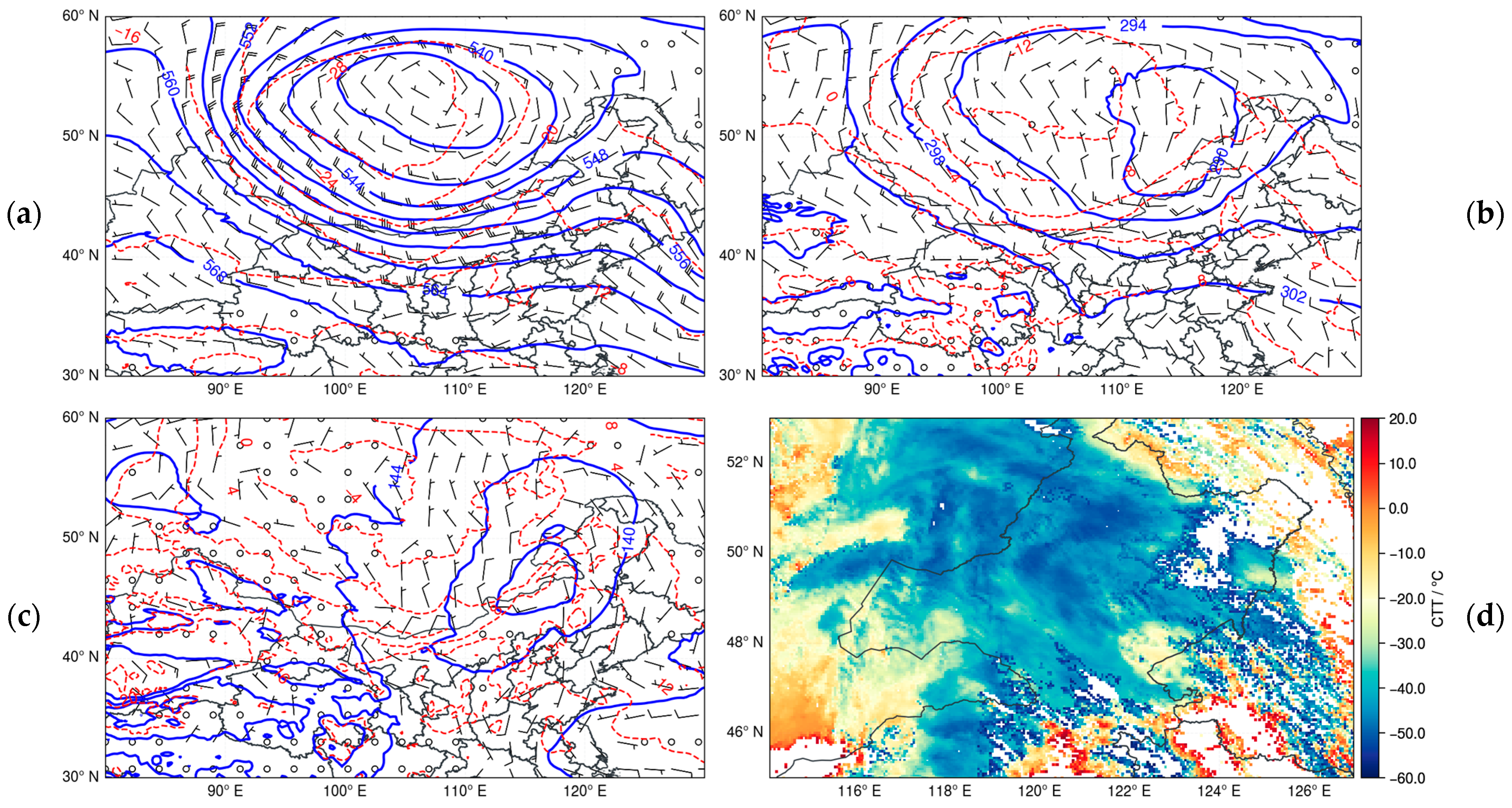
2.1. Synoptic Situation
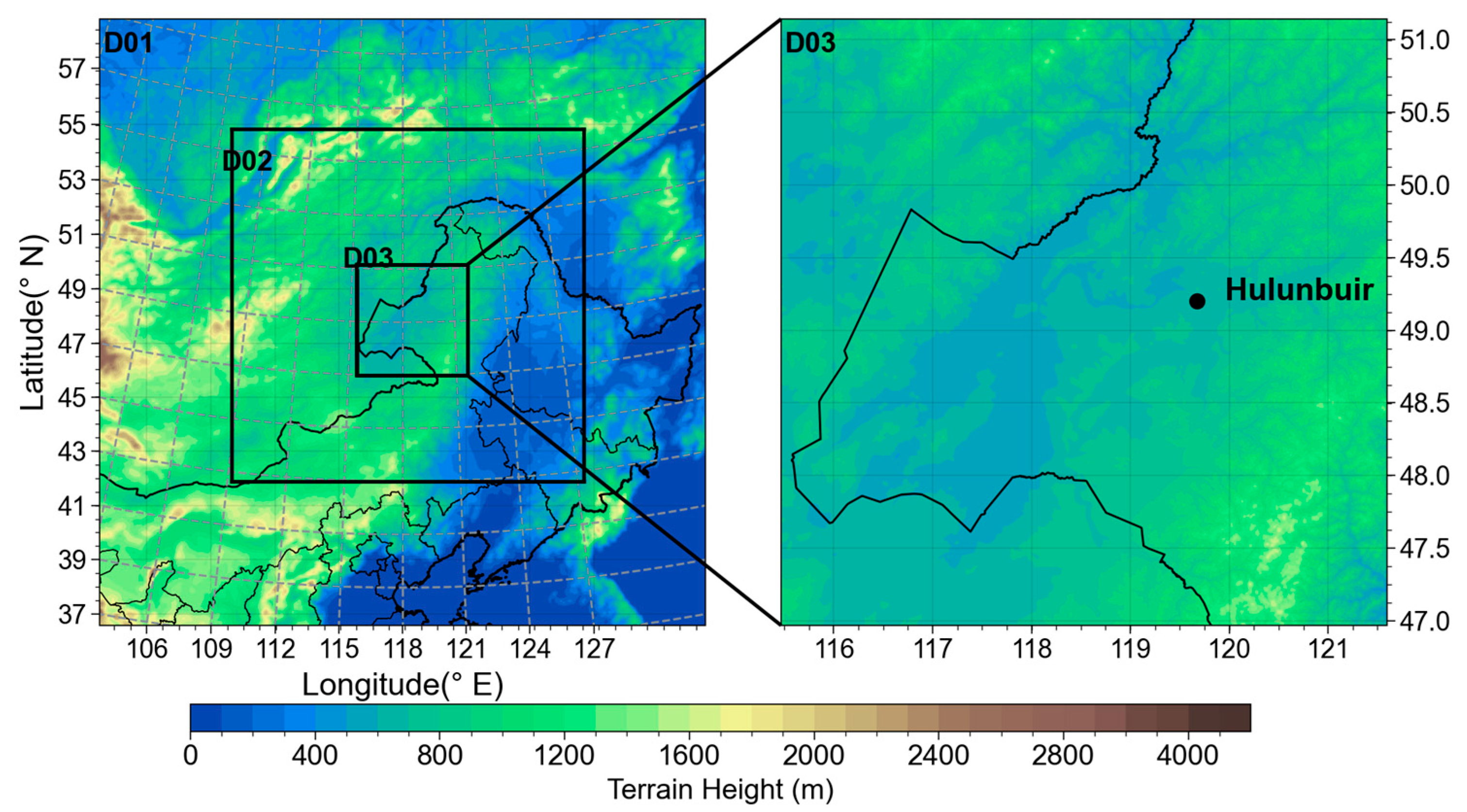
2.2. Model Description
3. Simulation Results Analysis
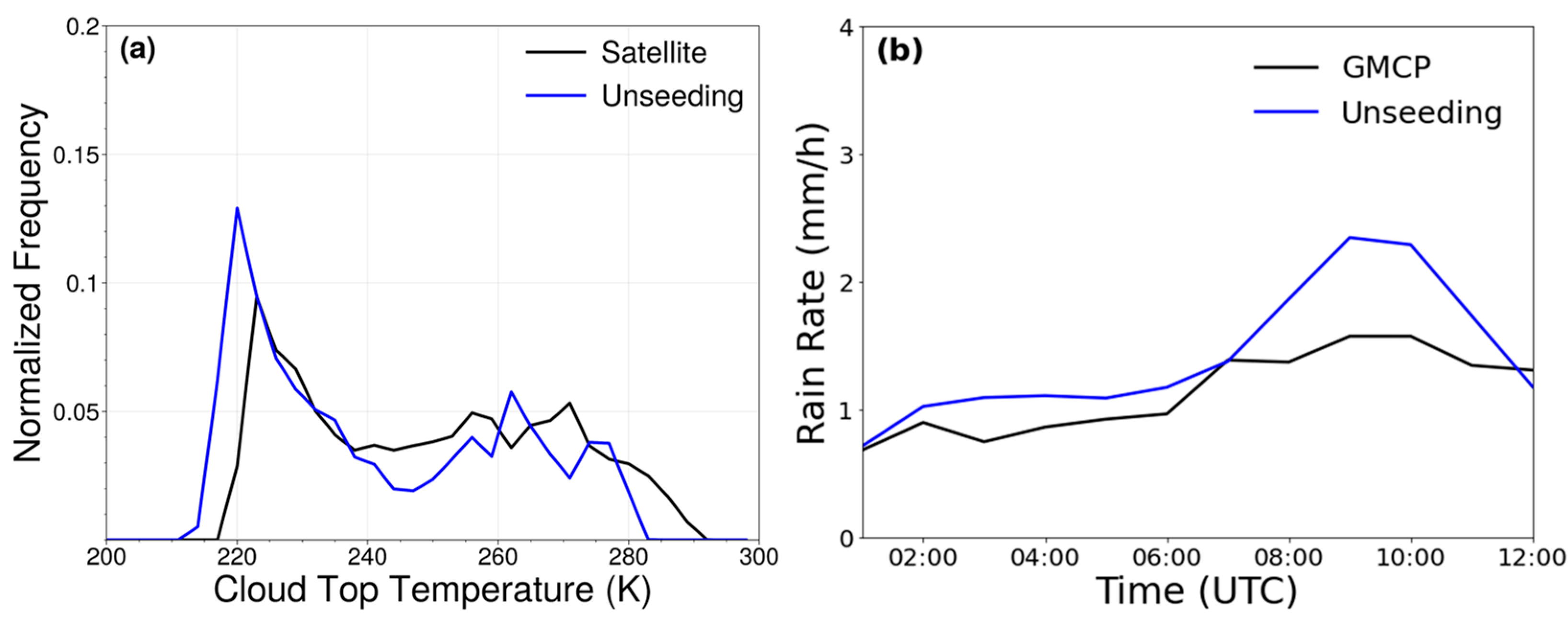
3.1. Comparison of Measured and Simulated Results
3.2. Seeding Test Design
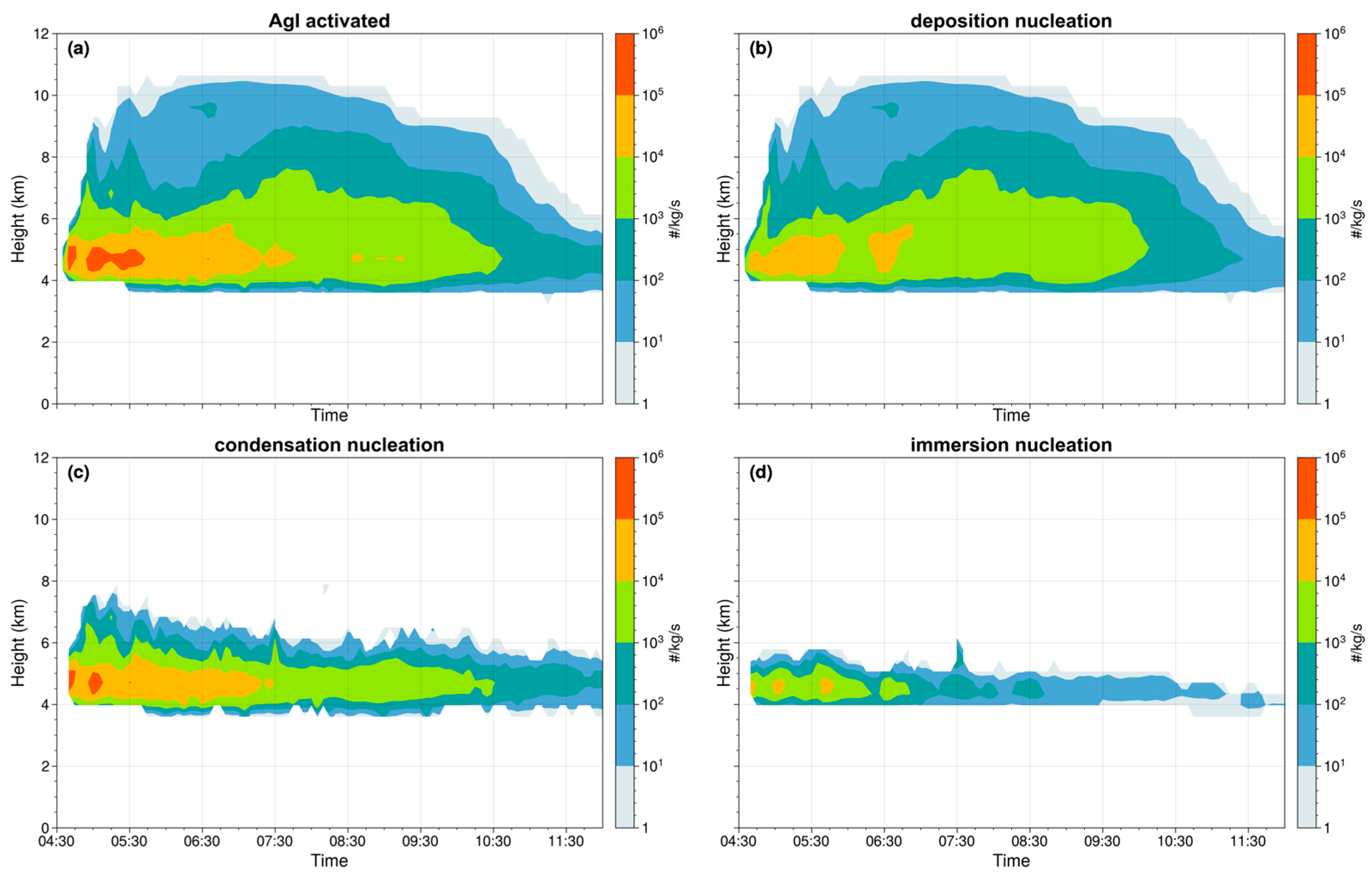
3.3. Diffusion and Nucleation of AgI Particles
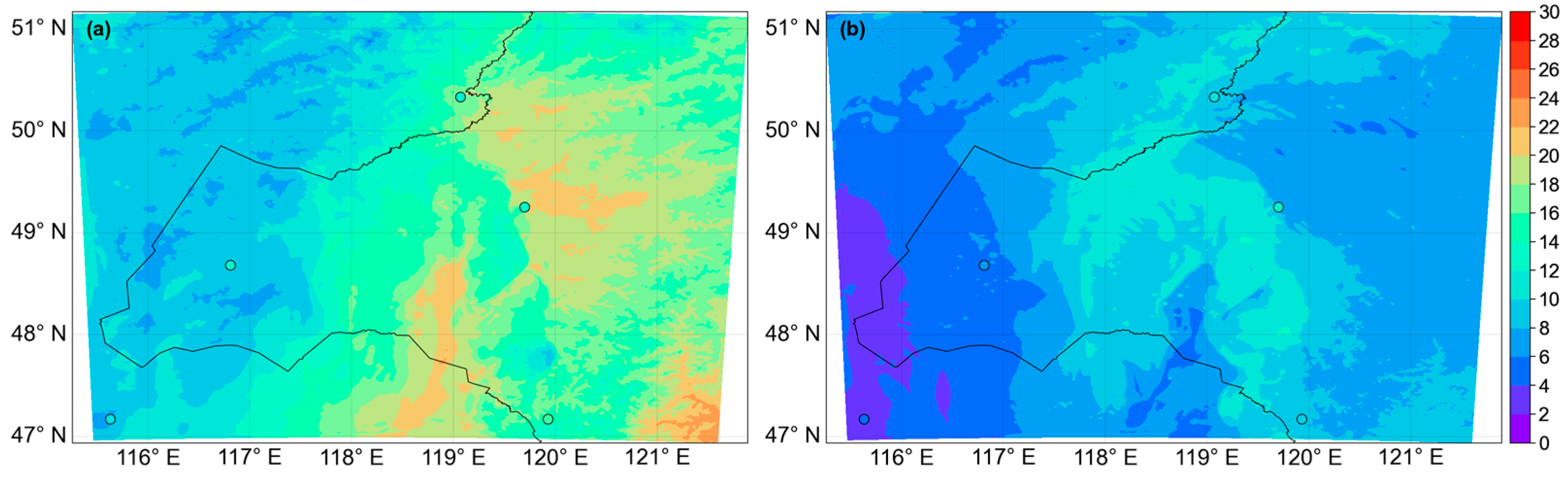
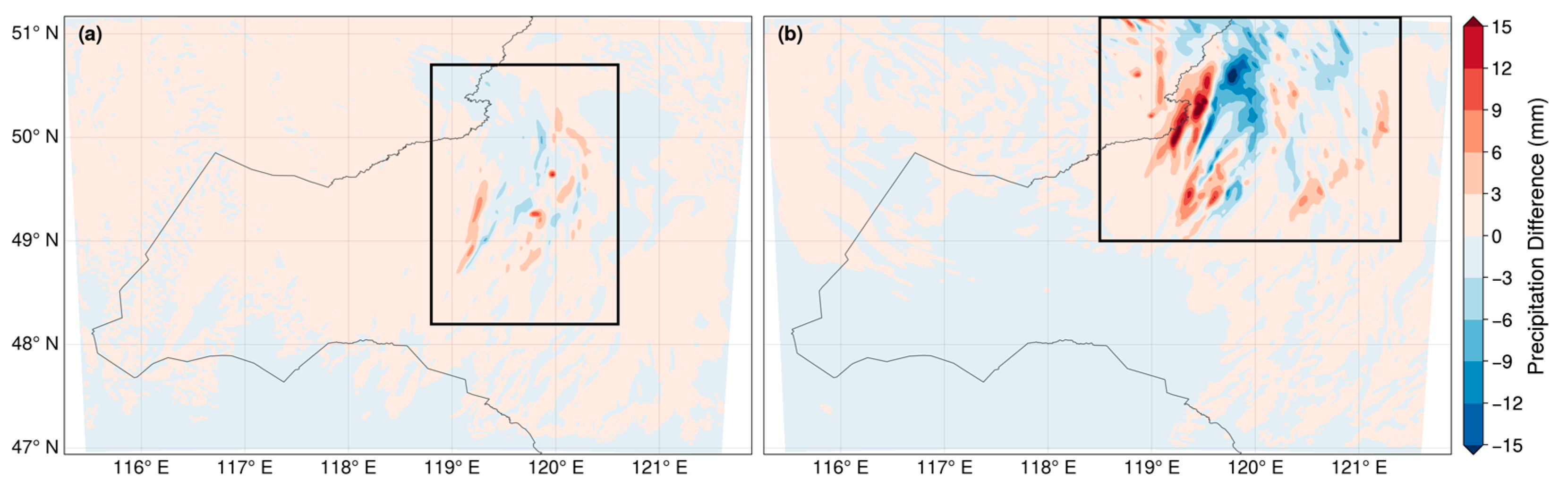
3.4. Changes in Precipitation
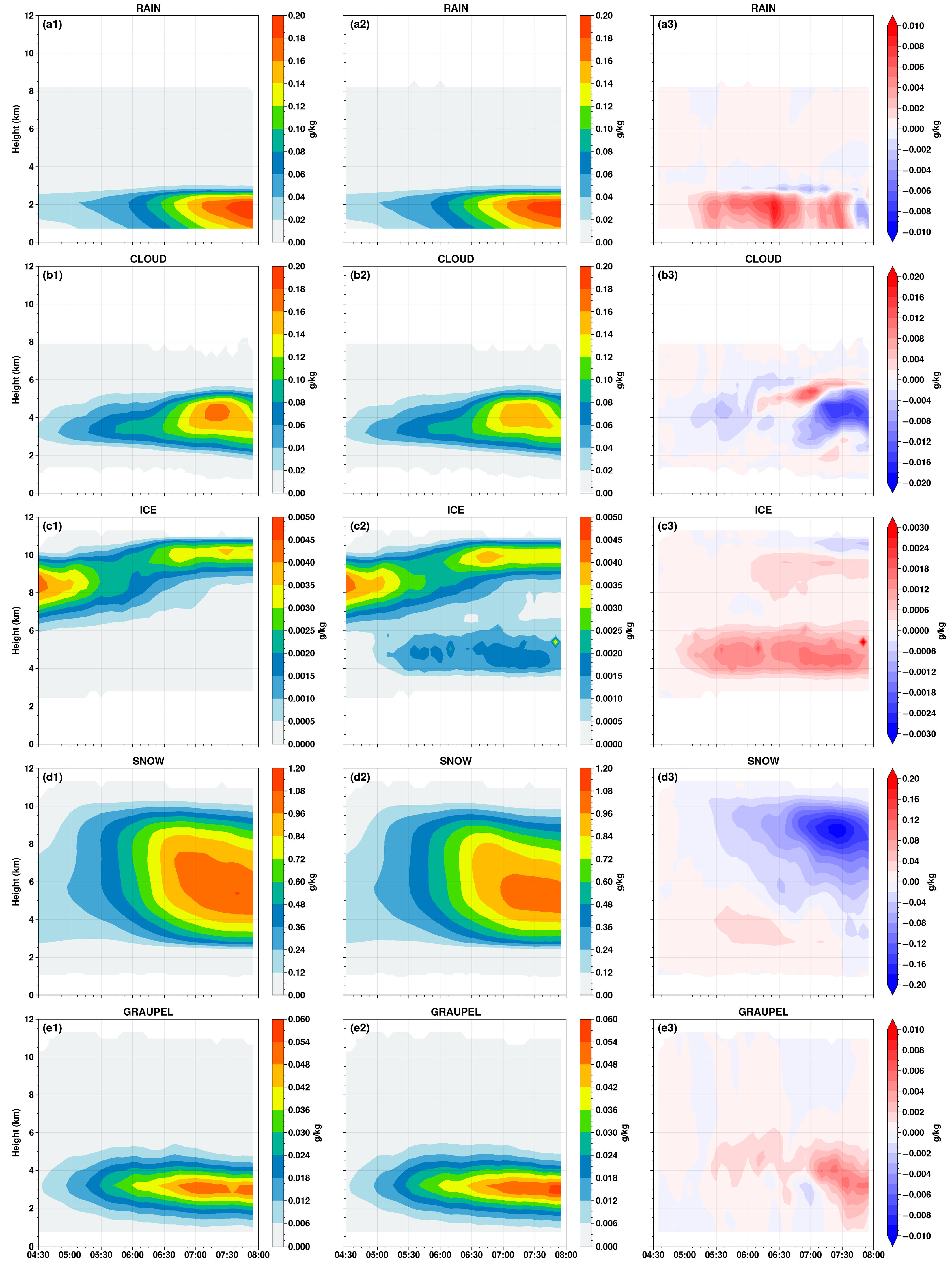
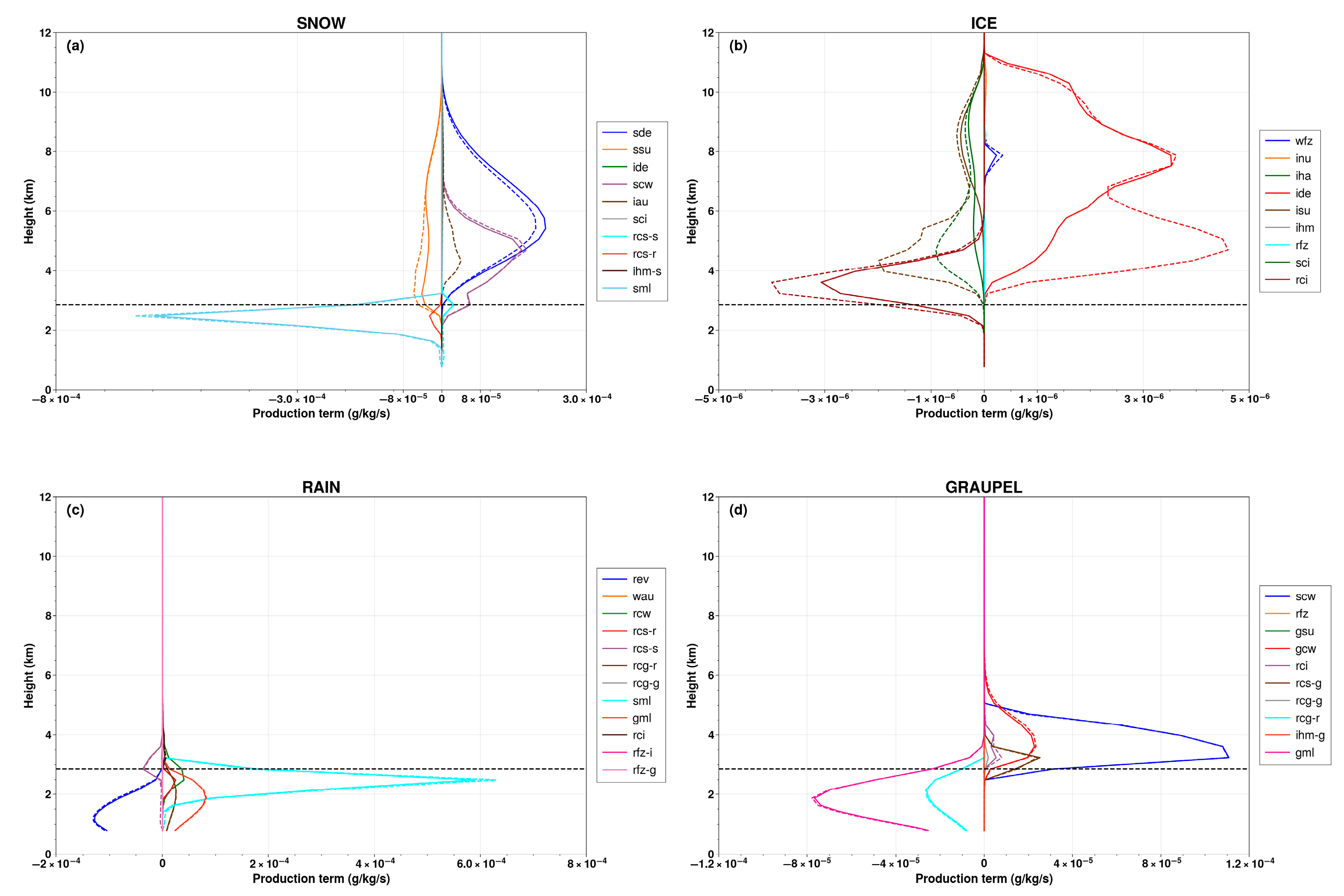
3.5. The Effect of AgI Seeding on Microphysical Processes in Clouds
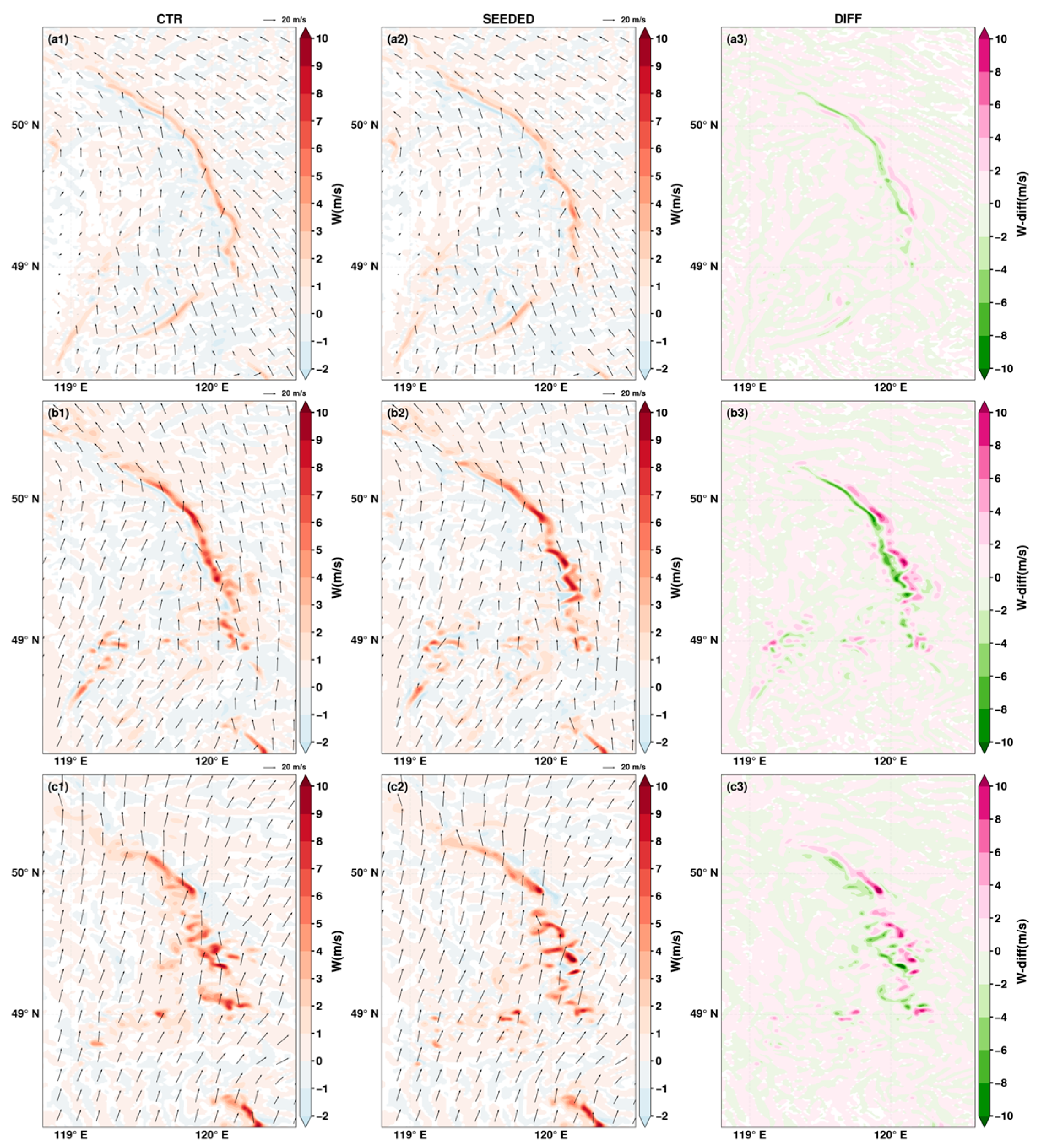
3.6. Changes in Cloud Dynamic Structure
4. Conclusions
Supplementary Materials
Author Contributions
Funding
Institutional Review Board Statement
Informed Consent Statement
Data Availability Statement
Acknowledgments
Conflicts of Interest
References
- Gao, Q.; Guo, X.L.; He, H.; Liu, X.; Huang, M.; Ma, X. Numerical simulation study on the microphysical characteristics of stratiform clouds with embedded convections in northern China based on aircraft measurements. Chin. J. Atmos. Sci. 2020, 44, 899–912. (In Chinese) [Google Scholar]
- Guo, X.; Fu, D.; Li, X.; Hu, Z.; Lei, H.; Xiao, H.; Hong, Y. Advances in Cloud Physics and Weather Modification in China. Adv. Atmos. Sci. 2015, 32, 230–249. [Google Scholar] [CrossRef]
- Evans, A.G.; Locatelli, J.D.; Stoelinga, M.T.; Hobbs, P.V. The IMPROVE-1 Storm of 1–2 February 2001. Part II: Cloud Structures and the Growth of Precipitation. J. Atmos. Sci. 2005, 62, 3456–3473. [Google Scholar] [CrossRef]
- Qi, P.; Guo, X.; Lu, G.; Duan, Y.; Li, B.; Wu, Z.; Dong, X.; Hu, X.; Yang, Y.; Fan, H.; et al. Aircraft Measurements of a Stable Stratiform Cloud with Embedded Convection in Eastern Taihang Mountain of North China: Characteristics of Embedded Convection and Melting Layer Structure. Chin. J. Atmos. Sci. 2019, 43, 1365–1384. (In Chinese) [Google Scholar]
- Herzegh, P.H.; Hobbs, P.V. The Mesoscale and Microscale Structure and Organization of Clouds and Precipitation in Midlatitude Cyclones. II: Warm-Frontal Clouds. J. Atmos. Sci. 1980, 37, 597–611. [Google Scholar] [CrossRef]
- Zhu, S.C.; Guo, X.L. A case study comparing WRF-model-simulated cloud microphysics and precipitation with aircraft measurements in stratiform clouds with embedded convection in northern China. Chin. J. Atmos. Sci. 2015, 39, 370–385. (In Chinese) [Google Scholar]
- Fabry, F.; Zawadzki, I.; Cohn, S. The influence of stratiform precipitation on shallow convective rain: A case study. Mon. Weather Rev. 1993, 121, 3312–3325. [Google Scholar] [CrossRef][Green Version]
- He, H.; Gao, Q.; Liu, X.; Wei, Z.; Jia, X. Numerical simulation of the structural characteristics and precipitation mechanism of stratiform clouds with embedded convections. Chin. J. Atmos. Sci. 2015, 39, 315–328. (In Chinese) [Google Scholar]
- Hobbs, P.V.; Locatelli, J.D. Rainbands, precipitation cores and generating cells in a cyclonic storm. J. Atmos. Sci. 1978, 35, 230–241. [Google Scholar] [CrossRef][Green Version]
- Li, Y.; Niu, S.; Luo, N.; Wen, J.; Huang, H. Numerical simulation about mixture of convective and stratiform clouds formed by convection merger. Chin. J. Geophys. 2009, 52, 1165–1175. (In Chinese) [Google Scholar]
- Li, Y.; Niu, S.; Yao, Z.; Luo, N.; Wen, J.; Huang, H. Initial part discussion of cloud merger. Chin. J. Atmos. Sci. 2009, 33, 1015–1026. (In Chinese) [Google Scholar]
- Henneberger, J.; Ramelli, F.; Spirig, R.; Omanovic, N.; Miller, A.J.; Fuchs, C.; Zhang, H.; Bühl, J.; Hervo, M.; Kanji, Z.A.; et al. Seeding of Supercooled Low Stratus Clouds with a UAV to Study Microphysical Ice Processes: An Introduction to the CLOUDLAB Project. Bull. Am. Meteorol. Soc. 2023, 104, E1962–E1979. [Google Scholar] [CrossRef]
- Vonnegut, B.; Chessin, H. Ice Nucleation by Coprecipitated Silver Iodide and Silver Bromide. Science 1971, 174, 945–946. [Google Scholar] [CrossRef]
- Miller, A.J.; Fuchs, C.; Ramelli, F.; Zhang, H.; Omanovic, N.; Spirig, R.; Marcolli, C.; Kanji, Z.A.; Lohmann, U.; Henneberger, J. Quantified ice-nucleating ability of AgI-containing seeding particles in natural clouds, Atmos. Chem. Phys. 2025, 25, 5387–5407. [Google Scholar] [CrossRef]
- Li, D.; Zhao, C.; Li, P.; Liu, C.; Gong, D.; Liu, S.; Yuan, Z.; Chen, Y. Macro- and Micro-Physical Characteristics of Different Parts of Mixed Convective-Stratiform Clouds and Differences in Their Responses to Seeding. Adv. Atmos. Sci. 2022, 39, 2040–2055. [Google Scholar] [CrossRef]
- Fang, C.G.; Guo, X.L.; Wang, P.X. The physical and precipitation response to AgI-seeding from a mesoscale WRF-based seeding model. Chin. J. Atmos. Sci. 2009, 33, 621–633. (In Chinese) [Google Scholar]
- Xue, L.; Hashimoto, A.; Murakami, M.; Rasmussen, R.; Tessendorf, S.A.; Breed, D.; Parkinson, S.; Holbrook, P.; Blestrud, D. Implementation of a Silver Iodide Cloud-Seeding Parameterization in WRF. Part I: Model Description and Idealized 2D Sensitivity Tests. J. Appl. Meteorol. Climatol. 2013, 52, 1433–1457. [Google Scholar] [CrossRef]
- Xue, L.; Tessendorf, S.A.; Nelson, E.; Rasmussen, R.; Breed, D.; Parkinson, S.; Holbrook, P.; Blestrud, D. Implementation of a Silver Iodide Cloud-Seeding Parameterization in WRF. Part II: 3D Simulations of Actual Seeding Events and Sensitivity Tests. J. Appl. Meteorol. Climatol. 2013, 52, 1458–1476. [Google Scholar] [CrossRef]
- He, H.; Gao, Q.; Li, H. Numerical simulation of stratiform precipitation enhancement in Beijing area and its mechanism. Chin. J. Atmos. Sci. 2013, 37, 905–922. (In Chinese) [Google Scholar]
- Chen, M.; Jing, X.; Li, J.; Yang, J.; Dong, X.; Geerts, B.; Yin, Y.; Chen, B.; Xue, L.; Huang, M.; et al. Accelerated Impact of Airborne Glaciogenic Seeding of Stratiform Clouds by Turbulence. Atmos. Chem. Phys. 2025, 25, 7581–7596. [Google Scholar] [CrossRef]
- Guo, C.; Chen, D.; Chen, M.; Zhang, S.; Guo, J.; Ma, Z. Aerosol Impacts on Summer Precipitation Forecast over the North China Plain by Using Thompson Aerosol-Aware Scheme in WRF: Statistical Analysis and Significant Threat Score Improvements in Polluted Condition During June to August 2018. Atmos. Res. 2024, 299, 107177. [Google Scholar] [CrossRef]
- Cheng, Z.; Liu, X. A Numerical Simulation of Convective Systems in Southeast China: A Comparison of Microphysical Schemes and Sensitivity Experiments on Raindrop Break and Evaporation. Remote Sens. 2024, 16, 4297. [Google Scholar] [CrossRef]
- DeMott, P.J. Quantitative descriptions of ice formation mechanisms of silver iodide-type aerosols. Atmos. Res. 1995, 38, 63–99. [Google Scholar] [CrossRef]
- Meyers, M.P.; DeMott, P.J.; Cotton, W.R. A Comparison of Seeded and Nonseeded Orographic Cloud Simulations with an Explicit Cloud Model. J. Appl. Meteorol. Climatol. 1995, 34, 834–846. [Google Scholar] [CrossRef]
- Deng, S.; Zhong, R.; Liu, T. Application of Different Boundary Layer Schemes in Numerical Simulation. Adv. Geosci. 2019, 9, 861–872. (In Chinese) [Google Scholar] [CrossRef]
- Tian, J.; Liu, J.; Wang, J.; Li, C.; Yu, F.; Chu, Z. A Spatio-Temporal Evaluation of the WRF Physical Parameterisations for Numerical Rainfall Simulation in Semi-Humid and Semi-Arid Catchments of Northern China. Atmos. Res. 2017, 191, 141–155. [Google Scholar] [CrossRef]
- Ma, Z.; Xu, J.; Dong, B.; Hu, X.; Hu, H.; Yan, S.; Zhu, S.; He, K.; Shi, Z.; Chen, Y.; et al. GMCP: A Fully Global Multisource Merging-and-Calibration Precipitation Dataset (1-Hourly, 0.1°, Global, 2000–the Present). Bull. Am. Meteorol. Soc. 2025, 106, E596–E624. [Google Scholar] [CrossRef]
- Friedrich, K.; French, J.R.; Tessendorf, S.A.; Hatt, M.; Weeks, C.; Rauber, R.M.; Geerts, B.; Xue, L.; Rasmussen, R.M.; Blestrud, D.R.; et al. Microphysical Characteristics and Evolution of Seeded Orographic Clouds. J. Appl. Meteorol. Clim. 2021, 60, 909–934. [Google Scholar] [CrossRef]
- Lou, X.; Sun, J.; Shi, Y.; Zhang, X. Numerical Study of the AgI seeding principle for decreasing the convective cloud rainfall. Acta Meteor. Sinica. 2014, 72, 782–793. (In Chinese) [Google Scholar]
- Lou, X.; Fu, Y.; Su, Z. Advances of silver iodide seeding agents for weather modification. J. Appl. Meteorol. Sci. 2021, 32, 146–159. (In Chinese) [Google Scholar]
- Oue, M.; Colle, B.A.; Yuter, S.E.; Kollias, P.; Yeh, P.; Tomkins, L.M. Microscale Updrafts within Northeast U.S. Coastal Snowstorms Using High-Resolution Cloud Radar Measurements. Mon. Weather Rev. 2024, 152, 865–889. [Google Scholar] [CrossRef]



| Domain 1 | Domain 2 | Domain 3 | |
|---|---|---|---|
| Grid spacing | 9 km | 3 km | 1 km |
| Lattice number | 275 × 275 | 478 × 478 | 451 × 451 |
| Model top height | 100 hPa | 100 hPa | 100 hPa |
| Vertical layer | 51 | 51 | 51 |
| Cloud microphysics solution | Thompson | Thompson | Thompson |
| Boundary layer scheme | YSU | YSU | YSU |
| Cumulus parameterization scheme | Kain-Fritsch | \ | \ |
| Long/short wave radiation scheme | RRTMG | RRTMG | RRTMG |
| Land surface process scheme | Noah | Noah | Noah |
| Time | Altitude | Trajectory | AgI |
|---|---|---|---|
| 4:30–5:00 | 4.5 km | 48.2° N, 118.8–119.8° E | 150 g |
Disclaimer/Publisher’s Note: The statements, opinions and data contained in all publications are solely those of the individual author(s) and contributor(s) and not of MDPI and/or the editor(s). MDPI and/or the editor(s) disclaim responsibility for any injury to people or property resulting from any ideas, methods, instructions or products referred to in the content. |
© 2025 by the authors. Licensee MDPI, Basel, Switzerland. This article is an open access article distributed under the terms and conditions of the Creative Commons Attribution (CC BY) license (https://creativecommons.org/licenses/by/4.0/).
Share and Cite
Liu, Z.; Yin, Y.; Chen, Q.; Zou, Z.; Liang, X. The Response of Cloud Dynamic Structure and Microphysical Processes to Glaciogenic Seeding: A Numerical Study. Atmosphere 2025, 16, 1381. https://doi.org/10.3390/atmos16121381
Liu Z, Yin Y, Chen Q, Zou Z, Liang X. The Response of Cloud Dynamic Structure and Microphysical Processes to Glaciogenic Seeding: A Numerical Study. Atmosphere. 2025; 16(12):1381. https://doi.org/10.3390/atmos16121381
Chicago/Turabian StyleLiu, Zhuo, Yan Yin, Qian Chen, Zeyong Zou, and Xuran Liang. 2025. "The Response of Cloud Dynamic Structure and Microphysical Processes to Glaciogenic Seeding: A Numerical Study" Atmosphere 16, no. 12: 1381. https://doi.org/10.3390/atmos16121381
APA StyleLiu, Z., Yin, Y., Chen, Q., Zou, Z., & Liang, X. (2025). The Response of Cloud Dynamic Structure and Microphysical Processes to Glaciogenic Seeding: A Numerical Study. Atmosphere, 16(12), 1381. https://doi.org/10.3390/atmos16121381