DNA/Cell Mass Homeostasis: Coordinating DNA Replication and Cell Size with Central Carbon Metabolism During Bacterial Growth


Abstract
1. Introduction
1.1. Coupling Between Rate of DNA Synthesis and Growth Rate
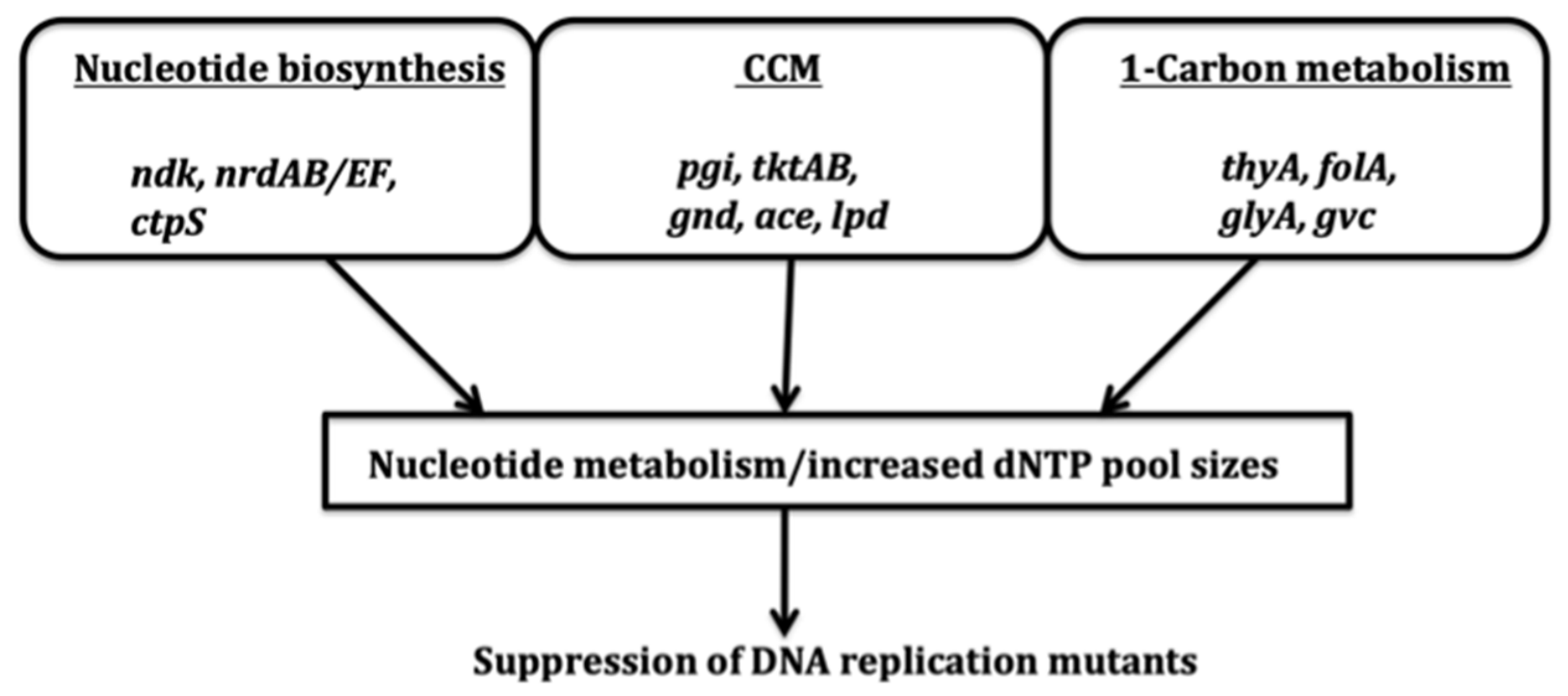
1.2. The Interplay Between Central Carbon Metabolism and DNA Replication
1.3. Growth Rate Dependent and Independent Variation in Chromosomal Content
2. Is the Nucleotypic Effect Analogous to Nucleoid Complexity?
2.1. The Relationship Between Ploidy and Cell Size in Bacteria
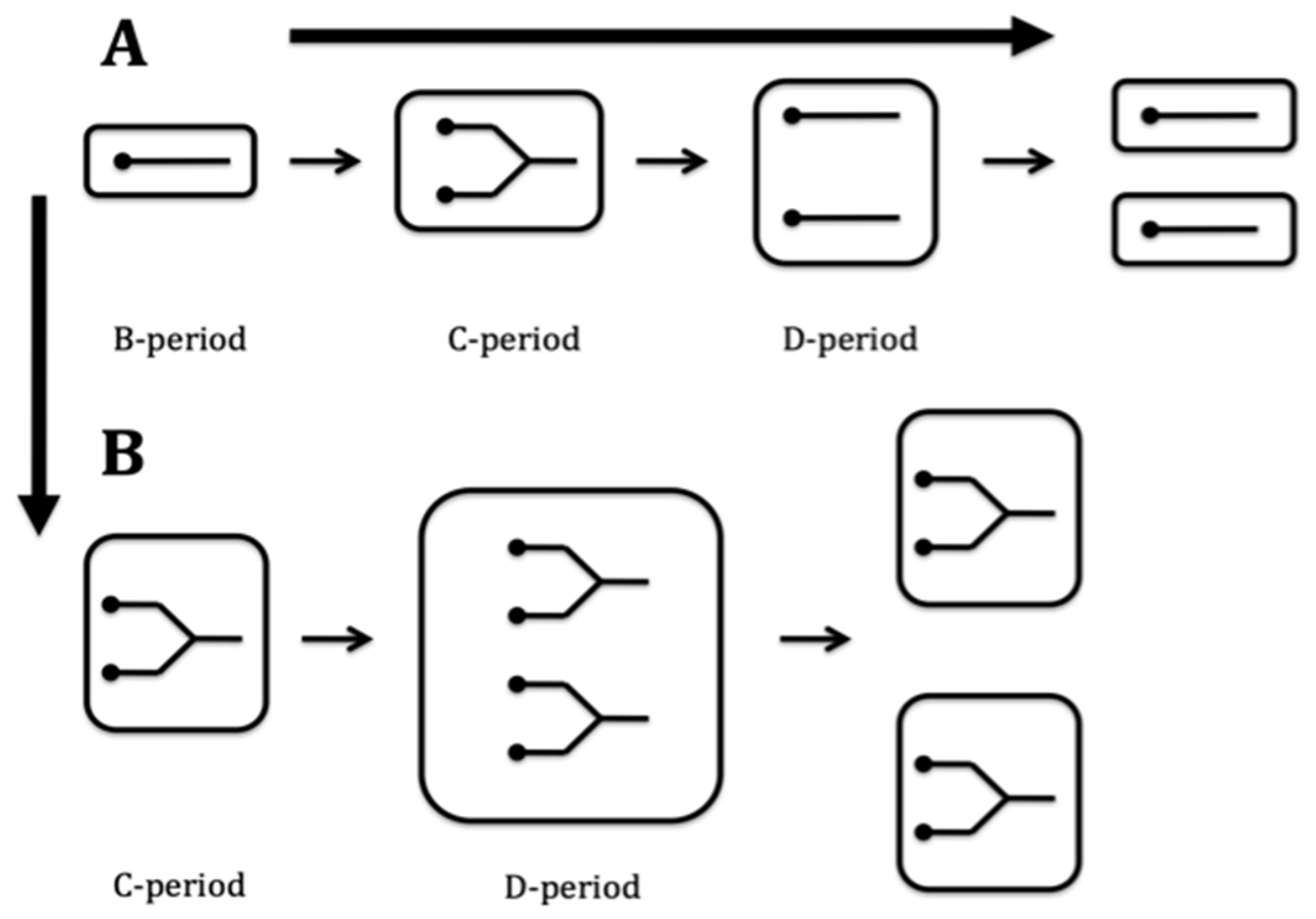
2.2. Nucleoid Complexity and DNA Replication Fork Rate
3. DNA Replication Homeostasis
3.1. Is There a Conserved (Under All Growth Conditions) Negative Correlation Between DNA Replication Fork Rate and Initiation Frequency (Number of Forks) in Bacterial Cells?

| Source | Figure | Growth Condition | Mass | C-Period (min) | Fork Rate (bp/s) | Doubling Time (min) |
|---|---|---|---|---|---|---|
| Si et al. 2017 [7] | Figure 2 | Rich | 2.5 | 40 | 1000 | 30 |
| Si et al. 2017 [7] | Figure 2 | Intermediate | 4 | 60 | 700 | 30 |
| Si et al. 2017 [7] | Figure 2 | Thymine limited | 7.5 | 100 | 420 | 30 |
| Zaritsky 2015 [23] | Figure 1 | Strong limitation | 8.5 | 120 | 350 | 30 |
| MFA-seq study | Figure 3 | Control | _ | _ | 900 | _ |
3.2. Do DnaA and RNR Constitute a Homeostatic Pair That Coordinates DNA Replication with the Cell Cycle?
3.3. Does the Bacterial Cell Coordinate dnaA and nrdAB Gene Expression with Cell Growth?

3.4. DNA Replication Homeostasis, Mutation and Adaptation
4. Discussion
4.1. Summary of Replication Initiation–Elongation Homeostasis
4.2. Additional Evidence for the DnaA-RNR Homeostatic Relationship
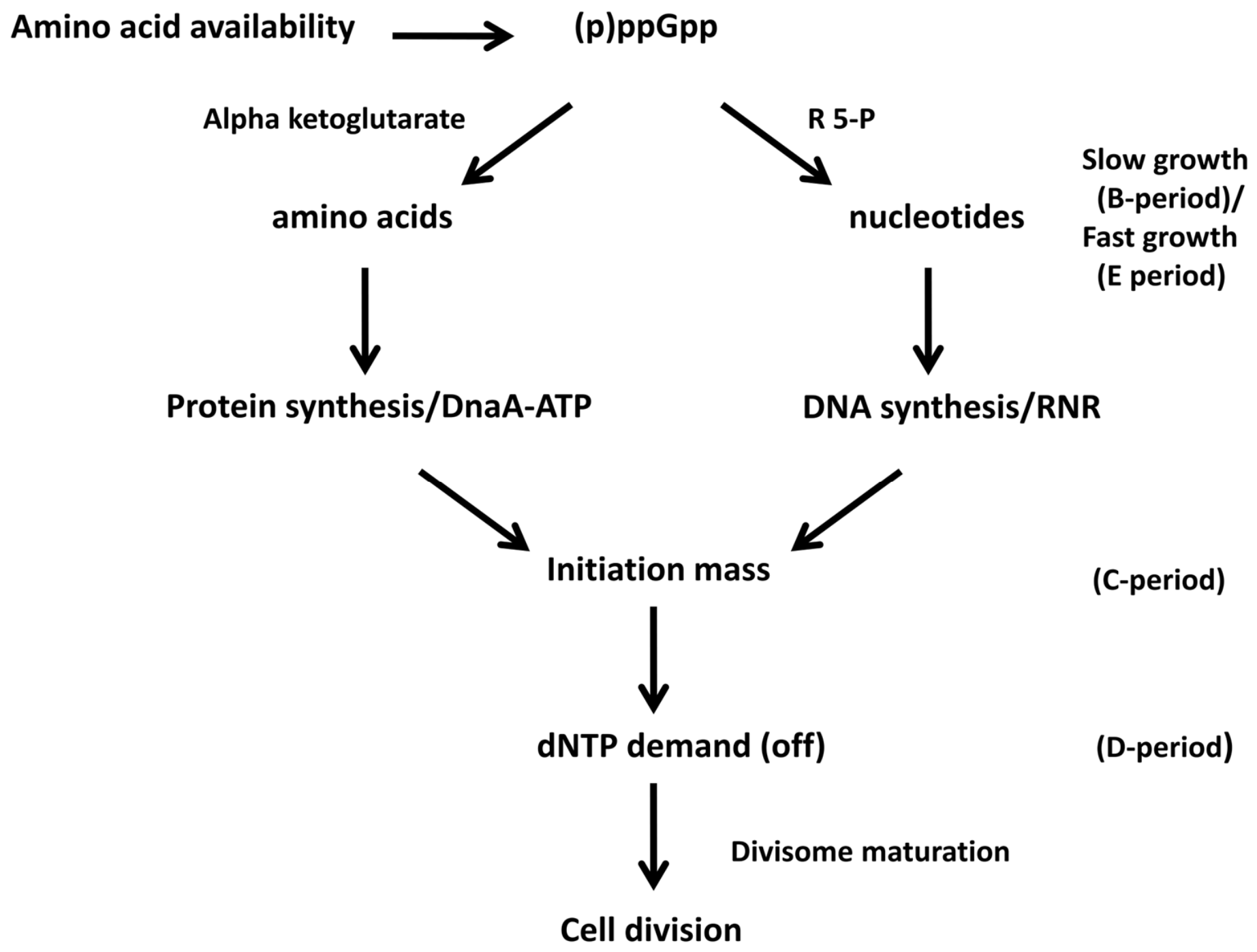
4.3. Mi, (p)ppGpp and the C-Period: A Cell Cycle Clock Under Normal Growth Conditions?
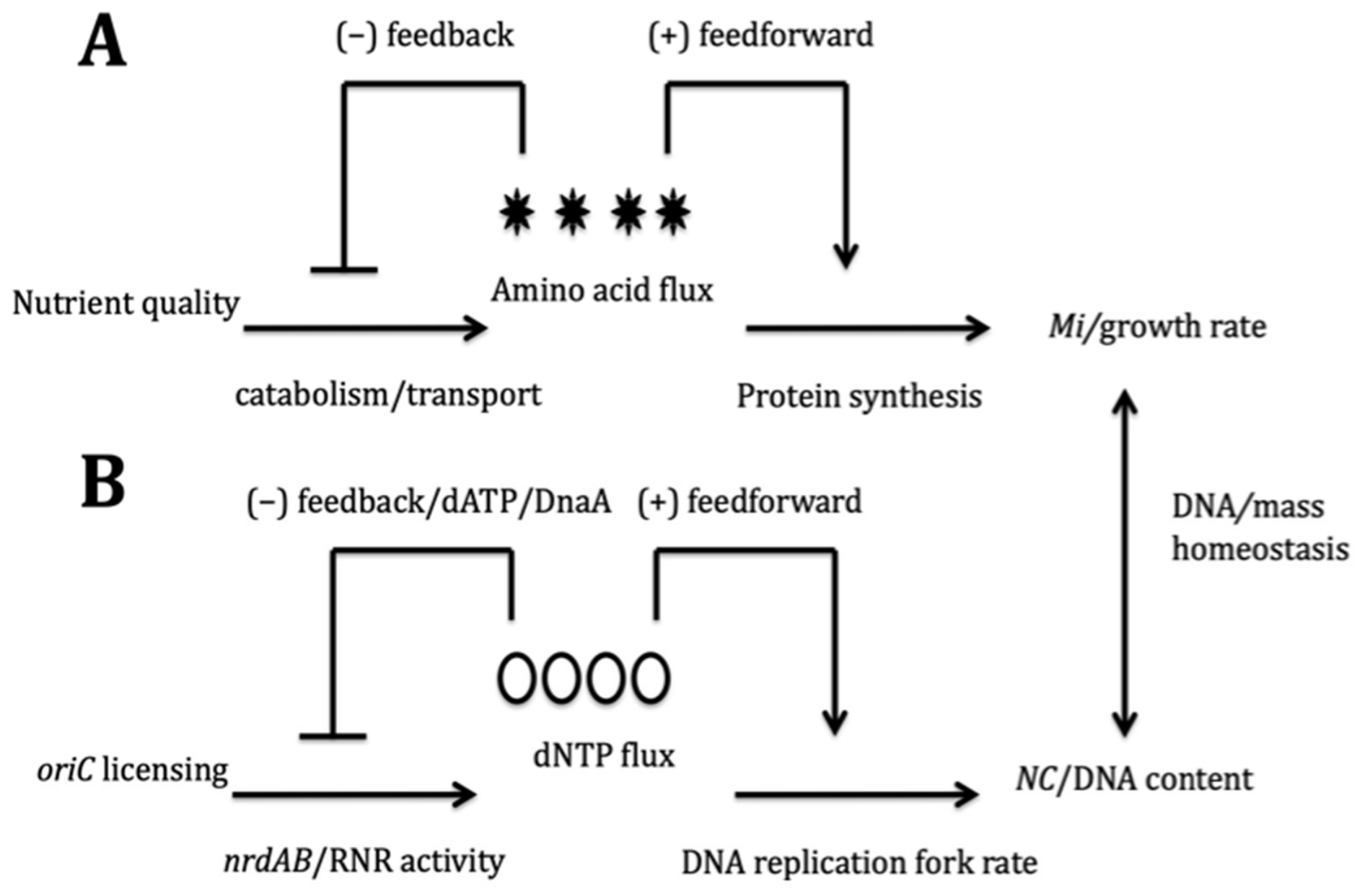
4.4. Coordinating Amino Acid Flux with Nucleotide Flux

5. Conclusions
Funding
Institutional Review Board Statement
Informed Consent Statement
Data Availability Statement
Conflicts of Interest
References
- Hallgren, J.; Jonas, K. Nutritional control of bacterial DNA replication. Curr. Opin. Microbiol. 2024, 77, 102403. [Google Scholar] [CrossRef]
- Katayama, T.; Ozaki, S.; Keyamura, K.; Fujimitsu, K. Regulation of the replication cycle: Conserved and diverse regulatory systems for DnaA and oriC. Nat. Rev. Microbiol. 2010, 8, 163–170. [Google Scholar] [CrossRef] [PubMed]
- Katayama, T.; Kasho, K.; Kawakami, H. The DnaA cycle in Escherichia coli: Activation, function and inactivation of the initiator protein. Front. Microbiol. 2017, 8, 2496. [Google Scholar] [CrossRef]
- Meselson, M.; Stahl, F.W. The replication of DNA. In Cold Spring Harbor Symposia on Quantitative Biology; Cold Spring Harbor Laboratory Press: Woodbury, NY, USA, 1958; Volume 23, pp. 9–12. [Google Scholar] [CrossRef]
- Cooper, S.; Helmstetter, C.E. Chromosome replication and the division cycle of Escherichia coli. J. Mol. Biol. 1968, 31, 519–540. [Google Scholar] [CrossRef]
- Cooper, S. The continuum model: Statistical implications. J. Theor. Biol. 1982, 94, 783–800. [Google Scholar] [CrossRef]
- Si, F.; Le Treut, G.; Sauls, J.T.; Vadia, S.; Levin, P.A.; Jun, S. Mechanistic origin of cell-size control and homeostasis in bacteria. Curr. Biol. 2019, 29, 1760–1770. [Google Scholar] [CrossRef] [PubMed]
- Donachie, W.D. Relationship between cell size and time of initiation of DNA replication. Nature 1968, 219, 1077–1079. [Google Scholar] [CrossRef]
- Jannière, L.; Canceill, D.; Suski, C.; Kanga, S.; Dalmais, B.; Lestini, R.; Monnier, A.-F.; Chapuis, J.; Bolotin, A.; Titok, M.; et al. Genetic Evidence for a Link Between Glycolysis and DNA Replication. PLoS ONE 2007, 2, e447. [Google Scholar] [CrossRef] [PubMed]
- Barańska, S.; Glinkowska, M.; Herman-Antosiewicz, A.; Maciąg-Dorszyńska, M.; Nowicki, D.; Szalewska-Pałasz, A.; Węgrzyn, A.; Węgrzyn, G. Replicating DNA by cell factories: Roles of central carbon metabolism and transcription in the control of DNA replication in microbes, and implications for understanding this process in human cells. Microb. Cell Fact. 2013, 12, 55. [Google Scholar] [CrossRef]
- Nouri, H.; Monnier, A.F.; Fossum-Raunehaug, S.; Maciąg-Dorszyńska, M.; Cabin-Flaman, A.; Kepes, F.; Janniere, L. Multiple links connect central carbon metabolism to DNA replication initiation and elongation in Bacillus subtilis. DNA Res. 2018, 25, 641–653. [Google Scholar] [CrossRef]
- Tymecka-Mulik, J.; Boss, L.; Maciąg-Dorszyńska, M.; Matias Rodrigues, J.F.; Gaffke, L.; Wosinski, A.; Cech, G.M.; Szalewska-Pałasz, A.; Węgrzyn, G.; Glinkowska, M. Suppression of the Escherichia coli dnaA46 mutation by changes in the activities of the pyruvate-acetate node links DNA replication regulation to central carbon metabolism. PLoS ONE 2017, 12, e0176050. [Google Scholar] [CrossRef]
- Maciąg-Dorszyńska, M.; Ignatowska, M.; Jannière, L.; Węgrzyn, G.; Szalewska-Pałasz, A. Mutations in central carbon metabolism genes suppress defects in nucleoid position and cell division of replication mutants in Escherichia coli. Gene 2012, 503, 31–35. [Google Scholar] [CrossRef]
- Maciąg, M.; Nowicki, D.; Szalewska-Pałasz, A.; Węgrzyn, G. Central carbon metabolism influences fidelity of DNA replication in Escherichia coli. Mutat. Res. Fundam. Mol. Mech. Mutagen. 2012, 731, 99–106. [Google Scholar] [CrossRef] [PubMed]
- Maciąg, M.; Nowicki, D.; Janniere, L.; Szalewska-Pałasz, A.; Węgrzyn, G. Genetic response to metabolic fluctuations: Correlation between central carbon metabolism and DNA replication in Escherichia coli. Microb. Cell Fact. 2011, 10, 19. [Google Scholar] [CrossRef]
- Soultanas, P.; Janniere, L. The metabolic control of DNA replication: Mechanism and function. Open Biol. 2023, 13, 230220. [Google Scholar] [CrossRef]
- Krause, K.; Maciąg-Dorszyńska, M.; Wosinski, A.; Gaffke, L.; Morcinek-Orłowska, J.; Rintz, E.; Bielańska, P.; Szalewska-Pałasz, A.; Muskhelishvili, G.; Węgrzyn, G. The role of metabolites in the link between DNA replication and central carbon metabolism in Escherichia coli. Genes 2020, 11, 447. [Google Scholar] [CrossRef]
- Fingland, N.; Flåtten, I.; Downey, C.D.; Fossum-Raunehaug, S.; Skarstad, K.; Crooke, E. Depletion of acidic phospholipids influences chromosomal replication in Escherichia coli. Microbiologyopen 2012, 1, 450–466. [Google Scholar] [CrossRef]
- Zaritsky, A.; Vollmer, W.; Männik, J.; Liu, C. Does the nucleoid determine cell dimensions in Escherichia coli? Front. Microbiol. 2019, 10, 1717. [Google Scholar] [CrossRef]
- Zhu, M.; Dai, X.; Guo, W.; Ge, Z.; Yang, M.; Wang, H.; Wang, Y.P. Manipulating the bacterial cell cycle and cell size by titrating the expression of ribonucleotide reductase. mBio 2017, 8, 10-1128. [Google Scholar] [CrossRef]
- Herrick, J.; Norris, V.; Kohiyama, M. 60 Years of Studies into the Initiation of Chromosome Replication in Bacteria. Biomolecules 2025, 15, 203. [Google Scholar] [CrossRef] [PubMed]
- Cooper, S. The central dogma of cell biology. Cell Biol. Int. Rep. 1981, 5, 539–549. [Google Scholar] [CrossRef]
- Zaritsky, A. Cell-shape homeostasis in Escherichia coli is driven by growth, division, and nucleoid complexity. Biophys. J. 2015, 109, 178–181. [Google Scholar] [CrossRef][Green Version]
- Howard, C.B.; Rabinovitch, A.; Yehezkel, G.; Zaritsky, A. Tight coupling of cell width to nucleoid structure in Escherichia coli. Biophys. J. 2024, 123, 502–508. [Google Scholar] [CrossRef] [PubMed]
- Kirchman, D.; Ducklow, H.; Mitchell, R. Estimates of bacterial growth from changes in uptake rates and biomass. Appl. Environ. Microbiol. 1982, 44, 1296–1307. [Google Scholar] [CrossRef]
- Chien, A.C.; Hill, N.S.; Levin, P.A. Cell size control in bacteria. Curr. Biol. 2012, 22, R340–R349. [Google Scholar] [CrossRef]
- Vadia, S.; Levin, P.A. Growth rate and cell size: A re-examination of the growth law. Curr. Opin. Microbiol. 2015, 24, 96–103. [Google Scholar] [CrossRef] [PubMed]
- Hill, N.S.; Kadoya, R.; Chattoraj, D.K.; Levin, P.A. Cell size and the initiation of DNA replication in bacteria. PLoS Genet. 2012, 8, e1002549. [Google Scholar] [CrossRef]
- Zaritsky, A.; Woldringh, C.L. Chromosome replication, cell growth, division and shape: A personal perspective. Front. Microbiol. 2015, 6, 756. [Google Scholar] [CrossRef] [PubMed]
- Taheri-Araghi, S.; Bradde, S.; Sauls, J.T.; Hill, N.S.; Levin, P.A.; Paulsson, J.; Vergassola, M.; Jun, S. Cell-size control and homeostasis in bacteria. Curr. Biol. 2015, 25, 385–391. [Google Scholar] [CrossRef]
- Basan, M.; Zhu, M.; Dai, X.; Warren, M.; Sévin, D.; Wang, Y.P.; Hwa, T. Inflating bacterial cells by increased protein synthesis. Mol. Syst. Biol. 2015, 11, MSB156178. [Google Scholar] [CrossRef]
- Moreno, S.G.; Martín, C.M.; Guillén, E.F.; Guzmán, E.C. Tuning the replication fork progression by the initiation frequency. Environ. Microbiol. 2013, 15, 3240–3251. [Google Scholar] [CrossRef]
- Szarski, H. Cell size and nuclear DNA content in vertebrates. Int. Rev. Cytol. 1976, 44, 93–111. [Google Scholar] [CrossRef]
- Cavalier-Smith, T. Nuclear volume control by nucleoskeletal DNA, selection for cell volume and cell growth rate, and the solution of the DNA C-value paradox. J. Cell Sci. 1978, 34, 247–278. [Google Scholar] [CrossRef]
- Gregory, T.R. The bigger the C-value, the larger the cell: Genome size and red blood cell size in vertebrates. Blood Cells Mol. Dis. 2001, 27, 830–843. [Google Scholar] [CrossRef]
- Balachandra, S.; Sarkar, S.; Amodeo, A.A. The nuclear-to-cytoplasmic ratio: Coupling DNA content to cell size, cell cycle, and biosynthetic capacity. Annu. Rev. Genet. 2022, 56, 165–185. [Google Scholar] [CrossRef] [PubMed]
- Hayflick, L. Mortality and immortality at the cellular level. A review. Biochemistry 1997, 62, 1180–1190. [Google Scholar] [PubMed]
- Garrido-Ramos, M.A. Satellite DNA in plants: More than just rubbish. Cytogenet. Genome Res. 2015, 146, 153–170. [Google Scholar] [CrossRef]
- Natale, F.; Scholl, A.; Rapp, A.; Yu, W.; Rausch, C.; Cardoso, M.C. DNA replication and repair kinetics of Alu, LINE-1 and satellite III genomic repetitive elements. Epigenet. Chromatin 2018, 11, 61. [Google Scholar] [CrossRef] [PubMed]
- Macgregor, H.C.; Sessions, S.K. The biological significance of variation in satellite DNA and heterochromatin in newts of the genus Triturus: An evolutionary perspective. Philos. Trans. R. Soc. Lond. B Biol. Sci. 1986, 312, 243–259. [Google Scholar] [CrossRef]
- Shermoen Antony, W.; McCleland, M.L.; O’Farrell, P.H. Developmental control of late replication and S phase length. Curr. Biol. 2010, 20, 2067–2077. [Google Scholar] [CrossRef]
- Goodarzi, A.A.; Noon, A.T.; Jeggo, P.A. The impact of heterochromatin on DSB repair. Essays Biochem. Biochem. Soc. Trans. 2009, 37, 569–576. [Google Scholar] [CrossRef] [PubMed]
- Gray, W.T.; Govers, S.K.; Xiang, Y.; Parry, B.R.; Campos, M.; Kim, S.; Jacobs-Wagner, C. Nucleoid size scaling and intracellular organization of translation across bacteria. Cell 2019, 177, 1632–1648. [Google Scholar] [CrossRef]
- Volland, J.M.; Gonzalez-Rizzo, S.; Gros, O.; Tyml, T.; Ivanova, N.; Schulz, F.; Date, S.V. A centimeter-long bacterium with DNA contained in metabolically active, membrane-bound organelles. Science 2022, 376, 1453–1458. [Google Scholar] [CrossRef]
- Zaritsky, A.; Pritchard, E.H. Replication time of the chromosome in thymineless mutants of Escherichia coli. J. Mol. Biol. 1971, 60, 65–74. [Google Scholar] [CrossRef] [PubMed]
- Zaritsky, A.; Pritchard, R.H. Changes in cell size and shape associated with changes in the replication time of the chromosome of Escherichia coli. J. Bacteriol. 1973, 114, 824–837. [Google Scholar] [CrossRef] [PubMed]
- Odsbu, I.; Morigen; Skarstad, K. A reduction in ribonucleotide reductase activity slows down the chromosome replication fork but does not change its localization. PLoS ONE 2009, 4, e7617. [Google Scholar] [CrossRef]
- Blow, J.J.; Ge, X.Q.; Jackson, D.A. How dormant origins promote complete genome replication. Trends Biochem. Sci. 2011, 36, 405–414. [Google Scholar] [CrossRef]
- Donachie, W.D.; Begg, K.J.; Vicente, M. Cell length, cell growth and cell division. Nature 1976, 264, 328–333. [Google Scholar] [CrossRef]
- Boye, E.; Stokke, T.; Kleckner, N.; Skarstad, K. Coordinating DNA replication initiation with cell growth: Differential roles for DnaA and SeqA proteins. Proc. Natl. Acad. Sci. USA 1996, 93, 12206–12211. [Google Scholar] [CrossRef]
- Atlung, T.; Hansen, F.G. Three distinct chromosome replication states are induced by increasing concentrations of DnaA protein in Escherichia coli. J. Bacteriol. 1993, 175, 6537–6545. [Google Scholar] [CrossRef]
- Guzmán, E.C.; Salguero, I.; Martín, C.M.; Acedo, E.L.; Guarino, E.; Sánchez-Romero, A.; Jiménez-Sánchez, A. Relationship between fork progression and initiation of chromosome replication in E. coli. In DNA Replication: Current Advances; InTech: Rijeka, Croatia, 2011; pp. 203–220. [Google Scholar]
- Guzmán, E.C.; Caballero, J.L.; Jiménez-Sánchez, A. Ribonucleoside diphosphate reductase is a component of the replication hyperstructure in Escherichia coli. Mol. Microbiol. 2002, 43, 487–495. [Google Scholar] [CrossRef]
- Fricke, J.; Neuhard, J.; Kelln, R.A.; Pedersen, S. The cmk gene encoding cytidine monophosphate kinase is located in the rpsA operon and is required for normal replication rate in Escherichia coli. J. Bacteriol. 1995, 177, 517–523. [Google Scholar] [CrossRef]
- Grucela, P.K.; Fuhrer, T.; Sauer, U.; Chao, Y.; Zhang, Y.E. Ribose 5-phosphate (R5B): The key metabolite bridging the metabolisms of nucleotides and amino acids during stringent response in Escherichia coli? Microb. Cell 2023, 10, 141–144. [Google Scholar] [CrossRef]
- Elledge, S.J.; Zhou, Z.; Allen, J.B.; Navas, T.A. DNA damage and cell cycle regulation of ribonucleotide reductase. Bioessays 1993, 15, 333–339. [Google Scholar] [CrossRef]
- Elledge, S.J.; Davis, R.W. DNA damage induction of ribonucleotide reductase. Mol. Cell. Biol. 1989, 9, 4932–4940. [Google Scholar]
- Gon, S.; Napolitano, R.; Rocha, W.; Coulon, S.; Fuchs, R.P. Increase in dNTP pool size during the DNA damage response plays a key role in spontaneous and induced-mutagenesis in Escherichia coli. Proc. Natl. Acad. Sci. USA 2011, 108, 19311–19316. [Google Scholar] [CrossRef]
- Huang, D.; Johnson, A.E.; Sim, B.S.; Lo, T.W.; Merrikh, H.; Wiggins, P.A. The in vivo measurement of replication fork velocity and pausing by lag-time analysis. Nat. Commun. 2023, 14, 1762. [Google Scholar] [CrossRef]
- Skovgaard, O. An additional replication origin causes cell cycle specific DNA replication fork speed. Front. Microbiol. 2025, 16, 1584664. [Google Scholar] [CrossRef]
- Flåtten, I.; Fossum-Raunehaug, S.; Taipale, R.; Martinsen, S.; Skarstad, K. The DnaA protein is not the limiting factor for initiation of replication in Escherichia coli. PLoS Genet. 2015, 11, e1005276. [Google Scholar] [CrossRef]
- Pountain, A.W.; Jiang, P.; Yao, T.; Homaee, E.; Guan, Y.; McDonald, K.J.; Podkowik, M.; Shopsin, B.; Torres, V.J.; Golding, I.; et al. Transcription–replication interactions reveal bacterial genome regulation. Nature 2024, 626, 661–669. [Google Scholar] [CrossRef]
- Gon, S.; Camara, J.E.; Klungsøyr, H.K.; Crooke, E.; Skarstad, K.; Beckwith, J. A novel regulatory mechanism couples deoxyribonucleotide synthesis and DNA replication in Escherichia coli. EMBO J. 2006, 25, 1137. [Google Scholar] [CrossRef]
- Sun, L.; Fuchs, J.A. Escherichia coli ribonucleotide reductase expression is cell cycle regulated. Mol. Biol. Cell 1992, 3, 1095–1105. [Google Scholar] [CrossRef]
- Knöppel, A.; Broström, O.; Gras, K.; Elf, J.; Fange, D. Regulatory elements coordinating initiation of chromosome replication to the Escherichia coli cell cycle. Proc. Natl. Acad. Sci. USA 2023, 120, e2213795120. [Google Scholar] [CrossRef]
- Li, D.; Zheng, H.; Bai, Y.; Zhang, Z.; Cheng, H.; Huang, X.; Wei, T.; Chang, M.; Zaritsky, A.; Hwa, T.; et al. Extrusion-modulated DnaA activity oscillations coordinate DNA replication with biomass growth. eLife 2025, 14, RP107214. [Google Scholar] [CrossRef]
- Olliver, A.; Saggioro, C.; Herrick, J.; Sclavi, B. DnaA-ATP acts as a molecular switch to control levels of ribonucleotide reductase expression in Escherichia coli. Mol. Microbiol. 2010, 76, 1555–1571. [Google Scholar] [CrossRef]
- Berger, M.; Wolde, P.R.T. Robust replication initiation from coupled homeostatic mechanisms. Nat. Commun. 2022, 13, 6556. [Google Scholar] [CrossRef]
- Sánchez-Romero, M.A.; Molina, F.; Jiménez-Sánchez, A. Correlation between ribonucleoside-diphosphate reductase and three replication proteins in Escherichia coli. BMC Mol. Biol. 2010, 11, 11. [Google Scholar] [CrossRef]
- Greene, B.L.; Nocera, D.G.; Stubbe, J. Basis of dATP inhibition of RNRs. J. Biol. Chem. 2018, 293, 10413–10414. [Google Scholar] [CrossRef]
- Funk, M.A.; Zimanyi, C.M.; Andree, G.A.; Hamilos, A.E.; Drennan, C.L. How ATP and dATP act as molecular switches to regulate enzymatic activity in the prototypical bacterial class Ia ribonucleotide reductase. Biochemistry 2024, 63, 2517–2531. [Google Scholar] [CrossRef]
- Chabes, A.; Stillman, B. Constitutively high dNTP concentration inhibits cell cycle progression and the DNA damage checkpoint in yeast Saccharomyces cerevisiae. Proc. Natl. Acad. Sci. USA 2007, 104, 1183–1188. [Google Scholar] [CrossRef]
- Fujimitsu, K.; Su’etsugu, M.; Yamaguchi, Y.; Mazda, K.; Fu, N.; Kawakami, H.; Katayama, T. Modes of overinitiation, dnaA gene expression, and inhibition of cell division in a novel cold-sensitive hda mutant of Escherichia coli. J. Bacteriol. 2008, 190, 5368–5381. [Google Scholar] [CrossRef]
- Charbon, G.; Riber, L.; Løbner-Olesen, A. Countermeasures to survive excessive chromosome replication in Escherichia coli. Curr. Genet. 2018, 64, 71–79. [Google Scholar] [CrossRef]
- Santos, M.M.; Johnson, M.C.; Fiedler, L.; Zegerman, P. Global early replication disrupts gene expression and chromatin conformation in a single cell cycle. Genome Biol. 2022, 23, 217. [Google Scholar] [CrossRef]
- Schaaper, R.M.; Mathews, C.K. Mutational consequences of dNTP pool imbalances in E. coli. DNA Repair 2013, 12, 73–79. [Google Scholar] [CrossRef]
- Yao, N.Y.; Schroeder, J.W.; Yurieva, O.; Simmons, L.A.; O’Donnell, M.E. Cost of rNTP/dNTP pool imbalance at the replication fork. Proc. Natl. Acad. Sci. USA 2013, 110, 12942–12947. [Google Scholar] [PubMed]
- Williams, J.S.; Kunkel, T.A. Ribonucleotides in DNA: Origins, repair and consequences. DNA Repair 2014, 19, 27–37. [Google Scholar] [CrossRef] [PubMed]
- Sass, T.H.; Lovett, S.T. The DNA damage response of Escherichia coli, revisited: Differential gene expression after replication inhibition. Proc. Natl. Acad. Sci. USA 2024, 121, e2407832121. [Google Scholar] [CrossRef]
- Gibert, I.; Calero, S.; Barbé, J. Measurement of in vivo expression of nrdA and nrdB genes of Escherichia coli by using IacZ gene fusions. Mol. Gen. Genet. MGG 1990, 220, 400–408. [Google Scholar] [PubMed]
- Filpula, D.; Fuchs, J.A. Regulation of ribonucleoside diphosphate reductase synthesis in Escherichia coli: Increased enzyme synthesis as a result of inhibition of deoxyribonucleic acid synthesis. J. Bacteriol. 1977, 130, 107–113. [Google Scholar] [CrossRef]
- Maslowska, K.H.; Makiela-Dzbenska, K.; Fijalkowska, I.J. The SOS system: A complex and tightly regulated response to DNA damage. Environ. Mol. Mutagen. 2019, 60, 368–384. [Google Scholar]
- Quinones, A.; Juterbock, W.R.; Messer, W. Expression of the dnaA gene of Escherichia coli is inducible by DNA damage. Mol. Gen. Genet. 1991, 227, 9–16. [Google Scholar] [CrossRef] [PubMed]
- Woldringh, C.L.; Mulder, E.; Huls, P.G.; Vischer, N. Toporegulation of bacterial division according to the nucleoid occlusion model. Res. Microbiol. 1991, 142, 309–320. [Google Scholar] [CrossRef]
- Cho, H.; McManus, H.R.; Dove, S.L.; Bernhardt, T.G. Nucleoid occlusion factor SlmA is a DNA-activated FtsZ polymerization antagonist. Proc. Natl. Acad. Sci. USA 2011, 108, 3773–3778. [Google Scholar] [CrossRef] [PubMed]
- Wu, L.J.; Errington, J. Nucleoid occlusion and bacterial cell division. Nat. Rev. Microbiol. 2012, 10, 8–12. [Google Scholar] [CrossRef]
- Hand, R. Regulation of DNA replication on subchromosomal units of mammalian cells. J. Cell Biol. 1975, 64, 89–97. [Google Scholar] [CrossRef]
- Conti, C.; Sacca, B.; Herrick, J.; Lalou, C.; Pommier, Y.; Bensimon, A. Replication fork velocities at adjacent replication origins are coordinately modified during DNA replication in human cells. Mol. Biol. Cell 2007, 18, 3059–3067. [Google Scholar] [CrossRef]
- El-Hajj, Z.W.; Newman, E.B. An Escherichia coli mutant that makes exceptionally long cells. J. Bacteriol. 2015, 197, 1507–1514. [Google Scholar] [CrossRef]
- Skovgaard, O.; Løbner-Olesen, A. Reduced initiation frequency from oriC restores viability of a temperature-sensitive Escherichia coli replisome mutant. Microbiology 2005, 151, 963–973. [Google Scholar] [CrossRef]
- Blinkova, A.; Hermandson, M.J.; Walker, J.R. Suppression of temperature-sensitive chromosome replication of an Escherichia coli dnaX(Ts) mutant by reduction of initiation efficiency. J. Bacteriol. 2003, 185, 3583–3595. [Google Scholar] [CrossRef] [PubMed]
- Babu, V.M.; Homiski, C.; Scotland, M.K.; Chodavarapu, S.; Kaguni, J.M.; Sutton, M.D. Elevated Levels of the Escherichia coli nrdAB-Encoded Ribonucleotide Reductase Counteract the Toxicity Caused by an Increased Abundance of the β Clamp. J. Bacteriol. 2021, 203, 10–1128. [Google Scholar] [CrossRef]
- Pham, T.M.; Tan, K.W.; Sakumura, Y.; Okumura, K.; Maki, H.; Akiyama, M.T. A single-molecule approach to DNA replication in E scherichia coli cells demonstrated that DNA polymerase III is a major determinant of fork speed. Mol. Microbiol. 2013, 90, 584–596. [Google Scholar] [CrossRef]
- Fernández-Coll, L.; Maciag-Dorszynska, M.; Tailor, K.; Vadia, S.; Levin, P.A.; Szalewska-Palasz, A.; Cashel, M. The absence of (p) ppGpp renders initiation of Escherichia coli chromosomal DNA synthesis independent of growth rates. mBio 2020, 11, 10–1128. [Google Scholar] [CrossRef]
- Scott, M.; Klumpp, S.; Mateescu, E.M.; Hwa, T. Emergence of robust growth laws from optimal regulation of ribosome synthesis. Mol. Syst. Biol. 2014, 10, MSB145379. [Google Scholar] [CrossRef] [PubMed]
- Wang, B.; Grant, R.A.; Laub, M.T. ppGpp coordinates nucleotide and amino-acid synthesis in E. coli during starvation. Mol. Cell 2020, 80, 29–42. [Google Scholar] [CrossRef] [PubMed]
- Banfalvi, G. Ribose selected as precursor to life. DNA Cell Biol. 2020, 39, 177–186. [Google Scholar] [CrossRef] [PubMed]
- Seregina, T.A.; Shakulov, R.S.; Petrushanko, I.Y.; Lobanov, K.V.; Mironov, A.S. Biosynthesis of Ribose-5-Phosphate—Metabolic Regulator of Escherichia coli Viability. Cells 2025, 12, 1775. [Google Scholar] [CrossRef]
- Buckstein, M.H.; He, J.; Rubin, H. Characterization of nucleotide pools as a function of physiological state in Escherichia coli. J. Bacteriol. 2008, 190, 718–726. [Google Scholar] [CrossRef]
- Petchiappan, A.; Gottesman, S. How does the alarmone ppGpp change bacterial cell metabolism? From genome-wide approaches to structure to physiology. Mol. Cell 2020, 80, 1–2. [Google Scholar] [CrossRef]
- Potrykus, K.; Murphy, H.; Philippe, N.; Cashel, M. ppGpp is the major source of growth rate control in E. coli. Environ. Microbiol. 2011, 13, 563–575. [Google Scholar]
- Murray, H.; Koh, A. Multiple regulatory systems coordinate DNA replication with cell growth in Bacillus subtilis. PLoS Genet. 2014, 10, e1004731. [Google Scholar] [CrossRef]
- Leonard, A.C.; Rao, P.; Kadam, R.P.; Grimwade, J.E. Changing perspectives on the role of DnaA-ATP in orisome function and timing regulation. Front. Microbiol. 2019, 10, 2009. [Google Scholar] [CrossRef]

| τ (min) | W (μm) | n = C/τ | NC = o/t | W/NC |
|---|---|---|---|---|
| 51.53 | 0.55 | 0.857 | 1.366 | 0.4026 |
| 50.85 | 0.56 | 0.865 | 1.370 | 0.4088 |
| 37.70 | 0.64 | 1.167 | 1.540 | 0.4156 |
| 30.15 | 0.71 | 1.459 | 1.730 | 0.4100 |
| 26.65 | 0.72 | 1.651 | 1.870 | 0.3851 |
| 22.50 | 0.85 | 1.956 | 2.124 | 0.4002 |
| 17.10 | 1.04 | 2.573 | 2.776 | 0.3746 |
Disclaimer/Publisher’s Note: The statements, opinions and data contained in all publications are solely those of the individual author(s) and contributor(s) and not of MDPI and/or the editor(s). MDPI and/or the editor(s) disclaim responsibility for any injury to people or property resulting from any ideas, methods, instructions or products referred to in the content. |
© 2026 by the author. Licensee MDPI, Basel, Switzerland. This article is an open access article distributed under the terms and conditions of the Creative Commons Attribution (CC BY) license.
Share and Cite
Herrick, J. DNA/Cell Mass Homeostasis: Coordinating DNA Replication and Cell Size with Central Carbon Metabolism During Bacterial Growth. Genes 2026, 17, 695. https://doi.org/10.3390/genes17060695
Herrick J. DNA/Cell Mass Homeostasis: Coordinating DNA Replication and Cell Size with Central Carbon Metabolism During Bacterial Growth. Genes. 2026; 17(6):695. https://doi.org/10.3390/genes17060695
Chicago/Turabian StyleHerrick, John. 2026. "DNA/Cell Mass Homeostasis: Coordinating DNA Replication and Cell Size with Central Carbon Metabolism During Bacterial Growth" Genes 17, no. 6: 695. https://doi.org/10.3390/genes17060695
APA StyleHerrick, J. (2026). DNA/Cell Mass Homeostasis: Coordinating DNA Replication and Cell Size with Central Carbon Metabolism During Bacterial Growth. Genes, 17(6), 695. https://doi.org/10.3390/genes17060695