Article

Expansion of the Phenotypic Spectrum of TNRC6B-Related Neurodevelopmental Disorder in a Three-Generation Family with 22q13.1 Deletion


1
Hunter Genetics, New South Wales Health, Cnr. Turton Rd and Tinonee Rd., Waratah, NSW 2298, Australia
2
Tamworth Community Health Centre, Tamworth, NSW 2340, Australia
3
Department of Molecular Medicine, New South Wales Health Pathology, John Hunter Hospital, New Lambton Heights, NSW 2305, Australia
4
School of Medicine and Public Health, University of Newcastle, Callaghan, NSW 2308, Australia
*
Author to whom correspondence should be addressed.
Genes 2026, 17(4), 464; https://doi.org/10.3390/genes17040464
Submission received: 2 March 2026 / Revised: 29 March 2026 / Accepted: 3 April 2026 / Published: 15 April 2026
(This article belongs to the Special Issue Feature Papers in "Neurogenetics and Neurogenomics": 2026)

Abstract

Background: TNRC6B encodes a core effector of the RNA-induced silencing complex and is essential for miRNA-mediated gene silencing. Pathogenic variants in TNRC6B have recently been associated with a neurodevelopmental disorder characterised by developmental delay, intellectual disability, and behavioural difficulties. Methods: We report a three-generation family with a 22q13.1 deletion encompassing only exons 2–23 of TNRC6B. Clinical data were collected from medical records and family interviews, and the findings were compared with those of published cohorts. Results: Affected individuals presented with developmental delay, speech and language impairment, autism spectrum disorder, ADHD, oppositional defiant disorder, craniosynostosis, joint laxity, clinodactyly, and cardiac valve anomalies. The father and paternal grandmother had learning difficulties and neurobehavioral features, while the proband exhibited a more severe phenotype. Conclusions: This report expands the phenotypic spectrum of TNRC6B-related neurodevelopmental disorder, highlighting craniosynostosis, joint and connective tissue features, and cardiac involvement. Our findings also underscore variable expressivity across generations and emphasise the relevance of both copy-number and sequence variants in TNRC6B in patients with neurodevelopmental disorders.

1. Introduction

Precise post-transcriptional regulation of gene expression is essential for normal neurodevelopment. One principal mechanism controlling mRNA stability and translation is RNA silencing, a conserved process that adjusts protein production in response to developmental and cellular signals. Disruption of this pathway has been increasingly implicated in neurodevelopmental disorders [1]. RNA silencing regulates gene expression through small RNAs, including microRNAs (miRNAs). miRNAs are transcribed as primary transcripts, processed by Drosha–DGCR8 in the nucleus and by Dicer in the cytoplasm, and then loaded onto Argonaute (AGO1–AGO4) proteins to form the RNA-induced silencing complex (RISC) [2]. Within RISC, AGO proteins mediate mRNA cleavage or translational repression [3].
TNRC6B is located on chromosome 22q13.1 and comprises 23 exons encoding a large cytoplasmic protein of approximately 1833 amino acids (~194 kDa). It belongs to the GW182 family of scaffolding proteins (TNRC6A–C) that mediate miRNA-guided gene silencing. The N-terminal region, encoded by the early exons, is rich in glycine–tryptophan (GW) repeats. These provide docking sites for AGO proteins and form the core of the RISC. The central portion of the protein, encoded by the middle exons, contains a glutamine-rich region and a ubiquitin-associated (UBA) domain. These domains contribute to localisation within cytoplasmic processing bodies (P-bodies) and facilitate interaction with downstream effector complexes. The C-terminal region, encoded by the terminal exons, harbours an RNA recognition motif (RRM) and additional GW-rich sequences that directly bind RNA and recruit the cellular machinery responsible for mRNA deadenylation, decay, or translational repression [4,5,6,7].
The clinical significance of TNRC6B has only recently been established. A de novo frameshift and a de novo nonsense variant in TNRC6B were first noted in the Deciphering Developmental Disorders (DDD) study of whole exome sequencing for more than 2500 simplex families with a child with an autism spectrum disorder [8]. Granadillo et al.’s 2020 paper [9] described 17 individuals (12 males, 5 females) with heterozygous TNRC6B variants, including 7 nonsense, 5 frameshift, 2 splice-site, 2 intragenic deletions, and 1 missense variant. All individuals demonstrated developmental and neurobehavioral abnormalities, with high frequencies of speech delay (94%), autism or autistic traits (76%), ADHD (65%), hypotonia (59%), and variable skeletal and cardiovascular anomalies (see Table 1) [9]. Most prior studies have focused on single-nucleotide variants, whereas copy-number variants (CNVs) affecting TNRC6B remain underrepresented. Here, we describe a three-generation family with a 22q13.1 deletion encompassing only exons 2–23 of TNRC6B. Affected members demonstrated neurodevelopmental and behavioural features consistent with prior reports, along with previously under-recognised phenotypes, including craniosynostosis, joint laxity, clinodactyly, and cardiac valve anomalies. This study, therefore, expands the phenotypic spectrum of TNRC6B-related disorders and highlights variable intergenerational expression.

2. Methods

2.1. Genetic Testing

Chromosomal microarray analysis (CMA) was performed on the proband using Infinium CytoSNP-850K v1.4 (Illumina, San Diego, CA, USA) and data was analysed using BlueFuse Multi v4.5. Variants are reported using Genome Reference Assembly GRCh38 (hg38). A 22q13.1 deletion (chr22:40233976–40489019, GRCh38) encompassing TNRC6B (exon 2–23) was identified. No other gene was included in the deleted region. Segregation studies were performed in available family members via CMA.

2.2. Clinical Assessment

Clinical phenotyping included review of medical records, developmental assessments, and structured interviews with parents. Data collected encompassed growth parameters, developmental milestones, behavioural profiles, congenital anomalies, and imaging studies (brain MRI, echocardiogram). Standardised developmental scales, including Bayley Scales of Infant Development and Wechsler assessments, were incorporated when available.

2.3. Literature Review

A targeted literature search was performed in PubMed using “TNRC6B,” “22q13.1,” “neurodevelopmental disorder,” “intellectual disability,” and “RNA-induced silencing complex.” Phenotypic comparisons were made between published cases and the present family.

2.4. Ethical Considerations

Informed consent for genetic testing and publication of clinical data was obtained from the proband’s parents. This study was approved by the Hunter New England Research Office Ethics Manager; Reference: 20260116-001.

3. Case Report

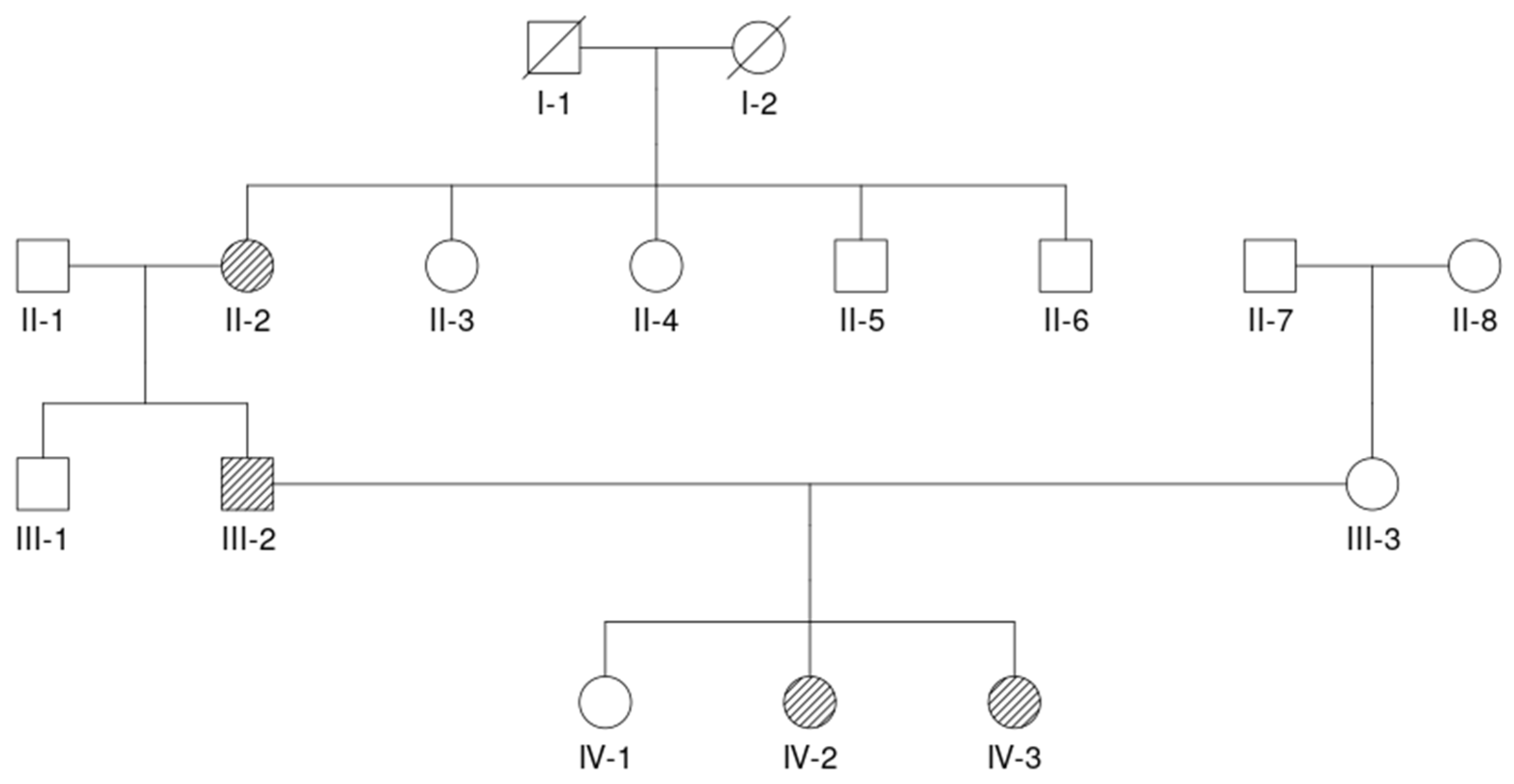
3.1. Proband (IV-3; See Figure 1)

The proband was first reviewed at 7 months of age for global developmental delay and failure to thrive. She is the youngest of three sisters. She was born at 39 weeks after an unremarkable pregnancy via an elective Caesarean section. Her Apgar scores were 6 at 1 min, 7 at 5 min and 6 at 10 min, respectively. She required 21 h of respiratory support. She was treated for congenital pneumonia with 5 days of penicillin. Her birth weight was 2736 gm (5–10th percentile; 1.55 standard deviations below the mean for gestation), her length was 45 cm and her head circumference was 33 cm. She was re-admitted at 6 weeks of age for failure to thrive in the context of loose stools and frequent vomiting, subsequently managed with a proton pump inhibitor and feed thickener. Ultrasounds of her head and abdomen, including liver and kidneys, were normal. She did not have any other imaging.
Figure 1. Family pedigree.
Genes 17 00464 g001
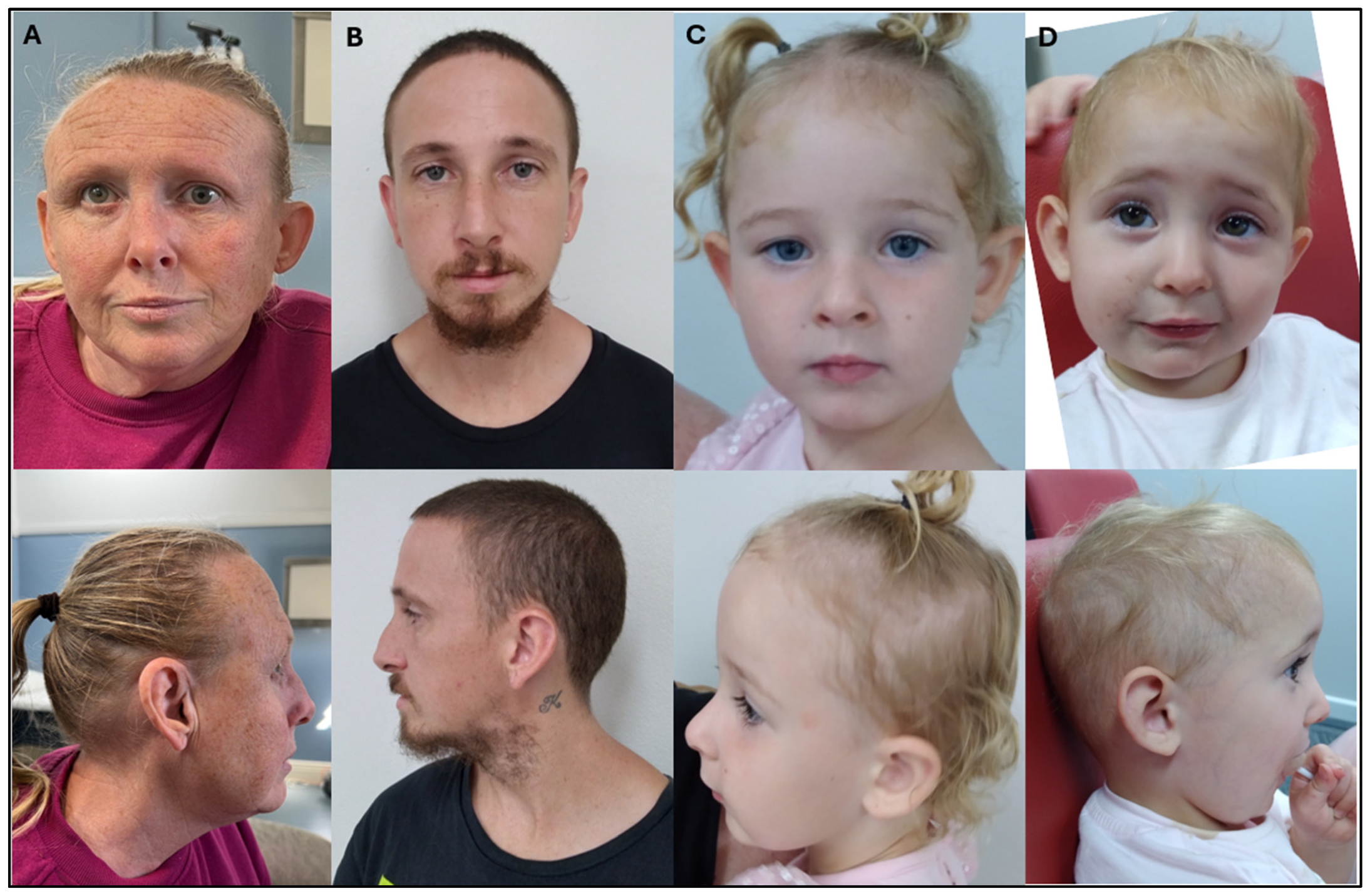
At 7 months of age, she was not sitting independently and was not crawling or babbling. At 13 months old, she was crawling, standing and cruising along furniture, waving, clapping and using a pincer grip. However, she only had two inconsistent words, did not produce varied vocalisations and primarily growled. She demonstrated head-banging behaviour, which was thought to be a form of sensory stimulation. She received a diagnosis of global developmental delay. At 16 months of age, her weight was at the 7th percentile and her head circumference was at the 9th percentile. She had downslanting palpebral fissures, bilateral epicanthi, hypoplastic nasal alae and micrognathia. (Figure 2) Joint laxity was felt to be greater than expected for her age. Her SNP microarray showed a deletion of 0.25 Mb in the chromosome 22q13.1 region.

3.2. Sister (IV-2)

The proband’s 3-year-old sister is being investigated for neurodevelopmental concerns. Her early developmental milestones were achieved within acceptable limits. At 3 years old, she could communicate in 3–4 word sentences and was toilet-trained during the daytime. She has ongoing early educational supports in place due to this genetic finding and her early education teachers noted an inability to socialise with other children. She is awaiting a formal assessment with an Autism Diagnostic Observation Schedule-trained provider. She exhibits head-banging when dysregulated.
She also has the same chromosome 22q13.1 deletion of 0.25 Mb. She was born at 39 weeks after a normal pregnancy via elective Caesarean section. Her APGAR scores were normal. Her birth parameters were within normal limits. Her joint laxity was milder than her sister. She has had episodes of recurrent vomiting followed by floppiness.

3.3. Sister (IV-1)

The proband’s 4-year-old sister has consistently achieved normal developmental milestones. She does not have the 22q13.1 deletion.

3.4. Father (III-2)

The proband’s 28-year-old father experienced neurodevelopmental challenges and he struggled academically compared to his unaffected brother (III-1). He obtained a full-scale IQ of 75 on WPSSI-R testing when he was 5 years of age, and a full-scale IQ of 83 on the WISC-III at 7 years of age. He had childhood diagnoses of Attention Deficit Hyperactivity Disorder (ADHD) and Oppositional Defiant Disorder (ODD), with ongoing behavioural dysregulation into adolescence. He underwent assessment for autism spectrum disorder (ASD) using the Autism Diagnostic Observation Schedule (ADOS) but was found not to meet criteria. He was born at 38 weeks of gestation with a birth weight of 2300 g (two standard deviations below the mean for gestation). He required a 5 day admission for nasogastric tube feeding support due to a poorly developed suck. Additional features included thin blonde hair, joint laxity, and mitral valve prolapse. He had a broad nose, a small, narrow chin and prominent ears (Figure 2). CMA confirmed the same 22q13.1 deletion.

3.5. Paternal Grandmother (II-2)

She is 52 years old and required surgery for craniosynostosis during childhood. There are no other members of her extended family that have craniosynostosis. She had strabismus and had multiple tympanostomy tube insertions for repeated ear infections. By early childhood, she had conductive hearing loss that was thought secondary to tympanic membrane damage. She wears hearing aids.
A computed tomograph (CT) scan of her brain demonstrated hyperostosis frontalis but no abnormalities of the brain. She has had bilateral inguinal hernia requiring surgical repairs and has a sub 1 cm hiatus hernia.
II-2 had learning difficulties and required additional educational support for maths and English. She did not complete secondary schooling. Despite government-supported initiatives funding her initial training, she was unable to successfully complete probationary periods in office-based secretarial jobs. However, in later adulthood she did complete a 6-week course that enabled her to work as a shop assistant in a pharmacy for two years. She first began using two-word combinations at 4 years of age. She was given a diagnosis of dyslexia in Grade 3. She has not undergone formal cognitive testing.
She exhibited clinodactyly and mild joint laxity, particularly of the ankles. She had a normal transthoracic echocardiogram in her 40s. Genetic testing confirmed the 22q13.1 deletion. She also has type 2 diabetes mellitus, paroxysmal atrial fibrillation, calcium oxalate renal stones, fibromyalgia and depression, which are not thought to be related to her genetic diagnosis.
Her husband (II-1) was unaffected. Her other son (III-1) declined genetics review but was placed in advanced classes at secondary school and has had a successful career working for the railway. His family do not think he is affected.
II-2’s siblings all performed well at school and have had successful careers. Efforts are ongoing to contact II-2’s siblings for segregation purposes.

4. Discussion

TNRC6B haploinsufficiency causes a distinct neurodevelopmental disorder characterised by developmental delay, intellectual disability (ID), speech impairment, ASD and ADHD. The present family demonstrates multigenerational segregation of a 22q13.1 deletion including only exons 2–23 of TNRC6B, with variable phenotypic expressivity, intergenerational phenotypic differences, and potentially under-recognised systemic features.
While core neurodevelopmental features were consistent, additional findings, including craniosynostosis, joint laxity, clinodactyly, and cardiac valve anomalies, represent potential associations with TNRC6B haploinsufficiency. The proband presented with developmental delay, speech impairment, and sleep disturbances, while the father and paternal grandmother exhibited learning difficulties and behavioural dysregulation (ADHD, ODD), reflecting variable severity across generations [7]. Behavioural phenotypes, particularly ASD, ADHD, and oppositional behaviours, are prominent in both published cases and the current family. Dysregulated miRNA networks have been implicated in ASD pathogenesis, targeting genes involved in synaptic function, metabolism, and immune response [17]. Although TNRC6B-associated syndromes generally present with mild dysmorphic features, our family illustrates expanded systemic involvement. Notably, cardiac involvement was evident in the father (floppy heart valve) and has been reported in previous cohorts as aortic root dilation in two patients [9]. While relatively uncommon, these findings suggest that TNRC6B may influence vascular or valvular development, potentially through miRNA-mediated regulation of developmental genes. These observations warrant longitudinal cardiovascular monitoring in affected individuals. Exome sequencing of 362 probands with non-syndromic tetralogy of Fallot (TOF) and their parents within the Paediatric Cardiac Genomics Consortium (PCGC) showed one individual with a de novo heterozygous c.2482C>T variant (p.Gln828*) [18]. Our family’s CNV (22q13.1 deletion encompassing only exons 2–23 of TNRC6B) further underscores that haploinsufficiency, whether by CNV or sequence variant, produces overlapping phenotypes. Granadillo et al. [9] described 17 individuals with heterozygous TNRC6B variants (see Table 1). All individuals demonstrated developmental and neurobehavioral abnormalities, with high frequencies of speech delay (94%), autism or autistic traits (76%), ADHD (65%), hypotonia (59%), and variable skeletal and cardiovascular anomalies [9]. Joint hypermobility or other connective tissue-like features were observed in 8/17 in their cohort, which is supported by the finding of joint laxity in our family. Genotype–phenotype analysis suggested that N-terminal variants affecting the Argonaute-binding domain were associated with macrocephaly, whereas C-terminal variants affecting the silencing domain were linked to microcephaly. However, no strong correlations were observed with specific neurodevelopmental symptoms. Notably, 23% of pathogenic variants were inherited, emphasising the importance of genetic counselling and highlighting variable expression among carriers. Speech delay was the most prevalent developmental challenge, while autism and ADHD were frequently observed neurobehavioral traits. Loss-of-function variants in TNRC6B; c.2040G>A, p.(Trp680*) and c.830_836del, p.(Asn277Metfs*3) were reported in patients with developmental language disorders, like childhood apraxia of speech (CAS) [11,13]. Functional studies have also demonstrated that synonymous variants, such as c.3141G>A, can disrupt RNA splicing, highlighting the diverse molecular mechanisms by which TNRC6B variants can contribute to disease [19]. A 31-year-old woman with epilepsy with onset during infancy and ASD without ID had a de novo pathogenic variant in the TNRC6B: c.2189del, p.(Gln730Argfs*62) [12].
Mild dysmorphic features were noted previously, though no consistent facial pattern emerged. Two unrelated Chinese patients had de novo TNRC6B variants, c.335C>T (p.Pro112Leu) and c.1632delC (p.Leu546fs*63). The clinical features of the patients were DD/ID, delayed speech, ADHD, behavioural abnormalities, short stature, low body weight, café-au-lait spots, metabolic abnormalities, and facial dysmorphism, including coarse facial features, sparse hair, frontal bossing, hypertelorism, amblyopia, strabismus, and downslanting palpebral fissures [10].
TNRC6B-associated ID, ADHD, and autism share similarities with other RNA-induced silencing complex (RISC) disorders. Disease-causing variants in AGO1 and AGO2 have also been linked to ID and autism, while expansions of intronic TTTCA and TTTTA repeats in TNRC6A are implicated in benign familial myoclonic epilepsy [20,21,22,23]. TNRC6B bridges AGO-bound microRNAs to downstream effector complexes, including PAN2–PAN3 and CCR4–NOT, thereby enabling translational repression and deadenylation-dependent mRNA decay. This function is particularly relevant to neurodevelopment, as miRISC components localise to dendrites and P-body-like structures that regulate activity-dependent local translation near synapses. More broadly, TNRC6B dosage can be limiting for RNA-silencing output, supporting a dosage-sensitive model in which partial loss of TNRC6B disrupts finely balanced post-transcriptional regulation of neurodevelopmental gene networks. These mechanistic data are consistent with the human phenotype associated with heterozygous pathogenic TNRC6B variants, which includes developmental delay, speech impairment, autism spectrum disorder, ADHD, and related neurobehavioral features [24,25].
Marked intrafamilial variability is evident in TNRC6B-associated neurodevelopmental disorder, with phenotypes ranging from isolated learning difficulties and behavioural traits to global developmental delay and structural anomalies. Several non–mutually exclusive mechanisms may underlie this heterogeneity. Allelic heterogeneity and variant position are critical determinants: premature termination codons (PTCs) located upstream of the final exon–exon junction are predicted to trigger nonsense-mediated decay (NMD), resulting in haploinsufficiency. In contrast, truncating variants in the terminal exon may escape NMD and produce partially functional proteins, depending on preservation of key domains such as the AGO-binding GW repeats or the C-terminal RRM and silencing regions. In addition, although typically inefficient, basal stop-codon readthrough could theoretically permit low-level synthesis of full-length protein from certain PTC alleles, potentially modifying residual TNRC6B activity and contributing to phenotypic variability [26].
Beyond allele-specific effects, TNRC6B functions as a dosage-sensitive scaffold within the RNA-induced silencing complex (RISC), and modest differences in residual protein levels may disproportionately affect miRNA-regulated neurodevelopmental gene networks. Variable buffering by paralogues (TNRC6A and TNRC6C), together with genetic modifiers within the miRNA pathway, likely further shapes the clinical spectrum observed in TNRC6B-related disorder.
Limitations of this study include that no member of this family underwent additional genomic testing, such as exome sequencing. It was not clinically indicated in this context; however, this would have given further weight to the association between the phenotypes described in our family and TNRC6B haploinsufficiency. The same is true regarding II-2’s craniosynostosis. Sequencing of other genes with known associations with craniosynostosis would have provided further support for this proposed association between TNRC6B and craniosynostosis; however, it was not thought to be indicated clinically as craniosynostosis was not a priority for II-2. Interestingly, no other member of the extended family has craniosynostosis, which makes a classically described autosomal dominant craniosynostosis syndrome such as TWIST1 or FGFR1 less likely. Moreover, one of two brothers described in Babbs et al. (2014) with a chromosome 22 pericentric inversion that disrupted TNRC6B and TCF20 had metopic and coronal synostosis, although they concluded that TCF20 and not TNRC6B was responsible for the brothers’ phenotype [14].

5. Conclusions

This three-generation family confirms TNRC6B haploinsufficiency as a cause of neurodevelopmental disorder and expands the phenotypic spectrum to include craniosynostosis, connective tissue features, and cardiac anomalies, although further study is required. Variable expressivity across generations emphasises the need for careful genetic counselling. Recognition of both copy-number and sequence variants in TNRC6B is essential for accurate diagnosis, prognostication, and management of affected individuals. Further studies are warranted to clarify genotype–phenotype correlations and elucidate mechanisms underlying variable expression.

Author Contributions

Conceptualisation, H.G.; writing, review and editing, J.A. and H.G.; data acquisition, M.B., S.O. and J.A.; analysis and review, N.B. All authors have read and agreed to the published version of the manuscript.

Funding

This research received no external funding.

Institutional Review Board Statement

The Ethics Committee of the Hunter New England Research Office (Approval No: 20260116-001, approval date 16 February 2026) approved the protocol for the research.

Informed Consent Statement

Informed consent was obtained from all subjects involved in the study.

Data Availability Statement

Data supporting reported results available on request from corresponding author.

Conflicts of Interest

The authors declare no conflicts of interest.

Abbreviations

The following abbreviations are used in this manuscript:
RNARibonucleic acid
miRNAMicro-Ribonucleic acid
ADHDAttention Deficit Hyperactivity Disorder
CNVCopy-number variant
RISCRNA-induced silencing complex
AGOArgonaute
mRNAMessenger Ribonucleic acid
GWglycine–tryptophan
UBAubiquitin-associated
RRMRNA recognition motif
DDDDeciphering Developmental Disorders
CMAChromosomal microarray
MRIMagnetic Resonance Imaging
SNPSingle Nucleotide Polymorphism
APGARAppearance, Pulse, Grimace, Activity, Respiration
IQIntelligence Quotient
WPSSI-RWechsler Preschool and Primary Scale of Intelligence—Revised
WISC-IIIWechsler Intelligence Scale for Children—Third Edition
ASDautism spectrum disorder
ADOSAutism Diagnostic Observation Schedule
ODDOppositional Defiant Disorder
CTComputed Tomography
IDIntellectual disability
TOFtetralogy of Fallot
PCGCPaediatric Cardiac Genomics Consortium
PTCspremature termination codons
NMDnonsense-mediated decay

References

  1. Chang, S.; Wen, S.; Chen, D.; Jin, P. Small regulatory RNAs in neurodevelopmental disorders. Hum. Mol. Genet. 2009, 18, R18–R26. [Google Scholar] [CrossRef] [PubMed]
  2. Goel, H.; Goel, A. MicroRNA and Rare Human Diseases. Genes 2024, 15, 1243. [Google Scholar] [CrossRef] [PubMed]
  3. Johnson, S.T.; Chu, Y.; Liu, J.; Corey, D.R. Impact of scaffolding protein TNRC6 paralogs on gene expression and splicing. RNA 2021, 27, 1004–1016. [Google Scholar] [CrossRef] [PubMed]
  4. Yao, B.; La, L.B.; Chen, Y.C.; Chang, L.J.; Chan, E.K. Defining a new role of GW182 in maintaining miRNA stability. EMBO Rep. 2012, 13, 1102–1108. [Google Scholar] [CrossRef]
  5. Yao, B.; Li, S.; Jung, H.M.; Lian, S.L.; Abadal, G.X.; Han, F.; Fritzler, M.J.; Chan, E.K. Divergent GW182 functional domains in the regulation of translational silencing. Nucleic Acids Res. 2011, 39, 2534–2547. [Google Scholar] [CrossRef]
  6. Baillat, D.; Shiekhattar, R. Functional dissection of the human TNRC6 (GW182-related) family of proteins. Mol. Cell. Biol. 2009, 29, 4144–4155. [Google Scholar] [CrossRef]
  7. Meister, G.; Landthaler, M.; Peters, L.; Chen, P.Y.; Urlaub, H.; Luhrmann, R.; Tuschl, T. Identification of novel argonaute-associated proteins. Curr. Biol. 2005, 15, 2149–2155. [Google Scholar] [CrossRef]
  8. Iossifov, I.; O’Roak, B.J.; Sanders, S.J.; Ronemus, M.; Krumm, N.; Levy, D.; Stessman, H.A.; Witherspoon, K.T.; Vives, L.; Patterson, K.E.; et al. The contribution of de novo coding mutations to autism spectrum disorder. Nature 2014, 515, 216–221. [Google Scholar] [CrossRef]
  9. Granadillo, J.L.; PA Stegmann, A.; Guo, H.; Xia, K.; Angle, B.; Bontempo, K.; Ranells, J.D.; Newkirk, P.; Costin, C.; Viront, J.; et al. Pathogenic variants in TNRC6B cause a genetic disorder characterised by developmental delay/intellectual disability and a spectrum of neurobehavioural phenotypes including autism and ADHD. J. Med. Genet. 2020, 57, 717–724. [Google Scholar] [CrossRef]
  10. Yang, Q.; Ou, S.; Zhou, X.; Yi, S.; Lin, L.; Yi, S.; Zhang, S.; Qin, Z.; Luo, J. Novel variants in TNRC6B cause global developmental delay with speech and behavioral abnormalities, short stature, low body weight, cafe-au-lait spots, and metabolic abnormality. Mol. Genet. Genom. Med. 2024, 12, e2408. [Google Scholar] [CrossRef]
  11. Yahia, A.; Li, D.; Lejerkrans, S.; Rajagopalan, S.; Kalnak, N.; Tammimies, K. Whole exome sequencing and polygenic assessment of a Swedish cohort with severe developmental language disorder. Hum. Genet. 2024, 143, 169–183. [Google Scholar] [CrossRef] [PubMed]
  12. Bellido-Cuellar, S.; Perez de la Fuente, R.; Lezana-Rosales, J.M.; Sanchez-Calvin, M.T.; Saiz-Diaz, R.A.; Gonzalez de la Aleja, J. Epilepsy and Autism spectrum disorder caused by a pathogenic variant in TNRC6B. Seizure 2023, 110, 117–118. [Google Scholar] [CrossRef] [PubMed]
  13. Eising, E.; Carrion-Castillo, A.; Vino, A.; Strand, E.A.; Jakielski, K.J.; Scerri, T.S.; Hildebrand, M.S.; Webster, R.; Ma, A.; Mazoyer, B.; et al. A set of regulatory genes co-expressed in embryonic human brain is implicated in disrupted speech development. Mol. Psychiatry 2019, 24, 1065–1078. [Google Scholar] [CrossRef] [PubMed]
  14. Babbs, C.; Lloyd, D.; Pagnamenta, A.T.; Twigg, S.R.; Green, J.; McGowan, S.J.; Mirza, G.; Naples, R.; Sharma, V.P.; Volpi, E.V.; et al. De novo and rare inherited mutations implicate the transcriptional coregulator TCF20/SPBP in autism spectrum disorder. J. Med. Genet. 2014, 11, 737–747. [Google Scholar] [CrossRef]
  15. Mitani, T.; Isikay, S.; Gezdirici, A.; Gulec, E.Y.; Punetha, J.; Fatih, J.M.; Herman, I.; Akay, G.; Du, H.; Calame, D.G.; et al. High prevalence of multilocus pathogenic variation in neurodevelopmental disorders in the Turkish population. Am. J. Hum. Genet. 2021, 108, 1981–2005. [Google Scholar] [CrossRef]
  16. Deng, Y.; Bu, C.; Basang, Z.; Zhaxi, Q. A Case Report: Co-Occurrence of TNRC6B Gene Variant and Xq28 Microdeletion Syndrome With Comprehensive Literature Review. Birth Defects Res. 2025, 117, e2521. [Google Scholar] [CrossRef]
  17. Huang, Z.X.; Chen, Y.; Guo, H.R.; Chen, G.F. Systematic Review and Bioinformatic Analysis of microRNA Expression in Autism Spectrum Disorder Identifies Pathways Associated With Cancer, Metabolism, Cell Signaling, and Cell Adhesion. Front. Psychiatry 2021, 12, 630876. [Google Scholar] [CrossRef]
  18. Harvey, D.C.; Verma, R.; Sedaghat, B.; Hjelm, B.E.; Morton, S.U.; Seidman, J.G.; Kumar, S.R. Mutations in genes related to myocyte contraction and ventricular septum development in non-syndromic tetralogy of Fallot. Front. Cardiovasc. Med. 2023, 10, 1249605. [Google Scholar] [CrossRef]
  19. Zhou, F.; Zhong, H.; Wu, B.; Cui, Y.; Li, J.; Jia, X.; Yu, C.; Li, D.; Shu, J.; Cai, C. Identification of the synonymous variant c.3141G > A in TNRC6B gene that altered RNA splicing by minigene assay. Mol. Biol. Rep. 2024, 51, 899. [Google Scholar] [CrossRef]
  20. Takagi, M.; Ono, S.; Kumaki, T.; Nishimura, N.; Murakami, H.; Enomoto, Y.; Naruto, T.; Ueda, H.; Kurosawa, K. Complex congenital cardiovascular anomaly in a patient with AGO1-associated disorder. Am. J. Med. Genet. A 2023, 191, 882–892. [Google Scholar] [CrossRef]
  21. Niu, Y.; Qian, Q.; Li, J.; Gong, P.; Jiao, X.; Mao, X.; Xiao, B.; Long, L.; Yang, Z. De novo variants in AGO1 recapitulate a heterogeneous neurodevelopmental disorder phenotype. Clin. Genet. 2022, 101, 459–465. [Google Scholar] [CrossRef]
  22. Lessel, D.; Zeitler, D.M.; Reijnders, M.R.F.; Kazantsev, A.; Hassani Nia, F.; Bartholomaus, A.; Martens, V.; Bruckmann, A.; Graus, V.; McConkie-Rosell, A.; et al. Germline AGO2 mutations impair RNA interference and human neurological development. Nat. Commun. 2020, 11, 5797. [Google Scholar] [CrossRef]
  23. Ishiura, H.; Doi, K.; Mitsui, J.; Yoshimura, J.; Matsukawa, M.K.; Fujiyama, A.; Toyoshima, Y.; Kakita, A.; Takahashi, H.; Suzuki, Y.; et al. Expansions of intronic TTTCA and TTTTA repeats in benign adult familial myoclonic epilepsy. Nat. Genet. 2018, 50, 581–590. [Google Scholar] [CrossRef]
  24. Jonas, S.; Izaurralde, E. Towards a molecular understanding of microRNA-mediated gene silencing. Nat. Rev. Genet. 2015, 7, 421–433. [Google Scholar] [CrossRef]
  25. Braun, J.E.; Huntzinger, E.; Fauser, M.; Izaurralde, E. GW182 proteins directly recruit cytoplasmic deadenylase complexes to miRNA targets. Mol. Cell 2011, 1, 120–133. [Google Scholar] [CrossRef]
  26. Mangkalaphiban, K.; Fu, L.; Du, M.; Thrasher, K.; Keeling, K.M.; Bedwell, D.M.; Jacobson, A. Extended stop codon context predicts nonsense codon readthrough efficiency in human cells. Nat. Commun. 2024, 15, 2486. [Google Scholar] [CrossRef]
Figure 2. Clinical photography of the paternal grandmother (II-2; (A)), father (III-2; (B)), proband’s sister (IV-2; (C)), and proband (IV-3; (D)), demonstrating common features including downslanting palpebral fissures, bilateral epicanthi, hypoplastic nasal alae and micrognathia.
Genes 17 00464 g002
Table 1. Clinical and molecular spectrum associated with TNRC6B variants across published cohorts and current cases.
SourceSexAge (Rounded to Nearest Full Year)Developmental Delay/Intellectual DisabilityIQASDADHDOther Behavioural IssuesInheritanceMusculoskeletal/Connective Tissue FeaturesOther Congenital MalformationsOther Medical Problems
CurrentF1presentNot availableToo youngToo youngHead bangingPaternalJoint laxityabsentabsent
CurrentF3absentNot availableSuspected unknownHead bangingPaternalMild joint laxityabsentabsent
CurrentM28presentWPSSIR: 75
WISCIII: 83
absentpresentODD, behavioural dysregulationMaternalJoint laxityMitral valve prolapse, sparse hairabsent
CurrentF52presentNot availableabsentabsentabsentUnknown (parents deceased)Joint laxity, craniosynostosisabsentRepeated ear infections resulting in hearing loss, bilateral inguinal hernias
Yang et al. 2024 [10]F7present51absentpresentIrritability, poor concentrationDe novoabsentAbnormal brain MRI, sparse hair, abnormal EEGabsent
Yang et al. 2024 [10]M3present96absentabsentabsentDe novoabsentCafé-au-lait macules, short statureMetabolic abnormalities
Yahia et al. 2024 [11]unknownunknownpresentNot availableunknownunknownBehavioural abnormalitiesDe novounknownunknownunknown
Bellido-Cuellar et al. 2023 [12]F31absentWASI-II: 84/87/84presentpresentabsentDe novoJoint laxity, scoliosisAbnormal EEGabsent
Granadillo et al. 2020 [9] #1M6presentNot availablePoor socialisationpresentabsentUnknownabsentPFO, dilated aortic root, RV conduction delay, Chiari type 1 malformation, congenital entropianabsent
Granadillo et al. 2020 [9] #2M6presentNot availablepresentpresentabsentDe novoabsent
Granadillo et al. 2020 [9] #3F3.7presentNot availablepresentpresentabsentDe novoabsentRight temporal arachnoid cyst
Granadillo et al. 2020 [9] #4F11presentIQ—73
DQ 76
Nonverbal 95
Autistic featurespresentAnxiety, depression, behavioural difficultiesDe novoHypermobility of elbows, slender fingers and buildChiari Type 1 malformation, Bilateral SNHLChronic otitis media, intermittent staring spells with normal EEG
Granadillo et al. 2020 [9] #5M6presentNot availableAutistic featuresabsentAggressivenessPaternalabsentHydrocele, sacral dimple, abnormal aorta and abnormal origin of R coronary artery, microcephaly, bilateral SNHLInguinal hernia, GERD, feeding issues
Granadillo et al. 2020 [9] #6M15present97presentpresentODDMaternalSmall joint hypermobilityabsentabsent
Granadillo et al. 2020 [9] #7M12presentVIQ: 105
PIQ: 85
presentpresentabsentDe novoJoint hypermobilityabsentBenign nocturnal alternating hemiplegia of childhood
Granadillo et al. 2020 [9] #8M12present63Autistic featurespresentabsentDe novoSprengel anomalyabsentSCAD deficiency
Granadillo et al. 2020 [9] #9M17present73presentabsentabsentUnknownRecurrent patella subluxation bilaterallyLeft supernumerary nippleabsent
Granadillo et al. 2020 [9] #10M13present72presentabsentabsentDe novoPes planus, hyperpigmentary lesions on wrist and upper legLeft supernumerary nippleRecurrent ear infections
Granadillo et al. 2020 [9] #11M13present55absentabsentImpulsivityDe novoMuscle weaknessAbnormal brain MRIHyperreflexia
Granadillo et al. 2020 [9] #12M2.6present53presentabsentabsentDe novoabsentabsentMyoclonus epilepsy
Granadillo et al. 2020 [9] #13M14presentWISC: VCI 79, PRI 71, PSI 73presentpresentabsentMaternalBroad palms, tibial malformationCryptorchidism absent
Granadillo et al. 2020 [9] #14F10present80absentpresentabsentDe novoClinodactylyImperforate anus, vestibular fistulaCentral precocious puberty
Granadillo et al. 2020 [9] #15F11present50absentpresentAnger with tremorUnknownJoint hypermobilityabsentBilateral inguinal hernia
Granadillo et al. 2020 [9] #16F6presentWASI-II FS-IQ 113, Verbal Comprehension 131absentpresentImpulsivityUnknownPes planus, scoliosis, muscle atrophy in legsConductive hearing lossConstipation, recurrent ear infections
Granadillo et al. 2020 [9] #17M16presentNot availableAutistic featuresabsentabsentDe novoMarfanoid features. joint pain, long slender fingersWide aortic rootSwallowing difficulties
Eising et al. 2019 [13]F4absent“average”presentunknownunknownUnknownunknownunknownunknown
Iossifov et al. 2014 [8]Munknownunknown78presentunknownunknownunknownunknownunknownunknown
Iossifov et al. 2014 [8]Munknownunknown81presentunknownunknownunknownunknownunknownunknown
The following may have a second genetic variant contributing to phenotype
Babbs et al. 2014 [14]
Pericentric inversion disrupting TCF20 and TNRC6B
M1present79presentabsentabsentPresumed parental mosaicismMetopic and coronal synostosis absentabsent
Babbs et al. 2014 [14]
Pericentric inversion disrupting TCF20 and TNRC6B
M10presentModerate to severe on Vineland Adaptive Behavioural ScorespresentabsentabsentPresumed parental mosaicismabsentabsentabsent
Mitani et al. 2021 [15]
Also homozygous for ADSL: NM_000026.4; c.1277G>A (p.Arg426His)
M2presentNot availableabsentpresentabsentHomozygous for a missense variant in TNRC6BabsentAbnormal brain MRIabsent
Mitani et al. 2021 [15]
Also homozygous for ADSL: NM_000026.4; c.1277G>A (p.Arg426His)
F10presentNot availableabsentpresentabsentHomozygous for a missense variant in TNRC6Babsentabsentabsent
Deng et al. 2025 [16]
Also had Xq28 intragenic microdeletion involving exons 2 and 3 of MECP2
F1.5present<1%ile on Griffith Mental Developmental ScalesabsentabsentabsentunknownabsentabsentShort stature (z-score: 5.29), microcephaly
Disclaimer/Publisher’s Note: The statements, opinions and data contained in all publications are solely those of the individual author(s) and contributor(s) and not of MDPI and/or the editor(s). MDPI and/or the editor(s) disclaim responsibility for any injury to people or property resulting from any ideas, methods, instructions or products referred to in the content.