Divergent IL18-STAT1 Immune Responses Underlie Differential Susceptibility to Aeromonas hydrophila in Geoclemys hamiltonii and Trachemys scripta: A Comparative Transcriptomic Perspective


Abstract
1. Introduction
2. Materials and Methods
2.1. Turtle Collection and Acclimation
2.2. Bacterial Treatment and Tissue Collection
2.3. Preparation for Spleen Transcriptome Sequencing
2.4. Transcriptome Profiling and DEG Identification
2.5. Transcript Assembly and Functional Annotation
2.6. Identification of Transcriptional Variations and Functional Enrichment
2.7. Quantitative Validation of Immune Gene Expression
2.8. Computational Analysis of Experimental Data
3. Results
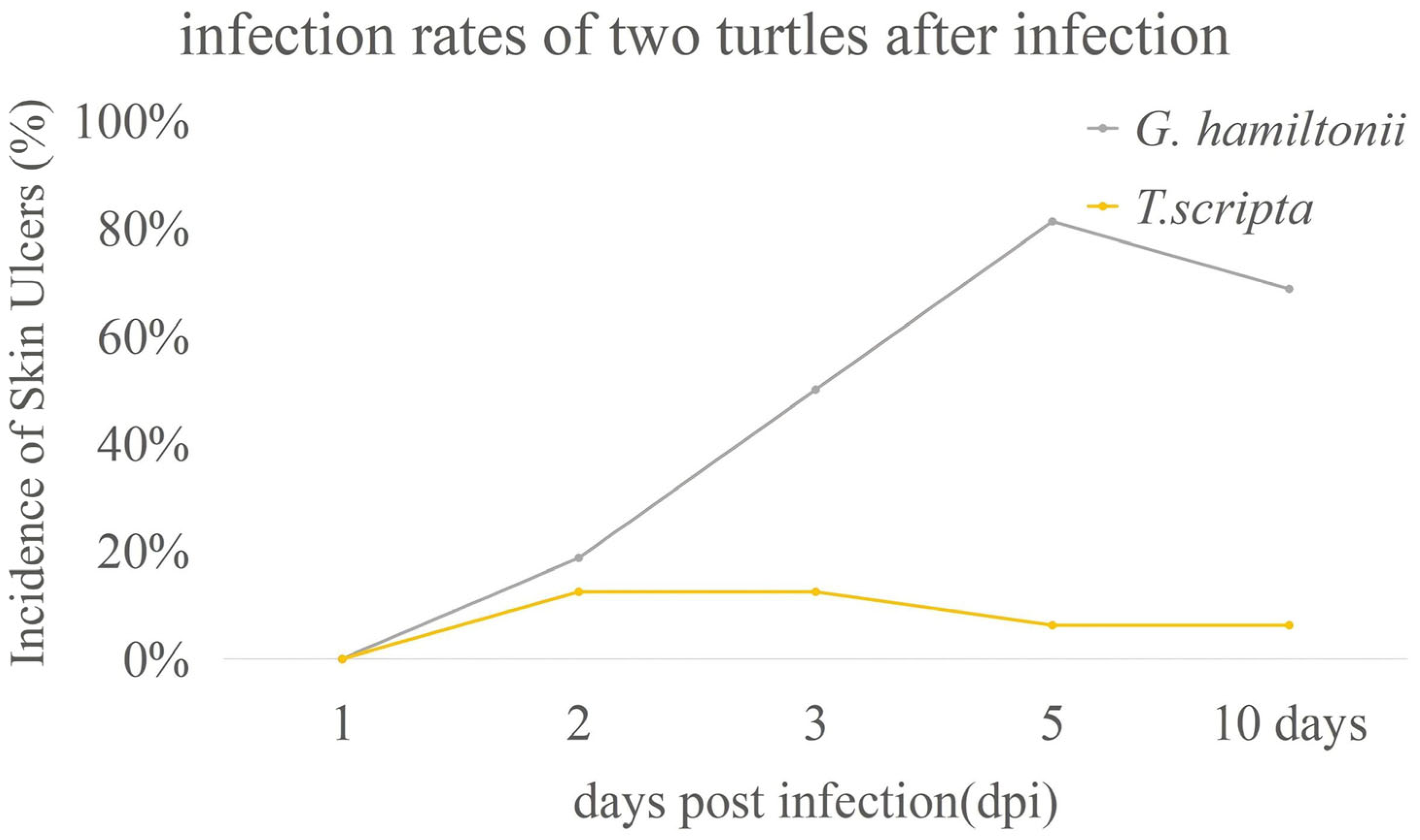
3.1. Differences in the Infection Rates Between G. hamiltonii and T. scripta
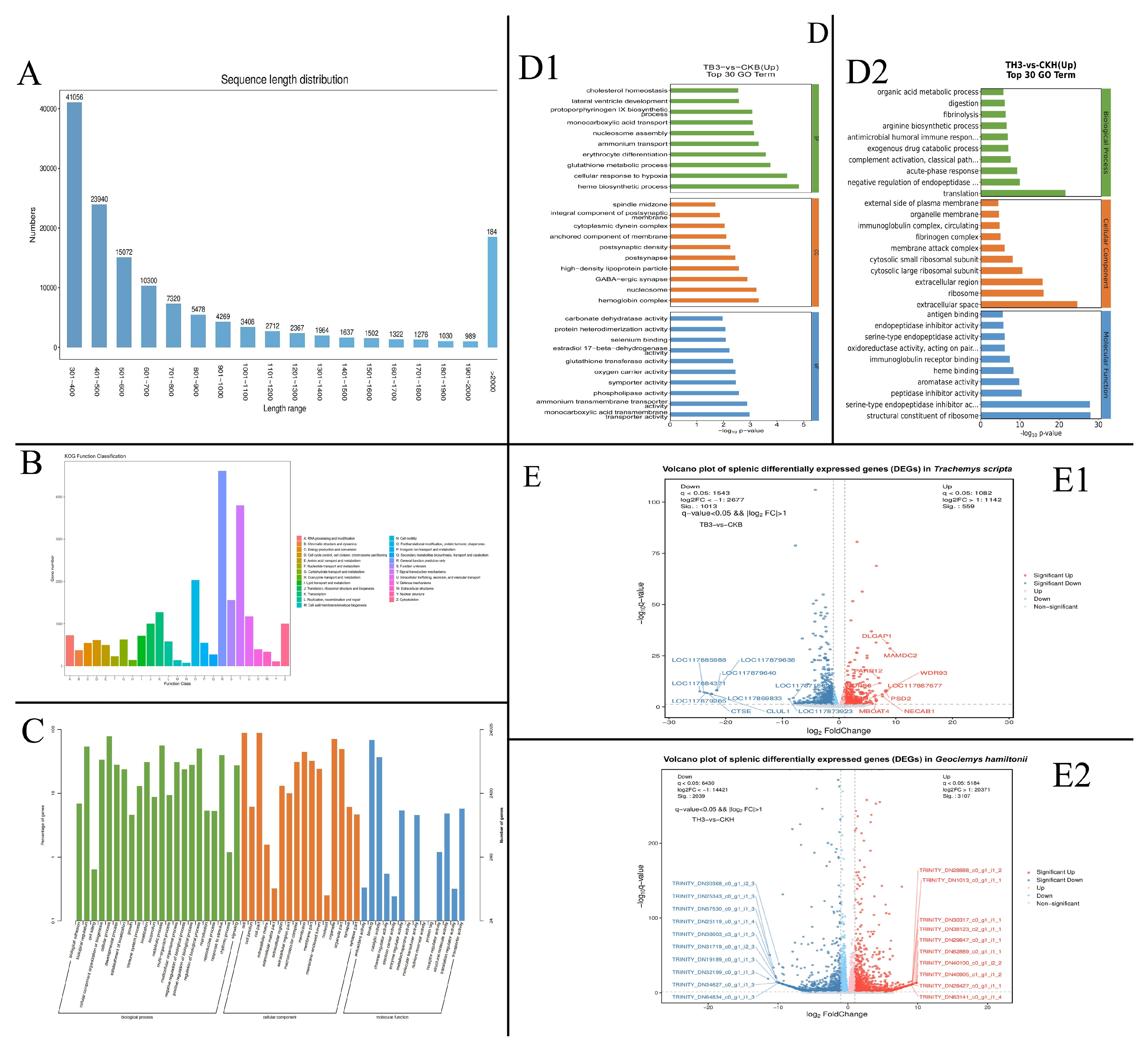
3.2. High-Throughput Sequencing and Transcriptome Reconstruction
3.3. Functional Characterization of Transcriptomic Elements
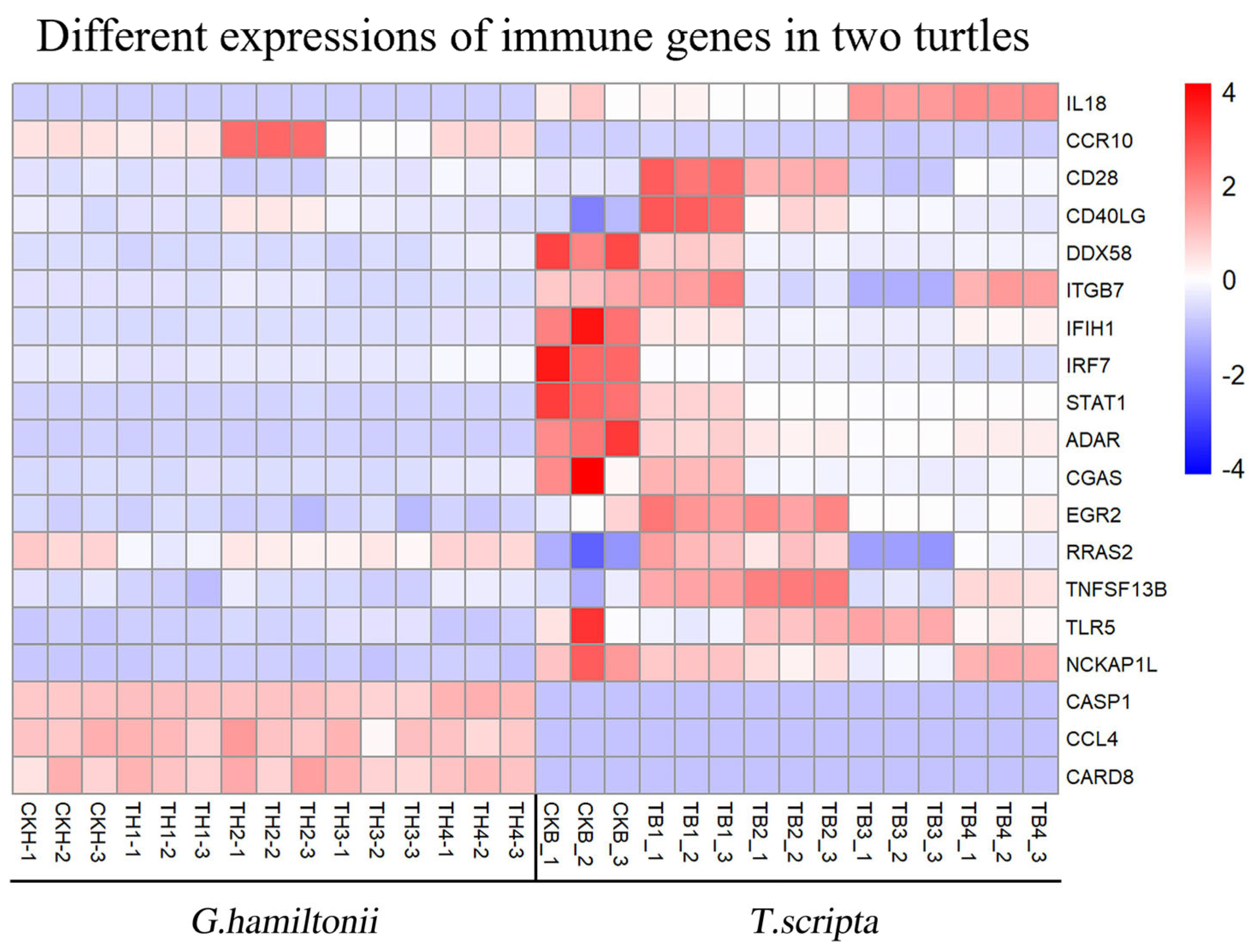
3.4. Immunological Transcript Profiling and Pathway Mapping
3.5. Screening of 19 Crucial Genes Involved in Immunity Progress
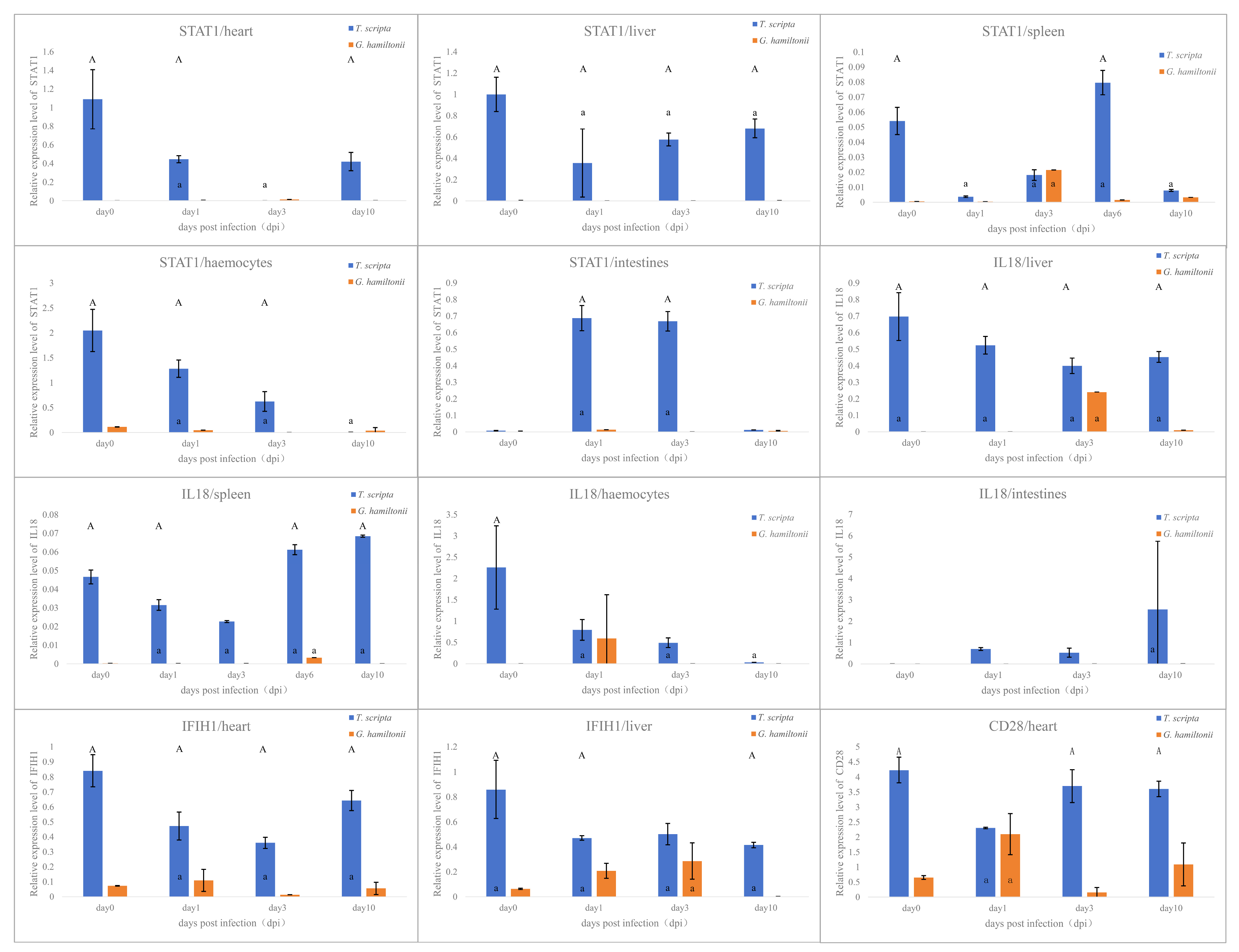
3.6. Immune Gene Expression Profiles in Different Tissues
4. Discussion
Supplementary Materials
Author Contributions
Funding
Institutional Review Board Statement
Informed Consent Statement
Data Availability Statement
Acknowledgments
Conflicts of Interest
References
- Ma, G.; Zuo, Z. The Characterization of Mitochondrial Genome of Spotted Pond Turtle (Geoclemys hamiltonii). Biochem. Genet. 2024, 62, 2946–2957. [Google Scholar] [CrossRef]
- Choudhury, B.C.; Bhupathy, S. Status information on the tortoises and freshwater turtles of India. In Asian Turtle Trade: Proceedings of a Workshop on Conservation and Trade of Freshwater Turtles and Tortoises in Asia; van Dijk, P.P., Stuart, B.L., Rhodin, A.G.J., Eds.; Chelonian Research Monographs; Chelonian Research Foundation: Arlington, VT, USA, 2000; Volume 2, pp. 86–94. [Google Scholar]
- Ahmed, M.F.; Das, A. Tortoises and Turtles of Northeast India: Saving Them from Extinction! Survey, Assessment of Present Status and Conservation of Tortoises and Freshwater Turtles in Northeast India; HRCI: 01/2010; Aaranyak: Guwahati, India, 2010. [Google Scholar]
- Rashid, S.M.A.; Munjurul Hannan Khan, S.M. Trade and Conservation Status of Freshwater Turtles and Tortoises in Bangladesh. In Asian Turtle Trade: Proceedings of a Workshop on Conservation and Trade of Freshwater Turtles and Tortoises in Asia; van Dijk, P.P., Stuart, B.L., Rhodin, A.G.J., Eds.; Chelonian Research Monographs; Chelonian Research Foundation: Arlington, VT, USA, 2000; Volume 2, pp. 77–85. [Google Scholar]
- Akbar, M.; Mushtaq-ul-Hassa, M. Distribution of freshwater turtles in Punjab, Pakistan. Casp. J. Environ. Sci. 2006, 4, 142–146. [Google Scholar]
- Adil, S.; Altaf, M. Cultural and Medicinal Use of Amphibians and Reptiles by Indigenous People in Punjab, Pakistan with Comments on Conservation Implications for Herpetofauna. Animals 2022, 12, 2062. [Google Scholar] [CrossRef] [PubMed]
- Dong, J.; Li, S. Novel Insights into the Therapeutic Effect of Amentoflavone Against Aeromonas hydrophila Infection by Blocking the Activity of Aerolysin. Int. J. Mol. Sci. 2025, 26, 2370. [Google Scholar] [CrossRef] [PubMed]
- Fulton, K.M.; Mendoza-Barberà, E. Polar flagellin glycan heterogeneity of Aeromonas hydrophila strain ATCC 7966(T). Bioorg. Chem. 2025, 158, 108300. [Google Scholar] [CrossRef] [PubMed]
- Payam, B.; Soltani, M. Saponins from sea cucumber disrupt Aeromonas hydrophila quorum sensing to mitigate pathogenicity. AMB Express 2025, 15, 43. [Google Scholar] [CrossRef]
- Ahangarzadeh, M.; Ghorbanpour Najafabadi, M. Detection and distribution of virulence genes in Aeromonas hydrophila isolates causing infection in cultured carps. Vet. Res. Forum 2022, 13, 55–60. [Google Scholar]
- Urgesa, G.; Lu, L. Natural Sunlight-Mediated Emodin Photoinactivation of Aeromonas hydrophila. Int. J. Mol. Sci. 2024, 25, 5444. [Google Scholar] [CrossRef]
- Perrault, J.R.; Levin, M. Insights on Immune Function in Free-Ranging Green Sea Turtles (Chelonia mydas) with and without Fibropapillomatosis. Animals 2021, 11, 861. [Google Scholar] [CrossRef]
- Huang, M.; Liu, J. DC-SIGN of Largemouth Bass (Micropterus salmoides) Mediates Immune Functions against Aeromonas hydrophila through Collaboration with the TLR Signaling Pathway. Int. J. Mol. Sci. 2024, 25, 5013. [Google Scholar] [CrossRef]
- Sherif, A.H.; Abdelsalam, M. Zinc Oxide Nanoparticles Boost the Immune Responses in Oreochromis niloticus and Improve Disease Resistance to Aeromonas hydrophila Infection. Biol. Trace Elem. Res. 2023, 201, 2100. [Google Scholar] [CrossRef] [PubMed]
- Saggini, R.; Pellegrino, R. MAPK is implicated in sepsis, immunity, and inflammation. Int. J. Infect. 2024, 8, 100–104. [Google Scholar]
- Zhang, M.; Zhang, T. Immunogenicity and protective efficacy of OmpA subunit vaccine against Aeromonas hydrophila infection in Megalobrama amblycephala: An effective alternative to the inactivated vaccine. Front. Immunol. 2023, 14, 1133742. [Google Scholar] [CrossRef] [PubMed]
- Cocci, P.; Mosconi, G. Organic UV Filters Induce Toll-like-Receptors and Related Signaling Pathways in Peripheral Blood Mononuclear Cells of Juvenile Loggerhead Sea Turtles (Caretta caretta). Animals 2022, 12, 594. [Google Scholar] [CrossRef]
- Qiu, Z.; Xu, Q. Effects of the Replacement of Dietary Fish Meal with Poultry By-Product Meal on Growth and Intestinal Health of Chinese Soft-Shelled Turtle (Pelodiscus sinensis). Animals 2023, 13, 865. [Google Scholar] [CrossRef]
- Zhao, B.; Gao, Y.; Yao, Q.; Dai, X.; Chu, Z.; Tao, Z.; Mu, Y. Pelodiscus sinensis embryos infected with Aeromonas hydrophila show higher survival rates than infected Mauremys reevesiis embryos. Aquaculture 2020, 518, 734660. [Google Scholar] [CrossRef]
- Chen, S.; Zhou, Y. fastp: An ultra-fast all-in-one FASTQ preprocessor. Bioinformatics 2018, 34, i884–i890. [Google Scholar] [CrossRef]
- Kim, D.; Langmead, B. HISAT: A fast spliced aligner with low memory requirements. Nat. Methods 2015, 12, 357–360. [Google Scholar] [CrossRef]
- Anders, S.; Pyl, P.T. HTSeq—A Python framework to work with high-throughput sequencing data. Bioinformatics 2015, 31, 166–169. [Google Scholar]
- Love, M.I.; Huber, W. Moderated estimation of fold change and dispersion for RNA-seq data with DESeq2. Genome Biol. 2014, 15, 550. [Google Scholar]
- Carbon, S.; Douglass, E.; Good, B.M.; Unni, D.R.; Harris, N.L.; Mungall, C.J.; Basu, S.; Chisholm, R.L.; Dodson, R.J.; Hartline, E.; et al. The Gene Ontology resource: Enriching a GOld mine. Nucleic Acids Res. 2021, 49, D325–D334. [Google Scholar]
- Kanehisa, M.; Araki, M. KEGG for linking genomes to life and the environment. Nucleic Acids Res. 2008, 36, D480–D484. [Google Scholar] [CrossRef] [PubMed]
- Zhuo, W.; Juan, P.-A. The draft genomes of soft-shell turtle and green sea turtle yield insights into the development and evolution of the turtle-specific body plan. Nat. Genet. 2013, 45, 701–706. [Google Scholar]
- Rice, R.; Kallonen, A. Development of the turtle plastron, the order-defining skeletal structure. Proc. Natl. Acad. Sci. USA 2016, 113, 5317–5322. [Google Scholar] [CrossRef]
- Moustakas-Verho, J.E.; Cebra-Thomas, J. Patterning of the turtle shell. Curr. Opin. Genet. Dev. 2017, 45, 124–131. [Google Scholar] [CrossRef]
- Fu, H.; Ward, E.J. Mechanisms of T cell organotropism. Cell. Mol. Life Sci. 2016, 73, 3009–3033. [Google Scholar] [CrossRef]
- Chen, J.; Shang, S. Genomic analysis and adaptive evolution of the RIG-I-like and NOD-like receptors in reptiles. Int. J. Biol. Macromol. 2019, 134, 1045–1051. [Google Scholar]
- Gao, P.; Ascano, M. Cyclic [G(2′,5′)pA(3′,5′)p] is the metazoan second messenger produced by DNA-activated cyclic GMP-AMP synthase. Cell 2013, 153, 1094–1107. [Google Scholar]
- Shi, Z.; Cuilin, C. IFIH1 Contributes to M1 Macrophage Polarization in ARDS. Front. Immunol. 2021, 11, 580838. [Google Scholar] [CrossRef]
- Song, Y.; Zhou, Z. Genome-Wide Identification and Expression Analysis of the STAT Family in Reeve’s Turtle (Mauremys reevesii). Biochem. Genet. 2024, 63, 2330–2346. [Google Scholar]
- Ashton, K.J.; Reichelt, M.E.; Mustafa, S.J.; Teng, B.; Ledent, C.; Delbridge, L.M.; Hofmann, P.A.; Morrison, R.R.; Headrick, J.P. Transcriptomic effects of adenosine 2A receptor deletion in healthy and endotoxemic murine myocardium. Purinergic Signal. 2017, 13, 27–49. [Google Scholar] [CrossRef] [PubMed]
- Fu, J.P.; Chen, S.N. IFN-γ in turtle: Conservation in sequence and signalling and role in inhibiting iridovirus replication in Chinese soft-shelled turtle Pelodiscus sinensis. Dev. Comp. Immunol. 2014, 43, 87–95. [Google Scholar] [CrossRef] [PubMed]
- Li, W.; He, S. Transcription factor EGR2 alleviates autoimmune uveitis via activation of GDF15 to modulate the retinal microglial phenotype. Proc. Natl. Acad. Sci. USA 2024, 121, e2316161121. [Google Scholar] [CrossRef] [PubMed]
- Billman, Z.P.; Hancks, D.C. Unanticipated loss of inflammasomes in birds. Genome Biol. Evol. 2024, 16, evae138. [Google Scholar] [CrossRef]
- Wang, Q.; Shan, L. Role of the CARD8 inflammasome in HIV pathogenesis. Cell Insight 2024, 3, 100193. [Google Scholar] [CrossRef]
- Menachem, A.; Alteber, Z. Unleashing Natural IL18 Activity Using an Anti-IL18BP Blocker Induces Potent Immune Stimulation and Antitumor Effects. Cancer Immunol. Res. 2024, 12, OOF1–OF17. [Google Scholar] [CrossRef]
- Naofumi, M.; So-Ichiro, S. CCL4 Signaling in the Tumor Microenvironment. Adv. Exp. Med. Biol. 2020, 1231, 23–32. [Google Scholar]
- Liu, H.; Zhang, J. Molecular structure, distribution, and immunology function of TNFSF13B (BAFF) in Nile tilapia (Oreochromis niloticus). Fish Shellfish Immunol. 2016, 51, 240–250. [Google Scholar] [CrossRef]
- Brambila-Tapia, A.J.; Dávalos-Rodríguez, I.P. CD28 proximal promoter polymorphisms in systemic lupus erythematosus susceptibility. Rheumatol. Int. 2012, 32, 2165–2168. [Google Scholar] [CrossRef]
- HongBo, X.; MaoQiang, T. CD40LG-associated X-linked Hyper-IgM Syndrome (XHIGM) with pulmonary alveolar proteinosis: A case report. BMC Pediatr. 2023, 23, 239. [Google Scholar]
- Neri, P.; Ren, L. Integrin β7-mediated regulation of multiple myeloma cell adhesion, migration, and invasion. Blood 2011, 117, 6202–6213. [Google Scholar] [CrossRef] [PubMed]
- Homey, B.; Alenius, H. CCL27-CCR10 interactions regulate T cell-mediated skin inflammation. Nat. Med. 2002, 8, 157–165. [Google Scholar] [PubMed]
- Discovery, I. ADAR and Immune Silencing in Cancer. Trends Cancer 2019, 5, 272–282. [Google Scholar] [CrossRef] [PubMed]
- Noemi, C.C.; Michelle, R. NCKAP1L defects lead to a novel syndrome combining immunodeficiency, lymphoproliferation, and hyperinflammation. J. Exp. Med. 2020, 217, e20192275. [Google Scholar]
- Martin, K.R.; Mansfield, K.L. Adaptive evolution of major histocompatibility complex class I immune genes and disease associations in coastal juvenile sea turtles. R. Soc. Open Sci. 2022, 9, 211190. [Google Scholar] [CrossRef]
- Luo, H.; Liu, D. Clinical and genetic characterization of Epstein-Barr virus-associated T/NK-cell lymphoproliferative diseases. J. Allergy Clin. Immunol. 2023, 151, 1096–1109. [Google Scholar]
- Wang, X.; Wang, L. Interleukin-18 and IL-18BP in inflammatory dermatological diseases. Front. Immunol. 2023, 14, 955369. [Google Scholar] [CrossRef]
- Ihim, S.A.; Abubakar, S.D. Interleukin-18 cytokine in immunity, inflammation, and autoimmunity: Biological role in induction, regulation, and treatment. Front. Immunol. 2022, 13, 919973. [Google Scholar] [CrossRef]
- Redondo, N.; Valverde-Manso, A. Human Cytomegalovirus Infection Induces Long-Term Changes in the Cytokine Milieu of Kidney Transplant Recipients. J. Med. Virol. 2025, 97, e70178. [Google Scholar]
- Slaufova, M.; Karakaya, T. The gasdermins: A pore-forming protein family expressed in the epidermis. Front. Immunol. 2023, 14, 1254150. [Google Scholar] [CrossRef]
- Avivar-Valderas, A. Inhibition of PI3Kβ and mTOR influence the immune response and the defense mechanism against pathogens. Int. J. Infect. 2023, 7, 46–49. [Google Scholar]
- Türk, L.; Filippov, I. Cytotoxic CD8(+) Temra cells show loss of chromatin accessibility at genes associated with T cell activation. Front. Immunol. 2024, 15, 1285798. [Google Scholar] [CrossRef] [PubMed]
- Burke, K.P.; Chaudhri, A. The B7:CD28 family and friends: Unraveling coinhibitory interactions. Immunity 2024, 57, 223–244. [Google Scholar] [CrossRef] [PubMed]
- Li, J.; Li, Y. GLUT1 Promotes NLRP3 Inflammasome Activation of Airway Epithelium in Lipopolysaccharide-Induced Acute Lung Injury. Am. J. Pathol. 2024, 194, 1185–1196. [Google Scholar] [CrossRef] [PubMed]
- Torina, A.; Villari, S. Innate Immune Response to Tick-Borne Pathogens: Cellular and Molecular Mechanisms Induced in the Hosts. Int. J. Mol. Sci. 2020, 21, 5437. [Google Scholar] [CrossRef]
- Macleod, T.; Berekmeri, A. The Immunological Impact of IL-1 Family Cytokines on the Epidermal Barrier. Front. Immunol. 2021, 12, 808012. [Google Scholar] [CrossRef]
- Cheng, L.-W.; Huang, Q.-Y.; Wang, P.-C.; Tsai, M.A.; Chen, S.C. Transcriptome and pathophysiological analysis during Bacillus cereus group infection in Pelodiscus sinensis uncovered the importance of iron and toll like receptor pathway. Aquaculture 2024, 594, 741424. [Google Scholar] [CrossRef]
- Siddiqui, R.; Akbar, N.; Maciver, S.K.; Alharbi, A.M.; Alfahemi, H.; Khan, N.A. Gut microbiome of Crocodylus porosus and cellular stress: Inhibition of nitric oxide, interleukin 1-beta, tumor necrosis factor-alpha, and prostaglandin E2 in cerebrovascular endothelial cells. Arch. Microbiol. 2023, 205, 344. [Google Scholar] [CrossRef]
- Zhang, Z.; Chen, B.; Yuan, L.; Niu, C. Acute cold stress improved the transcription of pro-inflammatory cytokines of Chinese soft-shelled turtle against Aeromonas hydrophila. Dev. Comp. Immunol. 2015, 49, 127–137. [Google Scholar]
- Wang, S.; Fan, L.; Pan, H.; Li, Y.; Qiu YLu, Y. Antimicrobial peptides from marine animals: Sources, structures, mechanisms and the potential for drug development. Front. Mar. Sci. 2022, 9, 1112595. [Google Scholar] [CrossRef]



| Primers | Sequence (5′–3′) | Accession Number |
|---|---|---|
| β-actin F | TTGGGTATGGAATCCTGTGGC | FJ514826.1 |
| β-actin R | AGGGCTGTGATCTCCTTCTGCA | FJ514826.1 |
| IL18 F | GCAAACTACGCTCTACAGCACCA | XM_034754572.1 |
| IL18 R | GATCTGTCATAGGCTCAAATACACTCA | XM_034754572.1 |
| CCR10 F | TTTCCAAGGCAGCCAAGGG | XM_034756282.1 |
| CCR10 R | TGTCCAGCAGCACCATCAGG | XM_034756282.1 |
| CD28 F | CCATGGCAGATGCGGATACT | XM_034786510.1 |
| CD28 R | ATTGCTGTGATGCCTCCTTTGT | XM_034786510.1 |
| CD40LG F | GTGTTTACTGTGCCCTACAATCCA | XM_034782600.1 |
| CD40LG R | TTCTTCATAGCAGGTCACTTCTCAATA | XM_034782600.1 |
| DDX58 F | CCCAATAGATGCGTTGTCCC | XM_034774409.1 |
| DDX58 R | ATTGTATTTCCGTAAGTGTTCAGTGTAA | XM_034774409.1 |
| ITGB7 F | CAAGGAGAAGACGGACGACG | XM_034791704.1 |
| ITGB7 R | CCCGATGACCACGATACCC | XM_034791704.1 |
| IFIH1 F | ACAGAACAAGCCTACTCTACCTACACAG | XM_034786312.1 |
| IFIH1 R | AAGAAAGTCTCAGCCAGCGAAA | XM_034786312.1 |
| IRF7 F | CAGCAAGAGGGAGATGACGAGT | XM_034770403.1 |
| IRF7 R | ACAAGGAGGAAGCAATCAGAGC | XM_034770403.1 |
| STAT1 F | GAAAATGAATAATTCCCAGAGTAGCCT | XM_034785098.1 |
| STAT1 R | CCCATCTGTCCTCTACCCTGTTG | XM_034785098.1 |
| ADAR F | GGTCAGCATTGGCACGGGTA | XM_034792051.1 |
| ADAR R | GCTCTGTTCTGTGGAGGAGGGAT | XM_034792051.1 |
| CGAS F | CTTCCCTTCGCCCATTGACC | XM_034766204.1 |
| CGAS R | CCCACGCCACCAGACTTGAC | XM_034766204.1 |
| EGR2 F | GACATGAGTGACAAGAGGTCCCTG | XM_034777878.1 |
| EGR2 R | AAGAGGCTGTGGAGGAAGAAGTG | XM_034777878.1 |
| RRAS2 F | GGGTAGGACAATACAGGCAAACTT | XM_034770110.1 |
| RRAS2 R | CCAAAACATAGCCAAGTACAAGAAGT | XM_034770110.1 |
| TNFSF13B F | GCAATGCTCCTGTCCTCTTCTC | XM_034758181.1 |
| TNFSF13B R | TCATCACCTTCACCTGCCTCA | XM_034758181.1 |
| TLR5 F | CTCGTAGTTGGGAGGGTTGTTC | XM_034764647.1 |
| TLR5 R | TTGTTAATTCCATTTGCTGGTGAC | XM_034764647.1 |
| NCKAP1L F | GTTCTTCGGCAGTCTGAAAGGGTA | XM_034792820.1 |
| NCKAP1L R | AGTTCACCTCGTCACGGCACA | XM_034792820.1 |
| CASP1 F | TGGATGTGAAAGGGATGGAGAAG | XM_034752746.1 |
| CASP1 R | AGCCCTGACGCCGTGAGA | XM_034752746.1 |
| CCL4 F | GTCGCTGCCTTCTGCTCCC | XM_034752586.1 |
| CCL4 R | TACTCCTGAACCCAGTCCTCTTTG | XM_034752586.1 |
| CARD8 F | ACCTGACATCGTTGCGTTGAAA | XM_034768860.1 |
| CARD8 R | GCTCTGGGTGTAAATCTCCGTGTAT | XM_034768860.1 |
| Database | Total Unigenes | Annotated Unigenes | Percentage |
|---|---|---|---|
| GO | 144,127 | 22,225 | 15.42% |
| KEGG | 144,127 | 4300 | 2.98% |
| NR | 144,127 | 40,787 | 28.30% |
| PFAM | 144,127 | 16,713 | 11.59% |
| KOG | 144,127 | 18,639 | 12.95% |
| SWISSPROT | 144,127 | 25,070 | 17.39% |
| EGGNOG | 144,127 | 31,589 | 21.92% |
| Pathway ID | Term | Enrichment_Score | ListHits |
|---|---|---|---|
| ko03010 | Ribosome | 4.5 | 79 |
| ko04610 | Complement and coagulation cascades | 6.8 | 34 |
| ko05150 | Staphylococcus aureus infection | 4.1 | 29 |
| ko04145 | Phagosome | 2.6 | 42 |
| ko05322 | Systemic lupus erythematosus | 3.3 | 29 |
| ko04080 | Neuroactive ligand-receptor interaction | 3.3 | 29 |
| ko00220 | Arginine biosynthesis | 7.1 | 11 |
| ko05152 | Tuberculosis | 2.5 | 38 |
| ko00140 | Steroid hormone biosynthesis | 5.4 | 12 |
| ko05204 | Chemical carcinogenesis | 4.3 | 12 |
| ko05323 | Rheumatoid arthritis | 2.5 | 25 |
| ko05320 | Autoimmune thyroid disease | 2.5 | 21 |
| ko05330 | Allograft rejection | 2.5 | 21 |
| ko05310 | Asthma | 3.0 | 16 |
| ko05143 | African trypanosomiasis | 2.9 | 17 |
| ko05140 | Leishmaniasis | 2.4 | 22 |
| ko00980 | Metabolism of xenobiotics by cytochrome P450 | 4.2 | 9 |
| ko05416 | Viral myocarditis | 2.2 | 23 |
| ko05146 | Amoebiasis | 2.2 | 23 |
| ko00830 | Retinol metabolism | 3.8 | 9 |
| Functional Category | Gene | Immune Role | Key Reference(s) |
|---|---|---|---|
| Pathogen Recognition | TLR5 | Recognizes bacterial flagellin; activates innate immunity and inflammatory responses | [18] |
| Pathogen Recognition | DDX58 | Cytoplasmic viral RNA sensor; induces type I interferons and pro-inflammatory cytokines | [30] |
| Pathogen Recognition | CGAS | DNA sensor; produces cGAMP to activate STING-mediated innate immunity | [31] |
| Pathogen Recognition | IFIH1 | Cytoplasmic viral RNA sensor; enhances NK cell activation and antiviral responses | [32] |
| Signal Transduction | STAT1 | Mediates IFN-γ signaling; regulates apoptosis and antimicrobial gene expression | [33] |
| Signal Transduction | RRAS2 | GTPase involved in RAS/MAPK signaling; regulates cell proliferation and differentiation | [34] |
| Signal Transduction | IRF7 | Master regulator of type I interferon responses; critical for antiviral immunity | [35] |
| Signal Transduction | EGR2 | Transcription factor; involved in immune regulation and myelin development | [36] |
| Inflammasome & Pyroptosis | CASP1 | Activates IL-1β and IL-18; mediates pyroptosis and inflammatory responses | [37] |
| Inflammasome & Pyroptosis | CARD8 | Inflammasome sensor; triggers pyroptosis in response to pathogen signals | [38] |
| Cytokines & Chemokines | IL18 | Pro-inflammatory cytokine; induces IFN-γ production, promotes Th1 responses, and facilitates epidermal barrier repair | [39] |
| Cytokines & Chemokines | CCL4 | Chemokine; recruits immune cells to infection sites | [40] |
| Cytokines & Chemokines | TNFSF13B | Promotes B-cell maturation and antibody secretion | [41] |
| Adaptive Immunity | CD28 | Co-stimulatory molecule essential for T-cell activation, proliferation, and cytokine production | [42] |
| Adaptive Immunity | CD40LG | T-cell surface protein; regulates B-cell function via CD40 engagement | [43] |
| Adaptive Immunity | ITGB7 | Integrin; mediates lymphocyte homing to gut-associated lymphoid tissue | [44] |
| Adaptive Immunity | CCR10 | Chemokine receptor; directs lymphocyte migration to skin | [45] |
| Immune Modulation | ADAR | RNA editing enzyme; modulates immune responses by editing dsRNA | [46] |
| Immune Modulation | NCKAP1L | Regulates lymphocyte activation, proliferation, and phagocytosis in macrophages and neutrophils | [47] |
Disclaimer/Publisher’s Note: The statements, opinions and data contained in all publications are solely those of the individual author(s) and contributor(s) and not of MDPI and/or the editor(s). MDPI and/or the editor(s) disclaim responsibility for any injury to people or property resulting from any ideas, methods, instructions or products referred to in the content. |
© 2026 by the authors. Licensee MDPI, Basel, Switzerland. This article is an open access article distributed under the terms and conditions of the Creative Commons Attribution (CC BY) license.
Share and Cite
Dai, W.; Li, Z.; Liu, Y.; Zhou, Y.; Gan, Y.; Ye, Y.; Mu, Y. Divergent IL18-STAT1 Immune Responses Underlie Differential Susceptibility to Aeromonas hydrophila in Geoclemys hamiltonii and Trachemys scripta: A Comparative Transcriptomic Perspective. Genes 2026, 17, 436. https://doi.org/10.3390/genes17040436
Dai W, Li Z, Liu Y, Zhou Y, Gan Y, Ye Y, Mu Y. Divergent IL18-STAT1 Immune Responses Underlie Differential Susceptibility to Aeromonas hydrophila in Geoclemys hamiltonii and Trachemys scripta: A Comparative Transcriptomic Perspective. Genes. 2026; 17(4):436. https://doi.org/10.3390/genes17040436
Chicago/Turabian StyleDai, Wenxiu, Zerui Li, Yuqing Liu, Yingwen Zhou, Yanan Gan, Yinzi Ye, and Yi Mu. 2026. "Divergent IL18-STAT1 Immune Responses Underlie Differential Susceptibility to Aeromonas hydrophila in Geoclemys hamiltonii and Trachemys scripta: A Comparative Transcriptomic Perspective" Genes 17, no. 4: 436. https://doi.org/10.3390/genes17040436
APA StyleDai, W., Li, Z., Liu, Y., Zhou, Y., Gan, Y., Ye, Y., & Mu, Y. (2026). Divergent IL18-STAT1 Immune Responses Underlie Differential Susceptibility to Aeromonas hydrophila in Geoclemys hamiltonii and Trachemys scripta: A Comparative Transcriptomic Perspective. Genes, 17(4), 436. https://doi.org/10.3390/genes17040436