Article

The Necessity of POMC and MC3R Analysis in the First-Level Diagnosis of Monogenic Obesity: The Experience of Two Italian Centers


1
Department of Medical, Surgical and Neurological Sciences, University of Siena, 53100 Siena, Italy
2
Simple Operating Unit of Endocrine Surgery, Ospedale “Il Giglio”, 90015 Cefalù, Italy
3
Faculty of Medicine, Unicamillus-Saint Camillus International University of Health Sciences, 00131 Rome, Italy
4
Operating Unit of Internal Medicine, Ospedale “Il Giglio”, 90015 Cefalù, Italy
5
Simple Operating Unit of General Surgery, Ospedale “Il Giglio”, 90015 Cefalù, Italy
6
Simple Operating Departmental Unit of Endocrinology, Ospedale San Donato, 52100 Arezzo, Italy
*
Author to whom correspondence should be addressed.
Genes 2026, 17(4), 405; https://doi.org/10.3390/genes17040405
Submission received: 24 February 2026 / Revised: 16 March 2026 / Accepted: 26 March 2026 / Published: 31 March 2026
(This article belongs to the Section Molecular Genetics and Genomics)

Abstract

Background/Objectives: Obesity is a global health emergency with a complex etiology, in which monogenic forms, although rare, are significantly underdiagnosed. In our clinical setting, first-tier genetic screening panels targeting LEP, LEPR, BDNF, FTO, and MC4R often fail to identify a causative variant, leaving a significant diagnostic gap. This study aimed to assess the prevalence of variants in other critical genes of the melanocortin pathway to improve diagnostic yield. Methods: We analyzed 88 patients with non-syndromic obesity (Body Mass Index, BMI > 30 kg/m2), who were first screened for our standard obesity-related genes. In those testing negative, we expanded the analysis to include the MC3R and POMC genes. In silico bioinformatic tools were used to predict the functional consequences of identified variants on protein structure and splicing. Results: We found several variants in POMC, specifically within the regions coding for alpha-, beta-, and gamma-MSH peptides. A bioinformatic analysis suggests that these variants disrupt the melanocortin signaling pathway, likely contributing to an intermediate susceptibility phenotype in our adult cohort. Additionally, a clinical follow-up of a patient carrying the rare BDNF p.Thr2Ile variant revealed a suboptimal response to high-dose tirzepatide treatment (9% weight loss over 72 weeks), notably inferior to the average response observed in clinical trials. Conclusions: Our findings demonstrate that expanding first-level routine testing to include POMC and MC3R is essential to maximize diagnostic yield and improve clinical management.

1. Introduction

According to the World Health Organization, 43% of adults were classified as overweight and approximately 16% as obese in 2022. Among children and adolescents aged 5–19, 20% were overweight, highlighting the scale of the problem across all age groups (WHO, Obesity and overweight 2025, available from https://www.who.int/news-room/fact-sheets/detail/obesity-and-overweight, accessed on 25 March 2026). Obesity is a complex multifactorial condition characterized by the excessive accumulation of adipose tissue resulting from a prolonged disruption of energy balance. Its development is driven by a combination of genetic predisposition and environmental influences, and its manifestations may emerge in early childhood and persist across the entire lifespan [1]. Despite numerous family-based linkage scans and genome-wide association studies (GWASs), and the hundreds of associations identified to date, the genetic background of obesity is still not fully elucidated. The genetic basis of energy balance regulation is largely centered on the hypothalamic melanocortin system (MCS), which is critical for controlling food intake and energy expenditure [2]. The pro-opiomelanocortin (POMC) gene encodes a precursor polyprotein that is proteolytically cleaved to produce several signaling peptides. These include the potent anorexigenic alpha-melanocyte-stimulating hormone (alpha-MSH), as well as beta-melanocyte-stimulating hormone (beta-MSH) and gamma-melanocyte-stimulating hormone (gamma-MSH) [3,4]. Although alpha-MSH is the primary ligand for Melanocortin Receptor 4 (MC4R), beta-MSH is also a potent MC4R agonist that contributes to the anorexigenic signaling pathway [4]. Gamma-MSH primarily acts on Melanocortin Receptor 3 (MC3R). Although its effect on acute food intake is less pronounced than that of alpha-MSH on MC4R, MC3R is thought to primarily regulate energy partitioning. This influences not only appetite but also determines whether energy is stored as fat or utilized for lean mass [5,6]. Defects in the POMC precursor, which result in the deficiency of all MSH peptides, lead to a severe form of early-onset obesity, often accompanied by red hair and adrenal insufficiency [7]. Similarly, mutations in MC3R disrupt the central signaling cascade of the MCS, leading to hyperphagia and weight gain, thus highlighting the critical importance of all the components of the POMC axis as primary genetic targets in the etiology of obesity [8]. Based on our previous findings [9], we aimed to analyze an additional cohort of patients to further expand the existing knowledge on the genetic factors contributing to obesity. In our clinical setting, we typically evaluate the leptin (LEP) and leptin receptor (LEPR) genes, as well as the MC4R gene, which are associated with monogenic forms of obesity. We also evaluate well-known susceptibility genes, such as the brain-derived neurotrophic factor (BDNF) and fat mass and obesity-associated (FTO) genes. In the present study, the patients were additionally screened for the POMC and MC3R genes. This approach allows for a deeper assessment of the genetic background involved in the development of this condition, the identification of new variants, and the discovery of potential genetic targets that may be valuable for designing personalized therapeutic strategies.

2. Materials and Methods

2.1. Subjects

This study examined 88 adults (mean age 50 years; range 38–67 years), of whom 72.7% (n = 64) were women and 27.3% (n = 24) were men. Of these patients, 21.6% (n = 19) were followed at Ospedale San Donato in Arezzo, Italy, while the remaining 78.4% (n = 69) were followed at Ospedale il Giglio in Cefalù, Italy.
Patients with a body mass index (BMI) > 30 kg/m2 (BMI at diagnosis: 46 ± 5.03) who underwent bariatric surgery were included. Initially, obesity was diagnosed based on BMI. Inclusion criteria were BMI ≥ 40 kg/m2 or ≥ 35 kg/m2 associated with treated or untreated dyslipidemia (cholesterol LDL > 140 mg/dL and/or total cholesterol > 200 mg/dL), hypertension or type 2 diabetes in patients who had not achieved success despite multiple attempts at diet and physical activity interventions. During the medical evaluation, the following parameters were assessed: glycemic control (fasting glucose, insulin and glycated hemoglobin), liver function, and cardiometabolic biomarkers (lipid profile, including triglycerides and LDL/HDL cholesterol, uric acid, pulse rate and blood pressure). To exclude endocrine causes of obesity (such as Cushing’s syndrome), baseline and post-dexamethasone (1 mg) overnight levels of thyroid-stimulating hormone (TSH), free thyroxine (FT4), cortisol and adrenocorticotropic hormone (ACTH) were measured. In our cohort, none of the patients presented with clinical features suggestive of syndromic obesity (such as Prader–Willi, Bardet–Biedl, or Alström syndromes). Furthermore, none of the patients presented with clinical features suggestive of syndromic obesity (e.g., Prader–Willi, Bardet–Biedl, or Alström syndromes) or obesity hypoventilation syndrome (Pickwickian syndrome). Dyslipidemia, steatosis (evaluated using the Fatty Liver Index), HOMA index [Fasting blood glucose (mg/dL) × Fasting insulin (µU/mL)/405] and metabolic syndrome (MS) were identified in the patient group. The MS was determined based on the presence of at least three of the following parameters: abdominal girth, triglycerides, HDL, hypertension, diabetes or fasting glycemia. The clinical features and biological parameters are summarized in Table 1.
Each patient signed informed consent for participation in this study, and the study was approved by the ethical committee (2024/874).

2.2. DNA Extraction and PCR

Genomic DNA was extracted from peripheral blood leukocytes using a salting-out technique and stored at −20 °C until PCR analysis. The DNA samples were analyzed by Nanodrop One (Thermo Scientific, Milan, Italy) for concentration and purity. A study of SNPs was conducted by PCR amplification. Specific primers were designed using Primer3 Input tool version 4.1.0 and purchased from Eurofins Genomics (Ebersberg, Germany). Primer sequences and PCR conditions are reported in the Supplementary Materials.

2.3. Sequencing

The entire set of samples was directly sequenced by Sanger sequencing using the Thermo Fisher 3500 Series Genetic Analyzer (Thermo Scientific).

2.4. Bioinformatic Analyses

The potential pathogenicity of the identified non-synonymous variant was assessed using the PredictSNP consensus classifier, https://loschmidt.chemi.muni.cz/predictsnp/ (accessed on 25 March 2026) [10]. This meta-predictor integrates the outputs of six established prediction tools (SIFT, PolyPhen-1, PolyPhen-2, MAPP, PhD-SNP and SNAP) to generate a unified score. This consensus approach was chosen to improve the overall accuracy and reliability of the pathogenicity prediction. Variants were classified as ‘deleterious’ or ‘neutral’ based on the PredictSNP confidence score. Nature of variants was assessed using ClinVar, https://www.ncbi.nlm.nih.gov/clinvar/ (accessed on 25 March 2026) and Franklin, https://franklin.genoox.com/clinical-db/home (accessed on 25 March 2026).
The protease-specific substrate cleavage prediction in the presence of the identified variants was carried out with the tool ProsperousPlus, http://prosperousplus.unimelb-biotools.cloud.edu.au/index.php/prediction (accessed on 25 March 2026) [11]. Human Splicing Finder Pro, https://genomnis.com/hsf (accessed on 25 March 2026) was used for the splicing prediction.

3. Results

3.1. Presence of Genetic Variants in the Patient Cohort

In our clinical first-level routine, patients with obesity, suspected of having a monogenic form of the disease, are evaluated for the presence of pathogenetic variants in the LEP, LEPR, BDNF, FTO, MC4R genes. This specific first-tier panel reflects the standard diagnostic pathways currently driven by local clinical protocols and regional reimbursement guidelines. Consequently, POMC and MC3R are not typically included in the initial clinician-driven requests. For this reason, we first evaluated this panel in our eighty-eight patients.
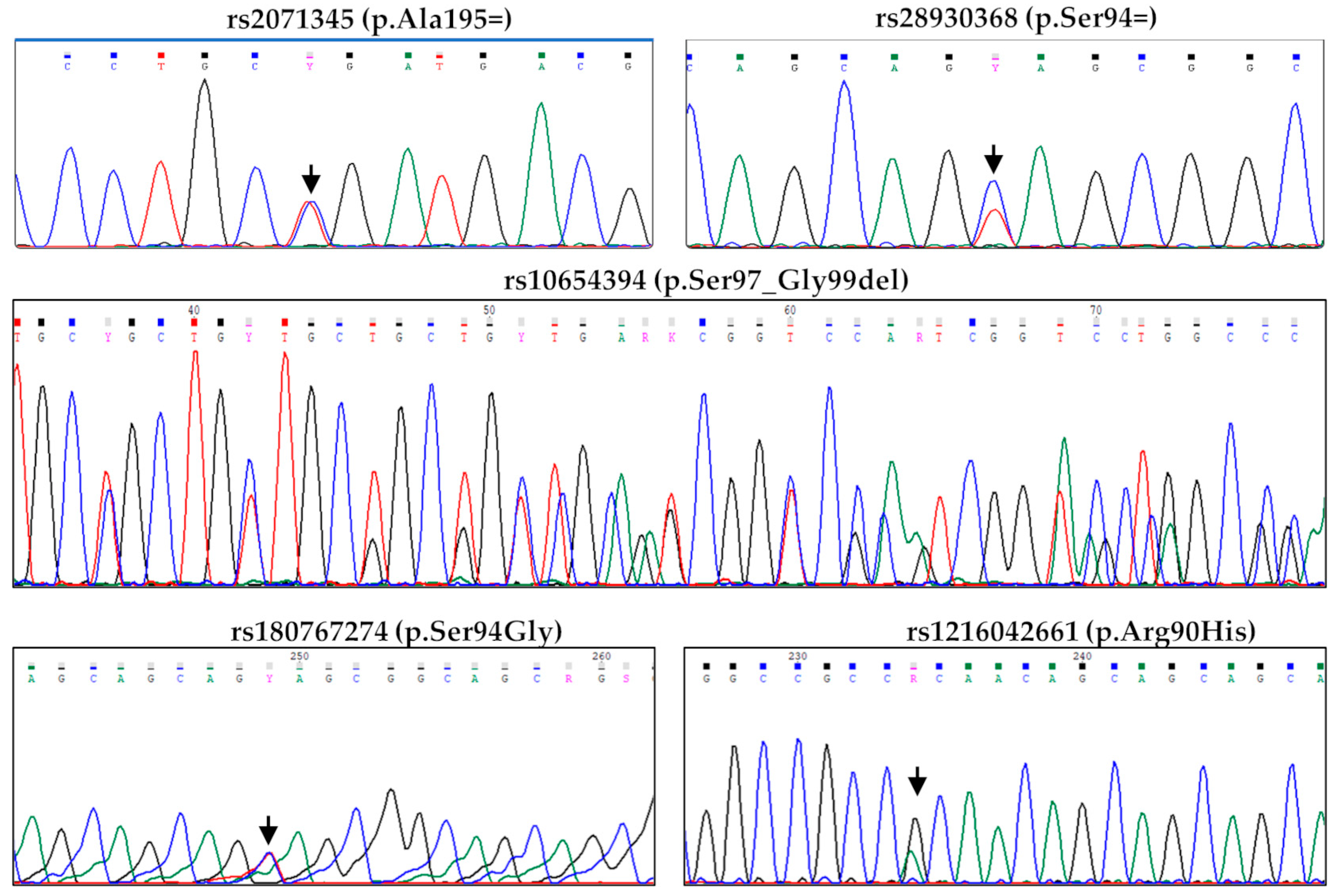
No variants were identified in either the LEP or FTO genes. In the LEPR gene, we found three SNPs: the p.Pro1019= (rs1805096) variant was detected in 39 patients (44.3%); the p.Lys109Arg (rs1137100) variant was found in 27 patients (30.7%); and the p.Gln223Arg (rs1137101) variant was present in 18 patients (20.5%). In the BDNF gene, the common p.Val66Met variant (rs6265) was identified in 29 patients (33.0%), while the rare p.Thr2lle (rs8192466) variant was found in only one patient (1.1%). In the MC4R gene, we identified the p.lle251Leu (rs52820871) variant in two patients (2.3%) and the synonymous variant p.Val103= (rs1278744683) in one patient (1.1%) (see Table 2). As the rs52820871 variant in the MC4R gene and the rs8192466 variant in the BDNF gene have already been associated with obesity, these patients were excluded from the secondary analysis. In the remaining 85 patients, the analysis was extended to the POMC and MC3R genes. In the MC3R gene the p.Val44lle (rs3827103) missense variant was identified in six patients (7%). An analysis of the POMC gene revealed four rare variants, each identified in a single patient (1.2%): the p.Arg90His (rs1216042661); the p.Ser94Gly (rs180767274); the p.Ser94= (rs28930368) and the p.Ala195= (rs2071345). The p.Ser97_Gly99del (rs10654394) insertion variant in POMC was found in 11 patients (12.9%). All the variants were identified in the heterozygous state (see Table 2).

3.2. Bioinformatic Analysis of the MC3R Variant

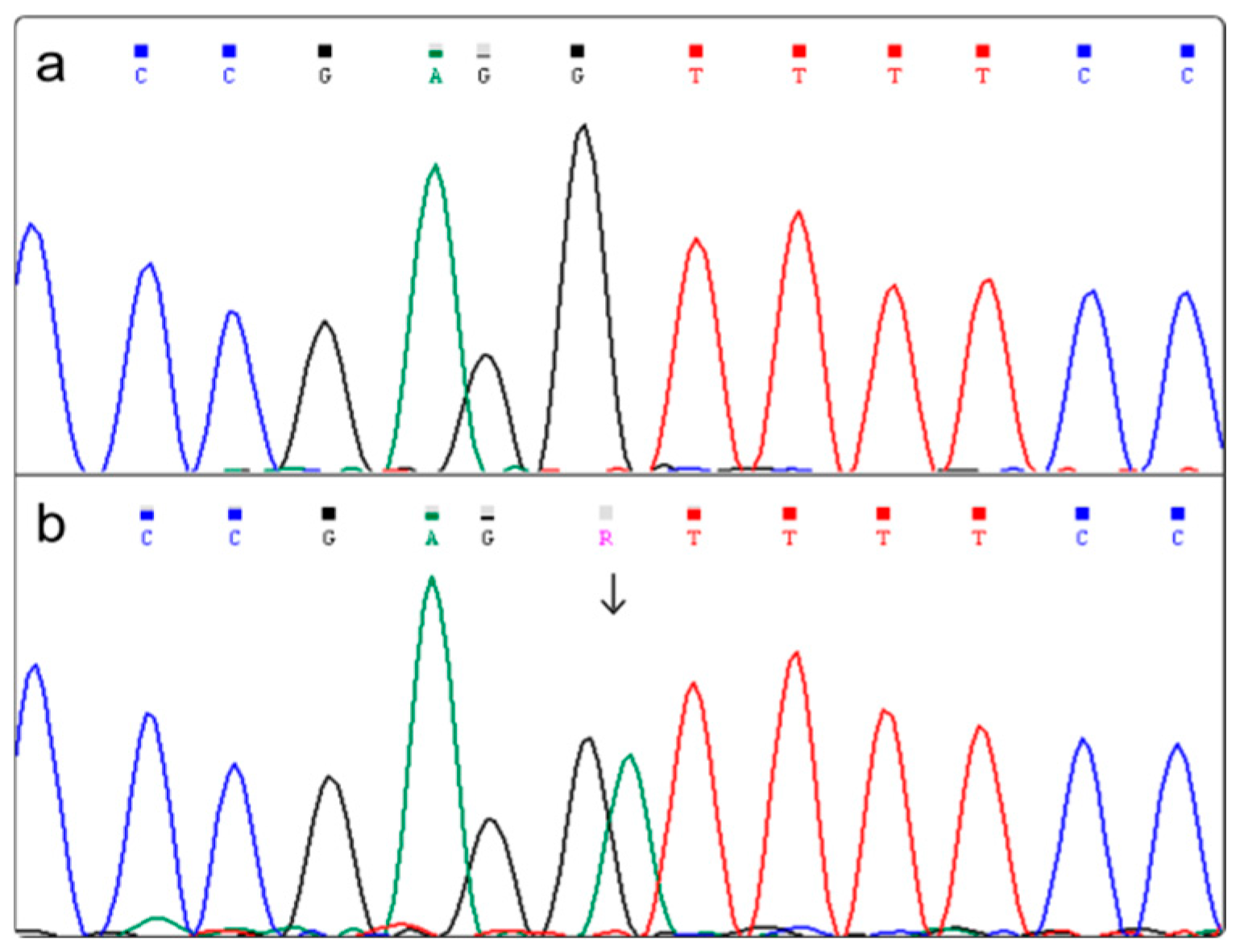
The percentage of patients carrying the rs3827103 p.Val44Ile variant in the MC3R gene was consistent with its frequency in the Italian population (see Table 2). All the patients were heterozygous for the variant (Figure 1). The p.Val44Ile substitution involves a change between two chemically similar nonpolar hydrophobic amino acids. For this reason, when analyzed by PredictSNP, it was predicted to be ‘neutral’ with an overall score of 0.74. Conversely, the SIFT program indicated the variant as ‘deleterious’ with a score of 0.43. Franklin classified this variant as benign. The variant does not modify RNA processing by introducing new splice sites (Human Splicing Finder Pro).

3.3. Bioinformatic Analysis of the POMC Variants

The POMC gene analysis revealed four distinct rare variants: the p.Arg90His, the p.Ser94Gly, the p.Ser94=, and the p.Ala195=. The common variant p.Ser97_Gly99del was also found (Figure 2).
Notably, all of these variants are located within the POMC pro-protein, specifically in regions that are critical for the post-translational processing of active MSH peptides. The p.Arg90His and p.Ser94Gly/Ser94= variants are found in the joining peptide, while the p.Ala195= variant is located within the beta-lipotropin (LPH) fragment, the precursor to beta-MSH.
The PredictSNP analysis scored rs1216042661 p.Arg90His as deleterious (overall score 0.61: PolyPhen-1: 0.74; PolyPhen-2: 0.68; SIFT: 0.79; and SNAP: 0.62). In contrast, rs180767274 p.Ser94Gly was classified as neutral, with an overall score of 0.83. This variant has been reported as having ‘uncertain’ clinical significance in both ClinVar and Franklin.
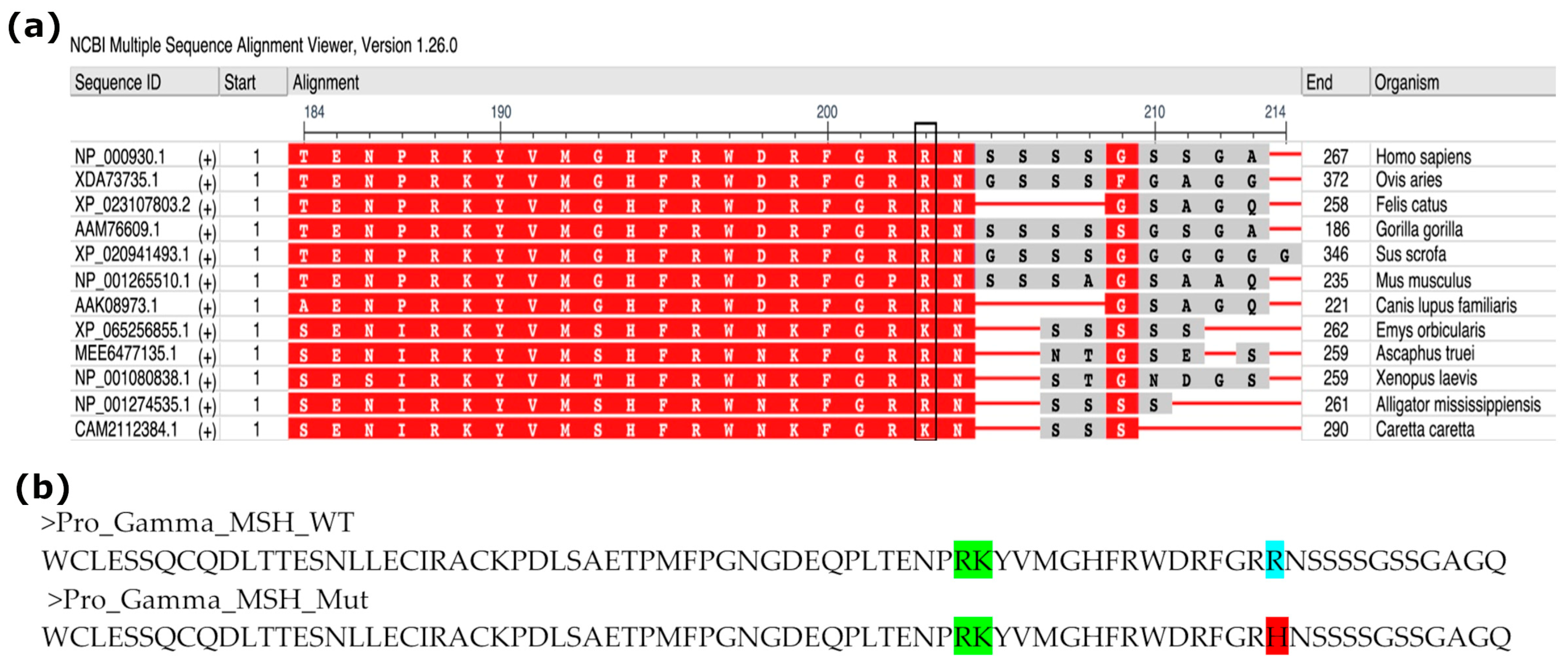
Regarding the p.Arg90His variant, the critical nature of the dibasic arginine (RR) motif at positions 89–90 for gamma-MSH production has been demonstrated in rodent models, which lack this essential cleavage site by nature. Instead, rodents possess a proline–arginine (PR) motif (Figure 3a, Mus musculus) at this locus, which prevents the production of the final gamma-MSH peptide in the pituitary and hypothalamus [12,13,14].
To investigate the impact of the p.Arg90His mutation on peptide processing in humans, we used the ProsperousPlus bioinformatics tool [11] to predict the prohormone convertase (PC) cleavage sites within the pro-gamma-MSH sequence. The in silico analysis identified the wild-type dibasic site (Arg89–Arg90) as a high-probability cleavage site for the PC2 enzyme, with a confidence score of 0.985. Conversely, when the mutated sequence (containing the Arg89-His90 motif) was analyzed, the tool no longer recognized this position as a potential cleavage site for PC2 (Figure 3b).
All the variants were analyzed using the Human Splicing Finder Pro tool. No effect on splicing was observed for p.Ser94Gly, whereas p.Arg90His, p.Ser94= and p.Ala195= were associated with significant alterations to ESE/ESS motifs, which could impact splicing. The p.Ser97_Gly99del, which consists of a deletion/insertion of nine nucleotides (AGCAGCGGC) coding for the three amino acids Ser-Ser-Gly, causes loss/insertion of three full codons, so there are no changes in the amino acid reading frame. However, the splicing prediction showed a significant alteration to the ESE/ESS motif ratio, as well as the activation of a cryptic acceptor site, which could impact splicing. The bioinformatic analysis of the POMC variants is summarized in Table 3.

4. Discussion

Obesity is a complex disease caused by an interaction between environmental factors and polygenic inheritance. Nevertheless, there is extensive evidence of a monogenic contribution [15], which affects the hypothalamic leptin–melanocortin signaling pathway [16]. The main actors in this pathway are the LEP, LEPR and MC4R genes. The LEP gene is located on human chromosome 7 at the 7q32.1 band. It encodes a protein that is secreted by white adipocytes into the circulation and binds to the leptin receptor in the brain. This activates downstream signaling pathways that inhibit feeding and promote energy expenditure. The LEPR gene is located at 1p31.3 and belongs to the gp130 family of cytokine receptors, which are known to stimulate gene transcription by activating cytosolic STAT proteins. Finally, the MC4R gene, located at 18q21.32, plays a crucial role in regulating appetite and energy balance. Pathogenic variants in these genes cause severe early-onset obesity, accompanied by hyperphagia and some endocrine disorders [17]. While variants in the LEP, LEPR and MC4R genes are associated with monogenic obesity, the FTO and BDNF genes are considered to be susceptibility genes. Variants in these genes are associated with an increased risk of common polygenic obesity, influencing body weight regulation, appetite, and energy balance. For instance, FTO variants are known to modulate food intake and preference [18], while BDNF plays a key role in the hypothalamic signaling pathways that control satiety [19]. Although variants in these genes do not cause severe early-onset obesity by themselves, they contribute to a genetic predisposition that, when combined with environmental factors, increases the likelihood of obesity development. In light of this evidence, our routine diagnostic panel screens selected obese patients for mutations in the LEP, LEPR, MC4R, BDNF and FTO genes. In the present study, we conducted a more in-depth assessment of the genetic factors involved in obesity by expanding the analysis to include two additional components of the hypothalamic melanocortin system, the POMC and MC3R genes.
In our cohort of 88 patients, no pathogenic variants were identified in LEP or FTO, while several known polymorphisms were detected in LEPR and BDNF, mostly with frequencies comparable to those reported in the general and Italian populations. The frequencies of the rs1137101 polymorphism in the LEPR gene and the rs6265 polymorphism in the BDNF gene align with those reported in our previous study of another Italian patient cohort [9]. Notably, we also identified the rare variant rs8192466 (c.318C>T, p.Thr2Ile) in the BDNF gene. The patient carrying this variant, who also harbored the common polymorphism rs6265, was affected by class III obesity and was treated with tirzepatide, titrated up to a maximum dose of 15 mg/week over a period of 72 weeks. Despite adhering strictly to the treatment schedule and experiencing no significant adverse events, the patient only achieved a 9% reduction in weight. This result is notably inferior to the average weight loss of 15–20% observed in Phase III clinical trials [20,21]. It is hypothesized that this partial response may be influenced by the patient’s genetic background, which could result in reduced efficacy of central appetite regulation. This would specifically attenuate the central action of GLP-1/GIP receptor agonists on hedonic hunger and craving. This case highlights the potential value of genetic screening in predicting therapeutic responses. In the MC4R gene, only a limited number of variants were observed, including the previously described p.Ile251Leu variant, which has already been associated with obesity [22].
After excluding patients carrying variants that are known to be associated with obesity, the analysis was extended to include the MC3R and POMC genes in the remaining subjects. In MC3R, the p.Val44Ile variant was found in a subset of patients with a frequency that is consistent with the population data. Although bioinformatic predictions suggest a largely neutral effect, conflicting in silico results highlight the challenge of definitively classifying the functional relevance of this variant. However, the high frequency of this variant in the general population suggests that it is not a pathogenic variant. We cannot exclude that this patient carries another variant in other genes associated with obesity that are not included in the present study, which may have a stronger influence on the phenotype.
More notably, the POMC gene analysis revealed several rare variants as well as the relatively common p.Ser97_Gly99del deletion. It is worth noting that two variants, rs28930368 (c.385C>T; p.Ser94=) and rs2071345 (c.585C>T; p.Ala195=), are rare in the Italian population but are relatively common in other ethnic groups, reaching a peak in Asian populations. The observation of similar differences in allele distribution in populations of different origins is not new. In particular, it has been reported that Asian populations have a higher frequency of allele variants associated with specific body fat distribution [23], as well as a higher incidence of abdominal obesity, also known as the ‘skinny fat’ Asian syndrome [24]. Because these rare POMC variants were found in the heterozygous state in adult patients, they do not cause the classic severe autosomal recessive POMC deficiency syndrome (which typically presents in early childhood with adrenal insufficiency). Instead, these heterozygous variants likely confer strong genetic susceptibility and an intermediate obesity phenotype due to haploinsufficiency, contributing to the severe weight gain observed in our adult cohort. All the identified POMC variants are located within regions that are critical for post-translational processing of the POMC prohormone, including the joining peptide and the β-lipotropin domains, which are essential for the generation of biologically active melanocortin peptides. Bioinformatic analyses suggest that some of these variants may affect splicing regulatory elements, while others may interfere with proteolytic cleavage sites. This suggests that these mutations may play a role in causing disease. Further studies will provide a deeper understanding of the mechanisms and test this hypothesis.
Limitations: Our study has some limitations that should be acknowledged. First, the functional impact of the identified POMC and MC3R variants was assessed exclusively through in silico bioinformatic tools; therefore, further in vitro functional studies are required to definitively confirm their effects on peptide processing and receptor signaling. Second, while family cascade screening is systematically recommended in our clinical genetic reports to trace genotype–phenotype segregation, the real-world nature of this study limited our ability to perform a family segregation analysis as this strictly depends on the voluntary compliance of the patients’ relatives.

5. Conclusions

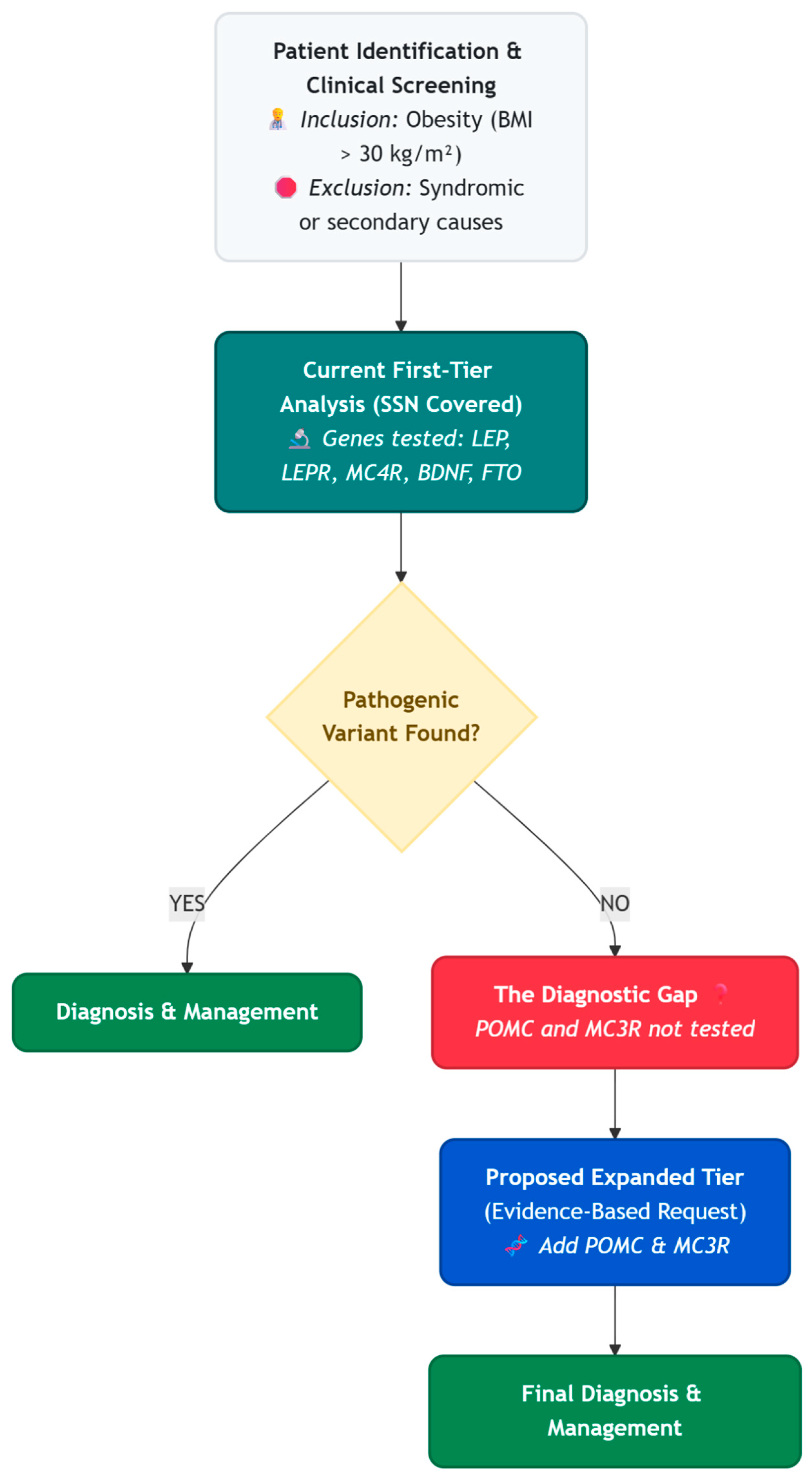
In this article, we show that the genetic panels typically used in first-level clinical practice may not be sufficient for diagnosing all types of genetic obesity. In light of obesity being recently recognized as a chronic disease in Italy (Law 3 October 2025, n. 149, “Legge Pella”) and included in the Essential Levels of Assistance (LEA), our real-world data provides timely evidence supporting the need to update standard clinical protocols across different regional health systems and expand first-level genetic screenings to universally include POMC and MC3R (Figure 4). Furthermore, the observation of a suboptimal response to tirzepatide in a patient carrying the BDNF p.Thr2Ile variant highlights the potential of pharmacogenomics. This indicates that expanding genetic screening to individuals undergoing pharmacological treatment could be an effective strategy for predicting therapeutic efficacy and personalizing patient care.

Supplementary Materials

The following supporting information can be downloaded at: https://www.mdpi.com/article/10.3390/genes17040405/s1, Supplementary Methods: DNA extraction, PCR, sequencing, and statistical analysis; Table S1. Sequence of primers.

Author Contributions

Conceptualization, S.C.; methodology, K.M.; software, T.R.; validation, T.R.; formal analysis, K.M. and A.C.; investigation, M.B. and S.L.; data curation, T.R. and C.C.; writing—original draft preparation, S.C.; writing—review and editing, C.R.; supervision, S.M. and L.S. All authors have read and agreed to the published version of the manuscript.

Funding

This research received no external funding.

Institutional Review Board Statement

The study was conducted in accordance with the Declaration of Helsinki and approved by the Ethics Committee of Ospedale Il Giglio, Cefalù, Italy (protocol code #2024/874, 30 October 2024).

Informed Consent Statement

Informed consent was obtained from all subjects involved in the study.

Data Availability Statement

The original contributions presented in this study are included in the article/Supplementary Materials. Further inquiries can be directed to the corresponding author.

Conflicts of Interest

The authors declare no conflicts of interest.

References

  1. Faccioli, N.; Poitou, C.; Clément, K.; Dubern, B. Current Treatments for Patients with Genetic Obesity. J. Clin. Res. Pediatr. Endocrinol. 2023, 15, 108–119. [Google Scholar] [CrossRef]
  2. Niu, Y.; Yu, W.; Kou, X.; Wu, S.; Liu, M.; Chen, C.; Ji, J.; Shao, Y.; Xue, Z. Bioactive compounds regulate appetite through the melanocortin system: A review. Food Funct. 2024, 15, 11811–11833. [Google Scholar] [CrossRef]
  3. Wu, Q.; Chen, J.; Hua, T.; Cai, J. Alpha-Melanocyte-Stimulating Hormone-Mediated Appetite Regulation in the Central Nervous System. Neuroendocrinology 2023, 113, 885–904. [Google Scholar] [CrossRef]
  4. Goit, R.K.; Taylor, A.W.; Lo, A.C.Y. The central melanocortin system as a treatment target for obesity and diabetes: A brief overview. Eur. J. Pharmacol. 2022, 924, 174956. [Google Scholar] [CrossRef] [PubMed]
  5. Li, L.; Liang, J.; Zhang, C.; Liu, T.; Zhang, C. Peripheral actions and direct central-local communications of melanocortin 4 receptor signaling. J. Sport Health Sci. 2023, 12, 45–51. [Google Scholar] [CrossRef]
  6. Cone, R.D. Studies on the physiological functions of the melanocortin system. Endocr. Rev. 2006, 27, 736–749. [Google Scholar] [CrossRef]
  7. Hilado, M.A.; Randhawa, R.S. A novel mutation in the proopiomelanocortin (POMC) gene of a Hispanic child: Metformin treatment shows a beneficial impact on the body mass index. J. Pediatr. Endocrinol. Metab. 2018, 31, 815–819. [Google Scholar] [CrossRef]
  8. Micioni Di Bonaventura, E.; Botticelli, L.; Tomassoni, D.; Tayebati, S.K.; Micioni Di Bonaventura, M.V.; Cifani, C. The Melanocortin System behind the Dysfunctional Eating Behaviors. Nutrients 2020, 12, 3502. [Google Scholar] [CrossRef] [PubMed]
  9. Ricci, C.; Marzocchi, C.; Riolo, G.; Ciuoli, C.; Benenati, N.; Bufano, A.; Tirone, A.; Voglino, C.; Vuolo, G.; Castagna, M.G.; et al. The impact of CPT1B rs470117, LEPR rs1137101 and BDNF rs6265 polymorphisms on the risk of developing obesity in an Italian population. Obes. Res. Clin. Pract. 2021, 15, 327–333. [Google Scholar] [CrossRef] [PubMed]
  10. Bendl, J.; Stourac, J.; Salanda, O.; Pavelka, A.; Wieben, E.D.; Zendulka, J.; Brezovsky, J.; Damborsky, J. PredictSNP: Robust and Accurate Consensus Classifier for Prediction of Disease-Related Mutations. PLoS Comput. Biol. 2014, 10, e1003440. [Google Scholar] [CrossRef]
  11. Li, F.; Wang, C.; Guo, X.; Akutsu, T.; Webb, G.I.; Coin, L.J.M.; Kurgan, L.; Song, J. ProsperousPlus: A one-stop and comprehensive platform for accurate protease-specific substrate cleavage prediction and machine-learning model construction. Brief. Bioinform. 2023, 24, bbad372. [Google Scholar] [CrossRef] [PubMed]
  12. Lindberg, I.; Fricker, L.D. Obesity, POMC, and POMC-processing Enzymes: Surprising Results from Animal Models. Endocrinology 2021, 162, bqab155. [Google Scholar] [CrossRef]
  13. Harno, E.; Ramamoorthy, T.G.; Coll, A.P.; White, A. POMC: The Physiological Power of Hormone Processing. Physiol. Rev. 2018, 98, 2381–2430. [Google Scholar] [CrossRef] [PubMed]
  14. Bicknell, K.A.; Harmer, S.C.; Yiangson, S.; Lockwood, W.; Bicknell, A.B. Lys-gamma3-MSH: A global regulator of hormone sensitive lipase activity? Mol. Cell. Endocrinol. 2009, 300, 71–76. [Google Scholar] [CrossRef][Green Version]
  15. Hinney, A.; Vogel, C.I.; Hebebrand, J. From monogenic to polygenic obesity: Recent advances. Eur. Child Adolesc. Psychiatry 2010, 19, 297–310. [Google Scholar] [CrossRef] [PubMed]
  16. Zhang, N.; Wang, H.; Ran, S.; Wang, Z.; Zhou, B.; Wang, S.; Li, Z.; Liu, B.; Nie, Y.; Huang, Y.; et al. Mutations in the leptin-melanocortin pathway and weight loss after bariatric surgery: A systematic review and meta-analysis. Obesity 2024, 32, 1047–1058. [Google Scholar] [CrossRef]
  17. Giannopoulou, E.Z.; Zorn, S.; Schirmer, M.; Brandt-Heunemann, S.; Schnurbein, J.V.; Nestoris, C.; Moawia, A.; Siebert, R.; Denzer, C.; Wabitsch, M. Monogenic obesity due to MC4R deficiency: Lessons from a multigenerational case. Mol. Cell Pediatr. 2026, 13, 3. [Google Scholar] [CrossRef]
  18. Qi, Q.; Kilpeläinen, T.O.; Downer, M.K.; Tanaka, T.; Smith, C.E.; Sluijs, I.; Sonestedt, E.; Chu, A.Y.; Renström, F.; Lin, X.; et al. FTO genetic variants, dietary intake and body mass index: Insights from 177,330 individuals. Hum. Mol. Genet. 2014, 23, 6961–6972. [Google Scholar] [CrossRef]
  19. Harvey, T.; Rios, M. The Role of BDNF and TrkB in the Central Control of Energy and Glucose Balance: An Update. Biomolecules 2024, 14, 424. [Google Scholar] [CrossRef]
  20. Jastreboff, A.M.; Aronne, L.J.; Ahmad, N.N.; Wharton, S.; Connery, L.; Alves, B.; Kiyosue, A.; Zhang, S.; Liu, B.; Bunck, M.C.; et al. Tirzepatide Once Weekly for the Treatment of Obesity. N. Engl. J. Med. 2022, 387, 205–216. [Google Scholar] [CrossRef]
  21. Wadden, T.A.; Chao, A.M.; Machineni, S.; Kushner, R.; Ard, J.; Srivastava, G.; Halpern, B.; Zhang, S.; Chen, J.; Bunck, M.C.; et al. Tirzepatide after intensive lifestyle intervention in adults with overweight or obesity: The SURMOUNT-3 phase 3 trial. Nat. Med. 2023, 29, 2909–2918. [Google Scholar] [CrossRef] [PubMed]
  22. Zorn, S.; Bounds, R.; Williamson, A.; Lawler, K.; Hanssen, R.; Keogh, J.; Henning, E.; Smith, M.; Fielding, B.A.; Umpleby, A.M.; et al. Obesity due to MC4R deficiency is associated with reduced cholesterol, triglycerides and cardiovascular disease risk. Nat. Med. 2025, 31, 4180–4188. [Google Scholar] [CrossRef] [PubMed]
  23. Shungin, D.; Winkler, T.W.; Croteau-Chonka, D.C.; Ferreira, T.; Locke, A.E.; Mägi, R.; Strawbridge, R.J.; Pers, T.H.; Fischer, K.; Justice, A.E.; et al. New genetic loci link adipose and insulin biology to body fat distribution. Nature 2015, 518, 187–196. [Google Scholar] [CrossRef]
  24. Williams, R.; Periasamy, M. Genetic and Environmental Factors Contributing to Visceral Adiposity in Asian Populations. Endocrinol. Metab. 2020, 35, 681–695. [Google Scholar] [CrossRef] [PubMed]
Figure 1. (a) Wild-type sequence and (b) heterozygous patient for the p.Val44Ile (c.130G>A) in the MC3R gene. The arrow indicates the position of the variant in the electropherogram.
Genes 17 00405 g001
Figure 2. Electropherograms showing POMC gene variants. The arrows indicate the position of the variants in the electropherograms.
Genes 17 00405 g002
Figure 3. (a) BLAST among species of the gamma-MSH sequence. A red background indicates residues that are retained across species. The cleavage site is indicated in the square box. (b) Wild-type and mutated sequence of the gamma-MSH. The light blue and red highlight amino acid position 90. Green indicates the proteolytic site upstream.
Genes 17 00405 g003
Figure 4. Flowchart illustrating the current clinical practice in our routine first-level analysis and the proposed evidence-based expansion. The current first-tier panel creates a diagnostic gap for patients not tested for POMC and MC3R. We propose to systematically include POMC and MC3R in first-tier requests to optimize patient care.
Genes 17 00405 g004
Table 1. Characteristics of patients with obesity.
Parameter
Number of subjects (n)88
Gender (M:F)24:64
Age at diagnosis (years)50 ± 12
BMI at diagnosis (kg/m2)46 ± 5.03
Metabolic syndrome (%)42.10
Steatosis (%)63
Dyslipidemia (%)42
Waist circumference (cm)129.3 ± 12.5
HDL cholesterol (mg/dL)41.9 ± 10.8
Triglycerides (mg/dL)189.9 ± 113
Glycemia (mg/dL)121.2 ± 57.5
Insulin (mUI/L)26.2 ± 27.4
HOMA-IR6.9 ± 9.0
Hypertension (%)47
Steatosis (%)81
Dyslipidemia (%)47.2
HOMA-IR: Homeostatic Model Assessment of Insulin Resistance.
Table 2. Identified variants in the cohort of 88 patients.
GenesVariantsFrequency
in Our Cohort
n° of Patients (%)
Frequency in the General Populations
(1000 Genomes
Project Phase 3)
(%)
Frequency in the Italian Population
(1000 Genomes
Project Phase 3)
(%)
LEPnone///
LEPRrs1805096 c.3226G>A p.Pro1019=39 (44.3)5337
rs1137101 c.668A>G p.Gln223Arg18 (20.5)5844
rs1137100 c.495A>G p.Lys109Arg27 (30.7)3219
BDNFrs6265 c.509G>A p.Val66Met29 (33.0)2024
rs8192466 c.318C>T p.Thr2Ile1 (1.1)<10.5
FTOnone///
MC4Rrs52820871 c.751A>C p.Ile251Leu 2 (2.3)<10
rs1278744683 c.309C>A p.Val103=1 (1.1)<10
MC3Rrs3827103 c.130G>A p.Val44Ile6 (7.0)258
POMCrs10654394 c.289_297del
p.Ser97_Gly99del
11 (12.9)84
rs1216042661 c.269G>A p.Arg90His1 (1.2)<10
rs180767274 c.280A>G p.Ser94Gly 1 (1.2)<1<1
rs28930368 c.385C>T p.Ser94=1 (1.2)90
rs2071345 c.585C>T p.Ala195=1 (1.2)90
Table 3. Summary of the bioinformatic analyses applied to POMC variants.
HSF
Predicted Impact
PredictSNPClinVarProsperousPlus
rs1216042661 c.269G>A p.Arg90HisSignificant alteration of ESE/ESS motif ratiodeleteriousNot reportedLoss of cleavage site
rs180767274 c.280A>G p.Ser94GlyNo effectneutraluncertainnot applicable
rs28930368 c.385C>T
p.Ser94=
Significant alteration of ESE/ESS motif rationot applicablebenign/uncertainnot applicable
rs2071345 c.585C>T
p.Ala195=
Significant alteration of ESE/ESS motif rationot applicablebenignnot applicable
rs10654394 c.289_297del
p.Ser97_Gly99del
Significant alteration of ESE/ESS motif ratio; activation of a cryptic acceptor site.
Potential alteration of splicing
not applicablebenign/uncertainnot applicable
Disclaimer/Publisher’s Note: The statements, opinions and data contained in all publications are solely those of the individual author(s) and contributor(s) and not of MDPI and/or the editor(s). MDPI and/or the editor(s) disclaim responsibility for any injury to people or property resulting from any ideas, methods, instructions or products referred to in the content.