Article

The Bitter Taste Receptor (T2R) Gene Repertoire in the Porcine Circumvallate Papillae Consists of Fourteen Genes, Including Two Newly Validated T2R61 and T2R62

1
Nutrition and Chemosensory Science, Centre for Animal Science, Queensland Alliance for Agriculture and Food Innovation, The University of Queensland, Brisbane, QLD 4072, Australia
2
School of Food Science and Engineering, South China University of Technology, Guangzhou 510641, China
3
Leibniz Institute for Food Systems Biology, Technical University of Munich, 85354 Freising, Germany
*
Author to whom correspondence should be addressed.
Genes 2026, 17(4), 400; https://doi.org/10.3390/genes17040400
Submission received: 15 March 2026 / Revised: 22 March 2026 / Accepted: 26 March 2026 / Published: 31 March 2026
(This article belongs to the Section Animal Genetics and Genomics)

Abstract

Background/Objectives: Bitter taste perception is important for pig feeding behavior and survival. The type 2 taste receptors (T2Rs) are G protein-coupled receptors responsible for the sense of bitter taste perception in mammals. T2Rs are expressed in taste receptor cells located in the taste buds of the papillae of the tongue and in other tissues such as the gastrointestinal tract, respiratory epithelia, and immune system. In pigs, twelve T2R genes have previously been experimentally identified, although only a limited number of studies have investigated this gene family. We hypothesized that the full T2R gene repertoire in pigs has yet to be uncovered. Methods: Circumvallate papillae (CVP) were collected from 12 pigs, and a combination of bioinformatics analysis and experimental validation was used to identify and annotate T2R transcripts in the pig transcriptome. The CVP transcriptome was explored using reference-guided assembly to identify potential novel transcripts, and newly identified protein-coding transcripts were confirmed by PCR and Sanger sequencing. Results: The results confirmed significant expression of 10 of the 12 known T2Rs (3, 4, 7, 9, 10, 16, 20, 39, 41, and 60). Two novel T2R transcripts (ENSSSCT00000089410.2 and ENSSSCT00000091318.1) were discovered and referred to as T2R61 and T2R62. T2R62 contained larger exons than those annotated in the reference genome. The results also showed that porcine T2R20 is a member of the porcine T2R family highly similar to several human TAS2Rs, including TAS2R20 (TAS2R49). In total, the porcine T2R repository contains 14 transcripts supported by strong evidence. Conclusions: This study expands knowledge of the porcine T2R repertoire and provides insight into the genetic basis of taste perception, food selection, nutrition, and adaptation biology in pigs.

1. Introduction

Bitter taste perception may have evolved as a defense mechanism against the ingestion of potential toxic compounds [1,2]. It plays an essential role in determining feeding choices and ultimately survival in many animal species, including pigs [3,4,5]. The type 2 taste receptor (T2R) genes encode bitter taste receptors that recognize a wide range of chemical compounds in food [4]. In the oral cavity, T2Rs are expressed mainly in the taste sensory cells forming the taste buds, which, in turn, form clusters contained in one of the three types of tongue papillae: the fungiform, the foliate or the circumvallate [6]. They are also characterized in other extra-oral tissues, such as the gastrointestinal tract in mammals, including pigs [7,8]. Gut T2Rs were related to hormone regulation and gastrointestinal mobility [9,10]. The size of the T2R repertoire is species-specific [11,12,13]. There are ~26 T2Rs in humans [14,15], 35 in mice [16], 12 in cats [17] and three in chicken [18], to name just a few examples. In pigs, the T2R gene family has been identified and characterized [4,8]. Recent papers have reported expression of 12 T2R genes, mostly based on experimental evidence [4,19]. A search in Uniprot (a protein database) using the key words “T2R sus scrofa” returned 101 records, many being associated to duplicated gene names and lacking experimental support at protein level. Thus, the pig T2R receptor repertoire needs to be updated with more experimental evidence. The characterization of the full functional T2R repertoire in pigs is fundamental for improving feeding practices related to alternative feed ingredients, efficiency of feed use, impact on gut health and optimization of pig nutrition practices in general [20]. In this study, we hypothesize that the repertoire of T2R genes in pigs has not yet been fully characterized. Thus, it was envisaged that a combination of bioinformatic tools together with experimental validation would lead to the identification and verification of unconfirmed T2R transcripts (and genes) in the pig. Circumvallate papillae were chosen as the study tissue because they have a high concentration of taste buds and sensory cells. Additionally, their large size and clear visibility make them easy to dissect, minimizing the inclusion of non-taste tissue. Moreover, given the growing interest in how taste receptor genes may relate to production traits in pigs, understanding the full T2R repertoire also provides an essential foundation for future association studies investigating potential links between T2R variation and phenotypic outcomes.

2. Materials and Methods

2.1. Animal Ethics

This research was approved by the University of Queensland Animal Research Ethics Committee (Approval No. CNFS/QAAFI/192/20/HMRC).

2.2. Animals and Sampling

This study was designed as a descriptive, exploratory investigation to identify novel transcripts in the circumvallate papillae (CVP) of healthy Large White pigs. No specific treatments were assessed, as the primary objective was to characterize baseline gene expression in healthy tissue. Twelve Large White piglets from different litters (25 days of age, weighing 7.8 ± 0.6 kg) were individually housed in rooms G2 and G3 of the University of Queensland Herston Medical Research Centre (Brisbane, QLD, Australia). The rooms consisted of 6 slatted-floor pens (1.64 sqm each) and are equipped with an environmental control system. The temperature in the nursery room where the study was conducted was set at 30 °C, and humidity and temperature were monitored regularly. The pigs were exposed to 10 h of light per day, programmed from 7.00 h to 17.00 h, with a light intensity between 40 and 60 lux. The pigs were monitored daily for any signs of health issues, and any symptoms were reported by animal carers, including diarrhea, heavy breathing/coughing, dehydration, weight loss, furry skin, pale mucosa, swollen joints, severe scratches, lesions, or eye infections. Each pen was equipped with a nipple drinker and a feeder with multiple feeding spaces, allowing ad libitum access to water, which were checked daily throughout the study to ensure an adequate supply of water and fresh feed.
At the end of the first two weeks of adaptation, the circumvallate papillae are well-developed. The piglets (13.1 ± 1.7 kg) were euthanized by carbon dioxide (CO2) inhalation. The CVP were identified based on their distinct gross anatomy as the large, circular structures surrounded by a prominent trench, located bilaterally at the posterior base of the tongue. Using sterile fine forceps and dissecting scissors, each CVP was carefully lifted, and the connective tissue at its base within the trench was cut to harvest the entire papilla. CVP were carefully removed with a scalpel from pig tongue, snap frozen in liquid nitrogen and stored at −80 °C until further use. This method ensures the inclusion of the taste bud-containing epithelium and the underlying lamina propria while minimizing contamination from the surrounding non-gustatory lingual epithelium.

2.3. Taste Bud Transcriptome Extraction and Sequencing

Total RNA was isolated from CVP using RNeasy Kits (Qiagen, Venlo, The Netherlands), including a DNase digestion step to avoid genomic DNA contamination, as per the manufacturer’s instructions. Samples were processed in a randomized order for RNA extraction and library preparation to minimize potential batch effects. The quality and quantity of the RNA samples were examined using a NanoDrop™ spectrophotometer (ThermoFisher Scientific, Waltham, MA, USA) and Agilent 2100 Bioanalyzer (Agilent Technologies, Santa Clara, CA, USA). RNA samples with an Integrity Number ≥  8, a 260/280 ratio between 2 and 2.1, and a 260/230 ratio between 2 and 2.2 were used for sequencing. The 12 pig poly(A) RNA samples were sequenced on an Illumina NovaSeq platform (Illumina, San Diego, CA, USA) for a 100 bp single end run. The polyA enrichment was conducted with the Illumina Stranded mRNA workflow (Illumina, San Diego, CA, USA) according to the manufacturer’s instructions. The resulting data were archived in Sequence Read Archive (SRA) in the National Center for Biotechnology Information (NCBI) with BioProject ID: PRJNA1153759.

2.4. Transcript Quantitation

The sequencing result was demultiplexed, and quality control was applied using FastQC. Low-quality reads were removed by trimmomatic [21] (Galaxy Version 0.36.6), and high-quality reads were mapped against the pig reference genome (Sus_scrofa.Scrofa11.1.108) using HISAT2 [22]. The criteria for removing low-quality reads are: SLIDINGWINDOW:4:20, LEADING:3, TRAILING:3, MINLEN:36. The aligned reads were summarized by featureCounts [23] (Galaxy Version 2.0.3+galaxy1) to generate a normalized count number for downstream quality control analysis. DESeq2 normalization was applied here due to its ability to account for variability in sequencing depth and biological variability, providing more accurate and reliable results [24].
Transcript assembly was guided with StringTie [25] (Galaxy Version 2.2.1+galaxy1) and merged by StringTie merge (Galaxy Version 2.2.1+galaxy1) to create a non-redundant transcript list following HISAT2 mapping as above. The obtained list was annotated with GFFcompare using the suscrofa11.1 annotation (from ENSEMBL transcript database, Sus_scrofa.Scrofa11.1.108). The nucleotide sequences of all transcripts were extracted with GFFread [26] and further translated to amino acid sequences by Augustus [27] (Galaxy Version 3.4.0+galaxy1). The obtained amino acid sequences were used for a database search using the BLAST algorithm (version 2.17.0) against pig proteome (UP000008227) and human proteome (UP000005640) for homology analysis to identify any potential proteins with similarity to existing T2Rs in pig and human. The blast search was applied using the NCBI blastp command line tool, with an e-value cutoff of 1 × 10⁻³⁰ being considered similar. The experimentally identified pig transcripts with high similarity (e-value < 1 × 10⁻³⁰) to existing human and pig T2Rs were further checked with PCR and Sanger sequencing. Protein structures of T2Rs other than a newly identified T2R (named T2R62) were predicted by AlphaFold and retrieved from the AlphaFold Protein Structure database (https://alphafold.ebi.ac.uk/ (accessed on 16 March 2023)). The T2R62 protein structure was predicted by AlphaFold Colab [28]. The PyMol (Molecular Graphics System, Version 2.0 Schrödinger, LLC, New York, NY, USA) program was used for structure similarity visualization.

2.5. Principal Component Analysis (PCA)

To assess global transcriptomic similarities and identify drivers of variation, principal component analysis (PCA) was performed using RStudio (Version 2022.12.0+353). Prior to analysis, raw count data were normalized and transformed via Variance Stabilizing Transformation (VST) within the DESeq2 package (Version 3.19) to account for sequencing depth and biological variability. PCA coordinates and feature loadings were extracted using the prcomp function, which employs Singular Value Decomposition (SVD) to calculate the eigenvectors of the covariance matrix. Final 2D score plots and loading biplots were visualized and formatted using GraphPad Prism 10.

2.6. PCR Identification of Transcripts

Our analysis specifically targeted the verification of computationally predicted T2R genes that lacked experimental transcript evidence in public databases. The purpose of PCR on the transcripts encoding novel T2Rs was to verify their expression in vivo. Therefore, a series of primers was designed using OligoPerfect Primer Designer (ThermoFisher, USA). The expression of the transcripts was confirmed by PCR using PCR Enzymes & Kits (Qiagen, Venlo, The Netherlands). The primers used in this study are listed in Table 1. The products were subjected to agarose gel electrophoresis on 1.5% agarose gels. The samples with amplicons of the expected sizes were sent for Sanger sequencing to Genetic Research Services (The University of Queensland, Brisbane, QLD, Australia).

2.7. Phylogenetic Analysis of T2Rs

The T2R amino acid sequences were submitted for alignment and phylogenetic analysis by MUSCLE (MUltiple Sequence Comparison by Log- Expectation, https://www.ebi.ac.uk/Tools/msa/muscle/ (accessed on 16 March 2023) using the default setting and output in ClustalW format. The phylogenetic tree was built by Maximum Likelihood with bootstrap resampling for 1000 times using IQ-TREE [29]. The resulting trees were visualized by iTOL (https://itol.embl.de/ (accessed on 16 March 2023)).

3. Results

3.1. Characterization of Novel T2R Transcripts

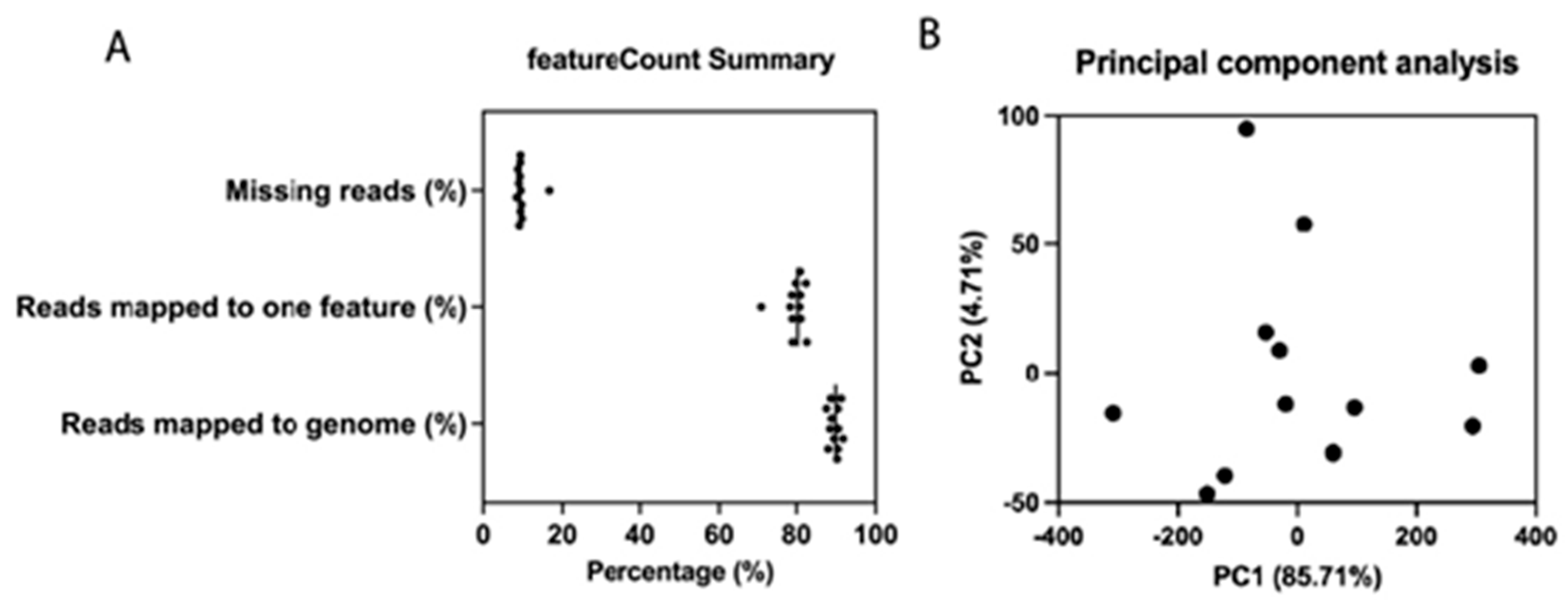
In our study, we utilized high-throughput RNA sequencing (RNA-seq) with an average sequencing depth of 37,277,444 reads and 97.00% mapping efficiency, ensuring comprehensive coverage of the pig transcriptome. The data were processed using reference-guided assembly, with tools such as HISAT2 for alignment and StringTie for transcript assembly. This approach allows for accurate detection and quantification of both known and novel transcripts [30]. FastQC showed that sample quality was adequate for subsequent analysis with >91% bases above Q30 across all samples. The sample reads were then aligned to the reference genome, annotated and summarized by featureCount. The summary, as in Figure 1A, shows that on average, 89.65% reads were mapped to the genome, 79.55% of the reads were mapped to a single feature, and 9.86% of the reads were mapped to the genome but not to any known features (missing reads). From the 12 samples, there were 58,422 transcripts annotated successfully by GffCompare and 30,587 transcripts assembled but not annotated. Normalized counts from each transcript were then used to conduct principal component analysis (PCA), as shown in Figure 1B. Principal Component 1 (PC1) explains 85.71% of the total variance, while PC2 explains only 4.71%. In total, PC1 and PC2 have explained 92.42% of the total variance. This large number is consistent with the fact that the pig samples were under the same biological (including genetic background) and environmental conditions.
Our analysis detected numerous taste signaling elements, including genes associated with taste bud cell markers and signaling pathways, for example: ENSSSCT00000003753 encodes for T1R1, ENSSSCT00000060794 encodes for T1R2, and ENSSSCT00000047431 encodes for T1R3. They are all umami and sweet receptors [31]. ENSSSCT00000009551 encodes for otopetrin 1, ENSSSCT00000025573 encodes for otopetrin 2, and ENSSSCT00000018745 encodes for otopetrin 3. They are all proton-selective ion channels expressed in many different tissues, including taste receptor cells [32].
The amino acid sequences from all the identified transcripts were subjected to NCBI blastp analysis against previously identified T2Rs in pig and human proteomes. An e-value < 1 × 10⁻²⁹ was considered similar to existing annotated proteins. Amongst the hits, 13 of the encoded proteins were identified as similar to human or porcine known T2Rs, as shown in Table 2. Our results also showed that 10 of the known pig T2Rs (numbers 3, 4, 7, 9, 10, 16, 20, 39, 41, and 60) were identified by the RNAseq analysis, which is consistent with previous literature [4]. Other previously reported T2Rs were not confirmed by our gene expression analysis in the CVP. These were T2R1, T2R38, T2R40, and T2R42.
Three novel transcripts were identified in this research, potentially encoding new T2R receptors: ENSSSCT00000091318.1, ENSSSCT00000089410.2, and ENSSSCT00000017894.3. No meaningful gene names had been previously assigned to these three genes or their encoding transcripts. For the ease of discussion, we assigned the following gene names to them: T2R61 (encoding ENSSSCT00000089410.2), T2R62 (encoding ENSSSCT00000091318.1), and T2R63 (encoding ENSSSCT00000017894.3), as summarized in Table 2. We next investigated the nucleic acid sequence of the three newly identified transcripts, together with the previously reported ENSSSCT00000054601.2 (T2R20) by local BLAST search against the pig genome (Sus_scrofa.Scrofa11.1.108). The results showed that with an e-value cutoff of 1 × 10⁻³⁰, the transcript T2R62 had two hits, while the other three transcripts had one hit (Table 3). None of the hit genes overlapped with any other gene. Three transcripts were from chromosome 5: T2R62, T2R61, and T2R20. Only T2R63 was from chromosome 18. The two hits of T2R62, base pair (bp) 1–776 and bp 777–921, aligned at two regions with 5483 base pairs apart on chromosome 5, compatible with the existence of an intron lying in the middle of the gene encoding for transcript T2R62 (Table 3). Transcript T2R61 contained a potential 48 bp long 5′ untranslated region (5′ UTR). The transcripts T2R20 and T2R63 contained both a start and a stop codon at the 5′ and 3′ termini, consistent with being mature intronless mRNAs.

3.2. PCR Identification of Novel Transcripts

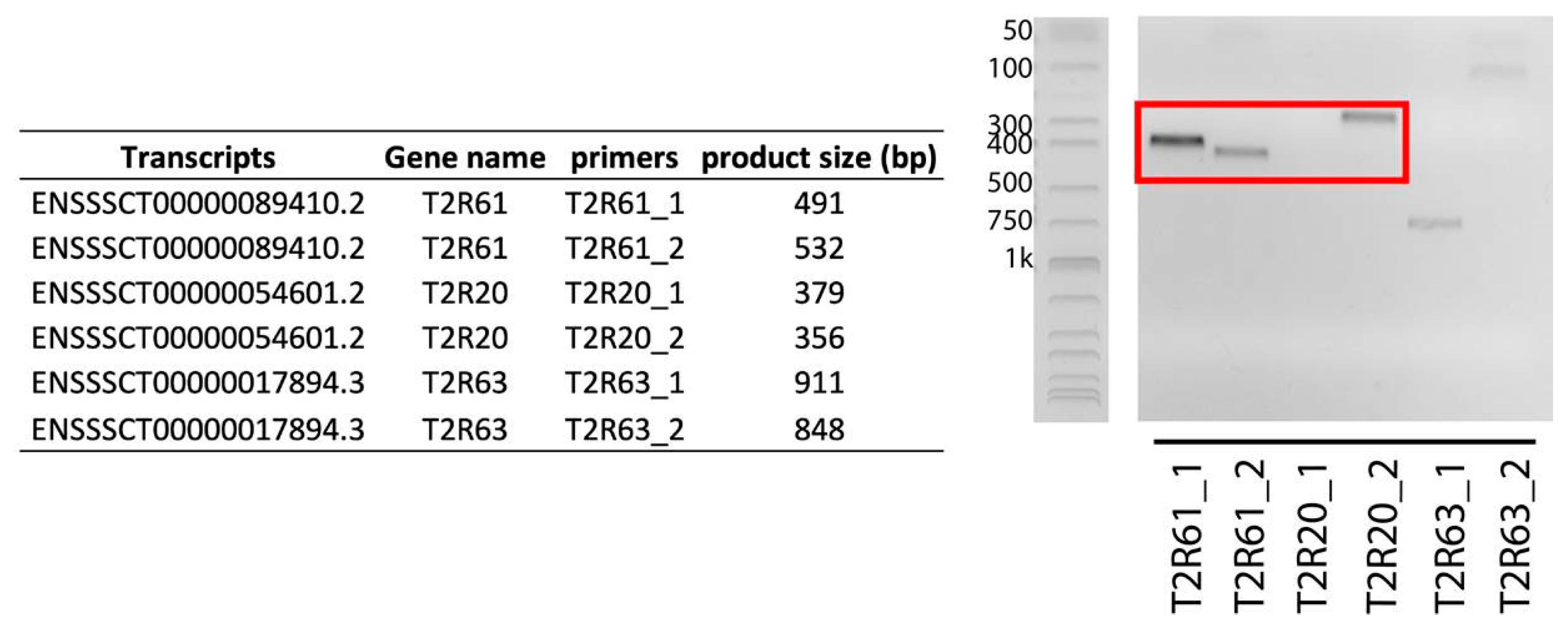
The PCR results for the intronless transcripts (T2R61, T2R20 and T2R63) showed that only T2R61, together with T2R20, was detectable (Figure 2). The T2R63 was not identified with positive PCR bands. The subsequent Sanger sequencing confirmed the matching with the targeted area.
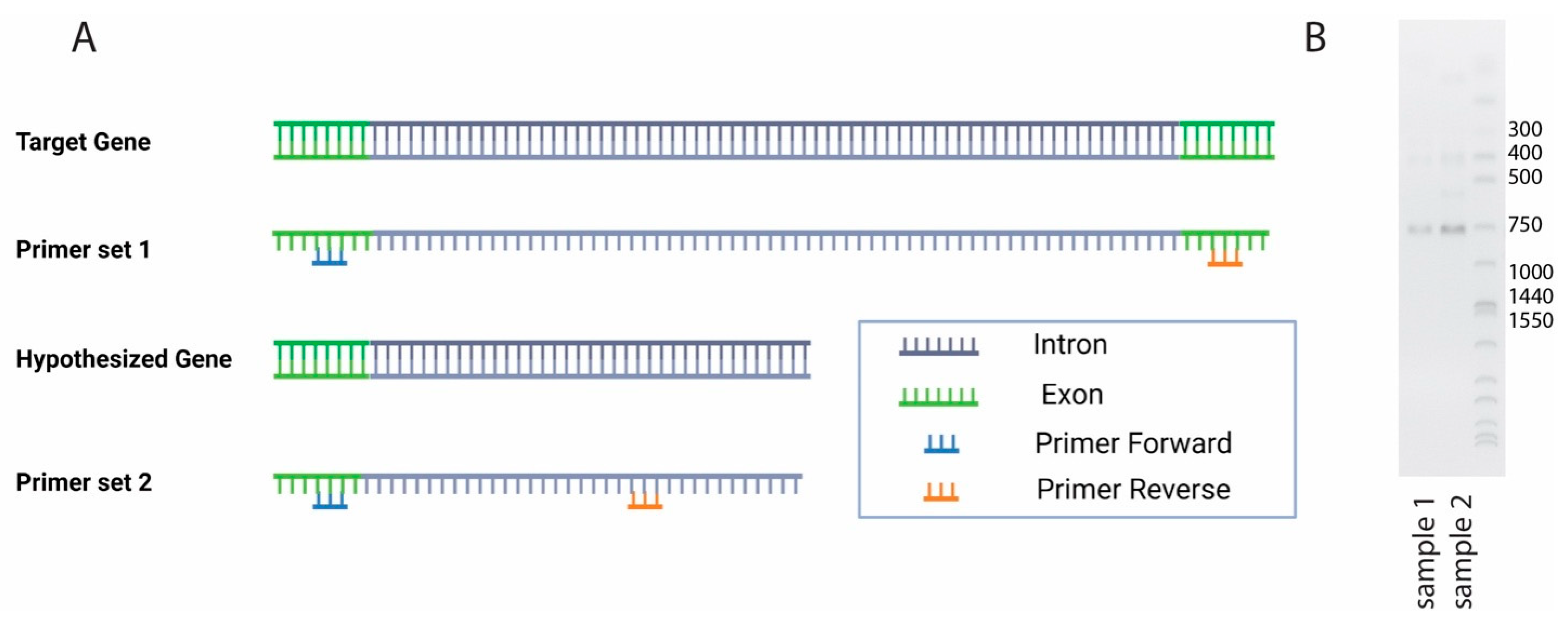
Regarding the T2R62, two sets of primers were designed to confirm the expressed transcript (Figure 3A). Primer set 1 (comprising two primer pairs, as in Table 1) was designed to cover exon 1 and exon 2 from the ENSEMBL gene annotation, respectively. Primer set 2 (comprising five primer pairs, as in Table 1) was designed to cover only the sequence with reads from the illumina sequencing result (Figure 3A). The agarose gel showed that one primer pair of primer set 2 (primer 2b) has amplified the target area (Figure 3B). In contrast, primer set 1 did not produce any consistent bands, indicating the absence of the corresponding sequences from the transcriptome.

3.3. T2R61 and T2R62 Are Potential Novel T2R Family Members

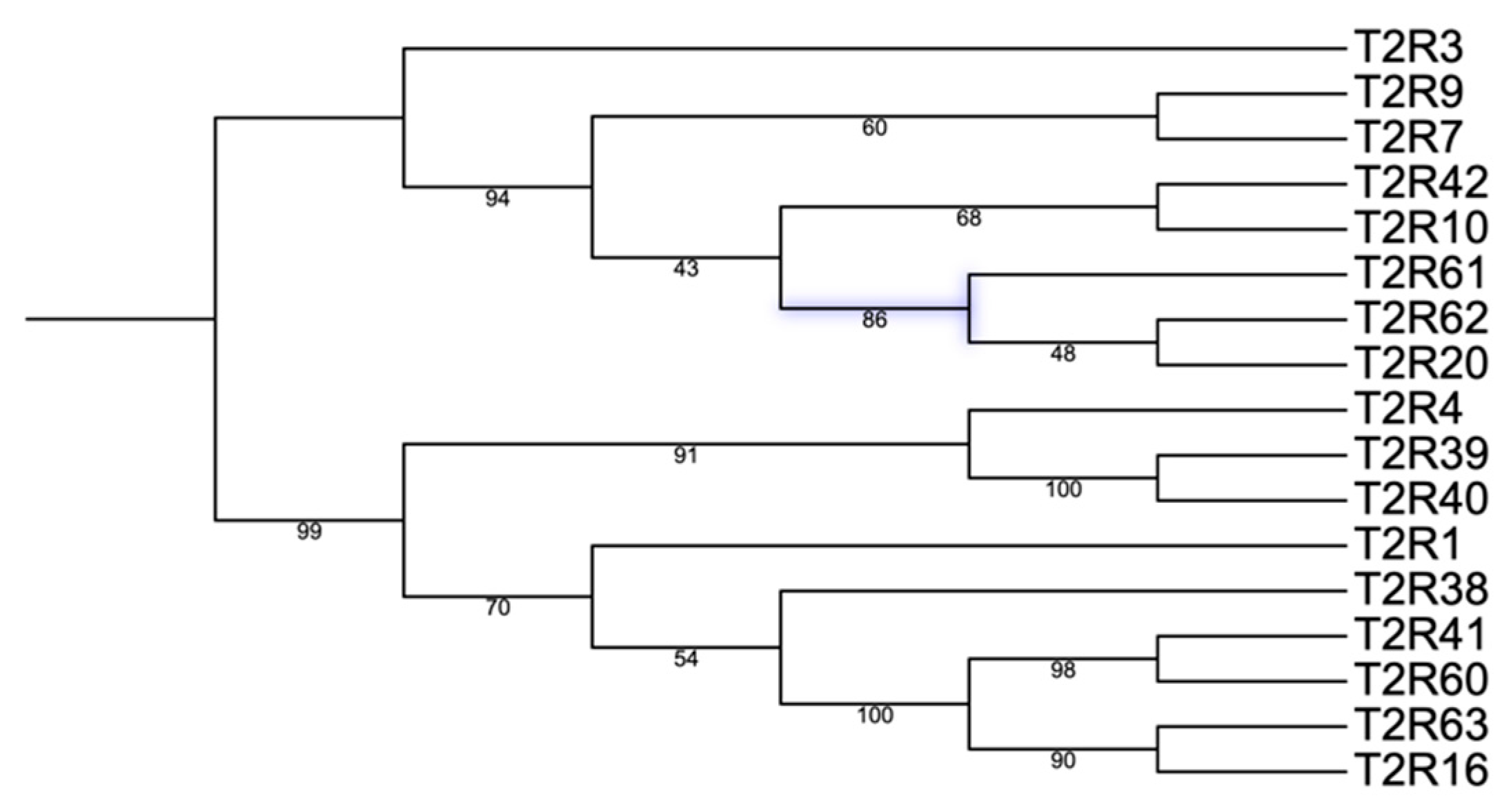
The gene T2R62 and its translated protein were both renamed as “T2R62” to differentiate from its UniProt recording: A0A5G2QX37 (for more information, the reader is referred to Section 4). The amino acid sequence of all the previously characterized T2R transcripts, together with T2R61, T2R62, T2R63 and T2R20 proteins, were subjected to phylogenetic analysis (Figure 4). The phylogenetic trees used gene names for ease of visualization. The phylogenetic tree shows that T2R20, T2R61, and T2R62 formed a branch of related sequences. Together, they are close to T2R3, T2R7, T2R9, T2R10 and T2R42.
We next looked at their amino acid sequence homology. The amino acid sequence was deduced from their transcripts by Augustus. Upon comparison of Τ2R61 and T2R62 with the pig proteome using NCBI BLASTp (e-value < 1 × 10⁻³⁰), they showed different levels of identities. The identity percentages for T2R61 with T2R3, T2R7, T2R9, T2R10, and T2R42 ranged from 37.05% to 41.83%. In a similar manner, T2R62 had identity percentages from 34.1% to 37% with the same group of proteins. This was consistent with the phylogenetic tree in Figure 4.
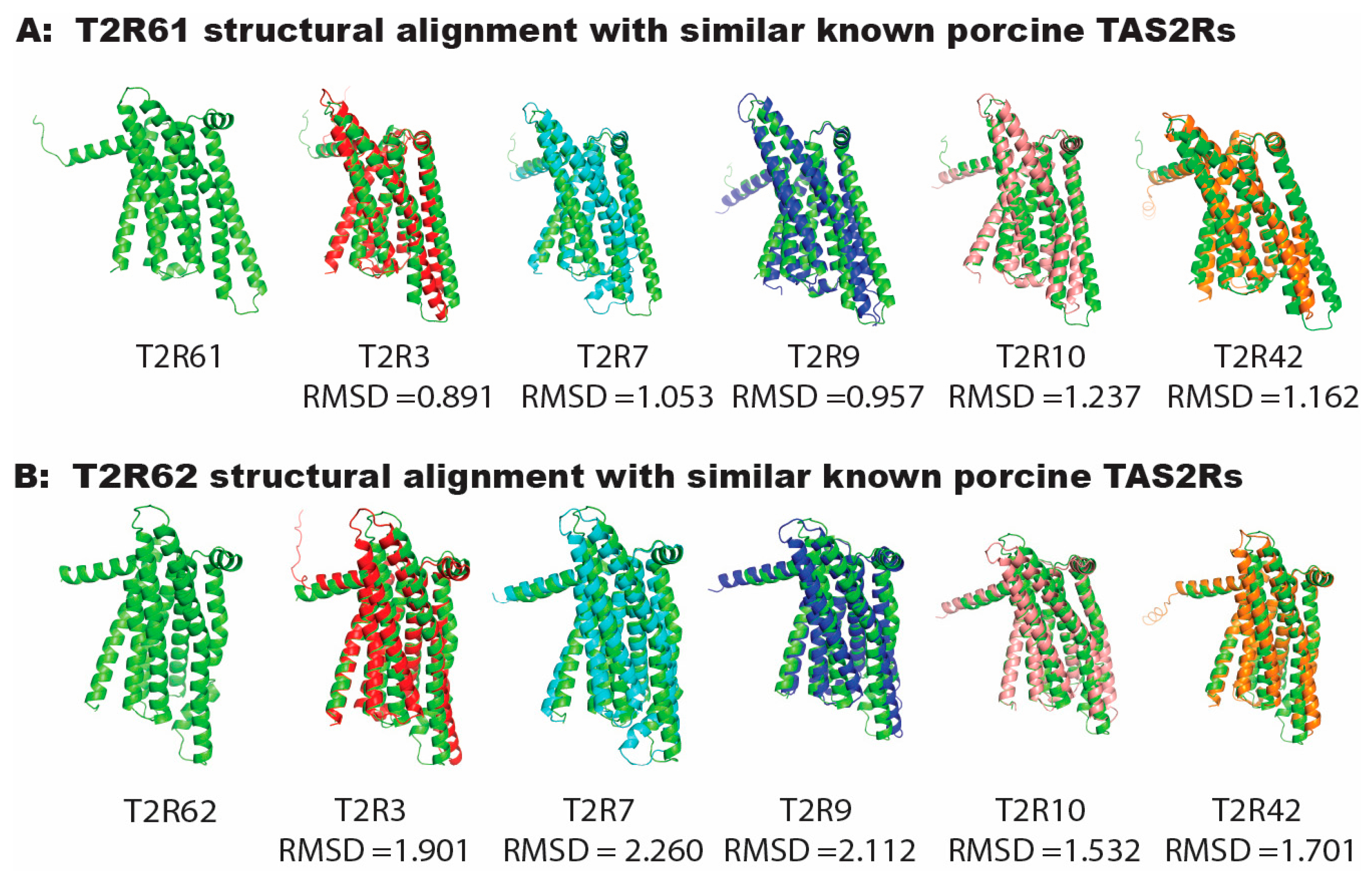
A canonical seven-transmembrane domain matching the GPCR and T2R structures was predicted by AlphaFold for both of the proteins (Figure 5A,B, green). A structural superimposition by PyMol was conducted to visualize their structural similarity to T2R3, T2R7, T2R9, T2R10, and T2R42, as measured by root-mean-square deviation (RMSD), which indicated the average distance between the corresponding atoms in two structures after alignment (Figure 5). The RMSD value is generally used to indicate similarity between protein structures. We categorize an RMSD value below 1 Å as good alignment, between 1 Å and 2 Å as moderate good alignment, between 2 Å and 3 Å as acceptable, and above 3 Å as loosely related [33]. The result shows that Τ2Ρ61 (Figure 5A green) has good (RMSD < 1 Å) alignment with T2R3 (Figure 5A red, RMSD = 0.891) and T2R9 (Figure 5A blue, RMSD = 0.957); and moderate good (1 Å < RMSD < 2 Å) alignment with T2R7 (Figure 5A Cyan, RMSD = 1.053), T2R10 (Figure 5A light pink, RMSD = 1.053) and T2R42 (Figure 5A Orange, RMSD = 1.162). For T2R62, it shows moderate good (1 Å < RMSD < 2 Å) alignment with T2R3 (Figure 5B red, RMSD = 1.901), T2R10 (Figure 5B light pink, RMSD = 1.532) and T2R42 (Figure 5B Orange, RMSD = 1.701); and acceptable similarity (2 Å < RMSD < 3 Å) to T2R7 (Figure 5B Cyan, RMSD = 2.260) and T2R9 (Figure 5B blue, RMSD = 2.112).
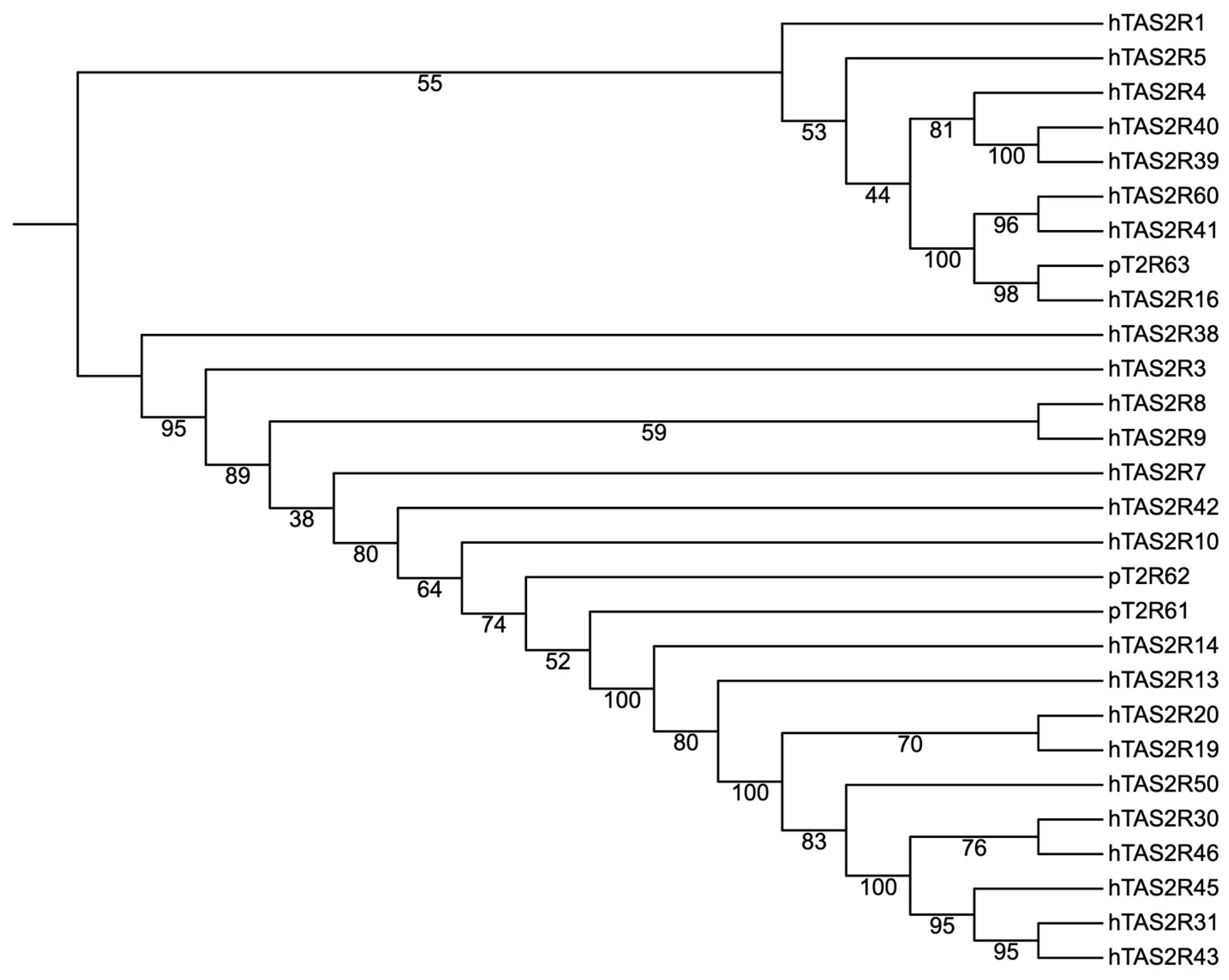
Due to the limited number of pig T2R studies, we next analyzed the homology of T2R61 and T2R62 with human TAS2Rs to further investigate their phylogenetic relationship. The amino acid sequences of the 25 human bitter taste receptors reported by Meyerhoff and co-workers [14] were aligned together with the three novel pig T2Rs, and a phylogenetic tree was built, as shown in Figure 6. This tree shows that the newly identified novel pig T2R receptors T2R61 and T2R62 are not closely related to any branches of known human TAS2Rs. T2R63 is closely related to human TAS2R16. It is noted that the sequences of the 26th bitter taste receptor TAS2R2 reported by Lang and co-workers [15], were not used in this study.

3.4. The T2R20 Protein Is Similar to Multiple Human TAS2Rs

Human TAS2R20 (NCBI Gene ID: 259295, Uniprot Accession P59543, former gene symbol TAS2R49) presented 59.21% identity with the porcine T2R20 protein. However, when the pig T2R20 protein sequence was BLASTed against the human proteome in NCBI, the result showed various degrees of identity to other TAS2Rs as well (e-value < 1 × 10⁻³⁰), with percent identity ranging from 37.04 to 61.43%, including multiple well-known TAS2Rs: TAS2R3, TAS2R7, TAS2R8, TAS2R9, TAS2R10, TAS2R13, TAS2R14, TAS2R42, TAS2R43, TAS2R31 (TAS2R44), TAS2R45, TAS2R46, TAS2R30 (TAS2R47), TAS2R20 (TAS2R49), and TAS2R50.
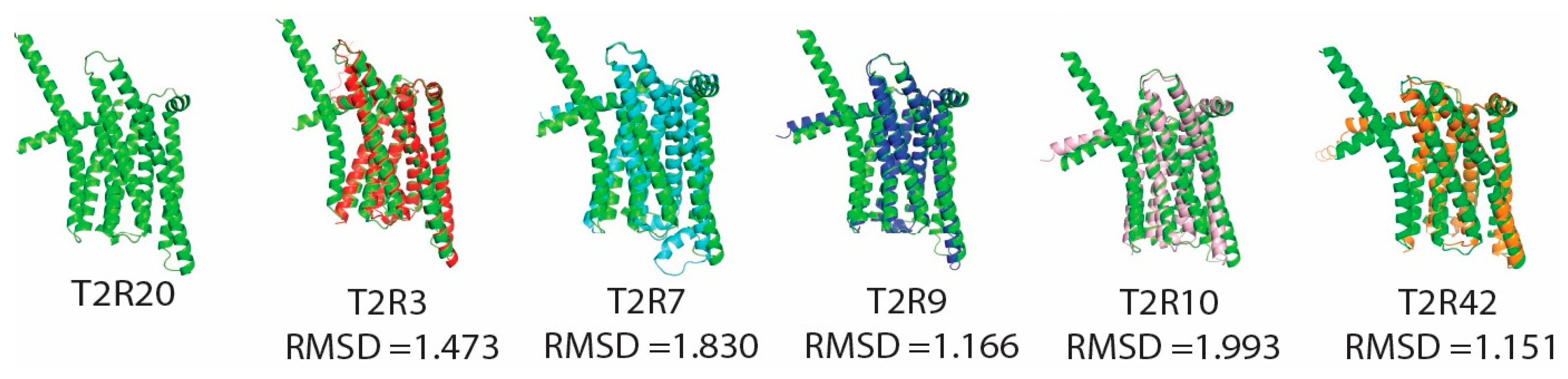
In the pig proteome, T2R20 protein showed identities ranging from 35.11 to 40.40%, with previously identified T2R3, T2R7, T2R9, T2R10, and T2R42 at an e-value cutoff of 1 × 10⁻³⁰ which is consistent with the fact that T2R61, T2R62 and T2R20 protein are being placed in the same branch as in Figure 7.

4. Discussion

Previously, 15 T2R genes (numbers 1, 3, 4, 7, 9, 10, 16, 20, 38, 39, 40, 41, 42, 60, 134) were identified (Table 4) in pigs [4,18]. Among them, the identification of T2R134 remains questionable, as no complete sequence was reported, and the reference pig genome (Sus_scrofa.Scrofa11.1.108) did not include any annotation about this gene. Therefore, T2R134 was excluded from further analysis in this study. T2R38 and T2R42 transcripts were characterized by PCR or qPCR but were obsolete in the updated Uniprot/Ensembl database. In total, only 12 T2R genes with valid previous references were identified in this study. The T2R20 was annotated as “taste receptor type 2 member 20-like” in the pig reference genome (Sus_scrofa.Scrofa11.1.108) and not assigned a Gene ID in NCBI annotation or the Uniprot database. The previous identification of this gene also lacked sequence confirmation. These facts have cast some doubt on the identification/functionality of this gene. One of the outcomes of the analysis that followed in this research was the annotation of this gene as “T2R20” and the further verification of its expression.
This study aimed to discover new transcripts that encode for previously unidentified T2R genes in pigs. We first directly queried the pig genome using known pig T2Rs, and no novel genomic positions were identified. In order to more precisely identify potential pig T2R genes, a comprehensive search and analysis of transcriptomic data from 12 pig (Sus scrofa) CVP was performed. Quality control by feature summary and PCA analysis showed that the transcriptomic assembly pipeline was of high quality, and no outliers were detected (Figure 1). Multiple transcripts relating to taste bud cell function were characterized, suggesting successful dissection and sample preparation of taste bud tissues. Regarding the identification of novel T2R transcripts, three (T2R61, T2R62, and T2R63) were identified with similar deduced amino acid sequences compared to other T2Rs. Two of them were intronless (T2R61 and T2R63), and one (T2R62) was annotated in the ENSEMBL database with a 5483 base-pair intervening sequence, possibly indicating the presence of an intron.
For the intronless transcripts T2R20, T2R61 and T2R63, we designed primers as shown in Table 1 to amplify the target transcripts and verify their existence. It was verified to cover the transcripts only partially and that the primers were specific. The outcome of the local BLAST of the amplicons against the pig reference genome showed that the hits were in the targeted gene positions, confirming the identity of the genes. The PCR and Sanger sequencing results confirmed the existence of one of the expected novel transcripts: T2R61 (Figure 2). The T2R20 expression was also confirmed (Figure 2).
For the T2R62, NCBI and ENSEMBL provided different annotations: NCBI recorded only one exon spanning 918 nucleotides, and ENSEMBL recorded two exons with 776 and 142 nucleotides separately. It was noticed that the 5483 bp insertion between the two exons in ENSEMBL annotation would be the first intron in the T2R family reported to date (which was not confirmed). A close inspection of the RNAseq data revealed that only bp 21 to 1798 were covered with reads. In particular, bp 21 to 776 were annotated as exon 1, and bp 777 to 1798 were annotated as part of an intron in the ENSEMBL database. The second exon (bp 6261 to 6405) was not covered with any illumina reads. Based on these observations, we hypothesize that the ENSEMBL annotated intron sequence is incorrect and the actual exon should cover bp 21 to 1798. We used the cDNA of pig CVP tissues as a template to run PCR combined with Sanger sequencing. It is worth noting that our hypothesis tested whether the ENSEMBL annotated “intron” was transcribed into mRNA. Consequently, genomic DNA was used as a template for PCR. This hypothesis was tested by PCR combined with Sanger sequencing. The Sanger sequencing confirmed that the sequence obtained with primer 2b covered the boundary of exon 1 and the putative (now discarded) “intron” of the gene under study. Primers (primer set 1 in Table 1) covering exon 1 and exon 2 did not amplify any consistent band, while primer 2b (Table 1), which covers part of exon 1 and part of “intron”, did amplify, showing a consistent band with the expected nucleic acid sequence. Therefore, it was concluded that the “intron” annotated in ENSEMBLE does not exist. Our result supported that T2R62 was transcribed from an intronless gene, consistent with other known porcine T2Rs. It is for this reason that T2R62 translating protein was renamed as “T2R62” to avoid confusion with its Uniprot record A0A5G2QX37 in the following analysis. Future work should include verifying the unique intron–exon structure of T2R62 in other available pig genome assemblies and across different breeds to confirm its conserved genomic architecture.
NCBI annotation has named T2R62 as “taste receptor type 2 member 7-like”, implying it is a duplicate of the pig T2R7 gene. However, this naming is from automatic computational annotation [37], and its amino acid sequence is very different from other proteins annotated as pig T2R7 in the Uniprot database. Therefore, the NCBI and ENSEMBL annotations about this gene both need updates, and the acronym T2R62 would be more appropriate to avoid further confusion.
Two of the three potential novel T2R transcripts were successfully verified by PCR and Sanger sequencing. The third transcript (T2R63) was detected by RNAseq only, but not by PCR. This result could be due to multiple reasons. For example, primer pairs and PCR conditions may need to be further optimized for a successful PCR identification, such as the template amount potentially being too low, amongst other potential reasons. For the following analysis, we focused on the newly identified T2R61 (Uniprot Accession: A0A5G2RA33) and T2R62 (Uniprot Accession: A0A5G2QX37), together with T2R20 (Uniprot Accession: A0A2287A3Q1), for protein sequence and structure characterization. The proteins translated from the two recently discovered transcripts, T2R61 and T2R62, showed different degrees of identity with other known bitter taste receptors (e-value < 1 × 10⁻³⁰): T2R3, T2R7, T2R9, T2R10, and T2R42. The phylogenetic tree (Figure 4) of identified pig T2Rs and novel proteins (T2R61 and T2R62) supported that they may be potential novel T2Rs and not a variant or duplicate of existing known porcine T2Rs. Homology relationships of pig T2R61 and T2R62 with human TAS2Rs remain to be further explored once more comprehensive updates on T2Rs in non-porcine species are available.
In the analysis of protein structures predicted by AlphaFold, T2R61 and T2R62 exhibit a canonical structure with seven transmembrane domains, resembling the GPCR/T2R architecture [38]. Structural superimposition using PyMol was performed to assess their similarity to known receptors (T2R3, T2R7, T2R9, T2R10, and T2R42) based on root-mean-square deviation (RMSD), a measure of structural alignment. T2R61 shows good alignment (RMSD < 1 Å) with T2R3 and T2R9, and moderate alignment (1 Å < RMSD < 2 Å) with T2R7, T2R10, and T2R42. T2R62 displays moderate alignment with T2R3, T2R10, and T2R42, and acceptable alignment with T2R7 and T2R9 (Figure 5).
Overall, the phylogeny (Figure 4) and structural alignment suggested that T2R61 and T2R62 protein structures are similar to some known pig T2Rs. This structural similarity is the basis of T2R61 and T2R62 for potential interaction with bitter compounds, as in other bitter taste receptors. While structural similarity alone cannot determine physiological roles, it provides important foundational information that helps validate the transcript as a plausible member of the porcine T2R family and supports future functional investigations. Therefore, we conclude that T2R61 and T2R62 are new gene members of the T2R family in pig.
Although it was attempted to compare the putative ligand binding pocket of T2R61/T2R62 with those of mouse or human T2Rs, this comparison seemed unlikely to result in a prediction of specific agonist due to the fact that pig T2R61 and T2R62 were most closely related to a cluster of primate specific human TAS2Rs (Figure 6) that showed a considerable variance of agonistic molecules, including TAS2R46, TAS2R31, TAS2R43 and TAS2R14, [38,39] according to bitterDB [40].
For the T2R20 protein, the blast result and phylogenetic analysis suggested that the porcine T2R20 protein is not necessarily a one-to-one ortholog of human TAS2R20 but rather forms a clade with multiple human TAS2Rs. The AlphaFold predicted structure, combined with structural alignment by PyMol, showed that the T2R20 protein showed moderately good similarity (1 Å < RMSD < 2 Å) to known pig T2Rs (T2R3, T2R7, T2R9 T2R10, and T2R42), as in Figure 7. It is worth noting that one of the purposes of this research was to see whether the novel proteins convey similar structures to other known T2Rs. The biochemical mechanism of large RMSD value variations and their implications for protein–ligand interaction remains a matter for further research. Our result clarified that the porcine T2R20 protein (A0A287A3Q1) is indeed a member of the porcine T2R family, highly similar to multiple human TAS2Rs, including TAS2R20 (TAS2R49) and many others.
T2R38 and T2R42 were not characterized from our RNAseq analysis, and they were removed from the updated Uniprot and Ensembl database, even though their genomic positions were still recorded in NCBI. The exact reason for the removal remains unknown. One possible reason is lacking high-quality data support. Previous PCR and qPCR characterizations of these two transcripts were also lacking robust sequence confirmation. Therefore, the three genes (T2R38, T2R42, and T2R134) were removed from the porcine bitter taste repository. The newest porcine T2R gene repository is summarized in Table 4. Here, we propose naming the two genes expressing newly identified T2R transcripts as T2R61 and T2R62. In total, there were 14 porcine T2Rs supported by strong evidence. One T2R transcript (T2R63) remains to be further verified. The gene encoding for this potential T2R transcript is proposed to be named T2R63 (expressing transcripts ENSSSCT00000017894.3 and translating protein F1SSN1).
While the gene models for T2R61 and T2R62 partially existed in prediction databases (e.g., UniProt accessions A0A5G2RA33 and A0A5G2QX37), our study provides the first direct experimental evidence of their expression in porcine circumvallate papillae and clarifies the exon structure of T2R62, which differs from the existing annotation.
One of the limitations of this research is the lack of functional data on the newly discovered T2Rs, which adds to the gap in functional data for other porcine TRs. Nonetheless, transcriptomic and PCR-based characterization provides reliable confirmation of transcript expression, consistent with approaches commonly used in other porcine T2R studies. Further investigations are warranted to unravel the taste functions associated with the family of TRs in Sus scrofa. In situ hybridization, qPCR, or RNAscope will be valuable for confirming whether these T2R genes are expressed in taste tissues. Another limitation of this study is that it does not address the natural genetic variation (polymorphisms) within the porcine T2R repertoire. While the current sample size (n = 12) may limit the broader generalizability of these findings across diverse porcine populations, the transcriptomic and PCR-based validations provide a robust framework for this initial characterization. Consequently, this study establishes a necessary foundation for future large-scale verification and functional association studies. Given the role of bitter taste in feed preference and avoidance, the genes identified here, including the novel T2R61 and T2R62, are prime candidates for future association studies. Investigating polymorphisms in these genes and correlating them with production traits such as feed efficiency, growth rate, and diet acceptance in commercial pig populations represents a crucial and logical next step to this work, with significant potential implications for animal nutrition and breeding strategies.

5. Conclusions

The pig CVP transcriptomic analysis identified two potentially new or corrected pig T2R sequences. One novel transcript (ENSSSCT00000089410.2, named T2R61) was confirmed by RNAseq and PCR identification. One transcript ENSSSCT00000091318.1 (named T2R62) annotation needs updating, as only one exon is being transcribed, and this exon should at least cover bp 21–1798 in ENSSSCT00000091318.1. The encoded proteins from both transcripts were proposed to be novel T2R family members: T2R61 and T2R62. ENSSSCT00000054601.2 (named T2R20) encoded a protein that showed high similarity to multiple human TAS2Rs. The transcript ENSSSCT00000017894.3 (named T2R63) was identified by RNAseq but could not be verified by PCR. In total, the porcine T2R repository contains 14 transcripts characterized with strong evidence from this and previous research. Moving forward, this work should be extended through functional studies—such as in situ hybridization and qPCR—to confirm cellular expression across multiple tissues. Alternatively, genetic association studies could explore polymorphisms within the T2R repertoire to link genetic variation to key production traits (like feed efficiency and diet acceptance), thereby connecting gene discovery to practical applications in pig nutrition and breeding.

Author Contributions

Conceptualization, X.T. and E.R.; methodology, X.T., S.Y., M.B. and E.R.; validation, X.T., K.W.L. and M.Z.; formal analysis, X.T., K.W.L., M.Z. and M.B.; investigation, X.T. and K.W.L.; resources, E.R.; data curation, X.T., M.Z., M.B. and E.R.; writing—original draft preparation, X.T., M.Z. and E.R.; writing—review and editing, X.T., K.W.L., S.Y., M.B. and E.R.; visualization, X.T. and K.W.L.; supervision, E.R.; project administration, E.R. All authors have read and agreed to the published version of the manuscript.

Funding

This research received no external funding.

Institutional Review Board Statement

This research was approved by the University of Queensland Animal Research Ethics Committee (Approval No. CNFS/QAAFI/192/20/HMRC, approval date: 30 July 2020).

Informed Consent Statement

Not applicable.

Data Availability Statement

The resulting data were archived in Sequence Read Archive (SRA) in National Center for Biotechnology Information (NCBI) with BioProject ID: PRJNA1153759.

Acknowledgments

Part of this data was presented at the scientific conference Australasian Pig Science Association 2023 meeting.

Conflicts of Interest

The authors declare no conflicts of interest.

Abbreviations

The following abbreviations are used in this manuscript:
T2RTaste Receptor family 2
TAS2RTaste Receptor family 2 (Human)
CVPCircumvallate Papillae
PCAPrincipal Component Analysis
PCPrincipal Component
UTRUntranslated Region
GPCRG protein-coupled receptor
RMSDRoot-Mean-Square Deviation

References

  1. Sato, M. Taste receptor proteins. Chem. Senses 1987, 12, 277–283. [Google Scholar] [CrossRef]
  2. Chandrashekar, J.; Mueller, K.L.; Hoon, M.A.; Adler, E.; Feng, L.; Guo, W.; Zuker, C.S.; Ryba, N.J.P. T2Rs Function as Bitter Taste Receptors. Cell 2000, 100, 703–711. [Google Scholar] [CrossRef] [PubMed]
  3. Wooding, S.P.; Ramirez, V.A.; Behrens, M. Bitter taste receptors: Genes, evolution and health. Evol. Med. Public Health 2021, 9, 431–447. [Google Scholar] [CrossRef] [PubMed]
  4. da Silva, E.C.; de Jager, N.; Burgos-Paz, W.; Reverter, A.; Perez-Enciso, M.; Roura, E. Characterization of the porcine nutrient and taste receptor gene repertoire in domestic and wild populations across the globe. BMC Genom. 2014, 15, 1057. [Google Scholar] [CrossRef]
  5. Liang, Q.; Shu, F.; Dong, X.; Feng, P. The evolution of a bitter taste receptor gene in primates. Chem. Senses 2021, 46, bjab049. [Google Scholar] [CrossRef]
  6. Gutierrez, R.; Simon, S.A. Physiology of Taste Processing in the Tongue, Gut, and Brain. Compr. Physiol. 2021, 11, 2489–2523. [Google Scholar] [CrossRef]
  7. Tuzim, K.; Korolczuk, A. An update on extra-oral bitter taste receptors. J. Transl. Med. 2021, 19, 440. [Google Scholar] [CrossRef] [PubMed]
  8. Roura, E.; Fu, M. Taste, nutrient sensing and feed intake in pigs (130 years of research: Then, now and future). Anim. Feed Sci. Technol. 2017, 233, 3–12. [Google Scholar] [CrossRef]
  9. Rozengurt, E.; Sternini, C. Taste receptor signaling in the mammalian gut. Curr. Opin. Pharmacol. 2007, 7, 557–562. [Google Scholar] [CrossRef]
  10. Wu, S.V.; Rozengurt, N.; Yang, M.; Young, S.H.; Sinnett-Smith, J.; Rozengurt, E. Expression of bitter taste receptors of the T2R family in the gastrointestinal tract and enteroendocrine STC-1 cells. Proc. Natl. Acad. Sci. USA 2002, 99, 2392–2397. [Google Scholar] [CrossRef]
  11. Grau-Bove, C.; Grau-Bove, X.; Terra, X.; Garcia-Vallve, S.; Rodriguez-Gallego, E.; Beltran-Debon, R.; Blay, M.T.; Ardevol, A.; Pinent, M. Functional and genomic comparative study of the bitter taste receptor family TAS2R: Insight into the role of human TAS2R5. FASEB J. 2022, 36, e22175. [Google Scholar] [CrossRef]
  12. Henslee, D.; Ellison, M.; Murdoch, B.; Taylor, J.B.; Yelich, J. PSIV-20 TAS2R genes in sheep and cattle compared to humans. J. Anim. Sci. 2019, 97, 229–230. [Google Scholar] [CrossRef]
  13. Gibbs, M.; Winnig, M.; Riva, I.; Dunlop, N.; Waller, D.; Klebansky, B.; Logan, D.W.; Briddon, S.J.; Holliday, N.D.; McGrane, S.J. Bitter taste sensitivity in domestic dogs (Canis familiaris) and its relevance to bitter deterrents of ingestion. PLoS ONE 2022, 17, e0277607. [Google Scholar] [CrossRef] [PubMed]
  14. Meyerhof, W.; Batram, C.; Kuhn, C.; Brockhoff, A.; Chudoba, E.; Bufe, B.; Appendino, G.; Behrens, M. The molecular receptive ranges of human TAS2R bitter taste receptors. Chem. Senses 2010, 35, 157–170. [Google Scholar] [CrossRef]
  15. Lang, T.; Di Pizio, A.; Risso, D.; Drayna, D.; Behrens, M. Activation profile of TAS2R2, the 26th human bitter taste receptor. Mol. Nutr. Food Res. 2023, 67, 2200775. [Google Scholar] [CrossRef] [PubMed]
  16. Wu, S.V.; Chen, M.C.; Rozengurt, E. Genomic organization, expression, and function of bitter taste receptors (T2R) in mouse and rat. Physiol. Genom. 2005, 22, 139–149. [Google Scholar] [CrossRef]
  17. Lei, W.; Ravoninjohary, A.; Li, X.; Margolskee, R.F.; Reed, D.R.; Beauchamp, G.K.; Jiang, P. Functional Analyses of Bitter Taste Receptors in Domestic Cats (Felis catus). PLoS ONE 2015, 10, e0139670. [Google Scholar] [CrossRef]
  18. Caspermeyer, J. Fine-Tuning of Bitter Taste Receptors May Be Key to Animal Survival. Mol. Biol. Evol. 2014, 31, 3379. [Google Scholar] [CrossRef][Green Version]
  19. Groenen, M.A.; Archibald, A.L.; Uenishi, H.; Tuggle, C.K.; Takeuchi, Y.; Rothschild, M.F.; Rogel-Gaillard, C.; Park, C.; Milan, D.; Megens, H.J.; et al. Analyses of pig genomes provide insight into porcine demography and evolution. Nature 2012, 491, 393–398. [Google Scholar] [CrossRef]
  20. Pych, E.; Sahebekhtiari, N.; Ekstrand, B.; Rasmussen, M.K. Extra-oral expression of bitter taste receptors in pigs and their correlation with hepatic cytochrome P450 enzymes. Cell Tissue Res. 2025, 402, 255–265. [Google Scholar] [CrossRef]
  21. Bolger, A.M.; Lohse, M.; Usadel, B. Trimmomatic: A flexible trimmer for Illumina sequence data. Bioinformatics 2014, 30, 2114–2120. [Google Scholar] [CrossRef] [PubMed]
  22. Kim, D.; Langmead, B.; Salzberg, S.L. HISAT: A fast spliced aligner with low memory requirements. Nat. Methods 2015, 12, 357–360. [Google Scholar] [CrossRef] [PubMed]
  23. Liao, Y.; Smyth, G.K.; Shi, W. featureCounts: An efficient general purpose program for assigning sequence reads to genomic features. Bioinformatics 2014, 30, 923–930. [Google Scholar] [CrossRef]
  24. Love, M.I.; Huber, W.; Anders, S. Moderated estimation of fold change and dispersion for RNA-seq data with DESeq2. Genome Biol. 2014, 15, 550. [Google Scholar] [CrossRef]
  25. Kovaka, S.; Zimin, A.V.; Pertea, G.M.; Razaghi, R.; Salzberg, S.L.; Pertea, M. Transcriptome assembly from long-read RNA-seq alignments with StringTie2. Genome Biol. 2019, 20, 278. [Google Scholar] [CrossRef]
  26. Trapnell, C.; Williams, B.A.; Pertea, G.; Mortazavi, A.; Kwan, G.; van Baren, M.J.; Salzberg, S.L.; Wold, B.J.; Pachter, L. Transcript assembly and quantification by RNA-Seq reveals unannotated transcripts and isoform switching during cell differentiation. Nat. Biotechnol. 2010, 28, 511–515. [Google Scholar] [CrossRef] [PubMed]
  27. Keller, O.; Kollmar, M.; Stanke, M.; Waack, S. A novel hybrid gene prediction method employing protein multiple sequence alignments. Bioinformatics 2011, 27, 757–763. [Google Scholar] [CrossRef]
  28. Mirdita, M.; Schutze, K.; Moriwaki, Y.; Heo, L.; Ovchinnikov, S.; Steinegger, M. ColabFold: Making protein folding accessible to all. Nat. Methods 2022, 19, 679–682. [Google Scholar] [CrossRef]
  29. Trifinopoulos, J.; Nguyen, L.T.; von Haeseler, A.; Minh, B.Q. W-IQ-TREE: A fast online phylogenetic tool for maximum likelihood analysis. Nucleic Acids Res. 2016, 44, W232–W235. [Google Scholar] [CrossRef]
  30. Pertea, M.; Kim, D.; Pertea, G.M.; Leek, J.T.; Salzberg, S.L. Transcript-level expression analysis of RNA-seq experiments with HISAT, StringTie and Ballgown. Nat. Protoc. 2016, 11, 1650–1667. [Google Scholar] [CrossRef]
  31. Nishihara, H.; Toda, Y.; Kuramoto, T.; Kamohara, K.; Goto, A.; Hoshino, K.; Okada, S.; Kuraku, S.; Okabe, M.; Ishimaru, Y. A vertebrate-wide catalogue of T1R receptors reveals diversity in taste perception. Nat. Ecol. Evol. 2024, 8, 111–120. [Google Scholar] [CrossRef]
  32. Shimizu, T.; Fujii, T.; Hanita, K.; Shinozaki, R.; Takamura, Y.; Suzuki, Y.; Kageyama, T.; Kato, M.; Nishijo, H.; Tominaga, M.; et al. Polycystic kidney disease 2-like 1 channel contributes to the bitter aftertaste perception of quinine. Sci. Rep. 2023, 13, 4271. [Google Scholar] [CrossRef]
  33. Ramírez, D.; Caballero, J. Is It Reliable to Take the Molecular Docking Top Scoring Position as the Best Solution without Considering Available Structural Data? Molecules 2018, 23, 1038. [Google Scholar] [CrossRef]
  34. Shi, P.; Zhang, J.; Yang, H.; Zhang, Y.P. Adaptive diversification of bitter taste receptor genes in Mammalian evolution. Mol. Biol. Evol. 2003, 20, 805–814. [Google Scholar] [CrossRef]
  35. Ribani, A.; Bertolini, F.; Schiavo, G.; Scotti, E.; Utzeri, V.J.; Dall’Olio, S.; Trevisi, P.; Bosi, P.; Fontanesi, L. Next generation semiconductor based sequencing of bitter taste receptor genes in different pig populations and association analysis using a selective DNA pool-seq approach. Anim. Genet. 2017, 48, 97–102. [Google Scholar] [CrossRef] [PubMed]
  36. Colombo, M.; Trevisi, P.; Gandolfi, G.; Bosi, P. Assessment of the presence of chemosensing receptors based on bitter and fat taste in the gastrointestinal tract of young pig. J. Anim. Sci. 2012, 90, 128–130. [Google Scholar] [CrossRef]
  37. Warr, A.; Affara, N.; Aken, B.; Beiki, H.; Bickhart, D.M.; Billis, K.; Chow, W.; Eory, L.; Finlayson, H.A.; Flicek, P.; et al. An improved pig reference genome sequence to enable pig genetics and genomics research. Gigascience 2020, 9, giaa051. [Google Scholar] [CrossRef] [PubMed]
  38. Ahmad, R.; Dalziel, J.E. G Protein-Coupled Receptors in Taste Physiology and Pharmacology. Front. Pharmacol. 2020, 11, 587664. [Google Scholar] [CrossRef]
  39. Nowak, R.P.; DeAngelo, S.L.; Buckley, D.; He, Z.; Donovan, K.A.; An, J.; Safaee, N.; Jedrychowski, M.P.; Ponthier, C.M.; Ishoey, M.; et al. Plasticity in binding confers selectivity in ligand-induced protein degradation. Nat. Chem. Biol. 2018, 14, 706–714. [Google Scholar] [CrossRef]
  40. Dagan-Wiener, A.; Di Pizio, A.; Nissim, I.; Bahia, M.S.; Dubovski, N.; Margulis, E.; Niv, M.Y. BitterDB: Taste ligands and receptors database in 2019. Nucleic Acids Res. 2019, 47, D1179–D1185. [Google Scholar] [CrossRef] [PubMed]
Figure 1. (A) featureCount summary showing the percentage of reads mapped to the genome and features or missing reads. (B) Principal component analysis of the transcriptomics data using normalized counts by DESeq2. Dots represent different biological samples.
Genes 17 00400 g001
Figure 2. PCR identification of novel transcripts. Sanger sequencing has confirmed three bands (indicated in red) to be consistent with targeted sequence from reference genome.
Genes 17 00400 g002
Figure 3. Illustration of hypothesized transcript ENSSSCT00000091318.1 (T2R62) and corresponding primer design (A) and PCR identification of primer set 2 against cDNAs from two biological replicates (B).
Genes 17 00400 g003
Figure 4. Phylogenetic tree from previously identified pig T2Rs and newly characterized T2Rs (T2R61 and T2R62) in this research with the new branch highlighted in purple.
Genes 17 00400 g004
Figure 5. Superimposition of novel transcript encoding protein (green) A0A5G2RA33 (panel (A)) and T2R62 (Panel (B)) with TAS2R3 (red), TAS2R7 (cyan), TAS2R9 (blue), TAS2R10 (light pink) and TAS2R40 (orange). RMSD = root-mean-square deviation.
Genes 17 00400 g005
Figure 6. Phylogenetic tree of pig T2R61, T2R62 and T2R63 with known human TAS2Rs.
Genes 17 00400 g006
Figure 7. Superimposition of T2R20 protein (green) with T2R3 (red), T2R7 (cyan), T2R9 (blue), T2R10 (light pink), and T2R42 (orange). RMSD = root-mean-square deviation.
Genes 17 00400 g007
Table 1. Primers designed for novel transcript identification.
TranscriptsForward PrimerReverse PrimerNoteAmplicon Length (bp)
ENSSSCT00000054601CTGGGAGCTTCGTTCTTCTTCCTGTTCATTCTGCTGTCTCT 379
ENSSSCT00000054601CTTGCTACTAGCCTCAGCATATTGATCCTTTGCCATTGCACTTC 356
ENSSSCT00000089410GGATCAAGAACAGGAGGTTCTCAAAGGAGGTCAGGGACACTA 491
ENSSSCT00000089410CCTGCCTCAGTGTCTTCTATTTAATGGATGGCCAGATGGATAG 532
ENSSSCT00000091318CATTCCCTTGAGGCAGGATTCATTCCCTTGAGGCAGGATTprimer set 1a846
ENSSSCT00000091318GCCAACCACTTGAGCATTTGCATTCCCTTGAGGCAGGATTprimer set 1b645
ENSSSCT00000091318ATGGAGGCCCATTTCAGAGCCCATTTGCTTGGCTGAGAGCprimer set 2a275
ENSSSCT00000091318AGTGATTCCAGAGACGCCAGTCTTTTCAGGCCCCACACTTprimer set 2b272
ENSSSCT00000091318GATTCCAGAGACGCCAGCATTCACAGGGACTAGGTGGTCATAprimer set 2c799
ENSSSCT00000091318AGCATGGAGGCCCATTTCAGTTCACAGGGACTAGGTGGTCATAprimer set 2d785
ENSSSCT00000091318TCTGTGCCGTTCCTGTTCATCTGTGAATCCCTGAATGACTGTprimer set 2e986
ENSSSCT00000017894TGCCAAGGGAAATCACAGAGGTGTGGAAGACGAGGAAGAAG 911
ENSSSCT00000017894GTCTTCCTGGTCGTCTTTGTCTCTCCTTTAGGGCCTTTCTC 848
Primer set 1 (a,b) was designed to cover exon 1 and exon 2 from the ENSEMBL gene annotation, respectively. Primer set 2 (a to e) was designed to cover only the sequence with reads from the illumina sequencing result on the second exon in transcript ENSSSCT00000091318.
Table 2. Transcripts regarded as similar to existing porcine T2Rs. The asterisk (*) indicates novel transcripts identified by RNAseq.
Uniprot IDEnsembl IDGene Name
A0A287AYK0ENSSSCG00000038925.1T2R10
A0A287AA31ENSSSCG00000037368.1T2R16
I3LF46ENSSSCG00000028394.2T2R3
I3LCT3ENSSSCG00000021954.2T2R39
I3LE78ENSSSCG00000021525.2T2R4
F1SSI6ENSSSCG00000016457.2T2R41
F1SRW2ENSSSCG00000016458.3T2R60
A0A286ZVQ9ENSSSCG00000035471.1T2R7
F1SQ48ENSSSCG00000000631.2T2R9
A0A287A3Q1ENSSSCT00000054601.2T2R20-like
A0A5G2QX37 *ENSSSCT00000091318.1 *T2R62 *
A0A5G2RA33 *ENSSSCT00000089410.2 *T2R61 *
F1SSN1 *ENSSSCT00000017894.3 *T2R63 *
Table 3. Nucleotide local blast against pig reference genome.
Transcript IDQuery StartQuery EndSubject StartSubject Ende-ValueChromosome
ENSSSCT00000091318.11776612278166122859105
ENSSSCT00000091318.177792161234075612342192.55 × 10−695
ENSSSCT00000089410.225954612173596121828705
ENSSSCT00000054601.21912611813306118224105
ENSSSCT00000017894.31117655684825567307018
Table 4. Pig T2R gene characterization update.
T2R GenesUniprot AccessionChromosomeGenomic CoordinatesPreviously Characterized?Characterization Level in This Study
T2R1A0A8W4F831167,573,832–7,574,728Yes [4]Not characterized
T2R3I3LF46188,065,985–8,066,932Yes [34]RNAseq
T2R4I3LE78188,059,331–8,060,218Yes [35] RNAseq
T2R7A0A286ZVQ95154,107–155,042Yes [4]RNAseq
T2R9F1SQ48561,253,928–61,254,863Yes [36]RNAseq
T2R10A0A287AYK0561,242,636–61,243,565Yes [36]RNAseq
T2R16A0A287AA311824,286,430–24,287,329Yes [36]RNAseq
T2R20 *A0A287A3Q1561,181,330–61,182,241Yes [4]RNAseq + PCR
T2R39I3LCT3187,068,087–7,069,214Yes [4]RNAseq
T2R40A0A480JCU5187,025,749–7,026,516Yes [19]Not characterized
T2R41F1SSI6186,780,808–6,781,731Yes [4]RNAseq
T2R60F1SRW2186,806,911–6,808,689Yes [4]RNAseq
T2R61A0A5G2RA33561,216,785–61,218,284NoRNAseq + PCR
T2R62
(T2R-new)
A0A5G2QX37561,227,816–61,234,219NoRNAseq + PCR
T2R63F1SSN155,503,228–5,504,400NoRNAseq
T2R38 #Not Applicable187,982,188–7,983,921Yes [36]Not characterized
T2R42 #Not Applicable561,141,863–61,146,328Yes [4]Not characterized
T2R134 #Not ApplicableNot ApplicableNot ApplicableNoNot characterized
* Note: T2R20 was named as “T2R20-like” in NCBI annotation. # T2R38, T2R42 and T2R134 records were obsolete from Uniprot and Ensembl databases. They were also not characterized by RNAseq analysis in this research. Therefore, they were removed from Porcine Bitter taste repository.
Disclaimer/Publisher’s Note: The statements, opinions and data contained in all publications are solely those of the individual author(s) and contributor(s) and not of MDPI and/or the editor(s). MDPI and/or the editor(s) disclaim responsibility for any injury to people or property resulting from any ideas, methods, instructions or products referred to in the content.