Article

Genetic Dissection of Shelling Percentage in Maize via QTL Mapping Using a Maize-Teosinte Population


1
State Key Laboratory of Maize Bio-Breeding, Key Laboratory of Maize Biology and Genetic Breeding, Key Laboratory of Genome Editing Research and Application, Ministry of Agriculture and Rural Affairs, National Maize Improvement Center, China Agricultural University, Beijing 100193, China
2
National Agricultural Technology Extension & Service Center, Beijing 100125, China
3
Center for Crop Functional Genomics and Molecular Breeding, China Agricultural University, Beijing 100193, China
4
International Maize Research Center, Sanya Institute of China Agricultural University, Sanya 572024, China
*
Author to whom correspondence should be addressed.
Genes 2026, 17(4), 384; https://doi.org/10.3390/genes17040384
Submission received: 3 March 2026 / Revised: 19 March 2026 / Accepted: 27 March 2026 / Published: 28 March 2026
(This article belongs to the Special Issue Precision Genome Engineering in Plants)

Abstract

Background: Shelling percentage is an important trait affecting grain yield efficiency in maize, but its genetic basis remains insufficiently understood. Methods: In this study, a maize-teosinte BC2S2 population derived from Zheng58 and (Zea mays ssp. parviglumis, CIMMYTMA 8782) was used for phenotypic evaluation and QTL mapping of shelling percentage across two replicates and BLUP-based analysis. Candidate genes were further prioritized based on their positions within QTL support intervals, expression patterns, and functional annotation. Results: Two reproducible QTLs, qSP7 and qSP10, were identified on chromosomes 7 and 10, respectively. qSP7 explained 3.39–3.41% of the phenotypic variation, whereas qSP10 explained 2.96–6.45%. Within these intervals, Zm00001d021701, Zm00001d021708, and Zm00001d025739 were prioritized as candidate genes based on expression and annotation evidence. Conclusions: These results indicate that shelling percentage in maize is controlled by multiple loci with modest effects and provide a basis for future genetic analysis and marker development for this trait.

1. Introduction

Maize (Zea mays L.) is one of the world’s most important crops and plays a vital role in ensuring food security. Increasing grain yield remains an enduring goal in maize breeding. Maize yield is determined by three key factors: number of ears per unit area, number of kernels per ear, and hundred-kernel weight (HKW). Shelling percentage is defined as the ratio of total dry weight of kernels to total dry weight of the ears [1,2]. A higher shelling percentage indicates greater efficiency in allocating biomass to kernels along the cob. This trait is central to maize domestication and modern breeding programs, and improving shelling percentage is essential for increasing overall maize production.
Currently, studies directly targeting QTL mapping for shelling percentage are scarce [3,4]. Since researchers pay little attention to cob yield, they focus more on traits that directly influence grain yield, such as kernel length, kernel width, kernel thickness, and kernel weight. Although extensive research has been conducted on QTL mapping for kernel-related traits [5,6,7,8], most studies remain confined to identifying broad QTL intervals. The number of maize QTLs associated with kernel traits that have been successfully cloned remains limited. ZmKW1 encodes an E3 ubiquitin ligase, which is highly expressed in the endosperm region and negatively regulates kernel size and weight. Through fine-mapping and candidate gene association analysis, an Indel-1346 located 2.8 kb upstream of the ZmKW1 promoter was identified to enhance gene expression. Carrying the Indel-1346 locus reduces maize kernel weight [9]. ZmBAM1d is the functional gene for the qHKW1 locus controlling maize kernel shape and weight. This gene positively regulates kernel weight, and its overexpression or knockout has no effect on other agronomic traits [10]. The functional gene of kernel weight, QTL-qKW9, encodes a PPR protein with a DYW domain, which participates in C-U editing of the chloroplast NADH dehydrogenase-like complex subunit ndhB. Mutations in this gene reduce photosynthetic capacity, decrease photosynthetic products available for kernel filling, and ultimately affect kernel weight [11]. ZmEXPB15 regulates maize kernel weight, through natural population association analysis, researchers identified a site in the gene promoter region significantly associated with hundred-kernel weight, with its expression level showing a significant positive correlation with hundred-kernel weight. This gene synergistically regulates early maize kernel development with ZmNAC11 and ZmNAC29, significantly increasing kernel weight by accelerating endosperm tissue elimination [12]. On maize chromosome 9, the major QTL for kernel length, KL9, was also identified. ZmKL9 encodes a bZIP transcription factor. A transposable element insertion–deletion in its 5′UTR region constitutes a functional site causing kernel size variation. This gene positively regulates maize kernel size and yield [13]. Many kernel-related genes were cloned from mutants such as defective kernel, empty pericarp, and small kernel, which typically develop small and/or lethal kernels with little practical value [14,15,16,17,18]. Maize kernel size is regulated by multiple molecular pathways, primarily involving G protein signaling, the ubiquitin–proteasome system, the MAPK signaling pathway, and the growth hormone pathway [19,20]. In recent years, several kernel-related genes have been identified through reverse genetics approaches. These genes encode diverse proteins, including transcription factors, enzymes, and miRNAs [21,22,23,24,25], indicating that kernel traits are governed by complex genetic networks. Despite extensive research on numerous kernel-related genes in maize, the number of identified kernel-related QTLs remains limited. Further exploration of kernel-related QTLs is needed to provide genetic resources for the genetic improvement of maize kernel traits.
Maize was domesticated from its wild ancestor teosinte (Zea mays ssp. parviglumis). Although teosinte lacks a cob structure, its kernels possess a hard, dense lignin glume controlled by the Tga1 gene [26]. The glume of teosinte seeds constitutes a non-seed component accounting for a significant portion of the mass and should be included as the denominator in shelling percentage. This characteristic results in a relatively low shelling percentage for teosinte.
To dissect the genetic basis of shelling percentage in maize, we developed a maize–teosinte BC2S2 population with strong phenotypic contrast for this trait and conducted QTL mapping, followed by candidate gene analysis within the detected QTL intervals.

2. Materials and Methods

2.1. Plant Materials and Field Trials

A maize–teosinte mapping population was developed using the elite maize inbred line Zheng58 as the recurrent parent and teosinte (Zea mays ssp. parviglumis, CIMMYTMA 8782) as the donor parent. After two rounds of backcrossing to Zheng58 followed by two generations of selfing, a BC2S2 population was generated, hereafter referred to as the TM population. A total of 590 BC2S2 lines were used in this study. Population development and genotyping were completed in 2022, whereas phenotypic evaluation for shelling percentage was conducted in 2025.
The TM population and the two parental lines were grown in Gongzhuling, Jilin Province, China (43°30′ N, 124°49′ E) in 2025 with two field replicates. Each line was planted in a single-row plot containing 13 plants, with 60 cm between rows and 25 cm between adjacent plants within a row. Standard local field management practices were applied throughout the growing season.
At physiological maturity, ears from each plot were harvested and naturally dried before measurement. For each plot, at least five well-filled ears were selected for shelling percentage evaluation. Ears with poor grain filling or obvious defects were excluded. Kernels were manually separated from the cob, and the dry weights of kernels and cobs were recorded separately. Shelling percentage was calculated as Shelling percentage = kernel dry weight/ear dry weight, where ear dry weight was defined as the sum of kernel dry weight and cob dry weight.

2.2. Phenotypic Analysis

Phenotypic data for shelling percentage from the two field replicates were summarized using descriptive statistics in Microsoft Excel 2019 (Microsoft, Redmond, WA, USA). Trait distribution and correlation analyses were performed in R (R Foundation for Statistical Computing, Vienna, Austria). Pearson correlation coefficients between the two replicates were calculated using the Performance Analytics package (v2.0.4). Broad-sense heritability (H2) was estimated as H2 = σg2/(σg2 + σe2/n), where σg2 is the genetic variance, σe2 is the residual variance, and n is the number of replicates [27,28].
To obtain an integrated phenotypic estimate across replicates, best linear unbiased prediction (BLUP) values were calculated using a mixed linear model implemented in the lme4 package (v1.1–27.1) in R, with genotype and replicate treated as random effects [27,28]. The BLUP values, together with the raw phenotypic data from the two field replicates, were used for subsequent QTL analyses.

2.3. Linkage Map Construction and QTL Identification

Genotype data for the BC2S2 TM population were obtained by genotyping-by-sequencing (GBS). The average sequencing depth was 0.1× for each line. Raw sequencing reads were first processed using fastp (v0.23.2) for quality control and adapter trimming, and the filtered reads were aligned to the B73 reference genome version 4 (B73 RefGen_v4) using BWA (v0.7.17) [29,30]. Variant calling was performed with GATK HaplotypeCaller (v4.2.0.0) [31], and individual GVCF files were combined for joint genotyping to generate a multi-sample VCF file.
To obtain a high-quality SNP dataset, variants were filtered using the following criteria: those with a minor allele frequency (MAF) < 0.05, marker missing rate > 40%, and individual missing rate > 50% were excluded. The filtered markers were then used for linkage map construction.
A genetic linkage map was constructed in R/qtl (v1.50). Missing genotypes were imputed using the fill.geno function, and recombination fractions were converted to genetic distances using the Kosambi mapping function implemented in est.map. QTL mapping for shelling percentage was conducted by composite interval mapping (CIM) using the phenotypic data from the two field replicates and the BLUP values [32].
Genome-wide significance thresholds were determined by 1000 permutation tests for each dataset. QTL support intervals were defined using the 1.5-LOD drop method. QTLs detected in overlapping genomic regions across multiple datasets were considered reproducible QTL signals.

2.4. Candidate Gene Analysis

Candidate gene analysis was conducted for the QTL intervals based on the B73 RefGen_v4 genome annotation. All annotated genes within the corresponding support intervals were first retrieved as the initial candidate set.
To reduce the candidate list, expression information for these genes was first examined using qTeller (MaizeGDB). Expression in V18 immature cob and whole seed at 22 days after pollination (22 DAP) was used as the initial screening criterion because shelling percentage is closely related to the relative contribution of cob and kernel tissues to ear biomass. Genes with expression values below 5 FPKM in both tissues were excluded from subsequent analysis. The genes retained after this initial filtering were then further examined using publicly available maize transcriptome data [33]. Relative expression patterns across nine tissues (kernel, cob, ear, tassel, leaf, root, silk, anther, and shoot apical meristem) were visualized by heatmap analysis.
Finally, candidate genes were prioritized according to their physical positions within the QTL support intervals, their expression patterns in relevant tissues, and their annotated or reported functions related to kernel development, cob development, biomass allocation, or regulatory pathways potentially associated with shelling percentage.

3. Results

3.1. Phenotypic Evaluation

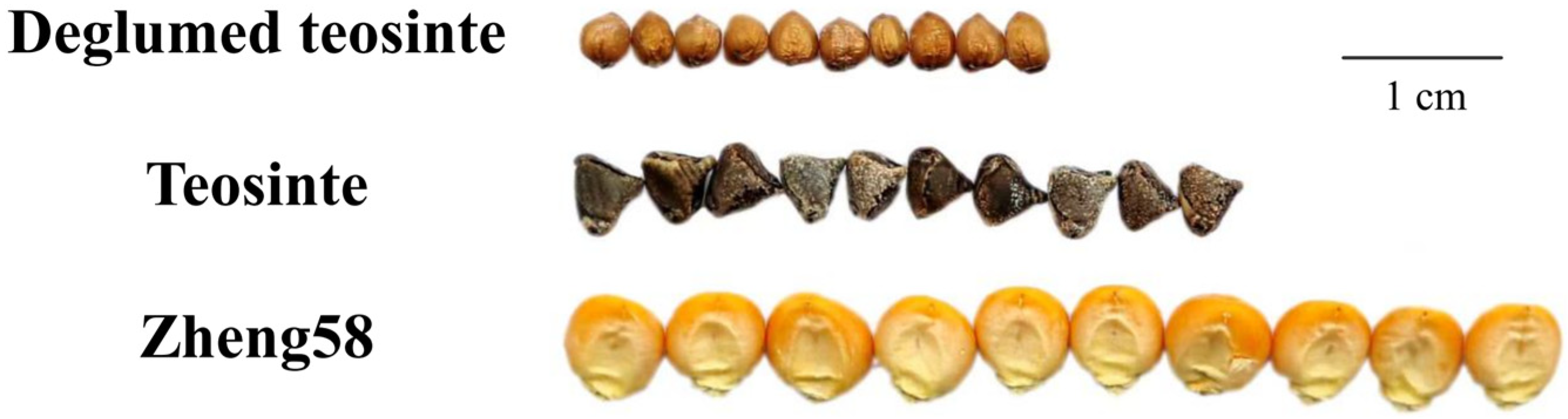
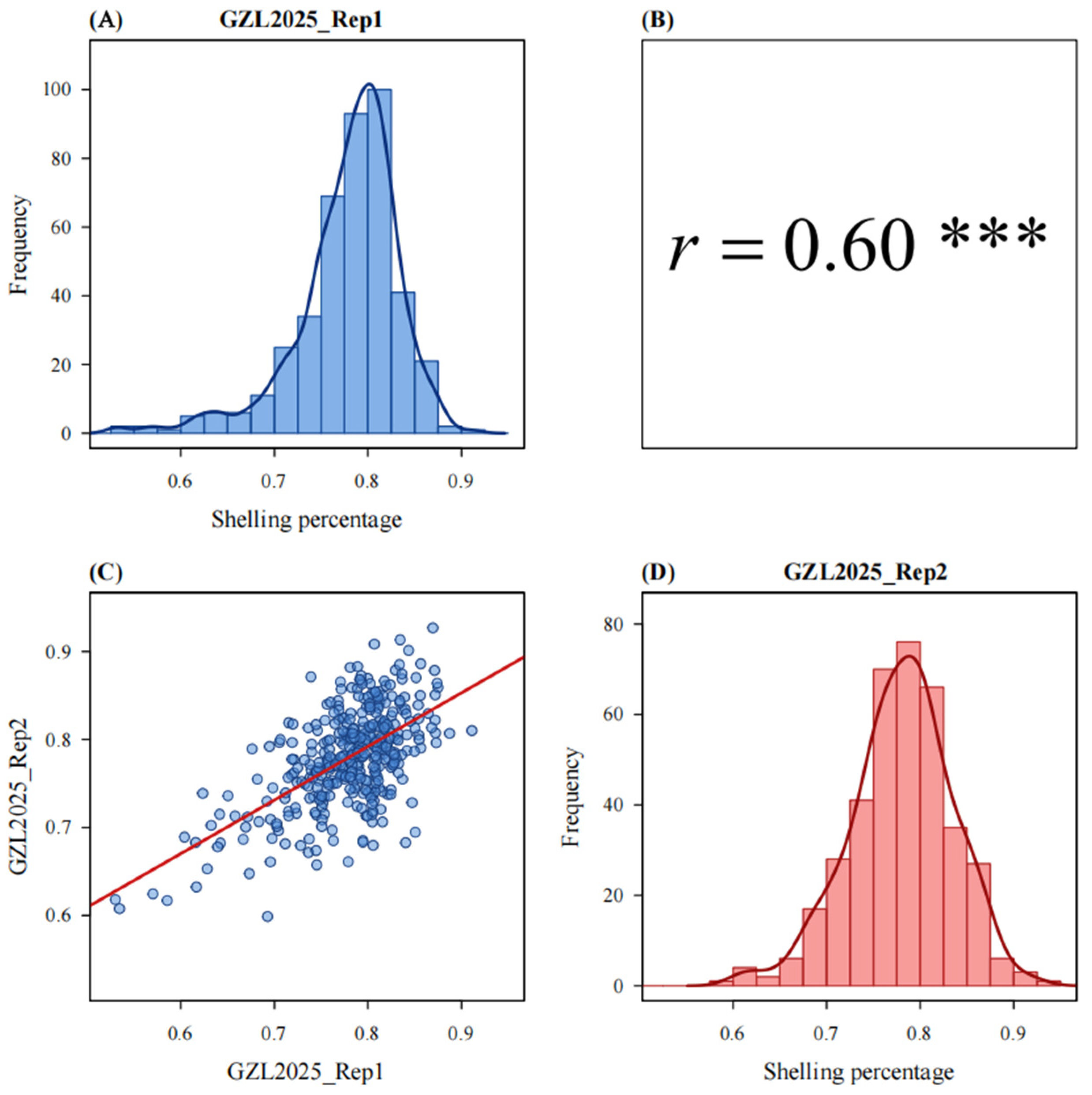
As shown in Figure 1, the kernel morphology of the parental lines used in this study. Teosinte (CIMMYTMA 8782) possesses hard glumes that account for a significant portion of its mass, whereas Zheng58 lack such hard glumes. As shown in Table S1, the shelling percentage trait exhibits a high heritability of 0.75. In GZL2025_Rep1, the range of shelling percentage across populations was 0.53–0.91, while in GZL2025_Rep2, it ranged from 0.60 to 0.93. The mean shelling percentage across both replicates was 0.79. The phenotypic distributions for the two replicates are shown in Figure 2, with a Pearson correlation coefficient of 0.6.

3.2. Construction of Linkage Map and Physical Map

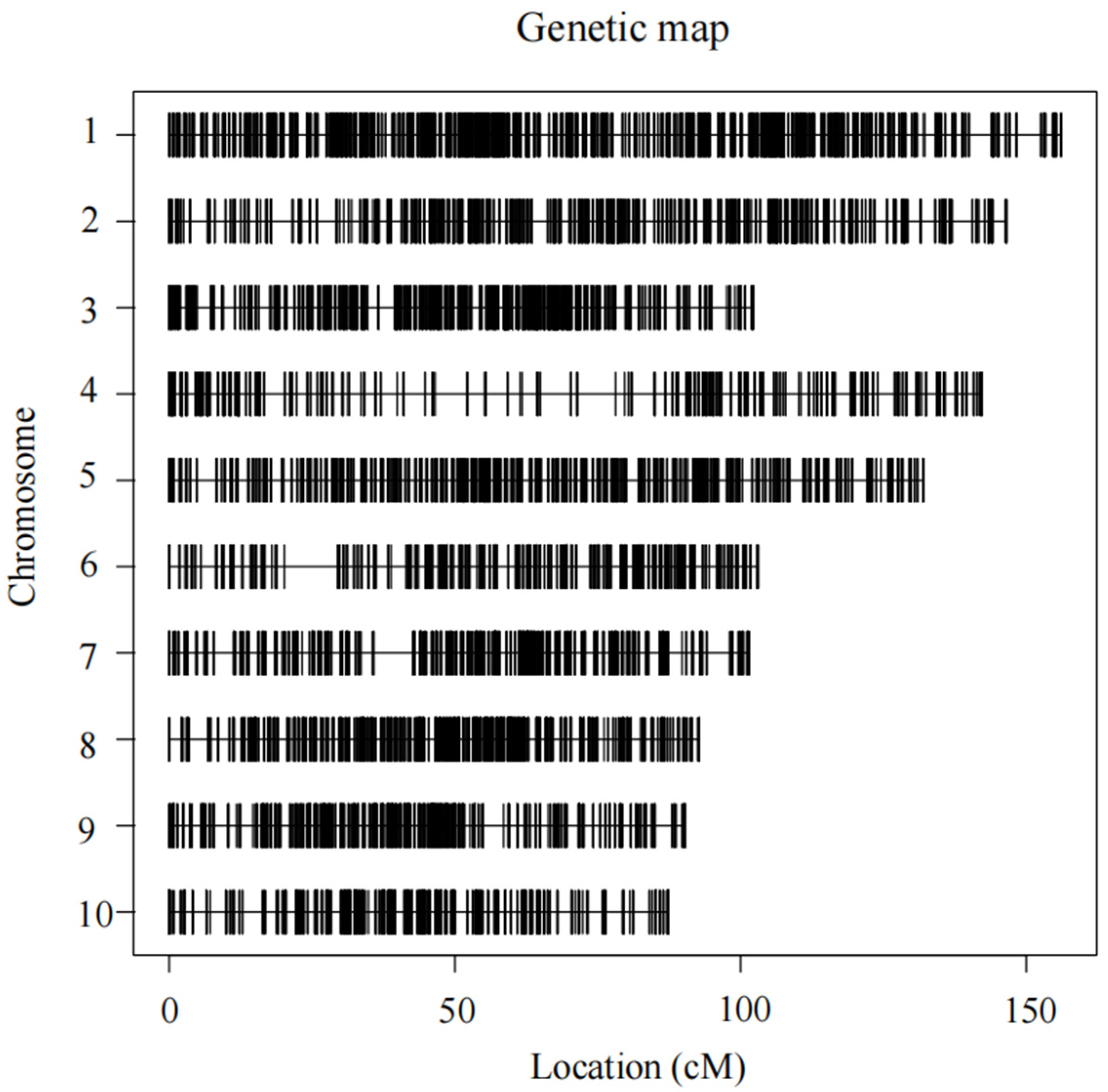
The TM population genetic map is shown in Figure 3, with detailed statistical data presented in Table S2. The total chromosomal genetic distance spans 1159.82 cM, comprising 10,329 SNP markers. Among these, chromosome 1 exhibits the longest genetic distance at 156.56 cM, while chromosome 10 has the shortest at 88 cM. Chromosome 1 contains the highest number of SNP markers (1916), while chromosome 4 has the fewest (632). The maximum physical distance between adjacent markers is 15.69 Mb, and the minimum is 3.568 Mb. The average physical distance between adjacent SNP markers across all ten chromosomes ranges from 0.16 Mb to 0.39 Mb.

3.3. Identification of QTL for Shelling Percentage

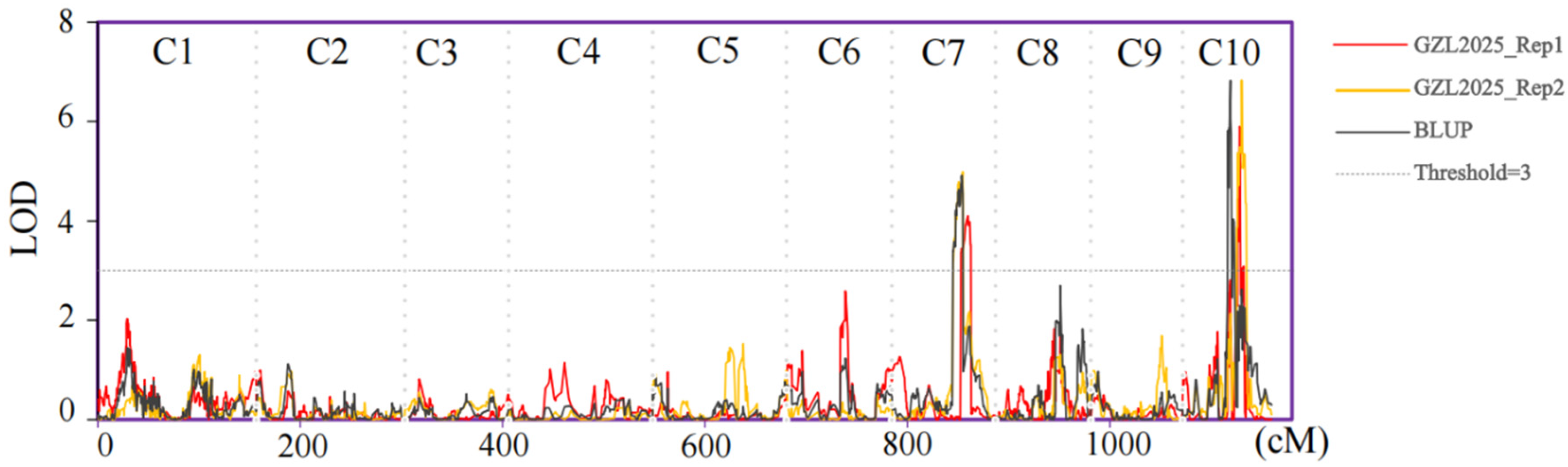
We conducted QTL mapping for shelling percentage in the TM population, including two replicates and BLUP, treated as three replicates. All three scans identified two shelling percentage QTLs (qSP7 and qSP10) located on chromosomes 7 and 10, respectively, as shown in Figure 4. qSP7 explained 3.39–3.41% of phenotypic variation across the three replicates, with the favorable allele for increased shelling percentage originating from teosinte. Specifically, the GZL2025_Rep2 and BLUP localization intervals were 142.91–162.46 Mb and 160.07–169.2 Mb, respectively. qSP10 explained 2.96–6.45% of phenotypic variation across three replicates, with the favorable allele for increased shelling percentage originating from Zheng58. Specifically, the GZL2025_Rep1 localization interval was 121.27–125.79 Mb, GZL2025_Rep2 localization interval was 121.27–130.74 Mb, and BLUP localization interval showed a shift compared to the previous two replicates, ranging from 90.41 to 97.67 Mb. The detailed mapping results for qSP7 and qSP10 across the two field replicates and the BLUP analysis are summarized in Table 1.

3.4. Identification of Candidate Genes for qSP7 and qSP10

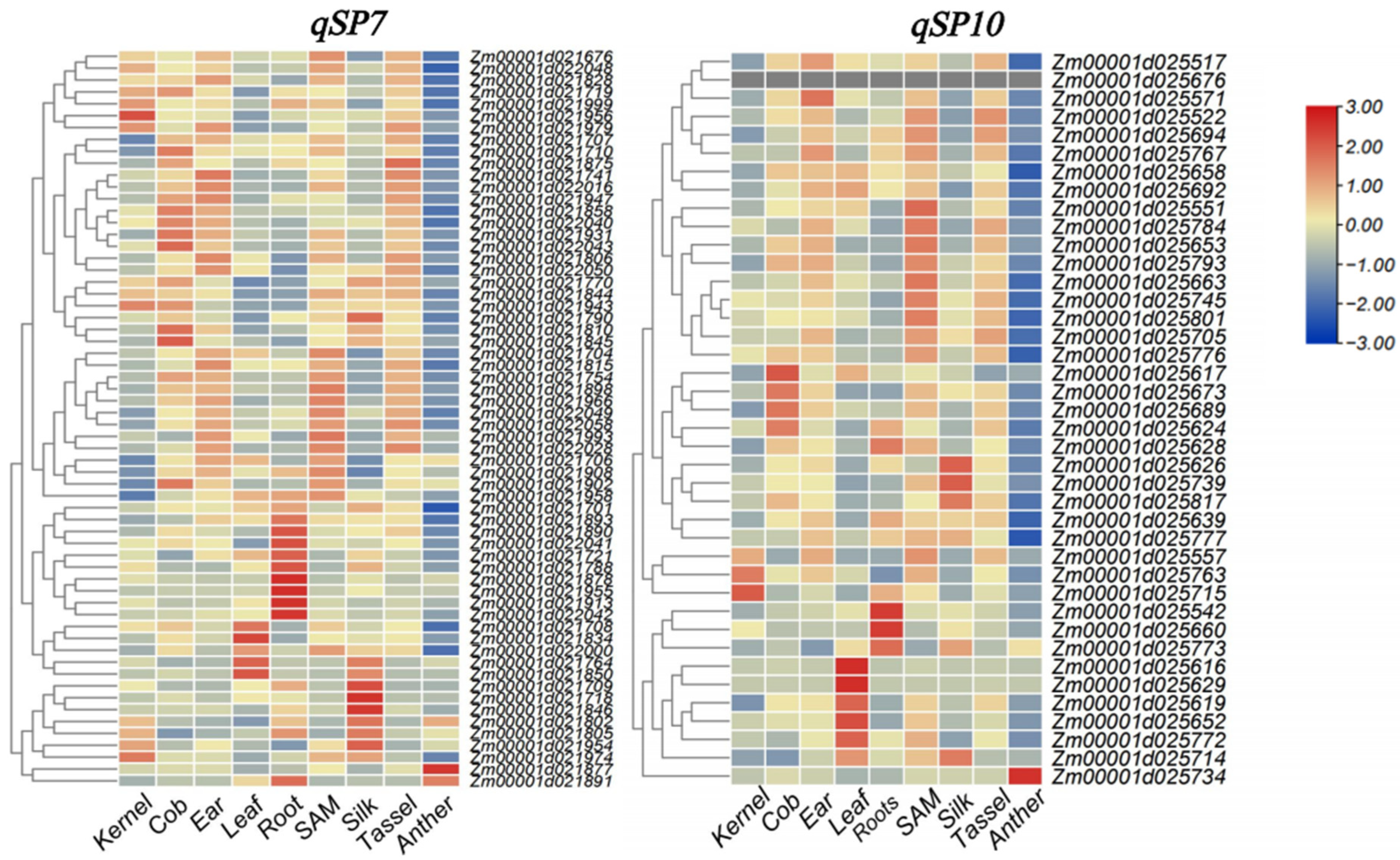
To identify candidate genes for qSP7 and qSP10, all annotated genes within the corresponding QTL support intervals were first retrieved based on the B73 RefGen_v4 genome annotation. Their expression levels in V18 immature cob and whole seed at 22 days after pollination (22 DAP) were then examined using qTeller (MaizeGDB). Genes with expression values below 5 FPKM in both tissues were removed. The genes retained after this initial screening were further evaluated using publicly available transcriptome data [33], and their relative expression patterns across nine tissues (kernel, cob, ear, tassel, leaf, root, silk, anther, and SAM) are shown in Figure 5.
For qSP7, the QTL peak was consistently detected in the 160+ Mb region. Based on the support interval identified in GZL2025_Rep1 (160.07–169.20 Mb), 62 genes remained after the initial qTeller-based filtering. Their relative expression patterns across the nine tissues are shown in Figure 5. Among them, Zm00001d021701, encoding a basic helix–loop–helix (bHLH) transcription factor, was retained as a candidate gene. Members of the bHLH family have been implicated in maize kernel development, and the related gene O11 has been reported to function in endosperm development [34]. Another retained candidate gene was Zm00001d021708, which encodes a pentatricopeptide repeat (PPR) superfamily protein. PPR proteins have also been reported to be associated with seed development and kernel-related traits [14,35,36,37,38,39].
For qSP10, the intervals detected in GZL2025_Rep1 and GZL2025_Rep2 overlapped substantially. Based on this shared region, the interval used for candidate gene screening was defined as 121.273–130.74 Mb. In contrast, the interval identified from the BLUP analysis was clearly shifted relative to the replicate-supported region and was therefore treated more cautiously in the subsequent interpretation. Within the replicate-supported interval, 40 genes remained after the same qTeller-based filtering procedure, and their relative expression patterns are also shown in Figure 5. Among these genes, Zm00001d025739, encoding a protein kinase superfamily protein, was retained as a candidate gene. This gene showed relatively high expression in kernel and cob, whereas its expression was much lower in silk and SAM, suggesting a possible relevance to shelling percentage.
Based on their positions within the QTL support intervals, expression patterns in relevant tissues, and annotated or reported functions, Zm00001d021701, Zm00001d021708, and Zm00001d025739 were identified as candidate genes for qSP7 and qSP10, as shown in Table 2.

4. Discussion

Shelling percentage is a composite trait determined by the relative contribution of kernel biomass to total ear biomass, and is therefore influenced by multiple developmental processes, including kernel filling, cob growth, and ear structure [1,2]. Compared with kernel weight, kernel size, and related yield components, the genetic basis of shelling percentage has received relatively limited attention in maize [3,4]. In the present study, using a maize–teosinte BC2S2 population with strong phenotypic contrast, we identified two reproducible QTLs, qSP7 and qSP10, associated with shelling percentage. Because teosinte and modern maize differ markedly in ear and kernel morphology, this population provided a useful genetic background for dissecting variation in this trait [26].
The phenotypic variation explained by qSP7 and qSP10 was relatively modest, ranging from approximately 3% to 6% across the two field replicates and the BLUP-based analysis. This is not unexpected for shelling percentage, which is a typical quantitative trait likely controlled by multiple loci of small effect and influenced by environmental conditions. For such traits, moderate- or small-effect QTLs can still be informative, especially when they are detected repeatedly across analyses. Therefore, the significance of qSP7 and qSP10 lies not only in their individual effect sizes, but also in their reproducibility and their potential to provide entry points for further dissection of the genetic basis of shelling percentage.
One interesting result of this study is that the favorable allele of qSP7 was contributed by teosinte, whereas the favorable allele of qSP10 was contributed by Zheng58. At first glance, the positive effect of a teosinte allele on shelling percentage may appear counterintuitive, given the low overall shelling percentage of teosinte [26]. However, such a pattern is not unusual for complex traits. The overall phenotype of a parent reflects the combined effects of many loci and does not exclude the presence of favorable alleles at individual loci. In highly divergent populations such as maize–teosinte crosses, alleles from the phenotypically inferior parent may still have positive effects in a maize genetic background. This result suggests that shelling percentage can be decomposed into locus-specific effects contributed by both parents and also highlights the value of teosinte germplasm as a source of useful allelic variation.
For qSP10, the support intervals identified in the two field replicates overlapped substantially, whereas the interval detected using BLUP values was shifted relative to the replicate-supported region. Because BLUP integrates information across replicates, such displacement may reflect the combined effects of modest QTL effect size, environmental variation, and the limited resolution of the linkage map. In particular, the presence of relatively large marker gaps in some genomic regions may have reduced interval precision and contributed to instability in peak location. For this reason, in the current study we placed greater emphasis on the region consistently supported by the two field replicates, while treating the BLUP-derived interval more cautiously in the subsequent interpretation. This is a more conservative interpretation of the qSP10 signal and better reflects the current mapping resolution.
The linkage map generated in this study provided genome-wide coverage for QTL detection, but its resolution remains limited for fine-scale inference. As shown by the distribution of markers across chromosomes, marker density was not uniform throughout the genome, and some intervals were more sparsely covered than others. This limitation should be taken into account when interpreting both QTL boundaries and candidate genes. Accordingly, the genes highlighted here should be regarded as interval-based candidates rather than genes directly supported by high-resolution SNP-level evidence.
Within the support intervals of qSP7 and qSP10, three genes were highlighted as plausible candidates. For qSP7, Zm00001d021701, encoding a bHLH transcription factor, is of particular interest because transcription factors in this family have been implicated in maize kernel development [20], and the related gene O11 has been reported to function in endosperm development and nutrient metabolism [34]. Zm00001d021708, encoding a PPR superfamily protein, was also retained as a candidate because PPR proteins are frequently associated with seed development and kernel-related traits [14,35,36,37,38,39]. For qSP10, Zm00001d025739, annotated as a protein kinase superfamily protein, was prioritized because kinase-mediated pathways are widely involved in developmental regulation, and signaling components associated with kernel filling and seed development have been reported in maize [34,40,41]. Nevertheless, these genes should still be regarded as candidate genes rather than validated causal genes. Their possible roles in shelling percentage remain tentative and will require further confirmation through finer mapping and functional validation.
From a breeding perspective, the QTLs identified here are more appropriately viewed as preliminary genetic resources than as immediately deployable markers. Their modest effects suggest that direct application in marker-assisted selection should be approached cautiously, particularly before validation in additional genetic backgrounds. Even so, these loci provide useful starting points for future work on shelling percentage and may contribute to marker development after further verification. More broadly, this study expands current knowledge of the genetic architecture of shelling percentage in maize and provides a basis for future efforts to connect ear structure, kernel development, and harvest-related traits at the genetic level.

5. Conclusions

Using a maize–teosinte BC2S2 population, this study identified two reproducible QTLs, qSP7 and qSP10, associated with shelling percentage in maize. These results indicate that shelling percentage is a complex quantitative trait controlled by multiple loci with modest effects. Several candidate genes were identified within the qSP7 and qSP10 intervals based on genomic position, expression pattern, and functional annotation, but they remain putative candidates requiring further validation. Overall, this study provides a basis for future genetic analysis and marker development for shelling percentage in maize.

Supplementary Materials

The following supporting information can be downloaded at https://www.mdpi.com/article/10.3390/genes17040384/s1. Table S1: Broad-sense heritability and descriptive statistics for shelling percentage in the TM population across two replicates; Table S2: Summary statistics of the genetic linkage map constructed for the TM population, including marker number and map length for each chromosome.

Author Contributions

W.S. and J.L. conceived and designed the research plans; Y.B. and Y.W. performed experiments including phenotyping and genotyping; X.H. conducted the field experiment; Y.B., Y.W. and W.S. drafted the manuscript. All authors have read and agreed to the published version of the manuscript.

Funding

This work was supported by the National Key Research and Development Program of China (2021YFD1200701), the National Natural Science Foundation of China (32425041), the Joint Research on Maize Improvement of Henan (2022010202), and the Agriculture Science and Technology Major Project.

Institutional Review Board Statement

Not applicable.

Informed Consent Statement

Not applicable.

Data Availability Statement

The main datasets supporting the conclusions of this article are included within the article and its additional file. The RNA-seq datasets used in this study are available in this reference: Yi, F.; Gu, W.; Chen, J.; Song, N.; Gao, X.; Zhang, X.; Zhou, Y.; Ma, X.; Song, W.; Zhao, H.; et al. High Temporal-Resolution Transcriptome Landscape of Early Maize Seed Development. Plant Cell 2019, 31, 974–992, https://doi.org/10.1105/tpc.18.00961 [33].

Conflicts of Interest

The authors declare no conflicts of interest.

References

  1. Sun, Q.; Wang, P.; Li, W.; Li, W.; Lu, S.; Yu, Y.; Zhao, M.; Meng, Z. Genomic Selection on Shelling Percentage and Other Traits for Maize. Breed. Sci. 2019, 69, 266–271. [Google Scholar] [CrossRef]
  2. Keno, T.; Mace, E.; Godwin, I.; Jordan, D.; Kelly, A. The Use of Fixed Shelling Percentage Biases Genotype Selection in Hybrid Maize Multi-Environment Yield Trials. Field Crops Res. 2024, 315, 109437. [Google Scholar] [CrossRef]
  3. Zhang, S.; Zhang, X.; Liu, B.; Dong, Y.; Li, T.; Li, Q.; Xue, J.; Xu, S.; Zhang, X. QTL Mapping for Kernel Ratio Related Traits in Maize. Acta Agric. Boreali-Occident. Sin. 2022, 31, 1094–1101. [Google Scholar] [CrossRef]
  4. Chang, L.; He, K.; Cui, T.; Xue, J.; Liu, J. QTL Mapping and QTL× Environment Interaction Analysis of Kernel Ratio in Maize (Zea mays). J. Agric. Biotechnol. 2017, 25, 517–525. [Google Scholar]
  5. Liu, J.; Huang, J.; Guo, H.; Lan, L.; Wang, H.; Xu, Y.; Yang, X.; Li, W.; Tong, H.; Xiao, Y.; et al. The Conserved and Unique Genetic Architecture of Kernel Size and Weight in Maize and Rice. Plant Physiol. 2017, 175, 774–785. [Google Scholar] [CrossRef]
  6. Li, X.; Wang, M.; Zhang, R.; Fang, H.; Fu, X.; Yang, X.; Li, J. Genetic Architecture of Embryo Size and Related Traits in Maize. Crop J. 2022, 10, 204–215. [Google Scholar] [CrossRef]
  7. Liu, M.; Tan, X.; Yang, Y.; Liu, P.; Zhang, X.; Zhang, Y.; Wang, L.; Hu, Y.; Ma, L.; Li, Z.; et al. Analysis of the Genetic Architecture of Maize Kernel Size Traits by Combined Linkage and Association Mapping. Plant Biotechnol. J. 2019, 18, 207–221. [Google Scholar] [CrossRef] [PubMed]
  8. Wang, C.; Li, H.; Long, Y.; Dong, Z.; Wang, J.; Liu, C.; Wei, X.; Wan, X. A Systemic Investigation of Genetic Architecture and Gene Resources Controlling Kernel Size-Related Traits in Maize. Int. J. Mol. Sci. 2023, 24, 1025. [Google Scholar] [CrossRef] [PubMed]
  9. Zhang, L.; Fu, M.; Li, W.; Dong, Y.; Zhou, Q.; Wang, Q.; Li, X.; Gao, J.; Wang, Y.; Wang, H.; et al. Genetic Variation in ZmKW1 Contributes to Kernel Weight and Size in Dent Corn and Popcorn. Plant Biotechnol. J. 2024, 22, 1453–1467. [Google Scholar] [CrossRef] [PubMed]
  10. Yang, N.; Liu, J.; Gao, Q.; Gui, S.; Chen, L.; Yang, L.; Huang, J.; Deng, T.; Luo, J.; He, L.; et al. Genome Assembly of a Tropical Maize Inbred Line Provides Insights into Structural Variation and Crop Improvement. Nat. Genet. 2019, 51, 1052–1059. [Google Scholar] [CrossRef]
  11. Huang, J.; Lu, G.; Liu, L.; Raihan, M.S.; Xu, J.; Jian, L.; Zhao, L.; Tran, T.M.; Zhang, Q.; Liu, J.; et al. The Kernel Size-Related Quantitative Trait Locus qKW9 Encodes a Pentatricopeptide Repeat Protein That Aaffects Photosynthesis and Grain Filling. Plant Physiol. 2020, 183, 1696–1709. [Google Scholar] [CrossRef] [PubMed]
  12. Sun, Q.; Li, Y.; Gong, D.; Hu, A.; Zhong, W.; Zhao, H.; Ning, Q.; Tan, Z.; Liang, K.; Mu, L.; et al. A NAC-EXPANSIN Module Enhances Maize Kernel Size by Controlling Nucellus Elimination. Nat. Commun. 2022, 13, 5708. [Google Scholar] [CrossRef] [PubMed]
  13. Gong, D.; Wang, Y.; Zhang, H.; Liang, K.; Sun, Q.; Qiu, F. Overexpression of ZmKL9 Increases Maize Hybrid Hundred Kernel Weight. Plant Biotechnol. J. 2022, 21, 451–453. [Google Scholar] [CrossRef]
  14. Cai, M.; Li, S.; Sun, F.; Sun, Q.; Zhao, H.; Ren, X.; Zhao, Y.; Tan, B.-C.; Zhang, Z.; Qiu, F. Emp10 Encodes a Mitochondrial PPR Protein That Affects the Cis-Splicing of Nad2 Intron 1 and Seed Development in Maize. Plant J. 2017, 91, 132–144. [Google Scholar] [CrossRef]
  15. Ren, X.; Pan, Z.; Zhao, H.; Zhao, J.; Cai, M.; Li, J.; Zhang, Z.; Qiu, F. EMPTY PERICARP11 Serves as a Factor for Splicing of Mitochondrial Nad1 Intron and Is Required to Ensure Proper Seed Development in Maize. J. Exp. Bot. 2017, 68, 4571–4581. [Google Scholar] [CrossRef]
  16. Zhao, H.; Qin, Y.; Xiao, Z.; Li, Q.; Yang, N.; Pan, Z.; Gong, D.; Sun, Q.; Yang, F.; Zhang, Z.; et al. Loss of Function of an RNA Polymerase III Subunit Leads to Impaired Maize Kernel Development. Plant Physiol. 2020, 184, 359–373. [Google Scholar] [CrossRef] [PubMed]
  17. Pan, Z.; Liu, M.; Xiao, Z.; Ren, X.; Zhao, H.; Gong, D.; Liang, K.; Tan, Z.; Shao, Y.; Qiu, F. ZmSMK9, a Pentatricopeptide Repeat Protein, Is Involved in the Cis-Splicing of Nad5, Kernel Development and Plant Architecture in Maize. Plant Sci. 2019, 288, 110205. [Google Scholar] [CrossRef]
  18. Dai, D.; Ma, Z.; Song, R. Maize Kernel Development. Mol. Breed. 2021, 41, 2. [Google Scholar] [CrossRef]
  19. Li, N.; Xu, R.; Li, Y. Molecular Networks of Seed Size Control in Plants. Annu. Rev. Plant Biol. 2019, 70, 435–463. [Google Scholar] [CrossRef]
  20. Long, Y.; Wang, C.; Liu, C.; Li, H.; Pu, A.; Dong, Z.; Wei, X.; Wan, X. Molecular Mechanisms Controlling Grain Size and Weight and Their Biotechnological Breeding Applications in Maize and Other Cereal Crops. J. Adv. Res. 2024, 62, 27–46. [Google Scholar] [CrossRef]
  21. Gao, J.; Zhang, L.; Du, H.; Dong, Y.; Zhen, S.; Wang, C.; Wang, Q.; Yang, J.; Zhang, P.; Zheng, X.; et al. An ARF24-ZmArf2 Module Influences Kernel Size in Different Maize Haplotypes. J. Integr. Plant Biol. 2023, 65, 1767–1781. [Google Scholar] [CrossRef]
  22. Zhang, L.; Wang, Q.; Li, W.; Zheng, Q.; Fu, M.; Wang, H.; Li, X.; Wang, Y.; Hu, L.; Yao, W.; et al. ZmZFP2 Encoding a C4HC3-Type RING Zinc Finger Protein Regulates Kernel Size and Weight in Maize. Crop J. 2025, 13, 418–431. [Google Scholar] [CrossRef]
  23. Pu, M.; Wang, B.; Zhou, C.; Li, Y.; Sun, M.; Zheng, G.; Zhang, Y.; Wu, J.; Li, J.; He, X.; et al. The B-Type Response Regulator ZmRR5 Controls Maize Kernel Size by Regulating BETL Development. Crop J. 2025, 13, 792–804. [Google Scholar] [CrossRef]
  24. Zhang, M.; Zheng, H.; Jin, L.; Xing, L.; Zou, J.; Zhang, L.; Liu, C.; Chu, J.; Xu, M.; Wang, L. miR169o and ZmNF-YA13 Act in Concert to Coordinate the Expression of ZmYUC1 That Determines Seed Size and Weight in Maize Kernels. New Phytol. 2022, 235, 2270–2284. [Google Scholar] [CrossRef]
  25. Qing, X.; Li, J.; Lin, Z.; Wang, W.; Yi, F.; Chen, J.; Liu, Q.; Song, W.; Lai, J.; Chen, B.; et al. Maize Transcription Factor ZmEREB167 Negatively Regulates Starch Accumulation and Kernel Size. J. Genet. Genom. 2025, 52, 411–421. [Google Scholar] [CrossRef]
  26. Wang, H.; Nussbaum-Wagler, T.; Li, B.; Zhao, Q.; Vigouroux, Y.; Faller, M.; Bomblies, K.; Lukens, L.; Doebley, J.F. The Origin of the Naked Grains of Maize. Nature 2005, 436, 714–719. [Google Scholar] [CrossRef] [PubMed]
  27. Fei, X.; Wang, Y.; Zheng, Y.; Shen, X.; E, L.; Ding, J.; Lai, J.; Song, W.; Zhao, H. Identification of Two New QTLs of Maize (Zea mays L.) Underlying Kernel Row Number Using the HNAU-NAM1 Population. BMC Genom. 2022, 23, 593. [Google Scholar] [CrossRef] [PubMed]
  28. Wang, Y.; Yao, D.; Song, J.; Zhang, X.; Zhu, Y.; Luo, Z.; Lai, J.; Song, W.; Yang, T. Identification of Yield-Related QTLs and Their Applications Using DH Population in Maize. BMC Genom. 2025, 26, 719. [Google Scholar] [CrossRef] [PubMed]
  29. Li, H. Aligning Sequence Reads, Clone Sequences and Assembly Contigs with BWA-MEM. arXiv 2013, arXiv:1303.3997. [Google Scholar] [CrossRef]
  30. Chen, S. Ultrafast One-Pass FASTQ Data Preprocessing, Quality Control, and Deduplication Using Fastp. iMeta 2023, 2, e107. [Google Scholar] [CrossRef]
  31. Van Der Auwera, G.A.; Carneiro, M.O.; Hartl, C.; Poplin, R.; Del Angel, G.; Levy-Moonshine, A.; Jordan, T.; Shakir, K.; Roazen, D.; Thibault, J.; et al. From FastQ Data to High-confidence Variant Calls: The Genome Analysis Toolkit Best Practices Pipeline. Curr. Protoc. Bioinform. 2013, 43, 11.10.1–11.10.33. [Google Scholar] [CrossRef]
  32. Broman, K.W.; Wu, H.; Sen, S.; Churchill, G.A. R/Qtl: QTL Mapping in Experimental Crosses. Methods Biochem. Anal. 2003, 19, 889–890. [Google Scholar] [CrossRef]
  33. Yi, F.; Gu, W.; Chen, J.; Song, N.; Gao, X.; Zhang, X.; Zhou, Y.; Ma, X.; Song, W.; Zhao, H.; et al. High Temporal-Resolution Transcriptome Landscape of Early Maize Seed Development. Plant Cell 2019, 31, 974–992. [Google Scholar] [CrossRef]
  34. Feng, F.; Qi, W.; Lv, Y.; Yan, S.; Xu, L.; Yang, W.; Yuan, Y.; Chen, Y.; Zhao, H.; Song, R. OPAQUE11 Is a Central Hub of the Regulatory Network for Maize Endosperm Development and Nutrient Metabolism. Plant Cell 2018, 30, 375–396. [Google Scholar] [CrossRef] [PubMed]
  35. Zhang, S.; Wang, Z.; Wang, Z.; Zhang, Y.; Chen, W.; Xie, Y.; Du, X.; Wang, J.; Fu, J.; Gu, R.; et al. The DYW-Type Pentatricopeptide Repeat Protein DEK618 Interacts with ZmMORFs to Modulate Mitochondrial RNA Editing and Kernel Development in Maize. Plant Sci. 2026, 364, 112897. [Google Scholar] [CrossRef]
  36. Chen, R.; Wei, Q.; Liu, Y.; Li, J.; Du, X.; Chen, Y.; Wang, J.; Liu, Y. The Pentatricopeptide Repeat Protein EMP601 Functions in Maize Seed Development by Affecting RNA Editing of Mitochondrial Transcript ccmC. Crop J. 2023, 11, 1368–1379. [Google Scholar] [CrossRef]
  37. Zang, J.; Zhang, T.; Zhang, Z.; Liu, J.; Chen, H. DEFECTIVE KERNEL 56 Functions in Mitochondrial RNA Editing and Maize Seed Development. Plant Physiol. 2023, 194, 1593–1610. [Google Scholar] [CrossRef] [PubMed]
  38. Yang, Y.-Z.; Liu, X.-Y.; Gao, S.; Zhang, S.-G.; Tan, B.-C. PPR21 Is Involved in the Splicing of Nad2 Introns via Interacting with PPR-SMR1 and SPR2 and Is Essential to Maize Seed Development. J. Genet. Genom. 2025, 52, 379–387. [Google Scholar] [CrossRef]
  39. Yang, D.; Cao, S.-K.; Yang, H.; Liu, R.; Sun, F.; Wang, L.; Wang, M.; Tan, B.-C. DEK48 Is Required for RNA Editing at Multiple Mitochondrial Sites and Seed Development in Maize. Int. J. Mol. Sci. 2022, 23, 3064. [Google Scholar] [CrossRef]
  40. Balmant, K.M.; Resende, M.F.R. SnRK1a1, a New Player in the Sucrose–Opaque2 Network during Endosperm Filling. Mol. Plant 2024, 17, 1172–1174. [Google Scholar] [CrossRef]
  41. Li, C.; Qi, W.; Liang, Z.; Yang, X.; Ma, Z.; Song, R. A SnRK1-ZmRFWD3-Opaque2 Signaling Axis Regulates Diurnal Nitrogen Accumulation in Maize Seeds. Plant Cell 2020, 32, 2823–2841. [Google Scholar] [CrossRef] [PubMed]
Figure 1. Kernel phenotypes of the two parental lines used for the construction of the TM population. Zheng58 and teosinte showed clear differences in kernel morphology. A scale bar is included to facilitate visual comparison between the two parents.
Genes 17 00384 g001
Figure 2. Phenotypic distribution of shelling percentage and correlation between two field replicates in the TM population. (A) Frequency distribution of shelling percentage in GZL2025_Rep1. (B) Pearson correlation coefficient between GZL2025_Rep1 and GZL2025_Rep2. (C) Scatter plot showing the relationship between shelling percentage values measured in GZL2025_Rep1 and GZL2025_Rep2; each point represents one BC2S2 line, and the red line indicates the fitted linear regression. (D) Frequency distribution of shelling percentage in GZL2025_Rep2. The shelling percentage showed an approximately continuous distribution in both replicates, consistent with quantitative inheritance. The correlation between the two replicates was significant (r = 0.60; *** p < 0.001).
Genes 17 00384 g002
Figure 3. Genetic linkage map of the TM population. The map includes 10 maize chromosomes, with each horizontal line representing one chromosome and each vertical tick mark indicating the position of a mapped marker. Marker positions are shown in centimorgans (cM) along the x-axis. The distribution of markers across chromosomes illustrates the overall coverage and density of the linkage map used for QTL detection in this study.
Genes 17 00384 g003
Figure 4. QTL mapping results for shelling percentage in the TM population across 3 replicates.
Genes 17 00384 g004
Figure 5. Relative expression in 9 tissues in qSP7 and qSP10.
Genes 17 00384 g005
Table 1. QTL mapping results of shelling percentage in three replicates.
QTLEnvironmentChrLOD aVar (%) bAdd cPeak (Mb) dSupport Interval (Mb) d
qSP7GZL2025_Rep174.13.410.03166.93160.07–169.2
qSP7GZL2025_Rep274.993.350.04162.17142.91–162.46
qSP7BLUP74.913.390.03161.62142.91–162.46
qSP10GZL2025_Rep1105.94.56−0.07122.71121.27–125.79
qSP10GZL2025_Rep2106.842.96−0.06129.06121.27–130.74
qSP10BLUP106.836.45−0.0693.9190.41–97.67
a LOD means logarithm of odds. b Var (%) indicates the percentage of phenotypic variation explained by QTLs. c Positive or negative addictive effect values indicates that the alleles from teosinte or Zheng58 increased the phenotypic value, respectively. d (Mb) is based on the B73 v4 reference genome.
Table 2. Functional annotation of potential candidate genes.
QTLChrCandidate Gene IDFunction Annotation
qSP77Zm00001d021701Basic helix–loop–helix (bHLH) DNA-binding superfamily protein
qSP77Zm00001d021708Pentatricopeptide repeat (PPR) superfamily protein
qSP1010Zm00001d025739Protein kinase superfamily protein
Disclaimer/Publisher’s Note: The statements, opinions and data contained in all publications are solely those of the individual author(s) and contributor(s) and not of MDPI and/or the editor(s). MDPI and/or the editor(s) disclaim responsibility for any injury to people or property resulting from any ideas, methods, instructions or products referred to in the content.