Chromosome-Scale Atlas of Ixodes scapularis Serine Protease Inhibitors



Abstract
1. Introduction
2. Materials and Methods
2.1. Gene Prediction from the Improved I. scapularis Genome
2.2. Identification of Serpins from Predicted Genes
2.3. Gene Structure and Orientation Analysis, Motif Search, and Pairwise Alignment
2.4. In Silico Prediction of Function Based on Reactive Center Loop Amino Acids
2.5. Expression Analysis of I. scapularis Serpins
3. Results
3.1. Most I. scapularis Serpins Are Glycosylated Secreted Proteins Encoded by Intronless Genes
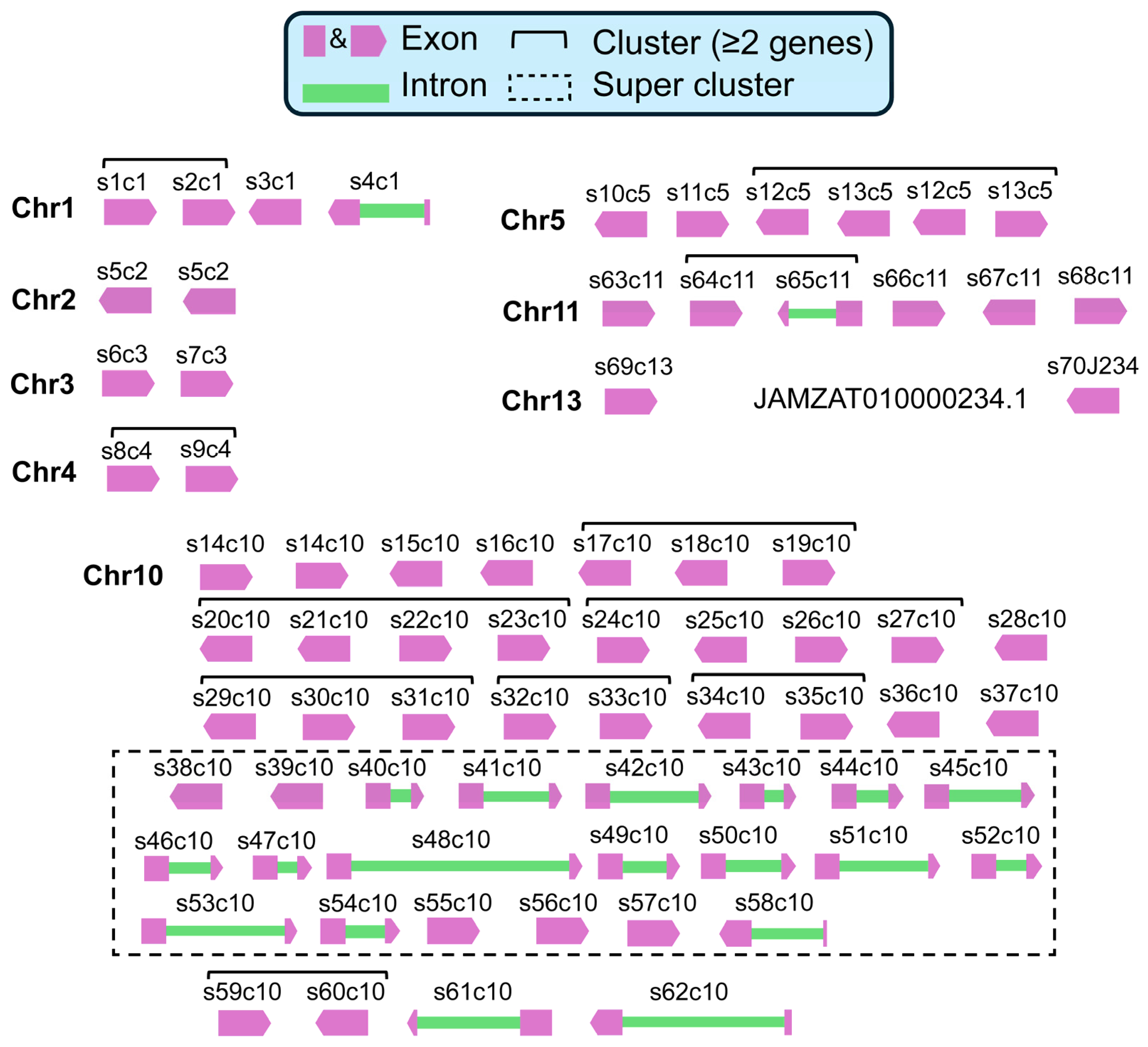
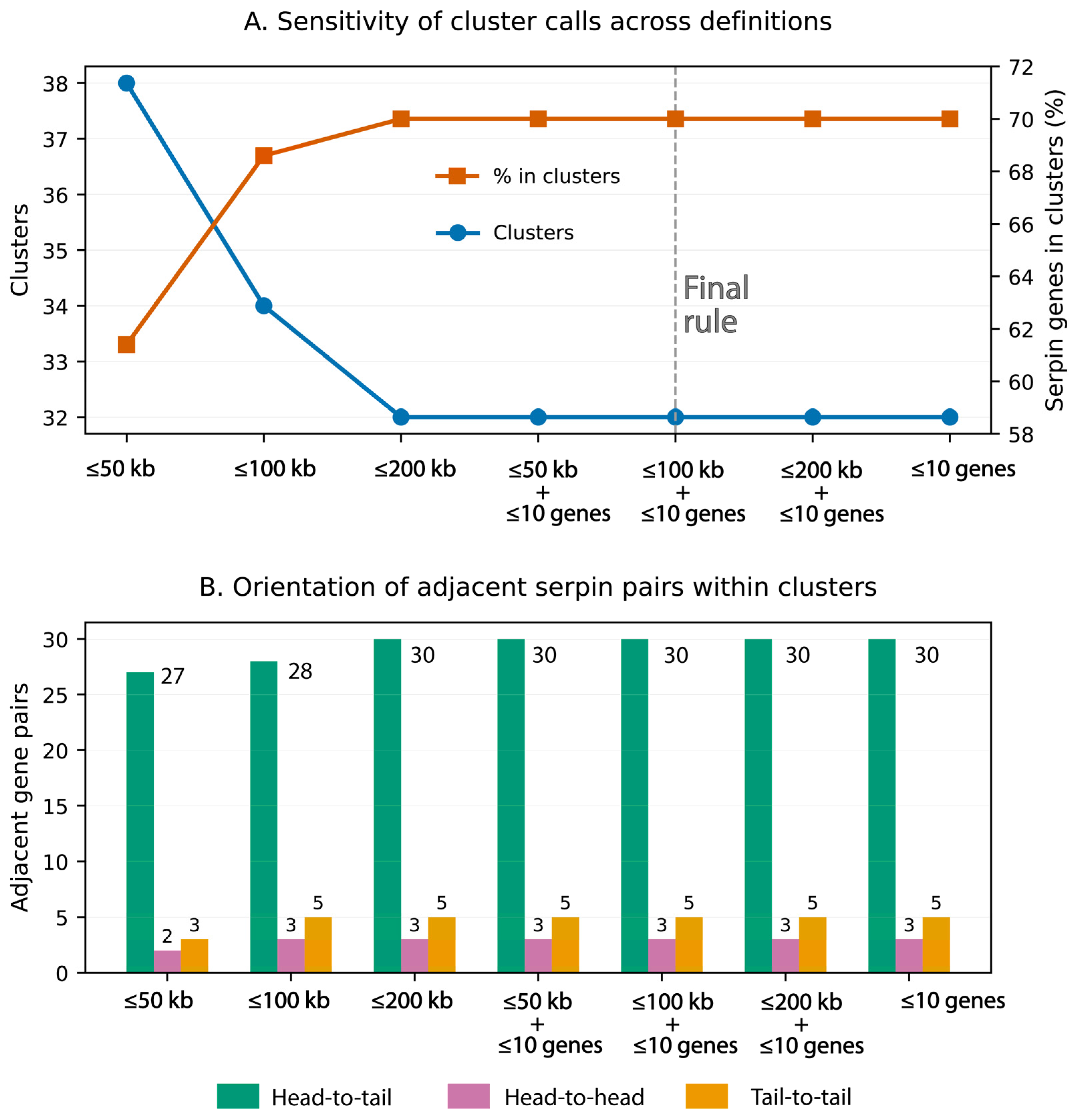
3.2. I. scapularis Serpin Genes Occur as a Tandem Array of Gene Clusters
3.3. Chromosome 10 Is the I. scapularis Serpin Innovation Hotspot
3.4. Predicted Functional Profiles of I. scapularis Serpins Point to Broad and Partially Redundant Roles
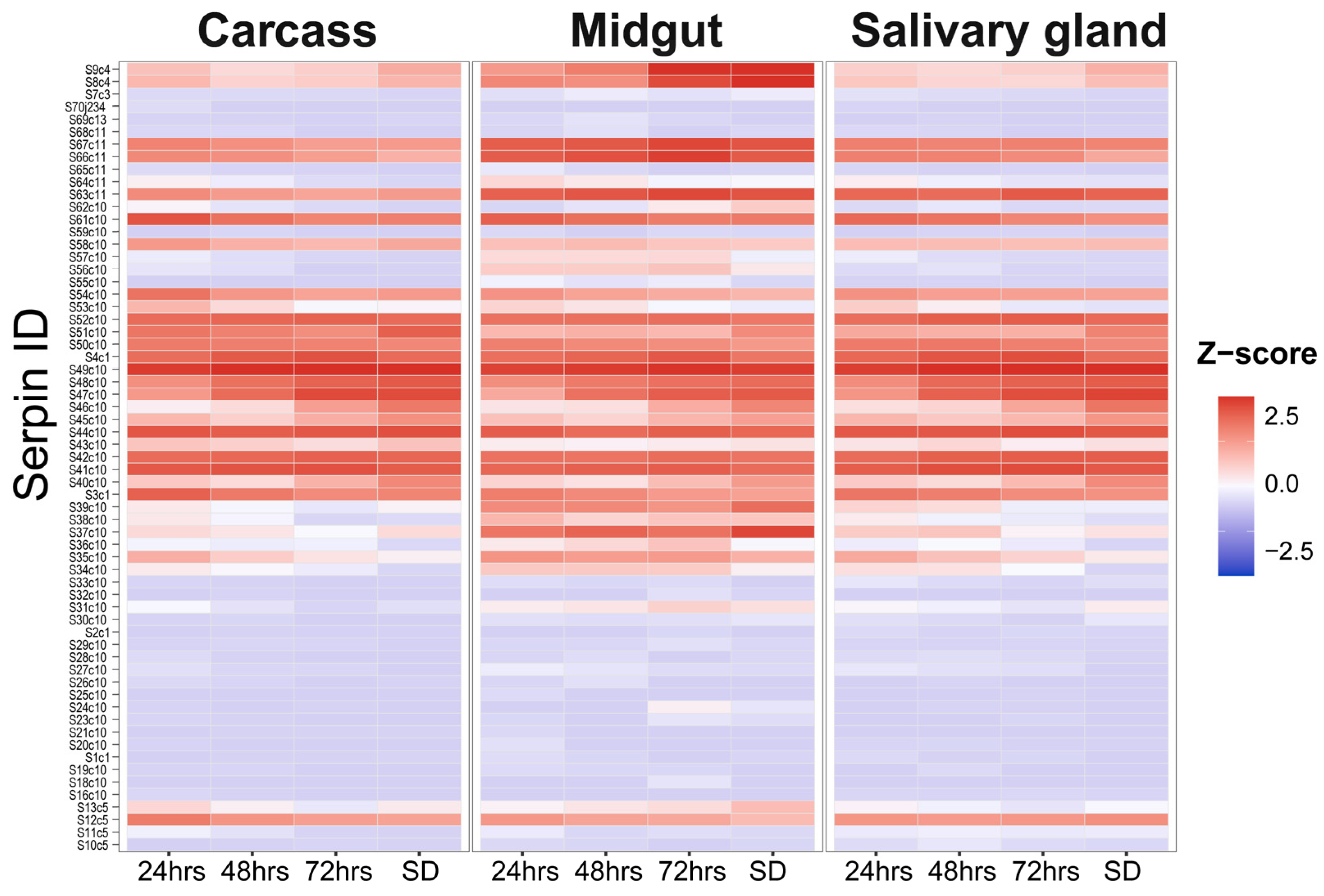
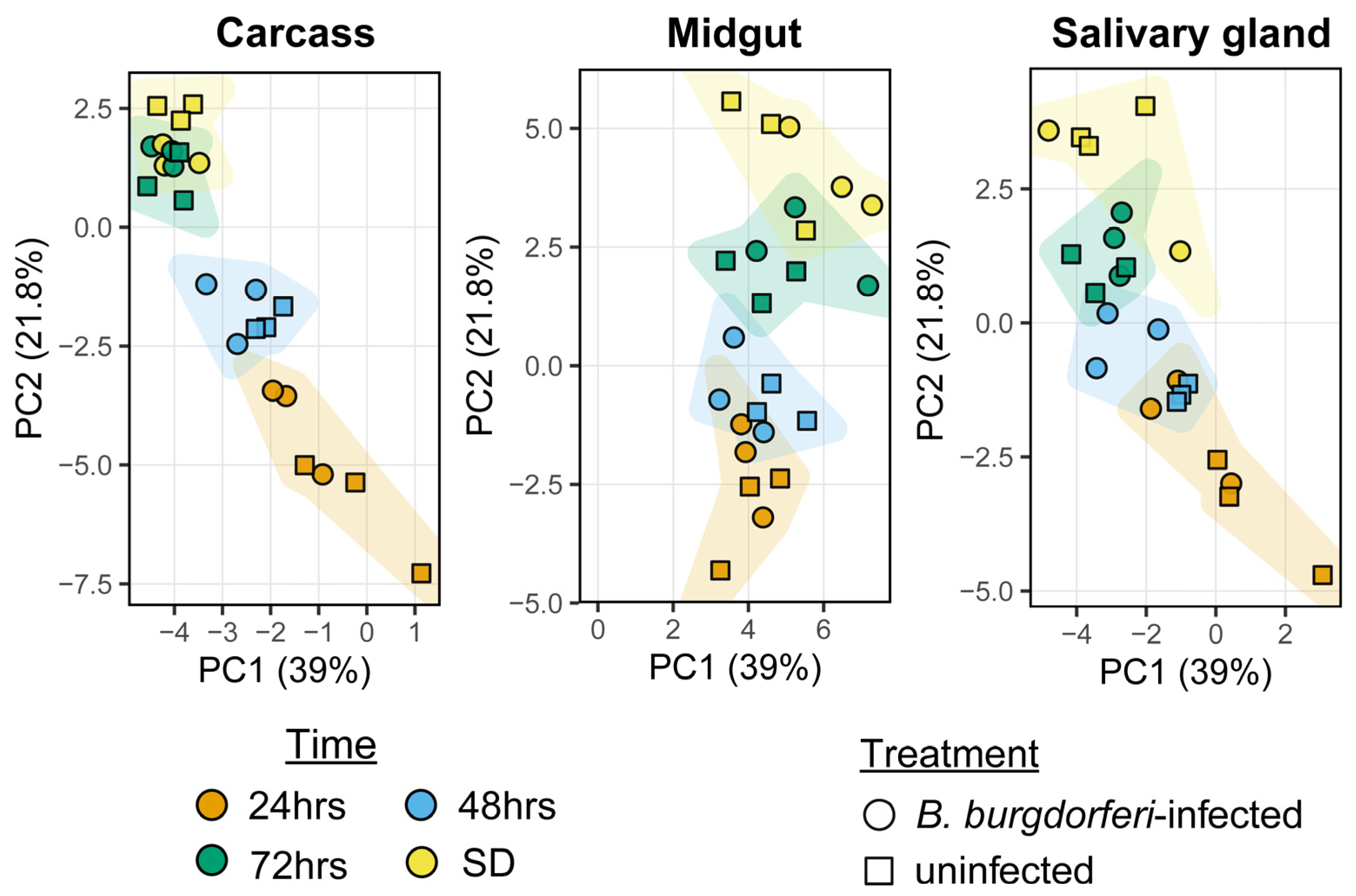
3.5. Feeding Stage and Tissue-Specific Deployment of I. scapularis Serpins During Blood Meal Acquisition
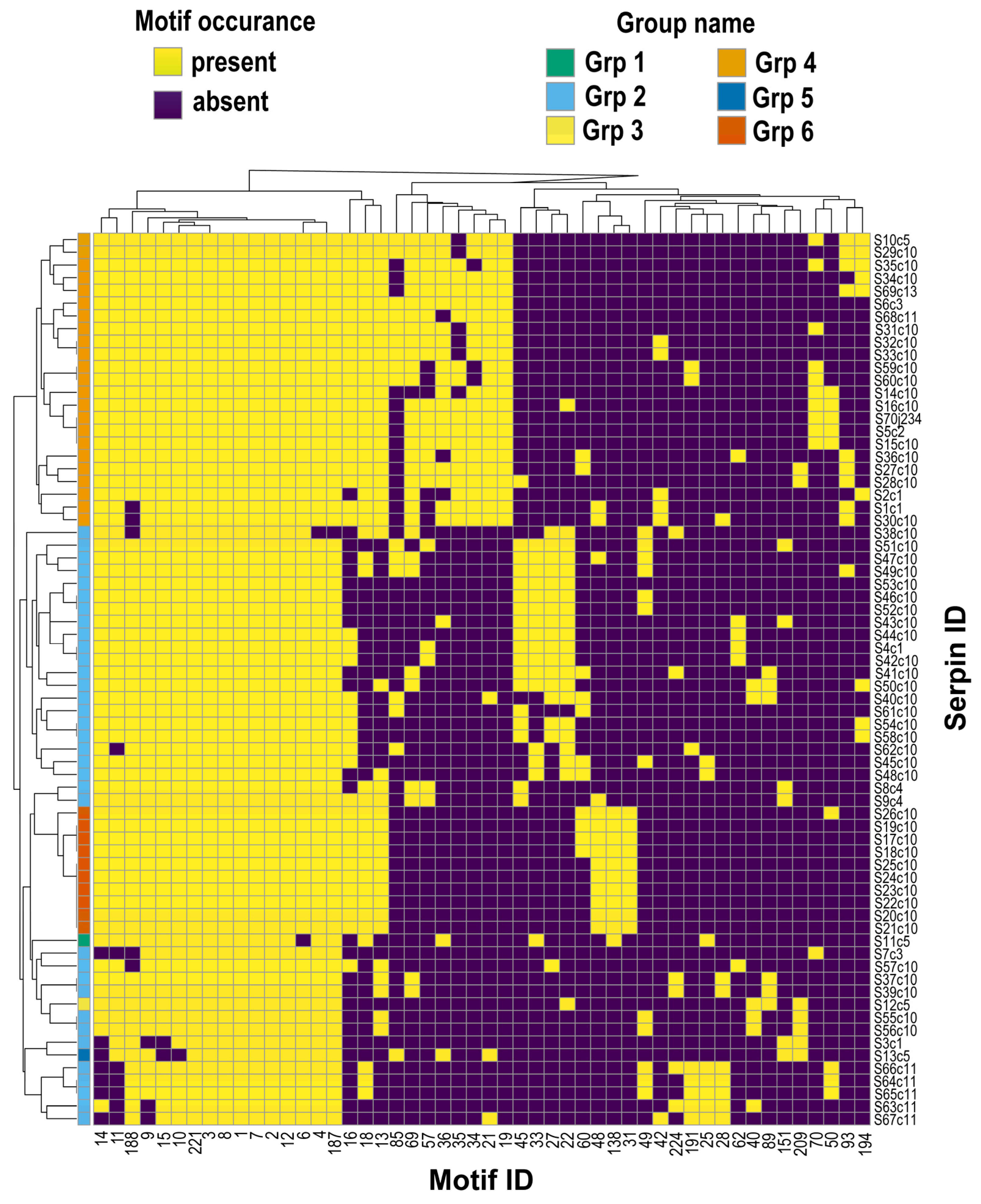
3.6. I. scapularis Serpins Are Highly Diverse but Structurally Conserved as Revealed by Consensus Amino Acid Motif Profiling
4. Discussion
5. Conclusions
Supplementary Materials
Author Contributions
Funding
Institutional Review Board Statement
Informed Consent Statement
Data Availability Statement
Acknowledgments
Conflicts of Interest
References
- Sonenshine, D.E. Biology of Ticks; Oxford University Press: Oxford, UK, 1991; Volume 1. [Google Scholar]
- Ribeiro, J.M.C.; Francischetti, I.M.B. Role of arthropod saliva in blood feeding: Sialome and post-sialome perspectives. Annu. Rev. Entomol. 2003, 48, 73–88. [Google Scholar] [CrossRef]
- Kazimírová, M.; Štibrániová, I. Tick salivary compounds: Their role in modulation of host defences and pathogen transmission. Front. Cell. Infect. Microbiol. 2013, 3, 43. [Google Scholar] [CrossRef] [PubMed]
- Ribeiro, J.M.C. Role of saliva in tick/host interactions. Exp. Appl. Acarol. 1989, 7, 15–20. [Google Scholar] [CrossRef] [PubMed]
- Chmelař, J.; Kotál, J.; Kopecký, J.; Pedra, J.H.F.; Kotsyfakis, M. All for One and One for All on the Tick-Host Battlefield. Trends Parasitol. 2016, 32, 368–377. [Google Scholar] [CrossRef]
- Kim, T.K.; Tirloni, L.; Pinto, A.F.M.; Moresco, J.; Yates, J.R.; da Silva Vaz, I.; Mulenga, A. Ixodes scapularis Tick Saliva Proteins Sequentially Secreted Every 24 h during Blood Feeding. PLoS Negl. Trop. Dis. 2016, 10, e0004323. [Google Scholar] [CrossRef]
- Gettins, P.G.W. Serpin Structure, Mechanism, and Function. Chem. Rev. 2002, 102, 4751–4804. [Google Scholar] [CrossRef]
- Huntington, J.A. Serpin structure, function and dysfunction. J. Thromb. Haemost. 2011, 9, 26–34. [Google Scholar] [CrossRef]
- Defendi, F.; Amen, A.; Clavarino, G.; Dumestre-Pérard, C. C1 inhibitor: From complement system to bradykinin angioedema. Curr. Opin. Immunol. 2025, 97, 102653. [Google Scholar] [CrossRef]
- Mulenga, A.; Sugino, M.; Nakajima, M.; Sugimoto, C.; Onuma, M. Tick-Encoded Serine Proteinase Inhibitors (Serpins); Potential Target Antigens for Tick Vaccine Development. J. Vet. Med. Sci. 2001, 63, 1063–1069. [Google Scholar] [CrossRef]
- Kim, T.K.; Tirloni, L.; Pinto, A.F.M.; Diedrich, J.K.; Moresco, J.J.; Yates, J.R.; da Silva Vaz, I.; Mulenga, A. Time-resolved proteomic profile of Amblyomma americanum tick saliva during feeding. PLoS Neglected Trop. Dis. 2020, 14, e0007758. [Google Scholar] [CrossRef]
- Radulović, Ž.M.; Kim, T.K.; Porter, L.M.; Sze, S.H.; Lewis, L.; Mulenga, A. A 24-48 h fed Amblyomma americanum tick saliva immuno-proteome. BMC Genom. 2014, 15, 518. [Google Scholar] [CrossRef]
- Kim, T.K.; Tirloni, L.; Bencosme-Cuevas, E.; Kim, T.H.; Diedrich, J.K.; Yates, J.R.; Mulenga, A. Borrelia burgdorferi infection modifies protein content in saliva of Ixodes scapularis nymphs. BMC Genom. 2021, 22, 152. [Google Scholar] [CrossRef] [PubMed]
- Mudenda, L.; Pierlé, S.A.; Turse, J.E.; Scoles, G.A.; Purvine, S.O.; Nicora, C.D.; Clauss, T.R.W.; Ueti, M.W.; Brown, W.C.; Brayton, K.A. Proteomics informed by transcriptomics identifies novel secreted proteins in Dermacentor andersoni saliva. Int. J. Parasitol. 2014, 44, 1029–1037. [Google Scholar] [CrossRef]
- Tirloni, L.; Reck, J.; Terra, R.M.S.; Martins, J.R.; Mulenga, A.; Sherman, N.E.; Fox, J.W.; Yates, J.R.; Termignoni, C.; Pinto, A.F.M.; et al. Proteomic Analysis of Cattle Tick Rhipicephalus (Boophilus) microplus Saliva: A Comparison between Partially and Fully Engorged Females. PLoS ONE 2014, 9, e94831. [Google Scholar] [CrossRef]
- Tirloni, L.; Islam, M.S.; Kim, T.K.; Diedrich, J.K.; Yates, J.R.; Pinto, A.F.M.; Mulenga, A.; You, M.J.; da Silva Vaz, I. Saliva from nymph and adult females of Haemaphysalis longicornis: A proteomic study. Parasites Vectors 2015, 8, 338. [Google Scholar] [CrossRef]
- Silverman, G.A.; Bird, P.I.; Carrell, R.W.; Church, F.C.; Coughlin, P.B.; Gettins, P.G.W.; Irving, J.A.; Lomas, D.A.; Luke, C.J.; Moyer, R.W.; et al. The Serpins Are an Expanding Superfamily of Structurally Similar but Functionally Diverse Proteins. J. Biol. Chem. 2001, 276, 33293–33296. [Google Scholar] [CrossRef]
- Whisstock, J.C.; Bottomley, S.P. Structural biology: Serpins’ mystery solved. Nature 2008, 455, 1189–1190. [Google Scholar] [CrossRef]
- Law, R.H.P.; Zhang, Q.; McGowan, S.; Buckle, A.M.; Silverman, G.A.; Wong, W.; Rosado, C.J.; Langendorf, C.G.; Pike, R.N.; Bird, P.I.; et al. An overview of the serpin superfamily. Genome Biol. 2006, 7, 216. [Google Scholar] [CrossRef][Green Version]
- Bonaventura, A.; Vecchié, A.; Dagna, L.; Martinod, K.; Dixon, D.L.; Van Tassell, B.W.; Dentali, F.; Montecucco, F.; Massberg, S.; Levi, M.; et al. Endothelial dysfunction and immunothrombosis as key pathogenic mechanisms in COVID-19. Nat. Rev. Immunol. 2021, 21, 319–329. [Google Scholar] [CrossRef] [PubMed]
- Chlastáková, A.; Kotál, J.; Beránková, Z.; Kaščáková, B.; Martins, L.A.; Langhansová, H.; Prudnikova, T.; Ederová, M.; Kutá Smatanová, I.; Kotsyfakis, M.; et al. Iripin-3, a New Salivary Protein Isolated From Ixodes ricinus Ticks, Displays Immunomodulatory and Anti-Hemostatic Properties In Vitro. Front. Immunol. 2021, 12, 626200. [Google Scholar] [CrossRef]
- Mulenga, A.; Kim, T.; Ibelli, A.M.G. Amblyomma americanum tick saliva serine protease inhibitor 6 is a cross-class inhibitor of serine proteases and papain-like cysteine proteases that delays plasma clotting and inhibits platelet aggregation. Insect Mol. Biol. 2013, 22, 306–319. [Google Scholar] [CrossRef] [PubMed]
- Kim, T.K.; Tirloni, L.; Radulovic, Z.; Lewis, L.; Bakshi, M.; Hill, C.; da Silva Vaz, I.; Logullo, C.; Termignoni, C.; Mulenga, A. Conserved Amblyomma americanum tick Serpin19, an inhibitor of blood clotting factors Xa and XIa, trypsin and plasmin, has anti-haemostatic functions. Int. J. Parasitol. 2015, 45, 613–627. [Google Scholar] [CrossRef] [PubMed]
- Tirloni, L.; Kim, T.K.; Berger, M.; Termignoni, C.; da Silva Vaz, I.; Mulenga, A. Amblyomma americanum serpin 27 (AAS27) is a tick salivary anti-inflammatory protein secreted into the host during feeding. PLoS Negl. Trop. Dis. 2019, 13, e0007660. [Google Scholar] [CrossRef]
- Nguyen, T.-T.T.; Kim, T.H.K.; Bencosme-Cuevas, E.; Berry, J.; Gaithuma, A.S.K.; Ansari, M.A.; Kim, T.H.K.; Tirloni, L.; Radulovic, Z.; Moresco, J.J.; et al. A tick saliva serpin, IxsS17 inhibits host innate immune system proteases and enhances host colonization by Lyme disease agent. PLoS Pathog. 2024, 20, e1012032. [Google Scholar] [CrossRef]
- Bencosme-Cuevas, E.; Kim, T.K.; Nguyen, T.T.; Berry, J.; Li, J.; Adams, L.G.; Smith, L.A.; Batool, S.A.; Swale, D.R.; Kaufmann, S.H.E.; et al. Ixodes scapularis nymph saliva protein blocks host inflammation and complement-mediated killing of Lyme disease agent, Borrelia burgdorferi. Front. Cell Infect. Microbiol. 2023, 13, 1253670. [Google Scholar] [CrossRef]
- Ibelli, A.M.G.; Kim, T.K.; Hill, C.C.; Lewis, L.A.; Bakshi, M.; Miller, S.; Porter, L.; Mulenga, A. A blood meal-induced Ixodes scapularis tick saliva serpin inhibits trypsin and thrombin, and interferes with platelet aggregation and blood clotting. Int. J. Parasitol. 2014, 44, 369–379. [Google Scholar] [CrossRef]
- Imamura, S.; Namangala, B.; Tajima, T.; Tembo, M.E.; Yasuda, J.; Ohashi, K.; Onuma, M. Two serine protease inhibitors (serpins) that induce a bovine protective immune response against Rhipicephalus appendiculatus ticks. Vaccine 2006, 24, 2230–2237. [Google Scholar] [CrossRef]
- Jittapalapong, S.; Kaewhom, P.; Pumhom, P.; Canales, M.; de la Fuente, J.; Stich, R.W. Immunization of rabbits with recombinant serine protease inhibitor reduces the performance of adult female Rhipicephalus microplus. Transbound. Emerg. Dis. 2010, 57, 103–106. [Google Scholar] [CrossRef]
- Imamura, S.; Vaz, I.D.S.; Sugino, M.; Ohashi, K.; Onuma, M. A serine protease inhibitor (serpin) from Haemaphysalis longicornis as an anti-tick vaccine. Vaccine 2005, 23, 1301–1311. [Google Scholar] [CrossRef]
- Prevot, P.P.; Couvreur, B.; Denis, V.; Brossard, M.; Vanhamme, L.; Godfroid, E. Protective immunity against Ixodes ricinus induced by a salivary serpin. Vaccine 2007, 25, 3284–3292. [Google Scholar] [CrossRef] [PubMed]
- Feng, T.; Tong, H.; Zhang, Q.; Ming, Z.; Song, Z.; Zhou, X.; Dai, J. Targeting Haemaphysalis longicornis serpin to prevent tick feeding and pathogen transmission. Insect Sci. 2024, 31, 694–706. [Google Scholar] [CrossRef]
- Mulenga, A.; Khumthong, R.; Chalaire, K.C. Ixodes scapularis tick serine proteinase inhibitor (serpin) gene family; annotation and transcriptional analysis. BMC Genom. 2009, 10, 217. [Google Scholar] [CrossRef]
- Porter, L.; Radulović, Z.; Kim, T.; Braz, G.R.C.; da Silva Vaz, I.; Mulenga, A. Bioinformatic analyses of male and female amblyomma americanum tick expressed serine protease inhibitors (serpins). Ticks Tick Borne Dis. 2015, 6, 16–30. [Google Scholar] [CrossRef]
- Ribeiro, J.M.C.; Alarcon-Chaidez, F.; Ivo, I.M.; Mans, B.J.; Mather, T.N.; Valenzuela, J.G.; Wikel, S.K. An annotated catalog of salivary gland transcripts from Ixodes scapularis ticks. Insect Biochem. Mol. Biol. 2006, 36, 111–129. [Google Scholar] [CrossRef] [PubMed]
- Nei, M.; Rooney, A.P. Concerted and Birth-and-Death Evolution of Multigene Families. Annu. Rev. Genet. 2005, 39, 121. [Google Scholar] [CrossRef]
- Waterhouse, R.M.; Kriventseva, E.V.; Meister, S.; Xi, Z.; Alvarez, K.S.; Bartholomay, L.C.; Barillas-Mury, C.; Bian, G.; Blandin, S.; Christensen, B.M.; et al. Evolutionary dynamics of immune-related genes and pathways in disease-vector mosquitoes. Science 2007, 316, 1738–1743. [Google Scholar] [CrossRef]
- Arcà, B.; Ribeiro, J.M. Saliva of hematophagous insects: A multifaceted toolkit. Curr. Opin. Insect Sci. 2018, 29, 102–109. [Google Scholar] [CrossRef]
- Nuss, A.B.; Lomas, J.S.; Reyes, J.B.; Garcia-Cruz, O.; Lei, W.; Sharma, A.; Pham, M.N.; Beniwal, S.; Swain, M.L.; McVicar, M.; et al. The highly improved genome of Ixodes scapularis with X and Y pseudochromosomes. Life Sci. Alliance 2023, 6, e202302109. [Google Scholar] [CrossRef]
- Mans, B.J.; de Castro, M.H.; Pienaar, R.; de Klerk, D.; Gaven, P.; Genu, S.; Latif, A.A. Ancestral reconstruction of tick lineages. Ticks Tick Borne Dis. 2016, 7, 509–535. [Google Scholar] [CrossRef] [PubMed]
- Gaithuma, A.S.K.; Bencosme-Cuevas, E.; Kim, T.K.; Tirloni, L.; Brian, D.; Cai, J.; Skare, J.; Hyde, J.; Mulenga, A. Pan-transcriptome analysis of the black-legged tick (Ixodes scapularis) during Borrelia burgdorferi Transmission. Unpublished work. 2026. [Google Scholar]
- Kopylova, E.; Noé, L.; Touzet, H. SortMeRNA: Fast and accurate filtering of ribosomal RNAs in metatranscriptomic data. Bioinformatics 2012, 28, 3211–3217. [Google Scholar] [CrossRef] [PubMed]
- Dobin, A.; Davis, C.A.; Schlesinger, F.; Drenkow, J.; Zaleski, C.; Jha, S.; Batut, P.; Chaisson, M.; Gingeras, T.R. STAR: Ultrafast universal RNA-seq aligner. Bioinformatics 2013, 29, 15–21. [Google Scholar] [CrossRef] [PubMed]
- Gabriel, L.; Brůna, T.; Hoff, K.J.; Ebel, M.; Lomsadze, A.; Borodovsky, M.; Stanke, M. BRAKER3: Fully automated genome annotation using RNA-seq and protein evidence with GeneMark-ETP, AUGUSTUS and TSEBRA. Genome Res. 2024, 34, 769–777. [Google Scholar] [CrossRef]
- Mulenga, A.; Tsuda, A.; Onuma, M.; Sugimoto, C. Four serine proteinase inhibitors (serpin) from the brown ear tick, Rhiphicephalus appendiculatus; cDNA cloning and preliminary characterization. Insect Biochem. Mol. Biol. 2003, 33, 267–276. [Google Scholar] [CrossRef]
- Teufel, F.; Almagro Armenteros, J.J.; Johansen, A.R.; Gíslason, M.H.; Pihl, S.I.; Tsirigos, K.D.; Winther, O.; Brunak, S.; von Heijne, G.; Nielsen, H. SignalP 6.0 predicts all five types of signal peptides using protein language models. Nat. Biotechnol. 2022, 40, 1023. [Google Scholar] [CrossRef]
- Bailey, T.L.; Johnson, J.; Grant, C.E.; Noble, W.S. The MEME Suite. Nucleic Acids Res. 2015, 43, W39–W49. [Google Scholar] [CrossRef]
- Schechter, I.; Berger, A. On the size of the active site in proteases. I. Papain. Biochem. Biophys. Res. Commun. 1967, 27, 157–162. [Google Scholar] [CrossRef]
- Perona, J.J.; Craik, C.S. Structural basis of substrate specificity in the serine proteases. Protein Sci. 1995, 4, 337. [Google Scholar] [CrossRef]
- Jmel, M.A.; Aounallah, H.; Bensaoud, C.; Mekki, I.; Chmelař, J.; Faria, F.; M’ghirbi, Y.; Kotsyfakis, M. Insights into the Role of Tick Salivary Protease Inhibitors during Ectoparasite–Host Crosstalk. Int. J. Mol. Sci. 2021, 22, 892. [Google Scholar] [CrossRef]
- Gál, P.; Barna, L.; Kocsis, A.; Závodszky, P. Serine proteases of the classical and lectin pathways: Similarities and differences. Immunobiology 2007, 212, 267–277. [Google Scholar] [CrossRef] [PubMed]
- Liao, Y.; Smyth, G.K.; Shi, W. featureCounts: An efficient general purpose program for assigning sequence reads to genomic features. Bioinformatics 2014, 30, 923–930. [Google Scholar] [CrossRef] [PubMed]
- Salzet, M.; Vieau, D.; Stefano, G.B. Serpins: An evolutionarily conserved survival strategy. Immunol. Today 1999, 20, 541–544. [Google Scholar] [CrossRef] [PubMed]
- Quijano, C.; Tomancak, P.; Lopez-Marti, J.; Suyama, M.; Bork, P.; Milan, M.; Torrents, D.; Manzanares, M. Selective maintenance of Drosophila tandemly arranged duplicated genes during evolution. Genome Biol. 2008, 9, R176. [Google Scholar] [CrossRef]
- Zhang, J. Evolution by gene duplication: An update. Trends Ecol. Evol. 2003, 18, 292–298. [Google Scholar] [CrossRef]
- Innan, H.; Kondrashov, F. The evolution of gene duplications: Classifying and distinguishing between models. Nat. Rev. Genet. 2010, 11, 97–108. [Google Scholar] [CrossRef]
- Harris, J.L.; Backes, B.J.; Leonetti, F.; Mahrus, S.; Ellman, J.A.; Craik, C.S. Rapid and general profiling of protease specificity by using combinatorial fluorogenic substrate libraries. Proc. Natl. Acad. Sci. USA 2000, 97, 7754–7759. [Google Scholar] [CrossRef] [PubMed]
- Bencosme-Cuevas, E.; Nguyen, T.T.; Berry, J.; Mulenga, A. Compensatory serpin upregulation limit the effectiveness of RNAi knockdown of serpins against Borrelia burgdorferi transmission. Unpublished work. 2026. [Google Scholar]
- Nguyen, T.T.; Hakimi, H.; Gaithuma, A.S.K.; Berry, J.; William, T.H.K.; Bencosme-Cuevas, E.; Ansari, M.A.; Mulenga, A. Borrelia burgdorferi infection-responsive Ixodes scapularis serpins, S45c10 and S48c10, share an identical reactive center loop but differ in inhibition of inflammatory system proteases and immunogenicity. Unpublished work. 2026. [Google Scholar]
- Nguyen, T.T.; Rekoff, K.; Mulenga, A. Ixodes scapularis serpin S49c10 (Ixs S27A) is an anti-inflammatory protease that can block activation of human complement pathways. Unpublished work. 2026. [Google Scholar]
- Marijanovic, E.M.; Fodor, J.; Riley, B.T.; Porebski, B.T.; Costa, M.G.S.; Kass, I.; Hoke, D.E.; McGowan, S.; Buckle, A.M. Reactive centre loop dynamics and serpin specificity. Sci. Rep. 2019, 9, 3870. [Google Scholar] [CrossRef] [PubMed]
- Abraham, E.G.; Pinto, S.B.; Ghosh, A.; Vanlandingham, D.L.; Budd, A.; Higgs, S.; Kafatos, F.C.; Jacobs-Lorena, M.; Michel, K. An immune-responsive serpin, SRPN6, mediates mosquito defense against malaria parasites. Proc. Natl. Acad. Sci. USA 2005, 102, 16327. [Google Scholar] [CrossRef] [PubMed]
- Garrett, M.; Fullaondo, A.; Troxler, L.; Micklem, G.; Gubb, D. Identification and analysis of serpin-family genes by homology and synteny across the 12 sequenced Drosophilid genomes. BMC Genom. 2009, 10, 489. [Google Scholar] [CrossRef]
- Wu, Z.; Yuan, R.; Gu, Q.; Wu, X.; Gu, L.; Ye, X.; Zhou, Y.; Huang, J.; Wang, Z.; Chen, X. Parasitoid Serpins Evolve Novel Functions to Manipulate Host Homeostasis. Mol. Biol. Evol. 2023, 40, msad269. [Google Scholar] [CrossRef]
- Ran, M.; Shi, Y.; Li, B.; Xiang, H.; Tao, M.; Meng, X.; Li, T.; Li, C.; Bao, J.; Pan, G.; et al. Genome-Wide Characterization and Comparative Genomic Analysis of the Serpin Gene Family in Microsporidian Nosema bombycis. Int. J. Mol. Sci. 2023, 24, 550. [Google Scholar] [CrossRef]
- Wingert, B.; Krieger, J.; Li, H.; Bahar, I. Adaptability and Specificity: How do proteins balance opposing needs to achieve function? Curr. Opin. Struct. Biol. 2020, 67, 25–32. [Google Scholar] [CrossRef] [PubMed]
- Sarkar, A.; Wintrode, P.L. Effects of glycosylation on the stability and flexibility of a metastable protein: The human serpin α1-antitrypsin. Int. J. Mass Spectrom. 2011, 302, 69–75. [Google Scholar] [CrossRef] [PubMed]
- Zou, Z.; Picheng, Z.; Weng, H.; Mita, K.; Jiang, H. A comparative analysis of serpin genes in the silkworm genome. Genomics 2009, 93, 367–375. [Google Scholar] [CrossRef][Green Version]
- Li, M.; Christen, J.M.; Dittmer, N.T.; Cao, X.; Zhang, X.; Jiang, H.; Kanost, M.R. The Manduca sexta serpinome: Analysis of serpin genes and proteins in the tobacco hornworm. Insect Biochem. Mol. Biol. 2018, 102, 21–30. [Google Scholar] [CrossRef]
- Wu, Q.; Xing, L.; Du, M.; Huang, C.; Liu, B.; Zhou, H.; Liu, W.; Wan, F.; Qian, W. A Genome-Wide Analysis of Serine Protease Inhibitors in Cydia pomonella Provides Insights into Their Evolution and Expression Pattern. Int. J. Mol. Sci. 2023, 24, 16349. [Google Scholar] [CrossRef]
- Aviña-Padilla, K.; Ramírez-Rafael, J.A.; Herrera-Oropeza, G.E.; Muley, V.Y.; Valdivia, D.I.; Díaz-Valenzuela, E.; García-García, A.; Varela-Echavarría, A.; Hernández-Rosales, M. Evolutionary Perspective and Expression Analysis of Intronless Genes Highlight the Conservation of Their Regulatory Role. Front. Genet. 2021, 12, 654256. [Google Scholar] [CrossRef]
- Mulenga, A.; Khumthong, R.; Blandon, M.A. Molecular and expression analysis of a family of the Amblyomma americanum tick Lospins. J. Exp. Biol. 2007, 210, 3188–3198. [Google Scholar] [CrossRef]
- Reichhart, J.M.; Gubb, D.; Leclerc, V. The Drosophila Serpins: Multiple Functions in Immunity and Morphogenesis. Methods Enzym. 2011, 499, 205–225. [Google Scholar] [CrossRef]
- Ribeiro, J.M.C.; Mans, B.J. TickSialoFam (TSFam): A Database That Helps to Classify Tick Salivary Proteins, a Review on Tick Salivary Protein Function and Evolution, with Considerations on the Tick Sialome Switching Phenomenon. Front. Cell. Infect. Microbiol. 2020, 10, 546561. [Google Scholar] [CrossRef]
- Pelte, N.; Robertson, A.S.; Zou, Z.; Belorgey, D.; Dafforn, T.R.; Jiang, H.; Lomas, D.; Reichhart, J.M.; Gubb, D. Immune challenge induces N-terminal cleavage of the Drosophila serpin Necrotic. Insect Biochem. Mol. Biol. 2006, 36, 37–46. [Google Scholar] [CrossRef][Green Version]
- Shan, T.; Wang, Y.; Bhattarai, K.; Jiang, H. An evolutionarily conserved serine protease network mediates melanization and Toll activation in Drosophila. Sci. Adv. 2023, 9, eadk2756. [Google Scholar] [CrossRef]
- Sanrattana, W.; Sefiane, T.; Smits, S.; Van Kleef, N.D.; Fens, M.H.; Lenting, P.J.; Maas, C.; de Maat, S. A reactive center loop-based prediction platform to enhance the design of therapeutic SERPINs. Proc. Natl. Acad. Sci. USA 2021, 118, e2108458118. [Google Scholar] [CrossRef] [PubMed]
- Olson, S.T.; Chuang, Y.J. Heparin Activates Antithrombin Anticoagulant Function by Generating New Interaction Sites (Exosites) for Blood Clotting Proteinases. Trends Cardiovasc. Med. 2002, 12, 331–338. [Google Scholar] [CrossRef] [PubMed]
- Abbas, M.N.; Chlastáková, A.; Jmel, M.A.; Iliaki-Giannakoudaki, E.; Chmelař, J.; Kotsyfakis, M. Serpins in Tick Physiology and Tick-Host Interaction. Front. Cell. Infect. Microbiol. 2022, 12, 892770. [Google Scholar] [CrossRef] [PubMed]




| Serpin | P1/P1′ Key Characteristics | Predicted Targets Based on RCL | Experimentally Confirmed Targets (Where Available) |
|---|---|---|---|
| S1c1 | Basic P1 = R | Coagulation proteases (thrombin, factor Xa, factor XIa, kallikrein); trypsin-like complement | |
| S2c1 | Small P1 = S | Neutrophil elastase; proteinase 3 (likely) | |
| S3c1 | Basic P1 = K | Coagulation proteases (thrombin, factor Xa, factor XIa, kallikrein); trypsin-like complement (C1r/C1s/MASP) | |
| S4c1 | Small P1 = G | Neutrophil elastase; proteinase 3 (likely) | |
| S5c2 | Non-canonical P1 = N | Unknown specificity | |
| S6c3 | Basic P1 = R | Coagulation proteases (thrombin, factor Xa, factor XIa, kallikrein); trypsin-like complement | |
| S7c3 | Hydrophobic P1 = L | Neutrophil/mast-cell proteases (cathepsin G, chymase); chymotrypsin | |
| S8c4 | Basic P1 = R | Coagulation proteases (thrombin, factor Xa, factor XIa, kallikrein); trypsin-like complement | |
| S9c4 | Basic P1 = R | Coagulation proteases (thrombin, factor Xa, factor XIa, kallikrein); trypsin-like complement | |
| S10c5 | Hydrophobic P1 = I | Neutrophil/mast-cell proteases (cathepsin G, chymase); chymotrypsin | |
| S11c5 | Basic P1 = K | Coagulation proteases (thrombin, factor Xa, factor XIa, kallikrein); trypsin-like complement | |
| S12c5 | Small P1 = S | Neutrophil elastase; proteinase 3 (likely) | Chymotrypsin; human chymase; cathepsin G [58] |
| S13c5 | Basic P1 = R | Coagulation proteases (thrombin, factor Xa, factor XIa, kallikrein); trypsin-like complement | Trypsin IV; trypsin; FXa; FXIa; FIXaβ; plasmin; chymase; cathepsin G [58] |
| S14c10 | Non-canonical P1 = N | Unknown specificity | |
| S15c10 | Non-canonical P1 = N | Unknown specificity | |
| S16c10 | Non-canonical P1 = N | Unknown specificity | |
| S17c10 | Hydrophobic P1 = L | Neutrophil/mast-cell proteases (cathepsin G, chymase); chymotrypsin | |
| S18c10 | Hydrophobic P1 = V + small P1′ = S | Dual: chymotrypsin/cathepsin G + neutrophil elastase (RCL favors elastase accommodation) | |
| S19c10 | Hydrophobic P1 = L | Neutrophil/mast-cell proteases (cathepsin G, chymase); chymotrypsin | |
| S20c10 | Small P1 = S | Neutrophil elastase; proteinase 3 | |
| S21c10 | Acidic P1 = E | Unknown specificity | |
| S22c10 | Acidic P1 = E | Unknown specificity | |
| S23c10 | Acidic P1 = E | Unknown specificity | |
| S24c10 | Acidic P1 = E | Unknown specificity | |
| S25c10 | Small P1 = S | Neutrophil elastase; proteinase 3 | |
| S26c10 | P1 = V + small P1′ = S | Dual: chymotrypsin/cathepsin G + neutrophil elastase (RCL favors elastase accommodation) | |
| S27c10 | Small P1 = S | Neutrophil elastase; proteinase 3 | |
| S28c10 | Small P1 = G | Neutrophil elastase; proteinase 3 | |
| S29c10 | Hydrophobic P1 = I | Neutrophil/mast-cell proteases (cathepsin G, chymase); chymotrypsin | |
| S30c10 | Basic P1 = R | Coagulation proteases (thrombin, factor Xa, factor XIa, kallikrein); trypsin-like complement | |
| S31c10 | Basic P1 = R | Coagulation proteases (thrombin, factor Xa, factor XIa, kallikrein); trypsin-like complement | |
| S32c10 | Aromatic P1 = Y | Neutrophil/mast-cell proteases (cathepsin G, chymase); chymotrypsin | |
| S33c10 | Aromatic P1 = Y | Neutrophil/mast-cell proteases (cathepsin G, chymase); chymotrypsin | |
| S34c10 | Small P1 = S | Neutrophil elastase; proteinase 3 | |
| S35c10 | Small P1 = S | Neutrophil elastase; proteinase 3 | |
| S36c10 | Small P1 = S | Neutrophil elastase; proteinase 3 | |
| S37c10 | Basic P1 = K | Coagulation proteases (thrombin, factor Xa, factor XIa, kallikrein); trypsin-like complement | |
| S38c10 | Small P1 = A | Neutrophil elastase; proteinase 3 | |
| S39c10 | Basic P1 = K | Coagulation proteases (thrombin, factor Xa, factor XIa, kallikrein); trypsin-like complement | |
| S40c10 | P1 = I + small P1′ = S | Dual: chymotrypsin/cathepsin G + neutrophil elastase (RCL favors elastase accommodation) | |
| S41c10 | Aromatic P1 = Y | Neutrophil/mast-cell proteases (cathepsin G, chymase); chymotrypsin | Trypsin IV; trypsin; thrombin; human chymase; α-chymotrypsin cathepsin G [26] |
| S42c10 | Small P1 = G | Neutrophil elastase; proteinase 3 | |
| S43c10 | Hydrophobic P1 = I (P1′ not small) | Neutrophil/mast-cell proteases (cathepsin G, chymase); chymotrypsin | |
| S44c10 | Small P1 = G | Neutrophil elastase; proteinase 3 | |
| S45c10 | Hydrophobic P1 = L | Neutrophil/mast-cell proteases (cathepsin G, chymase); chymotrypsin | Porcine elastase; chymotrypsin; human chymase; cathepsin G [59] |
| S46c10 | Basic P1 = K | Coagulation proteases (thrombin, factor Xa, factor XIa, kallikrein); trypsin-like complement | |
| S47c10 | Basic P1 = R | Coagulation proteases (thrombin, factor Xa, factor XIa, kallikrein); trypsin-like complement | |
| S48c10 | Hydrophobic P1 = L | Neutrophil/mast-cell proteases (cathepsin G, chymase); chymotrypsin | Kallikrein; chymotrypsin; human chymase; cathepsin G [59] |
| S49c10 | Basic P1 = R | Coagulation proteases (thrombin, factor Xa, factor XIa, kallikrein); trypsin-like complement | Trypsin IV; trypsin; human chymase; cathepsin G [60] |
| S50c10 | Acidic P1 = E | Unknown specificity | |
| S51c10 | Basic P1 = R | Coagulation proteases (thrombin, factor Xa, factor XIa, kallikrein); trypsin-like complement | Trypsin; thrombin, cathepsin G, factor Xa [27] |
| S52c10 | Basic P1 = R | Coagulation proteases (thrombin, factor Xa, factor XIa, kallikrein); trypsin-like complement | |
| S53c10 | Basic P1 = R | Coagulation proteases (thrombin, factor Xa, factor XIa, kallikrein); trypsin-like complement | |
| S54c10 | Basic P1 = R | Coagulation proteases (thrombin, factor Xa, factor XIa, kallikrein); trypsin-like complement | |
| S55c10 | Small P1 = G | Neutrophil elastase; proteinase 3 | |
| S56c10 | Small P1 = G | Neutrophil elastase; proteinase 3 | |
| S57c10 | Small P1 = A | Neutrophil elastase; proteinase 3 | |
| S58c10 | Basic P1 = R | Coagulation proteases (thrombin, factor Xa, factor XIa, kallikrein); trypsin-like complement | |
| S59c10 | Basic P1 = R | Coagulation proteases (thrombin, factor Xa, factor XIa, kallikrein); trypsin-like complement | |
| S60c10 | Basic P1 = R | Coagulation proteases (thrombin, factor Xa, factor XIa, kallikrein); trypsin-like complement | |
| S61c10 | Basic P1 = R | Coagulation proteases (thrombin, factor Xa, factor XIa, kallikrein); trypsin-like complement | Trypsin IV; trypsin; Factor Xa; Factor XIa; plasmin; cathepsin G [25] |
| S62c10 | Small P1 = S | Neutrophil elastase; proteinase 3 | |
| S63c11 | Small P1 = G | Neutrophil elastase; proteinase 3 | |
| S64c11 | Basic P1 = R | Coagulation proteases (thrombin, factor Xa, factor XIa, kallikrein); trypsin-like complement | |
| S65c11 | Basic P1 = R | Coagulation proteases (thrombin, factor Xa, factor XIa, kallikrein); trypsin-like complement | |
| S66c11 | Basic P1 = R | Coagulation proteases (thrombin, factor Xa, factor XIa, kallikrein); trypsin-like complement | |
| S67c11 | Aromatic P1 = Y | Neutrophil/mast-cell proteases (cathepsin G, chymase); chymotrypsin | |
| S68c11 | Small P1 = A | Neutrophil elastase; proteinase 3 | |
| S69c13 | Small P1 = S | Neutrophil elastase; proteinase 3 | |
| S70j234 | Non-canonical P1 = N | Unknown specificity |
Disclaimer/Publisher’s Note: The statements, opinions and data contained in all publications are solely those of the individual author(s) and contributor(s) and not of MDPI and/or the editor(s). MDPI and/or the editor(s) disclaim responsibility for any injury to people or property resulting from any ideas, methods, instructions or products referred to in the content. |
© 2026 by the authors. Licensee MDPI, Basel, Switzerland. This article is an open access article distributed under the terms and conditions of the Creative Commons Attribution (CC BY) license.
Share and Cite
Gaithuma, A.S.K.; Nguyen, T.-T.; Mulenga, A. Chromosome-Scale Atlas of Ixodes scapularis Serine Protease Inhibitors. Genes 2026, 17, 361. https://doi.org/10.3390/genes17040361
Gaithuma ASK, Nguyen T-T, Mulenga A. Chromosome-Scale Atlas of Ixodes scapularis Serine Protease Inhibitors. Genes. 2026; 17(4):361. https://doi.org/10.3390/genes17040361
Chicago/Turabian StyleGaithuma, Alex S. Kiarie, Thu-Thuy Nguyen, and Albert Mulenga. 2026. "Chromosome-Scale Atlas of Ixodes scapularis Serine Protease Inhibitors" Genes 17, no. 4: 361. https://doi.org/10.3390/genes17040361
APA StyleGaithuma, A. S. K., Nguyen, T.-T., & Mulenga, A. (2026). Chromosome-Scale Atlas of Ixodes scapularis Serine Protease Inhibitors. Genes, 17(4), 361. https://doi.org/10.3390/genes17040361