Clinical Utility of Copy Number Abnormality Analysis in the Evaluation of Melanocytic Lesions for Diagnosis and Prognosis: An Evidence-Based Review from the Cancer Genomics Consortium Working Group for Melanocytic Lesions

 , , , , , , , ,
Abstract
1. Introduction
1.1. Overview of Diagnostic Challenge
1.2. Overview of FISH and CMA Techniques
1.3. Clinical Application of FISH Versus CMA
2. Methods
3. Results
3.1. Overview
3.2. Ocular Melanoma
3.3. General Cutaneous Melanoma
3.4. Spitzoid Lesions
3.5. Nevoid Melanoma
3.6. Desmoplastic Melanoma
3.7. Blue Nevi and Related Lesions
3.8. Mucosal Melanoma
3.9. Acral Melanoma
3.10. Implications for Prognosis and Treatment
3.11. Other Ancillary Techniques
4. Discussion
5. Evidence-Based Recommendations
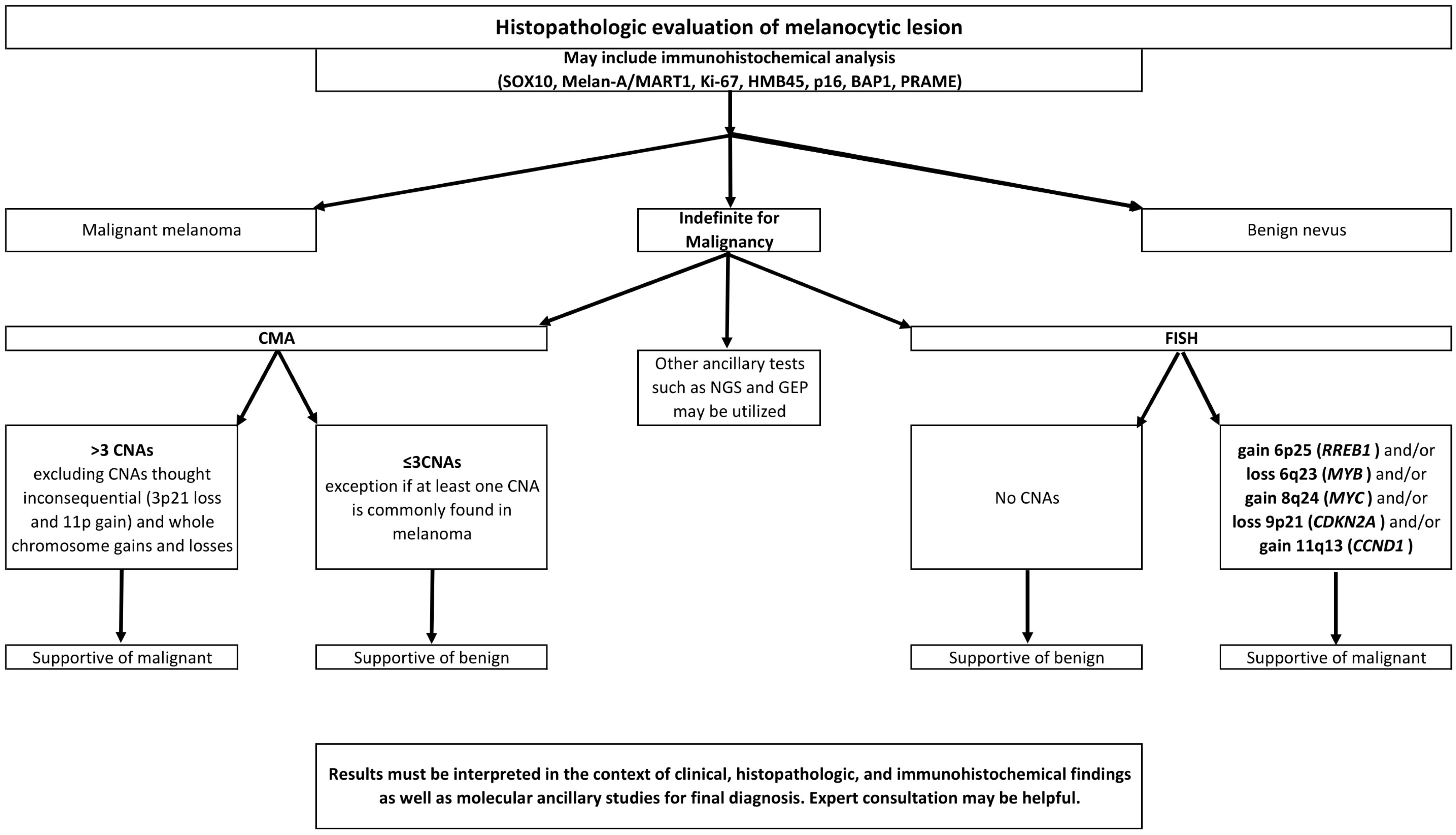
- CMA or FISH do not need to be performed on all melanocytic lesions to assess malignancy. Those lesions considered ambiguous after assessment of histopathologic features, including immunohistochemical studies, may be good candidates for evaluation of CNAs (see Figure 7).
- For uveal melanomas, CNA studies for prognosis are validated and established.
- Although prognostic information may be gained by the evaluation of CNAs in primary cutaneous melanomas, routine testing has not been established.
- Differences in common CNAs between uveal and primary cutaneous melanomas may be exploited in determining the origin of metastases.
- CMA may be preferred to FISH because of its ability to assess the entire genome. FISH may be more helpful in small lesions where DNA extraction may yield insufficient material.
- FISH panels including probes for 6p25, 6q23, 8q24, 9p21, and 11q13 are reasonable and provide adequate sensitivity and specificity in most cases. Results are supportive of malignancy when at least one recurring CNA is detected.
- When results of FISH studies are inconclusive or negative, CMA, with the ability to identify abnormalities throughout the genome, may be performed.
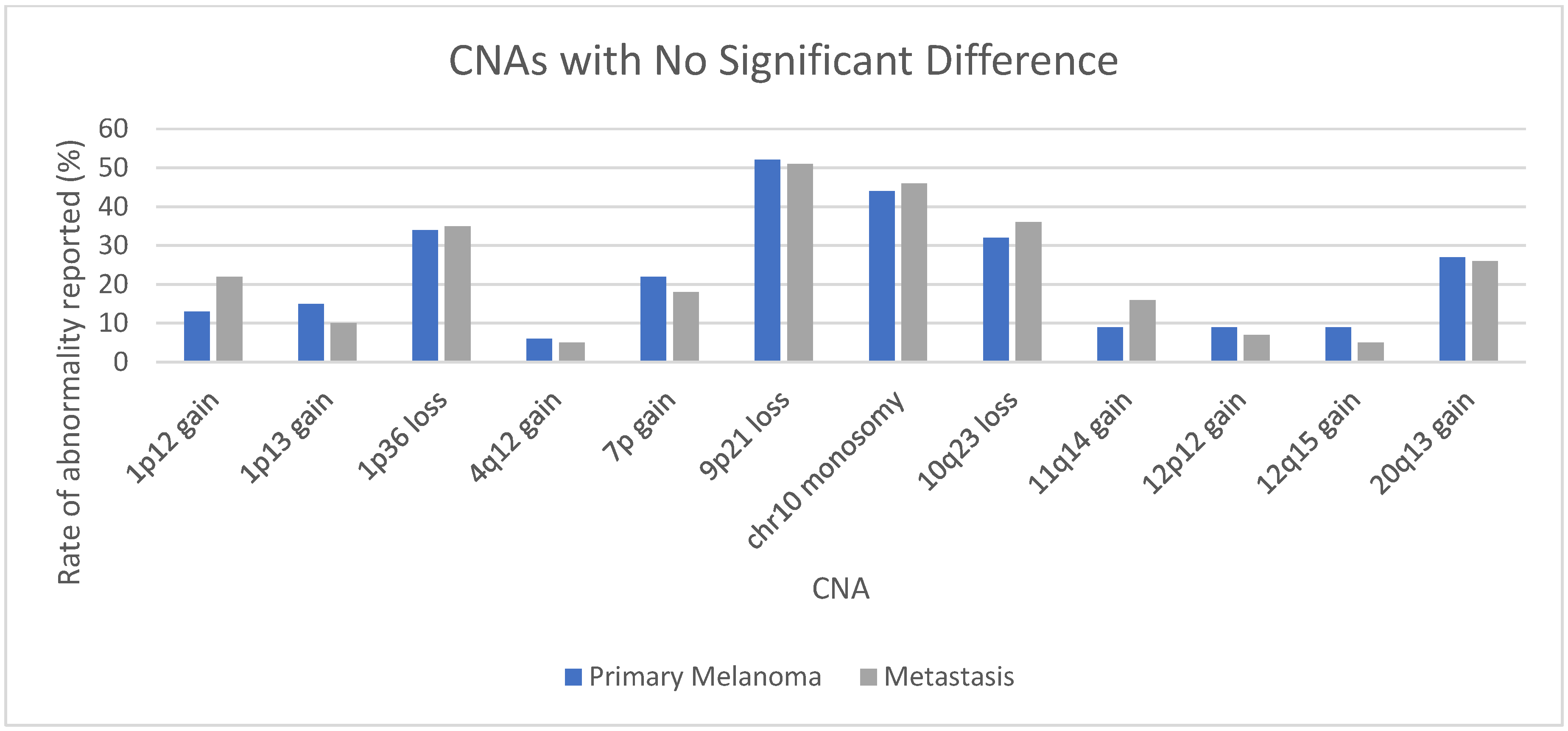
- CMA is considered supportive of malignant melanoma when more than three CNAs are detected or when fewer CNAs are detected but those identified include an abnormality that is common in melanoma (>5%, see Table 1 and Table 2). CMA with three or fewer CNAs does not completely exclude a diagnosis of melanoma, and CMA with greater than three CNAs does not definitively diagnose melanoma.
- As with all testing modalities, limitations exist with CMA and FISH testing, and negative results do not completely exclude the presence of CNAs. Tumor heterogeneity, morphology, and percentage of tumor cells in a sample may limit detection.
- No single ancillary study is sufficient for diagnosis. Results must be considered in conjunction with clinical presentation and histopathologic findings. Evaluation of CNAs may add support to favor either a benign or malignant diagnosis. Although CNA testing adds evidence, a definitive diagnosis must include all other results in conjunction. Some lesions may remain ambiguous after all ancillary testing is performed and expert consultation is obtained.
Supplementary Materials
Author Contributions
Funding
Institutional Review Board Statement
Informed Consent Statement
Data Availability Statement
Acknowledgments
Conflicts of Interest
Abbreviations
| ASDP | American Society of Dermatopathology |
| aSNP | Single-Nucleotide Polymorphism Array |
| CGH | Comparative Genomic Hybridization |
| CI | Confidence Interval |
| CMA | Chromosomal Microarray |
| CNA | Copy Number Abnormality |
| DNA | Deoxyribonucleic Acid |
| FFPE | Formalin-Fixed, Paraffin-Embedded Tissue |
| FISH | Fluorescence In Situ Hybridization |
| GEP | Gene Expression Profiling |
| IHC | Immunohistochemistry |
| Mb | Megabases |
| MELTUMP | Melanocytic Tumors of Uncertain Malignant Potential |
| MLPA | Multiplex Ligation-Dependent Probe Amplification |
| NCCN | National Comprehensive Cancer Network |
| NGS | Next-Generation Sequencing |
| TCGA | The Cancer Genome Atlas |
References
- Elder, D.E. Precursors to melanoma and their mimics: Nevi of special sites. Mod. Pathol. 2006, 19, S4–S20. [Google Scholar] [CrossRef]
- Tucker, M.A. Melanoma epidemiology. Hematol. Oncol. Clin. N. Am. 2009, 23, 383–395. [Google Scholar] [CrossRef] [PubMed]
- Elder, D.E.; Bastian, B.C.; Cree, I.A.; Massi, D.; Scolyer, R.A. The 2018 World Health Organization Classification of Cutaneous, Mucosal, and Uveal Melanoma: Detailed Analysis of 9 Distinct Subtypes Defined by Their Evolutionary Pathway. Arch. Pathol. Lab. Med. 2020, 144, 500–522. [Google Scholar] [CrossRef]
- Vergara, I.A.; Mintoff, C.P.; Sandhu, S.; McIntosh, L.; Young, R.J.; Wong, S.Q.; Colebatch, A.; Cameron, D.L.; Kwon, J.L.; Wolfe, R.; et al. Evolution of late-stage metastatic melanoma is dominated by aneuploidy and whole genome doubling. Nat. Commun. 2021, 12, 1434. [Google Scholar] [CrossRef] [PubMed]
- Nardone, B.; Martini, M.; Busam, K.; Marghoob, A.; West, D.P.; Gerami, P. Integrating clinical/dermatoscopic findings and fluorescence in situ hybridization in diagnosing melanocytic neoplasms with less than definitive histopathologic features. J. Am. Acad. Dermatol. 2012, 66, 917–922. [Google Scholar] [CrossRef]
- Mesbah Ardakani, N.; Harvey, N.T.; Wood, B.A. Polypoid Compound Melanocytic Proliferations: A Clinicopathological Study. Am. J. Dermatopathol. 2019, 41, 578–584. [Google Scholar] [CrossRef] [PubMed]
- AUC Committee Members; Fung, M.A.; Vidal, C.I.; Armbrecht, E.A.; Andea, A.A.; Cassarino, D.S.; Comfere, N.I.; Emanuel, P.O.; Ferringer, T.; Hristov, A.C.; et al. Appropriate use criteria for ancillary diagnostic testing in dermatopathology: New recommendations for 11 tests and 220 clinical scenarios from the American Society of Dermatopathology Appropriate Use Criteria Committee. J. Cutan. Pathol. 2022, 49, 231–245. [Google Scholar] [CrossRef]
- Duncan, L.M.; Elder, D.E.; Piepkorn, M.W.; Knezevich, S.R.; Blokx, W.A.M.; Bosenberg, M.; Busam, K.J.; Carr, R.; Cook, M.G.; Gerami, P.; et al. Shifts in Cutaneous Melanocytic Tumor Diagnostic Terminology: Melanocytoma, MPATH-Dx V2.0 and the WHO Skin5. J. Cutan. Pathol. 2025, 53, 91–100. [Google Scholar] [CrossRef]
- Bastian, B.C.; LeBoit, P.E.; Hamm, H.; Brocker, E.B.; Pinkel, D. Chromosomal gains and losses in primary cutaneous melanomas detected by comparative genomic hybridization. Cancer Res. 1998, 58, 2170–2175. [Google Scholar] [PubMed]
- Geiersbach, K.B.; Gliem, T.J.; Jenkins, S.M.; Gaitatzes, A.G.; Brodersen, P.R.; Negro, M.E.; Clees, M.J.; Swanson, K.E.; Boeckman, R.M.; Natrop, T.J.; et al. Single-Nucleotide Polymorphism Array for Histologically Ambiguous Melanocytic Tumors. J. Mol. Diagn. 2022, 24, 1160–1170. [Google Scholar] [CrossRef]
- Gerami, P.; Jewell, S.S.; Morrison, L.E.; Blondin, B.; Schulz, J.; Ruffalo, T.; Matushek, P.t.; Legator, M.; Jacobson, K.; Dalton, S.R.; et al. Fluorescence in situ hybridization (FISH) as an ancillary diagnostic tool in the diagnosis of melanoma. Am. J. Surg. Pathol. 2009, 33, 1146–1156. [Google Scholar] [CrossRef]
- Gerami, P.; Geraminegad, P. Fluorescence in situ hybridization as a diagnostic modality in melanocytic neoplasma. G. Ital. Dermatol. Venereol. 2010, 145, 29–35. [Google Scholar]
- Gerami, P.; Wass, A.; Mafee, M.; Fang, Y.; Pulitzer, M.P.; Busam, K.J. Fluorescence in situ hybridization for distinguishing nevoid melanomas from mitotically active nevi. Am. J. Surg. Pathol. 2009, 33, 1783–1788. [Google Scholar] [CrossRef] [PubMed]
- Lai, Y.; Wu, Y.; Liu, R.; Lu, A.; Zhou, L.; Jia, L.; Diao, X.; Li, Z. Four-color fluorescence in-situ hybridization is useful to assist to distinguish early stage acral and cutaneous melanomas from dysplastic junctional or compound nevus. Diagn. Pathol. 2020, 15, 51. [Google Scholar] [CrossRef] [PubMed]
- Zembowicz, A.; Yang, S.E.; Kafanas, A.; Lyle, S.R. Correlation between histologic assessment and fluorescence in situ hybridization using MelanoSITE in evaluation of histologically ambiguous melanocytic lesions. Arch. Pathol. Lab. Med. 2012, 136, 1571–1579. [Google Scholar] [CrossRef]
- Zimmermann, A.K.; Hirschmann, A.; Pfeiffer, D.; Paredes, B.E.; Diebold, J. FISH analysis for diagnostic evaluation of challenging melanocytic lesions. Histol. Histopathol. 2010, 25, 1139–1147. [Google Scholar] [CrossRef]
- Newman, M.D.; Lertsburapa, T.; Mirzabeigi, M.; Mafee, M.; Guitart, J.; Gerami, P. Fluorescence in situ hybridization as a tool for microstaging in malignant melanoma. Mod. Pathol. 2009, 22, 989–995. [Google Scholar] [CrossRef] [PubMed]
- Casorzo, L.; Luzzi, C.; Nardacchione, A.; Picciotto, F.; Pisacane, A.; Risio, M. Fluorescence in situ hybridization (FISH) evaluation of chromosomes 6, 7, 9 and 10 throughout human melanocytic tumorigenesis. Melanoma Res. 2005, 15, 155–160. [Google Scholar] [CrossRef]
- Uguen, A.; Uguen, M.; Talagas, M.; Gobin, E.; Marcorelles, P.; De Braekeleer, M. Fluorescence in situ hybridization testing of chromosomes 6, 8, 9 and 11 in melanocytic tumors is difficult to automate and reveals tumor heterogeneity in melanomas. Oncol. Lett. 2016, 12, 2734–2741. [Google Scholar] [CrossRef][Green Version]
- Kutzner, H.; Metzler, G.; Argenyi, Z.; Requena, L.; Palmedo, G.; Mentzel, T.; Rutten, A.; Hantschke, M.; Paredes, B.E.; Scharer, L.; et al. Histological and genetic evidence for a variant of superficial spreading melanoma composed predominantly of large nests. Mod. Pathol. 2012, 25, 838–845. [Google Scholar] [CrossRef]
- Grcar-Kuzmanov, B.; Bostjancic, E.; Bandres, J.A.C.; Pizem, J. Sclerosing Melanocytic Lesions (sclerosing Melanomas with Nevoid Features and Sclerosing Nevi with Pseudomelanomatous Features)—An Analysis of 90 Lesions. Radiol. Oncol. 2018, 52, 220–228. [Google Scholar] [CrossRef] [PubMed]
- Carter, M.D.; Durham, A.B.; Miedema, J.R.; Harms, P.W.; Chan, M.P.; Patel, R.M.; Lowe, L.; Fullen, D.R.; Hristov, A.C.; Wang, M.; et al. Molecular testing of borderline cutaneous melanocytic lesions: SNP array is more sensitive and specific than FISH. Hum. Pathol. 2019, 86, 115–123. [Google Scholar] [CrossRef]
- Ebbelaar, C.F.; Jansen, A.M.L.; Bloem, L.T.; Blokx, W.A.M. Genome-wide copy number variations as molecular diagnostic tool for cutaneous intermediate melanocytic lesions: A systematic review and individual patient data meta-analysis. Virchows Arch. 2021, 479, 773–783. [Google Scholar] [CrossRef] [PubMed]
- Bastian, B.C.; Xiong, J.; Frieden, I.J.; Williams, M.L.; Chou, P.; Busam, K.; Pinkel, D.; LeBoit, P.E. Genetic changes in neoplasms arising in congenital melanocytic nevi: Differences between nodular proliferations and melanomas. Am. J. Pathol. 2002, 161, 1163–1169. [Google Scholar] [CrossRef]
- Yelamos, O.; Arva, N.C.; Obregon, R.; Yazdan, P.; Wagner, A.; Guitart, J.; Gerami, P. A comparative study of proliferative nodules and lethal melanomas in congenital nevi from children. Am. J. Surg. Pathol. 2015, 39, 405–415. [Google Scholar] [CrossRef] [PubMed]
- Kerl, K.; Palmedo, G.; Wiesner, T.; Mentzel, T.; Rutten, A.; Scharer, L.; Paredes, B.; Hantschke, M.; Kutzner, H. A proposal for improving multicolor FISH sensitivity in the diagnosis of malignant melanoma using new combined criteria. Am. J. Dermatopathol. 2012, 34, 580–585. [Google Scholar] [CrossRef]
- Chernoff, K.A.; Bordone, L.; Horst, B.; Simon, K.; Twadell, W.; Lee, K.; Cohen, J.A.; Wang, S.; Silvers, D.N.; Brunner, G.; et al. GAB2 amplifications refine molecular classification of melanoma. Clin. Cancer Res. 2009, 15, 4288–4291. [Google Scholar] [CrossRef]
- Price, K.; Linge, C. The presence of melanin in genomic DNA isolated from pigmented cell lines interferes with successful polymerase chain reaction: A solution. Melanoma Res. 1999, 9, 5–9. [Google Scholar] [CrossRef]
- Mikhail, F.M.; Biegel, J.A.; Cooley, L.D.; Dubuc, A.M.; Hirsch, B.; Horner, V.L.; Newman, S.; Shao, L.; Wolff, D.J.; Raca, G. Technical laboratory standards for interpretation and reporting of acquired copy-number abnormalities and copy-neutral loss of heterozygosity in neoplastic disorders: A joint consensus recommendation from the American College of Medical Genetics and Genomics (ACMG) and the Cancer Genomics Consortium (CGC). Genet. Med. 2019, 21, 1903–1916. [Google Scholar] [CrossRef]
- Verzi, A.E.; Bubley, J.A.; Haugh, A.M.; Zhang, B.; Wagner, A.; Kruse, L.; West, D.P.; Wayne, J.; Guitart, J.; Gerami, P. A single-institution assessment of superficial spreading melanoma (SSM) in the pediatric population: Molecular and histopathologic features compared with adult SSM. J. Am. Acad. Dermatol. 2017, 77, 886–892. [Google Scholar] [CrossRef]
- Lacoste, C.; Avril, M.F.; Frassati-Biaggi, A.; Dupin, N.; Chretien-Marquet, B.; Mahe, E.; Bodemer, C.; Vergier, B.; de la Fouchardiere, A.; Fraitag, S. Malignant Melanoma Arising in Patients with a Large Congenital Melanocytic Naevus: Retrospective Study of 10 Cases with Cytogenetic Analysis. Acta Derm. Venereol. 2015, 95, 686–690. [Google Scholar] [CrossRef]
- Ramos-Rodriguez, A.J.; McFadden, J.R.; Momtahen, S.; LeBlanc, R.E.; Yan, S.; Chaudhari, A.S.; Cloutier, J.M.; Stevanovic, M.; Barney, R.; Syku, M.; et al. A novel method to assess copy number variations in melanocytic neoplasms: Droplet digital PCR for precise quantitation of MYC and MYB genes. J. Cutan. Pathol. 2024, 51, 146–154. [Google Scholar] [CrossRef]
- McFadden, J.R.; Syku, M.; Barney, R.E.; Stevanovic, M.; Chaudhari, A.S.; O’Hern, K.J.; Chambers, M.; Baker, C.M.; LeBlanc, R.E.; Doan, L.; et al. A Novel Method to Detect Copy Number Variation in Melanoma: Droplet Digital PCR for Quantitation of the CDKN2A Gene, a Proof-of-Concept Study. Am. J. Dermatopathol. 2023, 45, 454–462. [Google Scholar] [CrossRef]
- O’Hern, K.; Barney, R.; Chambers, M.; Baker, C.; Stevanovic, M.; Tsongalis, G.J.; Hughes, E.; Sriharan, A. A novel method to assess copy number variation in melanoma: Droplet digital PCR for precise quantitation of the RREB1 gene in formalin-fixed, paraffin-embedded melanocytic neoplasms, a proof-of-concept study. J. Cutan. Pathol. 2023, 50, 169–177. [Google Scholar] [CrossRef]
- Lazar, V.; Ecsedi, S.; Vizkeleti, L.; Rakosy, Z.; Boross, G.; Szappanos, B.; Begany, A.; Emri, G.; Adany, R.; Balazs, M. Marked genetic differences between BRAF and NRAS mutated primary melanomas as revealed by array comparative genomic hybridization. Melanoma Res. 2012, 22, 202–214. [Google Scholar] [CrossRef]
- Page, M.J.; McKenzie, J.E.; Bossuyt, P.M.; Boutron, I.; Hoffmann, T.C.; Mulrow, C.D.; Shamseer, L.; Tetzlaff, J.M.; Akl, E.A.; Brennan, S.E.; et al. The PRISMA 2020 statement: An updated guideline for reporting systematic reviews. BMJ 2021, 372, n71. [Google Scholar] [CrossRef]
- Xu, Y.; Lou, L.; Wang, Y.; Miao, Q.; Jin, K.; Chen, M.; Ye, J. Epidemiological Study of Uveal Melanoma from US Surveillance, Epidemiology, and End Results Program (2010–2015). J. Ophthalmol. 2020, 2020, 3614039. [Google Scholar] [CrossRef]
- Kaliki, S.; Shields, C.L. Uveal melanoma: Relatively rare but deadly cancer. Eye 2017, 31, 241–257. [Google Scholar] [CrossRef] [PubMed]
- de Lange, M.J.; van Pelt, S.I.; Versluis, M.; Jordanova, E.S.; Kroes, W.G.; Ruivenkamp, C.; van der Burg, S.H.; Luyten, G.P.; van Hall, T.; Jager, M.J.; et al. Heterogeneity revealed by integrated genomic analysis uncovers a molecular switch in malignant uveal melanoma. Oncotarget 2015, 6, 37824–37835. [Google Scholar] [CrossRef] [PubMed]
- van Gils, W.; Mensink, H.W.; Kilic, E.; Vaarwater, J.; Verbiest, M.M.; Paridaens, D.; Luyten, G.P.; de Klein, A.; Bruggenwirth, H.T. Expression of APITD1 is not related to copy number changes of chromosomal region 1p36 or the prognosis of uveal melanoma. Investig. Ophthalmol. Vis. Sci. 2007, 48, 4919–4923. [Google Scholar] [CrossRef] [PubMed][Green Version]
- Hughes, S.; Damato, B.E.; Giddings, I.; Hiscott, P.S.; Humphreys, J.; Houlston, R.S. Microarray comparative genomic hybridisation analysis of intraocular uveal melanomas identifies distinctive imbalances associated with loss of chromosome 3. Br. J. Cancer 2005, 93, 1191–1196. [Google Scholar] [CrossRef] [PubMed]
- Narasimhaiah, D.; Legrand, C.; Damotte, D.; Remark, R.; Munda, M.; De Potter, P.; Coulie, P.G.; Vikkula, M.; Godfraind, C. DNA alteration-based classification of uveal melanoma gives better prognostic stratification than immune infiltration, which has a neutral effect in high-risk group. Cancer Med. 2019, 8, 3036–3046. [Google Scholar] [CrossRef]
- Robertson, A.G.; Shih, J.; Yau, C.; Gibb, E.A.; Oba, J.; Mungall, K.L.; Hess, J.M.; Uzunangelov, V.; Walter, V.; Danilova, L.; et al. Integrative Analysis Identifies Four Molecular and Clinical Subsets in Uveal Melanoma. Cancer Cell 2017, 32, 204–220.e215. [Google Scholar] [CrossRef] [PubMed]
- Minca, E.C.; Tubbs, R.R.; Portier, B.P.; Wang, Z.; Lanigan, C.; Aronow, M.E.; Triozzi, P.L.; Singh, A.; Cook, J.R.; Saunthararajah, Y.; et al. Genomic microarray analysis on formalin-fixed paraffin-embedded material for uveal melanoma prognostication. Cancer Genet. 2014, 207, 306–315. [Google Scholar] [CrossRef]
- Trolet, J.; Hupe, P.; Huon, I.; Lebigot, I.; Decraene, C.; Delattre, O.; Sastre-Garau, X.; Saule, S.; Thiery, J.P.; Plancher, C.; et al. Genomic profiling and identification of high-risk uveal melanoma by array CGH analysis of primary tumors and liver metastases. Investig. Ophthalmol. Vis. Sci. 2009, 50, 2572–2580. [Google Scholar] [CrossRef]
- Onken, M.D.; Worley, L.A.; Harbour, J.W. A metastasis modifier locus on human chromosome 8p in uveal melanoma identified by integrative genomic analysis. Clin. Cancer Res. 2008, 14, 3737–3745. [Google Scholar] [CrossRef]
- Mensink, H.W.; Kilic, E.; Vaarwater, J.; Douben, H.; Paridaens, D.; de Klein, A. Molecular cytogenetic analysis of archival uveal melanoma with known clinical outcome. Cancer Genet. Cytogenet. 2008, 181, 108–111. [Google Scholar] [CrossRef]
- Smit, K.N.; van Poppelen, N.M.; Vaarwater, J.; Verdijk, R.; van Marion, R.; Kalirai, H.; Coupland, S.E.; Thornton, S.; Farquhar, N.; Dubbink, H.J.; et al. Combined mutation and copy-number variation detection by targeted next-generation sequencing in uveal melanoma. Mod. Pathol. 2018, 31, 763–771. [Google Scholar] [CrossRef] [PubMed]
- Radhakrishnan, A.; Badhrinarayanan, N.; Biswas, J.; Krishnakumar, S. Analysis of chromosomal aberration (1, 3, and 8) and association of microRNAs in uveal melanoma. Mol. Vis. 2009, 15, 2146–2154. [Google Scholar]
- Maat, W.; Ly, L.V.; Jordanova, E.S.; de Wolff-Rouendaal, D.; Schalij-Delfos, N.E.; Jager, M.J. Monosomy of chromosome 3 and an inflammatory phenotype occur together in uveal melanoma. Investig. Ophthalmol. Vis. Sci. 2008, 49, 505–510. [Google Scholar] [CrossRef]
- Ewens, K.G.; Kanetsky, P.A.; Richards-Yutz, J.; Al-Dahmash, S.; De Luca, M.C.; Bianciotto, C.G.; Shields, C.L.; Ganguly, A. Genomic profile of 320 uveal melanoma cases: Chromosome 8p-loss and metastatic outcome. Investig. Ophthalmol. Vis. Sci. 2013, 54, 5721–5729. [Google Scholar] [CrossRef]
- Drabarek, W.; Yavuzyigitoglu, S.; Obulkasim, A.; van Riet, J.; Smit, K.N.; van Poppelen, N.M.; Vaarwater, J.; Brands, T.; Eussen, B.; Verdijk, R.M.; et al. Multi-Modality Analysis Improves Survival Prediction in Enucleated Uveal Melanoma Patients. Investig. Ophthalmol. Vis. Sci. 2019, 60, 3595–3605. [Google Scholar] [CrossRef]
- Naus, N.C.; Verhoeven, A.C.; van Drunen, E.; Slater, R.; Mooy, C.M.; Paridaens, D.A.; Luyten, G.P.; de Klein, A. Detection of genetic prognostic markers in uveal melanoma biopsies using fluorescence in situ hybridization. Clin. Cancer Res. 2002, 8, 534–539. [Google Scholar]
- Mudhar, H.S.; Doherty, R.E.; Salvi, S.M.; Currie, Z.I.; Tan, J.H.; Sisley, K. Genetic Profiling of Primary Orbital Melanoma: An Analysis of 6 Cases with Clinicopathologic Correlation. Ophthalmology 2019, 126, 1045–1052. [Google Scholar] [CrossRef]
- Fang, Y.; Wang, X.; Dusza, S.; Jhanwar, S.; Abramson, D.; Busam, K.J. Use of fluorescence in situ hybridization to distinguish metastatic uveal from cutaneous melanoma. Int. J. Surg. Pathol. 2012, 20, 246–251. [Google Scholar] [CrossRef] [PubMed]
- Tura, A.; Merz, H.; Reinsberg, M.; Luke, M.; Jager, M.J.; Grisanti, S.; Luke, J. Analysis of monosomy-3 in immunomagnetically isolated circulating melanoma cells in uveal melanoma patients. Pigment Cell Melanoma Res. 2016, 29, 583–589. [Google Scholar] [CrossRef] [PubMed]
- Hamadeh, F.; Medina, C.A.; Singh, A.D.; Reynolds, J.P.; Biscotti, C.V. Uveal melanoma: An analysis of cellular features and comparison to monosomy 3 status. Diagn. Cytopathol. 2016, 44, 377–383. [Google Scholar] [CrossRef]
- Sandinha, M.T.; Farquharson, M.A.; Roberts, F. Identification of monosomy 3 in choroidal melanoma by chromosome in situ hybridisation. Br. J. Ophthalmol. 2004, 88, 1527–1532. [Google Scholar] [CrossRef]
- Klufas, M.A.; Richter, E.; Itty, S.; Moreno, C.; McCannel, C.A.; McCannel, T.A. Comparison of Gene Expression Profiling and Chromosome 3 Analysis by Fluorescent in situ Hybridization and Multiplex Ligation Probe Amplification in Fine-Needle Aspiration Biopsy Specimens of Uveal Melanoma. Ocul. Oncol. Pathol. 2017, 4, 16–20. [Google Scholar] [CrossRef]
- van den Bosch, T.; Vaarwater, J.; Verdijk, R.; Muller, K.; Kilic, E.; Paridaens, D.; de Klein, A.; Naus, N. Risk factors associated with secondary enucleation after fractionated stereotactic radiotherapy in uveal melanoma. Acta Ophthalmol. 2015, 93, 555–560. [Google Scholar] [CrossRef]
- Vaarwater, J.; van den Bosch, T.; Mensink, H.W.; van Kempen, C.; Verdijk, R.M.; Naus, N.C.; Paridaens, D.; Bruggenwirth, H.T.; Kilic, E.; de Klein, A. Multiplex ligation-dependent probe amplification equals fluorescence in-situ hybridization for the identification of patients at risk for metastatic disease in uveal melanoma. Melanoma Res. 2012, 22, 30–37. [Google Scholar] [CrossRef]
- Schoenfield, L.; Pettay, J.; Tubbs, R.R.; Singh, A.D. Variation of monosomy 3 status within uveal melanoma. Arch. Pathol. Lab. Med. 2009, 133, 1219–1222. [Google Scholar] [CrossRef] [PubMed]
- Coupland, S.E.; Campbell, I.; Damato, B. Routes of extraocular extension of uveal melanoma: Risk factors and influence on survival probability. Ophthalmology 2008, 115, 1778–1785. [Google Scholar] [CrossRef]
- Tschentscher, F.; Prescher, G.; Zeschnigk, M.; Horsthemke, B.; Lohmann, D.R. Identification of chromosomes 3, 6, and 8 aberrations in uveal melanoma by microsatellite analysis in comparison to comparative genomic hybridization. Cancer Genet. Cytogenet. 2000, 122, 13–17. [Google Scholar] [CrossRef]
- Sandinha, T.; Farquharson, M.; McKay, I.; Roberts, F. Correlation of heterogeneity for chromosome 3 copy number with cell type in choroidal melanoma of mixed-cell type. Investig. Ophthalmol. Vis. Sci. 2006, 47, 5177–5180. [Google Scholar] [CrossRef] [PubMed][Green Version]
- Singh, A.D.; Aronow, M.E.; Sun, Y.; Bebek, G.; Saunthararajah, Y.; Schoenfield, L.R.; Biscotti, C.V.; Tubbs, R.R.; Triozzi, P.L.; Eng, C. Chromosome 3 status in uveal melanoma: A comparison of fluorescence in situ hybridization and single-nucleotide polymorphism array. Investig. Ophthalmol. Vis. Sci. 2012, 53, 3331–3339. [Google Scholar] [CrossRef] [PubMed]
- Bonaldi, L.; Midena, E.; Filippi, B.; Tebaldi, E.; Marcato, R.; Parrozzani, R.; Amadori, A. FISH analysis of chromosomes 3 and 6 on fine needle aspiration biopsy samples identifies distinct subgroups of uveal melanomas. J. Cancer Res. Clin. Oncol. 2008, 134, 1123–1127. [Google Scholar] [CrossRef]
- Kilic, E.; Naus, N.C.; van Gils, W.; Klaver, C.C.; van Til, M.E.; Verbiest, M.M.; Stijnen, T.; Mooy, C.M.; Paridaens, D.; Beverloo, H.B.; et al. Concurrent loss of chromosome arm 1p and chromosome 3 predicts a decreased disease-free survival in uveal melanoma patients. Investig. Ophthalmol. Vis. Sci. 2005, 46, 2253–2257. [Google Scholar] [CrossRef]
- Dogrusoz, M.; Brouwer, N.J.; de Geus, S.J.R.; Ly, L.V.; Bohringer, S.; van Duinen, S.G.; Kroes, W.G.M.; van der Velden, P.A.; Haasnoot, G.W.; Marinkovic, M.; et al. Prognostic Factors Five Years After Enucleation for Uveal Melanoma. Investig. Ophthalmol. Vis. Sci. 2020, 61, 31. [Google Scholar] [CrossRef] [PubMed]
- Cassoux, N.; Rodrigues, M.J.; Plancher, C.; Asselain, B.; Levy-Gabriel, C.; Lumbroso-Le Rouic, L.; Piperno-Neumann, S.; Dendale, R.; Sastre, X.; Desjardins, L.; et al. Genome-wide profiling is a clinically relevant and affordable prognostic test in posterior uveal melanoma. Br. J. Ophthalmol. 2014, 98, 769–774. [Google Scholar] [CrossRef]
- Bronkhorst, I.H.; Maat, W.; Jordanova, E.S.; Kroes, W.G.; Schalij-Delfos, N.E.; Luyten, G.P.; Jager, M.J. Effect of heterogeneous distribution of monosomy 3 on prognosis in uveal melanoma. Arch. Pathol. Lab. Med. 2011, 135, 1042–1047. [Google Scholar] [CrossRef]
- Sisley, K.; Tattersall, N.; Dyson, M.; Smith, K.; Mudhar, H.S.; Rennie, I.G. Multiplex fluorescence in situ hybridization identifies novel rearrangements of chromosomes 6, 15, and 18 in primary uveal melanoma. Exp. Eye Res. 2006, 83, 554–559. [Google Scholar] [CrossRef] [PubMed]
- McCannel, T.A.; Reddy, S.; Burgess, B.L.; Auerbach, M. Association of positive dual-modality positron emission tomography/computed tomography imaging of primary choroidal melanoma with chromosome 3 loss and tumor size. Retina 2010, 30, 146–151. [Google Scholar] [CrossRef]
- Dono, M.; Angelini, G.; Cecconi, M.; Amaro, A.; Esposito, A.I.; Mirisola, V.; Maric, I.; Lanza, F.; Nasciuti, F.; Viaggi, S.; et al. Mutation frequencies of GNAQ, GNA11, BAP1, SF3B1, EIF1AX and TERT in uveal melanoma: Detection of an activating mutation in the TERT gene promoter in a single case of uveal melanoma. Br. J. Cancer 2014, 110, 1058–1065. [Google Scholar] [CrossRef]
- Glasgow, B.J.; McCannel, T.A. Correlation of Immunocytochemistry of BRCA1-associated Protein-1 (BAP1) with Other Prognostic Markers in Uveal Melanoma. Am. J. Ophthalmol. 2018, 189, 122–126. [Google Scholar] [CrossRef]
- Yavuzyigitoglu, S.; Mensink, H.W.; Smit, K.N.; Vaarwater, J.; Verdijk, R.M.; Beverloo, B.; Bruggenwirth, H.T.; van Marion, R.; Dubbink, H.J.; Paridaens, D.; et al. Metastatic Disease in Polyploid Uveal Melanoma Patients Is Associated with BAP1 Mutations. Investig. Ophthalmol. Vis. Sci. 2016, 57, 2232–2239. [Google Scholar] [CrossRef]
- Singh, A.D.; Tubbs, R.; Biscotti, C.; Schoenfield, L.; Trizzoi, P. Chromosomal 3 and 8 status within hepatic metastasis of uveal melanoma. Arch. Pathol. Lab. Med. 2009, 133, 1223–1227. [Google Scholar] [CrossRef]
- Maat, W.; Jordanova, E.S.; van Zelderen-Bhola, S.L.; Barthen, E.R.; Wessels, H.W.; Schalij-Delfos, N.E.; Jager, M.J. The heterogeneous distribution of monosomy 3 in uveal melanomas: Implications for prognostication based on fine-needle aspiration biopsies. Arch. Pathol. Lab. Med. 2007, 131, 91–96. [Google Scholar] [CrossRef] [PubMed]
- Tschentscher, F.; Prescher, G.; Horsman, D.E.; White, V.A.; Rieder, H.; Anastassiou, G.; Schilling, H.; Bornfeld, N.; Bartz-Schmidt, K.U.; Horsthemke, B.; et al. Partial deletions of the long and short arm of chromosome 3 point to two tumor suppressor genes in uveal melanoma. Cancer Res. 2001, 61, 3439–3442. [Google Scholar]
- Young, T.A.; Burgess, B.L.; Rao, N.P.; Glasgow, B.J.; Straatsma, B.R. Transscleral fine-needle aspiration biopsy of macular choroidal melanoma. Am. J. Ophthalmol. 2008, 145, 297–302. [Google Scholar] [CrossRef] [PubMed]
- Sipos, E.; Hegyi, K.; Treszl, A.; Steiber, Z.; Mehes, G.; Dobos, N.; Fodor, K.; Olah, G.; Szekvolgyi, L.; Schally, A.V.; et al. Concurrence of chromosome 3 and 4 aberrations in human uveal melanoma. Oncol. Rep. 2017, 37, 1927–1934. [Google Scholar] [CrossRef]
- Hammond, D.W.; Al-Shammari, N.S.; Danson, S.; Jacques, R.; Rennie, I.G.; Sisley, K. High-Resolution Array CGH Analysis Identifies Regional Deletions and Amplifications of Chromosome 8 in Uveal Melanoma. Investig. Ophthalmol. Vis. Sci. 2015, 56, 3460–3466. [Google Scholar] [CrossRef] [PubMed]
- Midena, E.; Bonaldi, L.; Parrozzani, R.; Radin, P.P.; Boccassini, B.; Vujosevic, S. In vivo monosomy 3 detection of posterior uveal melanoma: 3-year follow-up. Graefes Arch. Clin. Exp. Ophthalmol. 2008, 246, 609–614. [Google Scholar] [CrossRef]
- Erol, N.; Oner, U.; Artan, S.; Isiksoy, S.; Yurdakul, S. Chromosomal abnormalities, p53 and Bcl-2 expression and clinical outcome in choroidal melanoma. Melanoma Res. 2004, 14, 473–478. [Google Scholar] [CrossRef]
- Abdel-Rahman, M.H.; Christopher, B.N.; Faramawi, M.F.; Said-Ahmed, K.; Cole, C.; McFaddin, A.; Ray-Chaudhury, A.; Heerema, N.; Davidorf, F.H. Frequency, molecular pathology and potential clinical significance of partial chromosome 3 aberrations in uveal melanoma. Mod. Pathol. 2011, 24, 954–962. [Google Scholar] [CrossRef]
- van Beek, J.G.; Koopmans, A.E.; Vaarwater, J.; de Rooi, J.J.; Paridaens, D.; Naus, N.C.; de Klein, A.; Verdijk, R.M.; Kilic, E. The prognostic value of extraocular extension in relation to monosomy 3 and gain of chromosome 8q in uveal melanoma. Investig. Ophthalmol. Vis. Sci. 2014, 55, 1284–1291. [Google Scholar] [CrossRef]
- Lee, C.S.; Lee, J.; Choi, J.J.; Yang, W.I.; Yoon, J.S.; Lee, S.Y.; Lee, S.C. Cytogenetics and prognosis for uveal melanoma in Korean patients. Acta Ophthalmol. 2011, 89, e310–e314. [Google Scholar] [CrossRef]
- Damato, B.; Duke, C.; Coupland, S.E.; Hiscott, P.; Smith, P.A.; Campbell, I.; Douglas, A.; Howard, P. Cytogenetics of uveal melanoma: A 7-year clinical experience. Ophthalmology 2007, 114, 1925–1931. [Google Scholar] [CrossRef] [PubMed]
- Matet, A.; Ait Rais, K.; Malaise, D.; Angi, M.; Dendale, R.; Tick, S.; Lumbroso-Le Rouic, L.; Levy-Gabriel, C.; Rodrigues, M.; Pierron, G.; et al. Comparative Cytogenetic Abnormalities in Paired Choroidal Melanoma Samples Obtained Before and After Proton Beam Irradiation by Transscleral Fine-Needle Aspiration Biopsy and Endoresection. Cancers 2019, 11, 1173. [Google Scholar] [CrossRef] [PubMed]
- van Poppelen, N.M.; Vaarwater, J.; Mudhar, H.S.; Sisley, K.; Rennie, I.G.; Rundle, P.; Brands, T.; van den Bosch, Q.C.C.; Mensink, H.W.; de Klein, A.; et al. Genetic Background of Iris Melanomas and Iris Melanocytic Tumors of Uncertain Malignant Potential. Ophthalmology 2018, 125, 904–912. [Google Scholar] [CrossRef] [PubMed]
- Tura, A.; Thieme, C.; Brosig, A.; Merz, H.; Ranjbar, M.; Vardanyan, S.; Zuo, H.; Maassen, T.; Kakkassery, V.; Grisanti, S. Lower Levels of Adiponectin and Its Receptor Adipor1 in the Uveal Melanomas with Monosomy-3. Investig. Ophthalmol. Vis. Sci. 2020, 61, 12. [Google Scholar] [CrossRef]
- Versluis, M.; de Lange, M.J.; van Pelt, S.I.; Ruivenkamp, C.A.; Kroes, W.G.; Cao, J.; Jager, M.J.; Luyten, G.P.; van der Velden, P.A. Digital PCR validates 8q dosage as prognostic tool in uveal melanoma. PLoS ONE 2015, 10, e0116371. [Google Scholar] [CrossRef]
- van Essen, T.H.; van Pelt, S.I.; Versluis, M.; Bronkhorst, I.H.; van Duinen, S.G.; Marinkovic, M.; Kroes, W.G.; Ruivenkamp, C.A.; Shukla, S.; de Klein, A.; et al. Prognostic parameters in uveal melanoma and their association with BAP1 expression. Br. J. Ophthalmol. 2014, 98, 1738–1743. [Google Scholar] [CrossRef] [PubMed]
- Lake, S.L.; Damato, B.E.; Kalirai, H.; Dodson, A.R.; Taktak, A.F.; Lloyd, B.H.; Coupland, S.E. Single nucleotide polymorphism array analysis of uveal melanomas reveals that amplification of CNKSR3 is correlated with improved patient survival. Am. J. Pathol. 2013, 182, 678–687. [Google Scholar] [CrossRef] [PubMed]
- Mensink, H.W.; Vaarwater, J.; Kilic, E.; Naus, N.C.; Mooy, N.; Luyten, G.; Bruggenwirth, H.T.; Paridaens, D.; de Klein, A. Chromosome 3 intratumor heterogeneity in uveal melanoma. Investig. Ophthalmol. Vis. Sci. 2009, 50, 500–504. [Google Scholar] [CrossRef]
- Petrausch, U.; Martus, P.; Tonnies, H.; Bechrakis, N.E.; Lenze, D.; Wansel, S.; Hummel, M.; Bornfeld, N.; Thiel, E.; Foerster, M.H.; et al. Significance of gene expression analysis in uveal melanoma in comparison to standard risk factors for risk assessment of subsequent metastases. Eye 2008, 22, 997–1007. [Google Scholar] [CrossRef]
- Marathe, O.S.; Wu, J.; Lee, S.P.; Yu, F.; Burgess, B.L.; Leu, M.; Straatsma, B.R.; McCannel, T.A. Ocular response of choroidal melanoma with monosomy 3 versus disomy 3 after iodine-125 brachytherapy. Int. J. Radiat. Oncol. Biol. Phys. 2011, 81, 1046–1048. [Google Scholar] [CrossRef]
- McCannel, T.A.; Burgess, B.L.; Rao, N.P.; Nelson, S.F.; Straatsma, B.R. Identification of candidate tumor oncogenes by integrative molecular analysis of choroidal melanoma fine-needle aspiration biopsy specimens. Arch. Ophthalmol. 2010, 128, 1170–1177. [Google Scholar] [CrossRef] [PubMed]
- Dogrusoz, M.; Bagger, M.; van Duinen, S.G.; Kroes, W.G.; Ruivenkamp, C.A.; Bohringer, S.; Andersen, K.K.; Luyten, G.P.; Kiilgaard, J.F.; Jager, M.J. The Prognostic Value of AJCC Staging in Uveal Melanoma Is Enhanced by Adding Chromosome 3 and 8q Status. Investig. Ophthalmol. Vis. Sci. 2017, 58, 833–842. [Google Scholar] [CrossRef]
- Zimpfer, A.; Schneider, B.; Blanck, O.; Riedel, K.; Zhivov, A.; Jonigk, D.; Erbersdobler, A.; Junemann, A.; Andratschke, N.; Hildebrandt, G.; et al. Pathologic Features of Tumor Activity and Stability in Uveal Melanoma Specimens after Fractionated CyberKnife Radiosurgery. Pathol. Oncol. Res. 2019, 25, 731–740. [Google Scholar] [CrossRef]
- Shields, C.L.; Say, E.A.T.; Hasanreisoglu, M.; Saktanasate, J.; Lawson, B.M.; Landy, J.E.; Badami, A.U.; Sivalingam, M.D.; Mashayekhi, A.; Shields, J.A.; et al. Cytogenetic Abnormalities in Uveal Melanoma Based on Tumor Features and Size in 1059 Patients: The 2016 W. Richard Green Lecture. Ophthalmology 2017, 124, 609–618. [Google Scholar] [CrossRef] [PubMed]
- Salvi, S.M.; Aziz, H.A.; Dar, S.; Singh, N.; Hayden-Loreck, B.; Singh, A.D. Uveal Melanoma Regression after Brachytherapy: Relationship with Chromosome 3 Monosomy Status. Ocul. Oncol. Pathol. 2017, 3, 87–94. [Google Scholar] [CrossRef]
- Young, T.A.; Rao, N.P.; Glasgow, B.J.; Moral, J.N.; Straatsma, B.R. Fluorescent in situ hybridization for monosomy 3 via 30-gauge fine-needle aspiration biopsy of choroidal melanoma in vivo. Ophthalmology 2007, 114, 142–146. [Google Scholar] [CrossRef] [PubMed]
- McCarthy, C.; Kalirai, H.; Lake, S.L.; Dodson, A.; Damato, B.E.; Coupland, S.E. Insights into genetic alterations of liver metastases from uveal melanoma. Pigment Cell Melanoma Res. 2016, 29, 60–67. [Google Scholar] [CrossRef]
- van den Bosch, T.; Koopmans, A.E.; Vaarwater, J.; van den Berg, M.; de Klein, A.; Verdijk, R.M. Chemokine receptor CCR7 expression predicts poor outcome in uveal melanoma and relates to liver metastasis whereas expression of CXCR4 is not of clinical relevance. Investig. Ophthalmol. Vis. Sci. 2013, 54, 7354–7361. [Google Scholar] [CrossRef]
- Ramtohul, T.; Ait Rais, K.; Gardrat, S.; Barnhill, R.; Roman-Roman, S.; Cassoux, N.; Rodrigues, M.; Mariani, P.; De Koning, L.; Pierron, G.; et al. Prognostic Implications of MRI Melanin Quantification and Cytogenetic Abnormalities in Liver Metastases of Uveal Melanoma. Cancers 2021, 13, 2728. [Google Scholar] [CrossRef]
- van den Bosch, T.; van Beek, J.G.; Vaarwater, J.; Verdijk, R.M.; Naus, N.C.; Paridaens, D.; de Klein, A.; Kilic, E. Higher percentage of FISH-determined monosomy 3 and 8q amplification in uveal melanoma cells relate to poor patient prognosis. Investig. Ophthalmol. Vis. Sci. 2012, 53, 2668–2674. [Google Scholar] [CrossRef]
- Patel, K.A.; Edmondson, N.D.; Talbot, F.; Parsons, M.A.; Rennie, I.G.; Sisley, K. Prediction of prognosis in patients with uveal melanoma using fluorescence in situ hybridisation. Br. J. Ophthalmol. 2001, 85, 1440–1444. [Google Scholar] [CrossRef] [PubMed]
- Alkatan, H.M.; Al Qahtani, A.A.; Maktabi, A.M. Enucleated globes with choroidal melanoma: A retrospective histopathological study and correlation with cytogenetic profile in 2 eye centers. Ann. Med. Surg. 2020, 55, 227–233. [Google Scholar] [CrossRef]
- Rodrigues, M.; Ait Rais, K.; Salviat, F.; Algret, N.; Simaga, F.; Barnhill, R.; Gardrat, S.; Servois, V.; Mariani, P.; Piperno-Neumann, S.; et al. Association of Partial Chromosome 3 Deletion in Uveal Melanomas with Metastasis-Free Survival. JAMA Ophthalmol. 2020, 138, 182–188. [Google Scholar] [CrossRef]
- Mensink, H.W.; Vaarwater, J.; de Keizer, R.J.; de Wolff-Rouendaal, D.; Mooy, C.M.; de Klein, A.; Paridaens, D. Chromosomal aberrations in iris melanomas. Br. J. Ophthalmol. 2011, 95, 424–428. [Google Scholar] [CrossRef] [PubMed][Green Version]
- Cross, N.A.; Ganesh, A.; Parpia, M.; Murray, A.K.; Rennie, I.G.; Sisley, K. Multiple locations on chromosome 3 are the targets of specific deletions in uveal melanoma. Eye 2006, 20, 476–481. [Google Scholar] [CrossRef]
- Lake, S.L.; Coupland, S.E.; Taktak, A.F.; Damato, B.E. Whole-genome microarray detects deletions and loss of heterozygosity of chromosome 3 occurring exclusively in metastasizing uveal melanoma. Investig. Ophthalmol. Vis. Sci. 2010, 51, 4884–4891. [Google Scholar] [CrossRef] [PubMed]
- Chang, M.Y.; Rao, N.P.; Burgess, B.L.; Johnson, L.; McCannel, T.A. Heterogeneity of monosomy 3 in fine needle aspiration biopsy of choroidal melanoma. Mol. Vis. 2013, 19, 1892–1900. [Google Scholar]
- Ehlers, J.P.; Worley, L.; Onken, M.D.; Harbour, J.W. Integrative genomic analysis of aneuploidy in uveal melanoma. Clin. Cancer Res. 2008, 14, 115–122. [Google Scholar] [CrossRef]
- Young, T.A.; Burgess, B.L.; Rao, N.P.; Gorin, M.B.; Straatsma, B.R. High-density genome array is superior to fluorescence in-situ hybridization analysis of monosomy 3 in choroidal melanoma fine needle aspiration biopsy. Mol. Vis. 2007, 13, 2328–2333. [Google Scholar] [PubMed]
- Field, M.G.; Decatur, C.L.; Kurtenbach, S.; Gezgin, G.; van der Velden, P.A.; Jager, M.J.; Kozak, K.N.; Harbour, J.W. PRAME as an Independent Biomarker for Metastasis in Uveal Melanoma. Clin. Cancer Res. 2016, 22, 1234–1242. [Google Scholar] [CrossRef]
- van Engen-van Grunsven, A.C.; Baar, M.P.; Pfundt, R.; Rijntjes, J.; Kusters-Vandevelde, H.V.; Delbecq, A.L.; Keunen, J.E.; Klevering, J.B.; Wesseling, P.; Blokx, W.A.; et al. Whole-genome copy-number analysis identifies new leads for chromosomal aberrations involved in the oncogenesis and metastastic behavior of uveal melanomas. Melanoma Res. 2015, 25, 200–209. [Google Scholar] [CrossRef] [PubMed]
- Bagger, M.; Andersen, M.T.; Heegaard, S.; Andersen, M.K.; Kiilgaard, J.F. Transvitreal Retinochoroidal Biopsy Provides a Representative Sample From Choroidal Melanoma for Detection of Chromosome 3 Aberrations. Investig. Ophthalmol. Vis. Sci. 2015, 56, 5917–5924. [Google Scholar] [CrossRef][Green Version]
- Abdel-Rahman, M.H.; Craig, E.L.; Davidorf, F.H.; Eng, C. Expression of vascular endothelial growth factor in uveal melanoma is independent of 6p21-region copy number. Clin. Cancer Res. 2005, 11, 73–78. [Google Scholar] [CrossRef]
- Griewank, K.G.; Westekemper, H.; Murali, R.; Mach, M.; Schilling, B.; Wiesner, T.; Schimming, T.; Livingstone, E.; Sucker, A.; Grabellus, F.; et al. Conjunctival melanomas harbor BRAF and NRAS mutations and copy number changes similar to cutaneous and mucosal melanomas. Clin. Cancer Res. 2013, 19, 3143–3152. [Google Scholar] [CrossRef] [PubMed]
- Moore, M.W.; Gasparini, R. FISH as an effective diagnostic tool for the management of challenging melanocytic lesions. Diagn. Pathol. 2011, 6, 76. [Google Scholar] [CrossRef] [PubMed]
- Diaz, A.; Valera, A.; Carrera, C.; Hakim, S.; Aguilera, P.; Garcia, A.; Palou, J.; Puig, S.; Malvehy, J.; Alos, L. Pigmented spindle cell nevus: Clues for differentiating it from spindle cell malignant melanoma. A comprehensive survey including clinicopathologic, immunohistochemical, and FISH studies. Am. J. Surg. Pathol. 2011, 35, 1733–1742. [Google Scholar] [CrossRef]
- Fang, Y.; Dusza, S.; Jhanwar, S.; Busam, K.J. Fluorescence in situ hybridization (FISH) analysis of melanocytic nevi and melanomas: Sensitivity, specificity, and lack of association with sentinel node status. Int. J. Surg. Pathol. 2012, 20, 434–440. [Google Scholar] [CrossRef]
- Tetzlaff, M.T.; Wang, W.L.; Milless, T.L.; Curry, J.L.; Torres-Cabala, C.A.; McLemore, M.S.; Ivan, D.; Bassett, R.L.; Prieto, V.G. Ambiguous melanocytic tumors in a tertiary referral center: The contribution of fluorescence in situ hybridization (FISH) to conventional histopathologic and immunophenotypic analyses. Am. J. Surg. Pathol. 2013, 37, 1783–1796. [Google Scholar] [CrossRef] [PubMed]
- Alomari, A.K.; Harms, P.W.; Andea, A.A.; Warren, S.J. MAP2K1-mutated melanocytic tumors have reproducible histopathologic features and share similarities with melanocytic tumors with BRAF V600E mutations. J. Cutan. Pathol. 2023, 50, 1083–1093. [Google Scholar] [CrossRef]
- Raghavan, S.S.; Peternel, S.; Mully, T.W.; North, J.P.; Pincus, L.B.; LeBoit, P.E.; McCalmont, T.H.; Bastian, B.C.; Yeh, I. Spitz melanoma is a distinct subset of spitzoid melanoma. Mod. Pathol. 2020, 33, 1122–1134. [Google Scholar] [CrossRef]
- Chatzopoulos, K.; Syrnioti, A.; Linos, K. Spitz Melanocytic Tumors: A Fascinating 75-Year Journey. Genes 2024, 15, 195. [Google Scholar] [CrossRef]
- Bastian, B.C.; Wesselmann, U.; Pinkel, D.; Leboit, P.E. Molecular cytogenetic analysis of Spitz nevi shows clear differences to melanoma. J. Investig. Dermatol. 1999, 113, 1065–1069. [Google Scholar] [CrossRef]
- Pappo, A.S.; McPherson, V.; Pan, H.; Wang, F.; Wang, L.; Wright, T.; Hussong, M.; Hawkins, D.; Kaste, S.C.; Davidoff, A.M.; et al. A prospective, comprehensive registry that integrates the molecular analysis of pediatric and adolescent melanocytic lesions. Cancer 2021, 127, 3825–3831. [Google Scholar] [CrossRef]
- DeMarchis, E.H.; Swetter, S.M.; Jennings, C.D.; Kim, J. Fluorescence in situ hybridization analysis of atypical melanocytic proliferations and melanoma in young patients. Pediatr. Dermatol. 2014, 31, 561–569. [Google Scholar] [CrossRef]
- Gammon, B.; Beilfuss, B.; Guitart, J.; Gerami, P. Enhanced detection of spitzoid melanomas using fluorescence in situ hybridization with 9p21 as an adjunctive probe. Am. J. Surg. Pathol. 2012, 36, 81–88. [Google Scholar] [CrossRef]
- Gerami, P.; Li, G.; Pouryazdanparast, P.; Blondin, B.; Beilfuss, B.; Slenk, C.; Du, J.; Guitart, J.; Jewell, S.; Pestova, K. A highly specific and discriminatory FISH assay for distinguishing between benign and malignant melanocytic neoplasms. Am. J. Surg. Pathol. 2012, 36, 808–817. [Google Scholar] [CrossRef]
- Gerami, P.; Scolyer, R.A.; Xu, X.; Elder, D.E.; Abraham, R.M.; Fullen, D.; Prieto, V.G.; Leboit, P.E.; Barnhill, R.L.; Cooper, C.; et al. Risk assessment for atypical spitzoid melanocytic neoplasms using FISH to identify chromosomal copy number aberrations. Am. J. Surg. Pathol. 2013, 37, 676–684. [Google Scholar] [CrossRef]
- Bastian, B.C.; Olshen, A.B.; LeBoit, P.E.; Pinkel, D. Classifying melanocytic tumors based on DNA copy number changes. Am. J. Pathol. 2003, 163, 1765–1770. [Google Scholar] [CrossRef]
- Yeh, I.; Busam, K.J. Spitz melanocytic tumours—A review. Histopathology 2022, 80, 122–134. [Google Scholar] [CrossRef] [PubMed]
- Cheng, T.W.; Ahern, M.C.; Giubellino, A. The Spectrum of Spitz Melanocytic Lesions: From Morphologic Diagnosis to Molecular Classification. Front. Oncol. 2022, 12, 889223. [Google Scholar] [CrossRef] [PubMed]
- Turner, J.; Couts, K.; Sheren, J.; Saichaemchan, S.; Ariyawutyakorn, W.; Avolio, I.; Cabral, E.; Glogowska, M.; Amato, C.; Robinson, S.; et al. Kinase gene fusions in defined subsets of melanoma. Pigment Cell Melanoma Res. 2017, 30, 53–62. [Google Scholar] [CrossRef]
- Delsupehe, L.; Steelandt, T.; Lemahieu, J.; Volders, P.J.; Geerdens, E.; Berden, S.; Daniels, A.; Froyen, G.; Maes, B. Novel gene fusion discovery in Spitz tumours and its relevance in diagnostics. Virchows Arch. 2024, 485, 269–279. [Google Scholar] [CrossRef] [PubMed]
- Gassenmaier, M.; Soltanpour, N.; Held, L.; Metzler, G.; Yazdi, A.S.; Brecht, I.B.; Schneider, D.T.; Stadler, R.; Garbe, C.; Bauer, J. Diagnostic and prognostic classification of atypical spitzoid tumours based on histology and genomic aberrations: A prospective cohort study with long-term follow-up. Eur. J. Cancer 2022, 163, 200–210. [Google Scholar] [CrossRef]
- Wiesner, T.; Murali, R.; Fried, I.; Cerroni, L.; Busam, K.; Kutzner, H.; Bastian, B.C. A distinct subset of atypical Spitz tumors is characterized by BRAF mutation and loss of BAP1 expression. Am. J. Surg. Pathol. 2012, 36, 818–830. [Google Scholar] [CrossRef]
- Yeh, I.; Mully, T.W.; Wiesner, T.; Vemula, S.S.; Mirza, S.A.; Sparatta, A.J.; McCalmont, T.H.; Bastian, B.C.; LeBoit, P.E. Ambiguous melanocytic tumors with loss of 3p21. Am. J. Surg. Pathol. 2014, 38, 1088–1095. [Google Scholar] [CrossRef] [PubMed]
- Cabrera, R.; Recule, F. Unusual Clinical Presentations of Malignant Melanoma: A Review of Clinical and Histologic Features with Special Emphasis on Dermatoscopic Findings. Am. J. Clin. Dermatol. 2018, 19, 15–23. [Google Scholar] [CrossRef]
- Vergier, B.; Laharanne, E.; Prochazkova-Carlotti, M.; de la Fouchardiere, A.; Merlio, J.P.; Kadlub, N.; Avril, M.F.; Bodemer, C.; Lacoste, C.; Boralevi, F.; et al. Proliferative Nodules vs Melanoma Arising in Giant Congenital Melanocytic Nevi During Childhood. JAMA Dermatol. 2016, 152, 1147–1151. [Google Scholar] [CrossRef]
- Clemente, C.; Bettio, D.; Venci, A.; Scopsi, L.; Rao, S.; Ferrari, A.; Piris, A.; Mihm, M.C., Jr. A fluorescence in situ hybridization (FISH) procedure to assist in differentiating benign from malignant melanocytic lesions. Pathologica 2009, 101, 169–174. [Google Scholar] [PubMed]
- Gerami, P.; Beilfuss, B.; Haghighat, Z.; Fang, Y.; Jhanwar, S.; Busam, K.J. Fluorescence in situ hybridization as an ancillary method for the distinction of desmoplastic melanomas from sclerosing melanocytic nevi. J. Cutan. Pathol. 2011, 38, 329–334. [Google Scholar] [CrossRef] [PubMed]
- Maize, J.C., Jr.; McCalmont, T.H.; Carlson, J.A.; Busam, K.J.; Kutzner, H.; Bastian, B.C. Genomic analysis of blue nevi and related dermal melanocytic proliferations. Am. J. Surg. Pathol. 2005, 29, 1214–1220. [Google Scholar] [CrossRef] [PubMed]
- van Dijk, M.; Sprenger, S.; Rombout, P.; Marres, H.; Kaanders, J.; Jeuken, J.; Ruiter, D. Distinct chromosomal aberrations in sinonasal mucosal melanoma as detected by comparative genomic hybridization. Genes Chromosomes Cancer 2003, 36, 151–158. [Google Scholar] [CrossRef] [PubMed]
- Chlopek, M.; Lasota, J.; Thompson, L.D.R.; Szczepaniak, M.; Kuzniacka, A.; Hincza, K.; Kubicka, K.; Kaczorowski, M.; Newford, M.; Liu, Y.; et al. Alterations in key signaling pathways in sinonasal tract melanoma. A molecular genetics and immunohistochemical study of 90 cases and comprehensive review of the literature. Mod. Pathol. 2022, 35, 1609–1617. [Google Scholar] [CrossRef]
- Furney, S.J.; Turajlic, S.; Stamp, G.; Nohadani, M.; Carlisle, A.; Thomas, J.M.; Hayes, A.; Strauss, D.; Gore, M.; van den Oord, J.; et al. Genome sequencing of mucosal melanomas reveals that they are driven by distinct mechanisms from cutaneous melanoma. J. Pathol. 2013, 230, 261–269. [Google Scholar] [CrossRef]
- Newell, F.; Kong, Y.; Wilmott, J.S.; Johansson, P.A.; Ferguson, P.M.; Cui, C.; Li, Z.; Kazakoff, S.H.; Burke, H.; Dodds, T.J.; et al. Whole-genome landscape of mucosal melanoma reveals diverse drivers and therapeutic targets. Nat. Commun. 2019, 10, 3163. [Google Scholar] [CrossRef]
- Broit, N.; Johansson, P.A.; Rodgers, C.B.; Walpole, S.T.; Newell, F.; Hayward, N.K.; Pritchard, A.L. Meta-Analysis and Systematic Review of the Genomics of Mucosal Melanoma. Mol. Cancer Res. 2021, 19, 991–1004. [Google Scholar] [CrossRef] [PubMed]
- Hodi, F.S.; Corless, C.L.; Giobbie-Hurder, A.; Fletcher, J.A.; Zhu, M.; Marino-Enriquez, A.; Friedlander, P.; Gonzalez, R.; Weber, J.S.; Gajewski, T.F.; et al. Imatinib for melanomas harboring mutationally activated or amplified KIT arising on mucosal, acral, and chronically sun-damaged skin. J. Clin. Oncol. 2013, 31, 3182–3190. [Google Scholar] [CrossRef]
- Bastian, B.C.; Kashani-Sabet, M.; Hamm, H.; Godfrey, T.; Moore, D.H., 2nd; Brocker, E.B.; LeBoit, P.E.; Pinkel, D. Gene amplifications characterize acral melanoma and permit the detection of occult tumor cells in the surrounding skin. Cancer Res. 2000, 60, 1968–1973. [Google Scholar]
- North, J.P.; Vetto, J.T.; Murali, R.; White, K.P.; White, C.R., Jr.; Bastian, B.C. Assessment of copy number status of chromosomes 6 and 11 by FISH provides independent prognostic information in primary melanoma. Am. J. Surg. Pathol. 2011, 35, 1146–1150. [Google Scholar] [CrossRef]
- Gandolfi, G.; Longo, C.; Moscarella, E.; Zalaudek, I.; Sancisi, V.; Raucci, M.; Manzotti, G.; Gugnoni, M.; Piana, S.; Argenziano, G.; et al. The extent of whole-genome copy number alterations predicts aggressive features in primary melanomas. Pigment Cell Melanoma Res. 2016, 29, 163–175. [Google Scholar] [CrossRef] [PubMed]
- Alomari, A.K.; Miedema, J.R.; Carter, M.D.; Harms, P.W.; Lowe, L.; Durham, A.B.; Fullen, D.R.; Patel, R.M.; Hristov, A.C.; Chan, M.P.; et al. DNA copy number changes correlate with clinical behavior in melanocytic neoplasms: Proposal of an algorithmic approach. Mod. Pathol. 2020, 33, 1307–1317. [Google Scholar] [CrossRef]
- Balazs, M.; Adam, Z.; Treszl, A.; Begany, A.; Hunyadi, J.; Adany, R. Chromosomal imbalances in primary and metastatic melanomas revealed by comparative genomic hybridization. Cytometry 2001, 46, 222–232. [Google Scholar] [CrossRef] [PubMed]
- Stephens, P.J.; Greenman, C.D.; Fu, B.; Yang, F.; Bignell, G.R.; Mudie, L.J.; Pleasance, E.D.; Lau, K.W.; Beare, D.; Stebbings, L.A.; et al. Massive genomic rearrangement acquired in a single catastrophic event during cancer development. Cell 2011, 144, 27–40. [Google Scholar] [CrossRef]
- Hirsch, D.; Kemmerling, R.; Davis, S.; Camps, J.; Meltzer, P.S.; Ried, T.; Gaiser, T. Chromothripsis and focal copy number alterations determine poor outcome in malignant melanoma. Cancer Res. 2013, 73, 1454–1460. [Google Scholar] [CrossRef]
- Cortes-Ciriano, I.; Lee, J.J.; Xi, R.; Jain, D.; Jung, Y.L.; Yang, L.; Gordenin, D.; Klimczak, L.J.; Zhang, C.Z.; Pellman, D.S.; et al. Comprehensive analysis of chromothripsis in 2,658 human cancers using whole-genome sequencing. Nat. Genet. 2020, 52, 331–341. [Google Scholar] [CrossRef]
- Yeh, I.; Botton, T.; Talevich, E.; Shain, A.H.; Sparatta, A.J.; de la Fouchardiere, A.; Mully, T.W.; North, J.P.; Garrido, M.C.; Gagnon, A.; et al. Activating MET kinase rearrangements in melanoma and Spitz tumours. Nat. Commun. 2015, 6, 7174. [Google Scholar] [CrossRef]
- Quan, V.L.; Panah, E.; Zhang, B.; Shi, K.; Mohan, L.S.; Gerami, P. The role of gene fusions in melanocytic neoplasms. J. Cutan. Pathol. 2019, 46, 878–887. [Google Scholar] [CrossRef] [PubMed]
- de la Fouchardiere, A.; Tee, M.K.; Peternel, S.; Valdebran, M.; Pissaloux, D.; Tirode, F.; Busam, K.J.; LeBoit, P.E.; McCalmont, T.H.; Bastian, B.C.; et al. Fusion partners of NTRK3 affect subcellular localization of the fusion kinase and cytomorphology of melanocytes. Mod. Pathol. 2021, 34, 735–747. [Google Scholar] [CrossRef] [PubMed]
- Roy, S.F.; Milante, R.; Pissaloux, D.; Tirode, F.; Bastian, B.C.; Fouchardiere, A.; Yeh, I. Spectrum of Melanocytic Tumors Harboring BRAF Gene Fusions: 58 Cases with Histomorphologic and Genetic Correlations. Mod. Pathol. 2023, 36, 100149. [Google Scholar] [CrossRef]
- Shorokhova, M.; Nikolsky, N.; Grinchuk, T. Chromothripsis-Explosion in Genetic Science. Cells 2021, 10, 1102. [Google Scholar] [CrossRef] [PubMed]
- Luijten, M.N.H.; Lee, J.X.T.; Crasta, K.C. Mutational game changer: Chromothripsis and its emerging relevance to cancer. Mutat. Res. Rev. Mutat. Res. 2018, 777, 29–51. [Google Scholar] [CrossRef]
- Yeh, I. Update on classification of melanocytic tumors and the role of immunohistochemistry and molecular techniques. Semin. Diagn. Pathol. 2022, 39, 248–256. [Google Scholar] [CrossRef] [PubMed]
- Poetsch, M.; Woenckhaus, C.; Dittberner, T.; Pambor, M.; Lorenz, G.; Herrmann, F.H. Significance of the small subtelomeric area of chromosome 1 (1p36.3) in the progression of malignant melanoma: FISH deletion screening with YAC DNA probes. Virchows Arch. 1999, 435, 105–111. [Google Scholar] [CrossRef] [PubMed]
- Wang, J.; Hirose, H.; Du, G.; Chong, K.; Kiyohara, E.; Witz, I.P.; Hoon, D.S.B. P-REX1 amplification promotes progression of cutaneous melanoma via the PAK1/P38/MMP-2 pathway. Cancer Lett. 2017, 407, 66–75. [Google Scholar] [CrossRef]
- Greshock, J.; Nathanson, K.; Medina, A.; Ward, M.R.; Herlyn, M.; Weber, B.L.; Zaks, T.Z. Distinct patterns of DNA copy number alterations associate with BRAF mutations in melanomas and melanoma-derived cell lines. Genes Chromosomes Cancer 2009, 48, 419–428. [Google Scholar] [CrossRef]
- Stagni, C.; Zamuner, C.; Elefanti, L.; Zanin, T.; Bianco, P.D.; Sommariva, A.; Fabozzi, A.; Pigozzo, J.; Mocellin, S.; Montesco, M.C.; et al. BRAF Gene Copy Number and Mutant Allele Frequency Correlate with Time to Progression in Metastatic Melanoma Patients Treated with MAPK Inhibitors. Mol. Cancer Ther. 2018, 17, 1332–1340. [Google Scholar] [CrossRef] [PubMed]
- Vizkeleti, L.; Ecsedi, S.; Rakosy, Z.; Orosz, A.; Lazar, V.; Emri, G.; Koroknai, V.; Kiss, T.; Adany, R.; Balazs, M. The role of CCND1 alterations during the progression of cutaneous malignant melanoma. Tumour Biol. 2012, 33, 2189–2199. [Google Scholar] [CrossRef]
- Gerami, P.; Jewell, S.S.; Pouryazdanparast, P.; Wayne, J.D.; Haghighat, Z.; Busam, K.J.; Rademaker, A.; Morrison, L. Copy number gains in 11q13 and 8q24 [corrected] are highly linked to prognosis in cutaneous malignant melanoma. J. Mol. Diagn. 2011, 13, 352–358. [Google Scholar] [CrossRef]
- Kraehn, G.M.; Utikal, J.; Udart, M.; Greulich, K.M.; Bezold, G.; Kaskel, P.; Leiter, U.; Peter, R.U. Extra c-myc oncogene copies in high risk cutaneous malignant melanoma and melanoma metastases. Br. J. Cancer 2001, 84, 72–79. [Google Scholar] [CrossRef] [PubMed]
- Pouryazdanparast, P.; Cowen, D.P.; Beilfuss, B.A.; Haghighat, Z.; Guitart, J.; Rademaker, A.; Gerami, P. Distinctive clinical and histologic features in cutaneous melanoma with copy number gains in 8q24. Am. J. Surg. Pathol. 2012, 36, 253–264. [Google Scholar] [CrossRef]
- Namiki, T.; Yanagawa, S.; Izumo, T.; Ishikawa, M.; Tachibana, M.; Kawakami, Y.; Yokozeki, H.; Nishioka, K.; Kaneko, Y. Genomic alterations in primary cutaneous melanomas detected by metaphase comparative genomic hybridization with laser capture or manual microdissection: 6p gains may predict poor outcome. Cancer Genet. Cytogenet. 2005, 157, 1–11. [Google Scholar] [CrossRef] [PubMed]
- Rakosy, Z.; Ecsedi, S.; Toth, R.; Vizkeleti, L.; Hernandez-Vargas, H.; Lazar, V.; Emri, G.; Szatmari, I.; Herceg, Z.; Adany, R.; et al. Integrative genomics identifies gene signature associated with melanoma ulceration. PLoS ONE 2013, 8, e54958. [Google Scholar] [CrossRef]
- Udart, M.; Utikal, J.; Krahn, G.M.; Peter, R.U. Chromosome 7 aneusomy. A marker for metastatic melanoma? Expression of the epidermal growth factor receptor gene and chromosome 7 aneusomy in nevi, primary malignant melanomas and metastases. Neoplasia 2001, 3, 245–254. [Google Scholar] [CrossRef]
- Boone, B.; Jacobs, K.; Ferdinande, L.; Taildeman, J.; Lambert, J.; Peeters, M.; Bracke, M.; Pauwels, P.; Brochez, L. EGFR in melanoma: Clinical significance and potential therapeutic target. J. Cutan. Pathol. 2011, 38, 492–502. [Google Scholar] [CrossRef]
- Rakosy, Z.; Vizkeleti, L.; Ecsedi, S.; Voko, Z.; Begany, A.; Barok, M.; Krekk, Z.; Gallai, M.; Szentirmay, Z.; Adany, R.; et al. EGFR gene copy number alterations in primary cutaneous malignant melanomas are associated with poor prognosis. Int. J. Cancer 2007, 121, 1729–1737. [Google Scholar] [CrossRef]
- De Semir, D.; Nosrati, M.; Bezrookove, V.; Dar, A.A.; Federman, S.; Bienvenu, G.; Venna, S.; Rangel, J.; Climent, J.; Meyer Tamguney, T.M.; et al. Pleckstrin homology domain-interacting protein (PHIP) as a marker and mediator of melanoma metastasis. Proc. Natl. Acad. Sci. USA 2012, 109, 7067–7072. [Google Scholar] [CrossRef]
- Bezrookove, V.; De Semir, D.; Nosrati, M.; Tong, S.; Wu, C.; Thummala, S.; Dar, A.A.; Leong, S.P.L.; Cleaver, J.E.; Sagebiel, R.W.; et al. Prognostic impact of PHIP copy number in melanoma: Linkage to ulceration. J. Investig. Dermatol. 2014, 134, 783–790. [Google Scholar] [CrossRef]
- Bezrookove, V.; Nosrati, M.; Miller, J.R., 3rd; De Semir, D.; Dar, A.A.; Vosoughi, E.; Vaquero, E.; Sucker, A.; Lazar, A.J.; Gershenwald, J.E.; et al. Role of Elevated PHIP Copy Number as a Prognostic and Progression Marker for Cutaneous Melanoma. Clin. Cancer Res. 2018, 24, 4119–4125. [Google Scholar] [CrossRef] [PubMed]
- Papp, O.; Doma, V.; Gil, J.; Marko-Varga, G.; Karpati, S.; Timar, J.; Vizkeleti, L. Organ Specific Copy Number Variations in Visceral Metastases of Human Melanoma. Cancers 2021, 13, 5984. [Google Scholar] [CrossRef] [PubMed]
- Kabbarah, O.; Nogueira, C.; Feng, B.; Nazarian, R.M.; Bosenberg, M.; Wu, M.; Scott, K.L.; Kwong, L.N.; Xiao, Y.; Cordon-Cardo, C.; et al. Integrative genome comparison of primary and metastatic melanomas. PLoS ONE 2010, 5, e10770. [Google Scholar] [CrossRef] [PubMed]
- Yu, S.; Xu, T.; Dai, J.; Ma, M.; Tang, H.; Chi, Z.; Si, L.; Cui, C.; Sheng, X.; Kong, Y.; et al. TERT copy gain predicts the outcome of high-dose interferon alpha-2b therapy in acral melanoma. OncoTargets Ther. 2018, 11, 4097–4104. [Google Scholar] [CrossRef] [PubMed]
- Forschner, A.; Hilke, F.J.; Bonzheim, I.; Gschwind, A.; Demidov, G.; Amaral, T.; Ossowski, S.; Riess, O.; Schroeder, C.; Martus, P.; et al. MDM2, MDM4 and EGFR Amplifications and Hyperprogression in Metastatic Acral and Mucosal Melanoma. Cancers 2020, 12, 540. [Google Scholar] [CrossRef]
- Yu, J.; Yan, J.; Guo, Q.; Chi, Z.; Tang, B.; Zheng, B.; Yu, J.; Yin, T.; Cheng, Z.; Wu, X.; et al. Genetic Aberrations in the CDK4 Pathway Are Associated with Innate Resistance to PD-1 Blockade in Chinese Patients with Non-Cutaneous Melanoma. Clin. Cancer Res. 2019, 25, 6511–6523. [Google Scholar] [CrossRef]
- Perottet, J.; Le Goff, E.; Legoupil, D.; Quere, G.; Schick, U.; Marcorelles, P.; Uguen, A. PD-L1 Copy Number Variation Does Not Correlate with PD-L1 Expression or Response to Anti-PD-1 Immunotherapy In Patients with Advanced Melanomas. Appl. Immunohistochem. Mol. Morphol. 2020, 28, 161–165. [Google Scholar] [CrossRef]
- Ramani, N.S.; Morani, A.C.; Zhang, S. MET Gene High Copy Number (Amplification/Polysomy) Identified in Melanoma for Potential Targeted Therapy. Am. J. Clin. Pathol. 2022, 157, 502–505. [Google Scholar] [CrossRef]
- Uguen, A.; Uguen, M.; Guibourg, B.; Talagas, M.; Marcorelles, P.; De Braekeleer, M. The p16-Ki-67-HMB45 Immunohistochemistry Scoring System is Highly Concordant with the Fluorescent In Situ Hybridization Test to Differentiate Between Melanocytic Nevi and Melanomas. Appl. Immunohistochem. Mol. Morphol. 2018, 26, 361–367. [Google Scholar] [CrossRef]
- Redon, S.; Guibourg, B.; Talagas, M.; Marcorelles, P.; Uguen, A. A Diagnostic Algorithm Combining Immunohistochemistry and Molecular Cytogenetics to Diagnose Challenging Melanocytic Tumors. Appl. Immunohistochem. Mol. Morphol. 2018, 26, 714–720. [Google Scholar] [CrossRef]
- Cho-Vega, J.H. A diagnostic algorithm for atypical spitzoid tumors: Guidelines for immunohistochemical and molecular assessment. Mod. Pathol. 2016, 29, 656–670. [Google Scholar] [CrossRef]
- Lezcano, C.; Jungbluth, A.A.; Busam, K.J. Comparison of Immunohistochemistry for PRAME with Cytogenetic Test Results in the Evaluation of Challenging Melanocytic Tumors. Am. J. Surg. Pathol. 2020, 44, 893–900. [Google Scholar] [CrossRef] [PubMed]
- Alomari, A.K.; Tharp, A.W.; Umphress, B.; Kowal, R.P. The utility of PRAME immunohistochemistry in the evaluation of challenging melanocytic tumors. J. Cutan. Pathol. 2021, 48, 1115–1123. [Google Scholar] [CrossRef]
- Thomas, N.E.; Edmiston, S.N.; Tsai, Y.S.; Parker, J.S.; Googe, P.B.; Busam, K.J.; Scott, G.A.; Zedek, D.C.; Parrish, E.A.; Hao, H.; et al. Utility of TERT Promoter Mutations for Cutaneous Primary Melanoma Diagnosis. Am. J. Dermatopathol. 2019, 41, 264–272. [Google Scholar] [CrossRef] [PubMed]
- Motaparthi, K.; Kim, J.; Andea, A.A.; Missall, T.A.; Novoa, R.A.; Vidal, C.I.; Fung, M.A.; Emanuel, P.O. TERT and TERT promoter in melanocytic neoplasms: Current concepts in pathogenesis, diagnosis, and prognosis. J. Cutan. Pathol. 2020, 47, 710–719. [Google Scholar] [CrossRef] [PubMed]
- Minca, E.C.; Al-Rohil, R.N.; Wang, M.; Harms, P.W.; Ko, J.S.; Collie, A.M.; Kovalyshyn, I.; Prieto, V.G.; Tetzlaff, M.T.; Billings, S.D.; et al. Comparison between melanoma gene expression score and fluorescence in situ hybridization for the classification of melanocytic lesions. Mod. Pathol. 2016, 29, 832–843. [Google Scholar] [CrossRef]
- Reimann, J.D.R.; Salim, S.; Velazquez, E.F.; Wang, L.; Williams, K.M.; Flejter, W.L.; Brooke, L.; Sunder, S.; Busam, K.J. Comparison of melanoma gene expression score with histopathology, fluorescence in situ hybridization, and SNP array for the classification of melanocytic neoplasms. Mod. Pathol. 2018, 31, 1733–1743. [Google Scholar] [CrossRef]
- Castillo, S.A.; Pham, A.K.; Dagrosa, A.T.; Yan, S.; Barton, D.T.; Lefferts, J.A.; Linos, K. Concordance Analysis of the 23-Gene Expression Signature (myPath Melanoma) with Fluorescence In Situ Hybridization Assay and Single Nucleotide Polymorphism Array in the Analysis of Challenging Melanocytic Lesions: Results From an Academic Medical Center. Am. J. Dermatopathol. 2020, 42, 939–947. [Google Scholar] [CrossRef] [PubMed]
- Clarke, L.E.; Pimentel, J.D.; Zalaznick, H.; Wang, L.; Busam, K.J. Gene expression signature as an ancillary method in the diagnosis of desmoplastic melanoma. Hum. Pathol. 2017, 70, 113–120. [Google Scholar] [CrossRef]
- Du, R.; Dong, J.; Jiang, H.; Qi, M.; Zhao, Z. Comparative study of tools for copy number variation detection using next-generation sequencing data. Sci. Rep. 2025, 15, 22145. [Google Scholar] [CrossRef]
- Ferrara, G.; Misciali, C.; Brenn, T.; Cerroni, L.; Kazakov, D.W.; Perasole, A.; Russo, R.; Ricci, R.; Crisman, G.; Fanti, P.A.; et al. The impact of molecular morphology techniques on the expert diagnosis in melanocytic skin neoplasms. Int. J. Surg. Pathol. 2013, 21, 483–492. [Google Scholar] [CrossRef] [PubMed]
- Cloutier, J.M.; Wang, M.; Vemula, S.S.; Mirza, S.; Weier, J.; Aquino, J.D.; McCalmont, T.H.; LeBoit, P.E.; Bastian, B.C.; Yeh, I. Amplification of Mutant NRAS in Melanocytic Tumors with Features of Spitz Tumors. Mod. Pathol. 2024, 37, 100469. [Google Scholar] [CrossRef] [PubMed]



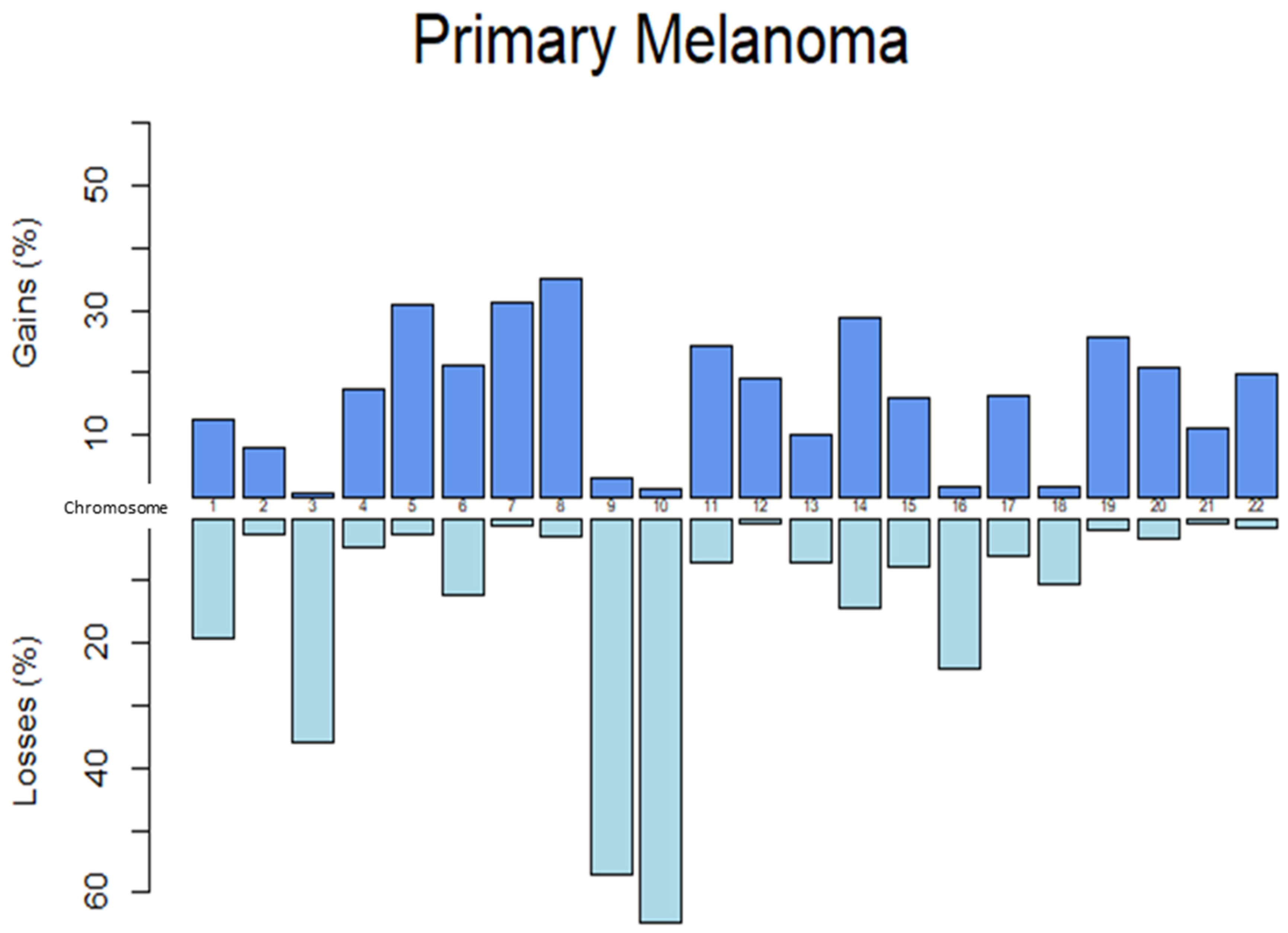
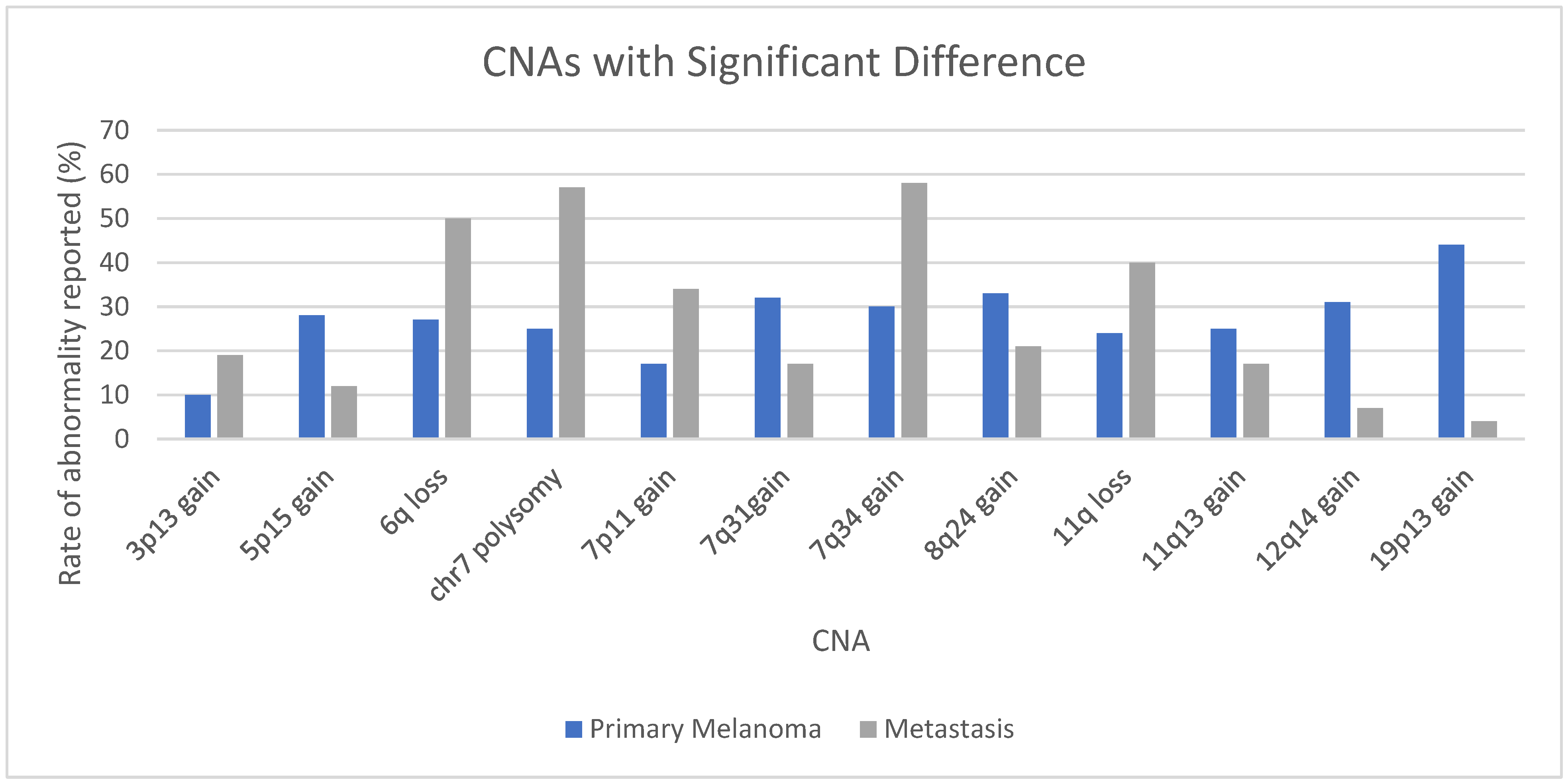
| Region | Rate of Gain (%) | Possible Genes Affected |
|---|---|---|
| 1p12 | 12 | NOTCH2 ***, ADAM30 *** |
| 1p13 | 9 | NRAS * |
| 1q | 26 | |
| 1q21 | 16 | PDE4DIP ***, BCL9 *, S100A9 ***, S100A10 ***, S100A11 ***, S100A12 *** |
| 1q23 | 28 | NTRK1 *, KIRREL *** |
| 1q32 | 41 | MDM4 * |
| 2q31 | 14 | PDE11A *** |
| 3p13 | 10 | MITF * |
| 4p | 10 | |
| 4q12 | 17 | KIT *, KDR *, PDGFRA * |
| 5p | 14 | |
| 5p15 | 32 | TERT * |
| 5q | 10 | |
| 6p | 30 | |
| 6p25 | 58 | RREB1 * |
| 6p21 | 25 | CCND3 * |
| 6q14 | 34 | PHIP *** |
| 7p | 23 | |
| 7p11 | 17 | EGFR * |
| 7q | 27 | |
| 7q31 | 26 | MET * |
| 7q34 | 27 | BRAF * |
| 8p | 6 | |
| 8q | 50 | |
| 8q24 | 39 | MYC * |
| 11p15 | 15 | HRAS * |
| 11q | 8 | |
| 11q13 | 27 | CCND1 * |
| 11q14 | 11 | GAB2 * |
| 12p12 | 8 | KRAS *, PIK3C2G *** |
| 12q14 | 21 | CDK4 * |
| 12q15 | 11 | HDM2/MDM2 * |
| 13q14 | 10 | RB1 ** |
| 14q32 | 37 | AKT1 * |
| 15q | 14 | |
| 17p13 | 18 | TP53 ** |
| 17q | 18 | |
| 17q11 | 15 | NF1 ** |
| 17q24 | 32 | BPTF ***, PRKCA *, PRKAR1A ** |
| 19p13 | 37 | MAP2K2 * |
| 20p11 | 11 | |
| 20q | 23 | |
| 20q13 | 22 | MYBL2 *, ZNF217 *, CYP24 ***, STK6 *, P-REX1 *, SS18L1 ***, GNAS *, SNAI1 *, SNAI2 * |
| 21q | 14 | |
| 22q13 | 21 | MKL1 ***, EP300 *** |
| Region | Rate of Loss (%) | Possible Genes Affected |
|---|---|---|
| 1p | 23 | |
| 1p36 | 32 | PRDM16 ***, ARID1A ** |
| 3p21 a | 15 | BAP1 ** |
| 3q | 14 | |
| 4q | 10 | |
| 5q | 22 | |
| 6q | 14 | |
| 6q23 | 29 | MYB *** |
| 6q25 b | 44 | ARID1B ** |
| 8p | 9 | |
| 9p | 32 | |
| 9p21 | 38 | CDKN2A ** |
| 9p24 | 10 | CD274 ***, JAK2 ***, PTPRD ** |
| 9q | 29 | |
| 9q12 | 13 | |
| 10p | 19 | |
| 10p15 | 14 | PRKCQ ***, NET1 ***, KLF6 **, IL15RA ***, CALML5 ***, LARP4B *** |
| 10q | 34 | |
| 10q23 | 25 | PTEN ** |
| 11p11 | 23 | CD82 ** |
| 11q | 18 | |
| 11q22 | 9 | YAP1 *** |
| 11q24 | 26 | ETS1 ***, CHEK1 *** |
| 13q14 | 8 | RB1 ** |
| 16p | 14 | |
| 16q | 25 | |
| 16q23 | 13 | BANP **, CBFA2T3 **, FANCA **, CDK10 *** |
| 17p | 21 | |
| 17p13 | 12 | TP53 ** |
| 18q | 9 | |
| 20p11 | 18 | |
| 20q11 | 20 | E2F1 *** |
| Melanoma Subtype | Rate of FISH Abnormality Detected (%) | Lower 95% Confidence Limit | Upper 95% Confidence Limit | Number of Cases |
|---|---|---|---|---|
| General cutaneous | 82 | 80 | 84 | 1682 |
| Acral | 88 | 81 | 92 | 153 |
| Blue nevus like | 94 | 68 | 100 | 16 |
| Mucosal | 100 | 86 | 100 | 30 |
| Nevoid | 93 | 85 | 98 | 75 |
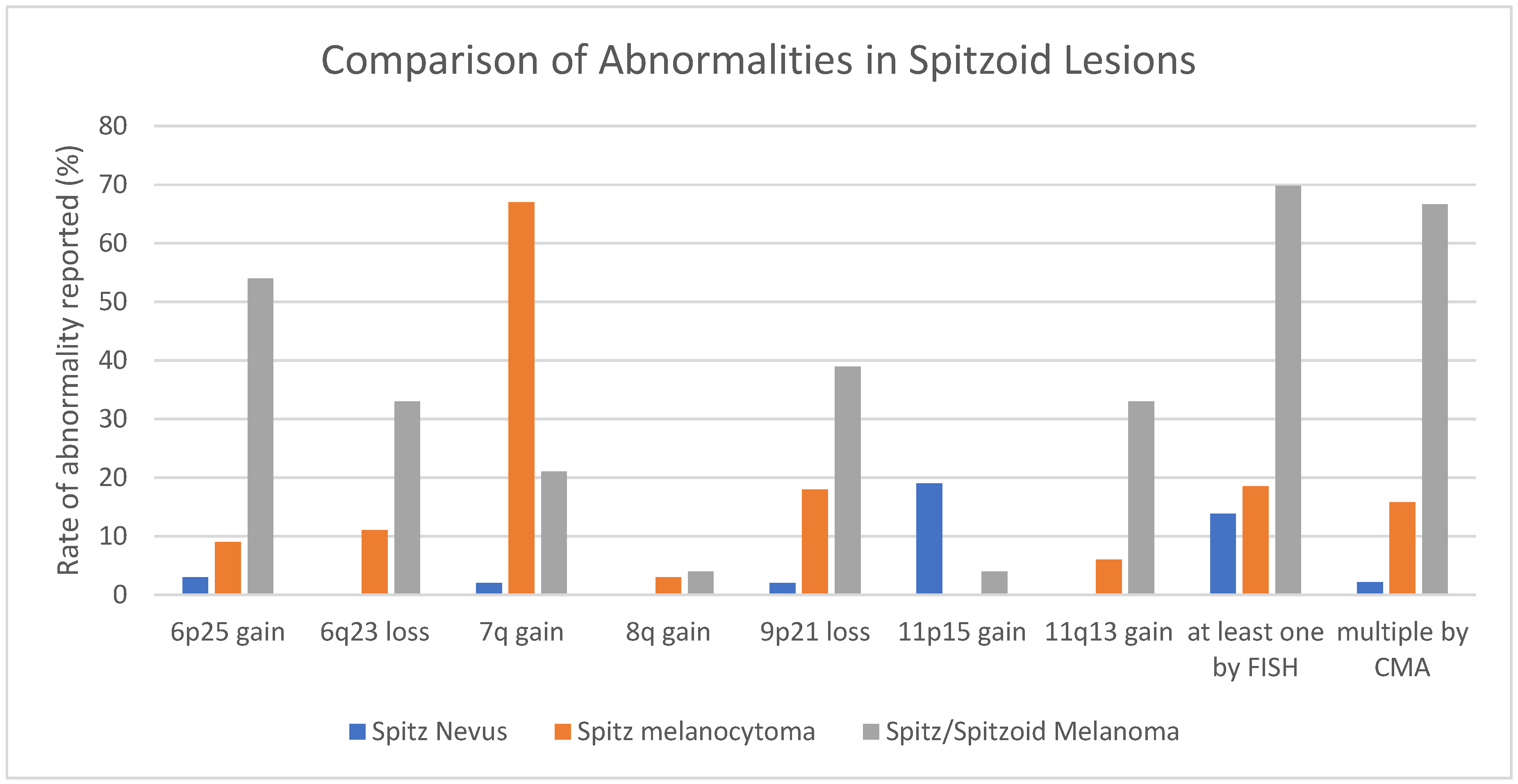
| Spitzoid/Spitz | 70 | 62 | 77 | 169 |
| Melanoma Subtype | Rate of Gain of 6p25 | Rate of Loss of 6q23 | Rate of Gain of 8q24 | Rate of Loss of 9p21 | Rate of Gain of 11q13 |
|---|---|---|---|---|---|
| General cutaneous | 58 (644) | 38 (515) | 33 (567) | 52 (880) | 25 (1871) |
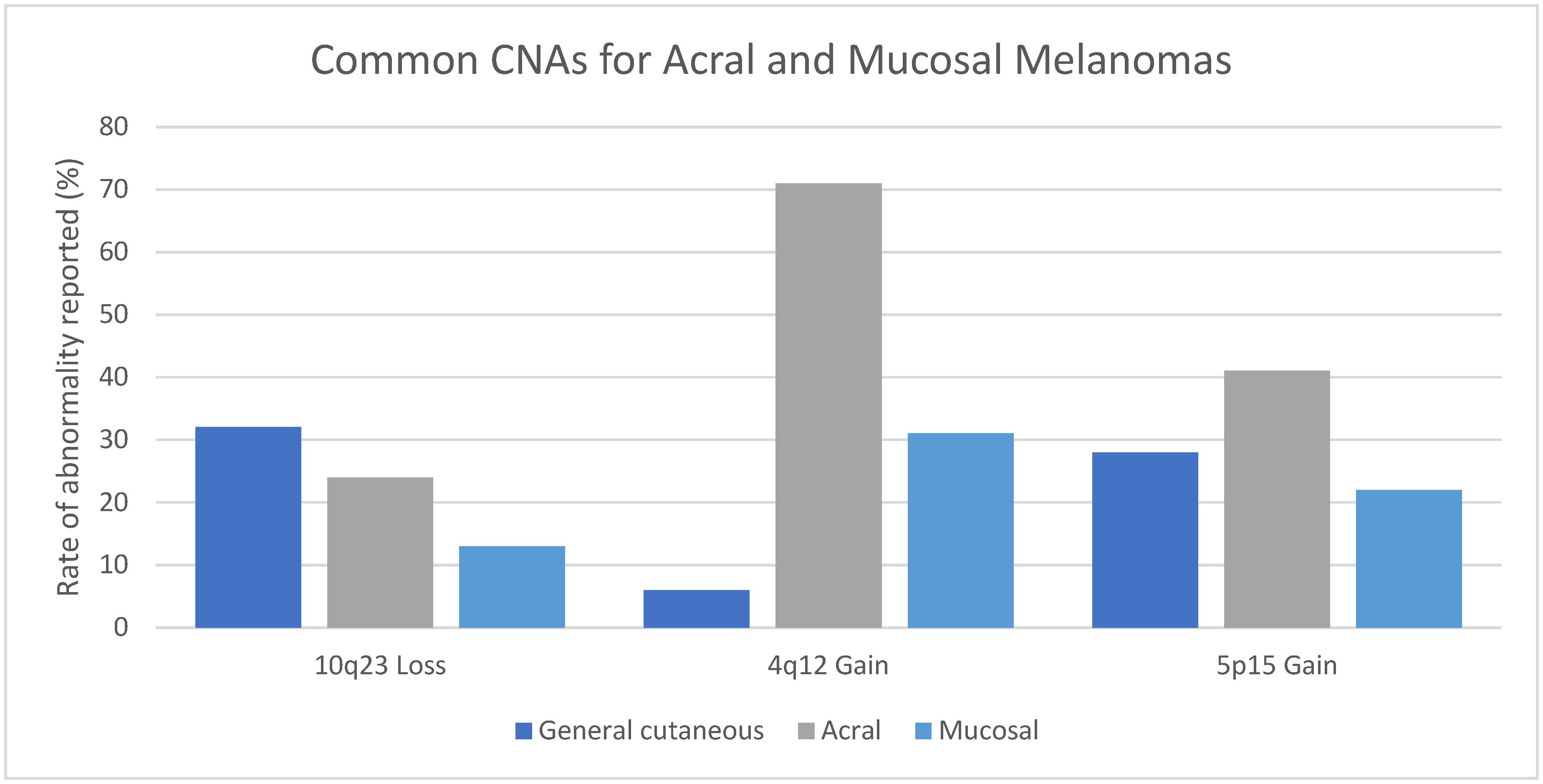
| Acral | 72 (149) | 42 (171) | 47 (79) | 28 (222) | 39 (515) |
| Blue nevus like | 83 (23) | 61 (23) | - | - | 50 (18) |
| Desmoplastic | 44 (16) | 33 (3) | - | - | 31 (16) |
| Mucosal | 97 (33) | 80 (20) | 75 (24) | 39 (233) | 17 (260) |
| Nevoid | 66 (41) | 15 (41) | 31 (13) | 69 (13) | 24 (41) |
| Spitzoid/Spitz | 54 (99) | 33 (141) | - | 39 (134) | 33 (146) |
| Uveal | - | 33 (40) | 58 (249) | - | 0 (83) |
| Melanoma Subtype | Percentage of Cases with >3 CNAs by CMA (%) | Lower 95% Confidence Limit | Number of Cases |
|---|---|---|---|
| Overall | 94 | 769 | |
| General cutaneous | 94 | 92 | 579 |
| Acral | 100 | 96 | 83 |
| Blue nevus like | 80 | 64 | 30 |
| Desmoplastic | 86 | 61 | 14 |
| Mucosal | 95 | 76 | 19 |
| Nevoid | 85 | 58 | 13 |
| Spitzoid/Spitz | 67 | 16 | 3 |
| Uveal | 100 | 88 | 28 |
Disclaimer/Publisher’s Note: The statements, opinions and data contained in all publications are solely those of the individual author(s) and contributor(s) and not of MDPI and/or the editor(s). MDPI and/or the editor(s) disclaim responsibility for any injury to people or property resulting from any ideas, methods, instructions or products referred to in the content. |
© 2026 by the authors. Licensee MDPI, Basel, Switzerland. This article is an open access article distributed under the terms and conditions of the Creative Commons Attribution (CC BY) license.
Share and Cite
Reyes Barron, C.; Geiersbach, K.B.; Alomari, A.K.; Deak, K.L.; Golem, S.; Williams, E.S.; Aypar, U.; Zou, Y.S.; Wei, L.; Chaubey, A.; et al. Clinical Utility of Copy Number Abnormality Analysis in the Evaluation of Melanocytic Lesions for Diagnosis and Prognosis: An Evidence-Based Review from the Cancer Genomics Consortium Working Group for Melanocytic Lesions. Genes 2026, 17, 331. https://doi.org/10.3390/genes17030331
Reyes Barron C, Geiersbach KB, Alomari AK, Deak KL, Golem S, Williams ES, Aypar U, Zou YS, Wei L, Chaubey A, et al. Clinical Utility of Copy Number Abnormality Analysis in the Evaluation of Melanocytic Lesions for Diagnosis and Prognosis: An Evidence-Based Review from the Cancer Genomics Consortium Working Group for Melanocytic Lesions. Genes. 2026; 17(3):331. https://doi.org/10.3390/genes17030331
Chicago/Turabian StyleReyes Barron, Cynthia, Katherine B. Geiersbach, Ahmed K. Alomari, Kristen L. Deak, Shivani Golem, Eli S. Williams, Umut Aypar, Ying S. Zou, Lei Wei, Alka Chaubey, and et al. 2026. "Clinical Utility of Copy Number Abnormality Analysis in the Evaluation of Melanocytic Lesions for Diagnosis and Prognosis: An Evidence-Based Review from the Cancer Genomics Consortium Working Group for Melanocytic Lesions" Genes 17, no. 3: 331. https://doi.org/10.3390/genes17030331
APA StyleReyes Barron, C., Geiersbach, K. B., Alomari, A. K., Deak, K. L., Golem, S., Williams, E. S., Aypar, U., Zou, Y. S., Wei, L., Chaubey, A., Sahajpal, N., Kolhe, R., Love, T. M., Prokop, L., & Iqbal, M. A. (2026). Clinical Utility of Copy Number Abnormality Analysis in the Evaluation of Melanocytic Lesions for Diagnosis and Prognosis: An Evidence-Based Review from the Cancer Genomics Consortium Working Group for Melanocytic Lesions. Genes, 17(3), 331. https://doi.org/10.3390/genes17030331