Conversation with Future Clinical Cytogeneticists: The New Frontiers


Abstract
1. Introduction
2. Why Do We Need Such Discussions?
3. Cytogenetic Discoveries Have Been Widely Misunderstood and Insufficiently Appreciated
- The cloning of DNA sequences and the cloning of karyotypes are fundamentally different processes, suggesting that distinct forms of inheritance are involved.
- Cancer evolution follows a two-phased process: a macro-evolutionary phase, driven by karyotype reorganization and characterized by a rapid and discontinuous process coupled with massive cell death; and a micro-evolutionary phase, driven by gene and epigenetic alterations that promote population growth and characterized by a gradual process coupled with stepwise competition.
- The phase transition is co-mapped with the highest level of genomic heterogeneity, among which genome chaos represents an extreme form. Environmental crises, such as massive cell death, act as triggers for genome-chaos–mediated phase transitions.
4. Extensive Karyotypic Heterogeneity Is Essential for Each Major Evolutionary Phase Transition in Cancer, Including Transformation, Metastasis, and Drug Resistance
5. Why Karyotype Analysis Is of Ultimate Importance: The Concept of Karyotype Coding
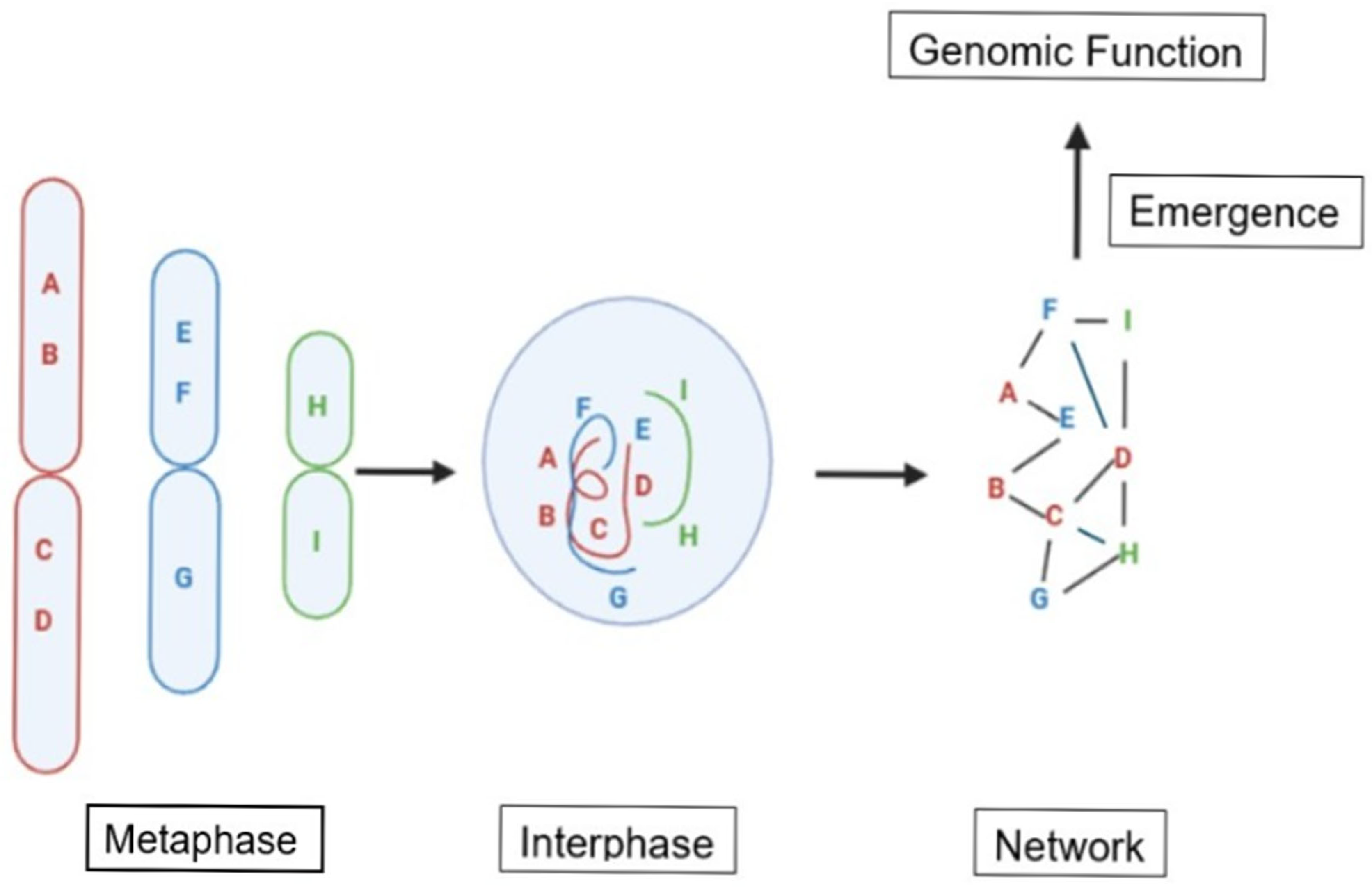
6. Karyotypes as the System-Level Framework That Provides Informational Context for Inheritance and Biological Organization
7. Comprehensive Karyotype Profiling Will Play an Increasingly Important Role in Future Biology and Medicine
8. Advancing Genomics and Systems Medicine Through Clinical Cytogenetics and Cytogenomics
9. Advances and Implications of Cytogenetic and Cytogenomic Concepts and Techniques
- Characterizing previously underreported cytogenetic alterations
- b.
- Standardization of NCCA and CCA scoring
- c.
- Studying phase transitions in evolution and development
- d.
- Investigating somatic genomic mosaicism
- e.
- The importance of profiling outliers for evolutionary innovation
- f.
- Environmental and other complex diseases
- (1)
- Initial damage stage—exposure to diverse and intense stresses during the Gulf War causes widespread cellular damage;
- (2)
- Cellular evolution stage—while many individuals recover from the initial damage, in others the genome becomes destabilized, triggering ongoing cellular and genomic reorganization;
- (3)
- Illness stage—the altered genome affects multiple cellular systems, resulting in diverse and persistent clinical manifestations [107].
- g.
- Monitoring genome manipulation
- h.
- Integrative combinatorial platforms

| A. Principles for designing and performing cytogenetic analyses | The limitations of molecular profiling in general, and NGS in particular, also exist at the conceptual level. The following categories represent different approaches and rationales for using cytogenetic platforms. | |
| Gene-centric units vs. karyotype-defined system inheritance | [4,35] | |
| Technical noise vs. fuzzy inheritance | ||
| End products vs. dynamic evolutionary process (aging/disease) | ||
| Average profiling vs. average + outliers | ||
| Physiological constraints versus pathological uncertainty | ||
| Fixed pattern vs. pattern + stochasticity | ||
| Classic aberrations vs. classic aberrations + novel types | ||
| Microevolutionary constraints vs. macroevolutionary dynamics | ||
| Precise biological processes vs. chaotic processes under stress | ||
| Normal cell biology vs. new modes of information creation | ||
| Specific genetic aberrations vs. overall system-level instability | ||
| Diagnosis vs. differential diagnosis, plus monitoring and predicting treatment response, including genome manipulation | ||
| B. Examples of current methods | Some of these methods are used primarily in research laboratories and have not yet been adopted in clinical laboratories | |
| NGS | [117] | |
| Single-nucleotide polymorphism array and array comparative genomic hybridization | [38] | |
| Profiling somatic genomic mosaicism | [90] | |
| FISH on complex small supernumerary marker chromosomes | [118] | |
| Multitarget FISH diagnostic applications | [119,120,121,122] | |
| SKY and M-FISH | [123,124] | |
| High-resolution fiber–FISH | [114,115] | |
| Halo–FISH profiling chromatin loops | [87] | |
| DNA–protein co-detection in situ | [88] | |
| SKY–protein co-detection in meiosis | [87,89] | |
| Profiling Chromosome Topological 3D Structure | [125] | |
| Profiling chromosome territories and loop dynamics | [87,125,126,127,128] | |
| Studying telomere architecture | [129,130] | |
| Refining chaotic genomes, including massive translocations | [4,50,52,55,57,58,75,77,78,79,80,101,131] | |
| chromothripsis, chromoplexy, chromoanagenesis | ||
| sticking chromosomes, defective mitotic figures, giant nuclei, micronuclei clusters, nuclear eruption | ||
| chromosome fragmentation, and other drastic chromosomal/nuclear alterations | ||
| Optical genome mapping | [116] | |
| Multiplexed error–robust FISH or MERFISH | [132] | |
| High-throughput DNA FISH (hiFISH) | [133] | |
| Advanced platforms beyond mutation and expression profiles | [134] | |
| Tools for converting DNA data into cytogenetic views | [134,135,136,137] | |
| Web resources for cytogeneticists | [138] | |
| C. Validation, prioritization, and establishment of combinatorial platforms | The various technical platforms need to be systematically compared and validated against one another. At present, different platforms are being used independently by different researchers. To achieve these goals, the following relationships need to be systematically examined using the same model system. Such comparisons can provide a scientific rationale for prioritizing methods according to the questions being addressed, rather than continuing to use a given platform simply because of existing expertise with that method. | |
| The independent, additive, synergy, or conflict relationship | [4,10] | |
| among different platforms. | ||
| The dynamic relationships among different stages of evolution often | ||
| involve opposing effects, particularly between | ||
| macroevolutionary innovation and microevolutionary constraints. | ||
| The different responses under different levels of stress | ||
| Identify the disease condition and the primary level of inheritance involved. For example, in cancer diagnosis, because both macro- and microevolutionary processes are involved, genome-level alterations should be prioritized. In other words, cytogenetic methods are fundamentally important. | ||
| D. Future platforms | One of the key tasks for future cytogenetics is to establish an information-management–based evolutionary framework at the system level. Such a framework would enable evaluation of the strengths and limitations of different genetic platforms, with appropriate prioritization of diseases according to disease characteristics, the stage of somatic evolution, and the scale of biological organization involved (from genes to genomes, cells, tissues, individuals, and populations). Different clinical scenarios, therefore, require different combinatorial analytical strategies. | [4,9,10] |
| Within this framework, cytogenetics provides an essential informational context for interpreting gene mutations and copy number variations, as it defines the meaning of lower-level variation and genomic dynamics. These lower-level dynamics depend on system-level stability, the degree of environmental stress, and clinical priorities. Currently, genetic analysis is largely centered on individual gene function. In the future, however, analytical emphasis should shift toward the genomic system as a whole, with overall patient benefit as the primary goal, within which gene-level data are integrated and interpreted. | ||
| Establishment of data-conversion platforms | [4,10,50,138] | |
| Converting DNA-level datasets into karyotype-level data | ||
| Interpreting identical DNA datasets by karyotype states | ||
| Defining prioritization rules when DNA-level information conflicts with karyotype-level organization | ||
| Providing a platform for simplifying and integrating multi-level genomic profiling | ||
| Validation and application of karyotype coding | ||
| Validating the concept of karyotype coding by experiments | ||
| Integrating key molecular profiles into karyotype-based | ||
| Analyses like transposable elements and epigenetics | ||
| Development of combinatorial analytical platforms | ||
| Establishing combinatorial platforms rather than a single unified model | ||
| Employing context-dependent sets of sub-models tailored to disease type, evolutionary stage, and system scale | ||
| Automation of cytogenetic platforms | ||
| Currently, both the procedures and analyses are less automated than NGS and need improvement (e.g., OGM) | ||
| AI-assisted cytogenetic platforms | ||
| Integrates cytogenetic and molecular data across scales | ||
| Reexamine the relationship between NCCAs and CCAs across a large sample size | ||
| Applies context-specific combinatorial frameworks to guide platform selection and data interpretation |
- i.
- Modeling evolutionary dynamics and addressing fundamental biological questions
10. Conclusions
Author Contributions
Funding
Institutional Review Board Statement
Informed Consent Statement
Data Availability Statement
Acknowledgments
Conflicts of Interest
References
- Collins, F.S. Shattuck lecture—Medical and societal consequences of the human genome project. N. Engl. J. Med. 1999, 341, 28–37. [Google Scholar] [CrossRef] [PubMed]
- Collins, F.S.; Barker, A.D. Mapping the cancer genome. Pinpointing the genes involved in cancer will help chart a new course across the complex landscape of human malignancies. Sci. Am. 2007, 296, 50–57. [Google Scholar] [CrossRef] [PubMed]
- Collins, F.S.; Varmus, H. A new initiative on precision medicine. N. Engl. J. Med. 2015, 372, 793–795. [Google Scholar] [CrossRef] [PubMed]
- Heng, H.H. Genome Chaos: Rethinking Genetics, Evolution, and Molecular Medicine, 2nd ed.; Academic Press: Cambridge, MA, USA, 2025. [Google Scholar]
- Joyner, M.J.; Paneth, N.; Ioannidis, J.P. What happens when underperforming big ideas in research become entrenched? J. Am. Med. Assoc. 2016, 316, 1355–1356. [Google Scholar] [CrossRef]
- Chakravarti, A. Genomics is not enough. Science 2011, 334, 15. [Google Scholar] [CrossRef]
- The human genome at ten. Nature 2010, 464, 649–650. [CrossRef]
- Baverstock, K. The gene: An appraisal. Prog. Biophys. Mol. Biol. 2024, 186, e73–e88. [Google Scholar] [CrossRef]
- Heng, E.; Thanedar, S.; Heng, H.H. Challenges and opportunities for clinical cytogenetics in the 21st century. Genes 2023, 14, 493. [Google Scholar] [CrossRef]
- Ye, J.C.; Heng, H.H. The new era of cancer cytogenetics and cytogenomics. Methods Mol. Biol. 2024, 2825, 3–37. [Google Scholar] [CrossRef]
- Ball, P. How Life Works: A User’s Guide to the New Biology; University of Chicago Press: Chicago, IL, USA, 2023. [Google Scholar]
- Mattick, J.S.; Amaral, P. RNA, the Epicenter of Genetic Information, 1st ed.; CRC Press: Boca Raton, FL, USA, 2022. [Google Scholar] [CrossRef]
- Feinberg, A.P. The key role of epigenetics in human disease prevention and mitigation. N. Engl. J. Med. 2018, 378, 1323–1334. [Google Scholar] [CrossRef]
- Feinberg, A.P.; Ohlsson, R.; Henikoff, S. The epigenetic progenitor origin of human cancer. Nat. Rev. Genet. 2006, 7, 21–33. [Google Scholar] [CrossRef] [PubMed]
- Noble, D. Dance to the Tune of Life: Biological Relativity; Cambridge University Press: Cambridge, UK, 2016. [Google Scholar]
- Heppner, G.H. Tumor heterogeneity. Cancer Res. 1984, 44, 2259–2265. [Google Scholar] [PubMed]
- Heppner, G.H.; Miller, F.R. The cellular basis of tumor progression. Int. Rev. Cytol. 1998, 177, 1–56. [Google Scholar] [CrossRef] [PubMed]
- Rubin, H. Early origin and pervasiveness of cellular heterogeneity in some malignant transformations. Proc. Natl. Acad. Sci. USA 1984, 81, 5121–5125. [Google Scholar] [CrossRef]
- Elsasser, W.M. Outline of a theory of cellular heterogeneity. Proc. Natl. Acad. Sci. USA 1984, 81, 5126–5129. [Google Scholar] [CrossRef]
- Eichler, E.E.; Flint, J.; Gibson, G.; Kong, A.; Leal, S.M.; Moore, J.H.; Nadeau, J.H. Missing heritability and strategies for finding the underlying causes of complex disease. Nat. Rev. Genet. 2010, 11, 446–450. [Google Scholar] [CrossRef]
- Heng, H.H. Missing heritability and stochastic genome alterations. Nat. Rev. Genet. 2010, 11, 813. [Google Scholar] [CrossRef]
- Bloomfield, M.; Duesberg, P. Inherent variability of cancer-specific aneuploidy generates metastases. Mol. Cytogenet. 2016, 9, 90. [Google Scholar] [CrossRef]
- Duesberg, P.; Rausch, C.; Rasnick, D.; Hehlmann, R. Genetic instability of cancer cells is proportional to their degree of aneuploidy. Proc. Natl. Acad. Sci. USA 1998, 95, 13692–13697. [Google Scholar] [CrossRef]
- Heng, H.H.; Regan, S. A systems biology perspective on molecular cytogenetics. Curr. Bioinform. 2017, 12, 4–10. [Google Scholar] [CrossRef][Green Version]
- Iourov, I.Y.; Vorsanova, S.G.; Yurov, Y.B. Molecular cytogenetics and cytogenomics of brain diseases. Curr. Genom. 2008, 9, 452–465. [Google Scholar] [CrossRef] [PubMed][Green Version]
- Liehr, T. Cytogenetically visible copy number variations (CG-CNVs) in banding and molecular cytogenetics of human; about heteromorphisms and euchromatic variants. Mol. Cytogenet. 2016, 9, 5. [Google Scholar] [CrossRef] [PubMed]
- Liehr, T. “Classical cytogenetics” is not equal to “banding cytogenetics”. Mol. Cytogenet. 2017, 10, 3. [Google Scholar] [CrossRef] [PubMed][Green Version]
- Liehr, T. Molecular Cytogenetics in the Era of Chromosomics and Cytogenomic Approaches. Front. Genet. 2021, 12, 720507. [Google Scholar] [CrossRef]
- Ye, C.J.; Stilgenbauer, L.; Moy, A.; Liu, G.; Heng, H.H. What Is Karyotype Coding and Why is genomic topology important for cancer and evolution? Front. Genet. 2019, 10, 1082. [Google Scholar] [CrossRef]
- Ferguson-Smith, M.A. Putting the genetics back into cytogenetics. Am. J. Hum. Genet. 1991, 48, 179–182. [Google Scholar]
- Ferguson-Smith, M.A. Putting medical genetics into practice. Annu. Rev. Genom. Hum. Genet. 2011, 12, 1–23. [Google Scholar] [CrossRef]
- Ferguson-Smith, M.A. History and evolution of cytogenetics. Mol. Cytogenet. 2015, 8, 19. [Google Scholar] [CrossRef]
- Heng, H.H. The genome-centric concept: Resynthesis of evolutionary theory. BioEssays 2009, 31, 512–525. [Google Scholar] [CrossRef]
- Heng, H.H. Debating Cancer: The Paradox in Cancer Research; World Scientific Publishing Company: Singapore, 2015. [Google Scholar]
- Heng, H.H. Genome Chaos: Rethinking Genetics, Evolution, and Molecular Medicine; Academic Press: Cambridge, MA, USA, 2019. [Google Scholar]
- Feuk, L.; Carson, A.R.; Scherer, S.W. Structural variation in the human genome. Nat. Rev. Genet. 2006, 7, 85–97. [Google Scholar] [CrossRef]
- Zarrei, M.; MacDonald, J.R.; Merico, D.; Scherer, S.W. A copy number variation map of the human genome. Nat. Rev. Genet. 2015, 16, 172–183. [Google Scholar] [CrossRef] [PubMed]
- Kang, B.; Xiao, H.; Ackley, T.; Shao, L. Cancer Sample Analysis Utilizing Single-Nucleotide Polymorphism Array and Array Comparative Genomic Hybridization. Methods Mol. Biol. 2024, 2825, 151–171. [Google Scholar] [CrossRef] [PubMed]
- Iourov, I.Y.; Gerasimov, A.P.; Zelenova, M.A.; Ivanova, N.E.; Kurinnaia, O.S.; Zabrodskaya, Y.M.; Demidova, I.A.; Barantsevich, E.R.; Vasin, K.S.; Kolotii, A.D.; et al. Cytogenomic epileptology. Mol. Cytogenet. 2023, 16, 1. [Google Scholar] [CrossRef] [PubMed]
- Paneque, M.; Liehr, T.; Serra Juhé, C.; Moog, U.; Melegh, B.; Carreira, I. The need for recognition of core professional groups in genetics healthcare services in Europe. Eur. J. Hum. Genet. 2022, 30, 639–640. [Google Scholar] [CrossRef]
- Hochstenbach, R.; Liehr, T.; Hastings, R.J. Chromosomes in the genomic age. Preserving cytogenomic competence of diagnostic genome laboratories. Eur. J. Hum. Genet. 2021, 29, 541–552. [Google Scholar] [CrossRef]
- Liehr, T. From Human Cytogenetics to Human Chromosomics. Int. J. Mol. Sci. 2019, 20, 826. [Google Scholar] [CrossRef]
- Mathew, M.T.; Babcock, M.; Hou, Y.C.; Hunter, J.M.; Leung, M.L.; Mei, H.; Schieffer, K.; Akkari, Y. Clinical Cytogenetics: Current Practices and Beyond. J. Appl. Lab. Med. 2024, 9, 61–75. [Google Scholar] [CrossRef]
- Ye, C.J.; Stevens, J.B.; Liu, G.; Bremer, S.W.; Jaiswal, A.S.; Ye, K.J.; Lin, M.F.; Lawrenson, L.; Lancaster, W.D.; Kurkinen, M.; et al. Genome based cell population heterogeneity promotes tumorigenicity: The evolutionary mechanism of cancer. J. Cell. Physiol. 2009, 219, 288–300. [Google Scholar] [CrossRef]
- Rosenblum, L.S.; Holmes, J.; Taghiyev, A.F. The Emergence of Artificial Intelligence-Guided Karyotyping: A Review and Reflection. Genes 2025, 16, 685. [Google Scholar] [CrossRef]
- Iourov, I.Y.; Vorsanova, S.G.; Yurov, Y.B. Systems Cytogenomics: Are We Ready Yet? Curr. Genom. 2021, 22, 75–78. [Google Scholar] [CrossRef]
- Iourov, I.Y. Cytopostgenomics: What is it and how does it work? Curr. Genom. 2019, 20, 77–78. [Google Scholar] [CrossRef]
- Wang, Y.; Liehr, T. The Need for a Concert of Cytogenomic Methods in Chromosomic Research and Diagnostics. Genes 2025, 16, 533. [Google Scholar] [CrossRef] [PubMed]
- Heng, H.H.; Stevens, J.B.; Liu, G.; Bremer, S.W.; Ye, C.J. Imaging genome abnormalities in cancer research. Cell Chromosome 2004, 3, 1. [Google Scholar] [CrossRef] [PubMed]
- Heng, H.H.; Stevens, J.B.; Liu, G.; Bremer, S.W.; Ye, K.J.; Reddy, P.V.; Wu, G.S.; Wang, Y.A.; Tainsky, M.A.; Ye, C.J. Stochastic cancer progression driven by non-clonal chromosome aberrations. J. Cell. Physiol. 2006, 208, 461–472. [Google Scholar] [CrossRef]
- Ye, J.C.; Horne, S.; Zhang, J.Z.; Jackson, L.; Heng, H.H. Therapy induced genome chaos: A novel mechanism of rapid cancer drug resistance. Front. Cell Dev. Biol. 2021, 9, 676344. [Google Scholar] [CrossRef]
- Heng, H.H.; Liu, G.; Stevens, J.B.; Abdallah, B.Y.; Horne, S.D.; Ye, K.J.; Bremer, S.W.; Chowdhury, S.K.; Ye, C.J. Karyotype heterogeneity and unclassified chromosomal abnormalities. Cytogenet. Genome Res. 2013, 139, 144–157. [Google Scholar] [CrossRef]
- Weihua, Z.; Lin, Q.; Ramoth, A.J.; Fan, D.; Fidler, I.J. Formation of solid tumors by a single multinucleated cancer cell. Cancer 2011, 117, 4092–4099. [Google Scholar] [CrossRef]
- Zhang, S.; Mercado-Uribe, I.; Xing, Z.; Sun, B.; Kuang, J.; Liu, J. Generation of cancer stem-like cells through the formation of polyploid giant cancer cells. Oncogene 2014, 33, 116–128. [Google Scholar] [CrossRef]
- Niu, N.; Zhang, J.; Zhang, N.; Mercado-Uribe, I.; Tao, F.; Han, Z.; Pathak, S.; Multani, A.S.; Kuang, J.; Yao, J.; et al. Linking genomic reorganization to tumor initiation via the giant cell cycle. Oncogenesis 2016, 5, e281. [Google Scholar] [CrossRef]
- Liu, J. The dualistic origin of human tumors. Semin. Cancer Biol. 2018, 53, 1–16. [Google Scholar] [CrossRef]
- Niu, N.; Liu, J. Generation of Polyploid Giant Cancer Cells (PGCCs) from Hey Ovarian Cancer Cells and Analysis of Embryonic Properties. Methods Mol. Biol. 2024, 2825, 281–292. [Google Scholar] [CrossRef] [PubMed]
- Walen, K.H. Budded karyoplasts from multinucleated fibroblast cells contain centrosomes and change their morphology to mitotic cells. Cell Biol. Int. 2005, 29, 1057–1065. [Google Scholar] [CrossRef] [PubMed]
- Walen, K.H. Mitosis is not the only distributor of mutated cells: Non-mitotic endopolyploid cells produce reproductive genome-reduced cells. Cell Biol. Int. 2010, 34, 867–872. [Google Scholar] [CrossRef] [PubMed]
- Erenpreisa, J.; Kalejs, M.; Ianzini, F.; Kosmacek, E.; Mackey, M.; Emzinsh, D.; Cragg, M.; Ivanov, A.; Illidge, T. Segregation of genomes in polyploid tumour cells following mitotic catastrophe. Cell Biol. Int. 2005, 29, 1005–1011. [Google Scholar] [CrossRef]
- Erenpreisa, J.; Cragg, M.S. MOS, aneuploidy and the ploidy cycle of cancer cells. Oncogene 2010, 29, 5447–5451. [Google Scholar] [CrossRef]
- Erenpreisa, J.; Salmina, K.; Anatskaya, O.; Cragg, M.S. Paradoxes of cancer: Survival at the brink. Semin. Cancer Biol. 2022, 81, 119–131. [Google Scholar] [CrossRef]
- Pienta, K.J.; Hammarlund, E.U.; Axelrod, R.; Amend, S.R.; Brown, J.S. Convergent evolution, evolving evolvability, and the origins of lethal cancer. Mol. Cancer Res. 2020, 18, 801–810. [Google Scholar] [CrossRef]
- Liu, J.; Liu, K.; Yan, M.; Xu, J.; Liu, Y.; Zhang, S. Dormant and activated polyploid giant cancer cells: From chemoradiotherapy resistance to cancer progression. Cancer Lett. 2026, 636, 218137. [Google Scholar] [CrossRef]
- Schmidt, M.J.; Naghdloo, A.; Prabakar, R.K.; Kamal, M.; Cadaneanu, R.; Garraway, I.P.; Lewis, M.; Aparicio, A.; Zurita-Saavedra, A.; Corn, P.; et al. Polyploid cancer cells reveal signatures of chemotherapy resistance. Oncogene 2025, 44, 439–449. [Google Scholar] [CrossRef]
- Stevens, J.B.; Abdallah, B.Y.; Liu, G.; Horne, S.D.; Bremer, S.W.; Ye, K.J.; Huang, J.Y.; Kurkinen, M.; Ye, C.J.; Heng, H.H. Heterogeneity of cell death. Cytogenet. Genome Res. 2013, 139, 164–173. [Google Scholar] [CrossRef]
- Mirzayans, R. What Is Apoptosis and Why Is It Inhibited by the Most Important Tumor Suppressor (p53)? Int. J. Mol. Sci. 2025, 26, 10505. [Google Scholar] [CrossRef] [PubMed]
- Mirzayans, R.; Murray, D. Amitotic Cell Division, Malignancy, and Resistance to Anticancer Agents: A Tribute to Drs. Walen and Rajaraman. Cancers 2024, 16, 3106. [Google Scholar] [CrossRef] [PubMed]
- Mirzayans, R.; Murray, D. Intratumor Heterogeneity and Treatment Resistance of Solid Tumors with a Focus on Polyploid/Senescent Giant Cancer Cells (PGCCs). Int. J. Mol. Sci. 2023, 24, 11534. [Google Scholar] [CrossRef] [PubMed]
- King, M. Species Evolution: The Role of Chromosome Change; Cambridge University Press: Cambridge, UK, 1993. [Google Scholar]
- Jones, R.N. Mcclintock’s controlling elements: The full story. Cytogenet. Genome Res. 2005, 109, 90–103. [Google Scholar] [CrossRef]
- McClintock, B. The fusion of broken ends of chromosomes following nuclear fusion. Proc. Natl. Acad. Sci. USA 1942, 28, 458–463. [Google Scholar] [CrossRef]
- Shapiro, J.A. Evolution: A view from the 21st century, fortified. In Why Evolution Works as Well as It Does; Cognition Press: Chicago, IL, USA, 2022. [Google Scholar]
- McClintock, B. The significance of responses of the genome to challenge. Science 1984, 226, 792–801. [Google Scholar] [CrossRef]
- Liu, G.; Stevens, J.B.; Horne, S.D.; Abdallah, B.Y.; Ye, K.J.; Bremer, S.W.; Ye, C.J.; Chen, D.J.; Heng, H.H. Genome chaos: Survival strategy during crisis. Cell Cycle 2014, 13, 528–537. [Google Scholar] [CrossRef]
- Ye, C.J.; Regan, S.; Liu, G.; Alemara, S.; Heng, H.H. Understanding aneuploidy in cancer through the lens of system inheritance, fuzzy inheritance and emergence of new genome systems. Mol. Cytogenet. 2018, 11, 31. [Google Scholar] [CrossRef]
- Stephens, P.J.; Greenman, C.D.; Fu, B.; Yang, F.; Bignell, G.R.; Mudie, L.J.; Pleasance, E.D.; Lau, K.W.; Beare, D.; Stebbings, L.A.; et al. Massive genomic rearrangement acquired in a single catastrophic event during cancer development. Cell 2011, 144, 27–40. [Google Scholar] [CrossRef]
- Baca, S.C.; Prandi, D.; Lawrence, M.S.; Mosquera, J.M.; Romanel, A.; Drier, Y.; Park, K.; Kitabayashi, N.; MacDonald, T.Y.; Ghandi, M.; et al. Punctuated evolution of prostate cancer genomes. Cell 2013, 153, 666–677. [Google Scholar] [CrossRef]
- Pellestor, F. Chromoanagenesis: Cataclysms behind complex chromosomal rearrangements. Mol. Cytogenet. 2019, 12, 6. [Google Scholar] [CrossRef] [PubMed]
- Stevens, J.B.; Liu, G.; Bremer, S.W.; Ye, K.J.; Xu, W.; Xu, J.; Sun, Y.; Wu, G.S.; Savasan, S.; Krawetz, S.A.; et al. Mitotic cell death by chromosome fragmentation. Cancer Res. 2007, 67, 7686e7694. [Google Scholar] [CrossRef] [PubMed]
- Weinberg, R.A. Fewer and fewer oncogenes. Cell 1982, 30, 3–4. [Google Scholar] [CrossRef] [PubMed]
- Heng, J.; Heng, H.H. Genome chaos: Creating new genomic information essential for cancer macroevolution. Semin. Cancer Biol. 2022, 81, 160–175. [Google Scholar] [CrossRef]
- Heng, J.; Heng, H.H. Genome chaos, information creation, and cancer emergence: Searching for new frameworks on the 50th anniversary of the “war on cancer”. Genes 2021, 13, 101. [Google Scholar] [CrossRef]
- Heng, H.H. Cancer genome sequencing: The challenges ahead. BioEssays 2007, 29, 783–794. [Google Scholar] [CrossRef]
- Heng, H.H. Elimination of altered karyotypes by sexual reproduction preserves species identity. Genome 2007, 50, 517–524. [Google Scholar] [CrossRef]
- Heng, J.; Heng, H.H. Karyotype as code of codes: An inheritance platform to shape the pattern and scale of evolution. Biosystems 2023, 233, 105016. [Google Scholar] [CrossRef]
- Heng, H.H.; Chamberlain, J.W.; Shi, X.M.; Spyropoulos, B.; Tsui, L.C.; Moens, P.B. Regulation of meiotic chromatin loop size by chromosomal position. Proc. Natl. Acad. Sci. USA 1996, 93, 2795–2800. [Google Scholar] [CrossRef]
- Heng, H.H.; Krawetz, S.A.; Lu, W.; Bremer, S.; Liu, G.; Ye, C.J. Re-defining the chromatin loop domain. Cytogenet. Cell Genet. 2001, 93, 155–161. [Google Scholar] [CrossRef]
- Heng, H.H.; Goetze, S.; Ye, C.J.; Liu, G.; Stevens, J.B.; Bremer, S.W.; Wykes, S.M.; Bode, J.; Krawetz, S.A. Chromatin loops are selectively anchored using scaffold/matrix-attachment regions. J. Cell Sci. 2004, 117, 999–1008. [Google Scholar] [CrossRef] [PubMed]
- Iourov, I.Y.; Heng, H.H. Editorial: Somatic genomic mosaicism human disease. Front. Genet. 2022, 13, 1045559. [Google Scholar] [CrossRef] [PubMed]
- Noble, D. The Music of Life: Biology Beyond Genes; Oxford University Press: Oxford, UK, 2006. [Google Scholar]
- Shapiro, J.A. What we have learned about evolutionary genome change in the past 7 decades. Biosystems 2022, 215, 104669. [Google Scholar] [CrossRef] [PubMed]
- Shapiro, J.; Noble, D. The value of treating cancer as an evolutionary disease. Prog. Biophys. Mol. Biol. 2021, 165, 1–2. [Google Scholar] [CrossRef]
- Wallace, D.C. Bioenergetic origins of complexity and disease. Cold Spring Harb. Symp. Quant. Biol. 2011, 76, 1–16. [Google Scholar] [CrossRef]
- Wallace, D.C. Bioenergetics in human evolution and disease: Implications for the origins of biological complexity and the missing genetic variation of common diseases. Philos. Trans. R. Soc. London. Ser. B Biol. Sci. 2013, 368, 20120267. [Google Scholar] [CrossRef]
- Kasperski, A.; Kasperska, R. Bioenergetics of life, disease and death phenomena. Theory Biosci. 2018, 137, 155–168. [Google Scholar] [CrossRef]
- Heng, J.; Heng, H.H. Karyotype coding: The creation and maintenance of system information for complexity and biodiversity. Biosystems 2021, 208, 104476. [Google Scholar] [CrossRef]
- Kasperski, A.; Heng, H.H. The spiral model of evolution: Stable life forms of organisms and unstable life forms of cancers. Int. J. Mol. Sci. 2024, 25, 9163. [Google Scholar] [CrossRef]
- Heng, H.H. Why environmental disease research needs a new framework: Disease as a phenotype of evolutionary information management. Environ. Dis. 2025, 10, 92–100. [Google Scholar] [CrossRef]
- Mitelman, F. Recurrent chromosome aberrations in cancer. Mutat. Res. 2000, 462, 247–253. [Google Scholar] [CrossRef] [PubMed]
- Heng, E.; Thanedar, S.; Heng, H.H. The importance of monitoring non-clonal chromosome aberrations (NCCAs) in cancer research. Methods Mol. Biol. 2024, 2825, 79–111. [Google Scholar] [CrossRef] [PubMed]
- Ramos, S.; Frias, S. Characterizing Chemotherapy/Radiotherapy-Induced Genome Chaos in Hodgkin’s Lymphoma Patients Using M-FISH. Methods Mol. Biol. 2024, 2825, 247–262. [Google Scholar] [CrossRef] [PubMed]
- Sánchez, S.; García-de-Teresa, B.; Mejía-Barrera, M.A.; Reyes-Jiménez, P.V.; Paz-Martínez, A.; Martínez, M.A.; Fiesco-Roa, M.Ó.; Monsiváis-Orozco, A.; Molina, B.; Torres, L.; et al. High Burden of Non-Clonal Chromosome Aberrations Before Onset of Detectable Neoplasia in Fanconi Anemia Bone Marrow. Cancers 2025, 17, 1805. [Google Scholar] [CrossRef]
- Currie, C.E.; Ford, E.; Whyte, L.B.; Taylor, D.M.; Mihalas, B.P.; Erent, M.; Marston, A.L.; Hartshorne, G.M.; McAinsh, A.D. The first mitotic division of human embryos is highly error prone. Nat. Commun. 2022, 13, 6755. [Google Scholar] [CrossRef]
- Abdelbaki, A.; McCarthy, A.; Karsa, A.; Muresan, L.; Elder, K.; Papathanasiou, A.; Snell, P.; Christie, L.; Wilding, M.; Steventon, B.J.; et al. Live imaging of late-stage preimplantation human embryos reveals de novo mitotic errors. Nat. Biotechnol. 2025, 1–11. [Google Scholar] [CrossRef]
- Abdallah, B.Y.; Horne, S.D.; Stevens, J.B.; Liu, G.; Ying, A.Y.; Vanderhyden, B.; A Krawetz, S.; Gorelick, R.; Heng, H.H. Single cell heterogeneity: Why unstable genomes are incompatible with average profiles. Cell Cycle 2013, 12, 3640–3649. [Google Scholar] [CrossRef]
- Liu, G.; Ye, C.J.; Chowdhury, S.K.; Abdallah, B.Y.; Horne, S.D.; Nichols, D.; Heng, H.H. Detecting chromosome condensation defects in gulf war illness patients. Curr. Genom. 2018, 19, 200–206. [Google Scholar] [CrossRef]
- Boroviak, K.; Fu, B.; Yang, F.; Doe, B.; Bradley, A. Revealing hidden complexities of genomic rearrangements generated with Cas9. Sci. Rep. 2017, 7, 12867, Correction in Sci. Rep. 2018, 8, 5765. https://doi.org/10.1038/s41598-018-23232-6. [Google Scholar] [CrossRef]
- Zhang, X.-H.; Tee, L.Y.; Wang, X.-G.; Huang, Q.-S.; Yang, S.-H. Off-target effects in CRISPR/Cas9-mediated genome engineering. Mol. Ther. Nucleic Acids 2015, 4, e264. [Google Scholar] [CrossRef]
- Wienert, B.; Wyman, S.K.; Richardson, C.D.; Yeh, C.D.; Akcakaya, P.; Porritt, M.J.; Morlock, M.; Vu, J.T.; Kazane, K.R.; Watry, H.L.; et al. Unbiased detection of CRISPR off- targets in vivo using DISCOVER-Seq. Science 2019, 364, 286–289. [Google Scholar] [CrossRef] [PubMed]
- Zuo, E.; Sun, Y.; Wei, W.; Yuan, T.; Ying, W.; Sun, H.; Yuan, L.; Steinmetz, L.M.; Li, Y.; Yang, H. GOTI, a method to identify genome-wide off-target effects of genome editing in mouse embryos. Nat. Protoc. 2020, 15, 3009–3029. [Google Scholar] [CrossRef] [PubMed]
- Iourov, I.Y.; Vorsanova, S.G.; Yurov, Y.B. In silico molecular cytogenetics: A bioinformatic approach to prioritization of candidate genes and copy number variations for basic and clinical genome research. Mol. Cytogenet. 2014, 7, 98. [Google Scholar] [CrossRef] [PubMed]
- Zhang, X.; Kschischo, M. Profiling Numerical and Structural Chromosomal Instability in Different Cancer Types. Methods Mol. Biol. 2024, 2825, 345–360. [Google Scholar] [CrossRef]
- Louzada, S.; Yang, F. High-Resolution FISH Analysis Using DNA Fibers Generated by Molecular Combing. Methods Mol. Biol. 2024, 2825, 185–203. [Google Scholar] [CrossRef]
- Heng, H.H.; Squire, J.; Tsui, L.C. High-resolution mapping of mammalian genes by in situ hybridization to free chromatin. Proc. Natl. Acad. Sci. USA 1992, 89, 9509–9513. [Google Scholar] [CrossRef]
- Ye, J.C.; Tang, G. Optical Genome Mapping: A Machine-Based Platform in Cytogenomics. Methods Mol. Biol. 2024, 2825, 113–124. [Google Scholar] [CrossRef]
- Rehm, H.L.; Bale, S.J.; Bayrak-Toydemir, P.; Berg, J.S.; Brown, K.K.; Deignan, J.L.; Friez, M.J.; Funke, B.H.; Hegde, M.R.; Lyon, E. ACMG clinical laboratory standards for next-generation sequencing. Genet. Med. Off. J. Am. Coll. Med. Genet. 2013, 15, 733–747. [Google Scholar] [CrossRef]
- Liehr, T.; Cirkovic, S.; Lalic, T.; Guc-Scekic, M.; de Almeida, C.; Weimer, J.; Iourov, I.; Melaragno, M.I.; Guilherme, R.S.; Stefanou, E.G.; et al. Complex small supernumerary marker chromosomes—An update. Mol. Cytogenet. 2013, 6, 46. [Google Scholar] [CrossRef]
- Liehr, T.; Weise, A.; Hamid, A.B.; Fan, X.; Klein, E.; Aust, N.; Othman, M.A.; Mrasek, K.; Kosyakova, N. Multicolor FISH methods in current clinical diagnostics. Expert Rev. Mol. Diagn. 2013, 13, 251–255. [Google Scholar] [CrossRef]
- Amato, M.; Squire, J.A.; Franco, R.; Zito Marino, F. Multitarget Fluorescence In Situ Hybridization Diagnostic Applications in Tumors. Methods Mol. Biol. 2024, 2825, 173–184. [Google Scholar] [CrossRef] [PubMed]
- Gonzales, P.R. Integration of Newer Genomic Technologies into Clinical Cytogenetics Laboratories. Genes 2025, 16, 688. [Google Scholar] [CrossRef] [PubMed]
- Heng, H.H.; Ye, C.J.; Yang, F.; Ebrahim, S.; Liu, G.; Bremer, S.W.; Thomas, C.M.; Ye, J.; Chen, T.J.; Tuck-Muller, C.; et al. Analysis of marker or complex chromosomal rearrangements present in pre- and post-natal karyotypes utilizing a combination of G-banding, spectral karyotyping and fluorescence in situ hybridization. Clin. Genet. 2003, 63, 358–367. [Google Scholar] [CrossRef] [PubMed]
- Schröck, E.; du Manoir, S.; Veldman, T.; Schoell, B.; Wienberg, J.; Ferguson-Smith, M.A.; Ning, Y.; Ledbetter, D.H.; Bar-Am, I.; Soenksen, D.; et al. Multicolor spectral karyotyping of human chromosomes. Science 1996, 273, 494–497. [Google Scholar] [CrossRef]
- Speicher, M.R.; Gwyn Ballard, S.; Ward, D.C. Karyotyping human chromosomes by combinatorial multi-fluor FISH. Nat. Genet. 1996, 12, 368–375. [Google Scholar] [CrossRef]
- Fabian-Morales, E.; Rodríguez, A.; Gudiño, A.; Herrera, L.A.; Frias, S. Profiling Chromosome Topological Features by Super-Resolution 3D Structured Illumination Microscopy. Methods Mol. Biol. 2024, 2825, 213–237. [Google Scholar] [CrossRef]
- Cremer, T.; Cremer, M.; Dietzel, S.; Müller, S.; Solovei, I.; Fakan, S. Chromosome territories–a functional nuclear landscape. Curr. Opin. Cell Biol. 2006, 18, 307–316. [Google Scholar] [CrossRef]
- Eils, R.; Dietzel, S.; Bertin, E.; Schröck, E.; Speicher, M.R.; Ried, T.; Robert-Nicoud, M.; Cremer, C.; Cremer, T. Three-dimensional reconstruction of painted human interphase chromosomes: Active and inactive X chromosome territories have similar volumes but differ in shape and surface structure. J. Cell Biol. 1996, 135, 1427–1440. [Google Scholar] [CrossRef]
- Spielmann, M.; Lupiáñez, D.G.; Mundlos, S. Structural variation in the 3D genome. Nat. Rev. Genet. 2018, 19, 453–467. [Google Scholar] [CrossRef]
- Rangel-Pozzo, A.; Yu, P.L.I.; LaL, S.; Asbaghi, Y.; Sisdelli, L.; Tammur, P.; Tamm, A.; Punab, M.; Klewes, L.; Louis, S.; et al. Telomere Architecture Correlates with Aggressiveness in Multiple Myeloma. Cancers 2021, 13, 1969. [Google Scholar] [CrossRef]
- Lansdorp, P.M.; Verwoerd, N.P.; Van De Rijke, F.M.; Dragowska, V.; Little, M.T.; Dirks, R.W.; Raap, A.K.; Tanke, H.J. Heterogeneity in telomere length of human chromosomes. Hum. Mol. Genet. 1996, 5, 685–691. [Google Scholar] [CrossRef] [PubMed]
- Ye, C.J.; Sharpe, Z.; Heng, H.H. Origins and Consequences of Chromosomal Instability: From Cellular Adaptation to Genome Chaos-Mediated System Survival. Genes 2020, 11, 1162. [Google Scholar] [CrossRef] [PubMed]
- Moffitt, J.R.; Hao, J.; Bambah-Mukku, D.; Lu, T.; Dulac, C.; Zhuang, X. High-performance multiplexed fluorescence in situ hybridization in culture and tissue with matrix imprinting and clearing. Proc. Natl. Acad. Sci. USA 2016, 113, 14456–14461. [Google Scholar] [CrossRef] [PubMed]
- Finn, E.; Misteli, T.; Pegoraro, G. High-Throughput DNA FISH (hiFISH). Methods Mol. Biol. 2022, 2532, 245–274. [Google Scholar] [CrossRef]
- Mirzaei, G. GraphChrom: A novel graph-based framework for cancer classification using chromosomal rearrangement endpoints. Cancers 2022, 14, 3060. [Google Scholar] [CrossRef]
- Jamal-Hanjani, M.; Wilson, G.A.; McGranahan, N.; Birkbak, N.J.; Watkins, T.B.K.; Veeriah, S.; Shafi, S.; Johnson, D.H.; Mitter, R.; Rosenthal, R.; et al. Tracking the Evolution of Non-Small-Cell Lung Cancer. N. Engl. J. Med. 2017, 376, 2109–2121. [Google Scholar] [CrossRef]
- Davoli, T.; Uno, H.; Wooten, E.C.; Elledge, S.J. Tumor aneuploidy correlates with markers of immune evasion and with reduced response to immunotherapy. Science 2017, 355, eaaf8399. [Google Scholar] [CrossRef]
- Zhang, X.; Kschischo, M. Distinct and Common Features of Numerical and Structural Chromosomal Instability across Different Cancer Types. Cancers 2022, 14, 1424. [Google Scholar] [CrossRef]
- Kasperski, A.; Heng, H.H. The Digital World of Cytogenetic and Cytogenomic Web Resources. Methods Mol. Biol. 2024, 2825, 361–391. [Google Scholar] [CrossRef]
- Jamal-Hanjani, M.; A’Hern, R.; Birkbak, N.J.; Gorman, P.; Grönroos, E.; Ngang, S.; Nicola, P.; Rahman, L.; Thanopoulou, E.; Kelly, G.; et al. Extreme chromosomal instability forecasts improved outcome in ER-negative breast cancer: A prospective validation cohort study from the TACT trial. Ann. Oncol. 2015, 26, 1340–1346. [Google Scholar] [CrossRef]
- Reid, B.J. Genomics, Endoscopy, and Control of Gastroesophageal Cancers: A Perspective. Cell. Mol. Gastroenterol. Hepatol. 2017, 3, 359–366. [Google Scholar] [CrossRef]
- Bakhoum, S.F.; Ngo, B.; Laughney, A.M.; Cavallo, J.A.; Murphy, C.J.; Ly, P.; Shah, P.; Sriram, R.K.; Watkins, T.B.K.; Taunk, N.K.; et al. Chromosomal instability drives metastasis through a cytosolic DNA response. Nature 2018, 553, 467–472. [Google Scholar] [CrossRef]
- Anderson, N.D.; de Borja, R.; Young, M.D.; Fuligni, F.; Rosic, A.; Roberts, N.D.; Hajjar, S.; Layeghifard, M.; Novokmet, A.; Kowalski, P.E.; et al. Rearrangement bursts generate canonical gene fusions in bone and soft tissue tumors. Science 2018, 361, eaam8419. [Google Scholar] [CrossRef]

Disclaimer/Publisher’s Note: The statements, opinions and data contained in all publications are solely those of the individual author(s) and contributor(s) and not of MDPI and/or the editor(s). MDPI and/or the editor(s) disclaim responsibility for any injury to people or property resulting from any ideas, methods, instructions or products referred to in the content. |
© 2026 by the authors. Licensee MDPI, Basel, Switzerland. This article is an open access article distributed under the terms and conditions of the Creative Commons Attribution (CC BY) license.
Share and Cite
Ye, J.C.; Chowdhury, R.; Heng, H.H. Conversation with Future Clinical Cytogeneticists: The New Frontiers. Genes 2026, 17, 232. https://doi.org/10.3390/genes17020232
Ye JC, Chowdhury R, Heng HH. Conversation with Future Clinical Cytogeneticists: The New Frontiers. Genes. 2026; 17(2):232. https://doi.org/10.3390/genes17020232
Chicago/Turabian StyleYe, Jing Christine, Rishi Chowdhury, and Henry H. Heng. 2026. "Conversation with Future Clinical Cytogeneticists: The New Frontiers" Genes 17, no. 2: 232. https://doi.org/10.3390/genes17020232
APA StyleYe, J. C., Chowdhury, R., & Heng, H. H. (2026). Conversation with Future Clinical Cytogeneticists: The New Frontiers. Genes, 17(2), 232. https://doi.org/10.3390/genes17020232