ABCC6 Heterozygosity as Genetic Predisposition to Cerebrovascular Disease Across Ages
 , , , , , ,
  and
and
Abstract
1. Introduction
2. Materials and Methods
2.1. Ethical Considerations
2.2. Selection of the Cohort
2.3. Clinical and Neuroradiological Data
2.4. Genetic Studies
2.5. Statistical Analysis
3. Results
3.1. Genetic Analysis
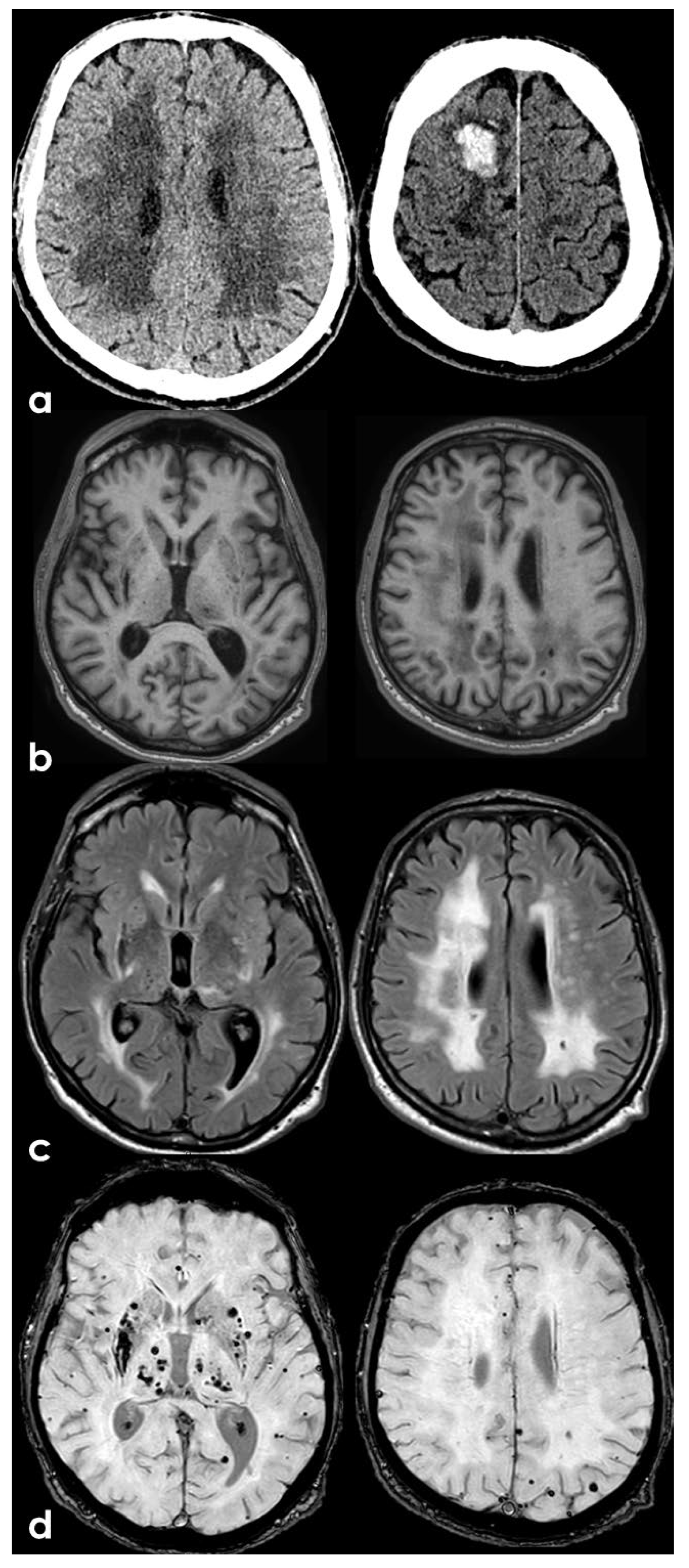
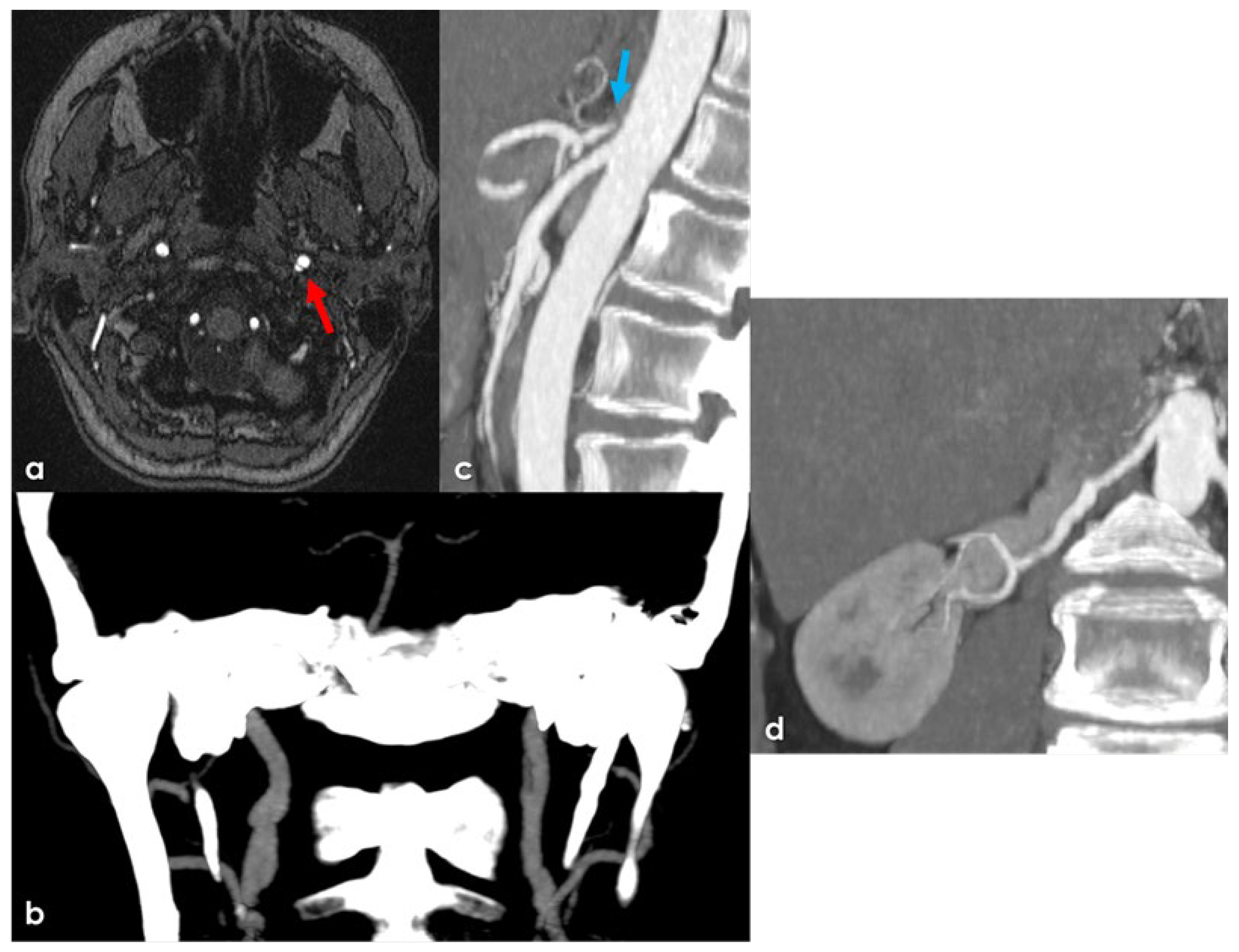
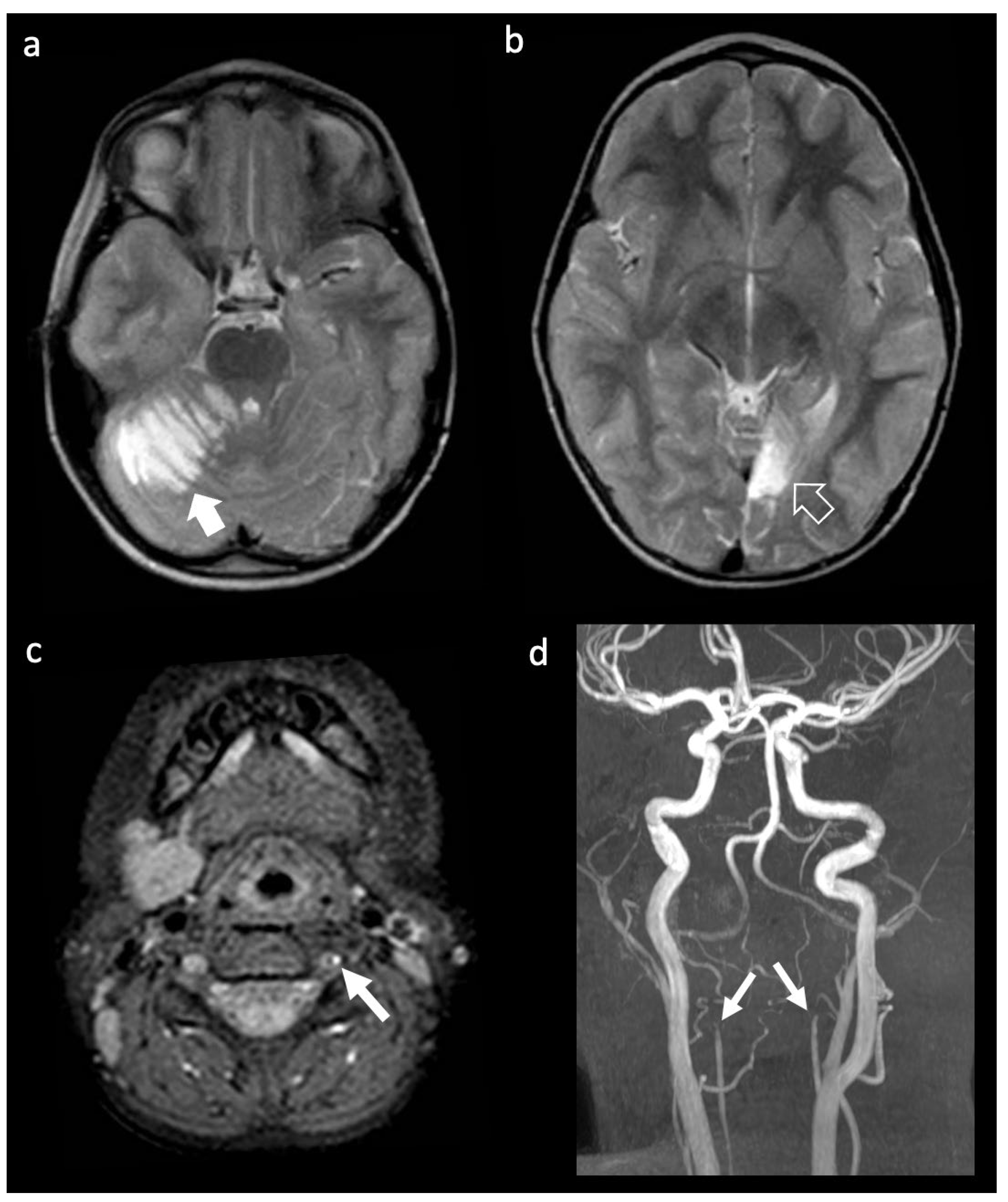
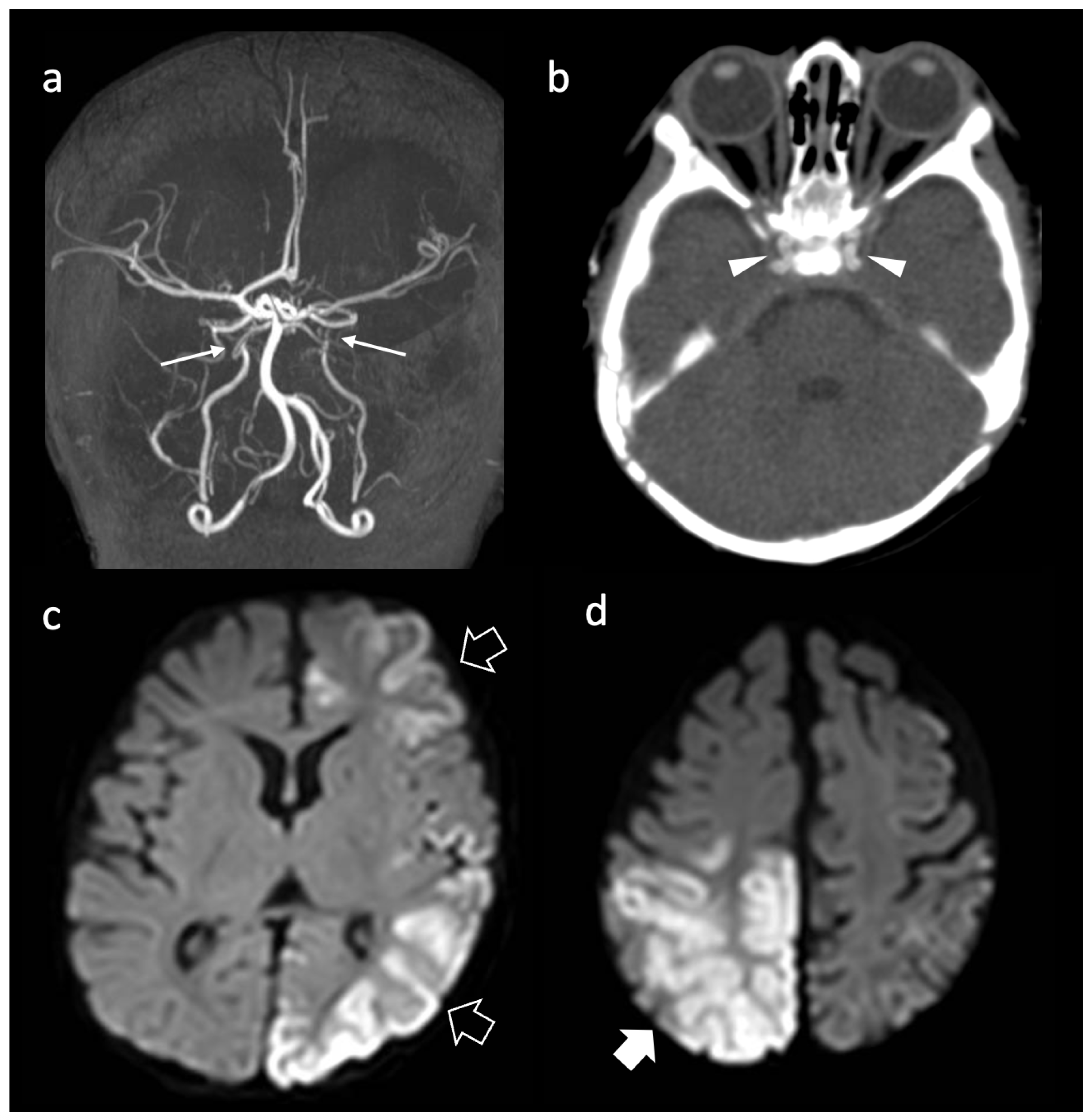
3.2. Clinical and Neuroradiological Assessment
4. Discussion
- Longitudinal studies assessing cerebrovascular health over time in patients with ABCC6 mutations.
- Investigating the broader genetic landscape related to ABCC6 and the interplay with other genetic factors implicated in vascular health [60].
5. Conclusions
Author Contributions
Funding
Institutional Review Board Statement
Informed Consent Statement
Data Availability Statement
Conflicts of Interest
Abbreviations
| CNS | Central Nervous System |
| ICH | Intracerebral Hemorrhage |
| MRI | Magnetic Resonance Imaging |
| CSVD | Cerebral Small Vessel Disease |
References
- Van Gils, M.; Depauw, J.; Coucke, P.J.; Aerts, S.; Verschuere, S.; Nollet, L.; Vanakker, O.M. Inorganic Pyrophosphate Plasma Levels Are Decreased in Pseudoxanthoma Elasticum Patients and Heterozygous Carriers but Do Not Correlate with the Genotype or Phenotype. J. Clin. Med. 2023, 12, 1893. [Google Scholar] [CrossRef] [PubMed]
- Li, Q.; Brodsky, J.L.; Conlin, L.K.; Pawel, B.; Glatz, A.C.; Gafni, R.I.; Schurgers, L.; Uitto, J.; Hakonarson, H.; Deardorff, M.A.; et al. Mutations in the ABCC6 gene as a cause of generalized arterial calcification of infancy: Genotypic overlap with pseudoxanthoma elasticum. J. Investig. Dermatol. 2014, 134, 658–665. [Google Scholar] [CrossRef] [PubMed]
- Germain, D.P. Pseudoxanthoma elasticum. Orphanet J. Rare Dis. 2017, 12, 85. [Google Scholar] [CrossRef] [PubMed]
- Shimada, B.K.; Pomozi, V.; Zoll, J.; Kuo, S.; Martin, L.; Le Saux, O. ABCC6, Pyrophosphate and Ectopic Calcification: Therapeutic Solutions. Int. J. Mol. Sci. 2021, 22, 4555. [Google Scholar] [CrossRef]
- Kauffenstein, G.; Martin, L.; Le Saux, O. The Purinergic Nature of Pseudoxanthoma Elasticum. Biology 2024, 13, 74. [Google Scholar] [CrossRef]
- Chassaing, N.; Martin, L.; Calvas, P.; Le Bert, M.; Hovnanian, A. Pseudoxanthoma elasticum: A clinical, pathophysiological and genetic update including 11 novel ABCC6 mutations. J. Med. Genet. 2005, 42, 881–892. [Google Scholar] [CrossRef]
- Bergen, A.A. Pseudoxanthoma elasticum: The end of the autosomal dominant segregation myth. J. Investig. Dermatol. 2006, 126, 704–705. [Google Scholar] [CrossRef]
- Plomp, A.S.; Bergen, A.A.; Florijn, R.J.; Terry, S.F.; Toonstra, J.; van Dijk, M.R.; de Jong, P.T. Pseudoxanthoma elasticum: Wide phenotypic variation in homozygotes and no signs in heterozygotes for the c.3775delT mutation in ABCC6. Anesth. Analg. 2009, 11, 852–858. [Google Scholar] [CrossRef]
- Ringpfeil, F.; McGuigan, K.; Fuchsel, L.; Kozic, H.; Larralde, M.; Lebwohl, M.; Uitto, J. Pseudoxanthoma elasticum is a recessive disease characterized by compound heterozygosity. J. Investig. Dermatol. 2006, 126, 782–786. [Google Scholar] [CrossRef]
- Gliem, M.; Wieg, I.; Birtel, J.; Müller, P.L.; Faust, I.; Hendig, D.; Holz, F.G.; Finger, R.P.; Issa, P.C. Retinal findings in carriers of monoallelic ABCC6 mutations. Br. J. Ophthalmol. 2020, 104, 1089–1092. [Google Scholar] [CrossRef]
- Roach, E.S.; Islam, M.P. Chapter 15—Pseudoxanthoma elasticum. In Hand-Book of Clinical Neurology; Roach, E.S., Islam, M.P., Eds.; Elsevier: Amsterdam, The Netherlands, 2015; Volume 132, pp. 215–221. [Google Scholar]
- De Vilder, E.Y.; Cardoen, S.; Hosen, M.J.; Le Saux, O.; De Zaeytijd, J.; Leroy, B.P.; De Reuck, J.; Coucke, P.J.; De Paepe, A.; Hemelsoet, D.; et al. Pathogenic variants in the ABCC6 gene are associated with an increased risk for ischemic stroke. Brain Pathol. 2018, 28, 822–831. [Google Scholar] [CrossRef]
- Martin, L.; Maître, F.; Bonicel, P.; Daudon, P.; Verny, C.; Bonneau, D.; Le Saux, O.; Chassaing, N. Heterozygosity for a single mutation in the ABCC6 gene may closely mimic PXE: Consequences of this phenotype overlap for the definition of PXE. Arch. Dermatol. 2008, 144, 301–306. [Google Scholar] [CrossRef]
- Trip, M.D.; Smulders, Y.M.; Wegman, J.J.; Hu, X.; Boer, J.M.; Brink, J.B.T.; Zwinderman, A.H.; Kastelein, J.J.; Feskens, E.J.; Bergen, A.A. Frequent mutation in the ABCC6 gene (R1141X) is associated with a strong increase in the prevalence of coronary artery disease. Circulation 2002, 106, 773–775. [Google Scholar] [CrossRef] [PubMed]
- Vanakker, O.M.; Leroy, B.P.; Coucke, P.; Bercovitch, L.G.; Uitto, J.; Viljoen, D.; Terry, S.F.; Van Acker, P.; Matthys, D.; Loeys, B.; et al. Novel clinico-molecular insights in pseudoxanthoma elasticum provide an efficient molecular screening method and a comprehensive diagnostic flowchart. Hum. Mutat. 2008, 29, 205. [Google Scholar] [CrossRef] [PubMed]
- Campens, L.; Vanakker, O.M.; Trachet, B.; Segers, P.; Leroy, B.P.; De Zaeytijd, J.; Voet, D.; De Paepe, A.; De Backer, T.; De Backer, J. Characterization of cardiovascular involvement in pseudoxanthoma elasticum families. Arter. Thromb. Vasc. Biol. 2013, 33, 2646–2652. [Google Scholar] [CrossRef] [PubMed]
- Köblös, G.; Andrikovics, H.; Prohászka, Z.; Tordai, A.; Váradi, A.; Arányi, T. The R1141X loss-of-function mutation of the ABCC6 gene is a strong genetic risk factor for coronary artery disease. Genet. Test. Mol. Biomark. 2010, 14, 75–78. [Google Scholar] [CrossRef]
- Cho, B.P.H.; Auckland, K.; Gräf, S.; Markus, H.S. Rare Sequence Variation Underlying Suspected Familial Cerebral Small-Vessel Disease. J. Am. Hear. Assoc. 2024, 13, e035771. [Google Scholar] [CrossRef]
- Zedde, M.; Pascarella, R. ABCC6 Involvement in Cerebral Small Vessel Disease: Potential Mechanisms and Associations. Genes 2025, 16, 728. [Google Scholar] [CrossRef]
- Committee on Bioethics; Committee on Genetics; American College of Medical Genetics; Genomics Social; Ethical; Legal Issues Committee; Fallat, M.E.; Katz, A.L.; Mercurio, M.R.; Moon, M.R. Ethical and policy issues in genetic testing and screening of children. Pediatrics 2013, 131, 620–622. [Google Scholar] [CrossRef]
- Matthijs, G.; Souche, E.; Alders, M.; Corveleyn, A.; Eck, S.; Feenstra, I.; Race, V.; Sistermans, E.; Sturm, M.; Weiss, M.; et al. Guidelines for diagnostic next-generation sequencing. Eur. J. Hum. Genet. 2016, 24, 2–5. [Google Scholar] [CrossRef]
- Nagel, M.A. Varicella zoster virus vasculopathy: Clinical features and pathogenesis. J. NeuroVirol. 2014, 20, 157–163. [Google Scholar] [CrossRef]
- Nagel, M.A.; Khmeleva, N.; Choe, A.; Gutierrez, J.; Gilden, D. Varicella zoster virus (VZV) in cerebral arteries of subjects at high risk for VZV reactivation. J. Neurol. Sci. 2014, 339, 32–34. [Google Scholar] [CrossRef]
- Ibarra-Ramírez, M.; Campos-Acevedo, L.D.; de Villarreal, L.E.M. Chromosomal Abnormalities of Interest in Turner Syndrome: An Update. J. Pediatr. Genet. 2023, 12, 263–272. [Google Scholar] [CrossRef]
- A Mallick, A.; Ganesan, V.; Kirkham, F.J.; Fallon, P.; Hedderly, T.; McShane, T.; Parker, A.P.; Wassmer, E.; Wraige, E.; Amin, S.; et al. Childhood arterial ischaemic stroke incidence, presenting features, and risk factors: A prospective population-based study. Lancet Neurol. 2014, 13, 35–43. [Google Scholar] [CrossRef] [PubMed]
- Bernard, T.J.; Manco-Johnson, M.J.; Lo, W.; MacKay, M.T.; Ganesan, V.; Deveber, G.; Goldenberg, N.A.; Armstrong-Wells, J.; Dowling, M.M.; Roach, E.S.; et al. Towards a consensus-based classification of childhood arterial ischemic stroke. Stroke 2012, 43, 371–377. [Google Scholar] [CrossRef] [PubMed]
- Bernard, T.J.; Beslow, L.A.; Manco-Johnson, M.J.; Armstrong-Wells, J.; Boada, R.; Weitzenkamp, D.; Hollatz, A.; Poisson, S.; Amlie-Lefond, C.; Lo, W.; et al. Inter-Rater Reliability of the CASCADE Criteria: Challenges in Classifying Arteriopathies. Stroke 2016, 47, 2443–2449. [Google Scholar] [CrossRef] [PubMed]
- Amarenco, P.; Bogousslavsky, J.; Caplan, L.; Donnan, G.; Wolf, M.; Hennerici, M. The ASCOD phenotyping of ischemic stroke (Updated ASCO Phenotyping). Cerebrovasc. Dis. 2013, 36, 1–5. [Google Scholar] [CrossRef]
- Bond, K.M.; Krings, T.; Lanzino, G.; Brinjikji, W. Intracranial dissections: A pictorial review of pathophysiology, imaging features, and natural history. J. Neuroradiol. 2021, 48, 176–188. [Google Scholar] [CrossRef]
- Debette, S.; Compter, A.; Labeyrie, M.-A.; Uyttenboogaart, M.; Metso, T.M.; Majersik, J.J.; Goeggel-Simonetti, B.; Engelter, S.T.; Pezzini, A.; Bijlenga, P.; et al. Epidemiology, pathophysiology, diagnosis, and management of intracranial artery dissection. Lancet Neurol. 2015, 14, 640–654. [Google Scholar] [CrossRef]
- Duering, M.; Biessels, G.J.; Brodtmann, A.; Chen, C.; Cordonnier, C.; de Leeuw, F.-E.; Debette, S.; Frayne, R.; Jouvent, E.; Rost, N.S.; et al. Neuroimaging standards for research into small vessel disease—Advances since 2013. Lancet Neurol. 2023, 22, 602–618, Erratum in: Lancet Neurol. 2023, 22, e10. https://doi.org/10.1016/S1474-4422(23)00279-X. [Google Scholar] [CrossRef]
- DePristo, M.A.; Banks, E.; Poplin, R.; Garimella, K.V.; Maguire, J.R.; Hartl, C.; Philippakis, A.A.; Del Angel, G.; Rivas, M.A.; Hanna, M.; et al. A framework for variation discovery and genotyping using next-generation DNA sequencing data. Nat. Genet. 2011, 43, 491–498. [Google Scholar] [CrossRef]
- Van der Auwera, G.A.; O’Connor, B.D. Genomics in the Cloud: Using Docker, GATK, and WDL in Terra, 1st ed.; O’Reilly Media: Sebastopol, CA, USA, 2020. [Google Scholar]
- Rentzsch, P.; Witten, D.; Cooper, G.M.; Shendure, J.; Kircher, M. CADD: Predicting the deleteriousness of variants throughout the human genome. Nucleic Acids Res. 2019, 47, D886–D894. [Google Scholar] [CrossRef] [PubMed]
- Adzhubei, I.; Jordan, D.M.; Sunyaev, S.R. Predicting functional effect of human missense mutations using PolyPhen-2. Curr. Protoc. Hum. Genet. 2013, 76, 7–20. [Google Scholar] [CrossRef] [PubMed]
- Ng, P.C.; Henikoff, S. SIFT: Predicting amino acid changes that affect protein function. Nucleic Acids Res. 2003, 31, 3812–3814. [Google Scholar] [CrossRef] [PubMed]
- Kopanos, C.; Tsiolkas, V.; Kouris, A.; Chapple, C.E.; Aguilera, M.A.; Meyer, R.; Massouras, A. VarSome: The human genomic variant search engine. Bioinformatics 2019, 35, 1978–1980. [Google Scholar] [CrossRef]
- Available online: https://franklin.genoox.com/clinical-db/home (accessed on 1 September 2025).
- ClinVar. Available online: https://www.ncbi.nlm.nih.gov/clinvar/ (accessed on 3 March 2020).
- Landrum, M.J.; Lee, J.M.; Benson, M.; Brown, G.; Chao, C.; Chitipiralla, S.; Gu, B.; Hart, J.; Hoffman, D.; Hoover, J.; et al. ClinVar: Public archive of interpretations of clinically relevant variants. Nucleic Acids Res. 2016, 44, D862–D868. [Google Scholar] [CrossRef]
- Richards, S.; Aziz, N.; Bale, S.; Bick, D.; Das, S.; Gastier-Foster, J.; Grody, W.W.; Hegde, M.; Lyon, E.; Spector, E.; et al. Standards and guidelines for the interpretation of sequence variants: A joint consensus recommendation of the American College of Medical Genetics and Genomics and the Association for Molecular Pathology. Genet. Med. 2015, 17, 405–424. [Google Scholar] [CrossRef]
- Rehder, C.; Bean, L.J.H.; Bick, D.; Chao, E.; Chung, W.; Das, S.; O’dAniel, J.; Rehm, H.; Shashi, V.; Vincent, L.M. Next-generation sequencing for constitutional variants in the clinical laboratory, 2021 revision: A technical standard of the American College of Medical Genetics and Genomics (ACMG). Anesth. Analg. 2021, 23, 1399–1415. [Google Scholar] [CrossRef]
- Available online: https://www.genomicseducation.hee.nhs.uk/wp-content/uploads/2024/08/ACGS-2024_UK-practice-guidelines-for-variant-classification.pdf (accessed on 1 September 2025).
- Bertamino, M.; Severino, M.; Grossi, A.; Rusmini, M.; Tortora, D.; Gandolfo, C.; Pederzoli, S.; Malattia, C.; Picco, P.; Striano, P.; et al. ABCC6 mutations and early onset stroke: Two cases of a typical Pseudoxanthoma Elasticum. Eur. J. Paediatr. Neurol. 2018, 22, 725–728. [Google Scholar] [CrossRef] [PubMed]
- Szeri, F.; Miko, A.; Navasiolava, N.; Kaposi, A.; Verschuere, S.; Molnar, B.; Li, Q.; Terry, S.F.; Boraldi, F.; Uitto, J.; et al. The pathogenic c.1171A>G (p.Arg391Gly) and c.2359G>A (p.Val787Ile) ABCC6 variants display incomplete penetrance causing pseudoxanthoma elasticum in a subset of individuals. Hum. Mutat. 2022, 43, 1872–1881. [Google Scholar] [CrossRef]
- Tsui, J.C.; Aleman, T.S.; Tapino, P.J.; Kim, B.J. Detailed Phenotype Supports Pathogenicity of Hypomorphic Variant in ABCC6-Associated Pattern Dystrophy. Case Rep. Ophthalmol. 2024, 15, 497–506. [Google Scholar] [CrossRef] [PubMed]
- Saeidian, A.H.; Youssefian, L.; Huang, J.; Touati, A.; Vahidnezhad, H.; Kowal, L.; Caffet, M.; Wurst, T.; Singh, J.; Snook, A.E.; et al. Genetic heterogeneity of heritable ectopic mineralization disorders in a large international cohort. Anesth. Analg. 2021, 24, 75–86. [Google Scholar] [CrossRef] [PubMed]
- Boraldi, F.; Murro, V.; Lofaro, F.D.; Mucciolo, D.P.; Costa, S.; Pavese, L.; Quaglino, D. Phenotypic Features and Genetic Findings in a Cohort of Italian Pseudoxanthoma Elasticum Patients and Update of the Ophthalmologic Evaluation Score. J. Clin. Med. 2021, 10, 2710. [Google Scholar] [CrossRef] [PubMed]
- Nollet, L.; Van Gils, M.; Willaert, A.; Coucke, P.J.; Vanakker, O.M. Minocycline Attenuates Excessive DNA Damage Response and Reduces Ectopic Calcification in Pseudoxanthoma Elasticum. J. Investig. Dermatol. 2022, 142, 1629–1638.e6. [Google Scholar] [CrossRef]
- Hellman, U.; Mörner, S.; Henein, M. Genetic variants in cardiac calcification in Northern Sweden. Medicine 2019, 98, e15065. [Google Scholar] [CrossRef]
- Verschuere, S.; Navassiolava, N.; Martin, L.; Nevalainen, P.I.; Coucke, P.J.; Vanakker, O.M. Reassessment of causality of ABCC6 missense variants associated with pseudoxanthoma elasticum based on Sherloc. Anesth. Analg. 2020, 23, 131–139. [Google Scholar] [CrossRef]
- Ota, T. Revised concept of rete-like collateral formation: Rete mirabile does not exist in humans. Interv. Neuroradiol. 2023. [Google Scholar] [CrossRef]
- Verma, A.; Pendharkar, H.; Prasad, C. Rete mirabile of the ICA: Report of three cases. Interv. Neuroradiol. 2018, 24, 586–590. [Google Scholar] [CrossRef]
- Grossi, A.; Severino, M.; Rusmini, M.; Tortora, D.; Ramenghi, L.A.; Cama, A.; Rossi, A.; Di Rocco, M.; Ceccherini, I.; Bertamino, M.; et al. Targeted re-sequencing in pediatric and perinatal stroke. Eur. J. Med. Genet. 2020, 63, 104030. [Google Scholar] [CrossRef]
- Bartstra, J.; Beukel, T.v.D.; Kranenburg, G.; Geurts, L.; Harder, A.D.; Witkamp, T.; Wolterink, J.; Zwanenburg, J.; van Valen, E.; Koek, H.; et al. Increased Intracranial Arterial Pulsatility and Microvascular Brain Damage in Pseudoxanthoma Elasticum. Am. J. Neuroradiol. 2024, 45, 386–392. [Google Scholar] [CrossRef]
- Hornstrup, L.S.; Frikke-Schmidt, R.; Nordestgaard, B.G.; Tybjærg-Hansen, A. Genetic stabilization of transthyretin, cerebrovascular disease, and life expectancy. Arter. Thromb. Vasc. Biol. 2013, 33, 1441–1447. [Google Scholar] [CrossRef]
- Schott, C.; Dilliott, A.A.; Wang, J.; McIntyre, A.D.; Son, S.; Colaiacovo, S.; Baker, C.; Gunaratnam, L.; House, A.A.; Huang, S.-H.S.; et al. Vascular calcification in chronic kidney disease associated with pathogenic variants in ABCC6. Gene 2024, 927, 148731. [Google Scholar] [CrossRef]
- Iliás, A.; Urbán, Z.; Seidl, T.L.; Le Saux, O.; Sinkó, E.; Boyd, C.D.; Sarkadi, B.; Váradi, A. Loss of ATP-dependent Transport Activity in Pseudoxanthoma Elasticum-associated Mutants of Human ABCC6 (MRP6). J. Biol. Chem. 2002, 277, 16860–16867. [Google Scholar] [CrossRef]
- Brampton, C.; Pomozi, V.; Chen, L.-H.; Apana, A.; McCurdy, S.; Zoll, J.; Boisvert, W.A.; Lambert, G.; Henrion, D.; Blanchard, S.; et al. ABCC6 deficiency promotes dyslipidemia and atherosclerosis. Sci. Rep. 2021, 11, 3881. [Google Scholar] [CrossRef]
- Uemura, M.; Hatano, Y.; Nozaki, H.; Ando, S.; Kondo, H.; Hanazono, A.; Iwanaga, A.; Murota, H.; Osakada, Y.; Osaki, M.; et al. High frequency of HTRA1 and ABCC6 mutations in Japanese patients with adult-onset cerebral small vessel disease. J. Neurol. Neurosurg. Psychiatry 2022, 94, 74–81. [Google Scholar] [CrossRef]



| Pts ID | Variant Description | ||||||||
|---|---|---|---|---|---|---|---|---|---|
| cDNA | Protein | Segregation | ACMG Class | dbSNP | Clinvar ID | MAF (NFE) | Homozygotes | Allele Ref | |
| PXE-ff PATIENTS | |||||||||
| 1 | c.2096A>G | p.(E699G) | maternal | 5 | rs1252723064 | 1445010 | 0.0017% | 0% | [47] |
| 2 | c.1171A>G | p.(R391G) | paternal | 4 | rs72653762 | 265017 | 0.79% | 0.003% | [48,49] |
| 3 | c.3736-1G>A | p.(?) | paternal | 5 | rs63750273 | 6574 | 0.008% | 0% | [47] |
| 4 | c.1171A>G | p.(R391G) | NA | 4 | rs72653762 | 265017 | 0.79% | 0.003% | [48,49] |
| 5 | c.2504G>A | p.(G835D) | NA | 5 | rs199990104 | - | 0.002% | 0% | [48] |
| 6 | c.1171A>G | p.(R391G) | NA | 4 | rs72653762 | 265017 | 0.79% | 0.003% | [48,49] |
| 7 | c.1171A>G | p.(R391G) | NA | 4 | rs72653762 | 265017 | 0.79% | 0.003% | [48,49] |
| 8 | c.1171A>G | p.(R391G) | NA | 4 | rs72653762 | 265017 | 0.79% | 0.003% | [48,49] |
| 9 | c.4070G>A | p.(R1357Q) | NA | 5 | rs201275608 | 1359254 | 0.008% | 0% | [50] |
| 10 | c.4182del | p.(K1394Nfs*9) | NA | 5 | rs67791546 | 433351 | 0% | 0% | [47] |
| 11 | c.3421C>T | p.(R1141*) | NA | 5 | rs72653706 | 6559 | 0.22% | 0% | [47,49] |
| CLASSICAL PXE PATIENTS | |||||||||
| 12 | c.4182del | p.(K1394Nfs*9) | paternal | 5 | rs67791546 | 433351 | 0% | 0% | [47] |
| c.2900G>A | p.(W967*) | maternal | 5 | rs2046997344 | 872925 | - | - | [48] | |
| 13 | c.3421C>T | p.(R1141*) | NA | 5 | rs72653706 | 6559 | 0.22% | 0% | [47,49] |
| c.3774dup | p.(W1259Lfs*19) | NA | 5 | rs72664220 | 433330 | 0.0038% | 0% | [48] | |
| 14 | c.3421C>T | p.(R1141*) | NA | 5 | rs72653706 | 6559 | 0.22% | 0% | [47,49] |
| c.3421C>T | p.(R1141*) | NA | |||||||
| 15 | c.3413G>A | p.(R1138Q) | NA | 5 | rs60791294 | 6561 | 0.01% | 0% | [51] |
| c.3413G>A | p.(R1138Q) | NA | |||||||
| GACI PATIENT | |||||||||
| 15 | c.1552C>T | p.(R518*) | paternal | 5 | rs72650700 | 30339 | 0.0079% | 0% | [47,48] |
| c.1171A>G | p.(R391G) | maternal | 4 | rs72653762 | 265017 | 0.79% | 0.003% | [48,49] | |
| pts ID | ABCC6 Variant | ABCC6 Phenotype | Gender | Risk Factor | Onset Age (years) | Minor Trauma | Clinical Features at Onset | Neuroradiological Features at Onset | Extra-CNS Findings | ||||||
|---|---|---|---|---|---|---|---|---|---|---|---|---|---|---|---|
| HS | VD | LD | HA | HEM | S | V | |||||||||
| 1 | p.(E699G) | ffPXE | M | No | 6 | yes | - | + | + | + | + | - | - | multiple asynchronous AIS, bilateral VA dissection | No |
| 2 | p.(R391G) | ffPXE | M | No | 9 | yes | - | - | - | + | + | - | + | multiple asynchronous AIS, r-VA dissection, r-PCA distal occlusion | bilateral keratoconus (14y) |
| 3 | c.3736-1G>A | ffPXE | M | *, $ | 44 | no | + | - | + | + | + | - | - | l-ICA dissection, vessel occlusion, AIS | No |
| 4 | p.(R391G) | ffPXE | F | *, $, % | 64 | no | - | - | + | + | + | - | - | bilateral arteriopathy, moyamoya-like pattern | No |
| 5 | p.(G835D) | ffPXE | F | *, $ | 66 | no | - | - | + | + | + | - | - | CSVD | No |
| 6 | p.(R391G) | ffPXE | F | *, $ | 78 | no | - | - | + | + | + | - | - | CSVD | No |
| 7 | p.(R391G) | ffPXE | F | *, $ | 49 | no | - | - | - | + | - | - | - | l-ICA dissection, pseudoaneurysm, carotid and vertebral arteries string-of-beads | r-RA focal ectasia, celiac trunk stenosis, MA aneurysm |
| 8 | p.(R391G) | ffPXE | F | *, $ | 58 | no | - | - | + | + | + | - | - | CSVD, r-VA stenosis, ectasia | No |
| 9 | p.(R1357Q) | ffPXE | F | *, $ | 54 | no | - | - | + | + | + | - | - | CSVD | No |
| 10 | p.(K1394Nfs*9) | ffPXE | F | *, $ | 22 | no | - | - | - | + | - | - | - | bilateral arteriopathy | bilateral RA stenosis |
| 11 | p.(R1141*) | ffPXE | M | *, $ | 44 | no | + | - | + | + | + | - | - | CSVD | No |
| 12 | p.(K1394Nfs*9) p.(W967*) | cPXE | M | No | 2 | no | - | - | - | - | + | + | - | AIS, scattered WM signal alterations, ICA hypoplasia/aplasia, bilateral carotid rete mirabile | multifocal vasculopathy, systemic hypertension |
| 13 | p.(R1141*) p.(W1259Lfs*19) | cPXE | M | *, $ | 67 | no | - | - | + | + | + | - | - | CSVD | No |
| 14 | p.(R1141*) p.(R1141*) | cPXE | F | No | 0.4 | no | - | - | - | - | + | + | - | multiple bilateral AIS, bilateral stenosis ICAs, post-stenotic fusiform dilatation, focal narrowing of l-VA | multifocal vasculopathy, skin PXE signs |
| 15 | p.(R1138Q) p.(R1138Q) | cPXE | F | No | 72 | no | - | - | - | - | + | - | - | CSVD and macrobleeds | No |
| 16 | p.(R518*) p.(R391G) | GACI | M | No | 0.3 | no | - | - | - | - | + | + | - | multiple bilateral AIS, bilateral stenosis of ICAs with calcifications, moyamoya-like collaterals | multifocal vasculopathy, arterial calcifications, skin PXE signs |
Disclaimer/Publisher’s Note: The statements, opinions and data contained in all publications are solely those of the individual author(s) and contributor(s) and not of MDPI and/or the editor(s). MDPI and/or the editor(s) disclaim responsibility for any injury to people or property resulting from any ideas, methods, instructions or products referred to in the content. |
© 2026 by the authors. Licensee MDPI, Basel, Switzerland. This article is an open access article distributed under the terms and conditions of the Creative Commons Attribution (CC BY) license.
Share and Cite
Amico, G.; Severino, M.; Bertamino, M.; Pascarella, R.; Tortora, D.; Signa, S.; Rusmini, M.; Rossi, A.; Ceccherini, I.; Zedde, M. ABCC6 Heterozygosity as Genetic Predisposition to Cerebrovascular Disease Across Ages. Genes 2026, 17, 226. https://doi.org/10.3390/genes17020226
Amico G, Severino M, Bertamino M, Pascarella R, Tortora D, Signa S, Rusmini M, Rossi A, Ceccherini I, Zedde M. ABCC6 Heterozygosity as Genetic Predisposition to Cerebrovascular Disease Across Ages. Genes. 2026; 17(2):226. https://doi.org/10.3390/genes17020226
Chicago/Turabian StyleAmico, Giulia, Mariasavina Severino, Marta Bertamino, Rosario Pascarella, Domenico Tortora, Sara Signa, Marta Rusmini, Andrea Rossi, Isabella Ceccherini, and Marialuisa Zedde. 2026. "ABCC6 Heterozygosity as Genetic Predisposition to Cerebrovascular Disease Across Ages" Genes 17, no. 2: 226. https://doi.org/10.3390/genes17020226
APA StyleAmico, G., Severino, M., Bertamino, M., Pascarella, R., Tortora, D., Signa, S., Rusmini, M., Rossi, A., Ceccherini, I., & Zedde, M. (2026). ABCC6 Heterozygosity as Genetic Predisposition to Cerebrovascular Disease Across Ages. Genes, 17(2), 226. https://doi.org/10.3390/genes17020226