

Review

Factors Involved in Host Resilience to Enteric Infections in Pigs: Current Knowledge in Genetic, Immune, and Microbiota Determinants of Infection Resistance

by
Alejandro Ucero-Carretón
1,2,
Héctor Puente
1,3,*,
Marie Ithurbide
4,
Jordi Estellé
4,
Ana Carvajal
1,2 and
Héctor Argüello
1,2
1
Departamento de Sanidad Animal, Facultad de Veterinaria, Universidad de León, 24071 León, Spain
2
Instituto de Desarrollo Ganadero y Sanidad Animal (INDEGSAL), Universidad de León, 24071 León, Spain
3
Departamento de Anatomía y Anatomía Patológica Comparadas y Toxicología, UIC Zoonosis y Enfermedades Emergentes ENZOEM, Universidad de Córdoba, 14071 Córdoba, Spain
4
GABI, Institut National de Recherche pour l’Agriculture, l’Alimentation et l’Environnement (INRAE), AgroParisTech, Université Paris-Saclay, 78350 Jouy-en-Josas, France
*
Author to whom correspondence should be addressed.
Genes 2026, 17(1), 67; https://doi.org/10.3390/genes17010067
Submission received: 28 November 2025 / Revised: 18 December 2025 / Accepted: 1 January 2026 / Published: 6 January 2026
(This article belongs to the Special Issue Genetics of Host–Pathogen Interactions)

Abstract

Enteric infections remain a major health and economic challenge in swine production, with outcomes determined not only by pathogen virulence but also by the complex interplay between host genetics, immune competence, and the intestinal microbiota. This review synthesises current knowledge on host–pathogen genomic interactions in pigs, with a focus on resilience mechanisms against enteric diseases in swine. For this purpose, 103 articles were used as information sources, retrieved through structured keyword searches in PubMed. The review first addresses host genetic factors, highlighting genomic variants and quantitative trait loci associated with resistance or resilience to viral and bacterial pathogens such as porcine epidemic diarrhoea virus (PEDV) or Escherichia coli. Next, the key factors of the immune system to confer protection are also reviewed, emphasising the role of innate and adaptive responses in controlling each pathogen and disclosing the contribution of regulatory networks that balance pathogen clearance. Finally, the last section of the review is devoted to exploring current knowledge in the involvement of the microbiota in resilience against enteric pathogens, mostly, but not exclusively, enteric bacteria. In this sense, competitive exclusion is a concept which has gained attention in recent years. The review pinpoints and discusses the state of the art about how the microbial community provides colonisation resistance, shapes immune development, and influences pathogen fitness within the intestinal niche. As final perspectives, the review explores future drivers in the genetic immune and microbiota resistance. By bridging host genomic data with functional insights into immunity and microbial ecology, this review underscores the potential of multi-omics approaches to enhance resilience against enteric infections in pigs and advance sustainable swine health management.

1. Introduction

Enteric diseases persist as one of the principal health challenges impacting swine production globally. They lead to substantial economic losses through increased mortality, reduced growth performance, and the subsequent associated control costs [1]. Aspects such as the emergence of novel pathogens such as Brachyspira hampsonii [2,3] or the porcine deltacoronavirus (PDCoV) [4] are now disturbing gut health in pig farms in America and Asia. Not only have new pathogens appeared, but old suspects such as Brachyspira hyodysenteriae [5] or the porcine epidemic diarrhoea virus (PEDV) [6] have also re-emerged and are currently distributed worldwide. Indeed, PEDV outbreaks in America in the early 2010s are an example of the timeliness of enteric diseases in the pork sector [7]. Furthermore, there is an increasing demand of Salmonella control in pork products to guarantee pork food safety worldwide [8,9]. Recent policies to reduce and limit antimicrobials worldwide, either as growth promoters in countries such as Brazil or USA [10,11], or current policies in Europe for antimicrobial use reduction and the ban of therapeutic zinc oxide [12,13,14], increase the frequency and the impact of enteric infections which were under relative control before.
Novel and disruptive strategies are needed to improve intestinal health and mitigate the impact of enteric infections. Although alternatives to antibiotics such as novel feed additives, vaccines, or management strategies have been tested, host resistance to infections remains promising but yet under-explored [15,16]. Recent evidence in the development of pigs resilient against the porcine reproductive and respiratory virus (PRRSv) [17] or the classical swine fever virus [18] demonstrates the potential of the host genome to identify and select genetic resilient traits. Host resistance is not only associated with pathogen receptors but also with the capacity to elicit an early and efficient immune response [19]. Last but not least, the microbiota, which is part of the holobiont, plays a crucial role in susceptibility to enteric infections [20]. Moreover, understanding enteric disease resilience requires an integrated epidemiogenetic approach that bridges individual host genetics with population-level disease dynamics. Host genetic variation not only determines individual susceptibility but also influences transmission rates, pathogen evolution, and the effectiveness of control strategies at the population level [21]. This epidemiogenetic framework is essential for developing sustainable disease control strategies that account for both host genetic diversity and pathogen evolutionary responses. This review summarises the current state of the art on these three pillars for pig resilience against enteric pathogens. The article is divided into four sections referring to genetic resistance to bacterial and viral diseases, current knowledge in key aspects of the immune response against the main enteric pathogens, the evidence of the competitive exclusion exerted by the microbiota against enteric pathogens, and finally prospects for research in this field.

2. Materials and Methods

2.1. Protocol Development

A review protocol was developed using an AI-assisted workflow (ChatGPT, OpenAI, version 5.1). The system was provided with the main research domains (genetic, immune, and microbiome-mediated resistance to enteric pathogens in swine) and generated specific topic sets of controlled vocabulary and free-text terms that were subsequently used to build the search strategy. The strings obtained were manually revised and curated before they were used.

2.2. Search Strategy

The search combined controlled vocabulary and free-text terms related to swine, host resilience, and enteric disease, integrating three concept blocks: genetics, immune mechanisms, and microbiome-mediated resistance. The complete search strings used, with all codes intact, are provided in Figure S1. General descriptors included combinations of “swine”, “pigs”, and “porcine”, together with resilience-related terms such as “resilien*”, “toleran*”, “robust*”, and “resist*”, and enteric disease indicators including “enteric”, “intestinal”, “gut”, “gastrointestinal”, and “diarrh*”.
For the genetics domain, additional terms captured genomic approaches and genetic variation, including “genetic*”, “genomic*”, “heritab*”, “GWAS”, “QTL”, “SNP*”, and “polymorph*”. The immune domain incorporated terms representing host defence processes, such as “immune*”, “mucosal immun*”, “innate immun*”, “adaptive immun*”, “IgA”, “cytokine*”, and “disease tolerance”. The microbiome domain included descriptors related to gut microbial communities and modulation strategies, such as “microbiota”, “microbiome”, “probiot*”, “prebiot*”, “synbiot*”, “fecal microbiota transplant*”, and “FMT”. All three domains were systematically combined with pathogen-specific terms, including “E. coli”, “ETEC”, “Salmonella”, “Lawsonia intracellularis”, “Brachyspira”, “Clostridium perfringens”, “Rotavirus”, “PEDV”, “TGEV”, “PDCoV”, “SADS-CoV”, “coccid*”, “Cystoisospora suis”, and “Eimeria”.
No language restrictions were applied. In addition to the database search, the bibliographies of included articles and relevant reviews were manually screened to identify further eligible studies. Searches were conducted in PubMed for the period 2000–2025.

2.3. Eligibility Criteria

We included studies of any design that investigated host resilience to enteric pathogens in swine through genetic factors, immune mechanisms, or microbiome-mediated enteric pathogen resistance with no restrictions in methodology or publication format.

2.4. Study Selection

All retrieved records underwent title and abstract screening followed by the full-text assessment. The searches yielded 209 records for the genetics, 246 for the immunity, and 214 for the microbiome. After applying the eligibility criteria, a total of 39, 39, and 25 studies for each topic/domain, respectively, were finally used as the information source.

3. Genetic Background as Basis of Infection Resistance in Enteric Pathogens

The intestine is a component of the digestive system, and its primary function is the digestion and absorption of nutrients. It is lined by a single layer of epithelial cells, composed predominantly of enterocytes, along with other specialised cell types such as M cells and goblet cells. The structure of this surface layer varies from the duodenum to the rectum and is also impacted by the host genetic background, which influences cell receptors, immunity pathways, and gut structure, modifying the susceptibility to different pathogens.

3.1. Enterotoxigenic E. coli

Research in the mechanisms of genetic resistance to enteric swine pathogens have been extensively studied and particularly detailed for enterotoxigenic E. coli (ETEC). This pathotype of E. coli is considered the main pathogen in neonatal and postweaning diarrhoea (PWD) infections [22]. Laboratory classification of ETEC is currently based on its major virulence factors, the fimbriae and enterotoxins, which define virotypes based on the factors present [23].
It is well known that the virotypes affecting pigs in neonatal and PWD infections differ as a result of changes in the expression of the fimbriae receptors by the enterocytes. It has long been established that the adherence to the epithelium by ETEC is only possible when the receptor is expressed on the surface of the enterocyte brush border. Interestingly, while during farrowing, pigs are susceptible to F4 (K88), F5 (K99), F6, and F41 fimbriae, only receptors for F4 and F18 fimbriae are expressed after weaning [24]. A more detailed review of fimbriae receptor expression can be found elsewhere [22,25]. This physiological switch in the expression of receptors may be considered the first level where the host genetic background can influence the gut barrier against ETEC infections, but the mechanism of infection resistance goes beyond it. The main genes involved in ETEC resistance are summarised in Table 1.
It is worth mentioning the thorough research on the genetic basis of resistance against F4 ETEC fimbriae. This factor of adherence consists of two subunits, with three serological types: F4ab, F4ac, and F4ad [26]. Each F4 subtype exhibits a specific binding pattern leading to a complex interaction with the host [27,28]. Fine mapping of the genetic regions linked to the F4ab/ac receptor pointed out the region between S0068 and Sw1030 microsatellites in pig chromosome 13. Several genes within this chromosomic region have been proposed as candidates for resistance including mucins and transferrin-like proteins [29,30,31]. More recently, the HEG1 and ITGB5 genes have been identified as candidates for F4ab/ac ETEC resistance [32,33].
Table 1. Main characteristics of the genes involved in the host’s resistance to ETECs.
GeneGene NameStudy TypeFunctionLocationPathogenReference
MUC4Mucin 4In VivoCoat the epithelial cells on the apical surfaces, providing one of the first lines of defence against pathogensChromosome 13ETEC F4 ab/ac[34,35]
MUC13Mucin 13In VivoChromosome 13ETEC F4 ab/ac[36]
MUC 20Mucin 20In VivoChromosome 13ETEC F4 ab/ac[37]
TFRCTransferrin receptor geneIn VivoInvolved in transporting iron from the transferrin protein into the cellChromosome 13ETEC F4 ab/ac[38]
CHCF1-In VivoGenetic markerChromosome 13ETEC F4 ab/ac[39]
ITGB5Integrin subunit beta-5In VivoPlays a role in bacterial adhesionChromosome 13ETEC F4 ab/ac[40]
FUT1Alpha (1)—fucosyltransferaseIn VivoGlycosphingolipid biosynthesisChromosome 6ETEC F18[41,42]
FUT2Alpha (2)—fucosyltransferaseIn VivoChromosome 6ETEC F18[43]
Organising the information gathered so far chronologically, the first and most studied polymorphism in relation to F4ac resistance was an intronic single-nucleotide polymorphism (SNP) in the MUC4 gene. Although this polymorphism is not the causal factor of the variability in susceptibility to infection [44,45], this MUC4 SNP can be used as a genetic marker to predict F4ab/ac susceptibility [34,35]. A year later, a study published by Zhang and collaborators [36] revealed the association of the MUC13 haplotypes with resistance to F4ab/ac ETEC, suggesting the involvement of variants of this gene in infection resistance. Subsequent studies, nevertheless, refuted a direct causal link [46], prompting further research and identifying the HEG1-MUC13 interval as the most likely candidate genomic region for infection resistance [47]. In line with this study, the gene CHCF1, a marker close to the MUC13 gene, was proposed as a more reliable genetic marker for predicting F4ac receptor expression [47]. A recent pilot study [39] suggests that susceptibility towards ETEC F4ac/ab infection might match with the CHCF1 genotype, turning it into a promising resistance marker. Other hypotheses targeting other genes have been established in parallel research. Back in the early 2010s, other SNPs within the MUC20 gene were initially associated with susceptibility to F4ab/ac infection [48]. However, its relationship with the F4 receptor was later questioned, as no significant differences in MUC20 expression were observed between susceptible and resistant pigs [37]. In the same period, the transferrin receptor gene was pointed out as a candidate, suggesting its involvement in the response to damage or infection, rather than enabling initial adhesion [38].
Even though many genes have been studied and, at some point, been linked to susceptibility to ETEC F4ab/ac, probably due to their proximity to the actual gene involved in disease resistance, recent studies have dismissed mucin- or transferrin-encoding genes, while other targets, ITGB5 and CHCF1, have been postulated [39,40,49,50]. In this sense, the study performed by Wang and colleagues [40] found that animals overexpressing ITGB5 were more susceptible, while ETEC F4ac adhesion to porcine epithelial cells was significantly reduced when the gene was knocked out using CRISPR/Cas9 editing.
Despite the relevant number of studies performed and the efforts addressed to disclose the basis of this genetic resistance, the mechanism involved in resistance to ETEC F4ab/ac has not yet been fully elucidated to date, nor has the interaction between the host and other factors such as the microbiota, nutrition, management, and environment, which may influence the susceptibility outcome [51].
Genetic resistance associations have also been identified for ETEC F18, where two fimbrial variants are described, F18ab and F18ac. F18ab is usually found in ETEC and Shiga toxin-producing E. coli (STEC), responsible for oedema disease, while F18ac is linked to ETEC, causing PWD [52].
The α (1,2)-fucosyltransferase (FUT1 and FUT2) genes, located in chromosome 6, have received particular attention in relation to ETEC F18 resistance [53]. These genes participate in the porcine blood group antigen structures and are also expressed in the small intestine of pigs. Of these two, FUT1 has been widely studied and reported as a potential candidate for F18 resistance. A polymorphism in the FUT1 gene, which causes a guanine-to-adenine transition resulting in an amino acid substitution at position 103 (Ala → Thr), has been identified as conferring resistance to ETEC F18 [54]. This polymorphism leads to three different genotypes (AA, AG, and GG), with the AA genotype conferring resistance to ETEC F18 [54]. This demonstrates the critical role of the FUT1 enzyme in ETEC F18 adhesion to the small intestine, suggesting that FUT1 could be a useful target for genetic selection [53,55]. Additionally, it has also been suggested that the AA genotype boosts the immune system, conferring disease resistance in pigs carrying this genotype [41]. In a recent study, 179 pigs belonging to the three different genotypes aforementioned were challenged with ETEC F18. It was found that the AA genotype not only exhibited higher survival and reduced clinical signs but also improved growth performance [42].
The FUT2 gene has also been proposed as a candidate gene involved in ETEC F18 susceptibility. It has been observed that the expression of this gene is lower in pigs that are resistant to F18 ETEC infections, which suggests that downregulation of FUT2 enhances resistance to F18 [43]. Apart from FUT genes, other gene candidates include an antisense RNA called FUT3-AS1, which overlaps with the FUT3 gene in antisense orientation, and which appears to regulate susceptibility to ETEC F18 via epigenetic and post-transcriptional mechanisms [56].
Although new genes and mechanisms have been postulated in ETEC F18 resistance, FUT1 remains the main gene responsible for encoding the intestinal receptor for ETEC F18 in pigs. Variations in this gene are directly associated with resistance or susceptibility to ETEC F18 infection. The FUT2 gene is also involved in glycosphingolipid biosynthesis, but its specific role in forming the F18 receptor in pigs requires further investigation [42,43,53,54,55].

3.2. Genetic Resistance of Pigs to Enteric Viruses

Genetic resistance of pigs to enteric viruses has emerged as a critical determinant of disease outcome, particularly during the neonatal period when animals are highly susceptible to severe diarrhoea and dehydration [57,58,59]. The host’s genetic background influences not only viral entry and replication in the host but also the immune response against the pathogen, epithelial barrier integrity, and tissue repair processes [57,58,59]. Candidate genes (Table 2) such as APN (encoding aminopeptidase N), AQP3 (aquaporin-3), and TFF1 (trefoil factor 1) have been implicated in modulating the susceptibility of pigs to porcine enteric coronaviruses, while glycan-binding profiles and tight junction proteins are central to resistance against rotaviruses [57,58,59].
Advances in CRISPR/Cas9-mediated genome editing have enabled the functional validation of these host factors, demonstrating the technical feasibility of producing genetically resistant pig lines [58]. Collectively, these studies highlight the polygenic and multifactorial nature of resistance to enteric viruses, which combines receptor-mediated effects with regulatory networks governing mucosal immunity and epithelial homeostasis.
Transmissible gastroenteritis virus (TGEV) is a classic porcine alphacoronavirus that causes severe enteritis in suckling piglets, with mortality approaching 100% in naïve herds. The virus uses Porcine Aminopeptidase N (pAPN), expressed abundantly on small intestinal enterocytes, as its primary cellular receptor [60]. Structural and mutational analyses identified specific residues within the extracellular domain of pAPN, notably within domain VII and regions between amino acids 717 and 813, as critical for the viral spike protein binding [66,67,68]. The functional requirement of pAPN has been confirmed in vivo by CRISPR/Cas9-mediated knockout of the gene, which made pigs resistant to TGEV infection. Meanwhile, transgenic overexpression of the gene facilitated the infection to otherwise non-permissive cell lines [69,70,71]. Nonetheless, residual infections in APN-null pigs suggests that other receptors, such as epidermal growth factor receptor (EGFR), may also serve as cell receptors for the virus [69]. Thus, the generation of pAPN-null pigs represents a proof-of-concept for resistance breeding against TGEV, although further work is required to evaluate the impact on production traits and potential compensatory pathways.
Porcine epidemic diarrhoea virus is responsible for devastating outbreaks with high mortality in neonatal piglets worldwide [6]. Considering its relevance, several studies have dug into potential genetic factors which can confer resistance against the infection. For many years, pAPN was proposed as a functional receptor, but accumulating evidence shows that PEDV infection can occur in the absence of pAPN, both in cell lines and in APN-null pigs [60,69,71,72].
Instead, PEDV susceptibility appears to be modulated by alternative host factors and regulatory pathways. One of these factors is AQP3, a membrane channel involved in water and glycerol transport and in maintaining epithelial barrier integrity [73]. Functional assays demonstrated that knockdown of AQP3 significantly increased viral replication, whereas overexpression of the channel reduced viral load [61]. Moreover, a 16 bp insertion in the AQP3 promoter enhanced transcriptional activity by creating a binding site for the C/EBPα transcription factor, resulting in increased host resistance. In addition, AQP3 also modulates cytokine expression (IL-6, IL-8, IL-18, IFN-α, IFN-β) and stabilises tight junction proteins such as ZO-1, thereby enhancing the intestinal barrier function during PEDV infection [62].
Another layer of regulation involves epigenetic control of TFF1, which codifies a mucosal protective peptide that promotes epithelial restitution. PEDV infection induces hypermethylation of the TFF1 promoter, leading to reduced expression and enhanced viral replication. Conversely, overexpression of TFF1 decreases PEDV titres, reduces apoptosis, and supports epithelial proliferation. The transcription factor C/EBPα plays a central role in regulating TFF1 expression, linking epigenetic mechanisms with the innate immune response [63].
Overall, genetic resistance to PEDV seems to be polygenic and multifactorial, depending less on a single receptor and more on a network of genes regulating mucosal defence, epithelial integrity, and immune signalling.
Porcine deltacoronavirus (PDCoV) is an emerging enteropathogenic coronavirus with zoonotic potential. Similar to TGEV and PEDV, pAPN has been proposed as a functional receptor, supported by gain-of-function studies in non-permissive cells and reduced infection in pAPN-knockout cell lines [74,75,76]. Interestingly, the tropism of PDCoV for jejunal epithelia, the section with higher APN expression [75], may be another proof-of-concept of this hypothesis. However, APN-null pigs remain susceptible to PDCoV [74,76], suggesting the existence of an alternative receptor, yet unidentified.
Porcine rotaviruses (PRVs), particularly the Rotavirus A and Rotavirus C species, are major causative agents for neonatal diarrhoea in pigs and exhibit host range restrictions which are receptor-dependent. The viral attachment relies on the outer capsid protein VP4, particularly the VP8 domain, which recognises sialic acids and histo-blood group antigens (HBGAs) on the host enterocyte surface. The receptor dependency is strain-specific. Some porcine RVs are strictly sialic acid-dependent, while others engage HBGA as primary or alternative receptors [77,78].
Recent studies using porcine intestinal enteroids have shown that HBGA expression strongly influences RV replication, with distinct HBGA phenotypes conferring resistance or susceptibility [79]. Notably, attenuated RV strains often exhibit reduced dependence on HBGA, suggesting that receptor flexibility contributes to viral adaptation and cross-species transmission [79,80,81].
Beyond glycan recognition, cellular junctional proteins such as the Junctional Adhesion Molecule A (JAM-A) and occludins have been implicated as co-receptors, enabling efficient viral entry once the epithelial barrier is compromised [64,65]. Indeed, the integrity of epithelial tight junctions determines pig susceptibility. Thus, the experimental disruption of junctional complexes markedly enhances RV infection, while restoration of barrier function confers protection [82]. Given the rapid epithelial turnover in weaned pigs compared to neonates, differences in regeneration capacity may also contribute to age-related resistance [77]. Together, these findings underscore that genetic resistance to RV infection is multifactorial, involving glycan diversity, junctional protein availability, and host epithelial dynamics.

4. Host Immune Mechanisms Involved in Resistance Against Enteric Pathogens

Considering the relevance of the immune response in the prevention and clearance of infections, this review details the current knowledge in immune factors associated with enteric pathogen resilience.
There is a close and direct link between genetic background and immune response stimulation. Therefore, genetic variation impacting immune responses can also influence responses to pathogens beyond the direct relationships described in the previous section. As an example, F4 ETEC genetic resistance results in potential targeting receptors as discussed in the previous section. Van den Broeck and colleagues [83] investigated the response to F4 fimbriae, using a villous adhesion assay with receptor-positive (F4R+) and receptor-negative (F4R) animals. The F4R+ pigs developed detectable serum IgG and IgA responses, as well as a mucosal IgA response, whereas the F4R pigs showed little or no humoral immune response. The study concluded that the presence of F4 receptors was necessary for an effective immune response following oral immunisation.

4.1. Evidence of Overall Immune Resilience Against Enteric Bacteria

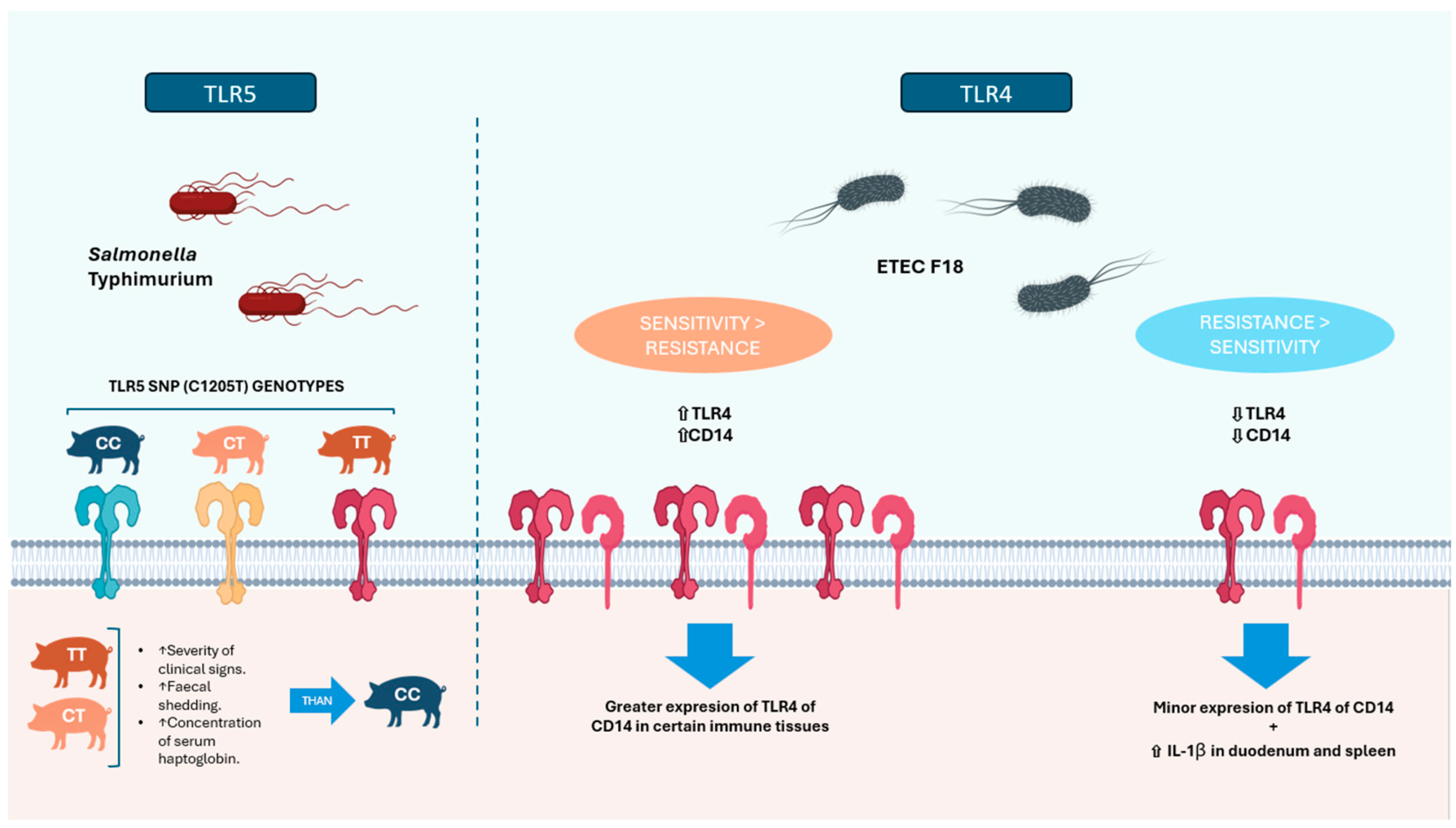
The innate response could be crucial in pathogen clearance in early infection. Several studies have compared the differences observed between susceptible and resistant animals in an attempt to identify target genes or early signalling pathways involved in the innate response that could confer resistance to enteric infections. To this end, various methodologies have been put in place to disclose the mechanisms of resilience. For instance, some of these studies have associated immune resistance with specific SNPs in the genome [84,85], while others have used transcriptomic and proteomic approaches to identify pathways and molecules associated with resistance or susceptibility in enteric infections [86,87]. Toll-like receptors (TLRs) are membrane proteins involved in early signalling by identifying pathogen-associated molecular patterns (PAMPs). Polymorphisms in TLRs could have been associated with resistance to Salmonella infections [84,85,88]. For instance, SNPs in the TLR4 gene, involved in the recognition of lipopolysaccharide, have been found to be significantly associated with variability in Salmonella shedding. This suggests that these genetic variants could influence the host’s ability to recognise and respond to Salmonella infection, thereby affecting bacterial excretion [84]. This idea was also supported by similar results in another study with TLR4. Liu et al. [89] reported that higher expression of TLR4 and CD14 in certain immune tissues (such as spleen and mesenteric lymph nodes) was associated with susceptibility to ETEC F18 infection, while resistant animals showed increased IL-1β expression in the duodenum and spleen (Figure 1). In contrast, Wu et al. [90] found that the TLR4-mediated signalling pathway was enriched in resistant animals, correlating resistance and CD14 expression in mononuclear cells. When CD14 expression was reduced, immune signalling weakened and bacterial adhesion increased. Although it remains unclear whether TLR4 and CD14 ultimately strengthen or impair host defence against F18 ETEC, both studies indicate that these molecules play an important role in the immune response, and the discrepancy may reflect differences in pigs’ genetic background, tissues analysed, or immune activation contexts.
Toll-like receptor 5 (TLR5) is a pattern-recognition receptor for bacterial flagellin. Some SNPs that result in amino acid changes, such as TLR5R148L or TLR5P402L, attenuate the response to Salmonella Choleraesuis. A study demonstrated differences in the distribution of these two polymorphisms among breeds, which could explain differences in the disease outcome after Salmonella challenge [85]. More recently, the effect of an SNP in swine TLR5 (C1205T) was evaluated in an in vivo challenge in Landrace pigs [88]. It was observed that pigs with the CT and TT genotypes exhibited more severe clinical signs, increased duration in Salmonella shedding, and lower serum haptoglobin concentration, an early inflammation marker, suggesting that the CC genotype could be more resilient to the infection, as presented in Figure 1. Furthermore, Dai et al. [91] identified TLR5 as a candidate gene from a transcriptomic analysis of the duodenum of weaned piglets resistant or susceptible to F18 ETEC. They validated that TLR5 expression in the duodenum and jejunum was significantly higher in susceptible animals. Functional assays in IPEC-J2 cells showed that TLR5 overexpression enhanced NF-κB activation and inflammatory responses, leading to increased E. coli adhesion, whereas reduced expression limited adhesion. These findings suggest that lower TLR5 expression may contribute to resistance to ETEC F18.
The early immune signalling could also play a role in resilience to Salmonella infection. Thus, variations in IL-1β and IL-8 response have also been observed among animals, indicating that host factors may strongly influence the robustness of this early response [92,93]. Clostridium perfringens type C (CpC) is a major pathogen that affects newborn piglets, causing severe to lethal necrotic enteritis. This is characterised by deep, segmental mucosal necrosis and significant haemorrhage of the small intestine [94]. The TLR4/MyD88/NF-κB signalling pathways in the ileum and jejunum have been suggested to be induced by CpC infection, which could provide valuable insights into the innate immune mechanisms involved in regulating piglet diarrhoea caused by CpC [95].
Another approach to disclose potential immune factors involved in disease resilience aims to compare animals with different disease outcomes [96]. A study focused on Salmonella infection split animals by their shedding pattern. In this study, piglets were defined as low shedders (LSs) and persistent shedders (PSs) based on Salmonella faecal shedding outcome. The analysis of the transcriptome in both shedding phenotypes revealed a higher expression of genes and modules in LSs such as SLC11A1 (formerly NRAMP1), TLR4, CD14 and CCR1, some of which have already been mentioned in this review. Other genes that were found to be associated with Salmonella for the first time included SIGLEC5, IGSF6, and TNFSF13B [96]. Solute carrier family 11 member 1 (SLC11A1) is a host resistance factor that influences susceptibility to intracellular pathogens, such as Salmonella. It transports Fe2+, Mn2+, and Co2+ out of the phagosomes, which may deprive vacuolar pathogens of these essential nutrients [97]. Studies in other species have reported that SLC11A1 is involved in resistance to Salmonella infections. Cunrath and Bumann [98] demonstrated that, in mice with different SLC11A1 alleles, this gene reduced Salmonella replication and restricted its access to magnesium, suggesting this to be a key defence mechanism. While no such study has been conducted in pigs, some polymorphisms have been identified in the porcine SLC11A1 gene [99].
Recently, several studies have been conducted to compare the immune response in susceptible and resistant animals to ETEC. These are typically transcriptomic and proteomic analyses that attempt to analyse the response at a molecular level, investigating whether it differs between resistant and susceptible animals. This includes searching for potential genes and molecules that may be related to the receptor or involved in ETEC resistance. One of such studies examined the response in 40 Sutai pigs belonging to two groups (resistant or susceptible according to their FUT1 genotype, as confirmed by adhesion assays). In this study, the proteins with higher expression in the resistant animals were transferrin (TF), collapsin response mediator protein 2A-like protein, and ribosome protein SA (RPSA). Conversely, susceptible animals exhibited higher expression of vinculin (VCL), beta-actin (ACTB), 27 kDa heat shock protein (HSP27), and cardiac alpha-actin (ACTC1). After all, transferrin was proposed as the most plausible candidate protein related to resistance against F18 ETEC infection, given its physiological function [86].

4.2. Immune Mechanisms of Host Resistance to Viral Enteric Infections in Pigs

Viruses are recognised through pattern recognition receptors (PRRs) such as TLRs, RIG-I-like receptors (RLRs), NOD-like receptors (NLRs), and C-type lectin receptors (CLRs), which detect PAMPs and trigger downstream interferon (IFN) and cytokine responses [100,101,102]. The resulting activation of interferon signalling induces a broad antiviral state mediated by interferon-stimulated genes (ISGs) including OAS1, PKR, MX1, ISG15, and ZAP, which act to inhibit viral replication [103,104].
Among these, type I interferons (IFN-α/β) play a central role by activating the JAK–STAT signalling pathway, leading to phosphorylation of STAT1/STAT2 and formation of the ISGF3 complex with IRF9, which translocates to the nucleus to upregulate ISGs [105,106]. In parallel, the type II interferon (IFN-γ), primarily secreted by NK and T cells, enhances macrophage activation and antiviral responses [107,108]. Adaptive immunity, mediated by virus-specific B and T lymphocytes, reinforces this early innate response, contributing to long-term protection and immunological memory [109,110,111].
Transmissible gastroenteritis virus infection activates PRRs such as retinoic acid-inducible gene I (RIG-I), melanoma differentiation-associated gene 5 (MDA5), and TLR3, and activates TANK-binding kinase 1 (TBK1) and interferon regulatory factor 3 (IRF3), leading to the induction of type I interferons (IFN-α/β) [106,112,113]. These cytokines initiate the JAK–STAT signalling cascade, forming the ISGF3 complex (STAT1–STAT2–IRF9), which drives the transcription of interferon-stimulated genes (ISGs) [105,114]. Although TGEV partially suppresses early IFN production, infected cells still exhibit phosphorylated STAT1 and increased ISG expression, confirming a functional antiviral response [114].
Among ISGs, IFIT3 plays a key antiviral role. Transmissible gastroenteritis virus infection markedly upregulates IFIT3, which interacts with TBK1 and STAT1 to enhance their phosphorylation and stimulate the transcription of IFN-β, MX1, MX2, OAS1, and ISG15. Overexpression of IFIT3 reduces viral titres, whereas its silencing enhances replication, confirming its antiviral function dependent on the interferon pathway [106].
Another essential mechanism is the activation of the NLRP1 inflammasome. TGEV infection induces caspase-1 cleavage and secretion of IL-1β and IL-18 while disrupting the inhibitory interaction between porcine NLRP1 (pNLRP1) and DPP9. Activated pNLRP1 restricts TGEV replication and upregulates ISGs such as ISG15 and OASL, linking inflammasome activation to antiviral signalling. NLRP1 itself acts as an interferon-stimulated gene, further amplifying antiviral responses [115]. Additionally, TGEV triggers NF-κB activation and regulated cell death processes that contribute to limiting viral dissemination [104].
Similar to what occurs with TGEV, the first barrier to PEDV infection in pigs relies on early detection of viral components by PRRs such as RIG-I, MDA5, and TLR3/7, which activate adaptor proteins including MAVS and TRIF. This triggers phosphorylation of TBK1 and IRF3, along with NF-κB activation, leading to induction of type I (IFN-α/β) and type III (IFN-λ) interferons and proinflammatory cytokines [104,116]. Type I IFNs rapidly induce an antiviral state, while type III IFNs act mainly at mucosal surfaces, sustaining ISG expression in intestinal epithelial cells [117].
Interferons engage the JAK–STAT pathway, forming the ISGF3 complex that drives transcription of ISGs, including MX1/2, OAS, PKR, IFITs, and ISG15, which inhibit viral replication. Inactivation of major PEDV interferon antagonists (NSP1, NSP15, NSP16) restores a robust IFN response, limiting viral replication and attenuating infection in piglets, highlighting the importance of rapid, intact interferon signalling [118].
However, PEDV uses multiple viral proteins to suppress the host interferon response: NSP1 inhibits IFN production by degrading transcriptional cofactors and blocking IRF3 and NF-κB, while NSP3, NSP5, NSP15, and NSP16 disrupt antiviral signalling by removing activating ubiquitin chains, cleaving immune adaptor proteins, degrading viral RNA intermediates, or mimicking host mRNA to evade detection [119,120].
Other host factors also contribute to resistance. IRF8 is upregulated during infection, enhancing IFN-β production and inducing apoptosis in infected epithelial cells, with promoter hypomethylation mediated by AP-2α increasing transcription in resistant pigs [121]. Additionally, PEDV exploits exosomes containing viral RNA and N protein to enable antibody-resistant transmission and viral persistence [122].
Porcine deltacoronavirus (PDCoV) and swine acute diarrhoea syndrome coronavirus (SADS-CoV) both infect intestinal epithelial cells and rely on evasion of host antiviral defences to establish infection. In both viruses, host resistance primarily depends on interferon (IFN)-mediated innate immunity, which is counteracted by the conserved 3C-like protease NSP5. In PDCoV, NSP5 cleaves several host immune regulators: it disrupts NF-κB activation via NEMO, degrades STAT2 to suppress ISG expression, and cleaves the antiviral effector IFIT3, thereby blocking MAVS–TBK1–IRF3 signalling [123]. Similarly, SADS-CoV NSP5 inhibits IRF3 phosphorylation, NF-κB, and STAT1/STAT2 activation, resulting in reduced IFN-β and ISG15 expression [124]. In addition, PDCoV NSP5 targets histone deacetylase 2 (HDAC2), impairing ISG induction and potentially exacerbating inflammation, whereas SADS-CoV NSP5 cleaves DCP1A, disabling its ability to enhance IFN signalling—a mechanism conserved among coronaviruses including PDCoV and SARS-CoV-2 [124,125].
Both viruses also use their nucleocapsid (N) proteins to interfere with RIG-I ubiquitination, further limiting IFN-β production [104,126]. PDCoV additionally employs accessory proteins NS6 and NS7a to inhibit IFN-β transcription by blocking recognition of viral RNA and preventing IRF3 activation, whereas such accessory factors have not been described for SADS-CoV.
As described above for porcine enteric coronaviruses, the porcine intestinal epithelium elicits a rapid antiviral response against rotaviruses through recognition of viral double-stranded RNA by pattern recognition receptors (PRRs) such as TLR3, RIG-I, and MDA5. Upon activation, these sensors trigger the MAVS–TBK1–IRF3 signalling cascade, leading to the production of type I and type III IFNs and the induction of numerous ISGs that restrict viral replication [110].
Type I IFNs (IFN-α/β) act systemically to induce an antiviral state, whereas type III IFNs (IFN-λ) play a predominant role at mucosal surfaces, providing sustained protection of intestinal epithelial cells. The IFN-λ system is particularly relevant in the porcine gut, where high receptor expression in enterocytes enables targeted antiviral defence with minimal inflammation [127]. Age-dependent maturation of the intestinal immune system further influences susceptibility. In neonatal piglets, reduced expression of PRRs and IFN-λ receptors correlates with higher viral replication and disease severity, whereas older pigs exhibit stronger interferon responses and more efficient control of infection [127].
Overall, porcine resilience to enteric viruses depends on rapid interferon signalling, ISG activation, and controlled inflammatory responses in the intestinal epithelium. Yet, these viruses counteract host defences through protease-mediated degradation of antiviral proteins, interferon suppression, and epigenetic modulation of immune regulators. The intestinal epithelium thus serves as a key immune hub where the balance between antiviral defence and viral evasion determines infection outcomes, offering valuable insights for developing improved vaccines and antiviral strategies.

4.3. The Role of Non-Coding RNAs in Immune-Mediated Disease Resistance

Non-coding RNAs participate in the regulatory process of gene expression [128,129] and could be involved in infectious disease resistance [130]. Wang et al. [131] studied immune responses in seven-day-old piglets infected with CpC, classifying them as resistant or susceptible based on clinical severity. The study identified 53 microRNAs differentially expressed between resistant and susceptible pigs, with predicted target genes enriched in immune and signalling pathways such as ErbB, MAPK, Jak-STAT, and inverse correlation analysis, suggesting that specific microRNAs such as miR-7134-5p (NFATC4), miR-500 (ELK1, HSPA2, IL7R), and miR-92b-3p (CLCF1) may regulate key immune genes, potentially serving as biomarkers or functional modulators of host defence. These results indicate that CpC infection altered ileal microRNA expression, influencing genes that determine resistance or susceptibility.
Other studies have focused on long non-coding RNAs (lncRNAs), as they are known to regulate immune and inflammatory responses. Huang et al. [87] compared the expression of lncRNAs between susceptible and resistant pigs and observed that some lncRNAs seemed to regulate key immune genes, such as TLR8. They concluded that piglets may become resistant by avoiding excessive inflammatory damage through modulation of cytokine expression, whereas susceptibility may involve an excessive response or aberrant expression. Subsequently, they conducted a genome-wide analysis of changes in DNA methylation and gene expression in CpC-resistant and -susceptible piglets. This analysis identified LBP, TBX21, and LCN2 as potential candidate genes involved in the response to CpC infection. Further research is needed to confirm the role of these genes in resistance, but they could be a promising target for breeding strategies [87].
Eventually, transcriptomic studies have also been performed to determine the systemic immune regulation in key organs such as the spleen. Yan et al. [132] identified differentially expressed lncRNAs between susceptible and resistant animals. Two of these were found to be involved in regulating immune and inflammatory pathways. These lncRNAs may modulate the expression of immune genes, playing a role in the systemic immune response to CpC infection and determining whether animals are susceptible or resistant. These results suggest that differences in immune responses may confer resistance to CpC infections, either through increased innate immune molecules or a more cautious response. Further research is needed to identify the main genes, pathways, and molecules involved in these responses, but existing studies provide extensive information about the most promising targets.
In summary, resistance may depend on the correct pattern and regulation of gene expression rather than simply having higher expression levels across the board. Further studies are required to understand these complex mechanisms and also the main differences among pig breeds.

5. The Potential Ability of Commensal Beneficial Bacteria to Outcompete Intestinal Pathogens

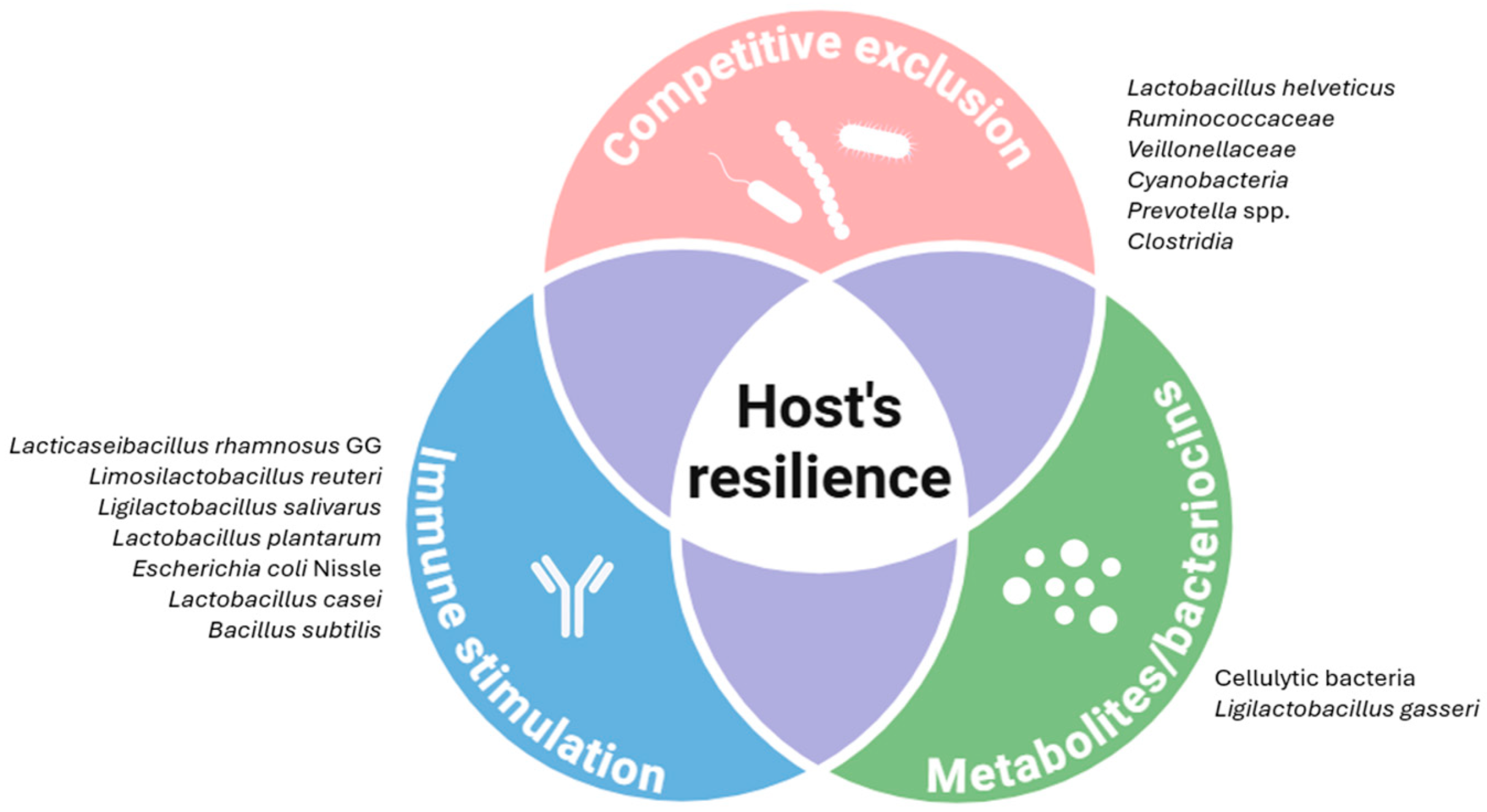
The intestinal microbiota of pigs plays a pivotal role in maintaining gut homeostasis and in shaping host resistance to enteric infections. Commensal bacteria not only contribute to digestion and nutrient absorption but also function as a critical line of defence against pathogens using different strategies which are outlined below. Figure 2 summarises the mechanisms by which this community of bacteria controls the colonisation and overgrowth of harmful bacteria.

5.1. Competitive Exclusion

A major role of microbiota in pathogen regulation is summarised under the term competitive exclusion, which refers to the ecological principle that beneficial well-established microbes can prevent harmful or invading microbes from colonising the same environment because they compete for limited resources and physical space [133]. It is well-known that the microbiota and host shape the gut environment (oxygen and nutrient availability) to restrict colonisation by gut pathogens [134]. In addition, commensal bacteria compete with bacteria and viruses for epithelial attachment sites, thereby reducing bacteria or viral entry [135,136,137]. Some bacteria, such as Lactobacillus helveticus, can express surface layer proteins (SLPs), providing bacterial adhesion to host cells which can inhibit or hinder the binding of some pathogens. Under in vitro assays with cell lines, the SLPs from L. helveticus were able to inhibit the binding of ETEC and Salmonella Typhimurium [138]. E. coli Nissle (EcN), for example, directly binds human rotavirus particles and prevents their attachment to porcine epithelial cells [139].
In recent years, metagenomics has enabled us to understand much better the role of the microbiota in competitive exclusion mechanisms against enteric pathogens. Different studies have revealed the influence of the microbiota composition in Salmonella colonisation resistance or Salmonella shedding by infected pigs [140,141,142]. Clostridia members and cellulolytic bacteria, such as Ruminococcaceae, seem to play a potential role in colonisation resistance to Salmonella as they have been found to be more abundant in low/non-shedders and healthy animals [142]. Other bacteria such as Prevotella genus, Veillonellaceae, or Cyanobacteria have also been proposed to play a positive role [141,142]. On the contrary, Enterobacteriaceae members and some microaerophilic and aero-tolerant taxa, such as Lactobacillaceae or Pasteurellaceae, are usually found in the gut when inflammatory responses take place [140,141,142]. Altogether, these results suggest that microbiomes enriched with anaerobes may alleviate or prevent Salmonella gut colonisation and faecal shedding. Conversely, a less mature and diverse microbiome can interfere with the host’s resilience to the infection.
The infection by Clostridioides difficile (formerly Clostridium difficile) can cause fatal gastroenteritis. However, the period during which colonisation can occur is relatively short, as colonisation by C. difficile declines as the animal’s age increases [143]. Proctor and collaborators [144] observed that the incidence of clinical signs associated with C. difficile infection declined rapidly after four days of age and was no longer observed after ten days, indicating a clear transition period during the first week of life, in which piglets shift from being susceptible to largely resistant. Microbial diversity could be behind resistance to C. difficile colonisation [144,145], but there is insufficient evidence to identify the key microbial taxa or communities responsible for this resistance or to determine the extent to which other factors, such as environmental exposure, antibiotic use, diet, and rearing conditions, may contribute [143,144,145].

5.2. Metabolites and Bacteriocins to Inhibit Pathogen Colonisation

The mechanisms of competitive exclusion go beyond the mere presence of beneficial bacteria or competition for attachment sites. The products of their metabolism and other compounds (i.e., bacteriocins) produced by these microorganisms also contribute to this phenomenon. Cellulolytic bacteria are major short-chain fatty acid (SCFA) producers. For instance, acetate protects epithelial cells from PEDV-induced damage by upregulating tight junction proteins such as ZO-1 and activating the PI3K/Akt pathway [146]. Besides SCFA, there are a plethora of antimicrobial compounds produced by bacteria and archaea [147,148]. As an example, the bacteriocin gassericin A, produced by Ligilactobacillus gasseri, exhibits anti-diarrhoeal and antiviral properties through the modulation of epithelial signalling. This circular peptide interacts with enterocyte membranes, promoting fluid absorption and reducing secretion, thus conferring resistance to diarrhoea in early-weaned piglets [149].

5.3. The Stimulation of the Immune System by the Commensal Microbiota

Last but not least, there is a strong positive interaction between the gut commensals, particularly beneficial bacteria with probiotic properties, and the enhancement in the immune response [150]. The administration of the Lactobacillus casei probiotic strain favoured mucosal integrity, tight junction protein expression, and immune factor production during ETEC F4 infection [151]. Beyond lactic acid bacteria, Luise et al. [152] demonstrated that dietary supplementation with Bacillus subtilis improved the intestinal immune response and mitigated infection severity in weaned pigs challenged with ETEC F4ac.
Several specific probiotic strains have demonstrated stronger efficacy against viral infections in pigs, particularly coronaviruses. Studies with Ligilactobacillus salivarius and Limosilactobacillus reuteri stimulated the expression of antiviral cytokines while downregulating pro-inflammatory mediators during PEDV infection [153,154]. Don and colleagues [136] revealed that the treatment with L. salivarius and its impact on PEDV alleviated endoplasmic reticulum stress and promoted cellular resistance via activation of the FAK/PI3K/Akt signalling axis. Similarly, Leuconostoc mesenteroides strains isolated from kefir grains exhibited prophylactic, therapeutic, and direct inhibitory effects against PEDV in vitro, partly by upregulating interferon-stimulated genes such as MX1, ISG15, and OAS1 [155].
Although less extensively studied than coronaviruses, there is also evidence for microbiota and rotaviruses. Lacticaseibacillus rhamnosus GG (LGG) and Lactobacillus plantarum strains have been shown to decrease viral attachment and replication while enhancing mucosal immune responses [135,156]. EcN 1917 may support rotavirus neutralisation in the intestinal lumen by B-cell activation and IgA production [139]. Studies in gnotobiotic and neonatal pig models further demonstrated that lactic acid bacteria supplementation increases survival, reduces viral shedding, and ameliorates histopathological lesions [156].
Moreover, prebiotics can act synergistically with probiotics to enhance antiviral efficacy. For instance, rice bran supplementation improved the colonisation and activity of LGG and EcN in gnotobiotic pigs, strengthening epithelial integrity, increasing IgA levels, and providing complete protection against rotavirus-induced diarrhoea [110]. Despite these promising outcomes, the direct influence of gut microbiota composition on porcine rotavirus infections remains poorly characterised, underscoring the need for further research into microbiome–virus interactions in pigs.

6. Development of Disease Resilience in Pigs: Current Strategies and Future Prospects

6.1. Near-Future Approaches in Genome Editing, Immune Resilience, and Microbiome Profiling

Over the past decade, advances in genome editing technologies have opened new avenues for enhancing disease resilience in pigs. The targeted modification of specific genes has made it possible to develop animals with increased resilience to particular pathogens, thus providing a proof of concept for genetic approaches to disease control. For instance, the CD163 gene, which encodes a viral fusion receptor in macrophages, was successfully disrupted in pig zygotes using CRISPR/Cas9, resulting in animals resistant to PRRSv [17]. Moreover, similar gene editing strategies have produced transgenic pigs protected from classical swine fever virus infection, with reduced replication, milder clinical signs, and heritable resistance [18]. These studies highlight the potential of both conventional breeding and genome editing strategies to reduce susceptibility to infectious diseases, offering promising tools for understanding factors impacting pig health at the genetic level. However, relying on gene editing for providing resistance to specific pathogens has drawbacks, as this approach could inadvertently compromise broader immune competence. For example, disrupting a receptor to block one virus could reduce recognition pathways important for defending against unrelated pathogens. As an alternative, selective breeding based on naturally resilient genotypes could promote resistance traits while maintaining overall herd robustness. Ideally, these approaches rely on epidemiogenetics modelling strategies, able to provide a broader perspective by examining how genetic variation across pig populations influences both susceptibility and transmission dynamics of infectious diseases [21]. Indeed, integrating host genetic variation into epidemiological models allows us to identify approaches that not only confer resistance at the individual level but also reduce pathogen spread within herds, thereby offering a sustainable framework for improving overall population health.
Host genetics also plays a pivotal role in shaping immune responses, influencing both vaccine efficacy and post-infection outcomes. Several studies have explored the interplay between host genetics and immune responsiveness to respiratory pathogens such as Mycoplasma hyopneumoniae and influenza A virus [157,158,159]. Post-vaccination gene expression analyses have identified genes such as SPP1, ENO3, and MYL1 as potential predictors of vaccine response, while genomic regions encompassing DAB2IP, ASAP1, CYRIB, and GSDMC were associated with antibody production following M. hyopneumoniae vaccination. These findings indicate that combining genetic information with immunological profiling could improve the prediction and optimisation of vaccine responses in pigs.
Recent evidence emphasises the critical role of the gut microbiota in modulating host immunity and overall resistance to enteric infections. Interestingly, host genetics not only influences immune responses but also shapes the gut microbial ecosystem. Indeed, it was recently demonstrated that selective breeding for contrasting enterotypes (PrevotellaMitsuokella vs. RuminococcusTreponema) over three generations led to heritable changes in microbial composition and function [160], highlighting the genetic contribution to microbiota structure. Furthermore, next-generation probiotics, such as genetically engineered lactic acid bacteria designed to deliver immunomodulatory molecules or antiviral agents, represent a promising strategy to enhance gut health and disease resilience in pigs [161,162]. Eventually, faecal microbiota transplantation (FMT) has emerged as a powerful tool to restore microbial homeostasis and protect against enteric diseases, with recent human studies exploring the use of sterile faecal filtrates or donor supernatants to confer beneficial effects without transferring live bacteria [163,164]. Collectively, these approaches underscore the combined potential of host genetics, engineered probiotics, and innovative FMT strategies to modulate the microbiome and improve resistance against enteric infections.
Further research is needed to identify new genes or markers involved in disease pathogenesis. Nevertheless, some of the genes or markers mentioned throughout this article could be used as candidates in breeding programmes to confer disease resilience, either by compromising the pathogen’s ability to cause disease or by enhancing the host’s immune response. In addition, growing evidence highlights the role of the gut microbiota in modulating immune function and vaccine responsiveness. Therefore, integrating host genetic, immunological, and microbiota data could provide a more comprehensive approach to improving disease resilience in pigs.

6.2. Epigenomics Support in Disease Resilience

Mathematical models integrating host genetics and disease transmission dynamics offer powerful tools for predicting the population-level impact of genetic selection for disease resistance. For parasitic infections such as Ascaris suum, epidemiogenetic studies have revealed complex patterns of cross-transmission between humans and pigs, with focal transmission and effective population size influencing parasite genetic diversity [165]. These models can inform breeding strategies by predicting how changes in allele frequencies will affect disease prevalence and persistence within and between herds. For PRRSv, the WUR0000125 SNP has been extensively studied for its effects on viral load and clinical outcomes. However, recent transmission studies revealed that this resilience SNP had no apparent effect on pigs’ infectivity and susceptibility in controlled transmission trials [166], highlighting the complex relationship between individual genetic resistance and population-level transmission dynamics.
Recent methodological advances have opened new possibilities for estimating genetic effects underlying disease transmission dynamics. While traditional quantitative genetic approaches focus exclusively on individual disease susceptibility or resistance, novel Bayesian inference methods now enable simultaneous estimation of genetic parameters for three distinct epidemiological host traits: susceptibility (propensity to become infected), infectivity (propensity to transmit infection to others), and recoverability (propensity to recover or die) [167]. These methods can accommodate the complex dynamic interdependence between observable disease phenotypes and underlying unobservable epidemiological traits, using individual disease records typically available from field studies or challenge experiments. Furthermore, genetic selection targeting infectivity, in addition to susceptibility, may reduce the risk of inadvertently selecting for tolerant super-spreaders—individuals that do not show clinical signs but efficiently transmit pathogens to others.
An important consideration when implementing genetic selection for disease resilience is the potential for pathogen evolutionary responses to host genetic changes. While genetic selection for host resistance offers promising avenues for disease control, pathogens have demonstrated remarkable capacity to adapt to interventions, as evidenced by widespread antibiotic resistance. However, recent epidemiogenetic modelling suggests that disease eradication through genetic selection remains achievable if selective pressure on host resistance is sufficiently strong and sustained [168]. The key principle is that pathogen evolution requires ongoing transmission; interventions that rapidly reduce transmission below the epidemic threshold (R0 < 1) can achieve eradication before resistant pathogen strains emerge. This argues for implementing strong, multi-generational selection for polygenic resistance rather than gradual improvement, combined with other management interventions to maximise the rate of prevalence reduction. Selection for broad-spectrum, polygenic resistance targeting multiple host defence mechanisms simultaneously should minimise the probability of pathogen adaptation, as the pathogen would need to overcome multiple independent barriers. Nevertheless, surveillance for pathogen evolutionary changes should be integrated into breeding programmes, particularly when selecting for major-effect resistance genes or receptors, to allow timely adjustments in selection strategies if pathogen adaptation is detected.

Supplementary Materials

The following supporting information can be downloaded at https://www.mdpi.com/article/10.3390/genes17010067/s1, Figure S1: Literature search strategy for studies on swine host resilience and enteric disease. The search combined controlled vocabulary and free-text terms across three concept blocks: genetics, immune mechanisms, and microbiome-mediated resistance. All search codes were kept intact, and the complete search strings are provided in this figure.

Author Contributions

Conceptualization, H.A.; methodology, A.U.-C., H.P. and H.A.; investigation, A.U.-C., H.P., M.I. and H.A.; data curation, A.U.-C., H.P., M.I. and H.A.; writing—original draft preparation, A.U.-C., H.P. and M.I.; writing—review and editing, J.E., A.C. and H.A.; supervision, J.E. and A.C. All authors have read and agreed to the published version of the manuscript.

Funding

This study was funded by Spanish Ministerio de Ciencia e Innovación (PID2024-160714OB-I00 and MICIU/AEI/10.13039/501100011033) and Junta de Castilla y Leon (LE088P23). A.U.-C. is a predoctoral researcher funded by the University of León (ULE-Predoc/2024) and H.P. is a postdoctoral researcher funded by the Government of Spain (JDC2023-051122-I).

Institutional Review Board Statement

Not applicable.

Informed Consent Statement

Not applicable.

Data Availability Statement

No new data were generated for this review.

Acknowledgments

During the preparation of this manuscript, the authors used ChatGPT (OpenAI, model GPT-5.1) for the purpose of assisting in the generation of search patterns (search strings/codes) to be used in PubMed for the identification of relevant articles. The authors have reviewed, verified, and edited all AI-assisted output and take full responsibility for the content of this publication.

Conflicts of Interest

The authors declare no conflicts of interest. The funders had no role in the design of the study; in the collection, analyses, or interpretation of data; in the writing of the manuscript; or in the decision to publish the results.

Abbreviations

The following abbreviations are used in this manuscript:
CpCClostridium perfringens type C
ETECEnterotoxigenic Escherichia coli
ILInterleukin
NSPNonstructural Protein
PDCoVPorcine Deltacoronavirus
PEDVPorcine Epidemic Diarrhoea Virus
PRRSvPorcine Reproductive and Respiratory Syndrome Virus
RVRotavirus
SADSCoVSwine Acute Diarrhoea Syndrome Coronavirus
SNPSingle-Nucleotide Polymorphism
TGEVTransmissible Gastroenteritis Virus
TLRToll-Like Receptor
VPViral Protein

References

  1. Luppi, A.; D’Annunzio, G.; Torreggiani, C.; Martelli, P. Diagnostic Approach to Enteric Disorders in Pigs. Animals 2023, 13, 338. [Google Scholar] [CrossRef]
  2. Chander, Y.; Primus, A.; Oliveira, S.; Gebhart, C.J. Phenotypic and Molecular Characterization of a Novel Strongly Hemolytic Brachyspira Species, Provisionally Designated “Brachyspira hampsonii”. J. Vet. Diagn. Investig. 2012, 24, 903–910. [Google Scholar] [CrossRef]
  3. Martínez-Lobo, F.J.; Hidalgo, Á.; García, M.; Argüello, H.; Naharro, G.; Carvajal, A.; Rubio, P. First Identification of “Brachyspira hampsonii” in Wild European Waterfowl. PLoS ONE 2013, 8, e82626. [Google Scholar] [CrossRef]
  4. Kong, F.; Wang, Q.; Kenney, S.P.; Jung, K.; Vlasova, A.N.; Saif, L.J. Porcine Deltacoronaviruses: Origin, Evolution, Cross-Species Transmission and Zoonotic Potential. Pathogens 2022, 11, 79. [Google Scholar] [CrossRef] [PubMed]
  5. Hampson, D.J.; La, T.; Phillips, N.D. Emergence of Brachyspira Species and Strains: Reinforcing the Need for Surveillance. Porc. Health Manag. 2015, 1, 8. [Google Scholar] [CrossRef]
  6. Carvajal, A.; Argüello, H.; Martínez-Lobo, F.J.; Costillas, S.; Miranda, R.; G. de Nova, P.J.; Rubio, P. Porcine Epidemic Diarrhoea: New Insights into an Old Disease. Porc. Health Manag. 2015, 1, 12. [Google Scholar] [CrossRef]
  7. Schulz, L.L.; Tonsor, G.T. Assessment of the Economic Impacts of Porcine Epidemic Diarrhea Virus in the United States. J. Anim. Sci. 2015, 93, 5111–5118. [Google Scholar] [CrossRef] [PubMed]
  8. Van Boeckel, T.P.; Pires, J.; Silvester, R.; Zhao, C.; Song, J.; Criscuolo, N.G.; Gilbert, M.; Bonhoeffer, S.; Laxminarayan, R. Global Trends in Antimicrobial Resistance in Animals in Low- and Middle-Income Countries. Science 2019, 365, eaaw1944. [Google Scholar] [CrossRef] [PubMed]
  9. Carvajal, A.; Kramer, M.; Argüello, H. Salmonella Control in Swine: A Thoughtful Discussion of the Pre- and Post-Harvest Control Approaches in Industrialized Countries. Animals 2024, 14, 1035. [Google Scholar] [CrossRef]
  10. Ministério da Agricultura, Pecuária e Abastecimento (MAPA). Portaria Nº 171, de 13 de Dezembro de 2018. 2018. Available online: https://legislacao.regoola.io/portaria-no-171-de-13-de-dezembro-de-2018-mapa (accessed on 28 November 2025).
  11. Gens, K.D.; Singer, R.S.; Dilworth, T.J.; Heil, E.L.; Beaudoin, A.L. Antimicrobials in Animal Agriculture in the United States: A Multidisciplinary Overview of Regulation and Utilization to Foster Collaboration: On Behalf of the Society of Infectious Diseases Pharmacists. Open Forum Infect. Dis. 2022, 9, ofac542. [Google Scholar] [CrossRef]
  12. European Parliament; Council of the European Union. Regulation (EU) 2019/4 of the European Parliament and of the Council of 11 December 2018 on the Manufacture, Placing on the Market and Use of Medicated Feed. 2018. Available online: https://eur-lex.europa.eu/eli/reg/2019/4/oj/eng (accessed on 28 November 2025).
  13. European Parliament; Council of the European Union. Regulation (EU) 2019/6 of the European Parliament and of the Council of 11 December 2018 on Veterinary Medicinal Products. 2018. Available online: https://eur-lex.europa.eu/eli/reg/2019/6/oj/eng (accessed on 28 November 2025).
  14. European Commission. Commission Implementing Decision C(2017) 4529 Final, 26 June 2017. 2017. Available online: https://ec.europa.eu/health/documents/community-register/2017/20170626136754/dec_136754_en.pdf (accessed on 28 November 2025).
  15. Liu, Y.; Espinosa, C.D.; Abelilla, J.J.; Casas, G.A.; Lagos, L.V.; Lee, S.A.; Kwon, W.B.; Mathai, J.K.; Navarro, D.M.D.L.; Jaworski, N.W.; et al. Non-Antibiotic Feed Additives in Diets for Pigs: A Review. Anim. Nutr. 2018, 4, 113–125. [Google Scholar] [CrossRef]
  16. Liu, H.Y.; Zhu, C.; Zhu, M.; Yuan, L.; Li, S.; Gu, F.; Hu, P.; Chen, S.; Cai, D. Alternatives to Antibiotics in Pig Production: Looking through the Lens of Immunophysiology. Stress Biol. 2024, 4, 113–125. [Google Scholar] [CrossRef]
  17. Burkard, C.; Opriessnig, T.; Mileham, A.J.; Stadejek, T.; Ait-Ali, T.; Lillico, S.G.; Bruce, C.; Whitelaw, A.; Archibald, A.L. Pigs lacking the scavenger receptor cysteine-rich domain 5 of CD163 are resistant to porcine reproductive and respiratory syndrome virus 1 infection. J. Virol. 2018, 92, e00415-18. [Google Scholar] [CrossRef]
  18. Xie, Z.; Pang, D.; Yuan, H.; Jiao, H.; Lu, C.; Wang, K.; Yang, Q.; Li, M.; Chen, X.; Yu, T.; et al. Genetically Modified Pigs Are Protected from Classical Swine Fever Virus. PLoS Pathog. 2018, 14, e1007193. [Google Scholar] [CrossRef]
  19. Stokes, C.R. The Development and Role of Microbial-Host Interactions in Gut Mucosal Immune Development. J. Anim. Sci. Biotechnol. 2017, 8, 12. [Google Scholar] [CrossRef] [PubMed]
  20. Patil, Y.; Gooneratne, R.; Ju, X.H. Interactions between Host and Gut Microbiota in Domestic Pigs: A Review. Gut Microbes 2020, 11, 310–334. [Google Scholar] [CrossRef] [PubMed]
  21. Doeschl-Wilson, A.; Knap, P.W.; Opriessnig, T.; More, S.J. Review: Livestock Disease Resilience: From Individual to Herd Level. Animal 2021, 15, 100286. [Google Scholar] [CrossRef] [PubMed]
  22. Luppi, A. Swine Enteric Colibacillosis: Diagnosis, Therapy and Antimicrobial Resistance. Porc. Health Manag. 2017, 3, 16. [Google Scholar] [CrossRef]
  23. García-Meniño, I.; García, V.; Mora, A.; Díaz-Jiménez, D.; Flament-Simon, S.C.; Alonso, M.P.; Blanco, J.E.; Blanco, M.; Blanco, J. Swine Enteric Colibacillosis in Spain: Pathogenic Potential of Mcr-1 ST10 and ST131 E. coli Isolates. Front. Microbiol. 2018, 9, 2659. [Google Scholar] [CrossRef]
  24. Fairbrother, J.M.; Nadeau, É.; Gyles, C.L. Escherichia Coli in Postweaning Diarrhea in Pigs: An Update on Bacterial Types, Pathogenesis, and Prevention Strategies. Anim. Health Res. Rev. 2005, 6, 17–39. [Google Scholar] [CrossRef]
  25. Dubreuil, J.D.; Isaacson, R.E.; Schifferli, D.M. Animal Enterotoxigenic Escherichia Coli. EcoSal Plus 2016, 7, 1–47. [Google Scholar] [CrossRef]
  26. Van den Broeck, W.; Cox, E.; Oudega, B.; Goddeeris, B.M. The F4 Fimbrial Antigen of Escherichia coli and Its Receptors. Vet. Microbiol. 2000, 71, 223–244. [Google Scholar] [CrossRef]
  27. Bijlsma, I.G.; de Nijs, A.; van der Meer, C.; Frik, J.F. Different Pig Phenotypes Affect Adherence of Escherichia coli to Jejunal Brush Borders by K88ab, K88ac, or K88ad Antigen. Infect. Immun. 1982, 37, 891–894. [Google Scholar] [CrossRef]
  28. Billey, L.O.; Erickson, A.K.; Francis, D.H. Multiple Receptors on Porcine Intestinal Epithelial Cells for the Three Variants of Escherichia coli K88 Fimbrial Adhesin. Vet. Microbiol. 1998, 59, 203–212. [Google Scholar] [CrossRef] [PubMed]
  29. Python, P.; Jörg, H.; Neuenschwander, S.; Hagger, C.; Stricker, C.; Bürgi, E.; Bertschinger, H.U.; Stranzinger, G.; Vögeli, P. Fine-mapping of the Intestinal Receptor Locus for Enterotoxigenic Escherichia coli F4ac on Porcine Chromosome 13. Anim. Genet. 2002, 33, 441–447. [Google Scholar] [CrossRef] [PubMed]
  30. Python, P.; Jörg, H.; Neuenschwander, S.; Asai-Coakwell, M.; Hagger, C.; Bürgi, E.; Bertschinger, H.U.; Stranzinger, G.; Vögeli, P. Inheritance of the F4ab, F4ac and F4ad E. coli Receptors in Swine and Examination of Four Candidate Genes for F4acR. J. Anim. Breed. Gen. 2005, 122, 5–14. [Google Scholar] [CrossRef] [PubMed]
  31. Jørgensen, C.B.; Cirera, S.; Anderson, S.I.; Archibald, A.L.; Raudsepp, T.; Chowdhary, B.; Edfors-Lilja, I.; Andersson, L.; Fredholm, M. Linkage and Comparative Mapping of the Locus Controlling Susceptibility towards E.coli F4ab/Ac Diarrhoea in Pigs. Cytogenet. Genome Res. 2003, 102, 157–162. [Google Scholar] [CrossRef]
  32. Fu, W.-X.; Liu, Y.; Lu, X.; Niu, X.-Y.; Ding, X.-D.; Liu, J.-F.; Zhang, Q. A Genome-Wide Association Study Identifies Two Novel Promising Candidate Genes Affecting Escherichia coli F4ab/F4ac Susceptibility in Swine. PLoS ONE 2012, 7, e32127. [Google Scholar] [CrossRef]
  33. Sinha, R.; Sahoo, N.R.; Shrivastava, K.; Kumar, P.; Qureshi, S.; De, U.K.; Kumar, A.; Kumar, G.V.P.P.S.R.; Bhushan, B. Resistance to ETEC F4/F18–Mediated Piglet Diarrhoea: Opening the Gene Black Box. Trop. Anim. Health Prod. 2019, 51, 1307–1320. [Google Scholar] [CrossRef]
  34. Sterndale, S.O.; Miller, D.W.; Mansfield, J.P.; Kim, J.C.; O’Dea, M.; Pluske, J.R. Technical Note: Novel Delivery Methods for an Enterotoxigenic Escherichia coli Infection Model in MUC4-Locus Sequenced Weaner Pigs1. J. Anim. Sci. 2019, 97, 4503–4508. [Google Scholar] [CrossRef]
  35. Matsumoto, H.; Miyagawa, M.; Takahashi, S.; Shima, R.; Oosumi, T. Improvement of the Enterotoxigenic Escherichia coli Infection Model for Post-Weaning Diarrhea by Controlling for Bacterial Adhesion, Pig Breed and MUC4 Genotype. Vet. Sci. 2020, 7, 106. [Google Scholar] [CrossRef]
  36. Zhang, B.; Ren, J.; Yan, X.; Huang, X.; Ji, H.; Peng, Q.; Zhang, Z.; Huang, L. Investigation of the Porcine MUC13 Gene: Isolation, Expression, Polymorphisms and Strong Association with Susceptibility to Enterotoxigenic Escherichia coli F4ab/Ac. Anim. Genet. 2008, 39, 258–266. [Google Scholar] [CrossRef] [PubMed]
  37. Schroyen, M.; Stinckens, A.; Verhelst, R.; Geens, M.; Cox, E.; Niewold, T.; Buys, N. Susceptibility of Piglets to Enterotoxigenic Escherichia coli Is Not Related to the Expression of MUC13 and MUC20. Anim. Genet. 2012, 43, 324–327. [Google Scholar] [CrossRef]
  38. Schroyen, M.; Goddeeris, B.M.; Stinckens, A.; Verhelst, R.; Janssens, S.; Cox, E.; Georges, M.; Niewold, T.; Buys, N. The Effect of Enterotoxigenic Escherichia Coli F4ab,Ac on Early-Weaned Piglets: A Gene Expression Study. Vet. Immunol. Immunopathol. 2013, 152, 87–92. [Google Scholar] [CrossRef]
  39. Rydal, M.P.; Gambino, M.; Jørgensen, C.B.; Poulsen, L.L.; Brøndsted, L.; Nielsen, J.P. Pilot Study on CHCF1 Genotype in a Pig Challenge Model for Enterotoxigenic Escherichia coli F4ab/Ac Associated Post-Weaning Diarrhea. BMC Vet. Res. 2022, 18, 382. [Google Scholar] [CrossRef]
  40. Wang, W.; Liu, Y.; Tang, H.; Yu, Y.; Zhang, Q. ITGB5 Plays a Key Role in Escherichia coli F4ac-Induced Diarrhea in Piglets. Front. Immunol. 2019, 10, 2834. [Google Scholar] [CrossRef]
  41. Bao, W.B.; Ye, L.; Zhu, J.; Pan, Z.Y.; Zhu, G.Q.; Huang, X.G.; Wu, S.L. Polymorphism of M307 of the FUT1 Gene and Its Relationship with Some Immune Indexes in Sutai Pigs (Duroc × Meishan). Biochem. Genet. 2011, 49, 665–673. [Google Scholar] [CrossRef]
  42. Welch, M.W.; Cross, A.J.; Diaz, I.D.P.S.; Johnson, D.C.; Parr, E.; Rathje, T.A.; Borg, R.C.; Boler, D.D. Maintained Growth Performance and Reduced Mortality of Genetically Resistant Nursery Pigs after an Experimental Virulent F18 Enterotoxigenic Escherichia coli Challenge. Transl. Anim. Sci. 2025, 9, txaf004. [Google Scholar] [CrossRef] [PubMed]
  43. Wu, Z.; Feng, H.; Cao, Y.; Huang, Y.; Dai, C.; Wu, S.; Bao, W. New Insight into the Molecular Mechanism of the FUT2 Regulating Escherichia coli F18 Resistance in Weaned Piglets. Int. J. Mol. Sci. 2018, 19, 3301. [Google Scholar] [CrossRef] [PubMed]
  44. Rasschaert, K.; Verdonck, F.; Goddeeris, B.M.; Duchateau, L.; Cox, E. Screening of Pigs Resistant to F4 Enterotoxigenic Escherichia coli (ETEC) Infection. Vet. Microbiol. 2007, 123, 249–253. [Google Scholar] [CrossRef] [PubMed]
  45. Fontanesi, L.; Bertolini, F.; Dall’Olio, S.; Buttazzoni, L.; Gallo, M.; Russo, V. Analysis of Association Between the MUC4 g.8227C>G Polymorphism and Production Traits in Italian Heavy Pigs Using a Selective Genotyping Approach. Anim. Biotechnol. 2012, 23, 147–155. [Google Scholar] [CrossRef]
  46. Goetstouwers, T.; Van Poucke, M.; Coppieters, W.; Nguyen, V.U.; Melkebeek, V.; Coddens, A.; Van Steendam, K.; Deforce, D.; Cox, E.; Peelman, L.J. Refined Candidate Region for F4ab/Ac Enterotoxigenic Escherichia coli Susceptibility Situated Proximal to MUC13 in Pigs. PLoS ONE 2014, 9, e105013. [Google Scholar] [CrossRef]
  47. Hu, D.; Rampoldi, A.; Bratus-Neuenschwander, A.; Hofer, A.; Bertschinger, H.U.; Vögeli, P.; Neuenschwander, S. Effective Genetic Markers for Identifying the Escherichia coli F4ac Receptor Status of Pigs. Anim. Genet. 2019, 50, 136–142. [Google Scholar] [CrossRef]
  48. Ji, H.; Ren, J.; Yan, X.; Huang, X.; Zhang, B.; Zhang, Z.; Huang, L. The Porcine MUC20 Gene: Molecular Characterization and Its Association with Susceptibility to Enterotoxigenic Escherichia coli F4ab/Ac. Mol. Biol. Rep. 2011, 38, 1593–1601. [Google Scholar] [CrossRef]
  49. Augustino, S.M.A.; Xu, Q.; Liu, X.; Liu, L.; Zhang, Q.; Yu, Y. Transcriptomic Study of Porcine Small Intestine Epithelial Cells Reveals Important Genes and Pathways Associated With Susceptibility to Escherichia coli F4ac Diarrhea. Front. Genet. 2020, 11, 68. [Google Scholar] [CrossRef]
  50. Rydal, M.P.; Jørgensen, C.B.; Gambino, M.; Poulsen, L.L.; Nielsen, J.P. Complete Association between CHCF1 Genotype and Enterotoxigenic Escherichia coli F4ab-Associated Post-Weaning Diarrhea in a Pig Challenge Trial. Vet. Microbiol. 2023, 282, 109771. [Google Scholar] [CrossRef]
  51. Rydal, M.P.; Poulsen, L.L.; Nielsen, J.P. The Early-Life Fecal Microbiota Is Associated with Litter of Origin but Not with Susceptibility to ETEC F4ab-Mediated Post-Weaning Diarrhea in CHCF1 Genotyped Pigs. PLoS ONE 2025, 20, e0323875. [Google Scholar] [CrossRef]
  52. Nagy, B.; Whipp, S.C.; Imberechts, H.; Bertschinger, H.U.; Dean-Nystrom, E.A.; Casey, T.A.; Salajka, E. Biological Relationship between F18ab and F18ac Fimbriae of Enterotoxigenic and Verotoxigenic Escherichia coli from Weaned Pigs with Oedema Disease or Diarrhoea. Microb. Pathog. 1997, 22, 1–11. [Google Scholar] [CrossRef] [PubMed]
  53. Meijerink, E.; Fries, R.; Vögeli, P.; Masabanda, J.; Wigger, G.; Stricker, C.; Neuenschwander, S.; Bertschinger, H.U.; Stranzinger, G. Two α(1,2) Fucosyltransferase Genes on Porcine Chromosome 6q11 Are Closely Linked to the Blood Group Inhibitor (S) and Escherichia coli F18 Receptor (ECF18R) Loci. Mamm. Genome 1997, 8, 736–741. [Google Scholar] [CrossRef] [PubMed]
  54. Meijerink, E.; Neuenschwander, S.; Fries, R.; Dinter, A.; Bertschinger, H.U.; Stranzinger, G.; Vögeli, P. A DNA Polymorphism Influencing α(1,2)Fucosyltransferase Activity of the Pig FUT1 Enzyme Determines Susceptibility of Small Intestinal Epithelium to Escherichia coli F18 Adhesion. Immunogenetics 2000, 52, 129–136. [Google Scholar] [CrossRef] [PubMed]
  55. Bao, W.B.; Ye, L.; Pan, Z.Y.; Zhu, J.; Du, Z.D.; Zhu, G.Q.; Huang, X.G.; Wu, S.L. The Effect of Mutation at M307 in FUT1 Gene on Susceptibility of Escherichia coli F18 and Gene Expression in Sutai Piglets. Mol. Biol. Rep. 2012, 39, 3131–3136. [Google Scholar] [CrossRef]
  56. Wu, Z.; Fan, H.; Jin, J.; Gao, S.; Huang, R.; Wu, S.; Bao, W. Insight into Mechanisms of Pig LncRNA FUT3-AS1 Regulating E. coli F18-Bacterial Diarrhea. PLoS Pathog. 2022, 18, e1010584. [Google Scholar] [CrossRef]
  57. Bertolini, F.; Harding, J.C.S.; Mote, B.; Ladinig, A.; Plastow, G.S.; Rothschild, M.F. Genomic Investigation of Piglet Resilience Following Porcine Epidemic Diarrhea Outbreaks. Anim. Genet. 2017, 48, 228–232. [Google Scholar] [CrossRef] [PubMed]
  58. Yuan, H.; Yang, L.; Zhang, Y.; Xiao, W.; Wang, Z.; Tang, X.; Ouyang, H.; Pang, D. Current Status of Genetically Modified Pigs That are Resistant to Virus Infection. Viruses 2022, 14, 417. [Google Scholar] [CrossRef]
  59. Kamau, A.N.; Yu, J.E.; Park, E.S.; Rho, J.R.; Hong, E.J.; Shin, H.J. Strenuous Expression of Porcine Epidemic Diarrhea Virus ORF3 Protein Suggests Host Resistance. Vet. Microbiol. 2024, 297, 110193. [Google Scholar] [CrossRef] [PubMed]
  60. Whitworth, K.M.; Rowland, R.R.R.; Petrovan, V.; Sheahan, M.; Cino-Ozuna, A.G.; Fang, Y.; Hesse, R.; Mileham, A.; Samuel, M.S.; Wells, K.D.; et al. Resistance to Coronavirus Infection in Amino Peptidase N-Deficient Pigs. Transgenic Res. 2019, 28, 21–32. [Google Scholar] [CrossRef] [PubMed]
  61. Wu, J.Y.; Wang, F.; Wu, Z.C.; Wu, S.L.; Bao, W. Bin Regulatory Effect of Methylation of the Porcine AQP3 Gene Promoter Region on Its Expression Level and Porcine Epidemic Diarrhea Virus Resistance. Genes 2020, 11, 1167. [Google Scholar] [CrossRef]
  62. Wang, H.; Bi, Z.; Dai, K.; Li, P.; Huang, R.; Wu, S.; Bao, W. A Functional Variant in the Aquaporin-3 Promoter Modulates Its Expression and Correlates With Resistance to Porcine Epidemic Virus Infection in Porcine Intestinal Epithelial Cells. Front. Microbiol. 2022, 13, 877644. [Google Scholar] [CrossRef]
  63. Qu, H.; Zong, Q.; Wang, H.; Wu, S.; Cai, D.; Bao, W. C/EBPα Epigenetically Modulates TFF1 Expression via MC-6 Methylation in the Jejunum Inflammation Induced by a Porcine Coronavirus. Front. Immunol. 2022, 13, 881289. [Google Scholar] [CrossRef]
  64. Silva-Ayala, D.; López, T.; Gutiérrez, M.; Perrimon, N.; López, S.; Arias, C.F.; Estes, M.K. Genome-Wide RNAi Screen Reveals a Role for the ESCRT Complex in Rotavirus Cell Entry. Proc. Natl. Acad. Sci. USA 2013, 110, 10270–10275. [Google Scholar] [CrossRef]
  65. Torres-Flores, J.M.; Silva-Ayala, D.; Espinoza, M.A.; López, S.; Arias, C.F. The Tight Junction Protein JAM-A Functions as Coreceptor for Rotavirus Entry into MA104 Cells. Virology 2015, 475, 172–178. [Google Scholar] [CrossRef] [PubMed]
  66. Delmas, B.; Gelfi, J.; Kut, E.; Sjöström, H.; Noren, O.; Laude, H. Determinants essential for the transmissible gastroenteritis virus-receptor interaction reside within a domain of aminopeptidase N that is distinct from the enzymatic site. J. Virol. 1994, 68, 5216–5224. [Google Scholar] [CrossRef] [PubMed]
  67. Ren, X.; Li, G.; Liu, B. Binding Characterization of Determinants in Porcine Aminopeptidase N, the Cellular Receptor for Transmissible Gastroenteritis Virus. J. Biotechnol. 2010, 150, 202–206. [Google Scholar] [CrossRef]
  68. Sun, D.; Shi, H.; Chen, J.; Guo, D.; Liu, Q.; He, X.; Bao, J.; Wang, Y.; Qiu, H.; Feng, L. Virus-Binding Activity of the Truncated C Subunit of Porcine Aminopeptidase N Expressed in Escherichia coli. Biotechnol. Lett. 2012, 34, 533–539. [Google Scholar] [CrossRef]
  69. Luo, L.; Wang, S.; Zhu, L.; Fan, B.; Liu, T.; Wang, L.; Zhao, P.; Dang, Y.; Sun, P.; Chen, J.; et al. Aminopeptidase N-Null Neonatal Piglets Are Protected from Transmissible Gastroenteritis Virus but Not Porcine Epidemic Diarrhea Virus. Sci. Rep. 2019, 9, 13186. [Google Scholar] [CrossRef]
  70. Xu, K.; Zhou, Y.; Mu, Y.; Liu, Z.; Hou, S.; Xiong, Y.; Fang, L.; Ge, C.; Wei, Y.; Zhang, X.; et al. CD163 and PAPN Double-Knockout Pigs Are Resistant to PRRSV and TGEV and Exhibit Decreased Susceptibility to PDCoV While Maintaining Normal Production Performance. eLife 2020, 9, e57132. [Google Scholar] [CrossRef]
  71. Wang, S.; Xu, C.; Shi, J.; Wang, H.; Wu, S.; Bao, W. Regulatory Effect and Mechanism of APN Gene on Porcine Epidemic Diarrhea Virus Resistance. Gene 2021, 775, 145448. [Google Scholar] [CrossRef]
  72. Li, W.; Luo, R.; He, Q.; van Kuppeveld, F.J.M.; Rottier, P.J.M.; Bosch, B.J. Aminopeptidase N Is Not Required for Porcine Epidemic Diarrhea Virus Cell Entry. Virus Res. 2017, 235, 6–13. [Google Scholar] [CrossRef] [PubMed]
  73. Verkman, A.S. Aquaporins at a Glance. J. Cell Sci. 2011, 124, 2107–2112. [Google Scholar] [CrossRef]
  74. Stoian, A.; Rowland, R.R.R.; Petrovan, V.; Sheahan, M.; Samuel, M.S.; Whitworth, K.M.; Wells, K.D.; Zhang, J.; Beaton, B.; Cigan, M.; et al. The Use of Cells from ANPEP Knockout Pigs to Evaluate the Role of Aminopeptidase N (APN) as a Receptor for Porcine Deltacoronavirus (PDCoV). Virology 2020, 541, 136–140. [Google Scholar] [CrossRef] [PubMed]
  75. Yin, L.; Chen, J.; Li, L.; Guo, S.; Xue, M.; Zhang, J.; Liu, X.; Feng, L.; Liu, P. Aminopeptidase N Expression, Not Interferon Responses, Determines the Intestinal Segmental Tropism of Porcine Deltacoronavirus. J. Virol. 2020, 94, e00442-20. [Google Scholar] [CrossRef]
  76. Yang, Y.-L.; Liu, J.; Wang, T.-Y.; Chen, M.; Wang, G.; Yang, Y.-B.; Geng, X.; Sun, M.-X.; Meng, F.; Tang, Y.-D.; et al. Aminopeptidase N Is an Entry Co-Factor Triggering Porcine Deltacoronavirus Entry via an Endocytotic Pathway. J. Virol. 2021, 95, e0094421. [Google Scholar] [CrossRef]
  77. Ciarlet, M.; Estes, M.K. Human and Most Animal Rotavirus Strains Do Not Require the Presence of Sialic Acid on the Cell Surface for Efficient Infectivity. J. Gen. Virol. 1999, 80, 943–948. [Google Scholar] [CrossRef] [PubMed]
  78. Kuhlenschmidt, T.B.; Hanafin, W.P.; Gelberg, H.B.; Kuhlenschmidt, M.S. Sialic acid dependence and independence of group A rotaviruses. Adv. Exp. Med. Biol. 1999, 473, 309–317. [Google Scholar] [PubMed]
  79. Guo, Y.; Candelero-Rueda, R.A.; Saif, L.J.; Vlasova, A.N. Infection of Porcine Small Intestinal Enteroids with Human and Pig Rotavirus A Strains Reveals Contrasting Roles for Histo-Blood Group Antigens and Terminal Sialic Acids. PLoS Pathog. 2021, 17, e1009237. [Google Scholar] [CrossRef]
  80. Kim, I.S.; Trask, S.D.; Babyonyshev, M.; Dormitzer, P.R.; Harrison, S.C. Effect of Mutations in VP5* Hydrophobic Loops on Rotavirus Cell Entry. J. Virol. 2010, 84, 6200–6207. [Google Scholar] [CrossRef]
  81. Guo, Y.; Wentworth, D.E.; Stucker, K.M.; Halpin, R.A.; Lam, H.C.; Marthaler, D.; Saif, L.J.; Vlasova, A.N. Amino Acid Substitutions in Positions 385 and 393 of the Hydrophobic Region of VP4 May Be Associated with Rotavirus Attenuation and Cell Culture Adaptation. Viruses 2020, 12, 408. [Google Scholar] [CrossRef]
  82. Cui, T.; Theuns, S.; Xie, J.; Nauwynck, H.J. Porcine Rotavirus Mainly Infects Primary Porcine Enterocytes at the Basolateral Surface. Vet. Res. 2019, 50, 110. [Google Scholar] [CrossRef]
  83. Van den Broeck, W.; Cox, E.; Goddeeris, B.M. Receptor-dependent immune responses in pigs after oral immunization with F4 fimbriae. Infect. Immun. 1999, 67, 520–526. [Google Scholar] [CrossRef]
  84. Kich, J.D.; Uthe, J.J.; Benavides, M.V.; Cantão, M.E.; Zanella, R.; Tuggle, C.K.; Bearson, S.M.D. TLR4 Single Nucleotide Polymorphisms (SNPs) Associated with Salmonella Shedding in Pigs. J. Appl. Genet. 2014, 55, 267–271. [Google Scholar] [CrossRef] [PubMed]
  85. Shinkai, H.; Suzuki, R.; Akiba, M.; Okumura, N.; Uenishi, H. Porcine Toll-like Receptors: Recognition of Salmonella enterica Serovar Choleraesuis and Influence of Polymorphisms. Mol. Immunol. 2011, 48, 1114–1120. [Google Scholar] [CrossRef]
  86. Wu, Z.; Xia, R.; Yin, X.; Huo, Y.; Zhu, G.; Wu, S.; Bao, W.B. Proteomic Analysis of Duodenal Tissue from Escherichia coli F18-Resistant and -Susceptible Weaned Piglets. PLoS ONE 2015, 10, e0127164. [Google Scholar] [CrossRef]
  87. Huang, X.; Yang, Q.; Yan, Z.; Wang, P.; Shi, H.; Li, J.; Shang, X.; Gun, S. Combined Analysis of RRBS DNA Methylome and Transcriptome Reveal Novel Candidate Genes Related to Porcine Clostridium Perfringens Type C-Induced Diarrhea. Front. Genet. 2022, 13, 803477. [Google Scholar] [CrossRef]
  88. Muneta, Y.; Arai, N.; Yakabe, Y.; Eguchi, M.; Shibahara, T.; Sakuma, A.; Shinkai, H.; Uenishi, H.; Hirose, K.; Akiba, M. In Vivo Effect of a TLR5 SNP (C1205T) on Salmonella Enterica Serovar Typhimurium Infection in Weaned, Specific Pathogen-Free Landrace Piglets. Microbiol. Immunol. 2018, 62, 380–387. [Google Scholar] [CrossRef] [PubMed]
  89. Liu, Y.; Gan, L.N.; Qin, W.Y.; Sun, S.Y.; Zhu, G.Q.; Wu, S.L.; Bao, W.B. Differential Expression of Toll-like Receptor 4 Signaling Pathway Genes in Escherichia coli F18-Resistant and—Sensitive Meishan Piglets. Pol. J. Vet. Sci. 2016, 19, 303–308. [Google Scholar] [CrossRef] [PubMed]
  90. Wu, Z.; Liu, Y.; Dong, W.; Zhu, G.Q.; Wu, S.; Bao, W. CD14 in the TLRs Signaling Pathway Is Associated with the Resistance to E. coli F18 in Chinese Domestic Weaned Piglets. Sci. Rep. 2016, 6, 24611. [Google Scholar] [CrossRef]
  91. Dai, C.; Yang, L.; Jin, J.; Wang, H.; Wu, S.; Bao, W. Regulation and Molecular Mechanism of TLR5 on Resistance to Escherichia coli F18 in Weaned Piglets. Animals 2019, 9, 735. [Google Scholar] [CrossRef] [PubMed]
  92. Hyland, K.A.; Kohrt, L.; Vulchanova, L.; Murtaugh, M.P. Mucosal Innate Immune Response to Intragastric Infection by Salmonella enterica Serovar Choleraesuis. Mol. Immunol. 2006, 43, 1890–1899. [Google Scholar] [CrossRef]
  93. Volf, J.; Stepanova, H.; Matiasovic, J.; Kyrova, K.; Sisak, F.; Havlickova, H.; Leva, L.; Faldyna, M.; Rychlik, I. Salmonella enterica Serovar Typhimurium and Enteritidis Infection of Pigs and Cytokine Signalling in Palatine Tonsils. Vet. Microbiol. 2012, 156, 127–135. [Google Scholar] [CrossRef]
  94. Posthaus, H.; Kittl, S.; Tarek, B.; Bruggisser, J. Clostridium perfringens Type C Necrotic Enteritis in Pigs: Diagnosis, Pathogenesis, and Prevention. J. Vet. Diag. Investig. 2020, 32, 203–212. [Google Scholar] [CrossRef]
  95. Shi, H.; Huang, X.; Yan, Z.; Yang, Q.; Wang, P.; Li, S.; Sun, W.; Gun, S. Effect of Clostridium perfringens Type C on TLR4/MyD88/NF-ΚB Signaling Pathway in Piglet Small Intestines. Microb. Pathog. 2019, 135, 103567. [Google Scholar] [CrossRef] [PubMed]
  96. Kommadath, A.; Bao, H.; Arantes, A.S.; Plastow, G.S.; Tuggle, C.K.; Bearson, S.M.D.; Guan, L.L.; Stothard, P. Gene Co-Expression Network Analysis Identifies Porcine Genes Associated with Variation in Salmonella Shedding. BMC Genom. 2014, 15, 452. [Google Scholar] [CrossRef]
  97. Wessling-Resnick, M. Nramp1 and Other Transporters Involved in Metal Withholding during Infection. J. Biol. Chem. 2015, 290, 18984–18990. [Google Scholar] [CrossRef]
  98. Cunrath, O.; Bumann, D. Host Resistance Factor SLC11A1 Restricts Salmonella Growth Through Magnesium Deprivation. Science 2019, 366, 995–999. [Google Scholar] [CrossRef]
  99. Wu, Z.-F.; Luo, W.-H.; Yang, G.-F.; Zhang, X.-Q. Genomic Organization and Polymorphisms Detected by Denaturing High-Performance Liquid Chromatography of Porcine SLC11A1 Gene. DNA Seq. 2007, 18, 327–333. [Google Scholar] [CrossRef]
  100. Thompson, M.R.; Kaminski, J.J.; Kurt-Jones, E.A.; Fitzgerald, K.A. Pattern Recognition Receptors and the Innate Immune Response to Viral Infection. Viruses 2011, 3, 920–940. [Google Scholar] [CrossRef]
  101. Li, D.; Wu, M. Pattern Recognition Receptors in Health and Diseases. Signal Transduct. Target. Ther. 2021, 6, 291. [Google Scholar] [CrossRef] [PubMed]
  102. Zhang, Y.; Xu, Y.; Jiang, S.; Sun, S.; Zhang, J.; Luo, J.; Cao, Q.; Zheng, W.; Meurens, F.; Chen, N.; et al. Multiple Porcine Innate Immune Signaling Pathways Are Involved in the Anti-PEDV Response. Viruses 2023, 15, 1629. [Google Scholar] [CrossRef]
  103. Amici, C.; La Frazia, S.; Brunelli, C.; Balsamo, M.; Angelini, M.; Santoro, M.G. Inhibition of Viral Protein Translation by Indomethacin in Vesicular Stomatitis Virus Infection: Role of EIF2α Kinase PKR. Cell Microbiol. 2015, 17, 1391–1404. [Google Scholar] [CrossRef] [PubMed]
  104. Zhang, K.; Lin, S.; Li, J.; Deng, S.; Zhang, J.; Wang, S. Modulation of Innate Antiviral Immune Response by Porcine Enteric Coronavirus. Front. Microbiol. 2022, 13, 845137. [Google Scholar] [CrossRef]
  105. Schneider, W.M.; Chevillotte, M.D.; Rice, C.M. Interferon-Stimulated Genes: A Complex Web of Host Defenses. Annu. Rev. Immunol. 2014, 32, 513–545. [Google Scholar] [CrossRef] [PubMed]
  106. Chen, G.; Yang, J.; He, H.; Wu, J.; Yu, H.; Li, S.; Yang, N.; Huang, X.; Wang, C.; Zhang, T.; et al. IFIT3 Inhibits Transmissible Gastroenteritis Virus (TGEV) Infection by Promoting the Phosphorylation of TBK1 and STAT1, Which Enhances the Innate Immune Response. Virology 2025, 609, 110574. [Google Scholar] [CrossRef]
  107. Nguyen, K.B.; Cousens, L.P.; Doughty, L.A.; Pien, G.C.; Durbin, J.E.; Biron, C.A. Interferon α/β-mediated inhibition and promotion of interferon γ: STAT1 resolves a paradox. Nat. Immunol. 2000, 1, 70–76. [Google Scholar] [CrossRef]
  108. Wang, F.; Wang, S.Q.; Wang, H.F.; Wu, Z.C.; Bao, W.B.; Wu, S.L. Effects of Porcine Epidemic Diarrhea Virus Infection on Toll-like Receptor Expression and Cytokine Levels in Porcine Intestinal Epithelial Cells. Pol. J. Vet. Sci. 2020, 23, 119–126. [Google Scholar] [CrossRef]
  109. Diamond, M.S.; Farzan, M. The Broad-Spectrum Antiviral Functions of IFIT and IFITM Proteins. Nat. Rev. Immunol. 2013, 13, 46–57. [Google Scholar] [CrossRef] [PubMed]
  110. Kumar, D.; Shepherd, F.K.; Springer, N.L.; Mwangi, W.; Marthaler, D.G. Rotavirus Infection in Swine: Genotypic Diversity, Immune Responses, and Role of Gut Microbiome in Rotavirus Immunity. Pathogens 2022, 11, 1078. [Google Scholar] [CrossRef]
  111. Yuan, C.; Zhao, X.; Feng, Y.; Chen, L.; Lin, Y.; Li, T.; Song, Q. Comparison of B Cells’ Immune Response Induced by PEDV Virulent and Attenuated Strains. Front. Microbiol. 2024, 15, 1344344. [Google Scholar] [CrossRef]
  112. Kawai, T.; Takahashi, K.; Sato, S.; Coban, C.; Kumar, H.; Kato, H.; Ishii, K.J.; Takeuchi, O.; Akira, S. IPS-1, an Adaptor Triggering RIG-I- and Mda5-Mediated Type I Interferon Induction. Nat. Immunol. 2005, 6, 981–988. [Google Scholar] [CrossRef] [PubMed]
  113. Sato, M.; Suemori, H.; Hata, N.; Asagiri, M.; Ogasawara, K.; Nakao, K.; Nakaya, T.; Katsuki, M.; Noguchi, S.; Tanaka, N.; et al. Distinct and essential roles of transcription factors IRF-3 and IRF-7 in response to viruses for IFN-α/β gene induction. Immunity 2000, 13, 539–548. [Google Scholar] [CrossRef] [PubMed]
  114. Wang, K.; Ran, L.; Yan, T.; Niu, Z.; Kan, Z.; Zhang, Y.; Yang, Y.; Xie, L.; Huang, S.; Yu, Q.; et al. Anti-TGEV Miller Strain Infection Effect of Lactobacillus Plantarum Supernatant Based on the JAK-STAT1 Signaling Pathway. Front. Microbiol. 2019, 10, 2540. [Google Scholar] [CrossRef]
  115. He, H.; Wang, W.; Li, L.; Zhang, X.; Shi, H.; Chen, J.; Shi, D.; Xue, M.; Feng, L. Activation of the NLRP1 Inflammasome and Its Role in Transmissible Gastroenteritis Coronavirus Infection. J. Virol. 2023, 97, e0058923. [Google Scholar] [CrossRef]
  116. Akira, S.; Uematsu, S.; Takeuchi, O. Pathogen Recognition and Innate Immunity. Cell 2006, 124, 783–801. [Google Scholar] [CrossRef]
  117. Lazear, H.M.; Schoggins, J.W.; Diamond, M.S. Shared and Distinct Functions of Type I and Type III Interferons. Immunity 2019, 50, 907–923. [Google Scholar] [CrossRef] [PubMed]
  118. Deng, X.; Buckley, A.C.; Pillatzki, A.; Lager, K.M.; Faaberg, K.S.; Baker, S.C. Inactivating three interferon antagonists attenuates pathogenesis of an enteric coronavirus. J. Virol. 2020, 94, e00565-20. [Google Scholar] [CrossRef]
  119. Li, S.; Yang, J.; Zhu, Z.; Zheng, H. Porcine Epidemic Diarrhea Virus and the Host Innate Immune Response. Pathogens 2020, 9, 367. [Google Scholar] [CrossRef] [PubMed]
  120. Li, M.; Wu, Y.; Chen, J.; Shi, H.; Ji, Z.; Zhang, X.; Shi, D.; Liu, J.; Tian, J.; Wang, X.; et al. Innate immune evasion of porcine epidemic diarrhea virus through degradation of the FBXW7 protein via the ubiquitin–proteasome pathway. J. Virol. 2022, 96, e00889-21. [Google Scholar] [CrossRef] [PubMed]
  121. Zong, Q.; Qu, H.; Zheng, X.; Wang, H.; Wu, S.; Yin, Z.; Bao, W. Hypomethylated Interferon Regulatory Factor 8 Recruits Activating Protein-2α to Attenuate Porcine Epidemic Diarrhea Virus Infection in Porcine Jejunum. Front. Immunol. 2023, 14, 1187144. [Google Scholar] [CrossRef]
  122. Ding, T.; Cheng, T.; Zhu, X.; Xiao, W.; Xia, S.; Fang, L.; Fang, P.; Xiao, S. Exosomes Mediate the Antibody-Resistant Intercellular Transmission of Porcine Epidemic Diarrhea Virus. Vet. Microbiol. 2023, 284, 109834. [Google Scholar] [CrossRef]
  123. Huang, H.; Lei, X.; Zhao, C.; Qin, Y.; Li, Y.; Zhang, X.; Li, C.; Lan, T.; Zhao, B.; Sun, W.; et al. Porcine Deltacoronavirus Nsp5 Antagonizes Type I Interferon Signaling by Cleaving IFIT3. J. Virol. 2024, 98, e0168223. [Google Scholar] [CrossRef]
  124. Huang, H.X.; Zhao, C.C.; Lei, X.X.; Zhang, X.Y.; Li, Y.Y.; Lan, T.; Zhao, B.P.; Lu, J.Y.; Sun, W.C.; Lu, H.J.; et al. Swine Acute Diarrhoea Syndrome Coronavirus (SADS-CoV) Nsp5 Antagonizes Type I Interferon Signaling by Cleaving DCP1A. Front. Immunol. 2023, 14, 1196031. [Google Scholar] [CrossRef]
  125. Li, Z.; Fang, P.; Duan, P.; Chen, J.; Fang, L.; Xiao, S. Porcine Deltacoronavirus Infection Cleaves HDAC2 to Attenuate Its Antiviral Activity. J. Virol. 2022, 96, e0102722. [Google Scholar] [CrossRef]
  126. Liu, Y.; Liang, Q.Z.; Lu, W.; Yang, Y.L.; Chen, R.; Huang, Y.W.; Wang, B. A Comparative Analysis of Coronavirus Nucleocapsid (N) Proteins Reveals the SADS-CoV N Protein Antagonizes IFN-β Production by Inducing Ubiquitination of RIG-I. Front. Immunol. 2021, 12, 688758. [Google Scholar] [CrossRef]
  127. Hakim, M.S.; Ding, S.; Chen, S.; Yin, Y.; Su, J.; van der Woude, C.J.; Fuhler, G.M.; Peppelenbosch, M.P.; Pan, Q.; Wang, W. TNF-α Exerts Potent Anti-Rotavirus Effects via the Activation of Classical NF-ΚB Pathway. Virus Res. 2018, 253, 28–37. [Google Scholar] [CrossRef]
  128. Herrera-Uribe, J.; Zaldívar-López, S.; Aguilar, C.; Luque, C.; Bautista, R.; Carvajal, A.; Claros, M.G.; Garrido, J.J. Regulatory Role of MicroRNA in Mesenteric Lymph Nodes after Salmonella Typhimurium Infection. Vet. Res. 2018, 49, 9. [Google Scholar] [CrossRef] [PubMed]
  129. Aguilar, C.; Cruz, A.R.; Rodrigues Lopes, I.; Maudet, C.; Sunkavalli, U.; Silva, R.J.; Sharan, M.; Lisowski, C.; Zaldívar-López, S.; Garrido, J.J.; et al. Functional Screenings Reveal Different Requirements for Host MicroRNAs in Salmonella and Shigella Infection. Nat. Microbiol. 2019, 5, 192–205. [Google Scholar] [CrossRef]
  130. Gul, H.; Habib, G.; Khan, I.M.; Rahman, S.U.; Khan, N.M.; Wang, H.; Khan, N.U.; Liu, Y. Genetic Resilience in Chickens against Bacterial, Viral and Protozoal Pathogens. Front. Vet. Sci. 2022, 9, 1032983. [Google Scholar] [CrossRef]
  131. Wang, P.; Huang, X.; Yan, Z.; Yang, Q.; Sun, W.; Gao, X.; Luo, R.; Gun, S. Analyses of miRNA in the Ileum of Diarrheic Piglets Caused by Clostridium perfringens Type C. Microb. Pathog. 2019, 136, 103699. [Google Scholar] [CrossRef] [PubMed]
  132. Yan, Z.; Huang, X.; Sun, W.; Yang, Q.; Shi, H.; Jiang, T.; Li, S.; Wang, P.; Gun, S. Analyses of Long Non-Coding RNA and mRNA Profiling in the Spleen of Diarrheic Piglets Caused by Clostridium perfringens Type C. PeerJ 2018, 6, e5997. [Google Scholar] [CrossRef]
  133. Pickard, J.M.; Zeng, M.Y.; Caruso, R.; Núñez, G. Gut Microbiota: Role in Pathogen Colonization, Immune Responses, and Inflammatory Disease. Immunol. Rev. 2017, 279, 70–89. [Google Scholar] [CrossRef] [PubMed]
  134. Chavez-Arroyo, A.; Radlinski, L.C.; Bäumler, A.J. Principles of Gut Microbiota Assembly. Trends Microbiol. 2025, 33, 718–726. [Google Scholar] [CrossRef]
  135. Maragkoudakis, P.A.; Chingwaru, W.; Gradisnik, L.; Tsakalidou, E.; Cencic, A. Lactic Acid Bacteria Efficiently Protect Human and Animal Intestinal Epithelial and Immune Cells from Enteric Virus Infection. Int. J. Food Microbiol. 2010, 141, S91–S97. [Google Scholar] [CrossRef]
  136. Dong, W.; Ding, N.; Zhang, Y.; Tan, Z.; Ding, X.; Zhang, Q.; Jiang, L. Alterations of Suckling Piglet Jejunal Microbiota Due to Infection With Porcine Epidemic Diarrhea Virus and Protection Against Infection by Lactobacillus salivarius. Front. Vet. Sci. 2021, 8, 771411. [Google Scholar] [CrossRef]
  137. Chai, W.; Burwinkel, M.; Wang, Z.; Palissa, C.; Esch, B.; Twardziok, S.; Rieger, J.; Wrede, P.; Schmidt, M.F.G. Antiviral Effects of a Probiotic Enterococcus faecium Strain against Transmissible Gastroenteritis Coronavirus. Arch. Virol. 2013, 158, 799–807. [Google Scholar] [CrossRef]
  138. Choudhary, R.; Singh, K.S.; Bisht, S.; Kumar, S.; Mohanty, A.K.; Grover, S.; Kaushik, J.K. Host-Microbe Interaction and Pathogen Exclusion Mediated by an Aggregation-Prone Surface Layer Protein of Lactobacillus helveticus. Int. J. Biol. Macromol. 2023, 244, 125146. [Google Scholar] [CrossRef] [PubMed]
  139. Kandasamy, S.; Vlasova, A.N.; Fischer, D.; Kumar, A.; Chattha, K.S.; Rauf, A.; Shao, L.; Langel, S.N.; Rajashekara, G.; Saif, L.J. Differential Effects of Escherichia coli Nissle and Lactobacillus rhamnosus Strain GG on Human Rotavirus Binding, Infection, and B Cell Immunity. J. Immunol. 2016, 196, 1780–1789. [Google Scholar] [CrossRef] [PubMed]
  140. Argüello, H.; Estellé, J.; Leonard, F.C.; Crispie, F.; Cotter, P.D.; O’Sullivan, O.; Lynch, H.; Walia, K.; Duffy, G.; Lawlor, P.G.; et al. Influence of the Intestinal Microbiota on Colonization Resistance to Salmonella and the Shedding Pattern of Naturally Exposed Pigs. mSystems 2019, 4, e00021-19. [Google Scholar] [CrossRef]
  141. Bescucci, D.M.; Moote, P.E.; Polo, R.O.; Uwiera, R.R.E.; Inglis, G.D. Salmonella enterica Serovar Typhimurium Temporally Modulates the Enteric Microbiota and Host Responses To Overcome Colonization Resistance in Swine. Appl. Environ. Microbiol. 2020, 86, e01569-20. [Google Scholar] [CrossRef] [PubMed]
  142. Kempf, F.; Cordoni, G.; Chaussé, A.-M.; Drumo, R.; Brown, H.; Horton, D.L.; Paboeuf, F.; Denis, M.; Velge, P.; La Ragione, R.; et al. Inflammatory Responses Induced by the Monophasic Variant of Salmonella Typhimurium in Pigs Play a Role in the High Shedder Phenotype and Fecal Microbiota Composition. mSystems 2023, 8, e0085222. [Google Scholar] [CrossRef]
  143. Weese, J.S.; Wakeford, T.; Reid-Smith, R.; Rousseau, J.; Friendship, R. Longitudinal Investigation of Clostridium difficile Shedding in Piglets. Anaerobe 2010, 16, 501–504. [Google Scholar] [CrossRef]
  144. Proctor, A.; Cornick, N.A.; Wang, C.; Mooyottu, S.; Arruda, P.A.; Kobs, K.; Phillips, G.J. Neonatal Piglets Are Protected from Clostridioides difficile Infection by Age-Dependent Increase in Intestinal Microbial Diversity. Microbiol. Spectr. 2021, 9, e0124321. [Google Scholar] [CrossRef]
  145. Grześkowiak, Ł.; Dadi, T.H.; Zentek, J.; Vahjen, W. Developing Gut Microbiota Exerts Colonisation Resistance to Clostridium (Syn. Clostridioides) difficile in Piglets. Microorganisms 2019, 7, 218. [Google Scholar] [CrossRef] [PubMed]
  146. Sun, M.J.; Xing, J.H.; Yan, Q.S.; Zou, B.S.; Wang, Y.J.; Niu, T.M.; Yu, T.; Huang, H.B.; Zhang, D.; Zhang, S.M.; et al. The Acetic Acid Produced by Lactobacillus Species Regulates Immune Function to Alleviate PEDV Infection in Piglets. Probiotics Antimicrob. Proteins 2024, 17, 2962–2979. [Google Scholar] [CrossRef] [PubMed]
  147. Torres, M.D.T.; Wan, F.; de la Fuente-Nunez, C. Deep Learning Reveals Antibiotics in the Archaeal Proteome. Nat. Microbiol. 2025, 10, 2153–2167. [Google Scholar] [CrossRef]
  148. Leng, T.; de la Fuente-Nunez, C. The Gut’s Hidden Arsenal: A Genomics-Guided Atlas of Class II Bacteriocins. Cell Genom. 2025, 5, 101064. [Google Scholar] [CrossRef]
  149. Hu, J.; Ma, L.; Nie, Y.; Chen, J.; Zheng, W.; Wang, X.; Xie, C.; Zheng, Z.; Wang, Z.; Yang, T.; et al. A Microbiota-Derived Bacteriocin Targets the Host to Confer Diarrhea Resistance in Early-Weaned Piglets. Cell Host Microbe 2018, 24, 817–832.e8. [Google Scholar] [CrossRef]
  150. Zheng, D.; Liwinski, T.; Elinav, E. Interaction between Microbiota and Immunity in Health and Disease. Cell Res. 2020, 30, 492–506. [Google Scholar] [CrossRef]
  151. Wang, Y.; Yan, X.; Zhang, W.; Liu, Y.; Han, D.; Teng, K.; Ma, Y. Lactobacillus Casei Zhang Prevents Jejunal Epithelial Damage to Early-Weaned Piglets Induced by Escherichia coli K88 via Regulation of Intestinal Mucosal Integrity, Tight Junction Proteins and Immune Factor Expression. J. Microbiol. Biotechnol. 2019, 29, 863–876. [Google Scholar] [CrossRef] [PubMed]
  152. Luise, D.; Bertocchi, M.; Motta, V.; Salvarani, C.; Bosi, P.; Luppi, A.; Fanelli, F.; Mazzoni, M.; Archetti, I.; Maiorano, G.; et al. Bacillus sp. Probiotic Supplementation Diminish the Escherichia coli F4ac Infection in Susceptible Weaned Pigs by Influencing the Intestinal Immune Response, Intestinal Microbiota and Blood Metabolomics. J. Anim. Sci. Biotechnol. 2019, 10, 74. [Google Scholar] [CrossRef]
  153. Zelaya, H.; Alvarez, S.; Kitazawa, H.; Villena, J. Respiratory Antiviral Immunity and Immunobiotics: Beneficial Effects on Inflammation-Coagulation Interaction during Influenza Virus Infection. Front. Immunol. 2016, 7, 633. [Google Scholar] [CrossRef]
  154. Huang, Z.; Zhang, W.; Su, L.; Ma, G.; Guo, J.; Zhao, Y.; Huang, W.; Zhang, W.; El-Ashram, S.; Li, Z. Isolation of Limosilactobacillus reuteri Strain with Anti-Porcine Epidemic Diarrhea Virus from Swine Feces. Probiotics Antimicrob. Proteins 2025, 17, 123–137. [Google Scholar] [CrossRef]
  155. Chang-Liao, W.P.; Lee, A.; Chiu, Y.H.; Chang, H.W.; Liu, J.R. Isolation of a Leuconostoc mesenteroides Strain With Anti-Porcine Epidemic Diarrhea Virus Activities From Kefir Grains. Front. Microbiol. 2020, 11, 1578. [Google Scholar] [CrossRef]
  156. Villena, J.; Vizoso-Pinto, M.G.; Kitazawa, H. Intestinal Innate Antiviral Immunity and Immunobiotics: Beneficial Effects against Rotavirus Infection. Front. Immunol. 2016, 7, 563. [Google Scholar] [CrossRef] [PubMed]
  157. Munyaka, P.M.; Kommadath, A.; Fouhse, J.; Wilkinson, J.; Diether, N.; Stothard, P.; Estellé, J.; Rogel-Gaillard, C.; Plastow, G.; Willing, B.P. Characterization of Whole Blood Transcriptome and Early-Life Fecal Microbiota in High and Low Responder Pigs before, and after Vaccination for Mycoplasma hyopneumoniae. Vaccine 2019, 37, 1743–1755. [Google Scholar] [CrossRef] [PubMed]
  158. Blanc, F.; Maroilley, T.; Revilla, M.; Lemonnier, G.; Leplat, J.-J.; Billon, Y.; Ravon, L.; Bouchez, O.; Bidanel, J.-P.; Bed’Hom, B.; et al. Influence of Genetics and the Pre-Vaccination Blood Transcriptome on the Variability of Antibody Levels after Vaccination against Mycoplasma hyopneumoniae in Pigs. Genet. Sel. Evol. 2021, 53, 24. [Google Scholar] [CrossRef] [PubMed]
  159. Borey, M.; Blanc, F.; Lemonnier, G.; Leplat, J.-J.; Jardet, D.; Rossignol, M.-N.; Ravon, L.; Billon, Y.; Bernard, M.; Estellé, J.; et al. Links between Fecal Microbiota and the Response to Vaccination against Influenza A Virus in Pigs. NPJ Vaccines 2021, 6, 92. [Google Scholar] [CrossRef]
  160. Larzul, C.; Estellé, J.; Borey, M.; Blanc, F.; Lemonnier, G.; Billon, Y.; Thiam, M.G.; Quinquis, B.; Galleron, N.; Jardet, D.; et al. Driving Gut Microbiota Enterotypes through Host Genetics. Microbiome 2024, 12, 116. [Google Scholar] [CrossRef]
  161. Jiang, Z.; Yang, M.; Su, W.; Mei, L.; Li, Y.; Guo, Y.; Li, Y.; Liang, W.; Yang, B.; Huang, Z.; et al. Probiotics in piglet: From gut health to pathogen defense mechanisms. Front. Immunol. 2024, 15, 1468873. [Google Scholar] [CrossRef]
  162. Zhou, L.; Zhou, H.; Wang, P.; Xu, H.; Wu, J.; Zhou, Y.; Feng, J.; Zheng, W. Construction of Engineered Probiotic That Adhere and Display Nanobody to Neutralize Porcine Reproductive and Respiratory Syndrome Virus. Arch. Microbiol. 2024, 206, 466. [Google Scholar] [CrossRef]
  163. Kao, D.; Wong, K.; Lee, C.; Steiner, T.; Franz, R.; McDougall, C.; Silva, M.; Schmidt, T.S.B.; Walter, J.; Loebenberg, R.; et al. Effects of Lyophilised Faecal Filtrate Compared with Lyophilised Donor Stool on Clostridioides difficile Recurrence: A Multicentre, Randomised, Double-Blinded, Non-Inferiority Trial. Lancet Gastroenterol. Hepatol. 2025, 10, 986–997. [Google Scholar] [CrossRef]
  164. Rahman, R.; Marcolla, C.S.; Willing, B.P. Fecal Microbiota Transplantation in Pigs: Current Status and Future Perspective. Anim. Microbiome 2025, 7, 76. [Google Scholar] [CrossRef]
  165. Criscione, C.D. Genetic Epidemiology of Ascaris. In Ascaris: The Neglected Parasite; Elsevier: Amsterdam, The Netherlands, 2013; pp. 203–230. [Google Scholar]
  166. Chase-Topping, M.; Plastow, G.; Dekkers, J.; Li, Y.; Fang, Y.; Gerdts, V.; Van Kessel, J.; Harding, J.; Opriessnig, T.; Doeschl-Wilson, A. The WUR0000125 PRRS Resilience SNP Had No Apparent Effect on Pigs’ Infectivity and Susceptibility in a Novel Transmission Trial. Genet. Sel. Evol. 2023, 55, 51. [Google Scholar] [CrossRef] [PubMed]
  167. Pooley, C.M.; Marion, G.; Prentice, J.; Pong-Wong, R.; Bishop, S.C.; Doeschl-Wilson, A. SIRE 2.0: A Novel Method for Estimating Polygenic Host Effects Underlying Infectious Disease Transmission, and Analytical Expressions for Prediction Accuracies. Genet. Sel. Evol. 2025, 57, 17. [Google Scholar] [CrossRef] [PubMed]
  168. Hulst, A.D.; de Jong, M.C.M.; Bijma, P. Why Genetic Selection to Reduce the Prevalence of Infectious Diseases Is Way More Promising than Currently Believed. Genetics 2021, 217, iyab024. [Google Scholar] [CrossRef] [PubMed]
Figure 1. Two different TLR-related mechanisms that could confer host resilience. Left [88]: The effect of the TLR5 SNP, which results in three genotypes with distinct outcomes following Salmonella Typhimurium infection. Right [89]: The expression levels of TLR4 and CD14, which are associated with differences in sensitivity/resistance in piglets infected with ETEC F18.
Genes 17 00067 g001
Figure 2. Summary of the main microbiota-mediated mechanisms that contribute to host resilience. The figure illustrates (i) competitive exclusion of pathogens through niche occupation and resource competition, (ii) immune stimulation via modulation of innate and adaptive responses, and (iii) production of metabolites and bacteriocins that enhance barrier protection and suppress pathogen growth. Representative bacterial species associated with each mechanism are shown.
Genes 17 00067 g002
Table 2. Main characteristics of the genes involved in the host’s resistance to viruses.
GeneGene NameStudy TypeFunctionLocationPathogenReference
APNAmino peptidase NIn VivoPrimary cellular receptor for TGEVChromosome 7TGEV[60]
AQP3Acuaporin-3In VivoWater and glycerol transport and maintenance of epithelial barrier integrityChromosome 10PEDV[61,62]
TFF1Trefoil Factor 1In VivoRequired for the growth of porcine intestinal cellsChromosome 13PEDV[63]
JAM-AJunctional Adhesion Molecule AIn VitroTight-junction protein that regulates epithelial barrier integrityChromosome 4PRV[64,65]
Disclaimer/Publisher’s Note: The statements, opinions and data contained in all publications are solely those of the individual author(s) and contributor(s) and not of MDPI and/or the editor(s). MDPI and/or the editor(s) disclaim responsibility for any injury to people or property resulting from any ideas, methods, instructions or products referred to in the content.