
Article

Gene Mapping and Molecular Marker Development for Controlling Purple-Leaf Trait in Pakchoi (Brassica rapa subsp. chinensis (L.) Hanelt)
1
Institute of Urban Agriculture, Chinese Academy of Agricultural Sciences, Chengdu 610213, China
2
Jiangsu Key Laboratory for Horticultural Crop Genetic Improvement, Institute of Vegetable Crops, Jiangsu Academy of Agricultural Sciences, Nanjing 210014, China
3
College of Agriculture and Life Science, Kunming University, Kunming 650214, China
*
Authors to whom correspondence should be addressed.
These authors contributed equally to this work.
Genes 2025, 16(10), 1184; https://doi.org/10.3390/genes16101184
Submission received: 7 August 2025 / Revised: 7 October 2025 / Accepted: 9 October 2025 / Published: 12 October 2025
(This article belongs to the Section Plant Genetics and Genomics)

Abstract

Backgrounds: purple pakchoi (Brassica rapa subsp. chinensis (L.) Hanelt) is rich in anthocyanins, which contribute to its significant edible, ornamental, and potential health-promoting value. Fine mapping of the genes responsible for the purple-leaf trait is essential for establishing molecular marker-assisted breeding and facilitating genetic improvement. Methods: In this study, we used the inbred purple-leaf line ‘PQC’ and green-leaf line ‘HYYTC’ as parents to construct a six-generation genetic segregation population. We analyzed the inheritance pattern of the purple-leaf trait and combined Bulked Segregant Analysis Sequencing (BSA-Seq) with penta-primer amplification refractory mutation system (PARMS) to map the causal gene. Results: the main findings are as follows: the purple-leaf trait is controlled by a single dominant gene. Using BSA-Seq and PARMS, the genes were mapped to a 470 kb region (31.18–31.65 Mb) on chromosome A03. Within this interval, 29 candidate genes were identified, Bra017888 which encoding trehalose phosphate synthase 10 (TPS10), was highlighted as a potential regulator of anthocyanin biosynthesis. A developed molecular marker, SNP31304070, based on the final candidate region, successfully distinguished between purple homozygous and purple heterozygous plants in the F2 and F3 populations. Conclusions: the candidate gene controlling purple-leaf trait was finally located to A03 chromosome 31.18–31.65 Mb. The SNP31304070 marker and trait were co-separated, This marker could be applied to molecular-assisted breeding in purple pakchoi.

1. Introduction

Pakchoi is an important leafy vegetable in the cruciferous family, and purple pakchoi is rich in anthocyanins and has an ornamental function and is edible for health care. The purple-leaf trait, which directly influences its nutritional and commercial value, has long been a key objective in genetic research and breeding improvement [1,2]. Previous physiological studies have revealed that the purple coloration in leaves arises from variations in anthocyanin composition and distribution, ultimately leading to differences in leaf color [3]. In terms of anthocyanin biosynthesis, transcriptome sequencing analysis of purple pakchoi revealed that eighteen structural genes involved in anthocyanin synthesis and five transcription factor genes were differentially expressed between the purple cultivar ‘Zi Zuan’ and the green cultivar ‘Jing Guan’ [4]. Similarly, Yang et al. (2024) identified twenty structural genes related to anthocyanin biosynthesis and twenty-eight transcriptional regulatory genes that were differentially expressed in purple and green materials [5]. However, due to the large number of genes involved, the key gene primarily responsible for controlling the purple trait in pakchoi remains to be further elucidated.
Utilizing map-based cloning for purple-leaf trait is an effective approach to pinpoint target genes. In Chinese cabbage (Brassica rapa subsp. pekinensis (Lour.) Hanelt), the key locus controlling the purple-leaf trait was located on the A02 and A09 linkage group [6,7]. Wu et al. (2017) mapped the gene controlling purple leaves to a 47.91 kb interval on chromosome A07 [8]. Further research by He et al. (2016) revealed that BrMYB2 is located within this interval [9]. In the case of pakchoi, Liu et al. (2023) employed traditional Bulked Segregant Analysis on an F2 population derived from a cross between green Chinese cabbage and purple pakchoi, mapping the target gene to the terminal region of linkage group A03, the selection accuracy of two developed molecular markers, BVRCP10-6 and BrID10399, reached 100% [10]. On this basis, Wang et al. (2014) constructed a BC1 population and used BSA method to locate the candidate genes between InDel markers BVRCPI613 and BVRCPI431, with the location interval being 30.77–30.82 Mb on chromosome A03, and Bra017831 (BrLBD39) presumed as a candidate gene [11]. Guo (2014) constructed an F2 population by hybridizing purple pakchoi with flowering Chinese cabbage (Brassica rapa var. parachinensis), and used BSA-Seq method to map candidate genes to the end of chromosome A03 between 29.68 and 31.18 Mb, including anthocyanin biosynthesis gene BrCHI3 and regulatory gene BrLBD39 [12]. The above results showed that the gene controlling purple leaves of pakchoi was located at the end of chromosome A03; however, it remains undetermined which specific gene governs the formation of the purple-leaf trait in pakchoi. Additionally, only a limited number of conventional InDel and SSR molecular markers have been developed, resulting in relatively low identification efficiency.
SNPs (Single Nucleotide Polymorphisms) offer key advantages over InDels and SSRs due to their superior abundance and stability in genomes. Their biallelic nature, while less polymorphic per locus than multi-allelic SSRs, enables simpler, higher throughput, automated scoring on array or sequencing platforms [13,14]. To address these issues, SNP markers were subsequently developed to further narrow the interval. Final candidate gene identification through gene annotation, and SNP markers in the localization interval were used to assist the selection of hybrid progeny. The research establishes a good foundation for gene function analysis and molecular marker-assisted breeding.

2. Materials and Methods

2.1. Experimental Material

Purple inbred line ‘PQC’ (P1) and green inbred line ‘HYYTC’ (P2) originated from Jiangsu Academy of Agricultural Sciences. The two lines were cultivated in an insect-proof net house at the Luhe Base, Vegetable Research Institute, Jiangsu Academy of Agricultural Sciences. They were sown in September 2018, transplanted in October, and maintained under moist soil conditions. Cross-pollination was performed at flowering stage in March to generate the F1 population. In spring 2019, F1 was self-pollinated at flowering phase to produce an F2 population. Additionally, F1 plants were backcrossed with P1 and P2 to construct BC1P1 and BC1P2 populations, respectively. In autumn 2020, all six generations (P1, P2, F1, F2, BC1P1, and BC1P2) were cultivated. Leaves were collected at the three-leaf stage, and 0.1 g of each were taken, labeled sequentially, and stored at −70 °C for DNA extraction.

2.2. Character Statistics

Leaf color (purple or green) was visually assessed at the three-leaf stage. Segregation ratios of purple-to-green plants in the F2, BC1P1, and BC1P2 populations were analyzed. Chi-square tests were performed using SPSS 20.0 software (https://www.ibm.com/support/pages/spss-statistics-20-available-download, accessed on 17 May 2021) to evaluate the fit of observed ratios to expected Mendelian ratios. Chi-squared tests were performed at a significant level of 0.05 (χ2 0.05 = 3.84).

2.3. DNA Extraction

Genomic DNA was extracted using a modified CTAB method [15]. This optimized CTAB method for plant leaves uses 100 mg tissue ground in liquid nitrogen, lysed for 30 min at 60 °C in a buffer containing 2% CTAB, 2% PVP-40, and 1% sodium sulfite (replacing β-mercaptoethanol), followed by two organic extractions—first with phenol–chloroform–isoamyl alcohol (25:24:1) and second with chloroform–isoamyl alcohol (24:1), then DNA is precipitated at −20 °C for 1 h with 0.7 vol cold isopropanol plus 0.1 vol 5 M NaCl, washed twice with 70% ethanol, air-dried, and re-suspended in TE buffer, yielding high-purity genomic DNA suitable for downstream PCR.

2.4. BSA-Seq Analysis

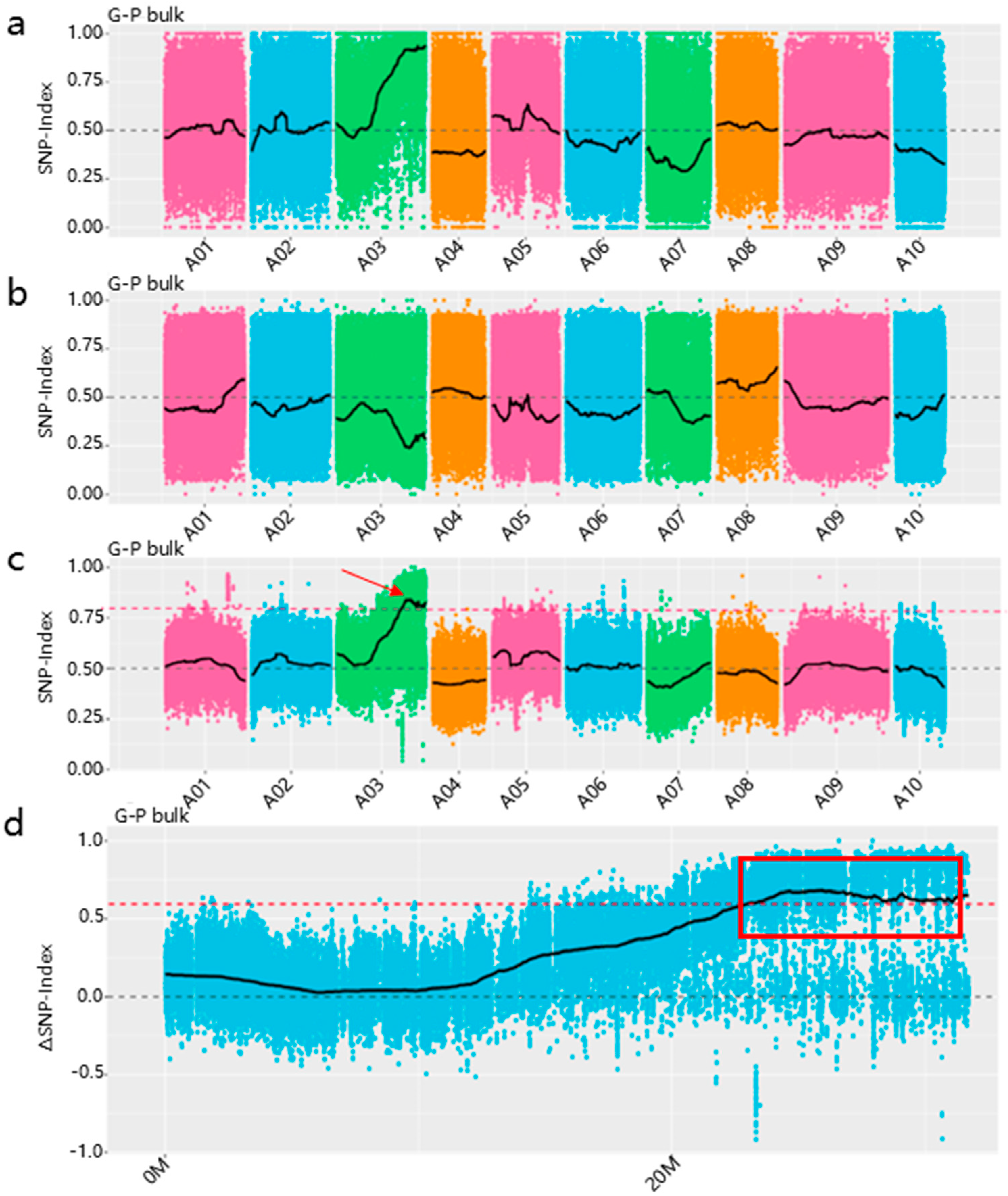
We randomly selected thirty purple-leaf and thirty green-leaf plants from 805 F2 individuals to construct extreme pools (P-bulk and G-bulk). Sequencing data were processed by removing adapter-contaminated and low-quality paired-end reads. Using GATK3.3 software, clean reads from two pools were compared to the reference genome of Chinese cabbage (https://plants.ensembl.org/Brassica_rapa_ro18/Info/Cultivars, accessed on 18 July 2023). SNPs were developed using SAMtools (v1.17). These SNPs were used to calculate the SNP-index for both pools (G-bulk and P-bulk). The Δ (SNP-index) was derived as Δ (SNP-index) = SNP-index (P-bulk) − SNP-index (G-bulk). SNP-index = 0.5 indicates equal allele contributions from both parents, suggesting the absence of the candidate gene at that locus. Δ (SNP-index) > 0 signifies genomic regions harboring candidate genes [16].

2.5. Mapping the Gene of Controlling Purple-Leaf Trait

Based on the preliminary candidate region identified by BSA-Seq, primers were designed for SNP loci within the interval using the penta-primer amplification refractory mutation system (PARMS). The PARMS master mixture was purchased from Wuhan Gentides Biotech Co., Ltd., Wuhan, China. The PCR-based PARMS assay was performed as follows: 10 μL PCR reaction system (2 × PARMS main mixture 5 μL, allele-specific 1 at 10 μM concentration 0.15 μL, allelic primer 2 at 10 μM concentration 0.15 μL, universal primer at 10 μM concentration 0.4 μL, 50 ng DNA template 1 μL and 3.3 μL ddH2O); Drop PCR (denaturation: 94 °C for 20 s, annealing: 65 °C to 57 °C (0.8 °C per cycle) for 1 min, 10 cycles; 94 °C for 20 s, 57 °C for 1 min, 30 cycles). Fluorescence signals were detected using a TECAN Infinite M1000 microplate reader and analyzed with the online tool Snpdecoder (http://www.snpway.com/snpdecoder, accessed on 9 September 2021) to generate genotype plots. A: Homozygous for the ‘PQC’ allele. B: Homozygous for the ‘HYYTC’ allele. H: Heterozygous. Polymorphic SNP markers were screened in the parental lines (‘PQC’ and ‘HYYTC’), F1 and F2 plants. Recombinants in the F2 population were identified by combining phenotypic data with genotyping results. Newly developed SNP markers were used to further genotype recombinants (primer sequences are listed in Supplementary Table S1). The candidate region from fine mapping was analyzed using the Chinese cabbage reference genome. Genes within the interval were annotated, and candidate genes were predicted based on functional annotations.

3. Results and Analysis

3.1. Genetic Inheritance of the Purple-Leaf Trait

Leaf color observations across six generations revealed the following: P1 (‘PQC’) exhibited deep purple leaves, P2 (‘HYYTC’) displayed green leaves, and F1 hybrids showed light purple leaves, intermediate between the parental lines (Figure 1). Segregation analysis in the F2 population (5472 plants) identified 3998 purple-leaf and 1474 green-leaf plants, fitting a 3:1 ratio (χ2 = 1.81, p = 0.577). In the BC1P2 population (705 plants), 373 purple-leaf and 332 green-leaf plants followed a 1:1 ratio (χ2 = 1.61, p = 0.232). All individuals in the BC1P1 population (86 plants) were purple leaf (Table 1). The results showed that the purple-leaf trait was a quality trait controlled by a single dominant gene.

3.2. BSA-Seq Analysis Identifies Candidate Region for Purple-Leaf Gene

About 160 G of total reads were obtained in P-bulk, with 95.51% aligned to the reference genome and an average depth of 31×. About 153 G of total reads were obtained in G-Bulk, with 95.48% alignment rate and an average depth of 32× (Table 2).
Sequences from both parental lines were aligned to the Chinese cabbage reference genome, identifying 2,776,536 SNPs. Δ (SNP-index) plot across genomic regions (95% confidence level) identified a 7.8 Mb candidate interval (23.88–31.68 Mb) on chromosome A03 (Figure 2).

3.3. Fine Mapping of the Purple-Leaf Gene

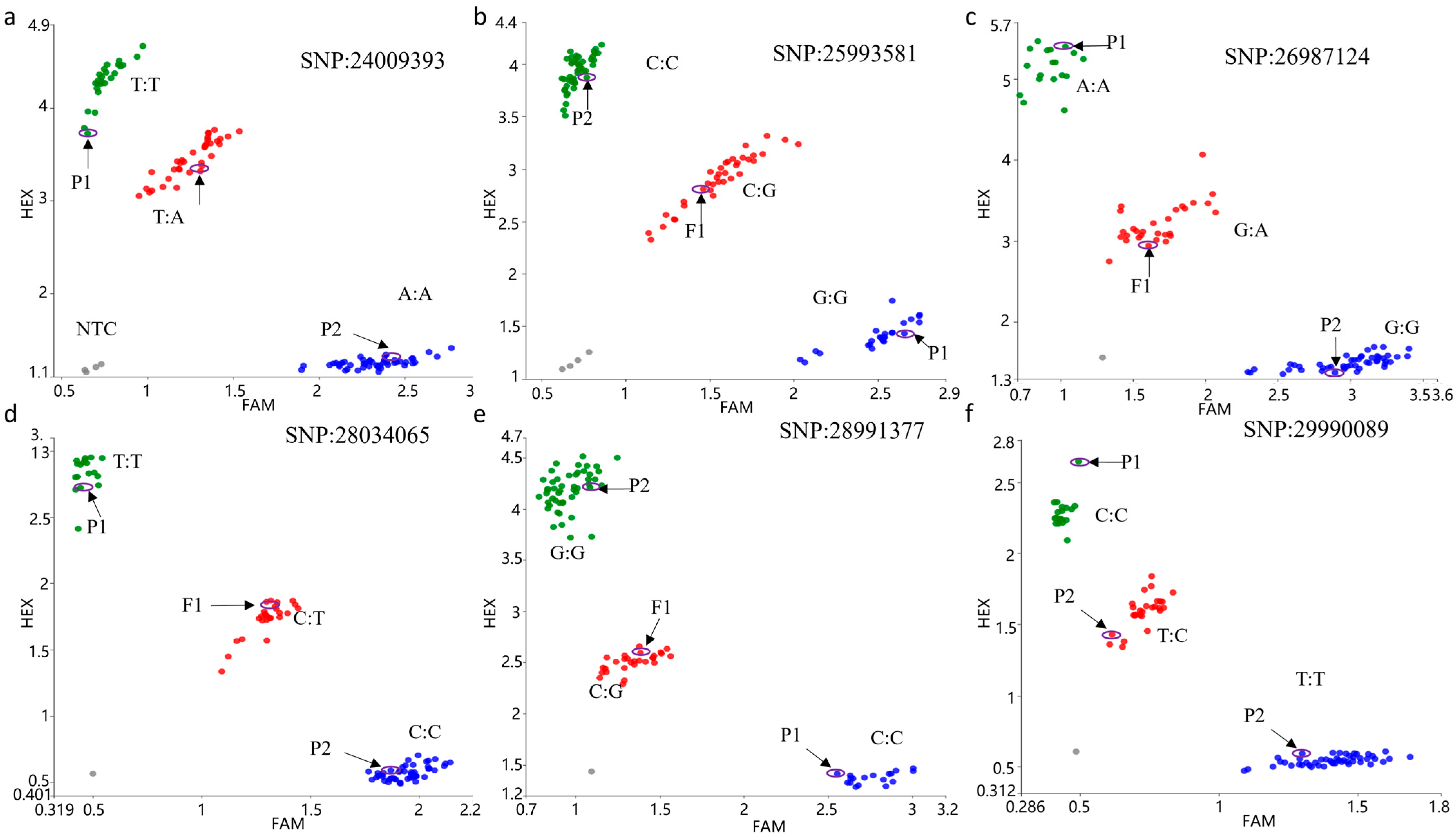
Due to the large size of initial mapping interval, six primer pairs were designed between 24 Mb and 30 Mb (primer sequences in Supplementary Table S1) and amplified in the parental lines, F1, and F2 plants (44 green and 44 purple individuals). It showed good genotyping results, and the linkage between markers in this interval and the purple trait confirmed the reliability of the BSA-derived candidate region (Figure 3).
To identify recombinant individuals, SNP24009393 and SNP29990089 markers were used to genotype 995 F2 plants (700 green-leaf and 295 purple-leaf), yielding 145 recombinants. Notably, eight recombinants (A01-A06, A05-A06, A05-F10, A06-D01, A06-D06, A11-C11, A11-D05, and A11-H06) exhibited green phenotypes but heterozygous genotypes (H) at SNP29990089, indicating that the SNP29990089 marker could not completely distinguish the genotype of the progeny. This suggested the target gene lies downstream of SNP29990089. A terminal marker, SNP31686432, was designed to validate these eight recombinants. All showed homozygous recessive (B) genotypes, confirming the gene location between SNP29990089 and SNP31686432 (Supplementary Table S2).
Twelve additional markers were developed within this interval. Recombinants A01-A06 displayed heterozygous (H) genotype at SNP30820924, narrowing the interval to 30.82–31.68 Mb (Table 3).
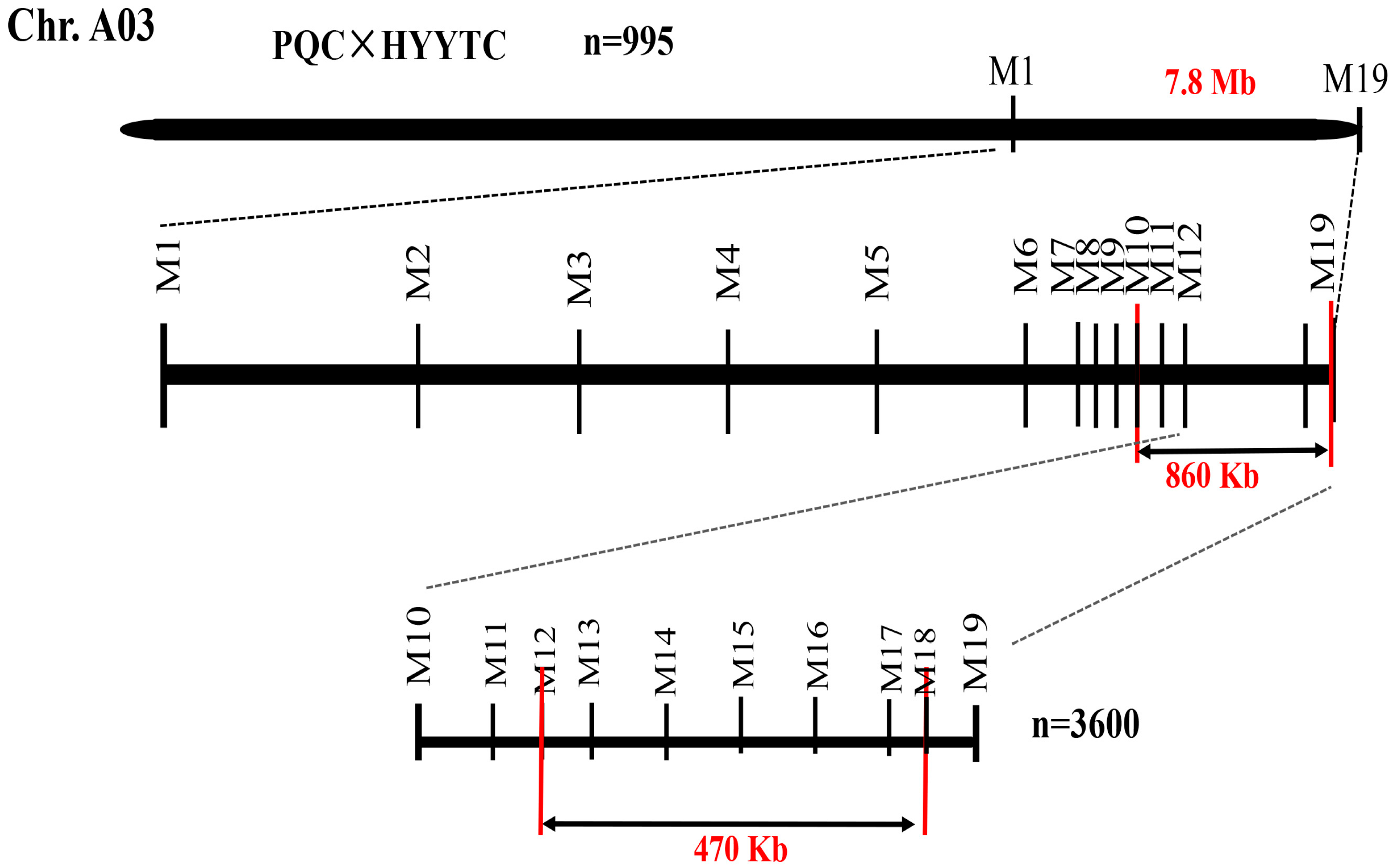
Given the remaining size of the candidate interval, an expanded population of 3600 F2 plants (800 green and 2800 purple) was screened using markers SNP30820924 and SNP31686432. Genotyping revealed five recombinants (A12-F09, A32-B04, A34-D12, and A52-H02). Those are purple phenotypes with homozygous recessive (B) genotypes at both markers, while A37-A03 is a purple phenotype but heterozygous (H) at SNP30820924. These five recombinants were further analyzed with additional markers (SNP31209409, SNP31304070, SNP31409624, SNP31521617, and SNP31632032). Genotypes of all five plants perfectly matched their phenotypes, narrowing the final candidate interval to 31.18–31.65 Mb (Table 3, Figure 4).
The 470 kb interval contains 29 genes based on the Chinese cabbage reference genome annotation, including 16 annotated genes and 13 uncharacterized genes (Table 4). Notably, Bra017888 encodes trehalose phosphate synthase 10 (TPS10). Previous studies have shown that anthocyanin content increased significantly in Arabidopsis seedlings treated with trehalose of different concentrations, indicating that trehalose promoted anthocyanin accumulation in plants [17,18], suggesting Bra017888 may regulate anthocyanin biosynthesis.

3.4. Molecular Marker Development

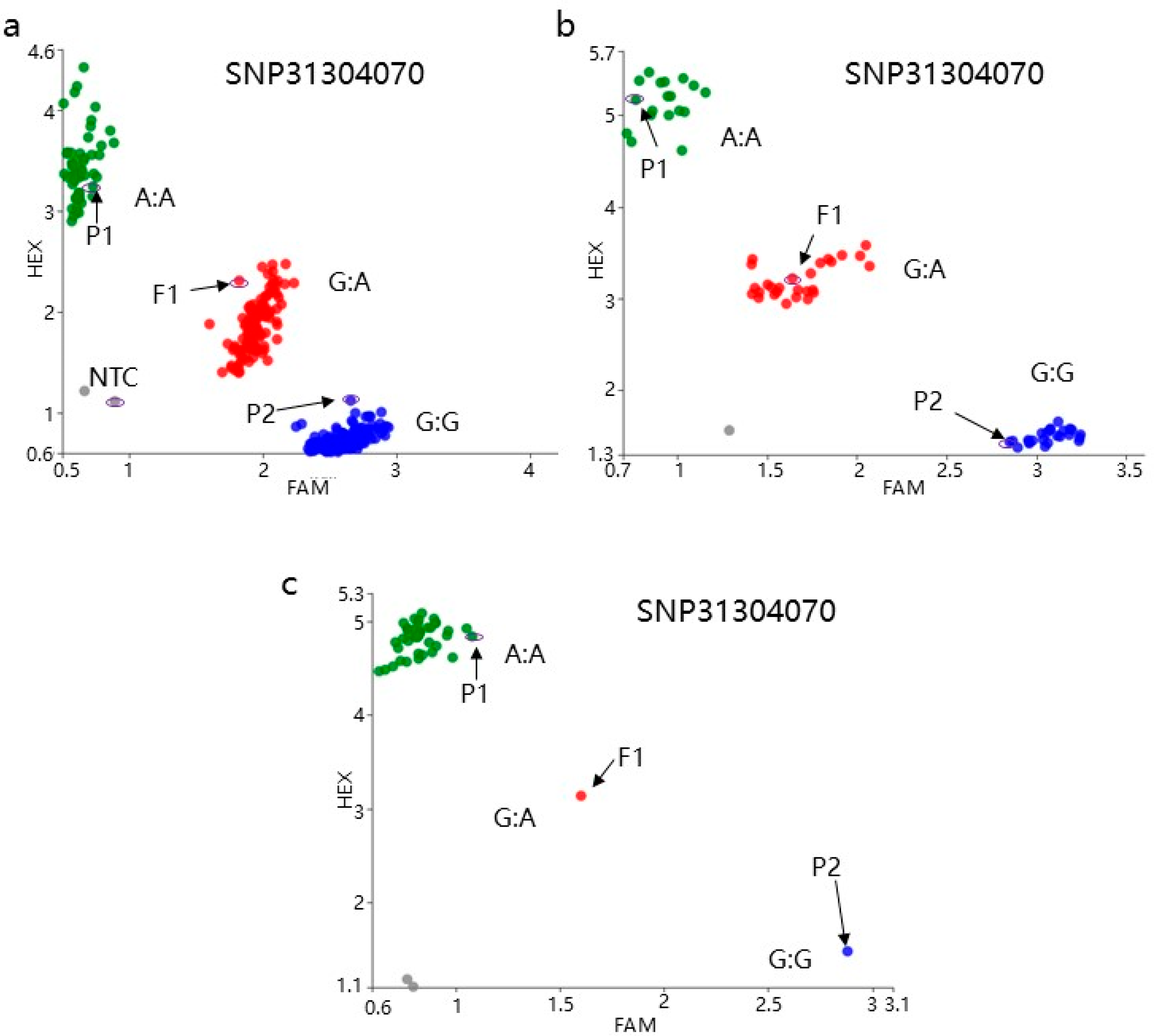
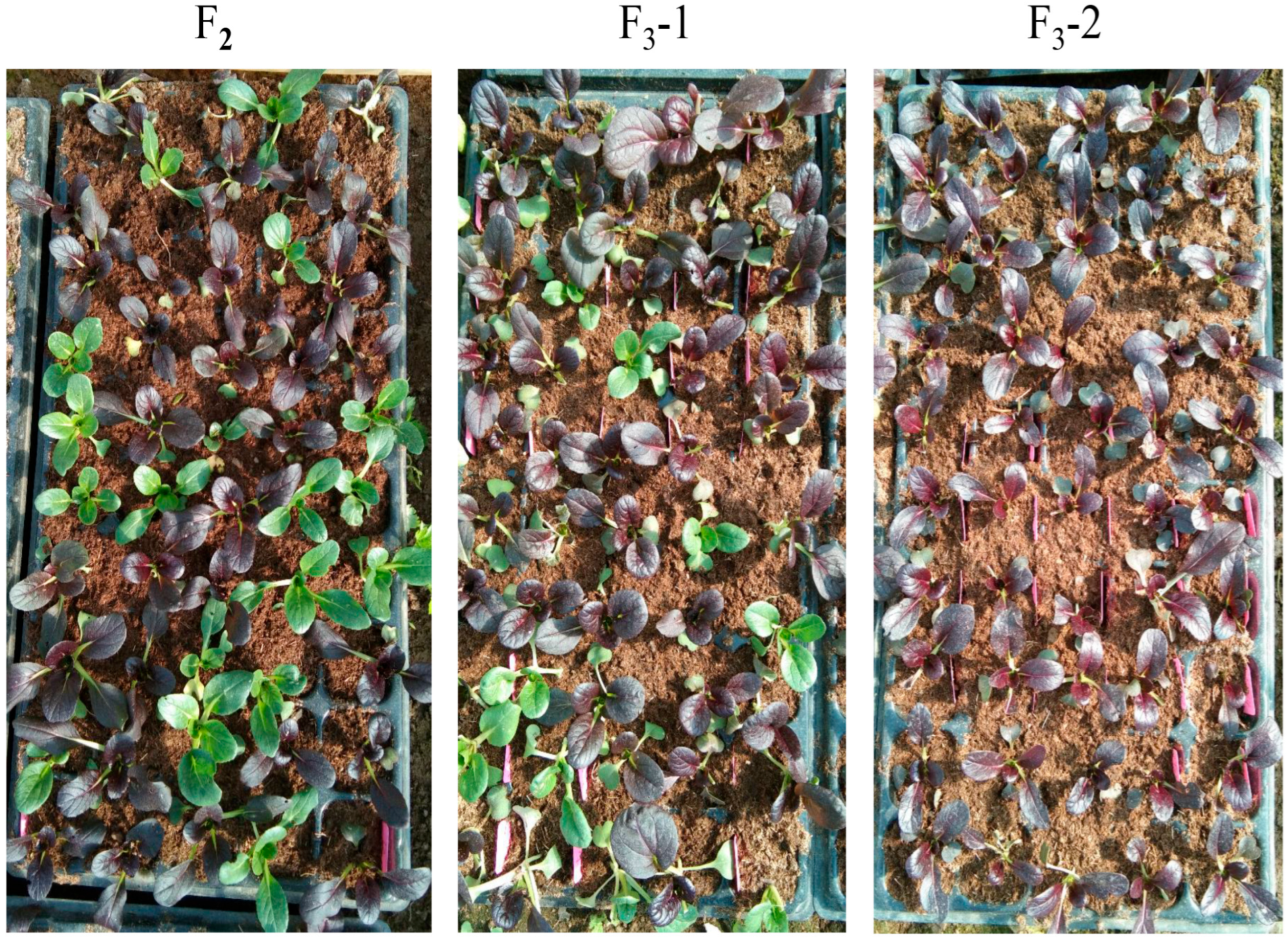
Within the final mapped interval, five SNP markers (SNP31209409, SNP31304070, SNP31409624, SNP31521617, and SNP31632032) were identified. The representative marker SNP31304070 was selected for validation in the F2 and F3 populations. Detailed marker information is provided in Supplementary Table S1. Ninety F2 plants were randomly selected for genotyping using the SNP31304070 marker. Plants with heterozygous purple (H, red dots) and homozygous purple (A, green dots) genotypes were self-pollinated to generate two F3 populations. F3-1 was derived from heterozygous purple plants. Among 63 F3 individuals, 49 exhibited purple-leaf and 17 showed green-leaf, indicating persistent segregation. F3-2 was derived from homozygous purple plants, and all 50 F3 plants displayed uniform purple-leaf, confirming the absence of segregation. Genotyping of both F3 populations with SNP31304070 revealed 100% concordance between phenotypes and genotypes. This validated the marker’s utility for molecular marker-assisted breeding (Figure 5 and Figure 6).

4. Discussion

4.1. The Genetic Characteristics of the Gene Controlling Purple-Leaf Trait

Guo (2014) investigated leaf color segregation in an F2 population derived from an inter-varietal hybridization between purple pakchoi with flowering Chinese cabbage, the observed ratio of green to purple plants was 1:3, with pure green, intermediate, and pure purple plants segregating at 1:2:1 [12]. This suggested that the purple-leaf trait in pakchoi is controlled by a single dominant gene with incomplete dominance. Similarly, Zhang et al. (2011) reported variations in purple intensity in a genetic population derived from an inter-subspecific hybridization between Chinese cabbage and purple pakchoi, further supporting monogenic dominant inheritance [19]. While these studies utilized inter-subspecific cross or inter-varietal hybridization, in this study, our findings based on intra-varietal hybridization between different inbred lines of pakchoi align with their conclusions, reinforcing the single-gene dominant inheritance model for purple-leaf trait.

4.2. Mapping Interval and Candidate Gene Analysis

The above research results indicate that due to the different sources of the purple gene, the target genes controlling anthocyanin synthesis in Chinese cabbage may be located on chromosomes A02, A03, A07, and A09 [6,7,8,9]. In terms of specific gene exploration, sequence analysis indicated that a large insertion in the first intron of the BrMYB2 gene in green Chinese cabbage suppresses its expression, thereby preventing anthocyanin accumulation [9]. In the case of pakchoi, the gene controlling purple-leaf trait was consistently localized to the terminal region of chromosome A03 [11,12]. Key candidates included Bra017728 (BrCHI3) and Bra017831 (BrLBD39), and sequence analysis revealed a 48 bp deletion in the first exon of BrCHI3 in purple lines, while BrLBD39 showed no coding sequence (CDS) differences but exhibited higher expression in green mutants [12,20]. However, our study mapped the candidate interval to a downstream region on A03 (31.18–31.65 Mb), and BrCHI3 and BrLBD39 were absent in this interval, and RNA-seq analysis detected no expression of these genes in either parental line, suggesting they are not causal for the purple trait [5]. This discrepancy may stem from differences in genetic materials or population structures across studies. The annotated gene Bra017888 encodes trehalose phosphate synthase 10 (TPS10). Trehalose, a non-reducing disaccharide, is synthesized via its precursor trehalose-6-phosphate (T6P), catalyzed by TPS enzymes. T6P serves as a carbon availability signal, promoting anthocyanin biosynthesis under high carbohydrate conditions. In Arabidopsis, the TPS gene family comprises 11 members, divided into AtTPS1-4 and AtTPS5-11 subfamilies [21]. While TPS1 has been extensively studied, overexpression in potato and maize increased anthocyanin content by about 2-fold and upregulated MYB/bHLH regulators [22]. Zhao (2018) demonstrated that JcTPS1 overexpression from Jatropha induced anthocyanin-related genes (AtDFR, AtLDOX) in Arabidopsis [23]. Given its positional candidacy and homology to TPS1, Bra017888 (TPS10) may similarly regulate anthocyanin pathways. Functional validation of this candidate gene should be conducted to further elucidate its role. Additionally, within this mapped interval, certain candidate genes remain unannotated and warrant further attention.

4.3. Application of Molecular Marker for Purple-Leaf Trait

During the hybridization and breeding process of purple pakchoi, since the purple color is a dominant trait and green is recessive, heterozygous plants exhibit purple coloration. This makes it difficult to distinguish between homozygous purple and heterozygous purple plants based solely on color. When heterozygous plants are selected during population segregation, their offspring will continue to exhibit color segregation, resulting in a prolonged breeding cycle and reduced selection efficiency. The SNP31304070 marker developed in this study enables precise discrimination of homozygous purple plants and heterozygous purple plants, achieving 100% phenotype–genotype concordance in F2 and F3 populations.

5. Conclusions

In conclusion, the genes controlling purple-leaf trait were finally located to A03 chromosome 31.18-31.65 Mb. Bra017888 is a candidate gene, indicating a regulatory relationship with the biosynthesis process of anthocyanin.. The SNP31304070 marker and trait were co-separated. This molecular marker will significantly enhance selection efficiency, shorten breeding cycle, and support rapid improvement of anthocyanin-rich varieties in pakchoi.

Supplementary Materials

The following supporting information can be downloaded at: https://www.mdpi.com/article/10.3390/genes16101184/s1; Table S1: PARMS Primer sequence. Table S2: 145 recombinants and their genotypes detected in F2 population.

Author Contributions

H.X. conceived and supervised the work. B.S. analyzed the data. B.S. and Q.Y. (Qinyu Yang) drafted the manuscript. Q.Y. (Qichang Yang) and Y.L. provided guidance for the test. T.H., L.C., Z.J., X.Y., L.Z., L.O., L.H. and W.Z. performed the experiments. All authors have read and agreed to the published version of the manuscript.

Funding

This study was supported by Sichuan Science and Technology Program Project-Fine mapping and functional identification of purple genes in pakchoi (Sichuan Provincial Department of Science and Technology, 2023NSFSC0168); Agricultural Science and Technology Innovation Program of CAAS (Chinese Academy of Agricultural Sciences, ASTIP-IUA-2025002).

Institutional Review Board Statement

Not applicable.

Informed Consent Statement

Not applicable.

Data Availability Statement

The original contributions presented in the study are included in the article/Supplementary Materials, further inquiries can be directed to the corresponding authors.

Acknowledgments

The authors gratefully acknowledge Xiaodong Wang from the Institute of Economic Crops, Jiangsu Academy of Agricultural Sciences for his helpful advice and text Revision.

Conflicts of Interest

The authors declare no conflicts of interest.

References

  1. Isaak, C.K.; Petkau, J.C.; Blewett, H.; Karmin, O.; Siow, Y.L. Lingonberry Anthocyanins Protect Cardiac Cells from Oxidative-stress-induced Apoptosis. Can. J. Physiol. Pharmacol. 2017, 95, 904–910. [Google Scholar] [CrossRef]
  2. Kamaljit, M.; Priya, R.; Mahetab, H.; Gregory, A. Bioactivity and Anthocyanin Content of Microwave-assisted Subcritical Water Extracts of Manipur Black Rice (Chakhao) Bran and Straw. Future Foods 2021, 3, 100030. [Google Scholar] [CrossRef]
  3. Song, B.; Xu, H.; Chen, L.Z.; Fan, X.X.; Jing, Z.G.; Chen, S.; Xu, Z.G. Study of the Relationship between Leaf Color Formation and Anthocyanin Metabolism among Different Purple Pak-choi Lines. Molecules 2020, 25, 4809. [Google Scholar] [CrossRef]
  4. Zhang, L.; Xu, B.; Wu, T.; Yang, Y.F.; Fan, L.X.; Wen, M.X.; Su, J.X. Transcriptomic Profiling of Two Pak Choi Varieties with Contrasting Anthocyanin Contents Provides an Insight into Structural and Regulatory Genes in Anthocyanin Biosynthetic Pathway. BMC Genom. 2017, 18, 288. [Google Scholar] [CrossRef]
  5. Yang, Q.Y.; Huang, T.; Zhang, L.; Yang, X.; Zhang, W.Q.; Chen, L.Z.; Jing, Z.G.; Li, Y.J.; Yang, Q.C.; Xu, H.; et al. Integrated Phenotypic Physiology and Transcriptome Analysis Revealed the Molecular Genetic Basis of Anthocyanin Accumulation in Purple Pak-Choi. Horticulturae 2024, 10, 1018. [Google Scholar] [CrossRef]
  6. Burdzinski, C.; Wendell, D.L. Mapping the Anthocyaninless (anl) Locus in Rapid-Cycling Brassica rapa (RBr) to Linkage Group R9. BMC Genet. 2007, 8, 64. [Google Scholar] [CrossRef] [PubMed]
  7. Zhang, S.J. Mapping of a Novel Anthocyanin Locus (Anm) and Screening of Candidate Genes in Brassica rapa. Ph.D. Thesis, Chinese Academy of Agricultural Sciences, Beijing, China, 2016. [Google Scholar]
  8. Wu, J.Q.; Zhao, J.; Qin, M.L.; Ren, Y.J.; Zhang, H.M.; Dai, Z.H.; Hao, L.Y.; Zhang, L.G. Genetic Analysis and Primary Mapping of the Purple Gene in Purple Heading Chinese cabbage. Hortic. Plant J. 2016, 2, 351–356. [Google Scholar] [CrossRef]
  9. He, Q.; Zhang, Z.F.; Zhang, L.G. Anthocyanin Accumulation, Antioxidant Ability and Stability, and a Transcriptional Analysis of Anthocyanin Biosynthesis in Purple Chinese cabbage (Brassica rapa L. ssp. pekinensis). J. Agric. Food Chem. 2016, 64, 132–145. [Google Scholar] [CrossRef]
  10. Liu, J.; Wang, W.J.; Zhang, D.S.; Yu, S.C.; Zhang, F.L.; Zhao, Y.Y.; Yu, Y.J.; Xu, J.B.; Lu, G.X. Primary Mapping of pur, a Gene Controlling Purple Leaf Color in Brassica rapa. Acta Agric. Boreali-Sin. 2023, 28, 49–53. [Google Scholar]
  11. Wang, W.; Zhang, D.; Yu, S.; Liu, J.; Wang, D.; Zhang, F.; Yu, Y.; Zhao, X.; Lu, G.; Su, T. Mapping the BrPur Gene for Purple Leaf Color on Linkage Group A03 of Brassica rapa. Euphytica 2014, 199, 293–302. [Google Scholar] [CrossRef]
  12. Guo, N. Natural Variation and Genetics Mechanism of Anthocyanin and Flavonol Glycosides Metabolism in Brassica rapa. Ph.D. Thesis, Chinese Academy of Agricultural Sciences, Beijing, China, 2014. [Google Scholar]
  13. Wang, N.; Yuan, Y.; Wang, H.; Yu, D.; Liu, Y.; Zhang, A.; Gowda, M.; Nair, S.K.; Hao, Z.; Lu, Y.; et al. Applications of Genotyping-by-Sequencing (GBS) in Maize Genetics and Breeding. Sci Rep 2020, 10, 16308. [Google Scholar] [CrossRef] [PubMed]
  14. Tsykun, T.; Rellstab, C.; Dutech, C. Comparative Assessment of SSR and SNP Markers for Inferring the Population Genetic Structure of The Common Fungus Armillaria cepistipes. Heredity 2017, 119, 371–380. [Google Scholar] [CrossRef]
  15. Turaki, A.A.; Ahmad, B.; Magaji, U.F.; Abdulrazak, U.K.; Yusuf, B.A.; Hamza, A.B. Optimised Cetyltrimethylammonium Bromide (CTAB) DNA Extraction Method of Plant Leaf with High Polysaccharide and Polyphenolic Compounds for Downstream Reliable Molecular Analyses. Afr. J. Biotechnol. 2017, 16, 1354–1365. [Google Scholar] [CrossRef]
  16. Takagi, H.; Abe, A.; Yoshida, K.; Kosugi, S.; Natsume, S.; Mitsuoka, C.; Uemura, A.; Utsushi, H.; Tamiru, M.; Takuno, S.; et al. QTL-seq: Rapid Mapping of Quantitative Trait Loci in Rice by Whole Genome Resequencing of DNA from Two Bulked Populations. Plant J. 2013, 74, 174–183. [Google Scholar] [CrossRef]
  17. Teng, S.; Keurentjes, J.; Bentsink, L.; Koornneef, M.; Smeekens, S. Sucrose-specific Induction of Anthocyanin Biosynthesis in Arabidopsis Requires the MYB75/PAP1 Gene. Plant Physiol. 2005, 139, 1840–1852. [Google Scholar] [CrossRef]
  18. Gravot, A.; Grillet, L.; Wagner, G.; Jubault, M.; Lariagon, C.; Baron, C.; Deleu, C.; Delourme, R.; Bouchereau, A.; Manzanares-Dauleux, M.J. Genetic and Physiological Analysis of the Relationship between Partial Resistance to Clubroot and Tolerance to Trehalose in Arabidopsis thaliana. New Phytol. 2011, 191, 1083–1094. [Google Scholar] [CrossRef]
  19. Zhang, D.S.; Zhang, F.L.; Zhao, Y.Y.; Yu, Y.J.; Xu, J.B.; Yu, S.C.; Wang, W.J. Genetic Analysis of Leaf Color Characteristics with Purple Genes on Chinese Cabbage. China Veg. 2011, 2, 36–38. [Google Scholar]
  20. Dong, H.; Hou, X.L.; Han, K.; Zhang, Z.S.; Hu, C.M. Cloning and Expression Analysis of Anthocyanins Negative Regulatory Factor BrcLBD39 and its Response to Exogenous 6-BA in Non-heading Chinese Cabbage. J. Nanjing Agric. Univ. 2018, 41, 49–56. [Google Scholar]
  21. Zhang, W.; Wang, Y.F.; Guo, Y.P. Review on Crosstalk Regulation Involving in Trehalose-6-phosphate Signal in Plant. Plant Physiol. J. 2016, 52, 394–400. [Google Scholar]
  22. Xiang, Y.; Liu, Y.; Zhao, D.; Li, Y. TPS1 Transgene Promotes Anthocyanin Accumulation under Drought Stress and Enhances Drought Tolerance in Maize Plants. Plant Physiol. J. 2015, 51, 2054–2062. [Google Scholar]
  23. Zhao, M.L.; Ni, J.; Chen, M.; Xu, Z. Over-expression of JcTPS1 from Jatropha curcas Induces Early Flowering of Arabidopsis and Improves Anthocyanin Accumulation in Leaves. Mol. Plant Breed. 2018, 16, 255–261. [Google Scholar]
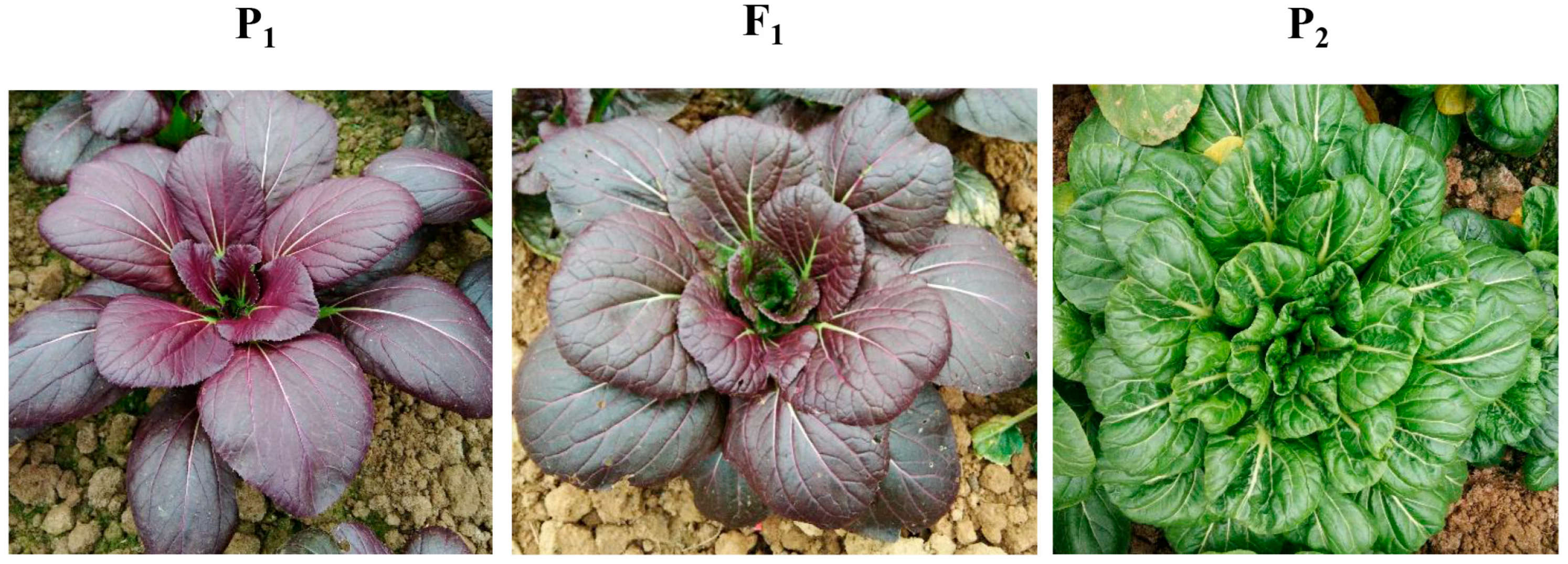
Figure 1. The leaf color of P1, P2, and F1.
Genes 16 01184 g001
Figure 2. Distribution of ΔSNP−index in chromosomes and identification of genomic region of candidate gene. (a) Distribution of SNP-index across all 10 chromosomes in G−bulk sample; (b) distribution of SNP−index across all 10 chromosomes in P−bulk sample; (c) distribution of Δ (SNP−index) across all 10 chromosomes, with red arrows indicating the mapped interval. (d) Distribution of Δ (SNP−index) on chromosome A03. The red dashed line represents the 95 % confidence threshold. The red box highlights the region where Δ (SNP−index) exceeds the threshold, corresponding to the candidate gene interval.
Genes 16 01184 g002
Figure 3. Genotyping of P1, P2, F1, and F2 population with six markers. Green dots represent homozygous purple. Red dots represent heterozygous type. Blue dots represent the homozygous green. Grey dots represent undetected sample (NTC). (a) Genotyping with SNP24009393 marker; (b) Genotyping with SNP25993581 marker; (c) Genotyping with SNP26987124 marker; (d) Genotyping with SNP28034065 marker; (e) Genotyping with SNP28991377 marker; (f) Genotyping with SNP29990089marker.
Genes 16 01184 g003
Figure 4. Map-based cloning for candidate genes.
Genes 16 01184 g004
Figure 5. Genotyping of F2 and F3 population with SNP31304070 marker. (a) Genotyping of F2 population. (b) Genotyping of F3-1 population. (c) Genotyping of F3-2 population. Green dots represent homozygous purple (A). Red dots represent heterozygous type (H). Blue dots represent the homozygous green (B). Grey dots represent undetected sample (NTC).
Genes 16 01184 g005
Figure 6. Phenotypic identification of F2 and F3. F3-1: descendants derived from heterozygous purple plant in F2; F3-2: descendants derived from homozygous purple plant in F2.
Genes 16 01184 g006
Table 1. Segregation analysis of purple-leaf and green-leaf in the F2, BC1P1, and BC1P2 population.
PopulationTotal PlantsPurple-Leaf
Plants
Green-Leaf
Plants
Expected Ratioχ2p Value
F25472399814743:11.810.577
BC1P27053733321:11.610.232
BC1P1868601:0--
Table 2. Sequencing data quality control metrics for P-bulk and G-bulk samples.
SampleTotal Reads (bp)Mapping Rate (%)Average Depth (X)Properly Mapped (%)Cov_Ratio_10X (%)
P-bulk15989796095.483277.7485.69
G-bulk15342287495.513177.6886.04
Table 3. Recombinants and their genotypes were detected in the F2 population.
M1M2M3M4M5M6M7M8M9M10M11M12M13M14M15M16M17M18M19Color
Mark
position
24009393259935812698712428034065289900892999008930100772304029453060058630820924311502663118031431209409313040703140962431521617316320323165521131686432-
Recombinants13131313131313555550000099-
P1A AAA AAA AAA AAA AAA AAA purple
P2BBBBBBBBBBBBBBBBBBBgreen
F1HHHHHHHHHHHHHHHHHHHpurple
A01-A06HHHHHHHHHHBBBBBBBBBgreen
A05-A06HHHHHHHBBBBBBBBBBBBgreen
A05-F10HHHHHHHBBBBBBBBBBBBgreen
A06-D01HHHHHHHBBBBBBBBBBBBgreen
A06-D06HHHHHHHBBBBBBBBBBBBgreen
A11-C11HHHHHHHBBBBBBBBBBBBgreen
A11-D05HHHHHHHBBBBBBBBBBBBgreen
A11-H06HHHHHHHBBBBBBBBBBBBgreen
A12-F09BBBBBBBBBBBBHHHHHBBpurple
A32-B04BBBBBBBBBBBBHHHHHBBpurple
A34-D12BBBBBBBBBBBBHHHHHBBpurple
A52-H02BBBBBBBBBBBBHHHHHBBpurple
A37-A03BBBBBBBBBBBBHHHHHHHpurple
Table 4. Gene prediction for candidate interval.
Gene IDStartEndAnnotation
Bra0178763118044231180972Ribosomal protein L23 family protein
Bra0178773118151131183086Unknown protein
Bra0178783118443231185220Unknown protein
Bra0178793119088431191666AP2 domain-containing transcription factor
Bra0178803121384331214996Unknown protein
Bra0178813122760831229937Pentatricopeptide (PPR) repeat-containing protein
Bra0178823123974731246015UDP-glucosyl transferase 75B2
Bra0178833125579731257231Agenet domain-containing protein
Bra0178843126095431266012Unknown protein
Bra0178853132293131323275Unknown protein
Bra0178863134126831341483Unknown protein
Bra0178873134435631346341Unknown protein
Bra0178883134872731351464Trehalose phosphate synthase 10
Bra0178893135400531356742Formin homology 2 domain-containing protein
Bra0178903135698031361049E1 alpha subunit of the pyruvate dehydrogenase complex
Bra0178913136262631367740SIN3-like 5
Bra01789231372380313726925-Aminolevulinic acid dehydrtase 1
Bra0178933138301031384373Unknown protein
Bra0178943138694531387686Leucine-rich repeat protein kinase
Bra0178953139144231392231Unknown protein
Bra0178963141763231423472Unknown protein
Bra0178973143721931450288Aminophosphlipid ATPase 3
Bra0178983147260431473209Thioredoxin H-type 7
Bra0178993149594531497816Pentatricopeptide Repeat Protein
Bra0179003152222531530698UDP-xylosyltransferase
Bra0179013154053231547659Dynamin-like 3
Bra0179023157053831571898Unknown protein
Bra0179033159082731591348Unknown protein
Bra0179043159427431595090Unknown protein
Disclaimer/Publisher’s Note: The statements, opinions and data contained in all publications are solely those of the individual author(s) and contributor(s) and not of MDPI and/or the editor(s). MDPI and/or the editor(s) disclaim responsibility for any injury to people or property resulting from any ideas, methods, instructions or products referred to in the content.