Article

Missing Regulation Between Genetic Association and Transcriptional Abundance for Hypercholesterolemia Genes


by
Aaron Hakim
1,2,3,4,
Noah J. Connally
4,5,
Gavin R. Schnitzler
1,4,
Michael H. Cho
3,
Z. Gordon Jiang
2,
Shamil R. Sunyaev
4,5 and
Rajat M. Gupta
1,4,*
1
Division of Genetics and Cardiovascular Medicine, Department of Medicine, Brigham and Women’s Hospital, Boston, MA 02115, USA
2
Division of Gastroenterology and Hepatology, Beth Israel Deaconess Medical Center, Boston, MA 02215, USA
3
Channing Division of Network Medicine, Brigham and Women’s Hospital, Boston, MA 02215, USA
4
Broad Institute of MIT and Harvard, Cambridge, MA 02142, USA
5
Department of Biomedical Informatics, Harvard Medical School, Boston, MA 02215, USA
*
Author to whom correspondence should be addressed.
Genes 2025, 16(1), 84; https://doi.org/10.3390/genes16010084
Submission received: 16 December 2024 / Revised: 11 January 2025 / Accepted: 13 January 2025 / Published: 15 January 2025
(This article belongs to the Special Issue Cardiovascular Disease: From Genetics to Therapeutics)

Abstract

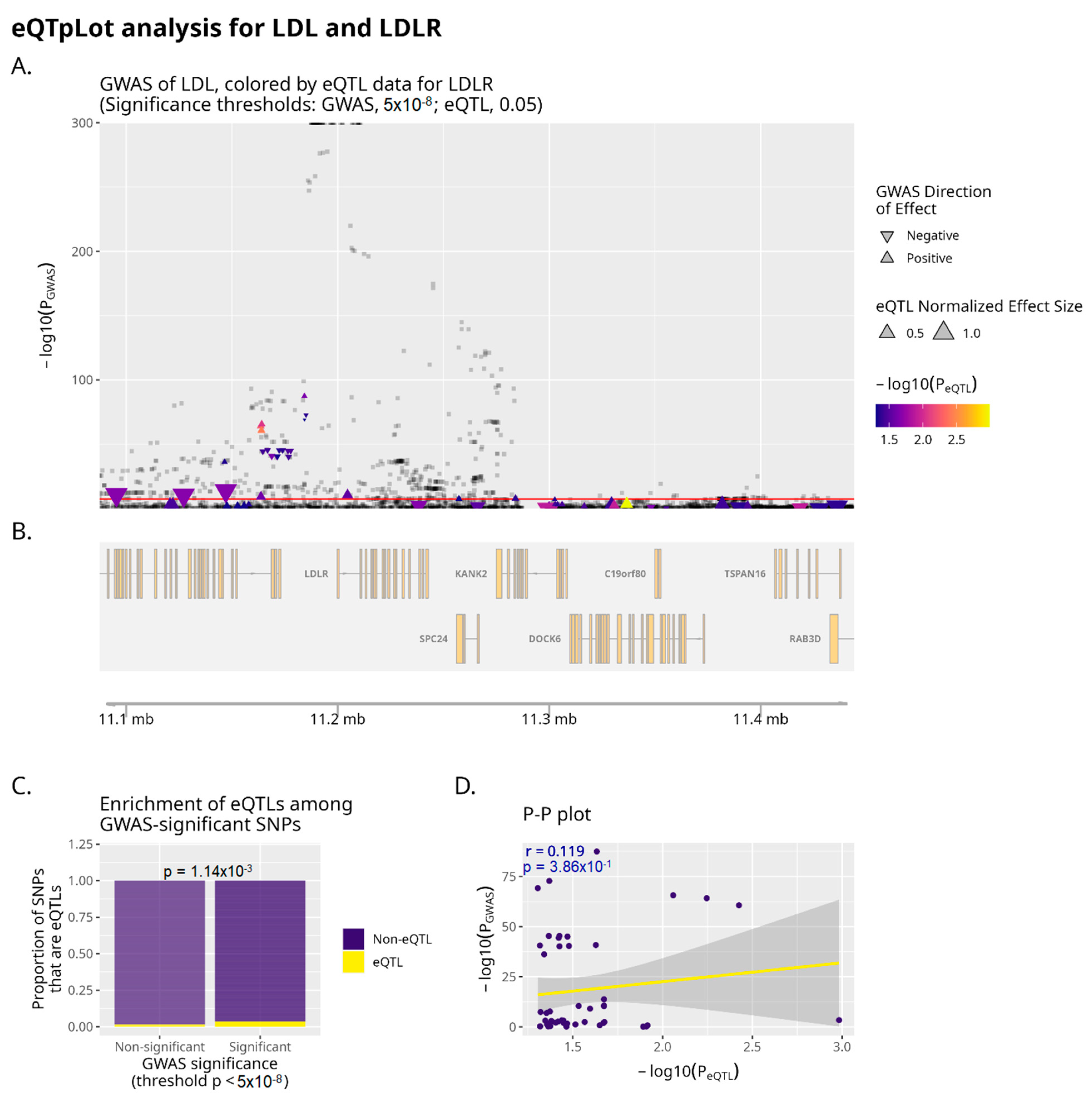
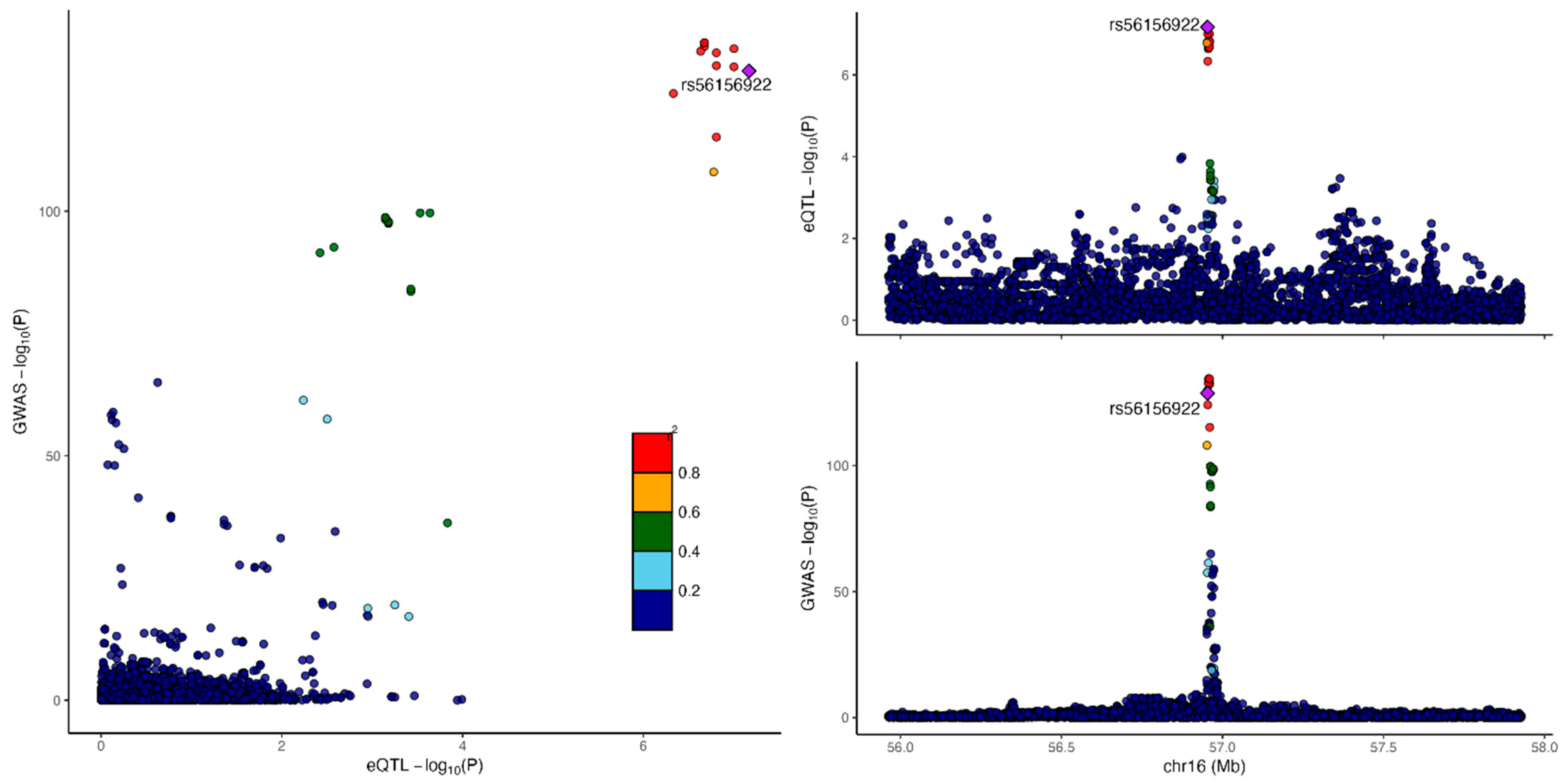
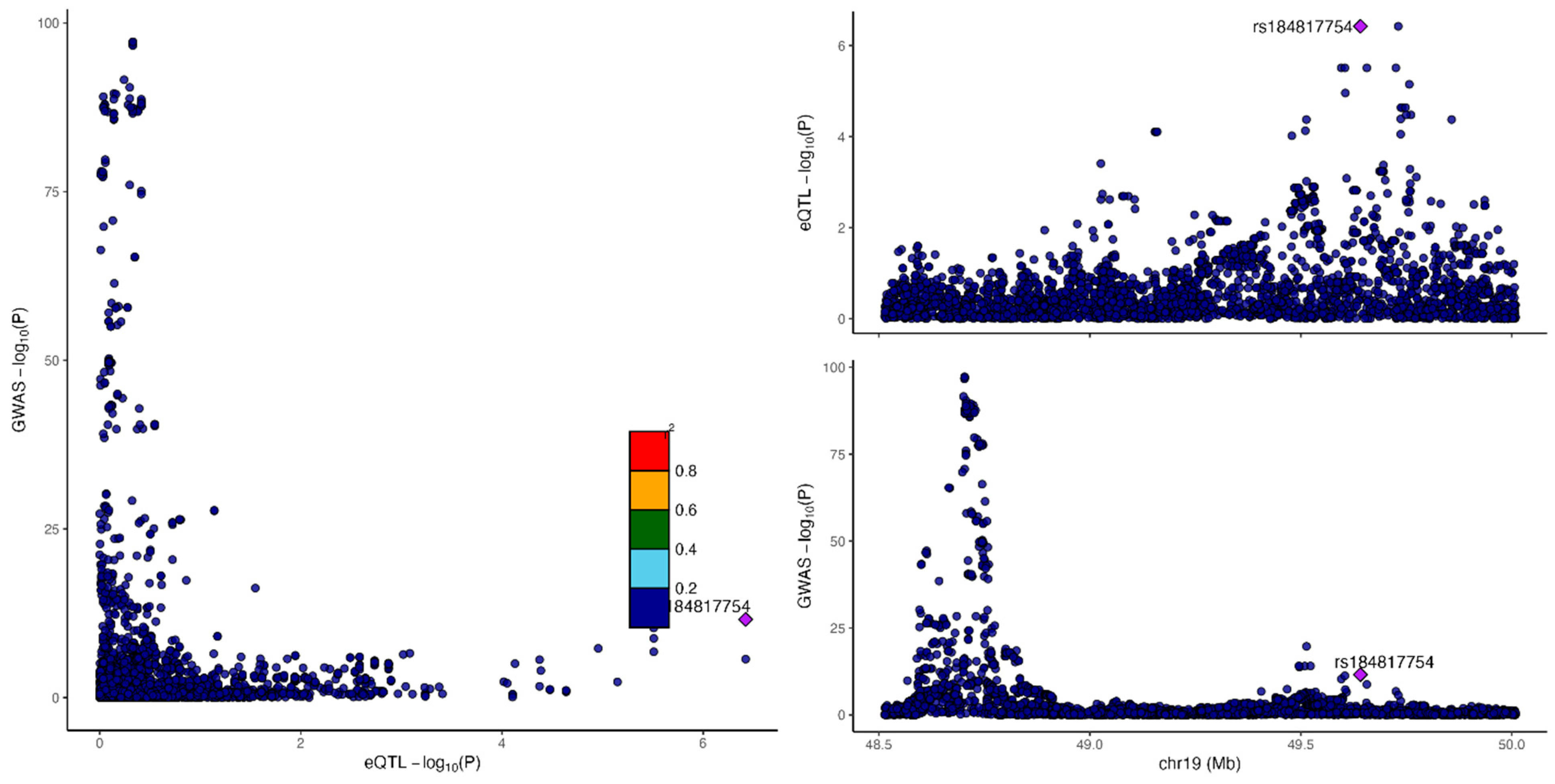
Background: Low-density lipoprotein cholesterol (LDL-C) is a well-established risk factor for cardiovascular disease, and it plays a causal role in the development of atherosclerosis. Genome-wide association studies (GWASs) have successfully identified hundreds of genetic variants associated with LDL-C. Most of these risk loci fall in non-coding regions of the genome, and it is unclear how these non-coding variants affect circulating lipid levels. One hypothesis is that genetically mediated variation in transcript abundance, detected via the analysis of expressed quantitative trait loci (eQTLs), is key to the biologic function of causal variants. Here, we investigate the hypothesis that non-coding GWAS risk variants affect the homeostatic expression of a nearby putatively causal gene for serum LDL-C levels. Methods: We establish a set of twenty-one expert-curated and validated genes implicated in hypercholesterolemia via dose-dependent pharmacologic modulation in human adults, for which the relevant tissue type has been established. We show that the expression of these LDL-C genes is impacted by eQTLs in relevant tissues and that there are significant genomic-risk loci in LDL-GWAS near these causal genes. We evaluate, using statistical colocalization, whether a single variant or set of variants in each genetic locus is responsible for the GWAS and eQTL signals. Results: Genome-wide association study results for serum LDL-C levels demonstrate that the 402 identified genomic-risk loci for LDL-C are highly enriched for known causal genes for LDL-C (OR 527, 95% CI 126–5376, p < 2.2 × 10⁻¹⁶). However, we find limited evidence for colocalization between GWAS signals near validated hypercholesterolemia genes and eQTLs in relevant tissues (colocalization rate of 26% at a locus-level colocalization probability > 50%). Conclusions: Our results highlight the complexity of genetic regulatory effects for causal hypercholesterolemia genes; we suggest that context-responsive eQTLs may explain the effects of non-coding GWAS hits that do not overlap with standard eQTLs.
Keywords: colocalization; eQTL; GWAS; gene regulation; genomics; LDL cholesterol; hypercholesterolemia colocalization; eQTL; GWAS; gene regulation; genomics; LDL cholesterol; hypercholesterolemia