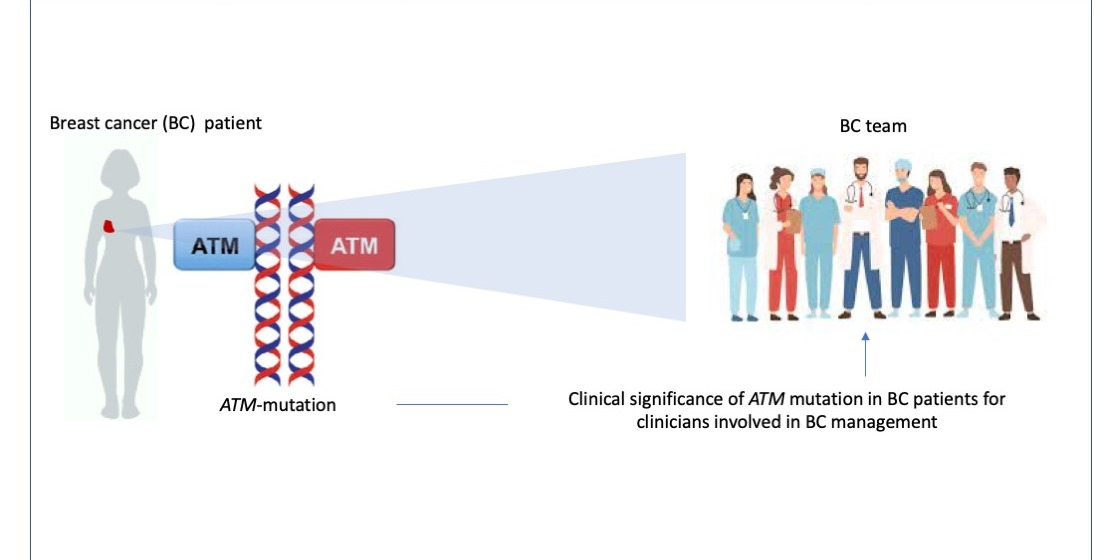
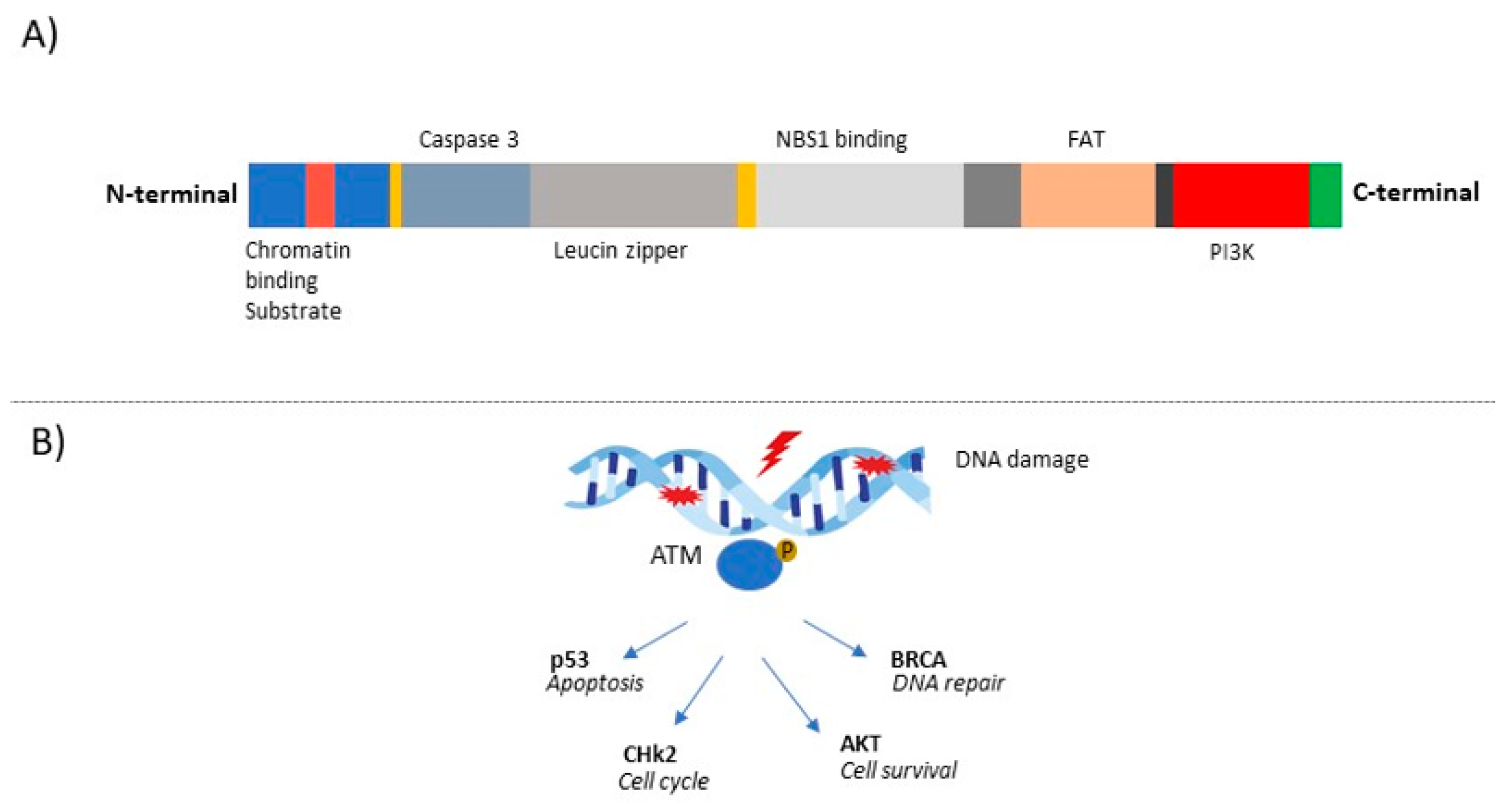
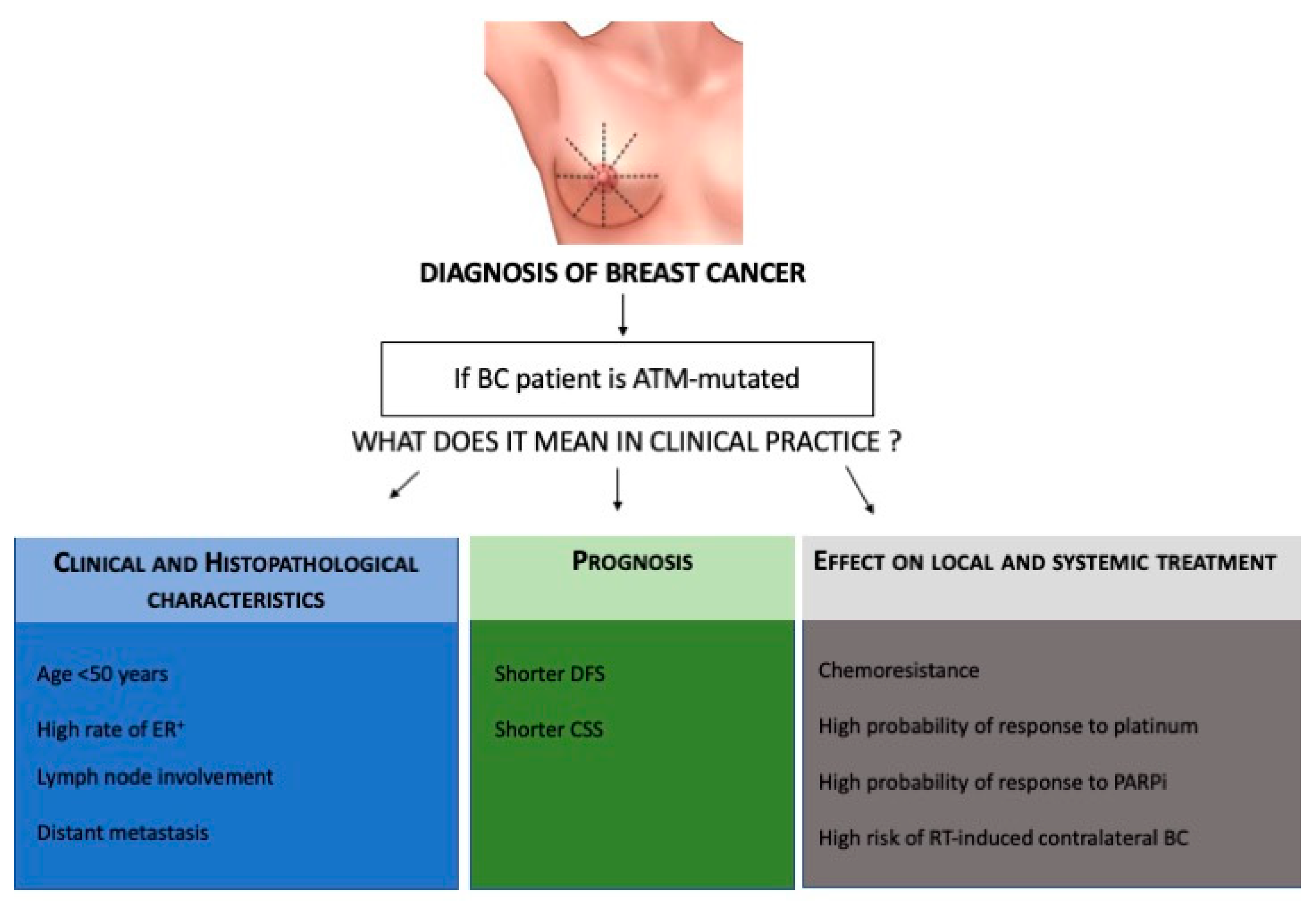
The ATM Gene in Breast Cancer: Its Relevance in Clinical Practice
 ,
,  , , ,
, , ,  and
and Abstract
Share and Cite
Stucci, L.S.; Internò, V.; Tucci, M.; Perrone, M.; Mannavola, F.; Palmirotta, R.; Porta, C. The ATM Gene in Breast Cancer: Its Relevance in Clinical Practice. Genes 2021, 12, 727. https://doi.org/10.3390/genes12050727
Stucci LS, Internò V, Tucci M, Perrone M, Mannavola F, Palmirotta R, Porta C. The ATM Gene in Breast Cancer: Its Relevance in Clinical Practice. Genes. 2021; 12(5):727. https://doi.org/10.3390/genes12050727
Chicago/Turabian StyleStucci, Luigia Stefania, Valeria Internò, Marco Tucci, Martina Perrone, Francesco Mannavola, Raffaele Palmirotta, and Camillo Porta. 2021. "The ATM Gene in Breast Cancer: Its Relevance in Clinical Practice" Genes 12, no. 5: 727. https://doi.org/10.3390/genes12050727
APA StyleStucci, L. S., Internò, V., Tucci, M., Perrone, M., Mannavola, F., Palmirotta, R., & Porta, C. (2021). The ATM Gene in Breast Cancer: Its Relevance in Clinical Practice. Genes, 12(5), 727. https://doi.org/10.3390/genes12050727