Cell–Cell Interactome-Based Pathogenesis and Therapies for Osteosarcoma


Highlights
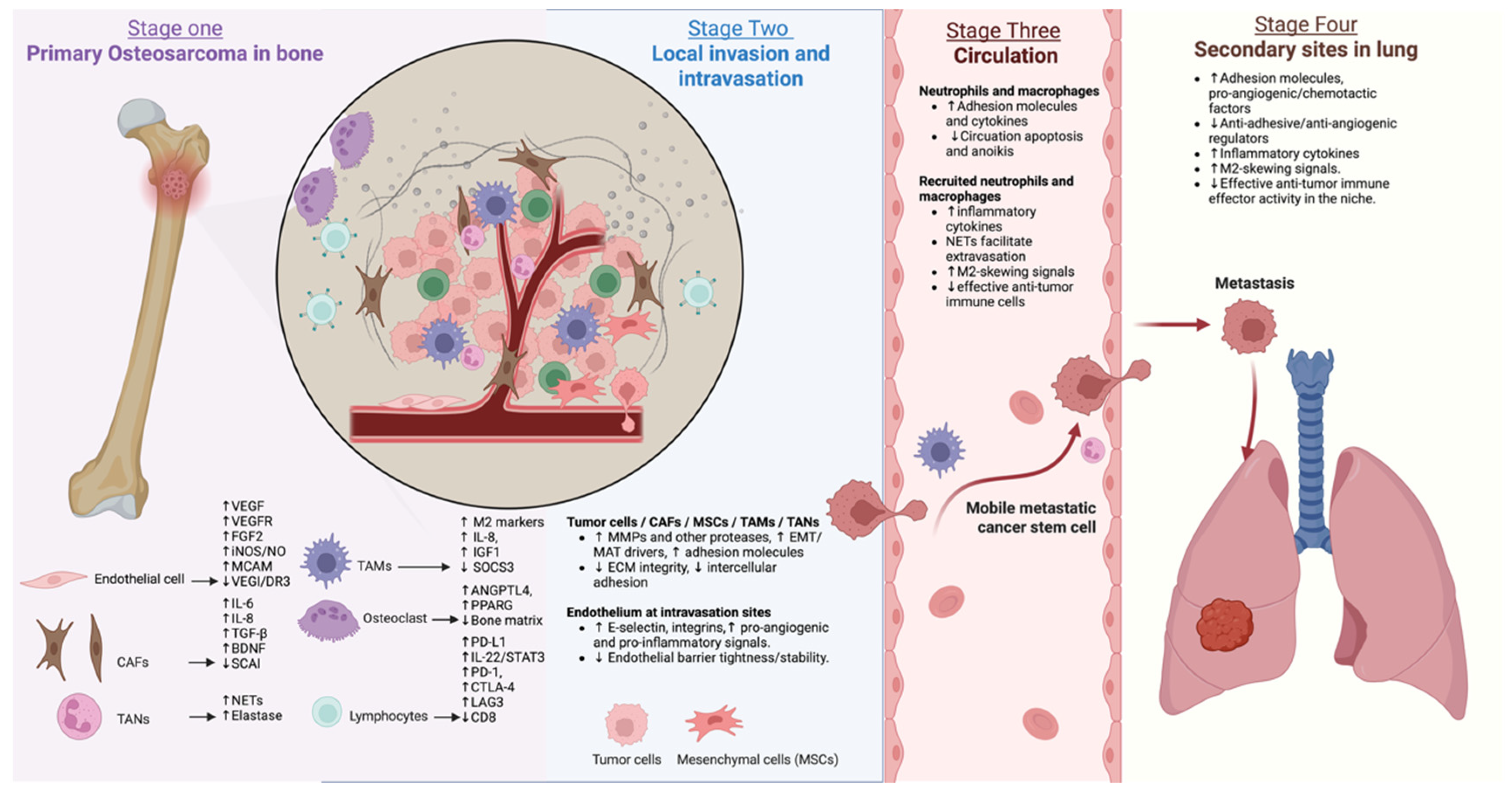
- The review systematically summarizes how tumor–microenvironment interactions, involving endothelial cells, fibroblasts, stromal cells, immune populations, and osteoclasts, drive osteosarcoma metastasis, therapy resistance, and tumor progression.
- Key molecular and cellular mechanisms, including exosome communication, signaling pathway activation, immune evasion, and vascular remodeling, are identified as central contributors to osteosarcoma aggressiveness.
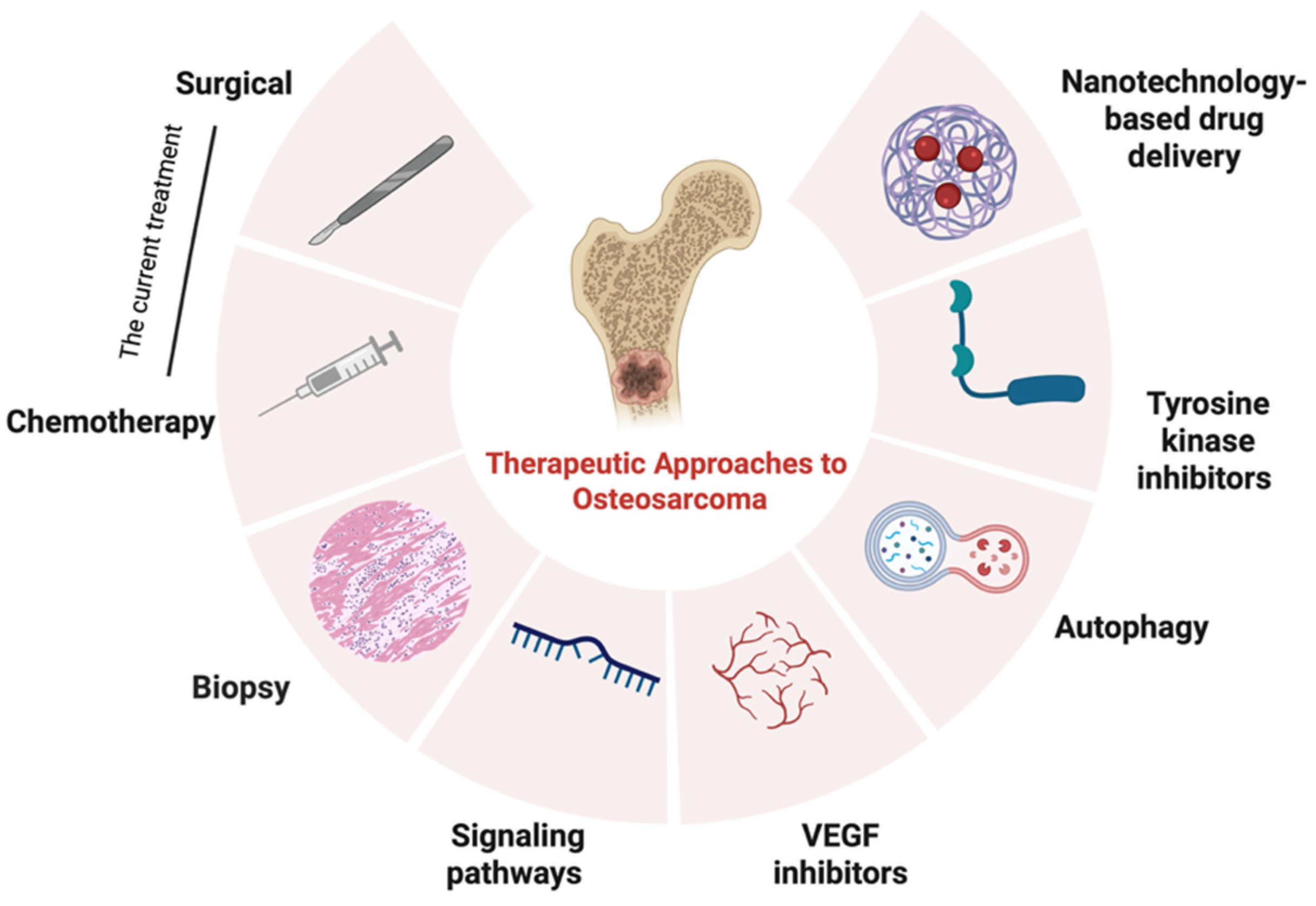
- Understanding these cellular crosstalk mechanisms provides a foundation for developing targeted therapies, immunomodulatory strategies, and microenvironment-focused interventions to overcome therapy resistance and metastatic spread.
- The integrated insights from this review support precision medicine approaches, highlight actionable molecular targets, and guide future research to improve the clinical management of osteosarcoma.
Abstract
1. Introduction
2. Role of Cell–Cell Interactions During OS Progression
2.1. Mesenchymal Lineage Cell–OS Crosstalk
2.1.1. Endothelial Cell–OS
2.1.2. Fibroblast–OS
2.1.3. Stromal Cell–OS
2.2. Immune Cell–OS Crosstalk
2.2.1. Neutrophil–OS
2.2.2. Macrophage–OS
2.2.3. Lymphocytes
2.3. Osteoclasts
3. Resistance to Treatment
3.1. ECs
3.2. Fibroblasts
3.3. Stromal Cells
3.4. Neutrophils
3.5. Macrophages
3.6. Lymphocytes
3.7. Osteoclasts
4. Metastatic Dissemination of OS
4.1. ECs
4.2. Fibroblasts
4.3. Stromal Cells
4.4. Neutrophils
4.5. Macrophages
4.6. Lymphocytes
4.7. Osteoclasts
5. Integrated Molecular Signaling Pathways and Non-Coding RNA Regulation of the Osteosarcoma Tumor Microenvironment
6. Therapeutic Approaches to Osteosarcoma
6.1. Diagnostic-Based Precision Therapies
6.2. Mechanism-Based Therapies
6.3. Potential Future Therapies
7. Conclusions
Author Contributions
Funding
Institutional Review Board Statement
Informed Consent Statement
Data Availability Statement
Acknowledgments
Conflicts of Interest
Abbreviations
| MDPI | Multidisciplinary Digital Publishing Institute |
| DOAJ | Directory of open access journals |
| TLA | Three-letter acronym |
| LD | Linear dichroism |
| TME | Tumor microenvironment |
| EV | Extracellular Vesicles |
| HUVECs | Exosomes derived from human umbilical vein ECs |
| CAFs | Cancer-Associated Fibroblasts |
| ECM | Extracellular Matrix |
| MATs | Mesenchymal–Amoeboid Transitions |
| MSCs | Mesenchymal Stromal Cells |
| BDNF | Brain-Derived Neurotrophic Factors |
| OSDCs | Osteosarcoma Derived Stromal Cells |
| CSC | Cancer Stem Cells |
| FD | Femoral Diaphysis |
| FE | Femoral Metaphysis |
| TANs | Tumor-Associated Neutrophils |
| NETs | Neutrophil Extracellular Traps |
| NLR | Neutrophil-to-Lymphocyte Ratio |
| TAMs | Tumor-Associated Macrophages |
| IGF1 | Insulin-like Growth Factor |
| EMT | Epithelial–Mesenchymal Transition |
| Tregs | Regulatory CD4+ T cells |
| lncRNA | Long noncoding RNAs |
| PLEK | Pleckstrin |
| PLR | Platelet-to-Lymphocyte ratio |
| CAR | C-reactive protein-to-albumin ratio |
| ICD | Immunogenic Cell Death |
| MDSCs | Myeloid-Derived Suppressor Cells |
| EPCs | Endothelial Progenitor Cells |
| CTCs | Circulating Tumor Cells |
| ELA2 | Neutrophil Elastase |
Appendix A

| Category | Target/Strategy | Mechanism/Notes |
|---|---|---|
| Precision Medicine | Genomic and transcriptomic profiling | Tailor therapy to tumor-specific features; predict response |
| Targeted Therapy | TKIs | Block growth signaling; dual VEGF/mTOR inhibition promising |
| Targeted Therapy | PI3K/AKT/mTOR inhibitors | Inhibit OS proliferation; often combined with other agents |
| Immunotherapy | Checkpoint inhibitors | Enhance anti-tumor immune activity |
| Immunotherapy | CAR-T cells | Redirect T cells to target OS cells |
| Immunotherapy | Macrophage reprogramming | Convert immunosuppressive macrophages to anti-tumor |
| Immunotherapy | TIGIT inhibition | Restore T cell cytotoxicity, effective in combinations |
| Nanotechnology | Liposomes/nanoparticles | Improve tumor-specific drug delivery; reduce toxicity |
| Autophagy Modulation | Autophagy enhancers/inhibitors | Alter OS survival under treatment stress; combine with chemo/targeted therapy |
| Metabolic Targeting | BCL-2 family + kinase inhibitors | Exploit tumor metabolic dependencies; improve survival in metastatic models |
References
- Corre, I.; Verrecchia, F.; Crenn, V.; Redini, F.; Trichet, V. The Osteosarcoma Microenvironment: A Complex But Targetable Ecosystem. Cells 2020, 9, 976. [Google Scholar] [CrossRef]
- Zheng, Y.; Wang, G.; Chen, R.; Hua, Y.; Cai, Z. Mesenchymal stem cells in the osteosarcoma microenvironment: Their biological properties, influence on tumor growth, and therapeutic implications. Stem Cell Res. Ther. 2018, 9, 22. [Google Scholar] [CrossRef]
- Tan, B.; Ning, J. Osteosarcoma immunometabolism: Emerging mechanisms and clinical implications. Front. Immunol. 2025, 16, 1689790. [Google Scholar] [CrossRef]
- Pan, Q.; Wu, W.; Jing, D.; Huang, W.; Cui, Y.; Zhang, Z.; Shao, Z.; Hu, H.; Yang, W. Immune-Modulating Dual-Targeted Nanomaterials for Low-Temperature Photothermal-Photodynamic-Chemodynamic Therapy of Osteosarcoma Targeting Tumor and Endothelial Cells. ACS Nano 2025, 19, 30786–30809. [Google Scholar] [CrossRef] [PubMed]
- Yang, J.; Hu, Y.; Wang, L.; Sun, X.; Yu, L.; Guo, W. Human umbilical vein endothelial cells derived-exosomes promote osteosarcoma cell stemness by activating Notch signaling pathway. Bioengineered 2021, 12, 11007–11017. [Google Scholar] [CrossRef]
- Lv, J.; Yuan, J.; Xu, C.J.; Hao, J.Q.; Qin, Y.C.; Wang, X.Q.; Wang, Y.F. VEGF-C/VEGFR-3/iNOS Signaling in Osteosarcoma MG63 Cells Mediates Stimulatory Effects on Human Umbilical Vein Endothelial Cell Proliferation. Chin. Med. Sci. J. 2021, 36, 35–42. [Google Scholar] [CrossRef] [PubMed]
- Yang, M.; Zhang, H.; Gao, S.; Huang, W. DEPDC1 and KIF4A synergistically inhibit the malignant biological behavior of osteosarcoma cells through Hippo signaling pathway. J. Orthop. Surg. Res. 2023, 18, 145. [Google Scholar] [CrossRef]
- He, M.; Jiang, X.; Miao, J.; Feng, W.; Xie, T.; Liao, S.; Qin, Z.; Tang, H.; Lin, C.; Li, B.; et al. A new insight of immunosuppressive microenvironment in osteosarcoma lung metastasis. Exp. Biol. Med. 2023, 248, 1056–1073. [Google Scholar] [CrossRef] [PubMed]
- Tang, H.; Cai, Y.; Yang, M.; Tang, S.; Huang, Q.; Li, H.; Liu, S.; Teng, H.; Xie, T.; He, M.; et al. Single-cell and spatial transcriptomics reveals the key role of MCAM(+) tip-like endothelial cells in osteosarcoma metastasis. npj Precis. Oncol. 2025, 9, 104. [Google Scholar] [CrossRef]
- Doppelt-Flikshtain, O.; Younis, A.; Tamari, T.; Ginesin, O.; Shentzer-Kutiel, T.; Nikomarov, D.; Bar-Sela, G.; Coyac, B.R.; Assaraf, Y.G.; Zigdon-Giladi, H. Endothelial Progenitor Cells Promote Osteosarcoma Progression and Invasiveness via AKT/PI3K Signaling. Cancers 2023, 15, 1818. [Google Scholar] [CrossRef]
- Minami, K.; Ueda, N.; Ishimoto, K.; Tsujiuchi, T. Regulation of cell survival through free fatty acid receptor 1 (FFA1) and FFA4 induced by endothelial cells in osteosarcoma cells. J. Recept. Signal Transduct. Res. 2020, 40, 181–186. [Google Scholar] [CrossRef] [PubMed]
- Xiao, X.; Liu, M.; Xie, S.; Liu, C.; Huang, X.; Huang, X. Long non-coding HOXA-AS3 contributes to osteosarcoma progression through the miR-1286/TEAD1 axis. J. Orthop. Surg. Res. 2023, 18, 730. [Google Scholar] [CrossRef]
- Chen, M.; Li, Z.; Cao, L.; Fang, C.; Gao, R.; Liu, C. miR-877-3p inhibits tumor growth and angiogenesis of osteosarcoma through fibroblast growth factor 2 signaling. Bioengineered 2022, 13, 8174–8186. [Google Scholar] [CrossRef]
- Feleke, M.; Feng, W.; Rothzerg, E.; Song, D.; Wei, Q.; Koks, S.; Wood, D.; Liu, Y.; Xu, J. Single-cell RNA-seq identification of four differentially expressed survival-related genes by a TARGET: Osteosarcoma database analysis. Exp. Biol. Med. 2022, 247, 921–930. [Google Scholar] [CrossRef]
- Wang, X.; Xu, W.; Wang, S.; Yu, F.; Feng, J.; Wang, X.; Zhang, L.; Lin, J. Transdifferentiation of human MNNG/HOS osteosarcoma cells into vascular endothelial cells in vitro and in vivo. Oncol. Rep. 2017, 38, 3153–3159. [Google Scholar] [CrossRef]
- Qin, G.; Chen, Y.; Li, H.; Xu, S.; Li, Y.; Sun, J.; Rao, W.; Chen, C.; Du, M.; He, K.; et al. Melittin inhibits tumor angiogenesis modulated by endothelial progenitor cells associated with the SDF-1alpha/CXCR4 signaling pathway in a UMR-106 osteosarcoma xenograft mouse model. Mol. Med. Rep. 2016, 14, 57–68. [Google Scholar] [CrossRef]
- Fan, J.; Jin, Y.; Lv, F.; Wu, W.; Sun, L.; Wang, C. Cancer-associated fibroblasts in osteosarcoma: Key players in immune escape and targeted therapy. Front. Immunol. 2025, 16, 1668535. [Google Scholar] [CrossRef] [PubMed]
- Wang, X.; Luo, C.; Zhang, D. The malignant dialogue between cancer-associated fibroblasts and osteosarcoma cells: Microenvironment-mediated drug resistance and therapeutic targets. Front. Immunol. 2025, 16, 1621521. [Google Scholar] [CrossRef]
- Koksal, H.; Muller, E.; Inderberg, E.M.; Bruland, O.; Walchli, S. Treating osteosarcoma with CAR T cells. Scand. J. Immunol. 2019, 89, e12741. [Google Scholar] [CrossRef] [PubMed]
- Feng, L.; Xiao, G.; Chen, Y.; Ye, T.; Fan, L.; Xie, Y.; Mei, T.; Wang, L.; Ge, J.; Ye, C.; et al. Cancer-associated Fibroblast-like Cells Promote Osteosarcoma Metastasis by Upregulation of Phosphoserine Aminotransferase 1 and Activation of the mTOR/S6K Pathway. Int. J. Biol. Sci. 2025, 21, 4153–4171. [Google Scholar] [CrossRef] [PubMed]
- Que, Y.; Ding, T.; Wang, H.; Xu, S.; He, P.; Shen, Q.; Cao, K.; Luo, Y.; Hu, Y. Prognostic and Therapeutic Significance of Cancer-Associated Fibroblasts Genes in Osteosarcoma Based on Bulk and Single-Cell RNA Sequencing Data. J. Cell. Mol. Med. 2025, 29, e70424. [Google Scholar] [CrossRef] [PubMed]
- Zheng, X.; Wu, W.; Zhao, Z.; Zhang, X.; Yu, S. Single-cell transcriptomic insights into chemotherapy-induced remodeling of the osteosarcoma tumor microenvironment. J. Cancer Res. Clin. Oncol. 2024, 150, 356. [Google Scholar] [CrossRef] [PubMed]
- Hu, J.; Lazar, A.J.; Ingram, D.; Wang, W.L.; Zhang, W.; Jia, Z.; Ragoonanan, D.; Wang, J.; Xia, X.; Mahadeo, K.; et al. Cell membrane-anchored and tumor-targeted IL-12 T-cell therapy destroys cancer-associated fibroblasts and disrupts extracellular matrix in heterogenous osteosarcoma xenograft models. J. Immunother. Cancer 2024, 12, e006991. [Google Scholar] [CrossRef] [PubMed]
- Di Pompo, G.; Mitsiadis, T.; Pagella, P.; Pasquarelli, A.; Bettini, G.; Sabattini, S.; Righi, A.; Avnet, S.; Baldini, N. Mesenchymal stroma drives axonogenesis and nerve-induced aggressiveness in osteosarcoma. J. Exp. Clin. Cancer Res. 2025, 44, 20. [Google Scholar] [CrossRef]
- Di Pompo, G.; Cortini, M.; Palomba, R.; Di Francesco, V.; Bellotti, E.; Decuzzi, P.; Baldini, N.; Avnet, S. Curcumin-Loaded Nanoparticles Impair the Pro-Tumor Activity of Acid-Stressed MSC in an In Vitro Model of Osteosarcoma. Int. J. Mol. Sci. 2021, 22, 5760. [Google Scholar] [CrossRef]
- Lenna, S.; Bellotti, C.; Duchi, S.; Martella, E.; Columbaro, M.; Dozza, B.; Ballestri, M.; Guerrini, A.; Sotgiu, G.; Frisoni, T.; et al. Mesenchymal stromal cells mediated delivery of photoactive nanoparticles inhibits osteosarcoma growth in vitro and in a murine in vivo ectopic model. J. Exp. Clin. Cancer Res. 2020, 39, 40. [Google Scholar] [CrossRef]
- Takahashi, N.; Nobusue, H.; Shimizu, T.; Sugihara, E.; Yamaguchi-Iwai, S.; Onishi, N.; Kunitomi, H.; Kuroda, T.; Saya, H. ROCK Inhibition Induces Terminal Adipocyte Differentiation and Suppresses Tumorigenesis in Chemoresistant Osteosarcoma Cells. Cancer Res. 2019, 79, 3088–3099. [Google Scholar] [CrossRef]
- Smith, H.L.; Gray, J.C.; Beers, S.A.; Kanczler, J.M. Tri-Lineage Differentiation Potential of Osteosarcoma Cell Lines and Human Bone Marrow Stromal Cells from Different Anatomical Locations. Int. J. Mol. Sci. 2023, 24, 3667. [Google Scholar] [CrossRef]
- Xia, M.; Han, Y.; Sun, L.; Li, D.; Zhu, C.; Li, D. The role of neutrophils in osteosarcoma: Insights from laboratory to clinic. Front. Immunol. 2024, 15, 1490712. [Google Scholar] [CrossRef]
- Shukrun, R.; Baron, S.; Fidel, V.; Shusterman, A.; Sher, O.; Kollender, N.; Levin, D.; Peled, Y.; Gortzak, Y.; Ben-Shahar, Y.; et al. Suggested role for neutrophil extracellular trap formation in Ewing sarcoma immune microenvironment. Cancer Sci. 2024, 115, 36–47. [Google Scholar] [CrossRef]
- Xu, J.; Shi, Q.; Zeng, F.; Ren, T.; Wei, R.; Tang, X. Neutrophil elastase promotes low molecular weight cyclin E1 formation to accelerate osteosarcoma proliferation. Front. Immunol. 2025, 16, 1647913. [Google Scholar] [CrossRef]
- Shan, T.; Rui, C. An Exploration of Osteosarcoma Metastasis Diagnostic Markers Based on Tumor-Associated Neutrophils. Discov. Med. 2023, 35, 300–311. [Google Scholar] [CrossRef]
- Jiang, J.; Zhan, X.; Wei, J.; Fan, Q.; Li, H.; Li, H.; Li, S.; Zhao, Y.; Yin, G.; Tang, L.; et al. Artificial intelligence reveals dysregulation of osteosarcoma and cuproptosis-related biomarkers, PDHA1, CDKN2A and neutrophils. Sci. Rep. 2023, 13, 4927. [Google Scholar] [CrossRef]
- Yapar, A.; Tokgoz, M.A.; Yapar, D.; Atalay, I.B.; Ulucakoy, C.; Gungor, B.S. Diagnostic and prognostic role of neutrophil/lymphocyte ratio, platelet/lymphocyte ratio, and lymphocyte/monocyte ratio in patients with osteosarcoma. Jt. Dis. Relat. Surg. 2021, 32, 489–496. [Google Scholar] [CrossRef]
- Cersosimo, F.; Lonardi, S.; Bernardini, G.; Telfer, B.; Mandelli, G.E.; Santucci, A.; Vermi, W.; Giurisato, E. Tumor-Associated Macrophages in Osteosarcoma: From Mechanisms to Therapy. Int. J. Mol. Sci. 2020, 21, 5207. [Google Scholar] [CrossRef] [PubMed]
- Tatsuno, R.; Ichikawa, J.; Komohara, Y.; Pan, C.; Kawasaki, T.; Enomoto, A.; Aoki, K.; Hayakawa, K.; Iwata, S.; Jubashi, T.; et al. Pivotal role of IL-8 derived from the interaction between osteosarcoma and tumor-associated macrophages in osteosarcoma growth and metastasis via the FAK pathway. Cell Death Dis. 2024, 15, 108, Erratum in Cell Death Dis. 2024, 15, 108.. [Google Scholar] [CrossRef]
- Ma, J.; Chen, Z.; Li, Q.; Wang, L.; Chen, J.; Yang, X.; Yang, C.; Quan, Z. RARRES2 is involved in the “lock-and-key” interactions between osteosarcoma stem cells and tumor-associated macrophages. Sci. Rep. 2024, 14, 2267. [Google Scholar] [CrossRef] [PubMed]
- Hou, C.; Lu, M.; Lei, Z.; Dai, S.; Chen, W.; Du, S.; Jin, Q.; Zhou, Z.; Li, H. HMGB1 Positive Feedback Loop Between Cancer Cells and Tumor-Associated Macrophages Promotes Osteosarcoma Migration and Invasion. Lab. Investig. 2023, 103, 100054. [Google Scholar] [CrossRef]
- Nirala, B.K.; Patel, T.D.; Kurenbekova, L.; Shuck, R.; Dasgupta, A.; Rainusso, N.; Coarfa, C.; Yustein, J.T. MYC regulates CSF1 expression via microRNA 17/20a to modulate tumor-associated macrophages in osteosarcoma. JCI Insight 2023, 8, e164947. [Google Scholar] [CrossRef] [PubMed]
- Liu, W.; Long, Q.; Zhang, W.; Zeng, D.; Hu, B.; Liu, S.; Chen, L. miRNA-221-3p derived from M2-polarized tumor-associated macrophage exosomes aggravates the growth and metastasis of osteosarcoma through SOCS3/JAK2/STAT3 axis. Aging-US 2021, 13, 19760–19775. [Google Scholar] [CrossRef]
- Pan, F.; Pan, R.; Hu, R.; Zhang, H.; Lei, S.; Zhang, L.; Zhou, C.; Zeng, Z.; Tian, X.; Xie, Q. Analysis of the effects of M2 macrophage-derived PDE4C on the prognosis, metastasis and immunotherapy benefit of osteosarcoma. J. Cell. Mol. Med. 2024, 28, e18395. [Google Scholar] [CrossRef]
- Zhang, L.; Jiang, H.; Ma, H. Progress in immune microenvironment, immunotherapy and prognostic biomarkers in pediatric osteosarcoma. Front. Immunol. 2025, 16, 1548527. [Google Scholar] [CrossRef] [PubMed]
- Lin, J.; Xu, A.; Jin, J.; Zhang, M.; Lou, J.; Qian, C.; Zhu, J.; Wang, Y.; Yang, Z.; Li, X.; et al. MerTK-mediated efferocytosis promotes immune tolerance and tumor progression in osteosarcoma through enhancing M2 polarization and PD-L1 expression. OncoImmunology 2022, 11, 2024941. [Google Scholar] [CrossRef]
- Wang, Y.; Yuan, J.; Guo, K.; Zhang, Z.; Zhu, J.; Arya, S.; Huang, G.; Li, S.; Chen, Q.; Liu, X.; et al. Identification and functional characterization of T-cell exhaustion-associated lncRNA AL031775.1 in osteosarcoma: A novel therapeutic target. Front. Immunol. 2025, 16, 1517971. [Google Scholar] [CrossRef]
- Mensali, N.; Köksal, H.; Joaquina, S.; Wernhoff, P.; Casey, N.P.; Romecin, P.; Panisello, C.; Rodriguez, R.; Vimeux, L.; Juzeniene, A.; et al. ALPL-1 is a target for chimeric antigen receptor therapy in osteosarcoma. Nat. Commun. 2023, 14, 3375. [Google Scholar] [CrossRef]
- Hui, X.; Farooq, M.A.; Chen, Y.; Ajmal, I.; Ren, Y.; Xue, M.; Ji, Y.; Du, B.; Wu, S.; Jiang, W. A novel strategy of co-expressing CXCR5 and IL-7 enhances CAR-T cell effectiveness in osteosarcoma. Front. Immunol. 2024, 15, 1462076. [Google Scholar] [CrossRef]
- Cao, J.W.; Lake, J.; Impastato, R.; Chow, L.; Perez, L.; Chubb, L.; Kurihara, J.; Verneris, M.R.; Dow, S. Targeting osteosarcoma with canine B7-H3 CAR T cells and impact of CXCR2 Co-expression on functional activity. Cancer Immunol. Immunother. 2024, 73, 77. [Google Scholar] [CrossRef]
- Wang, Z.; Wang, Z.; Li, B.; Wang, S.; Chen, T.; Ye, Z. Innate Immune Cells: A Potential and Promising Cell Population for Treating Osteosarcoma. Front. Immunol. 2019, 10, 1114. [Google Scholar] [CrossRef] [PubMed]
- Le, T.; Su, S.; Shahriyari, L. Immune classification of osteosarcoma. Math. Biosci. Eng. 2021, 18, 1879–1897. [Google Scholar] [CrossRef] [PubMed]
- Belisario, D.C.; Akman, M.; Godel, M.; Campani, V.; Patrizio, M.P.; Scotti, L.; Hattinger, C.M.; De Rosa, G.; Donadelli, M.; Serra, M.; et al. ABCA1/ABCB1 Ratio Determines Chemo- and Immune-Sensitivity in Human Osteosarcoma. Cells 2020, 9, 647. [Google Scholar] [CrossRef]
- Li, P.P.; Shi, X.; Xu, Y.H.; Zhong, B.G.; Lu, Y.; Sun, Y. Interleukin-22 Promotes Osteosarcoma Cell Proliferation and Invasion via STAT3 Activation. Med. Sci. Monit. 2018, 24, 7802–7808. [Google Scholar] [CrossRef]
- Yu, J.; Zhang, C.; Zhang, Q.; Lu, B.; Lu, G.; Zhang, C.; Qiu, R.; Wang, X.; Zou, C.; Chu, J.; et al. AZIN1-dependent polyamine synthesis accelerates tumor cell cycle progression and impairs effector T-cell function in osteosarcoma. Cell Death Dis. 2025, 16, 310. [Google Scholar] [CrossRef] [PubMed]
- Zou, Y.; Kang, J.; Zhu, S.; Ren, X.; Li, Z.; Niu, J.; Qin, X.; Li, H.; Xiang, L.; Jiang, W.; et al. The osteosarcoma immune microenvironment in progression: PLEK as a prognostic biomarker and therapeutic target. Front. Immunol. 2025, 16, 1651858. [Google Scholar] [CrossRef] [PubMed]
- Norregaard, K.S.; Jurgensen, H.J.; Gardsvoll, H.; Engelholm, L.H.; Behrendt, N.; Soe, K. Osteosarcoma and Metastasis Associated Bone Degradation-A Tale of Osteoclast and Malignant Cell Cooperativity. Int. J. Mol. Sci. 2021, 22, 6865. [Google Scholar] [CrossRef]
- Sun, L.; Zhang, J.; Xiahou, Z.; Zhao, Z.; Liang, Y. Single-cell RNA sequencing revealed PPARG promoted osteosarcoma progression: Based on osteoclast proliferation. Front. Immunol. 2025, 15, 1506225. [Google Scholar] [CrossRef]
- Li, L.; Rong, G.; Gao, X.; Cheng, Y.; Sun, Z.; Cai, X.; Xiao, J. Bone-Targeted Fluoropeptide Nanoparticle Inhibits NF-κB Signaling to Treat Osteosarcoma and Tumor-Induced Bone Destruction. Adv. Sci. 2025, 12, 2412014. [Google Scholar] [CrossRef]
- Lin, L.; Wang, H.; Guo, W.; He, E.; Huang, K.; Zhao, Q. Osteosarcoma-derived exosomal miR-501-3p promotes osteoclastogenesis and aggravates bone loss. Cell Signal. 2021, 82, 109935. [Google Scholar] [CrossRef] [PubMed]
- Zheng, S.; Wan, L.; Ge, D.; Jiang, F.; Qian, Z.; Tang, J.; Yang, J.; Yao, Y.; Yan, J.; Zhao, L.; et al. LINC00266-1/miR-548c-3p/SMAD2 feedback loop stimulates the development of osteosarcoma. Cell Death Dis. 2020, 11, 576. [Google Scholar] [CrossRef]
- Zhang, T.; Kastrenopoulou, A.; Larrouture, Q.; Athanasou, N.A.; Knowles, H.J. Angiopoietin-like 4 promotes osteosarcoma cell proliferation and migration and stimulates osteoclastogenesis. BMC Cancer 2018, 18, 536. [Google Scholar] [CrossRef]
- Araki, Y.; Yamamoto, N.; Hayashi, K.; Takeuchi, A.; Miwa, S.; Igarashi, K.; Higuchi, T.; Abe, K.; Taniguchi, Y.; Yonezawa, H.; et al. The number of osteoclasts in a biopsy specimen can predict the efficacy of neoadjuvant chemotherapy for primary osteosarcoma. Sci. Rep. 2021, 11, 1989, Erratum in Sci. Rep. 2021, 11, 8831. https://doi.org/10.1038/s41598-021-88629-2. [Google Scholar] [CrossRef]
- Kumanishi, S.; Yamanegi, K.; Nishiura, H.; Fujihara, Y.; Kobayashi, K.; Nakasho, K.; Futani, H.; Yoshiya, S. Epigenetic modulators hydralazine and sodium valproate act synergistically in VEGI-mediated anti-angiogenesis and VEGF interference in human osteosarcoma and vascular endothelial cells. Int. J. Oncol. 2019, 55, 167–178. [Google Scholar] [CrossRef]
- Lin, S.; Shu, L.; Guo, Y.; Yuan, J.; Zhang, J.; Wang, Y.; Yang, Y.; Yuan, T. Cargo-eliminated osteosarcoma-derived small extracellular vesicles mediating competitive cellular uptake for inhibiting pulmonary metastasis of osteosarcoma. J. Nanobiotechnology 2024, 22, 360. [Google Scholar] [CrossRef]
- Salvatore, V.; Teti, G.; Focaroli, S.; Mazzotti, M.C.; Mazzotti, A.; Falconi, M. The tumor microenvironment promotes cancer progression and cell migration. Oncotarget 2017, 8, 9608–9616. [Google Scholar] [CrossRef] [PubMed]
- Zeng, A.; Chen, H.; Luo, T.; Chen, W.; Song, Y.; Xu, Y.; Chen, Z.; Tang, Q.; Zhu, X.; Deng, C.; et al. Targeting OxLDL-mediated CD36 + CAF reprogramming potentiates PD-1 immunotherapy in osteosarcoma. Mol. Cancer 2025, 25, 14. [Google Scholar] [CrossRef] [PubMed]
- Duan, W.; Niu, X.; Liu, Y.; Tian, W. Rab27b-mediated CAFs derived exosomal miR-22-3p suppresses ferroptosis and promotes cisplatin resistance in osteosarcoma. Cell Signal. 2025, 136, 112125. [Google Scholar] [CrossRef] [PubMed]
- Song, Y.J.; Xu, Y.; Deng, C.; Zhu, X.; Fu, J.; Chen, H.; Lu, J.; Xu, H.; Song, G.; Tang, Q.; et al. Gene Expression Classifier Reveals Prognostic Osteosarcoma Microenvironment Molecular Subtypes. Front. Immunol. 2021, 12, 623762. [Google Scholar] [CrossRef]
- Pietrovito, L.; Leo, A.; Gori, V.; Lulli, M.; Parri, M.; Becherucci, V.; Piccini, L.; Bambi, F.; Taddei, M.L.; Chiarugi, P. Bone marrow-derived mesenchymal stem cells promote invasiveness and transendothelial migration of osteosarcoma cells via a mesenchymal to amoeboid transition. Mol. Oncol. 2018, 12, 659–676. [Google Scholar] [CrossRef]
- Yang, F.; Lu, J.; Ke, Q.; Peng, X.; Guo, Y.; Xie, X. Magnetic Mesoporous Calcium Sillicate/Chitosan Porous Scaffolds for Enhanced Bone Regeneration and Photothermal-Chemotherapy of Osteosarcoma. Sci. Rep. 2018, 8, 7345. [Google Scholar] [CrossRef]
- Zhang, K.; Dong, C.; Chen, M.; Yang, T.; Wang, X.; Gao, Y.; Wang, L.; Wen, Y.; Chen, G.; Wang, X.; et al. Extracellular vesicle-mediated delivery of miR-101 inhibits lung metastasis in osteosarcoma. Theranostics 2020, 10, 411–425. [Google Scholar] [CrossRef]
- Scarfe, L.; Taylor, A.; Sharkey, J.; Harwood, R.; Barrow, M.; Comenge, J.; Beeken, L.; Astley, C.; Santeramo, I.; Hutchinson, C.; et al. Non-invasive imaging reveals conditions that impact distribution and persistence of cells after in vivo administration. Stem Cell Res. Ther. 2018, 9, 332. [Google Scholar] [CrossRef]
- Sheard, J.J.; Southam, A.D.; MacKay, H.L.; Ellington, M.A.; Snow, M.D.; Khanim, F.L.; Bunce, C.M.; Johnson, W.E. Combined bezafibrate, medroxyprogesterone acetate and valproic acid treatment inhibits osteosarcoma cell growth without adversely affecting normal mesenchymal stem cells. Biosci. Rep. 2021, 41, BSR20202505. [Google Scholar] [CrossRef]
- Yang, S.-J.; An, J.-H.; Park, S.-M.; Lee, J.-H.; Chae, H.-K.; Lee, K.-M.; Song, W.-J.; Youn, H.-Y. Enhanced expression of cyclooxygenase-2 related multi-drug resistance gene in melanoma and osteosarcoma cell lines by TSG-6 secreted from canine adipose-derived mesenchymal stem/stromal cells. Vet. Med. Sci. 2021, 7, 968–978. [Google Scholar] [CrossRef]
- Xia, W.-K.; Liu, Z.-L.; Shen, D.; Lin, Q.-F.; Su, J.; Mao, W.-D. Prognostic performance of pre-treatment NLR and PLR in patients suffering from osteosarcoma. World J. Surg. Oncol. 2016, 14, 127. [Google Scholar] [CrossRef] [PubMed]
- Yankelevich, M.; Hoogstra, D.J.; Abrams, J.; Chu, R.; Bhambhani, K.; Taub, J.W. Delayed Granulocyte Colony-Stimulating Factor (G-CSF) Administration after Chemotherapy Reduces Total G-CSF Doses without Affecting Neutrophil Recovery in a Randomized Clinical Study in Children with Solid Tumors. Pediatr. Hematol. Oncol. 2020, 37, 665–675. [Google Scholar] [CrossRef] [PubMed]
- Arefpour, A.M.; Garousi, M.; Foroughi, A.; Hosseini, S.; Shahin, M.; Javadinia, S.A. Significance of the Pretreatment Neutrophil-to-Lymphocyte and Platelet-to-Lymphocyte Ratios in Predicting the Response to Neoadjuvant Chemotherapy and Survival Rates in Extremity Osteosarcoma: A Multicentre Prospective Study. Cancer Investig. 2023, 41, 816–820. [Google Scholar] [CrossRef] [PubMed]
- Huang, X.; Liu, Y.; Liang, W.; Luo, K.; Qin, Y.; Li, F.; Xie, T.; Qin, H.; He, J.; Wei, Q. A new model of preoperative systemic inflammatory markers predicting overall survival of osteosarcoma: A multicenter retrospective study. BMC Cancer 2022, 22, 1370. [Google Scholar] [CrossRef]
- Yang, Q.; Chen, T.; Yao, Z.; Zhang, X. Prognostic value of pre-treatment Naples prognostic score (NPS) in patients with osteosarcoma. World J. Surg. Oncol. 2020, 18, 24. [Google Scholar] [CrossRef]
- Shi, S.; Ou, X.; Liu, C.; Li, R.; Zheng, Q.; Hu, L. NF-κB signaling and the tumor microenvironment in osteosarcoma: Implications for immune evasion and therapeutic resistance. Front. Immunol. 2025, 16, 1518664. [Google Scholar] [CrossRef]
- Zeng, J.; Wang, D.; Tong, Z.; Li, Z.; Wang, G.; Du, Y.; Li, J.; Miao, J.; Chen, S. Development of a prognostic model for osteosarcoma based on macrophage polarization-related genes using machine learning: Implications for personalized therapy. Clin. Exp. Med. 2025, 25, 146. [Google Scholar] [CrossRef]
- Ding, L.; Wu, L.; Cao, Y.; Wang, H.; Li, D.; Chen, W.; Huang, P.; Jiang, Z. Modulating tumor-associated macrophage polarization by anti-maRCO mAb exerts anti-osteosarcoma effects through regulating osteosarcoma cell proliferation, migration and apoptosis. J. Orthop. Surg. Res. 2024, 19, 453. [Google Scholar] [CrossRef]
- Kondo, H.; Tazawa, H.; Fujiwara, T.; Yoshida, A.; Kure, M.; Demiya, K.; Kanaya, N.; Hata, T.; Uotani, K.; Hasei, J.; et al. Osteosarcoma cell–derived CCL2 facilitates lung metastasis via accumulation of tumor-associated macrophages. Cancer Immunol. Immunother. 2025, 74, 193. [Google Scholar] [CrossRef]
- Pezzella, M.; Quintarelli, C.; Quadraccia, M.C.; Sarcinelli, A.; Manni, S.; Iaffaldano, L.; Ottaviani, A.; Ciccone, R.; Camera, A.; D’Amore, M.L.; et al. Tumor-derived G-CSF induces an immunosuppressive microenvironment in an osteosarcoma model, reducing response to CAR.GD2 T-cells. J. Hematol. Oncol. 2024, 17, 127. [Google Scholar] [CrossRef]
- Koirala, P.; Roth, M.E.; Gill, J.; Chinai, J.M.; Ewart, M.R.; Piperdi, S.; Geller, D.S.; Hoang, B.H.; Fatakhova, Y.V.; Ghorpade, M.; et al. HHLA2, a member of the B7 family, is expressed in human osteosarcoma and is associated with metastases and worse survival. Sci. Rep. 2016, 6, 31154. [Google Scholar] [CrossRef] [PubMed]
- Thanindratarn, P.; Wei, R.; Dean, D.C.; Singh, A.; Federman, N.; Nelson, S.D.; Hornicek, F.J.; Duan, Z. T-LAK cell-originated protein kinase (TOPK): An emerging prognostic biomarker and therapeutic target in osteosarcoma. Mol. Oncol. 2021, 15, 3721–3737. [Google Scholar] [CrossRef]
- Omer, N.; Nicholls, W.; Ruegg, B.; Souza-Fonseca-Guimaraes, F.; Rossi, G.R. Enhancing Natural Killer Cell Targeting of Pediatric Sarcoma. Front. Immunol. 2021, 12, 791206. [Google Scholar] [CrossRef]
- Park, J.A.; Cheung, N.V. Promise and Challenges of T Cell Immunotherapy for Osteosarcoma. Int. J. Mol. Sci. 2023, 24, 12520. [Google Scholar] [CrossRef]
- de Ridder, D.; Marino, S.; Bishop, R.T.; Renema, N.; Chenu, C.; Heymann, D.; Idris, A.I. Bidirectional regulation of bone formation by exogenous and osteosarcoma-derived Sema3A. Sci. Rep. 2018, 8, 6877. [Google Scholar] [CrossRef]
- Chea, C.; Haing, S.; Miyauchi, M.; Shrestha, M.; Imanaka, H.; Takata, T. Molecular mechanisms underlying the inhibitory effects of bovine lactoferrin on osteosarcoma. Biochem. Biophys. Res. Commun. 2019, 508, 946–952. [Google Scholar] [CrossRef]
- Roitman, P.D.; Jauk, F.; Farfalli, G.L.; Albergo, J.I.; Aponte-Tinao, L.A. Denosumab-treated giant cell tumor of bone. Its histologic spectrum and potential diagnostic pitfalls. Hum. Pathol. 2017, 63, 89–97. [Google Scholar] [CrossRef] [PubMed]
- Roberts, R.D. Is Estrogen the Answer for Osteosarcoma? Cancer Res. 2019, 79, 1034–1035. [Google Scholar] [CrossRef] [PubMed]
- Yamakawa, Y.; Tazawa, H.; Hasei, J.; Osaki, S.; Omori, T.; Sugiu, K.; Komatsubara, T.; Uotani, K.; Fujiwara, T.; Yoshida, A.; et al. Role of zoledronic acid in oncolytic virotherapy: Promotion of antitumor effect and prevention of bone destruction. Cancer Sci. 2017, 108, 1870–1880. [Google Scholar] [CrossRef] [PubMed]
- Raimondi, L.; Gallo, A.; Cuscino, N.; De Luca, A.; Costa, V.; Carina, V.; Bellavia, D.; Bulati, M.; Alessandro, R.; Fini, M.; et al. Potential Anti-Metastatic Role of the Novel miR-CT3 in Tumor Angiogenesis and Osteosarcoma Invasion. Int. J. Mol. Sci. 2022, 23, 705. [Google Scholar] [CrossRef] [PubMed]
- Feng, L.; Chen, Y.; Jin, W. Research progress on cancer-associated fibroblasts in osteosarcoma. Oncol. Res. 2025, 33, 1091–1103. [Google Scholar] [CrossRef] [PubMed]
- Hou, C.-H.; Lin, C.-Y. FGF-23 facilitates osteosarcoma metastasis by modulating the miR-4463/LOXL2 axis expression via the ERK, p38, and JNK signaling pathway. Int. J. Med. Sci. 2026, 23, 12–25. [Google Scholar] [CrossRef]
- Zhang, Y.; Xu, Y.; Bao, Y.; Zhai, H.; Li, C.; Shi, H.; Ren, F.; Wang, Y. ALKBH5 demethylation modification of SE-lncRNA ZMIZ1-AS1 promotes FGFR1-mediated proliferation and invasive metastasis in osteosarcoma. Cell. Mol. Life Sci. 2025, 83, 33. [Google Scholar] [CrossRef]
- Wang, J.W.; Wu, X.F.; Gu, X.J.; Jiang, X.H. Exosomal miR-1228 From Cancer-Associated Fibroblasts Promotes Cell Migration and Invasion of Osteosarcoma by Directly Targeting SCAI. Oncol. Res. 2019, 27, 979–986. [Google Scholar] [CrossRef]
- Vallabhaneni, K.C.; Hassler, M.-Y.; Abraham, A.; Whitt, J.; Mo, Y.-Y.; Atfi, A.; Pochampally, R. Mesenchymal Stem/Stromal Cells under Stress Increase Osteosarcoma Migration and Apoptosis Resistance via Extracellular Vesicle Mediated Communication. PLoS ONE 2016, 11, e0166027. [Google Scholar] [CrossRef]
- Le Nail, L.-R.; Brennan, M.; Rosset, P.; Deschaseaux, F.; Piloquet, P.; Pichon, O.; Le Caignec, C.; Crenn, V.; Layrolle, P.; Hérault, O.; et al. Comparison of Tumor- and Bone Marrow-Derived Mesenchymal Stromal/Stem Cells from Patients with High-Grade Osteosarcoma. Int. J. Mol. Sci. 2018, 19, 707. [Google Scholar] [CrossRef]
- Camuzard, O.; Santucci-Darmanin, S.; Carle, G.F.; Pierrefite-Carle, V. Role of autophagy in osteosarcoma. J. Bone Oncol. 2019, 16, 100235. [Google Scholar] [CrossRef]
- Li, S.; Hou, Y.; Zhang, L.; Zhang, H.; Wang, C. Different neutrophil extracellular trap related Ewing sarcoma subtypes exhibit distinct prognosis, and immune microenvironment characteristics. Sci. Rep. 2025, 15, 24523. [Google Scholar] [CrossRef]
- Wang, B.; Tu, J.; Yin, J.; Zou, C.; Wang, J.; Huang, G.; Xie, X.; Shen, J. Development and validation of a pretreatment prognostic index to predict death and lung metastases in extremity osteosarcoma. Oncotarget 2015, 6, 38348–38359. [Google Scholar] [CrossRef] [PubMed]
- Bal, O.; Acikgoz, Y.; Yildiz, B.; Kos, F.T.; Algin, E.; Dogan, M. Simple and easily accessible prognostic markers in ewing sarcoma; neutrophil-lymphocyte ratio, neutrophil-platelet score and systemic-inflammation index. J. Cancer Res. Ther. 2023, 19, 1241–1247. [Google Scholar] [CrossRef]
- Ligon, J.A.; Choi, W.; Cojocaru, G.; Fu, W.; Hsiue, E.H.-C.; Oke, T.F.; Siegel, N.; Fong, M.H.; Ladle, B.; Pratilas, C.A.; et al. Pathways of immune exclusion in metastatic osteosarcoma are associated with inferior patient outcomes. J. Immunother. Cancer 2021, 9, e001772. [Google Scholar] [CrossRef]
- Tu, J.; Wang, D.; Zheng, X.; Liu, B. Single-cell RNA datasets and bulk RNA datasets analysis demonstrated C1Q+ tumor-associated macrophage as a major and antitumor immune cell population in osteosarcoma. Front. Immunol. 2023, 14, 911368. [Google Scholar] [CrossRef]
- Chen, T.; Zhao, L. Patrolling monocytes inhibit osteosarcoma metastasis to the lung. Aging-US 2020, 12, 23004–23016. [Google Scholar] [CrossRef]
- Song, X.; Zhang, H.; Yin, F.; Guo, P.; Yang, X.; Liu, J.; Han, Y.; Ren, Z. Systemic Inflammatory Markers for Predicting Overall Survival in Patients with Osteosarcoma: A Systematic Review and Meta-Analysis. Mediat. Inflamm. 2021, 2021, 3456629. [Google Scholar] [CrossRef]
- Li, F.; Tang, H.; Luo, X.; Li, X.; Luo, K.; Liu, S.; Liang, J.; Liao, S.; Zhong, C.; Zhan, X.; et al. Interaction gene set between osteoclasts and regulatory CD4+ T cells can accurately predict the prognosis of patients with osteosarcoma. Cancer Sci. 2023, 114, 3014–3026. [Google Scholar] [CrossRef]
- Engelholm, L.H.; Melander, M.C.; Hald, A.; Persson, M.; Madsen, D.H.; Jürgensen, H.J.; Johansson, K.; Nielsen, C.; Nørregaard, K.S.; Ingvarsen, S.Z.; et al. Targeting a novel bone degradation pathway in primary bone cancer by inactivation of the collagen receptor uPARAP/Endo180. J. Pathol. 2016, 238, 120–133. [Google Scholar] [CrossRef]
- Shao, H.; Ge, M.; Zhang, J.; Zhao, T.; Zhang, S. Osteoclasts differential-related prognostic biomarker for osteosarcoma based on single cell, bulk cell and gene expression datasets. BMC Cancer 2022, 22, 288. [Google Scholar] [CrossRef] [PubMed]
- Larousserie, F.; Bsiri, L.; Dumaine, V.; Dietrich, C.; Audebourg, A.; Radenen-Bussière, B.; Anract, P.; Vacher-Lavenu, M.-C.; Devergne, O. Frontline Science: Human bone cells as a source of IL-27 under inflammatory conditions: Role of TLRs and cytokines. J. Leukoc. Biol. 2017, 101, 1289–1300. [Google Scholar] [CrossRef] [PubMed]
- Shi, T.; Kang, J.; Wang, Q.; Song, J.; He, X. Advancements in research regarding the influence of the tumor microenvironment on the proliferation and metastasis of osteosarcoma (Review). Oncol. Lett. 2026, 31, 20. [Google Scholar] [CrossRef]
- Yu, S.; Yao, X. Advances on immunotherapy for osteosarcoma. Mol. Cancer 2024, 23, 192. [Google Scholar] [CrossRef] [PubMed]
- Lu, Y.; Zhou, L.; Yang, Z. Signatures of tumor microenvironment-related genes and long noncoding RNAs predict poor prognosis in osteosarcoma. PLoS ONE 2025, 20, e0326876. [Google Scholar] [CrossRef]
- Wang, H.; Cai, G.; Yu, F.; Li, D.; Wang, C.; Ma, D.; Han, X.; Chen, J.; Wang, C.; He, J. Changes in the small noncoding RNA transcriptome in osteosarcoma cells. J. Orthop. Surg. Res. 2023, 18, 898. [Google Scholar] [CrossRef] [PubMed]
- Liao, X.; Wei, R.; Zhou, J.; Wu, K.; Li, J. Emerging roles of long non-coding RNAs in osteosarcoma. Front. Mol. Biosci. 2024, 11, 1327459. [Google Scholar] [CrossRef]
- Nirala, B.K.; Yamamichi, T.; Yustein, J.T. Deciphering the Signaling Mechanisms of Osteosarcoma Tumorigenesis. Int. J. Mol. Sci. 2023, 24, 11367. [Google Scholar] [CrossRef]
- He, J.; Yin, L.; Yuan, Q.; Su, X.; Shen, Y.; Deng, Z. DCC-2036 inhibits osteosarcoma via targeting HCK and the PI3K/AKT-mTORC1 axis to promote autophagy. World J. Surg. Oncol. 2025, 23, 115. [Google Scholar] [CrossRef]
- Zhang, Q.; Xia, Y.; Wang, L.; Wang, Y.; Bao, Y.; Zhao, G.S. Targeted anti-angiogenesis therapy for advanced osteosarcoma. Front. Oncol. 2024, 14, 1413213. [Google Scholar] [CrossRef] [PubMed]
- Zhou, Y.; Yang, D.; Yang, Q.; Lv, X.; Huang, W.; Zhou, Z.; Wang, Y.; Zhang, Z.; Yuan, T.; Ding, X.; et al. Single-cell RNA landscape of intratumoral heterogeneity and immunosuppressive microenvironment in advanced osteosarcoma. Nat. Commun. 2020, 11, 6322. [Google Scholar] [CrossRef]
- Hu, D.; Yu, X.; Xu, J.; Li, B.; Ou, X.; Shi, S. Innovative gene targeted treatments for osteosarcoma: A mini review of current clinical evidence and future prospects. Front. Med. 2025, 12, 1699287. [Google Scholar] [CrossRef]
- Ji, Y.; Harris, M.A.; Newton, L.M.; Harris, T.J.; Fairlie, W.D.; Lee, E.F.; Hawkins, C.J. Osteosarcoma cells depend on MCL-1 for survival, and osteosarcoma metastases respond to MCL-1 antagonism plus regorafenib in vivo. BMC Cancer 2024, 24, 1350. [Google Scholar] [CrossRef] [PubMed]


Disclaimer/Publisher’s Note: The statements, opinions and data contained in all publications are solely those of the individual author(s) and contributor(s) and not of MDPI and/or the editor(s). MDPI and/or the editor(s) disclaim responsibility for any injury to people or property resulting from any ideas, methods, instructions or products referred to in the content. |
© 2026 by the authors. Licensee MDPI, Basel, Switzerland. This article is an open access article distributed under the terms and conditions of the Creative Commons Attribution (CC BY) license.
Share and Cite
Neelam, S.; Hakeem, A.; Yang, Y.; Yang, S. Cell–Cell Interactome-Based Pathogenesis and Therapies for Osteosarcoma. Cells 2026, 15, 570. https://doi.org/10.3390/cells15060570
Neelam S, Hakeem A, Yang Y, Yang S. Cell–Cell Interactome-Based Pathogenesis and Therapies for Osteosarcoma. Cells. 2026; 15(6):570. https://doi.org/10.3390/cells15060570
Chicago/Turabian StyleNeelam, Sriya, Abdulaziz Hakeem, Yang Yang, and Shuying Yang. 2026. "Cell–Cell Interactome-Based Pathogenesis and Therapies for Osteosarcoma" Cells 15, no. 6: 570. https://doi.org/10.3390/cells15060570
APA StyleNeelam, S., Hakeem, A., Yang, Y., & Yang, S. (2026). Cell–Cell Interactome-Based Pathogenesis and Therapies for Osteosarcoma. Cells, 15(6), 570. https://doi.org/10.3390/cells15060570