1. Introduction
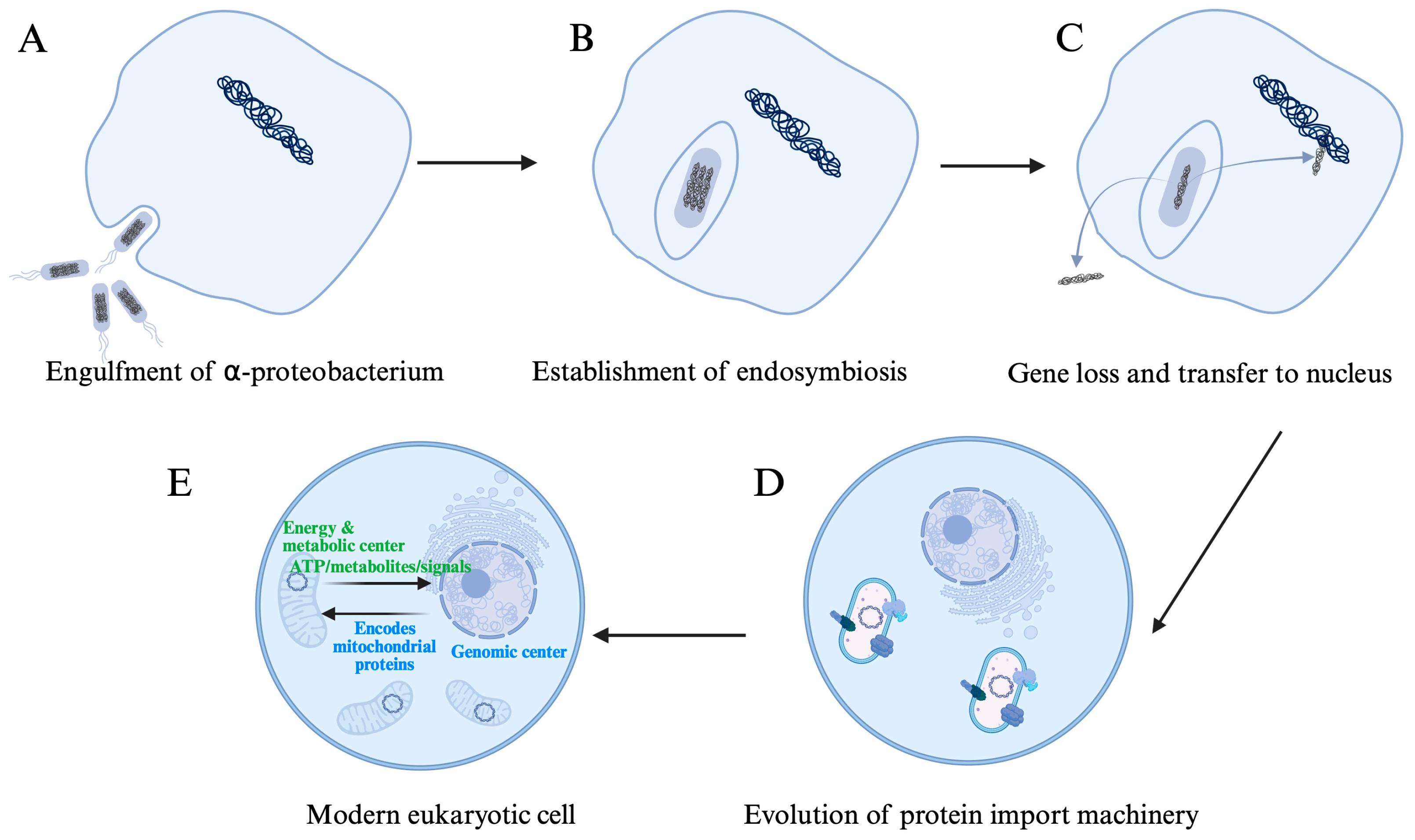
About 1.8–2 billion years ago, an ancient archaeal host cell—likely related to the Asgard lineage—engulfed a free-living α-proteobacterial ancestor and, instead of digesting it, established a stable endosymbiotic relationship (
Figure 1A,B). Over time, the engulfed bacterium gradually relinquished many autonomous functions and became fully integrated into the host cell, ultimately evolving into the modern mitochondrion [
1,
2,
3]. During this endosymbiotic transition, many genes from the bacterial endosymbiont were either lost or transferred to the host genome—a process which streamlines organelle replication and ensures stable inheritance through cytoplasm (
Figure 1C). Phylogenomic analyses show that this redistribution centralizes genetic control within the nucleus and improves metabolic coordination [
4,
5,
6]. This evolutionary transition enables the host cell to harness aerobic respiration and efficient ATP production, and is widely viewed as a defining milestone in the origin of eukaryotic complexity [
7,
8,
9].
In human cells, the mitochondrial genome (mtDNA) has been reduced to a circular DNA molecule of ~16.6 kb (NC_012920), encoding only 13 proteins for oxidative phosphorylation, 22 transfer RNAs (tRNAs), and 2 ribosomal RNAs (rRNAs) [
10,
11,
12]. This organization supports local synthesis and rapid assembly of hydrophobic core subunits of respiratory complexes into the inner mitochondrial membrane [
10]. Despite its small gene content, mtDNA is maintained at high copy number per cell [
13,
14,
15]. Importantly, this copy number, together with mtDNA integrity, is strongly influenced by mitochondrial fusion–fission dynamics. Consistent with this, loss of mitofusin-dependent outer-membrane fusion impairs mtDNA replication and leads to a marked decline in mtDNA content in proliferating cells and during postnatal cardiac development, indicating that fusion is required for faithful replication and distribution of the mitochondrial genome [
16]. Clinically, this principle is illustrated by a rare human MFN2 R400Q variant that perturbs mitofusin function and Parkin-mediated mitophagy, causing progressive cardiomyopathy in knock-in mice and being enriched in human cardiomyopathy cohorts [
17]. In contrast, the vast majority of mitochondrial proteins, numbering in thousands, are nuclear-encoded [
11], synthesized in the cytosol, and imported into the organelle via translocases of the outer and inner membranes (TOM/TIM complexes) [
12] (
Figure 1D). This tight interdependence has forged a coevolutionary relationship between the nuclear and mitochondrial genomes: the nucleus provides the biosynthetic and regulatory machinery for mitochondrial function, while mitochondria, in turn, supply the nucleus with ATP [
18], key metabolic intermediates such as acetyl-CoA and α-ketoglutarate [
19,
20,
21], reactive oxygen species (ROS) that act as signaling molecules [
22], and additional intermediates that modulate chromatin dynamics and nuclear function [
23] (
Figure 1E).
Contemporary evolutionary analyses further suggest that this mitochondrion–nucleus symbiosis is a driving force behind eukaryotic evolution. The endosymbiotic partnership imposes selective pressures that promote genomic integration, signaling interdependence, and metabolic specialization—ultimately catalyzing the rise of cellular complexity [
5,
9,
24]. This enduring intergenomic dialogue continues to shape cell physiology, development, and disease, underscoring mitochondria’s central role as both an energetic and epigenetic integrator.
2. Mitochondria as a Producer of Energy and Signaling Metabolites
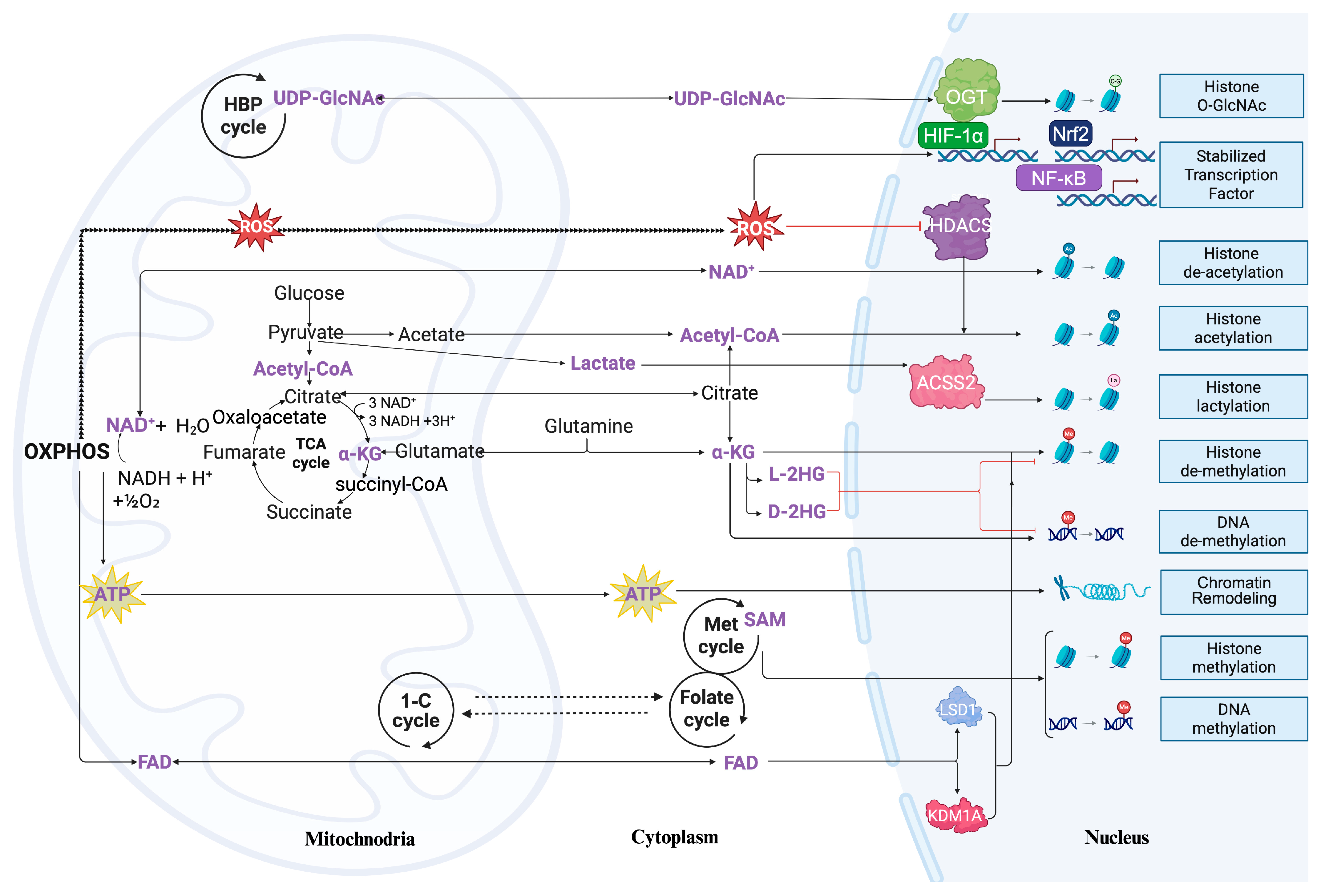
Mitochondria are classically recognized as the cell’s powerhouse, generating ATP to drive essential processes such as transcription, replication, and DNA damage repair. In addition, mitochondrial metabolism produces key intermediates—most notably citrate and acetyl-CoA—that fuel major biosynthetic pathways, including fatty acid, cholesterol, and steroid synthesis. Importantly, many of these same metabolites also act as signaling cofactors that directly influence chromatin structure and nuclear gene expression. The following section explores how mitochondria-derived ATP and metabolites mechanistically couple cellular metabolic state to epigenetic regulation (
Figure 2).
2.1. Adenosine Triphosphate (ATP)
ATP, the universal energy currency of the cell, is generated predominantly through mitochondrial oxidative phosphorylation (OXPHOS), with additional contributions from glycolysis [
25,
26,
27]. Continuous ATP production is essential to meet cellular energetic and biosynthetic demands, sustaining both catabolic and anabolic processes.
Within the nucleus, ATP supplies energy for nearly all processes that safeguard genome integrity and regulate gene expression. During DNA replication, ATP binding and hydrolysis by helicases such as the MCM complex and by clamp-loader ATPases (RFC, CTF18-RFC, RAD17-RFC, and ATAD5-RFC) drive origin licensing, helicase activation, and proliferating cell nuclear antigen (PCNA) loading [
28,
29,
30,
31]. During transcription, ATP provides the requisite energy for the assembly, initiation, and elongation phases of RNA polymerases, processes essential for maintaining transcriptional fidelity and regulating transcriptional pausing [
32,
33]. Chromatin remodeling complexes, including SWI/SNF, ISWI, INO80, and CHD families, convert ATP hydrolysis into mechanical force to reposition or evict nucleosomes, thereby modulating DNA accessibility for transcription, replication, and repair [
34,
35,
36]. Similarly, DNA repair mechanisms, including homologous recombination and non-homologous end joining, rely on ATPases like CSB and clamp-loader complexes to coordinate lesion detection, processing, and rejoining [
37,
38,
39]. Beyond DNA metabolism, ATP hydrolysis also energizes RNA splicing through DEAD-/DExH-box RNA helicases and supports nucleocytoplasmic transport via the karyopherin/Ran GTP-ATP regulatory cycles, ensuring the directional trafficking of macromolecules across the nuclear envelope [
40,
41,
42].
Emerging evidence indicates that mitochondrial ATP fluctuations directly influence nuclear chromatin architecture and transcriptional programs. ATP depletion reduces chromatin mobility and disrupts nuclear organization [
43,
44], whereas mitochondria-derived nuclear ATP surges under mechanical confinement preserve chromatin accessibility and facilitate DNA repair [
44,
45]. In tissues with high energy demand—such as the brain, heart, and muscles—ATP insufficiency rapidly compromises neuronal signaling, cardiac contractility, and energy metabolism, culminating in cellular dysfunction and apoptosis [
46,
47,
48,
49,
50].
Moreover, ATP-dependent chromatin remodelers can act as direct metabolic sensors that couple cellular energy status to gene regulation and genome maintenance. Under stress conditions, remodelers such as INO80 and SWI/SNF undergo structural and functional changes that facilitate nucleosome repositioning and transcriptional reprogramming to preserve genome stability [
35,
36,
51]. Collectively, by linking its synthesis to virtually all vital nuclear processes, ATP functions as the central energetic hub connecting cellular metabolism to chromatin dynamics and genome regulation.
2.2. Acetyl-CoA
Within mitochondria, acetyl-CoA is synthesized through multiple converging metabolic pathways. The primary origin is the oxidative decarboxylation of pyruvate facilitated by the pyruvate dehydrogenase complex [
52,
53]. Additional sources include fatty acid β-oxidation, ketone body metabolism, and the catabolism of ketogenic and glucogenic amino acids, such as leucine (ketogenic), isoleucine (both ketogenic and glucogenic), and valine (glucogenic) [
54,
55,
56]. Acetate can also be transformed into acetyl-CoA via mitochondrial acyl-CoA synthetase short-chain family member 1, thereby ensuring adaptability in response to fluctuating nutrient conditions [
57,
58,
59,
60]. Together, these pathways guarantee a continual supply of acetyl-CoA, establishing it as a metabolic node that integrates nutrient availability, energy production, and biosynthetic capacity—supplying substrates for fatty acid, cholesterol, and steroid synthesis—while simultaneously providing the acetyl donor that links mitochondrial metabolism to nuclear epigenetic regulation [
57,
61].
Because acetyl-CoA cannot cross the mitochondrial inner membrane directly, cells use citrate as a carbon shuttle. Citrate is exported to the cytosol via the citrate carrier SLC25A1 and cleaved by ATP-citrate lyase (ACLY) to regenerate cytosolic and nuclear acetyl-CoA [
62,
63,
64]. This extramitochondrial acetyl-CoA pool serves as the acetyl donor for protein acetylation reactions, notably histone acetylation, a fundamental epigenetic modification that modulates chromatin conformation and transcriptional activity [
65]. Histone acetyltransferases (HATs), including CBP/p300, GCN5, and MOF, transfer acetyl groups from acetyl-CoA to lysine residues on histone tails, neutralizing their positive charge and weakening histone-DNA interactions. Consequently, a more relaxed chromatin structure facilitates transcription factor recruitment and RNA polymerase II access, leading to transcriptional activation [
66,
67].
Under nutrient-rich conditions, elevated acetyl-CoA levels enhance histone acetylation, activating transcriptional programs that promote cell growth, biosynthesis, and proliferation [
57,
68]. Conversely, during nutrient deprivation or mitochondrial dysfunction, acetyl-CoA is preferentially oxidized in the tricarboxylic acid (TCA) cycle to sustain ATP synthesis, thereby reducing the nuclear acetyl-CoA pool. This depletion leads to hypoacetylation of histones, chromatin compaction, and transcriptional repression of anabolic and growth-associated genes [
19,
66,
69].
Recent evidence emphasizes that mitochondrial acetyl-CoA flux dynamically regulates histone acetylation in a locus-specific manner. Mitochondrial perturbations or loss of mtDNA alter citrate export and acetyl-CoA availability, producing selective changes in histone acetylation and gene expression [
67,
70]. Intriguingly, histone acetylation itself may serve as a metabolic buffer, storing acetate that can be mobilized back into acetyl-CoA under stress, suggesting a bidirectional relationship between histone modification and metabolism [
69]. Furthermore, emerging research links tissue-specific acetyl-CoA metabolism to epigenetic and immune regulation. In macrophages, mitochondrial fatty acid oxidation via ACAT1 (Acetyl-CoA Acetyltransferase 1) generates acetyl-CoA that drives histone acetylation and transcription of type I interferon–responsive genes, demonstrating a direct mechanistic link between mitochondrial metabolism and nuclear immune signaling [
62,
71]. Together, these studies establish acetyl-CoA as both a metabolic substrate and a signaling molecule that couples mitochondrial energy metabolism to nuclear chromatin remodeling and transcriptional control.
2.3. Histone Lactylation
Histone lactylation is a recently identified post-translational modification that links glycolytic metabolism to chromatin remodeling and gene regulation. Zhang et al. (2019) first reported lysine lactylation (Kla) on histone tails, where lactate-derived lactyl groups, catalyzed by the histone acetyltransferase p300 using lactyl-CoA, modify lysine residues such as H3K18la and directly stimulate transcription of homeostatic and wound-healing genes during late-phase macrophage polarization [
72].
Subsequent work has greatly expanded the biological scope of Kla. In cancer, histone lactylation is increasingly recognized as a key mediator that couples tumor-associated lactate accumulation (a consequence of aerobic glycolysis and altered mitochondrial metabolism) to oncogenic transcription programs and immune modulation in the tumor microenvironment, emphasizing lactate as a signaling metabolite rather than a mere metabolic by-product [
73,
74]. In innate immunity, Ziogas et al. [
75] showed that lactate-driven H3K18la persists in monocytes for at least 90 days after BCG vaccination, serving as a long-lived epigenetic mark of trained innate immune memory. Lactate-induced H3K18la also promotes macrophage M1 polarization and vascular inflammation in models of abdominal aortic aneurysm, illustrating how Kla connects local metabolic changes to chronic inflammatory disease [
76].
Lactylation is likewise observed in the nervous system, where neuronal excitation and social stress elevate brain lactate levels and increase histone H1 lactylation and other Kla marks in cortical neurons. These changes correlate with altered social and anxiety-like behaviors, suggesting that neuronal lactate–Kla signaling contributes to activity-dependent chromatin remodeling and neural plasticity [
77,
78].
At the metabolic level, the pool of lactate available for histone lactylation is governed by the balance between glycolytic pyruvate production and mitochondrial pyruvate oxidation. When mitochondrial respiration is constrained, more pyruvate is reduced to lactate by lactate dehydrogenase, thereby increasing substrate availability for Kla. Conversely, efficient mitochondrial oxidation of pyruvate limits lactate accumulation and may restrain Kla [
79]. Recent work further shows that the acyl-CoA synthetase ACSS2 can act as a lactyl-CoA synthetase in the nucleus and cooperate with KAT family lysine acyltransferases to install Kla on histone H3 and H4, establishing a direct enzymatic route from lactate to histone lactylation [
80]. Collectively, histone lactylation exemplifies how changes in mitochondrial and glycolytic metabolism are decoded at the chromatin level to regulate gene expression across immunity, neurobiology, and tumorigenesis.
2.4. Acyl-CoAs
In addition to acetyl-CoA, a variety of acyl-CoA derivatives—including propionyl-CoA, butyryl-CoA, crotonyl-CoA, succinyl-CoA, and malonyl-CoA—also serve as donors for diverse histone acylations, thereby expanding the epigenetic regulatory landscape. These acyl-CoAs originate from the oxidation of fatty acids with varying chain lengths, amino acid catabolism, and intermediates of the TCA cycle, thereby linking cellular metabolism with chromatin state [
81,
82]. For instance, propionyl-CoA is generated from the breakdown of odd-chain fatty acids and specific amino acids (valine, isoleucine, methionine, and threonine) and is subsequently converted to succinyl-CoA for entry into the TCA cycle [
83]. Butyryl-CoA and crotonyl-CoA serve as intermediates in short-chain fatty acid metabolism and function as acyl donors for histone butyrylation and crotonylation, respectively. These two modifications are enriched at active promoters and correlate with transcriptional activation [
84,
85,
86,
87,
88]. Succinyl-CoA (an intermediate in the TCA cycle) and malonyl-CoA (a key intermediate in fatty acid synthesis) can also serve as acylation donors. They participate in protein post-translational modifications such as lysine succinylation and malonylation, modifications that can alter enzyme activity, stability, and localization [
89,
90,
91,
92,
93].
These non-acetyl acylations provide a direct mechanistic link between mitochondrial metabolism and chromatin dynamics, enabling cells to sense metabolic flux and translate it into epigenetic changes [
81,
90,
94]. The relative abundance of these acyl-CoA species is highly sensitive to nutrient availability, oxygen status, and mitochondrial function, thereby permitting fine-tuned regulation of gene expression in response to stimuli [
81,
94,
95]. Thus, these acyl-CoAs are not just metabolic intermediates but active modulators of transcription, DNA repair, and chromatin architecture across developmental, pathological, and aging processes [
96].
2.5. NADH/NAD+
Within mitochondria, NAD
+ serves as a central redox coenzyme, cycling between its oxidized (NAD
+) and reduced (NADH) forms. Cytoplasmic NAD
+ supports glycolysis, while mitochondrial NAD
+ supports the TCA cycle, fatty acid β-oxidation, and the electron transport chain (ETC) [
97]. In this capacity, NADH supplies reducing equivalents that drive the oxidative phosphorylation and ATP synthesis [
98]. Beyond its conventional redox activity, NAD
+ is also consumed as a substrate for nuclear and cytoplasmic enzymes, notably sirtuins and poly (ADP-ribose) polymerases (PARPs), thereby linking metabolic status to chromatin dynamics and DNA repair mechanisms [
99,
100].
Histone deacetylation represents a fundamental axis of metabolic-epigenetic coupling. Class I and II histone deacetylases (HDACs) remove acetyl groups independent of NAD
+, inducing chromatin condensation and transcriptional repression [
101,
102]. In contrast, Class III HDACs, known as sirtuins, uniquely require NAD
+ as a cofactor for their deacetylase activity. Fluctuations in the NAD
+/NADH ratio consequently modulate sirtuin activity and downstream epigenetic outcomes [
102,
103,
104,
105,
106,
107]. For example, nuclear sirtuins (SIRT1 and SIRT6) deacetylate histone marks such as H3K9Ac and H3K56Ac, enforcing chromatin compaction, repressing transcription, and promoting DNA repair [
108]. Mitochondrial Sirtuin 3 (SIRT3), by contrast, targets respiratory chain proteins and metabolic enzymes, enhancing mitochondrial oxidative metabolism and antioxidant defense [
109]. Together, sirtuins serve as metabolic–epigenetic integrators, translating NAD
+ availability into coordinated nuclear and mitochondrial responses [
110,
111,
112].
NAD
+ likewise regulates PARP-1, which binds to nucleosomes under basal conditions and helps maintain chromatin compaction [
99,
113]. When NAD
+ is abundant, it serves as the essential substrate for PARylation. DNA damage/chromatin signals trigger PARP-1 auto-PARylation, which loosens chromatin and enhances its accessibility [
114,
115]. Conversely, when NAD
+ decline, such as during aging, metabolic disorders, or mitochondrial dysfunction, sirtuin activity (which normally promotes chromatin compaction via deacetylation) is compromised. Simultaneously, excessive PARP-1 activation under chronic stress can over-consume NAD
+, further depleting the NAD
+ pool and disrupting chromatin homeostasis. The failure of sirtuin-mediated deacetylation leads to histone hyperacetylation and aberrant chromatin relaxation, resulting in transcriptional dysregulation and activation of pro-inflammatory gene programs. In this way, NAD
+ homeostasis serves as a pivotal connection between bioenergetic processes and nuclear epigenetic regulation, impacting cell fate decisions [
99,
116].
2.6. S-Adenosylmethionine (SAM)
The folate and methionine cycles intersect within the cytosol to generate SAM, the universal methyl donor essential for cellular DNA, RNA, and histone methylation [
117,
118]. SAM is synthesized from methionine via methionine adenylyltransferase (MAT) [
119,
120,
121]. The methylation process yields S-adenosylhomocysteine (SAH), which is hydrolyzed to homocysteine and subsequently remethylated to methionine using one-carbon units supplied by mitochondrial folate metabolism. Thus, mitochondrial one-carbon metabolism, driven by serine and glycine catabolism, provides formate and various intermediates vital for cytosolic SAM synthesis [
122,
123].
SAM donates methyl groups to DNA methyltransferases (DNMTs), RNA methyltransferases (RNMTs), and histone methyltransferases (HMTs), while the byproduct SAH functions as a potent feedback inhibitor of these enzymes. Thus, the intracellular SAM/SAH ratio is a sensitive determinant of methylation potential across the cytosol, nucleus, and mitochondria [
124,
125]. Elevated SAM levels or high SAM/SAH ratio promote methylation of histones (e.g., H3K4me3, H3K36me3), RNA (m
6A), and DNA (5mC), supporting transcriptional fidelity and chromatin stability [
118,
126,
127]. In contrast, mitochondria dysfunction or limitations in one-carbon flux can decrease SAM levels and reduce SAM/SAH ratio, suppress methylation reactions, and lead to chromatin and transcription dysregulation [
121,
128,
129,
130]. In disease and aging, alterations in one-carbon metabolism and deficiencies in SAM are associated with impaired histone methylation, DNA hypomethylation, and transcriptional noise, contributing to oncogenesis, neurodegeneration, and immune dysfunction [
130,
131,
132]. Nutrient-dependent regulation of one-carbon metabolism—involving intake of methionine, folate, and serine—has also been shown to restore methylation equilibrium and epigenetic stability, suggesting potential therapeutic interventions for metabolic and epigenetic disorders [
121].
Emerging research emphasizes the significance of mitochondrial import of SAM as a pivotal step in regulating mitochondrial gene expression and protein methylation. SAM transporters located within the mitochondrial membrane facilitate localized methylation of mitochondrial tRNAs and proteins, directly linking cytosolic methyl donor availability to mitochondrial translation and respiration [
133,
134]. This bidirectional metabolic exchange allows mitochondria not only to function as energy producers but also to serve as regulators of epigenetic states through one-carbon metabolism and SAM flux. Overall, SAM functions as an integral metabolic–epigenetic nexus, translating mitochondrial one-carbon flux into chromatin methylation dynamics that govern gene expression, development, and cellular plasticity.
2.7. α-Ketoglutarate (α-KG)
α-KG is a pivotal TCA intermediate produced through isocitrate oxidative decarboxylation by isocitrate dehydrogenases (IDH2 and IDH3) or by glutamate deamination catalyzed by glutamate dehydrogenase (GLUD1). Cytosolic IDH1 also generates α-KG outside mitochondria, maintaining cross-compartmental redox and metabolic flux [
135,
136]. Beyond its metabolic role, α-KG serves as an essential cofactor for a wide family of α-KG/Fe(II)-dependent dioxygenases, including Jumonji C (JmjC) domain-containing histone demethylases (JMJDs) and ten-eleven translocation (TET) DNA hydroxylases [
137]. These enzymes mediate oxidative demethylation of methylated lysine residues (e.g., H3K4me3, H3K27me3) and convert 5-methylcytosine (5mC) into 5-hydroxymethylcytosine (5hmC), 5-formylcytosine (5fC), and 5-carboxylcytosine (5caC), key intermediates of DNA demethylation [
138,
139]. The enzymatic activity of JMJDs and TETs is tightly regulated by the intracellular balance of α-KG and structurally similar TCA intermediates, notably succinate, fumarate, and the oncometabolite 2-hydroxyglutarate (2-HG), which acts as a competitive inhibitor. This biochemical antagonism establishes a direct mitochondria-epigenetic link between mitochondrial activity and chromatin dynamics [
137,
139,
140,
141].
In cancer, mutations in IDH1/2 confer neomorphic activity that converts α-KG into 2-HG, leading to inhibition of TETs and JmjC demethylases, global hypermethylation, and transcriptional repression [
139,
142]. In pluripotent stem cells, α-KG sustains self-renewal and promotes reprogramming by stimulating TET1/2-dependent DNA demethylation, facilitating open chromatin configurations and transcriptional plasticity [
143,
144]. In the immune system, macrophages exhibit metabolic polarization governed by α-KG: a high α-KG/succinate ratio drives M2-like anti-inflammatory programs via Jmjd3-mediated histone demethylation, linking metabolic state to epigenetic control of inflammation [
145,
146].
In neurons, α-KG-dependent TET3 activity regulates hydroxymethylation dynamics essential for synaptic plasticity and neural differentiation [
147]. Within the cardiovascular system, decreased α-KG availability during hypoxia or metabolic stress limits TET-mediated DNA demethylation, leading to vascular remodeling and fibrosis [
148]. During aging, mitochondrial dysfunction reduces α-KG synthesis and transport, attenuates TET/JmjC activity, and causing epigenetic drift and transcriptional instability [
149,
150]. Mechanistically, mitochondrial glutamine oxidation and α-KG import/export across the mitochondrial membrane constitute major regulatory levers that coordinate nuclear demethylation activity, establishing α-KG as a metabolic rheostat aligning energy metabolism with epigenetic fidelity [
139,
151].
Collectively, α-KG functions as a central metabolic-epigenetic mediator, synchronizing mitochondrial energetics with nuclear chromatin regulation. Alternations in α-KG metabolism—whether through IDH mutations, hypoxia, or aging—disrupt this metabolic-epigenetics axis, contributing to oncogenesis, neurodegeneration, and age-associated dysfunction.
2.8. Flavin Adenine Dinucleotide (FAD)
FAD is an essential redox cofactor that plays a dual role in mitochondrial energy metabolism and epigenetic regulation. Synthesized from riboflavin (vitamin B2) through the sequential actions of riboflavin kinase and FAD synthetase, FAD acts as a tightly bound flavin cofactor for various mitochondrial enzymes, including succinate dehydrogenase (complex II) in ETC and acyl-CoA dehydrogenases in fatty acid β-oxidation. In these reactions, FAD accepts electrons from metabolic substrates (e.g., succinate → fumarate) and transfers them to coenzyme Q, supporting oxidative phosphorylation and ATP synthesis [
152].
Beyond energy metabolism, FAD is indispensable for the activity of flavin-dependent amine oxidase histone demethylases, most notably lysine-specific demethylase 1 (LSD1/KDM1A). LSD1 catalyzes the FAD-dependent oxidative demethylation of mono- and di-methylated lysine residues on histone H3, such as H3K4me1/2 and H3K9me1/2, contingent upon its associated cofactors and chromatin context and modulating chromatin compaction and gene expression [
153,
154]. This FAD-driven reaction mechanistically links mitochondrial redox homeostasis to chromatin remodeling and transcriptional control [
155,
156].
The LSD1/FAD axis influences key transcriptional programs governing metabolism, differentiation, and cancer. For instance, FAD-dependent LSD1 activity represses thermogenic gene expression in brown adipose tissue, promoting energy expenditure [
153], while in hepatocellular carcinoma, LSD1 coordinates glycolytic and mitochondrial metabolism, supporting tumor growth [
157].
Fluctuations in mitochondria FAD availability profoundly affect LSD1-mediated chromatin dynamics. Reduced FAD levels—whether from riboflavin deficiency or mitochondrial dysfunction—lead to diminished LSD1 activity, resulting in histone hypermethylation and transcriptional dysfunction [
158,
159]. Conversely, restoration of mitochondrial FAD pools enhances LSD1-mediated demethylation and promotes metabolic flexibility, reinforcing the metabolic-epigenetic link [
160].
FAD-dependent LSD1 also demethylates non-histone substrates, including RACK1, thereby stabilizing hypoxia-inducible factor (HIF1α) and fine-tuning oxygen-sensing pathways [
161]. This interaction exemplifies how FAD redox dynamics directly influence both nuclear gene regulation and cellular adaptation to hypoxia. Recent findings indicate that FAD-dependent LSD1 activity declines with age due to impaired riboflavin uptake and mitochondrial dysfunction, contributing to chromatin relaxation, senescence, and transcriptional noise [
160,
162]. Dysregulation of this axis has been linked to neurodegenerative diseases and cancer, where disrupted FAD metabolism alters histone methylation landscapes and impairs energy balance [
163].
Collectively, these findings position FAD as a metabolic–epigenetic integrator that connects mitochondrial redox homeostasis with chromatin remodeling. Through regulation of LSD1 and other FAD-dependent demethylases, mitochondrial metabolism directly influences transcriptional regulation, developmental programming, and disease states, such as cancer, neurodegeneration, and aging.
2.9. UDP-N-Acetylglucosamine (UDP-GlcNAc)
UDP-GlcNAc is the terminal product of the hexosamine biosynthetic pathway (HBP), a metabolic branch that integrates nutrient inputs from glucose, amino acids (particularly glutamine), fatty acids, and nucleotide metabolism. Due to this integration, UDP-GlcNAc serves as a sensitive indicator of cellular nutrient and energy status, acting as a metabolic gauge for growth and stress signaling [
164,
165]. The primary function of UDP-GlcNAc is to serve as the donor substrate for O-linked β-N-acetylglucosamine (O-GlcNAc) modification—a dynamic and reversible post-translational modification of nuclear, cytosolic, and mitochondrial proteins catalyzed by O-GlcNAc transferase (OGT) and removed by O-GlcNAcase (OGA) [
166].
OGT utilizes UDP-GlcNAc to modify a wide range of substrates, including histones, transcription factors, and chromatin remodelers, making O-GlcNAcylation serves as a nutrient-sensitive epigenetic switch that couples metabolic flux to gene expression [
167,
168]. Histone residues such as H2B-S112, H3-T32, and H4-S47 have been identified as O-GlcNAcylation sites that can alter nucleosome stability, histone acetylation, and methylation patterns, thereby fine-tuning chromatin accessibility and transcriptional dynamics [
165,
168].
Levels of HBP flux and UDP-GlcNAc availability directly modulate OGT activity, influencing chromatin remodeling and transcriptional homeostasis. Under nutrient-rich conditions, elevated glucose and amino acid levels increase UDP-GlcNAc synthesis, leading to hyper-O-GlcNAcylation of transcriptional regulators and histone modifiers. This phenomenon has been linked to insulin resistance, tumor progression, and aging-related dysfunction [
169,
170,
171]. Conversely, pharmacologic or genetic OGT inhibition restores chromatin accessibility and reprograms transcriptional activity, offering potential therapeutic strategies in cancer, neurodegeneration, and metabolic diseases [
172,
173].
Mechanistically, OGT interacts with TET2/3 and SET1/COMPASS, coordinating DNA demethylation and histone methylation at active gene promoters. This cross-regulatory mechanism integrates O-GlcNAcylation, DNA hydroxymethylation, and histone methylation, enabling dynamic transcriptional responses to metabolic flux [
167,
174]. Recent work extends this axis to ferroptosis, stem cell pluripotency, and redox signaling, where OGT-dependent modifications regulate cell fate, stress resistance, and mitochondria integrity [
170,
175]. Together, UDP-GlcNAc and OGT represent a central metabolic-epigenetic hub that translates nutrient availability into chromatin state and transcriptional programs. Through O-GlcNAcylation, cells synchronize metabolic flux, redox balance, and gene expression, maintaining adaptive homeostasis across physiological and pathological contexts.
2.10. Reactive Oxygen Species (ROS)
ROS—including superoxide (O
2•
−), hydrogen peroxide (H
2O
2), and hydroxyl radicals (•OH)—are both byproducts and essential regulators of aerobic metabolism [
176,
177,
178,
179]. Mitochondria represent the primary intracellular source of ROS, which is produced through electron leakage at complexes I and III of the ETC during oxidative phosphorylation [
180,
181,
182]. While excessive ROS can cause oxidative damage to DNA, proteins, and lipids, physiological ROS act as signaling molecules that link mitochondrial activity to epigenetic regulation and chromatin remodeling [
22,
183,
184]. This redox-epigenetic coupling ensures dynamic control of gene expression in response to metabolic and environmental cues.
Recent studies emphasize ROS as a mitochondria-to-nucleus messenger, regulating chromatin structure and epigenetic plasticity. Oxidative stress modulates Fe (II)/α-KG-dependent dioxygenases, including TET DNA demethylases and JmjC-domain histone demethylases, through oxidizing catalytic Fe (II) or depleting α-KG, resulting in localized chromatin compaction and transcriptional repression under oxidative stress [
185,
186]. Conversely, moderate ROS levels activate redox-sensitive transcription factors such as NRF2, NF-κB, and HIF-1α, which regulate antioxidant responses, inflammation, and metabolic reprogramming [
148,
187]. At the chromatin level, oxidative inhibition of HDACs enhances histone acetylation and promotes transcriptional activation of stress-responsive genes [
175,
186,
188]. Moreover, lysyl oxidase-like 2 (LOXL2)-mediated H3K4 oxidation (H3K4ox) is linked to heterochromatin compaction and reduced accessibility, suggesting that histone oxidation represents a novel regulatory layer of chromatin [
189].
ROS fine-tune the activity of sirtuins (SIRT1, SIRT3), which acts as NAD
+-dependent redox sensors bridging mitochondrial metabolism with nuclear transcriptional programs. SIRT3 attenuates mitochondrial ROS production by deacetylating and activating antioxidant enzymes, while SIRT1 couples redox signaling to histone deacetylation and stress-responsive gene regulation [
91,
190]. In addition, oxidative DNA lesions such as 8-oxo-2′-deoxyguanosine (8-oxo-dG) recruit TET enzymes and DNA repair complexes, establishing a mechanistic link between oxidative damage and DNA demethylation [
191].
In the context of aging, persistent oxidative stress contributes to epigenetic drift—global alterations in histone methylation (e.g., H3K4me3, H3K27me3) and DNA methylation—that reduce chromatin integrity and increase transcriptional noise [
192]. In cancer, chronic oxidative stress disrupts normal redox-epigenetic homeostasis, driving tumor progression through aberrant methylation and acetylation of oncogenic pathways [
184,
193,
194]. Dietary antioxidants and polyphenols can reverse ROS-induced epigenetic alterations, restoring chromatin organization, and suppressing carcinogenic gene expression [
195]. Nonetheless, physiological ROS signaling enhance stress resilience and longevity by activating adaptive transcriptional programs and redox-protective chromatin remodeling [
182].
Overall, ROS serve as dual-function molecules—deleterious at excessive levels but indispensable for redox–epigenetic homeostasis under physiological conditions. Through modulation of histone-modifying enzymes, transcription factors, and DNA repair machinery, ROS integrate mitochondrial metabolism with nuclear gene expression, forming a core axis of metabolic-epigenetic communication that governs cell fate, adaptation, and disease.
3. Mitochondria Localization of Nuclear Proteins
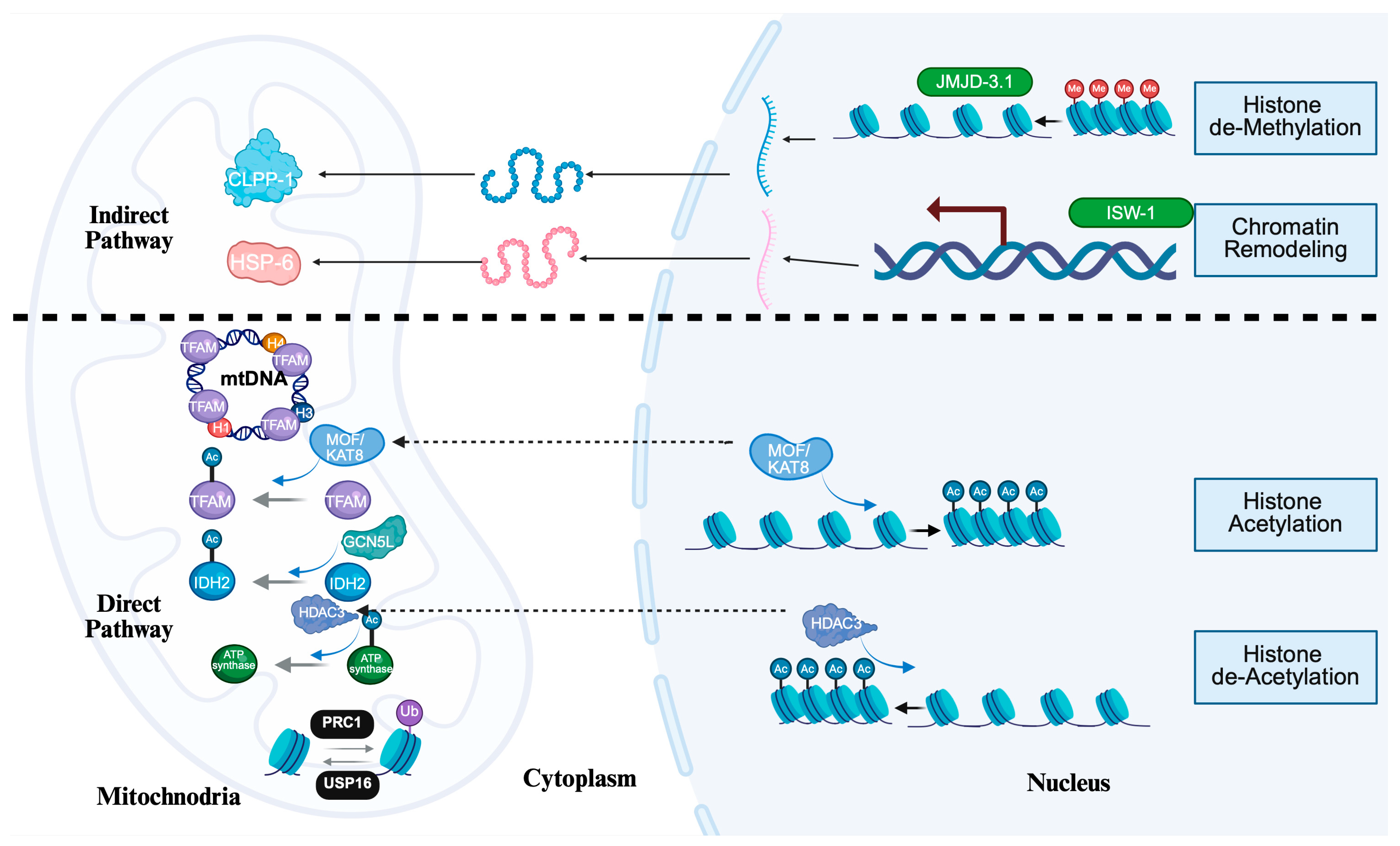
Traditionally, epigenetic regulators—such as DNA methyltransferases, histone-modifying enzymes, and chromatin remodelers—were viewed as strictly nuclear factors that regulate chromatin structure and transcription. However, emerging evidence over the past decade reveals that several of these nuclear enzymes exhibit dual localization in the nucleus and mitochondria, suggesting that epigenetic control extends beyond the nuclear genome [
139,
196]. Mitochondrial localization has now been documented for DNA methyltransferase 1 (DNMT1), ten-eleven translocation (TET) dioxygenases, and certain HDACs—notably sirtuins (SIRT3–SIRT5)—which are key regulators of mitochondrial protein acetylation and redox balance [
197,
198,
199,
200]. These proteins contribute to mtDNA methylation, transcriptional regulation of mtDNA-encoded genes, and post-translational modification of metabolic enzymes [
201,
202] (
Figure 3).
This dual compartmentalization implies that epigenetic regulators not only shape nuclear transcriptional programs but also directly influence mitochondrial metabolism, redox homeostasis, and mtDNA organization [
196,
203]. These epigenetic regulators may act indirectly by regulating the expression of nuclear-encoded mitochondrial genes, or directly by modifying mitochondrial proteins and mtDNA within the organelle [
204]. Together, these findings underscore a bidirectional regulatory axis in which nuclear epigenetic factors contribute to the coordination of mitochondria-nuclear communication, ensuring that cellular energy metabolism and gene expression remain synchronized in response to environmental and metabolic cues [
205,
206,
207]. These proteins are discussed in detail below.
3.1. DNA Methyltransferase 1
Human mtDNA has a GC content of ~44% and pronounced strand asymmetry, with the heavy (H) strand being guanine-rich and the light (L) strand cytosine-rich [
208]. Historically, mtDNA organization is viewed as nucleoid structures rather than chromatin, packaged by TFAM instead of histones, and transcribed as polycistronic transcripts from the displacement-loop (D-loop) region, which serves as the central control site for replication and transcription [
209,
210]. Subsequent compositional and sequencing studies revealed mtDNA’s low CpG density and asymmetric replication mechanism, where the prolonged single-stranded exposure of the H-strand contributes to its unique base composition and elevated mutation rate [
211].
Initially, mtDNA was considered epigenetically inert. This perspective changed dramatically with the discovery of a mitochondrial isoform of DNA methyltransferase 1 (mtDNMT1) [
212]. mtDNMT1 contains an extended N-terminal mitochondrial targeting sequence that directs it to the mitochondrial matrix, where it binds to CpG-rich regions of mtDNA—including the D-loop—and catalyzes cytosine methylation (5mC). This study also revealed that mtDNMT1 expression is transcriptionally regulated by oxidative stress–responsive transcription factors such as NRF1, PGC1α, and p53, thereby positioning mtDNA methylation as a redox-sensitive epigenetic process linking mitochondrial status to gene expression. Moreover, the detection of 5-hydroxymethylcytosine (5-hmC) in mtDNA implicates TET enzyme activity within mitochondria, suggesting an active methylation-demethylation cycle.
Over the past decades, biotechnology has expanded rapidly. High-resolution bisulfite sequencing, nanopore long-read mapping, and oxidative-bisulfite conversion have confirmed that mtDNA methylation, while sparser than in nuclear DNA, is enriched in regulatory and tRNA-coding regions and varies across tissues, developmental stages, and physiological states [
203,
213,
214]. Emerging work further demonstrates that mitochondrial cytosine modifications are metabolically responsive, fluctuating with intermediates of the TCA cycle, NAD
+/NADH ratios, and ROS levels, thereby coupling mitochondrial metabolism to its own epigenome [
215,
216,
217]. Mitochondrial 5mC and 5hmC modifications are now recognized to influence replication-origin activity, transcriptional asymmetry, and gene expression plasticity within the organelle. Collectively, these studies establish mtDNA as a metabolically sensitive epigenetic platform, where cytosine methylation and hydroxymethylation act as dynamic modulators of mitochondria-nucleus communication, oxidative-stress adaptation, and disease susceptibility.
3.2. MOF/KAT8
Recent studies highlight that the histone acetyltransferase MOF (males absent on the first, KAT8)—classically recognized for catalyzing histone H4 lysine 16 acetylation (H4K16ac) within the nuclear genome—also performs essential regulatory functions in mitochondria, revealing its dual localization and multifaceted roles in coordinating gene expression and metabolism. Early investigations demonstrated that MOF/KAT8 forms a mitochondrial complex with KAT8 Regulatory Non-Specific Lethal complex (KANSLs) subunits, where it promotes mitochondrial transcription and respiratory-chain activity through acetylation of the mitochondrial transcription factor TFAM [
218]. This modification enhances TFAM’s DNA-binding ability and stability, thereby facilitating efficient mitochondrial gene expression and oxidative phosphorylation.
Subsequent research expanded this paradigm by identifying additional mitochondrial substrates of MOF/KAT8. For instance, COX17, a copper chaperone critical for cytochrome c oxidase assembly, is acetylated by MOF, an event that preserves mitochondrial integrity and supports respiratory-chain function [
219,
220]. Likewise, MOF-mediated acetylation of ATP5β, a core subunit of ATP synthase, was recently shown to sustain mitochondrial respiration and protect against pressure-overload-induced cardiac energy failure [
221].
Collectively, the MOF/KAT8–KANSL complex represents a molecular bridge between nuclear epigenetic control and metabolic regulation. Its acetyltransferase activity not only maintains mitochondrial transcriptional competence but also orchestrates bioenergetic adaptation and metabolic homeostasis, underscoring MOF’s dual identity as both a nuclear epigenetic enzyme and a mitochondrial metabolic regulator.
3.3. GCN5L
The mitochondrial homolog of the nuclear histone acetyltransferase GCN5, termed GCN5-like protein 1 (GCN5L1), has emerged as a pivotal regulator of mitochondrial protein acetylation and metabolic signaling. Unlike its nuclear counterpart, which modifies histones to regulate chromatin structure and gene expression, GCN5L1 localizes to the mitochondrial matrix and functions as a non-histone lysine acetyltransferase, directly modifying metabolic enzymes and structural proteins critical for mitochondrial function [
222,
223].
Within mitochondria, GCN5L1 acetylates diverse enzymes involved in oxidative metabolism—including hydroxyacyl-CoA dehydrogenase trifunctional multienzyme complex subunit alpha (HADHA), NADH-ubiquinone oxidoreductase subunit B8 (NDUFB8), and superoxide dismutase 2, mitochondrial (SOD2; MnSOD)—thereby influencing energy production, redox balance, and lipid utilization. Together with its antagonistic deacetylase SIRT3 (see below), GCN5L1 forms a reversible acetylation-deacetylation circuit that tunes mitochondrial metabolism in response to nutrient availability and oxidative stress. Functionally, GCN5L1 serves as a metabolic rheostat that regulates fatty acid oxidation in a tissue-specific manner. In the liver, GCN5L1 acetylates and inhibits β-oxidation enzymes, acting as a metabolic “brake” under nutrient-rich conditions, whereas its downregulation promotes fatty acid oxidation and ATP production during fasting or caloric restriction [
224]. In cardiomyocytes, by contrast, GCN5L1-mediated acetylation correlates with enhanced fatty acid oxidation capacity and improved oxidative performance [
225]. In addition, GCN5L1 regulates mitophagy—the selective degradation of mitochondria—by acetylating core mitophagy regulators and mitochondrial dynamics proteins, thereby preserving mitochondrial integrity and energy efficiency [
226].
Recent evidence extends the role of GCN5L1 beyond metabolism to mitochondrial dynamics and stress adaptation. In stress and disease contexts, GCN5L1 influences mitochondrial fission and bioenergetic resilience. Specifically, GCN5L1 acetylates Drp1 downstream of the CDK5–AMPK signaling axis, promoting mitochondrial fragmentation and neuronal injury during cerebral ischemia [
227]. These findings highlight GCN5L1 as both a sensor and effector of mitochondrial stress, linking nutrient status and bioenergetic demand to structural remodeling of mitochondria.
Taken together, mitochondrial GCN5L1 integrates nutrient availability, redox equilibrium, and mitochondrial dynamics. Through its acetylation of TCA cycle enzymes, respiratory complexes, and mitochondrial fission/fusion regulators, GCN5L1 safeguards the balance between energy production, lipid oxidation, and mitochondrial quality management—core processes that underpin metabolic flexibility and survival under physiological and stress conditions.
3.4. Sirtuins (SIRTs)
The sirtuin family (SIRT1-SIRT7) comprises highly conserved deacylases that modulate chromatin structure, metabolism, and stress adaptation. Originally characterized as nuclear transcriptional silences linked to lifespan extension, sirtuins are now recognized as central regulators of mitochondrial bioenergetics, redox balance, and mitochondria-nuclear communication [
228,
229].
Among them, SIRT3, SIRT4, and SIRT5 reside predominantly in the mitochondrial matrix, where they orchestrate metabolic fluxes and oxidative stress responses. SIRT3 acts as the principal mitochondrial deacetylase, activating multiple enzymes including IDH2, SDHA, and MnSOD, thereby enhancing ATP production and antioxidant defense [
230,
231]. Loss of SIRT3 results in hyperacetylation of mitochondrial proteins, impaired electron transport chain activity, and increased ROS, linking its deficiency to metabolic syndrome, cardiac hypertrophy, and age-related dysfunction. SIRT4 and SIRT5 fine-tune mitochondrial metabolism through non-deacetylase activities. SIRT4 exhibits ADP-ribosyltransferase and lipoamidase activities, thereby modulating amino acid catabolism and insulin secretion, whereas SIRT5 functions as a desuccinylase, demalonylase, and deglutarylase, regulating oxidative metabolism and the detoxification of reactive intermediates [
232]. Together, these mitochondrial sirtuins preserve metabolic flexibility and redox equilibrium, enabling cells to adapt to nutrient fluctuations and oxidative challenges, thereby promoting cellular resilience and longevity.
Beyond the mitochondria, nuclear sirtuins—SIRT1, SIRT6, and SIRT7—also exert profound control over mitochondrial physiology, reinforcing the concept of bidirectional nucleus-mitochondria communication. SIRT1 stimulates mitochondrial biogenesis by deacetylating PGC-1α, NRF1, and FOXO3, thereby upregulating nuclear-encoded mitochondrial genes [
229]. SIRT6 and SIRT7, while primarily nuclear, modulate mitochondrial homeostasis indirectly via transcription, mitochondrial unfolded protein (UPR^mt) signaling, and maintenance of proteostasis [
233,
234]. Taken together, nuclear and mitochondrial sirtuins constitute a spatially distributed NAD
+-dependent network that coordinates chromatin regulation with mitochondrial function within the broader metabolic–epigenetic axis described above [
228,
232,
235].
3.5. HDAC3
Although traditionally recognized as a nuclear class I histone deacetylase that mediates chromatin remodeling and transcriptional repression [
236], HDAC3 also exerts non-canonical mitochondrial functions that extend its regulatory influence into energy metabolism and inflammation. In macrophages and hepatocytes, HDAC3 translocates to mitochondria, where it associates physically with the ATP synthase complex. Within mitochondria, HDAC3 deacetylates the HADHA at K303, thereby fine-tuning fatty-acid oxidation and mitochondrial adaptation. This activity shapes the threshold of NLRP3 (NOD-like receptor family pyrin domain containing 3) inflammasome activation and IL-1β secretion, ultimately modulating macrophage polarization and inflammatory responses [
237,
238]. Collectively, mitochondrial HDAC3 functions as a homeostatic regulator that integrates acetylation control of metabolic enzymes with immune signaling. By coupling mitochondrial deacetylation to fatty acid oxidation efficiency and ATP synthase function, HDAC3 links cellular metabolic state to innate immune tone. Yet, the mechanisms underlying its mitochondrial import, substrate selectivity, and context-specific regulation remain incompletely understood—representing a promising frontier for future investigation at the interface of mitochondrial epigenetics and immunometabolism.
3.6. Histones
For decades, mtDNA packaging was attributed primarily to TFAM (mitochondrial transcription factor A), a high-mobility group protein essential for mtDNA stability, replication, and transcription [
239,
240]. However, accumulating evidence has begun to challenge this long-held view, suggesting that canonical histones may also participate in the structural and regulatory organization of mtDNA [
241,
242,
243].
Proteomic and biochemical investigations have detected core histones within mitochondria across multiple species. Early biochemical studies identified histones H2A/H2B in mitochondria outer membrane or membrane-associated fractions [
244]. DNase I footprinting and atomic force microscopy later revealed nucleosome-like periodic protection patterns across the mtDNA, reminiscent of chromatinized DNA rather than TFAM-only coverage [
241]. These observations suggest a more complex mtDNA organization that parallels features of nuclear chromatin. Further cross-species analyses reinforced the presence of histones within mitochondria. In trypanosomatid mitochondria, Kapeller et al. (2011) demonstrated mitochondrial localization of linker histone H1 [
245]. In plants, Zanin et al. [
246] reported the presence of histone H3 within mitochondria, while in
C. elegans, Sural et al. showed that histone H4 localizes to mitochondria, mediated by the Heat Shock Factor Binding protein 1/Heat Shock Factor 1 signaling axis (HSB-1/HSF-1 signaling axis), directly modulating mtDNA transcription and organismal lifespan [
243]. Together, these studies reveal that mitochondrial histone dynamics are conserved across evolution and can influence both mitochondrial gene expression and organism physiology.
More recently, Shi et al. [
247] provided direct evidence that ubiquitinated histone H2A (H2Aub)—traditionally regarded as a nuclear Polycomb repressive complex 1 (PRC1)-dependent modification mark—also occurs within mitochondria. Biochemical fractionation of affinity-purified mitochondria and proximal ligation assays confirm this modification in mitochondrial fractions, while knockout of PRC1 ubiquitin ligase subunits Ring1/RNF2 abolished the signal. This unexpected discovery suggests that H2Aub participates in mtDNA packaging, transcriptional repression, and chromatin-like remodeling, revealing a previously unrecognized layer of mitochondrial epigenetic regulation.
Collectively, these findings indicate that canonical histones and their modifications may localize within mitochondria, contributing to mtDNA compaction, transcriptional regulation, and mitochondria genome stability. This emerging view challenges the traditional model of TFAM-exclusive nucleoid organization and supports a mitochondrial chromatin architecture that integrates nuclear histone dynamics with mitochondrial gene expression, thereby linking epigenetic regulation to bioenergetics, redox signaling, and longevity.
3.7. PRC1/USP16
Recent research has unveiled an unexpected mitochondrial role for canonical chromatin regulator Polycomb Repressive Complex 1 (PRC1) and the deubiquitinase USP16. Traditionally known for opposing functions in the regulation of histone H2A ubiquitination (H2Aub) within the nucleus, significant fractions of these enzymes have now been shown to localize to mitochondria, where they execute crucial roles in maintaining organelle integrity and bioenergetic homeostasis. Using biochemical fractionation, confocal microscopy, and proximity ligation assays, Shi et al. [
247] demonstrated that core PRC1 components (RING1, RING2/RNF2) and USP16 co-localize with mitochondrial markers such as TOM20 and HSP60, and are resistant to proteinase K digestion—supporting a mitochondrial matrix localization. Additionally, co-immunoprecipitation assays further revealed that PRC1 and USP16 physically interact with mitochondrial ubiquitin and matrix enzymes, such as DBT, confirming their functional presence within the organelle rather than contamination from nuclear fractions.
Functionally, PRC1–USP16 activity is essential for mitochondrial morphology, respiration, and proteome stability. Depletion of RNF2 (RING2) or Usp16 by siRNA, gene knockout, or targeted degradation from the mitochondria results in reduced oxygen consumption rate (OCR), loss of mitochondrial membrane potential, and impaired integrity. Proteomic analyses revealed that PRC1 loss causes downregulation of OXPHOS and TCA cycle components, accompanied by increased mitochondrial stress signaling [
247]. These defects are accompanied by ubiquitin pathway disruptions, including altered mitochondrial protein ubiquitination patterns resembling H2Aub-like 23 kDa bands, indicating that histone-like ubiquitination events may occur within mitochondria. Such findings suggest that PRC1 and USP16 form a mitochondrial ubiquitination–deubiquitination axis that preserves protein quality control and respiratory efficiency.
The identification of H2Aub-like species in purified mitochondria raises intriguing parallels between mitochondrial nucleoids and nuclear chromatin. Combined with earlier reports identifying core histones (H1, H3, H4) and nucleoid-associated proteins within mitochondria, these findings point toward a chromatin-like layer of regulation acting on mtDNA. PRC1- and USP16-mediated modification of nucleoid-associated proteins may influence mtDNA compaction, transcriptional accessibility, or replication dynamics, extending the concept of epigenetic regulation beyond the nucleus. This hypothesis aligns with DNase-footprinting evidence indicating conserved protein–DNA footprints on mtDNA, similar to those on nuclear DNA [
241]. Collectively, these observations suggest a broader framework for ubiquitin signaling and chromatin-like regulation within mitochondria.
Given that PRC1 and USP16 are central to developmental gene regulation and cellular aging, their mitochondrial localization provides a mechanistic bridge linking nuclear transcriptional repression to mitochondrial energetics. Dysregulation of this axis could contribute to metabolic reprogramming, oxidative stress susceptibility, and mitochondrial dysfunction in diseases such as cancer, neurodegeneration, and premature aging. Thus, mitochondrial PRC1 and USP16 exemplify how canonical nuclear regulators are repurposed to sustain organelle homeostasis and cellular metabolic balance.
The discovery of mitochondrial-localized complexes such as PRC1, USP16, and MOF/KAT8, together with evidence for mitochondrial H2Aub, introduces a new layer of organelle-specific epigenetic control. Taken together, these observations extend our view of nuclear–mitochondrial communication, demonstrating that canonical epigenetic regulators and histone modifications not only on nuclear chromatin but also directly within mitochondria to influence genome organization, metabolism, and stress resilience, although they still require independent replication and mechanistic dissection. This emerging dual regulatory framework—integrating nuclear and mitochondrial epigenetic mechanisms—illuminates how chromatin dysregulation may drive mitochondrial dysfunction in aging and disease, and highlights new opportunities to restore mitochondrial health via epigenetic modulation.
4. Bidirectional Mitochondria–Nucleus Communication
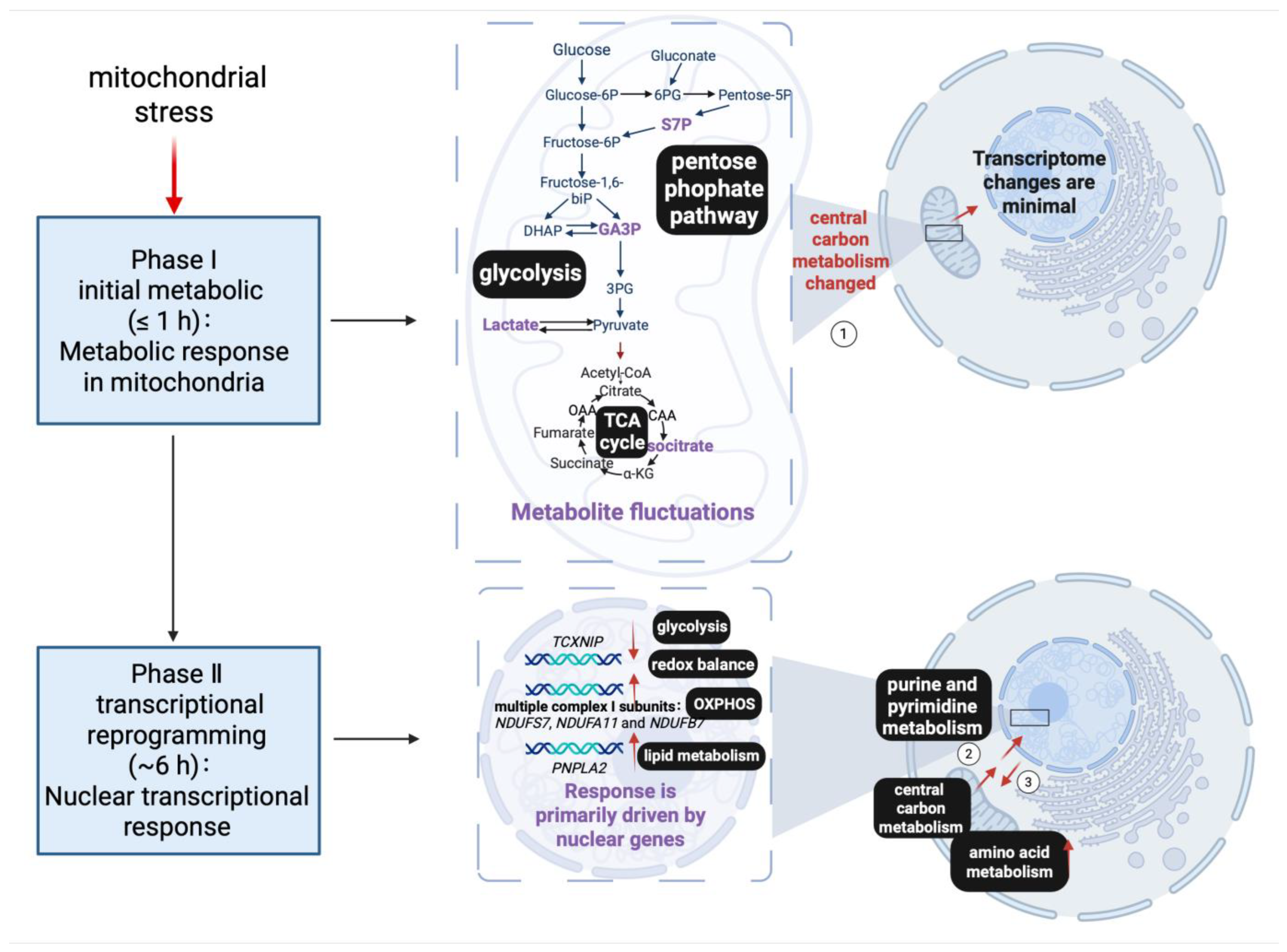
As summarized above, apart from the established roles in bioenergetics and biosynthesis, mitochondria are signaling organelles that communicate their fitness to the nucleus, triggering transcriptional programs to adapt homeostasis to stress, essential for organismal health and aging. Notably, mitochondrial perturbations trigger an exceptionally rapid and coordinated nuclear response. Integrated transcriptomic and metabolomic analyses reveal a biphasic adaptive program: an initial metabolic phase followed by a delayed but robust transcriptional reprogramming [
238]. Within the first hour, changes observed at the transcriptomic level are minimal, yet metabolites associated with the TCA cycle, glycolysis, and pentose phosphate pathway fluctuate sharply—most notably isocitrate, which consistently marks mitochondrial perturbation (
Figure 4).
Among tested stressors, antimycin A, a mitochondrial ETC inhibitor produced by
Streptomyces, causes the strongest metabolic disruption, altering over 50 metabolites within one hour. By 6 h, these changes in central carbon metabolism persisted, while additional pathways, including purine and pyrimidine metabolism, also became frequently perturbed. In contrast, amino acid metabolism displayed a striking pattern at 6 h, with most amino acid–related pathways strongly upregulated. Along with these metabolic alternations, a broad nuclear transcriptional response emerges by 6 h, encompassing hundreds of differentially expressed genes (DEGs), with ~371 conserved across 4 stressors [
238]. These DEGs cluster in pathways linked to glycolysis, OXPHOS, lipid metabolism, and redox balance, including early responders such as
TXNIP,
PNPLA2, and
NDUFS7. Notably, the later phase of adaptation (∼6 h) was dominated by nuclear gene regulation, with no comparable early changes reported for mtDNA-encoded transcripts, indicating that acute adaptation is primarily orchestrated through nuclear gene regulation rather than direct mitochondrial transcription.
These insights highlight how mitochondrial stress initially manifests as quick changes in metabolic and redox states. These changes then trigger a delayed but widespread reprogramming of nuclear transcription. This process, driven by metabolites, creates a two-way communication loop between mitochondria and the nucleus, connecting mitochondrial health with the state of chromatin and overall cell stability.
5. Methodological Innovation: Mitochondria-Targeted AID System
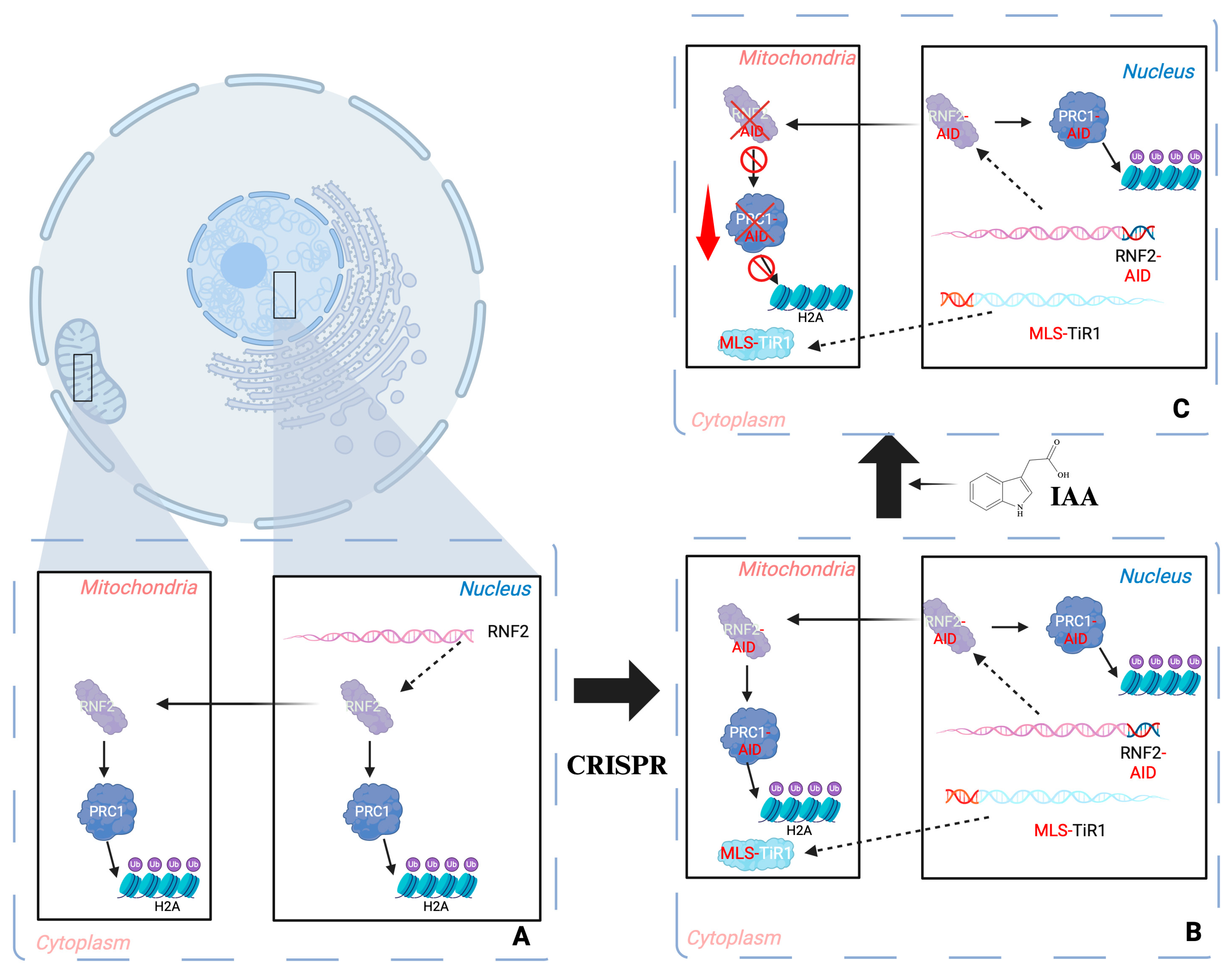
There are experimental limitations to studying regulatory proteins that are dually localized to the nucleus and mitochondria. Conventional knockdown or knockout methods deplete both pools simultaneously, confounding interpretation of whether observed phenotypes originate from nuclear or mitochondrial activity. To overcome this limitation, a mitochondria-targeted auxin-inducible degron (AID) system, enabling acute, reversible, and organelle-specific degradation of proteins, was developed [
237]. This tool provides unmatched temporal precision and subcellular specificity. Its application to RNF2 (RING2), the H2Aub catalytic subunit of PRC1, demonstrated that targeted mitochondrial degradation of RNF2 markedly impairs mitochondrial respiration, directly linking its mitochondrial pool to bioenergetic maintenance (
Figure 5).
This proof-of-concept study validates the efficacy of the mitochondria-targeted AID system as a powerful and versatile instrument for dissecting the organelle-specific roles of multifunctional proteins. More broadly, it enables systematic exploration of how epigenetic regulators, traditionally viewed as nuclear factors, operate with mitochondria to influence metabolic adaptation, genome organization, and cellular signaling. By separating mitochondria from nuclear contributions, this approach opens new frontiers for uncovering previously hidden dimensions of nuclear-mitochondrial communications, with far-reaching implications for understanding energy metabolism, stress response, and aging.
6. Perspective
The discoveries summarized in this review emphasize an emerging view: mitochondria are not just metabolic powerhouses but integral players in shaping the epigenetic landscape of the cell. By supplying essential metabolites such as ATP, acetyl-CoA, NAD+, α-ketoglutarate, and other metabolites, mitochondria directly influence the activity of chromatin-modifying enzymes and nuclear transcriptional programs. This metabolic-epigenetic interface ensures that cellular gene expression programs are tightly coupled to cellular energy states.
Importantly, the detection of classical epigenetic regulators within mitochondria reveals that this communication is bidirectional. Nuclear-mitochondria crosstalk therefore emerges as a reciprocal regulatory circuit: while mitochondrial metabolic signaling influences nuclear chromatin and transcription, certain nuclear epigenetic factors in turn operate within mitochondria to regulate the production of ATP and metabolites. Together, these insights support an integrated view in which mitochondria serve as a central and versatile regulator of epigenetic state, with implications spanning metabolic adaptation, stress resilience, and organismal aging.
The development of advanced experimental platforms, notably the mitochondria-targeted AID system, offers a strong approach to interrogate this bidirectional communication with unprecedented spatial and temporal precision. By enabling the acute and selective depletion of mitochondrial proteins, the mitochondria-AID strategy overcomes the limitations of conventional knockouts and RNA interference (RNAi) methods, allowing the establishment of causal relationships between mitochondrial perturbations and nuclear epigenetic remodeling. The successful implementation of a mitochondria-AID system in cell-based studies opens an exciting frontier for in vivo applications. Extending this approach to transgenic mouse models expressing AID-tagged versions of mitochondrial proteins would enable tissue-specific and temporally controlled protein degradation. Applying this system in vivo would thus allow direct mechanistic dissection of how mitochondrial epigenetic factors, including PRC1, USP16, and many histone-modifying enzymes, govern developmental processes, tissue homeostasis, aging, and disease progression. Moreover, coupling this system with multi-omics analyses, including transcriptomics, proteomics, epigenomics, and metabolomics, could yield a dynamic, system-level understanding of how mitochondrial perturbations reshape nuclear gene expression, chromatin states, and cellular metabolism in real time. Together, these methodological advances promise to transform our understanding of mitochondrial contributions to epigenetic regulation, bridging molecular insights with physiological outcomes.
The dual regulatory framework integrating nuclear and mitochondrial epigenetic mechanisms helps explain how chromatin dysregulation may contribute to mitochondrial dysfunction in aging and disease, while also highlighting emerging opportunities to restore mitochondrial health through epigenetic modulation.
Author Contributions
Conceptualization, H.W.; validation, Y.X., X.J. and H.W.; data curation, Y.X. and X.J.; writing—original draft preparation, Y.X., X.J. and H.W.; writing—review and editing, Y.X., X.J., L.S., L.S.S., L.C., L.T.C. and H.W.; supervision, H.W. All authors have read and agreed to the published version of the manuscript.
Funding
This research received no external funding.
Institutional Review Board Statement
Not applicable.
Informed Consent Statement
Not applicable.
Data Availability Statement
No new data were created or analyzed in this study.
Conflicts of Interest
The authors declare no conflicts of interest.
References
- Gray, M.W. The pre-endosymbiont hypothesis: A new perspective on the origin and evolution of mitochondria. Cold Spring Harb. Perspect. Biol. 2014, 6, a016097. [Google Scholar] [CrossRef]
- Archibald, J.M. Endosymbiosis and eukaryotic cell evolution. Curr. Biol. 2015, 25, R911–R921. [Google Scholar] [CrossRef]
- Roger, A.J.; Muñoz-Gómez, S.A.; Kamikawa, R. The origin and diversification of mitochondria. Curr. Biol. 2017, 27, R1177–R1192. [Google Scholar] [CrossRef]
- Bremer, N.; Tria, F.D.K.; Skejo, J.; Garg, S.G.; Martin, W.F. Ancestral state reconstructions trace mitochondria but not phagocytosis to the last eukaryotic common ancestor. Genome Biol. Evol. 2022, 14, evac079. [Google Scholar] [CrossRef] [PubMed]
- Raval, P.K.; Martin, W.F.; Gould, S.B. Mitochondrial evolution: Gene shuffling, endosymbiosis, and signaling. Sci. Adv. 2023, 9, eadj4493. [Google Scholar] [CrossRef]
- Bennett, G.M.; Kwak, Y.; Maynard, R. Endosymbioses have shaped the evolution of biological diversity and complexity time and time again. Genome Biol. Evol. 2024, 16, evae112. [Google Scholar] [CrossRef] [PubMed]
- Lane, N.; Martin, W. The energetics of genome complexity. Nature 2010, 467, 929–934. [Google Scholar] [CrossRef] [PubMed]
- Gabaldón, T. Origin and early evolution of the Eukaryotic cell. Annu. Rev. Microbiol. 2021, 75, 631–647. [Google Scholar] [CrossRef]
- Mills, D.B.; Boyle, R.A.; Daines, S.J.; Sperling, E.A.; Pisani, D.; Donoghue, P.C.J.; Lenton, T.M. Eukaryogenesis and oxygen in earth history. Nat. Ecol. Evol. 2022, 6, 520–532. [Google Scholar] [CrossRef]
- Andrews, R.M.; Kubacka, I.; Chinnery, P.F.; Lightowlers, R.N.; Turnbull, D.M.; Howell, N. Reanalysis and revision of the Cambridge reference sequence for human mitochondrial DNA. Nat. Genet. 1999, 23, 147. [Google Scholar] [CrossRef]
- Pagliarini, D.J.; Calvo, S.E.; Chang, B.; Sheth, S.A.; Vafai, S.B.; Ong, S.E.; Walford, G.A.; Sugiana, C.; Boneh, A.; Chen, W.K.; et al. A mitochondrial protein compendium elucidates complex I disease biology. Cell 2008, 134, 112–123. [Google Scholar] [CrossRef]
- Herrmann, J.M.; Bykov, Y. Protein translocation in mitochondria: Sorting out the Toms, Tims, Pams, Sams and Mia. FEBS Lett. 2023, 597, 1553–1554. [Google Scholar] [CrossRef] [PubMed]
- Moraes, C.T. What regulates mitochondrial DNA copy number in animal cells? Trends Genet. 2001, 17, 199–205. [Google Scholar] [CrossRef]
- Castellani, C.A.; Longchamps, R.J.; Sun, J.; Guallar, E.; Arking, D.E. Thinking outside the nucleus: Mitochondrial DNA copy number in health and disease. Mitochondrion 2020, 53, 214–223. [Google Scholar] [CrossRef]
- Filograna, R.; Mennuni, M.; Alsina, D.; Larsson, N.-G. Mitochondrial DNA copy number in human disease: The more the better? FEBS Lett. 2021, 595, 976–1002. [Google Scholar] [CrossRef] [PubMed]
- Silva Ramos, E.; Motori, E.; Brüser, C.; Kühl, I.; Yeroslaviz, A.; Ruzzenente, B.; Kauppila, J.H.K.; Busch, J.D.; Hultenby, K.; Habermann, B.H.; et al. Mitochondrial fusion is required for regulation of mitochondrial DNA replication. PLoS Genet. 2019, 15, e1008085. [Google Scholar] [CrossRef]
- Franco, A.; Li, J.; Kelly, D.P.; Hershberger, R.E.; Marian, A.J.; Lewis, R.M.; Song, M.; Dang, X.; Schmidt, A.D.; Mathyer, M.E.; et al. A human mitofusin 2 mutation can cause mitophagic cardiomyopathy. eLife 2023, 12, e84235. [Google Scholar] [CrossRef] [PubMed]
- Nunnari, J.; Suomalainen, A. Mitochondria: In sickness and in health. Cell 2012, 148, 1145–1159. [Google Scholar] [CrossRef]
- Laird, M.; Ku, J.C.; Raiten, J.; Sriram, S.; Moore, M.; Li, Y. Mitochondrial metabolism regulation and epigenetics in hypoxia. Front. Physiol. 2024, 15, 1393232. [Google Scholar] [CrossRef]
- Sutendra, G.; Kinnaird, A.; Dromparis, P.; Paulin, R.; Stenson, T.H.; Haromy, A.; Hashimoto, K.; Zhang, N.; Flaim, E.; Michelakis, E.D. A nuclear pyruvate dehydrogenase complex is important for the generation of acetyl-CoA and histone acetylation. Cell 2014, 158, 84–97. [Google Scholar] [CrossRef]
- TeSlaa, T.; Chaikovsky, A.C.; Lipchina, I.; Escobar, S.L.; Hochedlinger, K.; Huang, J.; Graeber, T.G.; Braas, D.; Teitell, M.A. α-Ketoglutarate accelerates the initial differentiation of primed human pluripotent stem cells. Cell Metab. 2016, 24, 485–493. [Google Scholar] [CrossRef]
- Sies, H.; Jones, D.P. Reactive oxygen species (ROS) as pleiotropic physiological signalling agents. Nat. Rev. Mol. Cell Biol. 2020, 21, 363–383. [Google Scholar] [CrossRef]
- Pichaud, N.; Bérubé, R.; Côté, G.; Belzile, C.; Dufresne, F.; Morrow, G.; Tanguay, R.M.; Rand, D.M.; Blier, P.U. Age dependent dysfunction of mitochondrial and ROS metabolism induced by mitonuclear mismatch. Front. Genet. 2019, 10, 130. [Google Scholar] [CrossRef]
- Raval, P.K.; Garg, S.G.; Gould, S.B. Endosymbiotic selective pressure at the origin of eukaryotic cell biology. eLife 2022, 11, e81033. [Google Scholar] [CrossRef]
- Pinna, S.; Kunz, C.; Halpern, A.; Harrison, S.A.; Jordan, S.F.; Ward, J.; Werner, F.; Lane, N. A prebiotic basis for ATP as the universal energy currency. PLoS Biol. 2022, 20, e3001437. [Google Scholar] [CrossRef] [PubMed]
- Casanova, A.; Wevers, A.; Navarro-Ledesma, S.; Pruimboom, L. Mitochondria: It is all about energy. Front. Physiol. 2023, 14, 1114231. [Google Scholar] [CrossRef] [PubMed]
- Spinelli, J.B.; Haigis, M.C. The multifaceted contributions of mitochondria to cellular metabolism. Nat. Cell Biol. 2018, 20, 745–754. [Google Scholar] [CrossRef] [PubMed]
- Aves, S.J.; Liu, Y.; Richards, T.A. Evolutionary diversification of eukaryotic DNA replication machinery. Subcell. Biochem. 2012, 62, 19–35. [Google Scholar] [CrossRef]
- He, Q.; Wang, F.; O’Donnell, M.E.; Li, H. Cryo-EM reveals a nearly complete PCNA loading process and unique features of the human alternative clamp loader CTF18-RFC. Proc. Natl. Acad. Sci. USA 2024, 121, e2319727121. [Google Scholar] [CrossRef]
- Wang, F.; He, Q.; Yao, N.Y.; O’Donnell, M.E.; Li, H. The human ATAD5 has evolved unique structural elements to function exclusively as a PCNA unloader. Nat. Struct. Mol. Biol. 2024, 31, 1680–1691. [Google Scholar] [CrossRef]
- Faull, S.V.; Barbon, M.; Mossler, A.; Yuan, Z.; Bai, L.; Reuter, L.M.; Riera, A.; Winkler, C.; Magdalou, I.; Peach, M.; et al. MCM2-7 ring closure involves the Mcm5 C-terminus and triggers Mcm4 ATP hydrolysis. Nat. Commun. 2025, 16, 14. [Google Scholar] [CrossRef]
- Yan, M.; Gralla, J.D. Multiple ATP-dependent steps in RNA polymerase II promoter melting and initiation. EMBO J. 1997, 16, 7457–7467. [Google Scholar] [CrossRef]
- Kopytek, S.J.; Peterson, D.O. ATP-mediated activation of RNA polymerase II transcription complexes. Gene Expr. 1998, 7, 75–86. [Google Scholar]
- Moore, C.; Wong, E.; Kaur, U.; Chio, U.S.; Zhou, Z.; Ostrowski, M.; Wu, K.; Irkliyenko, I.; Wang, S.; Ramani, V.; et al. ATP-dependent remodeling of chromatin condensates reveals distinct mesoscale outcomes. Science 2025, 390, eadr0018. [Google Scholar] [CrossRef]
- Morrison, A.J. Chromatin-remodeling links metabolic signaling to gene expression. Mol. Metab. 2020, 38, 100973. [Google Scholar] [CrossRef] [PubMed]
- Eustermann, S.; Patel, A.B.; Hopfner, K.-P.; He, Y.; Korber, P. Energy-driven genome regulation by ATP-dependent chromatin remodellers. Nat. Rev. Mol. Cell Biol. 2024, 25, 309–332. [Google Scholar] [CrossRef] [PubMed]
- Bilkis, R.; Lake, R.J.; Fan, H.Y. ATP-dependent chromatin remodeler CSB couples DNA repair pathways to transcription with implications for Cockayne syndrome and cancer therapy. Cells 2025, 14, 239. [Google Scholar] [CrossRef]
- van der Meer, P.J.; Luijsterburg, M.S. The molecular basis of human transcription-coupled DNA repair. Nat. Cell Biol. 2025, 27, 1230–1239. [Google Scholar] [CrossRef]
- Huang, R.; Zhou, P.-K. DNA damage repair: Historical perspectives, mechanistic pathways and clinical translation for targeted cancer therapy. Signal Transduct. Target. Ther. 2021, 6, 254. [Google Scholar] [CrossRef] [PubMed]
- Cavazza, T.; Vernos, I. The RanGTP Pathway: From Nucleo-Cytoplasmic Transport to Spindle Assembly and Beyond. Front. Cell Dev. Biol. 2016, 3, 83. [Google Scholar] [CrossRef]
- Bai, R.; Wan, R.; Yan, C.; Jia, Q.; Lei, J.; Shi, Y. Mechanism of spliceosome remodeling by the ATPase/helicase Prp2 and its coactivator Spp2. Science 2021, 371, eabe8863. [Google Scholar] [CrossRef]
- Dörner, K.; Hondele, M. The story of RNA unfolded: The molecular function of DEAD- and DExH-box ATPases and their complex relationship with membraneless organelles. Annu. Rev. Biochem. 2024, 93, 79–108. [Google Scholar] [CrossRef] [PubMed]
- Chu, F.Y.; Clavijo, A.S.; Lee, S.; Zidovska, A. Transcription-dependent mobility of single genes and genome-wide motions in live human cells. Nat. Commun. 2024, 15, 8879. [Google Scholar] [CrossRef]
- Ghose, R.; Pezzano, F.; Badia, R.; Kourtis, S.; Sheraj, I.; Das, S.; Gañez Zapater, A.; Ghose, U.; Musa-Afaneh, S.; Espinar, L.; et al. Mitochondria-derived nuclear ATP surge protects against confinement-induced proliferation defects. Nat. Commun. 2025, 16, 6613. [Google Scholar] [CrossRef] [PubMed]
- Yao, M.; Zong, Y.; Gao, J. Mitochondria power the nucleus under pressure. Mechanobiol. Med. 2025, 3, 100146. [Google Scholar] [CrossRef]
- Li, X.; Egervari, G.; Wang, Y.; Berger, S.L.; Lu, Z. Regulation of chromatin and gene expression by metabolic enzymes and metabolites. Nat. Rev. Mol. Cell Biol. 2018, 19, 563–578. [Google Scholar] [CrossRef] [PubMed]
- Hargreaves, M.; Spriet, L.L. Skeletal muscle energy metabolism during exercise. Nat. Metab. 2020, 2, 817–828. [Google Scholar] [CrossRef]
- Lopaschuk, G.D.; Karwi, Q.G.; Tian, R.; Wende, A.R.; Abel, E.D. Cardiac energy metabolism in heart failure. Circ. Res. 2021, 128, 1487–1513. [Google Scholar] [CrossRef]
- Rae, C.D.; Baur, J.A.; Borges, K.; Dienel, G.; Díaz-García, C.M.; Douglass, S.R.; Drew, K.; Duarte, J.M.N.; Duran, J.; Kann, O.; et al. Brain energy metabolism: A roadmap for future research. J. Neurochem. 2024, 168, 910–954. [Google Scholar] [CrossRef]
- Sahu, V.; Lu, C. Metabolism-driven chromatin dynamics: Molecular principles and technological advances. Mol. Cell 2025, 85, 262–275. [Google Scholar] [CrossRef]
- Tilly, B.C.; Chalkley, G.E.; van der Knaap, J.A.; Moshkin, Y.M.; Kan, T.W.; Dekkers, D.H.; Demmers, J.A.; Verrijzer, C.P. In vivo analysis reveals that ATP-hydrolysis couples remodeling to SWI/SNF release from chromatin. eLife 2021, 10, e69424. [Google Scholar] [CrossRef]
- Patel, M.S.; Korotchkina, L.G. Regulation of the pyruvate dehydrogenase complex. Biochem. Soc. Trans. 2006, 34, 217–222. [Google Scholar] [CrossRef]
- Tavoulari, S.; Sichrovsky, M.; Kunji, E.R.S. Fifty years of the mitochondrial pyruvate carrier: New insights into its structure, function, and inhibition. Acta Physiol. 2023, 238, e14016. [Google Scholar] [CrossRef]
- Houten, S.M.; Wanders, R.J. A general introduction to the biochemistry of mitochondrial fatty acid β-oxidation. J. Inherit. Metab. Dis. 2010, 33, 469–477. [Google Scholar] [CrossRef]
- Matsuura, T.R.; Puchalska, P.; Crawford, P.A.; Kelly, D.P. Ketones and the heart: Metabolic principles and therapeutic implications. Circ. Res. 2023, 132, 882–898. [Google Scholar] [CrossRef] [PubMed]
- Li, Q.; Hoppe, T. Role of amino acid metabolism in mitochondrial homeostasis. Front. Cell Dev. Biol. 2023, 11, 1127618. [Google Scholar] [CrossRef]
- Pietrocola, F.; Galluzzi, L.; Bravo-San Pedro, J.M.; Madeo, F.; Kroemer, G. Acetyl coenzyme A: A central metabolite and second messenger. Cell Metab. 2015, 21, 805–821. [Google Scholar] [CrossRef] [PubMed]
- Bradshaw, P.C. Acetyl-CoA metabolism and histone acetylation in the regulation of aging and lifespan. Antioxidants 2021, 10, 572. [Google Scholar] [CrossRef]
- Russo, M.; Pileri, F.; Ghisletti, S. Novel insights into the role of acetyl-CoA producing enzymes in epigenetic regulation. Front. Endocrinol. 2023, 14, 1272646. [Google Scholar] [CrossRef] [PubMed]
- Hlavaty, S.I.; Salcido, K.N.; Pniewski, K.A.; Mukha, D.; Ma, W.; Kannan, T.; Cassel, J.; Srikanth, Y.V.V.; Liu, Q.; Kossenkov, A.; et al. ACSS1-dependent acetate utilization rewires mitochondrial metabolism to support AML and melanoma tumor growth and metastasis. Cell Rep. 2024, 43, 114988. [Google Scholar] [CrossRef]
- Verma, A.; Lindroth, A.M. The emerging intertwined activities of metabolism and epigenetics unveils culprits and prospects in cancer. Exp. Mol. Med. 2025, 57, 1928–1939. [Google Scholar] [CrossRef]
- Wellen, K.E.; Hatzivassiliou, G.; Sachdeva, U.M.; Bui, T.V.; Cross, J.R.; Thompson, C.B. ATP-citrate lyase links cellular metabolism to histone acetylation. Science 2009, 324, 1076–1080. [Google Scholar] [CrossRef] [PubMed]
- Palmieri, F. The mitochondrial transporter family SLC25: Identification, properties and physiopathology. Mol. Aspects Med. 2013, 34, 465–484. [Google Scholar] [CrossRef]
- Zara, V.; Assalve, G.; Ferramosca, A. Insights into the malfunctioning of the mitochondrial citrate carrier: Implications for cell pathology. Biochim. Biophys. Acta Mol. Basis Dis. 2023, 1869, 166758. [Google Scholar] [CrossRef]
- Sivanand, S.; Viney, I.; Wellen, K.E. Spatiotemporal control of acetyl-CoA metabolism in chromatin regulation. Trends Biochem. Sci. 2018, 43, 61–74. [Google Scholar] [CrossRef]
- Shi, L.; Tu, B.P. Acetyl-CoA and the regulation of metabolism: Mechanisms and consequences. Curr. Opin. Cell Biol. 2015, 33, 125–131. [Google Scholar] [CrossRef] [PubMed]
- Lozoya, O.A.; Wang, T.; Grenet, D.; Wolfgang, T.C.; Sobhany, M.; Ganini da Silva, D.; Riadi, G.; Chandel, N.; Woychik, R.P.; Santos, J.H. Mitochondrial acetyl-CoA reversibly regulates locus-specific histone acetylation and gene expression. Life Sci. Alliance 2019, 2, e201800228. [Google Scholar] [CrossRef]
- Eftekhari, A.; Sabir, U.; Kasumov, T. The role of lysine acetylation in metabolic sensing and proteostasis. Pharmacol. Ther. 2025, 274, 108908. [Google Scholar] [CrossRef]
- Charidemou, E.; Kirmizis, A. A two-way relationship between histone acetylation and metabolism. Trends Biochem. Sci. 2024, 49, 1046–1062. [Google Scholar] [CrossRef]
- Willnow, P.; Teleman, A.A. Nuclear position and local acetyl-CoA production regulate chromatin state. Nature 2024, 630, 466–474. [Google Scholar] [CrossRef]
- Wu, J.; Singh, K.; Shing, V.; Gupta, A.; Arenberg, B.C.; Huffstutler, R.D.; Lee, D.-Y.; Sack, M.N. Mitochondrial fatty acid oxidation regulates monocytic type I interferon signaling via histone acetylation. Sci. Adv. 2025, 11, eadq9301. [Google Scholar] [CrossRef] [PubMed]
- Zhang, D.; Tang, Z.; Huang, H.; Zhou, G.; Cui, C.; Weng, Y.; Liu, W.; Kim, S.; Lee, S.; Perez-Neut, M.; et al. Metabolic regulation of gene expression by histone lactylation. Nature 2019, 574, 575–580. [Google Scholar] [CrossRef]
- Yu, X.; Yang, J.; Xu, J.; Pan, H.; Wang, W.; Yu, X.; Shi, S. Histone lactylation: From tumor lactate metabolism to epigenetic regulation. Int. J. Biol. Sci. 2024, 20, 1833–1854. [Google Scholar] [CrossRef]
- Zhang, Y.; Song, H.; Li, M.; Lu, P. Histone lactylation bridges metabolic reprogramming and epigenetic rewiring in driving carcinogenesis: Oncometabolite fuels oncogenic transcription. Clin. Transl. Med. 2024, 14, e1614. [Google Scholar] [CrossRef]
- Ziogas, A.; Novakovic, B.; Ventriglia, L.; Galang, N.; Tran, K.A.; Li, W.; Matzaraki, V.; van Unen, N.; Schlüter, T.; Ferreira, A.V.; et al. Long-term histone lactylation connects metabolic and epigenetic rewiring in innate immune memory. Cell 2025, 188, 2992–3012. [Google Scholar] [CrossRef] [PubMed]
- Yuan, K.; Liu, J.; Chen, G.; Wang, P.; Wei, L. Histone lactylation-induced GLI3 activation drives macrophage M1 polarization and exosomal SERPINE1 release in abdominal aortic aneurysm progression. Cell Death Discov. 2025, 11, 523. [Google Scholar] [CrossRef]
- Hagihara, H.; Shoji, H.; Otabi, H.; Toyoda, A.; Katoh, K.; Namihira, M.; Miyakawa, T. Protein lactylation induced by neural excitation. Cell Rep. 2021, 37, 109820. [Google Scholar] [CrossRef] [PubMed]
- Zhang, Y.-M.; Yang, F.; Li, Q.; Zhang, J.-N. Role of histone lactylation in neurological disorders. Int. J. Mol. Sci. 2025, 26, 7949. [Google Scholar] [CrossRef]
- Li, X.; Yang, Y.; Zhang, B.; Lin, X.; Fu, X.; An, Y.; Zou, Y.; Wang, J.X.; Wang, Z.; Yu, T. Lactate metabolism in human health and disease. Signal Transduct. Target. Ther. 2022, 7, 305. [Google Scholar] [CrossRef]
- Zhu, R.; Ye, X.; Lu, X.; Xiao, L.; Yuan, M.; Zhao, H.; Guo, D.; Meng, Y.; Han, H.; Luo, S.; et al. ACSS2 acts as a lactyl-CoA synthetase and couples KAT2A to function as a lactyltransferase for histone lactylation and tumor immune evasion. Cell Metab. 2025, 37, 361–376.e367. [Google Scholar] [CrossRef]
- Sabari, B.R.; Zhang, D.; Allis, C.D.; Zhao, Y. Metabolic regulation of gene expression through histone acylations. Nat. Rev. Mol. Cell Biol. 2017, 18, 90–101. [Google Scholar] [CrossRef] [PubMed]
- Simithy, J.; Sidoli, S.; Yuan, Z.-F.; Coradin, M.; Bhanu, N.V.; Marchione, D.M.; Klein, B.J.; Bazilevsky, G.A.; McCullough, C.E.; Magin, R.S.; et al. Characterization of histone acylations links chromatin modifications with metabolism. Nat. Commun. 2017, 8, 1141. [Google Scholar] [CrossRef]
- Demetriadou, C.; Gibb, A.A.; Elrod, J.W.; Snyder, N.W. Propionyl-CoA metabolism links chromatin acylation to cardiac transcription. Nat. Cardiovasc. Res. 2023, 2, 1109–1111. [Google Scholar] [CrossRef]
- Chen, Y.; Sprung, R.; Tang, Y.; Ball, H.; Sangras, B.; Kim, S.C.; Falck, J.R.; Peng, J.; Gu, W.; Zhao, Y. Lysine propionylation and butyrylation are novel post-translational modifications in histones. Mol. Cell. Proteom. 2007, 6, 812–819. [Google Scholar] [CrossRef] [PubMed]
- Tan, M.; Luo, H.; Lee, S.; Jin, F.; Yang, J.S.; Montellier, E.; Buchou, T.; Cheng, Z.; Rousseaux, S.; Rajagopal, N.; et al. Identification of 67 histone marks and histone lysine crotonylation as a new type of histone modification. Cell 2011, 146, 1016–1028. [Google Scholar] [CrossRef]
- Sabari, B.R.; Tang, Z.; Huang, H.; Yong-Gonzalez, V.; Molina, H.; Kong, H.E.; Dai, L.; Shimada, M.; Cross, J.R.; Zhao, Y.; et al. Intracellular crotonyl-CoA stimulates transcription through p300-catalyzed histone crotonylation. Mol. Cell 2015, 58, 203–215. [Google Scholar] [CrossRef]
- Jo, C.; Park, S.; Oh, S.; Choi, J.; Kim, E.-K.; Youn, H.-D.; Cho, E.-J. Histone acylation marks respond to metabolic perturbations and enable cellular adaptation. Exp. Mol. Med. 2020, 52, 2005–2019. [Google Scholar] [CrossRef]
- Nitsch, S.; Zorro Shahidian, L.; Schneider, R. Histone acylations and chromatin dynamics: Concepts, challenges, and links to metabolism. EMBO Rep. 2021, 22, e52774. [Google Scholar] [CrossRef] [PubMed]
- Xie, Z.; Dai, J.; Dai, L.; Tan, M.; Cheng, Z.; Wu, Y.; Boeke, J.D.; Zhao, Y. Lysine succinylation and lysine malonylation in histones. Mol. Cell. Proteom. 2012, 11, 100–107. [Google Scholar] [CrossRef] [PubMed]
- Hirschey, M.D.; Zhao, Y. Metabolic regulation by lysine malonylation, succinylation, and glutarylation. Mol. Cell. Proteom. 2015, 14, 2308–2315. [Google Scholar] [CrossRef]
- Gao, T.; Díaz-Hirashi, Z.; Verdeguer, F. Metabolic signaling into chromatin modifications in the regulation of gene expression. Int. J. Mol. Sci. 2018, 19, 4108. [Google Scholar] [CrossRef]
- Weyh, M.; Jokisch, M.-L.; Nguyen, T.-A.; Fottner, M.; Lang, K. Deciphering functional roles of protein succinylation and glutarylation using genetic code expansion. Nat. Chem. 2024, 16, 913–921. [Google Scholar] [CrossRef]
- Gao, J.; Yu, W. Regulators of cancer progression: Succinylation. Cancers 2025, 17, 2652. [Google Scholar] [CrossRef]
- Zhu, A.; Ye, T.; Tan, M.; Xu, J.Y. Recent progress in histone post-translational modifications as regulators of metabolic diseases: A review. Int. J. Biol. Macromol. 2025, 330, 147964. [Google Scholar] [CrossRef]
- Carrer, A.; Parris, J.L.D.; Trefely, S.; Henry, R.A.; Montgomery, D.C.; Torres, A.; Viola, J.M.; Kuo, Y.-M.; Blair, I.A.; Meier, J.L.; et al. Impact of a high-fat diet on tissue Acyl-CoA and histone acetylation levels. J. Biol. Chem. 2017, 292, 3312–3322. [Google Scholar] [CrossRef]
- Yao, W.; Hu, X.; Wang, X. Crossing epigenetic frontiers: The intersection of novel histone modifications and diseases. Signal Transduct. Target. Ther. 2024, 9, 232. [Google Scholar] [CrossRef]
- Zapata-Pérez, R.; Wanders, R.J.A.; van Karnebeek, C.D.M.; Houtkooper, R.H. NAD+ homeostasis in human health and disease. EMBO Mol. Med. 2021, 13, e13943. [Google Scholar] [CrossRef]
- Berger, S.L.; Sassone-Corsi, P. Metabolic signaling to chromatin. Cold Spring Harb. Perspect. Biol. 2016, 8, a019463. [Google Scholar] [CrossRef] [PubMed]
- Hurtado-Bagès, S.; Knobloch, G.; Ladurner, A.G.; Buschbeck, M. The taming of PARP1 and its impact on NAD+ metabolism. Mol. Metab. 2020, 38, 100950. [Google Scholar] [CrossRef]
- Ruszkiewicz, J.A.; Bürkle, A.; Mangerich, A. Fueling genome maintenance: On the versatile roles of NAD+ in preserving DNA integrity. J. Biol. Chem. 2022, 298, 102037. [Google Scholar] [CrossRef] [PubMed]
- Yang, X.J.; Seto, E. HATs and HDACs: From structure, function and regulation to novel strategies for therapy and prevention. Oncogene 2007, 26, 5310–5318. [Google Scholar] [CrossRef]
- Fang, E.F.; Lautrup, S.; Hou, Y.; Demarest, T.G.; Croteau, D.L.; Mattson, M.P.; Bohr, V.A. NAD+ in aging: Molecular mechanisms and translational implications. Trends Mol. Med. 2017, 23, 899–916. [Google Scholar] [CrossRef]
- Pirinen, E.; Lo Sasso, G.; Auwerx, J. Mitochondrial sirtuins and metabolic homeostasis. Best Pract. Res. Clin. Endocrinol. Metab. 2012, 26, 759–770. [Google Scholar] [CrossRef]
- Houtkooper, R.H.; Pirinen, E.; Auwerx, J. Sirtuins as regulators of metabolism and healthspan. Nat. Rev. Mol. Cell Biol. 2012, 13, 225–238. [Google Scholar] [CrossRef] [PubMed]
- Kupis, W.; Pałyga, J.; Tomal, E.; Niewiadomska, E. The role of sirtuins in cellular homeostasis. J. Physiol. Biochem. 2016, 72, 371–380. [Google Scholar] [CrossRef]
- Morigi, M.; Perico, L.; Benigni, A. Sirtuins in renal health and disease. J. Am. Soc. Nephrol. 2018, 29, 1799–1809. [Google Scholar] [CrossRef]
- Vachharajani, V.; McCall, C.E. Sirtuins: Potential therapeutic targets for regulating acute inflammatory response? Expert Opin. Ther. Targets 2020, 24, 489–497. [Google Scholar] [CrossRef]
- Zhong, L.; D’Urso, A.; Toiber, D.; Sebastian, C.; Henry, R.E.; Vadysirisack, D.D.; Guimaraes, A.; Marinelli, B.; Wikstrom, J.D.; Nir, T.; et al. The histone deacetylase Sirt6 regulates glucose homeostasis via Hif1α. Cell 2010, 140, 280–293. [Google Scholar] [CrossRef] [PubMed]
- Scher, M.B.; Vaquero, A.; Reinberg, D. SirT3 is a nuclear NAD+-dependent histone deacetylase that translocates to the mitochondria upon cellular stress. Genes Dev. 2007, 21, 920–928. [Google Scholar] [CrossRef] [PubMed]
- Kim, H.S.; Patel, K.; Muldoon-Jacobs, K.; Bisht, K.S.; Aykin-Burns, N.; Pennington, J.D.; van der Meer, R.; Nguyen, P.; Savage, J.; Owens, K.M.; et al. SIRT3 is a mitochondria-localized tumor suppressor required for maintenance of mitochondrial integrity and metabolism during stress. Cancer Cell 2010, 17, 41–52. [Google Scholar] [CrossRef]
- Iwahara, T.; Bonasio, R.; Narendra, V.; Reinberg, D. SIRT3 functions in the nucleus in the control of stress-related gene expression. Mol. Cell. Biol. 2012, 32, 5022–5034. [Google Scholar] [CrossRef]
- Cheng, A.; Yang, Y.; Zhou, Y.; Maharana, C.; Lu, D.; Peng, W.; Liu, Y.; Wan, R.; Marosi, K.; Misiak, M.; et al. Mitochondrial SIRT3 mediates adaptive responses of neurons to exercise and metabolic and excitatory challenges. Cell Metab. 2016, 23, 128–142. [Google Scholar] [CrossRef]
- Bai, P.; Cantó, C.; Oudart, H.; Brunyánszki, A.; Cen, Y.; Thomas, C.; Yamamoto, H.; Huber, A.; Kiss, B.; Houtkooper, R.H.; et al. PARP-1 inhibition increases mitochondrial metabolism through SIRT1 activation. Cell Metab. 2011, 13, 461–468. [Google Scholar] [CrossRef]
- Kim, M.Y.; Mauro, S.; Gévry, N.; Lis, J.T.; Kraus, W.L. NAD+-dependent modulation of chromatin structure and transcription by nucleosome binding properties of PARP-1. Cell 2004, 119, 803–814. [Google Scholar] [CrossRef]
- Wacker, D.A.; Ruhl, D.D.; Balagamwala, E.H.; Hope, K.M.; Zhang, T.; Kraus, W.L. The DNA binding and catalytic domains of poly(ADP-ribose) polymerase 1 cooperate in the regulation of chromatin structure and transcription. Mol. Cell. Biol. 2007, 27, 7475–7485. [Google Scholar] [CrossRef]
- Murata, M.M.; Kong, X.; Moncada, E.; Chen, Y.; Imamura, H.; Wang, P.; Berns, M.W.; Yokomori, K.; Digman, M.A. NAD+ consumption by PARP1 in response to DNA damage triggers metabolic shift critical for damaged cell survival. Mol. Biol. Cell 2019, 30, 2584–2597. [Google Scholar] [CrossRef]
- Finkelstein, J.D. Methionine metabolism in mammals. J. Nutr. Biochem. 1990, 1, 228–237. [Google Scholar] [CrossRef] [PubMed]
- Mentch, S.J.; Locasale, J.W. One-carbon metabolism and epigenetics: Understanding the specificity. Ann. N. Y. Acad. Sci. 2016, 1363, 91–98. [Google Scholar] [CrossRef] [PubMed]
- Ducker, G.S.; Rabinowitz, J.D. One-carbon metabolism in health and disease. Cell Metab. 2017, 25, 27–42. [Google Scholar] [CrossRef] [PubMed]
- Pardo-Lorente, N.; Sdelci, S. MTHFD2 in healthy and cancer cells: Canonical and non-canonical functions. NPJ Metab. Health Dis. 2024, 2, 3. [Google Scholar] [CrossRef]
- Dang, S.; Jain, A.; Dhanda, G.; Bhattacharya, N.; Bhattacharya, A.; Senapati, S. One carbon metabolism and its implication in health and immune functions. Cell Biochem. Funct. 2024, 42, e3926. [Google Scholar] [CrossRef]
- Xu, J.; Sinclair, K.D. One-carbon metabolism and epigenetic regulation of embryo development. Reprod. Fertil. Dev. 2015, 27, 667–676. [Google Scholar] [CrossRef]
- Friso, S.; Udali, S.; De Santis, D.; Choi, S.-W. One-carbon metabolism and epigenetics. Mol. Asp. Med. 2017, 54, 28–36. [Google Scholar] [CrossRef] [PubMed]
- Serefidou, M.; Venkatasubramani, A.V.; Imhof, A. The impact of one carbon metabolism on histone methylation. Front. Genet. 2019, 10, 764. [Google Scholar] [CrossRef]
- Choi, S.W.; Friso, S. Modulation of DNA methylation by one-carbon metabolism: A milestone for healthy aging. Nutr. Res. Pract. 2023, 17, 597–615. [Google Scholar] [CrossRef]
- Mentch, S.J.; Mehrmohamadi, M.; Huang, L.; Liu, X.; Gupta, D.; Mattocks, D.; Gómez Padilla, P.; Ables, G.; Bamman, M.M.; Thalacker-Mercer, A.E.; et al. Histone methylation dynamics and gene regulation occur through the sensing of one-carbon metabolism. Cell Metab. 2015, 22, 861–873. [Google Scholar] [CrossRef]
- Yan, C.; He, B.; Wang, C.; Li, W.; Tao, S.; Chen, J.; Wang, Y.; Yang, L.; Wu, Y.; Wu, Z.; et al. Methionine in embryonic development: Metabolism, redox homeostasis, epigenetic modification and signaling pathway. Crit. Rev. Food Sci. Nutr. 2025, 65, 8051–8074. [Google Scholar] [CrossRef]
- Saul, D.; Kosinsky, R.L. Epigenetics of aging and aging-associated diseases. Int. J. Mol. Sci. 2021, 22, 401. [Google Scholar] [CrossRef]
- Kang, J.; Benjamin, D.I.; Kim, S.; Salvi, J.S.; Dhaliwal, G.; Lam, R.; Goshayeshi, A.; Brett, J.O.; Liu, L.; Rando, T.A. Depletion of SAM leading to loss of heterochromatin drives muscle stem cell ageing. Nat. Metab. 2024, 6, 153–168. [Google Scholar] [CrossRef]
- Bernasocchi, T.; Mostoslavsky, R. Subcellular one carbon metabolism in cancer, aging and epigenetics. Front. Epigenetics Epigenomics 2024, 2, 1451971. [Google Scholar] [CrossRef] [PubMed]
- Yu, W.; Wang, Z.; Zhang, K.; Chi, Z.; Xu, T.; Jiang, D.; Chen, S.; Li, W.; Yang, X.; Zhang, X.; et al. One-carbon metabolism supports S-adenosylmethionine and histone methylation to drive inflammatory macrophages. Mol. Cell 2019, 75, 1147–1160. [Google Scholar] [CrossRef] [PubMed]
- Liang, J.; Zhao, Y.; Cheng, Y.; Hu, Z.; Yuan, Y.; Xiao, J.; Farag, M.A.; Cai, X.; Cao, H.; Yue, T. Polyphenols, epigenetics, and methionine metabolism: Unlocking therapeutic potential. Crit. Rev. Food Sci. Nutr. 2025, 1–16. [Google Scholar] [CrossRef]
- Rosenberger, F.A.; Tang, J.X.; Sergeant, K.; Moedas, M.F.; Zierz, C.M.; Moore, D.; Smith, C.; Lewis, D.; Guha, N.; Hopton, S.; et al. Pathogenic SLC25A26 variants impair SAH transport activity causing mitochondrial disease. Hum. Mol. Genet. 2022, 31, 2049–2062. [Google Scholar] [CrossRef] [PubMed]
- Souza, A.P.d.; Marinho, V.; Marques, M.R. The fundamental role of nutrients for metabolic balance and epigenome integrity maintenance. Epigenomes 2025, 9, 23. [Google Scholar] [CrossRef] [PubMed]
- Janke, R.; Dodson, A.E.; Rine, J. Metabolism and epigenetics. Annu. Rev. Cell Dev. Biol. 2015, 31, 473–496. [Google Scholar] [CrossRef]
- Keating, S.T.; El-Osta, A. Epigenetics and metabolism. Circ. Res. 2015, 116, 715–736. [Google Scholar] [CrossRef]
- Sciacovelli, M.; Frezza, C. Oncometabolites: Unconventional triggers of oncogenic signalling cascades. Free Radic. Biol. Med. 2016, 100, 175–181. [Google Scholar] [CrossRef]
- Dhat, R.; Mongad, D.; Raji, S.; Arkat, S.; Mahapatra, N.R.; Singhal, N.; Sitasawad, S.L. Epigenetic modifier alpha-ketoglutarate modulates aberrant gene body methylation and hydroxymethylation marks in diabetic heart. Epigenetics Chromatin 2023, 16, 12. [Google Scholar] [CrossRef]
- Liu, Y.; Chen, C.; Wang, X.; Sun, Y.; Zhang, J.; Chen, J.; Shi, Y. An epigenetic role of mitochondria in cancer. Cells 2022, 11, 2518. [Google Scholar] [CrossRef]
- Chowdhury, R.; Yeoh, K.K.; Tian, Y.M.; Hillringhaus, L.; Bagg, E.A.; Rose, N.R.; Leung, I.K.; Li, X.S.; Woon, E.C.; Yang, M.; et al. The oncometabolite 2-hydroxyglutarate inhibits histone lysine demethylases. EMBO Rep. 2011, 12, 463–469. [Google Scholar] [CrossRef] [PubMed]
- Kaelin, W.G., Jr.; McKnight, S.L. Influence of metabolism on epigenetics and disease. Cell 2013, 153, 56–69. [Google Scholar] [CrossRef] [PubMed]
- Han, S.; Liu, Y.; Cai, S.J.; Qian, M.; Ding, J.; Larion, M.; Gilbert, M.R.; Yang, C. IDH mutation in glioma: Molecular mechanisms and potential therapeutic targets. Br. J. Cancer 2020, 122, 1580–1589. [Google Scholar] [CrossRef]
- D’Aniello, C.; Cermola, F.; Patriarca, E.J.; Minchiotti, G. Metabolic–epigenetic axis in pluripotent state transitions. Epigenomes 2019, 3, 13. [Google Scholar] [CrossRef]
- Sekita, Y.; Sugiura, Y.; Matsumoto, A.; Kawasaki, Y.; Akasaka, K.; Konno, R.; Shimizu, M.; Ito, T.; Sugiyama, E.; Yamazaki, T.; et al. AKT signaling is associated with epigenetic reprogramming via the upregulation of TET and its cofactor, alpha-ketoglutarate during iPSC generation. Stem Cell Res. Ther. 2021, 12, 510. [Google Scholar] [CrossRef]
- Liu, P.S.; Wang, H.; Li, X.; Chao, T.; Teav, T.; Christen, S.; Di Conza, G.; Cheng, W.C.; Chou, C.H.; Vavakova, M.; et al. α-ketoglutarate orchestrates macrophage activation through metabolic and epigenetic reprogramming. Nat. Immunol. 2017, 18, 985–994. [Google Scholar] [CrossRef]
- Zhang, K.; Jagannath, C. Crosstalk between metabolism and epigenetics during macrophage polarization. Epigenetics Chromatin 2025, 18, 16. [Google Scholar] [CrossRef]
- Yu, H.; Su, Y.; Shin, J.; Zhong, C.; Guo, J.U.; Weng, Y.L.; Gao, F.; Geschwind, D.H.; Coppola, G.; Ming, G.L.; et al. Tet3 regulates synaptic transmission and homeostatic plasticity via DNA oxidation and repair. Nat. Neurosci. 2015, 18, 836–843. [Google Scholar] [CrossRef] [PubMed]
- Mohammed, S.A.; Ambrosini, S.; Lüscher, T.; Paneni, F.; Costantino, S. Epigenetic control of mitochondrial function in the vasculature. Front. Cardiovasc. Med. 2020, 7, 28. [Google Scholar] [CrossRef] [PubMed]
- Guo, J.; Huang, X.; Dou, L.; Yan, M.; Shen, T.; Tang, W.; Li, J. Aging and aging-related diseases: From molecular mechanisms to interventions and treatments. Signal Transduct. Target. Ther. 2022, 7, 391. [Google Scholar] [CrossRef]
- Yu, X.; Li, S. Specific regulation of epigenome landscape by metabolic enzymes and metabolites. Biol. Rev. Camb. Philos. Soc. 2024, 99, 878–900. [Google Scholar] [CrossRef]
- Chen, C.; Wang, Z.; Qin, Y. Connections between metabolism and epigenetics: Mechanisms and novel anti-cancer strategy. Front. Pharmacol. 2022, 13, 935536. [Google Scholar] [CrossRef] [PubMed]
- Teperino, R.; Schoonjans, K.; Auwerx, J. Histone methyl transferases and demethylases; can they link metabolism and transcription? Cell Metab. 2010, 12, 321–327. [Google Scholar] [CrossRef]
- Hino, S.; Sakamoto, A.; Nagaoka, K.; Anan, K.; Wang, Y.; Mimasu, S.; Umehara, T.; Yokoyama, S.; Kosai, K.-i.; Nakao, M. FAD-dependent lysine-specific demethylase-1 regulates cellular energy expenditure. Nat. Commun. 2012, 3, 758. [Google Scholar] [CrossRef]
- Wang, D.; Kuang, Y.; Zhang, G.; Xiao, K.; Liu, Y. Lysine-specific demethylase 1 in energy metabolism: A novel target for obesity. J. Nutr. 2022, 152, 1611–1620. [Google Scholar] [CrossRef]
- Forneris, F.; Binda, C.; Battaglioli, E.; Mattevi, A. LSD1: Oxidative chemistry for multifaceted functions in chromatin regulation. Trends Biochem. Sci. 2008, 33, 181–189. [Google Scholar] [CrossRef] [PubMed]
- Ambrosio, S.; Ballabio, A.; Majello, B. Histone methyl-transferases and demethylases in the autophagy regulatory network: The emerging role of KDM1A/LSD1 demethylase. Autophagy 2019, 15, 187–196. [Google Scholar] [CrossRef]
- Sakamoto, A.; Hino, S.; Nagaoka, K.; Anan, K.; Takase, R.; Matsumori, H.; Ojima, H.; Kanai, Y.; Arita, K.; Nakao, M. Lysine demethylase LSD1 coordinates glycolytic and mitochondrial metabolism in hepatocellular carcinoma cells. Cancer Res. 2015, 75, 1445–1456. [Google Scholar] [CrossRef] [PubMed]
- Kim, D.; Kim, K.I.; Baek, S.H. Roles of lysine-specific demethylase 1 (LSD1) in homeostasis and diseases. J. Biomed. Sci. 2021, 28, 41. [Google Scholar] [CrossRef]
- Wang, Z.; Liu, H. Roles of lysine methylation in glucose and lipid metabolism: Functions, regulatory mechanisms, and therapeutic implications. Biomolecules 2024, 14, 862. [Google Scholar] [CrossRef]
- Osumi, T.; Nagano, T.; Iwasaki, T.; Nakanishi, J.; Miyazawa, K.; Kamada, S. Lysine-specific demethylase 1 (LSD1) suppresses cellular senescence by riboflavin uptake-dependent demethylation activity. Sci. Rep. 2025, 15, 6525. [Google Scholar] [CrossRef]
- Yang, S.J.; Park, Y.S.; Cho, J.H.; Moon, B.; An, H.J.; Lee, J.Y.; Xie, Z.; Wang, Y.; Pocalyko, D.; Lee, D.C.; et al. Regulation of hypoxia responses by flavin adenine dinucleotide-dependent modulation of HIF-1α protein stability. EMBO J. 2017, 36, 1011–1028. [Google Scholar] [CrossRef]
- Fu, J.; An, L. Histone methylation, energy metabolism, and Alzheimer’s disease. Aging Dis. 2024, 16, 2831–2858. [Google Scholar] [CrossRef]
- Wang, G.; Han, J.J. Connections between metabolism and epigenetic modifications in cancer. Med. Rev. 2021, 1, 199–221. [Google Scholar] [CrossRef]
- Hart, G.W. Nutrient regulation of transcription and signalling by O-GlcNAcylation. Perspect. Sci. 2015, 6, 49–57. [Google Scholar] [CrossRef]
- Hardivillé, S.; Hart, G.W. Nutrient regulation of gene expression by O-GlcNAcylation of chromatin. Curr. Opin. Chem. Biol. 2016, 33, 88–94. [Google Scholar] [CrossRef]
- Love, D.C.; Krause, M.W.; Hanover, J.A. O-GlcNAc cycling: Emerging roles in development and epigenetics. Semin. Cell Dev. Biol. 2010, 21, 646–654. [Google Scholar] [CrossRef] [PubMed]
- Hanover, J.A.; Krause, M.W.; Love, D.C. Bittersweet memories: Linking metabolism to epigenetics through O-GlcNAcylation. Nat. Rev. Mol. Cell Biol. 2012, 13, 312–321. [Google Scholar] [CrossRef]
- Lewis, B.A.; Hanover, J.A. O-GlcNAc and the epigenetic regulation of gene expression. J. Biol. Chem. 2014, 289, 34440–34448. [Google Scholar] [CrossRef] [PubMed]
- Sharma, N.S.; Saluja, A.K.; Banerjee, S. “Nutrient-sensing” and self-renewal: O-GlcNAc in a new role. J. Bioenerg. Biomembr. 2018, 50, 205–211. [Google Scholar] [CrossRef]
- Zhao, J.; Li, J. O-GlcNAcylation in transcriptional regulation and epigenetics. In Chemistry and Biology of O-GlcNAcylation; Yi, W., Ed.; Springer: Singapore, 2024; pp. 89–110. [Google Scholar]
- Qi, B.; Chen, Y.; Chai, S.; Lu, X.; Kang, L. O-linked β-N-acetylglucosamine (O-GlcNAc) modification: Emerging pathogenesis and a therapeutic target of diabetic nephropathy. Diabet. Med. 2025, 42, e15436. [Google Scholar] [CrossRef]
- Ong, Q.; Han, W.; Yang, X. O-GlcNAc as an Integrator of signaling pathways. Front. Endocrinol. 2018, 9, 599. [Google Scholar] [CrossRef]
- Zhu, Y.; Hart, G.W. Nutrient regulation of the flow of genetic information by O-GlcNAcylation. Biochem. Soc. Trans. 2021, 49, 867–880. [Google Scholar] [CrossRef]
- Vaidyanathan, K.; Durning, S.; Wells, L. Functional O-GlcNAc modifications: Implications in molecular regulation and pathophysiology. Crit. Rev. Biochem. Mol. Biol. 2014, 49, 140–163. [Google Scholar] [CrossRef]
- Yu, F.; Zhang, Q.; Liu, H.; Liu, J.; Yang, S.; Luo, X.; Liu, W.; Zheng, H.; Liu, Q.; Cui, Y.; et al. Dynamic O-GlcNAcylation coordinates ferritinophagy and mitophagy to activate ferroptosis. Cell Discov. 2022, 8, 40. [Google Scholar] [CrossRef]
- Andreyev, A.Y.; Kushnareva, Y.E.; Starkov, A.A. Mitochondrial metabolism of reactive oxygen species. Biochemistry 2005, 70, 200–214. [Google Scholar] [CrossRef] [PubMed]
- Brieger, K.; Schiavone, S.; Miller, F.J., Jr.; Krause, K.H. Reactive oxygen species: From health to disease. Swiss Med. Wkly. 2012, 142, w13659. [Google Scholar] [CrossRef] [PubMed]
- Liochev, S.I. Reactive oxygen species and the free radical theory of aging. Free Radic. Biol. Med. 2013, 60, 1–4. [Google Scholar] [CrossRef]
- Liu, Z.; Ren, Z.; Zhang, J.; Chuang, C.C.; Kandaswamy, E.; Zhou, T.; Zuo, L. Role of ROS and nutritional antioxidants in human diseases. Front. Physiol. 2018, 9, 477. [Google Scholar] [CrossRef]
- Turrens, J.F. Mitochondrial formation of reactive oxygen species. J. Physiol. 2003, 552, 335–344. [Google Scholar] [CrossRef]
- Brand, M.D.; Affourtit, C.; Esteves, T.C.; Green, K.; Lambert, A.J.; Miwa, S.; Pakay, J.L.; Parker, N. Mitochondrial superoxide: Production, biological effects, and activation of uncoupling proteins. Free Radic. Biol. Med. 2004, 37, 755–767. [Google Scholar] [CrossRef]
- Lennicke, C.; Cochemé, H.M. Redox metabolism: ROS as specific molecular regulators of cell signaling and function. Mol. Cell 2021, 81, 3691–3707. [Google Scholar] [CrossRef] [PubMed]
- Kietzmann, T.; Petry, A.; Shvetsova, A.; Gerhold, J.M.; Görlach, A. The epigenetic landscape related to reactive oxygen species formation in the cardiovascular system. Br. J. Pharmacol. 2017, 174, 1533–1554. [Google Scholar] [CrossRef]
- Bhat, A.V.; Hora, S.; Pal, A.; Jha, S.; Taneja, R. Stressing the (epi)genome: Dealing with reactive oxygen species in cancer. Antioxid. Redox Signal. 2018, 29, 1273–1292. [Google Scholar] [CrossRef]
- Casali, C.; Siciliani, S.; Galgano, L.; Biggiogera, M. Oxidative stress and nuclear reprogramming: A pilot study of the effects of reactive oxygen species on architectural and epigenetic landscapes. Int. J. Mol. Sci. 2022, 24, 153. [Google Scholar] [CrossRef]
- Gantner, B.N.; Palma, F.R.; Kayzuka, C.; Lacchini, R.; Foltz, D.R.; Backman, V.; Kelleher, N.; Shilatifard, A.; Bonini, M.G. Histone oxidation as a new mechanism of metabolic control over gene expression. Trends Genet. 2024, 40, 739–746. [Google Scholar] [CrossRef] [PubMed]
- Yang, X.; Liu, Y.; Cao, J.; Wu, C.; Tang, L.; Bian, W.; Chen, Y.; Yu, L.; Wu, Y.; Li, S.; et al. Targeting epigenetic and post-translational modifications of NRF2: Key regulatory factors in disease treatment. Cell Death Discov. 2025, 11, 189. [Google Scholar] [CrossRef]
- Al-Awar, A.; Hussain, S. Interplay of reactive oxygen species (ROS) and epigenetic remodelling in cardiovascular diseases pathogenesis: A contemporary perspective. Front. Biosci. Landmark 2024, 29, 398. [Google Scholar] [CrossRef] [PubMed]
- Cebrià-Costa, J.P.; Pascual-Reguant, L.; Gonzalez-Perez, A.; Serra-Bardenys, G.; Querol, J.; Cosín, M.; Verde, G.; Cigliano, R.A.; Sanseverino, W.; Segura-Bayona, S.; et al. LOXL2-mediated H3K4 oxidation reduces chromatin accessibility in triple-negative breast cancer cells. Oncogene 2020, 39, 79–121. [Google Scholar] [CrossRef]
- Huang, M.; Wu, Q.; Jiang, Z.-H. Epigenetic alterations under oxidative stress in stem cells. Oxid. Med. Cell Longev. 2022, 2022, 6439097. [Google Scholar] [CrossRef] [PubMed]
- Zhou, X.; Zhuang, Z.; Wang, W.; He, L.; Wu, H.; Cao, Y.; Pan, F.; Zhao, J.; Hu, Z.; Sekhar, C.; et al. OGG1 is essential in oxidative stress induced DNA demethylation. Cell Signal 2016, 28, 1163–1171. [Google Scholar] [CrossRef]
- Kaya, C.; Adamakis, I.-D.S. Redox-epigenetic crosstalk in plant stress responses: The roles of reactive oxygen and nitrogen species in modulating chromatin dynamics. Int. J. Mol. Sci. 2025, 26, 7167. [Google Scholar] [CrossRef]
- Shah, V.; Lam, H.Y.; Leong, C.H.; Sakaizawa, R.; Shah, J.S.; Kumar, A.P. Epigenetic control of redox pathways in cancer progression. Antioxid. Redox Signal. 2025, 42, 848–867. [Google Scholar] [CrossRef]
- Phull, A.-R.; Arain, S.Q.; Majid, A.; Fatima, H.; Ahmed, M.; Kim, S.-J. Oxidative stress-mediated epigenetic remodeling, metastatic progression and cell signaling in cancer. Oncologie 2024, 26, 493–507. [Google Scholar] [CrossRef]
- Raina, R.; Bhatt, R.; Hussain, A.; Afroze, N.; Hussain, A. Polyphenols reverse ROS induced epigenetic alterations in the process of carcinogenesis. Epigenetics Commun. 2025, 5, 5. [Google Scholar] [CrossRef]
- Zhu, D.; Li, X.; Tian, Y. Mitochondrial-to-nuclear communication in aging: An epigenetic perspective. Trends Biochem. Sci. 2022, 47, 645–659. [Google Scholar] [CrossRef]
- Leon Kropf, V.; Albany, C.J.; Zoccarato, A.; Green, H.L.H.; Yang, Y.; Brewer, A.C. TET3 is a positive regulator of mitochondrial respiration in Neuro2A cells. PLoS ONE 2024, 19, e0294187. [Google Scholar] [CrossRef]
- Trinh, D.; Al Halabi, L.; Brar, H.; Kametani, M.; Nash, J.E. The role of SIRT3 in homeostasis and cellular health. Front. Cell. Neurosci. 2024, 18, 1434459. [Google Scholar] [CrossRef]
- Abrol, R.; Afroz, S.F.; Curson, J.E.B.; Raven, K.D.; Das Gupta, K.; Gunther, K.S.; Jones, A.; Reid, R.C.; Xiong, Z.; Gunter, J.H.; et al. Histone deacetylase 7 mediates lipopolysaccharide-inducible mitochondrial fission in macrophages. J. Cell Sci. 2025, 138, jcs264376. [Google Scholar] [CrossRef] [PubMed]
- Wang, J.; Deng, X.; Jian, T.; Yin, S.; Chen, L.; Vergnes, L.; Li, Z.; Liu, H.; Lee, R.; Lim, S.Y.; et al. DNA methyltransferase 1 modulates mitochondrial function through bridging m5C RNA methylation. Mol. Cell 2025, 85, 1999–2016. [Google Scholar] [CrossRef] [PubMed]
- Nishida, Y.; Rardin, M.J.; Carrico, C.; He, W.; Sahu, A.K.; Gut, P.; Najjar, R.; Fitch, M.; Hellerstein, M.; Gibson, B.W.; et al. SIRT5 regulates both cytosolic and mitochondrial protein malonylation with glycolysis as a major target. Mol. Cell 2015, 59, 321–332. [Google Scholar] [CrossRef]
- Richardson, K.K.; Adam, G.O.; Ling, W.; Warren, A.; Marques-Carvalho, A.; Thostenson, J.D.; Krager, K.; Aykin-Burns, N.; Byrum, S.D.; Almeida, M.; et al. Mitochondrial protein deacetylation by SIRT3 in osteoclasts promotes bone resorption with aging in female mice. Mol. Metab. 2024, 88, 102012. [Google Scholar] [CrossRef] [PubMed]
- Yin, M.T.; Guo, L. Mitochondrial DNA methylation: State-of-the-art in molecular mechanisms and disease implications. J. Adv. Res. 2025, in press. [Google Scholar] [CrossRef]
- Cao, Y.; Wang, Y.; Zhao, N.; Yuan, Z.; Zhang, L.; Jin, P. Unraveling the roles of mitochondrial sirtuins in aging-related diseases: From mechanistic insights to therapeutic strategies. Metabolism 2025, 172, 156356. [Google Scholar] [CrossRef]
- Fan, M.; Shi, Y.; Zhao, J.; Li, L. Cancer stem cell fate determination: Mito-nuclear communication. Cell Commun. Signal 2023, 21, 159. [Google Scholar] [CrossRef]
- Pérez, M.J.; Colombo, R.B.; Real, S.M.; Branham, M.T.; Laurito, S.R.; Moraes, C.T.; Mayorga, L. Rewriting nuclear epigenetic scripts in mitochondrial diseases as a strategy for heteroplasmy control. EMBO Mol. Med. 2025, 17, 2354–2383. [Google Scholar] [CrossRef]
- Baeken, M.W.; Borlepawar, A.; Kötzner, P.; Richly, H.; Behl, C.; Moosmann, B.; Hajieva, P. Epigenetic regulation of the respiratory chain by a mitochondrial distress-related redox signal. Front. Cell Dev. Biol. 2025, 13, 1608400. [Google Scholar] [CrossRef] [PubMed]
- Gammage, P.A.; Frezza, C. Mitochondrial DNA: The overlooked oncogenome? BMC Biol. 2019, 17, 53. [Google Scholar] [CrossRef] [PubMed]
- Clayton, D.A. Replication of animal mitochondrial DNA. Cell 1982, 28, 693–705. [Google Scholar] [CrossRef] [PubMed]
- Fisher, R.P.; Clayton, D.A. A transcription factor required for promoter recognition by human mitochondrial RNA polymerase. Accurate initiation at the heavy- and light-strand promoters dissected and reconstituted in vitro. J. Biol. Chem. 1985, 260, 11330–11338. [Google Scholar] [CrossRef]
- Faith, J.J.; Pollock, D.D. Likelihood analysis of asymmetrical mutation bias gradients in vertebrate mitochondrial genomes. Genetics 2003, 165, 735–745. [Google Scholar] [CrossRef]
- Shock, L.S.; Thakkar, P.V.; Peterson, E.J.; Moran, R.G.; Taylor, S.M. DNA methyltransferase 1, cytosine methylation, and cytosine hydroxymethylation in mammalian mitochondria. Proc. Natl. Acad. Sci. USA 2011, 108, 3630–3635. [Google Scholar] [CrossRef]
- Bicci, I.; Calabrese, C.; Golder, Z.J.; Gomez-Duran, A.; Chinnery, P.F. Single-molecule mitochondrial DNA sequencing shows no evidence of CpG methylation in human cells and tissues. Nucleic Acids Res. 2021, 49, 12757–12768. [Google Scholar] [CrossRef]
- Frascarelli, C.; Zanetti, N.; Nasca, A.; Izzo, R.; Lamperti, C.; Lamantea, E.; Legati, A.; Ghezzi, D. Nanopore long-read next-generation sequencing for detection of mitochondrial DNA large-scale deletions. Front. Genet. 2023, 14, 1089956. [Google Scholar] [CrossRef]
- Rajagopalan, K.S.; Kazeminia, S.; Glasstetter, L.M.; Farahani, R.A.; Zhu, X.-Y.; Tang, H.; Jordan, K.L.; Chade, A.R.; Lerman, A.; Lerman, L.O.; et al. Metabolic syndrome induces epigenetic alterations in mitochondria-related genes in swine mesenchymal stem cells. Cells 2023, 12, 1274. [Google Scholar] [CrossRef]
- Villa, C.; Combi, R. Epigenetics in Alzheimer’s disease: A critical overview. Int. J. Mol. Sci. 2024, 25, 5970. [Google Scholar] [CrossRef]
- Gospodinova, A.; Mariienko, Y.; Pendicheva-Duhlenska, D.; Hayrabedyan, S.; Todorova, K. Enhanced detection of mitochondrial heteroplasmy and DNA hypomethylation in adipose-derived mesenchymal stem cells using a novel adaptive sampling protocol. Appl. Sci. 2025, 15, 5822. [Google Scholar] [CrossRef]
- Chatterjee, A.; Seyfferth, J.; Lucci, J.; Gilsbach, R.; Preissl, S.; Böttinger, L.; Mårtensson, C.U.; Panhale, A.; Stehle, T.; Kretz, O.; et al. MOF acetyl transferase regulates transcription and respiration in mitochondria. Cell 2016, 167, 722–738. [Google Scholar] [CrossRef]
- Guhathakurta, S.; Erdogdu, N.U.; Hoffmann, J.J.; Grzadzielewska, I.; Schendzielorz, A.; Seyfferth, J.; Mårtensson, C.U.; Corrado, M.; Karoutas, A.; Warscheid, B.; et al. COX17 acetylation via MOF-KANSL complex promotes mitochondrial integrity and function. Nat. Metab. 2023, 5, 1931–1952. [Google Scholar] [CrossRef] [PubMed]
- Typas, D. MOF acetylates COX17 to preserve functional mitochondria: A KAT with two lives. Nat. Struct. Mol. Biol. 2023, 30, 1620. [Google Scholar] [CrossRef] [PubMed]
- Hu, Y.; Zheng, Y.; Liu, C.; You, Y.; Wu, Y.; Wang, P.; Wu, Y.; Ba, H.; Lu, J.; Yuan, Y.; et al. Mitochondrial MOF regulates energy metabolism in heart failure via ATP5B hyperacetylation. Cell Rep. 2024, 43, 114839. [Google Scholar] [CrossRef]
- Scott, I.; Webster, B.R.; Li, J.H.; Sack, M.N. Identification of a molecular component of the mitochondrial acetyltransferase programme: A novel role for GCN5L1. Biochem. J. 2012, 443, 655–661. [Google Scholar] [CrossRef] [PubMed]
- Scott, I.; Webster, B.R.; Chan, C.K.; Okonkwo, J.U.; Han, K.; Sack, M.N. GCN5-like protein 1 (GCN5L1) controls mitochondrial content through coordinated regulation of mitochondrial biogenesis and mitophagy. J. Biol. Chem. 2014, 289, 2864–2872. [Google Scholar] [CrossRef]
- Thapa, D.; Wu, K.; Stoner, M.W.; Xie, B.; Zhang, M.; Manning, J.R.; Lu, Z.; Li, J.H.; Chen, Y.; Gucek, M.; et al. The protein acetylase GCN5L1 modulates hepatic fatty acid oxidation activity via acetylation of the mitochondrial β-oxidation enzyme HADHA. J. Biol. Chem. 2018, 293, 17676–17684. [Google Scholar] [CrossRef]
- Wu, K.; Scott, I.; Wang, L.; Thapa, D.; Sack, M.N. The emerging roles of GCN5L1 in mitochondrial and vacuolar organelle biology. Biochim. Biophys. Acta Gene Regul. Mech. 2021, 1864, 194598. [Google Scholar] [CrossRef]
- Webster, B.R. GCN5L1 Functions as a Mitochondrial Acetyltransferase that Regulates Mitophagy. Ph.D. Thesis, The University of New Mexico, Albuquerque, NM, USA, 2015. [Google Scholar]
- Zhang, J.; Wang, S.; Zhang, H.; Yang, X.; Ren, X.; Wang, L.; Yang, Y.; Yang, Y.; Wen, Y. Drp1 acetylation mediated by CDK5-AMPK-GCN5L1 axis promotes cerebral ischemic injury via facilitating mitochondrial fission. Mol. Med. 2024, 30, 173. [Google Scholar] [CrossRef]
- Ji, Z.; Liu, G.H.; Qu, J. Mitochondrial sirtuins, key regulators of aging. Life Med. 2025, 4, lnaf019. [Google Scholar] [CrossRef] [PubMed]
- Peng, B.; Wang, Y.; Zhang, H. Mitonuclear communication in stem cell function. Cell Prolif. 2025, 58, e13796. [Google Scholar] [CrossRef] [PubMed]
- Bugga, P.; Alam, M.J.; Kumar, R.; Pal, S.; Chattopadyay, N.; Banerjee, S.K. Sirt3 ameliorates mitochondrial dysfunction and oxidative stress through regulating mitochondrial biogenesis and dynamics in cardiomyoblast. Cell Signal 2022, 94, 110309. [Google Scholar] [CrossRef]
- Wang, C.H.; Wei, Y.H. Roles of mitochondrial sirtuins in mitochondrial function, redox homeostasis, insulin resistance and type 2 diabetes. Int. J. Mol. Sci. 2020, 21, 5266. [Google Scholar] [CrossRef] [PubMed]
- Mormone, E.; Iorio, E.L.; Abate, L.; Rodolfo, C. Sirtuins and redox signaling interplay in neurogenesis, neurodegenerative diseases, and neural cell reprogramming. Front. Neurosci. 2023, 17, 1073689. [Google Scholar] [CrossRef]
- Singh, C.K.; Chhabra, G.; Ndiaye, M.A.; Garcia-Peterson, L.M.; Mack, N.J.; Ahmad, N. The role of sirtuins in antioxidant and redox signaling. Antioxid. Redox Signal. 2018, 28, 643–661. [Google Scholar] [CrossRef]
- Wu, Q.J.; Zhang, T.N.; Chen, H.H.; Yu, X.F.; Lv, J.L.; Liu, Y.Y.; Liu, Y.S.; Zheng, G.; Zhao, J.Q.; Wei, Y.F.; et al. The sirtuin family in health and disease. Signal Transduct. Target. Ther. 2022, 7, 402. [Google Scholar] [CrossRef] [PubMed]
- Cantó, C.; Menzies, K.J.; Auwerx, J. NAD+ metabolism and the control of energy homeostasis: A balancing act between mitochondria and the nucleus. Cell Metab. 2015, 22, 31–53. [Google Scholar] [CrossRef]
- Paluvai, H.; Shanmukha, K.D.; Tyedmers, J.; Backs, J. Insights into the function of HDAC3 and NCoR1/NCoR2 co-repressor complex in metabolic diseases. Front. Mol. Biosci. 2023, 10, 1190094. [Google Scholar] [CrossRef]
- Cameron, A.M.; Lawless, S.J.; Pearce, E.J. Metabolism and acetylation in innate immune cell function and fate. Semin. Immunol. 2016, 28, 408–416. [Google Scholar] [CrossRef]
- Chi, Z.; Chen, S.; Xu, T.; Zhen, W.; Yu, W.; Jiang, D.; Guo, X.; Wang, Z.; Zhang, K.; Li, M.; et al. Histone deacetylase 3 couples mitochondria to drive IL-1β-dependent inflammation by configuring fatty acid oxidation. Mol. Cell 2020, 80, 43–58. [Google Scholar] [CrossRef]
- Farge, G.; Falkenberg, M. Organization of DNA in mammalian mitochondria. Int. J. Mol. Sci. 2019, 20, 2770. [Google Scholar] [CrossRef]
- Rackham, O.; Filipovska, A. Organization and expression of the mammalian mitochondrial genome. Nat. Rev. Genet. 2022, 23, 606–623. [Google Scholar] [CrossRef]
- Blumberg, A.; Danko, C.G.; Kundaje, A.; Mishmar, D. A common pattern of DNase I footprinting throughout the human mtDNA unveils clues for a chromatin-like organization. Genome Res. 2018, 28, 1158–1168. [Google Scholar] [CrossRef] [PubMed]
- Marom, S.; Blumberg, A.; Kundaje, A.; Mishmar, D. mtDNA chromatin-like organization is gradually established during mammalian embryogenesis. Iscience 2019, 12, 141–151. [Google Scholar] [CrossRef]
- Sural, S.; Liang, C.Y.; Wang, F.Y.; Ching, T.T.; Hsu, A.L. HSB-1/HSF-1 pathway modulates histone H4 in mitochondria to control mtDNA transcription and longevity. Sci. Adv. 2020, 6, eaaz4452. [Google Scholar] [CrossRef]
- Choi, Y.S.; Hoon Jeong, J.; Min, H.K.; Jung, H.J.; Hwang, D.; Lee, S.W.; Kim Pak, Y. Shot-gun proteomic analysis of mitochondrial D-loop DNA binding proteins: Identification of mitochondrial histones. Mol. Biosyst. 2011, 7, 1523–1536. [Google Scholar] [CrossRef] [PubMed]
- Kapeller, I.; Milman, N.; Yaffe, N.; Shlomai, J. Interactions of a replication initiator with histone H1-like proteins remodel the condensed mitochondrial genome. J. Biol. Chem. 2011, 286, 40566–40574. [Google Scholar] [CrossRef]
- Zanin, M.K.; Donohue, J.M.; Everitt, B.A. Evidence that core histone H3 is targeted to the mitochondria in Brassica oleracea. Cell Biol. Int. 2010, 34, 997–1003. [Google Scholar] [CrossRef] [PubMed]
- Shi, L.; Chen, C.; Jian, X.; Wang, Q.; Shen, Y.; Alajmi, A.; Zhang, H.; Shock, L.S.; Chow, L.T.; Wang, H. Polycomb Repressive Complex 1 and USP16 localize to the mitochondrion and influence its function. Proc. Natl. Acad. Sci. USA 2025, 122, e2508812122. [Google Scholar] [CrossRef] [PubMed]
| Disclaimer/Publisher’s Note: The statements, opinions and data contained in all publications are solely those of the individual author(s) and contributor(s) and not of MDPI and/or the editor(s). MDPI and/or the editor(s) disclaim responsibility for any injury to people or property resulting from any ideas, methods, instructions or products referred to in the content. |



 ,
,