Molecular and Cellular Mechanisms of Cardioplegic Protection in Surgical Myocardial Revascularization

 ,
,  ,
,
Highlights
- Cardioplegia induces active molecular and cellular myocardial protection by regulating calcium handling, mitochondrial function, oxidative stress, and inflammatory pathways during cardiac arrest.
- Controlled cardioplegic arrest prolongs myocardial ischemic tolerance by suppressing electromechanical activity and reducing metabolic demand.
- Mechanistic insights into cardioplegic protection support refinement of cardioplegia composition, temperature, and delivery strategies in CABG surgery.
- Optimization of cardioplegic protocols may improve postoperative myocardial recovery and reduce ischemia–reperfusion-related complications.
Abstract
1. Introduction
2. Physiological Basis of Myocardial Ischemia and Reperfusion
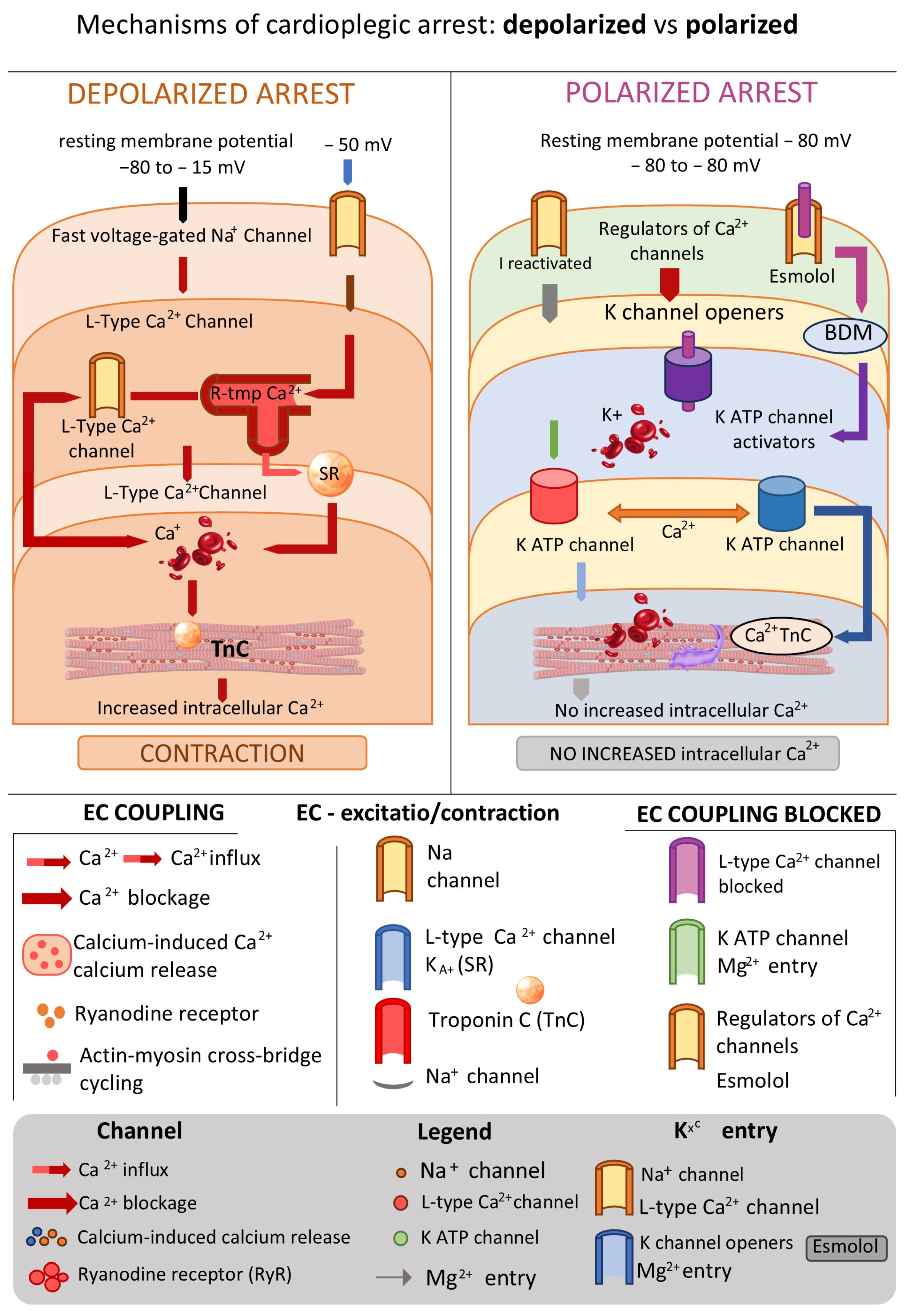
- Chemical induction of asystole—high potassium concentrations (20–30 mmol/L) depolarize the cell membrane and inhibit Na+ channel activity, thereby terminating mechanical contraction [15]. Alternatively, hyperpolarizing formulations use agents like lidocaine, Mg2+ and low concentrations of K+ to suppress the electrophysiological activity of the cell. [16].
- Metabolic suppression—lowering temperature (4–10 °C) lowers ATP usage up to 80–90%, while blood-based cardioplegia additionally provides a limited supply of oxygen and nutrient substrates [17].
- Maintenance of ionic and pH homeostasis—includes usage of buffers (buffering agents such as histidine, bicarbonates) and Mg2+ to help stabilize the membrane and the amino acids/glucose, supporting energy conservation [18].
- Controlled reperfusion—gradual reintroduction of cardioplegic solutions as well as oxygen prevents abrupt ROS generation and facilitates ATP replenishment (the Buckberg “hot shot” terminal dose of warm blood cardioplegia). Additives such as mannitol and ascorbate reduce oxidative stress during this critical phase [19].
3. Molecular and Cellular Mechanisms of Myocardial Protection
3.1. Calcium Homeostasis
3.2. Oxidative Stress and Antioxidant Defense
3.3. Mitochondrial Function
3.4. Apoptosis and Inflammation
3.5. Energetic Metabolism and ATP
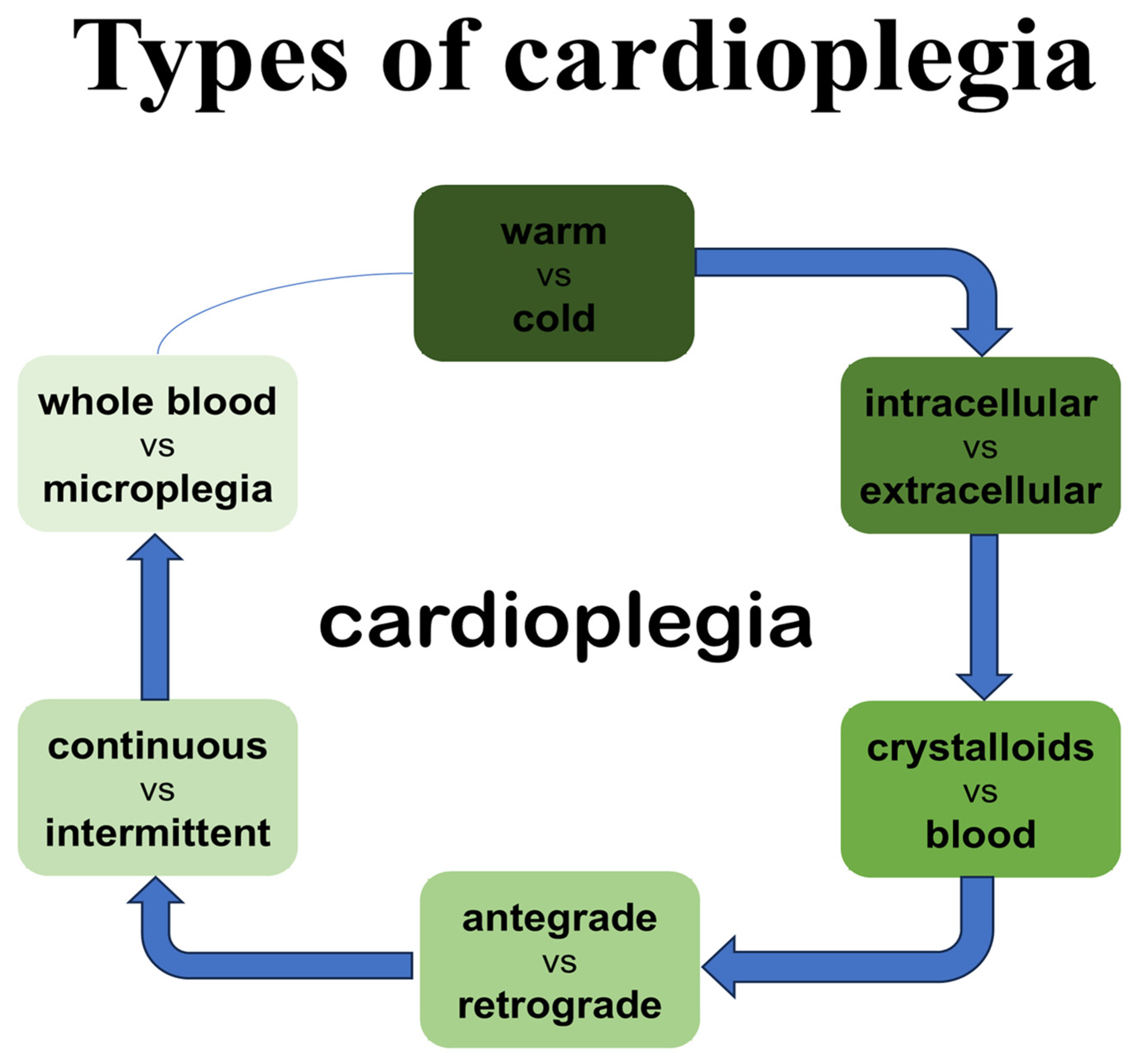
4. Classification of Cardioplegic Solutions
4.1. Classification by Composition
- (a)
- Crystalloid cardioplegia:
- -
- “Extracellular-type solutions” (which approximate the electrolyte composition of serum) and
- -
- “Intracellular-type solutions” (which mimic the intracellular electrolyte environment);
- (b)
- Blood cardioplegia:Blood-based strategies utilize the biochemical and rheological advantages of oxygenated blood.
- -
- Standard blood cardioplegia involves mixing crystalloid cardioplegia with blood during administration in various and adequate proportions (cardioplegia: blood = 1:4, 1:8);
- -
- Microplegia ensures that pure oxygenated normothermic blood is being used with added agents to stop the heart, but also with other cardioprotective additives, to avoid hemodilution and thus enhances the physiologic benefits of blood as a delivery medium.
4.2. Classification by Mechanism of Inducing Cardiac Arrest (i.e., Preventing Action Potential Conduction)
- (a)
- Depolarizing cardioplegia
- (b)
- Hyperpolarizing cardioplegia
4.3. Classification by Temperature: Cold (4–10 °C), Tepid (27–30 °C) and Warm (37 °C) Cardioplegia
4.4. Classification by Route of Administration
- -
- Anterograde—via aortic root, or through a venous graft directly into the coronary ostium;
- -
- Retrograde—via coronary sinus.
- Most commonly used technique due to its rapid administration, prompt induction of cardiac arrest, and overall effectiveness.
- Administered intermittently via the aortic root, through venous grafts, or directly into the coronary ostia. Direct coronary perfusion carries a risk of intimal injury of coronary arteries, or “jet” endothelial lesions with generating acute embolization by atherosclerotic debris, or dissection, potentially leading to subsequent ostial stenosis.
- Perfusion pressure of 70–100 mmHg allows uniform distribution of cardioplegia without the risk of endothelial damage nor myocardial edema. Higher pressure may be required in patients with severe coronary disease (130 mmHg); during reperfusion stage, lower perfusion pressure (≤50 mmHg) is recommended.
- Occclusive changes in coronary arteries or hyperthrophic myocardium may impede balanced perfusion and compromise adequate protection of the left ventricle. In patients with “left main” stenosis, when the internal thoracic artery is used, the basin of the anterior left descending artery can remain unprotected due to malperfusion of cardioplegia.
- Indicated in patients with severe coronary disease, “left main” stenosis, aortic regurgitation and hypertrophy of the myocardium (e.g., mitral valve disease, aortic stenosis). It allows more homogeneous and better subendocardial perfusion of the left ventricle without its distention. In this way, direct coronary ostial manipulation is able to be avoided.
- Administered via the coronary sinus, retrograde cardioplegia offers improved visualization of coronary anastomoses compared with anteriograde delivery, allowing continuous cardioplegic perfusion in normothermic cardioplegia, while cold cardioplegia is usually applied intermittently.
- Can be administrated intermittently or simultaneously with anterograde perfusion. Canulation of the coronary sinus can be technically demanding with possible malposition of catheter during the procedure.
5. Cardioplegia: Components and Metabolic Support
5.1. Cristalloid Solutions
- -
- high concentration of K+ (15–30 mmol/L), Mg2+ i Na+/Ca2+ balans.
- -
- induces depolarizing asystole
- -
- advantages include simple preparation, broad applicability
- -
- limitations include short-term ischemic tolerance (~30–40 min), without additional metabolic protection [67].
- -
- contain histidine as a buffer, mannitol as an osmotic agent, and low concentrations of Na+ and Ca2+.
- -
- induce hyperpolarization and metabolic suppression
- -
- prolong myocardial ischemic tolerance up to 90–120 min under cold asystole.
- -
5.2. Blood-Based Cardioplegia
- -
- Advantages include the following: provideing oxygen and metabolic substrates, reducing anaerobic glycolysis, contains intrinsic antioxidants and buffering systems.
- -
- Limitations include the following: requires precise preparation and compatibility with perfusion systems.
- -
5.3. Modified and Hybrid Solutions (Del Nido)
- -
- Advantages include the following: prolonged ischemic tolerance (up to 90–120 min in single use), reduced need for repeated administration, preservation of mitochondrial function and ATP.
- -
- 1.
- Cytoprotective additives
- -
- Adenosine acts as a vasodilator, inhibits Ca2+ influx, and activates pro-survival kinases (AKT, ERK1/2). Experimentally, adenosine reduces infarct size and ROS formation in models of myocardial ischemia [75].
- -
- Nitric Oxide donors and S-nitrosoglutathione modulate vascular tonus and inflammation, inhibit NF-kB and ICAM-1 activation, and reduce neutrophilic infiltration [76].
- -
- Peptides and hormones, bradykinin, apelin, and urotensin II, can modulate mitochondrial function and activate anti-apoptotic pathways [77].
- 2.
- Pharmacological modifiers
- -
- Lidocaine and magnesium lower Ca2+ overload and stabilize membrane potential.
- -
- Beta-blockers and inhibitors of Na+/H+ pump have been experimentally shown to reduce reperfusion injury and ROS production [78].
- 3.
- Metabolic and energetic additives
- -
- Glutamate, aspartate, and glucose support the citric acid cycle and ATP synthesis during ischemia.
- -
- Ketones and creatine-phosphate experimentally prolong myocardial tolerance to ischemia [79].
- 4.
- Nanotechnology and targeted strategies
- -
- Nano-cardioplegia utilizes nanoparticles to deliver antioxidants or pharmacologic agents directly to mitochondria.
- -
- Genetically targeted therapy—experimental approaches focus on anti-apoptotic proteins (Bcl-2, HSP70) and oxidative stress inhibitors [80].
- 5.
- Translational aspects and clinical significance
6. Conclusions
Author Contributions
Funding
Data Availability Statement
Conflicts of Interest
Appendix A. Materials and Methods
References
- Hearse, D.J.; Bolli, R. Reperfusion induced injury: Manifestations, mechanisms, and clinical relevance. Cardiovasc. Res. 1992, 26, 101–108. [Google Scholar] [CrossRef] [Scilit]
- Buckberg, G.D. Strategies and logic of cardioplegic delivery to prevent, avoid, and reverse ischemic and reperfusion damage. J. Thorac. Cardiovasc. Surg. 1987, 93, 127–139. [Google Scholar] [CrossRef] [Scilit]
- Piper, H.M.; García-Dorado, D.; Ovize, M. A fresh look at reperfusion injury. Cardiovasc. Res. 1998, 38, 291–300. [Google Scholar] [CrossRef] [Scilit]
- Murphy, E.; Steenbergen, C. Mechanisms underlying acute protection from cardiac ischemia-reperfusion injury. Physiol. Rev. 2008, 88, 581–609. [Google Scholar] [CrossRef] [Scilit] [PubMed]
- Weiss, J.N.; Korge, P.; Honda, H.M.; Ping, P. Role of the mitochondrial permeability transition in myocardial disease. Circ. Res. 2003, 22, 292–301. [Google Scholar] [CrossRef] [Scilit]
- He, J.; Liu, D.; Zhao, L.; Zhou, D.; Rong, J.; Zhang, L.; Xia, Z. Myocardial ischemia/reperfusion injury: Mechanisms of injury and implications for management. Exp. Ther. Med. 2022, 23, 430. [Google Scholar] [CrossRef] [Scilit]
- Hausenloy, D.J.; Yellon, D.M. Myocardial ischemia-reperfusion injury: A neglected therapeutic target. J. Clin. Invest. 2013, 123, 92–100. [Google Scholar] [CrossRef] [Scilit]
- Frangogiannis, N.G. The inflammatory response in myocardial injury, repair, and remodelling. Nat. Rev. Cardiol. 2014, 11, 255–265. [Google Scholar] [CrossRef] [Scilit] [PubMed]
- Mauney, M.C.; Kron, I.L. The physiologic basis of warm cardioplegia. Ann. Thorac. Surg. 1995, 60, 819–823. [Google Scholar] [CrossRef] [Scilit]
- Weisse, A.B.; John, W. Kirklin (1917–2004). Clin Cardiol. 2005, 28, 585–586. [Google Scholar] [CrossRef] [Scilit] [PubMed]
- Opie Lionel, H. Heart Physiology, From Cell to Circulation, 4th ed.; Lippincott Williams & Wilkins: Philadelphia, PA, USA, 2004. [Google Scholar]
- Yellon, D.M.; Hausenloy, D.J. Myocardial reperfusion injury. N. Engl. J. Med. 2007, 13, 1121–1135. [Google Scholar] [CrossRef] [Scilit]
- Javadov, S.; Karmazyn, M.; Escobales, N. Mitochondrial permeability transition pore opening as a promising therapeutic target in cardiac diseases. J. Pharmacol. Exp. Ther. 2009, 330, 670–678. [Google Scholar] [CrossRef] [Scilit]
- Tait, S.W.; Green, D.R. Mitochondrial regulation of cell death. Cold Spring Harb. Perspect. Biol. 2013, 1, a008706. [Google Scholar] [CrossRef] [Scilit]
- Shah, K.; Seeley, S.; Schulz, C.; Fisher, J.; Gururaja Rao, S. Calcium Channels in the Heart: Disease States and Drugs. Cells 2022, 10, 943. [Google Scholar] [CrossRef] [Scilit]
- Allen, B.S. Myocardial protection: What is the best strategy? J. Thorac. Cardiovasc. Surg. 2004, 127, 1597–1601. [Google Scholar] [CrossRef] [Scilit]
- Buckberg, G.D. A proposed “solution” to the cardioplegic controversy. J. Thorac. Cardiovasc. Surg. 1979, 77, 803–815. [Google Scholar] [CrossRef] [Scilit]
- Zweier, J.L. Measurement of superoxide-derived free radicals in the reperfused heart. Evidence for a free radical mechanism of reperfusion injury. J. Biol. Chem. 1988, 25, 1353–1357. [Google Scholar] [CrossRef] [Scilit]
- Ismail, A.; Semien, G. Myocardial Protection; Updated 2024; StatPearls Publishing: Orlando, FL, USA, 2025. [Google Scholar]
- Suleiman, M.S.; Halestrap, A.P.; Griffiths, E.J. Mitochondria: A target for myocardial protection. Pharmacol. Ther. 2001, 89, 9–46. [Google Scholar] [CrossRef] [Scilit] [PubMed]
- Férez Santander, S.M.; Márquez, M.F.; Peña Duque, M.A.; Ocaranza Sánchez, R.; de la Peña Almaguer, E.; Eid Lidt, G. Daño miocárdico por reperfusión [Myocardial reperfusion injury]. Rev. Esp. Cardiol. 2004, 57, 9–21. (In Spanish) [Google Scholar] [CrossRef] [Scilit] [PubMed]
- Marsh, J.D.; Smith, T.S. Calcium overload and ischemic myocardial injury. Circulation 1991, 83, 709–711. [Google Scholar] [CrossRef] [Scilit] [PubMed]
- Matte, G.S.; del Nido, P.J. History and use of del Nido cardioplegia solution at Boston Children’s Hospital. J. Extra Corpor. Technol. 2012, 44, 98–103, Erratum in J. Extra Corpor. Technol. 2013, 45, 262. [Google Scholar] [CrossRef] [Scilit] [PubMed]
- Cadenas, S. ROS and redox signaling in myocardial ischemia-reperfusion injury and cardioprotection. Free Radic. Biol. Med. 2018, 117, 76–89. [Google Scholar] [CrossRef] [Scilit] [PubMed]
- Jurcau, A.; Ardelean, A.I. Oxidative Stress in Ischemia/Reperfusion Injuries following Acute Ischemic Stroke. Biomedicines 2022, 1, 574. [Google Scholar] [CrossRef] [Scilit]
- Becker, L.B. New concepts in reactive oxygen species and cardiovascular reperfusion physiology. Cardiovasc. Res. 2004, 15, 461–470. [Google Scholar] [CrossRef] [Scilit] [PubMed]
- Nesci, S.; Rubattu, S. Mitochondrial Permeability Transition Pore: The Cardiovascular Disease’s Molecular Achilles Heel. Biomedicines 2025, 9, 3014. [Google Scholar] [CrossRef] [Scilit]
- Crow, M.T.; Mani, K.; Nam, Y.J.; Kitsis, R.N. The mitochondrial death pathway and cardiac myocyte apoptosis. Circ. Res. 2004, 12, 957–970. [Google Scholar] [CrossRef] [Scilit]
- Lesnefsky, E.J.; Chen, Q. Mitochondrial dysfunction and myocardial ischemia-reperfusion: Implications for cardioprotection. J. Mol. Cell Cardiol. 2017, 108, 55–68. [Google Scholar]
- Bauer, T.M.; Murphy, E. Role of Mitochondrial Calcium and the Permeability Transition Pore in Regulating Cell Death. Circ. Res. 2020, 17, 280–293. [Google Scholar] [CrossRef] [Scilit]
- Fischesser, D.M.; Bo, B.; Benton, R.P.; Su, H.; Jahanpanah, N.; Haworth, K.J. Controlling Reperfusion Injury with Controlled Reperfusion: Historical Perspectives and New Paradigms. J. Cardiovasc. Pharmacol. Ther. 2021, 26, 504–523. [Google Scholar] [CrossRef] [Scilit]
- Lockshin, R.A.; Zakeri, Z. Caspase-independent cell death? Oncogene 2004, 12, 2766–2773. [Google Scholar] [CrossRef] [Scilit]
- Fischer, U.M.; Tossios, P.; Huebner, A.; Geissler, H.J.; Bloch, W.; Mehlhorn, U. Myocardial apoptosis prevention by radical scavenging in patients undergoing cardiac surgery. J. Thorac. Cardiovasc. Surg. 2004, 128, 103–108. [Google Scholar] [CrossRef] [Scilit]
- Suleiman, M.S.; Zacharowski, K.; Angelini, G.D. Inflammatory response and cardioprotection during open-heart surgery: The importance of anaesthetics. Br. J. Pharmacol. 2008, 153, 21–33. [Google Scholar] [CrossRef] [Scilit]
- Oliveira, M.A.B.; Godoy, M.F.; Braile, D.M.; Lima-Oliveira, A.P.M. Polarizing cardioplegic solution: State of the art. Braz. J. Cardiovasc. Surg. 2005, 20, 69–74. [Google Scholar] [CrossRef] [Scilit]
- Dobson, G.P. Membrane polarity: A target for myocardial protection and reduced inflammation in adult and pediatric cardiothoracic surgery. J. Thorac. Cardiovasc. Surg. 2010, 140, 1213–1217. [Google Scholar] [CrossRef] [Scilit] [PubMed]
- Onorati, F.; Santini, F.; Dandale, R.; Ucci, G.; Pechlivanidis, K.; Menon, T.; Chiominto, B.; Mazzucco, A.; Faggian, G. “Polarizing” microplegia improves cardiac cycle efficiency after CABG for unstable angina. Int. J. Cardiol. 2013, 10, 2739–2746. [Google Scholar] [CrossRef] [Scilit] [PubMed]
- Malbouisson, L.M.; Santos, L.M.; Auler, J.O.J.r.; Carmona, M.J. Proteção miocárdica em cirurgia cardíaca [Myocardial protection in cardiac surgery.]. Rev Bras Anestesiol. 2005, 55, 558–574. (In Portuguese) [Google Scholar] [CrossRef] [Scilit]
- Kanemoto, S.; Matsubara, M.; Noma, M.; Leshnower, B.G.; Parish, L.M.; Jackson, B.M.; Hinmon, R.; Hamamoto, H.; Gorman, J.H., 3rd; Gorman, R.C. Mild hypothermia to limit myocardial ischemia-reperfusion injury: Importance of timing. Ann. Thorac. Surg. 2009, 87, 157–163. [Google Scholar] [CrossRef] [Scilit]
- Campos, J.M.; Paniagua, P. Hypothermia during cardiac surgery. Best. Pract. Res. Clin. Anaesthesiol. 2008, 22, 695–709. [Google Scholar] [CrossRef] [Scilit]
- Hearse, D.J.; Stewart, D.A.; Braimbridge, M.V. The additive protective effects of hypothermia and chemical cardioplegia during ischemic cardiac arrest in the rat. J. Thorac. Cardiovasc. Surg. 1980, 79, 39–43. [Google Scholar] [CrossRef] [Scilit]
- Buckberg, G.D. Normothermic blood cardioplegia. Alternative or adjunct? J. Thorac. Cardiovasc. Surg. 1994, 107, 860–867. [Google Scholar] [CrossRef] [Scilit]
- Hayashida, N.; Ikonomidis, J.S.; Weisel, R.D.; Shirai, T.; Ivanov, J.; Carson, S.M.; Mohabeer, M.K.; Tumiati, L.C.; Mickle, D.A. The optimal cardioplegic temperature. Ann. Thorac. Surg. 1994, 58, 961–971. [Google Scholar] [CrossRef] [Scilit]
- Yau, T.M.; Ikonomidis, J.S.; Weisel, R.D.; Mickle, D.A.; Hayashida, N.; Ivanov, J.; Carson, S.; Mohabeer, M.K.; Tumiati, L.C. Which techniques of cardioplegia prevent ischemia? Ann. Thorac. Surg. 1993, 56, 1020–1028. [Google Scholar] [CrossRef] [Scilit]
- Martin, T.D.; Craver, J.M.; Gott, J.P.; Weintraub, W.S.; Ramsay, J.; Mora, C.T.; Guyton, R.A. Prospective, randomized trial of retrograde warm blood cardioplegia: Myocardial benefit and neurologic threat. Ann. Thorac. Surg. 1994, 7, 298–302. [Google Scholar] [CrossRef] [Scilit]
- Hayashida, N.; Weisel, R.D.; Shirai, T.; Ikonomidis, J.S.; Ivanov, J.; Carson, S.M.; Mohabeer, M.K.; Tumiati, L.C.; Mickle, D.A. Tepid antegrade and retrograde cardioplegia. Ann. Thorac. Surg. 1995, 59, 723–729. [Google Scholar] [CrossRef] [Scilit]
- Kaukoranta, P.; Lepojärvi, M.; Nissinen, J.; Raatikainen, P.; Peuhkurinen, K.J. Normothermic versus mild hypothermic retrograde blood cardioplegia: A prospective, randomized study. Ann. Thorac. Surg. 1995, 60, 1087–1093. [Google Scholar] [CrossRef] [Scilit]
- Sanjay, O.P.; Srikrishna, S.V.; Prashanth, P.; Kajrekar, P.; Vincent, V. Antegrade versus antegrade with retrograde delivery of cardioplegic solution in myocardial revascularisation. A clinical study in patients with triple vessel coronary artery disease. Ann. Card. Anaesth. 2003, 6, 143–148. [Google Scholar] [CrossRef] [Scilit] [PubMed]
- Partington, M.T.; Acar, C.; Buckberg, G.D.; Julia, P.; Kofsky, E.R.; Bugyi, H.I. Studies of retrograde cardioplegia. I. Capillary blood flow distribution to myocardium supplied by open and occluded arteries. J. Thorac. Cardiovasc. Surg. 1989, 97, 605–612. [Google Scholar] [CrossRef] [Scilit] [PubMed]
- Buckberg, G.D.; Beyersdorf, F.; Allen, B.S. Integrated myocardial management in valvular heart disease. J. Heart Valve Dis. 1995, 4, S198–S212; discussion S212–S213. [Google Scholar]
- Becker, H.; Vinten-Johansen, J.; Buckberg, G.D.; Follette, D.M.; Robertson, J.M. Critical importance of ensuring cardioplegic delivery with coronary stenoses. J. Thorac. Cardiovasc. Surg. 1981, 81, 507–515. [Google Scholar] [CrossRef] [Scilit] [PubMed]
- Ihnken, K.; Morita, K.; Buckberg, G.D.; Aharon, A.; Laks, H.; Panos, A.L.; Drinkwater, D.C.; Chugh, R.; Del Rizzo, D.; Salerno, T.A. The safety of simultaneous arterial and coronary sinus perfusion: Experimental background and initial clinical results. J. Card. Surg. 1994, 9, 15–25. [Google Scholar] [CrossRef] [Scilit]
- Noyez, L.; van Son, J.A.; van der Werf, T.; Knape, J.T.; Gimbrère, J.; van Asten, W.N.; Lacquet, L.K.; Flameng, W. Retrograde versus antegrade delivery of cardioplegic solution in myocardial revascularization. A clinical trial in patients with three-vessel coronary artery disease who underwent myocardial revascularization with extensive use of the internal mammary artery. J. Thorac. Cardiovasc. Surg. 1993, 105, 854–863. [Google Scholar]
- Opie, L.H. Myocardial energy metabolism. Adv. Cardiol. 1974, 12, 70–83. [Google Scholar] [CrossRef] [Scilit]
- Massad, M.; Weinberg, G. Metabolic modulation for cardiac protection. Expert Rev. Cardiovasc. Ther. 2007, 5, 135–138. [Google Scholar] [CrossRef] [Scilit]
- Rosenkranz, E.R. Substrate enhancement of cardioplegic solution: Experimental studies and clinical evaluation. Ann. Thorac. Surg. 1995, 60, 797–800. [Google Scholar] [CrossRef] [Scilit]
- Melrose, D.G.; Dreyer, B.; Bentall, H.H.; Baker, J.B. Elective cardiac arrest with potassium citrate. Lancet 1955, 269, 21–22. [Google Scholar] [CrossRef] [Scilit] [PubMed]
- Bretschneider, H.J. Myocardial protection. Thoraxchirurgie 1967, 15, 135–147. [Google Scholar] [CrossRef] [Scilit] [PubMed]
- Gay, W.A., Jr.; Ebert, P.A. Functional, metabolic, and morphologic effects of potassium-induced cardioplegia. J. Thorac. Cardiovasc. Surg. 1973, 65, 696–708. [Google Scholar]
- Lillehei, R.C.; Longerbeam, J.K.; Bloch, J.H.; Manax, W.G. The nature of irreversible myocardial injury following ischemia. Surgery 1974, 56, 11–19. [Google Scholar]
- Hearse, D.J.; Braimbridge, M.V.; Jynge, P. Protection of the Ischemic Myocardium: Cardioplegia; Raven Press: New York, NY, USA, 1977. [Google Scholar]
- Follette, D.M.; Buckberg, G.D. A proposed method of myocardial protection during hypothermic ischemia. J. Thorac. Cardiovasc. Surg. 1978, 76, 304–316. [Google Scholar]
- Menasché, P.; Subayi, J.B.; Piwnica, A. Retrograde coronary sinus cardioplegia: A safe alternative. J. Thorac. Cardiovasc. Surg. 1982, 84, 647–658. [Google Scholar]
- Hearse, D.J.; Stewart, D.A.; Braimbridge, M.V. Cellular protection during myocardial ischemia: The role of cardioplegia. Circulation 1983, 68, I11–I17. [Google Scholar]
- Calafiore, A.M.; Teodori, G.; Mezzetti, A.; Bosco, G.; Verna, A.M.; Di Giammarco, G.; Lapenna, D. Intermittent antegrade warm blood cardioplegia. Ann. Thorac. Surg. 1995, 59, 398–402. [Google Scholar] [CrossRef] [Scilit]
- Buckberg, G.D.; Salerno, T.A. Integrated myocardial management: Blood cardioplegia. Semin. Thorac. Cardiovasc. Surg. 1995, 7, 116–131. [Google Scholar]
- Veres, G.; Radovits, T.; Merkely, B.; Karck, M.; Szabó, G. Custodiol-N, the novel cardioplegic solution reduces ischemia/reperfusion injury after cardiopulmonary bypass. J. Cardiothorac. Surg. 2015, 28, 27. [Google Scholar] [CrossRef] [Scilit]
- Garg, S.K.; Rawat, R.S.; Saad, D.A.; Omar, I. Del nido cardioplegia in adults: A retrospective observational study in comparison to modified St. Thomas cardioplegia in cardiac surgery. J. Cardiothorac. Surg. 2024, 25, 266. [Google Scholar] [CrossRef] [Scilit]
- Carnero-Alcazar, M.; Montero-Cruces, L.; Beltrao-Sial, R.; Blazquez, R.; Nuñez-Gil, I.; Perez-Camargo, D.; Cobiella-Carnicer, J.; Miranda Torron, J.M.; Giraldo, M.A.; Castellanos, L.M. Blood cardioplegia or custodiol for myocardial protection during valvular or aortic surgery: A propensity score adjusted comparison. J. Cardiothorac. Surg. 2025, 4, 259. [Google Scholar] [CrossRef] [Scilit]
- Li, C.; Xiang, H.; Yang, H.; Liu, W.; Lan, W.; Luo, C.; Han, S.; Li, Y.; Tang, Y. Del Nido cardioplegia versus cold blood cardioplegia in adult cardiac surgery: A meta-analysis of randomized clinical trials. J. Cardiothorac. Surg. 2024, 22, 356. [Google Scholar] [CrossRef] [Scilit]
- Larsen, T.S.; Irtun, O.; Steigen, T.K.; Andreasen, T.V.; Sørlie, D. Myocardial substrate oxidation during warm continuous blood cardioplegia. Ann. Thorac. Surg. 1996, 62, 762–768. [Google Scholar] [CrossRef] [Scilit] [PubMed]
- Lee, S.; Jung, J.C.; Chang, H.W.; Lee, J.H.; Kim, D.J.; Kim, J.S.; Lim, C. Comparative analysis of del Nido cardioplegia versus blood cardioplegia in isolate coronary artery bypass grafting. J. Cardiothorac. Surg. 2024, 13, 438. [Google Scholar] [CrossRef] [Scilit] [PubMed]
- Sanetra, K.; Pawlak, I.; Cisowski, M. Del Nido cardioplegia—What is the current evidence? Kardiochirurgia i Torakochirurgia Polska. J. Thorac. Cardiovasc. Surg. 2018, 15, 114–118. [Google Scholar] [CrossRef] [Scilit]
- Sameh, A.; Ferit, Ç. Efficacy and Safety of Multidose del Nido Cardioplegia for Optimal Myocardial Protection in Isolated Coronary Artery Bypass Grafting Surgery: A Comparative Retrospective Cohort Study. Heart Surg. Forum 2024, 27, 134–145. [Google Scholar] [CrossRef] [Scilit]
- Najmuddin, I.I.; Sainath, P.; Pillai, V.K. Del Nido cardioplegia in adult cardiac surgery: A narrative review. Perfusion 2026, 41, 15–32. [Google Scholar] [CrossRef] [Scilit] [PubMed]
- Barbero, C.; Pocar, M.; Marchetto, G.; Cura Stura, E.; Calia, C.; Dalbesio, B.; Filippini, C.; Salizzoni, S.; Boffini, M.; Rinaldi, M.; et al. Single-Dose St. Thomas Versus Custodiol® Cardioplegia for Right Mini-thoracotomy Mitral Valve Surgery. J. Cardiovasc. Transl. Res. 2023, 16, 192–198. [Google Scholar] [CrossRef] [Scilit]
- Hoyer, A.; Kiefer, P.; Borger, M. Cardioplegia and myocardial protection: Time for a reassessment? J. Thorac. Dis. 2019, 11, E76–E78. [Google Scholar] [CrossRef] [Scilit]
- Yan, Y.B.; Shi, S.; Wu, Q.B.; Cai, J.S.; Lei, B.F. Effect of different cardioprotective methods on extracorporeal circulation in fetal sheep: A randomized controlled trial. J. Cardiothorac. Surg. 2021, 16, 94. [Google Scholar] [CrossRef] [Scilit]
- Opie, L.H. Reperfusion injury and its pharmacologic modification. Circulation 1989, 80, 1049–1062. [Google Scholar] [CrossRef] [Scilit]
- Neubauer, S. The Failing Heart—An Engine Out of Fuel. N. Engl. J. Med. 2007, 356, 1140–1151. [Google Scholar] [CrossRef] [Scilit] [PubMed]



| Principle | Component |
|---|---|
| Rapid diastolic arrest | K+ 20–25 mM/L |
| Buffers: pH 7.30–7.60 (25 °C) | Histidine, bicarbonates, blood, tromethamine |
| Reduction in Ca2+ level | Hypocalcemia (0.015–0.5 mM/L); Chelates (citrate–phosphate–dextrose) |
| Homogeneous distribution | Antegrade ± retrograde application |
| Temperature | Cold vs. moderate vs. warm (4–10 °C vs. 20–32 °C vs. 37 °C) |
| Cardioprotective additives | O2–blood; Mannitol, glucose, albumin; Amino acids (glutamate, aspartate); Glucose + insulin; Mg2+; Adenosine; Lidocaine |
| Principle | Mechanism |
|---|---|
| Reduction in O2 demand/consumption | Hypothermia; Asystole; Continuous perfusion |
| Anaerobic metabolism | Blood; Oxygenated crystalloid cardioplegia |
| Metabolic substrate of the energy cycle | Glucose; Amino acids (glutamate, aspartate) |
| Correction of acidosis | Hypothermia (Rosenthal effect); Buffers: tromethamine, histidine, bicarbonates, blood |
| Optimization of metabolism | Induction—warm cardioplegia; Maintenance—cold cardioplegia; Reperfusion—warm cardioplegia; Intermittent application |
| Reduction in Ca2+ accumulation | Hypocalcemia; Chelates (citrates); Antagonists (Mg2+); Ca2+ channel blockade (adenosine) |
| Reduction in edema | Hyperosmolarity: mannitol, glucose, KCl; Perfusion pressure: 50 mmHg |
| Principle | Mechanism |
|---|---|
| O2 delivery | Blood (Hct = 0.20–0.25) |
| Normothermia | 36.5–37 °C |
| Reduction in myocardial metabolism | Initial maintenance of arrest; Empty heart (LV vent) |
| Prevention of Ca2+ accumulation | Hypocalcemia (≤0.5 mmol/L); Chelates (citrates); Antagonists (Mg2+); Ca2+ channel blockade (adenosine) |
| Antiedematous effect | Perfusion pressure low (≤50 mmHg); Hyperosmolarity (glucose, mannitol, albumin) |
| Inhibition of oxygen-free radicals | Perfusion pressure low (≤50 mmHg); Inhibition of production; Superoxide dismutase, xanthine oxidase, catalase; Scavengers (allopurinol, nitric oxide, mannitol) |
| Antileukocyte effect | Filters for leukocyte depletion; Leukocyte inhibitors (adenosine, nitric oxide, antibodies) |
| Correction of acidosis | Buffers: tromethamine, histidine, bicarbonates, blood |
| Metabolic substrates | Amino acids (aspartate, glutamate); Glucose, insulin, potassium |
| Duration of Cardioplegic Arrest | Metabolic Modifications | Cellular and Subcellular Changes | Functional/Clinical Implications |
|---|---|---|---|
| Short duration | Minimal ATP depletion; preserved phosphocreatine; limited anaerobic glycolysis; stable intracellular pH | Maintained ionic homeostasis; controlled Ca2+ flux; preserved mitochondrial integrity | Effective myocardial protection; rapid functional recovery after reperfusion |
| Intermediate duration | Progressive ATP and phosphocreatine depletion; lactate accumulation; intracellular acidosis | Na+/K+-ATPase and SERCA dysfunction; intracellular Na+ and Ca2+ overload; early mitochondrial impairment | Increased risk of myocardial stunning; delayed recovery of contractile function |
| Prolonged duration | Severe high-energy phosphate depletion; pronounced acidosis; impaired oxidative metabolism | Mitochondrial permeability transition pore opening; loss of membrane potential; activation of apoptotic and necrotic pathways | High risk of irreversible myocardial injury; reduced postoperative ventricular function |
| Component (mM/L) | Bretschneider | St. Thomas Hospital | Del Nido (1 Blood: 4 Cardioplegia) | Blood (4 Blood: 1 Cardioplegia, Induction → Maintenance) |
|---|---|---|---|---|
| Na+ | 15 | 120 | 145 | 144 |
| K+ | 9 | 16 | 24 | 20–25 → 10 |
| Mg2+ | 4 | 16 | 7 | 5 |
| Ca2+ | 0.015 | 1.2 | 0.4 | 0.50 → 0.25 |
| Glucose/Insulin | / | / | 1 | >0.2/2.5 IU |
| Citrate-phosphate-dextrose | / | / | / | 0.3 |
| Mannitol | 30 | / | 14 | 60 |
| Lidocaine | / | / | 0.36 | / |
| NHCO3− | / | / | / | / |
| Histidine | 198 | 10 | / | / |
| Trometamol (THAM) | / | / | / | 0.3 M/L |
| pH (25 °C) | 7.20 | 7.8 | 7.4 | 7.6 |
| Tryptophan | 2 | / | / | / |
| Ketoglutarate | 1 | / | / | / |
| Glutamate/Aspartate | / | / | / | 12/12 |
| Osmolarity (mOsm/L) | 310 | 304 | 375 | ~380 |
| Hematocrit | / | / | ~6 | ~25 |
| Type of Cardioplegia | Composition/Characteristics | Advantages | Disadvantages | Clinical Implications |
|---|---|---|---|---|
| Crystalloid cardioplegia (St. Thomas) | Extracellular-type; high potassium; cold; repeated dosing | Rapid diastolic arrest; simple preparation; wide availability | Repeated administration; myocardial edema; no oxygen delivery | Short cross-clamp times; routine procedures |
| Crystalloid cardioplegia (Bretschneider—HTK) | Intracellular-type; low sodium/calcium; single-dose; large volume | Prolonged protection; uninterrupted surgical field | Hemodilution; reduced oxygen delivery; less effective in hypertrophied myocardium | Complex or prolonged procedures; caution in CAD |
| Cold blood cardioplegia | Oxygenated blood with crystalloid; hypothermic | Better oxygenation; buffering capacity; reduced ischemic injury | More complex preparation; repeated dosing | Standard in adult cardiac surgery; ischemic myocardium |
| Warm blood cardioplegia | Normothermic; intermittent or continuous | Improved post-ischemic recovery; less reperfusion injury | Risk of inadequate cooling; higher metabolic demand | Poor ventricular function with careful delivery |
| Del Nido cardioplegia | Low calcium; lidocaine; magnesium; single-dose; blood-crystalloid | Prolonged arrest; reduced calcium overload; simple workflow | Limited adult long-term data; redosing strategy unclear | Increasing use in adult CABG and complex surgery |
Disclaimer/Publisher’s Note: The statements, opinions and data contained in all publications are solely those of the individual author(s) and contributor(s) and not of MDPI and/or the editor(s). MDPI and/or the editor(s) disclaim responsibility for any injury to people or property resulting from any ideas, methods, instructions or products referred to in the content. |
© 2026 by the authors. Licensee MDPI, Basel, Switzerland. This article is an open access article distributed under the terms and conditions of the Creative Commons Attribution (CC BY) license.
Share and Cite
Lazović, D.M.; Karadžić Kočica, M.; Ivanišević, D.; Aleksić, V.; Kočica, M.J.; Grujić, D.; Mihajlović, J.M.; Cvetković, D.; Juričić, S.A. Molecular and Cellular Mechanisms of Cardioplegic Protection in Surgical Myocardial Revascularization. Cells 2026, 15, 173. https://doi.org/10.3390/cells15020173
Lazović DM, Karadžić Kočica M, Ivanišević D, Aleksić V, Kočica MJ, Grujić D, Mihajlović JM, Cvetković D, Juričić SA. Molecular and Cellular Mechanisms of Cardioplegic Protection in Surgical Myocardial Revascularization. Cells. 2026; 15(2):173. https://doi.org/10.3390/cells15020173
Chicago/Turabian StyleLazović, Dejan M., Milica Karadžić Kočica, Dragan Ivanišević, Vojkan Aleksić, Mladen J. Kočica, Danko Grujić, Jovana M. Mihajlović, Dragan Cvetković, and Stefan A. Juričić. 2026. "Molecular and Cellular Mechanisms of Cardioplegic Protection in Surgical Myocardial Revascularization" Cells 15, no. 2: 173. https://doi.org/10.3390/cells15020173
APA StyleLazović, D. M., Karadžić Kočica, M., Ivanišević, D., Aleksić, V., Kočica, M. J., Grujić, D., Mihajlović, J. M., Cvetković, D., & Juričić, S. A. (2026). Molecular and Cellular Mechanisms of Cardioplegic Protection in Surgical Myocardial Revascularization. Cells, 15(2), 173. https://doi.org/10.3390/cells15020173