From Orange to Oncology: Anti-Inflammatory and Anti-Cancer Mechanisms of Sinensetin

 , and
, and
Highlights
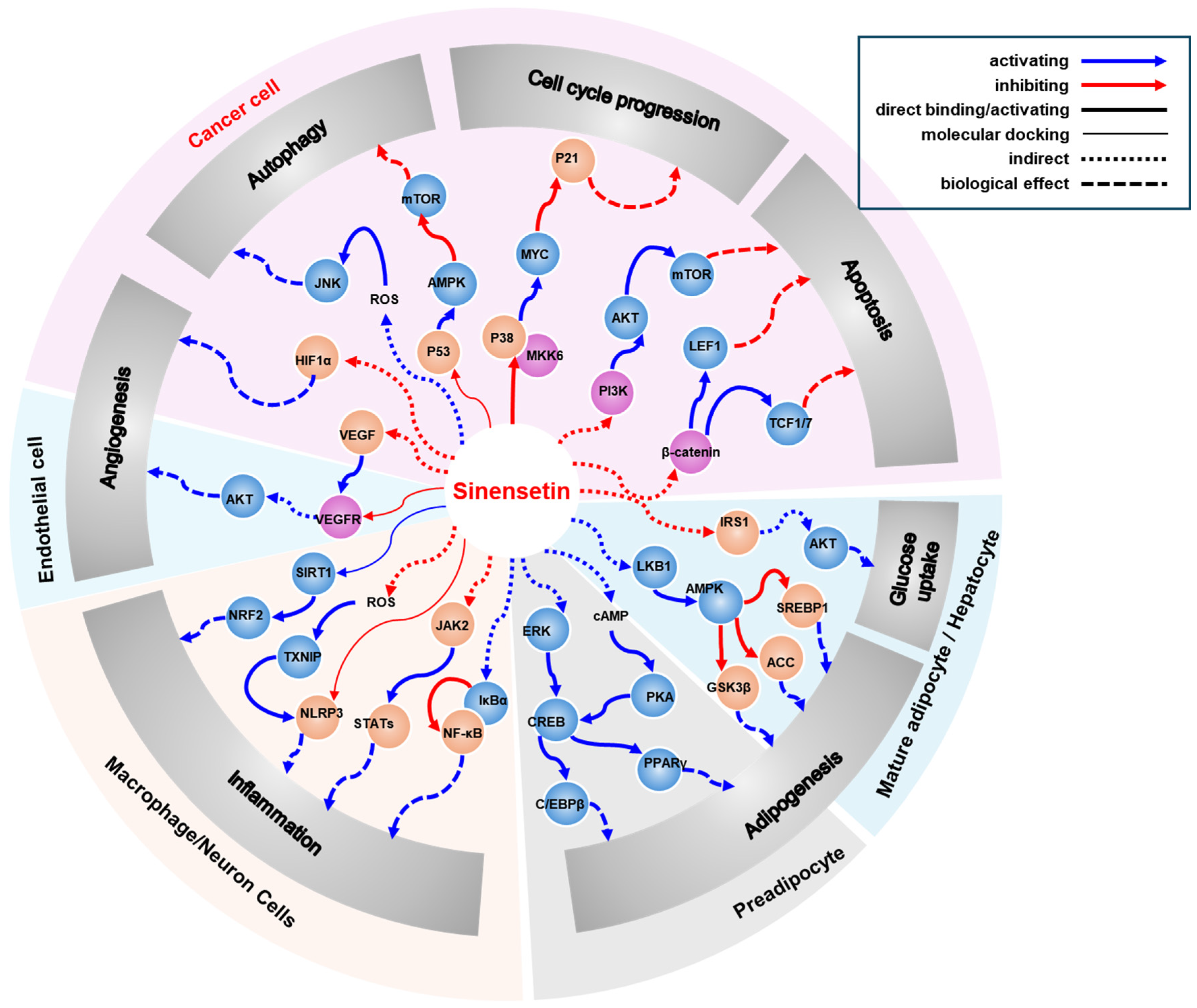
- Sinensetin is a citrus-derived flavone that consistently shows anti-inflammatory activities across models by suppressing inflammatory signaling and supporting antioxidant/autophagy programs.
- Across multiple cancers, sinensetin inhibits tumor-relevant signaling (including MKK6/P38 signaling), alongside emerging immune-related effects.
- Multiple mechanisms support sinensetin as a multi-target lead for chemoprevention or adjunct therapy.
Abstract
1. Introduction
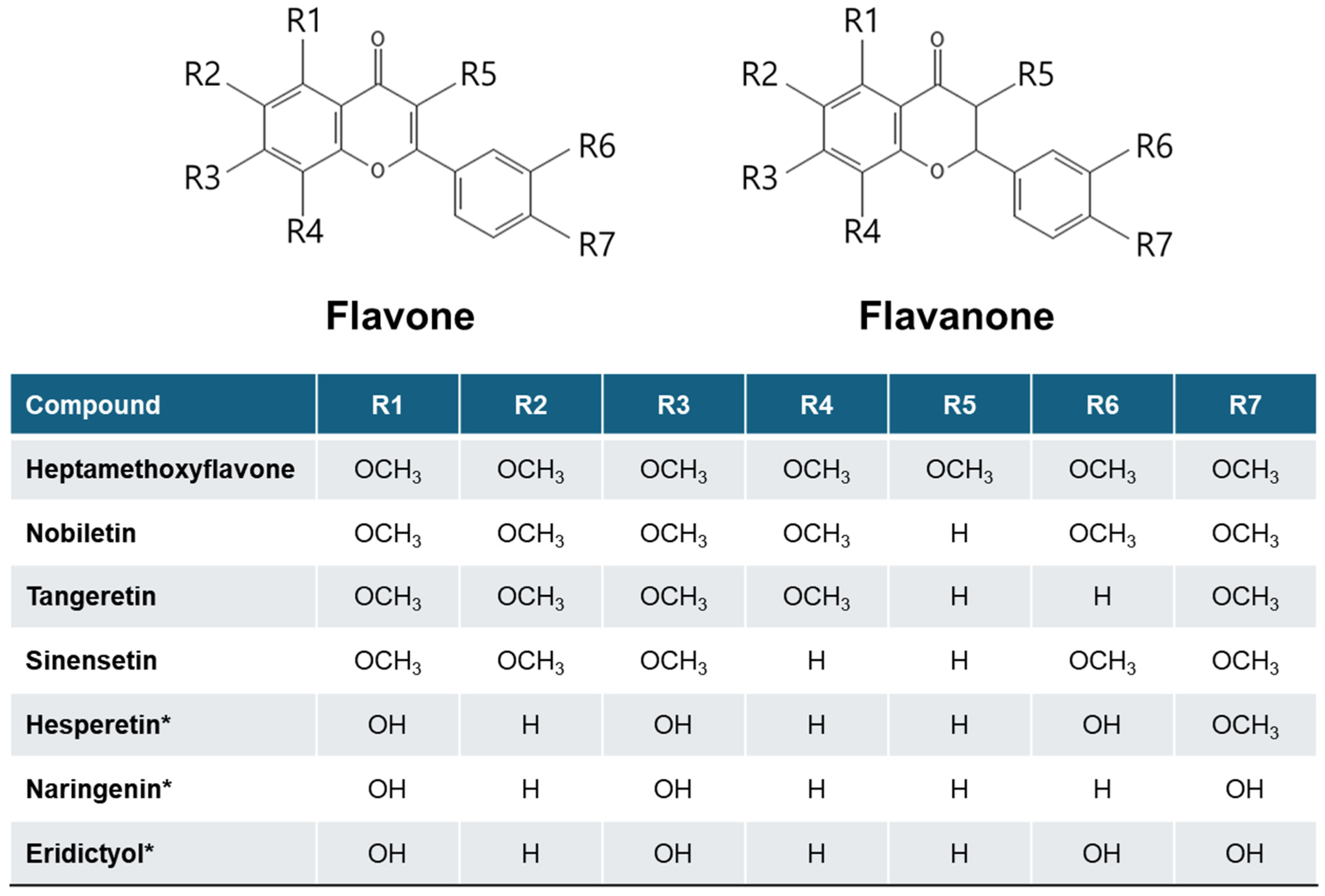
2. Flavonoids in Oranges
3. Anti-Inflammatory Mechanism of Sinensetin
3.1. AMPK Pathway
3.2. NF-κB Pathway
3.3. MAPK Pathway
4. Anticancer Mechanisms of Action
4.1. β-Catenin Pathway
4.2. PI3K/AKT Pathway
4.3. VEGF Pathway
4.4. Other Pathways
4.4.1. NRF2 Pathway
4.4.2. P53 Pathway
4.4.3. MKK6/P38 Pathway
5. Immunological Effects of Sinensetin
5.1. NF-kB Pathway
5.2. SIRT Pathway
5.3. JAK2/STAT Pathway
5.4. ROS/JNK Pathway
5.5. Interleukin (IL) Pathways
6. Safety Aspects of Sinensetin
7. Potential Targets for Sinensetin
8. Conclusions and Future Perspectives
Author Contributions
Funding
Institutional Review Board Statement
Informed Consent Statement
Data Availability Statement
Conflicts of Interest
Abbreviations
| ABCG2 | ATP-binding cassette subfamily G member 2 |
| Aβ | Amyloid β |
| ACC | Acetyl-CoA carboxylase |
| AD | Alzheimer’s disease |
| ADORA | Adenosine receptor |
| ALI | Acute lung injury |
| ALT | Alanine aminotransferase |
| AMPK | AMP-activated protein kinase |
| aP2 | Adipocyte protein 2 |
| ARE | Antioxidant responsive element |
| ARG1 | Arginase 1 |
| ASC | Apoptosis-associated speck-like protein containing a CARD |
| BACH1 | BTB and CNC homology 1 |
| BACE1 | Beta-secretase 1 |
| BAX | BCL2-associated X |
| BCL2 | B-cell leukemia/lymphoma 2 protein |
| BMAL1 | Basic helix-loop-helix ARNT like 1 |
| BSA | Bovine serum albumin |
| cAMP | Cyclic adenosine monophosphate |
| CAT | Catalase |
| CBS | Cystathionine-β-synthase |
| CCK8 | Cell counting kit-8 |
| CD | Circular dichroism |
| CD68 | Cluster of differentiation 68 |
| C/EBPα | CCAAT/enhancer-binding protein α |
| cGMP | Cyclic guanosine monophosphate |
| CLOCK1 | Circadian locomotor output cycles protein keput |
| COX2 | Cyclooxygenase-2 |
| CRE | cAMP response element |
| CREB | cAMP-response element-binding protein |
| CXCL10 | C-X-C motif chemokine 10 |
| CY | Cyclophosphamide |
| CYP | Cytochrome P450 |
| DMM | Destabilization of medial meniscus |
| ECM | Extracellular matrix |
| EGFP | Enhanced green fluorescent protein |
| EMT | Epithelial–mesenchymal transition |
| EGFR | Epidermal growth factor receptor |
| ERα | Estrogen receptor α |
| ERK | Extracellular signal-regulated kinase |
| GBAC | Gallbladder cancer adenocarcinoma |
| GPX1 | Glutathione peroxidase-1 |
| GSDMD | Gasdermin D |
| GSK3β | Glycogen synthase kinase 3β |
| GSH | Glutathione |
| HCC | Hepatocellular carcinoma |
| HCMECs | Human cerebral microvascular endothelial cells |
| HIF1α | Hypoxia-induced factor 1 α |
| HMGCR | HMG-CoA reductase |
| HMOX1 | Heme oxygenase 1 |
| HSP90α | Heat shock protein 90α |
| HUVEC | Human umbilical vein endothelial cell |
| IAV | Influenza A virus |
| IBMX | 3-isobutyl-1-methylxanthine |
| IFNγ | Interferon γ |
| IL | Interleukin |
| IκBα | Inhibitor of NF-κB |
| iNOS | Inducible NO synthase |
| IRS | Insulin receptor substrate |
| JAK2 | Janus kinase 2 |
| JNK | JUN N-terminal kinase |
| kdrl | Kinase insert domain receptor-like |
| LC3 | Microtubule-associated protein 1A/1B light chain 3 |
| LEF1 | Lymphatic enhancing factor 1 |
| LKB1 | Liver kinase B1 |
| LPS | Lipopolysaccharide |
| LDH | Lactate dehydrogenase |
| LUAD | Lung adenocarcinoma |
| miR | MicroRNA |
| MAPK | Mitogen-activated protein kinase |
| MCP1 | Monocyte chemoattractant protein-1 |
| MDA | Malondialdehyde |
| MKK6 | Mitogen-activated protein kinase kinase 6 |
| MoA | Mode of action |
| MMP | Matrix metalloproteinase |
| mTOR | Mammalian target of rapamycin |
| MTT | 3-(4,5-dimethylthiazol-2-yl)-2,5-diphenyltetrazolium bromide |
| MyD88 | Myeloid differentiation primary response 88 |
| MYOD | Myoblast determination |
| NAC | N-acetyl cysteine |
| NF-κB | Nuclear factor κB-light-chain-enhancer of activated B cells |
| NLRP | NACHT, LRR, and PYD domains-containing protein |
| NO | Nitric oxide; |
| NQO1 | NAD(P)H:quinone oxidoreductase 1 |
| NRF2 | Nuclear factor erythroid 2-related factor 2 |
| NSCLC | Non-small cell lung cancer |
| OA | Osteoarthritis |
| OGD/R | Oxygen–glucose deprivation/reperfusion |
| PA | Palmitate |
| PARP | Poly(ADP-ribose) polymerase |
| PDLCs | Periodontal ligament cells |
| PE | Phenylephrine |
| PF | Pulmonary fibrosis |
| PI3K | Phosphoinositide 3-kinase |
| PKA | Protein kinase A |
| PMFs | Polymethoxylated flavones |
| PPARγ | Peroxisome proliferator-activated receptor γ |
| PTEN | Phosphatase and tensin homolog |
| ROR | Receptor tyrosine kinase-like orphan receptor |
| ROS | Reactive oxygen species |
| SERPINA3 | Serpin family A member 3 |
| sGC | Soluble guanylate cyclase |
| SIRT1 | Sirtuin 1 |
| SLCO1B1 | Solute carrier organic anion transporter family member |
| SOD | Superoxide dismutase |
| SPR | Surface plasmon resonance |
| SREBP1c | Sterol regulatory element-binding protein 1c |
| SREBP2 | Sterol regulatory element-binding protein 2 |
| STAT | Signal transducer and activator of transcription |
| Target ID | Target identification |
| TBHP | Tert-butyl hydroperoxide |
| TCF1 | T-cell factor 1 |
| TCF3 | Transcription factor 3 |
| TCF7 | Transcription factor 3 |
| TCF7L1 | Transcription factor 7 like 1 |
| TG | Triglyceride |
| TLR4 | Toll-like receptor 4 |
| TNBS | 2,4,6-trinitrobenzene sulfonic acid |
| TNFα | Tumor necrosis factor-α |
| TRX1 | Thioredoxin 1 |
| TXNIP | Thioredoxin-interacting protein |
| ULK1 | Unc-51-like kinase 1 |
| UTR | Untranslated region |
| VEGF | Vascular endothelial growth factor |
| VEGFR | VEGF receptor; |
| WNT | Wingless and Int-1 |
References
- Atanasov, A.G.; Zotchev, S.B.; Dirsch, V.M.; Orhan, I.E.; Banach, M.; Rollinger, J.M.; Barreca, D.; Weckwerth, W.; Bauer, R.; Bayer, E.A.; et al. Natural Products in Drug Discovery: Advances and Opportunities. Nat. Rev. Drug Discov. 2021, 20, 200–216. [Google Scholar] [CrossRef]
- Awale, S.; Tezuka, Y.; Banskota, A.H.; Kadota, S. Siphonols A–E: Novel Nitric Oxide Inhibitors from Orthosiphon stamineus of Indonesia. Bioorg. Med. Chem. Lett. 2003, 13, 31–35. [Google Scholar] [CrossRef] [PubMed]
- Beaux, D.; Fleurentin, J.; Mortier, F. Effect of Extracts of Orthosiphon stamineus Benth, Hieracium pilosella L., Sambucus nigra L. and Arctostaphylos uva-ursi (L.) Spreng. in Rats. Phytother. Res. 1999, 13, 222–225. [Google Scholar] [CrossRef]
- Adam, Y.; Somchit, M.N.; Sulaiman, M.R.; Nasaruddin, A.A.; Zuraini, A.; Bustamam, A.A.; Zakaria, Z.A. Diuretic Properties of Orthosiphon stamineus Benth. J. Ethnopharmacol. 2009, 124, 154–158. [Google Scholar] [CrossRef] [PubMed]
- Mohamed, E.A.H.; Siddiqui, M.J.A.; Ang, L.F.; Sadikun, A.; Chan, S.H.; Tan, S.C.; Asmawi, M.Z.; Yam, M.F. Potent α-Glucosidase and α-Amylase Inhibitory Activities of Standardized 50% Ethanolic Extracts and Sinensetin from Orthosiphon stamineus Benth as Anti-Diabetic Mechanism. BMC Complement. Altern. Med. 2012, 12, 176. [Google Scholar] [CrossRef]
- Mohamed, E.A.H.; Yam, M.F.; Ang, L.F.; Mohamed, A.J.; Asmawi, M.Z. Antidiabetic Properties and Mechanism of Action of Orthosiphon stamineus Benth Bioactive Sub-Fraction in Streptozotocin-Induced Diabetic Rats. J. Acupunct. Meridian Stud. 2013, 6, 31–40. [Google Scholar] [CrossRef] [PubMed]
- Jie, L.H.; Jantan, I.; Yusoff, S.D.; Jalil, J.; Husain, K. Sinensetin: An Insight on Its Pharmacological Activities, Mechanisms of Action and Toxicity. Front. Pharmacol. 2021, 11, 553404. [Google Scholar] [CrossRef]
- Mertens-Talcott, S.U.; Castro, W.V.D.; Manthey, J.A.; Derendorf, H.; Butterweck, V. Polymethoxylated Flavones and Other Phenolic Derivates from Citrus in Their Inhibitory Effects on P-Glycoprotein-Mediated Transport of Talinolol in Caco-2 Cells. J. Agric. Food Chem. 2007, 55, 2563–2568. [Google Scholar] [CrossRef]
- Sergeev, I.N.; Li, S.; Colby, J.; Ho, C.-T.; Dushenkov, S. Polymethoxylated Flavones Induce Ca2+-Mediated Apoptosis in Breast Cancer Cells. Life Sci. 2006, 80, 245–253. [Google Scholar] [CrossRef]
- Tezuka, Y.; Stampoulis, P.; Banskota, A.H.; Awale, S.; Tran, K.Q.; Saiki, I.; Kadota, S. Constituents of the Vietnamese Medicinal Plant Orthosiphon stamineus. Chem. Pharm. Bull. 2008, 48, 1711. [Google Scholar] [CrossRef]
- Gan, R.; Liu, Y.; Li, H.; Xia, Y.; Guo, H.; Geng, F.; Zhuang, Q.; Li, H.; Wu, D. Natural Sources, Refined Extraction, Biosynthesis, Metabolism, and Bioactivities of Dietary Polymethoxyflavones (PMFs). Food Sci. Hum. Wellness 2024, 13, 27–49. [Google Scholar] [CrossRef]
- Lam, I.K.; Alex, D.; Wang, Y.; Liu, P.; Liu, A.; Du, G.; Lee, S.M.Y. In Vitro and in Vivo Structure and Activity Relationship Analysis of Polymethoxylated Flavonoids: Identifying Sinensetin as a Novel Antiangiogenesis Agent. Mol. Nutr. Food Res. 2012, 56, 945–956. [Google Scholar] [CrossRef]
- Al-Majmaie, S.; Nahar, L.; Rahman, M.M.; Sharples, G.P.; Sarker, S.D. Antimicrobial Potential of the Leaves of Citrus grandis (L.) Osbeck Collected from Iraq: Bioassay-Guided Isolation of Sinensetin as the Anti-MRSA Compound. Fitoterapia 2025, 181, 106393. [Google Scholar] [CrossRef]
- Zhao, P.; Zhang, C.; Che, Y.; Zhang, L.; Lin, H.; Su, Z.; Kang, Q.; Zhang, Z.; Peng, X.; Wang, T. Identification of Anti-SARS-CoV-2 Compounds from Qingwen Zhike Prescription and Exploration of Their Underlying Mechanism by UPLC-Q-Exactive Orbitrap MS, High-Throughput Screening Assays and Transmission Electron Microscopy. J. Pharm. Biomed. Anal. 2025, 255, 116649. [Google Scholar] [CrossRef]
- Choi, C.-H.; Sun, K.-H.; An, C.-S.; Yoo, J.-C.; Hahm, K.-S.; Lee, I.-H.; Sohng, J.-K.; Kim, Y.-C. Reversal of P-Glycoprotein-Mediated Multidrug Resistance by 5,6,7,3′,4′-Pentamethoxyflavone (Sinensetin). Biochem. Biophys. Res. Commun. 2002, 295, 832–840. [Google Scholar] [CrossRef]
- Choi, C.-H.; Kim, J.-H.; Kim, S.-H. Reversal of P-Glycoprotein-Mediated MDR by 5,7,3′,4′,5′-Pentamethoxyflavone and SAR. Biochem. Biophys. Res. Commun. 2004, 320, 672–679. [Google Scholar] [CrossRef] [PubMed]
- Ohtani, H.; Ikegawa, T.; Honda, Y.; Kohyama, N.; Morimoto, S.; Shoyama, Y.; Juichi, M.; Naito, M.; Tsuruo, T.; Sawada, Y. Effects of Various Methoxyflavones on Vincristine Uptake and Multidrug Resistance to Vincristine in P-Gp-Overexpressing K562/ADM Cells. Pharm. Res. 2007, 24, 1936–1943. [Google Scholar] [CrossRef] [PubMed]
- Bai, J.; Zhao, S.; Fan, X.; Chen, Y.; Zou, X.; Hu, M.; Wang, B.; Jin, J.; Wang, X.; Hu, J.; et al. Inhibitory Effects of Flavonoids on P-Glycoprotein in Vitro and in Vivo: Food/Herb-Drug Interactions and Structure–Activity Relationships. Toxicol. Appl. Pharmacol. 2019, 369, 49–59. [Google Scholar] [CrossRef]
- Xie, X.; Shin, Y.R.; Kim, T.-S.; Seong, Y.-S.; Yi, Y.W.; JoonKim, D. Identification of Sinensetin as a Selective Inhibitor for Mitogen-Activated Protein Kinase Kinase 6 and an Anticancer Agent for Non-Small Cell Lung Cancer. Am. J. Cancer Res. 2025, 15, 113–126. [Google Scholar] [CrossRef]
- Li, Y.; Li, W.; Ye, Z.; Ji, C.; Zhou, Z. Antioxidant, Anti-Inflammatory, and Anticancer Activities of Five Citrus Peel Essential Oils. Antioxidants 2024, 13, 1562. [Google Scholar] [CrossRef] [PubMed]
- Mujahid, R.; Wahyono, S.; Jokopriyambodo, W.; Budiarti, M.; Widodo, H. Sinensetin Content in Java Tea (Orthosiphon aristatus (Blume) Miq.) Based on Age Level of Leaf. AIP Conf. Proc. 2024, 3095, 020008. [Google Scholar] [CrossRef]
- Green, C.O.; Wheatley, A.O.; Osagie, A.U.; Morrison, E.Y.S.A.; Asemota, H.N. Determination of Polymethoxylated Flavones in Peels of Selected Jamaican and Mexican Citrus (Citrus spp.) Cultivars by High-performance Liquid Chromatography. Biomed. Chromatogr. 2007, 21, 48–54. [Google Scholar] [CrossRef]
- Wang, X.; Zhan, J.; Ho, C.-T.; Li, S. Synthetic Pathways of Sinensetin and Derivatives as an Alternate Source in Biological Activity Study. J. Food Bioact. 2022, 19, 136–142. [Google Scholar] [CrossRef]
- Nakanishi, M.; Hino, M.; Yoshimura, M.; Amakura, Y.; Nomoto, H. Identification of Sinensetin and Nobiletin as Major Antitrypanosomal Factors in a Citrus Cultivar. Exp. Parasitol. 2019, 200, 24–29. [Google Scholar] [CrossRef]
- Huang, Q.; Liu, J.; Peng, C.; Han, X.; Tan, Z. Hesperidin Ameliorates H2O2-Induced Bovine Mammary Epithelial Cell Oxidative Stress via the Nrf2 Signaling Pathway. J. Anim. Sci. Biotechnol. 2024, 15, 57. [Google Scholar] [CrossRef]
- Lou, J.; Wu, F.; He, W.; Hu, R.; Cai, Z.; Chen, G.; Zhao, W.; Zhang, Z.; Si, Y. Hesperidin Activates Nrf2 to Protect Cochlear Hair Cells from Cisplatin-Induced Damage. Redox Rep. Commun. Free Radic. Res. 2024, 29, 2341470. [Google Scholar] [CrossRef] [PubMed]
- Gao, J.; Yuan, L.; Jiang, H.; Li, G.; Zhang, Y.; Zhou, R.; Xian, W.; Zou, Y.; Du, Q.; Zhou, X. Naringenin Modulates Oxidative Stress and Lipid Metabolism: Insights from Network Pharmacology, Mendelian Randomization, and Molecular Docking. Front. Pharmacol. 2024, 15, 1448308. [Google Scholar] [CrossRef]
- Flores-Peña, R.; Monroy-Ramirez, H.C.; Caloca-Camarena, F.; Arceo-Orozco, S.; Salto-Sevilla, J.A.; Galicia-Moreno, M.; Armendariz-Borunda, J. Naringin and Naringenin in Liver Health: A Review of Molecular and Epigenetic Mechanisms and Emerging Therapeutic Strategies. Antioxidants 2025, 14, 979. [Google Scholar] [CrossRef]
- Li, J.; Xu, M.; Wu, N.; Wu, F.; Chen, J.; Xu, X.; Tan, F.; Liu, Y. Effects of Citrus-Derived Diosmetin on Melanoma: Induction of Apoptosis and Autophagy Mediated by PI3K/Akt/mTOR Pathway Inhibition. Anti-Cancer Agents Med. Chem. 2025, 25, 921–933. [Google Scholar] [CrossRef] [PubMed]
- Jeong, S.H.; Kim, H.H.; Ha, S.E.; Park, M.Y.; Bhosale, P.B.; Abusaliya, A.; Park, K.I.; Heo, J.D.; Kim, H.W.; Kim, G.S. Flavones: Six Selected Flavones and Their Related Signaling Pathways That Induce Apoptosis in Cancer. Int. J. Mol. Sci. 2022, 23, 10965. [Google Scholar] [CrossRef]
- Zhao, C.; Lai, W.; Li, Y.; Hong, K.; Xu, Y. Potential and Mechanism of Nobiletin in Diabetes Mellitus and Associated Complications. Pharmaceuticals 2025, 18, 1528. [Google Scholar] [CrossRef] [PubMed]
- Kim, E.; Mawatari, K.; Yoo, S.-H.; Chen, Z. The Circadian Nobiletin-ROR Axis Suppresses Adipogenic Differentiation and IκBα/NF-κB Signaling in Adipocytes. Nutrients 2023, 15, 3919. [Google Scholar] [CrossRef]
- Arafa, E.-S.A.; Shurrab, N.T.; Buabeid, M.A. Therapeutic Implications of a Polymethoxylated Flavone, Tangeretin, in the Management of Cancer via Modulation of Different Molecular Pathways. Adv. Pharmacol. Pharm. Sci. 2021, 2021, 4709818. [Google Scholar] [CrossRef] [PubMed]
- Li, Y.R.; Li, S.; Ho, C.-T.; Chang, Y.-H.; Tan, K.-T.; Chung, T.-W.; Wang, B.-Y.; Chen, Y.-K.; Lin, C.-C. Tangeretin Derivative, 5-Acetyloxy-6,7,8,4′-Tetramethoxyflavone Induces G2/M Arrest, Apoptosis and Autophagy in Human Non-Small Cell Lung Cancer Cells In Vitro and In Vivo. Cancer Biol. Ther. 2015, 17, 48–64. [Google Scholar] [CrossRef] [PubMed]
- Navajas-Porras, B.; Bosch-Sierra, N.; Valle, C.G.; Salazar, J.D.; Marqués-Cardete, R.; Sáez, G.; Morillas, C.; Bañuls, C. Effects of a Flavonoid-Enriched Orange Juice on Antioxidant Capacity, Lipid Profile, and Inflammation in Obese Patients: A Randomized Placebo-Controlled Trial. Food Res. Int. 2025, 217, 116759. [Google Scholar] [CrossRef]
- Zhou, W.; Shi, Y.; Wang, H.; Yu, C.; Zhu, H.; Wu, A. Sinensetin Reduces Osteoarthritis Pathology in the Tert-Butyl Hydroperoxide-Treated Chondrocytes and the Destabilization of the Medial Meniscus Model Mice via the AMPK/mTOR Signaling Pathway. Front. Pharmacol. 2021, 12, 713491. [Google Scholar] [CrossRef]
- Xiong, Y.; Deng, Z.; Liu, J.; Qiu, J.; Guo, L.; Feng, P.; Sui, J.; Chen, D.; Guo, H. Enhancement of Epithelial Cell Autophagy Induced by Sinensetin Alleviates Epithelial Barrier Dysfunction in Colitis. Pharmacol. Res. 2019, 148, 104461. [Google Scholar] [CrossRef]
- Zhi, Z.; Tang, X.; Wang, Y.; Chen, R.; Ji, H. Sinensetin Attenuates Amyloid Beta25-35-Induced Oxidative Stress, Inflammation, and Apoptosis in SH-SY5Y Cells Through the TLR4/NF-κB Signaling Pathway. Neurochem. Res. 2021, 46, 3012–3024. [Google Scholar] [CrossRef]
- Youn, K.; Yu, Y.; Lee, J.; Jeong, W.-S.; Ho, C.-T.; Jun, M. Polymethoxyflavones: Novel β-Secretase (BACE1) Inhibitors from Citrus Peels. Nutrients 2017, 9, 973. [Google Scholar] [CrossRef]
- Xu, Z.; Wang, K.; Hu, H.; Hu, Y.; Huang, J.; Luo, Z. Sinensetin Attenuates LPS-Induced Acute Pulmonary Inflammation in Mice and RAW264.7 Cells by Modulating NF-κB P65-Mediated Immune Resistance and STAT3-Mediated Tissue Resilience. Int. Immunopharmacol. 2025, 148, 114101. [Google Scholar] [CrossRef]
- Liu, Z.; Liu, R.; Wang, R.; Dai, J.; Chen, H.; Wang, J.; Li, X. Sinensetin Attenuates IL-1β-Induced Cartilage Damage and Ameliorates Osteoarthritis by Regulating SERPINA3. Food Funct. 2022, 13, 9973–9987. [Google Scholar] [CrossRef]
- Yang, D.; Yang, R.; Shen, J.; Huang, L.; Men, S.; Wang, T. Sinensetin Attenuates Oxygen–Glucose Deprivation/Reperfusion-induced Neurotoxicity by MAPK Pathway in Human Cerebral Microvascular Endothelial Cells. J. Appl. Toxicol. 2022, 42, 683–693. [Google Scholar] [CrossRef]
- Li, J.; Jie, X.; Liang, X.; Chen, Z.; Xie, P.; Pan, X.; Zhou, B.; Li, J. Sinensetin Suppresses Influenza a Virus-Triggered Inflammation through Inhibition of NF-κB and MAPKs Signalings. BMC Complement. Med. Ther. 2020, 20, 135. [Google Scholar] [CrossRef] [PubMed]
- Kang, S.; Shin, H.; Ko, H.; Kim, S. Effects of Sinensetin on Lipid Metabolism in Mature 3T3-L1 Adipocytes. Phytother. Res. 2012, 27, 131–134. [Google Scholar] [CrossRef] [PubMed]
- Zhang, Y.; Chen, H.; Li, R.; Sterling, K.; Song, W. Amyloid β-Based Therapy for Alzheimer’s Disease: Challenges, Successes and Future. Signal Transduct. Target. Ther. 2023, 8, 248. [Google Scholar] [CrossRef] [PubMed]
- Chen, C.-H.; Zhou, W.; Liu, S.; Deng, Y.; Cai, F.; Tone, M.; Tone, Y.; Tong, Y.; Song, W. Increased NF-κB Signalling up-Regulates BACE1 Expression and Its Therapeutic Potential in Alzheimer’s Disease. Int. J. Neuropsychopharmacol. 2012, 15, 77–90. [Google Scholar] [CrossRef]
- Huang, J.; Xu, Z.; Li, J.; He, X.; Huang, X.; Shen, X.; Luo, Z. Systems Pharmacology-Based Dissection of Potential Mechanisms of Exocarpium Citri Grandis for the Treatment of Chronic Bronchitis. Arab. J. Chem. 2024, 17, 105428. [Google Scholar] [CrossRef]
- Nagase, H.; Omae, N.; Omori, A.; Nakagawasai, O.; Tadano, T.; Yokosuka, A.; Sashida, Y.; Mimaki, Y.; Yamakuni, T.; Ohizumi, Y. Nobiletin and Its Related Flavonoids with CRE-Dependent Transcription-Stimulating and Neuritegenic Activities. Biochem. Biophys. Res. Commun. 2005, 337, 1330–1336. [Google Scholar] [CrossRef]
- Kawahata, I.; Yoshida, M.; Sun, W.; Nakajima, A.; Lai, Y.; Osaka, N.; Matsuzaki, K.; Yokosuka, A.; Mimaki, Y.; Naganuma, A.; et al. Potent Activity of Nobiletin-Rich Citrus Reticulata Peel Extract to Facilitate cAMP/PKA/ERK/CREB Signaling Associated with Learning and Memory in Cultured Hippocampal Neurons: Identification of the Substances Responsible for the Pharmacological Action. J. Neural Transm. 2013, 120, 1397–1409. [Google Scholar] [CrossRef]
- Zhu, S.; Meng, L.; Wei, P.; Gu, G.; Duan, K. Sinensetin Suppresses Breast Cancer Cell Progression via Wnt/β-Catenin Pathway Inhibition. Transl. Cancer Res. 2024, 13, 348–362. [Google Scholar] [CrossRef]
- Shi, Z.; Shen, Y.; Liu, X.; Zhang, S. Sinensetin Inhibits the Movement Ability and Tumor Immune Microenvironment of Non-small Cell Lung Cancer Through the Inactivation of AKT/Β-Catenin Axis. J. Biochem. Mol. Toxicol. 2024, 38, e70024. [Google Scholar] [CrossRef]
- Huang, B.; Zhai, M.; Qin, A.; Wu, J.; Jiang, X.; Qiao, Z. Sinensetin Flavone Exhibits Potent Anticancer Activity against Drug-Resistant Human Gallbladder Adenocarcinoma Cells by Targeting PTEN/PI3K/AKT Signalling Pathway, Induces Cellular Apoptosis and Inhibits Cell Migration and Invasion. J. BU Off. J. Balk. Union Oncol. 2020, 25, 1251–1256. [Google Scholar]
- Li, X.; Li, Y.; Wang, Y.; Liu, F.; Liu, Y.; Liang, J.; Zhan, R.; Wu, Y.; Ren, H.; Zhang, X.; et al. Sinensetin Suppresses Angiogenesis in Liver Cancer by Targeting the VEGF/VEGFR2/AKT Signaling Pathway. Exp. Ther. Med. 2022, 23, 360. [Google Scholar] [CrossRef]
- Ji, T.; Ye, L.; Xi, E.; Liu, Y.; Wang, X.; Wang, S. Sinensetin Inhibits Angiogenesis in Lung Adenocarcinoma via the miR-374c-5p/VEGF-A/VEGFR-2/AKT Axis. Cell Biochem. Biophys. 2024, 82, 2413–2425. [Google Scholar] [CrossRef] [PubMed]
- Liu, S.; Qin, H.-H.; Ji, X.-R.; Gan, J.-W.; Sun, M.-J.; Tao, J.; Tao, Z.-Q.; Zhao, G.-N.; Ma, B.-X. Virtual Screening of Nrf2 Dietary-Derived Agonists and Safety by a New Deep-Learning Model and Verified In Vitro and In Vivo. J. Agric. Food Chem. 2023, 71, 8038–8049. [Google Scholar] [CrossRef]
- Kim, S.M.; Ha, S.E.; Lee, H.J.; Rampogu, S.; Vetrivel, P.; Kim, H.H.; Saralamma, V.V.G.; Lee, K.W.; Kim, G.S. Sinensetin Induces Autophagic Cell Death through P53-Related AMPK/mTOR Signaling in Hepatocellular Carcinoma HepG2 Cells. Nutrients 2020, 12, 2462. [Google Scholar] [CrossRef] [PubMed]
- Zhu, J.; Wu, Y.; Wu, D.; Luo, W.-F.; Zhang, Z.; Liu, C. SC79, a Novel Akt Activator, Protects Dopaminergic Neuronal Cells from MPP+ and Rotenone. Mol. Cell. Biochem. 2019, 461, 81–89. [Google Scholar] [CrossRef]
- Xu, Y.; Hang, W.-L.; Zhou, X.-M.; Wu, Q. Exploring the Mechanism Whereby Sinensetin Delays the Progression of Pulmonary Fibrosis Based on Network Pharmacology and Pulmonary Fibrosis Models. Front. Pharmacol. 2021, 12, 693061. [Google Scholar] [CrossRef] [PubMed]
- Sarabia-Sánchez, M.A.; Tinajero-Rodríguez, J.M.; Ortiz-Sánchez, E.; Alvarado-Ortiz, E. Cancer Stem Cell Markers: Symphonic Masters of Chemoresistance and Immune Evasion. Life Sci. 2024, 355, 123015. [Google Scholar] [CrossRef]
- Pouremamali, F.; Pouremamali, A.; Dadashpour, M.; Soozangar, N.; Jeddi, F. An Update of Nrf2 Activators and Inhibitors in Cancer Prevention/Promotion. Cell Commun. Signal. 2022, 20, 100. [Google Scholar] [CrossRef]
- Tan, K.-T.; Lin, M.-X.; Lin, S.-C.; Tung, Y.-T.; Lin, S.-H.; Lin, C.-C. Sinensetin Induces Apoptosis and Autophagy in the Treatment of Human T-Cell Lymphoma. Anti-Cancer Drugs 2019, 30, 485–494. [Google Scholar] [CrossRef]
- Juyoux, P.; Galdadas, I.; Gobbo, D.; von Velsen, J.; Pelosse, M.; Tully, M.; Vadas, O.; Gervasio, F.L.; Pellegrini, E.; Bowler, M.W. Architecture of the MKK6-P38α Complex Defines the Basis of MAPK Specificity and Activation. Science 2023, 381, 1217–1225. [Google Scholar] [CrossRef]
- Li, M.; He, L.; Zhu, J.; Zhang, P.; Liang, S. Targeting Tumor-Associated Macrophages for Cancer Treatment. Cell Biosci. 2022, 12, 85. [Google Scholar] [CrossRef]
- Pan, Y.; Yu, Y.; Wang, X.; Zhang, T. Tumor-Associated Macrophages in Tumor Immunity. Front. Immunol. 2020, 11, 583084. [Google Scholar] [CrossRef]
- Gan, L.; Qiu, Z.; Huang, J.; Li, Y.; Huang, H.; Xiang, T.; Wan, J.; Hui, T.; Lin, Y.; Li, H.; et al. Cyclooxygenase-2 in Tumor-Associated Macrophages Promotes Metastatic Potential of Breast Cancer Cells through Akt Pathway. Int. J. Biol. Sci. 2016, 12, 1533–1543. [Google Scholar] [CrossRef]
- Na, Y.-R.; Yoon, Y.-N.; Son, D.-I.; Seok, S.-H. Cyclooxygenase-2 Inhibition Blocks M2 Macrophage Differentiation and Suppresses Metastasis in Murine Breast Cancer Model. PLoS ONE 2013, 8, e63451. [Google Scholar] [CrossRef]
- Wang, S.; Wang, J.; Chen, Z.; Luo, J.; Guo, W.; Sun, L.; Lin, L. Targeting M2-Like Tumor-Associated Macrophages Is a Potential Therapeutic Approach to Overcome Antitumor Drug Resistance. npj Precis. Oncol. 2024, 8, 31. [Google Scholar] [CrossRef] [PubMed]
- Shin, H.-S.; Kang, S.-I.; Yoon, S.-A.; Ko, H.-C.; Kim, S.-J. Sinensetin Attenuates LPS-Induced Inflammation by Regulating the Protein Level of IκB-α. Biosci. Biotechnol. Biochem. 2012, 76, 847–849. [Google Scholar] [CrossRef] [PubMed]
- Lin, L.; Deng, K.; Gong, Z.; Fan, H.; Zhang, D.; Lu, G. Sinensetin Attenuated Macrophagic NLRP3 Inflammasomes Formation via SIRT1-NRF2 Signaling. ACS Omega 2023, 8, 33514–33525. [Google Scholar] [CrossRef] [PubMed]
- Laavola, M.; Nieminen, R.; Yam, M.; Sadikun, A.; Asmawi, M.; Basir, R.; Welling, J.; Vapaatalo, H.; Korhonen, R.; Moilanen, E. Flavonoids Eupatorin and Sinensetin Present in Orthosiphon stamineus Leaves Inhibit Inflammatory Gene Expression and STAT1 Activation. Planta Med. 2012, 78, 779–786. [Google Scholar] [CrossRef]
- Wang, Y.-L.; Yang, J.-J.; Ni, W. Immunomodulatory Effects of Sinensetin on Macrophage and Cyclophosphamide-Induced Immunosuppression in Mice. Die Pharm. 2022, 77, 147–151. [Google Scholar] [CrossRef]
- Xu, Z.; Hu, H.; Wang, K.; Zhou, Z.; He, X.; Huang, X.; Hu, Y.; Huang, J.; Luo, Z. Sinensetin, a Polymethoxyflavone from Citrus Fruits, Ameliorates LPS-Induced Acute Lung Injury by Suppressing Txnip/NLRP3/Caspase-1/GSDMD Signaling-Mediated Inflammatory Responses and Pyroptosis. Food Funct. 2024, 15, 7592–7604. [Google Scholar] [CrossRef]
- Jiang, X.; Shon, K.; Li, X.; Cui, G.; Wu, Y.; Wei, Z.; Wang, A.; Li, X.; Lu, Y. Recent Advances in Identifying Protein Targets of Bioactive Natural Products. Heliyon 2024, 10, e33917. [Google Scholar] [CrossRef] [PubMed]
- Tabana, Y.; Babu, D.; Fahlman, R.; Siraki, A.G.; Barakat, K. Target Identification of Small Molecules: An Overview of the Current Applications in Drug Discovery. BMC Biotechnol. 2023, 23, 44. [Google Scholar] [CrossRef]
- Ha, J.; Park, H.; Park, J.; Park, S.B. Recent Advances in Identifying Protein Targets in Drug Discovery. Cell Chem. Biol. 2021, 28, 394–423. [Google Scholar] [CrossRef] [PubMed]
- Yoshida, M. Recent Advances in Target Identification of Bioactive Natural Products. Biosci. Biotechnol. Biochem. 2018, 83, 1–9. [Google Scholar] [CrossRef] [PubMed]
- Li, G.; Peng, X.; Guo, Y.; Gong, S.; Cao, S.; Qiu, F. Currently Available Strategies for Target Identification of Bioactive Natural Products. Front. Chem. 2021, 9, 761609. [Google Scholar] [CrossRef]
- Lipinski, C.A.; Lombardo, F.; Dominy, B.W.; Feeney, P.J. Experimental and Computational Approaches to Estimate Solubility and Permeability in Drug Discovery and Development Settings. Adv. Drug Deliv. Rev. 1997, 23, 3–25. [Google Scholar] [CrossRef]
- Hossainab, M.A.; Ismail, Z. Synthesis of Sinensetin, A Naturally Occurring Polymethoxyflavone. Pak. J. Sci. Ind. Res. 2004, 47, 268–271. [Google Scholar]
- Paggi, J.M.; Pandit, A.; Dror, R.O. The Art and Science of Molecular Docking. Annu. Rev. Biochem. 2024, 93, 389–410. [Google Scholar] [CrossRef]
- He, C.; Hao, E.; Du, C.; Wei, W.; Wang, X.; Liu, T.; Deng, J. Investigating the Underlying Mechanisms of Ardisia Japonica Extract’s Anti-Blood-Stasis Effect via Metabolomics and Network Pharmacology. Molecules 2023, 28, 7301. [Google Scholar] [CrossRef]
- Li, X.; Wang, Q.; Wang, M.; Liu, Y.; Chen, L.; Wang, F.; Chen, H. Integrated Metabolomics and Network Pharmacology Revealed the Key Active Ingredients for the Treatment of Ulcerative Colitis in the Citrus Reticulata ‘Dahongpao’ Peel. J. Pharm. Biomed. Anal. 2024, 239, 115887. [Google Scholar] [CrossRef] [PubMed]
- Kori, M.; Temiz, K.; Gov, E. Network Medicine Approaches for Identification of Novel Prognostic Systems Biomarkers and Drug Candidates for Papillary Thyroid Carcinoma. J. Cell. Mol. Med. 2023, 27, 4171–4180. [Google Scholar] [CrossRef]
- Yuan, Z.; Li, J.; Xiao, F.; Wu, Y.; Zhang, Z.; Shi, J.; Qian, J.; Wu, X.; Yan, F. Sinensetin Protects against Periodontitis Through Binding to Bach1 Enhancing Its Ubiquitination Degradation and Improving Oxidative Stress. Int. J. Oral Sci. 2024, 16, 38. [Google Scholar] [CrossRef]
- Liu, D.; Cao, X.; Kong, Y.; Mu, T.; Liu, J. Inhibitory Mechanism of Sinensetin on α-Glucosidase and Non-Enzymatic Glycation: Insights from Spectroscopy and Molecular Docking Analyses. Int. J. Biol. Macromol. 2021, 166, 259–267. [Google Scholar] [CrossRef]
- Rajan, P.; Natraj, P.; Ranaweera, S.S.; Dayarathne, L.A.; Lee, Y.J.; Han, C.-H. Anti-Adipogenic Effect of the Flavonoids through the Activation of AMPK in Palmitate (PA)-Treated HepG2 Cells. J. Vet. Sci. 2021, 23, e4. [Google Scholar] [CrossRef]
- Androutsopoulos, V.P.; Ruparelia, K.; Arroo, R.R.J.; Tsatsakis, A.M.; Spandidos, D.A. CYP1-Mediated Antiproliferative Activity of Dietary Flavonoids in MDA-MB-468 Breast Cancer Cells. Toxicology 2009, 264, 162–170. [Google Scholar] [CrossRef]
- Pan, Y.; Tiong, K.H.; Abd-Rashid, B.A.; Ismail, Z.; Ismail, R.; Mak, J.W.; Ong, C.E. In Vitro Effect of Important Herbal Active Constituents on Human Cytochrome P450 1A2 (CYP1A2) Activity. Phytomedicine 2014, 21, 1645–1650. [Google Scholar] [CrossRef]
- Bai, J.; Li, L.; Zhao, S.; Fan, X.; Zhang, J.; Hu, M.; Chen, Y.; Sun, Y.; Wang, B.; Jin, J.; et al. Heterotropic Activation of Flavonoids on Cytochrome P450 3A4: A Case Example of Alleviating Dronedarone-Induced Cytotoxicity. Toxicol. Lett. 2020, 319, 187–196. [Google Scholar] [CrossRef] [PubMed]
- Feng, F.; Li, T.; Liang, Y.; Gao, W.; Yang, L. Structural Changes and Anti-Hepatocellular Carcinoma Activity of Interferon-γ after Interaction with Sinensetin. Int. J. Biol. Macromol. 2023, 253, 126392. [Google Scholar] [CrossRef] [PubMed]
- Zhang, L.; Zheng, J.; Ma, M.; Zhao, Y.; Song, J.; Chen, X.; Cao, W.; He, X.; Xue, C.; Tang, Q. Drug-Guided Screening for Pancreatic Lipase Inhibitors in Functional Foods. Food Funct. 2021, 12, 4644–4653. [Google Scholar] [CrossRef]
- Malterud, K.E.; Rydland, K.M. Inhibitors of 15-Lipoxygenase from Orange Peel. J. Agric. Food Chem. 2000, 48, 5576–5580. [Google Scholar] [CrossRef] [PubMed]
- Duan, X.; Bai, W.; Hu, J.; Wu, J.; Tan, H.; Wang, F.; Lang, X.; Wang, B.; Hu, J. Inhibitory Effect of Flavonoids on Multidrug and Toxin Extrusion Protein 1 Function: Implications for Food/Herb–Drug Interaction and Drug-induced Kidney Injury. J. Appl. Toxicol. 2024, 44, 1388–1402. [Google Scholar] [CrossRef] [PubMed]
- Fan, X.; Bai, J.; Hu, M.; Xu, Y.; Zhao, S.; Sun, Y.; Wang, B.; Hu, J.; Li, Y. Drug Interaction Study of Flavonoids toward OATP1B1 and Their 3D Structure Activity Relationship Analysis for Predicting Hepatoprotective Effects. Toxicology 2020, 437, 152445. [Google Scholar] [CrossRef] [PubMed]
- Bajraktari-Sylejmani, G.; Weiss, J. Potential Risk of Food-Drug Interactions: Citrus Polymethoxyflavones and Flavanones as Inhibitors of the Organic Anion Transporting Polypeptides (OATP) 1B1, 1B3, and 2B1. Eur. J. Drug Metab. Pharmacokinet. 2020, 45, 809–815. [Google Scholar] [CrossRef]
- Hubbard, B.P.; Gomes, A.P.; Dai, H.; Li, J.; Case, A.W.; Considine, T.; Riera, T.V.; Lee, J.E.; E, S.Y.; Lamming, D.W.; et al. Evidence for a Common Mechanism of SIRT1 Regulation by Allosteric Activators. Science 2013, 339, 1216–1219. [Google Scholar] [CrossRef]
- Lakshminarasimhan, M.; Rauh, D.; Schutkowski, M.; Steegborn, C. Sirt1 Activation by Resveratrol Is Substrate Sequence-Selective. Aging 2013, 5, 151–154. [Google Scholar] [CrossRef]
- Yang, Z.-Y.; Dong, J.; Yang, Z.-J.; Lu, A.-P.; Hou, T.-J.; Cao, D.-S. Structural Analysis and Identification of False Positive Hits in Luciferase-Based Assays. J. Chem. Inf. Model. 2020, 60, 2031–2043. [Google Scholar] [CrossRef]



| Plant Species | Common Name | Major Part(s) Containing Sinensetin | Ref. |
|---|---|---|---|
| Orthosiphon aristatus (syn: O. spicatus) | Java Tea/ Cat’s Whiskers | Leaves (highest in young leaves) | [7,21] |
| Citrus sinensis | Sweet Orange | Peel | [7,22] |
| Citrus reticulata | Mandarin Tangerine | Peel | [22,23] |
| Citrus aurantium | Bitter Orange | Peel | [22,23] |
| Citrus aurantifolia | Lime | Peel | [22,23] |
| Cultivar setoka | Cheonhyehyang | Peel | [24] |
| Citrus limon (Burm.f.) | Lemon | Peel | [22,23] |
| Citrus unshiu Marcov. | Satsuma mandarin | Peel | [23] |
| Citrus medica | Citron | Peel | [22] |
| Citrus maxima | Shaddock | Peel | [22] |
| Citrus × paradisi | Grapefruit | Peel | [22] |
| Pathway/ Target | Model | Dose | Effects | Ref. |
|---|---|---|---|---|
| AMPK | Primary chondrocytes; OA mouse model (DMM); Colitis rats, Caco-2 cells | 10–40 μM [36] 20–80 mg/kg [37] | Protects chondrocytes from apoptosis and matrix loss; restores epithelial barrier and reduces colitis-associated inflammation | [36,37] |
| NF-κB | SH-SY5Y neuronal cells | 10–40 μM [38] 10–100 μM (in vitro) [39] | Reduces oxidative stress, inflammatory mediators, and apoptosis in Aβ-injured neurons (neuroprotective anti-inflammatory effect) | [38,39] |
| Acute pulmonary inflammation in mice | 25 and 50 mg/kg | Ameliorates lung injury and acute pulmonary inflammation | [40] | |
| Human chondrocytes; osteoarthritis (OA) rat model | 0.1–1 μg/mL (~0.27–2.69 μM) 20 mg/kg | Protects cartilage and reduces IL-1β-driven joint inflammation | [41] | |
| MAPKs | OGD/R-injured human cerebral microvascular endothelial cells (HCMECs) | 50 μM | Attenuates neurovascular inflammatory and oxidative responses after ischemia-like insult | [42] |
| Influenza A virus (IAV)-infected HEK293 and A549 cells | 30–120 μg/mL (80.1–322.3 μM) | Dampens IAV-triggered MAPK activation and associated inflammatory signaling | [43] |
| Pathway/ Target | Model | Dose (μM) | Effects | Ref. |
|---|---|---|---|---|
| β-catenin | Breast cancer cells (MCF7, MDA-MB-231); NSCLC cells (in vitro and in vivo) | 30–120 μM [50] 6.25–200 μM [51] 40 mg/kg [51] | Induces apoptosis and reduces viability of breast cancer cells without affecting normal mammary cells; inhibits NSCLC cell proliferation, migration, and tumor growth | [50,51] |
| PI3K/AKT | Gallbladder adenocarcinoma (TJ-GBC2) | 0.78–200 μM | Dose-dependent reduction in cell viability and migration; promotes apoptosis; inhibits migration and invasion of drug-resistant GBAC cells | [52] |
| VEGF | HepG2/C3A liver cancer xenografts; HUVECs | 40 mg/kg 3–100 μM | Reduces liver tumor volume and neovascularization; blocks endothelial proliferation, migration, and tube formation → strong anti-angiogenic, anti-tumor effect | [53] |
| Lung adenocarcinoma (LUAD) cells (in vitro and in vivo) | 20–140 μM 40 mg/kg | Inhibits angiogenesis and growth of LUAD tumors; reduces stem-like phenotype linked to chemoresistance and immune evasion | [54] | |
| NRF2 | CCl4-treated HepG2 cells and rats | 12.5–50 μg/mL (33.57–134.28 μM) | Enhances cellular defense against genotoxic/oxidative injury | [55] |
| P53 | HCC cell lines HepG2 (WT p53) and Hep3B (p53-null); normal liver epithelial cells | 50 and 100 μM | Autophagic cell death in HepG2 and apoptotic death in Hep3B with minimal cytotoxicity to normal liver epithelial cells | [56] |
| MKK6/P38 | NSCLC cells, xenograft | 20–100 μM | Suppresses proliferation and clonogenic survival of NSCLC cells and reduces tumor growth as a selective MKK6 inhibitor | [19] |
| Pathway/ Target | Model | Dose | Effects | Ref. |
|---|---|---|---|---|
| NF-κB | RAW264.7 macrophages | 25 and 50 μM | Inhibits classical (M1-like) pro-inflammatory activation of macrophages | [68] |
| SIRT1 | LPS-induced lung and liver injury in mice; RAW264.7 macrophages | 12.5–50 mg/kg 12.5–50 μM | Less lung/liver damage and systemic cytokines; promotes M2-like anti-inflammatory macrophage phenotype and limits NLRP3 inflammasome formation | [69] |
| JAK2/STAT | LPS-induced acute lung injury in mice; RAW264.7 and J774 macrophages | 25 and 50 mg/kg [40] 25–100 μM [40] 5 and 50 μM [70] | Suppresses JAK2/STAT-dependent inflammatory gene expression and mediator production, alleviating lung inflammation | [40,70] |
| ROS/JNK | Jurkat human T-cell lymphoma cells | 25–200 μM | Induces autophagy-associated cell death in T-cell lymphoma cells | [61] |
| Interleukins | Cyclophosphamide-induced immunosuppressed mice | 20–100 μM 50–200 mg/kg | Increased lymphocyte proliferation and secretion of IL | [71] |
| LPS-induced ALI mice; RAW264.7 macrophages | 25 and 50 mg/kg 25–100 μM | Inhibits TXNIP/NLRP3/Caspase-1/GSDMD signaling-mediated inflammatory responses improving ALI | [72] |
| Safety | Biological Effects | Ref. | |||||
|---|---|---|---|---|---|---|---|
| Cell line | Maximum Dose | Safety | Cell Line | Effective Doses | Effects | ||
| A549 (human lung adenocarcinoma) | 400 μg/mL (1.07 mM) | No significant cytotoxicity up to 48 h in CCK8 and LDH release assays | A549 | 30–120 μg/mL (80.1–322.3 μM) | Inhibits IAV-induced MAPK signaling and inflammatory responses | [43] | |
| HepG2 | 200 μg/mL (537.1 μM) | No significant cytotoxicity up to 24 h in MTT assay | HepG2 | 12.5–50 μg/mL (33.57–134.28 μM) | Protects cells from genotoxic/oxidative injury induced by CCl4 treatment | [55] | |
| Mice | 2000 mg/kg | No weight loss or internal pathological lesions | |||||
| BEAS-2B (normal human bronchial epithelial cells) | 200 μM | No significant cytotoxicity up to 12 h in CCK8 assay | A549 and H1299 | 6.25–200 μM | Reduces cell proliferation and migration | [51] | |
| Mouse primary T-cells | 200 μM | Moderate cytotoxicity up to 48 h in CCK8 assay | Jurkat | 50 and 100 μM | Induces autophagy-associated cell death | [61] | |
| MCF10A (normal human mammary epithelial cells) | 120 μM | No significant cytotoxicity up to 72 h in CCK8 assay | MCF7 and MDA0-MB-231 | 30–120 μM | Induces apoptosis and reduces viability of breast cancer cells | [50] | |
| NL20 (normal human lung cells) | 80 μM | No significant cytotoxicity up to 24 h in MTT assay | A549 AND H1299 | 20–60 μM | Reduces the cell proliferation and survival | [19] | |
| HCMECs | 50 μM | No significant cytotoxicity up to 30 h in CCK8 assay | HCMECs | 50 μM | Protects cells from OGD/R-induced inflammation and oxidative stress | [42] | |
| SH-SY5Y (human neuroblastoma) | 40 μM | No significant cytotoxicity up to 24 h in CCK8 and LDH release assays | SH-SY5Y | 10–40 μM | Protects cells from the Aβ-induced toxicity | [38] | |
| Primary mice chondrocytes | 40 μM | No significant cytotoxicity up to 48 h in CCK8 assay | Primary mice chondrocytes | 10–40 μM | Inhibits apoptosis in the TBHP-treated cells | [36] | |
| Human chondrocytes | 1 μg/mL (~2.69 μM) | No significant cytotoxicity up to 72 h in CCK8 assay | Human chondrocytes | 0.1–1 μg/mL (~0.27–2.69 μM) | Protects cells from IL-1β-induced inflammation | [41] | |
| Target Name | Evidence | IC50 (μM) | Activity | Biological Effects | Ref. |
|---|---|---|---|---|---|
| Amylase, α- | In vitro enzyme assay | 3.03 | Anti-diabetes | Not determined | [5] |
| AKT1 | Molecular docking | NA | Anti-blood-stasis | Not determined | [81] |
| AMPKγ | Molecular docking | NA | Anti-adipogenesis | Reversed the PA-induced accumulation of lipid, TG content, and glucose uptake in HepG2 cells | [44] |
| BACH1 | Molecular docking | NA | Anti-inflammation |
| [84] |
| Cellular thermal displacement assay | NA | ||||
| Knockdown in cells | NA | ||||
| Overexpression in cells | NA | ||||
| BACE1 | In vitro enzyme assay | 63 | Anti-Alzheimer’s disease | Not determined | [39] |
| FRET substrate decomposition assay | NA | ||||
| Molecular docking | NA | ||||
| BSA (AGEs formation) | In vitro enzyme assay | 342 | Anti-diabetes | Not determined | [85] |
| Circular dichroism (CD) analysis | NA | ||||
| Molecular docking | NA | ||||
| CBS | Molecular docking | NA | Anti-adipogenesis | Reversed the PA-mediated lipid accumulation, TG contents, and glucose uptake in HepG2 cells | [86] |
| CYP1A1/B1 | Cell-based assay | NA | Antiproliferation | Reduced the proliferation of CYP1A1/B1 expressed cells | [87] |
| CYP1A2 | In vitro enzyme assay | 40.2 | Unknown | Not determined | [88] |
| CYP3A4 | Molecular docking | NA | Hepatoprotection | Decreased the dronedarone-induced cytotoxicity in CYP3A4-overexpressed HepG2 cells | [89] |
| CD analysis | NA | ||||
| Cell-based assay | NA | ||||
| Caspase 9 | Molecular docking | NA | Anti-inflammation | Reduced the LPS-induced acute lung injury in a mouse model [40] | [47] |
| COX2 | Molecular docking | NA | Anti-inflammation | Alleviated the DSS-induced UC in mice | [82] |
| EGFR | Molecular docking | NA | Anti-blood-stasis | Not determined | [81] |
| Anti-inflammation | Alleviated the DSS-induced UC in mice | [82] | |||
| ERα | Molecular docking | NA | Anti-inflammation | Alleviated the DSS-induced UC in mice | [82] |
| Fibronectin | Molecular docking | NA | Potentially anticancer | Not determined | [83] |
| Glucosidase, α- | In vitro enzyme assay | 1.77 | Anti-diabetes | Not determined | [5] |
| In vitro enzyme assay | 746 | Not determined | [85] | ||
| Fluorescence spectra analyses | NA | ||||
| Molecular docking | NA | ||||
| HIF1α | Molecular docking | NA | Anti-inflammation | Alleviated the DSS-induced UC in mice | [82] |
| HSP90α | Molecular docking | NA | Anti-blood-stasis | Not determined | [81] |
| IFNγ | Fluorescence quenching analysis | NA | Anticancer | Synergistically induced anticancer activity in HepG2 cells via enhancing the expression of caspase 3 mRNA and protein | [90] |
| CD analysis | |||||
| Molecular docking | |||||
| Lipase, pancreatic | In vitro enzyme assay | 526 | Anti-obesity | Prevented body weight gain in mice by reducing the blood TG and glycerol contents and hepatic lipids | [91] |
| Molecular docking | NA | ||||
| Lipoxygenase, 15- | In vitro enzyme assay | 74 | Anti-atherosclerosis? | Not determined | [92] |
| MAPK3 | Molecular docking | NA | Anti-inflammation | Alleviated the DSS-induced UC in mice | [82] |
| MATE1 | Cell-based assay | 14.06 | nephroprotection | Exacerbated cisplatin-induced renal injury in mice | [93] |
| MKK6 | In vitro enzyme assay | <40 | Anticancer |
| [19] |
| In vitro binding (SPR) assay | KD: 66.27 | ||||
| Molecular docking | NA | ||||
| Knockdown in cells | NA | ||||
| MyD88 | Molecular docking | NA | Anti-inflammation | Reduced the LPS-induced acute lung injury in a mouse model [40] | [47] |
| NF-κB P65 | Molecular docking | NA | Anti-inflammation | Reduced the LPS-induced acute lung injury in a mouse model [40] | [47] |
| NLRP3 | Molecular docking | NA | Anti-inflammation | Ameliorated the LPS-induced acute lung injury in mice and reduced the LPS-induced inflammatory responses in macrophages | [72] |
| P53 | Molecular docking | NA | Anticancer | Destabilized P53 to induce autophagy in an HCC cell line expressing wild-type P53, while inducing apoptosis in a P53-mutant HCC cell line | [56] |
| NA | Anti-blood-stasis | Not determined | [81] | ||
| PI3K | Molecular docking | NA | Anti-fibrosis | Reduced the pulmonary fibrosis progression | [58] |
| NA | Anti-blood-stasis | Not determined | [81] | ||
| P-glycoprotein | Cell-based assay | 18.9 | - | Inhibited P-gp-mediated digoxin transport in MDR1-MDCKII cells | [18] |
| NA | Chemosensitization | Sensitizes cancer cells to chemotherapeutics by reducing the levels of P-glycoprotein or inhibiting P-glycoprotein activity | [8,15,16,17] | ||
| PPARγ | Molecular docking | NA | Anti-inflammation | Alleviated the DSS-induced UC in mice | [82] |
| SIRT1 | Molecular docking | NA | Anti-inflammation |
| [69] |
| SLCO1B1/OATP1B1 | Cell-based assay | 40.15 | Hepatoprotection | Reduces the bosentan-induced liver injury through inhibiting SLCO1B1-mediated bosentan uptake in SLCO1B1-overexpressing HEK293 cells | [94] |
| Cell-based assay | 8.0 | Potential risk of food–drug interactions | Reduced the uptake of 8-fluorescein-cAMP in the SLCO1B1-overexpressing HEK293 cells | [95] | |
| SLCO1B3/OATP1B3 | Cell-based assay | 21.1 | Potential risk of food–drug interactions | Reduced the uptake of 8-fluorescein-cAMP in the SLCO1B3-overexpressing HEK293 cells | [95] |
| SLCO2B1/OATP2B1 | Cell-based assay | 5.4 | Potential risk of food–drug interactions | Reduced the uptake of 4’,5’-dibromofluorescein in the SLCO2B1-overexpressing HEK293 cells | [95] |
| SRC | Molecular docking | NA | Anti-inflammation | Alleviated the DSS-induced UC in mice | [82] |
| VEGFα | Molecular docking | NA | Anti-blood-stasis | Not determined | [81] |
| VEGFR2 | Molecular docking | NA | Anti-angiogenesis | Reduced the angiogenesis of endothelial cells | [53] |
Disclaimer/Publisher’s Note: The statements, opinions and data contained in all publications are solely those of the individual author(s) and contributor(s) and not of MDPI and/or the editor(s). MDPI and/or the editor(s) disclaim responsibility for any injury to people or property resulting from any ideas, methods, instructions or products referred to in the content. |
© 2026 by the authors. Licensee MDPI, Basel, Switzerland. This article is an open access article distributed under the terms and conditions of the Creative Commons Attribution (CC BY) license.
Share and Cite
Kim, D.J.; Ahn, S.; Xie, X.; Seong, Y.-S.; Yi, Y.W. From Orange to Oncology: Anti-Inflammatory and Anti-Cancer Mechanisms of Sinensetin. Cells 2026, 15, 110. https://doi.org/10.3390/cells15020110
Kim DJ, Ahn S, Xie X, Seong Y-S, Yi YW. From Orange to Oncology: Anti-Inflammatory and Anti-Cancer Mechanisms of Sinensetin. Cells. 2026; 15(2):110. https://doi.org/10.3390/cells15020110
Chicago/Turabian StyleKim, Dong Joon, Songyeon Ahn, Xiaomeng Xie, Yeon-Sun Seong, and Yong Weon Yi. 2026. "From Orange to Oncology: Anti-Inflammatory and Anti-Cancer Mechanisms of Sinensetin" Cells 15, no. 2: 110. https://doi.org/10.3390/cells15020110
APA StyleKim, D. J., Ahn, S., Xie, X., Seong, Y.-S., & Yi, Y. W. (2026). From Orange to Oncology: Anti-Inflammatory and Anti-Cancer Mechanisms of Sinensetin. Cells, 15(2), 110. https://doi.org/10.3390/cells15020110