The Growing Significance of microRNAs in Osteoporosis

 and
and
Abstract
1. Introduction
2. MicroRNAs: Emerging Frontiers in Osteoporosis Research
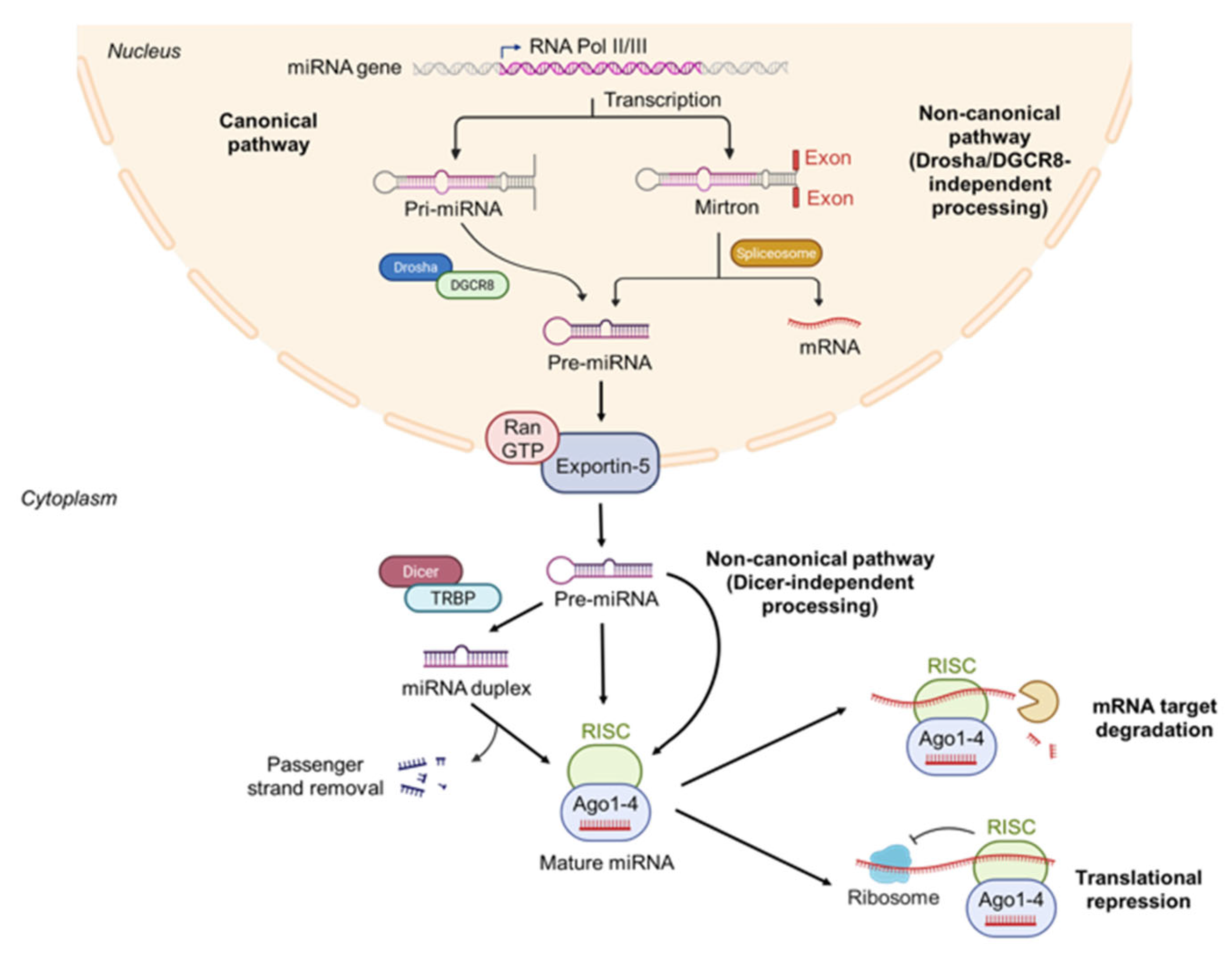
2.1. Biogenesis of miRNAs
2.2. In Vivo Impact of miRNA Deletions or Mutations on Skeletal Development
3. Impact of Altered miRNA Expression on Bone Cell Function and Osteoporosis
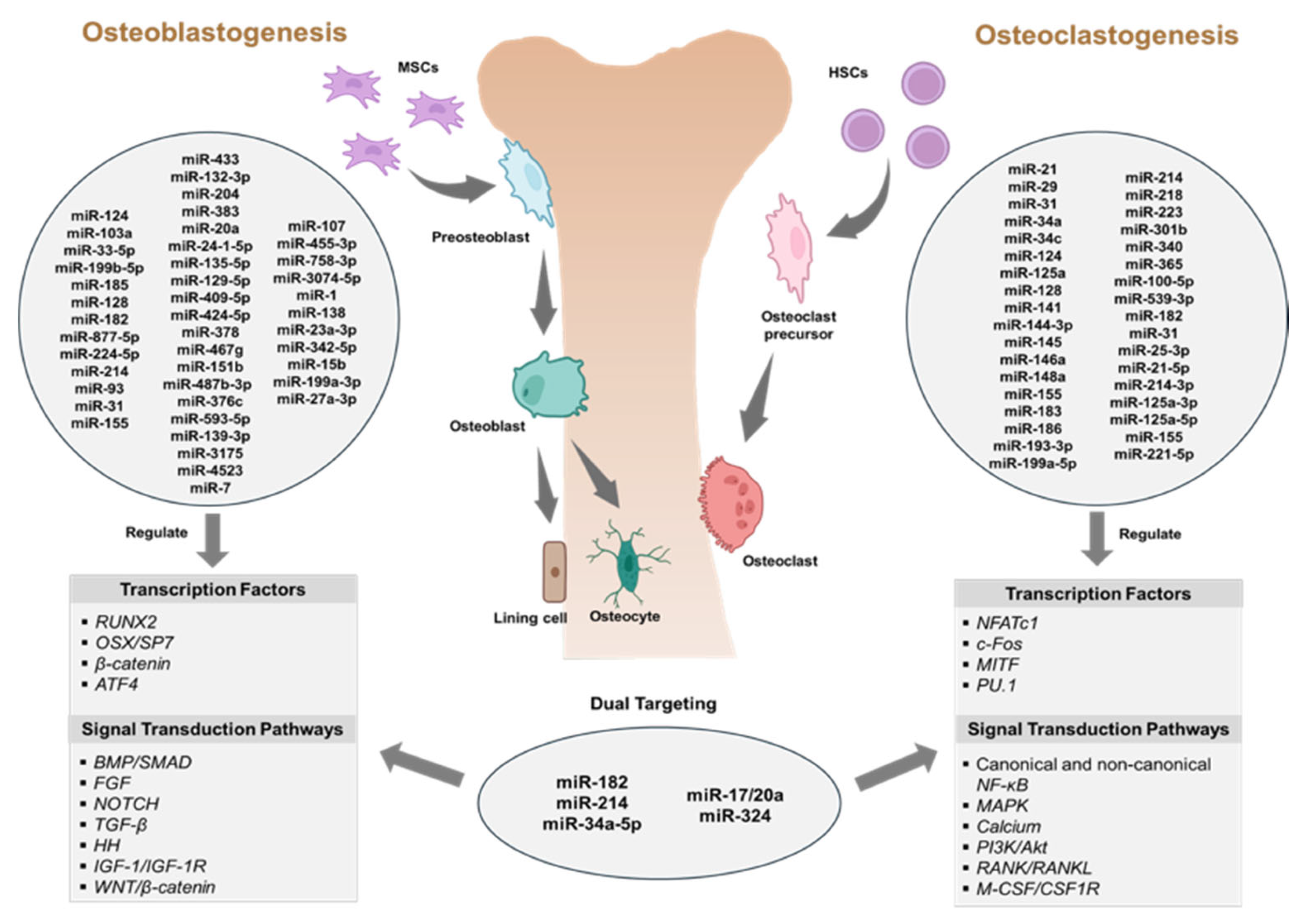
3.1. Osteoblast-Regulating miRNAs
3.2. Osteoclast-Regulating miRNAs

| miRNA | Target(s) | Therapeutic Outcome | Reference |
|---|---|---|---|
| miR-21 | PDCD4, FasL | Inhibition of miR-21 increases bone mass with reduced osteoclast number and resorption activity. | [161,162] |
| miR-29 family | NFIA, CDC42, SRGAP2, GPR85, CD93 | Overexpression of miR-29 promotes osteoclast precursor commitment and migration; inhibition promotes macrophage differentiation. | [163] |
| miR-31 | RhoA | Overexpression of miR-31 promotes actin ring formation and bone resorption. | [157] |
| miR-34a | TGIF2 | Overexpression of miR-34a increases bone mass by inhibiting osteoclastogenesis. | [164] |
| miR-34c | LGR4 | Overexpression of miR-34c sustains osteoclast survival by repressing LGR4-mediated apoptosis. | [165] |
| miR-125a | TRAF6 | Overexpression of miR-125a suppresses osteoclastogenesis through the TRAF6/NFATc1 loop. | [166] |
| miR-128 | Sirt1 | Inhibition of miR-128 increases bone volume by targeting Sirt1 and suppressing NF-κB pathway, thereby reducing osteoclast differentiation and bone resorption. | [167] |
| miR-141 | EPHA2, CALCR | Overexpression of miR-141 inhibits osteoclast differentiation and bone resorption. | [168] |
| miR-144-3p | RANK | Overexpression of miR-144-3p inhibits osteoclast precursor survival and proliferation. | [169] |
| miR-145 | Smad3 | Overexpression of miR-145 reduces osteoclast differentiation and bone resorption | [170] |
| miR-146a | TRAF6 | Overexpression of miR-146a inhibits osteoclastogenesis and reduces arthritis-induced bone resorption. | [171] |
| miR-148a | MAFB | Overexpression of miR-148a promotes osteoclast differentiation; inhibition protects against OVX-induced bone loss. | [172] |
| miR-155 | SOCS1, MITF, TAB2 | Overexpression of miR-155 suppresses osteoclastogenesis under IFNβ/TGFβ but promotes activity under LPS stimulation. | [173,174] |
| miR-183 | HMOX1 | Overexpression of miR-183 promotes osteoclast differentiation through ROS regulation. | [175] |
| miR-186 | CTSK | Overexpression of miR-186 reduces osteoclast survival. | [176] |
| miR-193-3p | NFATC1, CTSK, ACP5, CAR2 | Overexpression of miR-193-3p reduces osteoclastogenesis and bone resorption. | [177] |
| miR-199a-5p | MAFB | Overexpression of miR-199a-5p promotes osteoclast formation via NFATc1 amplification. | [178] |
| miR-214 | PTEN, ATF4 | Overexpression of miR-214 enhances osteoclast differentiation and bone resorption; exosomal miR-214 from osteoclasts inhibits osteoblast bone formation. | [44] |
| miR-218 | TNFRSF1A, NF-κB pathway | Overexpression of miR-218 inhibits osteoclastogenesis and protects against OVX-induced bone loss. | [179,180] |
| miR-223 | NFIA | Overexpression of miR-223 suppresses osteoclast differentiation by targeting NFIA and downregulating NFATc1 signaling. | [181,182] |
| miR-301b | CYLD | Inhibition of miR-301b reduces osteoclastogenesis and protects from OVX-induced bone loss. | [183] |
| miR-340 | MITF | Overexpression of miR-340 inhibits osteoclast differentiation. | [184] |
| miR-365 | MMP9 | Overexpression of miR-365 reduces bone resorption. | [185] |
| miR-100-5p | FGF21 | Overexpression of miR-100-5p suppresses bone resorption. | [186] |
| miR-539-3p | Apoptotic regulators | Inhibition of miR-539 prevents osteoclast differentiation and bone resorption. | [139] |
| miR-182 | PKR | Myeloid-specific deletion protects against excessive osteoclastogenesis and bone resorption; pharmacological treatment with antagomiRs completely suppresses pathologic bone erosion. | [78] |
| FoxO3 and Maml1 | Inhibition of miR-182 with antagomiRs suppresses TNF-α-induced osteoclast formation and bone degradation | [156] | |
| miR-31 | Rho A | Inhibition of miR-31 by specific antagomiRs suppresses the RANKL-induced osteoclast development, bone resorption and actin ring formation. | [157] |
| miR-25-3p | NFIX | Overexpression of miR-25-3p inhibits NFIX expression, suppressing osteoclast proliferation. | [187] |
| miR-21-5p | SKP2 | Overexpression of miR-21-5p in vitro reduces osteoclast differentiation and activity; pre-miR-21-5p treatment in OVX mice inhibits bone resorption and maintains bone cortex and trabecular structure. | [159] |
| miR-214-3p | PTEN | Osteoclast-targeted antagomiM-214-3p therapy reduces the serum exosomal miR-214-3p and enhances bone formation. | [44] |
| miR-125a-3p | TRAF6 | Overexpression of miR-125-3p inhibits the osteoclast differentiation and osteoclast-driven bone resorption. | [158] |
| miR-155 | TAB2 | Inhibition of miR-155 reduces inflammatory osteoclastogenesis through autophagy suppression. | [174] |
| LEPR | Inhibition of miR-155 reduces osteoclast activation and bone resorption. | [188] | |
| miR-221-5p | Smad3 | Overexpression of miR-221-5p alleviates postmenopausal osteoporosis (PMO) through suppressing osteoclastogenesis. | [189] |
3.3. miRNAs Regulating Both Osteoclasts and Osteoblasts
4. Current microRNA-Based Therapeutics and Diagnostics in Osteoporosis
4.1. Diagnostic Applications of miRNAs in Osteoporosis
4.2. Therapeutic Applications of miRNAs in Osteoporosis
5. Conclusions and Future Directions
Author Contributions
Funding
Data Availability Statement
Conflicts of Interest
References
- Arana-chavez, V.E.; Soares, A.M.V.; Katchburian, E. Junctions between early developing osteoblasts of rat calvaria as revealed by freeze-fracture and ultrathin section electron microscopy. Arch. Histol. Cytol. 1995, 58, 285–292. [Google Scholar] [CrossRef]
- Downey, P.A.; Siegel, M.I. Bone biology and the clinical implications for osteoporosis. Physical Therapy 2006, 86, 77–91. [Google Scholar]
- Health, U.D.O.; Services, H. Bone Health and Osteoporosis: A Report of the Surgeon General; US Department of Health and Human Services, Office of the Surgeon General: Rockville, MD, USA, 2004; Volume 87. [Google Scholar]
- Šromová, V.; Sobola, D.; Kaspar, P. A brief review of bone cell function and importance. Cells 2023, 12, 2576. [Google Scholar] [CrossRef]
- Hadjidakis, D.J.; Androulakis, I.I. Bone remodeling. Ann. N. Y. Acad. Sci. 2006, 1092, 385–396. [Google Scholar] [CrossRef]
- Crockett, J.C.; Rogers, M.J.; Coxon, F.P.; Hocking, L.J.; Helfrich, M.H. Bone remodelling at a glance. J. Cell Sci. 2011, 124, 991–998. [Google Scholar] [CrossRef]
- Manolagas, S.C. Birth and death of bone cells: Basic regulatory mechanisms and implications for the pathogenesis and treatment of osteoporosis. Endocr. Rev. 2000, 21, 115–137. [Google Scholar] [PubMed]
- Parfitt, A.M. Osteonal and hemi-osteonal remodeling: The spatial and temporal framework for signal traffic in adult human bone. J. Cell. Biochem. 1994, 55, 273–286. [Google Scholar] [CrossRef] [PubMed]
- Parfitt, A.M. Skeletal heterogeneity and the purposes of bone remodeling: Implications for the understanding of osteoporosis. In Osteoporosis; Elsevier: Amsterdam, The Netherlands, 2001; pp. 433–447. [Google Scholar]
- Qin, L.; Liu, W.; Cao, H.; Xiao, G. Molecular mechanosensors in osteocytes. Bone Res. 2020, 8, 23. [Google Scholar] [CrossRef] [PubMed]
- Cabahug–Zuckerman, P.; Frikha–Benayed, D.; Majeska, R.J.; Tuthill, A.; Yakar, S.; Judex, S.; Schaffler, M.B. Osteocyte apoptosis caused by hindlimb unloading is required to trigger osteocyte rankl production and subsequent resorption of cortical and trabecular bone in mice femurs. J. Bone Miner. Res. 2016, 31, 1356–1365. [Google Scholar] [CrossRef]
- Föger-Samwald, U.; Dovjak, P.; Azizi-Semrad, U.; Kerschan-Schindl, K.; Pietschmann, P. Osteoporosis: Pathophysiology and therapeutic options. EXCLI J. 2020, 19, 1017. [Google Scholar]
- Eastell, R.; O’Neill, T.W.; Hofbauer, L.C.; Langdahl, B.; Reid, I.R.; Gold, D.T.; Cummings, S.R. Postmenopausal osteoporosis. Nat. Rev. Dis. Primers 2016, 2, 1–16. [Google Scholar] [CrossRef]
- Harada, S.-i.; Rodan, G.A. Control of osteoblast function and regulation of bone mass. Nature 2003, 423, 349–355. [Google Scholar] [CrossRef]
- Li, Q.; Wang, J.; Zhao, C. From genomics to metabolomics: Molecular insights into osteoporosis for enhanced diagnostic and therapeutic approaches. Biomedicines 2024, 12, 2389. [Google Scholar] [CrossRef]
- Clynes, M.A.; Harvey, N.C.; Curtis, E.M.; Fuggle, N.R.; Dennison, E.M.; Cooper, C. The epidemiology of osteoporosis. Br. Med. Bull. 2020, 133, 105–117. [Google Scholar] [CrossRef] [PubMed]
- Chen, Y.-j.; Jia, L.-h.; Han, T.-h.; Zhao, Z.-h.; Yang, J.; Xiao, J.-p.; Yang, H.-J.; Yang, K. Osteoporosis treatment: Current drugs and future developments. Front. Pharmacol. 2024, 15, 1456796. [Google Scholar] [CrossRef] [PubMed]
- Tu, K.N.; Lie, J.D.; Wan, C.K.V.; Cameron, M.; Austel, A.G.; Nguyen, J.K.; Van, K.; Hyun, D. Osteoporosis: A review of treatment options. Pharm. Ther. 2018, 43, 92. [Google Scholar]
- Camacho, P.M.; Petak, S.M.; Binkley, N.; Clarke, B.L.; Harris, S.T.; Hurley, D.L.; Kleerekoper, M.; Lewiecki, E.M.; Miller, P.D.; Narula, H.S. American Association of Clinical Endocrinologists and American College of Endocrinology Clinical Practice Guidelines for the diagnosis and treatment of postmenopausal osteoporosis—2016--executive summary. Endocr. Pract. 2016, 22, 1111–1118. [Google Scholar] [CrossRef]
- Kaplon, H.; Muralidharan, M.; Schneider, Z.; Reichert, J.M. Antibodies to watch in 2020. In Proceedings of MAbs; Taylor & Francis: Abingdon, UK, 2020; p. 1703531. [Google Scholar]
- Saag, K.G.; Shane, E.; Boonen, S.; Marín, F.; Donley, D.W.; Taylor, K.A.; Dalsky, G.P.; Marcus, R. Teriparatide or alendronate in glucocorticoid-induced osteoporosis. N. Engl. J. Med. 2007, 357, 2028–2039. [Google Scholar] [CrossRef]
- Khan, M.; Cheung, A.M.; Khan, A.A. Drug-related adverse events of osteoporosis therapy. Endocrinol. Metab. Clin. 2017, 46, 181–192. [Google Scholar] [CrossRef]
- Jiménez-Ortega, R.F.; Ortega-Meléndez, A.I.; Patiño, N.; Rivera-Paredez, B.; Hidalgo-Bravo, A.; Velázquez-Cruz, R. The involvement of microRNAs in bone remodeling signaling pathways and their role in the development of osteoporosis. Biology 2024, 13, 505. [Google Scholar] [CrossRef]
- Huntzinger, E.; Izaurralde, E. Gene silencing by microRNAs: Contributions of translational repression and mRNA decay. Nat. Rev. Genet. 2011, 12, 99–110. [Google Scholar] [CrossRef]
- Huang, Y.; Shen, X.J.; Zou, Q.; Wang, S.P.; Tang, S.M.; Zhang, G.Z. Biological functions of microRNAs: A review. J. Physiol. Biochem. 2011, 67, 129–139. [Google Scholar] [CrossRef]
- Duursma, A.M.; Kedde, M.; Schrier, M.; Le Sage, C.; Agami, R. miR-148 targets human DNMT3b protein coding region. RNA 2008, 14, 872–877. [Google Scholar] [CrossRef]
- Wightman, B.; Ha, I.; Ruvkun, G. Posttranscriptional regulation of the heterochronic gene lin-14 by lin-4 mediates temporal pattern formation in C. elegans. Cell 1993, 75, 855–862. [Google Scholar] [CrossRef]
- Berezikov, E.; Guryev, V.; van de Belt, J.; Wienholds, E.; Plasterk, R.H.; Cuppen, E. Phylogenetic shadowing and computational identification of human microRNA genes. Cell 2005, 120, 21–24. [Google Scholar] [CrossRef]
- Friedman, R.C.; Farh, K.K.-H.; Burge, C.B.; Bartel, D.P. Most mammalian mRNAs are conserved targets of microRNAs. Genome Res. 2009, 19, 92–105. [Google Scholar] [CrossRef]
- Leung, A.K.L. The Whereabouts of microRNA Actions: Cytoplasm and Beyond. Trends Cell Biol. 2015, 25, 601–610. [Google Scholar] [CrossRef] [PubMed]
- Desrochers, L.M.; Antonyak, M.A.; Cerione, R.A. Extracellular Vesicles: Satellites of Information Transfer in Cancer and Stem Cell Biology. Dev. Cell 2016, 37, 301–309. [Google Scholar] [CrossRef] [PubMed]
- Esteller, M. Non-coding RNAs in human disease. Nat. Rev. Genet. 2011, 12, 861–874. [Google Scholar] [CrossRef] [PubMed]
- Bracken, C.P.; Scott, H.S.; Goodall, G.J. A network-biology perspective of microRNA function and dysfunction in cancer. Nat. Rev. Genet. 2016, 17, 719–732. [Google Scholar] [CrossRef]
- Abdelmaksoud, N.M.; Al-Noshokaty, T.M.; Abdelhamid, R.; Abdellatif, N.; Mansour, A.; Mohamed, R.; Mohamed, A.H.; Khalil, N.A.E.; Abdelhamid, S.S.; Mohsen, A.; et al. Deciphering the role of MicroRNAs in diabetic nephropathy: Regulatory mechanisms and molecular insights. Pathol. Res. Pract. 2024, 256, 155237. [Google Scholar] [CrossRef]
- Alkhazaali-Ali, Z.; Sahab-Negah, S.; Boroumand, A.R.; Tavakol-Afshari, J. MicroRNA (miRNA) as a biomarker for diagnosis, prognosis, and therapeutics molecules in neurodegenerative disease. Biomed. Pharmacother. Biomed. Pharmacother. 2024, 177, 116899. [Google Scholar] [CrossRef] [PubMed]
- Hensley, A.P.; McAlinden, A. The role of microRNAs in bone development. Bone 2021, 143, 115760. [Google Scholar] [CrossRef] [PubMed]
- Trojniak, J.; Sendera, A.; Banaś-Ząbczyk, A.; Kopańska, M. The MicroRNAs in the Pathophysiology of Osteoporosis. Int. J. Mol. Sci. 2024, 25, 6240. [Google Scholar] [CrossRef] [PubMed]
- Doghish, A.S.; Elballal, M.S.; Elazazy, O.; Elesawy, A.E.; Shahin, R.K.; Midan, H.M.; Sallam, A.-A.M.; Elbadry, A.M.; Mohamed, A.K.; Ishak, N.W. miRNAs as potential game-changers in bone diseases: Future medicinal and clinical uses. Pathol.-Res. Pract. 2023, 245, 154440. [Google Scholar] [CrossRef]
- Gao, Y.; Patil, S.; Qian, A. The role of microRNAs in bone metabolism and disease. Int. J. Mol. Sci. 2020, 21, 6081. [Google Scholar] [CrossRef]
- Lian, J.B.; Stein, G.S.; Van Wijnen, A.J.; Stein, J.L.; Hassan, M.Q.; Gaur, T.; Zhang, Y. MicroRNA control of bone formation and homeostasis. Nat. Rev. Endocrinol. 2012, 8, 212–227. [Google Scholar] [CrossRef]
- Saranya, I.; Selvamurugan, N. Regulation of TGF-β/BMP signaling during osteoblast development by non-coding RNAs: Potential therapeutic applications. Life Sci. 2024, 355, 122969. [Google Scholar] [CrossRef]
- Gao, Y.; Chen, N.; Fu, Z.; Zhang, Q. Progress of Wnt signaling pathway in osteoporosis. Biomolecules 2023, 13, 483. [Google Scholar] [CrossRef]
- Yang, Y.; Yujiao, W.; Fang, W.; Linhui, Y.; Ziqi, G.; Zhichen, W.; Zirui, W.; Shengwang, W. The roles of miRNA, lncRNA and circRNA in the development of osteoporosis. Biol. Res. 2020, 53. [Google Scholar] [CrossRef]
- Li, D.; Liu, J.; Guo, B.; Liang, C.; Dang, L.; Lu, C.; He, X.; Cheung, H.Y.-S.; Xu, L.; Lu, C. Osteoclast-derived exosomal miR-214-3p inhibits osteoblastic bone formation. Nat. Commun. 2016, 7, 10872. [Google Scholar] [CrossRef]
- Sun, W.; Zhao, C.; Li, Y.; Wang, L.; Nie, G.; Peng, J.; Wang, A.; Zhang, P.; Tian, W.; Li, Q. Osteoclast-derived microRNA-containing exosomes selectively inhibit osteoblast activity. Cell Discov. 2016, 2, 16015. [Google Scholar] [CrossRef]
- Wang, Z.; Wu, Y.; Zhao, Z.; Liu, C.; Zhang, L. Study on transorgan regulation of intervertebral disc and extra-skeletal organs through exosomes derived from bone marrow mesenchymal stem cells. Front. Cell Dev. Biol. 2021, 9, 741183. [Google Scholar] [CrossRef]
- Wang, Q.; Shen, X.; Chen, Y.; Chen, J.; Li, Y. Osteoblasts-derived exosomes regulate osteoclast differentiation through miR-503-3p/Hpse axis. Acta Histochem. 2021, 123, 151790. [Google Scholar] [CrossRef]
- Qin, Y.; Peng, Y.; Zhao, W.; Pan, J.; Ksiezak-Reding, H.; Cardozo, C.; Wu, Y.; Pajevic, P.D.; Bonewald, L.F.; Bauman, W.A. Myostatin inhibits osteoblastic differentiation by suppressing osteocyte-derived exosomal microRNA-218: A novel mechanism in muscle-bone communication. J. Biol. Chem. 2017, 292, 11021–11033. [Google Scholar] [CrossRef]
- Cui, Y.; Qi, Y.; Ding, L.; Ding, S.; Han, Z.; Wang, Y.; Du, P. miRNA dosage control in development and human disease. Trends Cell Biol. 2024, 34, 31–47. [Google Scholar] [CrossRef]
- De Rie, D.; Abugessaisa, I.; Alam, T.; Arner, E.; Arner, P.; Ashoor, H.; Åström, G.; Babina, M.; Bertin, N.; Burroughs, A.M. An integrated expression atlas of miRNAs and their promoters in human and mouse. Nat. Biotechnol. 2017, 35, 872–878. [Google Scholar] [CrossRef] [PubMed]
- Kim, Y.K.; Kim, V.N. Processing of intronic microRNAs. EMBO J. 2007, 26, 775–783. [Google Scholar] [CrossRef] [PubMed]
- O’Brien, J.; Hayder, H.; Zayed, Y.; Peng, C. Overview of microRNA biogenesis, mechanisms of actions, and circulation. Front. Endocrinol. 2018, 9, 402. [Google Scholar] [CrossRef] [PubMed]
- Pasquinelli, A.E. Paring miRNAs through pairing. Science 2010, 328, 1494–1495. [Google Scholar] [CrossRef]
- Broughton, J.P.; Lovci, M.T.; Huang, J.L.; Yeo, G.W.; Pasquinelli, A.E. Pairing beyond the seed supports microRNA targeting specificity. Mol. Cell 2016, 64, 320–333. [Google Scholar] [CrossRef]
- Vasudevan, S. Posttranscriptional upregulation by microRNAs. Wiley Interdiscip. Rev. RNA 2012, 3, 311–330. [Google Scholar] [CrossRef]
- Makarova, J.A.; Shkurnikov, M.U.; Wicklein, D.; Lange, T.; Samatov, T.R.; Turchinovich, A.A.; Tonevitsky, A.G. Intracellular and extracellular microRNA: An update on localization and biological role. Prog. Histochem. Cytochem. 2016, 51, 33–49. [Google Scholar] [CrossRef]
- Ha, M.; Kim, V.N. Regulation of microRNA biogenesis. Nat. Rev. Mol. Cell Biol. 2014, 15, 509–524. [Google Scholar] [CrossRef]
- Denli, A.M.; Tops, B.B.; Plasterk, R.H.; Ketting, R.F.; Hannon, G.J. Processing of primary microRNAs by the Microprocessor complex. Nature 2004, 432, 231–235. [Google Scholar] [CrossRef]
- Han, J.; Lee, Y.; Yeom, K.-H.; Kim, Y.-K.; Jin, H.; Kim, V.N. The Drosha-DGCR8 complex in primary microRNA processing. Genes. Dev. 2004, 18, 3016–3027. [Google Scholar] [CrossRef] [PubMed]
- Leitão, A.L.; Enguita, F.J. A structural view of miRNA biogenesis and function. Non-Coding RNA 2022, 8, 10. [Google Scholar] [CrossRef] [PubMed]
- Okada, C.; Yamashita, E.; Lee, S.J.; Shibata, S.; Katahira, J.; Nakagawa, A.; Yoneda, Y.; Tsukihara, T. A high-resolution structure of the pre-microRNA nuclear export machinery. Science 2009, 326, 1275–1279. [Google Scholar] [CrossRef] [PubMed]
- Pratt, A.J.; MacRae, I.J. The RNA-induced silencing complex: A versatile gene-silencing machine. J. Biol. Chem. 2009, 284, 17897–17901. [Google Scholar] [CrossRef]
- Annese, T.; Tamma, R.; De Giorgis, M.; Ribatti, D. microRNAs biogenesis, functions and role in tumor angiogenesis. Front. Oncol. 2020, 10, 581007. [Google Scholar] [CrossRef]
- Yoda, M.; Kawamata, T.; Paroo, Z.; Ye, X.; Iwasaki, S.; Liu, Q.; Tomari, Y. ATP-dependent human RISC assembly pathways. Nat. Struct. Mol. Biol. 2010, 17, 17–23. [Google Scholar] [CrossRef]
- Meijer, H.A.; Smith, E.M.; Bushell, M. Regulation of miRNA strand selection: Follow the leader? Biochem. Soc. Trans. 2014, 42, 1135–1140. [Google Scholar] [CrossRef] [PubMed]
- Lee, S.; Jee, D.; Srivastava, S.; Yang, A.; Ramidi, A.; Shang, R.; Bortolamiol-Becet, D.; Pfeffer, S.; Gu, S.; Wen, J.; et al. Promiscuous splicing-derived hairpins are dominant substrates of tailing-mediated defense of miRNA biogenesis in mammals. Cell Rep. 2023, 42, 112111. [Google Scholar] [CrossRef] [PubMed]
- Yang, J.-S.; Maurin, T.; Robine, N.; Rasmussen, K.D.; Jeffrey, K.L.; Chandwani, R.; Papapetrou, E.P.; Sadelain, M.; O’Carroll, D.; Lai, E.C. Conserved vertebrate mir-451 provides a platform for Dicer-independent, Ago2-mediated microRNA biogenesis. Proc. Natl. Acad. Sci. USA 2010, 107, 15163–15168. [Google Scholar] [CrossRef] [PubMed]
- Harfe, B.D.; McManus, M.T.; Mansfield, J.H.; Hornstein, E.; Tabin, C.J. The RNaseIII enzyme Dicer is required for morphogenesis but not patterning of the vertebrate limb. Proc. Natl. Acad. Sci. USA 2005, 102, 10898–10903. [Google Scholar] [CrossRef]
- Gaur, T.; Hussain, S.; Mudhasani, R.; Parulkar, I.; Colby, J.L.; Frederick, D.; Kream, B.E.; van Wijnen, A.J.; Stein, J.L.; Stein, G.S. Dicer inactivation in osteoprogenitor cells compromises fetal survival and bone formation, while excision in differentiated osteoblasts increases bone mass in the adult mouse. Dev. Biol. 2010, 340, 10–21. [Google Scholar] [CrossRef]
- Bendre, A.; Moritz, N.; Väänänen, V.; Määttä, J.A. Dicer1 ablation in osterix positive bone forming cells affects cortical bone homeostasis. Bone 2018, 106, 139–147. [Google Scholar] [CrossRef]
- Choi, Y.-J.; Jeong, S.; Yoon, K.-A.; Sung, H.-J.; Cho, H.-S.; Kim, D.W.; Cho, J.-Y. Deficiency of DGCR8 increases bone formation through downregulation of miR-22 expression. Bone 2017, 103, 287–294. [Google Scholar] [CrossRef]
- Simon, D.; Laloo, B.; Barillot, M.; Barnetche, T.; Blanchard, C.; Rooryck, C.; Marche, M.; Burgelin, I.; Coupry, I.; Chassaing, N. A mutation in the 3′-UTR of the HDAC6 gene abolishing the post-transcriptional regulation mediated by hsa-miR-433 is linked to a new form of dominant X-linked chondrodysplasia. Hum. Mol. Genet. 2010, 19, 2015–2027. [Google Scholar] [CrossRef]
- Hemmat, M.; Rumple, M.J.; Mahon, L.W.; Strom, C.M.; Anguiano, A.; Talai, M.; Nguyen, B.; Boyar, F.Z. Short stature, digit anomalies and dysmorphic facial features are associated with the duplication of miR-17~ 92 cluster. Mol. Cytogenet. 2014, 7, 27. [Google Scholar] [CrossRef]
- Mohan, S.; Wergedal, J.E.; Das, S.; Kesavan, C. Conditional disruption of miR17-92 cluster in collagen type I-producing osteoblasts results in reduced periosteal bone formation and bone anabolic response to exercise. Physiol. Genom. 2015, 47, 33–43. [Google Scholar] [CrossRef] [PubMed]
- Grigelioniene, G.; Suzuki, H.I.; Taylan, F.; Mirzamohammadi, F.; Borochowitz, Z.U.; Ayturk, U.M.; Tzur, S.; Horemuzova, E.; Lindstrand, A.; Weis, M.A. Gain-of-function mutation of microRNA-140 in human skeletal dysplasia. Nat. Med. 2019, 25, 583–590. [Google Scholar] [CrossRef] [PubMed]
- Nakamura, Y.; Inloes, J.B.; Katagiri, T.; Kobayashi, T. Chondrocyte-specific microRNA-140 regulates endochondral bone development and targets Dnpep to modulate bone morphogenetic protein signaling. Mol. Cell. Biol. 2011, 31, 3019–3028. [Google Scholar] [CrossRef] [PubMed]
- Pan, B.; Zheng, L.; Liu, S.; Fang, J.; Lou, C.; Hu, X.; Ye, L.; Lai, H.; Gao, J.; Zhang, Y. MiR-148a deletion protects from bone loss in physiological and estrogen-deficient mice by targeting NRP1. Cell Death Discov. 2022, 8, 470. [Google Scholar] [CrossRef]
- Inoue, K.; Deng, Z.; Chen, Y.; Giannopoulou, E.; Xu, R.; Gong, S.; Greenblatt, M.B.; Mangala, L.S.; Lopez-Berestein, G.; Kirsch, D.G. Bone protection by inhibition of microRNA-182. Nat. Commun. 2018, 9, 4108. [Google Scholar] [CrossRef]
- Ding, Z.; Ma, G.; Zhou, B.; Cheng, S.; Tang, W.; Han, Y.; Chen, L.; Pang, W.; Chen, Y.; Yang, D. Targeting miR-29 mitigates skeletal senescence and bolsters therapeutic potential of mesenchymal stromal cells. Cell Rep. Med. 2024, 5, 101665. [Google Scholar] [CrossRef]
- Niu, L.; Swingler, T.E.; Suelzu, C.; Ersek, A.; Orriss, I.R.; Barter, M.J.; Hayman, D.J.; Young, D.A.; Horwood, N.; Clark, I.M. The microRNA-455 null mouse shows dysregulated bone turnover. JBMR Plus 2025, 9, ziaf007. [Google Scholar] [CrossRef]
- Wang, X.; Guo, B.; Li, Q.; Peng, J.; Yang, Z.; Wang, A.; Li, D.; Hou, Z.; Lv, K.; Kan, G. miR-214 targets ATF4 to inhibit bone formation. Nat. Med. 2013, 19, 93–100. [Google Scholar] [CrossRef]
- Zhang, L.; Tang, Y.; Zhu, X.; Tu, T.; Sui, L.; Han, Q.; Yu, L.; Meng, S.; Zheng, L.; Valverde, P. Overexpression of MiR-335-5p promotes bone formation and regeneration in mice. J. Bone Miner. Res. 2017, 32, 2466–2475. [Google Scholar] [CrossRef]
- Li, C.-J.; Cheng, P.; Liang, M.-K.; Chen, Y.-S.; Lu, Q.; Wang, J.-Y.; Xia, Z.-Y.; Zhou, H.-D.; Cao, X.; Xie, H. MicroRNA-188 regulates age-related switch between osteoblast and adipocyte differentiation. J. Clin. Investig. 2015, 125, 1509–1522. [Google Scholar] [CrossRef]
- Ko, J.-Y.; Chuang, P.-C.; Ke, H.-J.; Chen, Y.-S.; Sun, Y.-C.; Wang, F.-S. MicroRNA-29a mitigates glucocorticoid induction of bone loss and fatty marrow by rescuing Runx2 acetylation. Bone 2015, 81, 80–88. [Google Scholar] [CrossRef]
- Chen, L.; HolmstrØm, K.; Qiu, W.; Ditzel, N.; Shi, K.; Hokland, L.; Kassem, M. MicroRNA-34a inhibits osteoblast differentiation and in vivo bone formation of human stromal stem cells. Stem Cells 2014, 32, 902–912. [Google Scholar] [CrossRef] [PubMed]
- Inose, H.; Ochi, H.; Kimura, A.; Fujita, K.; Xu, R.; Sato, S.; Iwasaki, M.; Sunamura, S.; Takeuchi, Y.; Fukumoto, S. A microRNA regulatory mechanism of osteoblast differentiation. Proc. Natl. Acad. Sci. USA 2009, 106, 20794–20799. [Google Scholar] [CrossRef] [PubMed]
- Williams, A.; Henao-Mejia, J.; Harman, C.C.; Flavell, R.A. miR-181 and metabolic regulation in the immune system. In Proceedings of Cold Spring Harbor Symposia on Quantitative Biology; Cold Spring Harbor Laboratory Press: Cold Spring Harbor, NY, USA, 2013; pp. 223–230. [Google Scholar]
- Henao-Mejia, J.; Williams, A.; Goff, L.A.; Staron, M.; Licona-Limón, P.; Kaech, S.M.; Nakayama, M.; Rinn, J.L.; Flavell, R.A. The microRNA miR-181 is a critical cellular metabolic rheostat essential for NKT cell ontogenesis and lymphocyte development and homeostasis. Immunity 2013, 38, 984–997. [Google Scholar] [CrossRef] [PubMed]
- Li, H.; Fan, J.; Fan, L.; Li, T.; Yang, Y.; Xu, H.; Deng, L.; Li, J.; Li, T.; Weng, X. MiRNA-10b reciprocally stimulates osteogenesis and inhibits adipogenesis partly through the TGF-β/SMAD2 signaling pathway. Aging Dis. 2018, 9, 1058. [Google Scholar] [CrossRef]
- Chen, R.; Qiu, H.; Tong, Y.; Liao, F.; Hu, X.; Qiu, Y.; Liao, Y. MiRNA-19a-3p alleviates the progression of osteoporosis by targeting HDAC4 to promote the osteogenic differentiation of hMSCs. Biochem. Biophys. Res. Commun. 2019, 516, 666–672. [Google Scholar] [CrossRef]
- Hu, H.; Zhao, C.; Zhang, P.; Liu, Y.; Jiang, Y.; Wu, E.; Xue, H.; Liu, C.; Li, Z. miR-26b modulates OA induced BMSC osteogenesis through regulating GSK3β/β-catenin pathway. Exp. Mol. Pathol. 2019, 107, 158–164. [Google Scholar] [CrossRef]
- Lee, E.-J.; Kim, S.-M.; Choi, B.; Kim, E.-Y.; Chung, Y.-H.; Lee, E.-J.; Yoo, B.; Lee, C.-K.; Hong, S.; Kim, B.-J. Interleukin-32 gamma stimulates bone formation by increasing miR-29a in osteoblastic cells and prevents the development of osteoporosis. Sci. Rep. 2017, 7, 40240. [Google Scholar] [CrossRef]
- Lin, Z.; He, H.; Wang, M.; Liang, J. MicroRNA-130a controls bone marrow mesenchymal stem cell differentiation towards the osteoblastic and adipogenic fate. Cell Prolif. 2019, 52, e12688. [Google Scholar] [CrossRef]
- Ge, J.-B.; Lin, J.-T.; Hong, H.-Y.; Sun, Y.-J.; Li, Y.; Zhang, C.-M. MiR-374b promotes osteogenic differentiation of MSCs by degrading PTEN and promoting fracture healing. Eur. Rev. Med. Pharmacol. Sci. 2018, 22, 3303–3310. [Google Scholar]
- Zhang, H.-G.; Wang, X.-B.; Zhao, H.; Zhou, C.-N. MicroRNA-9-5p promotes osteoporosis development through inhibiting osteogenesis and promoting adipogenesis via targeting Wnt3a. Eur. Rev. Med. Pharmacol. Sci. 2019, 23, 456–463. [Google Scholar]
- Duan, L.; Zhao, H.; Xiong, Y.; Tang, X.; Yang, Y.; Hu, Z.; Li, C.; Chen, S.; Yu, X. miR-16-2* interferes with WNT5A to regulate osteogenesis of mesenchymal stem cells. Cell. Physiol. Biochem. 2018, 51, 1087–1102. [Google Scholar] [CrossRef] [PubMed]
- Zhang, Y.; Li, S.; Yuan, S.; Zhang, H.; Liu, J. MicroRNA-23a inhibits osteogenesis of periodontal mesenchymal stem cells by targeting bone morphogenetic protein signaling. Arch. Oral Biol. 2019, 102, 93–100. [Google Scholar] [CrossRef] [PubMed]
- Peng, W.; Zhu, S.; Li, X.; Weng, J.; Chen, S. miR-27b-3p suppressed osteogenic differentiation of maxillary sinus membrane stem cells by targeting Sp7. Implant Dent. 2017, 26, 492–499. [Google Scholar] [CrossRef]
- Zhang, Y.; Wei, Q.-S.; Ding, W.-B.; Zhang, L.-L.; Wang, H.-C.; Zhu, Y.-J.; He, W.; Chai, Y.-N.; Liu, Y.-W. Increased microRNA-93-5p inhibits osteogenic differentiation by targeting bone morphogenetic protein-2. PLoS ONE 2017, 12, e0182678. [Google Scholar] [CrossRef] [PubMed]
- Wang, H.; Xie, Z.; Hou, T.; Li, Z.; Huang, K.; Gong, J.; Zhou, W.; Tang, K.; Xu, J.; Dong, S. MiR-125b regulates the osteogenic differentiation of human mesenchymal stem cells by targeting BMPR1b. Cell. Physiol. Biochem. 2017, 41, 530–542. [Google Scholar] [CrossRef]
- Kong, L.; Zuo, R.; Wang, M.; Wang, W.; Xu, J.; Chai, Y.; Guan, J.; Kang, Q. Silencing microRNA-137-3p, which targets RUNX2 and CXCL12 prevents steroid-induced osteonecrosis of the femoral head by facilitating osteogenesis and angiogenesis. Int. J. Biol. Sci. 2020, 16, 655. [Google Scholar] [CrossRef]
- Lu, X.-D.; Han, W.-X.; Liu, Y.-X. Suppression of miR-451a accelerates osteogenic differentiation and inhibits bone loss via Bmp6 signaling during osteoporosis. Biomed. Pharmacother. 2019, 120, 109378. [Google Scholar] [CrossRef]
- John, A.A.; Prakash, R.; Kureel, J.; Singh, D. Identification of novel microRNA inhibiting actin cytoskeletal rearrangement thereby suppressing osteoblast differentiation. J. Mol. Med. 2018, 96, 427–444. [Google Scholar] [CrossRef]
- Li, Z.; Zhang, W.; Huang, Y. MiRNA-133a is involved in the regulation of postmenopausal osteoporosis through promoting osteoclast differentiation. Acta Biochim. Et Biophys. Sin. 2018, 50, 273–280. [Google Scholar] [CrossRef]
- Huang, M.-Z.; Zhuang, Y.; Ning, X.; Zhang, H.; Shen, Z.-M.; Shang, X.-W. Artesunate inhibits osteoclastogenesis through the miR-503/RANK axis. Biosci. Rep. 2020, 40, BSR20194387. [Google Scholar] [CrossRef] [PubMed]
- Lee, Y.; Kim, H.J.; Park, C.K.; Kim, Y.-G.; Lee, H.-J.; Kim, J.-Y.; Kim, H.-H. MicroRNA-124 regulates osteoclast differentiation. Bone 2013, 56, 383–389. [Google Scholar] [CrossRef]
- Sun, Q.; Zhang, B.; Zhu, W.; Wei, W.; Ma, J.; Tay, F.R. A potential therapeutic target for regulating osteoporosis via suppression of osteoclast differentiation. J. Dent. 2019, 82, 91–97. [Google Scholar] [CrossRef] [PubMed]
- Zhao, C.; Sun, W.; Zhang, P.; Ling, S.; Li, Y.; Zhao, D.; Peng, J.; Wang, A.; Li, Q.; Song, J.; et al. miR-214 promotes osteoclastogenesis by targeting Pten/PI3k/Akt pathway. RNA Biol. 2015, 12, 343–353. [Google Scholar] [CrossRef]
- Weivoda, M.M.; Chew, C.K.; Monroe, D.G.; Farr, J.N.; Atkinson, E.J.; Geske, J.R.; Eckhardt, B.; Thicke, B.; Ruan, M.; Tweed, A.J.; et al. Identification of osteoclast-osteoblast coupling factors in humans reveals links between bone and energy metabolism. Nat. Commun. 2020, 11, 87. [Google Scholar] [CrossRef]
- Loh, H.Y.; Norman, B.P.; Lai, K.S.; Cheng, W.H.; Nik Abd Rahman, N.M.A.; Mohamed Alitheen, N.B.; Osman, M.A. Post-Transcriptional Regulatory Crosstalk between MicroRNAs and Canonical TGF-β/BMP Signalling Cascades on Osteoblast Lineage: A Comprehensive Review. Int. J. Mol. Sci. 2023, 24, 6423. [Google Scholar] [CrossRef]
- Chan, W.C.W.; Tan, Z.; To, M.K.T.; Chan, D. Regulation and role of transcription factors in osteogenesis. Int. J. Mol. Sci. 2021, 22, 5445. [Google Scholar] [CrossRef]
- Tang, X.; Lin, J.; Wang, G.; Lu, J. MicroRNA-433-3p promotes osteoblast differentiation through targeting DKK1 expression. PLoS ONE 2017, 12, e0179860. [Google Scholar] [CrossRef]
- Qadir, A.S.; Um, S.; Lee, H.; Baek, K.; Seo, B.M.; Lee, G.; Kim, G.S.; Woo, K.M.; Ryoo, H.M.; Baek, J.H. miR-124 negatively regulates osteogenic differentiation and in vivo bone formation of mesenchymal stem cells. J. Cell. Biochem. 2015, 116, 730–742. [Google Scholar] [CrossRef]
- Zuo, B.; Zhu, J.; Li, J.; Wang, C.; Zhao, X.; Cai, G.; Li, Z.; Peng, J.; Wang, P.; Shen, C. microRNA-103a functions as a mechanosensitive microRNA to inhibit bone formation through targeting Runx2. J. Bone Miner. Res. 2015, 30, 330–345. [Google Scholar] [CrossRef]
- Wang, H.; Sun, Z.; Wang, Y.; Hu, Z.; Zhou, H.; Zhang, L.; Hong, B.; Zhang, S.; Cao, X. miR-33-5p, a novel mechano-sensitive microRNA promotes osteoblast differentiation by targeting Hmga2. Sci. Rep. 2016, 6, 23170. [Google Scholar] [CrossRef]
- Zhao, R.; Li, Y.; Lin, Z.; Wan, J.; Xu, C.; Zeng, Y.; Zhu, Y. miR-199b-5p modulates BMSC osteogenesis via suppressing GSK-3β/β-catenin signaling pathway. Biochem. Biophys. Res. Commun. 2016, 477, 749–754. [Google Scholar] [CrossRef]
- Yao, C.-J.; Lv, Y.; Zhang, C.-J.; Jin, J.-X.; Xu, L.-H.; Jiang, J.; Geng, B.; Li, H.; Xia, Y.-Y.; Wu, M. MicroRNA-185 inhibits the growth and proliferation of osteoblasts in fracture healing by targeting PTH gene through down-regulating Wnt/β-catenin axis: In an animal experiment. Biochem. Biophys. Res. Commun. 2018, 501, 55–63. [Google Scholar] [CrossRef] [PubMed]
- Cui, Q.; Xing, J.; Yu, M.; Wang, Y.; Xu, J.; Gu, Y.; Nan, X.; Ma, W.; Liu, H.; Zhao, H. Mmu-miR-185 depletion promotes osteogenic differentiation and suppresses bone loss in osteoporosis through the Bgn-mediated BMP/Smad pathway. Cell Death Dis. 2019, 10, 172. [Google Scholar] [CrossRef] [PubMed]
- Zhao, J.; Liu, S.; Zhang, W.; Ni, L.; Hu, Z.; Sheng, Z.; Yin, B. MiR-128 inhibits the osteogenic differentiation in osteoporosis by down-regulating SIRT6 expression. Biosci. Rep. 2019, 39, BSR20191405. [Google Scholar] [CrossRef] [PubMed]
- Kim, K.M.; Park, S.J.; Jung, S.H.; Kim, E.J.; Jogeswar, G.; Ajita, J.; Rhee, Y.; Kim, C.H.; Lim, S.K. miR-182 is a negative regulator of osteoblast proliferation, differentiation, and skeletogenesis through targeting FoxO1. J. Bone Miner. Res. 2012, 27, 1669–1679. [Google Scholar] [CrossRef]
- Shen, Y.; Zhang, Y.; Wang, Q.; Jiang, B.; Jiang, X.; Luo, B. MicroRNA-877-5p promotes osteoblast differentiation by targeting EIF4G2 expression. J. Orthop. Surg. Res. 2024, 19, 134. [Google Scholar] [CrossRef]
- Ding, S.; Ma, Y.; Yang, J.; Tang, Y.; Jin, Y.; Li, L.; Ma, C. MiR-224-5p inhibits osteoblast differentiation and impairs bone formation by targeting Runx2 and Sp7. Cytotechnology 2023, 75, 505–516. [Google Scholar] [CrossRef]
- Kim, E.-J.; Kang, I.-H.; Lee, J.W.; Jang, W.-G.; Koh, J.-T. MiR-433 mediates ERRγ-suppressed osteoblast differentiation via direct targeting to Runx2 mRNA in C3H10T1/2 cells. Life Sci. 2013, 92, 562–568. [Google Scholar] [CrossRef]
- Hu, Z.; Wang, Y.; Sun, Z.; Wang, H.; Zhou, H.; Zhang, L.; Zhang, S.; Cao, X. miRNA-132-3p inhibits osteoblast differentiation by targeting Ep300 in simulated microgravity. Sci. Rep. 2015, 5, 18655. [Google Scholar] [CrossRef] [PubMed]
- Zeng, X.; Feng, Q.; Zhao, F.; Sun, C.; Zhou, T.; Yang, J.; Zhan, X. Puerarin inhibits TRPM3/miR-204 to promote MC3T3-E1 cells proliferation, differentiation and mineralization. Phytother. Res. 2018, 32, 996–1003. [Google Scholar] [CrossRef] [PubMed]
- Tang, J.; Zhang, Z.; Jin, X.; Shi, H. miR-383 negatively regulates osteoblastic differentiation of bone marrow mesenchymal stem cells in rats by targeting Satb2. Bone 2018, 114, 137–143. [Google Scholar] [CrossRef] [PubMed]
- Ge, J.; Guo, S.; Fu, Y.; Zhou, P.; Zhang, P.; Du, Y.; Li, M.; Cheng, J.; Jiang, H. Dental follicle cells participate in tooth eruption via the RUNX2-MiR-31-SATB2 loop. J. Dent. Res. 2015, 94, 936–944. [Google Scholar] [CrossRef]
- Ellur, G.; Sukhdeo, S.V.; Khan, M.T.; Sharan, K. Maternal high protein-diet programs impairment of offspring’s bone mass through miR-24-1-5p mediated targeting of SMAD5 in osteoblasts. Cell. Mol. Life Sci. 2021, 78, 1729–1744. [Google Scholar] [CrossRef]
- Yin, N.; Zhu, L.; Ding, L.; Yuan, J.; Du, L.; Pan, M.; Xue, F.; Xiao, H. MiR-135-5p promotes osteoblast differentiation by targeting HIF1AN in MC3T3-E1 cells. Cell. Mol. Biol. Lett. 2019, 24, 51. [Google Scholar] [CrossRef]
- Li, Z.; Hassan, M.Q.; Volinia, S.; Van Wijnen, A.J.; Stein, J.L.; Croce, C.M.; Lian, J.B.; Stein, G.S. A microRNA signature for a BMP2-induced osteoblast lineage commitment program. Proc. Natl. Acad. Sci. 2008, 105, 13906–13911. [Google Scholar] [CrossRef]
- Yin, C.; Tian, Y.; Yu, Y.; Yang, C.; Su, P.; Zhao, Y.; Wang, X.; Zhang, K.; Pei, J.; Li, D. miR-129-5p inhibits bone formation through TCF4. Front. Cell Dev. Biol. 2020, 8, 600641. [Google Scholar] [CrossRef]
- Prakash, R.; John, A.A.; Singh, D. miR-409-5p negatively regulates Wnt/Beta catenin signaling pathway by targeting Lrp-8. J. Cell. Physiol. 2019, 234, 23507–23517. [Google Scholar] [CrossRef]
- Wei, Y.; Ma, H.; Zhou, H.; Yin, H.; Yang, J.; Song, Y.; Yang, B. miR-424-5p shuttled by bone marrow stem cells-derived exosomes attenuates osteogenesis via regulating WIF1-mediated Wnt/β-catenin axis. Aging 2021, 13, 17190. [Google Scholar] [CrossRef]
- Cheng, S.Y.; Yue, S. Role and regulation of human tumor suppressor SUFU in Hedgehog signaling. Adv. Cancer Res. 2008, 101, 29–43. [Google Scholar] [PubMed]
- Kureel, J.; John, A.A.; Dixit, M.; Singh, D. MicroRNA-467g inhibits new bone regeneration by targeting Ihh/Runx-2 signaling. Int. J. Biochem. Cell Biol. 2017, 85, 35–43. [Google Scholar] [CrossRef] [PubMed]
- Liu, F.; Liang, Y.; Lin, X. MiR-151b inhibits osteoblast differentiation via downregulating Msx2. Connect. Tissue Res. 2022, 63, 112–123. [Google Scholar] [PubMed]
- John, A.A.; Prakash, R.; Singh, D. miR-487b-3p impairs osteoblastogenesis by targeting Notch-regulated ankyrin-repeat protein (Nrarp). J. Endocrinol. 2019, 241, 249–263. [Google Scholar] [CrossRef]
- Kureel, J.; John, A.A.; Prakash, R.; Singh, D. MiR 376c inhibits osteoblastogenesis by targeting Wnt3 and ARF-GEF-1-facilitated augmentation of beta-catenin transactivation. J. Cell. Biochem. 2018, 119, 3293–3303. [Google Scholar] [CrossRef]
- Tripathi, A.; John, A.A.; Kumar, D.; Kaushal, S.K.; Singh, D.P.; Husain, N.; Sarkar, J.; Singh, D. MiR-539-3p impairs osteogenesis by suppressing Wnt interaction with LRP-6 co-receptor and subsequent inhibition of Akap-3 signaling pathway. Front. Endocrinol. 2022, 13, 977347. [Google Scholar] [CrossRef]
- Wang, Y.; Wang, K.; Hu, Z.; Zhou, H.; Zhang, L.; Wang, H.; Li, G.; Zhang, S.; Cao, X.; Shi, F. MicroRNA-139-3p regulates osteoblast differentiation and apoptosis by targeting ELK1 and interacting with long noncoding RNA ODSM. Cell Death Dis. 2018, 9, 1107. [Google Scholar] [CrossRef]
- Chen, J.; Liang, J.-q.; Zhen, Y.-F.; Chang, L.; Zhou, Z.-t.; Shen, X.-j. DCAF1-targeting microRNA-3175 activates Nrf2 signaling and inhibits dexamethasone-induced oxidative injury in human osteoblasts. Cell Death Dis. 2021, 12, 1024. [Google Scholar] [CrossRef]
- Liang, J.-q.; Zhou, Z.-t.; Bo, L.; Tan, H.-n.; Hu, J.-h.; Tan, M.-s. Phosphoglycerate kinase 1 silencing by a novel microRNA microRNA-4523 protects human osteoblasts from dexamethasone through activation of Nrf2 signaling cascade. Cell Death Dis. 2021, 12, 964. [Google Scholar] [CrossRef]
- Fan, J.-b.; Liu, W.; Zhu, X.-h.; Cui, S.-y.; Cui, Z.-m.; Zhao, J.-n. microRNA-7 inhibition protects human osteoblasts from dexamethasone via activation of epidermal growth factor receptor signaling. Mol. Cell. Biochem. 2019, 460, 113–121. [Google Scholar] [CrossRef]
- Zhuang, Y.; Wang, S.; Fei, H.; Ji, F.; Sun, P. miR-107 inhibition upregulates CAB39 and activates AMPK-Nrf2 signaling to protect osteoblasts from dexamethasone-induced oxidative injury and cytotoxicity. Aging 2020, 12, 11754. [Google Scholar] [CrossRef]
- Zhang, S.; Wu, W.; Jiao, G.; Li, C.; Liu, H. MiR-455-3p activates Nrf2/ARE signaling via HDAC2 and protects osteoblasts from oxidative stress. Int. J. Biol. Macromol. 2018, 107, 2094–2101. [Google Scholar] [CrossRef] [PubMed]
- Liu, H.; Wang, Y.W.; Chen, W.D.; Dong, H.H.; Xu, Y.J. Iron accumulation regulates osteoblast apoptosis through lncRNA XIST/miR-758-3p/caspase 3 axis leading to osteoporosis. Iubmb Life 2021, 73, 432–443. [Google Scholar] [CrossRef] [PubMed]
- Feng, Y.; He, P.-Y.; Kong, W.-D.; Cen, W.-J.; Wang, P.-L.; Liu, C.; Zhang, W.; Li, S.-S.; Jiang, J.-W. Apoptosis-promoting properties of miR-3074-5p in MC3T3-E1 cells under iron overload conditions. Cell. Mol. Biol. Lett. 2021, 26, 37. [Google Scholar] [CrossRef] [PubMed]
- Lee, Y.-E.; Hong, C.-Y.; Lin, Y.-L.; Chen, R.-M. MicroRNA-1 participates in nitric oxide-induced apoptotic insults to MC3T3-E1 cells by targeting heat-shock protein-70. Int. J. Biol. Sci. 2015, 11, 246. [Google Scholar] [CrossRef]
- Xu, S.Y.; Shi, P.; Zhou, R.M. Post-menopausal oestrogen deficiency induces osteoblast apoptosis via regulating HOTAIR/miRNA-138 signalling and suppressing TIMP1 expression. J. Cell. Mol. Med. 2021, 25, 4572–4582. [Google Scholar] [CrossRef]
- Dai, Y.; Zheng, C.; Li, H. Inhibition of miR-23a-3p promotes osteoblast proliferation and differentiation. J. Cell. Biochem. 2021, 122, 1251. [Google Scholar]
- Li, X.; Li, K.; Yu, G.; Yu, C.; Liu, C. miR-342-5p inhibits expression of Bmp7 to regulate proliferation, differentiation and migration of osteoblasts. Mol. Immunol. 2019, 114, 251–259. [Google Scholar] [CrossRef]
- Lu, X.; Zhang, Y.; Zheng, Y.; Chen, B. The miRNA-15b/USP7/KDM6B axis engages in the initiation of osteoporosis by modulating osteoblast differentiation and autophagy. J. Cell. Mol. Med. 2021, 25, 2069–2081. [Google Scholar] [CrossRef]
- Fu, J.; Hao, L.; Tian, Y.; Liu, Y.; Gu, Y.; Wu, J. miR-199a-3p is involved in estrogen-mediated autophagy through the IGF-1/mTOR pathway in osteocyte-like MLO-Y4 cells. J. Cell. Physiol. 2018, 233, 2292–2303. [Google Scholar] [CrossRef]
- Ren, L.-R.; Yao, R.-B.; Wang, S.-Y.; Gong, X.-D.; Xu, J.-T.; Yang, K.-S. MiR-27a-3p promotes the osteogenic differentiation by activating CRY2/ERK1/2 axis. Mol. Med. 2021, 27, 43. [Google Scholar] [CrossRef]
- Palagano, E.; Menale, C.; Sobacchi, C.; Villa, A. Genetics of osteopetrosis. Curr. Osteoporos. Rep. 2018, 16, 13–25. [Google Scholar] [CrossRef] [PubMed]
- Miller, C.H.; Smith, S.M.; Elguindy, M.; Zhang, T.; Xiang, J.Z.; Hu, X.; Ivashkiv, L.B.; Zhao, B. RBP-J–regulated miR-182 promotes TNF-α–induced osteoclastogenesis. J. Immunol. 2016, 196, 4977–4986. [Google Scholar] [CrossRef] [PubMed]
- Mizoguchi, F.; Murakami, Y.; Saito, T.; Miyasaka, N.; Kohsaka, H. miR-31 controls osteoclast formation and bone resorption by targeting RhoA. Arthritis Res. Ther. 2013, 15, R102. [Google Scholar] [CrossRef] [PubMed]
- Zhang, J.; Zhang, L.; Yao, G.; Zhao, H.; Qiao, P.; Wu, S. lncRNA-Gm5532 regulates osteoclast differentiation through the miR-125a-3p/TRAF6 axis: lncRNA-Gm5532 regulates osteoclast differentiation. Acta Biochim. Et Biophys. Sin. 2023, 56, 54. [Google Scholar]
- Huang, Y.; Yang, Y.; Wang, J.; Yao, S.; Yao, T.; Xu, Y.; Chen, Z.; Yuan, P.; Gao, J.; Shen, S. miR-21-5p targets SKP2 to reduce osteoclastogenesis in a mouse model of osteoporosis. J. Biol. Chem. 2021, 296, 100617. [Google Scholar] [CrossRef]
- Liu, J.; Wang, B.; Chen, H.; Yu, X.; Cao, X.; Zhang, H. Osteoclast-derived exosomes influence osteoblast differentiation in osteoporosis progression via the lncRNA AW011738/miR-24-2-5p/TREM1 axis. Biomed. Pharmacother. 2024, 178, 117231. [Google Scholar] [CrossRef]
- Wang, S.; Liu, Z.; Wang, J.; Ji, X.; Yao, Z.; Wang, X. miR-21 promotes osteoclastogenesis through activation of PI3K/Akt signaling by targeting Pten in RAW264.7 cells. Mol. Med. Rep. 2020, 21, 1125–1132. [Google Scholar] [CrossRef]
- Sugatani, T.; Hruska, K.A. Down-regulation of miR-21 biogenesis by estrogen action contributes to osteoclastic apoptosis. J. Cell. Biochem. 2013, 114, 1217–1222. [Google Scholar] [CrossRef]
- Franceschetti, T.; Kessler, C.B.; Lee, S.K.; Delany, A.M. miR-29 promotes murine osteoclastogenesis by regulating osteoclast commitment and migration. J. Biol. Chem. 2013, 288, 33347–33360. [Google Scholar] [CrossRef]
- Abdelaal, A.M.; Sohal, I.S.; Iyer, S.; Sudarshan, K.; Kothandaraman, H.; Lanman, N.A.; Low, P.S.; Kasinski, A.L. A first-in-class fully modified version of miR-34a with outstanding stability, activity, and anti-tumor efficacy. Oncogene 2023, 42, 2985–2999. [Google Scholar] [CrossRef]
- Cong, F.; Wu, N.; Tian, X.; Fan, J.; Liu, J.; Song, T.; Fu, H. MicroRNA-34c promotes osteoclast differentiation through targeting LGR4. Gene 2017, 610, 1–8. [Google Scholar] [CrossRef]
- Guo, L.J.; Liao, L.; Yang, L.; Li, Y.; Jiang, T.J. MiR-125a TNF receptor-associated factor 6 to inhibit osteoclastogenesis. Exp. Cell Res. 2014, 321, 142–152. [Google Scholar] [CrossRef]
- Shen, G.; Ren, H.; Shang, Q.; Zhang, Z.; Zhao, W.; Yu, X.; Tang, J.; Yang, Z.; Liang, D.; Jiang, X. miR-128 plays a critical role in murine osteoclastogenesis and estrogen deficiency-induced bone loss. Theranostics 2020, 10, 4334–4348. [Google Scholar] [CrossRef] [PubMed]
- Yang, S.; Zhang, W.; Cai, M.; Zhang, Y.; Jin, F.; Yan, S.; Baloch, Z.; Fang, Z.; Xue, S.; Tang, R.; et al. Suppression of Bone Resorption by miR-141 in Aged Rhesus Monkeys. J. Bone Min. Res. 2018, 33, 1799–1812. [Google Scholar] [CrossRef] [PubMed]
- Wang, C.; He, H.; Wang, L.; Jiang, Y.; Xu, Y. Reduced miR-144-3p expression in serum and bone mediates osteoporosis pathogenesis by targeting RANK. Biochem. Cell Biol. 2018, 96, 627–635. [Google Scholar] [CrossRef] [PubMed]
- Yu, F.Y.; Xie, C.Q.; Sun, J.T.; Peng, W.; Huang, X.W. Overexpressed miR-145 inhibits osteoclastogenesis in RANKL-induced bone marrow-derived macrophages and ovariectomized mice by regulation of Smad3. Life Sci. 2018, 202, 11–20. [Google Scholar] [CrossRef]
- Ammari, M.; Presumey, J.; Ponsolles, C.; Roussignol, G.; Roubert, C.; Escriou, V.; Toupet, K.; Mausset-Bonnefont, A.L.; Cren, M.; Robin, M.; et al. Delivery of miR-146a to Ly6C(high) Monocytes Inhibits Pathogenic Bone Erosion in Inflammatory Arthritis. Theranostics 2018, 8, 5972–5985. [Google Scholar] [CrossRef]
- Cheng, P.; Chen, C.; He, H.B.; Hu, R.; Zhou, H.D.; Xie, H.; Zhu, W.; Dai, R.C.; Wu, X.P.; Liao, E.Y.; et al. miR-148a regulates osteoclastogenesis by targeting V-maf musculoaponeurotic fibrosarcoma oncogene homolog B. J. Bone Min. Res. 2013, 28, 1180–1190. [Google Scholar] [CrossRef]
- Zhang, J.; Zhao, H.; Chen, J.; Xia, B.; Jin, Y.; Wei, W.; Shen, J.; Huang, Y. Interferon-β-induced miR-155 inhibits osteoclast differentiation by targeting SOCS1 and MITF. FEBS Lett. 2012, 586, 3255–3262. [Google Scholar] [CrossRef]
- Sul, O.J.; Sung, Y.B.; Rajasekaran, M.; Ke, K.; Yu, R.; Back, S.H.; Choi, H.S. MicroRNA-155 induces autophagy in osteoclasts by targeting transforming growth factor β-activated kinase 1-binding protein 2 upon lipopolysaccharide stimulation. Bone 2018, 116, 279–289. [Google Scholar] [CrossRef]
- Ke, K.; Sul, O.J.; Rajasekaran, M.; Choi, H.S. MicroRNA-183 increases osteoclastogenesis by repressing heme oxygenase-1. Bone 2015, 81, 237–246. [Google Scholar] [CrossRef] [PubMed]
- Ma, Y.; Yang, H.; Huang, J. Icariin ameliorates dexamethasone-induced bone deterioration in an experimental mouse model via activation of microRNA-186 inhibition of cathepsin K. Mol. Med. Rep. 2018, 17, 1633–1641. [Google Scholar] [CrossRef] [PubMed]
- Li, X.; Yang, L.; Guo, Z. miR-193-3p ameliorates bone resorption in ovariectomized mice by blocking NFATc1 signaling. Int. J. Clin. Exp. Pathol. 2019, 12, 4077–4086. [Google Scholar] [PubMed]
- Guo, K.; Zhang, D.; Wu, H.; Zhu, Q.; Yang, C.; Zhu, J. MiRNA-199a-5p positively regulated RANKL-induced osteoclast differentiation by target Mafb protein. J. Cell. Biochem. 2019, 120, 7024–7031. [Google Scholar] [CrossRef]
- Qu, B.; Xia, X.; Yan, M.; Gong, K.; Deng, S.; Huang, G.; Ma, Z.; Pan, X. miR-218 is involved in the negative regulation of osteoclastogenesis and bone resorption by partial suppression of p38MAPK-c-Fos-NFATc1 signaling: Potential role for osteopenic diseases. Exp. Cell Res. 2015, 338, 89–96. [Google Scholar] [CrossRef]
- Wang, W.; Yang, L.; Zhang, D.; Gao, C.; Wu, J.; Zhu, Y.; Zhang, H. MicroRNA-218 Negatively Regulates Osteoclastogenic Differentiation by Repressing the Nuclear Factor-κB Signaling Pathway and Targeting Tumor Necrosis Factor Receptor 1. Cell Physiol. Biochem. 2018, 48, 339–347. [Google Scholar] [CrossRef]
- Sugatani, T.; Hruska, K.A. MicroRNA-223 is a key factor in osteoclast differentiation. J. Cell Biochem. 2007, 101, 996–999. [Google Scholar] [CrossRef]
- Shibuya, H.; Nakasa, T.; Adachi, N.; Nagata, Y.; Ishikawa, M.; Deie, M.; Suzuki, O.; Ochi, M. Overexpression of microRNA-223 in rheumatoid arthritis synovium controls osteoclast differentiation. Mod. Rheumatol. 2013, 23, 674–685. [Google Scholar] [CrossRef]
- Zhu, J.; Wang, H.; Liu, H. Osteoclastic miR-301-b knockout reduces ovariectomy (OVX)-induced bone loss by regulating CYDR/NF-κB signaling pathway. Biochem. Biophys. Res. Commun. 2020, 529, 35–42. [Google Scholar] [CrossRef]
- Zhao, H.; Zhang, J.; Shao, H.; Liu, J.; Jin, M.; Chen, J.; Huang, Y. miRNA-340 inhibits osteoclast differentiation via repression of MITF. Biosci. Rep. 2017, 37, BSR20170302. [Google Scholar] [CrossRef]
- Li, G.; Bu, J.; Zhu, Y.; Xiao, X.; Liang, Z.; Zhang, R. Curcumin improves bone microarchitecture in glucocorticoid-induced secondary osteoporosis mice through the activation of microRNA-365 via regulating MMP-9. Int. J. Clin. Exp. Pathol. 2015, 8, 15684–15695. [Google Scholar]
- Zhou, L.; Song, H.Y.; Gao, L.L.; Yang, L.Y.; Mu, S.; Fu, Q. MicroRNA-100-5p inhibits osteoclastogenesis and bone resorption by regulating fibroblast growth factor 21. Int. J. Mol. Med. 2019, 43, 727–738. [Google Scholar] [CrossRef]
- Huang, Y.; Ren, K.; Yao, T.; Zhu, H.; Xu, Y.; Ye, H.; Chen, Z.; Lv, J.; Shen, S.; Ma, J. MicroRNA-25-3p regulates osteoclasts through nuclear factor IX. Biochem. Biophys. Res. Commun. 2020, 522, 74–80. [Google Scholar] [CrossRef]
- Mao, Z.; Zhu, Y.; Hao, W.; Chu, C.; Su, H. MicroRNA-155 inhibition up-regulates LEPR to inhibit osteoclast activation and bone resorption via activation of AMPK in alendronate-treated osteoporotic mice. IUBMB Life 2019, 71, 1916–1928. [Google Scholar] [CrossRef]
- Gao, M.; Zhang, Z.; Sun, J.; Li, B.; Li, Y. The roles of circRNA–miRNA–mRNA networks in the development and treatment of osteoporosis. Front. Endocrinol. 2022, 13, 945310. [Google Scholar] [CrossRef]
- Hayman, D.J.; de Sousa Brito, F.M.J.; Lin, H.; Prior, A.; Charlesworth, G.; Hao, Y.; Pearson, R.D.; Soul, J.; Clark, I.M.; Piróg, K.A. microRNA-324 mediates bone homeostasis and the regulation of osteoblast and osteoclast differentiation and activity. Bone 2025, 190, 117273. [Google Scholar] [CrossRef] [PubMed]
- Lopes, H.B.; Ferraz, E.P.; Almeida, A.L.; Florio, P.; Gimenes, R.; Rosa, A.L.; Beloti, M.M. Participation of MicroRNA-34a and RANKL on bone repair induced by poly (vinylidene-trifluoroethylene)/barium titanate membrane. J. Biomater. Sci. Polym. Ed. 2016, 27, 1369–1379. [Google Scholar] [CrossRef] [PubMed]
- Kang, H.; Yang, K.; Xiao, L.; Guo, L.; Guo, C.; Yan, Y.; Qi, J.; Wang, F.; Ryffel, B.; Li, C. Osteoblast hypoxia-inducible factor-1α pathway activation restrains osteoclastogenesis via the interleukin-33-MicroRNA-34a-Notch1 pathway. Front. Immunol. 2017, 8, 1312. [Google Scholar] [CrossRef] [PubMed]
- Liu, H.; Dong, Y.; Feng, X.; Li, L.; Jiao, Y.; Bai, S.; Feng, Z.; Yu, H.; Li, X.; Zhao, Y. miR-34a promotes bone regeneration in irradiated bone defects by enhancing osteoblastic differentiation of mesenchymal stromal cells in rats. Stem Cell Res. Ther. 2019, 10, 180. [Google Scholar] [CrossRef]
- Zeng, H.-B.; Dong, L.-Q.; Xu, C.; Zhao, X.-H.; Wu, L.-G. Artesunate promotes osteoblast differentiation through miR-34a/DKK1 axis. Acta Histochem. 2020, 122, 151601. [Google Scholar] [CrossRef] [PubMed]
- Huber, J.; Longaker, M.T.; Quarto, N. Circulating and extracellular vesicle-derived microRNAs as biomarkers in bone-related diseases. Front. Endocrinol. 2023, 14, 1168898. [Google Scholar]
- Ho, P.T.; Clark, I.M.; Le, L.T. MicroRNA-based diagnosis and therapy. Int. J. Mol. Sci. 2022, 23, 7167. [Google Scholar] [CrossRef]
- Rupaimoole, R.; Slack, F.J. MicroRNA therapeutics: Towards a new era for the management of cancer and other diseases. Nat. Rev. Drug Discov. 2017, 16, 203–222. [Google Scholar] [CrossRef]
- Hasanzad, M.; Doabsari, M.H.; Rahbaran, M.; Banihashemi, P.; Fazeli, F.; Ganji, M.; Nameghi, S.M.; Sarhangi, N.; Nikfar, S.; Meybodi, H.R.A. A systematic re-view of miRNAs as biomarkers in osteoporosis disease. J. Diabetes Metabolic Dis. 2021, 20, 1391–1406. [Google Scholar]
- Bedene, A.; Mencej Bedrač, S.; Ješe, L.; Marc, J.; Vrtačnik, P.; Preželj, J.; Kocjan, T.; Kranjc, T.; Ostanek, B. MiR-148a the epigenetic regulator of bone homeostasis is increased in plasma of osteoporotic postmenopausal women. Wien. Klin. Wochenschr. 2016, 128, 519–526. [Google Scholar] [CrossRef]
- Kerschan-Schindl, K.; Hackl, M.; Boschitsch, E.; Föger-Samwald, U.; Nägele, O.; Skalicky , S.; Weigl , M.; Grillari , J.; Pi-etschmann , P. Diagnostic performance of a panel of miRNAs (OsteomiR) for osteoporosis in a cohort of postmenopausal women. Calcified Tissue Int. 2021, 108, 725–737. [Google Scholar]
- Zarecki, P.; Hackl, M.; Grillari, J.; Debono, M.; Eastell, R. Serum microRNAs as novel biomarkers for osteoporotic vertebral fractures. Bone 2020, 130, 115105. [Google Scholar] [CrossRef]
- Chen, Z.; Bemben, M.G.; Bemben, D.A. Bone and muscle specific circulating microRNAs in postmenopausal women based on osteoporosis and sarcopenia status. Bone 2019, 120, 271–278. [Google Scholar] [CrossRef]
- Nakashima, H.; Ando, K.; Kobayashi, K.; Seki, T.; Ishizuka, S.; Fujii, R.; Takegami, Y.; Yamada, H.; Ando, Y.; Suzuki, K. Associations of Serum MicroRNA with Bone Mineral Density in Community-Dwelling Subjects: The Yakumo Study. BioMed Res. Int. 2020, 2020, 5047243. [Google Scholar] [CrossRef]
- Seeliger, C.; Karpinski, K.; Haug, A.T.; Vester, H.; Schmitt, A.; Bauer, J.S.; Van Griensven, M. Five freely circulating miRNAs and bone tissue miRNAs are associated with osteoporotic fractures. J. Bone Miner. Res. 2014, 29, 1718–1728. [Google Scholar] [CrossRef]
- Li, H.; Wang, Z.; Fu, Q.; Zhang, J. Plasma miRNA levels correlate with sensitivity to bone mineral density in postmenopausal osteoporosis patients. Biomarkers 2014, 19, 553–556. [Google Scholar] [CrossRef]
- Shuai, Y.; Liao, L.; Su, X.; Sha, N.; Li, X.; Wu, Y.; Jing, H.; Kuang, H.; Deng, Z.; Li, Y. Circulating microRNAs in serum as novel biomarkers for osteoporosis: A case-control study. Ther. Adv. Musculoskelet. Dis. 2020, 12, 1759720X20953331. [Google Scholar] [CrossRef] [PubMed]
- Mandourah, A.Y.; Ranganath, L.; Barraclough, R.; Vinjamuri, S.; Hof, R.V.T.; Hamill, S.; Czanner, G.; Dera, A.A.; Wang, D.; Barraclough, D.L. Circulating microRNAs as potential diagnostic biomarkers for osteoporosis. Sci. Rep. 2018, 8, 8421. [Google Scholar] [CrossRef] [PubMed]
- Pepe, J.; Rossi, M.; Battafarano, G.; Vernocchi, P.; Conte, F.; Marzano, V.; Mariani, E.; Mortera, S.L.; Cipriani, C.; Rana, I. Characterization of extracellular vesicles in osteoporotic patients compared to osteopenic and healthy controls. J. Bone Miner. Res. 2020, 37, 2186–2200. [Google Scholar] [CrossRef] [PubMed]
- Ramírez-Salazar, E.G.; Carrillo-Patiño, S.; Hidalgo-Bravo, A.; Rivera-Paredez, B.; Quiterio, M.; Ramírez-Palacios, P.; Patiño, N.; Valdés-Flores, M.; Salmerón, J.; Velázquez-Cruz, R. Serum miRNAs miR-140-3p and miR-23b-3p as potential biomarkers for osteoporosis and osteoporotic fracture in postmenopausal Mexican-Mestizo women. Gene 2018, 679, 19–27. [Google Scholar] [CrossRef]
- Garg, B.; Malhotra, R.; Mittal, S.; Kumar, A.; Mehta, N.; Malik, G.; Gupta, M.; Trikha, V. Differential miRNA expression in osteoporotic elderly patients with hip fractures compared to young patients. Indian J. Orthop. 2022, 56, 399–411. [Google Scholar] [CrossRef]
- Heilmeier, U.; Hackl, M.; Schroeder, F.; Torabi, S.; Kapoor, P.; Vierlinger, K.; Eiriksdottir, G.; Gudmundsson, E.F.; Harris, T.B.; Gudnason, V. Circulating serum microRNAs including senescent miR-31-5p are associated with incident fragility fractures in older postmenopausal women with type 2 diabetes mellitus. Bone 2022, 158, 116308. [Google Scholar] [CrossRef]
- Ismail, S.M.; El Boghdady, N.A.; Hamoud, H.S.; Shabayek, M.I. Evaluation of circulating miRNA-208a-3p, miRNA-155–5p and miRNA-637 as potential non-invasive biomarkers and the possible mechanistic insights into pre-and postmenopausal osteoporotic females. Arch. Biochem. Biophys. 2020, 684, 108331. [Google Scholar] [CrossRef] [PubMed]
- Kocijan, R.; Weigl , M.; Skalicky , S.; Geiger , E.; Ferguson , J.; Leinfellner , G.; Heimel , P. MicroRNA levels in bone and blood change during bisphosphonate and teriparatide therapy in an animal model of postmenopausal osteoporosis. Bone 2020, 131, 115104. [Google Scholar]
- Kocijan, R.; Muschitz, C.; Geiger, E.; Skalicky, S.; Baierl, A.; Dormann, R.; Plachel, F.; Feichtinger, X.; Heimel, P.; Fahrleitner-Pammer, A. Circulating microRNA signatures in patients with idiopathic and postmenopausal osteoporosis and fragility fractures. J. Clin. Endocrinol. Metab. 2016, 101, 4125–4134. [Google Scholar] [CrossRef] [PubMed]
- Lincoln, S.; Morse, L.R.; Troy, K.; Mattson, N.; Nguyen, N.; Battaglino, R.A. MicroRNA-148a-3p is a candidate mediator of increased bone marrow adiposity and bone loss following spinal cord injury. Front. Endocrinol. 2022, 13, 910934. [Google Scholar] [CrossRef]
- Mäkitie, R.E.; Hackl, M.; Weigl, M.; Frischer, A.; Kämpe, A.; Costantini, A.; Grillari, J.; Mäkitie, O. Unique, gender-dependent serum microRNA profile in PLS3 gene-related osteoporosis. J. Bone Miner. Res. 2020, 35, 1962–1973. [Google Scholar] [CrossRef]
- Yavropoulou , M.P.; Anastasilakis , A.D.; Makras , P.; Tsalikakis , D.G.; Grammatiki , M.; Yovos , Y.G. Expression of microRNAs that regulate bone turnover in the serum of postmenopausal women with low bone mass and vertebral fractures. Eur. J. Endocrinol. 2017, 176, 169–176. [Google Scholar]
- Deleavey, G.F.; Damha, M.J. Designing chemically modified oligonucleotides for targeted gene silencing. Chem. Biol. 2012, 19, 937–954. [Google Scholar] [CrossRef]
- Asakiya, C.; Zhu, L.; Yuhan, J.; Zhu, L.; Huang, K.; Xu, W. Current progress of miRNA-derivative nucleotide drugs: Modifications, delivery systems, applications. Expert Opin. Drug Deliv. 2022, 19, 435–450. [Google Scholar] [CrossRef]
- Chakraborty, C.; Sharma, A.R.; Sharma, G.; Sarkar, B.K.; Lee, S.-S. The novel strategies for next-generation cancer treatment: miRNA combined with chemotherapeutic agents for the treatment of cancer. Oncotarget 2018, 9, 10164. [Google Scholar] [CrossRef]
- Lennox, K.; Behlke, M. Chemical modification and design of anti-miRNA oligonucleotides. Gene Ther. 2011, 18, 1111–1120. [Google Scholar] [CrossRef]
- Miller, C.M.; Tanowitz, M.; Donner, A.J.; Prakash, T.P.; Swayze, E.E.; Harris, E.N.; Seth, P.P. Receptor-mediated uptake of phosphorothioate antisense oligonucleotides in different cell types of the liver. Nucleic Acid Ther. 2018, 28, 119–127. [Google Scholar] [CrossRef]
- Seyhan, A.A. Trials and tribulations of MicroRNA therapeutics. Int. J. Mol. Sci. 2024, 25, 1469. [Google Scholar] [CrossRef]
- Diener, C.; Keller, A.; Meese, E. Emerging concepts of miRNA therapeutics: From cells to clinic. Trends Genet. 2022, 38, 613–626. [Google Scholar] [CrossRef]
- Yamamoto, T.; Mukai, Y.; Wada, F.; Terada, C.; Kayaba, Y.; Oh, K.; Yamayoshi, A.; Obika, S.; Harada–Shiba, M. Highly potent GalNAc-conjugated tiny LNA anti-miRNA-122 antisense oligonucleotides. Pharmaceutics 2021, 13, 817. [Google Scholar] [CrossRef]
- Gomez, I.G.; MacKenna, D.A.; Johnson, B.G.; Kaimal, V.; Roach, A.M.; Ren, S.; Nakagawa, N.; Xin, C.; Newitt, R.; Pandya, S. Anti–microRNA-21 oligonucleotides prevent Alport nephropathy progression by stimulating metabolic pathways. J. Clin. Investig. 2015, 125, 141–156. [Google Scholar] [CrossRef] [PubMed]
- Paunovska, K.; Loughrey, D.; Dahlman, J.E. Drug delivery systems for RNA therapeutics. Nat. Rev. Genet. 2022, 23, 265–280. [Google Scholar] [CrossRef] [PubMed]
- Wang, X.; Yu, B.; Ren, W.; Mo, X.; Zhou, C.; He, H.; Jia, H.; Wang, L.; Jacob, S.T.; Lee, R.J. Enhanced hepatic delivery of siRNA and microRNA using oleic acid based lipid nanoparticle formulations. J. Control. Release 2013, 172, 690–698. [Google Scholar] [CrossRef] [PubMed]
- Aagaard, L.; Rossi, J.J. RNAi therapeutics: Principles, prospects and challenges. Adv. Drug Deliv. Rev. 2007, 59, 75–86. [Google Scholar] [CrossRef]
- De Lima, M.C.P.; Simoes, S.; Pires, P.; Faneca, H.; Düzgüneş, N. Cationic lipid–DNA complexes in gene delivery: From biophysics to biological applications. Adv. Drug Deliv. Rev. 2001, 47, 277–294. [Google Scholar] [CrossRef]
- Hara, E.S.; Ono, M.; Eguchi, T.; Kubota, S.; Pham, H.T.; Sonoyama, W.; Tajima, S.; Takigawa, M.; Calderwood, S.K.; Kuboki, T. miRNA-720 controls stem cell phenotype, proliferation and differentiation of human dental pulp cells. PLoS ONE 2013, 8, e83545. [Google Scholar] [CrossRef]
- Sluijter, J.P.; van Mil, A.; van Vliet, P.; Metz, C.H.; Liu, J.; Doevendans, P.A.; Goumans, M.-J. MicroRNA-1 and-499 regulate differentiation and proliferation in human-derived cardiomyocyte progenitor cells. Arterioscler. Thromb. Vasc. Biol. 2010, 30, 859–868. [Google Scholar] [CrossRef]
- Zhao, C.; Sun, G.; Li, S.; Shi, Y. A feedback regulatory loop involving microRNA-9 and nuclear receptor TLX in neural stem cell fate determination. Nat. Struct. Mol. Biol. 2009, 16, 365–371. [Google Scholar] [CrossRef]
- Silva, B.F.; Majzoub, R.N.; Chan, C.-L.; Li, Y.; Olsson, U.; Safinya, C.R. PEGylated cationic liposome–DNA complexation in brine is pathway-dependent. Biochim. Et Biophys. Acta (BBA)-Biomembr. 2014, 1838, 398–412. [Google Scholar] [CrossRef]
- Hobel, S.; Aigner, A. Polyethylenimines for siRNA and miRNA delivery in vivo. Wiley Interdiscip. Rev. Nanomed. Nanobiotechnol. 2013, 5, 484–501. [Google Scholar] [CrossRef]
- Ibrahim, A.F.; Weirauch, U.; Thomas, M.; Grünweller, A.; Hartmann, R.K.; Aigner, A. MicroRNA replacement therapy for miR-145 and miR-33a is efficacious in a model of colon carcinoma. Cancer Res. 2011, 71, 5214–5224. [Google Scholar] [CrossRef] [PubMed]
- Gao, S.; Tian, H.; Guo, Y.; Li, Y.; Guo, Z.; Zhu, X.; Chen, X. miRNA oligonucleotide and sponge for miRNA-21 inhibition mediated by PEI-PLL in breast cancer therapy. Acta Biomater. 2015, 25, 184–193. [Google Scholar] [CrossRef] [PubMed]
- Biray Avcı, Ç.; Özcan, İ.; Balcı, T.; Özer, Ö.; Gündüz, C. Design of polyethylene glycol–polyethylenimine nanocomplexes as non-viral carriers: Mir-150 delivery to chronic myeloid leukemia cells. Cell Biol. Int. 2013, 37, 1205–1214. [Google Scholar] [CrossRef] [PubMed]
- Cheng, C.J.; Saltzman, W.M. Polymer nanoparticle-mediated delivery of microRNA inhibition and alternative splicing. Mol. Pharm. 2012, 9, 1481–1488. [Google Scholar] [CrossRef]
- Jia, C.; Chen, H.; Wei, M.; Chen, X.; Zhang, Y.; Cao, L.; Yuan, P.; Wang, F.; Yang, G.; Ma, J. Gold nanoparticle-based miR155 antagonist macrophage delivery restores the cardiac function in ovariectomized diabetic mouse model. Int. J. Nanomed. 2017, 12, 4963–4979. [Google Scholar] [CrossRef]
- Ghosh, R.; Singh, L.C.; Shohet, J.M.; Gunaratne, P.H. A gold nanoparticle platform for the delivery of functional microRNAs into cancer cells. Biomaterials 2013, 34, 807–816. [Google Scholar] [CrossRef]
- Li, Y.; Duo, Y.; Bi, J.; Zeng, X.; Mei, L.; Bao, S.; He, L.; Shan, A.; Zhang, Y.; Yu, X. Targeted delivery of anti-miR-155 by functionalized mesoporous silica nanoparticles for colorectal cancer therapy. Int. J. Nanomed. 2018, 13, 1241–1256. [Google Scholar] [CrossRef] [PubMed]
- Haitao, S.; Yao, X.; Li, H.; Li, X.; Zhang, T.; Sun, Q.; Ji, C.; Chen, G. Role of exosomes derived from miR-133b modified MSCs in an experimental rat model of intracerebral hemorrhage. J. Mol. Neurosci. 2018, 64, 421–430. [Google Scholar]
- Qiancheng, L.; Guo, D.; Liu, G.; Chen, G.; Hang, M.; Jin, M. Exosomes from MiR-126-overexpressing adscs are therapeutic in relieving acute myocardial ischaemic injury. Cellular Physiol. Biochem. 2018, 44, 2105–2116. [Google Scholar]
- Chen, S.; Tang, Y.; Liu, Y.; Zhang, P.; Lv, L.; Zhang, X.; Jia, L.; Zhou, Y. Exosomes derived from miR-375-overexpressing human adipose mesenchymal stem cells promote bone regeneration. Cell Prolif. 2019, 52, e12669. [Google Scholar] [CrossRef] [PubMed]
- Yang, N. An overview of viral and nonviral delivery systems for microRNA. Int. J. Pharm. Investig. 2015, 5, 179. [Google Scholar] [CrossRef]
- Ye, D.; Wang, G.; Liu, Y.; Huang, W.; Wu, M.; Zhu, S.; Jia, W.; Deng, A.M.; Liu, H.; Kang, J. MiR-138 promotes induced pluripotent stem cell generation through the regulation of the p53 signaling. Stem Cells 2012, 30, 1645–1654. [Google Scholar] [CrossRef]
- Berkowitz, R.; Ilves, H.; Lin, W.Y.; Eckert, K.; Coward, A.; Tamaki, S.; Veres, G.; Plavec, I. Construction and molecular analysis of gene transfer systems derived from bovine immunodeficiency virus. J. Virol. 2001, 75, 3371–3382. [Google Scholar] [CrossRef]
- Mangeot, P.-E.; Nègre, D.; Dubois, B.; Winter, A.J.; Leissner, P.; Mehtali, M.; Kaiserlian, D.; Cosset, F.o.-L.c.; Darlix, J.-L. Development of minimal lentivirus vectors derived from simian immunodeficiency virus (SIVmac251) and their use for gene transfer into human dendritic cells. J. Virol. 2000, 74, 8307–8315. [Google Scholar] [CrossRef]
- Poeschla, E.; Gilbert, J.; Li, X.; Huang, S.; Ho, A.; Wong-Staal, F. Identification of a human immunodeficiency virus type 2 (HIV-2) encapsidation determinant and transduction of nondividing human cells by HIV-2-based lentivirus vectors. J. Virol. 1998, 72, 6527–6536. [Google Scholar] [CrossRef]
- Poeschla, E.M.; Wong-Staal, F.; Looney, D.J. Efficient transduction of nondividing human cells by feline immunodeficiency virus lentiviral vectors. Nat. Med. 1998, 4, 354–357. [Google Scholar] [CrossRef]
- Tang, X.; Zhang, H.; Song, Y.; Zhou, D.; Wang, J. Hemagglutinin-targeting artificial microRNAs expressed by adenovirus protect mice from different clades of H5N1 infection. Mol. Ther. Nucleic Acids 2016, 5, e311. [Google Scholar] [CrossRef] [PubMed]
- Pourshafie, N.; Lee, P.R.; Chen, K.-l.; Harmison, G.G.; Bott, L.C.; Fischbeck, K.H.; Rinaldi, C. Systemic delivery of microRNA using recombinant adeno-associated virus serotype 9 to treat neuromuscular diseases in rodents. J. Vis. Exp. JoVE 2018, 138, 55724. [Google Scholar]
- Yang, Y.-S.; Xie, J.; Wang, D.; Kim, J.-M.; Tai, P.W.; Gravallese, E.; Gao, G.; Shim, J.-H. Bone-targeting AAV-mediated silencing of Schnurri-3 prevents bone loss in osteoporosis. Nat. Commun. 2019, 10, 2958. [Google Scholar] [CrossRef] [PubMed]
- Beg, M.S.; Brenner, A.J.; Sachdev, J.; Borad, M.; Kang, Y.-K.; Stoudemire, J.; Smith, S.; Bader, A.G.; Kim, S.; Hong, D.S. Phase I study of MRX34, a liposomal miR-34a mimic, administered twice weekly in patients with advanced solid tumors. Investig. New Drugs 2017, 35, 180–188. [Google Scholar] [CrossRef][Green Version]
- Gallant-Behm, C.L.; Piper, J.; Lynch, J.M.; Seto, A.G.; Hong, S.J.; Mustoe, T.A.; Maari, C.; Pestano, L.A.; Dalby, C.M.; Jackson, A.L. A microRNA-29 mimic (Remlarsen) represses extracellular matrix expression and fibroplasia in the skin. J. Investig. Dermatol. 2019, 139, 1073–1081. [Google Scholar] [CrossRef]
- Lindow, M.; Kauppinen, S. Discovering the First microRNA-Targeted Drug; The Rockefeller University Press: New York, NY, USA, 2012. [Google Scholar]
- Ottosen, S.; Parsley, T.B.; Yang, L.; Zeh, K.; van Doorn, L.-J.; van der Veer, E.; Raney, A.K.; Hodges, M.R.; Patick, A.K. In vitro antiviral activity and preclinical and clinical resistance profile of miravirsen, a novel anti-hepatitis C virus therapeutic targeting the human factor miR-122. Antimicrob. Agents Chemother. 2015, 59, 599–608. [Google Scholar] [CrossRef]
- Van der Ree, M.H.; de Vree, J.M.; Stelma, F.; Willemse, S.; van der Valk, M.; Rietdijk, S.; Molenkamp, R.; Schinkel, J.; Van Nuenen, A.C.; Beuers, U. Safety, tolerability, and antiviral effect of RG-101 in patients with chronic hepatitis C: A phase 1B, double-blind, randomised controlled trial. Lancet 2017, 389, 709–717. [Google Scholar] [CrossRef]
- Kashtan, C.E.; Gross, O. Correction to: Clinical practice recommendations for the diagnosis and management of Alport syndrome in children, adolescents, and young adults–an update for 2020. Pediatr. Nephrol. 2021, 36, 711–719. [Google Scholar] [CrossRef]
- Desantis, V.; Saltarella, I.; Lamanuzzi, A.; Melaccio, A.; Solimando, A.G.; Mariggiò, M.A.; Racanelli, V.; Paradiso, A.; Vacca, A.; Frassanito, M.A. MicroRNAs-based nano-strategies as new therapeutic approach in multiple myeloma to overcome disease progression and drug resistance. Int. J. Mol. Sci. 2020, 21, 3084. [Google Scholar] [CrossRef]
- Hong, D.S.; Kang, Y.-K.; Borad, M.; Sachdev, J.; Ejadi, S.; Lim, H.Y.; Brenner, A.J.; Park, K.; Lee, J.-L.; Kim, T.-Y. Phase 1 study of MRX34, a liposomal miR-34a mimic, in patients with advanced solid tumours. Br. J. Cancer 2020, 122, 1630–1637. [Google Scholar] [CrossRef]
- Daige, C.L.; Wiggins, J.F.; Priddy, L.; Nelligan-Davis, T.; Zhao, J.; Brown, D. Systemic delivery of a miR34a mimic as a potential therapeutic for liver cancer. Mol. Cancer Ther. 2014, 13, 2352–2360. [Google Scholar] [CrossRef]
- Kelnar, K.; Bader, A.G. A qRT-PCR method for determining the biodistribution profile of a miR-34a mimic. In Gene Therapy of Solid Cancers: Methods and Protocols; Springer: New York, NY, USA, 2015; pp. 125–133. [Google Scholar]


| Finding | Affected miRNA/Gene | Effect on Skeletal Development | Reference |
|---|---|---|---|
| Mutation in 3′UTR of HDAC6 | Disrupted miR-433 binding site | X-linked chondrodysplasia (dominant). | [72] |
| miR17-92 cluster deletion or duplication | Loss or gain of miRNA dosage | Microcephaly, abnormal facial features, short stature, and digit abnormalities. | [73] |
| Deletion of miR17-92 in Col1α2+ cells (mice) | Reduced miRNA cluster activity | Smaller bones and decreased periosteal bone formation under mechanical loading. | [74] |
| Mutation in the gene encoding miR-140 | Loss of miR-140 function | Short stature, brachydactyly, degeneration of intervertebral discs and delayed epiphyseal ossification of the hip and knee. | [75] |
| Deletion of miR-140 (mice) | Loss of miR-140 dosage | Short limbs. | [76] |
| Deletion of miR-148a (mice) | Loss of miR-148a dosage | Increased bone mass. | [77] |
| Deletion of miR-182 in osteoclast precursors (mice) | Loss of function in osteoclasts | Protects against ovariectomy-induced osteoporosis and inflammatory arthritis. | [78] |
| Overexpression of miR-29 in Prx1+ MSCs (mice) | Gain of miR-29 dosage | Enhances bone mass, accelerates calvarial defect regeneration and reduces lipopolysaccharide (LPS)-induced organ injuries and mortality. | [79] |
| miR-455-null mouse | Loss of function | Dysregulation of bone turnover. | [80] |
| Overexpression of miR-214 in osteoblasts (mice) | Gain of function | Inhibitory role in bone formation. | [81] |
| Transgenic overexpression of miR-335-5p in OSX+ cells | Gain of miR-333-5p dosage | Enhances osteogenic differentiation and bone formation. | [82] |
| Transgenic overexpression of miR-188 in OSX+ osteoprogenitors | Gain of miR-188 dosage | Greater age-associated bone loss and fat accumulation in bone marrow. | [83] |
| Transgenic mice overexpressing miR-29a driven by phosphoglycerate kinase (PGK) promoter | Gain of miR-29a dosage | Improved bone structure with reduced sensitivity to glucocorticoid-induced mineral and osteogenic loss. | [84] |
| Deletion of miR-34b/c in Col1a1+ cells (mice) | Loss of function | Increased bone mass embryonically and postnatally. | [85] |
| Overexpression of miR-34c in Col1a1+ cells (mice) | Gain of miR-34c dosage | Reduced bone mass. | [85] |
| Conditional overexpression of miR-206 in Col1a1+ cells (mice) | Gain of miR-206 dosage | Low bone mass. | [86] |
| Global deletion of miR-181 family (mice) | Loss of function | Smaller body size; impaired growth and bone development. | [87,88] |
| miRNA | Target(s) | Therapeutic Outcome | Reference |
|---|---|---|---|
| miRNA-124 | Dlx3, Dlx5 and Dlx2 | Inhibition of miR-124 enhances osteogenic differentiation and ectopic bone formation. | [113] |
| miR-103a | Runx2 | Inhibition of miR-103a restores bone formation under mechanical unloading conditions. | [114] |
| miR-33-5p | HMGA2 | Overexpression of miR-33-5p promotes osteoblast differentiation and bone formation under mechanical stress. | [115] |
| miR-199b-5p | GSK-3β | Overexpression of miR-199b-5p enhances ALP and Runx2 expression and ALP activity, thereby enhancing osteoblast differentiation. | [116] |
| miR-185 | PTH | Inhibition of miR-185 promotes osteoblast proliferation and apoptosis in fracture healing. | [117] |
| Bgn | Depletion of miR-185 promotes osteogenic differentiation and suppresses bone loss in osteoporosis. | [118] | |
| miR-128 | SIRT6 | Inhibition of miR-128 enhances osteogenic differentiation in osteoporosis. | [119] |
| miR-182 | FoxO1 | Antisense inhibition of miR-182 promotes osteoblast proliferation and differentiation, which consequently has positive effects on osteogenesis. | [120] |
| miR-877-5p | EIF4G2 | Overexpression of miR-877-5p promotes osteogenic differentiation, which was characterized by increased cell mineralization, ALP activity and osteogenesis-related gene expression. | [121] |
| miR-224-5p | Runx2 and Sp7 | Inhibition of miR-224-5p promotes osteoblast differentiation and inhibits ovariectomy-induced bone loss and osteoporosis. | [122] |
| miR-433 | RUNX2 | Inhibits osteoblast differentiation by reducing Runx2 transcript. | [123] |
| miR-132-3p | Ep300 | Inhibits osteoblast differentiation; indirect effect on Runx2 via Ep300, which regulates Runx2 activity and stability. | [124] |
| miR-204 | RUNX2 | Impairs osteoblast differentiation & mineralization; promotes adipogenesis in MSCs; phytoestrogen Puerarin downregulates miR-204. | [125] |
| miR-383 | SATB2 | Negative regulator of osteogenesis. | [126] |
| Directly targets SATB2; feedback with Runx2 | Negative regulator; suppresses osteogenic differentiation. | [127] | |
| miR-24-1-5p | SMAD5 | Decreased osteoblast function; linked to reduced bone mass in maternal high-protein diet offspring. | [128] |
| miR-135-5p | HIF1AN (also predicted: Smad5) | Increased ALP, calcium deposition, OPN, OCN, and Osx promotes osteogenesis; but suppressed during BMP2-induced differentiation. | [129,130] |
| miR-129-5p | TCF4 (Wnt/β-catenin transcription factor) | Overexpression suppresses osteoblast differentiation. | [131] |
| miR-409-5p | LRP-8 (Wnt receptor) | Overexpression decreases osteoblast differentiation/mineralization. | [132] |
| miR-424-5p | WIF1 (Wnt inhibitor) | Overexpression inhibits osteogenesis via Wnt/β-catenin suppression. | [133] |
| miR-378 | Sufu (Hh pathway inhibitor) | Overexpression enhances osteogenesis & bone repair (rescues GC-induced ONFH). | [134] |
| miR-467g | Runx2, Smo, Gli1 (Hh signaling) | Overexpression suppresses osteoblast proliferation and differentiation. | [135] |
| miR-151b | Msx2 (transcription factor) | Suppresses osteogenesis and bone regeneration. | [136] |
| miR-487b-3p | Nrarp | Suppresses osteoblast differentiation; inhibition of miR-487b-3p improves bone formation and trabecular architecture in osteopenic mice. | [137] |
| miR-376c | Wnt-3 and ARF-GEF-1 | Suppresses osteoblast proliferation. | [138] |
| miR-593-5p | LRP-6 | Impairs osteoblast differentiation, elevating bone resorption markers, and deteriorating trabecular bone architecture. | [139] |
| miR-139-3p | ELK1 | Promotes osteoblast differentiation and suppresses apoptosis. | [140] |
| miR-3175 | DCAF1 | Suppresses apoptosis induced by dexamethasone (DEX). | [141] |
| miR-4523 | PGK1 | Suppresses apoptosis induced by DEX. | [142] |
| miR-7 | EGFR | Promotes osteoblast apoptosis induced by DEX. | [143] |
| miR-107 | CAB39 | Promotes osteoblast apoptosis induced by DEX. | [144] |
| miR-455-3p | HDAC2 | Promotes proliferation and inhibits apoptosis induced by ferric ammonium citrate (FAC). | [145] |
| miR-758-3p | Caspase 3 | Inhibits apoptosis induced by FAC. | [146] |
| miR-3074-5p | Smad4 | Promotes apoptosis induced by iron overload. | [147] |
| miR-1 | HSP-70 | Promotes apoptosis induced by nitric oxide. | [148] |
| miR-138 | TIMP1 | Promotes apoptosis (estrogen deficiency, H2O2). | [149] |
| miR-23a-3p | PGC-1α | Inhibits proliferation/differentiation and promotes apoptosis. | [150] |
| miR-342-5p | BMP7 | Inhibits proliferation and promotes apoptosis. | [151] |
| miR-15b | USP7 | Suppresses autophagy and differentiation. | [152] |
| miR-199a-3p | IGF-1, mTOR | Mediates osteoblast autophagy induced by estrogen. | [153] |
| miR-27a-3p | CRY2, ERK1/2 | Promotes differentiation, suppresses apoptosis, and induces autophagy. | [154] |
| miRNA | Cell Type | Role | Target Genes | Reference |
|---|---|---|---|---|
| miR-182 (Inhibits osteogenesis) | Osteoclast | Promotes differentiation and activity | PKR | [78] |
| Osteoblast | Inhibits proliferation and differentiation | FoxO1 | [120] | |
| miR-214 (Inhibits osteogenesis) | Osteoclast | Promotes differentiation and activity | PTEN | [108] |
| Osteoblast | Inhibits osteoblast activity and matrix mineralization | ATF4 | [81] | |
| miR-34a (Enhances osteogenesis) | Osteoclast | Inhibits differentiation | RANKL and HIF1α | [191,192] |
| Osteoblast | Enhances differentiation | NOTCH1 and DKK1 | [193,194] |
| miRNA | Targets | Type of Biomarker | miRNA Source | Setting | Reference |
|---|---|---|---|---|---|
| miR-148a-3p | MAFB, PPAR, WNT1 | Diagnostic biomarker distinguishing post-menopausal (PMO) from controls. | Serum | clinical | [199] |
| miR-375 and miR-532-3p | ESR1, ADCY1, ATF2, CALM1, and PIK3R3 | Diagnostic biomarker distinguishing PMO from controls. | Serum | clinical | [201] |
| miR-21-5p, miR-23a-3p, and miR-125-5p | PDCD4, ASL, EIF4E3 (miR-21), RUNX2 (miR-23a-3p) and PDGF (miR-125-5p) | Diagnostic biomarker distinguishing PMO from controls. | Serum | clinical | [202] |
| miR-195 and miR-150 | GIT1, BMP (miR-195), and MMP14 (miR-150) | Biomarkers for diagnosing osteoporosis compared with controls. | Serum | clinical | [203] |
| Panel: miR-21, miR-23a, miR-24, miR-100, and miR-125b | PDCD4 (miR-21) RUNX2 (miR-23a, miR-24), and BMPR2 (miR-100) | Biomarkers for diagnosing osteoporosis compared with controls. | Serum | clinical | [204] |
| miR-21 and miR-133a | SPRY1 (miR-21) | Biomarkers for diagnosing osteopenia/osteoporosis compared with controls. | Plasma | clinical | [205] |
| Five miRNA panel comprising miR-30c-2-3p, miR-199a-5p, miR-424-5p, miR-497-5p, and miR-877-3p Four miRNA panel including miR-30c-2-3p, miR-199a-5p, miR-424-5p, and miR-877-3p | HIF-1α pathway (miR-199a-5p), RUNX2 (miR-30c), BMP signaling pathway (miR-497), Smad7 signaling (miR-877-3p) | Diagnostic biomarker for osteoporosis vs. osteopenia and control. | Serum | clinical | [206] |
| miR-122-5p and miR-4516 | BMP2K, FSHB, IGF1R, RUNX2, SPARC, TSC22D3, TSC22D3, VDR (both) CNR2, ALPL, ANKH, ESR1, LRP6 (miR-122-5p), CNR1, AR (miR-4516) | Diagnostic biomarker for osteoporosis vs. osteopenia and control. | Serum and Plasma | clinical | [207] |
| miR-1246 and miR-1224-5p | Tetraspanin 5 (miR-1224-5p) | Diagnostic biomarker for osteoporosis vs. osteopenia and control. | Plasma-exosomes | clinical | [208] |
| miR-140-3p and miR-23b-3p | AKT1, AKT2, AKT3, BMP2 FOXO3, GSK3B, IL6R, PRKACB, RUNX2, WNT5 | Diagnostic biomarker for osteoporosis vs. osteopenia and control. | Serum | clinical | [209] |
| miR-23b-3p, miR-140-3p, miR-21-5p, miR-122-5p, and miR-125-5p | SMAD7, FGF18, SKP2, SPRY1/2, PDCD4, PTEN, RECK, GDF-5, SOX2, PLAP1, ACVR2B (miR-21- 5p) RUNX2, MRC2, CCND1, PTEN (miR23b-3p) BMP2, IGF1R, RUNX2, SPARC, TSC22D3, VDR, PCP4 (miR-122-5p) BMPR1B, TRAF6 (miR-125b-5p) MCF2L, PTEN, BMP2 (miR-140-3p) | Biomarkers for differentiating osteoporotic and non-osteoporotic hip fractures. | Plasma | clinical | [210] |
| Panel for miR-203a, miR-31-5p, and miR-19b-1-5p | FOS, RUNX2, SMAD1 (miR-203a) PTEN, RUNX2 (miR19b-1-5p) FZD3, RUNX2, SP7, SATB2 (miR-31-5p) | Biomarkers predicting fracture risk associated with diabetic osteoporosis. | Serum | clinical | [211] |
| miR-208a-3p, miR-155-5p, and miR-637 | ETS1, ACVR1 (miR208a-3p), SOCS1 (miR-155-5p), and SP7 (miR-637) | miR-208a-3p serves as a diagnostic biomarker for distinguishing PMO from both premenopausal osteoporosis and healthy controls, while miR-155-5p and miR-637 differentiate PMO from healthy controls. | Serum | clinical | [212] |
| miR-203a | DLX5 and RUNX2 | Diagnostic marker of PMO vs. controls and monitoring marker of treatment response to zoledronate and teriparatide in PMO. | In vivo | [213] | |
| OsteomiR™ panel | RUNX2, LRP5, ß-catenin (miR-375); OCN, CTX (miR-550a-3p); WNT10B (miR-152-3p); BMP2, DLX5, OCN (miR203a) | miR-375 as a diagnostic biomarker for PMO vs. controls; miR-203a as a diagnostic biomarker for fragility fractures in postmenopausal osteoporosis vs. osteoporosis without fracture. | Serum | clinical | [200] |
| Panel for miR-152-3p, miR-30e-5p, miR-324-3p, miR-19b-3p, miR-335-5p, miR-19a-3p, miR550a-3p, miR-186-5p, miR-532-5p, miR-93-5p, miR-378-5p, miR-320a, miR-16-5p, miR-215-5p, let-7b-5p, miR-29b-3p, miR-7-5p, and miR365a-3p | DKK1 (miR-152-3p, miR-335-3p); LRP6 (miR-30e-5p); BMP2 (miR-140-5p); HDAC4, TGFß3; ACVR2A, CTNNBIP1, DUSP2 (miR-29b-2p) | Diagnostic biomarker of idiopathic and postmenopausal osteoporotic fractures vs. non-osteoporotic fractures. | Serum | clinical | [214] |
| miR-148a-3p | WNT1, WNT10B, KDM6B, DNMT1, IGF1, MAFB | Predictive biomarker of osteoporosis risk following acute spinal cord injury. | Plasma | clinical | [215] |
| Panel for miR-93-3p, miR-532-3p, miR-133a-3p, miR-301b-3p, miR-181c-5p, miR-203a-3p, miR-590-3p | WNT1, LRP6, PTEN (miR-301b); DLX5, RUNX2 (miR203a-3p); RANKL, MMP9, NF-ĸB, DKK1 (miR-218-5p); DKK1 (miR-203) | Biomarker for X-linked primary osteoporosis. | serum | clinical | [216] |
| miR-124-3p, miR-2861, miR-21-5p, miR-23a-3p, miR-29a-3p | SPRY, PDCD4 (miR-21), RUNX2 (miR-23-3p) | Diagnostic biomarker of postmenopausal osteopenic/osteoporotic vertebral fractures vs. fracture-free postmenopausal controls. | Serum | In vivo | [217] |
| Non-Virus-Based miRNA Delivery System | |||
|---|---|---|---|
| Delivery System | Examples | Advantages | Disadvantages |
| Cationic lipoplexes | Cationic lipids with hydrophilic heads and hydrophobic tails forming complexes with nucleic acids [230] | Non immunogenic, easy to manufacture, biocompatible | Low efficiency and cytotoxicity |
| Commercial lipoplexes | Lipofectamine® RNAiMAX, SiPORT™ (Invitrogen, Waltham, MA, USA) [231,232] SilentFect™ (Bio-Rad, Hercules, CA, USA) [233] | ||
| Polyethylene glycol (PEG)-modified liposomes | Cationic lipids conjugated with PEG [234] | ||
| Polymeric delivery systems | Polyethyleneimines (PEIs) [235], low-molecular-weight PEIs [236], PEG/PEI conjugates [237,238], poly (lactic-co-glycolic acid) (PLGA) [239] | Non immunogenic, transient expression, high packaging capacity | Low gene delivery efficiency in vivo, cytotoxicity |
| Inorganic compound-based delivery systems | Gold nanoparticles (AuNPs) [240], PEG-gold nanoparticles [241], silica nanoparticles (SiNPs) [242] | High packaging capacity, non-immunogenic | Low gene delivery efficiency |
| Extracellular vesicle-based delivery systems | miR-193b-enriched exosomes [243], miR-126–enriched exosomes [244], anti-miR-375–enriched BMSC exosomes [245] | High packaging capacity, non-immunogenic, tissue specific delivery | Difficult large-scale EV production; need for biogenesis control, immune profiling, and optimized administration routes |
| Virus-based miRNA delivery systems | |||
| Retroviral vectors (RVs) | Derived from lipid-enveloped RNA viruses [246] (e.g., Moloney murine leukemia virus, MoMLV) (miR-138 overexpression in murine embryonic fibroblasts) [247] | Stable transgene expression | High carcinogenic potential due to insertional mutagenesis, cannot transduce non dividing cells |
| Lentiviral vectors (LVs) | Lentivirus genus of Retroviridae family, including immunodeficiency viruses of bovine (BIV), feline (FIV), equine (EIAV), simian (SIV), and human (HIV-2) [248,249,250,251] | Stable transgene expression, transduces dividing and non-dividing cells, broader tropism; long-term expression; lower insertional oncogenesis risk | High chances of random genomic integrations which may cause insertional mutagenesis |
| Adeno-Associated Virus (AAV) Vectors | AAV-based systems expressing artificial or therapeutic miRNAs, such as hemagglutinin-specific miRNAs [252] and miR-298 [253], have shown protective effects against influenza and neuromuscular diseases, respectively in mice, AAV9 mediated suppression of Shn3 to improve bone phenotype in osteoporotic mice [254]. | Low immunogenic, high transduction efficiency over a wide variety of cells, targeted tissue-specific gene expression based on serotype, infects dividing and non-dividing cells | Low packaging capacity, production is tedious and expensive, immune activation possible in large animals/humans; affected by promoter and serotype |
| Clinical Trial ID | NCT05912309 | |
|---|---|---|
| Study title | Effects of Time-restricted Eating and Exercise Training on Skeletal Muscle Mass Quantity, Quality and Function in Postmenopausal Women with Overweight and Obesity | |
| Study type | Interventional | |
| Status | Recruiting | |
| Leading institution | Public University of Navarra, Spain; Hospital of Navarra, Spain | |
| Objective | Assessing the effects of intermittent fasting and exercise on muscle mass, energy expenditure, cardiometabolic health, and miRNA biomarkers in postmenopausal women with obesity, menopause-associated conditions, sarcopenia, and osteoporosis. | |
| Start and completion date | Start date: 1 September 2023 Completion date (estimated): December 2025 | |
| Conditions | Menopause-related conditions, Sarcopenia, Osteoporosis (Postmenopausal), Obesity | |
| Link | https://clinicaltrials.gov/study/NCT05912309?term=NCT05912309&rank=1 (8 February 2025) | |
| Clinical trial ID | NCT05556499 | |
| Study title | The Bone-parathyroid Crosstalk in Primary Hyperparathyroidism (PARABONE) | |
| Study type | Observational | |
| Status | Not yet recruiting | |
| Leading institution | I.R.C.C.S. Ospedale Galeazzi-Sant’Ambrogio, Italy | |
| Objective | Examining the relationship between bone and parathyroid glands in primary hyperparathyroidism, with a focus on circulating lncRNAs and miRNAs in relation to bone metabolism. | |
| Start and completion date | Start date: October 2022 Completion date: 24 June 2026 | |
| Conditions | Hyperparathyroidism (Primary), Osteoporosis, Parathyroid Neoplasms | |
| Link | https://clinicaltrials.gov/study/NCT05556499?term=NCT05556499&rank=1 (8 February 2025) | |
| Clinical trial ID | NCT05328154 | |
| Study title | MAGnesium Effect with ANtiosteoporotic Drugs (MAGELLAN) | |
| Study type | Interventional | |
| Status | Completed | |
| Leading institution | University Hospital of Clermont-Ferrand, France | |
| Objective | Investigating whether a combination of bisphosphonates and magnesium is more effective than bisphosphonates alone in treating postmenopausal osteoporosis, with a focus on epigenetic biomarkers. | |
| Start and completion date | Start date: 28 June 2022 Completion date: 19 December 2024 | |
| Conditions | Osteoporosis, Postmenopausal | |
| Link | https://clinicaltrials.gov/study/NCT05328154?term=NCT05328154&rank=1(8 February 2025) | |
| Clinical trial ID | NCT05421819 | |
| Study title | Design and Development of a Novel Food Supplement for Osteoporosis Based on Gut Microbiome Mechanisms (OSTEOME) | |
| Study type | Interventional | |
| Status | Completed | |
| Leading institution | National and Kapodistrian University of Athens, Greece | |
| Objective | Examining the effects of a new food supplement based on gut microbiome mechanisms in osteoporosis patients, with an analysis of serum miRNA levels. | |
| Start and completion date | Start date: 15 June 2022 Completion date: 24 January 2024 | |
| Conditions | Osteopenia, Postmenopausal osteopenia | |
| Link | https://clinicaltrials.gov/study/NCT05421819?term=NCT05421819&rank=1(8 February 2025) | |
| Clinical trial ID | NCT05228262 | |
| Study title | Vascular Function, Sarcopenia and Pain in Postmenopausal Osteoporosis (VASCO) | |
| Study type | Interventional | |
| Status | Recruiting | |
| Leading institution | University Hospital, Clermont-Ferrand | |
| Objective | Evaluating the impact of osteoporosis treatments on cardiovascular health, sarcopenia, and pain, along with studying epigenetic biomarkers in osteoporotic women. | |
| Start and completion date | Start date: 15 February 2022 Completion date: 1 February 2027 | |
| Conditions | Osteoporosis, Postmenopausal | |
| Link | https://clinicaltrials.gov/study/NCT05228262?term=NCT05228262&rank=1#study-overview (8 February 2025) | |
| Clinical trial ID | NCT05673837 | |
| Study title | The Type ONe dIabetic Bone Collaboration Study (TONICS) | |
| Study type | Observational | |
| Status | Active, not recruiting | |
| Leading institution | Odense University Hospital, Denmark | |
| Objective | Analyzing bone health in individuals with Type 1 diabetes, focusing on miRNAs related to bone metabolism and osteoporosis epidemiology. | |
| Start and completion date | Start date: 10 December 2021 Completion date: 1 April 2024 | |
| Conditions | Osteoporosis (Secondary), Diabetes Mellitus (Type 1) | |
| Link | https://clinicaltrials.gov/study/NCT05673837?term=NCT05673837&rank=1 (8 February 2025) | |
| Clinical trial ID | NCT03931109 | |
| Study title | Circulating miRNA in Primary Hyperparathyroidism | |
| Study type | Observational [Patient Registry] | |
| Status | Active, not recruiting | |
| Leading institution | University of Pennsylvania, Pennsylvania | |
| Objective | Investigating serum miRNA expression levels in patients with primary hyperparathyroidism, both with and without osteoporosis. | |
| Start and completion date | Start date: 7 September 2018 Completion date: 1 July 2024 | |
| Conditions | Primary Hyperparathyroidism, Osteoporosis (Postmenopausal) | |
| Link | https://clinicaltrials.gov/study/NCT03931109?term=NCT03931109&rank=1(8 February 2025) | |
| Clinical trial ID | NCT02128009 | |
| Study title | Study on the microRNA Expression Level in Postmenopausal Osteoporosis (microRNA) | |
| Study type | Observational [Patient Registry] | |
| Status | Completed | |
| Leading institution | Fujian Academy of Traditional Chinese Medicine, China | |
| Objective | Studying molecular mechanisms by analyzing miRNA levels in postmenopausal osteoporosis patients with kidney yin deficiency syndrome | |
| Start and completion date | Start date: February 2014 Completion date: January 2017 | |
| Conditions | Postmenopausal Osteoporosis | |
| Link | https://clinicaltrials.gov/study/NCT02128009?term=NCT02128009&rank=1(8 February 2025) | |
| Clinical trial ID | NCT03472846 | |
| Study title | MiDeTe-microRNA Levels Under Denosumab and Teriparatide Therapy in Postmenopausal Osteoporosis | |
| Study type | Interventional | |
| Status | Completed | |
| Leading institution | Medical University of Vienna, Austria | |
| Objective | Measuring bone-specific miRNA levels in the serum of 26 postmenopausal women undergoing antiresorptive or osteoanabolic osteoporosis treatments | |
| Start and completion date | Start date: March 2017 Completion date: 30 September 2022 | |
| Conditions | Postmenopausal Osteoporosis, Diabetes Type 2 | |
| Link | https://clinicaltrials.gov/study/NCT03472846?term=NCT03472846&rank=1(8 February 2025) | |
| Clinical trial ID | NCT02705040 | |
| Study title | Roles of microRNAs in the Development of Osteoporosis in Men-Preliminary Study | |
| Study type | Observational | |
| Status | Unknown status | |
| Leading institution | Taipei Medical University WanFang Hospital, Taiwan | |
| Objective | Observational study exploring the role of specific miRNAs in men with osteoporosis. | |
| Start and completion date | Start date: December 2013 Completion date: December 2016 | |
| Conditions | Osteoporosis | |
| Link | https://clinicaltrials.gov/study/NCT02705040?term=NCT02705040&rank=1(8 February 2025) | |
| Clinical trial ID | NCT01875458 | |
| Study title | Biomarker Identification in Orthopedic & Oral Maxillofacial Surgery Subjects to Identify Risks of Bisphosphonate Use | |
| Study type | Observational | |
| Status | Completed | |
| Leading institution | University of Pennsylvania, Austria | |
| Objective | Identifying DNA and miRNA biomarkers that influence metabolic response to bisphosphonate treatment | |
| Start and completion date | Start date: 13 March 2012 Completion date: 30 October 2022 | |
| Conditions | Osteoporosis, With or Without Treatment Bisphosphonate Treatment Atypical Femur Fracture, Bisphosphonate Related Osteonecrosis of the Jaws (BRONJ), Healthy Volunteers | |
| Link | https://clinicaltrials.gov/study/NCT01875458?term=NCT01875458&rank=1(8 February 2025) | |
Disclaimer/Publisher’s Note: The statements, opinions and data contained in all publications are solely those of the individual author(s) and contributor(s) and not of MDPI and/or the editor(s). MDPI and/or the editor(s) disclaim responsibility for any injury to people or property resulting from any ideas, methods, instructions or products referred to in the content. |
© 2025 by the authors. Licensee MDPI, Basel, Switzerland. This article is an open access article distributed under the terms and conditions of the Creative Commons Attribution (CC BY) license (https://creativecommons.org/licenses/by/4.0/).
Share and Cite
Sarkar, A.; Sarkar, S.; Anwar, A.; Kim, J.W.; Shim, J.-H.; John, A.A. The Growing Significance of microRNAs in Osteoporosis. Cells 2025, 14, 1905. https://doi.org/10.3390/cells14231905
Sarkar A, Sarkar S, Anwar A, Kim JW, Shim J-H, John AA. The Growing Significance of microRNAs in Osteoporosis. Cells. 2025; 14(23):1905. https://doi.org/10.3390/cells14231905
Chicago/Turabian StyleSarkar, Alika, Sana Sarkar, Afreen Anwar, Ji Woong Kim, Jae-Hyuck Shim, and Aijaz Ahmad John. 2025. "The Growing Significance of microRNAs in Osteoporosis" Cells 14, no. 23: 1905. https://doi.org/10.3390/cells14231905
APA StyleSarkar, A., Sarkar, S., Anwar, A., Kim, J. W., Shim, J.-H., & John, A. A. (2025). The Growing Significance of microRNAs in Osteoporosis. Cells, 14(23), 1905. https://doi.org/10.3390/cells14231905