Article

Design and Performance Study of a Terrain-Adaptive Fixed Pipeline Pesticide Application System for Mountain Orchards


1
College of Science, China Agricultural University, Beijing 100193, China
2
College of Agricultural Unmanned System, China Agricultural University, Beijing 100193, China
3
State Key Laboratory of Agricultural and Forestry Biosecurity, MARA Key Lab of Surveillance and Management for Plant Quarantine Pests, College of Plant Protection, China Agricultural University, Beijing 100193, China
4
Centre for Chemicals Application Technology, China Agricultural University, Beijing 100193, China
*
Author to whom correspondence should be addressed.
Agronomy 2026, 16(8), 816; https://doi.org/10.3390/agronomy16080816
Submission received: 23 February 2026 / Revised: 23 March 2026 / Accepted: 14 April 2026 / Published: 15 April 2026

Abstract

Mountain orchards in southern China are characterized by fragmented and complex terrain with a wide slope variation range (5~30°), which easily leads to uneven pesticide distribution and pesticide accumulation on gentle slopes. These issues give rise to core technical bottlenecks such as low pesticide utilization rate, poor operational efficiency, and unclear atomization mechanism, hindering the optimization of pesticide application parameters, causing pesticide waste and environmental pollution, and restricting the sustainable development of the mountain fruit industry. To address this problem, this study designed a slope-classified pipeline layout and developed a high-efficiency fixed pipeline system for phytosanitary application in mountain orchards, featuring stable operation, low labor intensity, and easy intelligent transformation. Following the technical route of “theoretical design-atomization mechanism analysis-parameter optimization-laboratory verification-field application”, ruby nozzles with high wear resistance, uniform droplet distribution, and long service life were selected and optimized to meet the demand for long-term fixed pesticide application in mountain orchards. High-speed imaging technology was used to real-time capture the dynamic atomization process of nozzles, providing support for clarifying the atomization mechanism. Advanced methods such as fluorescence tracing were adopted to quantitatively evaluate key indicators including droplet deposition in canopies, and the system performance was verified through laboratory and field tests, laying a scientific foundation for its popularization and application. Field test results showed that the optimal spray pressure should not be less than 8 MPa. The XR9002 nozzle can generate fine droplets to achieve pesticide reduction while forming a stable hollow cone atomization flow. Fluorescence tracing analysis indicated that the droplet deposition on the adaxial leaf surface decreases with increasing altitude (presumably affected by wind speed), while the initial deposition on the abaxial leaf surface is low and shows no significant variation with altitude. Deposition on the adaxial leaf surface decreased with canopy height, while abaxial deposition was much lower (8.9–14.9%). This technology enables high-precision quantitative analysis of droplet deposition. The core innovations of this study are: clarifying the atomization mechanism of ruby high-pressure nozzles under pesticide application conditions in mountain orchards, constructing a slope-classified terrain-adaptive pipeline layout model, and establishing a closed-loop technical system of “atomization mechanism-pipeline layout-parameter optimization-deposition detection”. This study provides theoretical and technical support for green and precision pesticide application in mountain orchards, and has important academic value and broad application prospects for promoting the intelligent upgrading of the fruit industry in southern China.

1. Introduction

In fruit tree production and management, the number of annual pesticide applications reaches 8–15 times, making it the most important and labor-intensive core operation in orchards [1]. Characterized by high labor intensity and harsh working conditions, this link urgently requires the transformation of plant protection towards mechanization and intelligence, and the field of orchard plant protection mechanization holds broad development potential. However, pesticide application in mountainous orchards in China still relies mainly on manual operation, with problems such as low droplet deposition rate and uneven distribution in tree canopies. As a result, most of the pesticide solution is lost to the soil and surrounding areas, causing environmental pollution and limiting the improvement of operation efficiency [2]. Pest control is a key link in orchard management, but traditional spraying equipment such as knapsack sprayers and air-assisted sprayers have significant drawbacks in practical application in mountainous orchards. However, UAV spraying in mountain orchards has obvious limitations. Strong downwash airflow causes a serious umbrella effect in dense canopies, preventing droplets from penetrating the middle and lower layers. Complex terrain and variable winds also lead to unstable flight and serious droplet drift. In contrast, the fixed pipeline system can effectively avoid the umbrella effect and improve canopy penetration and deposition uniformity, showing unique advantages for stable and precise pesticide application in mountain orchards. Firstly, mountainous orchards feature complex terrain, large slope fluctuations and rugged ground, which restrict the access of traditional machinery [3]. Manual spraying is inefficient and unable to meet the operation needs of large-scale orchards. Secondly, traditional spraying methods have uneven atomization effects and severe droplet drift, which not only cause pesticide waste but also aggravate environmental pollution. In addition, manual spraying is labor-intensive, time-consuming and laborious, and the high labor cost further increases the difficulty of orchard management [4]. Finally, uneven pesticide application leads to poor pest control effects, directly affecting the healthy growth of fruit trees and fruit quality. These problems seriously restrict the efficiency of orchard management and the sustainable development of the industry, and there is an urgent need to develop an efficient, precise and environmentally friendly spraying technology to solve them.
Pipeline spraying technology provides a new approach for achieving efficient and automated pesticide application in mountainous orchards in southern China. Since its introduction into China in the mid-1980s, this technology has developed rapidly due to its advantages of labor and energy saving, high spraying speed, uniform high-pressure atomization, high investment–benefit ratio and strong terrain adaptability [5]. Scholars at home and abroad have carried out a series of related studies on this technology. As an alternative to traditional pesticide application equipment, fixed spray systems are currently being researched for perennial fruit crops, with the core goal of optimizing application efficacy [6]. We focused on a 31-meter-long prototype of a hydraulic fixed delivery spray system, evaluating its spray mixture delivery performance through field trials, with emphasis on testing spray distribution uniformity and pipeline cleaning effectiveness. Finally, the optimal flushing time balancing water conservation and cleaning efficiency was determined [7]. In conclusion, emitter flow rate, emitter number, and injected spray mixture volume are the three key factors affecting application dose, spray distribution uniformity among emitters, and cleaning performance. Sun et al. [8] pointed out that pipeline spraying technology can significantly improve pesticide application efficiency in hilly orchard operations, but phytosanitary chemicals tend to remain in pipelines after operation. Thus, referring to the jet mixing principle, a basic structure of an on-line pesticide mixing device for pipeline spraying was designed. Using CFD orthogonal experiments, it explored the effects of four key parameters (constricted tube falloff angle, diffusion tube divergence angle, Venturi diameter and length) on the pesticide dissolution and mixing performance of the device, and optimized the structural parameters. The results provide a theoretical reference for prototype development of the device. The solid set canopy delivery (SSCD) system, with specific emitters arranged along tree rows, has shown promising application prospects in foliar pesticide application in fruit orchards. However, current research on the design theory and technology of SSCD systems for uniform canopy spray coverage in fruit orchards remains insufficient [9]. Taking high-density super spindle apple orchards as the test object, it systematically explored the influence mechanism of different nozzle types and their canopy layout modes in the SSCD system on spray coverage effect. Due to the specificity of the research object, to further optimize the SSCD system design for achieving the target spray coverage, subsequent extended studies should be conducted on other fruit crops and tree training systems, so as to provide more comprehensive theoretical support for the large-scale application of this system. Although the emitter configuration of the solid set canopy delivery system (SSCDS) based on hydraulic spray delivery (HSD) has been applied in relevant scenarios, the emitters adopted in this system are costly, and their installation positions restrict the implementation of mechanical pruning operations [10]. Therefore, the study focused on optimizing an improved SSCDS scheme based on pneumatic spray delivery (PSD). By using modified low-cost emitters, three PSD-SSCDS emitter configurations (C1–C3) suitable for agrochemical application in vertical shoot position (VSP) vineyards were designed. During the test phase, mylar cards (for quantifying spray deposition) and water-sensitive paper (for quantifying spray coverage) were placed in the canopy to determine the spray deposition (unit: ng cm−2) and coverage (unit: %), providing data support for the performance evaluation of the configurations. Xue et al. [11] established a systematic optimization framework for the 3HW36 Mountain Orchard Rail-Mounted Wind-Driven Plant Protection Equipment by integrating computational fluid dynamics (CFD) simulation, wind field validation, and field experiments. Based on this framework, the research team conducted field trials in Fujian citrus orchards, which not only identified the optimal operational parameters of the equipment but also systematically verified its terrain adaptability, successfully breaking through the core technical bottlenecks in mountainous pesticide application. This provides solid theoretical and technical support for balancing agrochemical efficacy and environmental management needs in complex orchard ecosystems.
Mountain orchards in southern China account for over 75% of the total orchard area in the country, mainly cultivating characteristic fruits such as crisp pears, citrus, and lychees, and serve as a crucial pillar of the agricultural economy in mountainous and hilly regions [12]. However, inherent characteristics of these orchards, including significant slope variations (5~30°) and fragmented, complex plots, result in numerous prominent problems with traditional pesticide application methods: first, slope differences cause uneven pipeline pressure distribution, leading to severe droplet drift on steep slopes and pesticide accumulation on gentle slopes, which greatly reduces application uniformity; second, complex terrain restricts the access of mobile machinery, and the mismatch between conventional nozzles and tree canopy morphology easily forms pesticide coverage blind spots, resulting in a general pesticide effective utilization rate of less than 20%; third, the lack of in-depth research on the atomization mechanism of nozzles under different working conditions hinders the scientific optimization of application parameters, causing not only pesticide waste but also environmental pollution, further restricting the sustainable development of the mountain fruit industry [13]. To address these issues, this study developed a fixed pipeline pesticide application system for mountain orchards, featuring stable operation, low labor intensity, and easy intelligent transformation. A terrain-adaptive zonal pipeline layout was designed based on slope classification, providing a potential solution to the aforementioned technical bottlenecks.

2. Materials and Methods

2.1. Study Site, Plant Material and Physicals

The indoor physical and chemical property tests and spray performance tests of this study were carried out in the Laboratory of Chemical Application Technology Center, China Agricultural University, in December 2024 [14]. Naturally grown pear tree leaves were selected as the test materials, and the most commonly used field chemical additives were adopted for the test. Acid Brilliant Flavine (ABF) Fluorescent Agent (Waldeck Co., Ltd., Münster, Germany) was used as the fluorescent tracer at a dosage of 1 g/L. The field experiment was conducted in the mountainous pear orchard planting base of the National Pear Industry Technology System in Jianning County, Fujian Province. The test crop was mountain crisp pear with a tree age of 10 years. The average plant height was 2.5–3 m, the average plant spacing was 3–4 m, the average row spacing was 5 m, and the canopy diameter per plant was 2.5–3.5 m. The core requirement is to select nozzles that are “wear-resistant, anti clogging, evenly atomized” and suitable for long-term fixed spraying scenarios. The selected standard ruby nozzle is a standardized product that has been maturely applied in the field of agricultural crop protection. The selected standard nozzle performance parameters (such as nozzle size and flow range) are highly matched with the actual pesticide application needs of southern mountainous orchards. The research results can be directly integrated into production practice, enhancing the application value of the research and avoiding difficulties in generalizing research conclusions due to the use of special non-standard nozzles. The nozzles used in the experiment were ruby nozzles, including models XR90015, XR9002 and XR9003 (Guangzhou Shengbao spray Equipment Co., Ltd, Guangdong, China). All of them are hollow cone ruby nozzles, with a typical hollow cone atomization flow. They can achieve micrometer-level droplet atomization by high-pressure water flow hitting the target needle, and have the characteristics of uniform atomization and strong wear resistance.
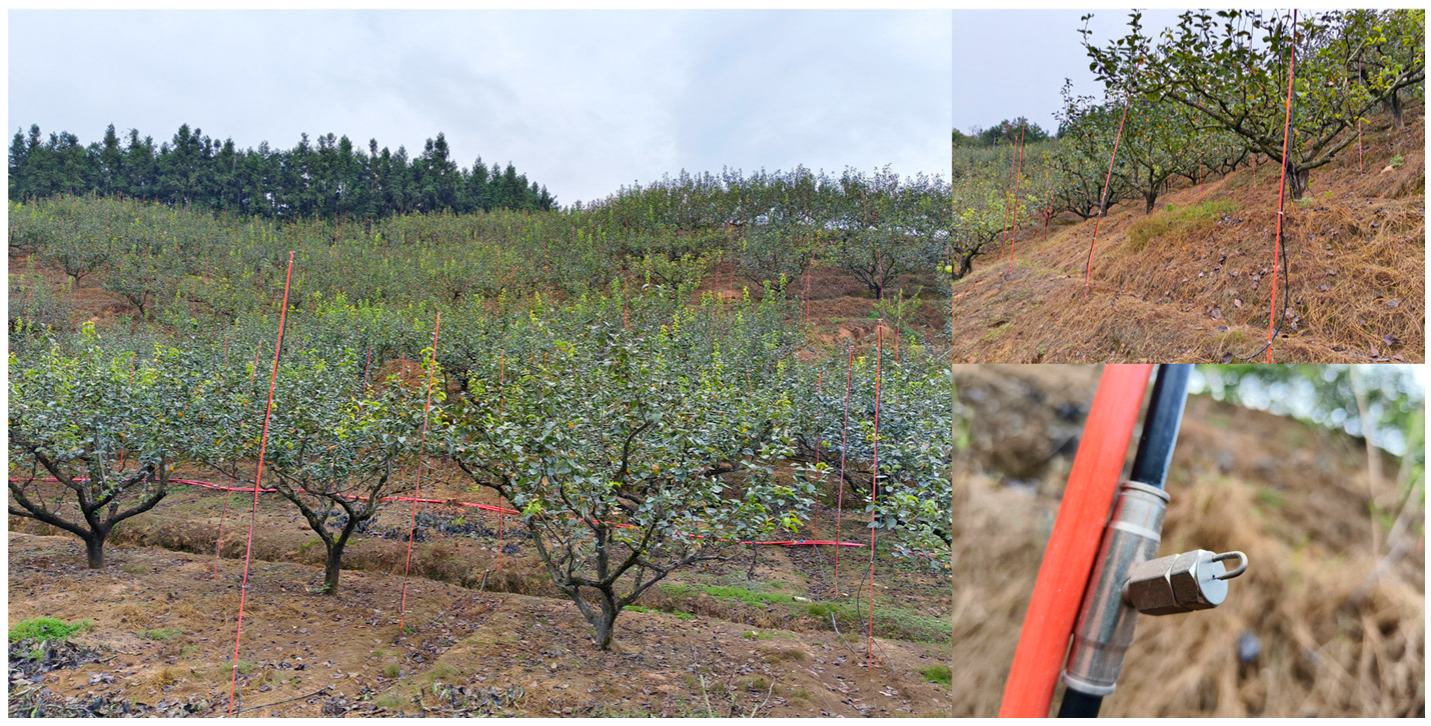
The test instruments and equipment were as follows: Optical Tensiometer (Attension Theta, Biolin Scientific Co., Ltd., Stockholm, Sweden): Used to measure the contact angle of droplets on pear leaf surfaces and Polyvinyl Chloride (PVC) cards. For the test, a 5 µL droplet of spray liquid was placed on a PVC card (Hongsu Rubber Technology Co., Ltd., Shanghai, China). High-speed Camera (FASTCAM, Photron Ltd., Tokyo, Japan): Shooting speed of 20,000 fps and shutter speed of 1/40,000 s. Laser Particle Size Analyzer (Spraytec, Malvern Co., Ltd., Kassel, Germany). Fluorescence Spectrophotometer (Model F-2700, Hitachi Ltd., Tokyo, Japan). ImageJ 1.53 Image Analysis Software. Electronic Balance (Accuracy: 0.01 mg, Mettler Toledo Instruments Co., Ltd., Greifensee, Switzerland) [15]. The field test layout of the fixed pipeline high-pressure spray system is shown in Figure 1.

2.2. Physical Properties Characterization of Spray Liquid

2.2.1. Contact Angle

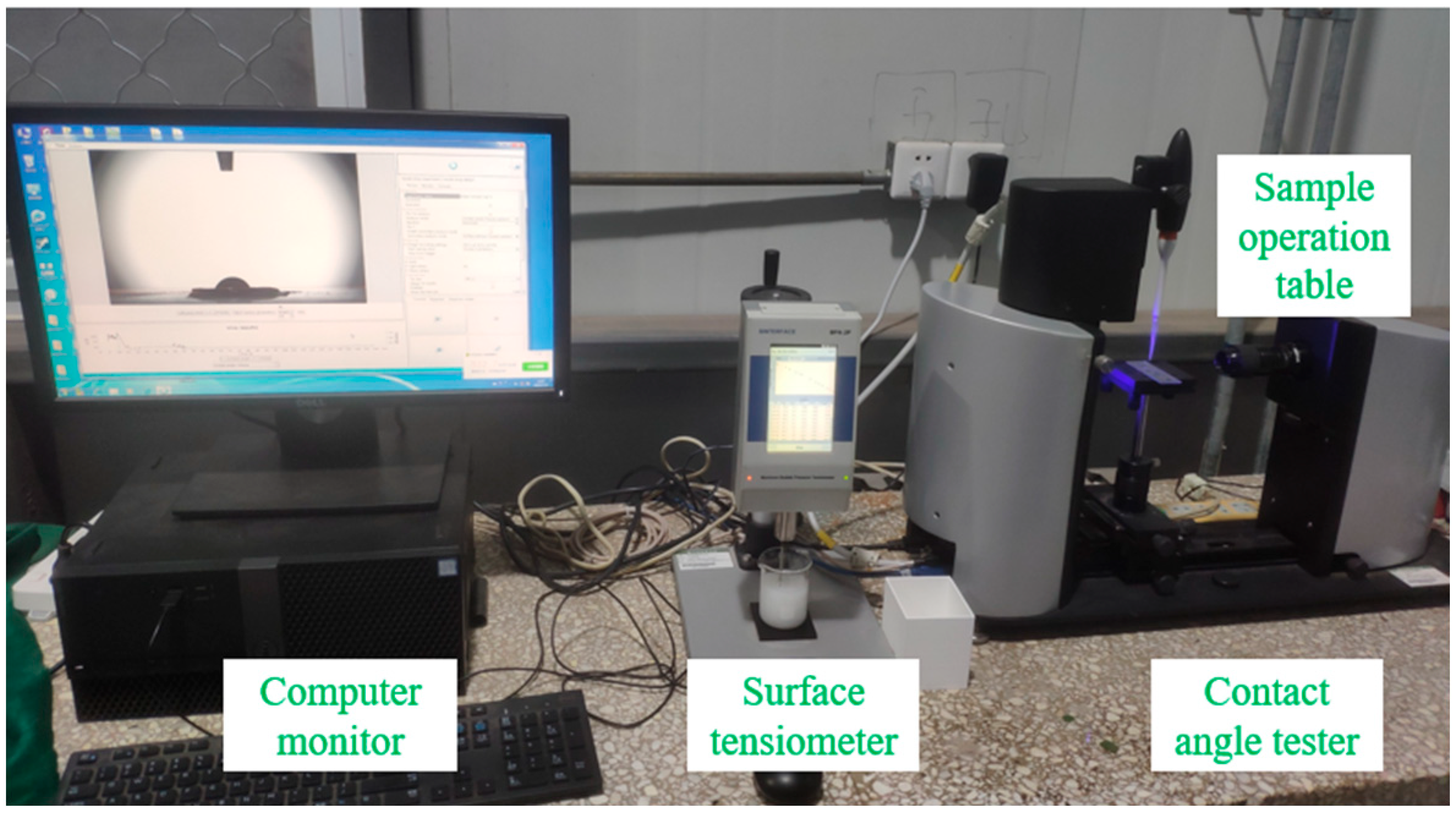
As shown in Figure 2, the contact angles of the droplet on the pear leaves were measured using an optical tensiometer (Attension Theta, Biolin Scientific, Stockholm, Sweden). The contact angle was recorded five times for each treatment [16].

2.2.2. Surface Tension

The Static Surface Tension of the droplet was also determined using the same optical tensiometer, and the surface tension was measured optically. The liquid was released from a needle, forming a drop hanging at the needle tip. Dynamic Surface Tension measurements were conducted using a tensiometer SINTERFACE BPA-2P (Sinter face Technologies GmbH, Berlin, Germany) [17].

2.3. Design and Parameters of the Fixed Pipeline Spray System

Considering the topographic characteristics of mountain orchards in southern China, this study classifies slopes into three levels—gentle slope zone (5~10°), moderate-to-steep slope zone (10~20°), and steep slope zone (20~30°)—and designs a three-level pipeline layout of “main pipe-branch pipe-standpipe” accordingly: the main pipe uses Φ90 mm polyethylene pipe laid along the main orchard road with a pressure-bearing capacity ≥30 MPa; the branch pipe uses Φ75 mm polyethylene pipe laid along contour lines with a pressure-bearing capacity ≥20 MPa; the standpipe uses Φ10 mm polyethylene pipe connecting branch pipes to nozzles, equipped with pressure-regulating valves for fine pressure adjustment. The selected ruby nozzle (Model XR9002) operates on the principle of high-pressure water flow impacting the pin at the nozzle orifice; the pin vibrates under high-pressure water flow, breaking the pesticide solution into micron-sized droplets to form a stable hollow cone atomization flow.
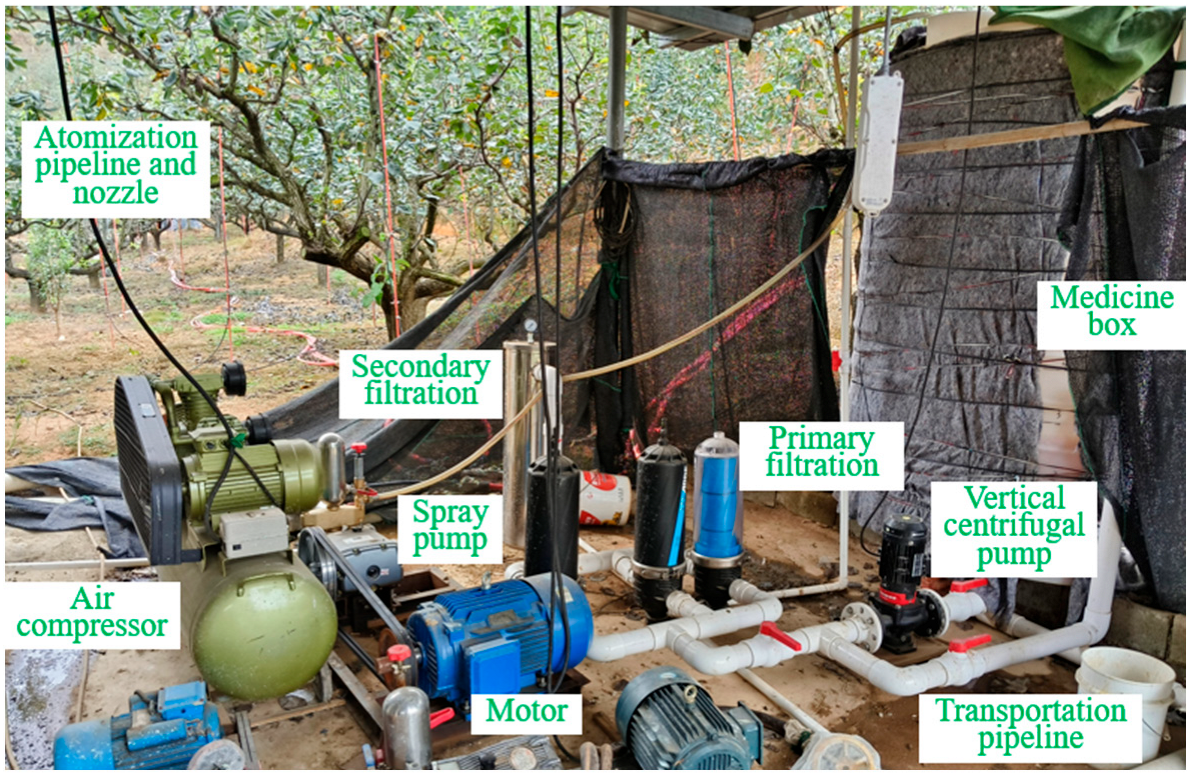
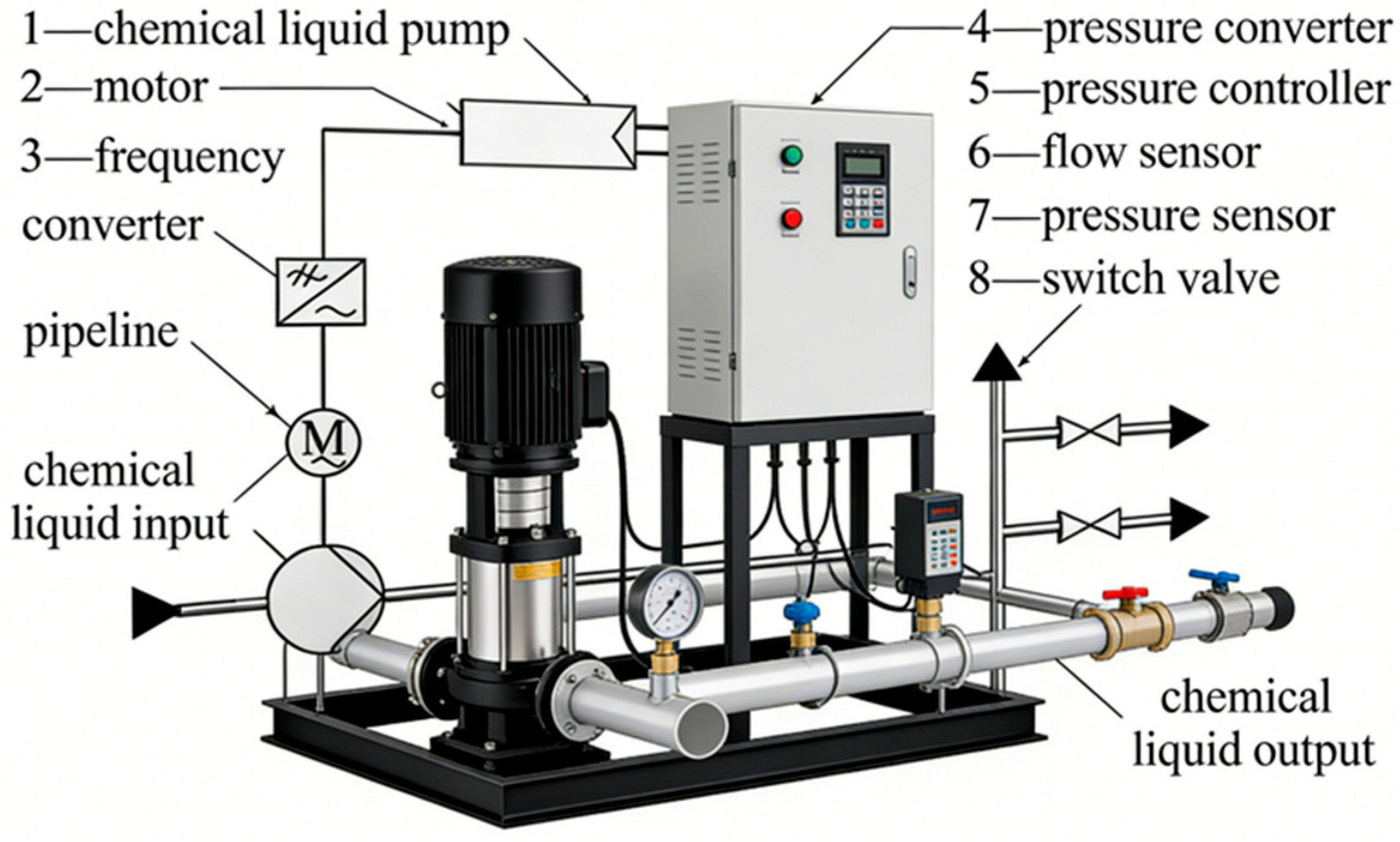
As shown in Figure 3, the terrain-adaptive fixed pipeline pesticide application system constructed in this study adopts a modular integrated design, consisting of a power and pesticide supply unit, a multi-stage filtration unit, and a delivery and atomization unit: the power and pesticide supply unit includes an air compressor, a dual-pump power combination (motor-spray pump, vertical centrifugal pump), and a pesticide tank, which can meet the dual requirements of high-pressure atomization and long-distance pesticide solution delivery [18]. The multi-stage filtration unit adopts a primary–secondary progressive structure, which effectively intercepts impurities in mountain water and pesticide solutions to prevent nozzle clogging. The delivery and atomization unit uses a terrain-adaptive zonal pipeline designed according to slope classification. By adjusting pipe diameter and applying pressure compensation, it balances pressure across different slope zones, thus reducing droplet drift on steep slopes and pesticide accumulation on gentle slopes.
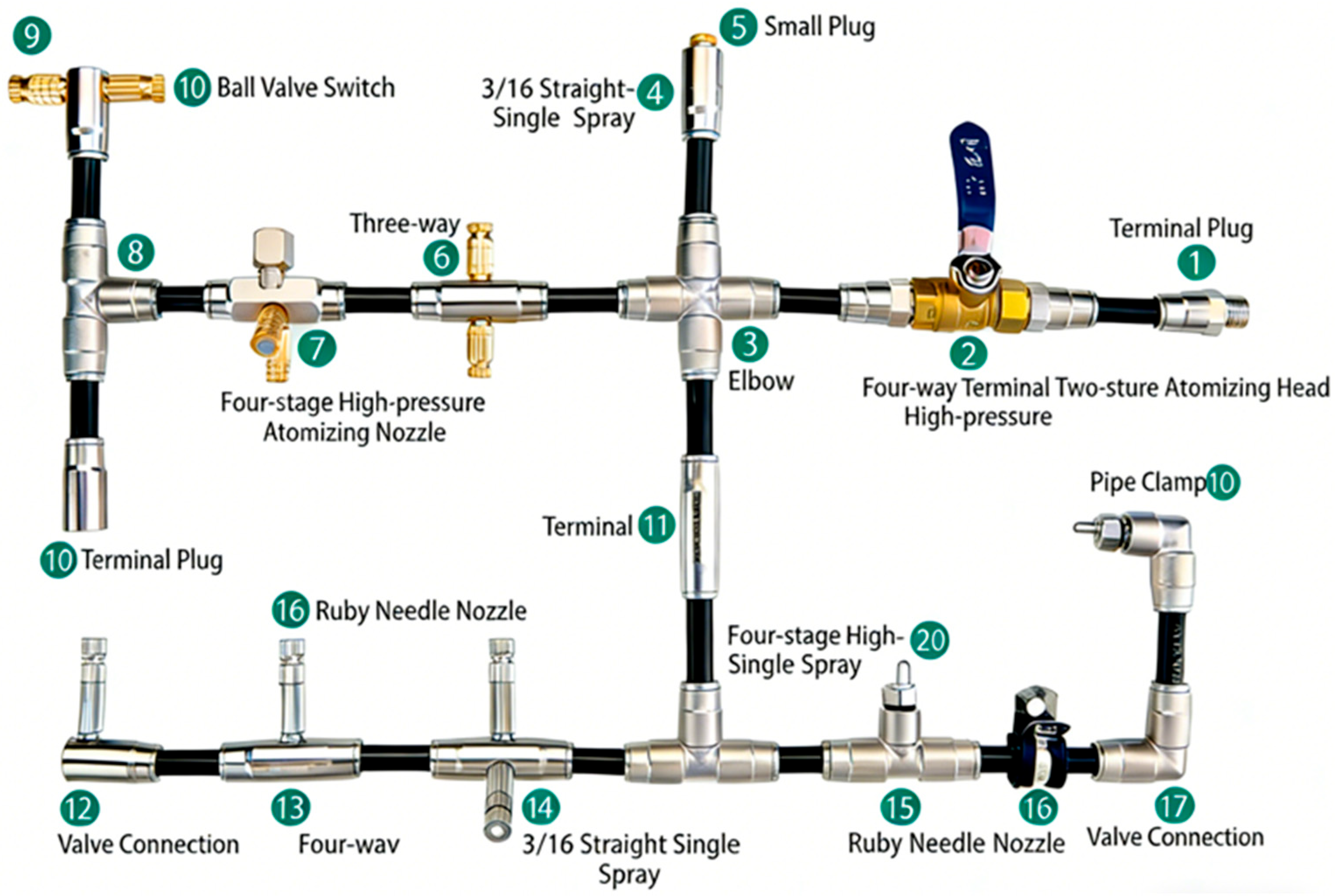
The high wear resistance and uniform atomization characteristics of the nozzle are suitable for long-term fixed pesticide application in mountain orchards. The system operates in a closed-loop process of “power drive-pesticide purification-pressure regulation-precise atomization-canopy deposition-pipeline cleaning”: when the operation starts, the vertical centrifugal pump extracts pesticide solution from the tank, which enters the delivery pipeline after two-stage filtration; the air compressor and spray pump cooperate to regulate pipeline pressure, and the terrain-adaptive pipeline dynamically compensates for pressure loss in different slope zones; high-pressure pesticide solution is atomized by the ruby nozzle and precisely sprayed onto the fruit tree canopy, ensuring uniform droplet deposition; after pesticide application, the system automatically switches to a water cleaning mode to flush the pipeline and reduce pesticide residue. This design effectively improves the uniformity of pesticide application and pesticide utilization rate in mountain orchards through terrain-adaptive layout and precise atomization control, reserving interfaces for subsequent intelligent upgrading [19]. The pipeline connection of the system is shown in Figure 4, and the specific parameters are shown in Table 1.

2.4. Spray Performance Test

2.4.1. Indoor Spray Performance Test

The droplet size of the XR90015, XR9002 and XR9003 types of nozzles were tested by the laser particle size analyzer (Malvern Instruments Limited, UK, Malven, Germany). The relevant parameters and ranges of the test platform are shown in Figure 5. Through preliminary experiments (supplemented in the Materials and Methods Section 2), it was found that when the pressure is below 8 MPa, the droplet size is larger, the atomization is uneven, and the droplet volume is insufficient, making it difficult to penetrate the pear tree canopy, resulting in insufficient sedimentation in the lower canopy layer; when the pressure is higher than 8 MPa, droplets that are too small are prone to drift, causing serious pesticide waste and increasing environmental pollution risks, while also exacerbating pipeline wear and energy consumption. A pressure of 8 MPa is in the middle of this range, which can balance atomization effect and pipeline pressure stability, and is in line with practical application scenarios in agricultural production. Testing involved three types of nozzles: XR90015, XR9002, and XR9003 at pressures of 8 MPa, replicating the conditions of subsequent field trials. Parameters including the DV0.1, DV0.5, and DV0.9 relative span (RS), and spray volume fractions with droplets finer than 100, 150, and 200 µm (V100, V150, and V200) were recorded for analysis [20]. The high-speed imaging system was composed of a high-speed camera (FASTCAM, Photron Ltd., Tokyo, Japan), which was used to record spray atomizing (Figure 6), with a shooting speed of 20,000 fps and shutter speed of 1/40,000 s.
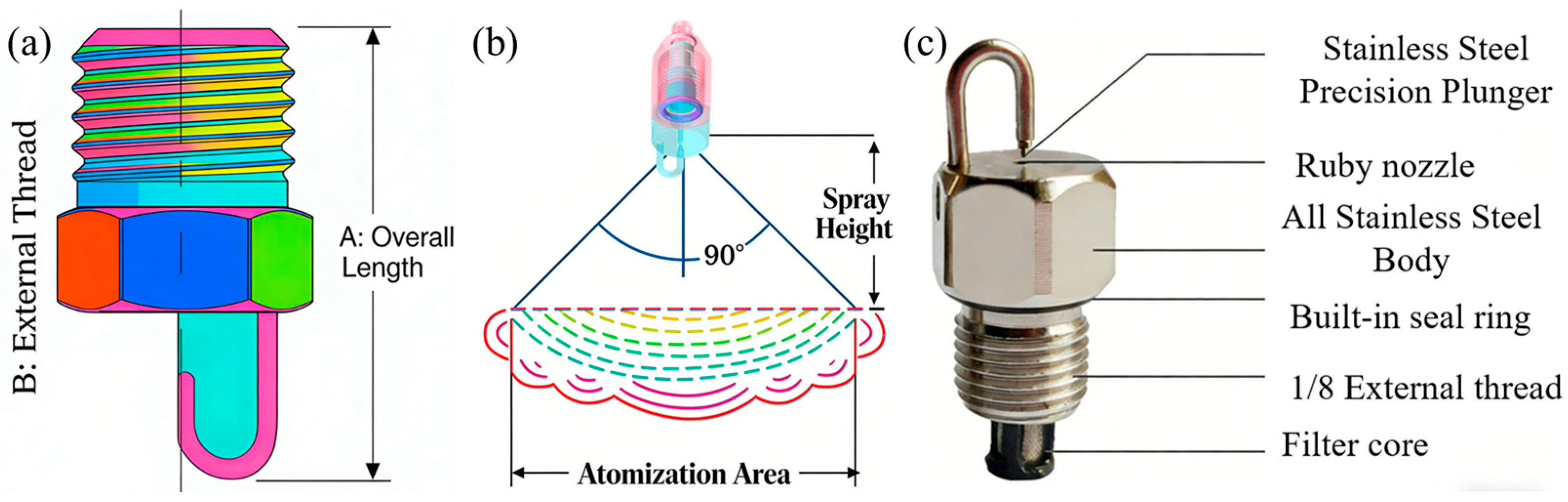
The nozzle atomization mechanism is the core foundation for precision pesticide application. Currently, the atomization mechanism of ruby nozzles under pesticide application in mountain orchards remains largely unexplored, which severely restricts the scientific selection of nozzles and optimization of application parameters [21]. As shown in Figure 6, the ruby nozzle used in this study is equipped with an ultra-wear-resistant ruby orifice with a diameter of 0.15 mm–0.3 mm. Its atomization mechanism is as follows: the fine liquid column ejected from the orifice impacts the target pin directly opposite the orifice at high speed, and is shattered into extremely fine droplets after impact. This nozzle has the advantages of being not easily blocked, high wear resistance, and uniform spraying, which can effectively improve the quality of pesticide application and operational efficiency [22]. Through the free combination of nozzles, the application rate and atomization effect can be flexibly adjusted, and it can even replace some expensive nozzles that rely on compressed air or water vapor [23]. To quantitatively evaluate its atomization characteristics, this study used a laser particle size analyzer to measure droplet size (each treatment was repeated 3 times), and took Sauter Mean Diameter (SMD) and atomization cone angle as core evaluation indicators: SMD was directly measured by the laser particle size analyzer; the atomization cone angle was calculated by ImageJ software after image acquisition with a high-speed camera; droplet velocity was calculated based on the displacement of droplets in adjacent frames.

2.4.2. Field Trial

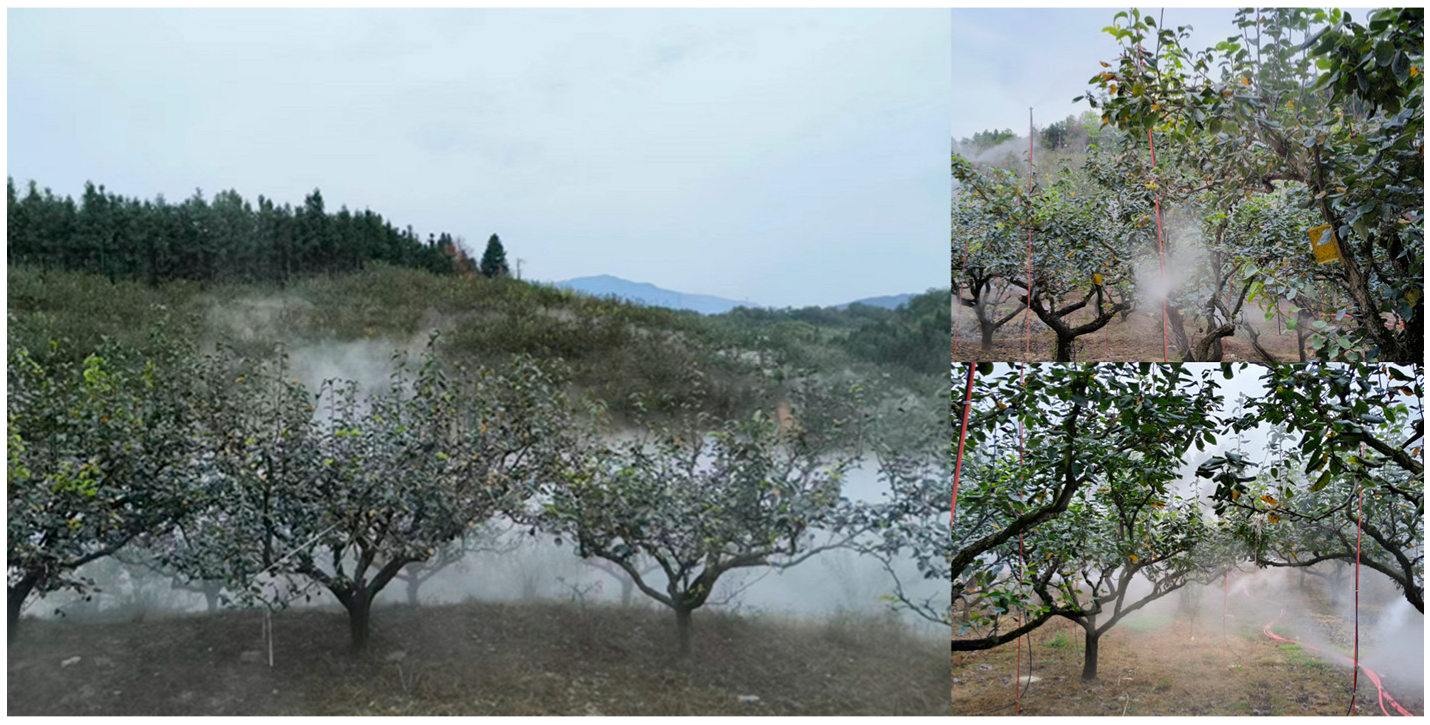
Aiming at the prominent problems of difficult pesticide application, low pesticide adhesion rate, and severe spray drift in orchards located in hilly and mountainous areas of southern China, this study conducted a performance verification experiment of fixed pipeline spray application at a pear orchard demonstration base in Jianning County, Fujian Province in September 2024. The average values recorded were as follows: air temperature 26 °C, relative humidity 65%, wind speed 0.8 m/s, and the main wind direction was southeast. Taking Cuiguan pear as the test crop, the experiment focused on quantitatively determining the deposition and distribution characteristics of droplets on the adaxial and abaxial surfaces of leaves. Healthy green crowned pear trees with consistent growth potential (aged 10–12 years, tree height 3.5–4.0 m, crown width 3.0–3.5 m) were selected as experimental materials to avoid interference from differences in tree potential on the experimental results. The five-point sampling method was adopted to select five representative nozzles in the experimental plot, and self-sealing bags were used to collect the spray volume from each nozzle per unit time for calibrating the application flow rate [24]; all experimental data were standardized and processed in accordance with the International Organization for Standardization (ISO) 24253 standard [25]. Before the pesticide application experiment, meteorological conditions were monitored in real time. When the wind speed and direction became stable and met the standard for orchard pesticide application operations, the experimental spray solution was prepared by mixing ABF fluorescent tracer with a concentration of 1 g/L and clean water, and the pesticide application operation was carried out through the fixed pipeline spray system (Figure 7).
This experiment not only verified the operation efficiency of the designed fixed pipeline spray system in hilly and mountainous orchards, but also provided an innovative technical path and solution for pesticide application in orchards under such topographic conditions [26]. During the experiment, the overall average temperature was 20 °C, the average wind speed was 1 m/s, the wind direction was southeast, and the relative humidity was 60. Through the supporting collection device and scientific evaluation index system, the deposition characteristics of the fixed pipeline spray system in the fruit tree canopy in mountainous orchards can be accurately evaluated. The research results are intended to provide reliable data support and theoretical reference for the standardization of spray deposition test methods for pesticide application operations in mountainous fruit orchards and the optimal selection of field application parameters. The fruit tree canopies are uniformly covered with droplets, and the pipeline system is in the spraying operation state, which is highly consistent with the design concept of the terrain-adaptive fixed pipeline pesticide application system proposed in this study.

2.5. Experimental Design of Fixed Pipeline System on Mountain Orchards

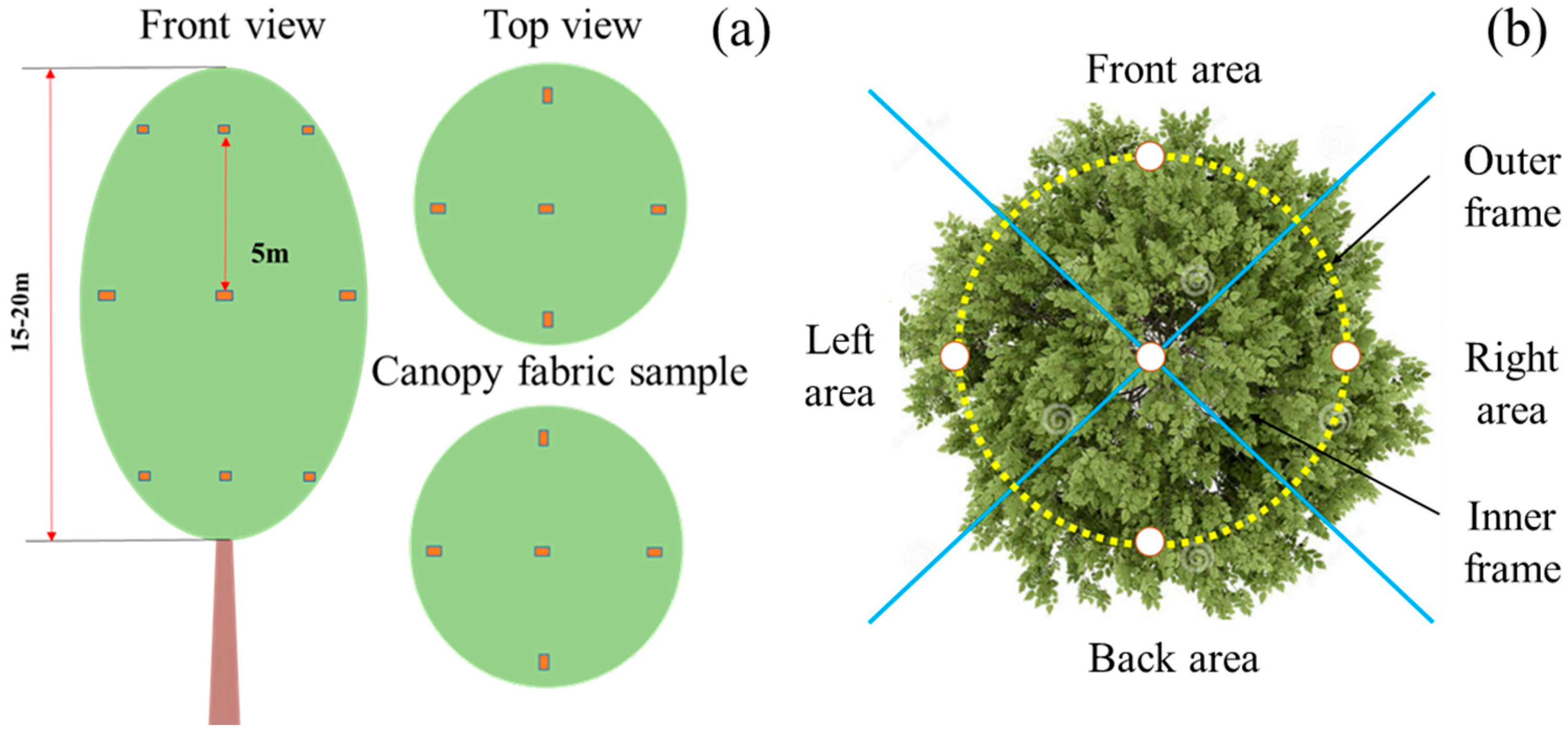
To obtain the droplet deposition distribution law in the operation area of the high-pressure atomization system, the experimental slope was divided into three zones (high, medium, and low altitude) according to elevation in this study, and 3 fruit trees were randomly selected in each zone for deploying PVC card droplet collection devices [27]. PVC cards with a specification of 80 × 50 mm were used as droplet deposition targets, and the device layout is shown in Figure 8. For each test group, 9 fruit trees were selected from the upwind to downwind edge; 15 sampling points were set on each tree, and each point was equipped with PVC cards capable of collecting droplets on both sides of the leaves simultaneously, with a total of 270 PVC cards deployed in the experiment. During the layout process, it was necessary to ensure that the PVC cards were parallel to the natural growth direction of the fruit tree leaves.
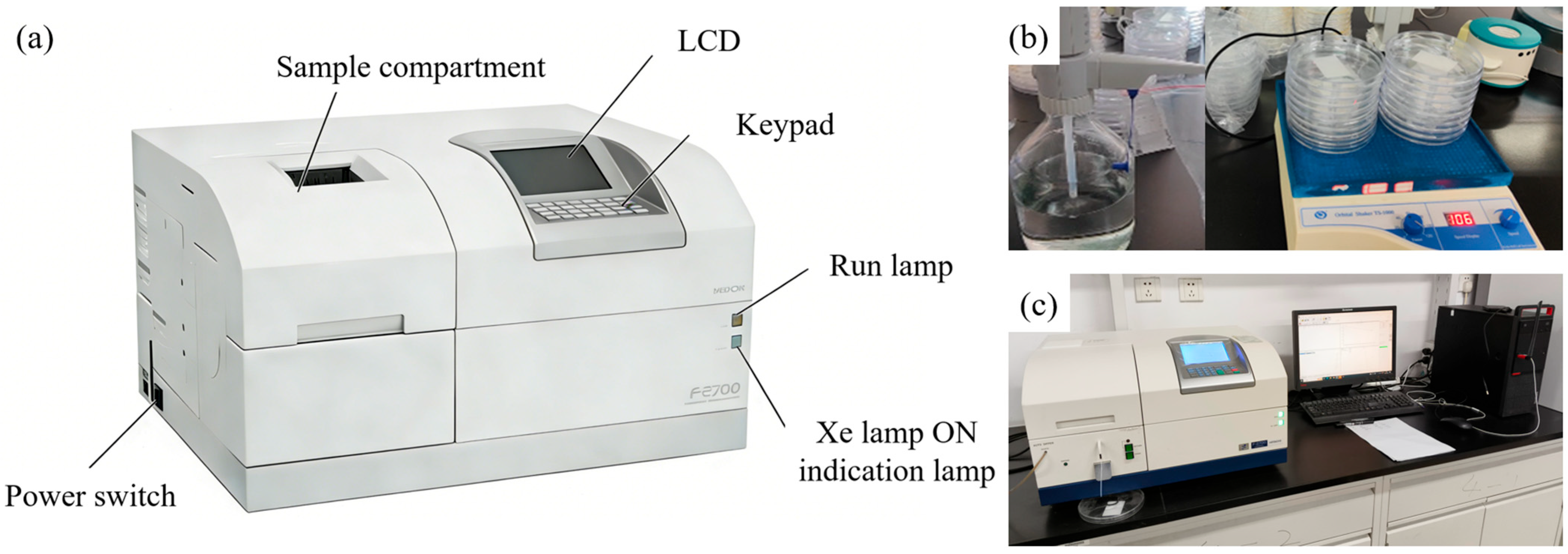
In the deposition detection section, Acid Brilliant Flavine (ABF) fluorescent agent was widely used as a tracer for pesticide spray deposition detection due to its excellent water solubility and stable fluorescence intensity. Combining fluorescence tracing technology with the PVC card collection method enables accurate and comprehensive evaluation of droplet deposition on leaf surfaces. ABF fluorescent tracer with a concentration of 0.1 g/L was prepared for this experiment. Prior to spraying, 80× 50 mm PVC cards were fixed in the fruit tree canopies using double-headed clamps. Each fruit tree was divided into upper, middle, and lower canopy layers according to height, with 5 sampling points arranged in each layer, and 3 fruit trees with uniform growth were selected for sample deployment. After the experiment, all PVC cards were classified and collected in No. 4 self-sealing bags and brought back to the laboratory. In total, 30 mL of deionized water was added to each bag, and the fluorescent tracer on the surface of PVC cards was eluted by oscillation. The fluorescence intensity of the eluent was quantitatively determined using a Hitachi F-2700 fluorescence spectrophotometer. After the fluorescence intensity detection, the PVC cards were taken out, and the actual area of the cards was obtained using a scanner.

2.6. Treatment of Test Results

2.6.1. Evaluation Metrics

As shown in Figure 9, all experimental data were standardized in strict accordance with the International Organization for Standardization (ISO) 24253 standard [25]. After treatment, the atomization performance was evaluated by the droplet size distribution. The deposition could be calculated using the following Equation (1):
β dep   =   ρ smpl ρ blk × F cal × V dii ρ spray × A col
where βdep is the spray deposition, μL cm−2; ρsmpl is the tracer reading; ρblk is the tracer reading of the blanks (dilution water); Fcal is the calibration factor; Vdii is the volume of dilution liquid for the tracer from the collector, L; ρspray is the spray concentration, or amount of tracer solute in the spray liquid sampled at the nozzle, gL−1; Acol is the projected area of the collector for capturing spray deposition, cm2.

2.6.2. Statistical Analyses

The data were analyzed using Origin 2024 (OriginLab Corporation, Northampton, MA, USA). All experimental data were analyzed using SPSS 26.0 software (IBM Corp., Armonk, NY, USA). In all instances, mean values for spray deposition, droplet size, droplet density, spray coverage, and spray performance were compared using Duncan’s post hoc test at a significance level of 0.05.

3. Results and Discussion

3.1. Physical Properties

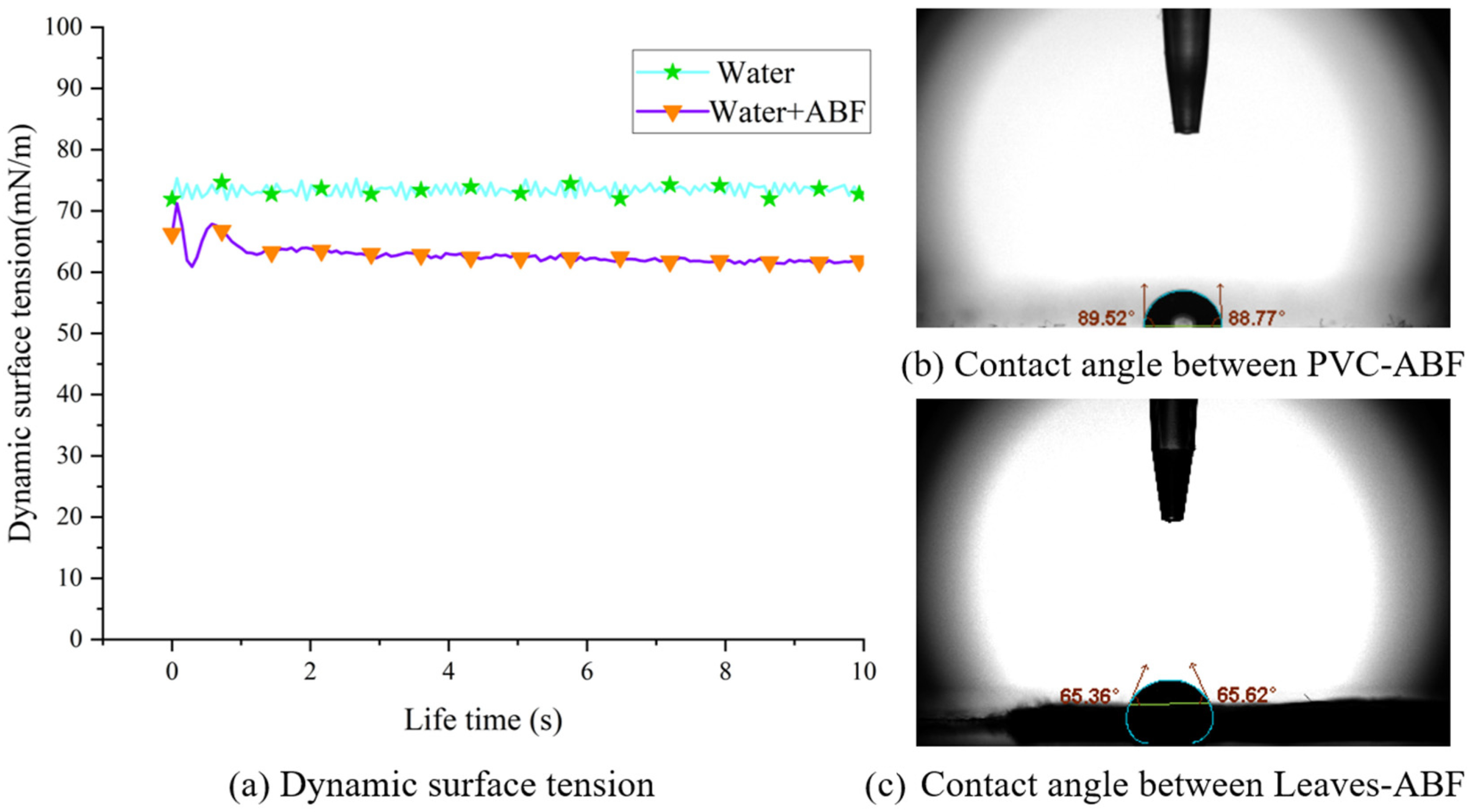
The dynamic surface tension of the ABF fluorescent spray solution is shown in Figure 10a. The average surface tension values of pure water and the additive solution were measured to be 72.72 mN/m and 61.81 mN/m, respectively. It was found that prolonging the wetting time of the ABF fluorescent agent aqueous solution on the target surface could significantly improve the spreading performance and strength of droplets on pear leaf surfaces. The measurement results of droplet contact angles are presented in Figure 10b,c. The average contact angle of the ABF fluorescent spray solution on the PVC card surface was 89.15°, while that on the pear leaf surface decreased to 65.49°. The above data fully indicate that the addition of the ABF fluorescent tracer can effectively reduce the contact angle of the spray solution on pear leaf surfaces, enhancing the wetting and adhesion effects of the pesticide solution on the target surface [28].

3.2. Droplet Size Distribution of the Fixed Pipeline Spray System

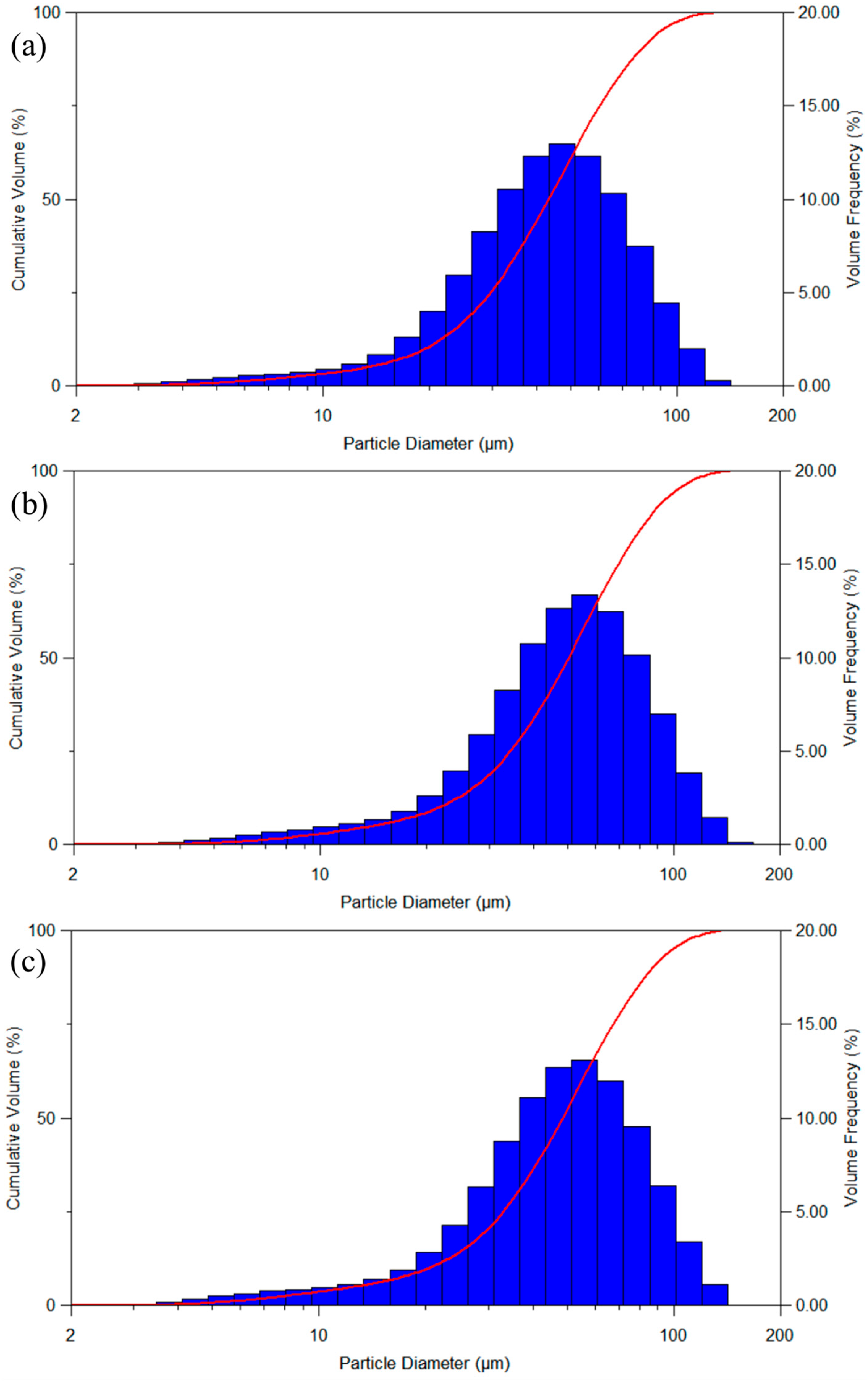
To clarify the differences in atomization performance among different types of ruby nozzles in the fixed pipeline spray system and provide data support for nozzle selection in mountain orchard pesticide application, this study conducted systematic tests on the atomization characteristics of three types of ruby nozzles (Models 015, 02, and 03) based on an indoor standard spray test platform under a constant pressure of 8 MPa. The focus was on analyzing the droplet size spectrum distribution law of the spray solution, and the test results are shown in Table 2 and Figure 11. As indicated by the results, under the same constant pressure condition, the droplet size distribution of different nozzle models exhibited significant differences: the Model 015 nozzle mainly produced small-sized droplets, with its Sauter Mean Diameter (SMD) significantly lower than that of Models 02 and 03, achieving a finer atomization effect; in contrast, Models 02 and 03 nozzles primarily generated medium-sized droplets, with minimal differences in average particle size (including SMD and Volume Mean Diameter, VMD). Notably, the Relative Span (RS) of droplet distribution for all three nozzle models remained at a low level, with RS values of 1.308, 1.335, and 1.377 for Models 015, 02, and 03, respectively. Moreover, the droplet size distribution of Models 02 and 03 nozzles was more concentrated, effectively avoiding droplet drift or uneven deposition caused by excessive particle size dispersion [29].
The Relative Span (RS) of droplet distribution is a core indicator for evaluating droplet size uniformity—the smaller the RS value, the more concentrated the droplet size distribution and the better the atomization stability. In this study, the RS values of all three nozzle models were within a low range, indicating that the selected ruby nozzles all possessed excellent atomization uniformity. This is closely related to the precision structural design of their ultra-wear-resistant ruby orifices, which can effectively mitigate the attenuation of atomization performance caused by nozzle wear [30]. In addition, although the small-sized droplets generated by the Model 015 nozzle can theoretically improve canopy penetration capacity, in the actual field conditions of mountain orchards, small droplets are more significantly affected by wind speed, resulting in a much higher droplet drift risk than medium-sized droplets, which easily leads to pesticide loss and environmental pollution. A further comparison of key parameters between Models 02 and 03 nozzles revealed no significant difference in average particle size (SMD/VMD) but a distinct difference in spray flow rate. Comprehensive analysis based on the pesticide application requirements of mountain orchards shows that a higher spray flow rate will lead to excessive pesticide application per unit area, causing not only pesticide waste but also increased environmental pressure. In contrast, the Model 02 nozzle, while ensuring moderate droplet size and good atomization uniformity, has a more reasonable spray flow rate. Meanwhile, its orifice size design is less prone to clogging by fine impurities in the pesticide solution, adapting to the stability requirements of long-term fixed pesticide application in mountain orchards. It can improve the droplet canopy deposition efficiency while reducing pesticide usage, thus being more suitable as the preferred nozzle model for the fixed pipeline spray system in southern mountain orchards.

3.3. Analysis of Spray Atomization Mechanism

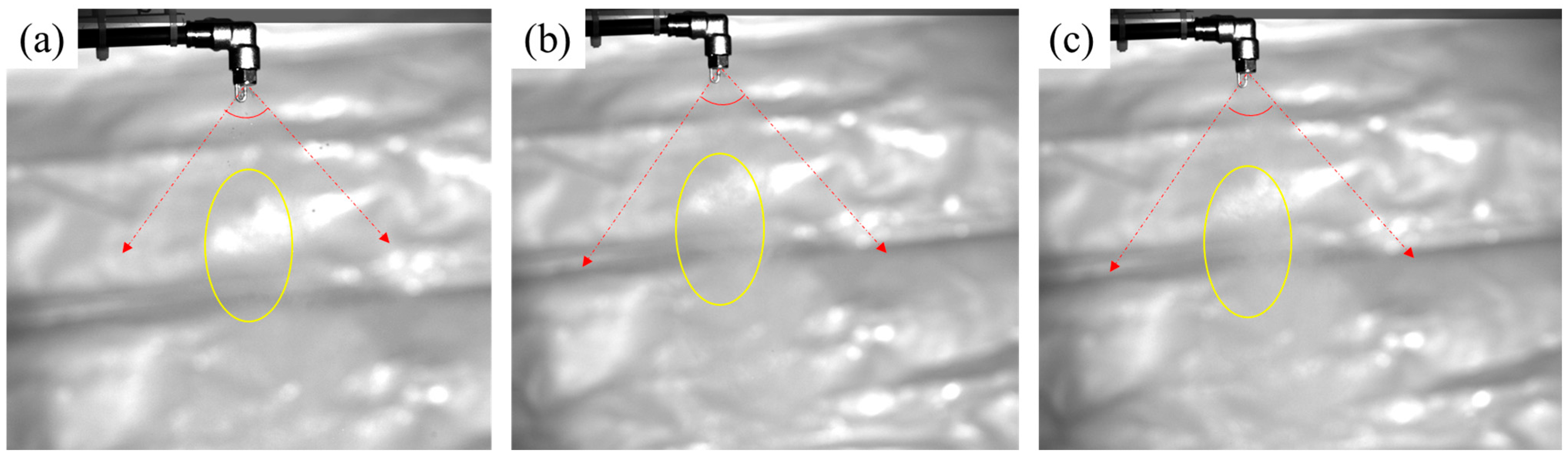
To systematically evaluate the atomization characteristics of different types of ruby nozzles and screen out the optimal nozzle for the fixed pipeline spray system in mountain orchards, this study established an indoor spray performance test platform equipped with a high-speed camera, and conducted atomization performance tests on three types of ruby nozzles [31]. Based on the atomization effect obtained from the tests, the nozzle with the best performance was initially selected for subsequent field experiments to simplify the test process and reduce the test burden. High-speed imaging results showed that all three types of nozzles exhibited a typical hollow cone atomization pattern, with regular distribution of the atomization flow field, uniform droplet dispersion, and no obvious droplet agglomeration or local liquid flow concentration. This indicates that the selected ruby nozzles all possess excellent basic atomization performance, which is closely related to the precision machining process of their ultra-wear-resistant ruby orifices and the optimized structural design based on fluid mechanics. Further observation revealed that the atomization process of the ruby nozzle is significantly phased, which can be clearly divided into three consecutive stages (Figure 12): (1) Liquid film formation stage: After the pesticide solution flows out of the nozzle orifice, it spreads rapidly under pressure to form a stable annular liquid film. (2) Filamentation and breaking stage: After the stable liquid film detaches from the nozzle, it stretches and thins under the combined action of air resistance and surface tension, and finally breaks into slender liquid filaments. (3) Droplet detachment stage: The liquid filaments are further broken under air disturbance and their own mechanical properties, and finally detach to form micron-sized droplets, constructing a stable hollow cone atomization field.
Although all three nozzles showed good basic atomization performance, there were significant differences in the atomization effect of different types of nozzles, with each suitable for different scenarios: the droplets generated by the XR90015 nozzle were too small and scattered, and the fine components were prone to diffusion and drift under the influence of air flow [8]. Meanwhile, its small orifice size made it easy to be clogged by fine impurities in the pesticide solution, making it unsuitable for the complex and harsh outdoor application environment of mountain orchards. The atomization range of the XR9002 and XR9003 nozzles was relatively concentrated, with wider droplet coverage, better overall spray stability and uniformity, and more prominent comprehensive performance. Under a working pressure of 8 MPa, both nozzles could form an atomization flow with a stable angle, ensuring that the droplets penetrate the fruit tree canopy and achieve uniform coverage of the upper and lower layers. This phenomenon confirms the high compatibility between the three-stage atomization mechanism of the ruby nozzle and the pesticide application requirements of mountain orchards, providing solid indoor test support for the final determination of the nozzle model and the optimization of application parameters in subsequent field experiments.

3.4. Application Results of Pear in Mountain Orchards

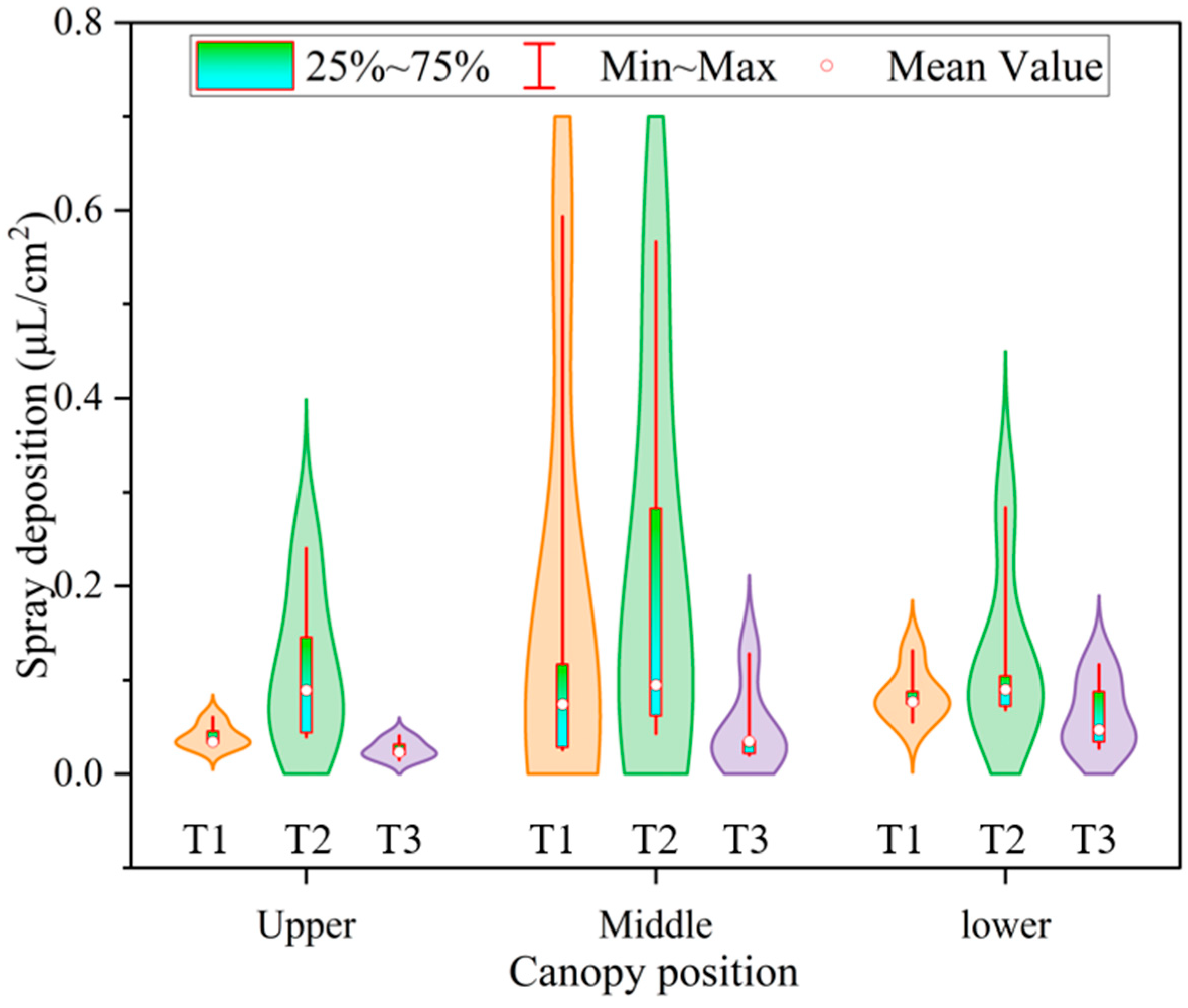
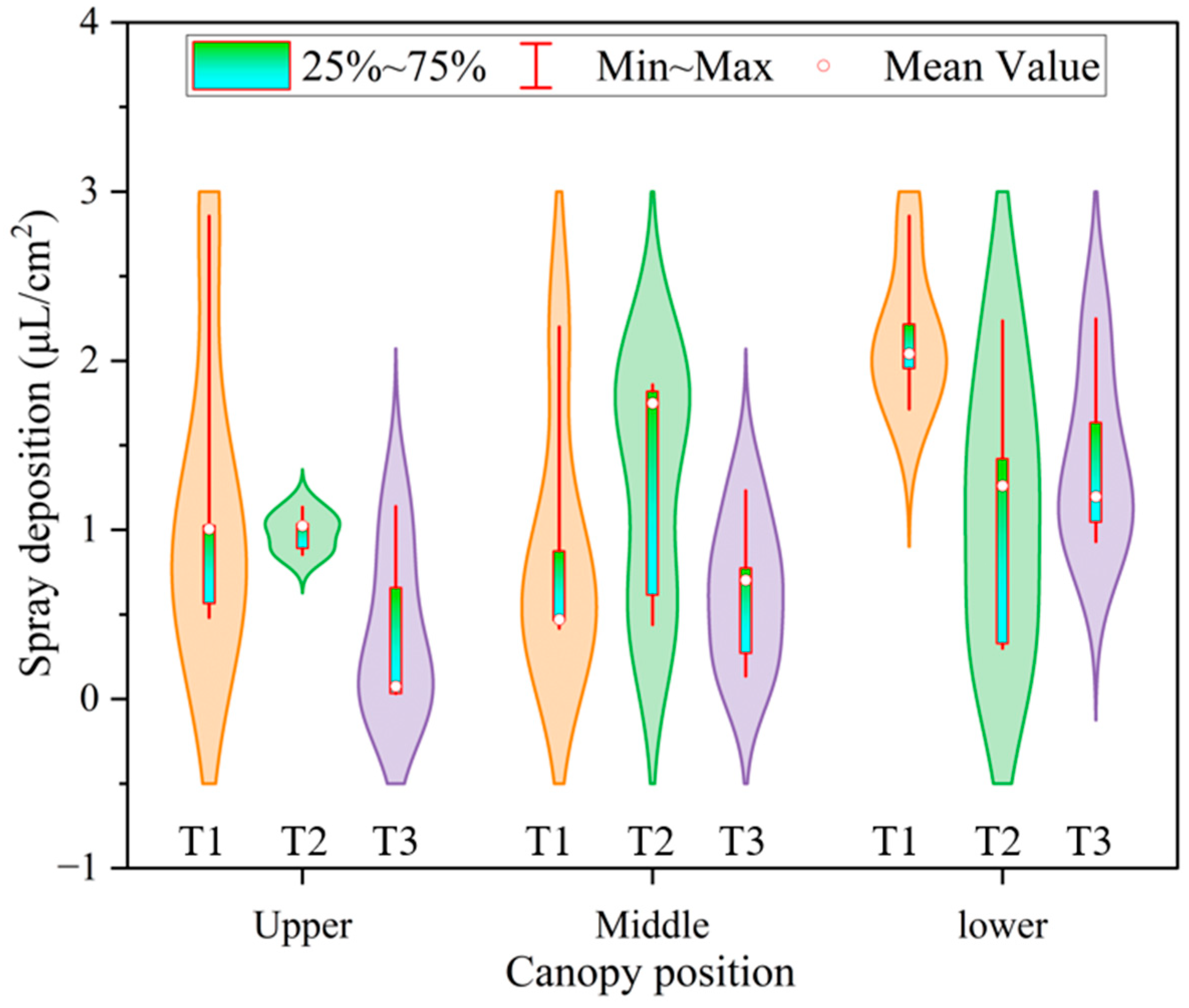
Field pesticide application tests were conducted at a pear orchard demonstration base in Jianning County, Fujian Province, to systematically verify the droplet penetration capacity and canopy deposition characteristics of the terrain-adaptive fixed pipeline spray system. The XR9002 nozzle was adopted in the tests, with a liquid flow rate of 0.12 L/min per nozzle; clean water was used as the medium for indoor tests, while a 0.1 g/L ABF fluorescent tracer solution was employed for field tests to ensure the accuracy of droplet deposition measurement and data reliability. Test results indicated that the droplets sprayed by the system could effectively penetrate the canopy of “Cuiguan” pear trees and uniformly adhere to the external PVC card targets, with no obvious spray blind spots, demonstrating excellent overall penetration performance. From the perspective of vertical canopy distribution, the droplet deposition amounts in the upper, middle, and lower canopies were all concentrated in the range of 1~2 μL/cm2, indicating that the system could achieve balanced deposition across the entire canopy, with particularly prominent penetration effects on the middle and lower canopies. This advantage is closely related to the design of fixed pipelines laid along contour lines and nozzle angles precisely adapted to the canopy morphology, which effectively addresses the technical drawback of insufficient coverage of the lower canopy by traditional spray equipment. Further quantitative analysis of droplet deposition on the adaxial surface of pear leaves (Figure 13) showed that the deposition amount followed the order of lower canopy > middle canopy > upper canopy, with specific values of 1.56 μL/cm2, 0.94 μL/cm2, and 0.85 μL/cm2, respectively. The significantly higher deposition in the lower canopy compared to the middle and upper canopies is attributed to two aspects: on the one hand, the dense branches and leaves in the lower canopy strongly shield air flow, reducing droplet disturbance by air and facilitating effective adhesion; on the other hand, the relatively high wind speed in the uphill area increases droplet drift loss in the upper canopy, thereby decreasing the deposition amount. This phenomenon is consistent with the inherent characteristics of mountain orchards, such as complex terrain and increasing wind speed along the altitude gradient.
There were significant differences in droplet deposition characteristics between the abaxial and adaxial leaf surfaces, with the overall deposition on the abaxial surface being lower than that on the adaxial surface (Figure 14). Among all vertical positions in the canopy, the middle and lower canopies still exhibited the best deposition performance. Specifically, the droplet deposition on the abaxial surface of pear leaves followed the order of middle canopy > lower canopy > upper canopy, with corresponding values of 0.14 μL/cm2, 0.09 μL/cm2, and 0.06 μL/cm2, accounting for only 8.9%~14.9% of the deposition on the adaxial surface at the same position. Inadequate droplet coverage on these critical target areas may lead to incomplete pest control, increased pesticide resistance, and recurrent infestations. In contrast, the terrain-adaptive fixed pipeline system proposed in this study delivers spray droplets close to the canopy from multiple directions, greatly improving deposition uniformity and coverage on abaxial leaf surfaces. This advantage ensures effective control of hidden pests and provides a more reliable and efficient technical approach for pest management in dense mountain orchards. In-depth analysis combined with the test scenario and system design revealed that the low deposition on the abaxial surface, especially the poorest performance in the upper canopy, mainly stems from two factors: first, the insufficient extension of nozzle installation positions makes it difficult for the spray direction to fully cover the abaxial leaf surface, resulting in most droplets preferentially adhering to the adaxial surface after penetrating the canopy, with only passive deposition on the abaxial surface; second, the sparse branches and leaves in the upper canopy weakly block air flow, leading to significantly higher wind speed than in the middle and lower canopies, which causes massive droplet drift loss before reaching the abaxial surface and further reduces deposition efficiency. The fixed pipeline spray system adopted in this test not only significantly improved the pesticide application efficiency in hilly and mountainous orchards, but also greatly reduced labor intensity and pesticide waste, providing an innovative technical path and solution of “terrain adaptation + precision atomization” for pesticide application in mountainous orchards. Meanwhile, the canopy droplet deposition laws revealed by the test point out a clear direction for subsequent system optimization, such as adjusting nozzle installation angles and extending nozzle operation range to improve abaxial surface deposition, and optimizing pipeline pressure compensation parameters for uphill areas to reduce droplet drift, thereby further improving the mountain adaptation performance of the system.

4. Conclusions

Aiming at the problems of uneven pesticide application, low pesticide utilization rate, and environmental pollution caused by fragmented and complex terrain with large slope variation (5°~30°) in mountain orchards of southern China, this study focused on the design, optimization, verification, and mechanism explanation of a terrain-adaptive fixed pipeline pesticide application system. Through a combination of laboratory and field tests, the system performance and atomization laws were clarified, and a precision pesticide application technology system suitable for mountain orchards was constructed. The main conclusions are as follows:
(1) A slope-classified terrain-adaptive fixed pipeline spraying system was developed using the XR9002 ruby nozzle. It adapts to 5–30° mountain slopes, operates stably with low labor input and strong anti-clogging performance. At 8 MPa, it produces a stable hollow-cone spray (RS = 1.335) and improves efficiency by 3–5 times compared with manual application. (2) The three-stage atomization mechanism of ruby nozzles was revealed: liquid film formation, filamentation and breakup, and droplet detachment. The XR9002 nozzle performs optimally with uniform atomization and no agglomeration, avoiding the drawbacks of XR90015 and XR9003. (3) Field tests verified satisfactory canopy penetration and uniform deposition (1–2 μL/cm2). Deposition on the adaxial leaf surface decreased with canopy height, while abaxial deposition was much lower (8.9–14.9%). These patterns provide a basis for system optimization. (4) A closed-loop technical system integrating an atomization mechanism, pipeline layout, parameter optimization, and deposition detection was established. High-speed imaging and fluorescence tracing enable accurate characterization of atomization and deposition, supporting the improvement of upper-canopy and abaxial deposition efficiency.
This study provides theoretical and technical support for green precision spraying in southern mountain orchards and helps overcome key technical bottlenecks. It is important for promoting the intelligent and sustainable development of the fruit industry. Future work will focus on nozzle attitude optimization, intelligent control, and adaptive systems based on real-time monitoring to further improve deposition efficiency and stability, and extend applications to citrus, litchi, and other orchards.

Author Contributions

Conceptualization, X.H.; methodology, X.H. and Z.Y.; analysis, Z.Y.; investigation, Z.Y.; resources, X.H.; data curation, Z.Y.; writing—original draft preparation, Z.Y.; writing—review and editing, X.H. and Z.Y.; visualization, Z.Y.; supervision, Z.Y.; project administration, X.H.; funding acquisition, X.H. All authors have read and agreed to the published version of the manuscript.

Funding

The authors would like to thank all other staff of CCAT and CAUS, China Agricultural University, for their great contributions to this work. We deeply thank all the other staff of the Institute of Horticulture, Henan Academy of Agricultural Sciences for coordination work. Many thanks to Shandong Baili Machinery Co., Ltd. for their contribution to the work. This study was funded by the earmarked fund for China Agriculture Research System (CARS-28), the Project 31761133019 supported by NSFC and the 2115 Talent Development Program of China Agricultural University.

Data Availability Statement

The original contributions presented in the study are included in the article; further inquiries can be directed to the corresponding author.

Acknowledgments

The authors would like to thank all other staff of CCAT Fujian Experimental Station of National Pear Industry Technology System, and CAUS, China Agricultural University for their great contributions to this work.

Conflicts of Interest

The authors declare no conflicts of interest.

References

  1. Yu, Z.; Geng, M.; Zhao, K.; Meng, X.; Zhang, H.; He, X. Design and Experimental Operation of a Swing-Arm Orchard Sprayer. Agronomy 2025, 15, 1706. [Google Scholar] [CrossRef]
  2. Asaei, H.; Jafari, A.; Loghavi, M. Development and evaluation of a targeted orchard sprayer using machine vision technology. J. Agric. Mach. 2016, 6, 362–375. [Google Scholar]
  3. Kang, C.; He, L.; Zhu, H. Assessment of spray patterns and efficiency of an unmanned sprayer used in planar growing systems. Precis. Agric. 2024, 25, 2271–2291. [Google Scholar] [CrossRef]
  4. Grella, M.; Gioelli, F.; Marucco, P.; Zwertvaegher, I.; Mozzanini, E.; Mylonas, N.; Nuyttens, D.; Balsari, P. Field assessment of a pulse width modulation (PWM) spray system applying different spray volumes: Duty cycle and forward speed effects on vines spray coverage. Precis. Agric. 2021, 23, 219–252. [Google Scholar] [CrossRef]
  5. Wei, Z.; Xue, X.; Salcedo, R.; Zhang, Z.; Gil, E.; Sun, Y.; Li, Q.; Shen, J.; He, Q.; Dou, Q.; et al. Key Technologies for an Orchard Variable-Rate Sprayer: Current Status and Future Prospects. Agronomy 2022, 13, 59. [Google Scholar] [CrossRef]
  6. Nasir, F.E.; Tufail, M.; Haris, M.; Iqbal, J.; Khan, S.; Khan, M.T. Precision agricultural robotic sprayer with real-time Tobacco recognition and spraying system based on deep learning. PLoS ONE 2023, 18, e0283801. [Google Scholar] [CrossRef]
  7. Mozzanini, E.; Grella, M.; Marucco, P.; Hoheisel, G.-A.; Biglia, A.; Balsari, P.; Gioelli, F. Hydraulic-based fixed spray delivery system: Homogeneity distribution among emitters and internal cleaning performances evaluation. Crop Prot. 2024, 175, 106440. [Google Scholar] [CrossRef]
  8. Sun, D.; Liu, W.; Li, Z.; Zhan, X.; Dai, Q.; Xue, X.; Song, S. Numerical Experiment and Optimized Design of Pipeline Spraying On-Line Pesticide Mixing Apparatus Based on CFD Orthogonal Experiment. Agronomy 2022, 12, 1059. [Google Scholar] [CrossRef]
  9. Wang, Y.; Zhang, H.; Fu, M.; Fu, W.; Wang, J.; Zhang, B.; Fu, Y.; Zeng, T. Design and experimental evaluation of a variable pesticide application control system for the air-assisted rubber tree powder sprayer. Pest Manag. Sci. 2024, 80, 5186–5199. [Google Scholar] [CrossRef]
  10. Bhalekar, D.G.; Sahni, R.K.; Schrader, M.J.; Khot, L.R. Pneumatic spray delivery-based fixed spray system configuration optimization for efficient agrochemical application in modern vineyards. Pest Manag. Sci. 2024, 80, 4044–4054. [Google Scholar] [CrossRef]
  11. Xue, X.; Bu, M.; Li, Z.; Li, Y.; Liu, Y.; Ye, W.; Huang, C.; Lyu, S. Research on the Application Effect and Parameter Optimization of 3HW36 Mountain Orchard Rail-Mounted Wind-Driven Plant Protection Equipment in Fruit Tree Canopy. Agronomy 2025, 15, 781. [Google Scholar] [CrossRef]
  12. Li, S.; Li, J.; Yu, S.; Wang, P.; Liu, H.; Yang, X. Anti-Drift Technology Progress of Plant Protection Applied to Orchards: A Review. Agronomy 2023, 13, 2679. [Google Scholar] [CrossRef]
  13. Liu, H.; Du, Z.; Shen, Y.; Du, W.; Zhang, X. Development and evaluation of an intelligent multivariable spraying robot for orchards and nurseries. Comput. Electron. Agric. 2024, 222, 109056. [Google Scholar] [CrossRef]
  14. Yu, Z.; He, X.; Qi, P.; Wang, Z.; Liu, L.; Han, L.; Huang, Z.; Wang, C. A Static Laser Weeding Device and System Based on Fiber Laser: Development, Experimentation, and Evaluation. Agronomy 2024, 14, 1426. [Google Scholar] [CrossRef]
  15. Michael, C.; Gil, E.; Gallart, M.; Stavrinides, M.C. Influence of Spray Technology and Application Rate on Leaf Deposit and Ground Losses in Mountain Viticulture. Agriculture 2020, 10, 615. [Google Scholar] [CrossRef]
  16. Wongsuk, S.; Qi, P.; Wang, C.; Zeng, A.; Sun, F.; Yu, F.; Zhao, X.; Xiongkui, H. Spray performance and control efficacy against pests in paddy rice by UAV-based pesticide application: Effects of atomization, UAV configuration and flight velocity. Pest Manag. Sci. 2024, 80, 2072–2084. [Google Scholar] [CrossRef] [PubMed]
  17. Yu, Z.; Wang, G.; Zhang, H.; Zhao, K.; Meng, X.; Guo, J.; Geng, M.; Luo, T.; Zhou, K.; He, X. Evaluation of Spray Performance of Swing-Arm Sprayer on Droplet Deposition on Greenhouse Tomatoes. Agronomy 2025, 15, 2220. [Google Scholar] [CrossRef]
  18. Siefen, N.; McCormick, R.J.; Vogel, A.M.; Biegert, K. Effects of laser scanner quality and tractor speed to characterise apple tree canopies. Smart Agric. Technol. 2023, 4, 100173. [Google Scholar] [CrossRef]
  19. Ou, M.; Zhang, J.; Du, W.; Wu, M.; Gao, T.; Jia, W.; Dong, X.; Zhang, T.; Ding, S. Design and experimental research of air-assisted nozzle for pesticide application in orchard. Front. Plant Sci. 2024, 15, 1405530. [Google Scholar] [CrossRef]
  20. Wongsuk, S.; Zhu, Z.; Zheng, A.; Qi, P.; Li, Y.; Huang, Z.; Han, H.; Wang, C.; He, X. Assessing the potential spray drift of a six-rotor unmanned aerial vehicle sprayer using a test bench and airborne drift collectors under low wind velocities: Impact of atomization characteristics and application parameters. Pest Manag. Sci. 2024, 80, 6053–6067. [Google Scholar] [CrossRef]
  21. Patil, S.S.; Patil, Y.M.; Patil, S.B.; Powar, R.V. A Comparative Analysis of Plant Canopy Detection Performance in a Variable-Rate Spraying System Using Deep Learning Models. J. Inst. Eng. India Ser. A 2024, 105, 487–497. [Google Scholar] [CrossRef]
  22. Saikumar, A.; Sahal, A.; Mansuri, S.M.; Hussain, A.; Junaid, P.M.; Nickhil, C.; Badwaik, L.S.; Kumar, S. Assessment of physicochemical attributes and variation in mass-volume of Himalayan pears: Computer vision-based modeling. J. Food Compos. Anal. 2025, 137, 106955. [Google Scholar] [CrossRef]
  23. Salas, B.; Salcedo, R.; Garcia-Ruiz, F.G.E. Design, implementation and validation of a sensor-based precise airblast sprayer to improve pesticide applications in orchards. Precis. Agric. 2024, 25, 865–888. [Google Scholar] [CrossRef]
  24. Sharda, A.; Karkee, M.; Hoheisel, G.; Zhang, Q.; Mangus, D. Design and Evaluation of Solid Set Canopy Delivery System for Spray Application in High-density Apple Orchards. Appl. Eng. Agric. 2019, 35, 751–757. [Google Scholar] [CrossRef]
  25. BS ISO 24253-2; Crop Protection Equipment. Spray Deposit Tests of Field Crop Sprayers. Part 2. Crop Deposit Measurements. ISO: Geneva, Switzerland, 2015.
  26. Jiang, S.; Li, W.; Yang, S.; Zheng, Y.; Tan, Y.; Xu, J. Factors Affecting Droplet Loss behind Canopies with Air-Assisted Sprayers Used for Fruit Trees. Agronomy 2023, 13, 375. [Google Scholar] [CrossRef]
  27. Wang, S.; Wang, W.; Lei, X.; Wang, S.; Li, X.; Norton, T. Canopy Segmentation Method for Determining the Spray Deposition Rate in Orchards. Agronomy 2022, 12, 1195. [Google Scholar] [CrossRef]
  28. Wang, J.; Lan, X.; Chen, P.; Liang, Q.; Liao, J.; Ma, C. Field evaluation of spray quality and environmental risks of unmanned aerial spray systems in mango orchards. Crop Prot. 2024, 182, 13. [Google Scholar] [CrossRef]
  29. Dai, S.; Ou, M.; Du, W.; Yang, X.; Dong, X.; Jiang, L.; Zhang, T.; Ding, S.; Jia, W. Effects of sprayer speed, spray distance, and nozzle arrangement angle on low-flow air-assisted spray deposition. Front. Plant Sci. 2023, 14, 1184244. [Google Scholar] [CrossRef]
  30. Yan, C.; Xu, L.; Ma, S.; Tan, H.; Shen, C.; Ma, J.; Zhou, H. Enhancing spray deposition in grape canopies through the development of new prototype air-disturbance sprayers. Biosyst. Eng. 2024, 244, 1–15. [Google Scholar] [CrossRef]
  31. Yue, B.; Zhang, Z.; Zhang, W.; Luo, X.; Zhang, G.; Huang, H.; Wu, X.; Bao, K.; Peng, M. Design of an Automatic Navigation and Operation System for a Crawler-Based Orchard Sprayer Using GNSS Positioning. Agronomy 2024, 14, 271. [Google Scholar] [CrossRef]
Figure 1. Southern mountain orchard.
Agronomy 16 00816 g001
Figure 2. The instruments used for measuring contact angle and surface tension.
Agronomy 16 00816 g002
Figure 3. Design of the fixed pipeline spray system.
Agronomy 16 00816 g003
Figure 4. Design of components and management principles for high pressure atomization system.
Agronomy 16 00816 g004
Figure 5. Schematic diagram of the structure of the atomization testing system.
Agronomy 16 00816 g005
Figure 6. Study on the mechanism of high-pressure atomization spray: (a) nozzle size; (b) spray atomization; (c) nozzle structure.
Agronomy 16 00816 g006
Figure 7. Field trial.
Agronomy 16 00816 g007
Figure 8. Spray performance diagram of each test nozzle: (a) nozzle of 01; (b) nozzle of 02.
Agronomy 16 00816 g008
Figure 9. Schematic diagram of experimental sample processing and analysis: (a) appearance of spectrophotometer main unit; (b) deionized water washing and shaking; (c) summary of injection analysis.
Agronomy 16 00816 g009
Figure 10. Measurement of physical properties of spray solutions.
Agronomy 16 00816 g010
Figure 11. Particle size distribution curve of each test nozzle: (a) nozzle of XR90015; (b) nozzle of XR9002; (c) nozzle of XR9003.
Agronomy 16 00816 g011
Figure 12. Spray performance diagram of each test nozzle: (a) nozzle of XR90015; (b) nozzle of XR9002; (c) nozzle of XR9003.
Agronomy 16 00816 g012
Figure 13. Droplet deposition on the front of leaves. Note: T1, T2, and T3 represent Tree 1, Tree 2, and Tree 3, respectively.
Agronomy 16 00816 g013
Figure 14. Droplet deposition on the back of leaves.
Agronomy 16 00816 g014
Table 1. Technical parameters of sprayer.
Technical ParametersXR90015XR9002XR9003
Orifice diameter0.150.20.3
Operating pressure (MPa)4~74~74~7
Nozzle flow rate (L/min)0.075~0.0960.117~0.1550.257~0.34
Spray angle90°90°90°
Installation thread1/81/81/8
Nozzle plate materialRuby plateRuby plateRuby plate
Body material316 stainless steel316 stainless steel316 stainless steel
Weight (g)9.59.59.5
Overall dimensions (mm)12 × 12 × 27.512 × 12 × 27.512 × 12 × 27.5
Table 2. Droplet size spectrum of the spray solutions using fixed pipeline high-pressure spray platform.
Nozzle Droplet Size Spectrum of the Fixed Pipeline High-Pressure Spray Platform
DV0.1
(μm)
DV0.25
(μm)
DV0.5
(μm)
DV0.75
(μm)
DV0.9
(μm)
V100
(%)
V150
(%)
V200
(%)
V250
(%)
RS
XR9001520.2330.3243.4959.8677.0998.021001001001.308
XR900222.0434.2149.6768.5688.3394.7699.981001001.335
XR900321.9835.1951.5471.5992.9592.8999.3299.3799.371.377
Disclaimer/Publisher’s Note: The statements, opinions and data contained in all publications are solely those of the individual author(s) and contributor(s) and not of MDPI and/or the editor(s). MDPI and/or the editor(s) disclaim responsibility for any injury to people or property resulting from any ideas, methods, instructions or products referred to in the content.