Article

Fine-Mapping and Candidate Gene Analysis of qAT3 for Alkalinity Tolerance in Rice

1
Institute of Crop Cultivation and Tillage, Heilongjiang Academy of Agricultural Sciences, Harbin 150028, China
2
Northeast of National Center of Technology Innovation for Saline-Alkali Tolerant Rice, Harbin 150086, China
3
Heilongjiang Academy of Agricultural Sciences, Harbin 150086, China
*
Author to whom correspondence should be addressed.
Agronomy 2026, 16(3), 393; https://doi.org/10.3390/agronomy16030393
Submission received: 9 January 2026 / Revised: 2 February 2026 / Accepted: 4 February 2026 / Published: 6 February 2026
(This article belongs to the Section Crop Breeding and Genetics)

Abstract

Salinity–alkalinity stress is one of the major abiotic stresses that limit rice production in the world. The salinity–alkalinity tolerance of rice at the germination stage has a direct effect on the survival and final yield of seedlings in direct sowing. However, there are few reports of quantitative trait locus (QTL) mapping and mapping-based cloning of alkaline tolerance at the bud burst stage. Here, new alkaline tolerance loci were constructed for F2:3 and BC3F4 by using IR36 and Long-Dao124 (LD124) rice varieties with significant differences in alkaline tolerance. Through linkage analysis and a fine-mapping strategy, qAT3 was identified as the major QTL for alkaline tolerance at the bud burst stage, which could explain 14.79% of the phenotypic variation on average. Then the interval was fine-mapped to 110.265 kb, and the candidate gene LOC_Os03g03150 was predicted by quantitative real-time polymerase chain reaction (qRT-PCR) analysis and sequencing analysis. This provides a key theory for the molecular breeding of alkali-tolerant genes and the study of the molecular mechanism of alkali tolerance in LD124.

1. Introduction

Saline–alkali stress, exacerbated by climate change and insufficient irrigation, is steadily reducing crop yield and agricultural land. Rice, a key staple, is highly sensitive, and its spread into degraded soils endangers food security [1]. Thus, clarifying and boosting rice tolerance is vital for breeding resilient cultivars and restoring affected land [2].
In recent years, due to the advantages of low labor intensity and high production efficiency, direct seeding has become an important cultivation mode. Therefore, in the direct seeding cultivation mode of rice [3], the saline–alkali tolerance at the germination stage is the main factor determining its growth stability in saline–alkali soil. The sensitivity of rice to saline–alkali stress at the bud stage leads to a decrease in seedling rate, which leads to a decrease in yield [4]. Therefore, improving the alkali tolerance of rice at the germination stage is an important goal of rice breeding. Salinity and alkalinity hinder rice at all stages by reducing the solubility of nutrients, increasing osmotic pressure and disrupting the ionic balance, particularly the cytoplasmic pH [5]. High soil Na+ derails metabolic ionic strength and K+ homeostasis, so lowering cytosolic Na+ is central to improved tolerance [6]. Saline–alkali soils carry soluble ions, Na+, Ca2+, Mg2+, and K+, and CO32−, HCO3, Cl, SO42, and NO3 from neutral or alkaline salts. Alkaline salts such as Na2CO3 and NaHCO3 impose a high pH and ionic stress, harming plants more than neutral salts like NaCl and Na2SO4, and operate through distinct pathways [7]. Recent work has highlighted this serious problem. The area of saline–alkali grassland in Northeast China accounts for 70% of the total area of the country and is still expanding. So the spread of rice on such soil is vital for soil renewal and food security. It is therefore very important to study the genetic mechanism of tolerance to saline–alkali stress in the rice germination stage and to cultivate rice varieties suitable for direct seeding in saline–alkali soil by using saline–alkali tolerance-related genes.
Saline tolerance is a quantitative genetic trait in rice controlled by several genes [8]. A large number of studies have been conducted in rice [9,10]. These studies assessed growth, morphology, physiology and biochemistry, and certain salt-resistant genes have been identified by map-based cloning, such as SKC1 [11] and DST [12]. However, there are few studies on QTL mapping of alkali stress (NaHCO3 or Na2CO3), and most of them are in the primary QTL mapping stage. For example, using 200 F2:3 plants, 13 and 6 QTLs related to dead leaf rate and dead seedling rate were detected under alkaline conditions, respectively. The common QTL associated with alkali tolerance at the seedling stage and concentrations of Na+ and K+ in rice shoots, which explained 13.36–13.64% of the phenotypic variation, was identified as OsIRO3 [13]. Cheng et al. detected 14 QTLs at the germination stage and early seedling stage in 0.15% Na2CO3 alkaline solution [14]. Among the alkaline-tolerant genes cloned from the loss-of-function mutants, only a few alkali-tolerant genes, the most significant of which was ALT1, were identified. ALT1 alleviated oxidative damage under alkali stress but inhibited root elongation and tiller formation [7]. Therefore, new QTLs and genes remain to be discovered to cultivate rice varieties with enhanced alkaline tolerance. Through systematic screening of candidate genes related to alkali tolerance in the rice bud stage, the alkali-tolerant functional gene pool was enriched, and excellent gene resources were reserved for alkali-tolerant germplasm innovation and molecular breeding.
In this study, we used two rice varieties, IR36 and Long-Dao124 (LD124), with significant differences in alkalinity tolerance as parents to develop the F2:3 population and BC3F4 population. Through linkage analysis and fine-mapping strategies, we identified qAT3 as the major bud burst alkalinity tolerance QTL, which explained 14.79% of the phenotypic variance. Then the interval was fine-mapped to 110.265 kb, and the candidate gene was predicted by qRT-PCR analysis and sequence analysis. This provides a key theory for the molecular design of alkali-tolerant genes and the study of the molecular mechanism of alkaline tolerance in LD124.

2. Materials and Methods

2.1. Plant Materials

In this study, two varieties, alkaline-sensitive IR36 (female parent) and alkaline-tolerant LD124 (male parent), were crossed to develop a 205 F2:3 population via single-seed descent. To fine-map the target gene, one F2 plant with alkalinity tolerance under alkalinity stress was selected to obtain BC3F1 seeds by backcrossing with LD124, and a BC3F1 plant with alkali-tolerant phenotypes was self-crossed to generate the BC3F4 (1020 individuals) population. The seeds of each line or individual were collected after ripening, air-dried and subjected to drying at 42 °C for 7 days to eliminate dormancy, and then stored at −20 °C. All the plants were grown in an experimental laboratory of the Heilongjiang Academy of Agricultural Sciences.

2.2. Evaluation of Alkali Tolerance at the Bud Burst Stage

Rice seeds were naturally air-dried and dried at 55 °C for 3 days to break dormancy. Then the surface was disinfected with 1% sodium hypochlorite solution for 10 min, rinsed with sterile deionized water, and immersed in distilled water in a incubator at 30 °C for 3 days. When the length of the radicle was greater than or equal to half of the seed length, 96 uniformly germinated seeds were divided into two parts. Each seed was seeded in a 96-well PCR plate at the bottom of the minus, and one seed was sown in each well. Finally, two germinated seeds were transferred to distilled water and a culture medium containing 40 mM NaHCO3, respectively. The range of the PH value was 8.3–8.5. Then the seeds were transferred to an artificial climate chamber for culture. The culture conditions were 14 h light/10 h dark at 28/21 °C on a day and night cycle. The solution was replaced every 2 days. After 10 days of stress, 10 coleoptiles were randomly selected to determine the alkali resistance-related indexes at the bud burst stage. After 10 days of stress, 10 plants were randomly selected from each variety under treatment and control conditions. The coleoptile length, radicle number, radicle length, shoot fresh weight and root fresh weight were measured respectively, and the average value was calculated and the relative coleoptile length (RCL), relative radicle number (RRN), relative radicle length (RRL), relative shoot fresh weight (RSFW) and relative root fresh weight (RRFW) were further calculated. Relative character value = (treatment measured value/control measured value). Five indexes of the F2:3 population and RRL of the BC3F4 population were investigated. The whole phenotypic identification was repeated 3 times.

2.3. Linkage Mapping Analysis

The total DNA of the leaves of the F2:3 population was extracted using a plant genomic DNA extraction kit (TIANGEN BIOTECH, Beijing, China). Genotypes were obtained according to 10 K Array chip targeted sequencing. After parental polymorphism analysis and IciMapping-Bin module de-redundancy analysis, multiple SNP markers located in the minimum recombination interval of the RIL population synthesized a ‘bin’, with a total of 785 bins. A genetic map was constructed using Mapchart (version 2.0.0, Plant Research International, Wageningen, The Netherlands). QTL mapping was performed using the composite interval mapping method of IciMapping (version 4.2, Institute of Crop Science, Chinese Academy of Agricultural Sciences, Beijing, China) software, and the threshold was set to LOD > 2.5.

2.4. Fine-Mapping Analysis

In order to further determine the location of qAT3, we developed a KASP marker linked to the qAT3 interval and then designed KASP marker primers using Primer Premier 5.0 (Premier Biosoft International, Palo Alto, CA, USA) software (Table S1). The 5′ end of each KASP marker upstream primer was ligated to the FAM (5′-GAAGGTGACCAAGTTCATGCT-3′) and HEX (5′-GAAGGTCGGAGTCAACGGATT-3′) linker sequences, respectively. Then, 1020 BC3F4 individuals were used for recombinant screening by kompetitive allele-specific PCR (KASP). Each KASP marker contained two allele-specific forward primers and one common reverse primer. The BC3F4 population was genotyped and the recombinant plants were screened to achieve the fine-mapping of qAT3.

2.5. RNA Extraction and Quantitative Real-Time PCR Analysis

At the two-leaf stage, stress-treated plants were supplied with 40 mM NaHCO3, whereas controls remained untreated. IR36 and LD124 leaves were harvested at 0, 15 min, 30 min, 1, 2, 4, 6, 8, 10 and 12 h, frozen in liquid nitrogen, and stored at −80 °C. Total RNA (2 µg) was isolated with TRIzol® reagent (Invitrogen, Carlsbad, CA, USA) and reverse-transcribed using SuperScript™ II (Invitrogen, Carlsbad, CA, USA). qRT-PCR was run on a LightCycler® 2.10 (Roche, Diagnostics, Mannheim, Germany) with 2× Fast qPCR Master Mix (ABclonal, Wuhan, China) and gene-specific primers (Table S2). Actin1 (Os03g0718100) served as the endogenous reference. Each time-point comprised three biological and three technical replicates; relative expression was calculated by the 2−ΔΔCt method [15].

2.6. Candidate Gene Sequencing and Sequence Alignment

Candidate genes were PCR-amplified from IR36 and LD124, sequenced, and aligned to the Nipponbare reference with DNAMAN software (version 9.0, Lynnon Biosoft, San Ramon, CA, USA).

3. Results

3.1. Alkalinity Tolerance Screening and Assessment at the Bud Burst Stage

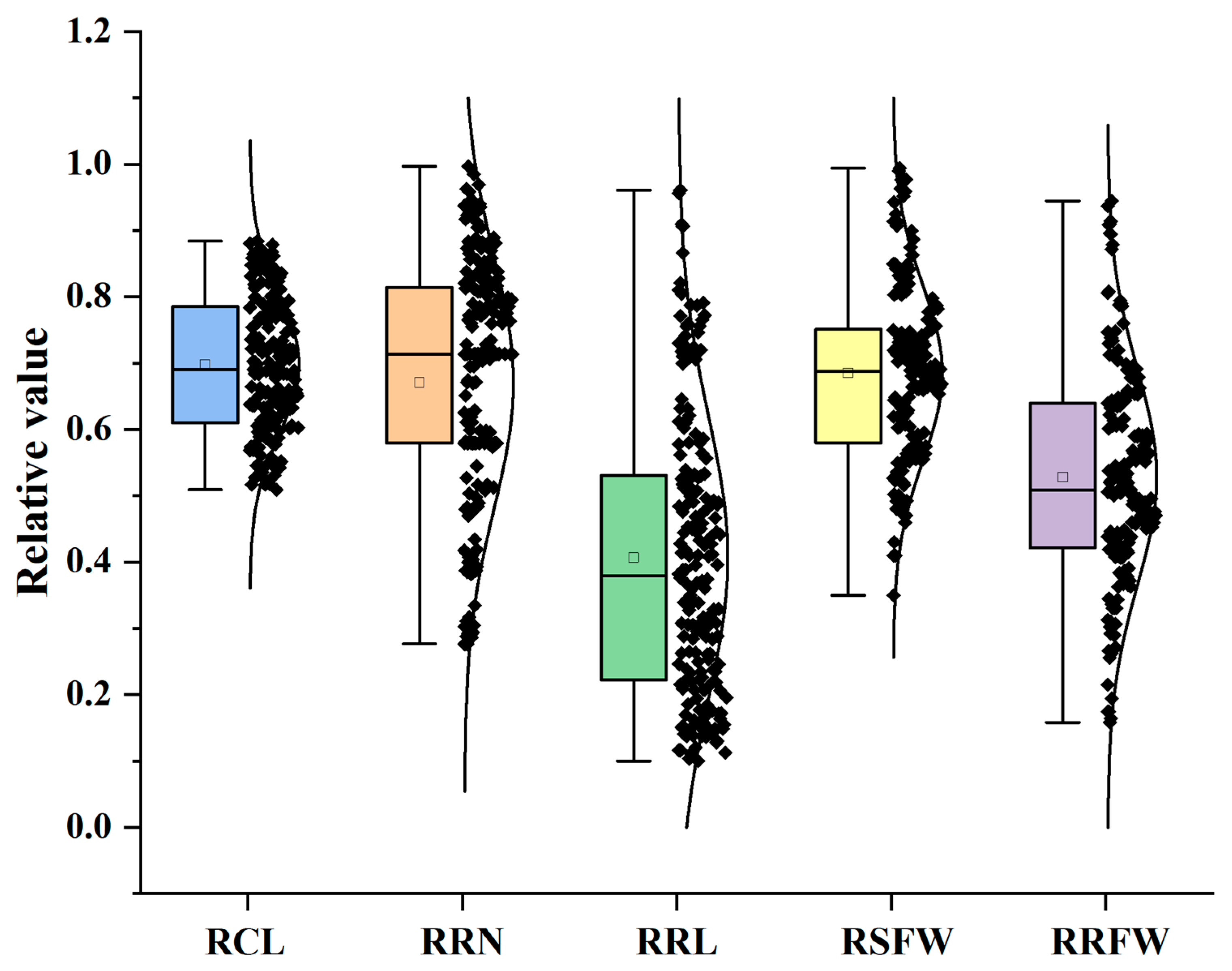
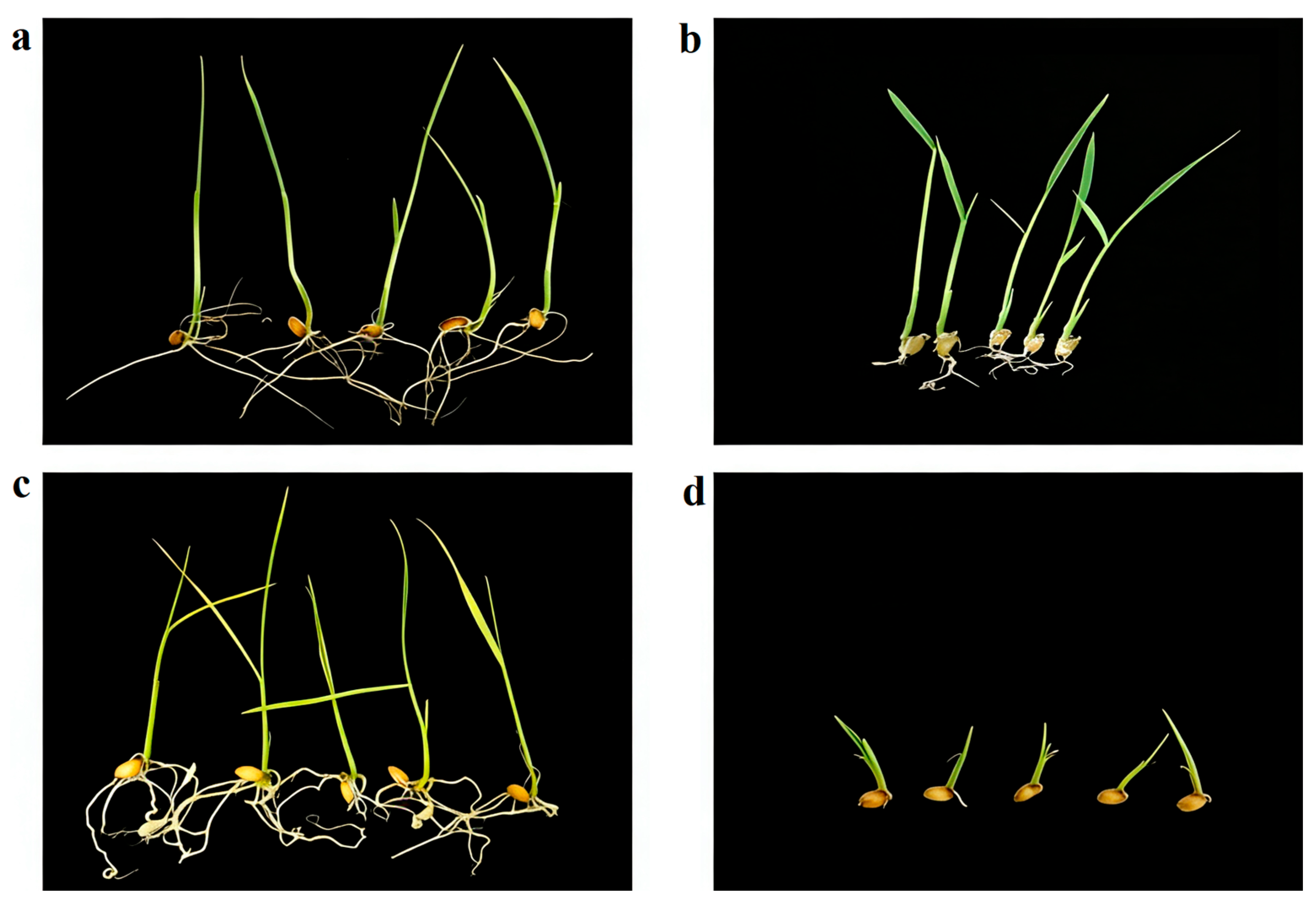
In this study, five alkalinity tolerance-related traits were identified, which were: RCL, RRN, RRL, RSFW, and RRFW (Figure 1). To eliminate the growth differences between different materials, we calculated the relative values of the five traits. The ratio of the character value under the alkaline treatment conditions to the character value under the control condition was also calculated. From Table 1, it can be seen that the average value of RCL (0.7) was the smallest among the five traits, and the average value of RRL (0.41) was the highest. It was found that of these five traits related to tolerance to alkalinity, RRL was most affected by alkalinity stress and RCL was least affected by alkalinity stress. Phenotyping revealed IR36 as alkali-sensitive and LD124 as tolerant, confirming LD124’ s superior alkalinity resistance (Figure 2). Their absolute skewness and kurtosis values were below 1, confirming distributional symmetry and mesokurtosis. As shown in Figure 1, each alkaline tolerance-related trait was essentially in line with the normal distribution and produced a typical genetic model of quantitative traits, which showed the genetic characteristics of quantitative traits controlled by major or by multiple genes.

3.2. QTL Analysis Based on High-Density Map and Fine-Mapping of Alkalinity Tolerance-Related Traits at the Bud Burst Stage

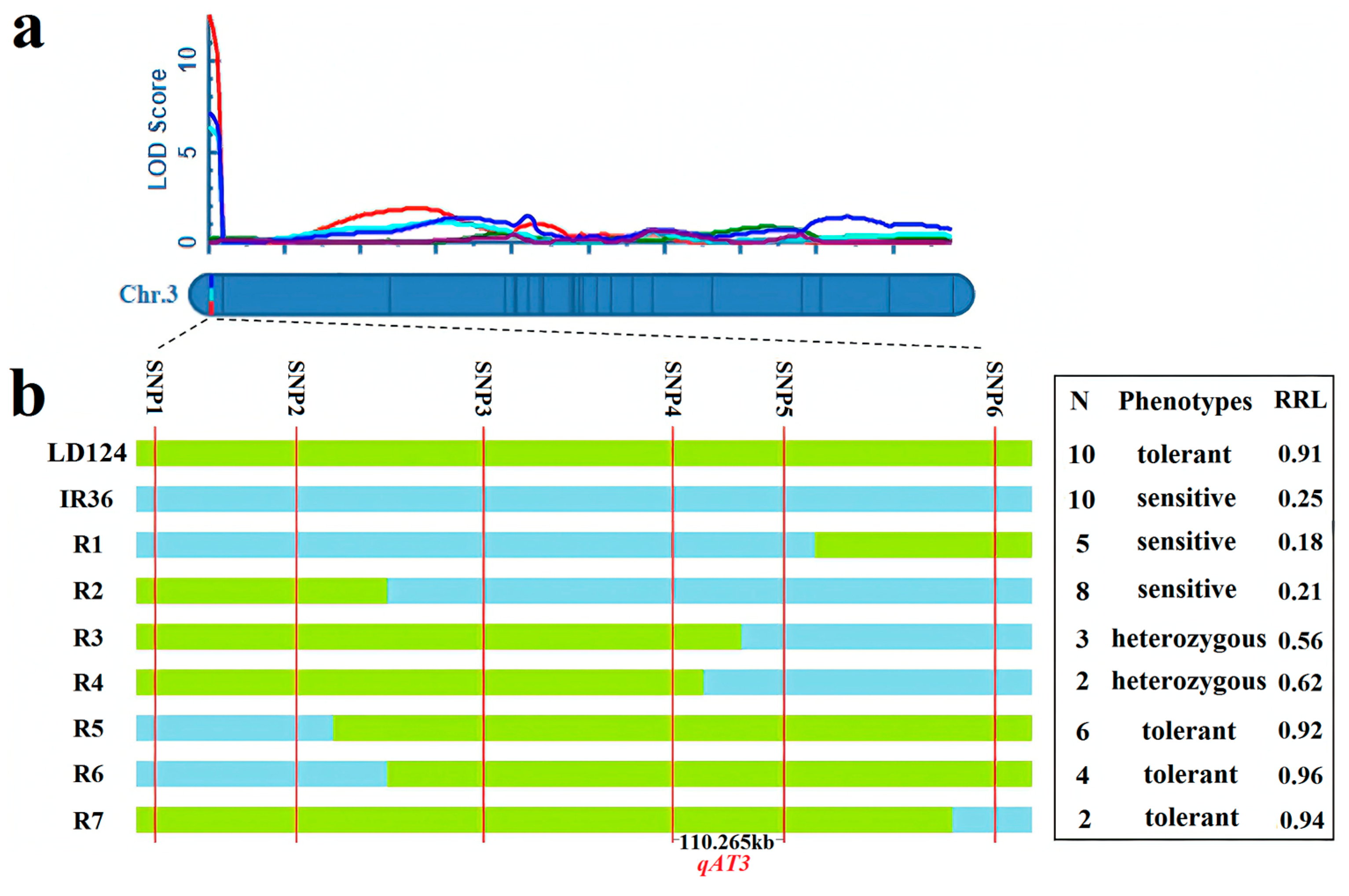
QTL analysis was carried out for five traits related to alkalinity tolerance at the bud burst stage: RCL, RRN, RRL, RSFW, and RRFW. A total of eight QTLs were detected on chromosomes 1, 3, 4 and 8. The phenotypic variation explained by a single QTL ranged from 6.43% to 19.92% (Table 2). Among these, two QTLs, qRCL1 and qRCL3, were identified as being correlated with the relative coleoptile length. The phenotypic variation values explained by qRCL1 and qRCL3 were 11.80% and 19.92%, respectively, and the additive effect values were 1.17 and −1.64, respectively. Three QTLs (qRSFW1, qRSFW3 and qRSFW4) related to relative shoot fresh weight were detected on chromosomes 1, 3 and 4, with qRSFW3 having the highest PVE of 12.49%, and the LOD peak (7.09) was located at 0 cM on chromosome 3. One QTL, qRRN8, associated with relative radicle number was identified on chromosome 8, explaining 6.43% of the phenotypic variation. Two QTLs (qRRL3 and qRRL4) related to relative radicle length were detected on chromosomes 3 and 4 respectively. Among them, qRRL3 had the highest PVE of 11.97%, and the LOD peak (6.34) was located at 0 cM on chromosome 3 (Table 2).
It was noteworthy that qRCL3, which controlled the relative coleoptile length, qRRL3, which controlled the relative radicle length, and qRSFW3, which controlled the relative shoot fresh weight, were all within the same QTL interval (Table 2 and Figure 3a). The PVE of qRCL3, qRRL3 and qRSFW3 were all greater than 10%, which were the major QTLs for alkalinity tolerance at the bud burst stage, and the synergistic alleles of the above five QTLs were derived from LD124. These three QTLs were uniformly named qAT3, and the left marker and right marker of the co-location region was Chr3_799346 and Chr3_1493308, respectively (Figure 3a).
To finely localize qAT3, we constructed the BC3F4 population. For the fine-mapping of qAT3, four KASP markers between SNP1 (Chr3_799346) and SNP6 (Chr3_1493308) were developed from re-sequencing data (Table 2 and Figure 3b). By scanning the genotype of 1020 BC3F4 plants, 30 recombinant plants were identified and divided into seven groups. (Figure 3b). After progeny tests, qAT3 was delimited to the 110.265 Kb interval between the SNP4 and SNP5 markers (1,229,335 bp–1,339,600 bp). According to the MSU Rice Genome Annotation Project Release 7 [16], there are 11 protein-coding genes on the qAT3 locus (Table S3).

3.3. qRT-PCR Analysis

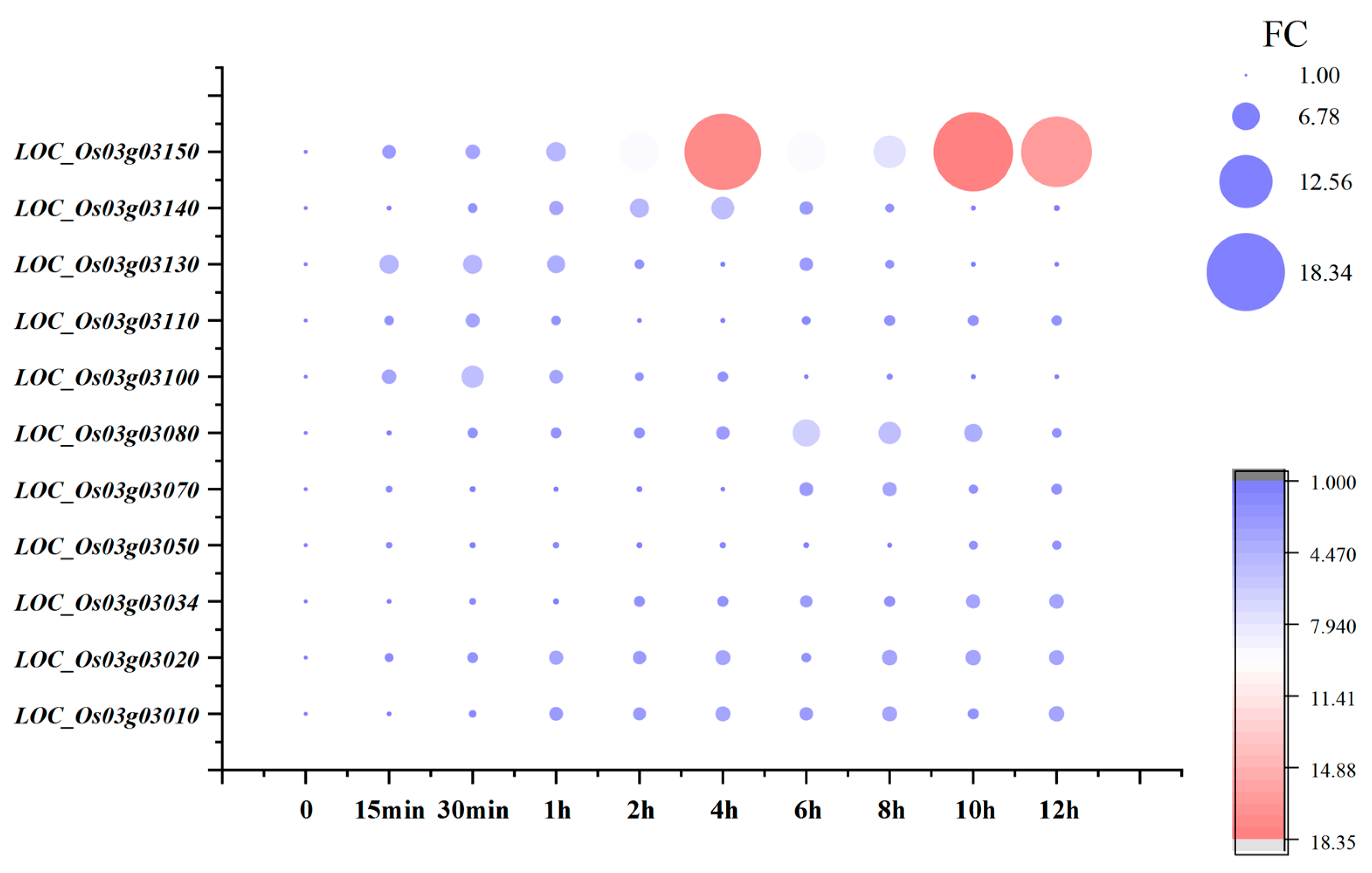
To verify the expression characteristics of the 11 genes under alkalinity stress, their expression patterns under alkalinity stress and control (no stress) conditions were determined by qRT-PCR. The validation results for the 11 genes are shown in Figure 4. Foldchange was the ratio of the FPKM of LD124 to the FPKM of IR36, and all genes were up-regulated in LD124 124 and IR36 under alkalinity stress. According to the expression of all genes, only the expression of LOC_Os03g03150 was significantly induced by alkalinity stress, suggesting that LOC_Os03g03150 is involved in the regulation of alkalinity tolerance in rice.

3.4. Sequence Analysis

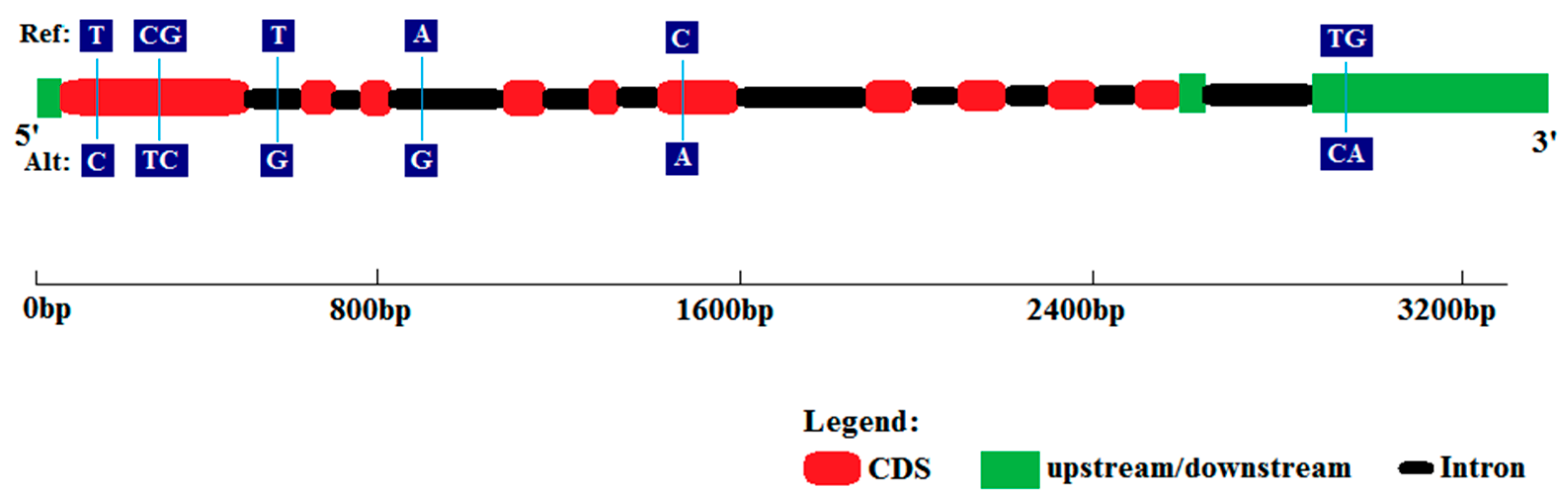
In order to further provide robust evidence for the identification of the most likely gene, LOC_Os03g03150 was sequenced in LD124 and IR36. Sequence analysis showed no difference in the promoter region of LOC_Os03g03150 between LD124 and IR36, and it was shown that in the CDS region of LOC_Os03g03150, three SNPs/Indels were detected in LD124 compared with IR36 and two SNPs/Indels were detected in LD124 compared with IR36 in the intron region. In addition, one Indel was detected in LD124 compared with IR36 in the downstream region (Figure 5). Among them, five mutation sites caused changes in amino acids (Table S4).

4. Discussion

Saline–alkali stress seriously affects soil productivity and significantly reduces the yield of crops, such as soybean [17], wheat [18], rice [19], etc. In contrast to salinity, alkalinity not only causes ion toxicity in plants but also affects the normal growth of plants due to its high pH, which destroys the stability of cells [5]. Many methods have been used to assess the alkaline tolerance of rice, with the commonly used phenotypic marker being the root length [20]. The roots of plants are the main organs for absorbing water and nutrients. Saline–alkali tolerance in rice is a very complex trait. A variety of strategies have identified a large number of salt-tolerant genes in rice; nevertheless, only a few have been shown to increase tolerance under alkaline stress. Phenotypic identification is an important genetic tool for the study of alkaline tolerance in rice. In previous studies, different methods have been used to assess the alkali tolerance of rice, the most frequently used method being the determination of Na+ and K+ concentrations [21]. Early studies showed that alkaline-tolerant plants regionalize Na+ to vacuoles at the cellular level, increasing tolerance to high ion concentrations [22]. The alkali tolerance at the seedling stage is regulated by the balance of Na+ and K+ in roots and shoots. Seed germination, root length and plant height are significantly reduced by treatment with saline–alkali soil [23]. If the rice plants are sensitive to saline–alkali stress at the germination stage, the emergence rate will decrease, thereby reducing the rice yield. However, there have been few studies on QTL/gene mining since the emergence of direct seeding of rice in saline–alkali soil. In addition, indica rice IR36 is recognized as a salt-sensitive variety and has been widely used in rice [24]. In this study, the F2:3 population of alkali-tolerant japonica rice variety LD124 and alkali-sensitive indica rice variety IR36 were used as materials. The RCL, RRN, RRL, RSFW and RRFW were measured under alkalinity stress and control (water) conditions at the germination stage. All measures used in this study were capable of providing accurate phenotypic data for SL, RN and RL. Relative root length was the most sensitive to alkaline stress, mainly due to the direct response of root tip cell elongation to a high-pH environment. The formation of root length depends on cell wall relaxation and microtubule dynamics in the elongation zone. Alkali stress directly hinders the longitudinal elongation of cells by inhibiting the activity of cell wall relaxation enzymes and inducing the accumulation of reactive oxygen species in root tips. The fresh weight of the root contains the material reserve of the differentiated tissue, and the aboveground part is protected by the root buffer. There is a lag in the response of these two to stress, so the relative decrease is small.
Traditional QTL fine-mapping and map-based cloning is limited to high-density genetic maps and a series of near-isogenic lines. For example, based on the conventional mapping method, it took 8 years to isolate the main salt-tolerant gene qSE3 [25,26]. Another strategy for identifying candidate genes is to develop molecular markers in the detection interval and fine-map the QTL region by means of linkage mapping. However, as alkali tolerance is a complex quantitative trait in crops, it is necessary to mine the different fragments that give rise to alkali tolerance on a genome-wide basis. In this study, we used QTL mapping to identify a major QTL (qAT3), which was rapidly optimized from 693.962 kb to 110.265 kb by fine-mapping, explaining 14.79% of the phenotypic variation on average. In the case of related traits, QTLs are generally located in the same chromosome region. qAT3 was linked to qRCL3, qRRL3, and qRRFW3, suggesting pleiotropic effects or close linkage of adjacent genes, emphasizing its key role in the alkali tolerance of parents at the bud burst stage. Therefore, this study provides an effective strategy for the rapid identification of major QTLs for salt tolerance at the bud burst stage.
The qAT3 interval after fine-mapping was 110.265 kb, containing 11 genes. Of the 11 candidate genes, four were cloned. OsF3H knockout lines showed resistance phenotypes to brown planthopper and rice blast, and OsF3’H knockout lines increased rice resistance to brown planthopper and rice blast [27]. Plants overexpressing OsMADS50 did not form adventitious roots 5 days after seed germination and formed fewer adventitious roots 39 days after germination, suggesting that the mutant adventitious root primordia developed slowly and the initiation of adventitious root primordia was partially inhibited [28]. The increase in OsSCE1a expression resulted in a decrease in the chlorophyll content, net photosynthetic rate (Pn) and chlorophyll fluorescence parameter Fv/Fm value and the delay of the heading date. Compared to the wild type, the chlorophyll content and photosynthetic capacity of the OsSCE1a knockout line increased, showing high Pn and Fv/Fm values, increased nitrogen utilization rate, and shortened growth time without affecting yield [29]. The expression of candidate genes under alkaline stress and the difference in SNPs and Indels between the two parents were further clarified by the qRT-PCR analysis and sequence analysis. The candidate gene TE/osccs52a (LOC_Os03g03150) was also a known gene. The TE-deficient mutant had a significantly increased number of tillers, super sensitivity to abscisic acid (ABA), and decreased sensitivity to gibberellin (GA) [30]. Compared with the wild type, the mutant osccs52a was semi-dwarf, the grain was smaller, the grain width and grain thickness were reduced, and the fertility was also severely reduced [31]. However, whether LOC_Os03g03150 is a functional gene related to alkali tolerance in rice needs further experiments to verify. The significant effects of TE on coleoptile length, radicle length and biomass under alkaline stress observed in this study may be related to the fact that TE coordinates growth inhibition and root development under stress by regulating the ABA/GA signal balance. Specifically, the enhanced ABA sensitivity caused by TE deficiency may contribute to survival adaptation under alkaline stress. In this study, the changes in growth indexes associated with TE may reflect the mechanism of TE affecting cell elongation and biomass accumulation through the GA signaling pathway. Therefore, we speculate that TE may play a key role in balancing alkali stress response and growth and development by integrating hormone signaling networks.
These data suggest that LOC_Os03g03150 is the candidate gene of qAT3. LOC_Os03g03150 may be a functional gene in rice alkali tolerance at the bud burst stage, which may be closely related to its alkali-tolerant parent LD124 [32,33]. However, further studies are needed to confirm this conclusion. On this basis, the effects of ion transport channel proteins or hormone regulation should be considered when studying the mechanism of alkaline resistance in LOC_Os03g03150. As a newly identified alkaline tolerance regulator, the physiological mechanism of the alkali-tolerant regulation of LOC_Os03g03150 is still unclear. In addition, the molecular mechanism of the interaction between promoter elements and transcription factors and the protein factors interacting with LOC_Os03g03150 also need to be further investigated. Whether hormones are involved in the response to alkaline stress should be investigated by creating different types of transgenic material.

5. Conclusions

In this study, high-density linkage mapping and fine-mapping were used to identify the alkali-tolerant genes in the F2:3 and BC3F4 backcross populations derived from the cross of alkali-sensitive cultivar IR36 and alkali-tolerant cultivar LD124. qAT3 was identified as the major QTL for alkali tolerance at the bud burst stage, which could explain 14.79% of the phenotypic variation, and the interval was fine-mapped to 110.265 kb. Based on qRT-PCR, sequence analysis and functional validation, it was found that LOC_Os03g03150 was the new candidate gene for qAT3 in rice. This study provides a rapid and cost-effective strategy for the identification of alkaline-tolerant genes in the rice bud burst stage. Although these KASP markers were initially fine-mapped in a specific BC3F4 population, they showed strong diagnostic capabilities for the identified alkali-tolerant loci and could be directly used for foreground selection in related genetic backgrounds or backcross breeding programs. Further validation in different germplasm resources will confirm its wider polymorphism, thereby accelerating marker-assisted selection and aggregating favorable alleles into excellent rice varieties adapted to saline–alkali conditions.

Supplementary Materials

The following supporting information can be downloaded at: https://www.mdpi.com/article/10.3390/agronomy16030393/s1, Table S1: Primers used in QTL fine-mapping; Table S2: Primers used in real-time PCR analyses; Table S3: Gene annotation information for the 110.265 kb interval in qAT3; Table S4: Sequence variation and amino acid information of LOC_Os03g03150.

Author Contributions

L.L. and S.S. conceived and designed the research. G.D., L.C. (Liangzi Cao), J.Z., Y.L., and W.Z. participated in the data analysis. L.C. (Lei Chen), J.W., Y.R., K.L., Q.L., Y.M. and T.X. performed material development, sample preparation and data analysis. L.L. wrote the manuscript. S.S. corrected the manuscript. All authors have read and agreed to the published version of the manuscript.

Funding

This study was supported by the Heilongjiang Academy of Agricultural Sciences National Natural Incubation (CX25JC59), the Heilongjiang Provincial Natural Science Foundation (QC2025C047), the Heilongjiang Province Agricultural Science and Technology Innovation Leapfrog Project ‘Major Demand for Scientific and Technological Innovation Research Topics’ (CX23ZD02-01), the Heilongjiang Academy of Agricultural Sciences Excellent Youth Project (CX22BS01) and the China Agriculture Research System (CARS-01-55).

Data Availability Statement

The original contributions presented in the study are included in the article/Supplementary Material; further inquiries can be directed to the corresponding author.

Conflicts of Interest

The authors declare no conflicts of interest.

Abbreviations

The following abbreviations are used in this manuscript:
QTLquantitative trait locus
LD124Long-Dao124
qRT-PCRquantitative real-time polymerase chain reaction
RCLrelative coleoptile length
RRNrelative radicle number
RRLrelative radicle length
RSFWrelative shoot fresh weight
RRFWrelative root fresh weight
KASPkompetitive allele-specific PCR

References

  1. He, L.; Luo, Y. Effects of long-term sand mixing ameliorating measures on soil salinity characteristics of saline-alkali land in northern shaanxi. Proc. IOP Conf. Ser. Earth Environ. Sci. 2021, 781, 022084. [Google Scholar] [CrossRef]
  2. Lei, L.; Cao, L.; Ding, G.; Zhou, J.; Luo, Y.; Bai, L.; Xia, T.; Chen, L.; Wang, J.; Liu, K. OsBBX11 on qSTS4 links to salt tolerance at the seeding stage in Oryza sativa L. ssp. Japonica. Front. Plant Sci. 2023, 14, 1139961. [Google Scholar] [CrossRef] [PubMed]
  3. Dingkuhn, M.; De Datta, S.; Pamplona, R.; Javellana, C.; Schnier, H. Effect of late-season N fertilization on photosynthesis and yield of transplanted and direct-seeded tropical flooded rice. II. A canopy stratification study. Field Crops Res. 1992, 28, 235–249. [Google Scholar] [CrossRef]
  4. Zeng, L.; Shannon, M.C.; Lesch, S.M. Timing of salinity stress affects rice growth and yield components. Agric. Water Manag. 2001, 48, 191–206. [Google Scholar] [CrossRef]
  5. Chen, W.; Cui, P.; Sun, H.; Guo, W.; Yang, C.; Jin, H.; Fang, B.; Shi, D. Comparative effects of salt and alkali stresses on organic acid accumulation and ionic balance of seabuckthorn (Hippophae rhamnoides L.). Ind. Crops Prod. 2009, 30, 351–358. [Google Scholar] [CrossRef]
  6. Jini, D.; Joseph, B. Physiological mechanism of salicylic acid for alleviation of salt stress in rice. Rice Sci. 2017, 24, 97–108. [Google Scholar] [CrossRef]
  7. Guo, M.; Wang, R.; Wang, J.; Hua, K.; Wang, Y.; Liu, X.; Yao, S. ALT1, a Snf2 family chromatin remodeling ATPase, negatively regulates alkaline tolerance through enhanced defense against oxidative stress in rice. PLoS ONE 2014, 9, e112515. [Google Scholar] [CrossRef]
  8. Qi, D.; Guo, G.; Lee, M.-c.; Zhang, J.; Cao, G.; Zhang, S.; Suh, S.-c.; Zhou, Q.; Han, L. Identification of quantitative trait loci for the dead leaf rate and the seedling dead rate under alkaline stress in rice. J. Genet. Genom. 2008, 35, 299–305. [Google Scholar] [CrossRef]
  9. Sun, J.; Zou, D.; Luan, F.; Zhao, H.; Wang, J.; Liu, H.; Xie, D.; Su, D.; Ma, J.; Liu, Z. Dynamic QTL analysis of the Na+ content, K+ content, and Na+/K+ ratio in rice roots during the field growth under salt stress. Biol. Plant. 2014, 58, 689–696. [Google Scholar] [CrossRef]
  10. Wang, Z.; Chen, Z.; Cheng, J.; Lai, Y.; Wang, J.; Bao, Y.; Huang, J.; Zhang, H. QTL analysis of Na+ and K+ concentrations in roots and shoots under different levels of NaCl stress in rice (Oryza sativa L.). PLoS ONE 2012, 7, e51202. [Google Scholar] [CrossRef]
  11. Ren, Z.-H.; Gao, J.-P.; Li, L.-G.; Cai, X.-L.; Huang, W.; Chao, D.-Y.; Zhu, M.-Z.; Wang, Z.-Y.; Luan, S.; Lin, H.-X. A rice quantitative trait locus for salt tolerance encodes a sodium transporter. Nat. Genet. 2005, 37, 1141–1146. [Google Scholar] [CrossRef] [PubMed]
  12. Huang, X.-Y.; Chao, D.-Y.; Gao, J.-P.; Zhu, M.-Z.; Shi, M.; Lin, H.-X. A previously unknown zinc finger protein, DST, regulates drought and salt tolerance in rice via stomatal aperture control. Genes Dev. 2009, 23, 1805–1817. [Google Scholar] [CrossRef]
  13. Li, N.; Zheng, H.; Cui, J.; Wang, J.; Liu, H.; Sun, J.; Liu, T.; Zhao, H.; Lai, Y.; Zou, D. Genome-wide association study and candidate gene analysis of alkalinity tolerance in japonica rice germplasm at the seedling stage. Rice 2019, 12, 24. [Google Scholar] [CrossRef]
  14. Cheng, H.-T.; Jiang, H.; Xue, D.-W.; Guo, L.-B.; Zeng, D.-L.; Zhang, G.-H.; Qian, Q. Mapping of QTL underlying tolerance to alkali at germination and early seedling stages in rice. Acta Agron. Sin. 2008, 34, 1719–1727. [Google Scholar] [CrossRef]
  15. Livak, K.J.; Schmittgen, T.D. Analysis of relative gene expression data using real-time quantitative PCR and the 2−ΔΔCT method. Methods 2001, 25, 402–408. [Google Scholar] [CrossRef]
  16. Kawahara, Y.; de la Bastide, M.; Hamilton, J.P.; Kanamori, H.; McCombie, W.R.; Ouyang, S.; Schwartz, D.C.; Tanaka, T.; Wu, J.; Zhou, S. Improvement of the Oryza sativa Nipponbare reference genome using next generation sequence and optical map data. Rice 2013, 6, 4. [Google Scholar] [CrossRef]
  17. Do, T.D.; Chen, H.; Hien, V.T.T.; Hamwieh, A.; Yamada, T.; Sato, T.; Yan, Y.; Cong, H.; Shono, M.; Suenaga, K. Ncl synchronously regulates Na+, K+ and Cl in soybean and greatly increases the grain yield in saline field conditions. Sci. Rep. 2016, 6, 19147. [Google Scholar] [CrossRef] [PubMed]
  18. Francois, L.; Maas, E.; Donovan, T.; Youngs, V. Effect of salinity on grain yield and quality, vegetative growth, and germination of Semi-Dwarf and durum wheat1. Agron. J. 1986, 78, 1053–1058. [Google Scholar] [CrossRef]
  19. Liang, Y.; Sun, J.; Suo, Y.; Liu, H.; Wang, J.; Zheng, H.; Sun, X.; Zou, D. QTL mapping and QTL× environment interaction analysis of salt and alkali tolerance-related traits in rice (Oryza sativa L.). Sci. Agric. Sin. 2017, 50, 1747–1762. [Google Scholar]
  20. Liang, J.-L.; Qu, Y.-P.; Yang, C.-G.; Ma, X.-D.; Cao, G.-L.; Zhao, Z.-W.; Zhang, S.-Y.; Zhang, T.; Han, L.-Z. Identification of QTLs associated with salt or alkaline tolerance at the seedling stage in rice under salt or alkaline stress. Euphytica 2015, 201, 441–452. [Google Scholar] [CrossRef]
  21. Li, H.; Durbin, R. Fast and accurate short read alignment with Burrows–Wheeler transform. Bioinformatics 2009, 25, 1754–1760. [Google Scholar] [CrossRef]
  22. Wang, H.; Lin, X.; Cao, S.; Wu, Z. Alkali tolerance in rice (Oryza sativa L.): Growth, photosynthesis, nitrogen metabolism, and ion homeostasis. Photosynthetica 2015, 53, 55–65. [Google Scholar] [CrossRef]
  23. Liang, W.; Cui, W.; Ma, X.; Wang, G.; Huang, Z. Function of wheat Ta-UnP gene in enhancing salt tolerance in transgenic Arabidopsis and rice. Biochem. Biophys. Res. Commun. 2014, 450, 794–801. [Google Scholar] [CrossRef] [PubMed]
  24. Khan, M.S.K.; Saeed, M.; Iqbal, J. Quantitative trait locus mapping for salt tolerance at maturity stage in indica rice using replicated F2 population. Braz. J. Bot. 2016, 39, 641–650. [Google Scholar] [CrossRef]
  25. He, Y.; Yang, B.; He, Y.; Zhan, C.; Cheng, Y.; Zhang, J.; Zhang, H.; Cheng, J.; Wang, Z. A quantitative trait locus, qSE3, promotes seed germination and seedling establishment under salinity stress in rice. Plant J. 2019, 97, 1089–1104. [Google Scholar] [CrossRef]
  26. Cheng, J.; He, Y.; Zhan, C.; Yang, B.; Xu, E.; Zhang, H.; Wang, Z. Identification and characterization of quantitative trait loci for shattering in japonica Rice landrace Jiucaiqing from Taihu Lake Valley, China. Plant Genome 2016, 9. [Google Scholar] [CrossRef]
  27. Chen, S.; Sun, B.; Shi, Z.; Miao, X.; Li, H. Identification of the rice genes and metabolites involved in dual resistance against brown planthopper and rice blast fungus. Plant Cell Environ. 2022, 45, 1914–1929. [Google Scholar] [CrossRef]
  28. Yang, Z.; Wang, X.; Gu, S.; Hu, Z.; Xu, H.; Xu, C. Comparative study of SBP-box gene family in Arabidopsis and rice. Gene 2008, 407, 1–11. [Google Scholar] [CrossRef]
  29. Yuan, X.; Luan, Y.; Liu, D.; Wang, J.; Peng, J.; Zhao, J.; Li, L.; Su, J.; Xiao, Y.; Li, Y. The SUMO-conjugating enzyme OsSCE1a from wild rice regulates the functional stay-green trait in rice. Plant Biotechnol. J. 2025, 23, 615–631. [Google Scholar] [CrossRef]
  30. Lin, Q.; Wang, D.; Dong, H.; Gu, S.; Cheng, Z.; Gong, J.; Qin, R.; Jiang, L.; Li, G.; Wang, J.L. Rice APC/CTE controls tillering by mediating the degradation of MONOCULM 1. Nat. Commun. 2012, 3, 752. [Google Scholar] [CrossRef]
  31. Su’udi, M.; Cha, J.-Y.; Jung, M.H.; Ermawati, N.; Han, C.-D.; Kim, M.G.; Woo, Y.-M.; Son, D. Potential role of the rice OsCCS52A gene in endoreduplication. Planta 2012, 235, 387–397. [Google Scholar] [CrossRef] [PubMed]
  32. Liu, R.; Tan, F.; Wang, Y.; Ma, B.; Yuan, M.; Wang, L.; Zhao, X. Machine learning identification of Saline-Alkali-Tolerant Japonica rice varieties based on Raman spectroscopy and Python visual analysis. Agriculture 2022, 12, 1048. [Google Scholar] [CrossRef]
  33. Ding, G.; Liu, K.; Cao, L.; Bai, L.; Wang, T.; Zhou, J.; Luo, Y.; Xia, T.; Yang, G.; Wang, X. Breeding of a Saline-alkali Tolerant Rice Variety Longdao 124 with High Quality and Stable Yield in Cold Regions. China Seed Ind. 2021, 6, 78–81. [Google Scholar]
Figure 1. Phenotypic characteristics of alkalinity tolerance-related traits of the F2:3 population. The measured phenotypic indicators include RCL, RRN, RRL, RSFW and RRFW.
Agronomy 16 00393 g001
Figure 2. Phenotypes of parents under control conditions and alkalinity stress. (a) Phenotype of LD124 under control conditions; (b) phenotype of LD124 under alkalinity stress; (c) phenotype of IR36 under control conditions; (d) phenotype of IR36 under alkalinity stress.
Agronomy 16 00393 g002
Figure 3. QTL mapping results on chromosome 3 of the F2:3 population and fine-mapping of qAT3. (a) The results of the QTL analysis based on a high-density map of chromosome 3; (b) fine-mapping of qAT3 in the BC3F4 population and the phenotype of 30 recombinant plants in the BC3F4 population. Green represents the genotype of LD124, and blue represents the genotype of IR36.
Agronomy 16 00393 g003
Figure 4. Heat map of the relative expression of 11 candidate genes. The color key (blue to red) represents fold change in gene expression. For each gene, the expression level at 0 min of treatment was set as 1.
Agronomy 16 00393 g004
Figure 5. Sequence difference analysis of LOC_Os03g03150. The gene structure of LOC_Os03g03150 and sequence differences in LOC_Os03g03150 between LD124 and IR36. Ref was the reference sequence of the Nipponbare genome.
Agronomy 16 00393 g005
Table 1. Statistical analysis of the phenotypic values of alkalinity tolerance-related traits of the 205 individuals in the F2:3 population.
TraitsIR36LD124F2:3 Population
MeanRangeSkewnessKurtosis
RCL0.520.85 *0.70.51–0.880.06 −0.99
RRN0.320.84 **0.670.28–0.99−0.48 −0.71
RRL0.250.91 **0.410.10–0.960.56 −0.56
RSFW0.480.96 *0.690.35–0.990.23 −0.21
RRFW0.280.92 **0.530.16–0.940.30 −0.02
* p < 0.05; ** p < 0.01, Student’s t-test.
Table 2. Linkage mapping of QTLs for alkalinity tolerance at the bud burst stage in rice.
QTLPosition (cM)Left Marker (bp)Right Marker (bp)Peak LODPVE (%)Additive Effect
qRCL146Chr1_4655517Chr1_49846097.7011.801.17
qRRN825Chr8_2814739Chr8_30050902.936.430.05
qRRL4108Chr4_22587609Chr4_255419363.136.68−5.30
qRSFW143Chr1_4330799Chr1_46455583.566.440.23
qRSFW4111Chr4_22587609Chr4_255419363.567.94−0.25
qAT3qRCL30Chr3_799346Chr3_149330812.4419.92−1.64
qRRL30Chr3_799346Chr3_14933086.3411.97−7.66
qRSFW30Chr3_799346Chr3_14933087.0912.49−0.34
PVE: Percentage of total phenotypic variance explained by the QTL.
Disclaimer/Publisher’s Note: The statements, opinions and data contained in all publications are solely those of the individual author(s) and contributor(s) and not of MDPI and/or the editor(s). MDPI and/or the editor(s) disclaim responsibility for any injury to people or property resulting from any ideas, methods, instructions or products referred to in the content.